
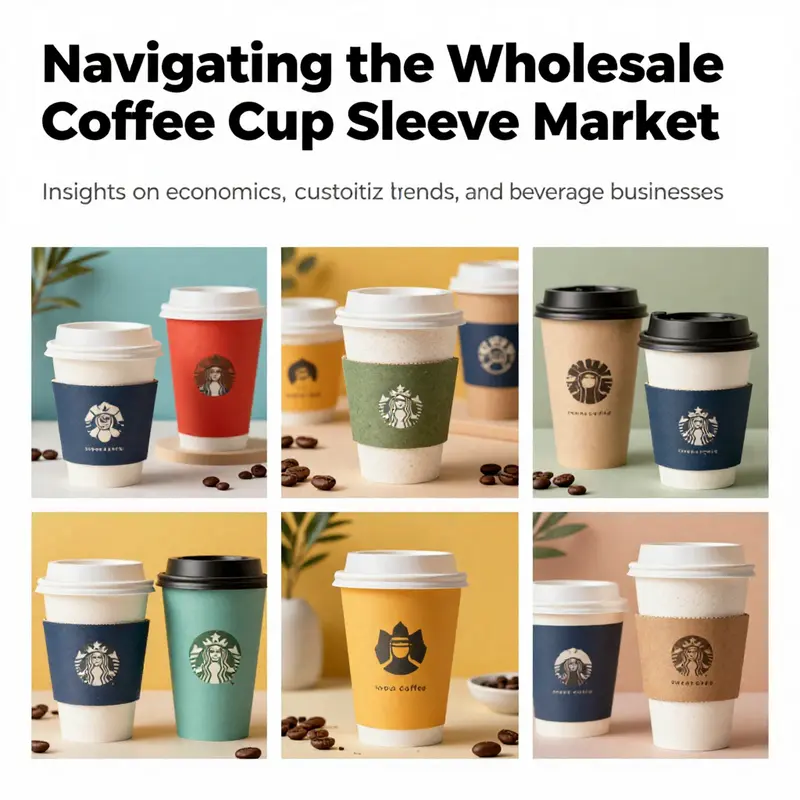
Coffee cup sleeves may seem like a simple accessory, but they play a vital role in branding and customer experience for businesses ranging from bubble tea shops to catering services. Understanding the wholesale coffee cup sleeve market can empower these businesses to make informed choices that align with their economic goals, customization desires, and sustainability initiatives. In this exploration, we will delve into the economic dynamics of wholesale pricing, the booming trend of customizable options, and the increasing demand for eco-friendly practices, providing a comprehensive view of how these factors intertwine to impact your beverage business.
null
null
Brand on the Sleeve: Customization Trends Redefining Wholesale Coffee Cup Sleeves
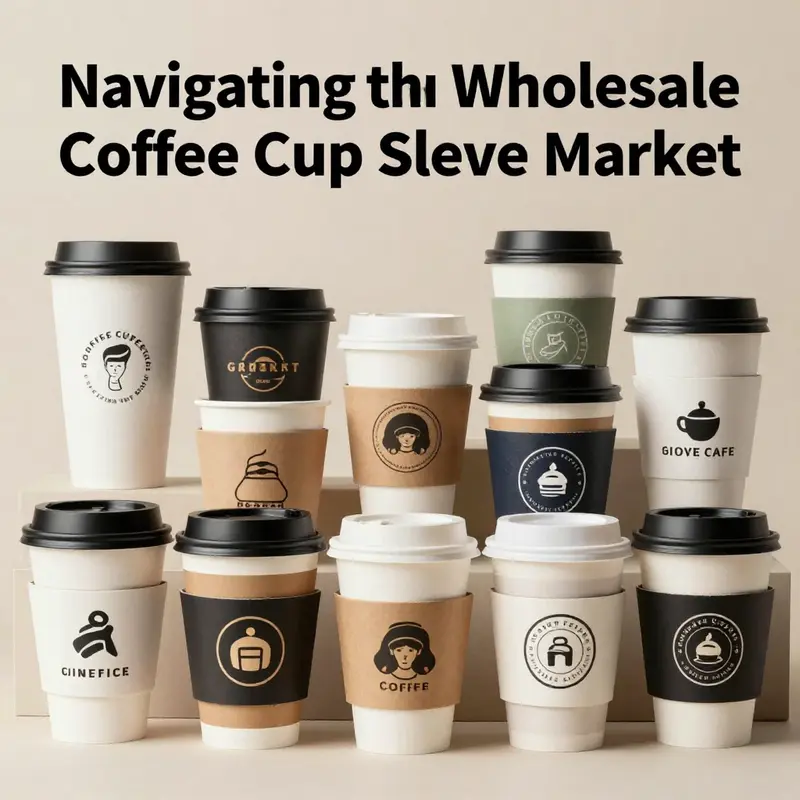
The conversation around coffee cup sleeves has shifted from a simple protective accessory to a strategic canvas for branding, storytelling, and customer experience. In the wholesale market, sleeves no longer exist merely to insulate a hot cup; they travel through hands, into social feeds, and onto retail shelves, becoming mobile billboards for brands that want to be noticed in a crowded cafe landscape. Customization has moved from a boutique luxury into a scalable capability, and as brands seek to transform every interaction into an opportunity, the sleeve has emerged as a key touchpoint. The shift is not only about appearance; it is about material choices, production methods, and the ability to deliver consistent, high-impact branding at scale. For buyers, the challenge is balancing aesthetics with practicality—ensuring that a bespoke sleeve remains cost-effective, durable, and aligned with sustainability goals while delivering a standout look that resonates with customers. In this context, customization is less a one-off indulgence and more a core, repeatable driver of value in the wholesale coffee cup sleeve market.
At the heart of this movement is a demand for unique designs that signal a brand’s personality. Brands are recognizing that a sleeve can do more than simply wrap a cup; it can narrate a campaign, reinforce a seasonal message, or echo a brand’s color system in a way that travels with the beverage. The desire for personalization extends beyond logos and color blocks. Marketers are commissioning sleeves that tell stories through micro-typography, pattern shifts, and clever use of negative space. The result is a sleeve that feels tailored to a brand’s mission rather than a generic wrapper that could accompany any drink. In practice, this translates into design files that are prepared for high-fidelity reproduction, with careful attention to color references, alignment with cup contours, and proofs that simulate real-world use. Brands increasingly expect suppliers to translate a design brief into production-ready artwork, including bleed, crop marks, and color management specifications that ensure what is printed on the sleeve matches the intended look across all production runs.
This emphasis on design quality dovetails with a broader sustainability narrative that is now central to consumer expectations. Eco-conscious consumers are increasingly scrutinizing the materials and processes behind branded packaging, even for disposable items like sleeve wraps. In response, many suppliers are expanding beyond traditional paper to offer bamboo-based sleeves and other eco-friendly materials that claim biodegradability or compostability. The market is moving toward sleeves that can maintain performance—heat resistance, grip, and durability—while delivering a smaller environmental footprint. For brands, this means choices that support their sustainability credentials without compromising the perceived premium of a customized design. The bamboo option, for instance, is marketed not just as a raw material but as part of a larger story about responsible sourcing and lifecycle transparency. When a sleeve can credibly claim a reduced environmental impact, it strengthens a brand’s reputation with both its coffee-loving audience and its business partners.
A second cornerstone of customization is the rapid advancement of printing technologies, and the Guangdong region has emerged as a focal point for suppliers who fuse capability with scale. In cities such as Guangzhou, Shenzhen, and Dongguan, manufacturers are investing in high-resolution digital printing, lithographic processes, and color-management workflows that enable precise brand reproduction on sleeves with tight tolerances. The result is not only sharper logos and more vibrant colors but also the ability to reproduce subtle gradients and complex textures that were previously challenging on paper sleeves. This technological edge makes it feasible to execute limited-edition campaigns—think seasonal themes, holiday collaborations, or event-specific branding—without sacrificing lead times or incurring prohibitive costs. Importantly, the proximity of suppliers in this region supports shorter supply chains for fast-moving campaigns and iterative testing, which is a practical advantage for brands piloting new looks or testing market responses to different sleeve concepts.
Connected to printing prowess are the high-end finishing options that lend tactile and visual depth to a sleeve. Spot UV coating can bring selective gloss to a logo or a critical design element, creating a contrast that catches the eye as a cup is held and moved. Embossing adds physical texture, turning a two-dimensional print into a multi-sensory experience that customers can feel as they wrap their fingers around the cup. Eco-friendly laminates offer a durable surface that resists smudging and wear while keeping alignments intact across production lots. These finishes, often available in a layered supply chain, enable brands to elevate even simple color schemes into premium packaging experiences. A sleeve finished with a subtle Spot UV highlight or a gentle embossed pattern can transform a routine coffee run into a small moment of delight, a reminder that the product inside is backed by thoughtful attention to design details. For buyers, the decision to adopt such finishes hinges on a careful assessment of brand positioning, the expected interaction with customers, and the realities of budget and printability. In practice, many brands adopt a blended approach: core sleeves with durable, matte textures for daily operations, complemented by limited-edition runs that utilize premium finishes for special campaigns.
A crucial consideration in customization is the alignment of sleeve design with sustainability goals. The market now rewards sleeves that can be produced with recycled or responsibly sourced fibers, with coatings and laminates chosen for lower environmental impact. The trend toward eco-friendly finishes further reinforces this alignment. When a sleeve uses a sustainable laminate in combination with a recyclable base and a minimal, water-based ink system, the total lifecycle footprint can be substantially reduced compared with traditional coatings. Brands are increasingly willing to invest in such options, recognizing that the branding story they tell on a sleeve must be consistent with the values they communicate to customers. This convergence of aesthetics and stewardship is reshaping procurement criteria. It means that the choice of finish is not merely an aesthetic decision but a statement about values—one that customers may carry with them long after finishing their beverage.
The practical benefits of customization are measurable as brand recognition and customer engagement. Custom sleeves improve visibility in the moment of consumption, but their impact persists beyond the café counter. A well-designed sleeve travels to offices, homes, and social spaces, turning an ordinary utility item into a reminder of brand identity. When sleeves carry consistent branding across multiple touchpoints, they reinforce recall and help form a cohesive consumer experience. Many operators report that customized sleeves contribute to higher levels of customer satisfaction and perceived quality, translating into stronger loyalty signals and repeat visits. The quiet power of a sleeve with a strong visual identity is that it can act as a micro-campaign—propelling seasonal messaging, reinforcing a loyalty program, or signaling a collaboration without requiring additional in-store signage or digital assets. Such outcomes underscore why brands are increasingly willing to invest in bespoke sleeves as part of a broader brand acceleration strategy.
Sourcing customized sleeves at scale requires a thoughtful approach to partnerships and production readiness. The best suppliers bring more than printing and finishing capability to the table; they offer end-to-end support that helps brands translate a creative concept into a reliable, repeatable product. This includes design collaboration, accurate color matching, and robust proofing workflows that minimize the risk of misalignment between artwork and the finished print. In addition, experienced manufacturers provide scalable production plans, with transparent pricing structures and predictable lead times, even as volumes grow from tens of thousands to hundreds of thousands of pieces. For buyers, this means assessing not only the visual outcomes but also the underlying supply chain discipline: the ability to handle complex color profiles, to manage stock of eco-friendly materials, and to coordinate logistics across diverse markets. It is about choosing a partner who can harmonize creative ambition with operational reliability.
The economics of customization also play a pivotal role in decision-making. Tiered pricing structures that reward larger volumes are common in the wholesale sleeve market. For instance, suppliers may offer mid-tier rates that begin to drop as orders reach tens of thousands of pieces, followed by deeper discounts at higher thresholds. This structure makes it feasible for brands to experiment with designs, languages, or regional variants while maintaining favorable unit costs as volumes climb. The presence of such pricing signals reduces the financial risk of pursuing bespoke campaigns and aligns with the broader goal of unlocking scale without diluting margins. Coupled with flexible trade terms and payment methods, these pricing dynamics help buyers plan multi-phase campaigns across multiple regions, with the confidence that initial investments in design and testing can be amortized over a longer program lifecycle.
From a practical standpoint, brands often begin with sample kits to evaluate fit, feel, and print quality before committing to large-scale production. These samples can be crucial for validating a sleeve’s compatibility with a brand’s cup sizes, such as 8oz, 12oz, and 16oz formats, and for ensuring that embossing or coatings perform as intended under real-world handling. Sample programs—sometimes offered at nominal fees or even free for eligible buyers—provide a low-risk way to experience material behavior, color fidelity, and tactile impression. They also offer a bridge to final decisions about finishes, textures, and the potential need for functional tweaks to ensure consistency across batches. In the context of a high-volume campaign, this small step can prevent costly reprints and delays after a design has moved from concept to production.
Sourcing guidance for customized sleeves emphasizes working with manufacturers who bring a robust design-to-delivery workflow. An established approach begins with a clear brief and a shared understanding of performance requirements, including fit for specific cup sizes, insulation properties, and user-handling dynamics. The next phase is artwork preparation, where color management ensures faithful reproduction across different printing equipment and batches. Prototyping through proofs validates alignment with the intended visual identity, and adjustments can be made before production. Beyond design, a reliable partner will offer guidance on material selection that aligns with sustainability goals while preserving grip, heat resistance, and durability. They will also provide visibility into the supply chain, from raw material sourcing to final packaging and shipping, including the ability to coordinate production schedules with distribution calendars across multiple markets. The result is a streamlined process in which a concept evolves into a batch of sleeves that consistently reflect the brand’s identity, deliver the intended sensory experience, and arrive on time to support campaigns.
To illustrate the breadth of options available to sourcing teams, consider the way a brand might approach a typical customization project. The base sleeve can be selected from traditional paper for cost efficiency or from eco-friendly fibers for environmental alignment. A premium finish like Spot UV may be reserved for logo elements or key motifs to maximize visual impact, while embossing can be used to create a tangible cue around a brand mark that customers can feel. A carefully chosen laminate or coating can provide resistance to oils or moisture, preserving the sleeve’s appearance during transport and use. The color system can be calibrated to the brand’s Pantone references, with proofs reviewed against calibrated swatches to ensure consistency between digital designs and printed results. In parallel, the supplier can advise on minimum order quantities, lead times, and the feasibility of rush runs for time-sensitive campaigns. The aim is not simply to produce a sleeve but to engineer a reliable, repeatable, and scalable customization program that aligns with the brand’s broader marketing calendar.
As brands deepen their commitment to customization, they increasingly view sleeves as integrated components of a broader packaging ecosystem. One practical route is to connect sleeve programs with a wider set of packaging and printing capabilities, expanding the potential for cohesive design language across a retailer’s packaging suite. A useful touchpoint for brands exploring this broader landscape is to examine packaging printing options that encompass not just sleeves but the full range of packaging elements that accompany a beverage experience. By aligning sleeve design with other packaging components, brands can achieve a unified look that reinforces recognition and trust at every consumer touchpoint. For readers seeking to explore the packaging and printing ecosystem more deeply, a dedicated resource on packaging printing options can provide a structured overview of capabilities, materials, and processes: Packaging printing options.
The customization conversation is inseparable from regional manufacturing capabilities and efficiency. Guangdong Province stands out for its concentration of capable suppliers who pair printing excellence with responsive logistics. This regional advantage supports faster turnaround, tighter quality control, and a more iterative design process, which is essential when campaigns require rapid testing and adjustment. The proximity of suppliers reduces lead times for proofs and reprints, enabling brands to validate concepts with real customers and quickly scale successful designs. The geographic clustering also fosters knowledge sharing in the form of design libraries, color calibration practices, and finishing techniques that shape industry standards. For brands, this translates into a practical advantage: access to a vibrant ecosystem where creative ideas can be translated into physical sleeves with predictability and repeatability. In this environment, customization is not a one-off investment; it becomes an ongoing capability that supports a brand’s strategic positioning across seasonal promotions and year-round engagement.
Amid the excitement around customization, it is important to balance creativity with responsibility. Brands must ensure that their customization ambitions align with procurement realities, including material availability, regulatory compliance, and end-of-life disposal. The bamboo-based and other eco-friendly options, while appealing, require careful evaluation of sourcing stability and compostability credentials. Suppliers who can demonstrate credible environmental claims, transparent supply chains, and verifiable certifications will be more trusted partners in the long term. Likewise, while premium finishes deliver premium impressions, they should be chosen with an understanding of their impact on recyclability and end-of-life handling. The best practice is to treat sustainability as a design constraint that informs every choice—from material selection and inks to coatings and lamination. In doing so, brands can maintain compelling designs without compromising the values that resonate with today’s conscious consumers.
As this customization journey unfolds, the choice of supplier becomes a strategic decision. Companies seeking to maximize impact while maintaining control over cost and quality should prioritize partnerships with experienced manufacturers who can demonstrate a consistent track record in design-to-delivery processes. Such partners bring credibility to color matching, texture reproduction, and finish integrity across larger production runs. They also offer structured sample programs, clear pricing tiers, and transparent communication about production calendars and shipping expectations. A thoughtful sourcing approach should include an assessment of the supplier’s ability to handle multiple SKUs, different cup sizes (such as 8oz, 12oz, and 16oz), and various seasonal or regional campaigns without sacrificing consistency. The end goal is not simply to produce a visually striking sleeve but to sustain a reliable, scalable customization program that can adapt to evolving brand needs, regulatory landscapes, and consumer expectations.
In summary, customization in wholesale coffee cup sleeves has evolved from a decorative flourish into a strategic, scalable capacity that shapes brand perception, customer experience, and market differentiation. The convergence of unique design demands, sustainability imperatives, and cutting-edge printing technologies creates a compelling pathway for brands to elevate even the most ordinary beverage encounter. The sleeves that wrap a cup are now a narrative thread—one that travels from the brand studio to the customer’s hand, through a chain of production choices, and into daily routines. As brands navigate this path, the focus remains on delivering a cohesive, high-quality experience that reinforces identity, engages customers, and supports responsible consumption. The next steps for sourcing teams involve thoughtful evaluation of potential partners, rigorous testing through samples, and a clear plan for scaling customization to meet evolving market needs, all while keeping a stable eye on cost, sustainability, and operational practicality. The sleeve, once a simple accessory, is now a strategic asset in the storytelling arc of modern coffee retail, a testament to how small design decisions can amplify brand impact across a global, fast-moving market.
External resource for further reading: For a broader framework on evaluating top B2B manufacturers and metrics, explore the supplier guide here: https://www.supplychaininsider.com/wholesale-coffee-cup-sleeve-suppliers-guide/.
Green Wrappings: Redefining the Wholesale Coffee Cup Sleeve Market Through Sustainability and Circular Design
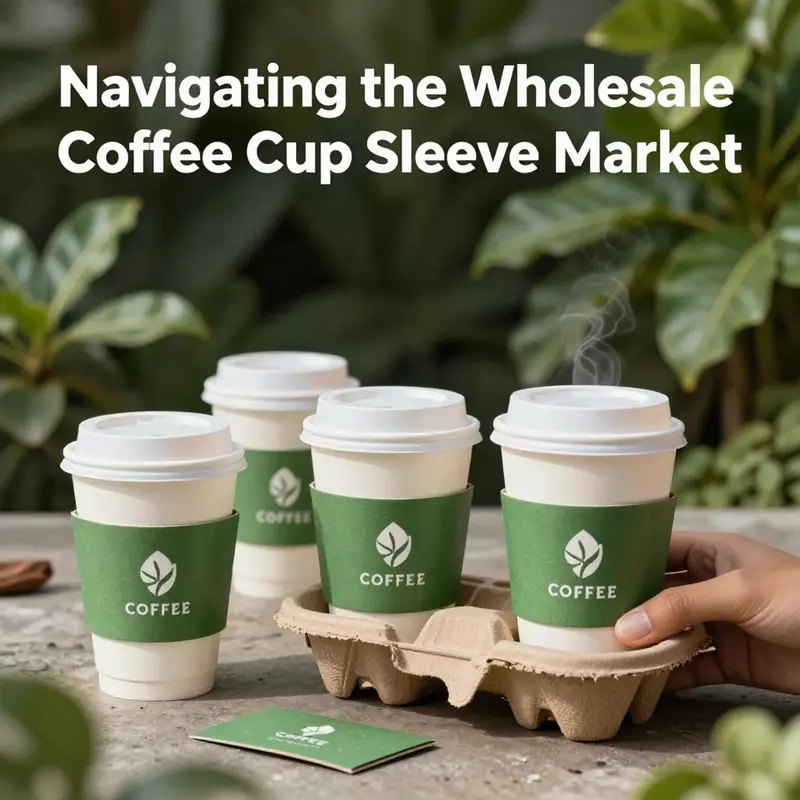
In the wholesale coffee cup sleeve market, sustainability has moved from a peripheral consideration to a core driver of strategy and product development. Brands no longer ask only for cost-per-piece and fit; they demand proof that every sleeve serves a longer, cleaner life cycle. The shift mirrors a broader movement across consumer packaging, where the environmental footprint is now a first-order metric alongside insulation performance and branding potential. The narrative of sustainable sleeves begins with material choice, but it flows widely through manufacturing practices, end-of-life options, and transparent reporting. When a buyer surveys the landscape, they encounter a spectrum of materials, from traditional, recyclable paper to bamboo-based options and bio-based coatings, each with its own profile of performance, compostability, and carbon implications. The market has evolved to reward suppliers who can demonstrate credible environmental advantages without sacrificing the core functions of a sleeve: heat protection, grip, and brand visibility. In practical terms, this means a sleeve must keep hot beverages safely in hand, resist tearing under use, and carry a brand’s message as a mobile advertisement across countless hands and places. The best sleeves accomplish all three while occupying a smaller environmental footprint than their predecessors, and they do so not merely by claiming sustainability but by substantiating it with traceable practices and recognized standards.
One of the most visible trends in sustainable sleeves is material diversity. Paper remains the backbone of the industry due to its intrinsic recyclability and relative low cost, but a growing cohort of suppliers is embracing eco-friendly alternatives. Bamboo-based sleeves, for instance, are marketed as biodegradable options that align with brands pursuing strict sustainability credentials. These products often promise reduced reliance on virgin fibers and a lighter overall footprint, especially when the bamboo is harvested under responsible forestry principles and paired with compostable coatings. The appeal for many buyers is not only end-of-life simplicity but also the broader message that their packaging choices reflect a commitment to renewability rather than depletion. This is particularly resonant in regions where consumer perception of sustainability habits translates quickly into brand loyalty and trust.
As material science advances, coatings and inks have become another critical axis of sustainability. The appeal of water-based inks over solvent-based alternatives grows in tandem with the desire to minimize volatile organic compounds (VOCs) and hazardous emissions. Similarly, coatings that enable a sleeve to be both water-repellent and compostable when paired with compatible disposal streams are increasingly sought after. The challenge often lies in balancing these green attributes with performance: a sleeve must dry quickly, resist grease and moisture, and shield the cup’s heat effectively without compromising its structure. For many buyers, the question is not simply “Is this sleeve recyclable?” but “Can the end-of-life path be clearly communicated, and can it legally and practically be achieved in my market?” Here, certifications and environmental data play a decisive role. The ability to present a lifecycle assessment, or at least credible emissions data, elevates a supplier from being merely green-marketed to being a trusted partner in a brand’s sustainability ecosystem.
Customization, long a cornerstone of the wholesale sleeve business, intersects intimately with sustainability. Branded sleeves are powerful because they become portable advertising that travels through streets, offices, and homes. Yet branding can also be leveraged to accelerate sustainable outcomes. A growing number of suppliers offer full-service customization that aligns logos, colors, and slogans with a client’s sustainability narrative. For instance, a sleeve can carry a message about recycled content, compostability, or a specific environmental initiative, turning every cup into a micro-campaign for responsible consumption. Customization also extends to design choices that reduce material use without compromising insulation. Optimized templates, efficient nesting in production, and precise cutting can cut waste in the factory floor while preserving the visual impact of the final product. For buyers, this means that the path to branding equity and sustainability does not require tradeoffs; it can be a synergistic process where the design itself nudges customers toward more responsible disposal behaviors.
Beyond materials and aesthetics, the operations that produce and deliver sleeves shape their environmental profile. Green manufacturing practices have moved from niche to norm in many regions. Factories are adopting energy-efficient equipment, embracing water-based inks and adhesives, and investing in closed-loop wastewater treatment systems that reduce both water usage and effluent risk. These improvements are not merely about compliance; they are about responsible resource stewardship that translates into cost savings and reputational advantages over time. When a supplier can demonstrate a robust energy management plan, quantified reductions in water use, and transparent waste metrics, it reinforces a buyer’s confidence that sustainability is embedded in the business model, not just a marketing line.
Certification schemes and third-party verification are increasingly central to the reliability of sustainability claims in this space. Standards such as those governing sustainable paper and packaging materials provide a framework for evaluating whether a supplier’s claims are credible. For brands that need to compare options across multiple regions and suppliers, a clear certification pathway offers a common language. The Forest Stewardship Council (FSC), for instance, has established criteria that help buyers verify that paper-based components originate from responsibly managed forests. Having FSC or similar certification in place can significantly reduce the perceived risk of greenwashing and can streamline procurement decisions across international markets. The importance of lifecycle data becomes even clearer when certification bodies require transparent reporting of environmental impacts, including emissions, energy use, and end-of-life scenarios. In this context, a sleeve is not just a product, but a data point in a broader supply chain story about sustainability, resilience, and accountability.
As demand grows, the market is also moving toward a design for reuse and compostability that extends beyond single-use disposal. A subset of brands—particularly those serving premium segments, corporate catering, or sustainability-focused retailers—are piloting reusable sleeve concepts. Silicone and bamboo-fiber sleeves have emerged as viable, though early-stage, options in the wholesale landscape. Reusables offer the potential to decouple consumption from waste generation, turning a disposable sleeve into a longer-lived accessory that travels with a cup across multiple sessions. The challenge here is scale and practicality: reusables require return streams, cleaning protocols, and consumer behavior changes that can complicate wholesale logistics. Nevertheless, the potential advantages are compelling. If a sleeve can be designed to withstand hundreds of uses with minimal performance degradation, the cumulative waste reductions can be substantial. Even in markets where reusables remain a niche, their trajectory signals an industry-wide openness to rethinking what a sleeve can be and how it should function across a circular economy.
From a buyer’s perspective, sustainability is not a single feature but a portfolio of attributes that cohere into a persuasive value proposition. The best suppliers offer a transparent package: clearly stated material composition, verifiable certifications, documented end-of-life options, and credible lifecycle data. They provide options that cover different price points and volumes, recognizing that cost pressures are real for small cafes through to large chains. They also supply samples not only to test fit and branding but to observe handling in real-world conditions. The ability to request and evaluate a sample kit—perhaps at modest cost or even free—remains a practical bridge between theoretical sustainability and actual performance. It is through this iterative testing that a brand can gauge heat insulation performance, sleeve strength, and colorfastness of branding under everyday use. In practice, the best supplier relationships emphasize collaboration: working together to quantify environmental performance, optimize packaging configurations, and align procurement cycles with sustainability milestones.
As the wholesale market evolves, the dialog around sustainability is increasingly anchored in data rather than slogans. Buyers demand environmental impact data that can be reconciled with corporate social responsibility (CSR) goals and, in many cases, with external reporting frameworks. Suppliers who can deliver credible data—like grams of CO2 per sleeve, kilograms of waste avoided per million units, or energy use per thousand sleeves—offer a stronger basis for decision-making. This data-driven approach complements qualitative signals such as certifications, public commitments to green manufacturing, and supply-chain transparency. The convergence of tangible metrics and certified standards helps create a credible narrative that a sleeve is not just a cost center or a branding tool, but a genuine contributor to a brand’s sustainability portfolio. The result is a more resilient wholesale market, where brands can scale their packaging programs with confidence, knowing that environmental considerations are integrated into every step—from raw material sourcing and production to end-of-life disposal.
To connect this broader horizon with practical procurement, consider the integrated value chain that supports sustainable sleeves. A supplier’s capability to offer a full spectrum of options—standard disposable sleeves, premium reusable variants, and even compostable alternatives—enables buyers to tailor choices to context, whether a neighborhood café, a campus dining hall, or a multinational coffee chain. Tiered pricing often accompanies such flexibility, creating economies of scale that reward high-volume orders while still making sustainable options accessible to smaller customers. For instance, bulk orders may include volume discounts that correspond not only to price per piece but to a richer environmental program, such as carbon footprint reporting, supplier audits, or participation in green logistics initiatives. In the end, sustainability in this space is less about choosing one path and more about orchestrating a portfolio strategy that aligns with brand values, customer expectations, and economic realities.
For buyers seeking a practical starting point on their sustainability journey, it helps to view the sleeve through the lens of lifecycle thinking. From the moment raw fibers are harvested to the moment a sleeve is returned to a recycler or composting stream, every stage has environmental implications. The goal is to minimize negative impacts at each stage while maximizing the sleeve’s service life and recovery potential. When brands understand this lifecycle, they can ask the right questions of suppliers: What percentage of the sleeve’s fibers are recycled content? Is the coating compatible with industrial composting or home composting streams? What is the expected heat resistance and tear strength over time? How is end-of-life collection and processing organized in different markets? These questions move procurement decisions from purely price-centric to value-centric, where the value is measured in environmental performance, brand alignment, and long-term supply stability.
An illustrative aspect of this transition is the growing emphasis on credible end-of-life data. In markets where municipal waste management supports composting or recycling, sleeves with compatible coatings and adhesives can participate in circular programs. In other markets, where disposal options are more limited, sleeves with higher recyclability and ash-free components may be prioritized to minimize landfill burden. Suppliers who can map the end-of-life options for their sleeves—whether through partnerships with local recycling facilities, industrial composters, or dedicated take-back programs—provide buyers with a practical route to lower true-life impact. This practical orientation helps ensure that sustainability is not a labeling exercise but a live, verifiable operational reality that informs both design choices and logistics planning.
Within this evolving landscape, a single, simple principle often guides both innovation and decision-making: reduce, reuse, and recover. Reduction involves using less material without sacrificing performance or branding integrity. Reuse encompasses durable designs and, where feasible, modular elements that extend the sleeve’s life, including features that endure repeated handling. Recovery focuses on ensuring that the sleeve, at the end of its usable life, re-enters the materials loop whenever possible. Each principle invites a closer look at the trade-offs, from the costs of higher-grade fibers to the infrastructure needed to support take-back programs. The practical outcome is a more nuanced procurement strategy, one that accommodates a range of environmental benefits across different markets, product configurations, and business models. In this sense, sustainability becomes a strategic asset rather than a regulatory obligation, enabling brands to differentiate themselves through credible environmental performance while maintaining the operational flexibility needed to meet diverse demand patterns.
For readers who want a broader selection of packaging and printing options as part of this conversation, a useful touchstone is the Packaging and Printing category on the company’s blog. It offers a curated view of how materials, inks, and finishes interact with branding goals and sustainability commitments. This resource helps connect the dots between sleeve design, branding outcomes, and ecological responsibility. See the dedicated category here: Packaging and Printing.
In synthesis, the sustainability trajectory in the wholesale coffee cup sleeve market is not a single trend but a convergence of material science, responsible manufacturing, transparent reporting, and strategic product design. It requires collaboration across the supply chain: growers and foresters who supply responsibly sourced paper and bamboo fibers; converters who apply coatings, inks, and adhesives with environmental care; and brands that communicate a credible sustainability story to consumers. The result is a more resilient market that can scale with growing demand for green packaging while delivering the performance and branding power that cup sleeves have always provided. Buyers who embrace this integrated approach will be better positioned to navigate price volatility, supply disruptions, and regional waste-management differences without sacrificing their commitment to the environment. The endgame is not merely compliance with standards but a living practice that informs every sleeve’s journey—from forest to fist, from cradle to cup to compost or to reuse, and back into society as a resource rather than waste.
External standards and credible verification play a crucial role in sustaining this momentum. Recognizing the need for universally accepted benchmarks, many buyers look to certification frameworks that validate responsible sourcing and environmental performance. The FSC, in particular, has become a touchstone for tracing the provenance of paper-based components and ensuring that forests are managed to meet long-term ecological and social goals. For those who wish to explore these standards further, the FSC website offers a comprehensive overview of certification criteria, guidance, and resources that help buyers assess a supplier’s environmental promises against real-world practices. This alignment with international standards provides a framework within which suppliers can transparently report their progress and buyers can confidently select partners who share their commitment to sustainability. External resource: https://www.fsc.org
Final thoughts
In conclusion, the wholesale coffee cup sleeve market presents significant opportunities for beverage businesses to enhance branding and customer experience while aligning with sustainable practices. By understanding the economic dynamics, embracing customization, and prioritizing eco-friendliness, bubble tea shops, food trucks, and other businesses can elevate their brand visibility and customer satisfaction. The evolving nature of this market stands as a testament to the growing awareness of both economic efficiency and environmental responsibility in today’s commerce.