
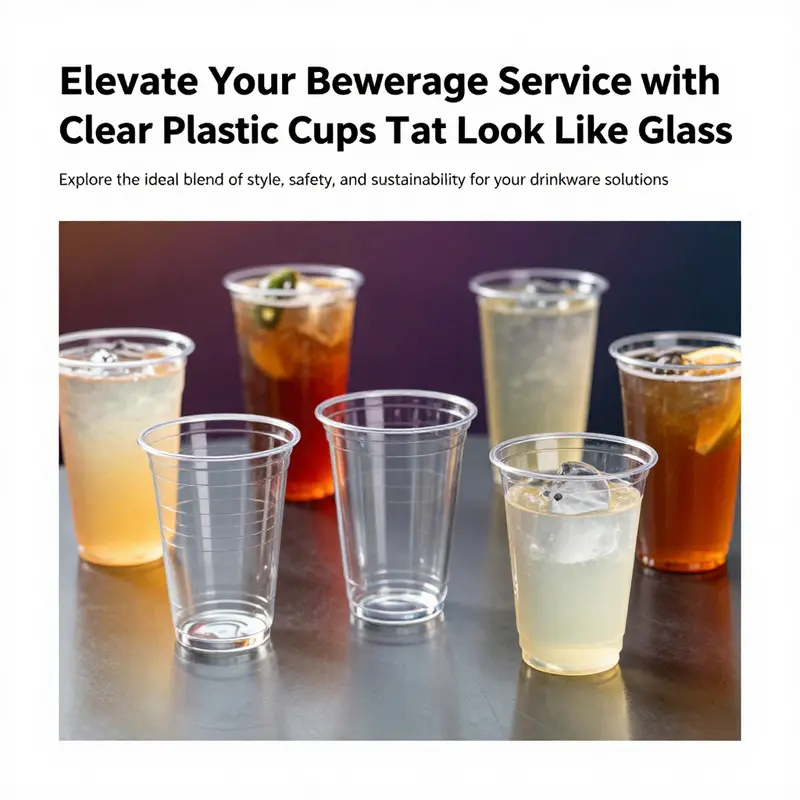
In the competitive landscape of food and beverage service, presentation and safety are paramount. Clear plastic cups that mimic the elegance of glass provide an innovative solution that caters to both aesthetics and functionality. Perfect for bubble tea shops, restaurants, food trucks, catering services, and event planners, these durable and attractive cups offer a versatile choice for any occasion. Throughout this article, we will delve into the various facets of these cups—from their durability and safety features to their environmental impact, design trends, practical applications in events, and cost-effectiveness. Each aspect highlights how clear plastic cups that look like glass can seamlessly integrate into your business, enhancing customer experience while maintaining operational efficiency.
null

null
Environmental Impact of Clear Plastic Cups that Look Like Glass
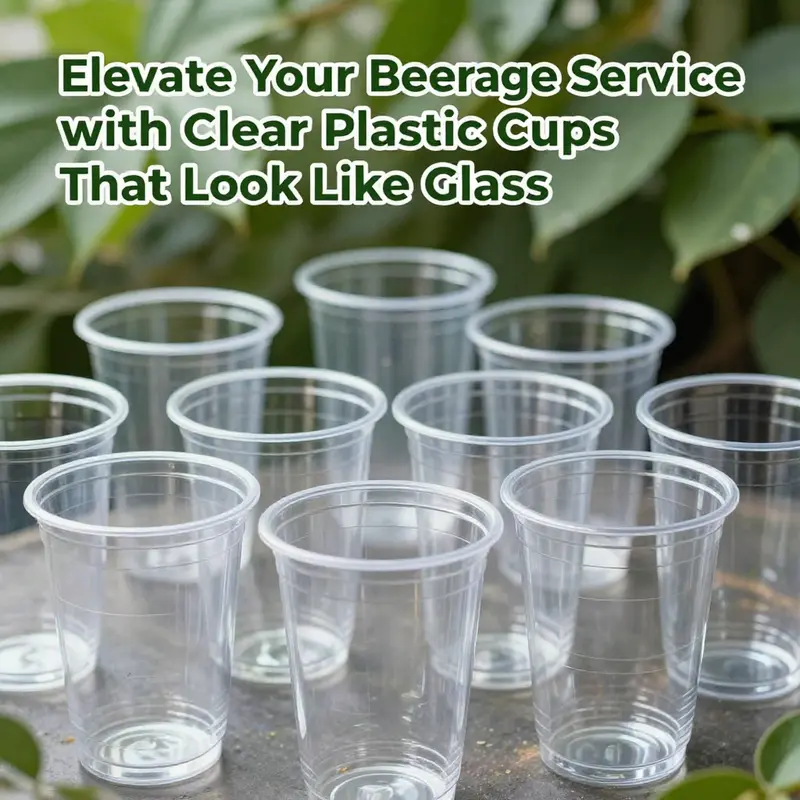
Clear plastic cups that mimic glass offer undeniable appeal. They deliver the elegance of traditional stemware with the safety, durability, and convenience of plastic. Yet beneath the surface of pristine clarity lies a complex environmental reality. The most common materials used to achieve that glass-like shimmer—polycarbonate, acrylic, and polystyrene—are all derived from fossil fuels. They are not readily biodegradable, and their end-of-life fate depends heavily on local waste streams that often fail to recover their value. This creates a tension between aesthetics and planetary responsibility, a tension that grows sharper as consumer demand for stylish, spill-safe drinkware expands across homes, events, and commercial settings. When the cups are designed to resemble glass, the temptation to overlook what happens after the party ends becomes stronger, especially in contexts where safety and ease of cleaning matter most. A closer look at materials, lifecycle dynamics, and alternative approaches reveals why rethinking these cups is essential for anyone who cares about both design and the environment. \n\nPolycarbonate has long been favored for its strength and clarity, making it a go-to choice for reusable tumblers and tasting setups. However, even though many newer products are labeled BPA-free, the concerns persist. BPA-free does not automatically remove all chemical risks, and the production and processing of polycarbonate contribute to carbon emissions and resource use. When heated or if the material is damaged, questions about residual chemical migration can arise, prompting caution among suppliers, venues, and consumers who want to minimize exposure to any questionable compounds. The carbon footprint of manufacturing polycarbonate—especially at scale—adds another layer to the environmental calculation, one that many buyers overlook in pursuit of a flawless, glass-like look. \n\nAcrylic, or PMMA, is celebrated for its high-gloss finish and its ability to imitate glass with remarkable fidelity. In practice, it is less forgiving in recycling streams. While acrylic can be durable, municipal recycling infrastructure often lacks facilities that can process PMMA efficiently. This leaves many acrylic cups ending up in landfills, where they can persist for centuries. The same durability that makes them attractive in the short term becomes a burden in the long term, as the material resists breakdown and contributes to growing volumes of long-lived plastic waste. For events and venues that prize a sleek appearance, the question then becomes one of balancing visual appeal with the realities of waste management and end-of-life options. \n\nPolystyrene adds another layer of complication. It underpins many disposable cups and is prized for lightness and cost. Yet polystyrene’s recyclability is uneven at best, and many municipal programs either cannot or do not process it. Even when recycling is technically feasible, the energy demands and contamination risks involved in sorting and reprocessing can render the cycle inefficient. Add to this the fact that polystyrene fragments easily, contributing to microplastics in the environment, and the environmental calculus grows more troubling. It becomes clear that the glow of crystal clarity can obscure the friction between low-cost production, limited recovery, and persistent waste. \n\nBeyond the material specifics, the lifecycle narrative matters just as much as the initial production. Even those cups marketed as reusable are frequently marketed with the implication of long life. In reality, UV exposure, heat from dishwashers or sunlit outdoor settings, and aggressive detergents can cause yellowing, clouding, or microcracks. These defects shorten usable life and accelerate disposal, which reduces the environmental benefits that reusable claims promise. The gap between intention and outcome widens when wear and tear outpace the actual reuse cycle. Still, for many settings—outdoor festivals, family gatherings, or busy kitchens—the preference for a glass-like experience can overshadow concerns about how many times a cup will be used and how it will be disposed of afterward. \n\nEnd-of-life outcomes for these cups are further complicated by how people actually dispose of them. The broader plastic waste system struggles with scalability and efficiency. A widely cited figure notes that only a fraction of plastic ever produced is recycled; the rest ends up in landfills, incinerators, or the environment. In practice, even high-quality, reusable-looking cups can become single-use items in the heat of a busy event. This “single-use culture” undermines any environmental benefit that durability might imply. The environmental burden then shifts from the moment of purchase to the entire waste stream, where persistent polymers and additives can linger for decades. \n\nTo address these challenges, some brands explore eco-conscious alternatives. Bioplastics derived from renewable resources, such as PLA, aim to align appearance with responsibility. A fraction of such options also includes small percentages of recycled content. But these materials introduce new constraints. Industrial composting facilities, which are not universally available, are often required to realize the intended end-of-life benefits. In many places, conventional waste streams cannot effectively separate or process PLA-based cups, causing mixed outcomes where the cups neither biodegrade as hoped nor recycle easily. Even modest recycled-content designs bring benefits in principle, yet they still face infrastructure hurdles that limit their real-world impact. \n\nThe tension between look, utility, and sustainability is not purely technical. It reflects a broader cultural pattern: the fleeting nature of many events and the powerful pull of a pristine, glass-like table setting. The single-use impulse remains strong, and with it comes a surge of plastic waste that travels far beyond the event itself. The consequence is not just a pile of cups but a cumulative pressure on ecosystems, with emissions from production, transport, and disposal compounding over time. In short, the environmental cost of cups that look like glass is not merely an isolated issue; it sits at the intersection of material science, consumer behavior, and waste-management systems that are still in flux. \n\nThere is no one-size-fits-all answer. For organizers and households seeking to minimize harm while preserving aesthetics, the path forward involves making informed choices that align with local capabilities. When reuse is possible, establishing clear practices for cleaning, inspection, and return can extend the life of a cup and reduce waste. Where disposal is unavoidable, selecting cups that are more recyclable within the local system, or those that come with transparent take-back or reuse programs, can help close the loop. The goal is to tilt the balance toward a circular approach rather than a linear one, even when the product is designed to mimic glass’s appearance. In this shift, the choice to explore alternatives—such as glass, metal, or truly recyclable plastics—becomes a practical step rather than a theoretical ideal. For readers curious about a broader set of options, the plastic cups category can illuminate the landscape of what is feasible from a design, safety, and end-of-life perspective. See the plastic cups category for a range of look-alike options that are engineered with different waste-stream considerations in mind: plastic cups category.\n\nThe environmental conversation around clear plastic cups that look like glass is about recognizing both their appeal and their consequences. It invites us to ask how much beauty is worth when it comes at the cost of forests, rivers, and the creatures that depend on healthy ecosystems. It challenges designers and manufacturers to pursue materials and processes that move closer to a closed loop. It invites retailers, event planners, and consumers to favor choices that, if not perfect, at least aim for a more deliberate and transparent lifecycle—one where look and safety do not come at the expense of the planet. Until scalable recycling infrastructure and truly compostable or recyclable materials become mainstream, the use of clear plastic cups that resemble glass will remain a contested choice, balancing elegance with the need for stewardship. \n\nExternal reading can deepen understanding of material composition and lifecycle impacts. For a detailed examination of the chemistry, energy use, and end-of-life pathways, see the ScienceDirect analysis linked here: https://www.sciencedirect.com/science/article/pii/S030147972300586X.
Reflections in Plastic: Crafting Clear Cups That Look Like Glass While Preserving Safety and Style

Clear plastic cups that look like glass have moved beyond novelty to become a design language. They mirror the elegance of traditional glassware while delivering shatter resistance, lighter weight, and safer handling. This convergence of aesthetics and practicality reflects a broader shift in how people approach everyday rituals—how a simple beverage can be presented with the poise of a formal setting without the fragility that once limited options. The trend isn’t just about a superficial shine; it’s about how material choices and subtle design cues work together to persuade the eye and shape the experience. When a cup catches the light with crystal-like clarity and sits in the hand with a familiar weight, it invites a moment that feels purposeful rather than disposable. For hosts, venues, and households alike, these cups offer a tool that bridges casual dining and celebratory ceremony, letting the moment feel elevated without requiring breakable glass or specialized serviceware. In this space, the cup becomes more than a vessel; it becomes a small stage where color, texture, and proportion collaborate to create atmosphere. The best designs acknowledge that seeing through the cup is as important as holding it, and they respect the viewer’s expectations of glassy allure while delivering the restraint and resilience plastic provides. That combination—optical brilliance paired with practical robustness—has become the core promise of contemporary clear plastic cup design, and it shows up in every facet from clarity and surface feel to base weight and silhouette.
Material innovation sits at the heart of this evolution. Advanced acrylics and PET plastics are engineered to achieve exceptionally high clarity, rivaling the look of glass. Manufacturers refine the polymer chains to minimize hazing and to maximize scratch resistance, a small but crucial detail that preserves the gleam after repeated uses or shared occasions. The result is a cup that remains visually pristine through the rigors of daily life, outdoor events, and busy catering environments. Weight balance also matters; a cup that feels too light can seem flimsy, while a thoughtfully proportioned body imparts a sense of substance that echoes glassware. Subtle design decisions—inclusive of slightly tapered rims, modest curvature, or a base with a touch more heft—can influence how the cup reads in a photograph, how it sits in the hand, and how it projects a certain simplicity that many people associate with classic stemware. Even within the realm of clear plastic, designers play with texture and surface treatment. A barely perceptible sheen or a whisper of micro-embossing along the inside wall can catch the light in ways that enhance perceived quality without compromising transparency. Some designers also experiment with gentle color tints—cold blues or soft ambers—that catch the eye without overpowering the beverage’s appearance. These touches are purposeful, not decorative afterthoughts, because they contribute to the perception of glass while keeping the advantages of plastic intact: shatter resistance, stacked packaging efficiency, and ease of transport.
Minimalist design principles harmonize with retro-inspired silhouettes to create a spectrum of options that feel both contemporary and nostalgic. Clean lines, a slender silhouette, and a slight elongation of the cup can evoke the understated elegance of mid-century barware. In parallel, retro cues—such as a thicker base that suggests stability or a stem-like impression achieved through a shallow indentation near the rim—offer a wink to traditional glassware without sacrificing practicality. Subtle branding elements or embossed patterns tucked along the cup’s wall can elevate the perceived luxury, but they’re designed so that the cup remains nearly invisible in use. The effect is deliberate: the wearer’s attention is drawn to the glass-like clarity and the ease of use rather than to aggressive branding. This balance between visibility and understatement mirrors contemporary design ethics, where form serves function, and function, in turn, reinforces form. The result is a range of cups that can stand in for glass at a formal dinner, a chic picnic, or a family party, without inviting worry about breakage or disposal concerns.
The customization wave adds another layer to the narrative. As celebrations and corporate events seek unique textures and personal touch, makers have embraced approaches that blend mass production with DIY creativity. Personalization can come through printed designs, heat transfer vinyl, or laser engraving on the exterior of the cup walls. Such options enable couples planning a wedding, organizers staging a themed event, or brands coordinating a promotional moment to craft a cohesive look across dozens of place settings. The DIY appeal lies not in replacing professional production but in expanding possibilities for individual expression inside a shared table setting. Clear plastic cups that look like glass become a canvas for memories, a way to embed color stories and storytelling through imagery, initials, or graphic motifs. The DIY-from-a-kit sensibility aligns with modern consumer habits, where personalization is a valued feature across experiences, from invitations to decorations to tableware. It’s a small but meaningful shift that transforms an everyday object into a tactile emblem of style and intention.
As the conversation widens to include sustainability, a broader spectrum of choices emerges. Eco-conscious consumers seek options that align with environmental values without forfeiting aesthetic standards. Bioplastic variants, derived from renewable resources, are increasingly offered in crystal-clear forms, and many producers incorporate a portion of recycled content to reduce the overall footprint. These materials demonstrate that it’s possible to pursue elegance and safety while advancing responsible production and end-of-life considerations. The dialogue around sustainability is not purely about materials; it also encompasses reuse and durability. Reusable cups, with proper cleaning cycles, reduce waste while maintaining the appearance of glass, a win for events where aesthetics matter and waste streams matter even more. In short, the trend embraces a pragmatic optimism: you don’t have to trade beauty for ethics, and you don’t have to choose between a memorable presentation and a responsible approach to resources. This integrated view is reshaping how designers talk about plastic drinkware, moving beyond the old dichotomy of disposable versus durable to a nuanced understanding that blends design language, material science, and environmental stewardship into a single evolving category.
Inspiration plays a guiding role in shaping choices for individuals and businesses alike. Platforms that curate visual ideas and practical tips offer a living library of trends. For anyone exploring the latest aesthetics and usage tips, a wealth of ideas is accessible through curated boards and collections that demonstrate how glass-like clarity translates across contexts—tableware for upscale gatherings, casual outdoor setups, and everything in between. A quick look at these resources reveals a common thread: clarity remains king, while textures, light interactions, and precise shapes push the perception of real glass to the edge of possibility. This visual exploration complements hands-on testing, where the feel of the cup in the hand, the weight distribution, and the ease of stacking inform final decisions. For a broader sense of how this wave fits into the larger category, see the drinkware page. It anchors the discussion in a practical catalog of options, reminding readers that look-alike glass is part of a wider family of everyday drinking vessels that prioritize user experience as much as appearance.
The narrative of clear cups that resemble glass is incomplete without acknowledging the everyday contexts that drive adoption. Outdoor venues, bustling kitchens, and family gatherings all benefit from cups that offer the drama of glass with the safety and convenience of plastic. The minimalist-to-retro spectrum ensures there is a fit for contemporary urban gatherings as well as nostalgic, retro-themed events. For designers and buyers alike, the lesson is simple: pursue clarity that lasts, shape that reads as refined, and a surface that remains visually pristine after repeated use. Consider how the cup will be used, where it will be stored, and how it will be cleaned. These factors influence whether the design leans more toward a weighty, museum-like presence or toward the crisp, everyday elegance of a drinkware staple. In all cases, the goal remains constant: to create a vessel that invites the drink to take center stage while ensuring the experience stays safe, clean, and sustainable. As the category evolves, the line between glass and high-quality plastic will continue to blur, inviting more people to celebrate with confidence, style, and less worry about breakage or waste. And in the hands of a thoughtful designer, a clear plastic cup can become a quiet hero of the table—subtle, enduring, and almost invisible in the right light.
External inspiration: Pinterest board on plastic cups that look like glass, a visual guide to trends, finishes, and styling ideas for real-world use. https://www.pinterest.com/search/pins/?q=plastic%20cups%20that%20look%20like%20glass&rs=typed&prevautosearchquery=plastic%20cups%20that%20look%20like%20glass
Glass Without the Breakage: The Subtle Art of Using Clear Plastic Cups That Look Like Glass at Modern Events

Clear plastic cups that resemble glass offer a paradox that event planners and hosts actively seek: the refined mood of traditional glassware paired with the safety, durability, and practical ease of plastic. They capture the sparkle and clarity guests associate with premium stemware while removing the fear of accidents, dropped dessert plates, or rain-soaked terraces that can ruin a moment. In bustling venues—from sunlit wedding receptions to corporate gatherings and sprawling outdoor celebrations—these cups deliver a quiet elegance that reads as intentional service, even when the pace is brisk and the crowd is large. The key is the visual fidelity they achieve: a near-crystal transparency that lets the color and aeration of a drink breathe, so a bright cocktail glows at the rim and a pale lemonade drinks in the middle of the glass. Guests notice the mood before they notice the material, and that first impression matters as much as the drink inside. Photographs catch the unbroken line of a glass-like cup and, paradoxically, highlight its resilience in a way real glass cannot.
The materials chosen to achieve this effect—high-quality acrylic or PET plastic—are selected for optical clarity and robust performance. These plastics offer excellent light transmission, resisting the fogging that can plague cheaper substitutes. They also provide shatter resistance and a featherlight feel that makes handling easy in crowded spaces, where staff and guests juggle plates, conversation, and a racing service timeline. For venues with energetic children or outdoor weather, the peace of mind that comes with a cup that won’t shatter upon a misstep or a mischief-filled toss is invaluable. Beyond the safety factor, the practicalities stack up: these cups are typically compatible with standard utensil and glassware workflows, often designed for dishwasher cleaning and straightforward stacking for compact storage. In many catalogs, the emphasis is on BPA-free, food-safe plastics that retain their clarity after many uses, making them suitable for both everyday service and occasional splurges on style. The result is a pragmatic luxury: the mood of glass with the resilience and simplicity of plastic.
Aesthetically, the appeal goes deeper than looks. Clear plastic cups that look like glass capture light in a way that makes beverages appear more vibrant. The precise curvature, crisp rims, and uniform thickness help beverages look as enticing as possible, whether a bright citrus-forward cocktail or an unadorned sparkling water. For event designers, this means color palettes and beverage presentations can achieve a cohesive language across a table or bar, with each glass contributing to a unified tableau rather than standing out as a cheap substitute. The ability to visually blend with a chosen decor scheme—through clear transparency rather than color-tinted glass—adds a layer of design flexibility that many planners prize. In settings such as weddings or corporate functions, where the narrative of the evening is as important as the practicalities, this clarity helps maintain an atmosphere of refinement without the fragility of real glass.
On the functional side, safety and convenience reinforce the choice. The cups are built to be food-safe and free from common concerns around plastics, offering reassurance to hosts who want to keep service friction-free. Reusable options present strong ecological case studies: they reduce waste, support a cleaner service footprint, and align with sustainable event goals when paired with a program of careful cleaning and reuse. Even in disposable settings, the perception of a premium experience persists, because the form and finish mimic glass so closely that guests feel pampered rather than hurried through a party lineup. The matching of form and function matters. A cup that looks like glass but withstands rapid bus-stops between courses or long evenings outdoors can support a more consistent guest experience, which is often the goal behind upgrading from basic disposable ware to something that reads as thoughtfully chosen rather than merely convenient.
Branding and customization play a notable role in extending the impact of these cups. Event organizers can imprint logos, mascots, or thematic motifs onto the surface through printing or branded embellishments. This personalization enhances memorability and can reinforce sponsorships or corporate identity during large-scale gatherings. In practice, branding on clear cups creates a walking emblem of the event narrative, visible from across a room or a lawn, and it integrates naturally with place cards, signage, and other branded tableware without competing for attention. The aesthetic integrity remains intact because the cups’ transparency preserves the visual purity of the beverages themselves, making the branding feel intentional rather than an afterthought. For planners seeking to extend this effect, a simple yet powerful step is to pair branded cups with a coordinated color scheme or logo placement that aligns with the overall design language of the event. To explore broader options in this category, you can browse the drinkware category on a dedicated supplier site, which offers a range of shapes, finishes, and customization methods. drinkware category.
Versatility is another compelling virtue. These cups are suitable for a range of beverages, from signature cocktails and punch to smoothies and sparkling water. They perform well in both indoor and outdoor environments, where wind, heat, or humidity could complicate service with more fragile wares. For breakfast meetings or daytime events, they can carry hot or warm beverages with appropriate product design, while for the late-evening reception they present a gala-ready face that aligns with the chosen decor. Their lightweight profile makes them easier to transport and stack, contributing to smoother setup and takedown processes. In large venues, the capacity to reuse or rotate stock without sacrificing appearance is a practical advantage, reducing the burden on staff while preserving guest experience. The underlying principle is simple: when guests perceive elevated presentation, the entire event feels more polished, even if the service workflow must respond to a high guest-to-staff ratio. And when the party transitions from cocktails to dessert bites, a quick clean, re-stack, and refill can keep momentum without sacrificing visual continuity.
Sustainability threads weave through decisions about materials and end-of-life. Some products are positioned as environmentally friendlier because they incorporate renewable-resource polymers, such as PLA-based alternatives, and may include recycled-content in their formulation. Certifications, where applicable, help venues align with their sustainability commitments. However, the life cycle of plastic cups—how they are disposed of or repurposed after the event—depends on local facilities and programs. In practice, many event teams opt for a reuse-and-return approach whenever feasible, pairing clear cups with a rotation plan and a robust cleaning protocol. That strategy not only reduces waste but also reinforces a culture of responsible hosting. When eco-friendly messaging resonates with guests, the cups become part of a broader narrative about mindful consumption, which can strengthen a brand’s reputation among attendees who value sustainability as part of an event’s story.
From a procurement standpoint, the pathway to securing these cups often involves a balance of cost, lead time, quantity, and customization needs. Manufacturers are accustomed to working with event planners on print finishes, color accents, and logo placements, with varying minimum order quantities and production timelines. For organizers who need to match a specific color family or branding element, it is useful to discuss print methods, durability of the imprint, and expected wash cycles, so the chosen option remains legible after repeated use. These considerations matter not just for the initial event but for any future reuse plans or recurring functions. If you’re exploring customization options, remember that many suppliers offer scalable solutions—from smaller orders for intimate gatherings to larger runs for conferences and festivals—so you can tailor the approach to fit the needs of your program without sacrificing the premium look.
As this chapter threads toward its next movement, the broader point remains constant: clear plastic cups that look like glass provide a refined, practical, and adaptable tool for contemporary events. They enable an atmosphere of polished hospitality while protecting guests and staff from common hazards associated with fragile wares. They invite designers to think creatively about branding and presentation without compromising function. They offer a versatile option that can be deployed across a spectrum of venues and occasions, from intimate ceremonies to expansive celebrations. External resources can illuminate varied options and sourcing strategies for teams seeking to balance aesthetics with sustainability and efficiency. For example, a supplier directory commonly used by buyers showcases customizable solutions that can be tailored to fit event goals and budgets—an important reminder that the right cup is not just a vessel, but a carefully chosen element of a larger experiential mosaic. External resource: https://www.alibaba.com/product-detail/Fuling-PET-CUP-16-oz-Clear-Plastic1600542897378.html?spm=a2700.galleryofferlist.po&scm=1007.12919.154614.0
Seeing Glass, Paying Less: The Cost-Effectiveness of Clear Plastic Cups That Look Like Glass
Clear plastic cups that mimic the appearance of glass have quietly transformed how venues serve beverages without surrendering safety, portability, or practicality. They present a design challenge that many operations face: how to achieve the elegant, transparent aesthetic of glass while leveraging the economic and logistical advantages of plastic. The appeal goes beyond mere looks. In environments where speed matters, where incidents of breakage can disrupt service or cause harm, the right cup becomes a quiet strategic asset. The conversation around cost effectiveness is not just about pennies saved per unit; it extends to energy footprints, supply chain resilience, branding possibilities, and the evolving expectations of consumers who value both form and function. When we examine what makes these cups economically compelling, a few threads emerge that weave together into a coherent case for their continued use in high-volume, safety-conscious settings. The most immediate driver is manufacturing cost. Plastic cups are crafted from polymers such as PET or polystyrene, materials that are cheaper to procure and process than raw glass. The plastics industry has optimized resin production and molding techniques to produce consistently clear, smooth surfaces at a scale that glass manufacturing cannot match in many applications. The energy profile also tends to favor plastics; while both materials require heat to form, the temperatures and cycles for plastic molding are generally lower and shorter than the high-temperature, long-cycle processes required to produce glass. This translates into lower per-unit energy consumption, which accumulates meaningfully when tens or hundreds of thousands of servings are in play. The resulting cost differential is not merely a line item on a procurement sheet; it propagates through every phase of the product lifecycle—from the factory floor to the point of service. In fast food restaurants, events, and promotional campaigns, that line item turns into real operational freedom. High-volume settings relish the ability to stock up without tying up capital in fragile, breakable glassware. The reduced risk of shattering means fewer service interruptions and less downtime for cleanup, both of which have tangible costs attached to them in labor hours and lost revenue. The practical benefits extend to logistics. Lightweight cups translate into lower shipping weights, smaller packaging, and easier stacking. These factors compound over scale, shrinking freight bills and simplifying warehouse handling. In environments that are mobile or time-constrained, such as festivals or pop-up shops, the savings on handling and transport can be decisive. Yet the economics of clear plastic cups are not solely about the unit price. They also hinge on perceived value and the ability to leverage the same cup for multiple functions. Modern clear plastics have advanced so that their transparency, rim quality, and surface finish can rival the visual appeal of glass at a fraction of the cost. The aesthetic match is not a mere optical trick; it is supported by material science that minimizes haze, resists dulling from frequent washing, and maintains a crisp, high-clarity appearance throughout repeated use in many cases. The durability angle is equally compelling for cost-conscious operators. Breakage is a recurring hidden cost in any beverage service, especially in outdoor settings or venues with a younger audience. A cup that can survive the occasional drop without shattering reduces replacement cycles and protects fragile glassware inventories. The reliability factor also keeps service consistent. In consumer perception terms, the cups do not just look like glass; they convey a sense of quality and care through their clean edges, smooth rims, and consistent clarity. While they may not evoke the same premium weight as actual glass, the better-designed options can achieve a near-glass impression that satisfies guests and reduces the embarrassment of chipped or cracked vessels during busy service windows. The material story also intersects with sustainability to a meaningful degree. Some manufacturers explore bioplastic formulations or include small amounts of recycled content, aiming to balance ecological considerations with the need for pristine clarity. While the sustainability equation for plastic can be complex, the potential to reduce single-use waste through reusable or recyclable plastic cups is real when systems are in place for proper collection and cleaning. In this sense, the economic argument expands to environmental stewardship, which increasingly factors into procurement decisions for many organizations. Consumers themselves are shaping the market with expectations about how products align with values. The branding opportunities are a fertile strand in the cost-effectiveness narrative. Clear plastic cups, especially when designed to resemble glass, become canvases for logos, color schemes, and seasonal themes. The ability to distribute branded cups during events and then reuse them in subsequent gatherings or keep them as keepsakes for guests can extend the return on investment beyond the initial purchase. The branding value is not just about visibility; it is about creating a cohesive experience that reinforces a venue or campaign identity. From a design perspective, the cups must strike a balance between aesthetics and practicality. A truly convincing glass-like appearance depends on depth of clarity, uniform thickness, and a seamless surface that resists smudges and fingerprints. Ergonomics matter as well; comfortable mouthfeel, appropriate weight, and a stable base all contribute to consumer satisfaction and repeat usage. The cups must also be adaptable to a range of beverages—from sparkling wines to iced tea—and withstand common cleaning regimens such as dishwasher cycles or high-temperature sanitizing. Each requirement adds a layer of engineering that can affect unit cost but also enhances durability and long-term value. In the broader supply ecosystem, the availability of a versatile plastic cup category matters. The market offers a spectrum from simple disposable options to reusable designs that are microwave or dishwasher safe, sometimes with features that further mimic the glass experience. For operators seeking a practical midpoint between disposables and durable glassware, these cups offer a compelling compromise: a visually appealing vessel that holds up to real-world use while keeping costs predictable and manageable. For readers looking to explore the range of options, a quick tour of the Plastic Cups category can illuminate different shapes, sizes, and finishes, all designed to preserve clarity and minimize weight without compromising safety. It is worth noting that not every choice will suit every setting; the nuance lies in aligning the cup’s performance with the specific demands of the venue, event, or brand. In many cases, the single most influential factor on true cost effectiveness is the systemic integration of the cup into daily operations. When staff can rely on a uniform product that stacks easily, cleans well, and returns a consistent presentation to guests, the intangible costs of variability—the time spent selecting, sorting, and replacing damaged stock—shrink markedly. The end-to-end efficiency gained from such standardization can overshadow small per-unit savings, producing a compound benefit that touches labor, customer satisfaction, and overall throughput. The chapter of cost effectiveness is not a one-dimensional ledger entry. It is a narrative about how a material choice projects value across a business or event ecosystem. It encompasses procurement strategies, logistics planning, consumer perception, and environmental considerations. It invites managers to think beyond the initial unit price and toward a holistic understanding of how a glass-like plastic cup can sustain an operation that prizes safety, speed, and style without paying a premium in the pocketbook. For those interested in seeing the full spectrum of options and how they align with broader packaging and drinkware strategies, the Plastic Cups category offers a gateway to compare finishes, sizes, and lifecycle expectations in one place. Plastic Cups. The dialogue about cost effectiveness also benefits from external perspectives that address how these cups measure up against glass in terms of impact and practicality. A broader comparative analysis highlights trade-offs between materials, including energy use, waste considerations, and end-of-life scenarios. This context helps stakeholders make informed decisions that balance aesthetics with prudent resource management. External reference: https://www.greenmatters.com/environment/plastic-cups-vs-glass-comparative-analysis
Final thoughts
Clear plastic cups that look like glass are more than just an aesthetic choice; they represent a practical solution for the modern beverage service industry. Their outstanding durability, safety features, eco-friendly options, stylish designs, and cost-efficiency make them invaluable for bubble tea shops, restaurants, catering services, and event planners. By integrating these cups into your service offerings, you not only enhance your customers’ experiences but also promote a safer, more sustainable environment. Embracing this innovative approach ensures that your beverage service stands out, maintaining elegance without compromising on safety or function.