
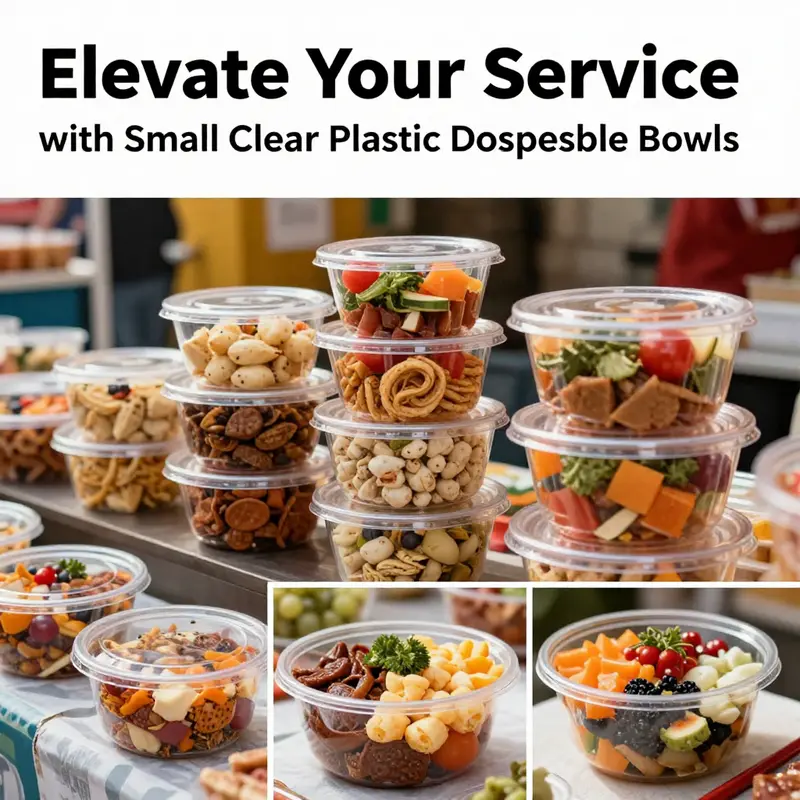
Small clear plastic disposable bowls, primarily made from polypropylene (PP), are rapidly becoming a staple in food service venues such as bubble tea shops, restaurants, and catering services. Their clarity and heat resistance make them ideal for a range of applications from serving ice cream to salads. This article explores the key functionalities, market trends, supplier insights, and environmental considerations of these versatile bowls, providing a comprehensive understanding crucial for event planners and corporate procurement teams looking to enhance their service offerings.
Crystal Clarity in a Small Package: The Design and Utility of Clear Plastic Disposable Bowls
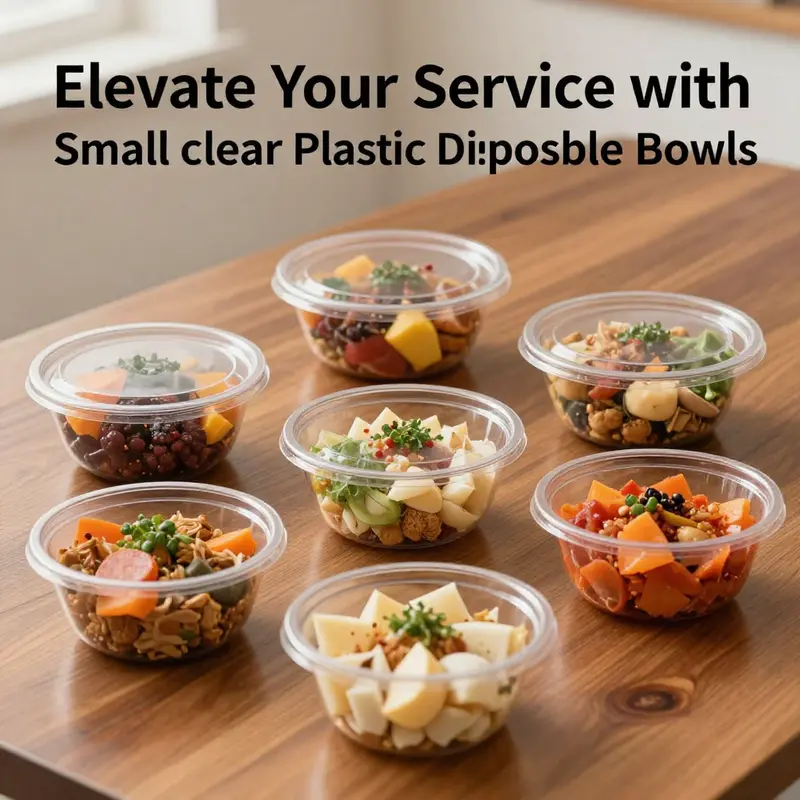
Clear, compact, and remarkably versatile, small clear plastic disposable bowls sit at a crossroads between everyday practicality and consumer appeal. They are the kind of packaging that disappears into the background yet shapes the dining experience by enabling a precise, glanceable view of the contents. In food service and modern catering, these bowls are not merely containers; they are part of the visual language that communicates freshness, portion integrity, and convenience. A chapter focused on their material makeup and design is really a reflection on how form and function coevolve when a simple bowl must satisfy a spectrum of needs—from a quick takeout bite to a carefully plated, temperature-aware dessert. The underlying choices—material selection, transparency, rim geometry, lid compatibility, and even branding potential—determine how well a bowl performs under heat, cold, transit, and repetitive use, while also shaping the perceptions of safety and quality that customers bring to a purchase decision.
At the heart of these bowls lies material science tailored to food contact. The most common materials—polypropylene PP, polyethylene terephthalate PETE, and polystyrene PS—each bring a distinct balance of clarity, strength, heat resistance, and cost. PETE is renowned for its exceptional clarity and rigidity, presenting a premium look that can elevate the perceived value of a dish simply by allowing the food inside to shimmer through a near-glass-like transparency. It makes the contents appear bright and fresh, which is particularly advantageous for salads, fruit-based desserts, and vibrant toppings where color and texture are central to consumer appeal. PS, while lighter in weight, has a long-standing reputation for transparency and cost efficiency. It can be practical for cold items and quick-serve contexts, where the emphasis is on clean lines and easy disposability rather than heat containment. PP, however, is the standout when heat resistance and durable handling are prioritized. The material can withstand hotter temperatures than PS without deformation and maintains its integrity across a wider range of serving scenarios—hot broths, stews, or warm pasta dishes that might be portioned into a small bowl for the sake of convenience. The polypropylene option, in particular, has become a touchstone for many operators who need a single vessel that can bridge cold, warm, and ambient service levels while still delivering a crisp, clear presentation. Each material’s unique profile dictates not only performance but also regulatory and safety considerations. Food-contact compliance is non-negotiable; manufacturers seek materials that carry food-grade certifications and consistent lot-to-lot quality. When a bowl is used in a high-volume service setting, a failure in material performance—such as warping under heat, clouding after repeated washing, or edge chipping during transport—can ripple into customer dissatisfaction and logistical headaches. Hence the emphasis on robust plastics that hold up under daily use while preserving the visual clarity that makes the contents appetizing.
The design of these bowls follows a similarly layered logic. Visual appeal is not a mere afterthought; it is a deliberate design objective. The crystal-clear appearance is more than cosmetic. It is a tool for product storytelling. A bowl that presents a salad glistening with moisture, a scoop of ice cream crowned with toppings, or a vibrant soup in a neat, transparent shell can significantly elevate perceived quality. Clarity becomes a storytelling device, revealing the textures, colors, and even the portions within the container, which in turn influences consumer judgments about freshness and value. Beyond transparency, the rims of these bowls are crafted to balance safety and ease of use. A smooth rim reduces the chance of accidental snags or cuts when fingers grip the edge, which is especially important during takeout and catering events where heat and rapid handling intersect. A seamless construction minimizes seam lines that can harbor residues or feel rough to the touch, contributing to a more comfortable user experience during scooping, dipping, or sipping. The structural integrity of the bowl is often reinforced by a carefully engineered sidewall profile; a well-designed wall resists deformation during stacking and transit, maintaining the crisp silhouette that signals cleanliness and care.
Leak protection and lid compatibility are additional design pillars. For many food service operators, the ability to transport meals without spills is as important as the bowl’s ability to hold liquids without sagging. A reliable lid system—whether snap-on, twist-lock, or press-fit—can transform a simple bowl into a portable meal solution, expanding its use in catering, meal-delivery kits, and on-the-go snacking. The choice to incorporate a lid is frequently a trade-off between add-on cost and the value of secure transport, but when deployed thoughtfully, lids enhance customer confidence and enable longer hold times without compromising the product’s presentation. In short, the great bowl design blends clarity with resilience, ease of use with security, and a surface that remains pristine under the pressures of daily service.
Size and customization further round out the practical considerations. A typical range might span from intimate 8-ounce portions suitable for snacks or small desserts to larger 32-ounce vessels intended for family meals or generous portions in a meal-kit setup. The size choice is seldom arbitrary; it is aligned with the expected dining context, the type of food, and the portioning strategy that a vendor wants to communicate. The visual ratio of food to container matters; a bowl that is too large for a small portion can feel wasteful, while an undersized vessel can diminish the perceived value of a dish. Beyond capacity, customization—whether through branded stickers, labels, or embossed logos—offers a practical pathway for marketers and operators to reinforce branding and personalization. A well-placed logo or color cue can make a disposable bowl feel more like a branded experience rather than a disposable accessory, a nuance that resonates in competitive food service environments where brand recognition matters.
From a safety and compliance standpoint, the chain from material choice to final use involves verification at multiple points. Food-safety certifications, consistent compliance with regulatory standards, and clear labeling about heat tolerance and dishwasher compatibility are essential for any bowl intended for direct contact with edible products. In this respect, the supplier ecosystem—whether manufacturers or distributors—plays a critical role. It is common to encounter detailed specifications, test data, and certificates of conformity accompanying product listings. Consumers and operators alike rely on this information to gauge whether a bowl meets the demands of a given application, be it a dairy-based dessert that must withstand rapid cooling and freezing cycles, or a hot soup served in a restaurant kitchen with fast service and frequent handling.
Sourcing these bowls brings expectations of a broad, yet reliable, marketplace. The search often leads to supplier platforms that aggregate a wide array of clear disposable bowls, providing details on materials, capacities, lid compatibility, and price points across volumes. This landscape of options enables operators to balance cost and performance, selecting a configuration that aligns with their service model—whether it is high-volume, price-sensitive takeout, or premium dine-in packaging that emphasizes presentation. The clarity and consistency of information become a proxy for trust, and users routinely compare margins, supplier reliability, and the ability to source replacements quickly as part of ongoing operations. In this context, the role of the supplier ecosystem transcends product specs; it also encompasses lead times, packaging compatibility with lids and other accessories, and after-sales support, including the availability of replacement parts or alternative sizes when menu needs shift. The ability to scale with demand, maintain uniform presentation across orders, and ensure that each container performs as expected under a given thermal profile all contribute to smooth service workflows and customer satisfaction.
Seamless integration into workflows is a practical reward of well-designed clear bowls. In a bustling kitchen or a fast-casual outlet, the predictability of a bowl’s performance under hot or cold loads reduces the cognitive load on staff and minimizes mishaps during busy service windows. A bowl that stacks neatly on a stackable rack saves precious refrigerator and shelf space, while a low-maintenance rim and smooth interior resist stubborn residues that can hinder quick cleanup. These operational efficiencies matter when margins are slim and the pace of service is high. The most effective designs harmonize with equipment already in place—microwaves, blast freezers, and standard dishwashing setups—so that the bowls neither become obstacles nor require expensive new processes. In this sense, the story of small clear plastic disposable bowls is also a story about systems thinking: the container is the interface between food and consumer, and the device must align with the routines that deliver meals to plates and hands with consistent quality.
As readers consider the practicalities of material choice, design, and sourcing, it is natural to seek a broader perspective on how these bowls fit into larger packaging ecosystems. The appeal of transparency, the reliance on food-grade assurance, and the capacity to adapt to both cold and hot items position clear disposable bowls as a versatile element in modern food service. They serve as a compact canvas for product presentation, enabling operators to showcase everything from a bright fruit medley to a comforting soup, while maintaining the ease of disposal that supports high-volume dining and event catering. This synergy—between visibility, reliability, and convenience—underpins the continued interest in these bowls across markets and channels. For those exploring related categories, our site’s disposable bowls section offers a gateway to understand how bowls relate to broader packaging and tableware ecosystems, linking to a spectrum of options that complements the choices discussed here. External resources from supplier platforms also offer valuable documentation and specifications, including test results and compliance data that reassure operators about material safety and performance in diverse conditions. These considerations—clarity, safety, compatibility, and sustainability—frame the ongoing evolution of small clear plastic disposable bowls as a practical, design-conscious, and commercially important packaging solution that continues to adapt to changing food service needs. External resource: https://www.alibaba.com/product-detail/Clear-Disposable-Plastic-Bowls-8oz-12oz-16oz_1600479540511.html?spm=a2700.1.wangp.1.3b2a7e4dJxkZuB
Clear, Compact, and Crucial: The Integral Role of Small Clear Plastic Disposable Bowls in Modern Food Service
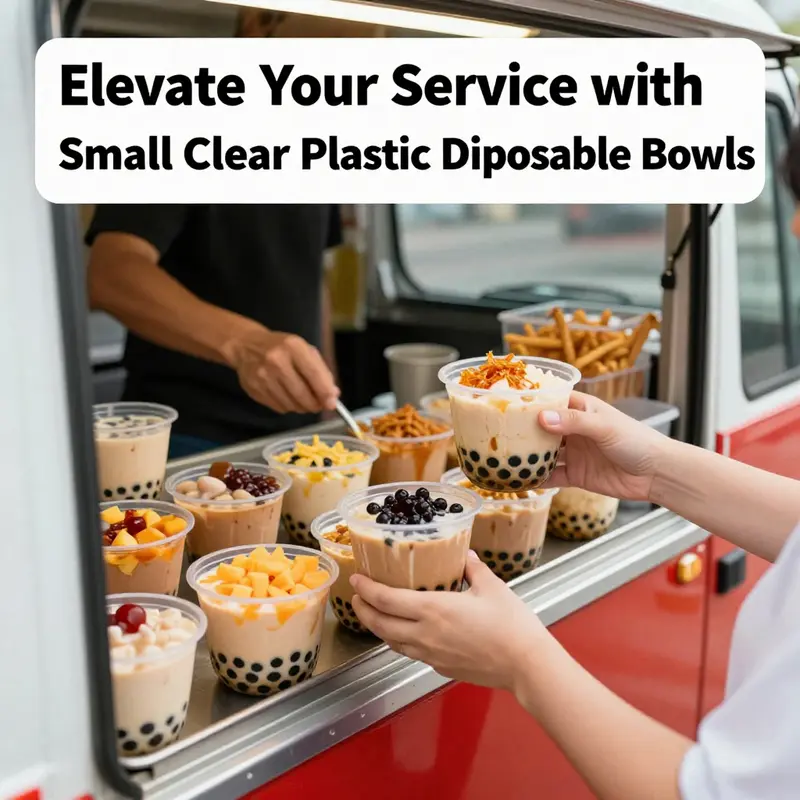
The small clear plastic disposable bowl sits at the crossroads of form and function in contemporary food service. It is compact, affordable, and nearly invisible in its simplicity until you examine how it performs. Typically holding about two hundred to two hundred fifty milliliters, these bowls are just the right size for a single serving or a petite portion, making them versatile allies in kitchens, buffets, and takeout lines alike.
The defining attribute is clarity. When transparent, the contents become the star. For salads, fruits, and desserts, the visual appeal is enhanced, inviting the diner to engage with the dish before tasting. In a buffet or catering display, the ability to view contents at a glance reduces hesitation and speeds decision making. Guests can assess freshness by looking through the sides and bottom, while staff can verify portioning with ease.
Materials and design: polypropylene provides clarity, rigidity, and heat resistance. It resists warping and holds shape under moderate heat. The smooth rim and seamless interior minimize snagging and drips. In kitchens the combination of clarity and sturdiness translates into fewer breakages and less waste, supporting cost efficiency.
Practical use: capacity of 200-250 ml supports salads, fruits, or desserts without overwhelming a plate. The bowls pair with lids to create transport-ready units, preserving freshness and preventing leaks, which is critical for catering events and delivery.
Beyond serving, these bowls aid prep and display. They can be used for mise en place or reheating where safe, stacked for efficient storage, and chosen for compatibility with microwaves and freezers within guidelines. The result is a reliable, versatile workhorse that helps maintain clean service lines and consistent presentation.
Clear by Design: Market Momentum and Supplier Dynamics for Small Clear Plastic Disposable Bowls
Small clear plastic disposable bowls sit at the intersection of practicality and perception. Their simple polypropylene shell offers clarity and resilience, making contents easy to identify at a glance while standing up to hot liquids and heavy scoops. Sized around 200 to 250 milliliters, they serve individual portions in catering, takeout, and home meal kits, balancing portion control with presentation and value.
Market momentum is driven by convenience, delivery, and the growing emphasis on appealing food displays. The Disposable Bowls market is projected to rise from about 4.5 billion USD in 2024 to roughly 7.2 billion USD by 2033, signaling sustained demand across food service and retail channels. Within this, the Plastic Bowls segment was valued at about 2.5 billion USD in 2024 and is expected to grow at about 5 percent per year through 2033. Broader categories such as Food Trays and Bowls have already surpassed 18 billion USD in 2026 and are anticipated to reach into the mid-20s by 2031, underscoring the growth of lightweight, visually engaging packaging.
Geography and supplier dynamics play a central role in this growth. Manufacturing tends to concentrate in high-volume hubs that can sustain tight tolerances on thickness, clarity, and heat resistance while meeting stringent food safety standards. Buyers benefit from large supplier networks that support rapid scaling, options for custom printing, compatibility with lids, and finishes ranging from ultra-clear to lightly frosted.
The supplier ecosystem emphasizes not just capacity but also assurances around food-grade materials, regulatory compliance, and sustainability. Certifications verifying FDA compliance for food contact, third-party testing of heat resistance and clarity, and traceability from resin lot to finished product are increasingly required. There is growing interest in recyclable, recyclable-ready, or compostable variants that preserve performance while reducing environmental impact. Suppliers are also exploring material innovations, alternative resins, and additive-free formulations to maintain clarity and heat resilience at scale.
Operationally, buyers are adopting a modular view of packaging. Small clear bowls are best seen as components within a broader packaging strategy that links visibility, portion control, and consumer convenience. This perspective guides design decisions around wall thickness, rim strength, stackability, and dishwasher durability, as well as compatibility with lids and labeling. For organizations pursuing long-term contracts or private-label programs, consistent quality, predictable lead times, and transparent certifications become key differentiators.
The procurement journey typically involves cross-functional teams from procurement, operations, and marketing. Each group weighs cost, reliability, and certifications against durability, warewashing compatibility, and brand coherence. Sustainability considerations have become a core part of decision making, increasingly favoring recyclable or compostable options where feasible without sacrificing performance or price.
From Clarity to Consequence: The Environmental Footprint of Small Clear Plastic Disposable Bowls
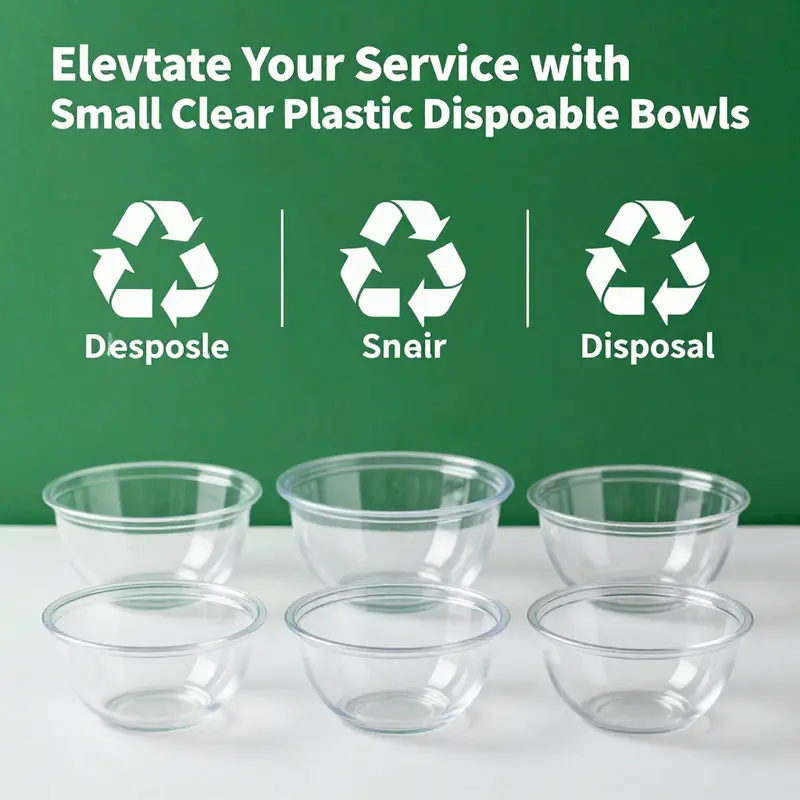
The everyday convenience of small clear plastic disposable bowls—compact, transparent, and seemingly simple—conceals a more complex reality about their environmental footprint. In food service, catering, and even home meal kits, these bowls offer a practical solution for portioning, serving, and presenting a range of items from cold desserts to light salads. Yet their clarity is matched by a growing awareness of the material and disposal challenges they pose. To understand their footprint in full, it helps to move beyond aesthetics and into the lifecycle of the plastics that render these bowls both sturdy and disposable. The journey begins with matter of composition and ends with the systems we rely on to manage waste, recycle what we can, and minimize the harm that can slip through the cracks of labelling and consumer behavior.
At the heart of most small clear bowls is a choice between polypropylene (PP) and polystyrene (PS). Polypropylene, often denoted by the resin code #5, is prized for its higher melting point and durability. It can withstand heat better, which is advantageous when bowls are used for warm sauces or reheated items, and it tends to resist cracking under pressure. Polystyrene, typically lighter and cheaper, offers cost advantages and a crisp clarity that many producers favor for display purposes. Yet PS can be more brittle and less forgiving in temperature extremes. Both materials, however, are derived from petroleum feedstocks, and both share a common environmental thread: they are not easily biodegradable and their resources are finite. In practical terms, this means that every disposable bowl represents not just a single use, but a commitment—of energy, of materials, and of waste management choices—that spans decades if mishandled or mismanaged.
Even when paired with a claim of recyclability, these bowls often face a harsh end-of-life reality. The small size of the items makes the physical separation and collection for recycling logistically challenging for many facilities. Contamination is a central barrier: remnants of oils, sauces, or moisture from foods can degrade the quality of recycled PP or PS, causing recyclers to divert the material to landfills or incinerators. In a system under pressure to divert waste from landfills, the economics of processing tiny, high-volume items can tip toward disposal rather than recycling. The lifecycle, then, becomes a series of trade-offs between the convenience of one-time use and the environmental costs of disposal. The contamination issue is not merely a logistical hiccup; it is a fundamental constraint that reshapes how much of what we throw away can be recovered and reintegrated into the production cycle.
This constraint amplifies concerns about environmental persistence. PP and PS fragments can persist in natural environments for centuries, slowly breaking into smaller pieces that persist in soils, rivers, and eventually oceans. When plastics fragment into microplastics—particles less than 5 millimeters in size—the ecological implications broaden. Microplastics can be ingested by marine life, leading to physical harm, altered feeding behaviors, or chemical exposure from additives in the plastics. Their presence in wildlife is a signal of a broader, systemic issue: plastics do not simply vanish after use. They transform and migrate through ecosystems, sometimes entering the food chain in ways that are difficult to trace or reverse.
The environmental narrative extends to how waste is managed. In many regions, the label recyclability does not guarantee actual recycling. Sorting facilities prioritize larger, more widely accepted streams; the tiny bowls often fall through the cracks of collection systems or arrive in facilities in contaminated states that render them unfit for recycling. Where recycling is possible, the process consumes energy and can release emissions. In some cases, incineration—an option used to reduce volume and extract energy—introduces air pollutants that must be controlled but are not eliminated. Landfilling, the most common fate in many locales, holds long-term implications for soil and groundwater quality as materials slowly degrade and leachates interact with surrounding environments. The remedial costs of cleaning up contaminated soils and water bodies add a diffuse yet real burden to communities that host disposal facilities and to the broader public purse.
To visualize how these pathways connect, consider not only the bowl in isolation but the system around it. The production phase consumes energy and fossil fuels, the transport phase adds carbon emissions, and the consumer phase introduces the challenge of disposal and potential recycling. Each step offers opportunities for improvement, yet those opportunities are contingent on the existence of robust collection infrastructure, clear labeling, and consumer behaviors that align with local waste management realities. The idea of recycling, in particular, becomes more nuanced when applied to small, clear bowls. Even with a recycling symbol, the end result depends on whether the material is collected, transported, and processed under conditions that preserve its value. When contamination or fragmentation reduces quality, the incentive to recycle diminishes. This is not merely a technical constraint; it reflects the socio-economic landscape of waste management, where the incentives for sorting, cleaning, and investing in specialized equipment compete with the cheapness of virgin plastic and the convenience of single-use packaging.
From a design perspective, these challenges invite a broader conversation about how we can reframe small clear bowls within a sustainable system. One path is to favor materials that offer more straightforward end-of-life management. Another is to embrace compostable alternatives that can be processed in certified industrial facilities, provided that those facilities exist and are accessible to users. Compostable materials, such as polylactic acid blends derived from plant sources, present a tempting option because they can, in principle, return organic matter to the soil. However, even compostable plastics require proper composting environments, regulated through industrial facilities that can maintain the microbial activity and temperature necessary for complete breakdown. If such facilities are absent or underutilized, compostable options may end up like their conventional counterparts: destined for landfills or incinerators rather than beneficial reuse. This is a crucial distinction that businesses, operators, and policymakers must acknowledge when selecting disposables for meals, events, or meal-kit programs. The promise of compostability hinges on system readiness as much as on material choice.
In the absence of reliable, dedicated infrastructure, the best near-term strategies emphasize reduction, reuse, and smarter design. Reducing reliance on single-use plastics does not merely cut material waste; it also changes the economic and logistical calculus of food service. Reuse strategies, when feasible, can dramatically lower per-use environmental costs. Reusable dishware—made from stainless steel, tempered glass, or other durable materials—offers a counterpoint to disposable bowls by delivering long-term value through repeated use. Yet such strategies must be integrated into operations with considerations for washing, storage, and staff workflows. For institutions and events with high turnover and strict hygiene standards, the challenge is to balance safety, convenience, and environmental responsibility. Where reuse is impractical, a shift toward clearly labeled, certified compostable options—coupled with appropriate industrial composting capacity—can mitigate some waste burdens, provided that users understand and follow disposal guidelines.
Another layer of consideration lies in consumer awareness and how disposal choices are communicated. Labels that promise recyclability can create a false sense of security if the local waste stream lacks the capacity to handle those plastics. Transparent, accessible guidance about whether a given item should be recycled, composted, or disposed of in a landfill can influence outcomes far more than market labels alone. In many cases, successful waste reduction begins with the simplest acts: choosing more recyclable or compostable options when feasible, aligning purchases with local disposal realities, and educating staff and customers about proper sorting. These micro-level shifts, when scaled, contribute to macro-level improvements in materials stewardship.
For practitioners and researchers seeking practical reference points, catalogs and supplier platforms sometimes offer deeper insights into how small clear bowls are positioned within broader packaging ecosystems. A key takeaway is that product listings and specifications can illuminate not only size, capacity, and heat tolerance but also the packaging and end-of-life options that accompany those items. While the primary aim of these catalogs is to meet demand and drive sales, they can also reveal opportunities to steer adoption toward more sustainable paths. Within this context, it is useful to explore the disposable bowls category to understand the range of solutions and how they are marketed in relation to waste management capabilities. See the disposable bowls section for a sense of the variety of forms available and the language used to describe recyclability and disposal pathways.
Beyond product-level decisions, the environmental considerations of small clear bowls intersect with wider policy frameworks and global environmental priorities. The United Nations and related environmental programs have highlighted plastic pollution as a transboundary challenge requiring coordinated action across manufacturing, consumer behavior, waste collection, and regeneration of materials. The persistence of plastics in ecosystems and the risks posed to wildlife and human health—through pathways such as microplastics—underscore the need for a systems approach. This means not only selecting materials with favorable end-of-life profiles but also strengthening the regulatory and infrastructural context in which disposal occurs. It means designing packaging with explicit end-of-life paths in mind, labeling products clearly to minimize contamination, and aligning procurement with facilities capable of handling the chosen materials in a sustainable manner. None of these measures alone solves the problem; together, they create a resilient approach that can adapt to regional differences in waste management capacity and regulatory environments.
The environmental considerations tied to small clear disposable bowls also prompt reflection on the broader consumer economy that normalizes convenience packaging. When a product is perceived as disposable, the underlying value proposition shifts away from stewardship toward immediacy. Reframing this mindset—so that disposal decisions are informed, responsible, and supported by infrastructure—can reduce environmental harm without sacrificing the benefits that these bowls provide in service settings. This reframing requires collaboration among manufacturers, retailers, institutional buyers, waste management entities, and policymakers. It calls for consistent labeling, standardized disposal guidance, and investment in facilities that can close the loop on plastics through recycling or composting where feasible. In markets where waste collection and sorting are robust, the environmental upside of improving end-of-life handling is considerable. In others, the challenge is to create the conditions for meaningful change, even if the short-term economic calculus remains complex.
For readers seeking a broader context about plastics pollution and sustainable practices, the Global Plastic Pollution Crisis Report offers a comprehensive framework for understanding how individual product choices aggregate into environmental outcomes. While the report covers a wide range of plastics and products, the underlying message is consistent: reducing reliance on single-use plastics, improving material choice, and building disposal systems that actually recover value from waste are essential steps toward reducing harm. The report emphasizes the need for action at every level—from design and production to consumer behavior and policy—so that everyday items like small clear bowls contribute less to pollution and more to a circular economy. As the field evolves, practitioners can draw on these principles to guide decisions about material selection, end-of-life options, and the integration of waste-management considerations into procurement and operations.
The practical takeaway for the industry is clear. If an operation prioritizes clear, durable, and heat-tolerant disposables without coupling those choices to a robust end-of-life plan, the environmental gains will be limited. Conversely, when design choices, collection systems, and consumer guidance align, even small, seemingly simple items can fit more harmoniously into a sustainable packaging ecosystem. For those evaluating product lines or planning a catering program, it is worthwhile to explore the disposable bowls category to understand the scope of options and to compare how different solutions address end-of-life realities. This alignment between product capability and waste-management realities helps ensure that the convenience of today does not come at the expense of tomorrow’s environment.
External resource for broader context: https://www.unep.org/resources/report/global-plastic-pollution-crisis
Final thoughts
In summary, small clear plastic disposable bowls made from polypropylene are not only versatile and practical for a variety of food applications but also reflect the ongoing market trends and buyer expectations. As you consider these bowls for your beverage chain, restaurant, or catering service, keep in mind their design benefits and the importance of environmentally responsible disposal options. Understanding these factors will empower your business to meet the demands of discerning customers while enhancing service presentation.