
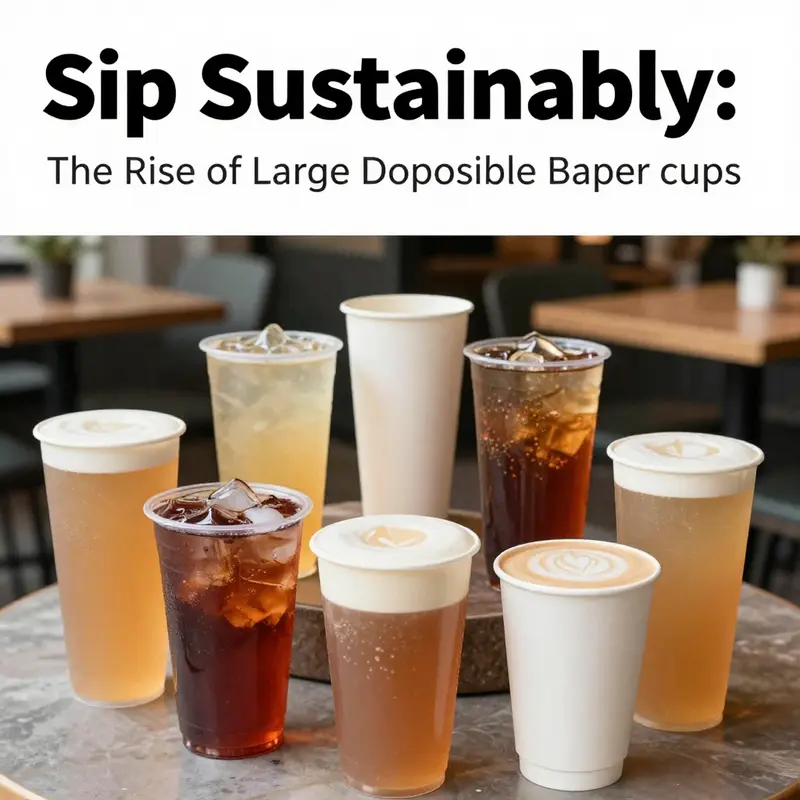
Large disposable paper cups have become an indispensable component for businesses serving beverages, from bubble tea shops to corporate events. Their convenience and eco-friendliness appeal to a broad audience, and understanding the underlying factors that influence their production and acceptance can significantly benefit your business strategy. By diving into the intricacies of manufacturing processes, environmental impacts, and evolving consumer preferences, we can uncover how these cups meet the demands of modern beverage service. Let’s explore each aspect and its relevance to your operations.
From Pulp to Pour: The Intricate Manufacturing Journey of Large Disposable Paper Cups
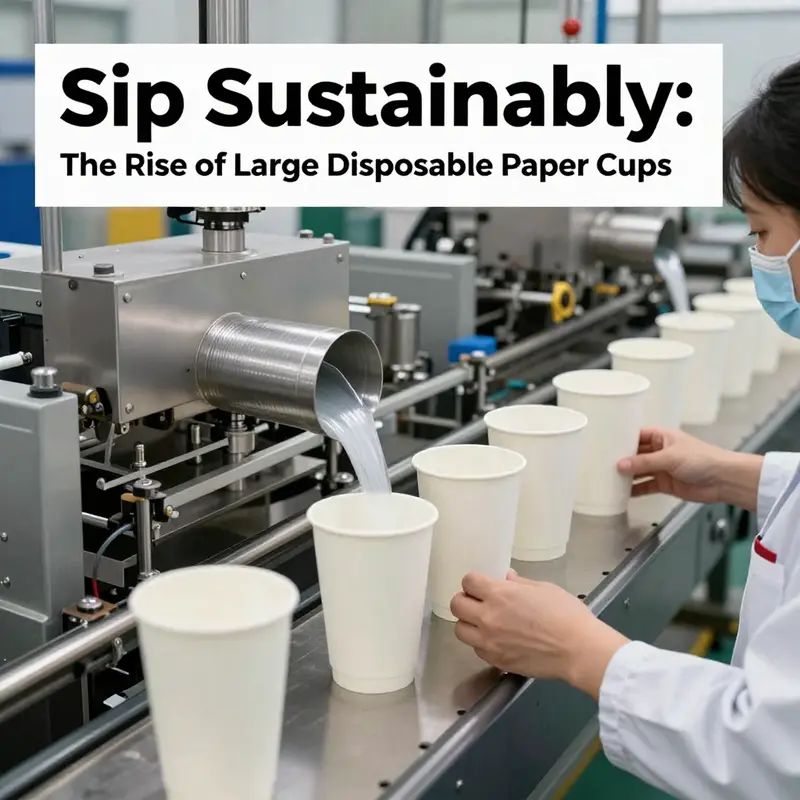
Every large disposable paper cup starts as the careful convergence of science, precision, and disciplined routine on a factory floor. It is easy to overlook the hidden choreography that turns a sheet of white board into a leak-proof vessel capable of withstanding heat, cold, and the occasional rough handling of a bustling service environment. Yet behind the smooth rim and the clean print lies a sequence of tightly controlled steps, each calibrated to balance performance, hygiene, and cost. The journey from raw material to ready-to-use cup unfolds in a rhythm that blends chemistry, mechanical engineering, and high-speed automation, and it is a story that reveals why today’s disposable cups can be both convenient and surprisingly dependable when used as intended. The broader category of disposable drinkware, which includes a spectrum of single-use vessels designed for hot and cold beverages, provides a useful frame for understanding how these cups fit into a larger ecosystem of packaging and service. For readers curious to explore that broader category further, a spotlight on the disposable drinkware collection offers a window into how different formats complement one another while sharing common manufacturing principles and quality expectations. https://cupbowlpack.com/product-category/disposable-drinkware/.
The first act in this manufacturing drama is selecting and preparing the raw material. The base is a high-quality food-grade paperboard, chosen for its stiffness, surface smoothness, and compatibility with subsequent coatings and inks. This material is often produced from chemical wood pulp and engineered to deliver consistent performance across wide temperature ranges. The paperboard is unwound from large rolls and fed into a lamination line, where an ultrathin layer of polyethylene is applied to both sides. This PE lamination is not merely a barrier; it serves as the fundamental waterproof seal that keeps liquids from seeping through the porous fibers. The inner coating faces the beverage, while the outer coating provides a smooth surface for printing. The lamination step is a delicate balance—too thick a layer, and the sheet becomes stiff and hard to fold cleanly; too thin, and the barrier properties weaken. Operators monitor lamination tension, coat uniformity, and cure conditions with a precision that would have astonished early makers of wax-coated cups. The resulting sheet is then ready for the next phase, the stage where color and branding begin to appear and the product begins to take shape in the consumer’s eyes.
Printing on the outer surface is where the cup begins its personality and market differentiation. Flexographic printing or gravure printing is commonly employed, chosen for its speed, durability, and compatibility with the inks used in food packaging. Flexo printing relies on flexible relief plates and fast, continuous runs, ideal for long, uninterrupted runs of generic or promotional artwork. Gravure, by contrast, uses engraved cylinders that can deposit very fine details and vibrant color, often delivering a richer, deeper result on the curved surface. The inks are specially formulated to be food-safe and capable of withstanding the immediate drying phase and subsequent handling. Curing methods—usually ultraviolet (UV) light or hot-air drying—lock the inks into the coating, preventing smudging as the material moves through the line and is cut into the shapes that will become cups. This printing stage is not merely cosmetic; it is a critical component of brand identity, durability, and consumer perception. The cycles are relentless, and any misregistration or pigment bleed can trigger a ripple of waste downstream. Yet modern print stations are equipped with real-time sensors and inline vision systems that spot deviations at the speed of production, enabling swift adjustments and minimizing scraps.
From printed sheets to the first recognizable cup form, the next phase is die-cutting and the modular shaping of the cup body. A large, continuous web of coated paper is fed into a rotary die-cutting machine, a feat of precision engineering. The machine carves out flat, fan-shaped blanks that will later be curved into a cylindrical body. The same system or a companion set of dies cut out the circular bases in parallel. Scrap material is collected, sorted, and sent back to recycling streams, underscoring the industry’s emphasis on waste reduction and resource recovery. The accuracy of these cuts matters because it determines how well the blanks align when wrapped around a mold and ultimately how watertight the seam will be. This is also the moment where engineers evaluate sheet tension, die wear, and the fidelity of the print on the outer surface—the print must stay intact through the slitting and forming processes to preserve the cup’s branding.
Forming the cup body is where the blank becomes a hollow vessel. Robotic arms or precisely engineered fingers guide each blank around a conical mold. The overlap edge—where the two sides of the fan-shaped blank meet—is then treated with a controlled heat source. The heat melts the PE at the seam, fusing the edges into a robust, watertight bond. As the seam cools, the blank assumes a cylindrical geometry, and the potential for leakage begins to recede. The method of heat application is carefully tuned; too much heat can deform the structure or fuse unevenly, while too little heat leaves a fragile seam that might fail under pressure. The seam quality is thus a direct measure of the cup’s reliability, especially when hot beverages are involved, where internal pressure and moisture push the material to its limits. After the seam is set, the body is ready for the base, a component that provides the bottom integrity and the means by which the cup stands against gravity and handling stress.
The base is a pre-formed circular disc that is aligned with the cup body using specialized vacuum positioning and alignment systems. Once in place, the joint between base and body passes through a sealing station where heat and pressure fuse the layers together. The objective is to create a permanent, leak-proof junction that remains durable through the cycle of refills, lifts, and transport. The base’s fit is not merely about sealing; it also influences how the cup distributes load when stacked, how it behaves when knocked or tipped, and how well it holds its shape under heat. Any misalignment or weak bond up here can compromise the entire structure, which is why the base and body engagement is treated with as much precision as the seam itself.
After the base is sealed, the rim of the cup receives special attention through a curling process. The top edge is guided through rollers that gently bend the edge inward to create a smoothly finished lip. This curl serves multiple purposes: it reduces the risk of papery splinters touching lips, it strengthens the mouth opening to minimize deformation during use, and it contributes to a more comfortable grip as the cup is lifted or passed along a serving line. The lip’s geometry also affects how a lid fits when one is employed, influencing both sealing performance and user experience. The curling operation is particularly important for larger cups, where the increased diameter can magnify any irregularities around the rim. The result is a cup that not only looks finished but also feels confident in hand and against the lips.
Quality control completes the core manufacturing sequence. The finished cups travel along automated conveyors where high-resolution sensors inspect dimensional accuracy, print fidelity, seam integrity, base attachment, curl quality, and overall symmetry. Defective units are automatically rejected by the line before they can be packed, reducing the risk of customer-facing issues. The cups that pass muster are counted, stacked, and wrapped or boxed for distribution. At this stage, the cups transition from production to packaging and finally to the warehouse, where they await bulk orders or retail placement. The entire line is designed to maintain hygiene standards, with cleanroom-like practices in some facilities and strict contamination controls in others. The goal is to present a product that is not only visually appealing but hygienically secure, a combination that is essential for beverages meant to be consumed on the go.
The design choices embedded in this process—such as using double-wall or ripple-wall configurations—emerge from a careful calculus of insulation, comfort, and usability. For hot beverages, double-wall variants provide a barrier that protects hands from heat while keeping the liquid at the desired temperature longer. For cold drinks, insulation can minimize condensation and keep the exterior from becoming slick or slippery to grip. Each variation necessitates adjustments in the forming and sealing steps. The double-wall structure, for example, introduces additional layers and joints that must be precisely joined to prevent leaks. The ripple-wall approach adds a corrugated geometry that enhances insulation with less material but demands more careful control of tolerances during forming. In practice, these design choices must harmonize with the printing and coating steps so that the final product remains visually sturdy and functionally reliable across a range of temperatures and beverages.
Beyond the physical mechanics, the manufacturing story is also a narrative of efficiency and sustainability. The industry has established robust recycling streams for offcuts and scrap from the die-cutting stage, feeding them back into the paperboard supply chain or converting them into other packaging substrates. Lamination residues and cleaning effluents are managed through process controls and environmental compliance programs that minimize waste and optimize energy use. The footprint of a cup’s production is thus a composite of material efficiency, energy intensity, and waste management strategies, all of which must align with customer expectations for value and environmental responsibility. These considerations are especially salient as large volumes and standardized formats dominate the market. In practice, the capacity to produce tens or hundreds of thousands of cups daily hinges on automation, careful capital planning, and the ability to maintain consistent quality across long production runs. The modern plant blends robotics, precision sensors, and human expertise to sustain a balance between throughput and reliability.
The equipment and workflows described here do more than just manufacture cups; they enable a service culture. Cafés, restaurants, and event organizers rely on consistent cup performance to deliver predictable experiences. The cups must perform under heat, resist leakage, tolerate stacking and transport, and present branding in a legible, attractive way. The customization options that manufacturers offer—such as OEM printing of logos or branding on the outer surface—require not just printing prowess but coordination across the entire line to ensure alignment of artwork, color management, and durability of the print under service conditions. In practical terms, this means that a single cup is not merely a disposable item but the culmination of a design language that communicates a business’s identity while delivering function. The intersection of aesthetics and utility on a single cylinder is where the craft of manufacturing large disposable cups reveals its most compelling aspects.
From the plant floor to the customer’s hand, the manufacturing journey is also a dialogue with supply chain realities. Minimum order quantities (MOQs) and lead times shape how buyers plan campaigns, seasonal promotions, or large events. The economics of high-volume production drive prices per piece downward, enabling widespread adoption of these cups across diverse markets. Yet the heart of the process remains the same: a disciplined sequence that respects hygiene, integrity, and user experience. That discipline extends to packaging and logistics, where cups are counted, wrapped, boxed, and palletized with attention to ease of transport and protection against deformations during shipment. The packaging itself may be designed to minimize space and weight while maximizing protection, a subtle but important element in the overall lifecycle of the product.
In this broader context, a cup’s journey does not end at the loading dock. The choices made during manufacturing—materials, coatings, seals, and printing—determine how the cup interacts with the beverage within, and how it is perceived by the consumer and the host organization. The entire ecosystem depends on the reliability of each link in the chain, from the quality of the base sheet and the precision of the lamination to the durability of the seam and the comfort of the lip. The chapter’s exploration of each stage reveals how a seemingly simple object embodies a sophisticated blend of science and logistics. It is a reminder that the ordinary, when viewed through the lens of manufacturing, carries with it the complexity of engineered systems, the discipline of process control, and the subtle art of presenting a product that is both practical and pleasing to the eye.
For readers who wish to explore related aspects of the packaging landscape, the broader material and category family that cups belong to can provide useful context and possibilities for cross-category thinking about design and production. See the disposable drinkware category for related formats and configurations that share similar manufacturing principles, signaling how innovations in one area can ripple into others across the family of single-use tableware.
External technical reference for further depth on the production process of disposable cups can be found here: https://www.papercupmanufacturing.com/production-process-of-disposable-paper-cups/.
The Hidden Footprint: Unpacking the Environmental Toll of Large Disposable Paper Cups in a World of Convenience
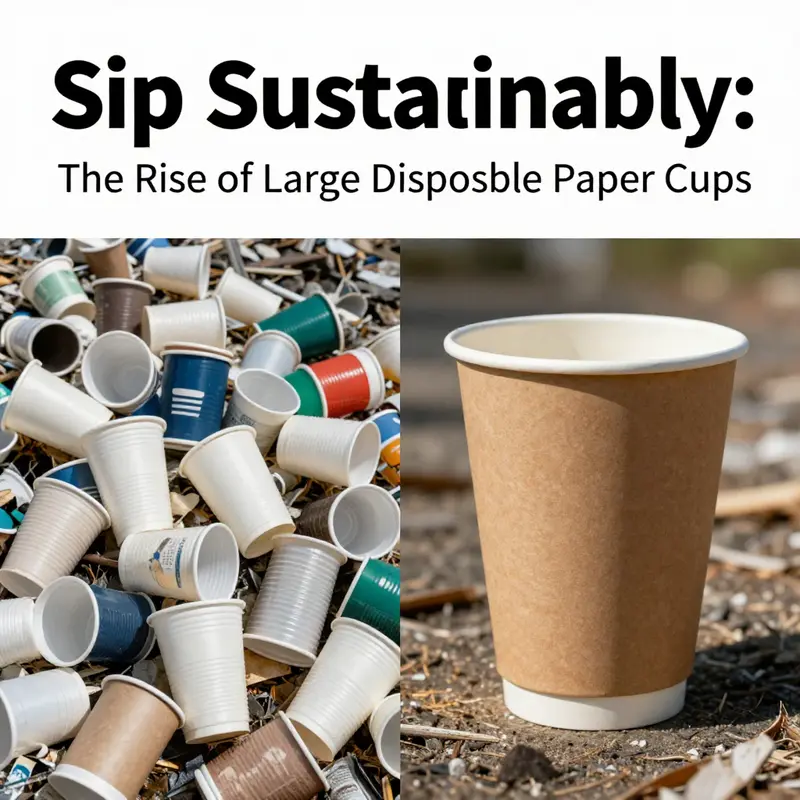
A cup that can be peeled from a paper sleeve, filled with a hot latte, and discarded with minimal effort seems almost too convenient to critique. Yet the environmental story of large disposable paper cups—typically 16 ounces and larger—is not simply a tale of trees and cardboard. It is a narrative that travels from forest to factory to landfill, crossing borders and industries, and looping back to the consumer with new packaging, new branding, and a new set of stewardship questions. The very design that makes these cups appealing for cafes and events—lean production, a hygienic seal, and a lightweight, portable package—also reveals the paradox at the heart of modern single use. The materials, the coatings, the waste streams, and the logistical networks that deliver these cups to millions of mouths daily all contribute to a life cycle whose environmental costs extend far beyond the moment when the beverage is poured and the cup is set down.
At the heart of the environmental assessment is a robust, if sobering, set of life cycle indicators. A single large disposable paper cup, in its most common form, carries an imprint of approximately 0.24 kilograms of carbon dioxide equivalent in its production. That figure encapsulates more than just the energy required to heat the kiln or to press sheets of wood pulp into shape. It also includes the upstream emissions from forestry operations, the energy mix used in manufacturing, and the transportation that moves raw materials and finished cups to markets across continents. Water use runs high in the pulp and paper sector, and for a large cup the fresh water footprint can be around 10 liters. The energy demand, while outwardly modest per unit, compounds when multiplied by millions of cups shipped weekly to coffee shops, airports, and events worldwide. The combination of raw material extraction and processing, coating, forming, drying, and packaging underlines a systemic energy intensity that is not easily offset by the consumer’s decision to recycle or reuse.
The design choices embedded in large cups are equally consequential. To prevent leakage when hot beverages are contained, these cups are usually lined with a polyethylene film. The purpose is straightforward: a thin plastic barrier keeps the interior from soaking through and helps maintain structural integrity as heat flux travels from the liquid to the cup walls. From an end-of-life perspective, that plastic lining presents a formidable obstacle. It is precisely this barrier that hinders efficient separation of paper and plastic in many recycling streams, creating a challenge for municipal programs that strive to reclaim each material in its pure form. The consequence is a high rate of contamination in recycling processes and a disappointing gap between intention and outcome when households and businesses attempt to recycle disposable cups.
Even as the cup design aims to support both consumer comfort and brand differentiation, other features can influence the environmental calculus in ways that are not always obvious. Double-wall and ripple-wall constructions are marketed for better insulation and a more comfortable hold, especially for hot drinks, yet these features add extra material and manufacturing steps. The insulation is a benefit for the consumer and for the café business in terms of perceived quality and service speed, but it adds to the embodied energy and to the material footprint. As a result, the environmental performance of a large disposable cup cannot be reduced to a single metric; rather, it emerges from the interplay of liner material, wall construction, and the efficiency of the broader supply chain.
The sourcing of raw materials carries its own environmental weight. Virgin wood pulp, characteristically used in many large cups, is associated with deforestation and habitat disruption when demand is high and forest management is not optimized for long-term sustainability. Even when recycled content is used, the overall footprint of the cup reflects an industry that must balance demand with forest stewardship, pulp milling, bleaching, and other processes that contribute to greenhouse gas emissions and water pollution. The policy and market emphasis in some regions on certified sustainable forestry can temper some of these impacts, but it does not erase them. The industry as a whole confronts a broader structural question: can a packaging solution built on single-use cycles align with a vision of a truly circular economy without dramatic shifts in usage patterns and end-of-life management?
A growing body of research has challenged the assumption that disposable cups are inherently more eco-friendly than plastics simply by virtue of being paper. A 2024 study published in ScienceDirect highlights a troubling dimension of the discourse: the toxic potential of both paper and plastic take-away cups to aquatic ecosystems. The study found that chemical leachates from coatings or additives can pose serious risks to aquatic midges, a key indicator species in freshwater ecosystems. The finding undermines the simplistic narrative that paper cups are inherently safer for water bodies simply because they are derived from a renewable source. It underscores the need to understand the chemistry of coatings and the fate of residuals that enter waterways through improper disposal, as well as the larger question of how consumer waste interacts with municipal water treatment and natural habitats.
The broader issue of end-of-life fate cannot be separated from recycling infrastructure. Across the globe, the share of disposable coffee cups that actually get recycled is astonishingly small. In many regions, less than 1 percent of single-use cups find their way into effectively processed recycling streams. This statistic is not a statement about consumer intention alone; it reflects systemic barriers: the lack of standardized separation processes, confusion about what is recyclable, and the complexities of post-consumer sorting that can inadvertently condemn cups to landfills. Even in places with dedicated cup recycling programs, the separation of the paper from the plastic liner remains a technical hurdle that requires specialized equipment, consistent quality streams, and consumer cooperation that is not always achievable at scale.
Where cups do end up in landfills, they face a slow and energy-intensive decay process. In the absence of sophisticated composting infrastructures, the paper component degrades slowly and can contribute to methane generation as organic material breaks down anaerobically. The plastic lining, meanwhile, persists far longer, continuing to fragment and leach chemicals if exposed to environmental conditions for extended periods. The methane emissions from landfills are a critical climate consideration, especially given the response time needed to address warming trends. In this sense, the disposal phase of the large disposable cup becomes a climate and pollution issue that does not vanish when the beverage has been consumed and the cup is out of sight.
When compared with reusable alternatives, the picture becomes more nuanced. Stainless steel or glass cups carry a higher upfront environmental cost, driven by manufacturing and the energy required to produce durable materials. However, these cups can achieve environmental advantages after a number of uses, which varies with material, care practices, and the energy sources used for cleaning. Analysts often estimate a break-even window somewhere in the range of 20 to 50 uses, with shorter or longer horizons depending on the lifetime and maintenance of the reusable option. The key insight is not simply that reuse is better or worse than single-use in all circumstances, but that the environmental payoff of reuse depends on behavior, cleaning efficiency, and the local electricity mix. A manufacturing advantage for a reusable cup does not automatically translate into a lower footprint unless the cups are used and maintained in a way that maximizes resource efficiency.
This complexity has practical implications for businesses and policymakers alike. For businesses, the climate and resource footprint of packaging bears on branding, procurement, and customer experience. The choice between offering large disposable cups versus encouraging a reuse program hinges not only on cost and convenience but on the broader goal of reducing environmental impact over the entire life cycle. The design of a cup, the packaging and branding that accompany it, and the end-of-life options available to customers form a chain of decisions that either amplifies sustainability or undermines it. In the domain of packaging and service design, small adjustments can cascade into meaningful environmental outcomes. For instance, opting for liners that facilitate more efficient separation in specialized recycling facilities, or supporting take-back schemes that enable durable, reusable cups to circulate within a business ecosystem, can alter the hidden balance of environmental costs.
Institutional and consumer behavior intersect in compelling ways. On the one hand, customers value hygiene, speed, and the assurance that a cup is clean and safe for use. On the other hand, awareness of environmental trade-offs grows, pushing brands to consider alternatives such as offering incentives for customers to bring a personal cup or to participate in a return-and-reuse program. The friction between convenience and responsibility is not easily resolved by a single policy or a single product category. Rather, it demands a holistic approach that considers production, distribution, consumer habits, and waste management as a continuous loop. The dialogue around single-use cups can thus evolve from a binary choice—paper versus plastic—to a more nuanced conversation about the systems that support or constrain sustainable packaging.
Within this system, the supply chain also reveals opportunities for improvement. Suppliers and manufacturers have long offered customization options that let brands imprint logos, names, or designs on their cups and packaging. This practice, while primarily a marketing tool, carries environmental implications as well. Customization adds steps in the production process, consumes additional ink or coatings, and potentially increases the weight or thickness of the cup when brand differentiation requires extra surface area or protective layers. Yet customization also reflects the demand for consumer recognition and loyalty, which in turn can influence how a product is used and disposed. A nuanced assessment thus recognizes that branding efforts can influence behavior in ways that either support environmental goals or undermine them, depending on how the messaging aligns with the end-of-life pathways available to customers.
A practical path forward lies in recognizing the interconnectedness of product design, consumer behavior, and waste management. If large disposable cups remain part of the beverage service landscape, then maximizing their environmental benefits requires a multi-pronged strategy. This includes designing coatings that are easier to separate in recycling operations, pursuing certified sustainable wood sources, and investing in infrastructure that can reclaim both the paper and the plastic components in a way that minimizes contamination. It also involves honest communications about what happens after use, clarifying whether cups are accepted in local recycling streams or treated as waste, and providing clear instructions to minimize improper disposal. For businesses that prioritize branding alongside sustainability, linking packaging choices to visible, verifiable environmental outcomes can help reconcile consumer expectations with ecological constraints.
In the end, the question is not simply whether large disposable paper cups are environmentally friendly or harmful. It is about understanding the full life cycle and the system boundaries that shape those outcomes. It is about acknowledging that renewable material does not automatically equate to environmental virtue if the downstream processes fail to recover value or mitigate ecological harm. And it is about embracing a more deliberate approach to packaging that emphasizes reuse, where feasible, and that improves recyclability and end-of-life management where reuse is not a practical option. The compelling takeaway from the current evidence is that the environmental case for large disposable paper cups rests on more than the presence of wood pulp; it rests on the entire chain of production, use, and disposal, all of which must align with a vision of sustainability that is resilient, transparent, and verifiable. If the goal is to reduce the ecological footprint of beverages in public and commercial spaces, then the path forward is as much about behavior change and system design as it is about material science. For readers who want to explore the breadth of options and supplier perspectives in this space, note the broader packaging category that includes disposable drinkware and related products, which can be found in the paper cups category. paper cups category.
External research and ongoing studies will continue to refine our understanding of these dynamics. The ScienceDirect article cited here provides a rigorous examination of the environmental and ecological implications associated with disposable cup use and highlights that both paper and plastic options carry nontrivial risks to aquatic life when coatings or additives leach into waterways. This underscores the necessity of improving end-of-life pathways and rethinking packaging strategies in ways that minimize chemical exposure to ecosystems while maintaining the hygiene and convenience that consumers expect. For a more detailed discussion of these findings, see the external resource linked at the end of this chapter.
External research: ScienceDirect article on the environmental and ecological implications of disposable cups. https://www.sciencedirect.com/science/article/pii/S004896972400688X
From Convenience to Conscious Choice: Navigating Market Trends in Large Disposable Paper Cups
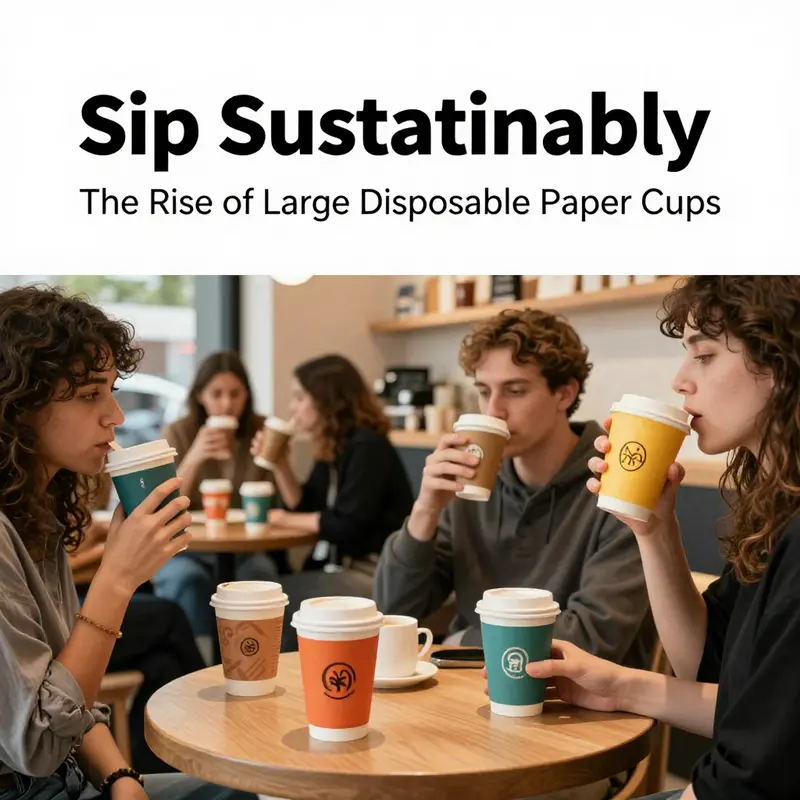
The market for large disposable paper cups is shifting under the weight of evolving consumer expectations, regulatory pressure, and a rapidly changing takeaway economy. What once resembled a straightforward supply chain—paper cups produced, filled with hot or cold beverages, and delivered to a customer—has become a complex, iterative ecosystem where sustainability, design, and brand storytelling increasingly matter as much as price and convenience. In China, a focal point of this transformation, the trajectory is clear: a robust growth path tempered by the imperative to align with environmental priorities and consumer values that favor not only function but also responsibility. As volumes rise and the industry scales to meet demand, the narrative that unfolds is less about disposable convenience and more about a balance between economic viability and ecological accountability that can sustain momentum in a crowded and competitive market.
A key driver of this momentum is the expansion of the takeaway economy. The daily ritual of grabbing a coffee or tea on the go has matured into a habit that favors speed, reliability, and hygienic assurance, especially in a post-pandemic context where customers expect consistent performance with every cup. The result is a market that rewards reliability and convenience but also prompts suppliers to differentiate through material innovation, packaging design, and service models that reduce friction for both retailers and end consumers. In practical terms this means a growing demand for large disposable paper cups that can stand up to the rigors of busy service environments—hot liquids, long service hours, and varied transfer points—without compromising the user experience. The heat of a latte or the chill of an iced tea must be matched by a cup that feels sturdy in the hand, stays leak-free, and preserves temperature long enough for customers to enjoy their drink at leisure. In tandem with performance, the willingness to pay for improved features has risen. Consumers increasingly look beyond basic functionality to consider the broader value proposition of a cup—the story it tells about the brand, the perceived quality of the experience, and the alignment with personal values around sustainability.
The regulatory environment is another central factor shaping demand. A string of policy initiatives designed to curb plastic usage and encourage sustainable packaging has begun to redefine what success looks like for cup manufacturers and their customers. When policymakers implement limits on single-use plastics or impose standards for compostability, suppliers respond not with retreat but with rapid innovation. The focus shifts from simply producing a large volume of cups to delivering packaging that meets new criteria for recyclability, biodegradability, or compostability, while maintaining performance and cost efficiency. For the consumer, this translates into a perception that choosing a cup is choosing a set of environmental ethics, whether explicit or implicit, and that perception increasingly drives brand loyalty and repeat purchasing. In markets where regulatory signals are strongest, companies are more likely to invest in coatings that resist heat without compromising compostability, or in paper layers and liners that reduce leakage while enabling more straightforward end-of-life processing. The overarching message for manufacturers and retailers is clear: regulatory pressure, when coupled with consumer awareness, accelerates investment in smarter, cleaner packaging solutions.
Forecasts for growth in the Chinese disposable paper cup segment reflect these dynamics. Analyses project a rise from 120 billion RMB in 2023 to about 180 billion RMB by 2026, signaling sustained expansion driven by the expansion of the takeaway economy and a rising preference for convenient, hygienic options. The numbers point to a market that remains robust even as it becomes more discerning. Growth is not simply a function of more cups being produced and sold; it is increasingly about the quality of the cups and their alignment with consumer expectations for sustainability and customization. In an environment where the consumer is exposed to an ever-widening array of options, the ability to offer differentiated products—themed designs, premium finishes, or branding opportunities—becomes a tangible driver of market share. A cup is no longer just a vessel; it is a canvas on which brands tell stories about quality, care for the environment, and attention to detail.
The changing preferences of consumers expand far beyond the basic ability to hold hot beverages comfortably. There is a pronounced appetite for premium experiences and customized packaging, particularly in higher-end and specialty segments. Consumers increasingly equate the packaging with the product’s value proposition, and the cup itself becomes part of the sensory and aspirational experience. Finish and color, texture, and even tactile cues convey messages about a brand’s identity and its stance on sustainability. The demand for customization dovetails with a willingness to invest in branding opportunities that elevate a retailer’s or café’s image. In practice, this means more providers offering OEM printing, logo placement, and bespoke design options on large cups, enabling businesses to reinforce their brand at the point of sale and throughout the customer’s drinking journey. The implications extend to supply chains as well: the shift toward customization elevates order complexity, increases the importance of lead times, and necessitates tighter collaboration between buyers and manufacturers to ensure that the final product aligns with brand guidelines without sacrificing performance.
Alongside design-driven differentiation, sustainability has moved from a niche concern to a pervasive consumer expectation. The modern consumer increasingly demands packaging that reflects environmental stewardship. This does not simply mean a cup that is recyclable; it means a cup whose entire lifecycle—from raw material sourcing to end-of-life disposal—aligns with ethical and environmental values. Biodegradable materials and improved heat-resistant coatings are no longer mere technical enhancements; they are essential elements of the value proposition for many buyers. In the context of large cups, where the balance of heat retention, structural integrity, and end-of-life outcomes is particularly challenging, the push toward more sustainable solutions becomes a competitive differentiator. The market is responding with innovations that aim to maintain performance while reducing environmental impact, a dual objective that resonates with consumers who want both convenience and responsibility.
The conversation around business models reveals an industry in flux, experimenting with how best to deliver packaging solutions in a way that matches modern consumption patterns. Subscription-based delivery systems and platform-enabled operations are gaining traction as mechanisms to streamline procurement, ensure consistent quality, and reduce the friction associated with bulk orders. Such models can help retailers and foodservice operators manage demand more predictably, secure preferred pricing through volume commitments, and receive regular updates on material innovations and regulatory changes. At the same time, these platforms enable a more agile response to shifting consumer tastes. By aggregating data across numerous clients, platforms can identify trends in preferences, forecast demand for premium or customized cups, and facilitate quicker iteration on new designs. The result is a more dynamic ecosystem where manufacturers and buyers co-create value, rather than a static supply chain defined solely by price and volume.
From a production standpoint, the industry is undergoing a technological revolution that promises greater efficiency, tighter quality control, and more transparent sustainability attributes. Smart manufacturing technologies, digital management systems, and advances in materials science are converging to shorten cycles from concept to market while improving consistency across large runs. This is particularly important for large cups, where the margin for error is higher due to the demands of hot beverage service and the need to avoid leaks. The integration of sensors, digital twins, and real-time analytics enables producers to monitor coating integrity, liner performance, and overall cup resilience with unprecedented precision. Such capabilities support not only quality but also traceability, allowing brands to verify compliance with sustainability targets and communicate those efforts to consumers who increasingly expect accountability.
Product innovations are central to this narrative of market evolution. Improved heat-resistant coatings, more effective biodegradable materials, and design optimizations that reduce material usage without compromising strength are at the forefront of R&D. The goal is to deliver cups that meet or exceed current performance thresholds while offering a cleaner environmental profile. For example, coatings that resist soaking and scuffing under hot beverage conditions extend cup life in the hands of the consumer and reduce waste through fewer failures and spillages. Biodegradable or compostable liners address disposal concerns, providing a pathway toward more responsible end-of-life outcomes. Yet innovation must also consider the practical realities of supply chains and waste management infrastructure. A cup may be technically compostable, but if the local facilities lack appropriate processing capacity, the environmental benefit is diminished. As a result, manufacturers, retailers, and municipal or regional waste systems must coordinate to realize the full potential of these technologies. In this context, the market rewards not only technical excellence but also a holistic approach that considers the entire lifecycle of the cup.
Brand strategy and aesthetics have become integral to success. Consumers increasingly favor brands that communicate values through their packaging. The cup becomes a micro-billboard, carrying not just the beverage but also the brand’s narrative about quality, sustainability, and social responsibility. Design is no longer about catching the eye; it is about signaling a commitment to a philosophy of responsible consumption. In practice, this translates to packaging choices that blend form and function—cups with comfortable grip textures, accurate print fidelity for logos and messaging, and finishes that convey premium quality while remaining mindful of environmental impact. The net effect is a virtuous cycle: brands invest in better packaging, consumers respond with loyalty and willingness to pay, and the market rewards suppliers who can deliver this combination of aesthetics, performance, and sustainability at scale.
The chapter’s data-driven forecast hints at a future where the cup is not a disposable afterthought but a deliberate, value-added component of the beverage experience. The projected growth to 180 billion RMB by 2026 is not merely a reflection of higher consumption; it is evidence of an economy that recognizes packaging as a strategic asset. The convergence of consumer expectations for premium and customized experiences with the necessity of sustainable packaging will continue to shape product design, marketing, and procurement decisions. For players in the market, this means adopting a posture of continuous innovation, embracing smarter manufacturing and smarter sourcing, and communicating clearly about environmental goals and performance metrics. And for consumers, the evolving landscape offers more choices that align with personal values without compromising convenience or enjoyment.
Within this broader ecosystem, the role of brand and design cannot be overstated. The consumer’s perception of value is now closely tied to visual appeal and tactile quality, both of which influence purchase decisions at the shelf and in the moment of consumption. A well-designed cup can elevate the perception of a brand, making a simple coffee feel more like a curated experience. This perceptual edge translates into measurable outcomes—higher retention, increased orders per customer, and the potential for scale through premium segments. However, this trend also raises questions about cost management and supply stability. Premium, customized cups command higher unit prices and may come with longer lead times or minimum order quantities. Thus, winning players will be those who blend design-driven differentiation with disciplined operations, balancing cost with value and ensuring that premium offerings remain accessible to a broad audience through effective pricing strategies and targeted market segmentation.
In the closing reflection of this market narrative, the synergy between consumer preference and technology emerges as the defining force. Consumers want cups that perform reliably, look appealing, and align with their values. Manufacturers and retailers respond with innovations that improve performance, enhance branding, and reduce environmental impact. The result is a marketplace where large disposable paper cups are more than a practical necessity; they are a platform for environmental stewardship, customer experience, and strategic differentiation. The trajectory is clear: as long as the industry remains attentive to evolving preferences and proactive in adopting scalable, sustainable technologies, the market will continue to grow, and the cups that carry beverages to people every day will do so with greater purpose and elegance. For businesses seeking to explore the breadth of packaging options and related categories that inform this sector, the broader catalog of paper cups offers a useful reference point and a source of inspiration for future product lines and campaigns.
In a practical sense, this means that buyers should approach procurement with a view toward long-term value rather than short-term savings. The choice of large cups should factor in not only price per piece but also durability, end-of-life outcomes, and brand resonance. Those who succeed will be the ones who align with the customer’s evolving idea of responsibility and quality. They will invest in partnerships with suppliers who can deliver consistent quality across large orders, who can customize designs without sacrificing performance, and who can provide transparent information about materials and disposal options. The market’s trajectory suggests that this alignment will be rewarded with stronger customer relationships, higher margins in premium segments, and broader acceptance of sustainable packaging as a standard rather than an exception. The cup, in this sense, becomes a conduit for value creation rather than a disposable afterthought, reinforcing the idea that what we drink is inseparable from how it is packaged and perceived.
To connect the discussion with practical pathways for brands and buyers, consider the accessible catalog of packaging options that sit at the intersection of function and aesthetics. For those exploring the breadth of what large cups can offer in terms of design and branding, a useful point of reference is the paper cups category, which showcases a spectrum of styles, finishes, and customization possibilities that can elevate a beverage’s presentation without compromising performance. This category serves as a tangible reminder that the packaging choices we make have the power to reinforce a brand’s story and reinforce consumer confidence in product quality. As the market continues to evolve, staying attuned to such options will help organizations respond effectively to shifting consumer demands while maintaining efficient, scalable operations. paper cups is one such touchpoint that links to a broader ecosystem of disposable tableware and related packaging solutions, illustrating how interconnected this space has become and how design thinking now plays an essential role in packaging strategy.
The broader takeaway from the current and emerging dynamics is this: the large disposable paper cup market in China and similar markets is poised for sustained growth, but success will hinge on balancing performance with responsibility. Companies that can deliver cups that hold temperature and resist leaks, while also delivering on the promise of sustainable materials and transparent lifecycle information, will command a premium in the marketplace. Innovation will not be an occasional update; it will be the engine that propels value across price, branding, and environmental impact. The consumer’s evolving tastes—the desire for premium experiences, personalized packaging, and ethical alignment—will continue to steer investment toward materials science, digital-enabled production, and inclusive design that accommodates diverse consumption contexts, from busy street-front takeaway to scheduled premium service experiences. The future of large disposable paper cups, therefore, lies at the intersection of convenience, design, and responsibility, with each element amplifying the others to create a more compelling, resilient market.
In sum, the market is moving toward a model where volume and value are not mutually exclusive. The Chinese disposable paper cup segment, anchored by takeaway growth and buoyed by sustainability innovations, represents a dynamic arena in which consumer preferences and technical capabilities reinforce one another. Brands that successfully merge aesthetic appeal with transparent environmental commitments and reliable performance will be well positioned to capture momentum in a landscape that prizes both convenience and conscience. As manufacturing technologies mature and regulatory frameworks evolve, the pathway to sustainable scale will become clearer, enabling producers to deliver cups that meet rigorous standards while still delighting customers with design and practicality. This is the essence of the contemporary market for large disposable paper cups: a space where every cup tells a story of progress, practicality, and purpose.
External resources that offer a broader view of the principles shaping sustainable consumption and production, and the pathways that packaging innovation can take in the coming years, can provide helpful context for readers seeking to connect market trends with global goals. See the sustainable development framing at https://www.un.org/sustainabledevelopment/sustainable-consumption-and-production/ for a global lens on how packaging choices fit within broader efforts to reduce environmental impact while sustaining economic activity.
Final thoughts
As we wrap up our exploration of large disposable paper cups, it’s clear they are more than just functional items; they reflect the evolving paradigm of consumer preferences, environmental consciousness, and innovative manufacturing techniques. For bubble tea shops, beverage chains, and event planners, understanding these facets is crucial to making informed decisions that enhance both service quality and sustainability. Embrace the potential of these versatile containers and position your business for future success.