
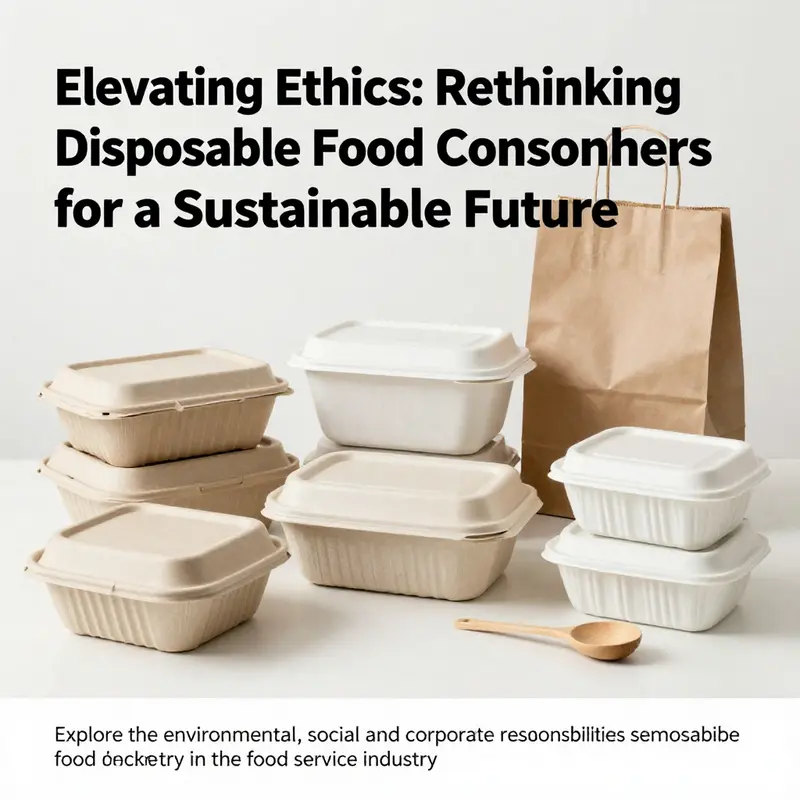
As consumers increasingly demand convenience in their meals, the ethics of disposable food containers have come under scrutiny in recent years. Beverage chains, restaurants, food trucks, catering services, and event planners face a growing need to reconcile the benefits of single-use packaging with the environmental costs and social implications. This exploration delves into various aspects of the ethical dilemma, spanning environmental concerns, social justice implications, corporate responsibility, consumer choices, and the need for effective regulatory measures. Each chapter will provide insight into navigating these multifaceted challenges while fostering sustainable practices in the food service industry.
Rethinking Convenience: The Hidden Ethics of Disposable Takeout Packaging in The Washington Post
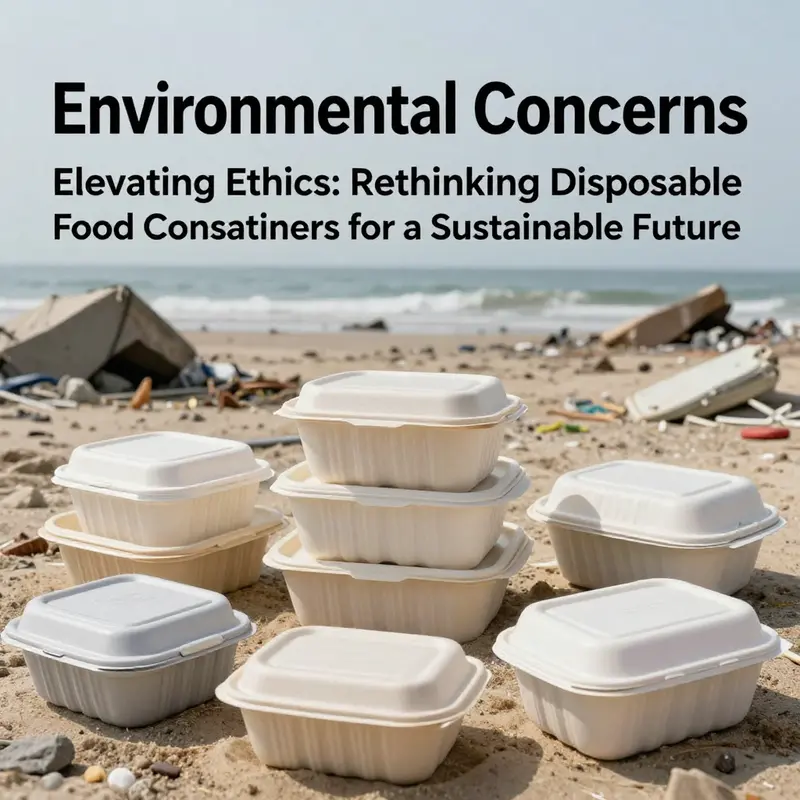
A single takeout meal can embody a contradiction that only becomes visible when viewed through an ethical lens. The Washington Post’s examination of disposable containers frames this paradox clearly: the ease of grabbing a hot meal in a single-use vessel arrives with a cost that is often hidden, dispersed, and long-lasting. The chapter that follows asks not whether convenience should be tossed aside, but how to align convenience with responsibility in a system built on speed, appetite, and scale. To understand this alignment, it helps to begin with the environmental ledger—the ledger that records not only the immediate waste but the lifecycle of the packaging itself, from the moment raw materials are extracted to the moment the product finally lands in a landfill, an incinerator, or, rarely, a composting facility. The Washington Post’s reporting emphasizes that the most intuitive judgments—paper equals green, plastic equals harm—do not reliably map onto real-world outcomes. In practice, a compostable paper cup may still carry a larger carbon footprint than a long-lived, repeatedly used container once energy, water, and agricultural inputs are counted across the entire supply chain. And when those “green” alternatives fail to reach appropriate end-of-life facilities, the promise of environmental benefit dissolves into an illusion of sustainability. This insight invites a sober rethinking of the ethics of packaging, one that treats environmental impact as a shared, systemic problem rather than a matter of personal preference or branding campaign alone.
Ethical analysis must therefore move beyond the surface feature—whether material is recyclable, compostable, or biodegradable—and interrogate the end-to-end reality of those labels. The Environmental Defense Fund’s research, cited in the broader discourse, reveals a crucial contradiction: even under ideal conditions, the lifecycle emissions of a compostable option can rival, or exceed, those of a reusable, durable container when reused many times. If the goal is to minimize harm, then the question becomes not which single-use option is marginally better in a vacuum, but which pathway yields the lowest aggregate impact when scaled across millions of meals. This nuance unsettles a simplistic moral calculus that equates disposability with moral failure and reuse with moral virtue. It also undercuts the temptation to rely on marketing slogans that promise “green” breakthroughs without addressing the full cycle of production, use, and disposal.
The ethical narrative is further complicated by the social dimension of waste. The burden of disposal does not fall evenly; it concentrates in communities already facing environmental and economic stress. Waste processing facilities, air and water pollution, truck traffic, and the associated nuisances and health risks often cluster near lower-income neighborhoods or regions with fewer political resources to resist unwanted industrial footprints. The Washington Post’s inquiry therefore invites readers into a broader conversation about justice: who pays the price when convenient packaging becomes the default, and who gains a sense of security from the mere existence of a new, supposedly “better” material that masks a deeper problem? Framing the issue in terms of fairness helps connect personal choice with collective responsibility. If communities experience disproportionate harm, then ethical stewardship requires policymakers and firms to counterbalance that burden through design, policy, and practice.
Beyond the moral arithmetic, the discourse highlights a tension between accountability and aspirational marketing. Companies frequently pursue headlines that tout “biobased” or “degradable” attributes in order to appear responsive to environmental concerns. When those claims are not supported by end-of-life realities, they constitute what some scholars call greenwashing—a branding move that misleads consumers and slows real progress. The Washington Post’s analysis of such claims underscores the necessity for rigorous standards, transparent disclosure, and credible infrastructure to realize any claimed environmental benefit. True accountability involves more than better packaging; it requires rethinking the business model that treats packaging as a disposable revenue stream rather than as a lifecycle decision point with social and ecological consequences. In this sense, ethics becomes a call for corporate introspection, not merely consumer education.
What would a more ethical framework look like in practice? It begins with a shift from a default of disposable containers toward a system that privileges reuse whenever feasible, coupled with strong disposal channels for cases where single-use remains necessary. A policy environment that incentivizes reusable systems—such as subsidies, rebates, or deposits tied to durable containers—could catalyze a transition that aligns convenience with stewardship. In parallel, regulations that set clear, verifiable standards for end-of-life outcomes would curb greenwashing and enable apples-to-apples comparisons across materials. In other words, the path to ethics is not a single policy instrument but a suite of measures that together reshape the incentives facing producers, retailers, and consumers alike. The goal is not to vilify packaging or to romanticize handwashing and bulk buying but to nurture a system in which the social costs of packaging are visible, distributed, and actively mitigated.
To translate these principles into tangible choices, consumers can ask pointed questions about the lifecycle of the packaging they encounter—questions that extend beyond whether a label claims recyclability. They can consider the frequency of reuse that an option supports, the availability of collection and processing infrastructure, and the transparency of the producer’s broader sustainability commitments. While individuals cannot single-handedly solve a globally scaled problem, their decisions contribute to a cultural shift that judges packaging by the reliability of its overall environmental performance, not by the charisma of its marketing. And when consumers demand more robust accountability, businesses respond not only to market signals but to the ethical ledger that weighs harm and responsibility as a collective enterprise. In that sense, consumer choice becomes a lever for systemic change, pushing companies toward designs that minimize waste, maximize durability, and simplify end-of-life processing, rather than merely replacing one set of problems with another.
Within this evolving dialogue, the availability of alternative pathways plays a crucial role. The market today hosts a spectrum of options that acknowledges the need to reduce waste without compromising hygiene or convenience. For readers seeking practical options, the disposable-dinnerware-tableware category represents a broader array of products that may be suited to different contexts while still inviting scrutiny of end-of-life outcomes. This category does not resolve the ethical dilemma by itself, but it demonstrates that the market is capable of offering choices that can be evaluated against robust environmental criteria. When evaluating these choices, it is essential to examine how they are produced, transported, and disposed of—and to compare those factors against the performance of durable, reusable options across repeated uses. This approach reinforces the point that ethics in packaging rests on evaluating outcomes across many meals, not a single event or moment of waste. For readers curious about the practical landscape of alternatives, the catalog of options in the disposable-dinnerware-tableware category provides a concrete frame for discussions about what qualifies as responsible design in the current market.
Two threads run through the argument with particular force. First, the ethics of packaging demand that responsibility be shared across the value chain. It is not enough for consumers to bear the burden of choosing between equivalent-sounding options; producers, distributors, and policymakers must coordinate to build a system in which reuse is the norm and where the social costs of packaging do not simply loom over marginalized communities. Second, the ethical standard must be pragmatic and oriented toward real-world impact. The Washington Post’s investigation compels us to move beyond slogans and toward measures that demonstrably reduce life-cycle emissions and pollution, in ways that are verifiable and scalable. This includes adopting design principles that minimize material intensity, maximize reuse potential, and enable efficient collection and processing after use. It also means resisting the allure of solutions that look sustainable but fail to deliver when put to the test of life-cycle analysis.
In this ongoing conversation, the role of the media is vital. Investigative reporting can illuminate gaps between intention and outcome, challenge corporate narratives, and spur policy debates that yield durable improvements. Yet reporting alone cannot deliver change; it must be paired with civic engagement, regulatory clarity, and a market that rewards real performance over glossy claims. The ethical project, then, is a collaborative one: readers, researchers, policymakers, and practitioners must co-create standards, measure results, and refine practices as more data becomes available. When this collaborative ethic takes root, the daily act of ordering a takeout meal stops being a trivial moment of consumption and becomes a data point in a broader effort to redefine value, responsibility, and accountability in a packaging-dependent world. The Washington Post’s work to surface these questions serves as a reminder that ethics in the era of disposable containers is not a footnote to modern life; it is a foundational element of how communities organize their health, their environments, and their futures.
External resources can deepen this shared understanding. For a deeper dive into the environmental costs behind takeout packaging and pathways toward reform, readers may consult The Washington Post’s investigative reporting on the topic, which provides a rigorous empirical backdrop to the ethical questions discussed here. https://www.washingtonpost.com/environment/2023/01/17/takeout-container-environmental-cost/
The Hidden Cost of Convenience: Social Justice and the Ethics of Disposable Food Containers
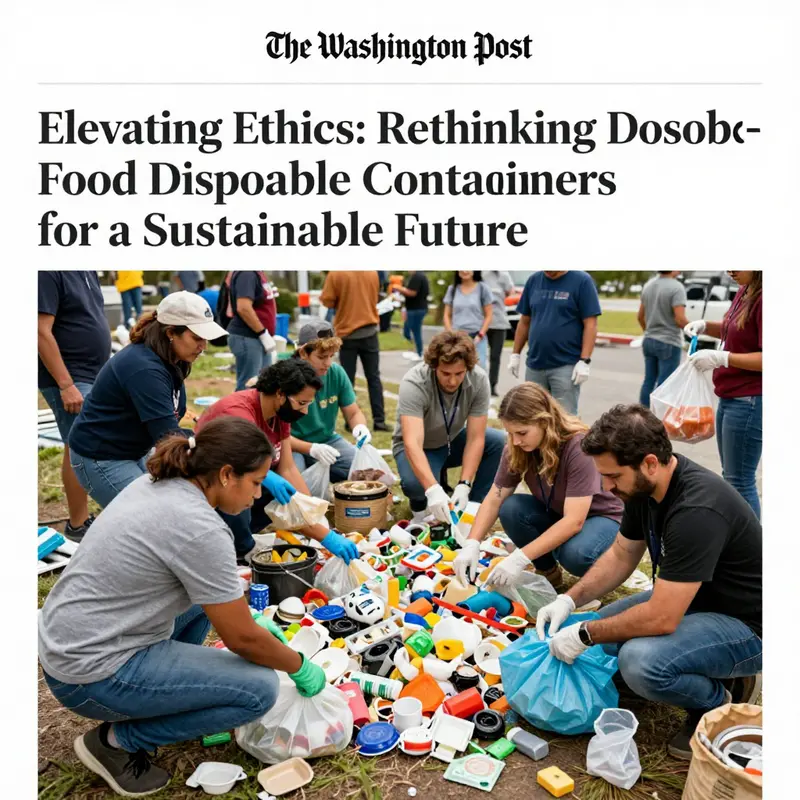
The everyday act of grabbing takeout or a quick coffee seems simple, a minor mercy in a busy life. Yet the ethics of disposable food containers extend far beyond convenience. In cities and suburbs alike, the plastic and paper sleeves that wrap our meals carry with them the weight of unequal burdens. The Washington Post has highlighted this dynamic, showing how the costs of plastic pollution and waste management are not distributed evenly but fall hardest on communities that are already vulnerable. When we talk about the ethics of disposable containers, we are not merely debating recycling rates or packaging design; we are confronting a system that makes environmental hazards, health risks, and limited infrastructure into a social justice issue. The result is a narrative where the benefits of convenience align with profits, while the costs are socialized to the people who can least shoulder them. Understanding this balance requires tracing the path from resource extraction to waste processing and then to the neighborhoods where waste facilities loom on the skyline of everyday life. It is a chain that reveals the moral choices embedded in corporate practices, consumer habits, and public policy.
Environmental hazards tied to disposable containers do not appear in isolation. They accumulate where landfills and incinerators are strategically located—often near low-income housing, along municipal borders, or in communities with fewer political voices to contest siting. The disproportionate exposure to air and water pollution in these neighborhoods translates into higher rates of respiratory illness, cardiovascular stress, and chronic conditions. The health effects are not only physical but also psychological, shaping daily life in ways that undermine well-being and opportunity. When families bear the brunt of waste disposal, their children contend with polluted air in playgrounds and schools, a reality that ordinary consumer choices suddenly render intolerable in moral terms. If we frame waste processing as a public health and civil rights issue, the ethical argument for change sharpens: it is not merely about reducing trash, but about protecting the right to clean air, safe water, and a neighborhood’s ability to thrive.
The global arc of disposable containers also implicates resource extraction and manufacturing in ways that complicate local ethics with international consequences. Plastic resins and paper fibers are often sourced from regions where environmental protections are weaker, labor standards are contested, and communities face ecological transformation without commensurate benefits. The social justice dimension emerges when the production of everyday packaging contributes to pollution and resource depletion in places far from the end consumer. Marginalized regions may host upstream extraction that poisons soil and waterways, while downstream communities experience the cumulative waste load. This is not a detached global supply chain problem; it maps onto the daily lives of people who seldom enjoy a voice in decisions about what gets produced and shipped to their neighborhoods. In this sense, the ethics of disposables is a cross-border conversation about responsibility, equity, and accountability—how to ensure that the benefits of convenience do not accrue to a few at the expense of many elsewhere.
Health risks associated with the nearly inevitable proximity of waste handling to residential areas further illuminate the justice gap. Urban and peri-urban settings in particular reveal a troubling pattern: residents living near waste facilities carry higher exposure to airborne pollutants and contaminated runoff, which translates into measurable health disparities across generations. The cumulative nature of exposure—airborne particulates, volatile organic compounds, and contaminated groundwater—means that the costs do not vanish with a single recycling drive. They accumulate year after year, influencing childhood development, school performance, and long-term disease risk. When disposable containers are presented as a harmless symbol of modernity, the lived experiences of neighbors adjacent to dumps and incinerators remind us that packaging choices are never neutral; they are political acts that shape health trajectories and life chances.
A critical obstacle to addressing these injustices is the uneven landscape of recycling and waste management infrastructure. Many communities, particularly those with limited public funding or political leverage, lack robust recycling programs, composting facilities, and public education about waste separation. The absence of reliable systems means that a substantial share of discarded containers ends up as landfill fodder or, in some cases, incinerated with little advantage to the communities that bear the consequences. The inequity embedded in recycling capacity is not just about technology; it reflects decisions about where to invest, which neighborhoods deserve state-backed environmental services, and how to measure the costs and benefits of a consumer economy powered by disposables. When policy discussions overlook these disparities, the result is a dichotomy between what households are told to recycle and what communities can actually manage. The ethical tension here centers on whether markets and convenience should be allowed to outpace civic responsibility and whether public funds should be marshaled to retrofit or replace failing waste systems in the name of social justice.
Against this backdrop, many observers argue that the responsible path forward requires more than incremental tweaks to packaging design. It demands a rethinking of the business models that rely on single-use containers and an expansion of sustainable alternatives that align cleaner environmental outcomes with social equity. Compostable materials, reusable systems, and redesigned takeout workflows can reduce waste while promoting community health and resilience. Yet the transition must be designed with explicit attention to workers, low-income communities, and communities of color, who often bear the brunt of environmental harm during both production and disposal. Corporate responsibility, in this frame, becomes a matter of aligning incentives with communal well-being, ensuring that the costs and benefits of packaging choices are distributed in ways that do not exacerbate existing inequalities. Policymakers have a central role here, crafting regulations that reward eco-friendly packaging, fund local recycling and composting infrastructure, and require transparency about the full life cycle of containers. In that sense, ethics is not merely a matter of consumer choice but a tri-partite negotiation among producers, regulators, and communities most affected by waste.
In exploring these themes, it is important to recognize how scholarly and journalistic inquiries converge on the same core insight: the convenience of disposable containers cannot be ethically justified when it shifts risk and cost onto the most vulnerable. A line of reporting, including analyses shared by The Washington Post, traces the intersections of plastic waste and environmental justice and demonstrates why the question of packaging cannot be reduced to a single metric such as recycling rates. The real question concerns who wins when we optimize for speed and containment, and who loses when neighborhoods become the overlooked endpoints of a global supply chain. The ethical imperative is to build systems that distribute risk more fairly while preserving the public health and dignity of all residents. This requires a careful balancing act—between innovation and precaution, between corporate profitability and community welfare, and between personal convenience and collective stewardship. One practical step is to treat disposable-tableware as a site of reform rather than a symbol of inevitability. By considering alternatives and the conditions necessary for their success, communities can begin to reimagine a dining culture that prizes health, workers’ rights, and ecological integrity as much as speed and ease. Such a shift does not happen by accident; it unfolds through deliberate policy choices, collaborative industry standards, and a public that demands accountability from both the marketplace and the government. For readers seeking a practical pathway toward alternatives while preserving access and sanitation, exploring the wide range of packaging categories can offer concrete options and inspire informed consumer decisions. See for instance the different disposable tableware categories as you weigh tradeoffs and opportunities for change, including options that emphasize compostability or reuse. disposable-tableware.
If the broader ethics of disposables are to be reconciled with a more just social order, the path forward must be anchored in transparent accountability. Businesses should disclose the life cycle impacts of their packaging, including emissions, water use, and end-of-life fate. Regulators can then design incentives that reward durable solutions—reusable systems, centralized take-back programs, and affordable, accessible composting—while phasing out durations of practice that disproportionately harm vulnerable neighborhoods. Communities deserve a seat at the table in decisions about where facilities go, how waste is managed, and what standards manufacturers must meet to reduce hazard exposure. When policy dialogues center equity alongside environmental goals, the rhetoric of moral obligation becomes a plan for practical action that communities can implement together with industry partners. The Washington Post discussions of plastic waste and environmental justice illuminate this path by showing what is at stake when packaging decisions are made in isolation from the people most affected by those decisions. The chapter of ethics embedded in disposable containers thus evolves from a debate about materials into a broader conversation about justice, health, and the responsibilities we owe to one another as neighbors, consumers, and citizens. For readers seeking additional context on how environmental justice frames these issues, a thoughtful examination of the topic is available through The Washington Post: https://www.washingtonpost.com/climate-environment/2023/06/15/plastic-waste-environmental-justice/.
Reckoning with the Wrapper: Corporate Duty and Public Ethics in Disposable Food Containers

The ethics of disposable food containers, as echoed in discussions shaped by major outlets and policy debates, turn on a simple paradox: the same everyday convenience that sustains takeout culture also creates a long tail of environmental and social costs. When the very act of grabbing a hot coffee or a hurried meal becomes easy and quick, a broader question emerges about responsibility. If packaging is treated as a disposable afterthought rather than a part of a designed lifecycle, the consequences fall unevenly—from polluted streets to overwhelmed landfills, from polluted waterways to communities that bear the burden of waste management. The Washington Post-like framing of this issue invites readers to see not only the cleanliness of a market choice but the ecological and moral footprint that accompanies mass production, transportation, and disposal. In this frame, the ethics are not simply about personal habits; they are about how corporations conceive packaging from the ground up, how they disclose the true costs of that packaging, and how policymakers encourage or constrain the choices available to consumers and businesses alike.
Corporate social responsibility (CSR) sits at the center of this discussion, but its scope and sincerity are sometimes hard to gauge. A core tension persists: CSR often becomes a shield for branding while the most consequential decisions—what materials to use, how to design for reuse, and how to manage end-of-life flows—happen far from the consumer’s gaze. The broader narrative, however, insists that packaging decisions are not ancillary. They determine the energy invested in production, the carbon emitted through transportation, and the fate of materials after their brief moment of use. The idea of a social license to operate gains traction as communities demand accountability for packaging choices that affect air quality, water systems, and the landscapes that support local economies. If a company seeks to preserve trust, it cannot limit CSR to philanthropic gestures or incremental efficiency; it must address systemic changes in product design and lifecycle stewardship.
Industry-wide responses have tried to balance competing imperatives. There are encouraging signs when trade associations and manufacturers acknowledge the problem in collective terms, signaling a shift toward more responsible packaging practices. Yet the challenge remains that much of the burden has been framed as a consumer problem: recycle more, separate plastics, choose greener options. While consumer action is part of the solution, it cannot substitute for fundamental changes at the design and supply-chain levels. The ethical argument requires a reexamination of incentives: what counts as responsible packaging, who bears the cost of change, and how to measure true environmental impact across the lifecycle of a container—from raw material extraction to end-of-life management. In this light, the narrative moves beyond pledges and slogans toward a more rigorous accounting of externalities and a reassessment of corporate priorities.
Biomaterials and alternative feedstocks illustrate the pathway some manufacturers pursue in response to public scrutiny. Corn-starch-based bioplastics and bagasse, the fibrous residue of sugarcane processing, offer potential advantages in renewability and compostability. Yet their promise is not unconditional. Compostable does not automatically mean harmless; composting requires appropriate facilities, feedstock purity, and clear labeling to ensure that a product does not contaminate recycling streams. Lifecycle assessments remind us that a substitute can shift burdens rather than diminish them. If a material demands specialized processing, plentiful collection infrastructure, and consistent certification, its real-world benefits depend on the coherence of the entire system. In other words, the ethics of material choice are inseparable from the ethics of governance: how regulations, incentives, and market signals align to push innovations from laboratory benches into widely accessible, responsible use.
A rigorous approach to packaging ethics must also confront the unequal exposure to waste. Waste facilities—where land, air, and water converge with human communities—often sit near marginalized neighborhoods. The social dimensions of this issue demand that CSR and policy consider environmental justice as a core criterion. When a community bears the consequences of mismanaged packaging because it sits near a landfill or incineration facility, the moral calculus shifts. The goal shifts from merely reducing litter to reconfiguring supply chains so that waste burdens are not concentrated in vulnerable areas. This way of thinking aligns with a broader imperative: if packaging is a product of collective consumption, its true cost should be shared more equitably and managed more transparently. It also underscores the role of policymakers in shaping norms—through extended producer responsibility, labeling standards, and incentives that reward durability, reuse, and end-of-life clarity rather than short-term convenience alone.
From a lifecycle perspective, the ethical critique becomes a call for systemic redesign. Product development cannot treat packaging as an afterthought but must integrate circularity from the earliest stages. That means rethinking how containers are dimensioned for reuse, how materials are mixed to simplify separation, and how the energy profile of production compares to that of alternatives. When a container is designed for single use, it may be easy to optimize for cost and weight, but the longer, costlier burden of waste disposal, collection, and processing often reveals hidden externalities that are ethically consequential. The principle of designing for reuse or high-value recycling challenges manufacturers to consider not only the material but the modality of consumption: can customers return packaging for refilling, or can a system of deposits and incentives encourage a disciplined return flow? These questions are difficult, but they are essential if society wants a packaging regime that aligns convenience with responsible stewardship.
The Washington Post’s role in illuminating these questions is not merely to catalog problems but to illuminate possible avenues for accountability. Journalistic coverage can pressure companies to disclose the full lifecycle costs of their packaging, to publish credible metrics, and to demonstrate progress toward verifiable improvements. It can also reveal when consumer behavior is being framed as the primary lever of change, while structural reforms—such as alternatives to virgin plastics, transparent supply chains, and consistent labeling—are inadequately pursued. In this sense, journalism serves as a crowdsourced ethical audit, inviting readers to demand evidence over rhetoric and to look for signs of durable commitment rather than one-off campaigns. The ethical task for readers, in turn, becomes more discerning: to distinguish genuine systemic reform from superficial branding and to support practices that reduce material intensity, extend product life, and lower the overall emissions footprint of packaging.
Within this evaluative frame, one finds a practical, if challenging, path forward. Businesses can integrate circularity into governance structures—setting measurable targets for recycled content, designing products for reuse, and using materials whose end-of-life options are clear and accessible. Labels and certifications, when credible, become crucial instruments of transparency. A public standard that articulates what constitutes responsible packaging helps prevent greenwashing and enables consumers to make informed choices without bearing the entire burden of change on their own shoulders. At the same time, firms must be willing to invest in cradle-to-grave analytics, sharing data about energy use, emissions, water impact, and waste diversion that underpins real accountability. In this way, CSR ceases to be a marketing veneer and becomes a disciplined, ongoing practice integrated into corporate strategy. The goal is not to vilify consumers but to recalibrate incentives so that responsible choices are the easiest, most economically sensible options for the widest range of stakeholders.
A practical and stylistically coherent change also requires robust partnerships. Governments, industry, researchers, and civil society must collaborate to accelerate innovation, validate new materials, and scale up infrastructure for reuse and composting. The moral logic favors a combined approach: reduce material generation where possible, promote durable packaging designed for multiple uses, and ensure safe, efficient at-scale recovery. As this collaboration deepens, it becomes possible to imagine packaging regimes that respect both the environment and the people who live with the consequences of waste day after day. The Washington Post’s ongoing scrutiny can help keep this process honest, reminding readers that the ultimate test of ethics lies in whether systems evolve to make sustainable choices the norm, not the exception.
For readers seeking a concrete thread to follow, consider the tangible, everyday implications of this discussion. The choice of a container is a decision about energy, water, and land use many steps removed from the moment of purchase. It connects to factory emissions, the efficiency of logistics networks, and the capacity of municipal facilities to sort and process streams. It also intersects with questions of equity: who bears the costs of waste collection, who profits from packaging economies, and who has access to alternatives that reduce dependence on single-use items. These are not abstract concerns but practical considerations that shape communities and futures alike. In thinking about containers, we are really evaluating a broader social contract about consumption, responsibility, and shared stewardship.
To readers who want to explore further and see how these debates translate into everyday choices, the topic invites a closer look at the market of packaging alternatives and the ways in which institutions validate or challenge those options. The one-page decisions that are made at a counter, the long-term commitments a company makes to redesign products, and the public policies that set the framework for those decisions—all of these pieces fit into a single ethical puzzle. The aim is to move beyond a binary of “good” versus “bad” packaging and toward a nuanced understanding of trade-offs, trade governance, and the social impacts of material economies. The result is a more informed public discourse, one that recognizes the complexity of packaging systems and the necessity of accountable leadership from corporations, regulators, and civil society alike.
Internal link: For a sense of how one retailer approaches the broader category of disposable dinnerware and tableware within its product range, see this example of an assortment that foregrounds sustainability considerations in design and lifecycle thinking disposable-dinnerware-tableware.
External reading: The path toward sustainable consumption and production is anchored in global frameworks that seek to align economic activity with environmental integrity and social equity. For an overview of these aims and their practical implications, see https://www.un.org/sustainabledevelopment/sustainable-consumption-and-production/.
The Cost of Convenience: Reframing The Washington Post’s Ethics of Disposable Food Containers
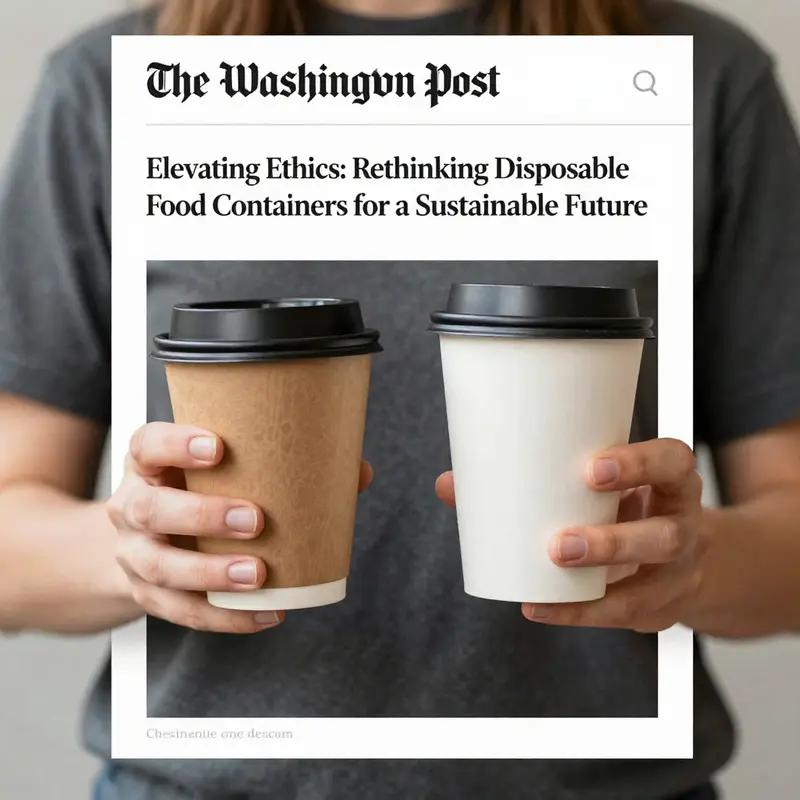
Every lunchtime decision, every takeaway wrap, seems almost banal until you trace its consequences through the air, water, and soil. The Washington Post’s 2026 exploration of disposable food containers rendered this plain truth with unsettling clarity: convenience comes at a price that is not just measured in coins but in carbon footprints, polluted waterways, and unequal burdens carried by communities far from the shelves where packaging is created and discarded. The chapter moves beyond a simple critique of plastic or paper; it asks readers to see packaging as a set of choices that compress or expand the future of public health, ecological integrity, and social equity. If the food on our plates travels in a package that is designed to vanish after a single use, then the ethics of that choice demand that we account for who pays the cost, how long the effects last, and whether easier options truly serve the common good in the long run.
To understand the ethical geometry of disposable containers, it helps to start with the scale. Food packaging accounts for nearly a quarter of municipal solid waste in the United States, a statistic that the environmental lens of the Post piece uses to connect the kitchen counter to the landfill and beyond. This figure reframes lunch as a site of systemic leverage: when individuals choose between a throwaway cup and a reusable mug, they are picking a small lever with potential to tilt manufacturing demand, waste streams, and recycling or composting infrastructure. Yet the moral calculus is not merely about waste volumes; it is about the life cycle of materials, the energy embedded in production and transport, and the social geography of impact. The communities where waste facilities cluster—the places most exposed to air and water pollution—often experience the regretful irony of benefiting from cheap convenience while paying a disproportionate share of harm. Within this frame, the ethics of disposable containers become a question of justice as much as of personal responsibility, inviting readers to consider who benefits when a business prioritizes quick service over systemic reform.
A central ethical tension highlighted by the article—and echoed by researchers and public health experts—concerns health risks associated with reuse. The warning about plastics labeled as microwave-safe, in particular, underscores a misleading promise. Repeated heating and washing can accelerate polymer degradation, increasing the likelihood that chemicals migrate into food. This is not a hypothetical risk but a documented concern in conversations about consumer health and product stewardship. The suggestion here is not to demonize all plastics or all disposables but to acknowledge the vulnerability created when a single-use decision becomes a repeated exposure. For consumers who heat food in containers labeled for single use, the message is straightforward: the safety assurances attached to convenience may erode under practical reuse conditions. This nuance is essential because it reframes the ethical debate from a binary choice—use or reuse—to a more sophisticated assessment that weighs material properties, heating conditions, and the realities of home or workplace kitchens.
The dialogue also turns a critical eye toward corporate responsibility and the incentives that shape packaging choices. If the market rewards fast service with artificially low prices for disposables, then public policy and corporate strategy must align to reward durability, safety, and lower environmental footprints. The Washington Post piece argues for accountability that goes beyond marketing rhetoric. It calls for companies to invest in alternatives that preserve hygiene while reducing resource intensity—investments in reusable systems, robust take-back schemes, and truly compostable materials that can function within climate-smart waste streams. In this sense, ethics becomes a mandate for design and governance: packaging should not be the cheapest option if it condemns communities to polluted environments or locks in a dependence on fossil-based feedstocks.
The concept of environmental justice threads through the discussion, reminding readers that the burden of waste disposal rarely falls evenly. Low-income neighborhoods and communities of color have often born the environmental costs associated with landfills, incinerators, and spillovers from transportation networks moving packaging waste. When policy neglects waste streams or fails to price the externalities of packaging, it indirectly nourishes a system in which the most vulnerable are most exposed to risk. Disability access and public health considerations also intersect with this issue. For some, the reliance on disposables in cafeterias and fast-casual venues is a matter of sanitation and convenience, while for others it compounds existing health hazards in environments with limited water quality, waste management capacity, or access to green spaces that could mitigate urban heat and pollution. The ethical takeaway is not simply to choose between disposables and reusables but to design systems that decenter harm from the most exposed communities and instead cultivate shared resilience.
Within this framework of responsibility, consumer choice becomes a vehicle for systemic change rather than a mere personal preference. The idea that a single person’s decision is inconsequential is countered by the reality that aggregate behavior shapes production lines, logistics networks, and policy priorities. If a critical mass of consumers demands packaging that is recyclable, compostable, or reusable, and that is produced with lower-energy inputs, then market signals can incentivize the kind of innovation that the Post highlights as ethically necessary. This is not a call for abstention from modern conveniences but a call for smarter, more transparent choices and clearer information. The role of information cannot be overstated: labeling, certifications, and standard definitions matter as much as taste or price because they determine whether a consumer can reliably distinguish between a genuinely sustainable option and a superficially green one.
In pursuing alternatives, the literature points to plant-based materials and truly compostable options as promising avenues. Yet the path to sustainability is not unproblematic. Plant-based polymers and compostable products can carry their own environmental footprints, particularly when industrial composting facilities are scarce or when compostability is misrepresented. The ethical evaluation, therefore, requires an honest accounting of end-of-life scenarios—where does a product go after use, under what conditions does it break down, and who ensures the necessary infrastructure exists to process it cleanly? The tension between barrier performance, user convenience, and end-of-life management becomes a test case for how society negotiates risk, accountability, and innovation. In other words, a sustainable future demands robust systems thinking: design must align with municipal capabilities, consumer education must accompany product labeling, and policy must create the conditions under which reusable or compostable futures are not only possible but practical.
An every-day possibility for progress lies in reshaping what counts as a responsible lunch option. It is not enough to vilify plastics or to praise the newest bio-based alternative without scrutiny. Instead, communities can foster a culture of reuse where feasible—through workplace programs, community sharing schemes, and urban redesign that makes returnable systems simple and affordable. At the same time, retailers and food-service operators can reimagine packaging as a design constraint rather than a default. If a container must maintain hygiene, transport efficiency, and a controlled temperature, then the most ethical route may involve long-lasting materials paired with durable, well-supported collection and cleaning frameworks. This reframes etiquette around disposal—from a private decision about what to do with waste to a civic conversation about how to organize systems, investments, and responsibilities that reduce harm without sacrificing essential services.
To bridge the gap between ideals and everyday practice, one practical step is broadening the palette of options consumers encounter. The availability of reusable cups and containers, easy access to on-site or take-back programs, and transparent information about the lifecycle of packaging can empower people to choose with confidence. The same logic applies to the design of packaging itself: if containers can be engineered to be easily cleaned, safely heated, and economically recycled, then the convenience they provide becomes compatible with ecological safeguards rather than at odds with them. The ethical question is whether the marketplace can be steered toward those designs without sacrificing affordability or accessibility. Here, governance and corporate stewardship must converge, with policy nudges and incentives that reward lower-energy manufacturing, safer materials, and end-of-life clarity, while maintaining consumer choice.
As readers reflect on these ideas, it is helpful to view disposable packaging not as a monolith but as a spectrum of options with varying environmental and health implications. The Washington Post’s analysis invites a thoughtful reckoning about the trade-offs involved in everyday food rituals. It also invites citizens to participate in a democratic conversation about how cities, schools, workplaces, and businesses should approach packaging in the 21st century: with accountability, with science-based standards, and with a commitment to fairness across communities. The challenge remains in translating insights into action—aligning consumer behavior with systemic reform, aligning corporate practice with public health, and aligning policy with the pace of innovation. If these alignments can be achieved, the luck of the draw that currently favors convenience could gradually give way to a more intentional, sustainable, and just set of choices.
For readers seeking a closer examination, the Washington Post’s detailed report provides a substantive map of where responsibility sits and how it might shift. It anchors the ethical discussion in concrete data, professional concerns, and policy considerations, framing the debate as one that is neither punitive nor impractical but principled and actionable. In that sense, the piece is not merely critical; it models how journalism can illuminate the moral dimensions of ordinary decisions, turning a disposable cup into a symbol of how society values health, justice, and stewardship for the long arc of communal life.
Internal link for further exploration of packaging choices: disposable-tableware
External resource:
https://www.washingtonpost.com/environment/2026/01/15/disposable-food-containers-ethics/
Regulation, Risk, and Responsibility: Reconsidering Disposable Food Containers in Public Life
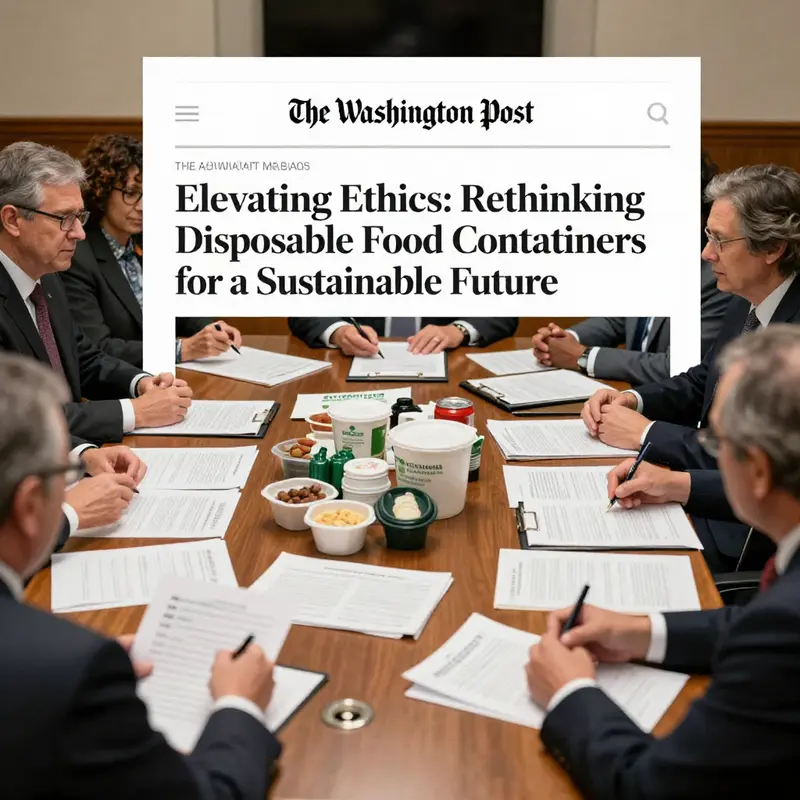
Every day, millions reach for a takeout bag or a coffee cup. The simple act of packaging solves moments of hunger and busyness, but it hides a web of ethics that reaches from the factory floor to the landfill. The Washington Post has long positioned questions about disposable food containers at the intersection of convenience, public health, and planetary limits. When journalists map out who bears the costs of waste, the stakes rise from ordinary consumer preference to the legitimacy of corporate responsibility and public policy. This chapter follows that trajectory, not as a manifesto but as a narrative about how regulation shapes choices and how those choices shape the ethics of everyday life.
The convenience of single-use containers is not a new phenomenon, yet the scale is. Fast food and takeout culture turned packaging into a global commodity. The materials that wrap and cradle meals—plastics, papers, liners—are chosen for cheapness and speed, not for moral clarity. Regulators arrived late to the table, often reacting to visible pollution or to signals about chemical safety. The dialogue has grown more complex as new additives and coatings enter the scene. BPA, a chemical once linked to a spectrum of health concerns, became a flashpoint. The Washington Post’s reporting on BPA highlighted how regulatory agencies in different countries interpret risk, how substitutes may bring their own hazards, and how consumer demand presses policymakers to act.
In policy terms, a central question is how to balance risk against benefit. On one side lies hygiene, shelf stability, and the predictable logistics that keep meals safe and affordable. On the other is the long tail of environmental cost: the carbon footprint of manufacturing, the energy required to transport, and the winding journey of discarded containers through landfills and waterways. The ethical calculus extends beyond a single meal to systemic patterns of waste generation and environmental exposure. It is inequitable that low-income neighborhoods and frontline communities often shoulder the burdens of waste processing, while the drivers of consumption remain far removed from those who bear the consequences. In this sense, regulation is not merely about restricting harm; it is also about redistributing responsibility in a way that reflects social fairness.
That fairness is what pushes regulatory measures beyond labeling and standards toward accountability. Canada and Denmark have shown that regulatory courage can be exercised when evidence about chemical risk is strong enough to justify bold steps, such as banning certain substances from baby bottles and other consumer items. Although those measures are not a direct one-to-one match for disposable food containers in the United States, they illuminate a path: when regulators set clear expectations about material safety, manufacturers search for safer alternatives, and consumers gain confidence that public health is protected. The ethical argument hinges on transparency, not perfection; it accepts imperfect substitutes while insisting on independent testing, clear disclosures, and post-market monitoring. The story in the pages of a prominent newspaper like The Washington Post helps translate those technical debates into public confidence and civic action, reminding readers that policy is a living negotiation, not a once-and-done decree.
As materials evolve—from traditional plastics to compostable fibers and even smart films—the discussion shifts toward how to assess and compare risk over time. Innovation promises to extend shelf life, reduce leakage, and facilitate recycling. Yet new formats carry novel hazards and ambiguities about end-of-life pathways. The rise of smart packaging, which can monitor freshness or even communicate with a restaurant’s inventory system, raises questions about data privacy, environmental accounting, and the reliability of safety claims. These technologies widen the ethical field: accountability must track not only what a container is made of but what it communicates about the food inside and the system that moves it from kitchen to consumer to disposal. In this context, the industry bears a dual duty: to pursue safer materials and to be forthright about the life cycle of those materials, including recycling rates and residual waste. Journalists can illuminate the practical consequences of new packaging forms, helping readers assess whether promises align with real-world outcomes rather than glossy marketing.
From a societal standpoint, the question is how to align market incentives with public goods. If waste costs are externalized, producers and retailers may underinvest in alternatives. Policy instruments can help align incentives. Extended producer responsibility, for example, nudges manufacturers to design for reuse or recycling rather than for short-term use. Bans or restrictions on specific single-use options can drive innovation, but they must be paired with accessible, affordable alternatives. Consumer education also matters, yet it cannot be the sole remedy; information without viable options can lead to frustration and fatigue. The Washington Post, through its investigative and explanatory reporting, has a particular role in shaping this balance. By translating complex risk analyses into accessible narratives, journalism helps citizens demand clarity from both industry and government and supports policymakers in crafting practical, enforceable standards. When media frames the debate with evidence about who pays the price for waste and where responsibility should lie, audiences become participants in the policy process, not merely spectators.
To make sense of the competing pressures and incentives, consider how a supplier’s catalog of options evolves as public sentiment shifts. On one branch lies the plastic-packaging category, a reminder that even within the broad world of disposables there is variation in risk profiles and end-of-life outcomes. Some options may feature better recyclability, others may offer barrier properties that reduce food waste. The ethical task for buyers, restaurants, and institutions is to weigh these trade-offs with honesty and humility. It is not enough to claim that a container is cheap or convenient; it is necessary to account for the full cycle—from cradle to grave—and to acknowledge the costs borne by workers, communities, and ecosystems along the way. And it is a signal that corporate responsibility is not a slogan but an ongoing obligation to reduce harm while preserving essential services. This is where journalism helps bridge markets and morals by calling attention to hidden costs behind convenience and by highlighting long-term strategies that can scale beyond a single city or sector.
In the end, public policy will be judged not by the absence of risk but by the robustness of the systems that manage it. That means independent safety testing, transparent reporting, and a willingness to adapt as science evolves. It also means creating space for reusable and refillable models that can scale without imposing new forms of inequity. Some communities respond to these shifts with innovation—shared dishware programs, community-supported kitchens, and local policies that reward reusables. Others push back against additional costs or logistical complexities. The ethical answer lies in a collaborative approach: regulators, researchers, industry, workers, and consumers all have a stake in this conversation. The Washington Post’s coverage helps anchor that conversation in real-world consequences and practical policy options, avoiding abstractions while highlighting real-world tradeoffs. It is a reminder that the work of ethics in packaging cannot be outsourced to slogans alone; it requires sustained scrutiny of what we gain and what we leave behind.
As the debate moves forward, it is essential to remain attentive to the social and environmental contracts that packaging mediates. A container is more than an inert vessel; it is a trace of decisions about health, labor, and responsibility. The push toward standards that protect health should be paired with standards that reward safer production practices and that reduce the friction of sustainable choices. If a city or a nation can guarantee convenient, affordable waste-free options, such a system could become as routine as ordering a meal. Until then, the ethical work continues: not to ban convenience but to reframe it as a shared commitment to health, fairness, and stewardship. In journalism as in policy, accountability remains the essential ingredient that keeps this debate anchored in the public good. The conversation is ongoing, and readers are not simply observers but participants who can demand better data, clearer goals, and tangible progress from both industry and government.
External resource: https://www.washingtonpost.com/health/2023/04/18/plastic-food-packaging-bpa-health-risks/
Final thoughts
The ethics of disposable food containers present a complex web of challenges that extend beyond mere convenience for consumers and business operators. From the environmental impact of production and disposal to the social justice issues that arise due to waste management inequities, food service professionals must prioritize sustainable practices. By taking corporate responsibility seriously and empowering consumers to make informed choices, as well as advocating for effective regulatory measures, businesses can play a critical role in lessening their environmental footprint and promoting a more equitable ecosystem. Together, industry stakeholders can drive change towards a sustainable food service future.