
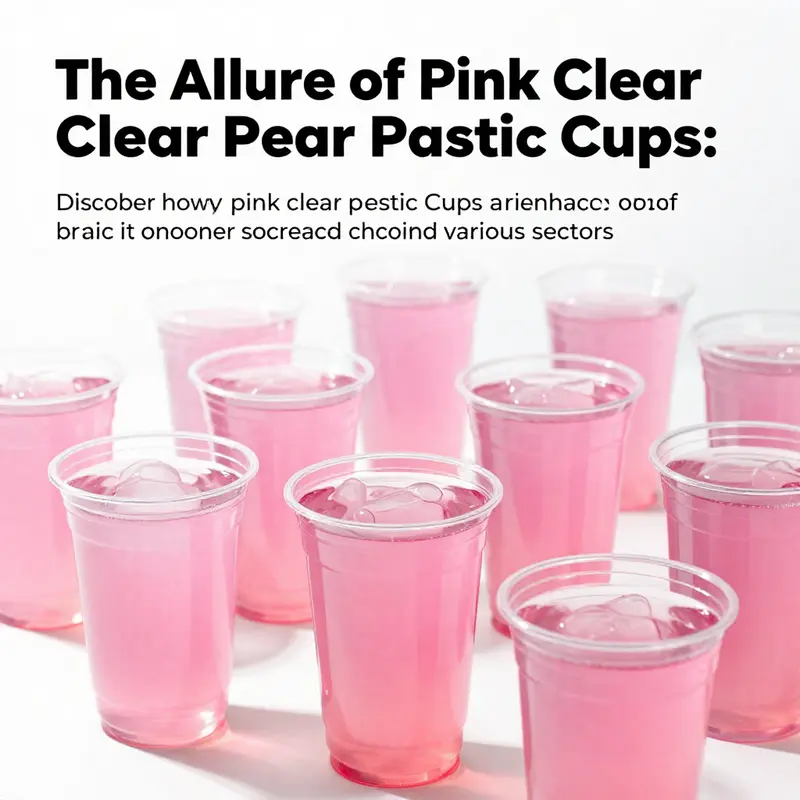
Pink clear plastic cups are more than just a trendy choice; they symbolize a blend of functionality and style that appeals to a broad audience. For Bubble Tea shops, beverage chains, restaurants, food trucks, catering services, event planners, and corporate procurement teams, these cups offer versatility while enhancing visual appeal. Chapter by chapter, this article will explore their adaptability for celebratory events, weigh environmental considerations for sustainable consumption, analyze economic aspects in wholesale and retail, showcase design innovations for branding, and delve into current user preferences and trends. By accumulating these insights, you’ll understand how pink clear plastic cups can play a crucial role in your business strategy.
Celebration Ready: How Pink Clear Plastic Cups Elevate Every Festive Occasion

Pink clear plastic cups have become an essential element for a wide array of celebratory events, combining style with practicality in a way few other disposable drinkware options can. Their distinctive transparent pink tint lends an immediate sense of festivity and charm, while the material’s clarity allows the vibrant colors of beverages to take center stage. Whether serving refreshing cocktails, flavorful mocktails, bright lemonades, or colorful fruit juices, these cups transform ordinary drinks into visually appealing attractions that naturally enhance the atmosphere of any gathering.
The true advantage of these cups lies in their perfect balance between aesthetic appeal and functional design. Unlike traditional glassware, pink clear plastic cups are lightweight and sturdy, greatly reducing the risk of breakage. This makes them especially well-suited to outdoor events, barbecues, pool parties, or any lively scene where glass might pose safety concerns. Their disposable nature simplifies cleanup, a factor often overlooked but immensely valuable for event hosts aiming to minimize post-occasion effort. Not only do these cups cut down cleaning time, but they also help eliminate the stress of transporting and storing fragile items.
Their versatility is evident in the variety of occasions where they shine. For instance, birthday celebrations often benefit from the cheerful pink hue, which adds warmth and delight, especially when paired with coordinating tableware and decorations. Similarly, bridal showers and baby showers frequently embrace a pink theme as a symbol of joy and anticipation, making pink clear plastic cups a natural choice. These cups elegantly support themed décor while serving functionality without compromising the overall presentation. Additionally, during holiday gatherings like Thanksgiving or Christmas, their subtle color creates a festive contrast against traditional table settings, bringing a fresh and modern touch to classic celebrations.
Beyond their decorative role, these cups come in various convenient sizes, commonly 9 oz and 12 oz capacities, which accommodate a broad range of beverages. This flexibility enables hosts to cater precisely to the drink selections and portion preferences of their guests, from small cocktails to larger servings of iced tea or smoothies. Many sets also include matching lids and straws, often designed in transparent or coordinating pink shades, allowing for spill prevention and easy transport during outdoor or active events. This added convenience greatly enhances the guest experience, providing not only style but also thoughtful functionality.
Customization further amplifies the appeal of pink clear plastic cups. Event planners and businesses alike can take advantage of printing services that imprint logos, messaging, or unique graphics directly onto the cups. This turns a simple disposable item into a memorable keepsake or a branding tool that extends beyond the event itself. Whether for corporate parties, charity fundraisers, or promotional giveaways, the ability to tailor cups to the event’s theme or brand identity elevates the perceived value and impact of the gathering. Such personalization fosters connection and recognition while maintaining the cups’ inherent usability.
Durability remains a key strength. Crafted generally from BPA-free PET plastic, these cups meet safety standards that ensure they are suitable for a wide variety of beverages, both hot and cold. Their scratch-resistant surfaces preserve visual clarity throughout the event, maintaining an attractive appearance despite handling and movement. The resilient plastic construction withstands the rigors of transport, stacking, and even moderate disposal pressures, reducing waste and environmental impact when used responsibly. This consideration aligns well with the growing consumer demand for more sustainable options in party supplies, which often coincides with the preference for disposable convenience.
An important aspect contributing to their popularity is adaptability across diverse environments. Whether the setting is a formal brunch, a casual backyard BBQ, or a themed nightclub event, pink clear plastic cups serve both hosts and attendees with equal effectiveness. Their transparent make-up allows décor colors and table arrangements to coordinate seamlessly, enabling cohesive visuals that complement flowers, linens, and other dining accessories. This flexibility ensures the cups fit effortlessly into a designer’s vision, amplifying the overall aesthetic while remaining readily available and easy to source.
Combining the above benefits, pink clear plastic cups also cater well to health-conscious consumers and families. Using BPA-free materials reassures guests about chemical safety, and disposability reduces concerns about dish contamination or shared utensils during larger gatherings. For events aimed at children or multi-generational attendance, avoiding glass reduces accidents and liability. Meanwhile, grown-up occasions like cocktail parties or wine tastings can feature these cups as elegant, informal alternatives to fragile stemware, blending sophistication with practicality.
For hosts who prefer the environmentally friendly approach but still desire the signature pink transparency, many reusable counterparts have entered the market. Typically made from durable BPA-free plastic, these reusable cups come with features such as dome lids and straws, perfect for smoothies, milkshakes, or iced beverages on the go. Their scratch-resistant finish and secure closures support repeated usage while maintaining clarity and aesthetic vibrancy. Such options bridge the gap between sustainability and convenience, allowing celebrations to stay stylish without compromising ecological values.
This synthesis of style, practicality, and customization opportunities explains why pink clear plastic cups remain a favored choice in event planning circles. From casual family barbecues to meticulously curated social functions, they offer hosts the ability to serve tasty drinks with a touch of flair while confidently managing cleanup and safety concerns. Their transparency does not only enhance the appearance of beverages but also symbolizes the transparency in quality and thoughtful design invested in each cup.
For those interested in exploring a variety of disposable drinkware that pairs well with pink clear plastic cups, considering complementary items such as printed paper cups or decorative lids can further refine the event experience. Resources and collections in disposable drinkware provide a range of coordinated options enabling hosts to create themed tablescapes that elevate any celebration with ease and elegance. More information about enhancing party presentation can be found through specialized disposable drinkware collections.
In summary, pink clear plastic cups bring a unique combination of festive color, practical durability, and customization potential to a broad spectrum of parties and celebratory occasions. Their ability to deliver a polished presentation, ease of use, and safety across diverse venues and guest needs makes them an indispensable asset for hosts striving to make every event memorable and seamless.
Pink Clarity, Green Footprint: Environmental Realities in Clear Pink Cups for Sustainable Consumption
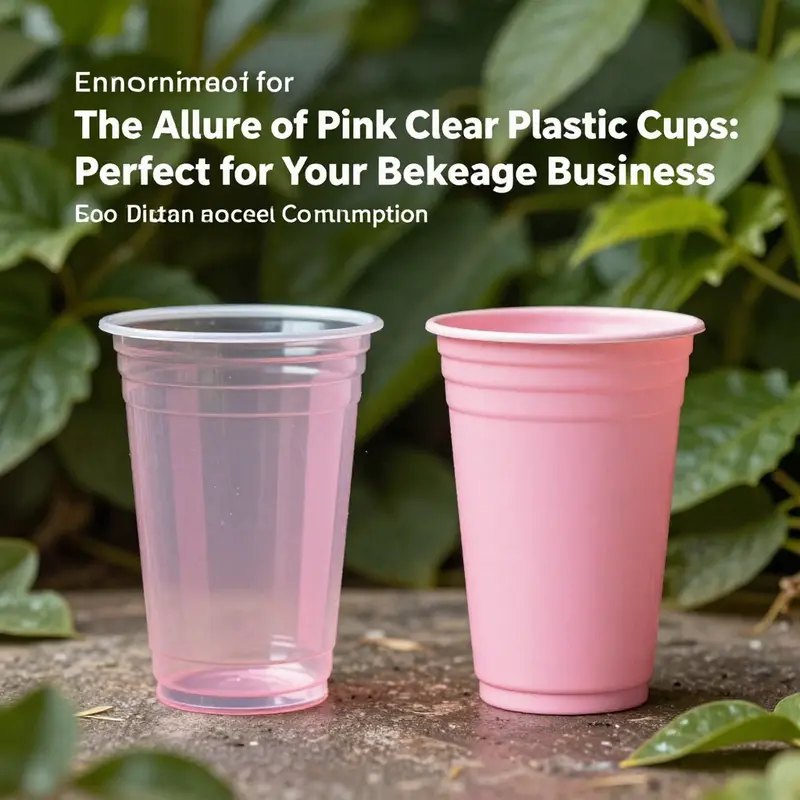
Pink clear plastic cups have a way of making gatherings feel brighter without sacrificing everyday practicality. Their soft, rosy translucence catches and multiplies light, so a simple juice or cocktail becomes a visual centerpiece. They’re easy to stack, lightweight for transport, and sufficient for a broad range of occasions, from intimate weddings to casual holiday buffets. Yet beneath the charm lies a web of environmental considerations that increasingly shape how hosts, venue managers, and brands think about using pink clear cups in a world demanding greater responsibility. The moment these cups leave the table, their fate is decided by systems that stretch far beyond the moment of service, and understanding that trajectory helps illuminate why sustainable consumption cannot be reduced to color or convenience alone. The act of choosing pink clear cups then becomes a choice about waste streams, energy use, and the longer arcs of how a disposable item can be incorporated into a kinder, more circular economy.
At the heart of the environmental discussion is material. Most contemporary pink clear cups are produced from plastics such as PET, sometimes alongside ABS in other product families, all designed for quick production and predictable performance. PET is widely recyclable in many municipalities, but real-world recycling reveals uneven outcomes. The hurdles are not only the contaminants that can degrade the quality of retrieved material, but also the gaps in collection, sorting, and processing infrastructure. A cup that can technically be recycled may still end up in landfills or incineration because it arrives at a facility with the wrong mix of waste or because the local system lacks the capacity to reclaim PET efficiently. The rosy tint, for example, can complicate recycling streams if it creates separation challenges at scale or if the dye adds a barrier for post-consumer processing.
With growing awareness of the limits of traditional plastics, some brands have begun exploring plant-based or bio-derived options. These bioplastics aim to reduce reliance on fossil fuel resources and sometimes promise compostability under controlled conditions. Materials derived from corn starch, bagasse, or cellulose are promoted as renewable alternatives that can, in principle, break down in industrial composting facilities. The caveats are essential to understand: industrial composting requires specific temperatures, moisture, and aeration regimes, and the resulting compost is intended for specific end-use outcomes. Home composting rarely achieves those conditions, meaning many so-called compostable cups may not decompose effectively in a backyard heap or in natural environments. Even when compostable products do perform as intended in the right industrial setting, their fate outside those facilities remains uncertain, particularly when scattered through mixed municipal waste streams. This reality pushes consumers to a more nuanced view of compostability versus actual environmental performance in everyday life.
Another dimension concerns the broader production footprint. All plastic cup manufacturing consumes energy and material resources and emits various pollutants in the process. The production phase can generate greenhouse gases, volatile compounds, and effluents that require treatment. Some facilities discharge wastewater containing microplastics or chemical residues into waterways, contributing to aquatic pollution and raising concerns among communities near production hubs. While improvements in process efficiency, water treatment, and waste management have reduced certain impacts, the fundamental fact remains: the start of a single-use cup involves energy and chemistry that ripple outward, sometimes in ways that are not immediately visible to a server or host.
Against this backdrop, the question becomes how to align pink clear cups with a more sustainable consumption pattern. For many people, choosing reusable alternatives represents the most significant opportunity to reduce environmental impact. Reusable cups—whether used for smoothies, iced beverages, or cocktails—can dramatically lower per-use emissions and resource expenditures when employed across multiple gatherings and long enough lifespans. Reuse is most effective when the items are durable, easy to clean, and designed to resist breakage and staining. In practice, the decision to reuse shifts responsibilities toward proper sanitation, secure lids, and reliable storage, but it also redirects attention toward the social and logistical dimensions of hosting. The payoff is cumulative, especially in events that recur frequently or span an extended season.
For disposables, several pathways can improve environmental outcomes without sacrificing aesthetics. First, ensuring that cups are BPA-free, recyclable, and certified for compostability—where appropriate—helps clarify disposal expectations for consumers and waste managers. Certifications from recognized bodies provide assurance that the product meets certain performance and safety criteria while identifying the disposal route that is most congruent with local infrastructure. Second, design for recyclability can reduce contamination and enhance recovery rates. Color and additive choices should minimize obstructions in recycling streams and favor materials that can be efficiently reclaimed and reused. Third, closing the loop matters: brands and users can support programs that reclaim post-consumer plastic, remove it from general waste, and reintegrate it into new products through PCR content or recycled feedstocks. These strategies do not erase the need for better collection systems or improved processing facilities, but they do improve the chances that a pink cup serves its intended role without becoming an environmental liability.
Throughout this discussion, it is important to recognize the limits of home composting or natural degradation. Industrial composting facilities can process certain bio-based or certified compostable cups, but this path is not universal. Even when a product is labeled as compostable, success depends on the scale, timing, and management of the composting operation. Consumers may see compostability labels and assume a simple end-of-life outcome; in reality, the journey of a cup through recycling or composting depends on a network of services that may or may not be accessible in a given community. This disparity underscores the need for clear guidance and accurate labeling so that households and event organizers do not misplace items into the wrong waste streams. The result is a practical caution: sustainability in pink clear cups is a system-level pursuit, not a product-level promise. Only by aligning product design, waste infrastructure, and consumer behavior can the full potential of these cups be realized.
For those who still opt for disposables in certain contexts, informed choices matter. Choose products that clearly indicate recyclable pathways or certified compostability and, where possible, purchase from suppliers who commit to responsible end-of-life practices. Buying into a closed-loop mindset can encourage producers to design for recyclability, support post-consumer recycled content, and participate in take-back or remanufacturing programs that reduce the need for virgin plastics. The spirit of sustainable consumption here is not a ban on pink cups but a call to integrate them into routines that minimize waste, maximize reuse, and acknowledge the flows that begin at the moment of service. In this light, even a single decorative cup becomes part of a larger conversation about how design, culture, and infrastructure converge to shape environmental outcomes.
For readers seeking practical pathways within the broader ecosystem of pink clear cups, exploration of product categories that emphasize responsible waste management can be a helpful starting point. If a host needs quick access to disposable options that still consider environmental outcomes, browsing the disposable drinkware category can offer a range of choices optimized for recycling streams and end-of-life planning. See more in the disposable drinkware collection.
Beyond individual choices, brands and venues can influence behavior by communicating disposal expectations clearly at the point of use. Clear signage, staff training, and thoughtfully designed packaging can guide attendees toward the most appropriate waste streams. When guests understand the intended path for each cup, the likelihood of correct disposal increases, improving recycling or composting rates and, in turn, reducing the burden on landfills. In addition, event organizers can support broader environmental goals by choosing suppliers who invest in closed-loop recycling programs or use post-consumer recycled content, which helps reduce the demand for new virgin plastics and supports the viability of recycling markets. These collective actions—design for recyclability, truthful labeling, accessible recycling pathways, reuse wherever feasible, and support for responsible take-back programs—embody a practical framework for sustainable consumption that respects the appeal of pink clear cups while acknowledging their environmental footprints.
For further reading on the material realities and limitations of eco-friendly plastic cups, the deeper material science and process realities behind plant-based alternatives are well explained in comprehensive analyses that explore material grades, performance, and industrial uses. This external resource provides valuable context for understanding how plant-based plastics compare with conventional polymers in real-world disposal scenarios, including the challenges of achieving meaningful home-scale decomposition and the importance of infrastructure in determining outcomes. External resource: https://www.ecoquality.co.uk/blog/understanding-eco-friendly-plastic-cups-uk-material-grades-performance-and-industrial-uses/
In sum, pink clear plastic cups bring together aesthetics, practicality, and environmental considerations in a way that invites responsible decision-making. The color and clarity of the cups can enhance the visual appeal of beverages, while the materials, production methods, and end-of-life options frame the order in which a gathering ends and a community begins to reckon with its footprint. When shoppers and hosts act with awareness—favoring durable designs, seeking certified compostable options where appropriate, prioritizing reusable alternatives, and supporting systems that close the loop—the seemingly simple act of serving a pink cup can align with a broader commitment to sustainable consumption. The chapter of responsible usage closes, as it begins, with choices that honor both the moment of celebration and the longer story of how plastics interface with the environment. For those curious to learn more about practical pathways in the broader ecosystem of drinkware, a deeper dive into the disposable category linked above can serve as a helpful primer.
Note: Throughout this discussion, readers are encouraged to consider not only the color and appeal of pink clear cups but also the infrastructure and policies that shape their end-of-life outcomes. The most meaningful gains come from aligning product design with waste management capabilities, embracing reuse, and supporting a circular approach that keeps materials circulating rather than disposed.
null
null
Design Innovations in Pink Clear Plastic Cups for Customization and Branding
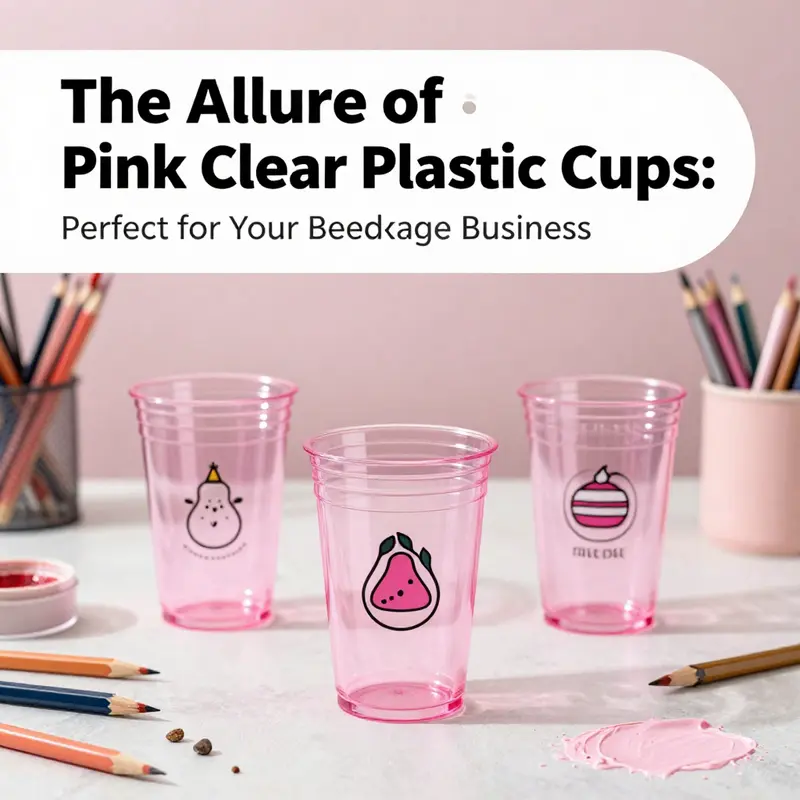
Pink clear plastic cups have evolved from simple disposables into branding canvases that blend aesthetic appeal with practical usability for modern events and marketing. The translucent pink base acts as a subtle stage for color, lighting, and mood, allowing the contents to glow while providing a brand backed frame. The interplay between material, color, and content creates a visual identity that audiences recognize at a glance. In practice, design improvements focus on how well a cup accepts and displays high resolution graphics, how durable those graphics are to event life, and how the cup fits into a broader branding ecosystem beyond a single drink.
Advances in direct to cup printing enable full color printing directly onto the cup surface with clarity even on transparent pink plastic. This means logos, mascots, taglines, and intricate graphics appear crisp as a printed brochure, with durability for outdoor venues or late evening receptions. The transparency of the pink substrate is an opportunity; when a drink is poured, the liquid enhances color depth and can spotlight shadows and highlights in the artwork, producing a vivid effect difficult to replicate with opaque cups. The result is a branded piece that functions as a color story tuneable to event theme, season, or campaign.
Ink technology plays a central role. Print layers resist fading, smudging, and moisture, critical for cups with condensation, spillages, or hot beverages. Inks are chosen for adhesion to PET plastics and for their ability to withstand cold storage and warm service without cracking or peeling. This reliability is essential for brands seeking to maximize print longevity across uses, or to ensure visual integrity during a single event. Practically this translates into cups that look sharp at the end of a party as at the outset, preserving messaging and visual hierarchy from first glance to last sip.
Beyond standard printing, design innovations extend into textural and tactile enhancements. Frosted finishes create a soft backdrop that can soften lighting and add a premium feel. Gradient effects where the pink hue shifts from rim to base guide the eye toward a central graphic or message, reinforcing a brand narrative with a gentle visual rhythm. Embossed patterns add a tactile dimension that invites touch, making holding the cup part of the branding experience. These features are not merely decorative; they are strategic tools for differentiating a brand at events with many options. The tactile and light interactions convey a sense of quality that consumers perceive before the first taste.
A cohesive branding experience extends beyond the cup to sleeves and lids. Custom sleeves that match the pink tone carry complementary messaging and frame the cup print, creating continuity across the customer journey. Coordinated lid designs in the same or a complementary hue serve as final touchpoints in brand unification. When guests see a unified set of drinkware, napkins, packaging, and signage, the impression is one of deliberate design and consistency, strengthening recall long after the event ends. Sleeves and lids are not just protective features; they extend the branding surface and reinforce the brand personality in a tactile, multi point way.
Sustainability is a critical element and pink clear cups are increasingly offered in eco conscious formats without compromising print fidelity. Biodegradable options from plant based plastics are entering the market, introducing new considerations for manufacturing tolerance and disposal, but they do not preclude customization. Advances in printing on plant based plastics show that high resolution logos and complex graphics can be achieved while aligning with environmental responsibility. For brands with sustainability targets, the balance among aesthetics, performance, and ecological impact becomes a storytelling opportunity: a cup that looks refined and deliberate while signaling responsible consumption. Certifications such as quality and safety standards provide reassurance about performance and compliance for venues and large orders.
Understanding how pink impacts perception helps designers and marketers. The color pink is associated with warmth, approachability, and celebration. In beverage service it can soften visual noise, create playfulness at social gatherings, or convey elegance at formal occasions when used judiciously. The translucent pink also allows the beverage color to interact with the cup hue, creating a spectrum of tones that can enhance or moderate the drink appearance. Brands can leverage these perceptual effects to guide consumer emotions such as excitement during cocktail hours, comfort at family gatherings, or sophistication at corporate receptions. The result is a branding tool that is not just seen but felt, resonating with audiences on multiple sensory levels.
For events and campaigns with a long life cycle, customization goes beyond the moment of service. The ability to apply thematic graphics that align with sponsors, seasonal campaigns, or milestone anniversaries makes pink clear cups a flexible asset across weeks or months. When a design is scalable from a simple logo to a multi element composition, brands can reuse elements across touchpoints such as signage, coasters, and digital content. The printed cups become part of a family of branded items rather than standalone props, enabling a cohesive storytelling arc that audiences recognize instantly. In such scenarios, even a simple beverage becomes a touchpoint for brand engagement and social sharing. The pink glass like clarity keeps visuals legible and vibrant whether the beverage is a deep red, a sunny citrus, or a cool blue, ensuring color strategy stays consistent across menus, drinks, and marketing collateral.
Practical guidance follows from a philosophy of integration and testing. It is not enough to demand high resolution prints; the production process must be calibrated to preserve fidelity under real world conditions. This means validating dye stability across temperature changes, ensuring adhesion quality for long runs, and testing legibility of text against varying beverage colors. It also means considering the end to end branding ecosystem—cups, sleeves, lids, and even the display environments work together to create a unified impression. In this sense pink clear plastic cups become more than a product; they become a medium through which brands narrate values, celebrate moments, and invite participation. For designers and procurement teams the path to success lies in choosing printing capabilities that deliver crisp durable results; selecting color strategies that harmonize with beverage palettes; and coordinating ancillary components that reinforce the branding story at every touchpoint.
To deepen understanding of how these design choices translate into outcomes, readers can explore packaging printing and related services. Packaging Printing provides a comprehensive overview of how surfaces like pink clear plastic cups can be used as marketing instruments while maintaining practical performance standards. External resources such as the referenced industry discussion also underscore how branding across a single well crafted cup can ripple through an event visual ecosystem, turning a disposable item into a lasting impression that attendees will recall and share. For further context, see the external resource at https://www.123cups.com/pink-plastic-cups.
Why People and Businesses Choose Pink Clear Plastic Cups: Style, Safety, and Sustainability

User preferences and commercial trends weave together when choosing pink clear plastic cups, creating a market that values aesthetics as much as performance. The appeal begins with visual impact: a translucent pink hue highlights the color and texture of beverages, making simple drinks look intentional and photo-ready. That visual advantage matters for home gatherings, wellness routines, and hospitality venues alike. It turns a basic serving vessel into a design element that complements décor, menu presentation, and brand identity.
Beyond looks, the shift in consumer behavior is anchored in a demand for safer, higher-quality materials. Buyers prefer BPA-free plastics and certifications that confirm food-safe manufacturing. This preference is visible in both individual purchases and bulk commercial orders. Home users pick pink clear cups that promise no chemical leaching and long-term reuse. Businesses require the same assurances to meet health codes and avoid reputational risk. The result is a steady move away from unverified single-use plastics toward polymer blends and plant-based alternatives that combine clarity with improved safety profiles.
Functionality informs user choice just as strongly as appearance. In households, features such as leak-resistant lids, ergonomic rims, and stackable dimensions simplify daily use and storage. People want a cup that can move from kitchen counter to commute to a gym bag without drama. In commercial settings, the priorities expand to include heat tolerance, shatter resistance, and fast service compatibility. Venues that serve both hot and cold drinks seek cups that maintain form at elevated temperatures and still provide visual transparency. For takeout and event catering, snap-fit lids and secure sealing are non-negotiable.
The environmental story shapes many purchasing decisions. A growing share of consumers expect their choices to reflect stewardship. This expectation has pushed manufacturers to offer recyclable PET versions, compostable bioplastics, and durable reusable options made to withstand repeated washing. Commercial buyers increasingly assess lifecycle impacts when selecting disposable items. They look for materials that are readily processed by municipal recycling systems or that decompose without toxic residues. Packaging and labeling that clearly state recyclability, compostability, or reuse guidelines influence procurement decisions and customer perception.
Customization is another powerful trend. Personalization transforms pink clear cups into branding tools. Individuals order embossed names or monograms for gifts, weddings, and special events. Businesses use printed logos, campaign taglines, or QR codes to extend a brand’s reach beyond the physical event. A simple cup can prompt social engagement when it features a QR link to a digital menu or loyalty sign-up. For venues that rely on repeat visits or social media traction, this small investment in design and printing yields measurable marketing returns.
Aesthetics and social media influence remain central. The pastel, blush, and rose tones that dominate contemporary palettes pair well with minimalist table settings and curated photography. Many users choose pink clear cups precisely because they photograph well under natural light and flat-lay compositions. For event planners and hospitality teams, this equates to organic promotion: guests share images that amplify the venue’s atmosphere. The result is an understated but effective marketing loop fueled by product selection.
Durability and reuse options bridge consumer habits and sustainability goals. Reusable pink clear cups, sometimes built with thicker walls or engineered polymers, satisfy those who want to minimize waste without sacrificing the translucent look. These are ideal for regular home use or for cafes offering reusable programs. For single-use situations, higher-grade PET that is both sturdy and recyclable presents a compromise: it meets convenience needs while allowing downstream recovery when properly disposed of.
Price sensitivity varies by use case. Individuals may accept higher per-unit costs for reusable items with distinctive design. Conversely, event coordinators and foodservice operators often emphasize unit economics. Wholesale channels respond with tiered pricing and bulk customization. When choosing between disposable and reusable solutions, buyers weigh upfront expense against long-term savings, waste management, and brand alignment. The economics of this choice are evolving as recycling infrastructure and regulations change.
Regulatory and safety trends affect procurement choices for commercial buyers. Health regulations and sustainability mandates drive many organizations to adopt products that meet defined standards. Clean-label demand—explicit statements about the absence of BPA, phthalates, and heavy metals—has become commonplace. Certifications and third-party testing provide the documentation businesses need to meet regulatory audits and build consumer trust.
Innovation continues to refine the balance of clarity, color, and performance. Manufacturers experiment with multi-layer constructions that improve insulation while preserving transparency. Some incorporate features such as integrated straw channels or visual temperature indicators. These additions enhance user convenience and help differentiate products in a crowded marketplace. Importantly, such innovations must align with recyclability goals to maintain overall sustainability benefits.
As user expectations converge across personal and commercial spheres, the decision to choose pink clear plastic cups often reflects a blend of visual intent, practical performance, and environmental consideration. Whether someone is curating a home bar, organizing a celebration, or sourcing drinkware for a foodservice operation, selection criteria now extend beyond color to include material safety, lifecycle impact, and the potential for brand expression.
For buyers seeking a focused range of options, product categories dedicated to disposable drinkware offer practical starting points for comparison and selection. Retailers and suppliers often group similar items together so buyers can evaluate lids, cup sizes, and material certifications in one place; one such curated collection is available here: disposable drinkware collection.
Industry analysis suggests that the future growth of colored clear cups will depend on sustainable sourcing and responsible end-of-life strategies. Designers and procurement teams are paying attention to how cups are produced, how they perform in service, and how they are processed after use. The market response will likely continue to favor products that marry the right shade of pink with transparent claims about safety and recyclability.
For businesses and consumers alike, pink clear plastic cups are more than a trend. They are a case study in how visual preference, practical design, and ethical considerations intersect. The most successful products will be those that respect health standards, respond to environmental pressures, and remain flexible enough to serve both everyday use and commercial demands. For a deeper look at sustainability considerations shaping this market, consult this industry perspective: https://www.packagingdigest.com/sustainable-packaging/pink-plastic-cups-trend-analysis
Final thoughts
As we have explored throughout these chapters, pink clear plastic cups embody a unique blend of style and practicality. Whether enhancing the aesthetic of a celebratory event, contributing to sustainable consumer practices, fostering economic opportunities in the wholesale market, enabling innovative branding strategies, or appealing to current user preferences, these cups remain a vital asset for various businesses. Their versatility ensures they stand out as a smart choice for modern consumers. Integrating these cups into your product offerings can enhance customer experiences and add value to your brand. Don’t miss the opportunity to leverage the charm of pink clear plastic cups in your establishment.