
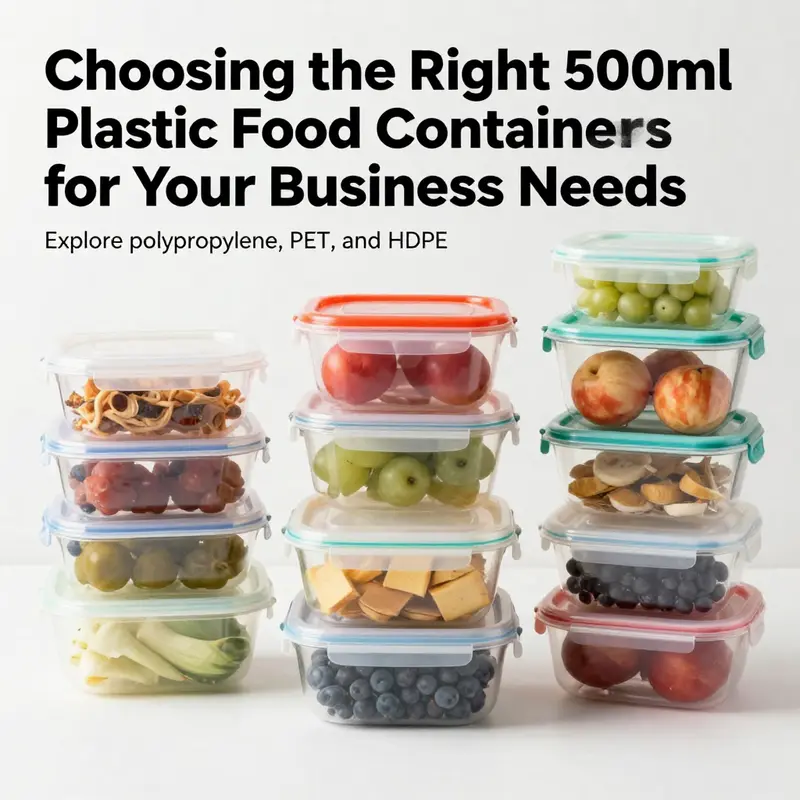
500ml plastic food containers are essential for food service industries like bubble tea shops, restaurants, and catering services. Their versatility meets various storage requirements, from hot meals to cold beverages. By understanding the unique attributes and applications of each type—polypropylene (PP #5), polyethylene terephthalate (PET #1), and high-density polyethylene (HDPE #2)—businesses can make informed decisions that enhance food safety and customer satisfaction. This article delves into the strengths and limitations of each material, industrial applications, compliance standards, and consumer preferences, ensuring you find the best container for your specific needs.
null
null
null
null
Hard-Wearing, Trusted: How HDPE #2 Shapes 500ml Plastic Food Containers for Strength, Safety, and Sustainability
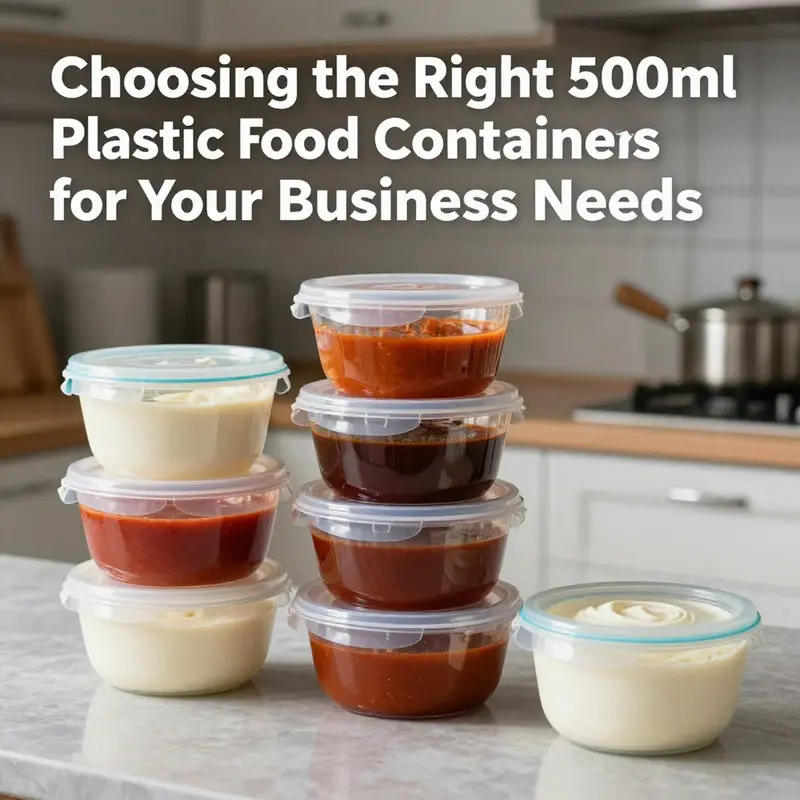
A 500ml plastic food container with a lid operates at the quiet boundary between everyday convenience and the durable chemistry that keeps meals fresh. When we pull a box from the fridge or slip a container into a lunch bag, we rarely consider the material behind the scene. Yet the choice of polymer defines how well the container holds its shape under pressure, how effectively it blocks odors, and how safely it keeps contents in contact without migration or degradation. In this context, High-Density Polyethylene (HDPE #2) stands out as a premier option for many of these 500ml workhorse containers. Its reputation rests on a simple, robust bundle of properties: remarkable mechanical strength, dependable impact resistance, and the rigidity necessary to maintain form through the bumps of daily life. That rigidity isn’t just about looking sturdy on a shelf; it translates into practical advantages. A container that resists denting when stacked or dropped makes handling easier for families, schools, and workplace kitchens alike. It also reduces the risk of leaks or deformation that could compromise seal integrity, which matters when the lid is pressing down to lock in freshness. The strength of HDPE #2 comes from its molecular structure, which yields a dense, semi-crystalline lattice that resists penetration and maintains integrity even after repeated use. This makes HDPE an attractive material for 500ml containers designed for longer life in the home, and it explains why many households rotate HDPE-based sets into their daily meal-prep routines. The durability extends beyond mere physical form. HDPE’s chemical resistance is a quiet shield against a broad spectrum of substances commonly encountered in kitchen storage. From acidic dressings to oil-based sauces, the polymer resists attack and staining. This means less surface degradation, fewer micro-scratches that trap odors, and a container that can look and feel new after multiple cycles of use. The barrier properties of HDPE, while not always the most celebrated feature in consumer packaging, play a crucial role in preserving food quality. Its low permeability to moisture and gases helps slow the ingress of external moisture or aroma migration, which translates to longer-lasting freshness for leftovers and pre-prepped ingredients. In practical terms, this helps reduce spoilage in households and support meal-prep routines where foods are stored for several days. The safety profile of HDPE is another pillar of its appeal. It is widely recognized as food-safe and recyclable, with a long track record of compatibility with direct food contact. The material’s BPA-free nature is often highlighted as a contributor to consumer confidence, though HDPE’s safety ends up being a broader assurance: it’s a well-established, inert plastic that minimizes leaching under normal storage conditions. These factors together create a container that not only protects its contents but also aligns with sustainable storage practices. The recyclability of HDPE #2 is a meaningful dimension for households looking to minimize waste. In many recycling streams, HDPE is readily accepted and processed, contributing to a cycle in which used containers can re-enter production with relatively efficient turnaround. This is particularly relevant for 500ml containers used in meal prep, catering, and institutional settings, where multiple reuse cycles may be anticipated before the product reaches end of life. The practical implications extend to design choices as well. For 500ml formats, HDPE’s strength supports slender, stackable shapes that maximize space efficiency in cupboards and lunchbags. Its opacity, while sometimes a design drawback in favor of transparency, offers a consistent surface that resists fingerprint smudges and shows fewer minor scuffs with repeated handling. When transparency is less critical than reliability, HDPE’s ability to maintain a uniform appearance across cycles becomes a practical advantage for families and organizations that prioritize durability over crystal-clear visibility. The broader landscape of plastic food packaging often positions HDPE alongside other polymers with complementary strengths. In contrast to PET #1, which offers exceptional clarity but can be less forgiving under heat and more prone to odor absorption over time, HDPE provides a robust balance of heat tolerance, chemical resistance, and mechanical resilience. And when compared with polypropylene (PP #5), which excels in heat resistance and flexible toughness, HDPE trades some high-temperature performance for superior impact resistance and dimensional stability under a wider range of temperatures. This balance makes HDPE particularly well-suited for 500ml containers intended for both fridge storage and everyday transport, where rough handling and variable temperatures are common. The case for HDPE is further strengthened by the potential for advanced formulations. Industry leaders, including resin producers, have developed HDPE variants that tailor stiffness, toughness, and ESCR—Environmental Stress Crack Resistance—to specific packaging needs. For rigid, durable 500ml containers used in demanding environments, these engineered HDPE resins deliver a reliable performance envelope: resistance to cracking under repeated stress, sustained stiffness in the face of minor deformations, and predictable long-term durability. In practical terms, a 500ml HDPE container built from such a formulation can endure the rigors of a busy kitchen, a lunchroom, or a catering workflow, where containers may be scraped, dropped, or stacked. The applications of HDPE in both consumer and industrial arenas reflect a broader trend toward performance with sustainability in mind. For consumer use, HDPE-based 500ml containers are ideal for dairy-based sauces, soups, stews, and other perishables that benefit from a stable barrier and durable body. For industrial contexts—such as meal-delivery services, institutional kitchens, and deli counters—the stackability and leak-proof lid compatibility of HDPE-based designs support efficient handling and reliable throughput. The combination of a sturdy exterior and reliable barrier helps reduce product loss and spoilage, which translates into lower overall waste and improved operational efficiency. The material’s compatibility with repeated use is a key attribute for households pursuing durable, reusable storage options. While PET containers can be tempting for their transparency and single-use practicality, HDPE’s long life in a reusable cycle resonates with sustainable storage goals. In this sense, the 500ml HDPE container embodies a pragmatic compromise: it offers robust performance where it matters most—strength, chemical resistance, and enduring shape—without the more fragile tendencies that can accompany other polymers under stress. For readers exploring real-world examples and purchasing decisions, a practical reference point is available through dedicated take-away bowls designed for flexibility across 500–1000 ml ranges. These examples highlight how a single material family can adapt to a variety of design requests, from lid style to wall thickness, while preserving core performance traits. senang05-food-grade-500-750-1000ml-take-away-bowl-with-lids-packing-food-single-wall-fast-food-salad-bowls provides a concrete illustration of how a 500ml container can be engineered to balance stackability, leak resistance, and user ergonomics without sacrificing safety or recyclability. The broader science behind these capabilities is supported by well-documented industry insights. For deeper technical grounding, a comprehensive resource delves into the standards, properties, and industrial applications of HDPE and other container materials, including how advanced resins are designed for rigidity, toughness, ESCR, and environmental performance. This external resource underscores the ongoing relevance of HDPE in the 500ml format and beyond, and it helps connect everyday storage choices with a larger material science framework. In summary, HDPE #2 offers a compelling blend of strength, durability, chemical resistance, and sustainability for 500ml plastic food containers. Its mechanical resilience ensures that containers resist deformation and protect contents during handling and transport. Its barrier properties preserve freshness by limiting moisture and odor exchange, while its safety profile and recyclability support responsible usage and end-of-life management. Through advanced formulations, HDPE can be tuned to meet higher performance requirements in demanding settings, extending the usable life of containers in both home kitchens and professional operations. This makes HDPE-based 500ml containers a reliable cornerstone for reusable storage, meal-prep systems, and institutional packaging alike, aligning practical everyday use with thoughtful packaging design. For readers seeking additional perspectives on material choices, the ongoing conversation around container design continues to emphasize how a single polymer family—HDPE #2—can deliver consistent results across a spectrum of use cases, from the fridge to the grocery shelf. External reading can deepen understanding of how standards, properties, and industrial considerations shape packaging decisions in real-world settings. Dow’s expansive guide on food container materials offers a thorough overview of the technical landscape that informs these choices and helps manufacturers and users alike to navigate the trade-offs involved in selecting the right container for the right job: https://www.dow.com/en-us/industrial-applications/food-packaging/plastic-container-materials
How 500ml Plastic Food Containers Power Industrial Packaging and Meet Food-Safety Rules
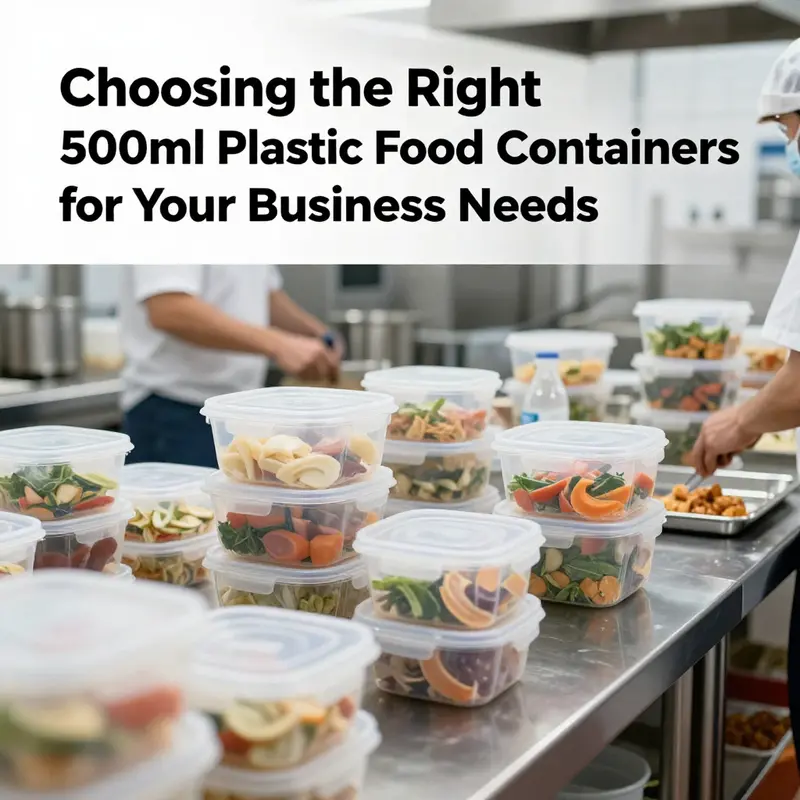
The 500ml plastic food container is a compact workhorse across industrial packaging lines. It strikes a balance between portion control and logistics efficiency. Its size fits single meals, side dishes, sauces, and ingredient portions. That makes it ideal for food processors, meal-delivery operators, catering services, deli counters, and retail prepared-food displays. Industries choose these containers for many practical reasons: they are durable enough for repeated handling, light enough to reduce shipping costs, and adaptable across automated production systems.
Material choice drives both application and compliance. Polypropylene (PP) and high-density polyethylene (HDPE) are the primary polymers used when repeated food contact is required. These materials resist common food chemicals and tolerate a wide temperature range. PP is valued for microwave reheating and freezer compatibility. HDPE provides excellent impact resistance and strong chemical stability, which suits sauces, oils, and dairy. Polyethylene terephthalate (PET) appears in clear, retail-facing packaging where product visibility matters. PET offers excellent moisture and gas barrier properties, ideal for cold foods and salads, but it is less suited to hot-fill or microwave processes. Selecting the right polymer shapes the container’s lifecycle and dictates testing protocols and certification needs.
Industrial specifications begin at the material level and run through design, assembly, and traceability. Containers must maintain structural integrity during filling, sealing, stacking, and transport. Lid design is core; leak-proof seals protect against spills and contamination. Stackability reduces pallet height and optimizes warehouse space. In automated lines, consistent rim geometry and uniform wall thickness ensure reliable speed and sealing performance. Custom molds allow manufacturers to tailor shapes, fit specialist lids, and add tamper-evident features. All of these design choices affect regulatory compliance because they change how a container interacts with food and how it will be tested.
Regulatory compliance for food contact materials is rigorous and multi-layered. Manufacturers of 500ml containers commonly seek certifications and test results aligned with international frameworks. In the United States, FDA approval for food contact materials confirms suitability for direct food contact under defined conditions. In the EU, compliance with the overarching Framework Regulation ensures materials do not transfer constituents to food in harmful quantities. National standards such as China’s GB 4806 series are often required for export markets. Industrial buyers usually request documentation showing conformity to these regimes, along with certificates for specific criteria such as being free from bisphenol A (BPA) and other restricted substances.
Testing programs validate safety claims. Migration testing measures the transfer of chemical components from container to food under realistic conditions. Tests use food simulants and a range of temperatures and times to mimic storage and use. Results must fall within permitted limits for specific migrants and for overall migration. Mechanical testing evaluates impact resistance, seal strength, and lid retention. Thermal testing verifies performance under freezing, refrigerated, and reheating cycles. For recycled-content containers, additional screening ensures absence of contaminants. Industrial suppliers typically provide a package of test reports, declarations of conformity, and a certificate of analysis for each material batch.
Hygiene and cleanability are practical compliance concerns. Smooth inner surfaces, precise molds, and well-designed seals reduce crevices where food residue can collect. This lowers the risk of microbial growth and simplifies cleaning for reusable applications. Many industrial users prefer single-material designs for easier cleaning and recycling. When containers are intended for reuse, manufacturers must supply instructions for cleaning, maximum number of reuse cycles, and any temperature limits. For single-use retail containers, clear labeling guides consumers on safe use and disposal.
Traceability and quality management systems underpin large-scale supply. Batch numbering, material lot codes, and production records link finished containers back to raw materials and processing conditions. This traceability supports recalls and supplier audits. Quality systems aligned with ISO standards, HACCP principles, or recognized food-safety certification schemes give buyers confidence. Regular third-party audits and factory inspections are common requirements in contracts with large food brands and institutional buyers.
Chemical compatibility is a central industrial concern. Many prepared foods include acidic or fatty components that can interact with packaging. HDPE offers strong resistance to fats and oils. PP resists a broad range of acids and bases and tolerates repeated heating. PET, while clear and lightweight, does not suit hot-fill or microwave conditions. For applications involving solvents, cleaning agents, or personal-care formulas, manufacturers conduct compatibility testing to ensure no taste transfer, discoloration, or loss of container performance.
Environmental and end-of-life considerations now affect industrial procurement. Recyclability, the presence of recycled content, and clear labeling for collection streams matter to retailers and institutional buyers. Containers marked with recycling codes and accompanied by recycling guidance make downstream processing easier. Some suppliers offer containers designed for mechanical recycling streams, while others provide details for chemical recycling pathways. Industrial buyers weigh service life and reuse cycles against the environmental footprint of producing new containers.
Operational efficiency ties compliance to economics. Containers optimized for automated filling and sealing reduce line stoppages. Choosing materials that meet regulatory tests without costly over-specification keeps unit costs down. For bulk food producers, small gains in sealing speed or stack density translate into significant savings across thousands of units. Thus, technical compliance and process design intersect: a compliant container that also improves line throughput represents a competitive advantage.
Cross-sector uses illustrate the container’s versatility. In food service and meal delivery, 500ml units portion soups, salads, and rice dishes. In industrial-scale kitchens and institutional cafeterias, they handle sauces and sides that must hold temperature and resist leakage. Retail food processors use similar containers for single-serve tubs and sampling. Outside food, analogous containers package non-food items like cleaners and personal-care lotions; these applications may not require food-grade certifications but still benefit from the same structural and chemical performance.
Procurement teams tend to request a consistent certification package. Typical documents include a material safety data sheet, a declaration of conformity to applicable regulations, migration test reports for specified simulants and conditions, a certificate of GMP, and traceability documentation. Manufacturers often provide these with initial orders and update them after material or process changes. For global supply chains, buyers expect compliance across multiple jurisdictions and clear statements about any known limitations, such as maximum safe temperature or recommended use cases.
Adapting containers to market needs depends on working closely with manufacturers. Custom color, embossed branding, and tailored lid features are common. But customization must respect compliance boundaries. Additives used to modify color or flexibility must be tested for migration and approved for food contact. When design choices introduce potential risk, supplementary testing and updated declarations are required.
For buyers and specifiers, the industrial role of the 500ml plastic container rests on three pillars: material suitability, documented safety, and production compatibility. Material suitability matches polymer performance to the food and process. Documented safety provides regulators and customers with proof. Production compatibility ensures containers move smoothly through filling, sealing, and distribution. Together, these elements make the 500ml plastic container a reliable building block for modern food production and packaging.
For a close look at a typical market offering in this size range, see the 500ml take-away bowl product page. For further technical details and broader sourcing information, consult this industry resource: https://www.alibaba.com/product-detail/500ml-Plastic-Screw-Top-Container-Types_1600473298199.html
Choosing Between Reuse and Convenience: How 500ml Plastic Food Containers Shape Modern Storage
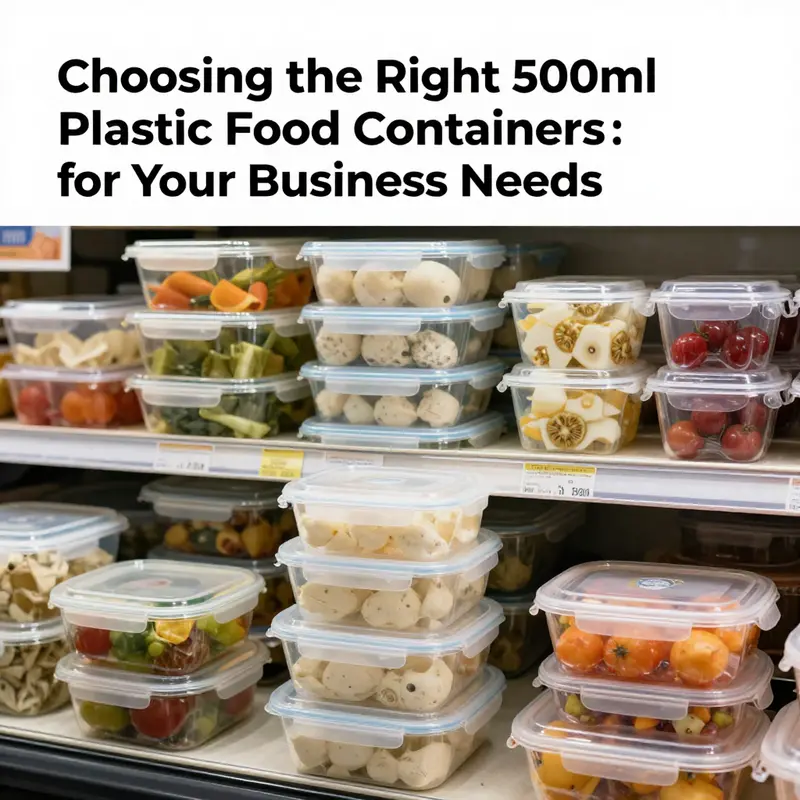
A 500ml plastic food container with lid sits quietly in the shadow of our everyday routines, yet it wields outsized influence over how we store, carry, and rehearse meals. The choice between reusable and single-use options is not a simple binary; it is a decision woven from habit, practicality, and a growing sense of responsibility toward the packaging we rely on. In kitchens and break rooms, in delis and delivery services, the 500ml size acts as a versatile canvas. It balances portion control with portability, transparency with protection, and quick access with durable containment. The decision people make about this size often reflects a broader mindset about resources: how we extend the life of a product, how we simplify cleanup, and how we measure the true costs of convenience. The container becomes a daily proxy for values, and those values are evolving in tandem with both consumer behavior and the pressures shaping the packaging industry at large.
At the heart of consumer preference is material choice, and three plastics dominate the landscape for 500ml containers: polypropylene (PP), high-density polyethylene (HDPE), and polyethylene terephthalate (PET). Each material offers a distinct blend of strengths and trade-offs. PP, widely used for its toughness and heat resistance, is favored for meal-prep and reheating. It can tolerate the microwave and dishwasher cycles many households rely on, and it is available in BPA-free variants. Yet its optical clarity is not as pronounced as PET’s, and repeated heating can lead to brittleness over time. HDPE presents a different balance: it is durable, chemically resistant, and excels in both hot and cold conditions. It is the stalwart for long-term storage and for items that must endure rough handling, while also providing robust UV resistance to guard against sunlight degradation. HDPE’s opacity, while reducing visibility of contents, is often a practical boon for protecting light-sensitive foods. PET, by contrast, shines in transparency and barrier performance, ideal when display and freshness cues matter to shoppers or eaters. Its limitations—microwave unsuitability, heat sensitivity, and odor absorption with long-term use—are well understood, shaping consumer expectations around how and when to reuse or recycle PET containers.
These material profiles align with different consumer uses. For many households, PP is the go-to for weekly meal-prep, freezer storage, and daily lunch containers because it integrates smoothly with reheating and cleaning routines. The plastic’s resilience makes it forgiving for busy users who juggle mornings, school lunches, and after-work meals. HDPE often takes on the role of durable workhorse in more demanding storage needs—sauces, soups, and ready-to-assemble meals that travel across longer distances or in more variable environments. Its resilience under a range of temperatures supports a lifestyle that blends pantry-staple durability with kitchen practicality. PET containers, with their clarity and barrier capabilities, remain a favorite for cold foods and short-term displays in retail settings or for users who want to visually confirm contents at a glance before consuming.
Beyond material science, consumer behavior is shaped by the lid and the container’s structural design. A leak-proof, easily sealable lid can tilt the decision toward reusable options, especially when the lid design supports smooth stacking and simple cleaning. Stackability is a subtle but powerful factor in households with limited pantry or fridge space. Containers that nest tightly reduce clutter and enhance transport efficiency, a benefit appreciated by commuters, students, and professionals who move between different locations with meals in transit. In this sense, 500ml containers are more than vessels; they are modular components of a daily ritual in which convenience and order are harmonized. The lid, the seal, and the ease of disassembly for washing all contribute to a perception of whether a container is truly fit for repeated use or better reserved for single sessions.
Economic considerations inevitably accompany these preferences. Reuse hinges on the long-term cost savings from reduced disposal and the perceived value of a container that can be used again and again. Yet the initial investment, maintenance costs, and the time required for cleaning can temper enthusiasm for durable options among some consumers. Single-use containers, often perceived as lower upfront costs and higher convenience, find a ready audience in contexts where hygiene and rapid turnover reign supreme—such as take-away channels, travel, or temporary distribution of meals. The 500ml size remains popular here because it is light, easily carried, and compatible with rapid packaging lines that prioritize speed and standardized packaging. In such settings, PET’s clarity and barrier properties make cold or semi-processed foods look appealing to customers while preserving freshness for short windows, enhancing the perceived value of the product even as it travels to the consumer’s hands.
The evolving preference landscape reflects a broader, often cited tension between convenience and sustainability. Individuals increasingly view reusable containers as a tangible step toward reducing plastic waste and lowering overall carbon footprints. HDPE and PP, with their durability and heat tolerance, are frequently pointed to as practical choices for reuse cycles. Still, the social context matters: when households are pressed by time, when access to cleaning infrastructure is uneven, or when the need for quick meals and snacks arises in travel or in institutions, single-use options maintain their relevance. The research paints a nuanced picture: many consumers adopt a hybrid approach that blends short-term convenience with longer-term reuse as a rational, incremental shift toward sustainability. The shift is not abrupt; it is gradual, shaped by policy cues, economic signals, and the evolving availability of materials designed for recycling or safer repeated use.
In interpreting these preferences, it helps to imagine the lifecycle of a 500ml container in a typical consumer’s week. A student slips a PP container into a backpack, a reheated lunch ready for class. A parent uses an HDPE bottle-like container to transport soup for a workday, confident in its heat tolerance and sturdiness. A shopper selects a PET-based option when they want to showcase a vibrant salad, trusting the container’s clarity to entice at the deli counter or grocery shelf. Each choice is a micro-decision that reflects a larger calculus: how often the container will be reused, how easily it can be cleaned, whether its material is BPA-free, and how it aligns with the user’s environmental values and budget. The social dimension cannot be ignored. Communities with robust recycling or reuse programs, supported by clear labeling and accessible collection points, tend to tilt preferences toward containers deemed recyclable or recyclable-ready. In places where the infrastructure to reclaim materials is less developed, consumers may gravitate toward more durable, longer-lasting options that promise clearer maintenance routines and longer life.
A practical illustration of this balance can be found in a widely used 500-750-1000 ml food-grade take-away bowl with lids. The design and material selection—an emphasis on safety, ease of cleaning, and compatibility with common reheating methods—often serve as a touchstone for consumer judgments about reuse versus single-use. This example underscores how a single product category can embody several competing priorities: effective sealing that preserves flavor and prevents leaks, straightforward cleaning that accommodates daily life, and a lifecycle that invites repeated use while offering recyclability or end-of-life options when the container finally reaches the end of its usable life. The consumer’s mindset, in turn, is influenced by broader market trends that reward packaging innovations which marry performance with environmental stewardship.
Policy signals and corporate strategies have a powerful bearing on these preferences. Initiatives aimed at reducing single-use plastics, encouraging recyclable or reclaimable packaging, and raising public awareness about disposal impact are not abstract forces; they translate into visible shifts in the kinds of 500ml containers people choose and the contexts in which they are used. In some markets, firms experiment with design features that facilitate recycling, such as clearly labeled materials, compatible lids, and standardized shapes that harmonize with sorting streams. In others, the focus shifts to durability and cleanability, recognizing that repeat use reduces waste even when a product is transported through several cycles before eventual disposal. Across industrial and consumer-facing channels, the narrative is moving toward a blended future where reuse and recycling are not mutually exclusive but complementary, a logic that fits the 500ml format well given its portability and versatility.
To readers navigating this landscape, the takeaway is not a universal prescription but a framework for making informed choices. If you value long-term cost efficiency and robust performance in varied temperatures, PP or HDPE containers emerge as practical candidates, especially for daily meal-prep and ongoing use. If visibility of contents is paramount for quick recognition of leftovers or ingredients, PET remains an appealing option for short-term cold storage or display contexts, provided its heating is avoided. If your life involves frequent travel, take-out routines, or temporary distribution of meals, a single-use option with a reliable lid can be sensible for hygiene and convenience while acknowledging its disposability. And if your aim is to minimize waste while preserving the convenience you rely on, look for designs that optimize for reuse, durability, and recyclability in equal measure—containers that clean easily, stack neatly, and align with local waste-management capabilities. This is the nuanced middle ground that the market is gradually embracing: not a single path, but a spectrum where choices reflect personal routines, local infrastructure, and evolving expectations about what it means to store and move food in the modern era.
For readers seeking concrete pathways to apply these insights, consider how a 500ml container fits into your weekly rhythm. Are you able to maintain a steady routine of washing and air-drying to support reuse? Do you have access to recycling streams that handle your chosen material? Does the container’s lid design reduce the risk of leaks during transport? These practical questions help translate the abstract debate about sustainability into daily habits that can meaningfully reduce waste without sacrificing the comfort and efficiency of everyday storage. The conversation about 500ml containers is ultimately a conversation about how we live with plastic in a way that respects both convenience and ecological balance, a balance that increasingly frames how households, retailers, and manufacturers approach the design and use of reusable storage solutions.
Internal link reference: for a practical example of this balance in action, you can explore a widely used option described above through the internal product page: food-grade 500-750-1000ml take-away bowl with lids. This kind of container illustrates the real-world interplay between safety, convenience, and reuse potential that sits at the core of consumer decisions around 500ml plastic food containers. The discussion also echoes broader industry dynamics where material choice, design, and lifecycle considerations converge to shape how families and organizations store meals, snacks, and ingredients across time and space.
As the market continues to evolve, the narrative around 500ml containers will likely foreground durability, recyclability, and the possibility of safe, repeated use without compromising hygiene or convenience. Consumers will increasingly expect packaging that not only protects food but also aligns with a broader ethos of responsible consumption. In response, manufacturers and retailers will experiment with smarter designs, clearer labeling, and systems that support recycling or return programs. The result will be a more resilient ecosystem for food storage, where the same 500ml size can serve as a reliable, efficient, and environmentally thoughtful component of daily life. In this context, the balance between reusability and single-use formats will not be a final verdict but an ongoing dialogue—one that adapts to life’s changing rhythms, evolving waste-management infrastructures, and the shared goal of keeping meals fresh, safe, and accessible while reducing the footprint that packaging leaves behind.
External resource: for a broader market perspective on material trends and packaging strategy shaping the plastic container landscape, see Grand View Research’s analysis on plastic packaging market dynamics and applications in food and beverage, which outlines how material choices influence reuse, recyclability, and cost considerations across the industry. https://www.grandviewresearch.com/industry-analysis/plastic-packaging-market
Final thoughts
Selecting the right type of 500ml plastic food container can significantly impact the efficiency and satisfaction of your food service operation. With options like polypropylene for durability, PET for visibility, and HDPE for strength, understanding their properties allows businesses to tailor their storage solutions. Safety compliance also assures consumers of high food standards. Lastly, gauging customer preferences regarding reusability and sustainability can guide procurement decisions, ensuring you stay competitive. By choosing wisely, you enhance both service quality and client trust.