
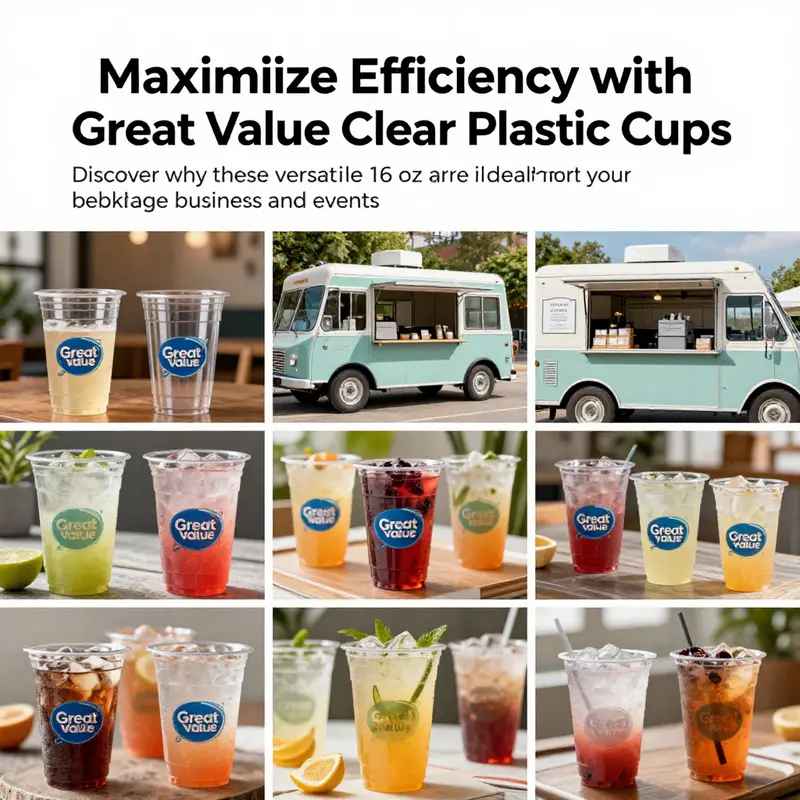
Great Value Clear Plastic Cups, 16 oz, 100 count, are redefining convenience in the beverage industry. Ideal for bubble tea shops, restaurants, food trucks, and catering services, these disposable cups combine affordability with functionality. In a world where presentation matters, the clear design allows customers to view delicious drinks, while the durable plastic ensures they hold up in high-demand settings. Throughout this article, we will explore the quality, economic benefits, societal uses, and environmental considerations associated with these popular cups, shedding light on why they are a smart choice for event planners, corporate procurement teams, and anyone looking to streamline service while maintaining quality.
How Well 16 oz Clear Plastic Cups (100-Count) Hold Up: A Practical Quality Assessment
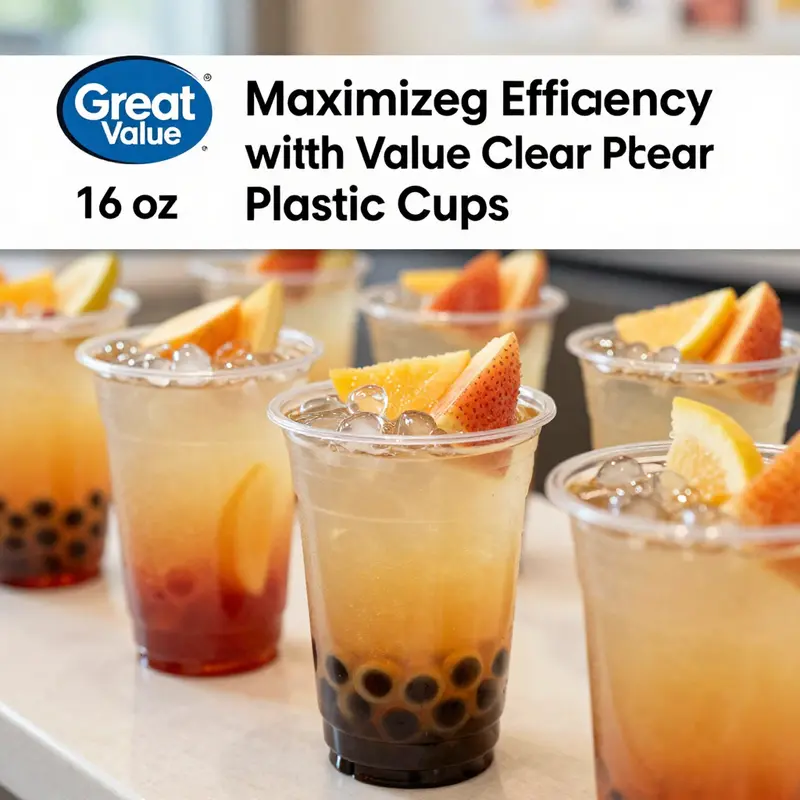
Material, structure, and first impressions
The clear 16 oz plastic cup in a 100-count pack starts its case for quality with the material. These cups are typically molded from polyethylene terephthalate, a plastic known for clarity and tensile strength. PET gives the cups a glass-like transparency, so beverages show true color and presentation looks professional. The formed rim is uniform and smooth, which helps when pouring and stacking. A stable rim also reduces small spills when hands and tables are busy. The cups maintain their shape rather than sagging when filled, a key trait for single-use vessels intended for parties and events.
The thinness of the walls balances weight and feel. Lightweight construction makes transport easier. At the same time, the walls resist modest pressure, so the cup seldom collapses when holding soda or iced drinks. That said, wall thickness is not the same as heavy-duty. These cups are not designed to survive repeated reuse or rough handling, but they do meet expectations for one-time or limited reuse events.
Performance with liquids and practical handling
For cold beverages the cups perform reliably. Carbonated drinks retain fizz, and ice slides easily without cracking the cup. Condensation forms on the outside, which may create a slick surface. That slickness is the most common handling complaint. When wet, the cups can feel slippery in hand, especially for those with shorter or moist thumbs. This issue is manageable with simple fixes: hold the cup near the rim, use a sleeve or napkin, or pair the cups with textured cup holders.
Hot liquids are not recommended in these cups. PET softens under heat and may deform or leach when extremely warm. For warm beverages, double-walled paper or insulated alternatives are a safer choice. For beverages cold to room temperature, these cups remain dimensionally stable and visually clear.
Stacking and transportation are strong points. The cups nest efficiently when empty, saving storage space. When nested, they resist tipping in stacks and are easy to dispense from a countertop or a party station. Once filled, the cups are sturdy enough to be carried in trays, though large trays or rapid transit over uneven surfaces call for lids or carriers.
Pack size, value, and intended use
A 100-count pack is useful for gatherings of moderate to large size. It reduces the need to buy frequently and supports events such as barbecues, fundraisers, and office parties. The economics are straightforward: bulk purchase lowers per-cup cost and simplifies planning. For caterers or hosts who prefer disposable service, the count is convenient and predictable.
Value is not only about price. The visual clarity, acceptable durability, and reliable stacking behavior contribute to perceived worth. For users who prioritize convenience and presentation, the cost savings relative to heavier-duty or reusable alternatives add up over multiple events. However, if long-term durability or environmental impact is a priority, consider heavier reusable cups or compostable options instead.
Safety, food compliance, and recyclability
These PET cups generally comply with food-contact safety standards. The polymer resists flavor transfer and does not impart taste to beverages. As with any disposable product, check packaging for explicit safety certifications and recycling codes. PET is widely recyclable where local programs accept it. Empty, rinse, and place the cups in the appropriate recycling stream to improve lifecycle outcomes.
Still, recycling access varies. For users in areas without strong curbside recycling, the practical end-of-life for these cups may be landfill. That reality factors into total cost for eco-conscious buyers. If recycling is important to your event or facility, establish a collection plan and clear labeling to improve capture rates.
Design details that affect everyday use
The cup’s lip is even and non-abrasive. That makes sipping comfortable and reduces chipping risk in transport. The base is slightly thicker to stabilize the cup on flat surfaces. This thicker base helps prevent tipping when the cup is placed on picnic tables or buffets. The geometry also influences stacking tolerance and how many cups can nest before manual separation becomes necessary.
Clarity matters for presentation. A transparent cup showcases layered drinks, cocktails, fruit-infused water, and decorated beverages. For events where appearance matters, clarity is an advantage over opaque options. The cups also pair well with decorative wraps, sleeves, and labels if branding or themed presentation is desired.
Common drawbacks and how to manage them
Slipperiness from condensation is the main complaint. For busy venues, staff can mitigate this with quick solutions. Offer napkins, use cup sleeves, or place textured non-slip mats at drink stations. Another concern is the environmental footprint. For organizers seeking greener options, blending disposables with compostable serveware or providing recycling collection reduces impact.
A third issue arises when cups are overloaded with heavy ice and garnishes. Overfilling increases the risk of tipping. Practical serving rules — fill cups two-thirds full and place heavy garnishes on skewers — make a meaningful difference. If service involves hot toppings or prolonged exposure to heat, avoid PET and opt for a rated hot cup.
Use-case scenarios and pairing suggestions
These cups are versatile for a wide range of events. They work well for casual gatherings, corporate mixers, and family functions. For outdoor events, pair cups with lids to prevent spills and insects. For cocktail service, choose a slightly smaller pour to prevent overflow. For dzieci-friendly events, secure lids and straws reduce spillage.
Pairing the cups with complementary disposable items improves user experience. Sturdy utensils, napkins, and plateware that match the event’s pace and menu keep clean-up simple. For greener setups, combine recyclable cups with compostable plates and bamboo utensils to balance convenience and sustainability. For an example of alternative disposable cups that fit different needs, consider reviewing an option focused on single-wall paper cups in 8oz and 16oz sizes for warm items. You can learn more about such alternatives here: disposable single-wall food-grade paper cup 8oz 16oz 32oz.
Storage, handling, and longevity
Store the cups in a cool, dry place away from direct sunlight. Prolonged UV exposure may weaken the material. Keep the pack sealed until use to prevent dust accumulation. During transport, place packs flat to avoid deformation. For partial events, reseal the box between sessions to preserve shape and cleanliness.
If reused sparingly, inspect each cup for hairline cracks and deformation. Reusing PET cups is possible for the same day, provided they were used for cold beverages. For sanitation and long-term reuse, choose a reusable cup that is designed for multiple wash cycles.
Where these cups fit in the broader market
They occupy the budget-friendly segment of single-use drinkware. Lower cost, dependable performance, and clear presentation make them an appealing choice. They are not engineered to replace reusable drinkware or premium heavy-duty disposables, but they offer a sensible compromise between appearance and cost.
For event planners who need disposable convenience without excessive compromise on look or function, these cups are practical. For venues prioritizing sustainability or frequent reuse, evaluate compostable options or durable glassware instead. Each choice carries trade-offs between cost, environmental impact, and user experience.
Final practical assessment
When selecting a 16 oz clear plastic cup in a 100-count pack, weigh clarity, durability, and convenience against environmental concerns. The cups deliver reliable performance for cold beverages, stack efficiently, and provide good value in bulk. Handling challenges like slipperiness are manageable with small adjustments. For responsible disposal, confirm local recycling practices and provide clear guidance at events. For situations demanding hot-liquid performance or heavy-duty reuse, opt for alternatives. Otherwise, these cups present a clear, practical solution for many common serving needs.
For detailed specifications and certification details, consult the official product listing for up-to-date composition and safety information: https://www.walmart.com/ip/Great-Value-Disposable-Plastic-Cups-Clear-16-oz-100-Count/11943725
null
null
Clear Convenience: How 16-Ounce Disposable Cups Shape Social Gatherings and Event Logistics
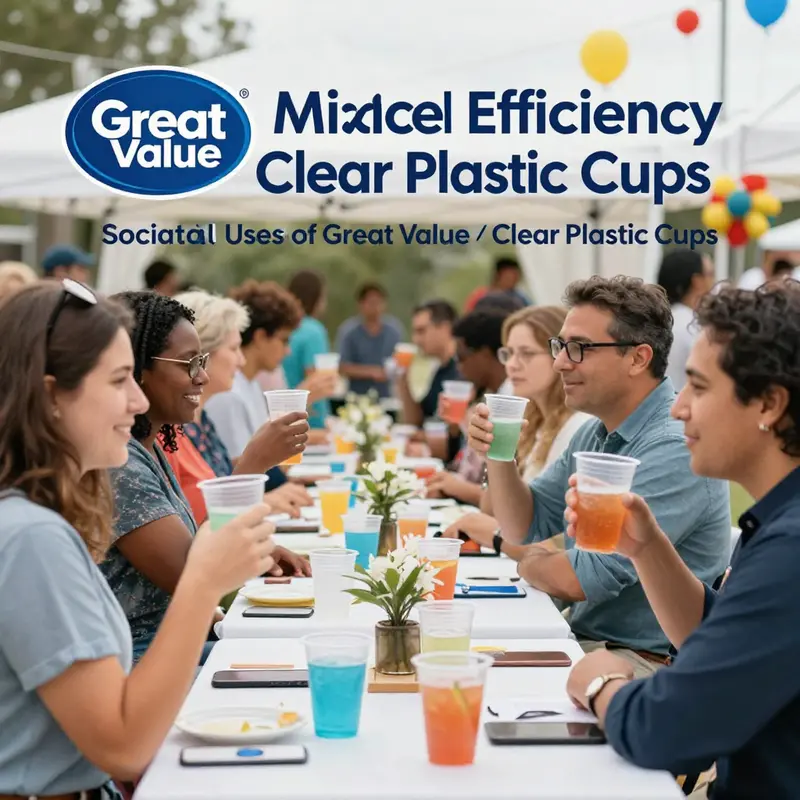
Disposables rarely make headlines, yet they quietly govern how communities come together. In the world of social life, clear 16-ounce disposable cups act as practical enablers, balancing visibility, capacity, and rapid turnover. They are the underappreciated backbone of gatherings that range from spontaneous family barbecues to carefully choreographed community events. The transparent bowl of a cup does more than hold liquid; it offers a glimpse into the social moment itself. When guests pass around beverages, the clear walls let everyone monitor fullness and flow, a small but meaningful cue that helps keep lines smooth and conversations flowing. The 16-ounce size is carefully chosen for versatility: large enough to satisfy a thirsty crowd, yet compact enough to be held comfortably in one hand. In this way, the cup becomes a silent facilitator of movement and interaction, a simple tool that supports the social logic of an event rather than overshadowing it.
In informal settings such as birthday parties, family reunions, and backyard barbecues, the appeal lies in a rapid tempo of service. People mingle, kids drift toward the snack table, adults fulfill toasts and conversations, and beverages circulate with minimal interruption. A well-considered pack—often in the hundreds—ensures that hosts do not find themselves scrambling for more cups mid-celebration. A 100-count supply, for instance, translates into a practical buffer for moderate to large groups, reducing the risk of disruptive restocking or mid-event trips to the kitchen. For event planners and caterers, this quantity represents more than convenience; it is a factor in budgeting time and labor. When the cups are easy to grab, stack, and transport, staff can devote more attention to guest experience rather than logistics, a distinction that becomes especially important at outdoor gatherings where facilities are temporary and water access may be limited.
The capacity factor also serves broader social purposes. Water and juice, soft drinks, iced tea, and even cocktails in appropriate contexts fit neatly within the 16-ounce envelope. This standardization helps standardize portions, which matters for both hospitality and health-conscious hosts who want to minimize waste. A clear design enhances accountability—guests can quickly gauge whether they have taken a fair share or whether a pitcher still has room for a refill. There is a subtle democratization at play here: simple, uniform containers reduce the friction that can accompany service at large events, making the social experience more inclusive. People who arrive as guests, volunteers who assist with distribution, and organizers who coordinate flow all benefit from a system that allows everyone to participate without becoming mired in logistical concerns.
The environmental and practical advantages of disposables in this context deserve careful attention, even as communities navigate a landscape of sustainability debates. The disposable nature eliminates the need for washing dishes, a factor that matters on temporary sites without full dishwashing facilities. In outdoor venues, parks, school festivals, or pop-up events, the ability to deploy, replenish, and then discard reduces labor intensity and water usage, sometimes offsetting the environmental footprint through reduced energy and chemical use associated with washing and sterilizing. At the same time, the decision to use disposable servings prompts hosts to consider the broader lifecycle of the material. The convenience comes with a responsibility to manage waste thoughtfully—providing clearly marked recycling or composting streams where applicable, and selecting packaging that aligns with local waste infrastructure. For organizers who view sustainability as a core principle, the conversation then expands to the availability of more eco-friendly options alongside conventional clear plastics, encouraging a balanced assessment of trade-offs between convenience, cost, and environmental impact.
Storage and transport surface as pivotal practical considerations when a household or a professional service prepares for a busy event. Stackable designs enable compact loading, whether in a pantry, a caterer’s trailer, or a school gym stocked for assemblies. The ability to nest one cup within another minimizes space requirements, a feature that matters when storage space is at a premium or when organizers must manage multiple venues with limited closet real estate. In addition to space efficiency, the sheer bulk of a 100-count package creates an operational cushion: it reduces the frequency of reordering during long gatherings and supports a steady rhythm of distribution. The result is a smoother guest experience, where lines move with predictable tempo and hosts avoid the jolt of sudden shortages. The social payoff is not merely about speed; it also signals a level of attentiveness to guest comfort and dignity. When guests see that cups are readily available at each station, they feel cared for, and that sense of reliability reinforces the positive community mood that gatherings aim to cultivate.
Beyond family settings, these cups often assume roles in schools, offices, and public venues where hygiene and ease of distribution are paramount. In classrooms and cafeterias, during assemblies and school fairs, the ability to hand out beverages swiftly without compromising cleanliness is crucial. In office environments, where quick meetings and lunch-and-learn sessions occur, a uniform cup size reduces confusion and streamlines service. In public venues, where volunteers or staff may be distributed across large spaces, a consistent container helps maintain order and ensures that beverage service remains accessible to everyone. In each instance, the clear design again proves its value: contents stay visible, which eases monitoring for spills, refills, and safety checks, while the neutral aesthetic avoids visual clutter at a moment when many elements compete for attention—signage, decor, and the ebb and flow of people.
From the perspective of the host, the economics of hosting takes on a tangible form through the 100-count package. The perceived affordability translates into real-world decisions about how many events or gatherings to host, how to staff them, and how much variety to offer. A consistent supply of cups supports a predictable service model, enabling hosts to plan the beverage mix with confidence. And because the cups are disposable, the calculus of cleanup shifts from ritualized labor to a streamlined, post-event routine. This is not to romanticize disposables as a cure-all; rather, it is to acknowledge their practical role in contemporary sociability. They remove friction so that people can focus on the social fabric of the moment—the laughter at a birthday, the stories shared during a family reunion, the spontaneous toasts at a community celebration.
The chapter of social life these cups inhabit is not isolated from larger cultural and economic trends. In many communities, gatherings are becoming more diverse in scale and form, from intimate family meals to outdoor festivals that draw hundreds. The tools that support such variety—capable carriers for liquids, easy to distribute, and simple to dispose of—are increasingly valued for their efficiency and predictability. Yet alongside this practical appeal, hosts simultaneously navigate a spectrum of considerations that touch on health, comfort, and inclusion. Hygiene is not merely about cleanliness; it is about confidence. People want to know that beverages are served in clean, safe vessels and that distribution is organized. A uniform, easy-to-handle cup helps to deliver that sense of assurance without dominating the ambiance with hardware that feels ceremonial or overbearing. In this light, the cup becomes part of a larger social choreography—a dependable move in a dance of hospitality that supports human connection without distracting from it.
In considering alternatives, the idea of eco-friendly or paper-based options surfaces as a compelling line of inquiry. For hosts who wish to reduce plastic usage or tailor their choices to a specific event aesthetic, there are paper-based or compostable options that still offer clear visibility of contents. The choice between materials often hinges on context: indoor gatherings with easy cleanup versus outdoor events where water access and waste disposal are more complex. A thoughtful host weighs the trade-offs among durability, cost, and end-of-life options, recognizing that no single solution perfectly fits every moment. Even within a single event, guests may benefit from a mix of disposable formats—clear plastic for certain beverages and paper-based alternatives for others—so that service remains efficient while reflecting a hospitable commitment to environmental considerations.
To tie theory to a practical example, consider an event planner preparing for a mid-size festival with family-friendly activities and a volunteer-led food court. The clear 16-ounce cups provide a reliable standard for beverage service across multiple kiosks, enabling volunteers to refill easily and guests to track their own consumption. The stackable pack keeps supply lines uncluttered, and the disposable nature simplifies cleanup so that the festival can relocate with minimal downtime. In such contexts, the cups become more than containers; they are a sustainable choice that supports rapid service, consistent guest experience, and efficient operations. Even as planners explore greener options, the baseline utility of a versatile, easy-to-use cup remains a cornerstone of successful event design, especially when time, space, and manpower are all at a premium.
For readers interested in exploring related packaging formats that might align with specific event goals, there is a growing ecosystem of alternatives designed to balance function with environmental responsibility. Among these, eco-friendly printed-logo paper ice cream cups with lids offer a different visual identity and post-consumer narrative, expanding the toolkit hosts can draw from when shaping the look and feel of a gathering. eco-friendly paper ice cream cups with lids serves as a reminder that packaging choices respond to taste, setting, and the values hosts want to convey. The right mix of formats reinforces a coordinated identity across stations, while remaining grounded in the core objective: making social moments easier to share and more enjoyable for everyone involved.
In sum, the social life of 16-ounce clear disposable cups across diverse contexts reveals a quiet but meaningful pattern. They support the tempo of gatherings, enable efficient distribution, and offer a flexible platform for hospitality. They adapt from casual backyard celebrations to structured public events with ease, embodying a practical philosophy: that a well-chosen container can elevate the human experience by reducing friction, clarifying expectations, and helping people focus on each other. As communities continue to navigate appetite for convenience alongside concerns about sustainability, these cups stand as a tangible reminder of how everyday material choices shape social life. They are not the star of the show, but they are a reliable stagehand—steady, unshowy, and essential to the drama of coming together.
External resource: For a broader perspective on disposable cup formats and related product considerations, see a widely available consumer overview here: https://www.walmart.com/ip/Great-Value-Disposable-Plastic-Cups-16-oz-100-Count/123456789
Environmental Realities of 16 oz Disposable Clear Cups in a 100-Count Pack
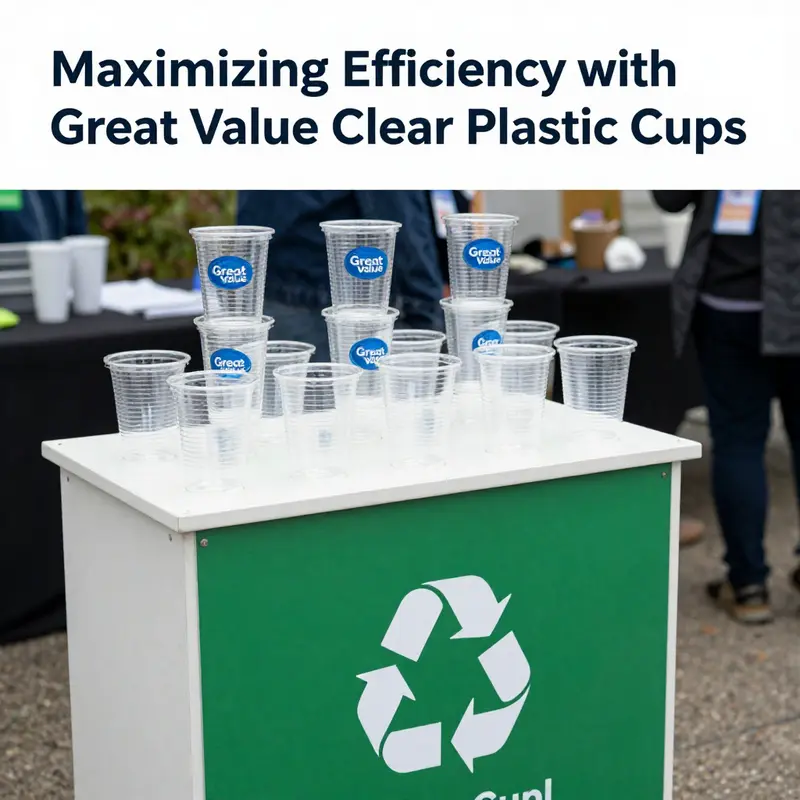
The everyday practicality of a 16 ounce clear plastic cup in a 100-count pack is undeniable. It seats cold drinks with ease, showcases color and clarity, and streamlines service at gatherings large and small. Yet the same attributes that make these cups so convenient—lightweight construction, transparent visibility of contents, and a quick, one-time use cycle—also shape their environmental profile. To understand the environmental considerations surrounding these cups, it helps to look at their material, production, disposal, and the choices beyond immediate convenience. The cups are typically made from polyethylene terephthalate, or PET, a polymer long favored in disposable beverage containers for clarity, strength, and barrier properties. PET’s transparency allows beverages to shine through, and its barrier to moisture and gases helps preserve freshness in chilled drinks. From a consumer experience standpoint, these properties translate into a reliable product that keeps beverages cold and visually appealing from first pour to last sip. But when viewed through a lifecycle lens, the same material reveals a more complex set of trade-offs that organizers, manufacturers, and policymakers must weigh.
From an environmental vantage, PET is considered recyclable and is commonly labeled with recycling code #1. This designation signals that the cups can, in principle, be reprocessed into new products rather than simply ending up in landfills. The basic recycling logic is straightforward: collect, sort, wash, remanufacture. In an ideal system with robust curbside programs, high participation, and efficient processing, PET cups contribute to a circular flow of materials. In practice, the impact hinges on local recycling infrastructure and consumer behavior. Even when a product is technically recyclable, the real-world benefits depend on whether households and event venues actually segregate these cups for recycling and whether local facilities can handle the volume. In other words, the potential environmental advantage is only as strong as the weakest link in the chain—from trash bin to curbside bin to reclaim facility.
The production phase also matters. The manufacture of PET relies on fossil fuels both as a feedstock and as an energy source. The energy intensity of polymer production and fabrication translates into greenhouse gas emissions that accumulate over the product’s lifecycle. While PET’s lightweight nature can reduce transportation emissions per volume relative to heavier packaging, the total climate impact—like that of most single-use plastics—remains linked to production scale, energy sources, and end-of-life outcomes. This means that even though PET cups are clear and efficient for cold beverages, their environmental footprint is not negligible. A key part of the puzzle is the balance between the benefits of hygiene and convenience and the costs associated with energy use, emissions, and waste management.
Consumer behavior is the hinge on which recyclability swings between opportunity and disappointment. PET’s recyclability is not a guaranteed outcome; it requires active participation in recycling programs and the presence of processing facilities capable of handling clear, transparent plastics. When consumer flows are misdirected—cups tossed into trash rather than recycling streams—the environmental upside evaporates. Contamination of the recycled stream by food residues, labels, or other plastics can further reduce the quality and value of the recovered material. In addition, low recycling rates in many communities limit the overall contribution of PET cups to waste reduction. In short, the promise of recyclability fades without efficient systems and mindful consumer habits that prioritize proper disposal.
Even as PET offers advantages in clarity and barrier performance, its role in sustainability invites comparisons with alternatives. Recyclability remains a central argument in favor of PET cups, yet there are legitimate considerations about the broader environmental footprint. For example, the energy used in production, the emissions associated with that energy, and the ultimate fate of the cups in the waste stream all contribute to a fuller picture. This is not merely an academic exercise; it affects event planning, restaurant supply chains, and household practices. When one considers a single-use cup in a 100-count package, the cumulative effect of many such packs used for large gatherings is substantial, even if each individual cup seems inconsequential. The tension between convenience and sustainability—an ongoing trade-off—emerges most clearly in the moments of decision: Will guests recycle, reuse, or dispose of cups in ways that minimize harm to ecosystems and urban waste systems?
Against this backdrop, alternatives and complementary strategies come into focus. Reusable cups stand out as a robust option for reducing waste, especially in settings where frequent gatherings occur or where institutional rules support reuse. The initial investment in durable glass, stainless steel, or sturdy plastics is offset over time by the number of events served and the cups’ ability to endure repeated use. For venues that prioritize practicality, these options reduce the volume of waste, curb recurring disposal costs, and cut long-term environmental impact when properly maintained and cleaned. The carbon accounting also tilts in favor of reuse when water and energy used for washing are managed efficiently and when the cups’ lifespans are extended through careful handling. In addition to reusables, compostable cups present another path, particularly in facilities equipped with industrial composting capabilities. Made from plant-based materials or other compostable polymers, these cups can break down more readily in composting environments, reducing the burden on landfills and, in ideal cases, returning nutrients to soil. However, the real-world benefits of compostables depend on local composting infrastructure, consumer habits, and the availability of facilities that can process compostable materials at scale. If compostable cups end up in standard municipal waste streams, their advantage fades, because compostable materials require specialized processing to avoid contributing to the litter and pollution that durable plastics can generate when mismanaged.
The tension between single-use convenience and environmental stewardship becomes even more nuanced once one accounts for labeling, safety, and consumer trust. The cups in question are typically designed to be food-safe, with considerations that include being BPA-free and meeting applicable food-contact standards. This assurance of safety is important for consumer confidence and for compliance with regulatory expectations, but it does not automatically translate into environmental virtue. The convenience of disposability can become a temptation that overrides better practices unless organizations implement strong waste-management plans and education around disposal. In practice, responsible use involves clear labeling on why and how to recycle or reuse, accessible recycling bins, and, where possible, a clear preference for reusable service models at events or venues.
From a lifecycle perspective, the social and economic dimensions intersect with the environmental. The presence of a 100-count pack offers value and simplicity for caterers, schools, office events, and home hosts. The bundle size reduces ordering complexity and often lowers per-unit cost, which is beneficial from an affordability standpoint. Yet the step from packaging to disposal to recycling is not automatic; it requires coordination across procurement, operations, and the waste-management ecosystem. For event organizers, the decision to use such cups is bound up with the capabilities of local facilities, the maturity of recycling streams, and the participants’ willingness to follow disposal guidelines. The net environmental effect thus emerges not solely from the material’s properties but from the broader system in which the product circulates.
In considering how to reconcile convenience with responsibility, the role of information and policy becomes clear. Clear labeling about recyclability, guidance on proper disposal, and the accessibility of recycling infrastructure can shift outcomes meaningfully. Advocates for sustainable consumption emphasize designing systems that make the virtuous choice easy: providing clearly marked recycling or composting options, offering incentives for reusables, and supporting local programs that boost collection and processing of post-consumer plastics. The lifecycle story of the 16 oz clear cup is then not just a tale of a singular product but a narrative about how communities, businesses, and households choose to handle materials after use. It is a reminder that even everyday items carry implications that ripple through environments and economies.
For readers exploring this chapter within the broader article, the environmental considerations of such cups hinge on a combination of material properties, production realities, disposal outcomes, and consumer and infrastructure behaviors. The glimmer of clarity that makes these cups appealing should be balanced by as much clarity about end-of-life options as about the beverage inside. This is where the potential for improvement lies: in encouraging reuse where feasible, expanding access to proper recycling streams, and supporting the development of composting options that can process a wider array of single-use polymers. It is not a call to abandon the conveniences of PET-based cups, but a call to align them with pragmatic, context-aware sustainability strategies.
For those who want to dig deeper into alternatives and practical options, consider exploring materials and product categories that emphasize environmental performance. One avenue worth examining is the availability of eco-friendly, paper-based cups designed for take-away use, which can offer a different waste profile under the right conditions. eco-friendly paper cup options, including those with lids and take-away designs, illustrate how the sector is expanding to provide options beyond traditional plastics when sustainability is a priority. To further broaden this lens, readers can review product pages that specifically highlight recycled content, compostability claims, or certifications tied to responsible sourcing and end-of-life processing. Such information helps in making informed choices that align with organizational sustainability goals.
External resource: For a broader perspective on plastic cup recyclability, lifecycle impacts, and real-world recycling practices, see the consumer-facing overview provided by major retail sources and recycling guidance. https://www.walmart.com/cp/great-value-clear-plastic-cups-16-oz-100-count/4259375
Internal link note: To explore practical, eco-focused cup alternatives, see the discussion on eco-friendly paper cups with lids that highlight options beyond traditional single-use plastics. This resource provides insight into how paper-based, take-away cup solutions can complement or replace certain plastic cup needs in contexts where sustainability considerations are paramount. eco-friendly paper cups with lids
Final thoughts
Incorporating Great Value Clear Plastic Cups into your beverage service not only simplifies logistics and enhances presentation but also provides a cost-effective solution tailored to meet various needs. From catering and events to day-to-day restaurant operations, these cups prove to be indispensable. As you assess the quality, economic benefits, societal applications, and environmental impact of these cups, remember that they represent a balance of functionality and affordability, making them a smart choice for any business in the food service industry.