
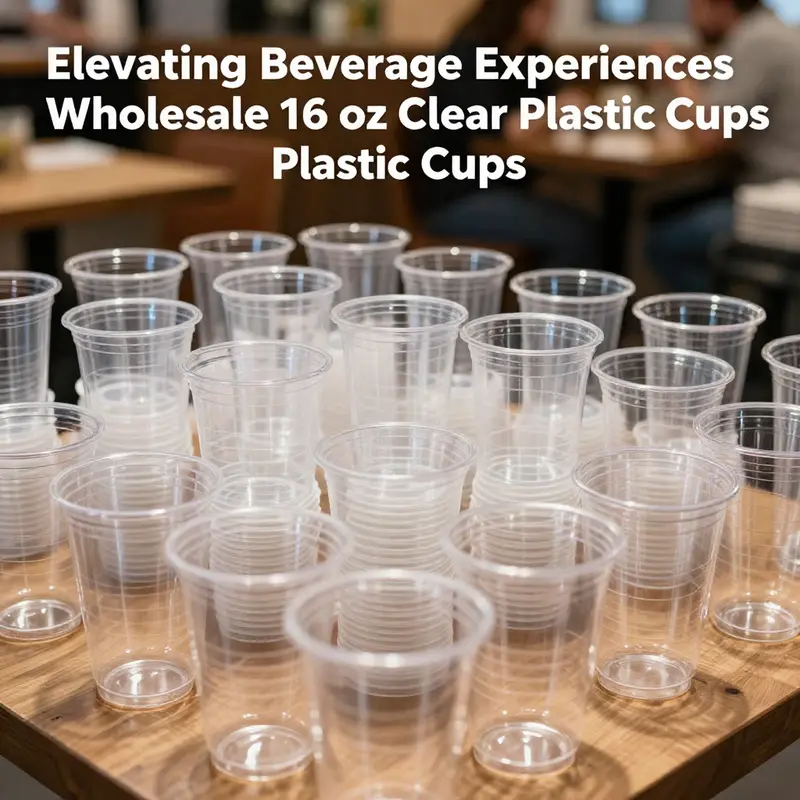
Wholesale 16 oz clear plastic cups are indispensable in the beverage industry, especially for bubble tea shops, restaurants, food trucks, and catering services. Their lightweight and transparent attributes make them versatile for various occasions, but understanding the market, supply dynamics, and customization options can significantly enhance a business’s operational efficiency and branding strategy. This exploration will provide valuable insights into the growing demand for these cups, the supply chain mechanics ensuring their availability, and the ways businesses can customize these products for brand promotion. By unearthing these layers, beverage businesses can make informed decisions that align with their goals, whether it’s enhancing customer experiences or creating effective marketing tools.
Wholesale 16 oz Clear Plastic Cups: Market Forces, Materials, and Buying Strategies
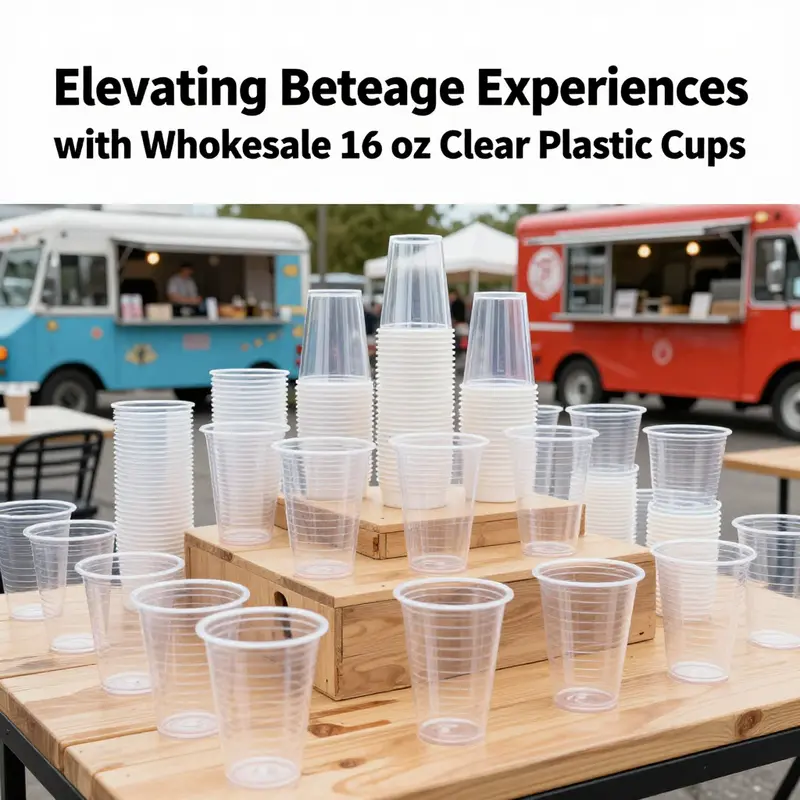
Market Dynamics and Buyer Considerations
The wholesale market for 16 oz clear plastic cups blends simple utility with diverse buyer demands. These cups are basic yet versatile. They serve cafes, catering companies, event planners, beverage brands, and retail outlets. Buyers prize clarity, stackability, and cost efficiency. At the same time, sustainability pressures and customization needs shape supplier offerings. Understanding the market requires looking at materials, regional production patterns, pricing tiers, customization options, lead times, and regulatory realities.
Most 16 oz clear cups use PET, PP, or PS. Each material brings distinct trade-offs. PET offers exceptional clarity and a crisp, glass-like look. It resists fogging and works well for cold beverages. PET cups usually come with a smooth rim and are ideal when product visibility matters. PP tends to be slightly hazier but provides excellent impact resistance. It is lighter, often cheaper, and tolerates marginally higher temperatures. PS yields rigid cups with a clear finish but can be more brittle than PET. Suppliers often choose materials based on intended use case, cost targets, and recyclability claims.
A major shift in recent years centers on bio-based and compostable alternatives. Polylactic acid, or PLA, emerges frequently as a plant-based option. PLA delivers transparency similar to PET while allowing providers to market compostability. However, PLA has limitations: it softens at lower temperatures and requires industrial composting facilities to break down properly. For buyers targeting eco-conscious consumers, PLA blends sustainability messaging with functional clarity. Where local waste infrastructure accepts compostables, PLA is a strong match. When such systems are absent, the environmental benefit diminishes, and buyers should assess end-of-life scenarios.
Pricing tiers reflect material, volume, and decoration. Basic, unprinted PET or PP 16 oz cups cost cents apiece when ordered in very large volumes. Bulk minimum order quantities often start high for the lowest per-unit price. Conversely, custom-printed or specialty models raise unit price substantially. Screen printing, full-wrap labels, and color lids add cost. Some sellers advertise highly low per-unit numbers for orders of 50,000 pieces or more. For smaller runs, minimums may drop to a few hundred, but pricing rises accordingly. Buyers should model total landed cost, not merely the per-unit factory price. Shipping, duties, storage, and waste disposal can change the economics.
Customization has become a critical value driver. Brands use the clear canvas of a 16 oz cup to promote identity and campaigns. Options include single-color logo prints, multi-color wraps, or removable labels. Some suppliers provide in-mold labeling or higher-end finishes like double-wall construction. Print minimums vary widely. Standard offers require tens of thousands of units for very low prices. Yet, newer vendors and regional manufacturers accept smaller runs at higher unit costs, unlocking marketing use for pop-up events or seasonal promotions. Lids also play a role in branding. Dome lids, flat lids, and tamper-evident designs provide additional imprint space or functional distinction.
Lid choices matter more than many buyers expect. Dome lids suit drinks topped with foam or whipped cream. Flat lids with straw ports work for iced beverages. Tamper-evident or snap-lock lids serve delivery and takeaway needs. Some lids come in clear finishes, while others use colored plastics to match branding. Biodegradable lid options exist, but they must pair with compatible cups and disposal pathways. When sourcing lids and cups from separate suppliers, confirm fit tolerances. Mispaired lids lead to spills and returns.
Geography shapes availability and economics. East and Southeast Asia, particularly China, remain dominant manufacturing hubs. Their scale drives aggressive pricing, broad product ranges, and rapid turnaround. However, nearshoring trends have grown. Mexico and Indonesia, among others, now host factories that reduce transit times and cut freight costs for nearby markets. Local production helps buyers respond faster to demand spikes and reduces inventory risk. Regional suppliers often offer smaller MOQs and more flexible customization terms. Choosing between distant low-cost producers and closer, slightly pricier manufacturers depends on cash flow, inventory strategy, and time sensitivity.
Lead times typically range from one to three weeks after order confirmation. Samples often arrive in a few days when couriers are used. Manufacturers tend to promise quick quote responses and multiple payment methods. Still, seasonal demand pushes production windows. Peak event seasons, holidays, and major sports calendars increase lead times and MOQ pressure. Buyers who lock in contracts ahead of spikes secure better pricing and availability.
Quality control and certifications matter for foodservice items. Buyers should request food-contact certificates, material specifications, and compliance documentation. Certificates like FDA or EU food-contact approvals add confidence. Recyclability claims also require verification. Many suppliers market recyclable or compostable credentials, but actual recyclability depends on local facilities and material sorting. For example, PET is widely recyclable in many systems. PP and PS face more variable recycling acceptance. PLA requires industrial composting. Buyers should evaluate waste streams where their cups will be used and disposed.
Storage and logistics are practical considerations. Clear plastic cups nest tightly to save space. Still, large quantities demand significant warehouse volume. Stacked pallets must be protected from sunlight and high heat. Warping can occur if stored improperly. Suppliers often ship in export cartons designed to minimize movement. Buyers should confirm palletization, carton size, and stacking limits to plan storage. Seasonal stockpiling can reduce per-unit cost but increases holding costs and capital lockup.
Pricing examples show the spread across the market. Basic PET or PP 16 oz cups, bought in very large quantities, may cost fractions of a cent to a few cents each. Custom-printed or premium models can approach or exceed a dollar per unit. Compostable PLA cups typically fall between basic and premium tiers. These ranges change with raw material prices, tariffs, and transportation. Buyers must factor in shipping method. Sea freight lowers cost per unit for large shipments but adds transit time. Air freight speeds delivery but increases cost significantly.
Negotiation tactics matter. Suppliers expect volume conversations and may offer tiered pricing. Buyers should request explicit breakdowns: material cost, printing setup charges, tooling fees, and sample costs. Requesting multiple quotes enables better leverage. Consider flexible MOQs, especially when working with regional manufacturers. Splitting initial orders between basic and custom variants can test market response while keeping costs manageable. For long-term relationships, locking into rolling purchase orders secures capacity and favorable pricing.
Packaging and export documentation streamline international purchase. Wholesale suppliers often provide FOB or CIF terms. Buyers must confirm export packing, pallet configuration, and labeling. Clear documentation avoids customs delays and additional charges. Confirm HS codes and harmonized tariff numbers to estimate duties. Some manufacturers handle export compliance fully and offer consolidated shipping to reduce per-shipment complexity.
Market demand patterns vary by segment. Quick-service beverage outlets and cafeterias order high volumes regularly. Event organizers and caterers buy seasonally and may prefer branded or premium cups. Retailers typically choose clear cups for ready-to-drink items and paired lids. Emerging beverage trends—like bubble tea, cold-brew coffee, and smoothies—sustain demand for 16 oz sizes. Where smaller portioning trends grow, the need for complementary sizes also rises. Buyers should monitor local beverage trends to align inventory with demand.
Sustainability is reshaping buyer criteria. Cost remains crucial, but many buyers accept modest price increases for perceived environmental benefits. Certifications, clear labeling, and end-of-life guidance strengthen market acceptance. Some buyers opt for mixed strategies: use compostable cups in premium locations while deploying recyclable PET in high-volume outlets. Where legislation restricts single-use plastics, buyers must pivot fast. Suppliers increasingly offer transition solutions, including hybrid materials and recycling support services.
Branding through cups transforms a commodity into a marketing asset. A clear cup with a visible logo reinforces product identity at the point of use. Buy recycled-content materials, or print messages about sustainability to strengthen brand narratives. Consider limited-run designs for seasonal campaigns. Use lids and cup sleeves as additional impression spaces. Remember that printing on transparent materials requires careful color selection. Dark inks can obscure beverage appearance. Test samples under real lighting to ensure the desired look.
Risk management matters. Evaluate supplier financial stability, lead time variability, and raw material exposure. Consider alternate suppliers to avoid single-source supply issues. Request quality samples and inspect production batches. Use initial smaller orders to validate fit, print quality, and lid compatibility. Maintain buffer stock for peak seasons.
Payment and terms vary. Common methods include bank transfers, digital payments, and trade assurances. Request clear payment schedules tied to production milestones. Escrow and trade platforms can protect buyers in cross-border transactions. For repeat orders, negotiate credit terms when possible. Confirm warranty and return policies for defective batches.
Technical fit and product testing should not be overlooked. Verify cup dimensions, rim strength, and lid seal performance. Run tests with real beverages, including carbonated drinks and iced products. Test performance under temperature fluctuations. For compostable products, obtain compostability test reports and understand local processing capabilities.
Finally, consider long-term market signals. Material innovation, regulation, and consumer awareness will shape future demand. Buyers who integrate sustainability planning, flexible sourcing, and smart packaging choices will stay competitive. The 16 oz clear cup market may appear straightforward. Yet, beneath the surface lie complex supply chains and strategic choices that determine cost, brand impact, and environmental footprint.
For practical examples of alternative eco-friendly disposable cups and related packaging, review the supplier’s disposable single-wall food-grade paper cup (8oz–16oz) listing for complementary options and cross-merchandising ideas: https://cupbowlpack.com/product/senang01-disposable-single-wall-food-grade-paper-cup-for-wine-and-soup-8oz-16oz-32oz-1000ml-with-lid/
For a broad catalog of wholesale listings and real-time supplier options for 16 oz clear plastic cups, consult this external marketplace resource: https://www.alibaba.com/trade/search?fsb=y&IndexArea=product_en&CatId=&query=16oz+clear+plastic+cups+lids&tab=all
null
null
Turning Clear 16 oz Plastic Cups into High-Impact Brand Touchpoints
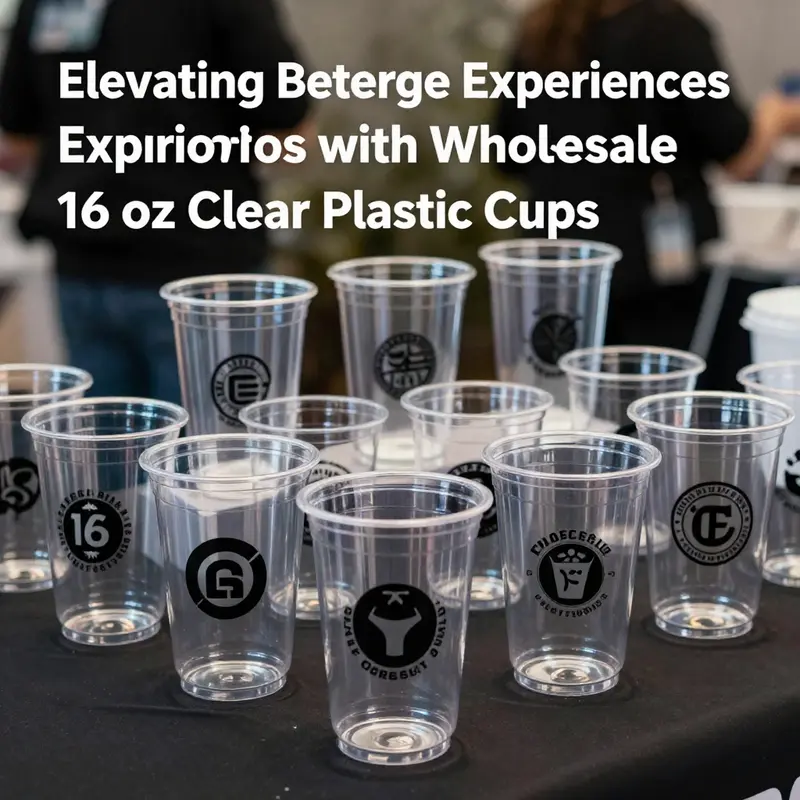
The decision to brand 16 oz clear plastic cups is more than decoration. It transforms a simple vessel into a sensory, mobile advertisement that can reach customers long after a purchase. For businesses that serve beverages at scale — cafes, food trucks, event caterers, stadium vendors, retail chains and promotional planners — these cups deliver visibility, repeat impressions, and a tactile connection with the brand. The clarity of PET or PP material lets the drink itself become part of the visual composition. That transparency gives designers a different canvas than opaque packaging. Instead of hiding the product, the brand works with it. That creates unique creative opportunities and strategic considerations that affect cost, production timelines, and user perception.
Understanding how customization choices affect outcomes begins with the materials and manufacturing processes. Clear 16 oz cups are commonly produced from PET, PP and sometimes PS. Each polymer differs in clarity, stiffness, recyclability and heat tolerance. PET offers glass-like clarity and good barrier performance; it prints well and is widely recyclable where collection systems exist. PP is more heat-resistant and lighter in weight, but its slight opacity can change how ink and color read on the surface. PS can be crisp and economical, but it tends to be brittle and less recyclable in many municipal systems. When planning a branded run, align material selection with the intended use — cold drinks, reuse expectations, refrigeration, whether lids or straws are part of the package — and with the brand positioning you want to convey.
Customization methods vary and each has trade-offs. Screen printing yields vibrant, opaque colors and works well for larger run lengths. It locks ink into thin layers that resist abrasion, making it good for cups that will be washed and reused. Pad printing can handle smaller areas and finer details but is less suited for large, full-wrap designs. Digital printing brings flexibility for short runs and variable artwork. It reduces setup time and minimums but may produce colors that are less saturated on clear substrates. Heat transfer and adhesive labels are alternative options when direct printing is expensive or when complex, full-color imagery is required. Labels also allow for secondary finishes like matte lamination or soft-touch coatings.
Pressing beyond method, the actual artwork and production files drive success. For transparent cups, consider how the negative space and the beverage inside interact with the print. A bold white or opaque colored logo creates contrast on a dark beverage. Conversely, a minimalist outline or a frosted white print works beautifully with lighter drinks. Establish a clear safe zone and avoid placing critical details over seam lines or textured areas that may distort printing. Ask for dielines, mockups, and physical samples before committing to a full run. A printed proof lets you verify color accuracy, registration, and how the print behaves when the cup is filled and held under light.
Color management and brand consistency are central in bulk orders. Use Pantone matching and provide manufacturer-specific color references when possible. But remember that transparent substrates change perceived color. An orange ink might appear more amber over iced tea than over water. To control expectations, require color proofs printed on the same material, or approve a short pre-production run. MOQ thresholds often vary by printing method. Some suppliers accept small orders — as low as 100 units — for simple single-color prints and reusable cup styles. For disposable PET cups with full-color labels, MOQs commonly rise into the hundreds or thousands. Price per unit falls as quantity increases. Typical price bands span a wide range depending on material, decoration complexity, and MOQ; expect a reusable matte-finish cup with printed logo to cost more than a thin PET disposable cup with a one-color print.
Beyond ink and color, finishing options expand the brand’s ability to make each cup distinct. Matte finishes reduce glare and give a premium tactile feel. Frosted effects, either intrinsic to the material or added via printing, offer a modern aesthetic that retains some transparency. Temperature-sensitive inks react when a hot or cold beverage is poured, revealing logos or messages. These finishes are excellent for limited-time promotions or interactive marketing campaigns. Lids and straws also present branding surfaces. Dome lids can be embossed or carry a small logo on the flat area. Straw sleeves or custom-colored straws extend color themes and reinforce brand recognition with every sip. For events, custom lids with push-button closures or resealable tabs add convenience and a higher perceived value.
When planning customization, think about applications and user behavior. Are the cups for a one-day festival, season-long cafe use, or a reusable souvenir program? Disposable cups used for promotional events can be cost-effective brand carriers if the event draws high volume and social sharing. Reusable cups justify higher per-unit investments and can become collectible items that customers keep for months or years. For beverage-centric brands, specially designed cups that emphasize layered drinks, gradients or fruit inclusions can spark social posts and word-of-mouth. Consider campaigns that pair the cup design with a loyalty program: a branded reusable cup offered at a discount on first purchase, or a limited edition print released each season.
Environmental considerations shape both procurement and messaging. PET is commonly recycled, but recycling rates vary widely. Use food-safe inks and adhesives that do not compromise recyclability. If sustainability is central to your brand, explore options like post-consumer recycled (PCR) PET, or move to polypropylene cups designed for multiple uses. Educate customers on disposal and reuse. A small printed message about recyclability or a QR code linking to a page on sustainable practices can turn a simple cup into an educational tool. At scale, packaging choices also matter: stackable cups reduce shipping volume, and nestable designs decrease wasted space. Wholesale suppliers often provide export packaging tailored to pallet sizes, which can lower freight costs and reduce the carbon footprint per cup.
Negotiation and logistics are part of the branding equation. Price, lead time, and MOQs are negotiable; so are packaging and labeling requirements. Suppliers may offer tiered pricing, bundled services, or sample discounts. Secure clear agreements on proof approvals, production tolerances, and remedies for defects. Lead times for customized cups typically include artwork setup, mold or plate creation, pre-production samples, and full production runs. Expect timelines to stretch longer during peak seasons. Build buffer time into campaign schedules and hold staggered production slots when launching a multi-location rollout.
Quality control is essential for brand protection. A badly printed logo, misregistered colors, or smudged ink can undermine months of marketing. Define acceptance criteria before production: color tolerances, adhesion tests, ink durability and food-safety certifications. Food-grade printing requires inks and coatings that comply with migration and safety standards. Request certificates of compliance and, when necessary, third-party test results. On receipt, sample cups from different cartons for inspection. Look for print consistency across the batch and verify that lids and seals fit precisely. Packaging should protect brand impressions; damaged boxes and scuffed cups leave a poor customer impression.
Distribution and fulfillment strategies amplify the brand promise. Branded cups are small but require care in warehousing. Store them flat and in climate-controlled conditions to avoid warping and ink degradation. For multi-site operations, consider drop-shipping options from manufacturer warehouses or third-party logistics providers. This approach reduces transit costs and speeds local fulfillment. If cups will be used in retail or as event merchandise, design packaging that enhances the retail experience: gift-ready sleeves, bundled offers, or carrying cases signal value and invite purchases.
Marketing around the cup itself multiplies its value. Treat the cup as both a product and a billboard. Offer limited-edition runs tied to events or seasons. Partner with influencers or local artists for special prints. Use photography that shows the cup in context — held, lit from behind to show transparency, or paired with signature menu items. Encourage customers to share images with a campaign hashtag and feature selected posts on your social channels. Measure return on investment by tracking redemption codes printed on the cup, QR code scans, or promo-specific sales lifts. Because cups move physically into the community, they can extend brand touchpoints into places where other advertising may not reach.
Small businesses and startups often worry that customization is out of reach. It is not. Many suppliers accept low minimums for single-color prints or simple logo placement. Consider starting with a modest run to test demand. Monitor customer reactions and gather feedback. If the cup becomes a hit, scale up with a more complex design or a higher-spec material. Crowdfunding or pre-order campaigns can fund larger runs while signaling demand and reducing inventory risk.
Legal and compliance checks should not be an afterthought. Trademark placement, legibility, and usage of third-party imagery must meet IP rules. Avoid infringing logos or artwork. For international distribution, ensure labels meet local language and regulatory requirements for food contact materials. Some markets require explicit material declarations, recycling codes, or disposal instructions. Include those requirements in the procurement brief so suppliers can incorporate compliance marks into the print run.
Finally, the creative brief you give to a manufacturer should be precise and realistic. Include file formats (vector art preferred), color references, dielines, bleed and safe areas, and desired ink types. State expected quantities, delivery windows, packaging preferences, and quality assurance checkpoints. Ask for a timeline with milestone approvals and sample delivery dates. When negotiating price, factor in all costs: unit price, printing setup, sample fees, tooling, lids and straws, freight, duties and warehousing. A transparent total landed cost per unit gives a realistic basis for pricing promotions or retailing the cup as merchandise.
For planners who want practical inspiration, look at nearby examples from adjacent product categories. Printed disposable and reusable paper cups demonstrate how branding can be applied creatively to single-use packaging. Explore how paper cup suppliers balance print, finish and sustainability. One such example of custom printed paper cup options can provide design and finish ideas when you plan clear cup artwork: eco-friendly printed logo paper cup.
A final operational note: sourcing from wholesale marketplaces gives access to many suppliers and a wide range of customization options. When using these channels, evaluate supplier credentials, request samples and confirm production capabilities. A thoughtfully branded 16 oz clear plastic cup can be affordable at scale, yet it remains a powerful piece of your marketing ecosystem. With the right material choice, print method, finishing and logistics plan, a clear cup becomes a high-impact brand touchpoint that delights customers and works as an ongoing promotional medium.
For direct reference on typical wholesale product listings and to review a sample product configuration, see the external product listing here: https://www.alibaba.com/product-detail/Custom-Logo-16-oz-Transparent-Plastic_1600493475524.html
Final thoughts
Wholesale 16 oz clear plastic cups are more than just containers; they are pivotal tools that can enhance service experiences, streamline supply chains, and promote brand identity. As businesses in the beverage sector navigate the options available, understanding the market trends and supply dynamics becomes essential to making strategic purchasing decisions. Moreover, with customizable features, these cups can serve as a canvas for branding, transforming them into powerful marketing tools. By leveraging these insights, beverage shops, restaurants, and event planners can elevate their offerings, boost customer satisfaction, and strengthen brand recognition.