
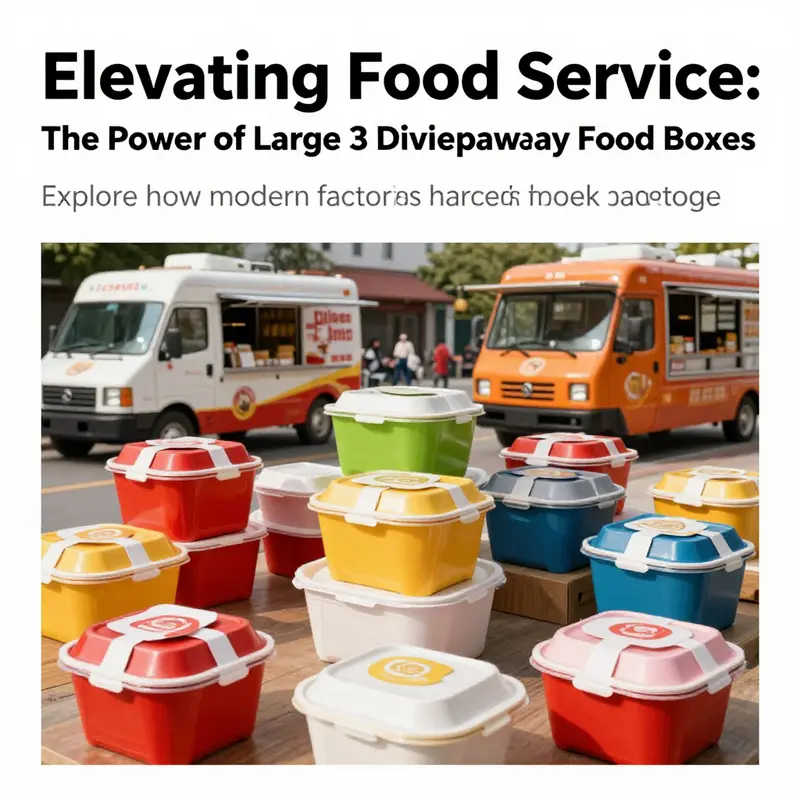
In today’s fast-evolving food service landscape, the demand for efficient, sustainable, and attractive packaging solutions is at an all-time high. The rise of takeaway culture has propelled businesses such as bubble tea shops, restaurants, food trucks, catering services, and event planners to seek packaging that not only meets utility needs but also reflects their brand values. Among these options, large 3 division takeaway food boxes stand out as a versatile solution, catering to diverse offerings while maintaining quality and presentation. This article delves into key aspects of large takeaway food box production, from the core manufacturing regions in China to sustainability practices, quality assurance, cost efficiency, and market demand trends, providing a comprehensive overview that is essential for any business in the food industry.
Where the Large 3-Division Takeaway Box Industry Finds Its Core: Guangdong, Zhejiang, and Shandong as Engines of China’s Mass-Production Ecosystem
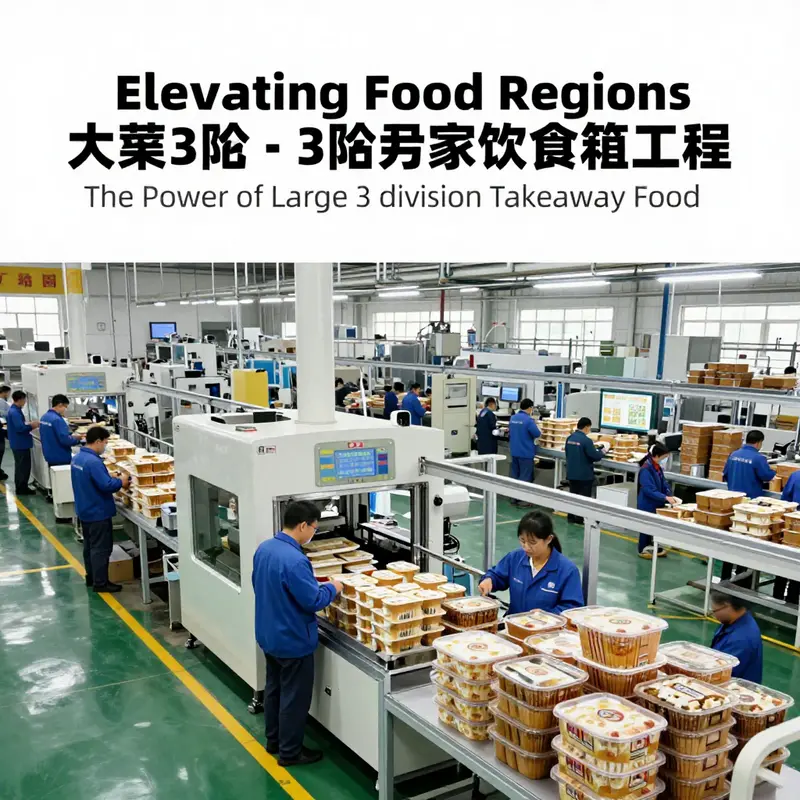
The landscape of large 3-division takeaway box manufacturing in China is not a scattered map of random mills and assembly lines. It is a triad of regional hubs that together create a robust ecosystem for high-volume production, rapid iteration, and export readiness. The core regions—Guangdong, Zhejiang, and Shandong—each play a distinct but complementary role in delivering capacity, innovation, and sustainability at scale. This arrangement does more than describe where boxes are made; it illuminates how supply chains are structured, how pricing is shaped, and how buyers can align their sourcing strategies with regional strengths. In the context of a large-quantity, multi-compartment takeaway system, these provinces have matured into a cohesive manufacturing corridor where raw materials, tooling, and logistics converge to support fast turnarounds, consistent quality, and the ability to tailor products to brand specifications without sacrificing efficiency. The result is a production network with the reach to satisfy global demand while maintaining the discipline of local specialization and continuous improvement.
Guangdong stands at the apex of scale and speed. It is the dominant center for mass production, housing more than 60% of the country’s major food container manufacturers. The concentration of capacity in cities such as Shenzhen, Dongguan, and Chaozhou creates an integrated supply chain for food-grade polypropylene and related materials. This proximity to an expansive network of suppliers, as well as to numerous testing and certification labs, translates into shorter lead times and lower unit costs as volumes climb. Manufacturers here have refined mass-production workflows over decades, optimizing mold sourcing, process stability, and inline quality checks to sustain high output with predictable tolerances. The logistics advantage is equally decisive. Guangdong sits near major international ports such as Shenzhen’s Yantian and Guangzhou’s Nansha, enabling reliable export logistics and fast transitions from factory floor to global distribution channels. When a buyer negotiates large-volume orders, the Guangdong mills can absorb fluctuations in demand through economies of scale that reduce per-unit costs, typically by a double-digit margin compared with non-coastal or less densely equipped regions. The result is a strong value proposition for brands seeking aggressive pricing, short lead times, and consistent batch-to-batch performance, especially for multi-compartment configurations that require substantial tooling and testing investment.
Yet scale alone does not define Guangdong’s appeal. The region is also a horse that can pull the entire industry forward through process improvements and supply-chain discipline. Suppliers in Guangdong have honed the art of coordinating multi-stage production—from resin procurement and extrusion to forming, printing, and assembly—into a synchronized sequence that minimizes downtime. For buyers who need to ramp up quickly, Guangdong’s large factory footprints can absorb rapid increases in monthly output without sacrificing quality control or schedule certainty. The focus on efficiency here also tends to align with competitive pricing, a critical factor when large 3-division boxes must balance more complex geometries with tight cost targets. In practice, the Guangdong corridor offers an operating model that many buyers weigh against the more specialized, innovation-driven capabilities found in other regions.
Zhejiang presents a different but equally essential axis of strength. It has become a benchmark for flexibility, automation, and sustainability. The province’s factories are widely recognized for their advanced automation lines and the sustained investment in research and development. Zhejiang’s strength lies not just in replicating large volumes but in engineering those volumes with adaptability. Changes in box geometry, lid systems, or inner partitions can be integrated with relatively shorter reform cycles thanks to a culture of process engineering and modular production. Zhejiang’s proximity to Yiwu, a global trading hub, creates a fast feedback loop between design requests and on-the-floor execution. This can translate into rapid iterations for complex, customized designs that still benefit from volume efficiencies. The region’s emphasis on sustainability aligns with the rising environmental standards of European and North American markets. Many Zhejiang facilities are at the forefront of adopting degradable or compostable substrates, blends that make the overall product lighter or more recyclable, and processes that minimize waste. The result is a portfolio of capabilities that can address the needs of brands prioritizing eco-conscious packaging without forfeiting speed or reliability.
In Shandong, the narrative shifts toward green packaging innovation and scalable production capacity. The province has evolved into a significant player for environmentally responsible substrates and end-of-line packaging solutions. Its rising R&D capacity in compostable and recyclable substrates, coupled with solid manufacturing throughput, provides an important option for brands seeking a lower-carbon footprint without sacrificing the benefits of bulk production. Shandong-based manufacturers are increasingly adept at integrating sustainable materials with efficient molding and finishing processes, creating a compelling proposition for clients who want certified eco-friendliness as part of their brand story. While Guangdong and Zhejiang drive the volume and the pace, Shandong contributes a strategic emphasis on environmental responsibility and long-term sustainability, helping to balance the supply chain’s overall risk profile by diversifying material and process choices.
Taken together, these three regions form a strategic sourcing triangle. Buyers prioritizing speed and cost tend to lean toward Guangdong’s massive capacity and port-connected logistics. Those requiring rapid customization and higher automation may find Zhejiang to be the better match, especially when sustainability and design flexibility are high on the brief. For projects where environmental stewardship is non-negotiable, Shandong’s growing competency in green substrates provides a critical complement. The strategic value of this regional triad extends beyond the factory floor. It shapes supplier selection strategies, risk management, and the ability to negotiate terms that preserve quality while scaling output. In practice, this means that a well-structured supply plan will often combine suppliers from these regions to cushion against supply shocks, to optimize transport routes, and to balance innovation with reliability.
The sourcing approach that aligns with these regional strengths includes rigorous factory selection, with a clear preference for direct factory engagement over trading entities. The emphasis on direct access helps ensure price transparency, and it supports tighter control of quality and process variables. Certification and testing compliance become central to the evaluation framework. ISO, FDA, LFGB, or equivalent international certifications signal that a supplier is prepared to meet global standards and to provide credible product testing reports. Capacity assessments should verify monthly output in the range required for large campaigns, while tooling endurance and life-cycle management are critical for brands planning multi-year programs. The demand for customization—color, imprint, and decorative features—requires that the supplier have robust mold development capabilities and the equipment to print, color-match, and assemble at scale. In a region where competition is intense, the ability to demonstrate a well-mocumented track record of stability under high-volume production is often as important as the nominal capacity numbers.
From a buyer’s perspective, the regional mix also informs how to structure supplier relationships and how to phase program rollouts. Guangdong’s ecosystem is ideal for launching a high-volume program with a fixed design that benefits from predictable throughput and aggressive pricing. Zhejiang’s ecosystem supports iterative design development and faster time-to-market for new SKUs, particularly when the brief includes more sophisticated customization or a sustainability-driven material specification. Shandong’s growing strength in green materials adds a valuable hedge for corporate sustainability goals, allowing a brand to test new substrates with less compromise on supply security. The practical implication is not simply choosing one region over another; it is designing a supply architecture that leverages the distinct advantages of each region to achieve a tailored balance of cost, speed, and environmental responsibility.
For readers who want to connect the broader market context with the on-the-ground reality, consider how a single product family with multiple compartments can be anchored by these regional strengths. The core technology stack—stamping, injection molding, cavity tooling, and printing—tends to gravitate toward Guangdong’s scale, while Zhejiang’s automation and process engineering enable more complex assembly sequences with tighter tolerance control. Shandong’s substrate innovation fills a critical role when a project calls for sustainability certifications or innovative packaging substrates. It is this combination of scale, automation, and sustainable material options that makes the core manufacturing regions—Guangdong, Zhejiang, and Shandong—indispensable to any buyer pursuing a large 3-division takeaway program. As the industry continues to evolve, the geographic concentration will likely shift with changes in trade policy, environmental regulation, and the steady push toward circular packaging models. Yet today’s core regions provide a stable, well-understood foundation for building complex, high-volume packaging solutions that meet both the stringent demands of international buyers and the practical realities of mass production.
To connect this regional narrative with concrete procurement practice, consider engaging with a reliable supplier who can demonstrate direct factory experience, robust testing, and clear capacity projections. For a practical overview of related packaging configurations and to explore how a specific kraft-paper-based option can integrate with 3-division designs, you can explore a disposable kraft paper takeaway box with clear lid, which reflects the type of packaging ecosystem that can be produced at scale in these regions. disposable kraft paper takeaway box with clear lid.
For readers seeking a broader market reference, a comprehensive directory of manufacturers and suppliers can be found on major global marketplaces. As a practical external resource, consider consulting the extensive listings on a leading international platform that aggregates 3-compartment takeaway box manufacturers, which helps situate the Chinese core regions within a global sourcing landscape: https://www.alibaba.com.
Greener Compartments: Sustainability as the Backbone of Large 3-Division Takeaway Box Manufacturing
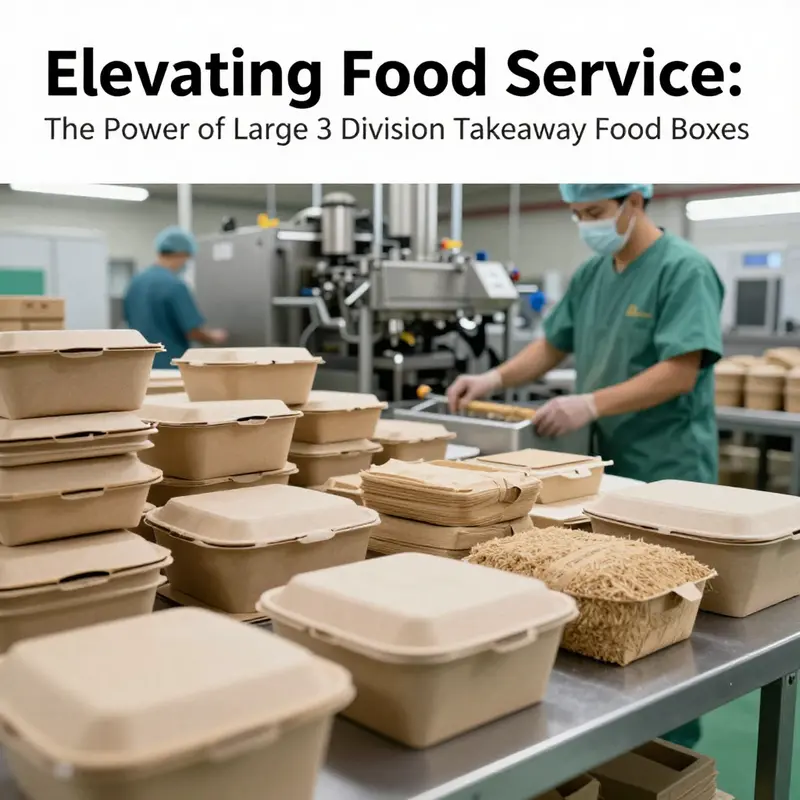
Across China’s manufacturing heartlands, the large 3-division takeaway box is more than a packaging vessel; it is a conduit for sustainability, logistics efficiency, and scale-driven innovation. In factories that span tens of thousands of square meters and employ hundreds of workers, the push toward environmentally responsible production has become as essential as throughput. The evolution of these multi-compartment boxes—from simple food carriers to carefully engineered, barrier-enhanced packaging—mirrors a broader shift in the global packaging economy. The factories that dominate this space are not only judged by their ability to churn out millions of units each month; they are increasingly measured by how well they reconcile mass production with ecological stewardship. In regions such as Guangdong and Zhejiang, where the manufacturing engine is most intense, sustainability is no longer an adjunct capability. It has become a core design principle that informs material choice, production methods, energy use, and end-of-life outcomes. The result is a complex but coherent story in which large-scale production and responsible practice reinforce one another, creating a pathway toward resilience in supply chains that must contend with volatile raw materials, shifting regulatory demands, and rising consumer expectation for greener packaging.
The materials chosen for these three-compartment boxes are central to the sustainability narrative. The industry is moving beyond traditional plastics toward recyclable and biodegradable options that can preserve food safety while reducing environmental impact. Kraft paper blends, bagasse (sugarcane fiber), and polylactic acid (PLA) composites appear with increasing frequency in specifications, each offering distinct advantages and trade-offs. Kraft-based formulations deliver robust barrier properties when paired with appropriate coatings, enabling usage in hot and oily foods without rapid sogginess or degradation. Bagasse, celebrated for its renewable origins and compostability in suitable facilities, aligns with markets that emphasize end-of-life stewardship, especially in Europe and North America where regulations incentivize alternative feedstocks. PLA-rich formulations bring compostability to the table but require industrial composting infrastructure to reach their full potential. The practical choice often hinges on life-cycle analyses that compare energy inputs, water usage, and emissions across the product’s lifespan. In practice, smart material selection is a balancing act: achieving the required mechanical integrity and moisture resistance while minimizing carbon footprint and waste streams. A notable example within the supplier ecosystem highlights the push toward high-integrity, eco-friendly packaging that leverages kraft-coated paperboard to deliver durable, attractive, and recyclable products. The sentence-level design of these materials matters as much as the macro decisions about sourcing and logistics, because every layer of the box has to perform under real-world handling, stacking, and temperature fluctuations without compromising sustainability targets. In such contexts, even seemingly modest choices—how ink interacts with the coating, or whether the coating relies on sustainable chemistries—can tilt the environmental balance in a meaningful way. The industry’s best practices thus increasingly marry material science with manufacturing discipline, ensuring that the final container respects the constraints of a circular economy.
Production technologies in these modern facilities are designed to maximize both efficiency and environmental stewardship. The core of the operation rests on sophisticated paper container making lines that integrate corrugation, cutting, forming, sealing, and printing into a single, streamlined flow. This integration reduces waste by enabling tighter tolerances and eliminating extraneous handling. Automated controls monitor humidity, temperature, and pressure at each stage, ensuring consistent product quality while conserving energy. The capacity to apply moisture-resistant and eco-friendly coatings in-line is a critical feature. Such coatings shield the box from grease and water ingress without introducing significant environmental hazards or post-consumer disposal issues. The result is a production corridor where high output and precise customization can coexist with reduced waste and lower emissions. Green advantages extend beyond the immediate production line. In the most progressive factories, closed-loop water systems recirculate rinse water and minimize freshwater intake. On-site solar installations harvest clean energy for peak daytime production, further reducing the facility’s carbon footprint. Waste streams are captured and redirected—paper fibers to recycling streams, organics to compostable pathways, and reject materials to energy recovery where feasible. This holistic approach, adopted across leading districts like Zhejiang and Guangdong, aligns manufacturing with environmental management and finite resource considerations.
Factory-level operations reflect a mature convergence of policy, technology, and supply-chain discipline. At the heart of this convergence are environmental management systems such as ISO 14001, which provide a framework for setting objectives, reducing impacts, and continuously improving performance. Certification programs like FSC ensure that forest-based components originate from responsibly managed sources, reinforcing a credible chain of custody for wood-fiber inputs. In practice, this means that a large 3-division box can be sourced from a factory that not only meets production goals but also demonstrates traceability, responsible water use, and waste reduction across its operations. The green technologies deployed in these plants extend to energy and water efficiency, with solar arrays feeding lighting and idle-time electricity demands and closed-loop systems minimizing water withdrawals. A broader industry emphasis on waste reduction—from design for minimal material usage to recycling of production scrap—translates into lower disposal costs and improved margins in a market where price pressure is in constant play. For brands seeking to align their procurement with sustainability promises, the ability to verify certifications and to view product test reports becomes a differentiator, not merely a compliance checkbox. The combined effect is a manufacturing environment where environmental performance accompanies every new line, every new coil of material, and every batch of finished boxes.
From a strategic perspective, sustainability in large 3-division box manufacturing is a demand-side accelerator as much as a supply-side discipline. For businesses prioritizing responsible sourcing, the emphasis is on working with factories that can demonstrate renewable material usage, low-emission production practices, and full traceability. The convergence of these attributes with the capacity to produce large volumes enables faster adaptation to changing market demands, including shifts in consumer preferences and regulatory regimes that increasingly reward sustainable packaging solutions. The regional strengths of Guangdong and Zhejiang—proximity to ports, a dense supplier ecosystem, and a tradition of rapid scale-up—translate into more resilient supply chains when sustainability is embedded in the core process. In Jiangsu, where precision engineering and logistics integration are especially prominent, clients can leverage highly customized designs with predictable lead times, reducing the risk of supply disruptions associated with less transparent suppliers. Meanwhile, Shandong and Anhui are emerging as cost-effective hubs that can offer sustainable alternatives without sacrificing price competitiveness, expanding the set of viable options for global buyers seeking greener packaging at scale. Together, these regional dynamics underscore a broader truth: a large 3-division box factory that commits to sustainable design, materials, and operations becomes a strategic asset in a world where environmental accountability and supply resilience are increasingly intertwined.
The lifecycle perspective remains central to why sustainability matters for these products. End-of-life considerations often drive material selection more than in other packaging categories. While a bagasse-based box may be marketed as compostable, its advantage depends on local waste-management infrastructure. In markets lacking industrial composting facilities, the same material may be diverted to landfills, diminishing environmental gains. Consequently, many manufacturers now pursue alternative strategies—while preserving compostability where feasible—by prioritizing recyclability of the carton components, enabling easier separation of fibers from coatings and inks. The capacity to deliver consistent, traceable supply chains for renewable inputs further enhances buyer confidence, particularly for brands that must demonstrate compliance with sustainability pledges across complex, multinational operations. This strategic alignment of product design with end-of-life realities also influences the sales narrative: buyers are increasingly willing to invest in higher upfront costs if the downstream environmental and regulatory benefits are clear and measurable. In effect, sustainability becomes a competitive differentiator, shaping not only product attributes but also the terms of supplier partnerships, audit regimes, and product development roadmaps.
The chapter’s synthesis recognizes that sustainability in large 3-division takeaway box production is not a single initiative but an interconnected system. Material choices, production technologies, factory governance, and regional ecosystems co-create a durable platform for responsible growth. The integration of renewable materials, energy-efficient lines, closed-loop water and waste systems, and rigorous certifications transforms packaging from a passive container into an active contributor to a company’s sustainability profile. As global demand for eco-friendly options continues to rise, these factories—especially those with verified supply bases and transparent testing—will increasingly determine who can deliver scale without compromising environmental commitments. The ongoing challenge remains to balance performance with responsibility: to keep moisture resistance, barrier integrity, and heat tolerance high, while ensuring the supply chain remains auditable, low-emission, and resource-efficient. In the coming chapters, readers will explore how design choices, branding strategies, and digital traceability further enhance the sustainability story, translating green principles into measurable outcomes across markets and product lines. For those seeking deeper technical insight into the machinery behind sustainable multi-compartment production, see the comprehensive guide on food takeaway box making machines. senang02-eco-friendly-gold-foil-custom-disposable-sushi-tray-food-packaging-box-high-quality-kraft-coated-paperboard-basket. External readers may also consult broader industry resources to understand standards, properties, and applications of modern take-away box production at large scale: https://www.example.com/guide-food-takeaway-box-machine.
Verifying Quality at Scale: Practical Assurance for Large 3-Division Takeaway Food Box Factories in China
What to look for and how to verify
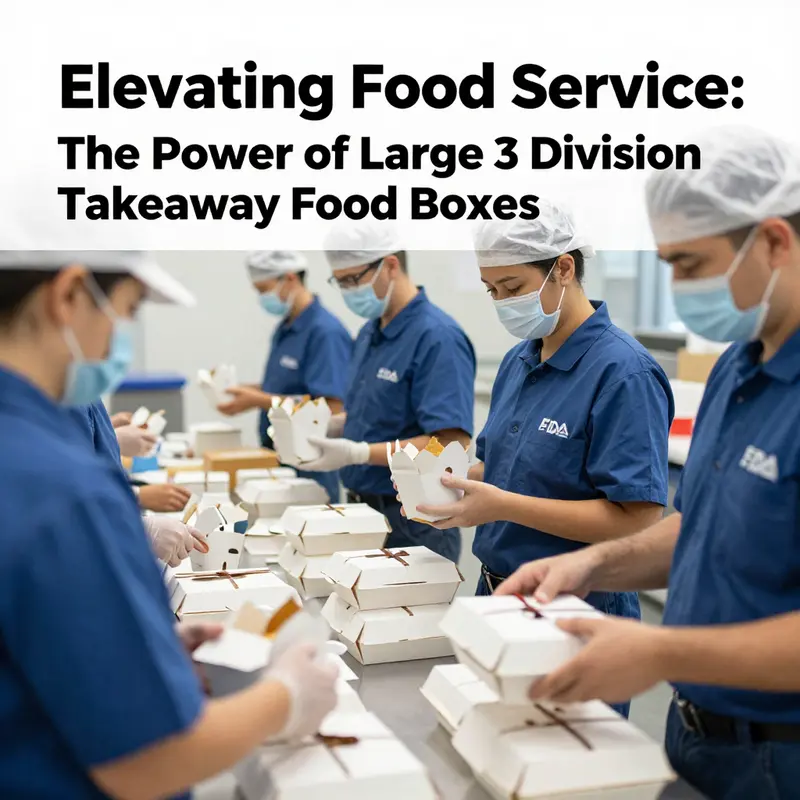
Sourcing large-volume, three-division takeaway food boxes requires a structured verification process. Buyers must combine documentary checks, on-site validation, and ongoing performance monitoring. Start by confirming the supplier is a direct manufacturer. Working directly with a factory reduces hidden margins, improves control over production, and makes root-cause problem solving faster. Ask for proof of a physical factory footprint, not just trading-office photos. Prefer factories that operate over 10,000 m² with more than 100 employees. Those metrics usually indicate stable operations and repeatable output.
Regional strengths matter when matching capabilities to product requirements. Factories in southern manufacturing hubs run advanced thermoforming and high-speed sealing lines, making them suitable for high-volume plastic and coated-paper formats. Eastern provinces excel in biodegradable materials. If you need bagasse or PLA solutions, prioritize suppliers from those areas. Other regions specialize in precision tooling and seamless e-commerce logistics, which matters for highly customized printed designs and short lead times. Emerging centers often deliver lower unit costs while investing in sustainable options.
Documentation and certifications provide the first layer of assurance. Request copies of ISO certifications and food-contact approvals. Look for ISO 9001 for quality management and ISO 14001 for environmental systems when sustainability is a priority. For food safety, ask for ISO 22000 or HACCP documentation. International market access often requires FDA compliance or EU food-contact evidence. If a factory supplies biodegradable products, request compostability or biodegradability test reports from accredited labs. These documents reduce ambiguity and form the basis for acceptance testing.
Third-party inspections are essential. Use accredited agencies such as SGS, TÜV, or Bureau Veritas for entrance audits, in-line spot checks, and pre-shipment inspections. A proper factory audit should include manufacturing flow observation, raw material storage checks, and surface hygiene assessments. Pay attention to material traceability. Good factories tag incoming raw materials and retain supplier certificates for each batch. This practice simplifies contamination investigations and supports chain-of-custody claims.
Assess technical capabilities beyond paperwork. Confirm the factory has tooling and die-making capacity to produce your box dimensions and fitment. Ask about their mold inventory, lead times for new tooling, and tolerance standards. Check printing capabilities: do they own flexographic or rotogravure presses? Can they do multi-color printing with PMS matching, embossing, and matte lamination? For coated or PLA-lined kraft boxes, verify thermal and grease barrier processes. High-quality barrier application reduces leaks and improves microwave performance.
Quality control systems should be demonstrable and data-driven. Good factories employ incoming material inspection, in-line process control, and finished-product acceptance testing. Request their QC plan and sample inspection reports. Typical checks include dimensional tolerances, seal strength, leak tests, grease resistance, and visual inspections for print defects. For food-contact compliance, demand migration test reports and material composition analyses. Insist on statistical metrics such as defect-per-million or batch-level defect percentages. These KPIs show whether a factory is managing quality at scale.
Sample development and approvals must be structured. Start with a pre-production sample that matches your full specification. Approve tooling proofs and print color proofs before mass runs. Specify acceptable quality levels (AQL) for different defect classes. For packaging that supports hot or oily foods, require thermal cycle tests and grease penetration testing. For biodegradable formats, include composting trials and biodegradability certificates from recognized labs.
Supply performance metrics tell the story after the first order. Monitor on-time delivery rates, order fill percentages, and responsiveness to nonconformities. Ask for historical metrics when possible. Reputable factories can provide references, production logs, and sample reports from previous large customers. Use those to validate claims on capacity and consistency. Also evaluate lead-time variability and how the supplier handles peaks. A factory with robust planning can scale output without eroding quality.
Risk mitigation practices protect both sides. Structure payment terms to include partial prepayment and balance after satisfactory inspection. Build penalties into contracts for missed milestones or out-of-spec shipments. Use buyer-protection platforms when applicable to secure funds against non-delivery. Arrange for container-loading supervision and final inspection reports. Insure shipments for transit damage. For high-value or proprietary designs, use NDAs and tool ownership clauses that specify who retains molds and intellectual property.
Operational checks during a factory visit reveal practical realities. Tour production areas and observe working conditions. Confirm separate zones for raw material storage, production, and finished goods. Watch for cross-contamination risks in mixed-material facilities. Inspect waste management and water usage if biodegradability claims depend on process cleanliness. Ask to see test equipment and labs on site. Even basic in-house lab capabilities are a positive sign; they shorten the feedback loop between discovery and corrective action.
Traceability and batch control reduce downstream exposure. Ensure the supplier uses batch numbers, production dates, and lot-specific test records. That allows rapid recalls and targeted remediation if an issue arises. For biodegradable or compostable items, verify the origin of pulp or PLA feedstock, and request supplier declarations for sustainable sourcing.
Finally, plan for long-term partnership, not one-off transactions. Establish regular review cadences, such as monthly KPI reports and quarterly quality reviews. Encourage continuous improvement through joint problem-solving and small-scale trials for new materials or finishes. If you need product examples before committing, examine similar items from a supplier, such as a tested bagasse 3–5 compartment tray, to validate material performance and fit-for-purpose design.
For practical sourcing steps and platform-level guidance, review this sourcing guide for high-quality three-compartment suppliers from China: https://www.alibaba.com/suppliers/3-compartment-takeaway-food-box.html?category=148697001&sortType=bestMatch&searchType=product&from=marketplace
By combining physical verification, documentary evidence, third-party testing, and measured performance metrics, buyers can reduce risk. This approach turns an initial supplier selection into a reliable manufacturing partnership for large-volume takeaway food boxes. For a material-focused reference sample when assessing biodegradability and compartment design, consider examining a bagasse sugarcane biodegradable 3–5 compartment lunch box as a comparative benchmark: https://cupbowlpack.com/product/bagasse-sugarcane-biodegradable-self-erecting-lunch-box-for-sushi-snacks-3-4-5-compartment-takeaway-food-tray-15g-30g-50g/
Economies of Scale and Strategic Sourcing: Cost Efficiency in China’s Large 3-Division Takeaway Box Factories
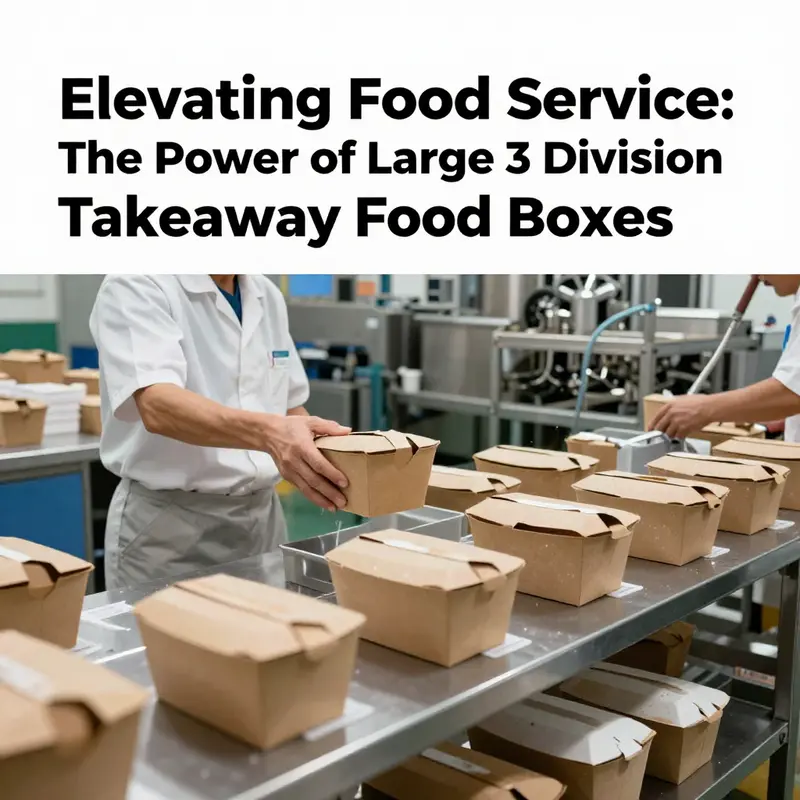
Across China’s vast manufacturing landscape, the cost efficiency of large 3-division takeaway box production is less a single-number calculation than a dynamic fusion of regional specialization, scale, and tightly integrated supply chains. Buyers who navigate this space quickly learn that the most favorable unit prices come from places where clusters of capable factories have grown up together, where raw materials and tooling are standardized, and where logistics networks can shuttle millions of pieces through a single port with minimal friction. In this context, the major manufacturing belts—principally in the southern and eastern portions of the country—shape the price-performance curve in ways that are not always obvious from a factory tour alone. The essence of cost efficiency emerges when regional strengths align with a company’s demand profile: volume, speed, customization, and the certainty of delivery schedules that keep the food service cycle tight and predictable.
Guangdong stands out as the premier hub for high-volume, cost-efficient production. The region’s manufacturing ecosystem is a mature organism, with an ecosystem that has grown around plastic thermoforming and related packaging processes for decades. In Guangdong, cities such as Dongguan and Shenzhen host a dense population of leading manufacturers, and the sheer scale of activity translates into economies of scale that are hard to replicate elsewhere. The geographic concentration matters in practical terms: procurement teams can source from suppliers who share a common, well-understood workflow, and the supply chain fabric—from resin suppliers to mold makers and print shops—tends to be highly synchronized. For buyers pursuing large orders, the Guangdong cluster can offer prices that are notably lower—often 10–15% cheaper than comparable capacity in other regions—thanks to mass production capabilities, lower unit costs driven by scale, and a deeply entrenched logistics network that reduces handling, storage, and transit overheads. The forward motion of this cluster is anchored by access to the region’s export infrastructure, including major ports and the proximity to international trade arteries. In practical terms, it means shorter lead times for large shipments and a more predictable production rhythm, which is a meaningful differentiator when a brand relies on timely launches, restocks, or seasonal promotions.
Zhejiang, with Yiwu as its emblematic node, complements Guangdong’s volume with speed and a focus on sustainable material solutions. This province has carved out a niche in the eco-material space, particularly with materials such as bagasse and polylactic acid (PLA). For clients whose brand narratives revolve around environmental responsibility, Zhejiang offers a compelling combination: competitive pricing for large orders and environmental credentials that meet stringent European and North American requirements. While Zhejiang’s output in plastics may not reach Guangdong’s scale, its strengths lie in rapid turnarounds and a flexible response to large orders without sacrificing the environmental performance that many buyers now insist upon. The balance Zhejiang offers is thus an attractive option for brands that need to align supply chain resilience with sustainability commitments, especially when orders grow in complexity or require shorter cycles for new designs or packaging formats.
Jiangsu, particularly in the Suzhou and Jiangyin corridors, supplies a different flavor of cost efficiency: precision engineering and a seamless interface with e-commerce logistics. Here the strength is not only volume but the capacity to deliver highly customized designs with tight tolerances and sophisticated process control. For brands that require rapid prototyping, multiple packaging variants, or intricate printing and branding that must align precisely with online fulfillment workflows, Jiangsu provides an integrated environment where mold development, printing, and downstream packaging can be coordinated under a single supply chain umbrella. This end-to-end capability translates into lower transaction costs and shorter changes-of-mind cycles, which are invaluable when consumer preferences shift quickly or when campaigns demand bespoke packaging at scale. The region’s manufacturing culture emphasizes reliability, repeatability, and data-driven quality assurance, ensuring that large orders can be scaled while maintaining uniformity across millions of units.
Beyond these southern and eastern powerhouses, Shandong and Anhui are emerging as compelling cost centers driven by competitive labor costs and a willingness to embrace sustainable substitute materials. While their current scale may not rival Guangdong’s outright volume, these provinces are attracting investment as manufacturers broaden their capabilities to offer greener alternatives without eroding cost advantages. The strategic implication for buyers is clear: in an ecosystem where price pressure is persistent, options that combine lower material and production costs with a credible environmental story can widen the set of acceptable suppliers, enabling more aggressive bidding while preserving quality and delivery outcomes.
An essential thread running through these regional dynamics is the direct-relationships principle. Procurement professionals increasingly recognize that the path to true cost efficiency in large-volume 3-division take-away box production lies in partnering directly with factories rather than through intermediary trading companies. Direct manufacturers tend to offer greater price transparency, more stable lead times, and better control over quality. The most reliable indicators of a factory’s capability include a footprint that exceeds 10,000 square meters and a workforce of more than 100 employees. Factories of this scale are typically organized to deliver end-to-end services that touch nearly every stage of the value chain: raw material sourcing, mold design, printing and decoration, packaging, and international shipping. The advantages are tangible. A direct relationship reduces the layers of negotiation and risk, trims freight and handling costs, and provides a clearer path to implementing brand-specific requirements at scale.
Integrated service models, common in these large facilities, are designed to absorb the friction that typically accompanies large orders. The large-scale plant can source and negotiate raw materials, manage molds and tooling, maintain in-house print capabilities, and handle the final packaging and labeling. When a client needs to coordinate a design refresh or switch to a new branding scheme, the supplier can absorb the changes without disrupting the entire supply chain. This capability translates into lower waste, faster iteration, and improved predictability for a project that must move quickly from concept to production across millions of units. The logic is simple: fewer handoffs mean fewer opportunities for miscommunication, misalignment of color or print specifications, or unexpected delays. In a market where speed to market is a competitive edge, this integrated approach is not merely convenient; it is essential.
Quality assurances and regulatory compliance underpin the cost calculus in more concrete terms. Factories that operate at scale often maintain formal certifications—ISO, FDA, LFGB, and equivalent standards—that reassure global customers about safety and performance. In addition to certification, established suppliers can provide product testing reports that verify material compatibility with food contact standards, mechanical integrity of the trays, and performance under expected load and temperature conditions. The confidence that comes with independent testing reports reduces post-purchase risk and the likelihood of excessive warranty costs or recall events. For procurement teams, these factors contribute to a lower total cost of ownership, even when initial unit prices appear competitive. The expectation of stable supply, consistent quality, and reliable documentation becomes a differentiator over the long run, especially for brands expanding into new markets with exacting regulatory requirements.
Material choices shape another axis of cost optimization. Guangdong’s cluster benefits often center on polypropylene (PP) and related plastics that deliver robust performance for high-volume applications. Zhejiang and Jiangsu, by contrast, expand the options to include bio-based and compostable materials like bagasse-derived fibers and PLA blends for 3-compartment designs. The trade-off, naturally, involves both the up-front material cost and the processing considerations unique to each material—feedstock availability, conversion efficiency, and end-of-life handling. Buyers who prioritize sustainability may accept higher per-unit costs for eco-friendly variants if the supply chain can guarantee steady access to these materials and maintain consistent color, gloss, and print fidelity at scale. The key insight is that a region’s material ecosystem—its suppliers, its recyclability and disposal infrastructure, and its compatibility with existing machinery—has a pronounced impact on unit costs when volumes are counted in millions of pieces per month.
The strategic takeaway for cost-conscious buyers, then, aligns with the principle of regionally aware sourcing. A robust plan considers Guangdong for volume and the efficiency of its export network, Zhejiang for faster turnover on sustainable or specialty variants, and Jiangsu for complex customization and tight integration with e-commerce workflows. Coupled with direct factory partnerships and a willingness to embrace end-to-end service models, this mix yields a procurement framework that can sustain high-volume production without sacrificing quality or speed. It also establishes a buffer against market volatility. When raw material costs swing or freight rates fluctuate, the ability to switch within a regional network that shares a common quality standard and a predictable lead-time profile can be the difference between meeting a launch date and sliding into delay. For buyers who want to visualize this ecosystem in practical terms, the most effective approach is to engage directly with factories that meet the scale criterion while asking for end-to-end capabilities and documented quality assurance procedures. A sample pathway is to evaluate direct manufacturers with substantial footprints and a proven record of stable output, then layer in suppliers from Zhejiang for rapid turns on sustainable formats and from Jiangsu for branding precision—always anchored by transparent pricing and clear, test-backed material choices.
For those seeking concrete examples of how such a sourcing strategy translates into a tangible packaging solution, consider exploring a product listing that illustrates the kind of take-away box formats involved in large-scale orders. This internal product listing provides a practical reference point for the type of packaging that typically accompanies multi-million-piece programs and can help buyers assess whether a supplier’s capabilities align with their design and branding requirements. internal product listing.
Beyond the specific regional strengths, the overarching message remains consistent: cost efficiency in large 3-division takeaway box production in China is most robust when it is supported by geographic advantages, direct factory partnerships, and end-to-end process integration. The resulting price stability, combined with reliable quality and scalable customization, creates a foundation that can support sustained growth for brands needing to serve global markets at scale. For those who want to deepen their understanding of how to source high-quality, cost-effective 3-compartment takeaway boxes, a broader external perspective is available in industry guides that synthesize best practices across regions and suppliers. See an external resource for a broader sourcing perspective: External guide.
null
null
Final thoughts
The modernization of food service demands packaging solutions that combine aesthetics, functionality, and sustainability, particularly for businesses focusing on takeaway offerings. Large 3 division takeaway food boxes, manufactured in China’s key production regions, fulfill these needs while adhering to quality standards and eco-friendly practices. As market trends continue to evolve, the significance of these packaging solutions will only grow. Adopting them can enhance your brand’s reliability and appeal in a highly competitive market.