
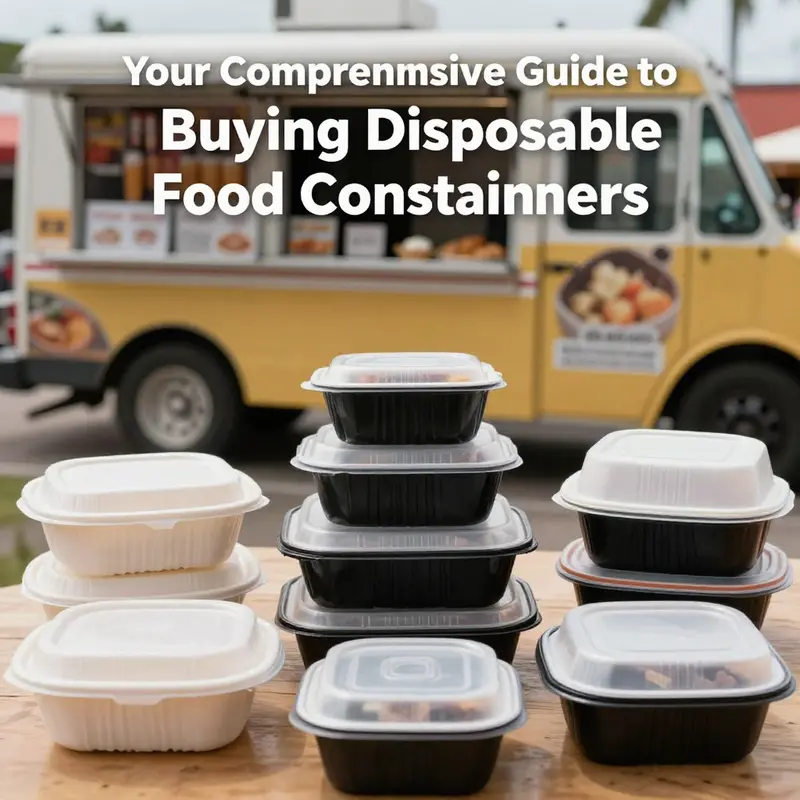
Finding the right disposable food containers is crucial for businesses like bubble tea shops, restaurants, and catering services. Whether you’re serving hot drinks, packing meals, or hosting events, the quality and type of your disposable containers can significantly affect customer satisfaction. As we delve into this guide, we’ll explore various B2B platforms to meet bulk purchasing needs, compare local versus global sourcing options, and highlight eco-friendly choices that favor both business success and environmental responsibility. By the end, you’ll be equipped with all the insight you need to make informed purchasing decisions for your disposable food container needs.
null
null
From Local Shelves to Global Markets: A Thoughtful Journey Through Sourcing Disposable Food Containers
Deciding where to buy disposable food containers is more than a price calculation or a calendar of deliveries. It is a strategic choice that threads through speed, sustainability, risk, and the delicate balance between control and scale. In a landscape where demand patterns swing with seasons, events, and shifting consumer expectations, the tug between local sourcing and global sourcing becomes less about one right answer and more about a resilient sourcing philosophy. The decision rests on your aiming point as a business or a caretaker of a kitchen: do you prize speed and tight feedback loops, or do you chase breadth of materials, price leverage, and the ability to customize at scale? The answer often lies in a nuanced blend that speaks to both immediate needs and longer-term ambitions, a hybrid approach that treats local and global channels as complementary rather than competing forces in a lean, responsible supply chain. Local procurement shines when speed is urgent and when small-to-medium volumes must move with little friction. A local supplier, positioned in a manufacturing hub or near major transportation arteries, can deliver with astonishing responsiveness. Lead times shrink; replenishment cycles become predictable; and the physical inspection of packaging and the ordering of samples comes with a simplicity that is hard to beat when urgency is high or when accuracy matters. For restaurants and catering operations that must keep a steady stream of takeout boxes, containers, and party ware on hand, this immediacy translates into fewer disruptions and more reliable service to customers. The value of proximity goes beyond the clock. It also nurtures relationships built on direct factory-to-customer communication, which in turn supports customized orders, quicker clarifications on material specs, and a smoother process for resolving on-site issues when packaging is compromised in a rush. In practical terms, a local supplier can accommodate flexible quantities as demand ebbs and flows, and the possibility of on-site quality inspections allows buyers to verify dimensions, seal integrity, and lid performance before committing to a broader batch. Even the environmental story can tilt in favor of local sourcing when transportation footprints are a visible concern. Shorter shipments mean fewer miles logged in freight, less idling in warehouses, and a more transparent dialogue about packaging waste and end-of-life options. Such conversations often align with a culture of sustainability that brands, retailers, and institutional buyers are increasingly prioritizing, especially for products designed to be disposable yet responsibly managed. When we consider the local option in the context of a major Chinese manufacturing locale—where a significant portion of disposable tableware is produced—the benefits become even more tangible. Proximity to factories means quick turnarounds for customized orders, such as branded takeout boxes or containers tailored to a specific restaurant concept. The local ecosystem also supports straightforward quality inspections, enabling buyers to verify food-safety credentials and manufacturing practices in person or through trusted agents. A prevalent scenario might include a regional supplier capable of handling the full spectrum of packaging needs—from takeout boxes and food containers to party ware—while offering direct order fulfillment and minimal intermediary friction. In such environments, the ability to iterate on packaging prototypes is a distinct advantage, reducing the risk of a misaligned fit between product performance and the demands of daily service. Yet the local route is not a universal antidote to every packaging challenge. Availability can be limited by season, region, or the supplier’s production calendar. Local suppliers may also carry higher per-unit costs at modest quantities due to scale dynamics, and the breadth of materials available might be narrower compared to the global market. Small- to mid-sized operators frequently find themselves balancing the need for variety with the capacity to maintain steady stock. The global route, by contrast, opens a broader world of options. It grants access to a wider palette of materials, designs, and technical specifications—an essential advantage when a business wants to test innovative materials, diversify its portfolio, or source a particular type of eco-friendly solution at scale. Global networks can connect buyers to manufacturers that specialize in sustainable alternatives such as bagasse pulp, rice husk composites, or recyclable kraft papers, ecosystems that offer not only a different look and feel but also a different end-of-life story. This breadth is especially valuable for organizations with ambitious sustainability goals, as it expands the repertoire of compostable or biodegradable packaging options, and supports a narrative of responsible packaging across markets. However, the global path brings its own set of considerations that buyers must navigate with care. Lead times frequently stretch beyond what local suppliers can offer, a natural outcome of longer production lines, international freight, customs clearance, and the need to align multiple parties across countries. Variability in supplier performance becomes a real risk, as does the challenge of maintaining a consistent quality standard across far-flung factories. Costs that seem modest on a per-unit basis can accumulate through freight, import duties, and currency fluctuations, turning a once-attractive price into a less predictable figure by the time it lands on the loading dock. The margin for error expands in global sourcing, underscoring the importance of robust supplier assessment, clear contractual terms, and an ironclad process for quality control. The global landscape also tends to put a premium on economies of scale. It is common to encounter minimum order quantities that reflect the capital outlay required to run a production line, with figures that can be substantial—sometimes tens of thousands of pieces in a single order. This reality can be a natural fit for large-scale retailers, hospitality chains, or brands with a broad, recurring demand, but it can be a misalignment for smaller operations or events with simpler packaging needs. In these cases, the global approach may be coupled with careful forecasting and inventory management to avoid the cost of excess stock or the risk of shortages during peak periods. The decision to pursue global sourcing often rests on three pillars: variety, cost competitiveness, and the ability to customize widely. A global network can unite a buyer with factories that offer diverse materials—from traditional plastics to renewable fiber composites—and with design capabilities that enable logos, brand marks, or unique shapes printed directly onto the packaging. The breadth of options can unlock packaging that aligns with a brand’s identity and a restaurant’s service model. The trade-off, of course, is a higher attention to logistics, compliance, and supplier governance. In this context, a hybrid strategy can emerge as the most pragmatic path forward. A hybrid approach marries the speed and agility of local sourcing with the strategic advantages of global procurement. Local partners handle routine fills, last-minute restocks, and customized orders that require close, rapid feedback loops. They can also serve as a buffer against global supply chain disruptions by acting as a stopgap when international shipments stall. Global partners, meanwhile, cover the broader spectrum of materials, designs, and volumes. They secure cost efficiencies for bulk orders, provide access to innovations in biodegradable packaging, and enable a diversified supplier base that protects against single-point failure. A hybrid model rests on disciplined inventory planning, a clear definition of critical versus non-critical packaging categories, and a governance framework that ensures quality and compliance across both channels. The decision framework benefits from an honest audit of needs. How many pieces are required each month? What lead time does your operation truly need to stay in stock without risking stockouts that disrupt service? Which materials align with your sustainability commitments, and which certifications are non-negotiable for your customers or regulatory environment? What levels of customization are essential—logos, colors, dimensions, or special closures—and what MOQs do global suppliers demand for those features? Answering these questions helps move the choice from abstract trade-offs to operational clarity. It also nudges buyers toward actionable steps that minimize risk. Start with a realistic demand forecast that reflects not just typical volumes but also seasonal spikes and promotional periods. This forecast should inform both local and global supplier selection, sample testing, and pilot programs. Samples are the currency of due diligence in packaging. They allow you to verify tear strength, leak resistance, heat tolerance, and the compatibility of coatings with various foods. They also enable a practical check on how a lid seals, whether a container stacks securely, and how the product performs under stress tests during transport. If you are pursuing eco-friendly materials, samples also provide a live check on compostability or biodegradability claims, and whether industrial composting facilities would honor those claims in your target markets. Beyond product performance, a supplier’s certifications and quality-management systems serve as a compass for reliability. Look for ISO quality management credentials, food-safety certifications, and clear documentation on compliance with relevant regulatory standards. The presence of credible certifications becomes especially important when packaging is used in environments where strict hygiene standards apply, such as healthcare facilities, schools, or large-scale catering. It is also prudent to consider traceability, particularly when sourcing from abroad. The ability to trace a batch from raw material through finished goods reduces the risk of recalls and helps maintain consistent performance. When considering a local supplier, you gain a transparency premium—often the environment, labor standards, and production processes can be more easily documented and verified in person or through a trusted agent. This transparency does not negate the value of due diligence with global suppliers; rather, it reframes it. You may still request supplier audits, third-party certifications, and performance data. The difference is that the cadence of verification tends to be more routine with local partners and more formalized through contractual terms with global partners. In all cases, an explicit plan for end-of-life management should accompany any packaging decision. The growing emphasis on circular economies means that buyers are not just selecting a product for its moment of use but also aligning with systems that handle waste responsibly. For some materials, this means ensuring availability of recycling streams or industrial composting options; for others, it means selecting reusable solutions or designing packaging that minimizes environmental impact across its life cycle. A practical takeaway for most buyers is to map their packaging needs against the material families that are most compatible with their waste-management infrastructure. When looking at a local solution, you may find that a supplier offers a range of container types—takeout boxes, lunch containers, and party ware—designed to fit a single brand or concept, with the advantage of synchronized production calendars and predictable delivery windows. In a global context, the same map expands to include multiple materials, coatings, and print capabilities that let you tailor a package to a marketing story or a seasonal campaign, while still maintaining a coherent supply chain. A balanced strategy often looks like this: maintain a core set of rapid-replenishment items with a dependable local supplier to cover everyday needs, control quality, and ensure quick customization. For the broad, project-based, or volume-driven categories, partner with one or more international manufacturers who can deliver on scale, variety, and cost efficiency. This approach also supports risk mitigation during disruptions. When a local supply line experiences a hiccup—from a regional factory outage to a sudden surge in demand—the global network can step in to fill the gap, keeping kitchens and stores stocked without compromising service levels. The path forward is never just a matter of choosing a region or a platform; it is about building relationships with suppliers who understand your business cadence, sustainability commitments, and the practical realities of daily operations. To that end, it helps to cultivate a conversation with potential partners that centers on expectations, performance benchmarks, and shared values around quality and responsibility. Ask prospective suppliers for clear lead-time data, transparent pricing with a breakdown of freight and duties, and a disciplined returns or defect policy. Seek references and request a short pilot program to validate claims before committing to longer-term contracts. In this light, the journey between local and global sourcing becomes less a dichotomy and more a continuum along which choices can be rebalanced as needs evolve. A thoughtful buyer continuously evaluates changing market conditions, material innovations, and regulatory developments to adjust the mix of local and global partners. The result is a packaging strategy that not only supplies products that perform reliably but also supports business resilience, customer satisfaction, and a responsible end-of-life narrative. For readers who want to explore real-world examples in this space without getting lost in a maze of product names, consider a practical reference point: a product page that demonstrates how packaging can be customized at scale. This example page illustrates the feasibility of branding and specification customization while maintaining clear performance characteristics, from heat resistance to leak protection, and serves as a reminder that even highly specialized packaging needs can be approached with a thoughtful blend of local and global sourcing. senang05 food-grade 500-750-1000ml take-away bowl with lids packing food single-wall fast-food salad bowls. This link invites readers to consider how a single product family can be engineered for both flexibility and consistency across different markets, while also highlighting the importance of practical testing and clear documentation in the supplier selection process. Alongside such a case, it remains essential to keep one eye on the broader market dynamics and one ear to customer feedback. When end users report a recurring issue with lid seals during transport, for instance, the feedback loop should prompt a re-evaluation of the supplier mix and a potential reallocation of volumes to a partner with stronger performance in that area. If a region experiences a surge in demand for sustainable packaging options, buyers may accelerate the evaluation of eco-friendly materials and certifications, perhaps by increasing the weight of that segment in the procurement portfolio and by negotiating more favorable terms with global partners who can supply at scale. The most robust sourcing approach reads not as a single grand decision but as an ongoing, iterative process. It requires disciplined procurement practices, a willingness to test and learn, and a clear alignment with core business goals, whether those goals center on speed, cost, sustainability, or brand integrity. It also benefits from a collaborative mindset that treats suppliers as extensions of your own operation. When you achieve this alignment, the choice to source locally or globally loses its mystique and becomes a practical, repeatable workflow you can trust. External resource for a broader perspective on global sourcing dynamics is provided at the end of this discussion. For readers seeking more structured guidance on supplier vetting and market options, the broader wholesale marketplace landscape offers a useful frame of reference in which to map supplier capabilities, performance history, and risk exposure. The takeaways are clear: prioritize speed and customization with local partners for day-to-day needs and quick turnarounds; leverage global suppliers for scale, variety, and advanced materials; and adopt a hybrid approach that preserves resilience while pursuing innovation. In the end, the best path is guided by the daily rhythms of your kitchen, cafe, or catering operation, tempered by a strategic view that anticipates change rather than merely reacting to it. External resources can help you build that view. For a global marketplace reference that many buyers consult to understand the scale and scope of international suppliers, one reputable platform provides a window into the kind of capabilities that are accessible across continents. https://www.alibaba.com
Greener Choices for Disposable Food Containers: Navigating Eco‑Friendly Suppliers, Materials, and mindful Markets
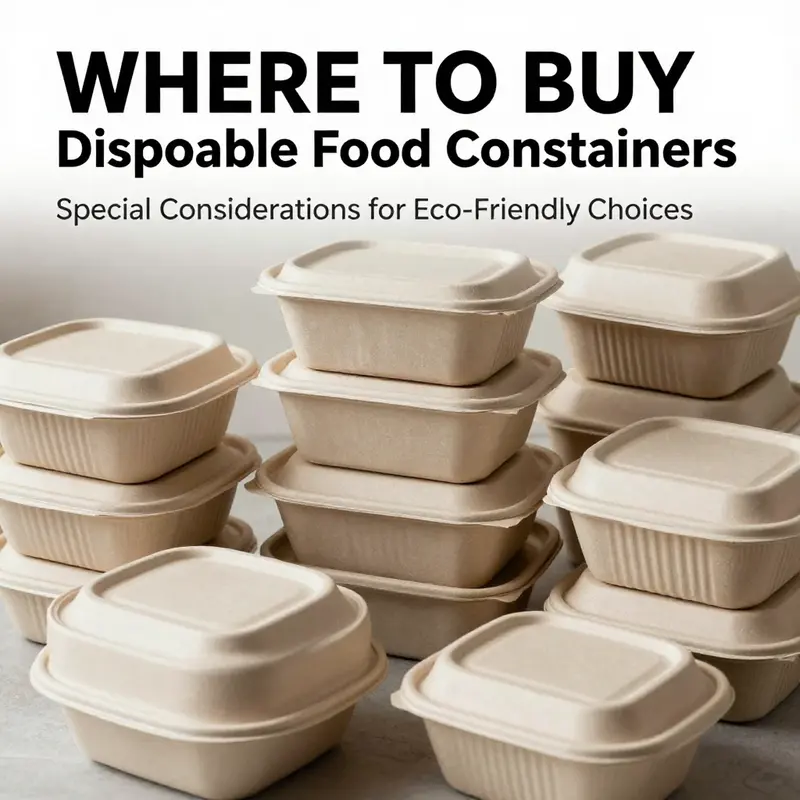
Every day, kitchens, cafeterias, caterers, and corner shops face a choice that extends beyond a single order: how to balance the convenience of disposable food containers with the responsibility of environmental stewardship. The quest for the right containers is not merely a question of price or lead time; it is a chain of decisions that touch supply chains, material science, waste management, and even the cultural norms of consumption. When the topic shifts to eco‑friendly options, the conversation becomes more nuanced. It’s less about finding a single green hero and more about weaving a fabric of choices that works for a given operation, its values, and its location. In this chapter, we will explore how to approach eco‑friendly disposable containers in a way that is strategic, practical, and sustainable, while keeping a steady eye on the realities of sourcing, production, and disposal. The aim is not to preach a single solution but to illuminate the pathways that lead to better outcomes for people and the planet, with a view toward how these choices can flow naturally into the broader narrative of responsible procurement discussed in the surrounding chapters.
Material considerations sit at the heart of any eco‑friendly decision. Among the most promising options today are biobased fibers derived from agricultural residues, such as sugarcane fiber, often sold as bagasse products. The logic is simple, and powerful: convert a residue that would otherwise be burned or discarded into a value‑added, compostable form. Sugarcane fiber containers typically demonstrate good heat tolerance and mechanical strength, making them suitable for a range of hot and cold foods. They are designed to be compostable in facilities equipped to handle such materials, which closes the loop on waste in a way that traditional plastics struggle to achieve. When evaluating sugarcane fiber options, buyers should look for third‑party certifications or verified lifecycle disclosures that attest to compostability in industrial facilities, rather than merely labeling. The viability of these materials depends not only on the product itself but on the availability of end‑of‑life infrastructure that can process them as intended. Suppliers in this space emphasize a lifecycle perspective, often partnering with institutions and organizations to validate the composting or anaerobic digestion pathways and to reassure buyers that the end of life is aligned with the material’s intended use.
Closely connected to sugarcane fiber are options that align with the circular economy through reuse or refill, and among these, glass stands out as a durable, timeless alternative. Glass containers, while not always categorized as disposable in routine consumer practice, offer a model of safety and longevity that can be part of a broader strategy. In settings where reuse can be implemented—hot or cold foods stored in glass, transported in reusable packaging, and washed and sanitized for repeated use—the environmental footprint over time can be markedly reduced. Glass is non‑porous, resists staining and odor absorption, and maintains performance under a wide range of temperatures. However, the practicalities of glass adoption require thoughtful planning: weight, breakage risk, sanitation logistics, and the need for reliable return or exchange systems must be part of the decision. For businesses that can embed glass within a take‑back or reuse framework, the environmental gains can be substantial, aligning with a longer horizon toward circularity even as markets continue to supply single‑use options.
Paper‑based packaging—whether from recycled content or plant fibers—offers another compelling eco‑friendly path. Recyclable or renewable paper options can reduce reliance on fossil fuels and can be designed to be compatible with paper recycling streams or, in some cases, composting streams. The key is to choose products that have been designed with end‑of‑life in mind and to verify that the packaging can reenter the material cycle efficiently. This often means looking for products that integrate well with local recycling or composting infrastructure and that avoid coatings or plastics that hinder recyclability. In practice, paper‑based disposables can be engineered to balance rigidity, moisture resistance, and barrier properties, enabling them to stand in for plastics in many applications—from compact takeaway boxes to bun or pastry packaging. The supply landscape here is rich and varied, with manufacturers experimenting with different blends of fibers, coatings, and finishes to optimize performance while maintaining a lower environmental footprint. When evaluating these options, buyers should request lifecycle information, including whether coatings are biodegradable or recyclable and how the product behaves in regional waste streams.
The supply side of eco‑friendly containers is as important as the material itself. For sustainability to translate into real outcomes, the source must be trustworthy. This means prioritizing suppliers with verifiable business licenses and transparent sourcing practices, as well as certifications that demonstrate compostability or recyclability. It also means considering the full lifecycle—from production emissions and water use to the logistics of distribution and end‑of‑life processing. In practice, this translates to questions about supplier transparency, the geographic origin of the raw materials, and the presence of third‑party verification that aligns with recognized standards. The lifecycle lens helps prevent a situation where a product sounds green at the point of sale but collapses under scrutiny at the end of its life. A responsible procurement posture asks: where do the materials come from, how are they produced, what is the energy profile of manufacturing, and how will customers dispose of them? The answers matter as businesses seek to align their purchasing with internal sustainability goals and with broader regulatory or market expectations that increasingly reward transparent stewardship.
A practical approach to eco‑friendly sourcing begins with a clear specification of needs and constraints. For instance, a large institution or a chain may require bulk quantities with consistent quality, predictable lead times, and the ability to customize packaging with logos or branding. In such cases, major regional or global B2B marketplaces can connect buyers with factory suppliers who can scale production while maintaining environmental and quality standards. The emphasis, however, should always be on verification: certifications such as food safety standards, manufacturing process audits, and independent eco‑certifications that confirm compostability, biodegradability, or recyclability. When a supplier can demonstrate a robust environmental management system, traceability of raw materials, and transparent documentation, a buyer gains the confidence needed to commit to long‑term partnerships. For organizations seeking to maximize environmental impact without sacrificing operational efficiency, these supplier relationships become strategic assets, enabling a continuous improvement loop as new materials, better processes, and evolving waste management technologies emerge.
In the realm of bulk sourcing from Asia, a major Asian B2B marketplace can be instrumental in connecting buyers with factory suppliers who are equipped to handle large orders and offer customization, including branding. This pathway is well suited for eco‑conscious, large‑scale buyers who need to balance scale with environmental performance and certification. The platform model often provides product verification, minimum order quantities, and a venue for obtaining samples and technical data. For international buyers seeking global logistics, broader wholesale platforms offer a similar promise but with a distinct emphasis on cross‑border trade, currency settlement, and international compliance. These channels enable access to a wide array of materials—sugarcane fiber, paper, and glass—and a variety of finishes and packaging formats. They are not a panacea, however. They require diligence: clear specifications, request for certifications, and thorough supplier evaluation. The bigger picture is that such marketplaces can dramatically increase reach while enabling buyers to compare materials, performance characteristics, and end‑of‑life options in one place rather than relying on a handful of local suppliers who may not meet environmental criteria.
For buyers seeking more immediate, consumer‑facing options in specific markets, regional suppliers and local distributors remain an important piece of the puzzle. Proximity matters for reducing transportation emissions, shortening lead times, and enabling responsive service. Regional players often have a track record of working with schools, hospitals, and small businesses to deliver packaging that meets local waste management realities. A regional procurement approach complements global sourcing by filling gaps in supply, especially for niche sizes, shapes, or barrier properties that may be less common on international platforms. Local suppliers can also be more nimble when it comes to customization needs or small‑batch runs, which is valuable for businesses testing new eco‑friendly formats before committing to larger orders. The key is to evaluate each potential supplier through a lifecycle lens and to confirm alignment with local recycling or composting programs, so a new container can smoothly fit into the existing waste systems.
An essential piece of the practical puzzle is the availability of end‑of‑life infrastructure. Even the most thoughtfully designed compostable or recyclable packaging only delivers its promised environmental benefit if there is a functioning system to handle it at the scale of your operation. This means engaging with local waste haulers or municipal programs to understand which materials are accepted, under what conditions, and with what acceptance criteria. It also means communicating with customers about proper disposal. Education is part of sustainability; without it, even the best materials can fail to achieve their environmental objectives. In many communities, industrial composting facilities handle products labeled as compostable, but only if they carry the right certifications and if the facility accepts those materials. In others, recycling streams are the primary path, and coatings or mixed materials can complicate disposal. A responsible buyer will align packaging choices with the capabilities of local waste streams and will invest in customer education as part of the product rollout. This alignment prevents the well‑intentioned choice from becoming a liability in practice and helps ensure that the environmental benefits do not vanish in the translation from factory floor to curbside.
From a strategic vantage point, the packaging decision is also a story about brand values and customer expectations. Eco‑friendly packaging often serves as a signal of a brand’s commitment to sustainability, a factor that can influence consumer choice, supplier partnerships, and investor relations. But the marketing message must be accurate and backed by verifiable practices. If a brand emphasizes compostability, for instance, that claim should be supported by third‑party verification and a clear explanation of end‑of‑life pathways. If the focus is on recyclability, the packaging should avoid coatings or features that would hinder recycling streams and should provide guidance to customers on how to recycle correctly. Clarity builds trust, and trust is a competitive advantage in markets where sustainability is increasingly a differentiator.
As the discussion returns to the practical act of purchasing, it helps to keep a simple, repeatable framework for decision making. Start with the most critical use case: what food or service scenario requires the container? Will it hold hot or cold foods? Will it need a leak‑proof lid? Is there a need for a certain degree of rigidity to prevent crushing or deformation during transport? Once these questions are answered, map them to material options that satisfy performance criteria while minimizing environmental impact. Sugarcane fiber can be excellent for many hot and cold foods, while paper‑based options can offer a lower barrier for recycling in many regions. Glass can serve as a long‑term reuse option where feasible. In parallel, establish the end‑of‑life expectations with suppliers: what certifications exist, which waste streams are appropriate, and how the material behaves under real‑world conditions. Document the supplier’s environmental management practices, audit results, and any third‑party verifications. Finally, consider the logistical realities: lead times, minimum order quantities, customization capabilities, and total cost of ownership when including waste handling and potential returns or recycling partnerships.
One practical way to illustrate how these considerations take shape in a real product scenario is to imagine a case where an institution is evaluating a set of eco‑friendly packaging options for a school program. The school aims to provide meals for a semester, with a mix of hot entrees, snacks, and beverages. They want to minimize waste while ensuring safety and reliability. They would first assess the thermal requirements and barrier performance: does the container maintain heat long enough for a typical lunch period? Can it handle sauces without leakage? If so, sugarcane fiber or certain high‑quality paper options may fit. They would then examine end‑of‑life options in the community: is there industrial composting available on or near campus? If yes, compostable sugarcane fiber could be a strong fit, provided the facility accepts it and confirms compostability with recognized standards. If composting is limited, they might prefer recyclable paper options, ensuring the packaging can be recycled in campus recycling programs without coatings that impede processing. They would also explore the possibility of a reusable system for some meal formats, particularly those that travel within the campus or between the cafeteria and satellite facilities. Throughout this decision process, the procurement team would document supplier certifications, track shipments, and pilot test a subset of containers to gauge user acceptance, performance, and disposal outcomes before scaling up. This measured approach keeps the focus on sustainability while protecting operational integrity.
A concrete step toward implementing these ideas is to identify a credible, practical source of eco‑friendly packaging options that aligns with an institution’s values and logistical realities. In the context of global procurement, it is helpful to think in terms of a tiered sourcing strategy. The first tier focuses on core materials that deliver reliable performance and clear end‑of‑life pathways—such as sugarcane fiber and recycled paper—paired with suppliers who provide robust lifecycle data and third‑party certifications. The second tier looks at supplementary materials, such as glass or specialty coatings, that can be incorporated in specific use cases where their advantages outweigh the added complexity of disposal and reuse. The third tier, a more experimental arena, explores innovations in coatings, composites, and biobased resins that may, in time, broaden the portfolio of eco‑friendly options without sacrificing safety or convenience. This structured approach helps buyers manage risk, allocate resources effectively, and progressively shift toward more sustainable packaging across programs and markets.
Finally, it is worth acknowledging that the journey toward eco‑friendly disposable containers is not a destination but a continuing practice. Markets evolve, new certifications appear, and waste management systems improve. The most enduring choices are those anchored in a culture of learning and adaptation: a willingness to reassess preferred materials in light of new data, to pilot new solutions on a manageable scale, and to report results transparently to stakeholders. By building procurement processes that emphasize verification, end‑of‑life compatibility, and lifecycle thinking, organizations can steer the conversation toward actionable improvements rather than abstract ambitions. The goal remains clear: provide safe, reliable containers that support the convenience of modern dining while respecting the planet’s ecological boundaries. In doing so, businesses not only meet regulatory expectations and consumer demand but also contribute to a broader shift toward sustainable consumption that can be measured, managed, and improved over time.
To help translate these principles into concrete actions, consider exploring a practical example that illustrates how a single product category can embody multiple sustainable criteria. One option that aligns with the aims discussed—without anchoring to a specific brand—offers an eco‑friendly kraft paper take‑away option designed for durability and disposability. This product category can be evaluated for heat resistance, moisture handling, adhesive integrity, and compatibility with common waste streams. The product’s design can emphasize a balance between rigidity and the ability to break down responsibly in appropriate facilities. It can also be paired with a matching lid and packaging system that minimizes seals and coatings, further enhancing recyclability or compostability. The overarching idea is to prototype, test, and refine the packaging system so that every component—from the container to its lid and any related accessories—contributes to a coherent sustainability story. For those who need a tangible starting point, an example within the broader, real‑world market offers a pathway to compare how different materials perform under similar use conditions, while still maintaining a focus on lifecycle outcomes and waste management realities. eco-friendly kraft paper octagonal bowls with lids.
In closing, the decision to purchase eco‑friendly disposable containers is not a single choice but a continued practice of aligning performance needs with environmental responsibility. By understanding the material families, evaluating supplier transparency, recognizing the role of end‑of‑life infrastructure, and adopting a staged sourcing strategy, buyers can move beyond quick, generic green claims toward a robust, evidence‑based procurement approach. The journey requires curiosity and discipline: curiosity to explore new materials and processing methods, and discipline to interrogate claims, verify certifications, and design for waste. When these elements come together, the result is a packaging system that supports reliable food service, reduces environmental impact, and communicates a clear, credible commitment to sustainability to customers, colleagues, and the communities served. For those seeking further reading on sustainable materials and waste management practices beyond the packaging industry, a foundational reference is the U.S. Environmental Protection Agency’s Sustainable Management of Waste framework, which offers guidelines on materials management, recycling, and waste reduction across sectors. You can explore these guidelines at https://www.epa.gov/sustainable-management-waste.
Final thoughts
In conclusion, selecting the right disposable food containers is a decision that impacts both your operational efficiency and your environmental footprint. By utilizing the various B2B platforms available, considering local versus global suppliers, and prioritizing eco-friendly options where possible, businesses can not only enhance their service offerings but also contribute positively to sustainability efforts. Careful planning in your procurement process will ensure your catering, restaurant, or event planning ventures succeed while aligning with modern consumer preferences.