
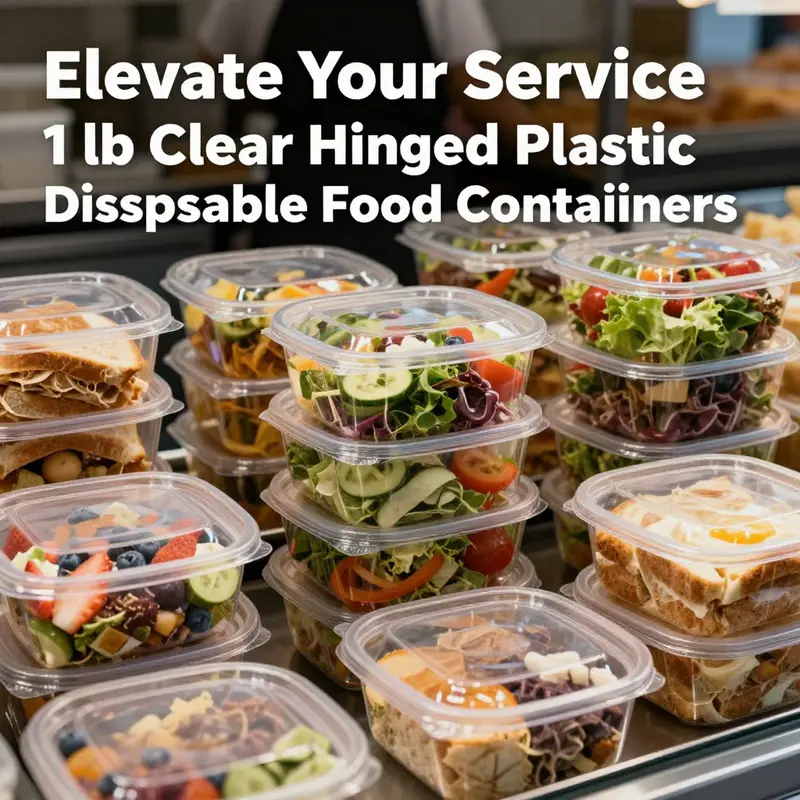
In the bustling world of food service, making the right impression on your customers is crucial. One often-overlooked aspect is the packaging we choose for our offerings. Enter the 1 lb clear hinged plastic disposable food containers, a game-changer for beverage chains, restaurants, food trucks, and catering services. These versatile containers not only keep your food fresh but also showcase it beautifully, thanks to their clarity and design. In the chapters that follow, we will explore the material properties that set these containers apart, the diverse applications within the food service industry, and the evolving environmental considerations and trends that affect purchasing decisions today. Prepare to understand how this small yet significant item can enhance your customer experience and align with modern demands.
How Material Science Shapes the 1 lb Clear Hinged Plastic Food Container: Properties, Performance, and Practical Trade-offs
Material and design in practice
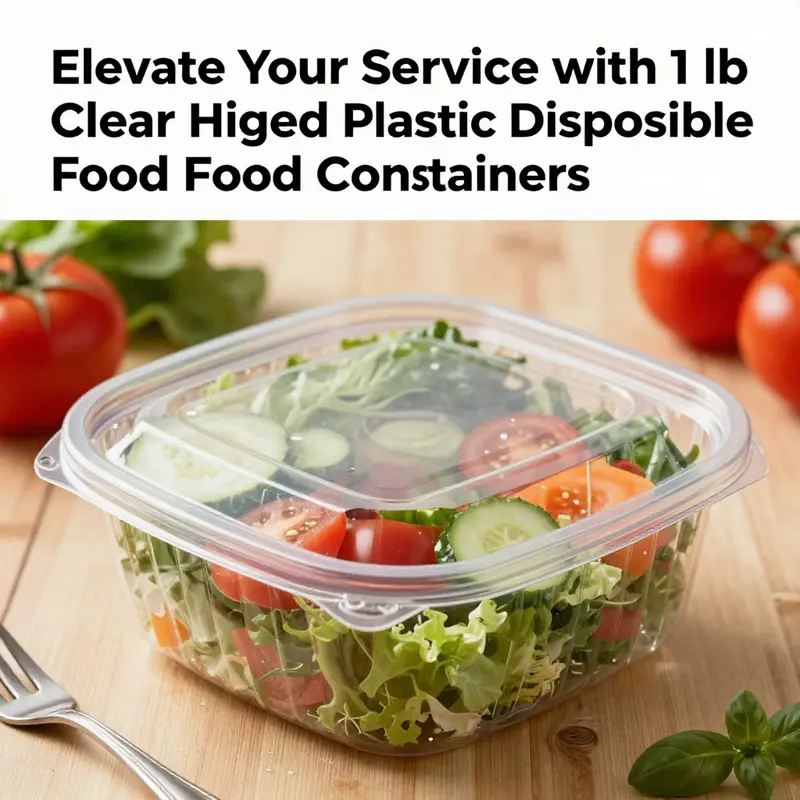
The physical behavior and everyday performance of a 1 lb clear hinged plastic food container come directly from its material choices and the way those materials are processed. At the heart of most clear clamshell containers marketed for one-pound portions is polypropylene (PP). This thermoplastic delivers a combination of low density, mechanical resilience, thermal tolerance, and chemical stability that aligns with food service needs. Understanding why PP is widely used, and where it falls short, requires looking beyond marketing claims and into the molecular and engineering features that determine clarity, strength, recyclability, and functional lifespan.
Polypropylene’s attractiveness starts with its density and crystallinity. With a density near 0.90 g/cm3, PP is noticeably lighter than many competing plastics. Its semi-crystalline microstructure produces a balance of stiffness and toughness. Crystalline regions provide dimensional stability and a higher melting point, while amorphous areas allow some flexibility. Typical injection-molded or thermoformed clamshells exploit these qualities by using PP grades tuned for a strong living hinge, snap-fit closures, and resistance to repeated flexing. Designers often choose homopolymer PP for stiffer parts and random or impact copolymers when enhanced impact resistance and lower temperature toughness are required.
Thermal performance matters for convenience packaging. Polypropylene melts in the 160–170°C range and has a glass transition temperature around -10°C. This wide useful temperature window makes PP suitable for chilled storage, refrigerated transport, and some microwave reheating applications when the product is labeled microwave-safe. Unlike lower-temperature bioplastics, PP will not deform during typical microwave reheating cycles. That said, controllers restrict microwave use to specific product/geometry combinations and user instructions. Containers intended for reheating are often made from grades with reduced fillers and specific crystallization behavior to avoid warping and to limit migration of low molecular weight additives when heated.
Clarity is central for customer-facing packaging. Clear PP is typically translucent rather than as optically clear as PET (polyethylene terephthalate). Manufacturers improve clarity by controlling the polymer’s crystallization during cooling and by using nucleating agents that refine crystal size and distribution. These additives encourage faster, more uniform crystallization, which reduces hazing and increases gloss. For truly transparent windows, some suppliers combine a clear PP lid with a PET window or switch to PET for the entire container. However, PP’s trade-off between clarity and toughness often leads designers to accept the slightly hazy appearance in exchange for better hinge life and higher heat tolerance.
Mechanical and barrier properties determine how well the container protects content in real use. Tensile strength for polypropylene typically ranges around 25–40 MPa, with a flexural modulus in the range of 1.3–2.0 GPa for common food-grade grades. These values produce a container that resists bending and crushing during routine handling. Impact resistance and notch sensitivity determine whether a clamshell will crack under corner drops or cold shock. Manufacturers alter these properties with impact modifiers and copolymerization to meet delivery and stacking requirements. Wall thicknesses for 1 lb hinged containers usually range from 0.5 mm to 1.2 mm. Thicker sections add rigidity and improve perceived quality, but they increase material use and weight.
Sealability is a crucial functional attribute. The clamshell, or living-hinge, geometry is effective when paired with interlocking bead-and-groove closures or snap-fit lips that compress slightly to form a barrier to leaks and to reduce oxygen ingress. PP’s elastic recovery helps maintain a tight fit after repeated opening and closing. For liquid or semi-liquid foods, designers often add a gasket-like channel or combine the PP clamshell with a softer sealing flange in polyethylene or a thin film liner to improve leak resistance. Heat-sealable variants, where a coated PP or laminated layer allows induction or heat sealing, appear in supply chains that require tamper evidence or extended shelf life.
Chemical resistance and inertness are strengths of PP. It resists acids, bases, and many organic solvents, protecting food flavors and preventing container degradation when in contact with dressings, oils, or acidic condiments. This chemical stability contributes to the widespread acceptance of PP in food contact applications and its compatibility with common cleaning and sanitizing chemicals used in food service operations.
Safety and compliance play a continuous role. Food-grade PP is formulated and validated to meet regulatory requirements in many jurisdictions, including FDA and EU food contact regulations. Compliance is not simply a statement; it involves specific testing for overall migration, specific migration of regulated substances, and evaluation of potential contaminants introduced during manufacture. Manufacturers must control catalyst residues, residual monomers, and additive packages used for improved processing or long-term stability. Traceability through supplier documentation and evidence of testing is part of a credible safety dossier for any food service packaging.
Manufacturing method and design features are inseparable from material selection. Thermoforming and injection molding dominate production for hinged clamshells. Thermoforming typically suits thin-walled designs and high-volume, lower-cost parts. Injection molding offers dimensional control and allows complex living hinges and snap fits. A living hinge depends on PP’s fatigue resistance. Proper hinge geometry and controlled cooling during molding reduce localized stress concentrations and support repeated opening without failure. Tool design also influences optical quality, wall uniformity, and material distribution critical for thermal performance and sealing.
Additives and surface treatments expand functionality but change recycling and safety profiles. Anti-fog coatings help reduce condensation on cold products, keeping contents visible and maintaining appeal. UV stabilizers extend outdoor storage life. Anti-static agents reduce dust attraction on display shelves. However, each functional additive must be selected for food contact compatibility and for minimal interference with recycling streams. Coatings that are not compatible with mechanical recycling can contaminate recycled PP and reduce its reuse potential. When suppliers add coatings or multi-layer laminates for barrier or print reception, they often create a trade-off between performance and circularity.
Recyclability is a central concern for modern packaging choices. Polypropylene carries resin code #5 and is technically recyclable. However, effective recycling depends on collection infrastructure, separation at material recovery facilities, and market demand for recycled PP. Contamination from food residues and mixed-material designs—such as combination lids, film windows, or adhesives—hinder efficient recycling. Many large-scale operations offer closed-loop programs where high-volume clean waste streams are reprocessed into similar products. Nonetheless, in many regions, PP recycling rates lag behind PET and HDPE due to collection challenges. Designing hinged containers for easier cleaning, limiting multilayer laminates, and selecting coatings that are compatible with recycling help improve end-of-life outcomes.
Environmental trade-offs rely on life-cycle thinking. Polypropylene requires less energy to produce per kilogram than many alternatives and offers a lower carbon footprint per unit mass because of its light weight. That insight often favors lightweight PP containers over heavier glass, metal, or thick paperboard. Yet single-use behavior magnifies environmental impacts. When reusability or an effective recycling program does not exist, the environmental burden shifts toward waste management impacts. Compostable alternatives such as PLA or bagasse can reduce persistence in landfills, but they present other trade-offs. PLA has a lower heat tolerance and requires industrial composting to break down effectively. Bagasse and other fiber-based materials provide strong biodegradability in the right conditions, but they can require PP or PET lids to maintain clarity and spill protection. This mixed-material approach again complicates recycling.
Practical design choices reflect these material realities. For menu items like salads, pastries, or sandwiches destined for takeaway, the clarity to show the product, the hinge reliability to provide repeated customer access, and the sealability to prevent spills are primary. A 1 lb clamshell must balance wall thickness, hinge robustness, and closure design. Interior ribbing can stiffen panels and reduce material while preserving rigidity. Snap-fit features can provide tactile feedback that consumers associate with quality. Tamper-evident seals can be integrated by using perforated tear strips or heat-sealed films on the perimeter, increasing shelf life and customer confidence but affecting recyclability.
Performance under transport and storage conditions also guides specification. Condensation inside a refrigerated container can diminish visual appeal and hasten spoilage. Anti-fog treatments and venting strategies help manage moisture. For distribution networks that include frozen storage, PP formulations and design must retain impact resistance at low temperatures to avoid brittle fractures. Conversely, high-heat environments such as hot-holding cabinets require materials capable of resisting softening.
Testing and quality control are continuous. Manufacturers validate containers for compression resistance, drop impact, leak tests, and seal integrity. Thermal cycling tests simulate repeated refrigeration and reheating scenarios. Migration testing and accelerated aging predict whether additives might transfer to food under expected use. Because small variations in polymer grade or processing conditions influence critical properties, suppliers often hold tight tolerances on melt flow index, molecular weight distribution, and additive concentrations.
Beyond material selection, system-level decisions affect sustainability. Source reduction—optimizing geometry for the minimum needed material—reduces embodied carbon and waste. Designing for recyclability avoids mixed-material constructions and keeps printed areas and labels compatible with recycling streams. Implementing returnable systems for high-frequency, local reuse can outperform single-use PP in life-cycle comparisons, but such systems require logistical overhead that not all businesses can support.
Where PP is not ideal, alternatives occupy specific niches. PET offers higher clarity and excellent barrier properties for display-focused packaging. PLA and other bioplastics serve compostable claims but need controlled disposal. Fiber-based bowls and boxes provide a renewable feedstock and compostability in many settings, though lids may need transparent films to retain visibility. The right choice blends material properties with supply chain realities, product temperature profiles, and end-of-life infrastructure.
In operational terms, the 1 lb clear hinged container embodies compromise. It trades the absolute clarity of PET for PP’s hinge life and thermal margin. It offers recyclability in principle, but real-world rates depend on collection and design choices. It resists common food chemistries while enabling low-weight, low-cost manufacturing at scale. For buyers and specifiers, the decision matrix should include detailed questions: What temperatures will the product encounter? Does transparency or toughness take priority? Is industrial composting available to support alternative materials? What are the local recycling capabilities for PP?
One final practical note concerns labeling and brand presentation. Because PP tolerates thermal and solvent-based printing only under specific conditions, many suppliers use overprinting, on-foil labels, or attach paper sleeves. These options affect recyclability and aesthetic appeal. Choosing low-migration inks and recyclable label constructions helps maintain the container’s recyclability.
For a hands-on view of how PP lids and hybrid constructions are used in contemporary takeaway packaging, review examples of square salad bowls with PP lids to see the trade-offs in action: square salad bowls with PP lids.
For deeper technical background on material properties and engineering guidance for disposable cube-style food packaging, consult this comprehensive technical guide: https://www.example.com/understanding-disposable-cube-food-packaging
Clear, Convenient, and Capable: The Rise of 1-Pound Clear Hinged Plastic Disposable Containers in Modern Food Service
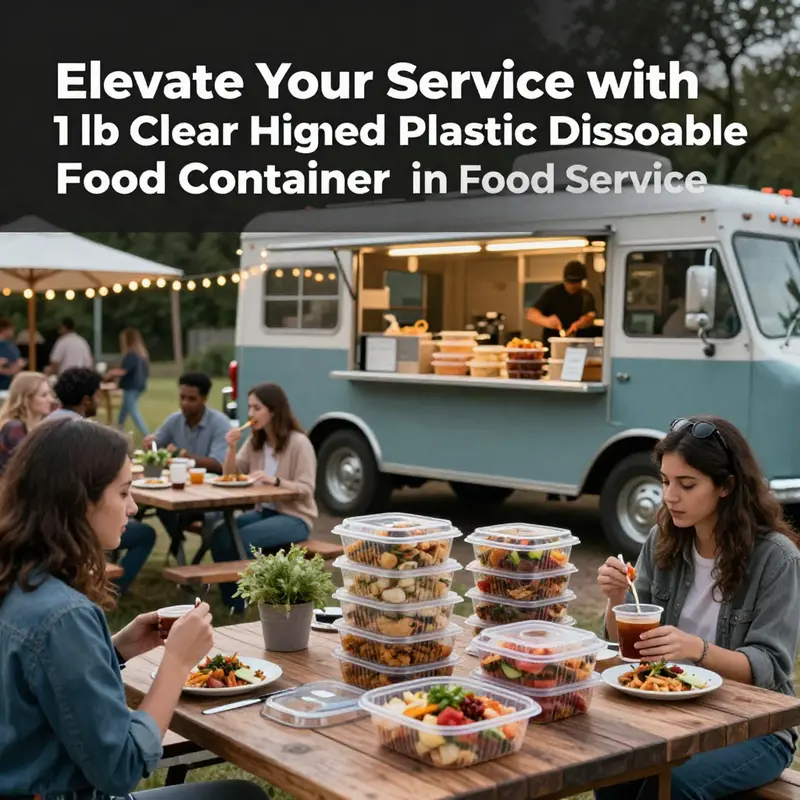
In the world of food service, the container is more than just a vessel; it is a critical partner in presentation, safety, and speed. The 1 lb clear hinged plastic disposable food container embodies this triad with a precise balance of visibility, reliability, and ease of use. When a kitchen is pressed to prepare, package, and transport meals quickly, these containers become a dependable workhorse. They hold roughly 450 to 500 grams of food, a capacity that aligns with single-serve meals, balanced lunch packs, and dessert portions that are neat, portable, and compliant with commercial food safety standards. The very transparency of the container—the crystal-clear PET or PP that forms its walls and lid—transforms the display from a mere hold to an appetizing showcase. Customers see the freshness of a salad, the fullness of a sandwich, or the inviting glaze on a pastry at a glance, which elevates the perceived quality of the food before any bite is taken. In a market where shelf appeal and impulse buys drive performance, the visual access provided by a clear container becomes a strategic asset, shortening the path from order to purchase by reducing hesitation and increasing trust.
The material and design choices at the heart of these containers are not incidental. PET, often used for the walls in these 1 lb clear hinged models, is prized for its clarity, strength, and recyclability. When a product is labeled food-grade and FDA-compliant, operators gain a concrete assurance that the container will not contribute unwanted substances to the food it carries. This assurance matters not only for compliance officials but for chefs and managers who must uphold consistent safety standards across dozens or hundreds of daily transactions. The hinge itself is more than a mechanical feature; it is a reliever of labor and a safeguard for the integrity of the contents. A well-engineered hinged lid provides a secure, leak-resistant closure that can be opened with one hand and closed with confidence, an important advantage for food runners, drivers, and front-line staff who move in a fast-paced cadence. The hinge’s reliability reduces spills during transit, a common source of waste, customer dissatisfaction, and liability concerns in both takeout and catering contexts.
The temperatures these containers endure are another element that matters in real-world use. In typical operations, the containers must withstand a range from cold refrigeration to mild reheating in a microwave, and in some cases even freezer conditions. The ability to perform across these environments without compromising the container’s structure or the food’s safety is a practical advantage that translates into operational flexibility. The 1 lb designation is not arbitrary; it is a sweet spot that supports complete meals in compact, stackable form. The capacity is sufficient for a full serving without looking oversized, and the dish remains easy to transport, stack, and store. This balance between capacity and portability is especially valuable for delivery services and catering events where reducing secondary packaging and minimizing weight contribute to efficiency and cost containment. In practice, a restaurant can assemble a complete meal—protein, starch, vegetables, and a modest sauce—without needing a secondary container, which streamlines the handoff at pickup and enhances the customer’s experience upon arrival.
From a design perspective, the containers’ stackability serves a dual purpose: storage efficiency and streamlined logistics. The rectangular form factor optimizes space, enabling kitchens and warehouses to maximize palletization, shelving, and cold storage. When containers are stacked correctly, staff can reclaim substantial storage space, sometimes quoted in industry conversations as up to about 40 percent savings in storage area. Those savings are not trivial; they translate into tangible gains in inventory control, faster picking times during busy shifts, and more compact displays in retail settings. The same compact footprint makes these containers an attractive option for grab-and-go displays in cafes and convenience stores, where a compact, attractive, and familiar packaging format helps move products quickly from behind the counter to the customer’s hands.
Beyond the physical form, the lids’ seal quality and the containers’ material composition work together to address the practical demands of the food service environment. Leakage prevention is not merely about keeping sauces from pooling at the bottom; it is a safeguard against cross-contamination in transport and during handling. A secure seal minimizes the risk of leaks in delivery backpacks, car trunks, or catering trays, which in turn reduces cleanup costs and customer complaints. The clarity of the container does not detract from this function; instead, it complements it by enabling staff to confirm the lid is fully closed and the contents are visually acceptable before the container leaves the kitchen. The lid’s design also supports one-handed operation, a small but meaningful ergonomic feature that can reduce fatigue on long shifts and contribute to faster service speeds during peak hours.
In many operations, the appeal of these hinged containers extends to their compatibility with a broad range of foods. Salads benefit from the transparent walls that highlight fresh greens and colorful toppings, while sandwiches and baked goods gain from the solid, sturdy structure that helps preserve form. Soups and hot meals can be accommodated in some designs that are both microwave-safe and freezer-safe, enabling a single container to function across multiple stages of a meal’s journey—from preparation to delivery, to brief reheating at the customer’s location. The visual appeal is complemented by practical considerations such as the container’s resistance to condensation and its ability to maintain crisp textures in salads or maintain the moisture balance in mitigating sogginess.
The supply ecosystem supporting these containers is characterized by a mix of manufacturers and wholesale platforms that emphasize food-grade materials, consistent quality, and scalable procurement. For businesses seeking reliable bulk options, platforms that facilitate access to certified food-grade materials and secure payment guarantees can be especially attractive. In practice, a manager may source a 1 lb clear hinged container from multiple suppliers, trading off price, lead time, and the perceived reliability of the packaging. The importance of consistent quality cannot be overstated in a sector where even small variances in clarity, latch reliability, or material odor can affect consumer perception and repeat purchase behavior. The industry’s emphasis on standardization helps ensure that what works in one kitchen can be scaled across multiple outlets, brands, or geographic markets without sacrificing performance or safety.
As these containers cement their role in daily operations, the broader market context provides important context for decisions about procurement and usage. The disposable packaging market has seen continued growth driven by consumer preferences for convenience, complemented by a growing emphasis on presentation and hygiene. Consumers increasingly expect their meals to be ready to eat on the go, with packaging that reinforces a sense of freshness and value. In response, producers have leveraged the transparency of PET and the robustness of polypropylene to deliver containers that perform under a variety of conditions while maintaining a clean, appealing aesthetic. The demand for clear packaging has also aligned with evolving recycling programs and waste reduction strategies, encouraging manufacturers to prioritize materials that are recyclable and that can be integrated into local waste streams. While the lifecycle of packaging remains a subject of ongoing innovation and policy development, PET’s recyclability and the cooperative potential with municipal programs provide a practical route for many operators who want to balance convenience with environmental responsibility.
The trend toward sustainability does not happen in a vacuum. It is part of a broader movement toward responsible packaging that includes advances in biodegradable materials, reinforced recycling programs, and consumer education about disposal options. For managers and procurement specialists, this translates into a continuing evaluation of material choices, load-bearing performance, and end-of-life considerations. The ability to reuse within a facility—such as stacking these containers during prep and repurposing them for separate portions in a meal train—should be weighed alongside the more common approach of single-use. Clear hinged containers offer the advantage of easy cleaning and reuse in many venues, though the majority of use cases still converge on single-use applications for reasons of hygiene, cost, and convenience. The evolving dialogue about sustainability invites consideration of multiple packaging strategies, including recyclable PET and the emergence of compostable, biodegradable, or bio-based alternatives that still preserve the clear visibility and reliable lid closure that define the 1 lb hinged container.
In practice, the decision to adopt these containers often involves a multi-criteria assessment that weighs performance, cost, and risk. The performance case rests on consistent clarity and dependable hinge action, which reduce breakage and leakage, and thereby protect the food’s integrity. Cost considerations are closely tied to the container’s weight, thickness, and printability, as well as the speed of service that the design enables. When the staff can quickly identify contents by sight and rely on a secure seal, service times decrease and order accuracy improves, translating into better customer satisfaction and improved throughput during peak periods. Risk considerations center on safety compliance and supply continuity. The FDA-compliant, food-grade design reassures operators that their packaging won’t introduce contaminants, while robust supplier relationships and bulk procurement channels mitigate the risk of stockouts during important sales seasons or promotional events.
In the broader ecosystem of food packaging, these containers inhabit a space where clarity and convenience intersect with sustainability and safety. The value they offer is anchored in their ability to present food appetizingly while delivering measurable operational benefits. The capacity to accommodate a full, ready-to-eat meal in a compact, portable package aligns with the growth of takeout and delivery services that define much of the current food service landscape. It also aligns with the needs of caterers and meal-prep services that rely on consistent packaging to ensure meals travel well and arrive in peak condition. Aesthetics matter, but they are most effective when paired with reliability and practicality. The 1 lb clear hinged container delivers both, enabling operators to present high-quality meals efficiently while supporting compliance and ease of use across diverse service contexts.
For practitioners seeking to view practical examples beyond narrative description, a bulk option that explicitly references a 1L container with a PET lid can provide a concrete reference point. See the related product page that features a PET-lid container sized and designed for similar applications. This example helps to illustrate how the underlying principles—clarity, secure closure, and compatibility with cold and controlled heating—translate into a real-world procurement choice that can scale across menus and outlets. The tangible elements of the design—clear walls, a hinged, leak-resistant lid, and a compact, stackable profile—are the same features that underpin a reliable service model, whether the operation is a small local cafe expanding its takeaway offerings or a larger caterer working across multiple events in a metropolitan area.
Internal linking note: For a practical bulk option that aligns with the discussion of 1L PET-lid containment and disposable serviceware, you can explore a related product page that highlights a container with a PET lid and a 1-liter capacity. This link offers a sense of scale and spec alignment useful for procurement planning and internal comparisons within a purchasing dossier. 1L PET-lid salad containers.
The conversation around these containers is not purely technical; it is also about how packaging quietly powers customer experience. The moment a customer lifts the lid and sees a pristine, attractively arranged meal through crystal-clear walls, the container has already performed part of its job. The packaging does not replace cooking quality or recipe integrity—but it amplifies them by preserving freshness, enabling accurate portioning, and presenting the meal in a way that resonates with modern dining expectations. In an industry where margins can hinge on speed and accuracy, every incremental improvement in packaging—from a hinge that won’t fail, to a lid that seals reliably, to a wall that shows the product in its best light—carries downstream benefits in workflow, cost control, and customer loyalty. And as consumer expectations evolve, the packaging that supports these meals continues to adapt. The shift toward more sustainable materials, while preserving the visibility and performance that define the 1 lb hinged container, is an invitation for designers and manufacturers to refine formulations, optimize thickness and rigidity, and partner with recycling networks to ensure that what is convenient today remains a responsible choice tomorrow.
External resource: For a broader reference on the global availability and characteristics of clear PET clamshell containers with hinged lids, you may review industry listings and supplier catalogs that discuss the material, safety standards, and typical applications of these products. External reference: Alibaba listing on Disposable Clear PET Clamshell Container with Hinged Lid.
Packaging the Visible Choice: Environmental Realities and Emerging Trends Around 1 lb Clear Hinged Plastic Containers
Packaging the Visible Choice: Environmental Realities and Emerging Trends Around 1 lb Clear Hinged Plastic Containers
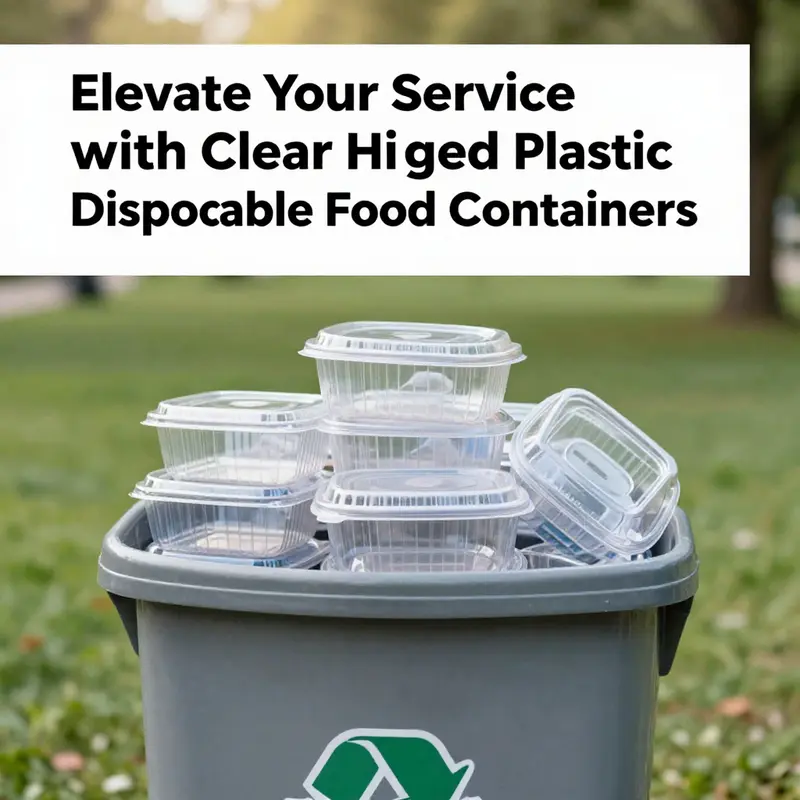
Clear hinged plastic containers that hold about one pound of food balance a set of competing demands: product visibility, convenience, cost, and safety. For many food businesses, these containers make sense. They are lightweight, stackable, leak-resistant, and show the product inside. Yet the environmental trade-offs are real. This chapter examines those trade-offs. It also follows how industry, regulators, and consumers reshape the market toward lower-impact options. The narrative moves from materials and life-cycle effects to design choices and practical pathways for businesses that want to reduce impact without sacrificing function.
Most clear hinged containers are made from thermoplastics such as PET, PP, and sometimes PS. PET stands out for its clarity and strength. Polypropylene offers heat resistance and durability. Polystyrene appears in lower-cost formats but is brittle and problematic in waste systems. Recycled variants such as rPET are increasingly used to close the loop. Each material brings advantages and drawbacks when seen through an environmental lens. Producing virgin plastic requires fossil feedstocks and energy, emitting greenhouse gases. Left unmanaged, discarded containers persist in landfills and oceans for decades. Yet the simple presence of plastic in packaging does not automatically equate to worse outcomes. The environmental picture depends on how products are sourced, how they are used, and how they are disposed.
A core challenge is end-of-life mismatch. Clear plastics promise high recycling value when they are clean and sorted properly. In practice, contamination by food residue, mixed-material constructions, and inconsistent municipal collection lower real recycling rates. Mixed-material hinged containers, or designs that combine plastic with paper or foil windows, hinder mechanical recycling. For that reason, design-for-recyclability has become a major trend. Manufacturers are simplifying structures, using single polymers for both lid and base, and choosing materials aligned with local collection streams. Where PET recycling infrastructure is available, choosing mono-material PET hinged containers lifts recyclability potential. Where community collection is limited, recycled content and clear labeling matter more than material choice alone.
Parallel to recycling improvements, compostable and bio-based alternatives have emerged. Polylactic acid (PLA), made from fermented plant sugars, can produce clear lids and containers that mimic PET’s transparency. Compostable fiber materials, such as sugarcane bagasse and bamboo pulp, offer sturdy, opaque containers that break down in industrial composters. These materials reduce dependence on fossil feedstocks and, when processed correctly, reduce landfill burdens. Yet compostables create their own set of complexities. Most are only compostable under industrial conditions. Without proper municipal or private industrial composting access, compostable containers may end up in landfills where they do not rapidly degrade. The result is lost value and consumer confusion.
Regulation and market demand are accelerating change. Policy measures such as single-use plastics directives and bans on certain disposable items push suppliers to innovate. Extended Producer Responsibility (EPR) schemes make manufacturers financially accountable for end-of-life management. These policies increase the value of recyclable and reusable systems. Meanwhile, consumers are more likely to reward companies that disclose sustainable practices. But transparency must be meaningful. Claiming “biodegradable” without context misleads buyers. Certifications and clear labeling—compostable to EN 13432 or ASTM D6400, recycled content claims verified against recognized standards—help translate choices into measurable benefits.
Design decisions directly affect environmental outcomes. Clear hinged containers serve a visual merchandising purpose. Consumers tend to choose foods they can see. Replacing clarity with opaque, fiber-based boxes may reduce impulse sales. To keep visibility without compromising recyclability, businesses can adopt several strategies. First, prefer single-material clear plastics like PET when robust recycling is available. Second, where visibility is needed but recycling infrastructure is weak, consider a transparent compostable lid made from certified PLA paired with a compostable fiber base. Third, avoid glued-on windows and mixed-material assemblies, since these complicate sorting and processing. Fourth, communicate the correct disposal route on the label. Clear instructions increase the probability of proper disposal.
Material innovation continues to evolve. Mechanical recycling remains the dominant method for plastics like PET. Newer processes such as chemical recycling can break polymers back to their chemical building blocks. This approach can handle mixed or contaminated streams that mechanical recycling cannot. However, chemical recycling currently carries energy and cost penalties and is not yet widely available at scale. Meanwhile, use of recycled content, especially rPET, reduces demand for virgin feedstocks and lowers lifecycle emissions. Lightweighting—reducing material thickness while retaining function—also reduces material use and transport emissions. But very thin containers can compromise durability and user experience, which may increase food waste through damage or leakage. The most effective solutions protect food while minimizing excess material.
Supply chain choices matter. A procurement policy that prioritizes recycled content or certified compostables signals a commitment to sustainability. Yet suppliers must match materials to local waste infrastructure. A container made from compostable fiber is beneficial only in a region with commercial composting capacity. Likewise, switching to rPET is impactful where collection and recycling pathways accept the specific resin and format. Businesses should map the waste flows in their service areas before making wholesale changes. Partnering with local waste haulers or composters helps align choices with actual end-of-life outcomes. Some foodservice operators establish take-back programs or use centralized composting to reliably manage compostable packaging.
Operational practices within food businesses also influence environmental performance. Single-use containers often serve takeout and delivery, which grew sharply during public health concerns. While hygiene drove demand for disposables, foodservice operations can still reduce impact through modest changes. Staff training on portioning reduces overpackaging. Choosing the right container size for menu items reduces empty space and material use. Labeling containers with clear disposal instructions reduces contamination. Where reusable systems are feasible—deposit-return schemes for prepared food containers, for example—operators can pilot circular-use models that cut waste and build customer loyalty.
Consumer perception and behavior shape the adoption of alternatives. Visibility remains a strong purchase driver, which explains the continued popularity of clear hinged containers. However, research shows consumers respond positively when sustainability is visible in packaging design and messaging. Tactile cues, simple icons, and short disposal instructions help. Educating customers about what happens to a container after disposal builds trust. Some businesses create incentives for proper disposal, such as discounts for returning clean containers for reuse or composting. These approaches increase correct disposal and create brand differentiation.
Economic factors influence which solutions scale. Cost-per-unit remains a decisive factor for many operators. Virgin plastics often win on price. Compostable or certified recycled materials can cost more, at least initially. But total cost of ownership includes disposal fees, potential regulatory penalties, and brand value. EPR fees or landfill tipping charges change price calculations. Additionally, some governments offer subsidies or tax incentives for sustainable packaging investments. When calculating costs, consider the long-term value of reduced material use and improved customer perception.
A nuanced view of life-cycle impacts helps avoid well-intentioned but counterproductive choices. For example, replacing a clear PET container with a heavier fiber box that is incorrectly disposed of can increase greenhouse gas emissions per functional unit. Conversely, swapping to lightweight rPET that enters an efficient recycling loop can lower emissions substantially. Tools such as life-cycle assessment (LCA) let businesses compare options using a consistent methodology. LCAs evaluate raw material extraction, production, transport, use, and end-of-life. They help identify where interventions deliver the greatest gains.
The role of certification and standards cannot be overstated. Compostable claims carry weight when backed by recognized standards. Recycled content claims should be traceable. Design-for-recyclability principles should align with regional sorting technology. Third-party verification reduces greenwashing and increases buyer confidence. When selecting packaging, businesses should ask suppliers for test reports, certification documents, and evidence of recycled content mass balance.
Practical steps for operators seeking to reduce impact are straightforward. Start with a waste-flow audit to find the most frequent disposal routes for your containers. Then, match packaging material to available infrastructure. Opt for mono-material designs, prioritize recycled content where collection is strong, and choose certified compostables only when a verified composting path exists. Implement clear labeling for disposal. Train staff on portioning and closure to reduce food waste and contamination. Engage with suppliers to understand material origins and ask about take-back or recycling partnerships. Consider pilot programs for reusable containers within your customer base.
The visual and functional benefits of clear hinged containers will not disappear. Instead, the market is shifting toward hybrid strategies that retain those benefits while reducing environmental harm. Examples include containers made from rPET with clarified labeling, compostable clear lids paired with certified compostable fiber bases, and initiatives that improve local collection and processing. Innovations such as enzymatic recycling or scalable chemical recycling could change the calculus further, enabling high-value recovery of polymers currently difficult to recycle. However, these technologies must scale responsibly and transparently.
A final practical consideration is communication. Consumers care about sustainability but expect clarity. Avoid vague terms. Use specific claims such as “contains X% recycled PET,” “compostable in industrial facilities,” or “recyclable where accepted.” Pair claims with short disposal instructions and an indicator of local applicability. Good information improves proper disposal rates and reduces contamination in recycling and composting streams.
For many food businesses, the path forward combines several strategies. Where recycling infrastructure exists, prefer mono-material clear plastics with recycled content. Where composting infrastructure exists, consider certified compostable alternatives and collect them through verified composting channels. Invest in simpler designs that are easier to sort, and favor lighter-weight constructions that still protect food. Track performance through audits and customer feedback. Finally, remain pragmatic and region-specific: sustainable packaging is not one-size-fits-all. The best choices minimize environmental impact while keeping products attractive and functional.
For companies evaluating non-plastic alternatives for clear presentation, materials such as sugarcane bagasse offer promising routes. These fiber-based containers perform well in industrial composting and reduce reliance on fossil feedstocks. For example, a business might replace non-recyclable formats with certified bagasse containers to meet composting goals while maintaining product protection and temperature performance. Learn more about a practical bagasse option and its configurations here: bagasse sugarcane biodegradable self-erecting lunch box.
Regulation, technology, and consumer expectations will continue to reshape packaging choices. Clear hinged plastic containers can be part of a lower-impact future if chosen with end-of-life systems in mind. The most resilient strategies pair material selection with infrastructure, staff training, and transparent communication. That combination preserves the visible benefits of clear containers while responding to environmental imperatives.
For practical guidance on sustainable plastics management and to explore resources about recycling and composting best practices, consult authoritative sources such as the U.S. Environmental Protection Agency: https://www.epa.gov/sustainable-management-plastics
Final thoughts
As you’ve seen, 1 lb clear hinged plastic disposable food containers offer a myriad of benefits that cater to the needs of various food service sectors. From their sturdy yet elegant design to their versatility in applications, these containers serve as an essential component in any food business strategy. Furthermore, as the industry shifts toward sustainability, choosing containers that meet health standards and are recyclable can resonate well with environmentally conscious consumers. By incorporating these containers into your service offerings, you not only enhance product presentation but also bolster your commitment to safety and sustainability. Embrace this packaging solution to elevate your culinary creations and meet the demands of the modern consumer.