
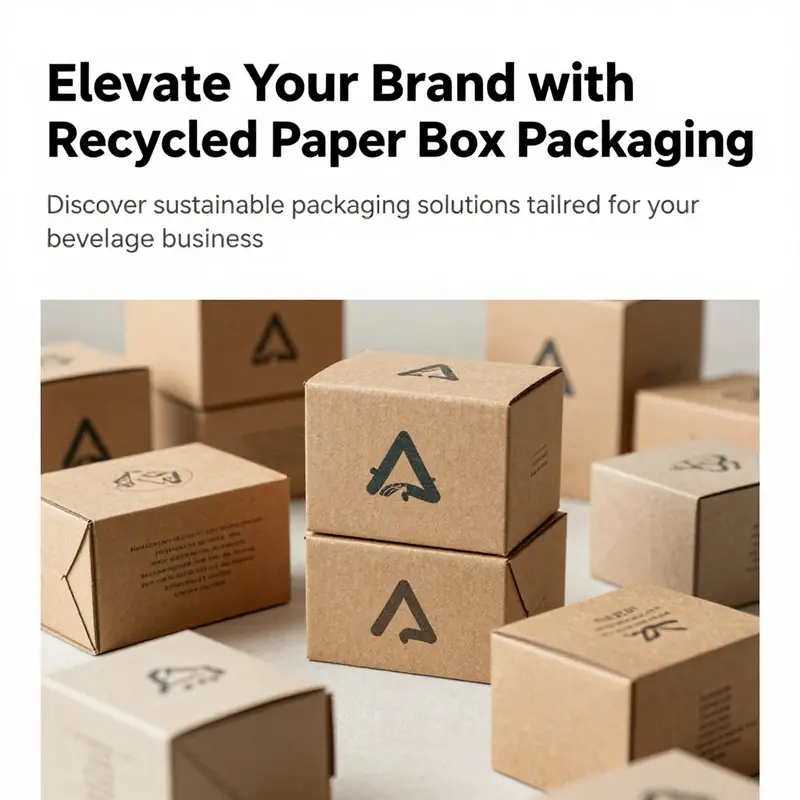
Recycled paper box packaging offers a blend of sustainability and functionality, perfectly designed for industries like bubble tea shops, restaurants, and catering services. As these businesses continue to seek eco-friendly solutions, understanding the various types of packaging available becomes essential. This article will delve into the different types of recycled paper box packaging, the significant environmental impact they carry, cost analysis that informs budget-friendly decisions, extensive customization possibilities for brand identity, and how to ensure reliable sourcing from trustworthy suppliers. Each chapter builds on your understanding of how recycled paper box packaging can enhance your operations while aligning with sustainability goals.
Diversity in Mindful Packaging: The Five Recycled Paper Box Formats That Power E‑Commerce
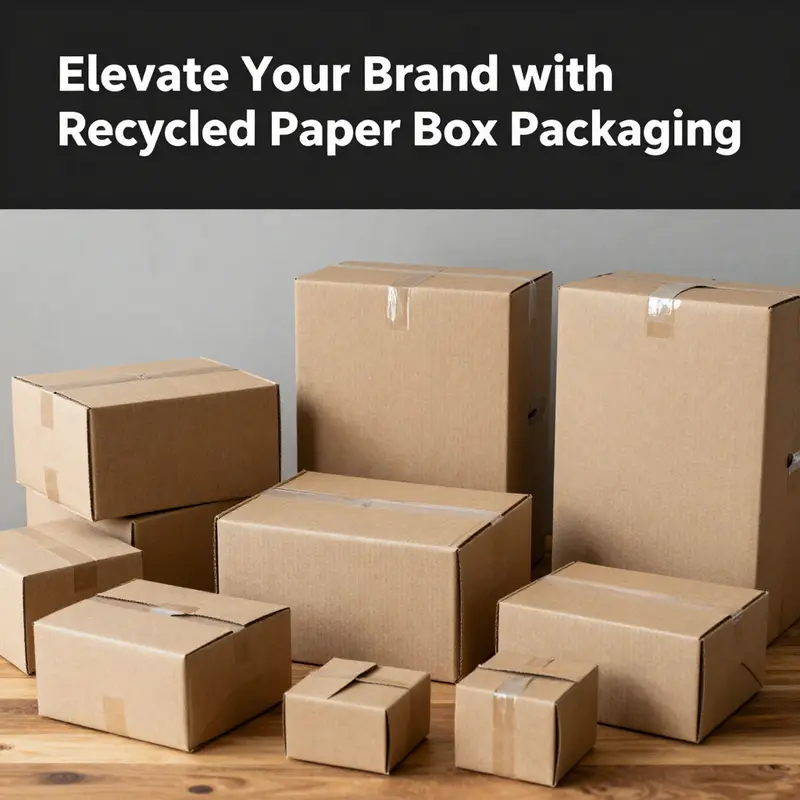
When an order leaves a warehouse, the packaging does more than contain a product. It communicates a brand’s values, protects the item through transit, and signals a commitment to a circular economy. In the realm of e‑commerce, recycled paper box packaging has evolved into a versatile ecosystem built from post-consumer or post-industrial waste. This creates a chain of custody that traces from used brown paper products to new, branded cartons, mailers, and envelopes. The result is packaging that balances environmental responsibility with the practical demands of product protection, efficient handling, and memorable unboxing experiences. Within this ecosystem, five primary formats have emerged as workhorses for online retailers: recycled paper packaging envelopes, corrugated recycled paper envelopes, kraft box packaging for recycled materials, recycled card boxes, and custom mailers. Each format answers a different set of challenges and opportunities, and together they provide a spectrum that lets brands tailor their packaging to product type, shipping method, and consumer expectations without compromising sustainability. To illustrate how these options fit into real-world e‑commerce workflows, consider how the envelope and box family can scale from a single high‑value, delicate item to bulk, impulse purchases. The envelope family offers a low-weight, high‑print surface that supports sharp branding while delivering moisture resistance and abrasion protection through a surface coating. The coating, while excellent for presentation and durability, can affect end‑of‑life compostability in some cases. Yet it remains highly recyclable and, with careful material choices, aligns well with circular economy goals. In parallel, corrugated recycled paper envelopes provide an extra layer of rigidity and shock absorption. The corrugated skin is ideal for protecting fragile goods or heavier items that might otherwise shift inside a flatter envelope. This format is particularly valuable when the sustainability brief demands strong cushioning without adding excessive weight or volume to the shipment. The kraft box option—recycled, naturally brown, and easy to customize—speaks to brands seeking a warm, authentic aesthetic that still carries a premium impression when opened. The natural look of recycled kraft boxes complements minimalist branding, yet the surface readily accepts high‑quality printing and finishes, enabling a robust brand narrative at the moment of unpacking. The white and brown bleached options within the recycled card box family expand the visual language further. White recycled card boxes create a clean, modern canvas for intricate logos and vibrant color printing, giving high‑end products a polished presentation. Brown or unbleached recycled card options, meanwhile, lean into rustic, earthy storytelling and can be paired with embossing or spot UV to deliver tactile and visual contrast. These choices matter not only for curb appeal but also for perception during the unboxing experience, which increasingly drives social sharing and customer satisfaction in an era where brand affinity hinges on more than just the product itself. Finally, the custom mailer format consolidates a large portion of the e‑commerce packaging workflow. These one‑time‑use, recyclable mailers come in standard white, natural white, or kraft finishes and are sized to accommodate documents, books, or compact merchandise with minimal fuss. The lightweight design reduces shipping weight, helping margins while still providing adequate protection against moisture and abrasion. The real value of custom mailers lies in their branding surface and their rapid order fulfillment potential. They can be configured with brand-specific colors, typography, and finishes to convey a consistent brand story from the moment the package is first touched. Across these formats, the common thread is clear: recycled materials can deliver the protective integrity and surface quality needed for e‑commerce, while also enabling strong, consistent branding. For a concrete example of how these boxes can be configured, consider this resource on kraft box packaging for fast-food and cookies. It demonstrates how a single material strategy can support both functional requirements—such as stacking strength and impact resistance—and a refined brand presentation that stands out in a crowded fulfillment stream. This integrated approach—protective performance, aesthetic versatility, and sustainability—remains essential as brands navigate the balance between cost, speed, and environmental responsibility. In practice, choosing among these formats comes down to aligning product risk, shipping conditions, and brand narrative. A delicate, breakable item that travels through long, multi‑stop routes may benefit from the cushioning of a corrugated recycled paper envelope or a reinforced kraft box. A high‑value item with a need for premium presentation can leverage a white recycled card box with carefully chosen finishes to convey quality. For lighter, document-based shipments or promotional inserts, a custom mailer offers a lean, brandable solution that preserves space and reduces packaging waste. The continuity of sustainability is reinforced by the materials’ lifecycle. Recycled paper box packaging keeps materials circulating rather than stopping at landfills. It reduces the demand for virgin fibers and lowers energy and water usage across many stages of production and transport. Yet the lifecycle is not entirely without caveats. Some coatings or laminations, while improving moisture resistance or surface durability, complicate compostability or recycling at end of life. This is why many suppliers emphasize compatibility with established recycling streams and certifications that verify responsible sourcing and manufacturing. In this sense, the packaging choice becomes part of a broader sustainability strategy—one that includes supplier selection, waste management practices, and the broader goals of corporate social responsibility. The design implications are equally significant. A packaging professional must consider not only the box or envelope’s exterior appearance but also its functional attributes: ease of assembly, internal protection, stacking efficiency, and moisture exposure during transit. A box with a self-locking bottom, for instance, can simplify fulfillment lines in high‑volume e‑commerce operations, while mailers designed without tape or excess adhesives can reduce handling steps and potential delays. Customization strategies extend beyond color and print. Finishes like matte or glossy coatings, embossing, or hot stamping can elevate perceived value without expanding the packaging’s environmental footprint if selected thoughtfully. The choice of paper grade, the thickness of the liner, and the presence or absence of barrier coatings all influence moisture tolerance, load-bearing performance, and the opportunity for post‑use recycling. In this context, the packaging ecosystem for e‑commerce is not a collection of isolated products but a cohesive system of packaging types that can be mixed and matched to meet product-specific protection needs, brand storytelling goals, and sustainability commitments. The supplier landscape supports this flexibility with a range of configurations and service models. Many credible suppliers offer certifications such as environmental and responsible sourcing standards, ensuring that the materials used are traceable and produced under responsible conditions. Sourcing platforms further streamline the process by enabling buyers to compare options, verify in‑stock availability, and coordinate secure trade services. The result is a more resilient packaging strategy that scales with demand cycles, promotions, or seasonal spikes without compromising environmental aims or product safety. When brands map their packaging to the customer journey, the conversation naturally shifts to unboxing rituals. A carefully chosen format can delight a shopper who receives a package that feels premium yet is easy to open and recycle. The tactile experience—whether the crisp edge of a white recycled card box or the natural texture of a brown kraft finish—becomes part of the brand’s message about sustainability and care. In practice, this means that e‑commerce packaging should be conceived as a design system rather than a single box solution. The five formats discussed here—recycled paper packaging envelopes, corrugated recycled paper envelopes, kraft box packaging, recycled card boxes, and custom mailers—offer a spectrum that enables brands to tailor each shipment to the moment of truth: the moment the recipient holds the package and forms an impression that can reverberate through impressions, reviews, and repeat purchases. As consumer expectations evolve toward greater environmental accountability, these formats provide the structural versatility needed to respond quickly to new product categories, seasonal campaigns, and evolving logistics constraints, all while staying faithful to the principles of material reuse and resource conservation. Internal link: kraft box packaging for fast-food and cookies. External resource: https://www.ecommercepackaging.com/recycled-paper-boxes-for-ecommerce
Rethinking the Footprint: The Environmental Impact of Recycled Paper Box Packaging
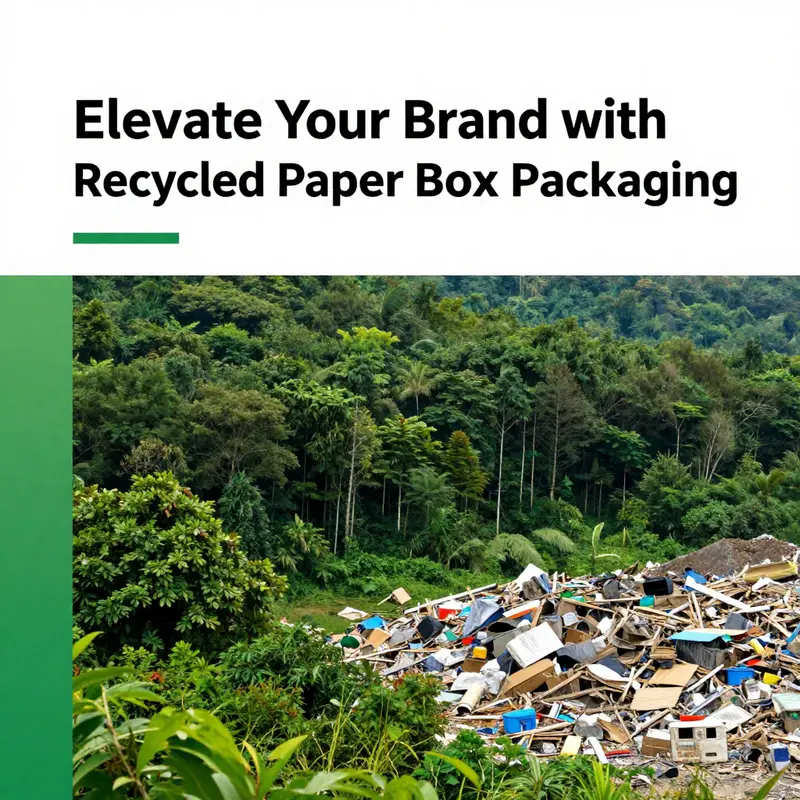
The environmental footprint of recycled paper box packaging emerges not as a single number but as a profile drawn from the entire lifecycle, from the raw input materials to the end-of-life fate. When a box is made from post-consumer or post-industrial fibers, the immediate takeaway is a reduction in the demand for virgin wood, which translates into savings of energy, water, and land use. In practical terms, producing recycled paper typically consumes up to 60 percent less energy than the same process starting from raw wood pulp. That energy delta matters, because energy production is a major source of greenhouse gases, and lower energy demand in manufacturing compounds the benefits seen downstream in distribution and consumer use. Likewise, the water profile shifts markedly. The pulping and bleaching stages associated with virgin fiber can be heavy contributors to water pollution and withdrawal. By contrast, recycled paper processes often involve less chemical pulping, so water use declines and fewer emissions of certain pollutants accompany production. The net result is a cleaner, lighter footprints for many common packaging formats, particularly those built around kraft paper and corrugated cardboard that have been adapted for reuse, recycling, and broader circularity.
Yet the story is not entirely unambiguous. The recycling stream itself introduces ecological considerations that must be managed with care. The process generates wastewater and can release trace toxic emissions if treatment and containment steps are neglected. This means that the environmental advantage hinges on robust governance across the supply chain, from the mills to the end-user, with appropriate effluent treatment, air filtration, and responsible energy sourcing. It also means that every recycled box carries a trade-off: while fibers can be reused several times, each recycling cycle slightly degrades fiber strength. After a few cycles, the fiber quality may no longer meet the demands of durable packaging, and blending with virgin fibers often becomes necessary to maintain performance. The practical upshot is a design principle: optimize for the number of meaningful reuse cycles, and then plan for recycling or safe disposal at end of life, rather than assuming endless reusability.
The broader adoption of recycled paper box packaging across e-commerce, retail, and consumer goods has accelerated these environmental gains. The scale matters. In large, dynamic markets, the reuse and recycling loop can dramatically cut emissions and reduce waste when packaging is designed for recovery. A striking example from a high-volume logistics context shows how a major express delivery ecosystem managed to recover and reuse hundreds of millions of cardboard boxes within a single year. The impact isn’t only about energy and emissions savings; it also translates into tangible reductions in landfill waste and demand for new materials. When boxes are kept out of landfills and reentered into reuse channels, the cumulative effect grows quickly, contributing to a lower overall carbon intensity for packaging and shipping operations. That momentum also supports job creation around reformulated sorting, cleaning, and repair activities that extend box life without compromising performance.
Beyond reuse and recycling, the industry has begun to innovate around packaging design and logistics to further shrink environmental impact. Concepts such as reusable “multi-life” packaging, where a single box or sleeve is intended to be reused multiple times within a supply chain, illustrate how durability and end-of-life thinking can coexist with cost efficiency. At the same time, innovations in materials handling—like water-soluble adhesive tapes that ease deconstruction, or smart packing algorithms that minimize excess packaging by forecasting need more precisely—help prevent overpacking and lower the baseline material use. Digital tracking systems further contribute by providing visibility into the fate of each unit, enabling operators to route underperforming packaging away from products that require higher protection, and to close loops that might otherwise leak valuable materials into waste streams.
A critical thread in this evolving landscape is the shift toward a circular economy, where materials are designed for reuse, recycling, and safe end-of-life disposal. This shift is reinforced by regulatory momentum in several regions that explicitly includes packaging sustainability among policy objectives. For instance, updated guidelines governing express delivery and packaging have begun to institutionalize greener practices across entire supply chains. The regulatory push complements consumer expectations for responsible stewardship and pushes manufacturers and couriers to rethink packaging from the ground up—prioritizing durability, recyclability, and the practical realities of the recycling infrastructure in their territories. The result is a more coherent system where packaging choices feed into recycling streams rather than interrupt them, and where end-of-life routes are clearer for businesses and households alike.
The environmental calculus also invites exploration of alternative materials as part of a broader portfolio of sustainable options. Some of these alternatives come from agricultural byproducts such as bagasse or wheat straw, which can be engineered into compostable packaging that complements recycled paper solutions. While not a wholesale replacement for recycled paper, these options broaden the toolkit for brands seeking compostable or renewable options that align with regional waste management capabilities. In parallel, the circular economy framework pushes manufacturers to think about end-of-life disposal from the outset, so that a box can be recovered, separated, and processed again with minimal friction.
From a lifecycle perspective, moisture sensitivity remains a practical constraint. Recycled paper boxes offer many benefits, but they are not inherently waterproof. This limit can be addressed with design adaptations or protective inner packaging for moisture-sensitive items. It is a reminder that sustainability is multi-faceted; the most responsible packaging strategy often balances environmental gains with product protection, shelf life, and user experience. In many cases, brands leverage a combination approach: using recycled paper as a primary structural material, coating or lamination only where necessary to preserve product integrity, and selecting moisture-resistant barriers that can themselves be recycled or composted along with the primary box. This nuanced balance helps ensure that sustainability translates into tangible benefits for both the planet and the consumer.
Quality certifications and responsible sourcing credentials play a pivotal role in maintaining environmental integrity across the supply chain. Certifications such as forest stewardship and quality management standards provide assurance that the materials originate from responsibly managed forests and that manufacturing processes adhere to recognized environmental and social benchmarks. Suppliers frequently offer certifications and traceability programs, which improve transparency and enable buyers to validate claims about recycled content, sustainable sourcing, and process diligence. For buyers, these credentials translate into a more trustworthy conversation around lifecycle performance rather than a one-off sustainability claim. When combined with robust supplier audits and clear performance metrics, such credentials become a practical tool for decoupling packaging decisions from environmental risk.
As buyers weigh options, the supply ecosystem reflects a spectrum of configurations to meet different needs. The cost structure of recycled paper packaging varies with volume, material thickness, and customization level. High-volume orders can leverage more economical unit pricing, supporting broader adoption in price-sensitive segments while maintaining environmental benefits. Color, finish, and print capabilities add branding value and consumer appeal but should be selected with an eye toward recyclability and the ease of end-of-life processing. The environmental advantages multiply when brands pair recycled content with smart design choices that reduce mispackaging, improve protection without heavy coatings, and enable straightforward disassembly at the end of life. In practice, that often means choosing packaging formats that balance rigidity and weight, with adhesive technologies and surface treatments that facilitate recycling rather than complicate it.
For practitioners seeking credible pathways, industry platforms and supplier networks can offer practical access to recycled packaging solutions, including in-stock options, customization, and trade assurance. While the landscape is diverse, one principle stands out: the environmental payoff grows with systemic alignment. When manufacturers, shippers, retailers, and consumers share expectations around recyclability, end-of-life recovery, and responsible sourcing, the packaging system moves closer to a truly circular model. This alignment is what turns a packaging choice into a meaningful environmental action rather than a simple efficiency improvement. It is also worth noting that many buyers pursue third-party certifications and supplier verification programs as a way to ensure that the sustainability claims attached to recycled paper boxes are backed by verifiable practices across the network.
In closing, the environmental impact of recycled paper box packaging is a function of stewardship at every stage. Energy and water savings are tangible benefits, and they accumulate as packaging becomes more widely reused, recycled, and properly disposed. The challenges—fiber degradation with repeated cycles, potential wastewater and trace emissions, and moisture considerations—are not insurmountable. They invite designers to innovate and regulators to refine policies that promote responsible handling. The net effect is a packaging system that can shrink its footprint while continuing to protect products, brands, and the planet.
To explore practical examples and further insights into eco-friendly packaging approaches, a representative reference to an example packaging option can be found here: senang kraft paper octagonal bowl 1200ml-waterproof-eco-friendly-disposable-salad-bowl-for-snack-cookie-warm-cold-food-pet-lid.
External resource: https://www.epa.gov/sustainable-management-chemicals/impact-recycling-paper
The True Price of Sustainability: A Comprehensive Cost Analysis of Recycled Paper Box Packaging
In the evolving conversation about responsible packaging, recycled paper box solutions are often celebrated for their environmental benefits and their potential to lower material costs. Yet the financial logic behind adopting these materials runs deeper than a simple per-unit price. A holistic cost analysis reveals a balance where environmental responsibility and economic efficiency reinforce one another. This balance emerges from the interplay of material sourcing, manufacturing efficiency, design choices, and end-of-life economics, all of which shape a packaging strategy that can sustain both a brand’s bottom line and its ethical commitments. The chapter that follows weaves these threads into a coherent narrative, not as a catalog of numbers but as a narrative about how recycled packaging decisions cascade through procurement, production, logistics, and consumer perception. The goal is to illuminate how sustainability and profitability can advance together, especially in sectors where shipping performance, branding, and regulatory compliance converge on the same packaging decision ledger.
At the core of the cost narrative is material economics. Recycled kraft paper and corrugated cardboard rely on post-consumer or post-industrial streams, which traditionally lower input costs by reducing reliance on virgin pulp. This shift translates into tangible savings on raw materials. But the value proposition extends beyond a lower bill of materials. The manufacturing route for recycled content often aligns with energy efficiencies gained from streamlined processes and reduced pressure on conventional pulping. While exact energy profiles vary by facility and process, many producers report lower energy intensity per box when virgin fibers are replaced with recycled inputs. The consequence is a twofold savings: materials and energy that collectively contribute to a lower total cost of ownership. Moreover, recycled boxes carry a carbon footprint advantage that resonates with sustainability-focused buyers and regulators, creating a reputational asset that can translate into price premiums or favorable procurement terms in competitive markets.
Durability remains a critical link in the cost chain. Recycled paper packaging is not a cost sink; it is a design problem that invites innovation. Corrugated structures, for example, offer exceptional strength-to-weight ratios, making them robust enough for e-commerce shipping while keeping heft down. This resistance to crushing and bending matters when products travel across sprawling supply chains. A light yet strong container reduces transit losses, minimizes return costs, and lowers insurance exposure for carriers and retailers alike. In this sense, the cost savings are not merely about the price tag on the box but about the broader logistics savings they enable. Within this framework, specific box formats—such as one-piece mailers with foldable designs or auto bottom boxes that self-lock when opened—emerge as efficiency leaders. They cut labor time, reduce tape usage, and produce clean, professional appearances that align with premium branding without adding excessive material or assembly costs.
The life-cycle economics of recycled paper packaging also hinge on end-of-life dynamics. A system designed for recyclability can reduce disposal fees while supporting take-back programs or municipal recycling incentives. In some cases, end-of-life processes even generate revenue through material recovery streams, counterbalancing initial packaging costs. These revenue or savings streams are not guaranteed, but they are an important part of the total cost of ownership that often gets overlooked in a narrow price-per-unit calculation. From a budgeting perspective, the ability to recapture value through recycling programs lowers net ongoing costs and enhances long-term profitability. This is especially true for brands that commit to circular approaches, viewing packaging as a recyclable resource rather than a single-use item. The result is a financially durable packaging strategy that rewards reusability, recyclability, and responsible product stewardship.
Design optimization plays a central role in cost management. Flat or sheet-like configurations, for instance, offer storage and shipping advantages that translate into lower warehousing and transportation costs. A3-sized or similarly compact forms can reduce space requirements in transit, enabling fuller container utilization and economies of scale. On the other hand, the freedom to print with CMYK, Pantone, or other finishes introduces a spectrum of cost considerations. Finishes such as matte or gloss, embossing, UV coatings, hot stamping, or selective coating all enhance brand impact but come with incremental costs. The art lies in balancing branding needs with packing efficiency. For many brands, simple yet deliberate branding—natural brown or white finishes, restrained color palettes, and a few tactile treatments—can elevate perceived value without inflating the price per unit. The strategic choice of which finishes to deploy, and where, becomes a lever to manage both consumer appeal and cost discipline. In practice, this means asking questions early in the design phase: Do customers associate higher perceived value with a particular finish? Will a specific print method support legible branding at varying sizes? How will the chosen materials perform under moisture exposure or temperature fluctuations? The answers shape a packaging solution that performs economically while maintaining brand integrity.
Procurement dynamics also influence the cost equation. Volume discounts are common when ordering recycled paper boxes, with larger runs unlocking lower per-unit costs. Certifications such as FSC, ISO 9001, or ISO 14001 play an important role in ensuring responsible sourcing, and they can influence procurement terms, risk management, and investor confidence. For buyers seeking reliability, multiple sourcing platforms provide access to verified manufacturers offering in-stock options and customizable solutions. The procurement strategy thus becomes part of the overall cost narrative: consistent supply reduces production downtime, while diversified supplier networks mitigate price volatility driven by raw material markets. In a mature market, the total cost of ownership is shaped not only by the unit price but by the reliability of supply chains, the quality of the finished packaging, and the ability to scale production in response to demand surges.
The logistics and operational footprint of recycled packaging contribute to long-term profitability in meaningful ways. E-commerce and retail logistics increasingly prioritize packaging that protects content while minimizing waste. The one-piece mailer and auto bottom designs discussed earlier exemplify how packaging can be engineered for speed, accuracy, and repeatable quality. Speed to pack translates into labor costs saved per shipment, while robust protection reduces breakage and returns—costs that quickly accumulate in high-volume businesses. Additionally, because recycled materials are widely available and often compatible with standard converting equipment, production lines can operate with minimal capital expenditure for specialized machinery. This compatibility reduces capital outlay and accelerates time-to-market for new SKUs or seasonal lines. The upshot is a packaging ecosystem where design, manufacturing, and logistics converge to deliver a lower cost per shipped unit while supporting stronger brand commitments to sustainability.
Market responsiveness further shapes the cost narrative. As consumer preferences tilt toward eco-friendly options, brands adopting recycled paper packaging can access favorable positionings in both retail and digital channels. This alignment with market demand supports price realization strategies and can enhance customer loyalty. Beyond the price-per-unit calculus, the sustainability narrative becomes a strategic asset: it supports communications with investors, partners, and customers who expect responsible supply chains. The cost advantage thus compounds with reputational value, creating a durable competitive edge in sectors ranging from retail and food to cosmetics and logistics.
To illustrate the practical economics in play, consider the broader pricing spectrum reported by industry observers. Bulk orders of custom recycled paper mailer boxes can start around modest unit costs in the low cents for very large volumes, while craft paper boxes typically begin at higher unit prices, with discounts available for larger runs. These tendencies highlight a fundamental truth: the economics of recycled packaging are highly sensitive to volume, material thickness, and finish choices. For brands seeking to optimize costs, the lesson is clear—value comes not only from choosing recycled content but from aligning packaging specifications with shipping requirements, branding goals, and supply chain realities. In this context, the decision to deploy recycled packaging becomes less about price alone and more about the cumulative value created across supply chain efficiency, consumer perception, and lifecycle savings.
Within this integrated framework, an informed procurement strategy can harness both internal resources and external partnerships. For instance, platforms that connect buyers with verified manufacturers can simplify sourcing while maintaining quality and compliance. An internal case for recycled packaging often rests on a multi-criteria decision: material costs, energy intensity, durability under expected handling conditions, end-of-life performance, branding impact, and the ability to scale. When these factors are weighed together, recycled box packaging frequently proves to be not only an ethical choice but a financially sound one. The growing market emphasis on sustainable products reinforces this result, encouraging brands to adopt packaging that supports environmental goals while safeguarding profitability and performance across the product lifecycle. The convergence of these elements—cost efficiency, operational practicality, and sustainability leadership—defines modern packaging strategy and signals a durable path for brands looking to balance financial discipline with environmental stewardship.
Internal resource link for further context on practical packaging design considerations and case studies can be found here: disposable eco-friendly kraft box (boat shape, PLA-coated packaging). This resource illustrates how compact, self-contained formats and specialized finishes can combine to meet both cost targets and branding needs without compromising performance.
External reference: For a broader understanding of the economic implications of recycling within materials management and packaging, see Understanding Recycling and Its Economic Impact. https://www.epa.gov/sustainability/understanding-recycling-and-its-economic-impact
Designing Impact: The Art and Science of Customization in Recycled Paper Box Packaging
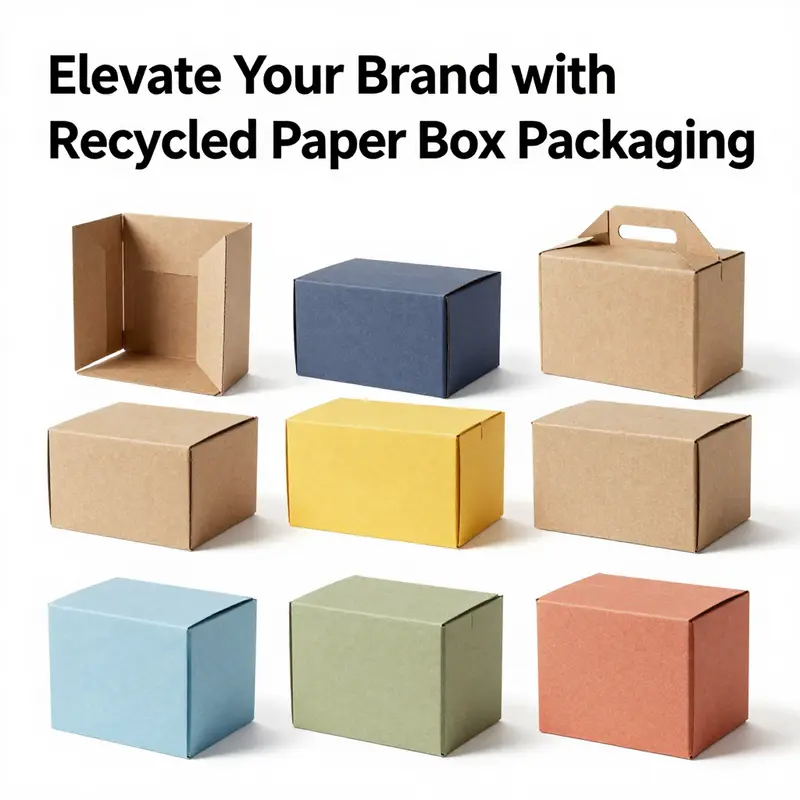
Customization is more than a decorative flourish on recycled paper box packaging. It is a strategic currency that blends sustainability with brand storytelling, turning a simple container into a tangible extension of a company’s values and promises. When a packaging system is designed with customization in mind, every choice from size to finish becomes deliberate, reinforcing how a product is perceived and how it travels from shelf to consumer. In this chapter we explore how brands leverage the full spectrum of customization options inside recycled paper box packaging to create a coherent, compelling, and responsible packaging narrative. The result is not just a box, but an experience that communicates care for the product, the planet, and the shopper who touches it.
The first axis of customization lies in size and shape. The fit between a box and its payload matters as much for protection as for presentation. Custom dimensions ensure products are snug without unnecessary bulk, which reduces waste and improves logistics efficiency. This is particularly important for items across diverse sectors such as cosmetics, gifts, apparel, and small electronics, where a precisely tailored enclosure supports a premium feel while keeping materials lean. A box can be sculpted to emphasize a product’s form, with tapered edges for elegance or a square silhouette for a modern retail display. In practice, the ability to tailor height, width, and depth allows brands to balance structural integrity with the sleek lines that attract attention on crowded shelves or in a crowded e commerce feed. A well designed size also streamlines handling for workers during packing and for customers during unboxing, shaping a positive, repeatable encounter that supports brand loyalty. For those curious about specific stock formats that still allow for creative design, one option is the in stock kraft paper octagonal box with lid, which demonstrates how a compact, sturdy form can be adapted to different product lines without sacrificing environmental credentials. See the option here: in-stock new design Kraft paper octagonal box with lid.
Beyond size, material thickness or gram weight governs the box’s rigidity and perceived value. A higher gram weight, such as a robust 350 g, yields a stiffer feel and greater resistance to crushing, which is essential for premium or fragile items. Lighter weights, around 250 g, can suffice for lightweight cosmetics or gift segments where the packaging experience leans more toward sustainability and minimalism. The gram weight interacts with other choices—such as print quality and finishes—to shape the consumer’s tactile impression. Brands can therefore tier their packaging to match product price points or seasonal campaigns. A heavier box communicates durability and care, while a lighter option can reduce material impact and cost, provided the product protection remains uncompromised. In addition, weight considerations influence freight and handling, contributing to overall supply chain efficiency and lifecycle emissions. When combined with an appropriate interior support, the gram weight helps the box maintain its shape after shipping, preserving the visual impact that marketing commands.
Color and finish choices are a direct line to a brand’s visual language. Natural brown remains a popular option because it underscores the recycled nature of the material and aligns with a sustainability narrative. But there is room for white or lighter tones as well, which can brighten a display and support more vibrant branding. Finishes such as matte or glossy coatings alter not just appearance but tactile experience, and they can be used strategically to evoke different associations. A matte finish often feels premium and understated, while a gloss can enhance color vibrancy and shelf visibility. The finish layer also serves as a canvas for branding elements, helping logos and taglines stand out with clarity. How color is implemented must be harmonized with the chosen printing method to ensure color fidelity across batches, especially when brands rely on consistent color branding across product lines. The control over color and finish empowers marketers to refresh the brand’s look without changing the core packaging material, enabling seasonal updates or collaborations while preserving sustainability commitments.
Printed branding is where customization becomes a true differentiator. Modern printing capabilities enable logos, slogans, and intricate brand artwork to be transferred onto recycled paper boxes with high fidelity. CMYK processes can reproduce a broad color gamut, while Pantone or PMS matching helps ensure exact color reproduction across production runs. Printing can be enhanced with value added features such as UV coatings for surface protection and gloss, or with tactile elements like embossing that add depth to the brand message. Hot stamping and foil applications, including metallic gold or silver foils, deliver a premium look without compromising recyclability. Each of these techniques has a measurable impact on consumer perception, signaling quality and attention to detail. The challenge for brands is to balance visual sophistication with the environmental claims embedded in the packaging. When done thoughtfully, printed branding reinforces the sustainability narrative rather than masking it, creating a cohesive message across product, packaging, and consumer experience.
Functionality extends the role of packaging from a passive container to an active part of the product experience. Some designs incorporate practical features that complement aesthetics and utility. Clear PVC windows reveal the product inside, boosting shelf appeal for confections, cosmetics, or gift items while maintaining a degree of protection. Drawer slide mechanisms on luxury gift boxes offer a tactile reveal that can elevate unboxing moments, aligning with premium positioning. More advanced configurations may include magnetic closures, adjustable inserts, or modular drawer systems that allow consumers to reuse the box for storage. Each functional add on must be evaluated for durability and recyclability, ensuring that design choices do not compromise the packaging’s end of life. Importantly, functional elements should be placed with moisture exposure in mind; features such as windows or openable lids can expose contents to humidity, which matters for perishable or moisture sensitive items. In practice, designers often weave in protective interior liners or moisture barriers to preserve product quality without undermining the recyclable or compostable nature of the outer carton.
Sustainability certifications serve as a bridge between design intent and consumer trust. Suppliers frequently provide materials that align with global recycling standards, and certifications such as forest stewardship or environmental management credentials reassure buyers that the box has been manufactured under responsible practices. Certification programs also help ensure traceability within supply chains, which is increasingly important for brands seeking to demonstrate accountability to customers and regulators alike. When the certification narrative is integrated into the packaging design, it can be presented through subtle certifications logos or from a brand story on the inner lid, reinforcing the commitment to environmental stewardship. The result is a packaging solution that speaks to conscientious consumers while meeting the practical needs of protection, display, and longevity. The balance between certification information and a clean aesthetic is delicate; clever design weaves compliance into the visual language without sounding didactic.
Cost and production realities inevitably influence the customization journey. Customization adds layers of choice that can impact lead times and unit costs, especially at higher gram weights, with intricate finishes, or with specialty features like windows or magnetic closures. Yet customization also unlocks economies of scale when planned for mass production. Volume discounts, process efficiencies, and repeatable digital or flexographic printing can offset higher upfront design costs over time. For many brands, the decision to pursue fully customized recycled paper box packaging rests on a careful assessment of product value, brand positioning, and sustainability goals. A well optimized design reduces material waste and enables smoother packing operations, which lowers labor costs and reduces return rates due to damage or misalignment. The conversation with suppliers often centers on a shared objective: meet exact protective and aesthetic requirements while honoring environmental commitments and budget constraints. Practical steps include selecting an appropriate gram weight early, confirming print methods that align with color accuracy, and validating the feasibility of functional add ons within the box design.
The breadth of customization options also makes recycled paper box packaging suitable for a broad spectrum of sectors, from retail to e commerce, from cosmetics to apparel, and beyond. The common thread across these applications is the emphasis on brand coherence and customer experience. A box that fits the product precisely, carries the brand story with clarity, and behaves responsibly during disposal communicates a clear message about who the company is and what it stands for. The packaging then becomes a touchpoint for consumer education, a reminder of the brand promise to protect resources while delivering value. When designers coordinate size, weight, print, finish, and functional elements with sustainability credentials, the packaging becomes not a burden to sustainability but a proof point of it. In this sense the customization journey is not a luxury but a strategic tool for brands seeking to differentiate themselves in markets where consumers increasingly weigh environmental impact alongside price and function.
For businesses seeking reliable suppliers and ready options to kickstart this process, platforms that curate verified manufacturers can be a practical starting point. They offer in stock options, customization capabilities, and secure trading terms that help move from concept to carton with confidence. The path from idea to finished box is iterative, and the best practices emphasize collaboration between brand teams and packaging engineers. The aim is a packaging system that is financially viable, with a clear environmental rationale, while also delivering an elevated consumer experience. As customization becomes more integrated with sustainability analytics, brands can quantify gains in perceived value, reduced waste, and improved logistics efficiency. The result is packaging that not only frames a product but also reinforces a story of responsible stewardship and thoughtful design. For further context on supplier capabilities and customization options, see the external resource at the end of this chapter.
In closing, customization in recycled paper box packaging is a convergence of design, function, and responsibility. It invites brands to translate their values into tangible forms that consumers can touch, see, and trust. The art lies in balancing the desire for a premium look with the imperative to minimize environmental impact. The science rests in selecting the right gram weight, colors, finishes, and features that work together to protect the product, communicate the brand message, and support reuse and recycling. The result is packaging that elevates the product experience without compromising the planet. As markets continue to demand smarter, greener packaging solutions, customization will remain a central lever. It offers a practical path to align business goals with consumer expectations and with a broader commitment to sustainable practice. To explore further the capabilities of suppliers and the breadth of customization options available, one can consult a representative external resource that details the range of configurations and finishes offered by leading manufacturers: https://www.alibaba.com/product-detail/Customized-Cardboard-Paper-Packaging-Boxes_1600498527837.html
null
null
Final thoughts
As the demand for eco-friendly packaging solutions grows, businesses in the food and beverage sectors must adapt to changing consumer preferences and environmental concerns. Recycled paper box packaging serves not only as a sustainable alternative but also enhances brand image and functionality. By understanding the types of packaging available, their environmental impact, cost considerations, customization options, and reliable sourcing, your business can make informed decisions that align with sustainability initiatives. Together, we can work towards a greener future, one box at a time.