
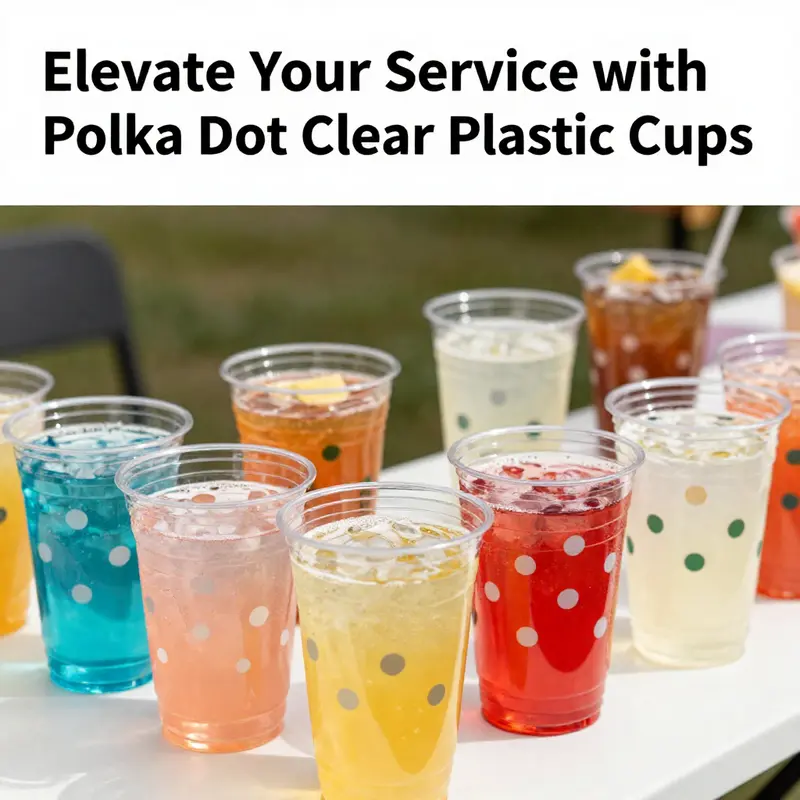
Polka dot clear plastic cups are not just a delightful addition to your beverage service; they also represent a savvy choice for businesses like bubble tea shops, restaurants, food trucks, and event planning services. With their vibrant design, these cups allow your colorful drinks to shine while providing practical benefits. The subsequent chapters will delve into the intricacies of their design and material composition, outline the various sizes suitable for different occasions, and explore market trends with eco-friendly options. Embrace this charming and functional product to create memorable experiences for your customers.
Polka Dot Clarity: Design, Material, and Moments of Celebration in Clear Plastic Cups
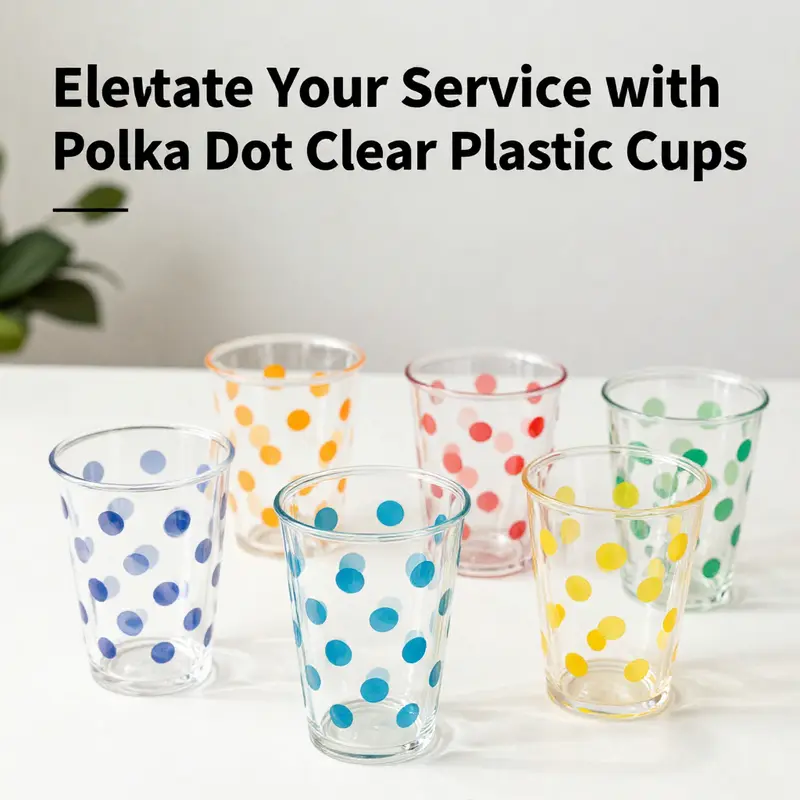
Polka dot clear plastic cups occupy a curious niche where whimsy meets practicality, and where a simple vessel becomes a stage for color, texture, and social ritual. In environments ranging from sunlit backyards to bustling reception halls, these cups do more than hold beverages. They frame the moment, signaling a mood that is welcoming, lighthearted, and just a touch festive. The polka dot motif, when rendered on a transparent body, leverages a familiar pattern to create an immediate psychological cue: playfulness without sacrificing clarity. The clear plastic acts as a window, inviting observers to read the beverage beneath the surface—the orange glow of a citrus-forward punch, the amber depths of a spiced tea, or the cool translucence of a cucumber-infused mocktail. This combination—pattern and transparency—transforms ordinary drinking from a routine task into a small spectacle of color and style. It is a design choice that aligns with contemporary event culture, where guests simultaneously crave personality and ease of service, where decor and utility must cooperate rather than compete, and where the cups themselves can act as portable branding if needed, or as a neutral canvas that can be dressed with lids, sleeves, or decorative toppers to suit any occasion.
Behind the visual appeal lies a material logic that gives these cups their bite and staying power. The most common materials—polypropylene (PP), polystyrene (PS), and polylactic acid (PLA)—each bring a distinct set of properties that influence performance, safety, and environmental footprint. PP is renowned for its heat resistance and durability. It can withstand warm beverages without warping and maintains clarity, which is essential for presenting layered drinks or vibrant colors. This makes PP a reliable choice for both hot and cold beverages, allowing event hosts to offer a wider range of drinks without switching containers. PS, by contrast, is lighter and cost-effective, a practical option where the budget is tight and the temperature of the liquids is moderate. However, PS has limitations in heat resistance and structural rigidity, which makes it less suitable for very hot liquids or for events where cups are handled repeatedly in quick service cycles. PLA introduces an eco-conscious thread into the story. Derived from renewable resources such as cornstarch, PLA offers compostability under industrial conditions, presenting a more sustainable option within the plastics family. While PLA’s compostability is not universal in every setting, its existence as an option signals a shift toward materials that attempt to balance user experience with environmental responsibilities. To customers who weigh convenience against ecology, PLA versions provide an attractive compromise: the visual and tactile appeal of a clear, recyclable-like cup paired with a potential pathway to end-of-life processing that better respects natural systems in industrial composting facilities.
The design features of polka dot clear plastic cups extend beyond the printed pattern. The clear body is not merely a visual choice; it is a functional one. It allows the beverage itself to be part of the display, enabling hosts to craft layered drinks that show off color transitions and ingredients. In cocktails, the coppery shimmer of a splash of grenadine against a pale base can be read at a glance, while in non-alcoholic beverages, the gradient from lemon to ice can be appreciated without any obstruction. The polka dot motif introduces a rhythmic, almost musical cadence to the presentation. Depending on the scale and color palette, dots can evoke nostalgia, whimsy, or modern whimsy, and they can be calibrated to suit a theme—weddings with pastel dots, corporate events with bold primary colors, or summer picnics with bright, sunlit edges. The pattern is flexible enough to be customized for events without negating the universality of the cup as a practical vessel. A simple color swap in the dot pattern can transform the entire aesthetic, enabling a brand or theme to extend from invitations to tableware with a consistent visual vocabulary.
Another design consideration is the cup’s practical geometry. The design is typically stackable, a feature that makes storage and transport feasible even when inventory scales to thousands of units. Stackability reduces handling time and minimizes the risk of breakage during loading, unloading, or staging at a staffed event. The leak-resistant construction is crucial in high-traffic settings, where cups are exchanged rapidly among guests and servers. A secure rim, a snug fit with compatible lids, and a well-engineered seal at the lip contribute to confidence in service. Lids—whether domed for beverages with toppings or flat for quick-sip occasions—are common companions to polka dot clear cups in larger gatherings. In venues where a quick service model is the goal, compatible lids transform a simple cup into a versatile service kit, allowing servers to move quickly from station to station with reduced spill risk and enhanced guest satisfaction.
The functional versatility of these cups extends to their sizes. They are commonly found in 8-ounce, 16-ounce, and 40-ounce configurations, a range that maps neatly to the different beverage needs of various events. The smaller size suits tasting stations, cocktail garnishes, or children’s portions at family-friendly gatherings. The mid-sized 16-ounce variant is ideal for standard servings at casual receptions, garden parties, and corporate mixers, where guests may refill or switch beverages without committing to large quantities. The 40-ounce size, while less common in indoor dining, serves outdoor events, self-serve stations, or catering setups where guests may opt for larger servings or shareable drinks such as punch or lemonade. In practice, organizers can tailor the cup selection to the flow of the event, the expected guest count, and the service style. The ability to pair these cups with stacks of lids and with other accessories—straws, stirrers, or drink markers—ensures that even a seemingly simple item like a cup can contribute to a smooth, scalable service narrative.
The sourcing and supply dynamics around polka dot clear plastic cups reflect the practical realities of modern event planning. For bulk warehousing and procurement, many buyers turn to wholesale markets that offer bulk packs, such as fifty or eighty pieces per pack, which reduces per-unit cost and simplifies inventory management. The bulk approach aligns with the scale of many parties, festivals, and corporate gatherings, where a reliable supply is a prerequisite for planning accuracy. Importantly, the ability to source BPA-free plastics reinforces a commitment to consumer safety. BPA-free classifications apply across PP, PS, and PLA variants, and buyers often scrutinize material codes and supplier assurances to ensure product safety for both hot and cold beverages. In spaces where health standards are non-negotiable, this emphasis on safe materials becomes part of the value proposition of polka dot clear cups. Designers and caterers who emphasize a worry-free guest experience often foreground these safety assurances in their event briefs, weaving them into the narrative of quality and care.
In many markets, customization is an increasingly important dimension of the cup’s role in events. The polka dot motif readily lends itself to color coordination with event palettes. Partners can adjust the dot color, size, and density to echo the wedding colors, the corporate branding colors, or the seasonal mood. In some instances, customization may extend beyond the pattern to include printed messages, logos, or thematic icons; however, such customization must be balanced against cost, lead time, and the clarity of the beverage display. The ability to customize the cup’s aesthetic without compromising its core function—clarity of the drink and reliability of the structure—gives event organizers a flexible tool that can be leveraged across multiple occasions. For those seeking wholesale or customized options, platforms that connect buyers with manufacturers often present bulk packaging and bespoke designs. The practical takeaway is straightforward: the polka dot clear cup does not live in isolation. It is part of a broader ecosystem of party supplies that includes branding, packaging, and waste management considerations, all of which influence how a theme is realized on the ground.
The environmental dimension of these cups is nuanced. PLA versions offer compostability under industrial conditions, a feature that can be compelling for events with a sustainability narrative. It is essential, though, to communicate clearly to guests and organizers what compostability entails and where such processing occurs. Not all venues have access to industrial composting facilities, and home composting environments are typically not suitable for PLA disposal. In contexts where composting is not available, recycling options and responsible waste management remain important. The material choice can, therefore, hinge on the event’s logistics, location, and the end-of-life pathway that organizers can realistically implement. Yet even with PS and PP, the cups deliver a practical advantage: reduced breakage and lighter weight, which translates to safer handling during high-energy moments—say, a post-concert crowd exiting into a park or a bustling cocktail hour where guests move between stations.
In the realm of sourcing and distribution, the market for polka dot clear plastic cups intersects with both traditional wholesale channels and online marketplaces. Buyers frequently explore bulk options that deliver cost efficiencies while maintaining consistent quality. The availability of dishwasher-safe variants is an additional value proposition for certain event contexts, where repeated reuse or fast cleanup is a priority. For those who want to explore the broader landscape of options, the conversation often turns to a comparison between single-use convenience and reusability, and how patterns like polka dots can be paired with sustainable practices such as recycling programs or composting partnerships. The interplay between aesthetics, practicality, and environmental responsibility becomes a narrative that guides decision-making rather than a mere shopping checklist. And because event design thrives on storytelling, the cups become a small but significant prop that communicates a message: this gathering values clarity, cheer, and thoughtful choices.
In terms of content strategy and storytelling, the chapter of polka dot clear cups dovetails with broader questions about how everyday objects shape experiences. A simple cup can influence social dynamics by encouraging conversation and interaction. The familiar dots provide a visual cue that invites guests to lean into playfulness, while the transparent body keeps the focus on the beverages—the color, the layering, and the textures of ingredients that might otherwise fade into the background. When a host chooses these cups for a summer celebration, the decision signals that the event intends to celebrate lightness, color, and communal sharing. The cups’ durability and ease of service translate into more time for the host to engage with guests, rather than managing spills or breakages. In turn, guests experience a smoother flow of service, fewer interruptions to enjoy the moment, and a sense that the event is organized with both style and practicality in mind.
This chapter also touches on the realities of sourcing beyond design and function. For readers who want to explore procurement options, the market offers bulk packaging and customization, where a single order can supply an entire venue or several upcoming occasions. The emphasis on BPA-free plastics serves as a reminder that material integrity matters as much as aesthetics. In the long run, a well-chosen cup reduces the risk of service glitches and contributes to a consistent attendee experience. There is also a subtle, ongoing conversation about future-proofing: how these cups might adapt to evolving packaging regulations, shifting consumer expectations about sustainability, and changing standards for safety and recyclability. Event planners, caterers, and home hosts alike benefit from considering these dimensions in a holistic way, aligning the cups with a larger strategy that includes drink presentation, guest comfort, and responsible waste systems.
To those who chase inspiration through color and pattern, the polka dot clear cup offers a surprisingly wide palette of opportunities. Not every dot needs to be identical across a run; variations in dot size and spacing can produce a bespoke look that still reads as part of a coordinated set. The transparency of the body allows the drink to participate in this design language, revealing layers and hues that would be less noticeable in an opaque vessel. At its best, the polka dot cup achieves a balance between graphic appeal and practical usability. It invites a sense of play, yet remains a reliable tool for service, stacking, and transport. It is a reminder that design does not exist in a vacuum; it travels through the event experience, influencing how guests move, observe, and savor what they are offered.
For readers who want to see how such cups fit into a broader ecosystem of themed serving ware, consider the idea of a coordinated set that pairs cup with lid, with straw companions, and with a color-coordinated tableware family. The polka dot motif can echo other decor elements—table runners, napkin rings, or signage—creating a cohesive atmosphere without overwhelming guests with competing visuals. The pattern’s versatility supports a wide range of themes, from retro-inspired gatherings to contemporary celebrations, all while maintaining the legibility of the drinks themselves. This continuity between cup design and event design reinforces a core principle: the most successful table experiences arise when every element supports a shared story, and the polka dot clear cup is a reliable narrator within that story.
As markets continue to evolve, buyers will increasingly weigh the trade-offs among cost, performance, and end-of-life considerations. The polka dot clear cup demonstrates how a seemingly simple product can embody a set of strategic choices. It signals a willingness to embrace color and clarity, a commitment to safe materials, and an openness to sustainable options when the circumstances allow. In practice, this means organizers can design experiences that are visually engaging and functionally sound, while also remaining mindful of environmental footprints and supply-chain realities. The result is not merely a disposable item but a carefully integrated piece of hospitality architecture—one that helps guests feel welcome, amused, and looked after from the first glance to the last sip. In a world where party goods can proliferate with little intentionality, the polka dot clear cup stands out by offering a gentle, reliable balance of cheer, clarity, and consideration.
For those drawn to concrete sourcing details, the market rarely overlooks the convenience of bulk options and the appeal of customization at scale. Suppliers frequently present options that cater to large events, with clear indications of material safety and reusable features where applicable. In many cases, buyers can request specific print runs for dot color or dot density, aligning with a brand or event identity while preserving the essential transparency that makes the cup so expressive. And because the event ecosystem is interconnected, these cups often appear in tandem with other disposable or semi-disposable serving pieces, such as paper or compostable alternatives that expand the palette of choices for planners who seek cross-material coherence. The end result is a lineup of serving ware that supports not just a single event, but a library of experiences that can be referenced and replicated with consistent quality.
In sum, polka dot clear plastic cups bring together design, material science, and event logistics in a way that feels almost effortless. The polka dot pattern provides a mnemonic spark, the clear body preserves the visual magic of the drink, and the material choices offer a spectrum of performance and environmental implications. Whether deployed at a casual backyard gathering or scaled to a large corporate function, these cups deliver a reliable, adaptable framework for serving beverages with style. They are not merely receptacles but active participants in social rituals, helping guests engage with what they drink and how they experience the moment. This synthesis of aesthetics and practicality explains why polka dot clear cups have persisted as a favored option. They meet the demands of modern entertaining while still allowing room for creativity and personal touch—a balance that sits at the heart of successful event design.
Internal reference note: For readers curious about related eco-conscious serving options that maintain a focus on reusable or branded presentation, a linked example explores eco-friendly printed-logo paper cups as an alternative for themed occasions. See this offering for context on how branding and sustainability can intersect in disposable serveware: eco-friendly printed-logo paper cups.
External reference: For a broader marketplace view on polka dot plastic cup offerings, including color and size variations, see the wholesale colorfully dotted cup listings in global marketplaces. External resource: https://www.alibaba.com/product-detail/Colorful-Polka-Dot-Plastic-Cups-50pcs_1600298743879.html?spm=a2700.1.wiss002.2.2b3f6e9dJkQjWq
Polka Dot Clarity in Motion: How Size, Material, and Usability Shape Events with Clear Polka-Dot Cups
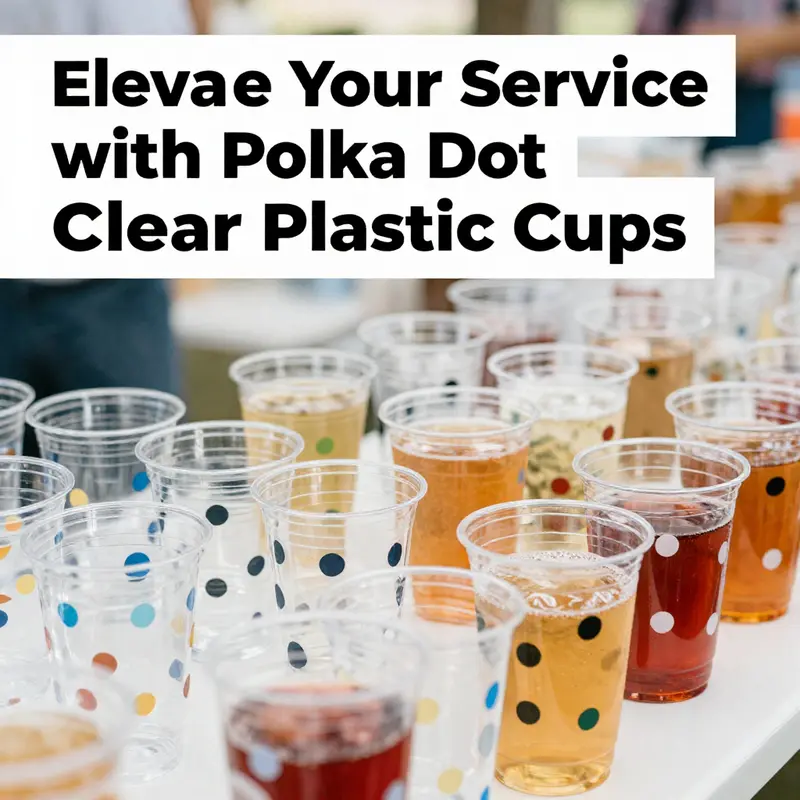
When event design leans into whimsy, polka dot patterns on clear plastic cups do more than hold a drink. They announce a mood before a single sip, a playful invitation that can harmonize with a wide range of themes—from birthday celebrations to casual outdoor gatherings. The clear cup acts as a stage for color, layer, and sparkle, letting the hues of lemonade, iced tea, or a crafted cocktail travel through the cup as if the glass were a window into the beverage’s personality. Yet beneath that visual charm lies a compact calculus of size, material, and practical usability. For planners orchestrating a busy event, the right cup is not merely a vessel but a tool that shapes service flow, guest experience, and even post-event cleanup. Size, in this sense, is the gateway to usability, aesthetics, and sustainability, all of which enter the event design equation at different points but converge in the same practical outcome: guests enjoy their drinks with ease, and hosts enjoy a process that is efficient and respectful of the environment and the budget.
Among the most common sizes for polka dot clear plastic cups, eight ounces and sixteen ounces sit at opposite ends of the everyday spectrum. An eight-ounce cup is ideal for tasting stations, dessert accompaniments, or small servings at a reception where guests move quickly from one station to another. It offers a compact footprint on the tray or table and minimizes waste in situations where guests are sampling multiple beverages or where the event designer wants to choreograph a sequence of color stories. The sixteen-ounce cup, by contrast, becomes the workhorse for standard drink service. It balances a comfortable handhold with the ability to hold a generous serving, making it appropriate for casual to semi-formal settings such as weddings, corporate gatherings, or outdoor festivals. It is big enough to accommodate a layered drink that shows off different colors and densities, yet compact enough to be carried by staff through a crowd or stacked efficiently for restocking. The possibility of a much larger option, such as a forty-ounce variant, typically appears in contexts where outdoor events call for self-serve refills or where a designated drink-up station is designed to minimize line buildup. When planners plan for such a scale, they are not just budgeting for more liquid; they are considering the rhythm of service, the footprint of stations, and the guest’s flow as they circulate through the space.
The geometry of these cups matters as much as the volume they hold. A typical polka dot cup designed for clear plastic stock stands at about eight and a half centimeters tall, with a top diameter around six and a half centimeters. Those modest measurements determine how easily the cups can be stacked, stored, and retrieved, a practical advantage in bustling environments. Stacking is not merely about minimizing space; it affects how staff restock drink stations and how guests are served without delays. A cup that stacks neatly can be preloaded in bulk at a bar or service station, which reduces the chance of spills and misounds during peak moments. The dimensions also influence the stability of the cup when placed on crowded service counters. A well-proportioned cup reduces the risk of tipping, especially when guests are maneuvering around crowded tables or standing in a line to fill up. The visual rhythm of polka dots against the transparency of the cup can make even a simple beverage look intentional and celebratory, which in turn supports an event’s overall theme without demanding additional decorative work.
Beyond size and shape, the material choice is the silent engineer of usability. Polka dot clear plastic cups are typically manufactured from PET, PP, or PLA, each bringing distinct strengths and caveats to the event equation. PET, or polyethylene terephthalate, is known for its clarity and rigidity. It holds up well under cold drinks and light handling, making it a reliable choice for standard bar service and outdoor settings where cups will be grabbed and set down repeatedly. PP, or polypropylene, offers improved fatigue resistance and a forgiving touch, which translates to a more comfortable grip, even when the cup is wet or sweaty from a warm day. This material makes the cup feel sturdier in the hand, which staff and guests alike may appreciate during busy service moments. PLA, or polylactic acid, introduces an eco-conscious angle because it is plant-based. PLA versions are designed to be compostable under industrial conditions, aligning with events that pair festivity with a stated commitment to reducing plastic waste. However, there is a caveat: compostable PLA options tend to perform best with cold or moderately warm beverages. High heat can compromise the integrity of PLA, and compostability requires appropriate facilities to truly close the environmental loop. This is not a reason to avoid PLA, but a reminder that the right cup for the right drink is not a one-size-fits-all decision.
The choice among these materials is never merely theoretical. It shapes how guests experience the drink and, critically, how the event team manages cleanup and waste. PET and PP cups are typically sturdy enough for single-use service during long events and can be recycled where local programs permit. PLA cups expand the sustainability narrative of an event, but operations must align with the capability of industrial composting facilities or a clearly communicated end-of-life plan for guests. The practical takeaway is that sustainability at events is not a single switch to flip but a sequence of decisions: from the drink temperature and viscosity that the cup needs to accommodate, to the expected guest density, to the local waste ecosystem that handles plastics or compostables after the celebration ends. In hot climates or during midday sessions, staff may lean toward PET or PP for their resilience and thermal tolerance, whereas a green-forward brand experience or a wedding with a sustainability pledge might opt for PLA when the infrastructure supports it.
Usability, however, extends well beyond the mouth of the cup. The grip, the feel when the cup is full, the way the surface handles condensation, and the ease of stacking all layer into a single, cohesive user experience. A polka dot pattern on a clear medium functions like a visual cue as well as a decorative motif. The pattern can help guests quickly identify their drink in a crowded setting, a small but meaningful accelerant of service flow at a busy bar, a plaza-style reception, or a family-friendly fair. When the dots are uniformly sized and spaced, the eye can glide over a cluster of cups and instantly pick out individual glasses from the crowd. This can be particularly advantageous for events with children, where a quick visual recognition of one’s own cup reduces the risk of cross-use or mix-ups. The transparency of the cup ensures the beverage within remains the moment’s hero—its color, layers, and even the transparency of ice can be seen vividly through the dotted canvas. A guest’s perception of the drink’s quality is subtly reinforced by the clarity of the cup, which prevents the beverage from appearing dull or hidden behind an opaque container.
The practical aspects of usability also extend into care and maintenance. Some polka dot cups are marketed as dishwasher-safe, a feature that resonates deeply with event planners who value rapid turnover and easy cleanup after a party or conference. Dishwasher safety reduces the labor of hand washing while still maintaining the structural integrity of the cup through repeated cycles. It is important, though, to confirm the dishwasher tolerance of any given stock, as heat and aggressive detergents can affect clear plastics over time. For those events that rely on disposable service, the flexibility to offer a one-and-done solution without the headache of post-event washing can be a decisive advantage. For occasional reuse or quick-turn operations, a dishwasher-safe option becomes an attractive compromise that preserves both convenience and reliability.
Accessibility and safety are also essential considerations. The lightweight nature of plastic cups enhances handling by guests of all ages, including younger attendees. The shatter-resistant quality of the material minimizes hazards in environments where children run around or guests mingle in casual settings. Clear plastic, by default, tends to convey a sense of lightness and safety, even when the pattern of dots adds a festive swagger. In outdoor events, the pattern can assist staff in quickly recognizing and differentiating beverage stations, a subtle but real-time improvement to service efficiency. The cups’ surface designs also interact with condensation to moderate moisture transfer to tables and hands, a practical factor when service counters are slick or when guests must balance drinks with plates and other event essentials.
From the perspective of an event’s logistics, the broader implications of size and material converge on two practical realities: stock management and guest satisfaction. Stock management hinges on knowing how many cups are needed per guest and how many sizes to provision to prevent shortages or surplus. An eight-ounce option may be the best bet for tastings or dessert-focused moments, while a sixteen-ounce cup often serves as the workhorse for standard drink service. In scenarios with long outdoor hours or self-serve drink stations, planners may consider a larger format to reduce refill frequency and crowding, provided the beverage temperatures and container integrity align with the cup’s capabilities. The per-unit cost is rarely the sole driver; the true value rests in the balance between how many cups a staff team can manage without complication and how guest comfort is preserved when beverages flow freely without interruptions. A well-chosen cup becomes invisible in its efficiency: the guest is not thinking about the container; they are enjoying a moment that is visually cohesive and physically comfortable.
Customization adds another layer of utility for events that seek to reinforce a theme or a brand story without overloading the experience with superfluous decor. The polka dot pattern itself can be a canvas for subtle theme hints or color-coordinated accents that mirror the venue’s palette. Corporate events might favor a restrained dot arrangement that links to a color scheme, while social gatherings might experiment with varied dot sizes or alternating dot colors for a playful tableau. In many cases, this kind of customization is offered through bulk-order arrangements, with the option to tailor the cups for specific events, dates, or venues. Custom printing services can imprint logos, monograms, or message details on the cups without obscuring the dots, preserving the cup’s inherent legibility and the beverage’s color through the clear stock. The result is a unified aesthetic that remains practical for service and cleanup, while giving the event a tangible, memorable signature. For readers curious about related options that pair well with disposable serveware and can complement a polka dot motif, consider exploring disposable single-wall paper ice-cream cups with lid as a related option.
The decision tree for choosing sizes and materials is rarely linear; it is a dialogue with the event’s goals, guest profile, climate, and logistical bandwidth. Outdoor summer weddings might lean toward a sixteen-ounce or forty-ounce option for self-serve beverage grace, with PLA versions offered as part of a sustainability pledge and a clear plan for industrial composting post-event. A winter conference, where attendees sip warm tea or spiced cider, may favor the sturdier feel of PP or even a PET stock with a thicker wall to resist condensation and heat transfer. A neighborhood street fair may prioritize a mix that allows quick restocking and easy transport from kitchen to curb with minimal breakage risk. In all these scenarios, the polka dot motif remains a constant—a lighthearted touchstone that signals hospitality and celebration at a glance, without overpowering the beverage presentation. The pattern’s effectiveness lies in its ability to coexist with color and flavor. A bright lemonade or a ruby-red punch can illuminate the dots, turning each cup into a small celebration of the event’s spirit. A darker beverage, like a blueberry tea or an espresso-forward cocktail, will let the polka dots serve as a crisp counterpoint against the drink’s depth, ensuring the overall display remains vibrant but not overpowering.
Ultimately, the practical value of polka dot clear plastic cups rests in their adaptability. They are not a single-purpose solution but a versatile tool that accommodates a range of beverages, service styles, and environmental considerations. The cups can be stacked, stored, used, and disposed of with minimal friction, a feature that becomes especially valuable when the guest list swells or the schedule becomes more complex. They allow the event to maintain a consistent look and feel even as service demands shift—from dry to wet setups, from self-service lines to staffed bars, from indoor venues to sunlit patios. The decision to use them should be guided by a simple question: will the cup support the beverage experience you want to deliver while aligning with your event’s logistical realities and environmental commitments? If the answer is yes, the polka dot clear cup becomes more than a container; it becomes a component of a thoughtfully designed moment that guests remember long after the last drop has disappeared.
Internal resource notes and practical references can help planners navigate this choice. For a related option that showcases disposable single-wall cups used for various cold or mildly warm servings at events, you can explore this example: disposable single-wall paper ice-cream cups with lid. This reference demonstrates how a simple patterned cup can be extended into a broader family of serviceware that supports consistent event aesthetics and reliable performance across different beverage types. It is a reminder that in the world of event hospitality, small details—like the way a cup feels in the hand, or how it looks as it catches the light—amplify the guest experience without requiring loud branding or overt decoration. The cup’s design does not shout; it speaks softly through its clarity, its color, and its pattern, offering a dependable frame for every drink that passes through it.
As readers consider their own event contexts, the takeaway lies in recognizing that size and usability are interwoven with material choices and operational realities. An eight-ounce cup invites intimate tastes and quick pacing, a sixteen-ounce cup sustains longer enjoyment and more elaborate drink presentations, and a forty-ounce option serves a different kind of event choreography altogether. The materials underpin not only safety and performance but also the environmental choices that shape a celebration’s legacy. By choosing wisely and aligning with waste-management capabilities, an event can fulfill its aesthetic ambitions and practical needs in the same breath. The polka dot on a clear cup becomes a signature of hospitality—bright, approachable, and endlessly adaptable to the moment in which it appears. In this way, the cup is not merely a vessel; it is an instrument of the evening itself, guiding guests through color, texture, and interaction with a light touch that feels both effortless and thoughtfully considered.
Polka Dot Clarity with a Conscience: Trends, Tradeoffs, and the Sustainable Reimagining of Polka Dot Clear Plastic Cups
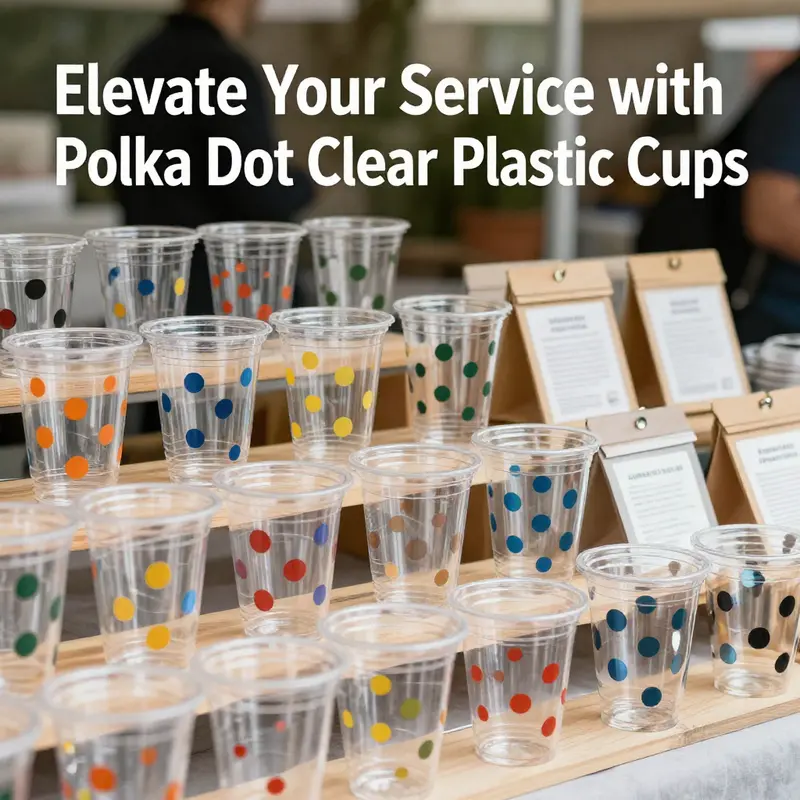
The sight of polka dot clear plastic cups at a party has its own language. The translucent walls invite the eye to linger on the color and layering of whatever is poured inside, from citrusy lemonade to amber-toned iced tea, while the polka dots punctuate the air with a playful rhythm. It is a dynamic combination: transparency that reveals the drink, and pattern that signals festivity. For hosts and event planners, these cups offer a reliable canvas for mood, theme, and moment. They come in sizes designed to meet different service styles, typically 8 oz for samples or flights, 16 oz for everyday beverages, and large 40 oz options for outdoor gatherings or self-serve stations. In bulk, the math is compelling: a manageable footprint for storage, straightforward inventory, and predictable pricing that helps keep the budget in balance. The appeal extends beyond practicality; the visual cue of polka dots triggers memories of parties past and the anticipation of a new celebration, a cue that turns a routine refreshment into a small ceremony of sharing. In that sense, polka dot clear cups do more than hold a drink—they set a tone, inviting guests to linger at the table and engage with the event’s color story without shouting or cluttering the moment with competing designs.
Yet the same light that makes these cups feel vibrant also makes a careful reckoning with the planet unavoidable. The market for polka dot clear plastic cups is not static; it is becoming more conscious, more selective, and more capable of delivering the same whimsical look through alternatives that reduce waste and support responsible disposal. The shift is not a retreat from style but a reconfiguration of how style can align with sustainability. As regulations tighten and consumer expectations evolve, manufacturers are expanding beyond traditional petrochemical plastics to embrace materials that are either compostable, recyclable, or made from rapidly renewable resources. The narrative of these cups now unfolds across a spectrum—from classic clear plastics that stay in the economic sweet spot for short-term events to new generations of eco-friendly options that preserve the aesthetic appeal of polka dots while offering a more conscientious end-of-life story. The practical realities of this shift matter as much as the design itself, because the choice of material influences handling, cleaning, storage, and how confidently an event can claim a commitment to sustainability without surrendering on style.
Among the eco-friendly horizons that illuminate today’s market, polylactic acid PLA cups stand out for their clear, glossy finish that closely mimics traditional plastics. PLA is derived from renewable resources such as cornstarch or sugarcane, which makes it a compelling option for caterers keen to narrate a sustainability arc. These cups are fully compostable under industrial composting conditions, where warmth, moisture, and time do the work of turning them into water, carbon dioxide, and organic matter. The industrial composting requirement is not a footnote; it shapes how venues plan waste streams, where to send used cups after the event, and which partners to collaborate with for efficient separation of compostable materials from recycling or landfill waste. The practical implications are real: compostable PLA cups can handle a broad range of beverages and temperatures, but their compostability hinges on access to appropriate facilities. Home composting is rarely sufficient, and the municipal or industrial composting infrastructure must be capable of processing these materials to deliver the promised environmental benefits. For organizers, that means asking the right questions in advance—who will collect, sort, and transport the used cups, and where will they go after the celebration ends? The answers influence not just the disposal plan, but the overall story told to attendees about responsibility and intention. Still, the PLA option often delivers the visual clarity that matches the classic look of polka dots, while signaling care for the earth in a way that many guests recognize and appreciate.
Another path, increasingly favored by environmentally minded buyers, is the use of recyclable paper cups printed with polka dot designs. Modern paper cups blend water-based or soy-based inks with optimized coatings that render them leak-proof and adaptable to standard recycling streams. The result is a disposable option that can look as bright and cheerful as its plastic counterparts, while aligning with municipal recycling programs that many guests already understand and trust. The coatings used on these cups are engineered to withstand heat and cold, making them suitable for hot beverages like coffee or tea as well as chilled drinks. The exchange from plastic to paper is not merely a material swap; it represents a broader shift toward end-of-life simplicity. When guests drop off their used cups into recycling bins, the path to repurposing grows clearer. The demand for polka dot paper cups also mirrors a larger trend toward branded, theme-coordinated events where aesthetics are designed to be cohesive from the invitation to the last sip. In this context, the polka dot motif becomes a versatile element that can be rendered on multiple substrates—plastic, paper, and even other packaging—without contradicting a sustainability narrative. If you seek a concrete example of how such a switch can be implemented for an event while maintaining a cohesive look, consider eco-friendly printed-logo paper cups as a viable alternative that preserves the playful character of the polka dot motif while aligning with responsible practices. eco-friendly printed-logo paper cups.
In addition to PLA and paper, other sustainable materials are gaining traction in the cups segment. Bamboo fiber and sugarcane bagasse, for instance, are rapidly renewable and often listed as compostable or biodegradable under industrial conditions. These materials carry an environmental profile that speaks to long-term resource stewardship, particularly for organizations aiming to minimize virgin plastic usage. They may not be as ubiquitous as PLA yet, but their presence in the market expands the palette of options for events that want to project creativity with conscience. The choices are not merely about biodegradability; they also factor in the entire lifecycle from raw material extraction to end-of-life handling. For many buyers, the goal is to preserve the celebratory look of polka dots while ensuring the cup contributes as little as possible to landfills and pollution. This often means weighing factors such as sourcing transparency, the presence of post-consumer recycled content, and the compatibility of the cup with existing waste streams at the event venue. It also means understanding the nuances of composting conditions and recycling facilities, because the promise of sustainability is only as strong as the system that supports it.
From a market perspective, the demand for eco-friendly polka dot cups is more than a trend; it is a signal about consumer expectations. Businesses that align with these expectations recognize that sustainability can be a driver of brand affinity, not just a compliance obligation. The aesthetic of polka dots remains a powerful tool for capturing attention, communicating playfulness, and signaling a willingness to invest in the look of an event. The challenge is to maintain that look while embracing materials that respect the environment and social responsibility. In practice, this translates into measurable decisions: selecting a cup with a clear distinction between single-use convenience and end-of-life accountability, choosing a supplier with transparent certification and waste management practices, and planning for responsible disposal through visible signage and guided waste streams. The bottom line is that sustainability and style can coexist without compromise when the design language is applied with intention and the supply chain is understood as part of the narrative rather than an afterthought.
In the operational realm, the shift toward eco-friendly cups also prompts a reevaluation of how events are planned and executed. For example, bulk orders and standard pack sizes remain essential for efficiency and cost management. The typical configurations—bulk packs of numerous pieces—help organizers stock reliably while minimizing on-site handling time. Yet, when the materials differ, so too may the care instructions. Some eco-friendly cups are designed to withstand dishwasher cycles, particularly if they are intended for multi-use or repeated service at the same venue. Others, especially some PLA and coated-paper variants, are optimized for single-use or limited reuse, with careful guidance on temperature tolerance and duration of service to preserve both form and function. The practical implications touch everything from storage conditions and shelf life to transport readiness and breakage risk. Because the patterns are often the defining feature of the cups, ensuring the print remains vibrant through a cycle of use and disposal is part science, part artistry. A pattern like a polka dot must hold up to condensation, ice, and repeated handling without fading or flaking, conditions that test the durability of inks, coatings, and substrate materials.
Beyond the technicalities, design remains central to the experience. The polka dot motif is more than decoration; it is a visual cue that travels from the plate to the cup, sustaining a sense of continuity as guests move through a space. The interplay of dots with lighting, beverage color, and glassware creates a memory lattice that guests carry with them after the event. For planners who want to preserve this look while exploring sustainability, many suppliers now offer customizable printing on PLA and coated paper options. Customization enables the same dot story to be extended across different surfaces and sizes, ensuring that the theme remains coherent even as material choices shift. The ability to tailor prints to event branding—color harmonies, dot scale, or alternating dot densities—helps unify the overall aesthetic. In this context, the idea of a polka dot is not fixed; it becomes a flexible motif that can be revisited across seasons and settings, maintaining a consistent mood while adapting to evolving environmental standards.
For readers seeking direct, practical pathways to eco-friendly options that still capture the polka dot look, there are pathways that bridge design and sustainability. One avenue is to consider eco-friendly options that support customized branding on disposable cups while prioritizing recyclable or compostable materials. The goal is not to abandon the polka dot aesthetic but to render it on substrates that better align with waste streams and end-of-life goals. The shift toward such materials often comes with a shift in vendor relationships and logistical planning. It invites event organizers to partner with suppliers who can articulate the environmental credentials of their products, provide evidence of compostable or recyclable status, and offer guidance on the best practices for waste segregation at events. This is not a hurdle but an opportunity to craft a narrative of responsibility that visitors can observe and appreciate as part of the celebration. In this spirit, the evolution of polka dot cups becomes a case study in how design can adapt to ecological responsibility without sacrificing the joy and charm that the dots reliably deliver.
As we imagine the future, the thread of sustainability is likely to become even more integral to the story of polka dot clear cups. New formulations, better recycling compatibility, and more transparent certifications will help buyers compare options with greater confidence. The industry may see expanded use of compostable coatings that do not compromise clarity or print fidelity, or perhaps variants of paper-based cups that mimic the gloss of plastic while staying fully recyclable. The conversation around multi-temperature service—how a single cup type can handle both hot coffee and cold lemonade—will also drive material choices, coatings, and structural design. In practice, this means cups that preserve crisp polka dot patterns under a range of temperatures, resist staining and wear, and integrate with waste streams that make it possible to close the loop in a meaningful way. The ongoing collaboration between material science, printing technology, and waste management will shape not just what is possible, but what is responsible and repeatable across many events. In that sense, the polka dot clear cup is less a single product than a platform for experimentation and storytelling: a small, everyday object that can simultaneously celebrate color and contribute to a broader culture of care for the environment.
For decision makers who want a quick, concrete anchor as they navigate options, consider the broader ecosystem of eco-friendly choices that can be woven into the polka dot concept. If you are drawn to the bold, graphic appeal of dots and want to keep the sustainability narrative vivid, you can pursue solutions that blend aesthetic fidelity with responsible disposal. This includes selecting cups with clear labeling about compostability or recyclability, aligning with local waste streams, and communicating transparently to guests about how to dispose of cups after the event. The communication itself becomes part of the design language, reinforcing the idea that saving resources and enjoying a festive moment are compatible goals. In the end, what matters is not only the look of the cups but the story that surrounds them—the story of intention, craft, and care that travels with every sip. A well-considered choice about materials, a thoughtful approach to waste, and a consistent design motif together elevate a simple beverage into an experience that respects both guests and the planet.
External resource for further reading on sustainable cup options and market trends can provide additional context for organizers seeking deeper guidance. GotCups, for example, collects insights on eco-friendly alternatives to plastic cups and outlines practical considerations for selecting items that balance aesthetics with environmental responsibility. External resource: https://www.gotcups.com/blog/eco-friendly-alternatives-to-plastic-cups-2025/
Final thoughts
Polka dot clear plastic cups blend aesthetics and functionality, making them an ideal choice for businesses in the beverage industry. Their vibrant designs captivate customers while offering practical usability for various occasions. As sustainability becomes a priority, these cups offer eco-friendly options that align with market demands. By choosing polka dot clear plastic cups, you’re not just enhancing your service but also contributing to a more appealing and responsible business model.