
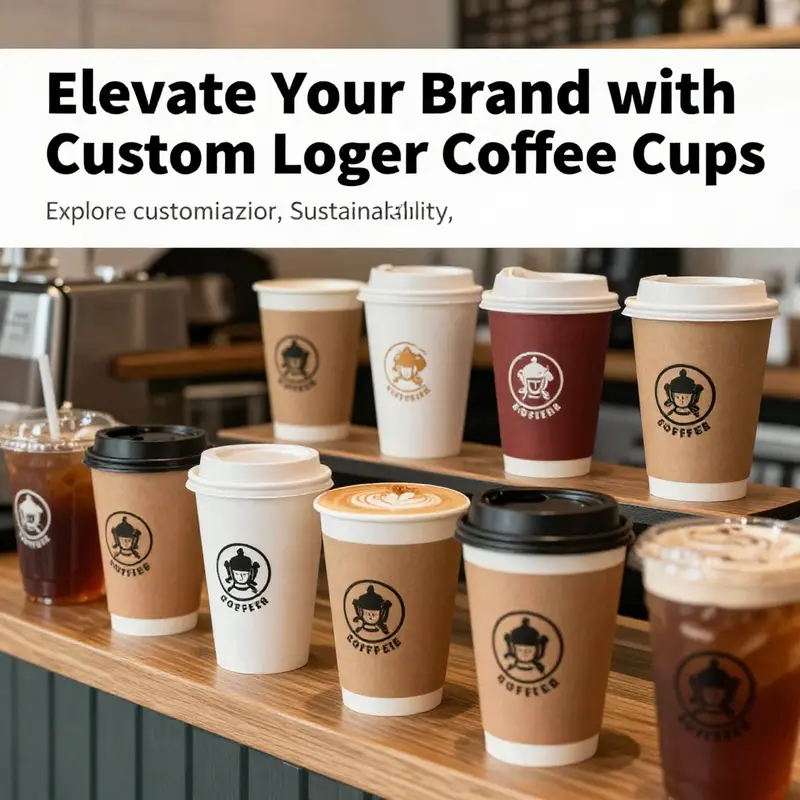
In today’s competitive beverage industry, making a memorable impression is essential. Custom logo paper coffee cups serve not just a practical purpose but also become a powerful branding tool, especially for bubble tea shops, restaurants, food trucks, and catering services. These cups, which can be tailored to reflect your brand’s identity, are increasingly sought after in the market. This article will guide you through various customization options available, highlight the importance of sustainability in your choices, and analyze the economic implications of investing in custom logo cups.
A Designer’s Ledger: Mapping Custom Logo Paper Cups to Brand Reach
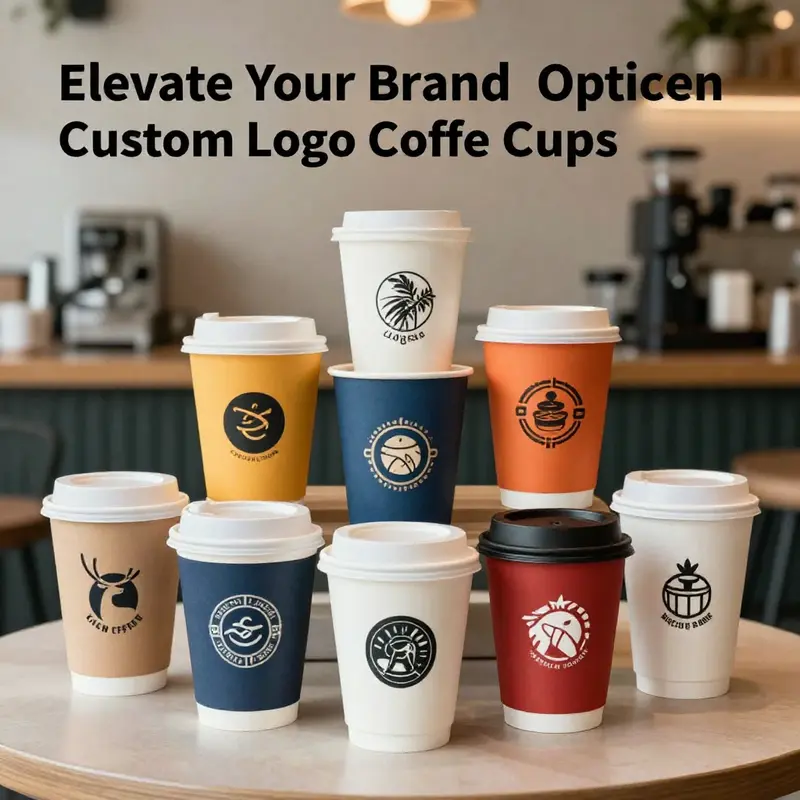
Every cup we drink from carries more than a beverage. It bears a brief, portable advertisement for a brand’s personality, values, and promises. In the modern food and beverage landscape, custom logo paper cups are less an afterthought and more a strategic surface for storytelling. The array of customization options—size, wall construction, coating, print method, and packaging—works together to shape how a drinker experiences a brand, from the first glance on the sidewalk to the final swallow. This chapter unfolds the decision-making choreography behind those choices, showing how a thoughtful combination of form and decoration converts a simple disposable vessel into a powerful branding instrument that travels far beyond the point of sale. It is a narrative of material science meeting design aesthetics, of cost pragmatism meeting experiential nuance, and of sustainability meeting scale.
Size is the most visible, and perhaps the most consequential, axis of customization. Cups come in a spectrum from a tiny 2.5-ounce shot glass of caffeine intensity to a generous 24-ounce vessel meant for lingering afternoons. The smallest options are not merely for espresso; they are ideal for sample tastings, flight-style experiences, or promotional sips at events where a brand needs to convey a concise, concentrated impression. Mid-range sizes—8-ounce, 12-ounce, 16-ounce—are the everyday workhorses of cafes and quick-service venues. They align with a broad set of beverage rituals—from traditional hot coffees to bold iced drinks and specialty teas. The largest sizes invite a premium, often reserved for specialty drinks, seasonal beverages, or family-sized servings that encourage sharing or extended enjoyment. The choice of size is not only about capacity but about the pace at which a guest experiences the brand. A compact cup can project efficiency and accessibility, while a larger vessel can signal indulgence and social ritual. The design challenge is to maintain legibility and impact as content scales across sizes, ensuring that logos, color, and typography stay crisp and readable when the cup curves away from the eye.
Wall construction, though less immediately visible than print, is a fundamental contributor to user comfort and perception of quality. Single-wall cups present a lean, economical aesthetic, appropriate for straightforward hot beverages and shorter visits where isolation from heat is not paramount. Double-wall cups, by contrast, trap air between layers to improve insulation and reduce heat transfer to the outer surface. The effect is twofold: it preserves the drink’s temperature for longer and makes the drinking experience more comfortable for the hand, particularly with hotter beverages. Ripple-wall designs add tactile interest and grip texture, while also contributing to insulation, albeit in a more nuanced way. Each wall variant carries implications for sleeve design, stacking efficiency during production, and even the overall impression of sophistication. When a brand aims to project reliability and comfort, a double-wall or ripple-wall approach can reinforce those messages with a tangible, touch-based cue that customers subconsciously associate with quality.
The choice of material and coating anchors the cup’s functional performance and its environmental footprint. Most cups are manufactured from food-grade paperboard and carry a barrier coating to resist liquid seepage. The coating choice—often a polyethylene (PE) layer in some configurations—ensures leakage resistance for hot and cold drinks alike. A single PE coating suffices for many use cases, but a double coating can provide enhanced liquid barrier performance, especially in high-temperature scenarios or when the beverage contains viscous ingredients. Beyond leakage, the coating and board should withstand the rigors of transport and handling, preserve print integrity, and maintain structural integrity during stacking and delivery. In parallel with performance, sustainability remains a central consideration. Many suppliers now offer FSC-certified or recyclable paper cups, and increasingly, compostable lid options and materials that align with broader circular economy goals. The surface finish, whether gloss or matte, also interacts with print legibility and the perceived premium of the product. Matte finishes can soften color vibrancy while gloss can sharpen it; the decision should harmonize with brand personality and the intended consumer experience.
Printing and branding sit at the heart of customization’s value proposition. Flexographic printing, or flexo, remains a widely used method for applying logos and color on disposable cups. This technique is well-suited to rapid production cycles and can deliver vibrant results on curved surfaces with good durability. Most suppliers cap the color count for cost and process efficiency; typical configurations support up to three colors. A three-color print often captures a brand’s core logo, a key accent color, and a secondary color to convey mood or category cues. Precision matters here: the curvature of the cup can distort linear elements, so designers must adapt typography and logos to a wraparound canvas that’s gently contoured. Color management is essential, ensuring that the printed hues match brand standards across batches and lighting environments. The printing surface must also endure the heat of hot beverages without bleeding or fading. As a result, design systems frequently optimize for legibility and coherence at small scales, ensuring that the brand mark holds its integrity from far-down the line to the close-up handhold. The interplay between print and material must be considered early in the design process. The alignment of color schemes with cup geometry, the safe area margins around seams, and the way the print interacts with lid designs all influence the completed product’s visual impact.
One notable attribute of modern customization is the ability to introduce a brand’s story through a cohesive packaging ecosystem. The cup does not exist in isolation; it acts as a component of the consumer’s entire experience, which may include the lid, sleeve, carton, and even secondary packaging for events or promotions. The choice of lid, whether standard plastic or more sustainable compostable options, can reinforce a brand’s stance on waste reduction and responsibility. Packaging decisions influence not only sustainability but also convenience and safety. Lids must seal reliably, resist leaks, and be compatible with the cup’s diameter and wall design. In practice, brands often design a packaging suite that speaks with a single voice: the cup, its lid, and any accompanying signage or sleeve should share a consistent color story, typography, and iconography. Consistency strengthens memory and recall, enabling a logo to register more quickly in a busy retail environment or during a fast-paced cafe visit.
The cost dynamics of customization are a practical compass guiding all design choices. Minimum order quantities (MOQs) typically reflect the complexity of the printing and the scale of production. Flexo-printed cups frequently carry MOQs around the order of hundreds of thousands of units, though some suppliers offer more flexible thresholds for simpler designs or shorter runs. For test runs or pilots, smaller quantities may be possible, but at a premium. Pricing per unit varies widely based on volume, color count, and coating configuration. In many cases, unit costs can range from a few cents to around twenty cents, with smaller runs or more elaborate finishes nudging the figure higher. The economics of customization are not only about the sticker price; they extend to tooling, plate setup, color matching, and the step changes that come with scaling production for nationwide or global distribution. Brands that manage these cost vectors well can afford to run seasonal campaigns, limited-edition collaborations, or cause-based programs that rely on consistent, repeatable packaging visuals.
Sampling is an essential part of the journey from concept to production. Free samples are commonly offered by suppliers, though customers typically cover postage. A physical sample gives designers and procurement teams the chance to verify weight, texture, print clarity, and the overall feel before committing to a large order. It also enables practical testing in the hands of staff, ensuring that the cup dimensions work smoothly with expected beverage volumes, lids, sleeves, and external handling. The sample phase is where the brand’s sensory expectations meet the cup’s tactile reality, and it often reveals subtle adjustments that make or break user perception. The Packaging and Delivery stage follows, shaping the lead-time experience. First orders usually feature longer lead times, with production and shipping consolidated to a window that can stretch across several weeks. A typical cycle might extend from 30 to 45 days for the initial run, with subsequent orders accelerating to 7–15 days once supply chains are in motion and the client’s preferences are well established. Efficient packaging—standard export cartons, optimized stacking, and protected transit—reduces damage risk and helps keep costs predictable for businesses that rely on frequent restocking or ongoing promotions.
From the supplier’s side, compliance and trust are built into the transaction through certifications and predictable payment terms. A certificate of inspection, sometimes signed by a designated authority like CIQ, signals that the product has met safety and quality standards. Payment terms often follow a staged pattern: a 30% deposit via secure transfer to initiate production, with the remaining 70% due before shipment. This arrangement balances the needs of both parties—suppliers secure capital to scale manufacturing, while buyers secure assurance of delivery and product integrity. For brands navigating cross-border supply, these terms are familiar anchors, offering a clear path from concept to finished goods while maintaining a framework for accountability. The practical realities of sourcing also include the potential for OEM (original equipment manufacturer) or ODM (original design manufacturer) arrangements. These pathways empower brands to translate their visual identity into production-ready templates and to iterate across multiple cycles and markets with relative agility.
The customization journey, however, does not end with the printer’s blade and the factory floor. It continues in the realm of brand storytelling, where the cup’s surface acts as a conduit for values. In an era when consumer choice is increasingly influenced by sustainability, transparency, and design nuance, the cup’s visuals must speak to the brand’s commitments clearly and honestly. A well-crafted logo on a double-wall cup can communicate reliability and warmth through tactile warmth as well as color. A bright, multi-color emblem might signal energy and playfulness, while a restrained, single-color approach can evoke sophistication and minimalism. The cup becomes a canvas where typography, iconography, and color cohere into an impression that endures beyond the moment of purchase. The challenge for designers is to balance bold branding with legibility and practicality: logos must remain legible at quick glance, colors should be reproducible across batches, and the overall aesthetic must remain coherent on cups of different sizes and wall configurations. The design system must also accommodate seasonal campaigns, where a limited palette or a temporary motif can travel across the entire line without appearing disjointed.
Beyond aesthetics, the environmental narrative increasingly matters. A growing portion of consumers expect brands to take responsibility for packaging waste and resource use. Consequently, many suppliers are expanding portfolios to include FSC-certified paper cups and recyclable lids, with a growing subset exploring compostable or biodegradable materials for certain components. This shift invites brands to align their design choices with sustainable storytelling, perhaps by incorporating a subtle certification mark into the cup’s surface, or by revealing a sustainability message adjacent to the logo in a way that remains legible and visually balanced. The environmental angle need not come at the expense of impact; in fact, a well-planned sustainability strategy can amplify resonance with an audience that values care and stewardship. The dual goals of brand differentiation and responsible packaging converge when the cup’s material choices reflect a genuine commitment rather than a marketing postscript.
In practice, a thoughtful customization program merges science, design, and logistics into a seamless flow. A brand begins with a concept—what it wants the cup to say, and which beverage moments it wants to amplify. Designers translate that concept into a scalable printing plan, selecting sizes that map to beverage types and customer flows. They choose wall configurations that optimize comfort and insulation, balancing cost with performance. They specify coatings that secure leak resistance and durability, while keeping an eye on recyclability and end-of-life considerations. They craft logos and color systems that maintain fidelity across production runs and lighting conditions. They negotiate MOQs and sampling terms to fit pilots or larger campaigns, and they anticipate packaging and delivery timelines that align with marketing calendars and store operations. Finally, they enter the supplier landscape with a clear set of certifications and payment terms that provide confidence and predictability. It is an orchestration in which the cup becomes a strategic instrument rather than a mere vessel.
To illustrate how these decisions materialize in a real-world design, consider a hypothetical yet representative case: a cafe chain seeking to align its beverage program with a refreshed identity and a sustainability pledge. The design brief starts with a two-tone logo that must appear legibly on a curved surface. The chosen size range spans 8-ounce to 16-ounce cups to cover standard hot drinks and larger iced specials. A double-wall construction is selected for hot beverages, paired with a PE barrier coating for leak resistance, and a subtle ripple texture to provide grip without adding bulk. The brand’s color palette is distilled to three core inks that translate well across the print process, preserving contrast on both light and dark backgrounds. The logo is simplified and rescaled to remain legible on all sizes, with safe margins carefully observed to avoid crowding near cup seams. The lid choice emphasizes ease of use and waste minimization, with a compostable option preferred for flagship locations and at events. The supplier is approached through an OEM framework to preserve design fidelity while enabling adjustments for regional color matching and regulatory compliance. MOQs are negotiated with room for a quarterly promotional run, coupled with a free-sample program to validate print integrity and user experience. The brand’s sustainability narrative appears on secondary packaging and a discreet, informative badge on the cup sleeve, reinforcing transparency without compromising visual impact. In this imagined but plausible workflow, the cup becomes a tangible extension of the brand’s story—an everyday object that reinforces trust and contributes to a positive mood around the beverage experience.
For readers who want a concrete reference to how these choices translate into production-ready packaging, a supplier showcase offers a useful lens. It demonstrates how a custom-logo eco-friendly disposable kraft catering box communicates identity, values, and reliability in a complete packaging system. The practical takeaway is not merely the ability to print a logo, but the capacity to design a coherent, enduring experience across multiple touchpoints. When a brand considers the alignment of cup, lid, and outer packaging, it unlocks opportunities for cohesive campaigns, faster recognition, and more efficient operations in busy venues where visual cues guide customer behavior. The synergy between size, wall construction, coating, print, and packaging, supported by a deliberate sourcing strategy, yields a product that travels from store to street with confidence and clarity.
As brands navigate the global marketplace, sourcing becomes an essential competency. Platforms that connect buyers with manufacturers—while ensuring compliance with international standards—help brands scale without compromising design integrity. The value of these marketplaces lies not only in pricing but in access to OEM/ODM capabilities, bulk production, and reliable quality assurance. With the right partner, customization is not a single decision but a flexible, evolving program that can adapt to seasonal themes, market-specific requirements, and evolving sustainability goals. This adaptability is crucial in a landscape where consumer expectations shift quickly and where the most successful brands treat their packaging as a portfolio piece that grows with the business. The liquor, coffee, and tea segments, among others, increasingly demand packaging that carries brand messages while meeting regulatory and ethical standards. In this context, customization becomes a strategic asset, enabling brands to tell more complete stories through every sip.
To ground these ideas in a practical path forward, consider a practical workflow for teams evaluating customization options. Start with a brand audit: what message does the cup need to convey? Which beverage categories require dependable insulation, and which markets will see the most intense handling? Then map the design system to production realities: which sizes will be most frequently used, and what wall configuration delivers the best balance of comfort and cost for those sizes? Next, choose a coating strategy that protects the beverage and the print while aligning with sustainability goals. Establish a print plan that preserves brand fidelity across sizes and formats, and build in design guidelines that preserve legibility on curved surfaces. Finally, integrate packaging with a strategic supply chain plan, selecting MOQs that fit pilots and planning production windows that align with marketing calendars. By treating customization as a holistic program rather than a one-off, brands can unlock consistency, efficiency, and stronger emotional connections with customers.
For those seeking further exploration into the practicalities of custom logo cups and related disposable packaging, a real-world example of a custom-logo eco-friendly disposable product demonstrates how design decisions translate into tangible outcomes. It highlights how a single design choice—the color system, logo placement, and texture—can harmonize with a double-wall structure to create a compelling, comfortable, and environmentally responsible experience. The example helps translate theory into a replicable blueprint that brands can adapt to their own identities while maintaining the core principles of readability, resilience, and responsible packaging. This approach ensures that the branding message remains legible and impactful across different contexts, beverages, and consumer moments. By embracing a design-led, supply-chain-conscious perspective, brands can turn a disposable cup into a durable ambassador for their values and their customer promise.
Internal link for further contemplation: for a tangible instance of a custom-logo eco-friendly disposable packaging example, explore this supplier showcase custom-logo eco-friendly disposable kraft catering box. It offers a closer look at how logos, textures, and materials come together on a single, cohesive product that travels from cafe counter to consumer hand with confidence.
In sum, the customization options for custom logo paper cups are not mere ornament. They are a toolkit for shaping brand perception, customer comfort, and operational efficiency. Size, wall design, material and coating, printing approach, and packaging choices all interact to influence how a drink is perceived, how it travels, and how a brand is remembered. When these elements are coordinated with sustainability commitments and supplier reliability, the cup becomes a strategic asset—one that travels far beyond the beverage itself and into the broader story a brand tells about its values, its quality standards, and its relationship with customers. The result is not simply a product to be consumed, but an experience to be shared, one carefully crafted cup at a time.
External resource: https://www.alibaba.com/product-detail/Custom-Logo-Disposable-Paper-Coffee-Cup-Mug_1600698233475.html
From Branding to Biodegradability: The Green Evolution of Custom Logo Paper Cups
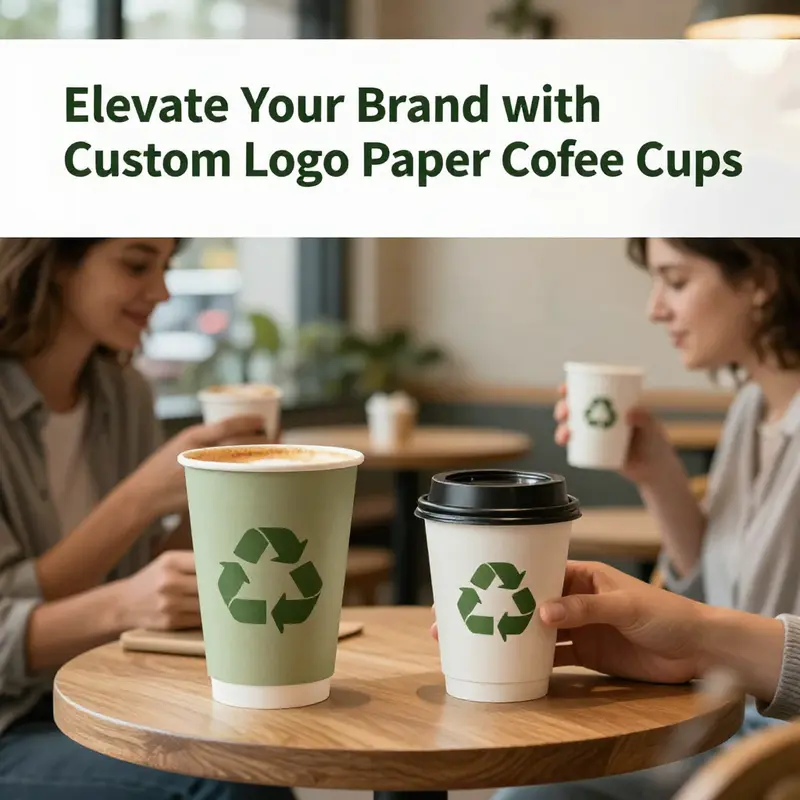
The growth of custom logo paper cups is no longer measured only by the sharpness of a brand’s color or the cleverness of a design. It sits at the intersection of visibility and value, where corporate identity meets responsible packaging. As brands race to be seen, they are also racing to be understood as good stewards of the planet. In this landscape, sustainability trends are not a backdrop but a driving force shaping every choice from material selection to printing methods, from the geometry of the cup to the lifecycle of its lid and sleeve. The narrative moves beyond a single moment of branding to a longer arc of environmental accountability, where the cup becomes a signal of a brand’s values as much as a vessel for a beverage. The demand for custom logo cups made from paper is expanding, and it is increasingly defined by how a cup behaves after the last sip as much as how it looks on the counter. Consumers want products that align with a broader commitment to reduce waste, conserve resources, and support circular economies. Brands recognize that their packaging choices are not passive backdrops but active parts of the customer experience and the corporate reputation they cultivate with every interaction.
Material choice anchors this shift. Traditionally, many disposable cups relied on plastic liners or barriers to keep liquids from seeping through the paper. Those materials, while functional, complicate end-of-life options and contribute to environmental concerns. Today, more brands are shifting toward biodegradable and compostable alternatives, designed to minimize waste and align with composting streams where available. This transition is not a mere swap of one material for another; it is a rethinking of how the cup participates in a circular system. Biodegradable and compostable formulations, coupled with responsible sourcing of the paper itself, enable brands to claim a clearer environmental narrative while continuing to deliver the performance customers expect. The move away from conventional plastic-lined cups toward eco-friendly barriers reflects an awareness that packaging materials must coexist with recycling and composting infrastructures, not undermine them. As consumers become more discerning, the conversation around sustainability shifts from a simple “bio vs plastic” debate to a more nuanced understanding that includes end-of-life outcomes, supply chain transparency, and lifecycle impacts.
Within this evolving material landscape, innovations in packaging technology have kept pace with environmental ambitions. The functional demands of hot coffee versus cold beverages demand robust waterproofing and heat resistance, yet these properties do not have to come at the expense of environmental integrity. Advances in plant-based barrier coatings, water-based inks, and renewable fiber composites are enabling cup manufacturers to improve performance while reducing reliance on fossil-based systems. The result is a family of options that preserves the familiar reliability of a paper cup while delivering better environmental outcomes. The classic double-wall construction, long valued for insulation, is increasingly paired with these greener coatings to provide comfort without sacrificing sustainability. This synergy—strong insulation, durable printability, and an ecologically thoughtful composition—helps brands maintain a premium consumer experience while meeting stricter environmental expectations.
Market dynamics reflect these shifts. There is steady growth in the segment of sustainable custom logo cups, especially those certified as compostable or incorporating recycled content. Consumers are more willing to reward brands that demonstrate a tangible commitment to sustainability with their purchasing choices. This has intensified competition among suppliers to offer reliable, scalable options with credible certifications and transparent reporting. Certifications matter because they help bridge the gap between what a cup promises and what a customer experiences in a real waste stream. The presence of compostability certifications or recycled content labels provides a signal that a brand is serious about its environmental promises and willing to invest in the systems required to back them up. Brands are increasingly attentive not only to the materials themselves but to the entire packaging ecosystem, including lids, sleeves, and secondary packaging, ensuring that every touchpoint reinforces a sustainable narrative.
Regulatory pressures augment market incentives in meaningful ways. Across many regions, policymakers are introducing or tightening regulations aimed at reducing single-use packaging waste. This regulatory backdrop pushes companies to explore eco-friendly options more proactively, sometimes even before consumers demand them. The interplay between regulation and brand strategy creates a fertile environment for innovation, as suppliers and manufacturers collaborate to deliver compliant, high-performance solutions that can scale. In some areas, legislation targets the entire lifecycle of packaging—from production to disposal—encouraging manufacturers to adopt responsible sourcing practices, implement clearer labeling, and invest in recycling or composting facilities. For brands, this means go-to-market decisions are increasingly inseparable from regulatory forecasting, and adaptability becomes a core capability rather than a luxury. The broader policy climate, combined with evolving consumer expectations, accelerates the adoption of FSC-certified paper cups, recyclable designs, and compostable alternatives that fit within local waste management realities.
Design and branding considerations have also evolved. A custom cup is more than a surface for a logo; it is a canvas that communicates a brand’s ethos and promises. Print techniques that deliver vibrant, durable visuals must be harmonized with environmentally friendly inks and coatings. This requires collaboration across design, procurement, and sustainability teams to ensure that the final product not only captures attention but also behaves responsibly in real-world use. The shape of the cup, the angle of the taper, and the texture of the surface all influence how a logo reads at a distance and how the cup feels in a hand. Lids and sleeves are no longer mere accessories; they are integral to the environmental story. Lids are increasingly offered in compostable formats, while sleeves and packaging are designed to minimize material use without compromising protection or presentation. The practicalities of customization, including minimum order quantities and unit pricing, are balanced against the desire for distinctive branding. Firms seek suppliers capable of delivering flexible, low MOQs when piloting new campaigns while maintaining the quality and color fidelity that large orders demand. The narrative of a cup becomes a story of responsible design as much as bold aesthetics, and that balance is at the heart of contemporary packaging strategy.
A crucial element of this narrative is the voice a cup communicates about sustainability itself. Brands are learning to align their messaging with the actual capabilities of their packaging. It is not enough to declare a cup as eco-friendly if the disposal path remains uncertain for the average consumer. Therefore, credible sustainability statements hinge on robust supply chains, transparent material disclosures, and measurable outcomes. Consumers increasingly expect clarity about whether a product is made with recycled content, whether its coatings are compostable in typical municipal facilities, and whether the entire package can be processed within their local waste streams. In response, many suppliers are incorporating traceability systems and third-party certifications that illuminate the journey from raw material to curbside disposal. This transparency builds trust, reduces confusion at the point of purchase, and supports a long-term relationship between brand and consumer.
The practical implications for businesses seeking reliable partners are significant. The market now rewards suppliers who can offer customization at scale while maintaining consistency in quality and environmental performance. Low MOQs can empower small, test-and-learn campaigns, helping brands validate concepts before committing to large production runs. Conversely, for brands that need to scale quickly, predictable supply chains, dependable compliance with international standards, and robust color reproduction become essential. In this climate, the packaging ecosystem is becoming more modular, allowing brands to combine different components—cup material, inner barrier, lid, sleeve, and outer packaging—in ways that optimize both performance and sustainability. The result is a sourcing landscape that rewards collaboration, transparency, and innovation, rather than singular focus on cost or speed alone.
In exploring the path forward, it is useful to consider a practical example that underscores the broader trends without dwelling on a single product line. Imagine a cafe chain seeking to refresh its branding through a new line of custom logo cups while reducing its environmental footprint. The team evaluates options that emphasize plant-based barrier coatings and responsibly sourced paper, with inks chosen for low volatile organic compounds and end-of-life clarity. The assessment includes a lifecycle perspective: production energy use, water consumption, and the potential for compostability in urban waste streams. The design brief prioritizes a double-wall cup for insulated hot beverages, a lid that is fully compostable, and a sleeve printed with bold branding that remains legible even after rapid handling. The supplier selection process emphasizes certification credibility, supply chain resilience, and the ability to scale across hundreds of stores. The result speaks to a cohesive brand experience that does not sacrifice environmental responsibility. The customer who accepts this cup will not only taste a premium beverage but also engage with a product that aligns with evolving norms around waste and stewardship, reinforcing loyalty in a marketplace where perception and reality increasingly converge.
For readers seeking a concise overview of the broader market insights underlying these shifts, a credible external resource provides a comprehensive analysis of environmental, social, and economic factors shaping the coffee paper cup market. This resource contextualizes how sustainability, regulation, and consumer behavior interact to influence product development and demand. External resource: https://www.grandviewresearch.com/industry-analysis/coffee-paper-cup-market
As the conversation around sustainable design continues to mature, brands may also explore the potential of integrating additional environmental attributes into their cups. Some brands experiment with circular economy principles by prioritizing paper sourced from responsibly managed forests and by selecting coatings that minimize contamination of recycling streams. Others pilot color and logo schemes that reduce the need for additional inks or coatings while preserving vibrant branding. This ongoing experimentation demonstrates that sustainability in custom logo cups is not a fixed set of guidelines but a living discipline, evolving in step with innovations in materials science, waste management infrastructure, and consumer expectations. The choice to pursue such strategies is, in effect, a strategic investment in brand equity. When customers encounter a cup that mirrors a brand’s public commitments—through material choices, certifications, and transparent communication—every sip becomes a reinforcement of that commitment. The cup becomes a reminder that branding and responsibility can travel hand in hand, delivering not only a good drink but also a good story about how it was created, used, and finally returned to the earth in a respectful, recoverable way.
In closing, the trend toward sustainability in custom logo paper cups represents a convergence of design ingenuity, material science, and policy dynamics. It challenges brands to articulate a coherent environmental narrative that matches their visual identity and consumer promise. It invites suppliers to extend beyond one-off product features toward end-to-end solutions that consider sourcing, production, and end-of-life realities. And it places the cup at the center of a broader conversation about how everyday objects can support a more sustainable future without compromising the pleasure of a well-crafted beverage. As this chapter threads through the interconnected realms of aesthetics, function, and responsibility, it points toward a future in which branding and stewardship are inseparable—and where every cup carries a story that matters.
For further exploration into the regulatory and market factors that frame these trends, researchers and practitioners can consult industry analyses that map the shifting landscape of coffee paper cup usage and sustainability outcomes. These studies illuminate how regional policy, consumer demand, and corporate strategy intersect to shape the adoption of compostable materials, recycled content, and transparent certification programs. The evolving dialogue between designers, manufacturers, and waste-management systems will continue to redefine what is possible in custom logo cups, and the next generation of cup design will likely blend heightened performance with clearer, more actionable environmental messaging. In this sense, the cup becomes not just a vessel but a conduit for values, a portable advertisement for responsible consumption, and a practical tool for brands to demonstrate how they translate intention into impact.
Branding on a Thicker Edge: The Market Pulse and Economic Footprint of Custom Logo Paper Coffee Cups
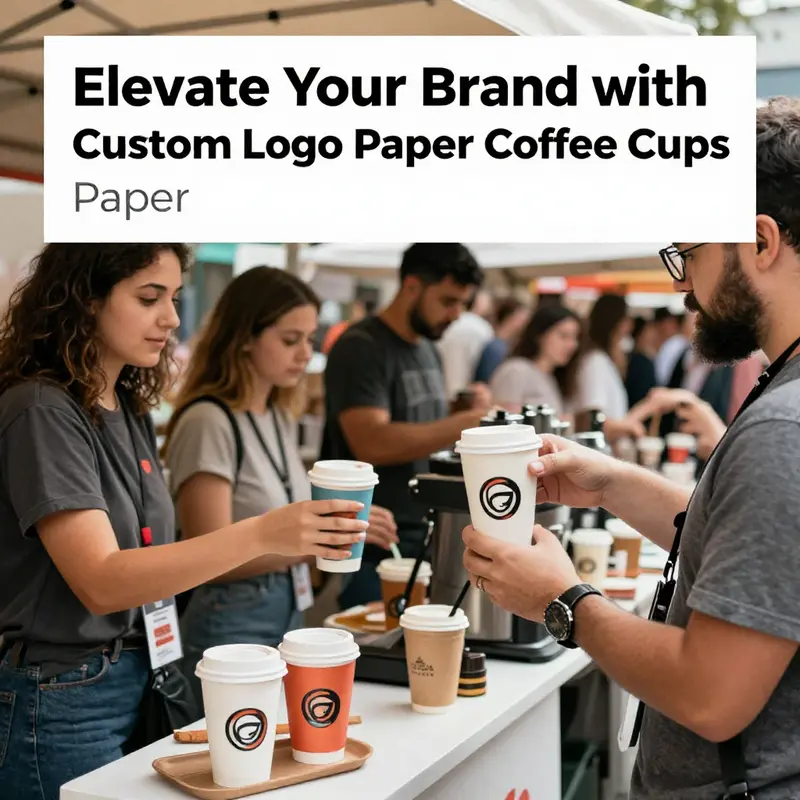
The market for custom logo paper coffee cups sits at the intersection of brand visibility and sustainable packaging, a convergence that has moved from a niche preference to a core business decision for food and beverage operators around the world. As chains expand and independent cafés multiply, operators are looking for more than a vessel to hold a beverage; they want a canvas that reinforces identity, communicates quality, and signals responsibility. In this climate, disposable paper cups with custom logos are not merely functional goods; they are branding instruments that travel across hours, routes, and seasons, carrying messages about taste, reliability, and values. The sustained demand emerges from several converging forces: consumer demand for eco-friendly choices, brands seeking to differentiate in crowded spaces, and retailers recognizing that packaging can drive loyalty and recall as much as the beverage itself. The result is a robust, growing market where design, materials science, and logistics collaborate to produce cups that perform on the counter and in the long tail of a brand’s reputation.
On the consumer side, awareness about environmental impact has shifted crucial perceptions of single-use packaging. The narrative around plastic waste and non-recyclable materials has intensified, pushing operators to favor plastic-free options that align with broader sustainability goals. Transparent sourcing, FSC-certified paper, and compostable coatings are no longer optional add-ons; they have become baseline expectations in many markets. The emphasis on home compostability and compostability standards reflects a broader societal shift toward circular economy thinking, where packaging is designed to exit the consumer’s life in a controlled, environmentally sound way. In this context, the value proposition of custom logo cups expands beyond aesthetics. It includes how the cup itself embodies a brand’s commitment to sustainability, how easily it can be integrated into existing recycling or composting streams, and how clearly it communicates stewardship to a discerning customer base. This alignment between brand narrative and packaging reality helps explain why the market is expanding so rapidly beyond early adopters and into mainstream retail channels and fast-service environments.
The product features driving demand are anchored in performance and print quality. Double-wall and ripple-wall designs have emerged as especially popular for hot beverages, where insulation matters for both the customer experience and the cup’s handling. The ergonomic benefits—such as a comfortable grip, reduced heat transfer to fingers, and a sleek silhouette—enhance consumer satisfaction, encouraging repeat purchases and positive word of mouth. At the same time, the printing technologies behind these cups have matured. High-resolution logo reproduction on smooth, food-grade finishes enables brands to extend their visual language across a smaller round canvas with remarkable fidelity. The ability to customize not only logos but also color schemes and patterns allows brands to maintain consistency across multiple SKUs and service contexts. When a design translates cleanly from a napkin sketch to a vivid, durable print on a cup that carries a hot drink, it becomes a tangible, portable advertisement that travels from the counter to the street, to offices, and back into homes.
Sizes matter in this market as much as shapes do. Cups range from compact 8-ounce offerings ideal for single-serve beverages to larger 16-ounce or 24-ounce options that accommodate generous portions, iced drinks, or mixed orders. The variety supports diverse scenarios—from a quick afternoon pick-me-up to multi-service catering or campus events—while preserving branding continuity. This flexibility is especially valuable to small businesses testing concepts or expanding into new locations. The ability to order in low minimum quantities, sometimes starting at a single piece, lowers the barrier to experimentation. It enables startups to prototype packaging visuals and test consumer reception without absorbing heavy upfront costs. Yet even at higher volumes, the economics tighten decisively in favor of scale: per-unit costs drop as volumes rise, and the difference between an 8-ounce cup and a 24-ounce cup often translates into operational efficiency at the packline and printer midstream.
Manufacturing capacity has responded with notable momentum. Industry players, particularly in high-volume production centers, report daily outputs reaching hundreds of thousands of cups. The presence of advanced eight-color high-speed printing machines and automated molding lines translates into rapid turnaround and consistent quality. Such capacity supports not only domestic demand but also international trade flows, as brands increasingly source from global suppliers who offer OEM and ODM services. The ability to meet growing demand while maintaining tight tolerances for color accuracy, print durability, and cup integrity is a key driver of supplier confidence and market expansion. This scalability enables brands to coordinate packaging with promotions, seasonal campaigns, or co-branding efforts across multiple markets without compromising on quality or lead times.
Pricing dynamics in this space reflect a balance between raw material costs, coating technology, and the value derived from branding. Wholesale pricing often falls within a broad band, with per-cup costs dropping with volume but still tailored to material grade and customization levels. The quoted ranges—often from a few cents to under a dime per unit at modest volumes—illustrate how cost efficiency scales with production capacity and the sophistication of the printing process. Companies that offer low MOQs coupled with competitive pricing create a particularly attractive proposition for small and medium-sized enterprises, enabling experimentation with differentiated packaging strategies that would be impractical with conventional suppliers. And as the market matures, a premium is increasingly associated with sustainability credentials: FSC certification, compostable coatings, and the absence of plastic linings factor into both consumer perception and regulatory compliance at point of sale.
Beyond the price per unit, the economic implications ripple across the broader packaging ecosystem. The rise of custom paper cups stimulates job creation in multiple nodes of the value chain: design, printing, and packaging engineering in manufacturing facilities; forestry management practices linked to sustainable paper sources; and logistics networks optimized for just-in-time supply to cafes, kiosks, and retail partners. The environmental dimension also matters economically. Innovations in coatings—particularly water-based, plastic-free alternatives—aim to reduce end-of-life costs and complexity in recycling or composting streams. When a cup can break down more cleanly in a home or municipal composting facility, the long-run externalities associated with disposal become smaller, potentially reducing costs for waste management systems and improving overall lifecycle assessments for brands that adopt such solutions.
The role of global supply chains in shaping price and availability is pronounced. Large-scale manufacturers have built production ecosystems capable of churning out vast quantities while maintaining color fidelity and dimensional accuracy. This capacity, in turn, lowers the risk for brands embarking on large campaigns or rebranding efforts that require uniform presentation across many locations. At the same time, the market remains sensitive to exchange rates, input material costs, and energy prices, all of which can ripple through pricing and delivery timelines. In response, some buyers pursue longer-term supplier relationships and contracts that secure steady supply while protecting margins against volatility. Yet the market’s openness to OEM and ODM models means new entrants—startups with fresh creative concepts and a willingness to lean into sustainable materials—can compete effectively with established incumbents, provided they can deliver consistent quality and reliable service.
This broad economic canvas is reinforced by the role of marketplaces and procurement platforms that connect brands with manufacturers. The literature on disposable cup markets highlights that platforms can compress lead times, enable more favorable terms, and support customization at scale. For many brands, this means easier access to production capacity and the ability to iterate packaging designs in response to consumer feedback without incurring prohibitive ordering costs. The consequence is a packaging landscape that is not only more brand-forward but also more adaptable to changing consumer preferences, regulatory shifts, and sustainability benchmarks. In this sense, the packaging choice becomes a strategic lever rather than a mere afterthought—a lever that can influence consumer perception, staff experience, and even store economics through reduced heat transfer complaints, improved hand comfort, or more effective on-shelf statement about a brand’s values.
To illustrate the breadth of opportunity, consider the different contexts in which these cups operate. In coffee shops and fast-food environments, cups are encountered at the moment of exchange and often under time pressure. A well-branded cup with a durable logo, high-quality color, and a sustainable narrative can reinforce loyalty during a routine visit. In promotional scenarios and events, customized cups become mobile billboards—visible, tactile reminders of a brand’s presence. In retail environments, where customers may select beverages and bring them home, the cup functions as a bridge between on-site service and off-premises consumption, extending brand experience beyond the counter. In all cases, the ability to tailor cup shapes, print designs, and lid options—plastic or compostable—gives brands flexibility to align packaging with service style, product category, and environmental commitments.
From a strategic standpoint, the choice of cup is an expression of a brand’s approach to sustainability and experience design. FSC-certified paper and compostable coatings signal a commitment to responsible forestry practices and end-of-life solutions. The movement away from plastic linings toward water-based or biodegradable alternatives reduces long-term environmental costs and aligns with trends toward curbside recycling and composting programs where available. The implications extend to corporate social responsibility reporting and ESG disclosures, where packaging decisions can illustrate concrete steps toward responsible sourcing and waste reduction. In this way, a simple coffee cup can become a data point in a broader narrative about a company’s values, supply chain integrity, and adaptability in a rapidly changing regulatory and consumer landscape.
The interconnectedness of design, material science, and economics becomes even more evident when considering the supply chain’s resilience. The ability to meet sudden spikes in demand, such as during promotional launches or seasonal peaks, depends on the interplay between production capacity, raw material availability, and the efficiency of the printing process. When a supplier can reliably produce 600,000 cups daily and accommodate a broad range of MOQs, a brand can pursue aggressive marketing calendars without sacrificing quality or timelines. Conversely, limited capacity or delivery delays can constrain campaigns, forcing brands to stagger rollouts or adjust expectations around visibility and consumer touchpoints. These dynamics underscore why many brands prefer established suppliers that offer predictable performance, clear quality assurances, and transparent pricing structures, even if that means a longer onboarding process or slightly higher unit costs for certain customization levels.
In this environment of growing demand and expanding capability, the marketplace for custom logo paper cups extends beyond the walls of cafés and quick-service restaurants. It reaches into corporate offices, universities, healthcare facilities, and entertainment venues, where branding moments are frequent and the need for reliable, safe, and visually compelling packaging is universal. The versatility of paper cups—hot or cold, single-wall or double-wall, printed in vibrant colors with food-grade inks—facilitates a broad spectrum of service formats. It also invites experimentation with branding strategies that were previously constrained by cost or feasibility. A brand might test a seasonal colorway, unveil a limited-edition design for a festival, or implement a rotating series of prints that evolve with consumer trends. Each experiment contributes to a broader understanding of how packaging can shape perception, influence behavior, and strengthen brand equity over time.
The future trajectory of this market appears poised for continued expansion, tempered by ongoing attention to sustainability, pricing, and supply chain resilience. As consumer expectations for eco-friendly packaging intensify and as brands increasingly adopt circular economy principles, the demand for plastic-free, home-compostable, FSC-certified cups is likely to rise further. This shift will push manufacturers to innovate in coatings and materials, to optimize processes for even greater efficiency, and to develop more sophisticated color-management and printing capabilities that preserve fidelity across diverse cup sizes and finishes. The economic upside is clear: a larger, more capable production ecosystem translates into more jobs, more opportunities for design and packaging professionals, and more avenues for businesses to leverage branding as a competitive differentiator. Yet challenges remain. Navigating regulatory requirements, maintaining cost discipline in a market with fluctuating input prices, and ensuring end-of-life solutions are practical at scale will require ongoing collaboration among designers, manufacturers, waste-management systems, and policymakers. When these elements align, custom logo paper cups can do more than hold a beverage; they can anchor a brand’s identity in a sustainable, scalable, and economically meaningful way.
For readers seeking a concrete window into how a practical, branded cup page translates into real-world business impact, a relevant product page offers a vivid example of the ecosystem at work. senang07-eco-friendly-printed-logo-buy-paper-cup-take-away-coffee-cup-8-oz-12-oz-paper-cup.
External resource: For a macro view of market size and growth dynamics in the disposable coffee cup segment, see the global data compiled by Statista, which provides context on how consumer demand and production scales interact across regions and over time. https://www.statista.com/statistics/1397279/disposable-coffee-cups-market-size-worldwide/
Final thoughts
Custom logo paper coffee cups are an essential investment for beverage businesses looking to enhance brand visibility and customer experience. As sustainability trends shape consumer preferences, selecting eco-friendly customizable cups is critical. Understanding market demand and economic implications will further empower your business to leverage these products effectively. Investing in high-quality, personalized cups not only promotes your brand but also aligns with consumer values, ultimately leading to increased sales and customer loyalty.