

Clear thick plastic cups represent an innovative solution for beverage service across various sectors, including bubble tea shops, restaurants, and catering services. Their robust material, elegant design, and practical features make them an ideal choice for enhancing customer experience and operational efficiency. As we delve into the material science behind these versatile cups, we will explore their applications in high-demand markets, assess their environmental impact, and highlight recent design innovations that cater to modern consumer preferences.
Crystal Integrity: The Material Science That Makes Clear Thick Plastic Cups Durable, Safe, and Showcasing Your Drink

Clear thick plastic cups do more than hold a beverage. They are a small engineering feat. The best examples balance optical clarity with mechanical heft, and they must survive hot pours as readily as icy slams. The science behind this balance lies in the polymers chosen and the way those polymers are shaped into a cup that feels sturdy in the hand and forgiving in service, a vessel that must perform across a spectrum of temperatures, usage scenarios, and disposal routines. When you lift a cup, you are not just lifting a container; you are testing a composition engineered to feel substantial, transmit the color of the drink, and resist the wear of busy service. This is why the material science behind clear thick cups matters equally to the barista and the brand manager, the outdoor events coordinator and the kitchen supervisor. The decisions made at the polymer level ripple outward into insulation, stiffness, clarity, safety, and sustainability, shaping how a simple cup contributes to the entire beverage experience.
Polypropylene (PP) dominates the durable, clear cup segment because of its heat tolerance and stiffness. It is a semi-crystalline thermoplastic with a high melting point, typically around 160 to 170 degrees Celsius, a feature that matters profoundly when hot beverages are in play. In manufacturing, crystallinity of PP is carefully controlled: too much crystalline order can dull clarity, while too little can lead to deformation under heat. The result is a cup that remains transparent enough for the beverage’s color to shine, yet rigid enough to resist cracking when gripped, bumped, or stacked. Importantly, PP used in food-contact applications is formulated to be BPA-free and free of phthalates, addressing long-standing consumer concerns about chemical safety. A 2026 industry report highlights PP as a recommended choice for single-use cups where heat resistance and safety are critical, signaling why many producers lean into PP for hot beverages while preserving a clear, premium look. In practical terms, PP’s balance of heat tolerance, rigidity, and chemical inertness translates into cups that hold up under the stress of a bustling cafe line, a crowded festival, or a catering run, while still letting the drink speak for itself through a transparent vessel.
PLA, by contrast, offers a distinct path rooted in sustainability. Derived from renewable feedstocks like corn starch or sugarcane, PLA achieves excellent clarity and a glossy finish that highlights the beverage inside. This makes it especially appealing for visually striking cold drinks where the palette of colors can be showcased through the cup. Yet PLA’s thermal stability is more modest; it softens around 55 to 60 degrees Celsius, narrowing its use to cold beverages or beverages that remain cool through transport and service. The environmental allure of PLA comes from its potential to break down under industrial composting conditions, offering a route to reduce long-term waste when the infrastructure exists. This trade-off—clear aesthetics and compostability versus lower heat tolerance—frames a central design decision in modern cup portfolios. Brands aiming to convey sustainability may lean into PLA for cold-service lines or limited-use scenarios, while still reserving PP-based cups for hot drinks where performance must be uncompromised. The conversation about PLA also invites reflection on end-of-life realities: composting facilities, municipal collection, and consumer behavior all influence whether PLA translates into meaningful waste reduction on a large scale.
Beyond the base polymers, processing is a core part of achieving the desired performance. Molecular orientation — a technique where polymer chains are stretched during molding — actively increases tensile strength and shape retention. In the world of clear thick cups, blow molding and extrusion blow molding are common, producing a cup with thicker walls that feel substantial yet remain light. The so-called hard cup or aircraft-style cup uses this principle to resist deformation when filled, a crucial feature when ice is involved or when the cup must stand up to a brisk wind at an outdoor event. Orientation also helps preserve clarity by preventing haze that can arise when polymers crystallize too aggressively. The end result is a cup that carries both a sense of solidity in the hand and a crisp, glass-like transparency that invites the drink to be seen rather than hidden. These processing choices are not cosmetic; they directly affect insulation, heat transfer, and the user’s tactile impression, all of which feed into how confidently a beverage can be enjoyed and how reliably the cup performs during handling and transport.
Heat resistance is not the only safety requirement. Food-contact plastics must avoid leaching harmful substances into beverages, especially with hot pours. PP’s chemical stability at elevated temperatures minimizes migration of additives during hot service and helps the cup resist deformation when left near warm surfaces or in transit. Even when chillers and coolers come into play, the inherent rigidity reduces the risk of cracking if the cup is dropped in a cold environment. PLA, while generally safe for cold use, must be managed with respect to its composting conditions and potential residual catalysts. Transparent labeling helps end users understand whether a cup is suitable for hot drinks, cold drinks, or both. The recycling symbol often found on PP cups serves as a guide for waste streams, enabling better separation and higher-quality recycled material when systems are designed to accommodate it. These safety and recycling cues form a practical framework for operators who must balance service reliability with waste-management responsibilities, particularly in settings that aim to minimize environmental impact without compromising everyday usability.
Manufacturing choices influence more than safety; they shape the entire experience. A crystal-clear cup invites the beverage’s color to take center stage, but it must also resist fogging as condensation forms. This is where processing conditions matter: the rate of cooling after molding, the presence of any slip agents or optical brighteners, and the absence of blurring microstructures all contribute to the perceived clarity. When a customer holds a thick-walled cup that feels substantial, the perception is of quality and reliability, prompting steadier handoffs and a calmer service flow. In event settings, where staff race to keep drinks moving, the tactile experience—the weight of the cup, the crisp edge at the lip, the way the cup sits securely in a standard cup sleeve—becomes part of the overall brand experience. Such details matter when a beverage reaches the table with color and aroma that deserve a stage, and the cup is the frame that presents them. The discipline of design here is not merely functional; it’s a subtle art that aligns material choices with user expectations around trust, ease of use, and the visual appeal of a served drink.
It is also worth noting how sustainability narratives intersect with material science. PLA-based cups promise compostability and a lower carbon footprint in production, yet their end-of-life fate depends on industrial composting infrastructure that may not exist everywhere. PP-based cups, while widely recyclable in many systems, require clean streams and careful separation from other plastics to avoid contaminating recycled materials. Reusability also enters the conversation; many clear thick cups are designed for multiple uses and dishwasher-safe cycles, depending on the polymer and the quality of the finish. The long game is a portfolio approach: a brand may deploy both PP-based durable cups for hot beverages and PLA-based cups for cold-service lines, while using enhanced versions with design elements like printed logos and color accents. The ability to tailor thickness, cap-lid compatibility, and stacking efficiency makes these cups versatile for cafes, outdoor festivals, and catering operations where durability and clarity must coexist with practical reuse and waste strategy. In such a landscape, the material choice becomes part of a brand’s environmental narrative, not just a technical specification.
Speaking to the broader materials landscape, it is clear that the boundary between single-use and reusable design often rests on a matrix of performance, safety, and sustainability goals. The consumer sees a transparent vessel; the engineer sees a carefully engineered polymer, a heat barrier, an optical path, and a lifecycle plan. When materials are chosen with the end user in mind—hot drinks, cold drinks, take-away logistics, and even branding through printing options—clear thick plastic cups become more than containers. They become a reliable, expressive component of the beverage experience. For designers and manufacturers, the challenge is to balance the physics of heat transfer with the aesthetics of clarity, all while navigating regulations and evolving expectations around waste. In this context, the internal choice between PP and PLA is not a simple preference; it is a strategic decision that aligns the product’s performance with its intended use, disposal realities, and the environmental commitments of the brand. The cup, in its quiet way, embodies a consensus among performance, safety, and responsibility.
Finally, a note on the relation between material science and consumer perception. Clarity is not just about the absence of haze; it also reflects how the cup interacts with light, resists yellowing under UV exposure, and withstands handling and washing. The wall thickness contributes to the perceived premium feel, especially when the cup is reused across multiple events before disposal. The thicker wall offers more insulation, which helps keep hot beverages at a comforting temperature while enabling the cup to be gripped without transferring too much heat to the fingers. For cold drinks, thicker walls reduce sweating and condensation on the exterior, helping to keep the drink visually appealing and easier to handle. The material choice is therefore a choreography of heat transfer, optical physics, and user ergonomics, all wrapped in a practical, cost-conscious packaging solution that customers encounter daily. This interplay of science and everyday use is what keeps clear thick cups relevant in a market that values both performance and presentation.
Where the science meets the street, brands can leverage engineering choices in tangible ways. Printing or branding on clear cups can be designed to complement transparency rather than obscure it, a subtle art that respects the beverage’s own palette. When a business evaluates cup performance, it considers not only the immediate experience of the drink but also the lifecycle implications and the potential impact on brand reputation. The result is a product that not only serves but communicates—a hard, clear vessel that carries a story about safety, sustainability, and sensory pleasure. For designers and suppliers exploring the broader packaging ecosystem, exploring related container options can illuminate how polymer choices ripple into other forms and formats. For example, PLA-coated packaging options demonstrate how a similar material science approach can adapt to different end-uses while preserving a commitment to clarity and performance. See PLA-coated packaging options for related packaging considerations that extend the same principles into other container formats. [https://cupbowlpack.com/product/senang02-disposable-eco-friendly-kraft-box-boat-shape-pla-coated-custom-packaging-for-fast-food-cookie-sugar-tray/]
External resource: For regulatory context and safety considerations around food-contact plastics, see the U.S. Food and Drug Administration’s guidance on food packaging materials and safety standards. FDA food packaging guidelines
Seeing Through Strength: The Rise and Reach of Clear Thick Plastic Cups in Modern Beverage Service

Clear thick plastic cups have emerged as more than simple vessels; they are a convergence point where durability, presentation, and practicality meet in everyday service and large-scale events. Across busy cafés, fast-casual eateries, and sprawling catering operations, these cups bear witness to coffee’s warmth, smoothies’ vivid hues, and cocktails’ layered textures. Their value rests not only in how long they endure but in how clearly they reveal the drink inside. When a cup is thick-walled and transparent, the color, texture, and even the motion of a beverage are accessible to the eye before the first sip. This makes them more than mere containers; they become an integral part of the drinking experience, a transparent stage on which a beverage’s story is told. The visual appeal is not incidental; it is a core design feature that elevates both everyday rituals and premium presentations alike. In a marketplace hungry for reliability and aesthetic clarity, the appeal of a clear thick plastic cup lies in its ability to combine function with form, allowing operators to serve confidently while customers enjoy the sensory drama of their drinks without compromise.
The materials used for these cups vary by region and application, but the core advantages stay consistent. Clear thick cups are commonly molded from high-grade polymers such as polypropylene (PP) or polystyrene (PS), with BPA-free formulations in many markets to address health and safety concerns. In some segments, recyclable options built around similar rigid plastics surface as acceptable alternatives, sometimes alongside newer plant-based or compostable variants. The thicker walls deliver enhanced mechanical strength, reducing the risk of cracking or deformation during handling, even when the cup is full of a robust beverage. For hot drinks, the wall thickness provides an extra buffer against heat transfer, helping to protect hands while maintaining a comfortable grip. For cold drinks, the rigidity helps resist warping when ice and heavy contents are present, ensuring a stable, predictable shape from first pour to final sip. The result is a cup that performs when it matters most: during busy service, on open-air patios, and in the hands of guests navigating crowded events.
In the food service arena, these vessels are prized for several interlocking reasons that go beyond pure strength. Their robust construction is central to on-the-go service, where cups must travel from bar to table or from counter to customer’s vehicle with minimal spillage risk. The thicker walls act as a form of insulation that slows convective heat loss from hot beverages, helping maintain a drink’s temperature during transit and by extension improving customer satisfaction. The visual transparency is not merely cosmetic; it aligns with premium beverage presentation. The ability to see layered coffees, shimmering fruit emulsions, or bright iced teas heightens anticipation and informs the customer’s perception of quality. In many operations, the cups’ stackable design further trims storage requirements and speeds up assembly lines, a practical advantage when staff must quickly assemble dozens or hundreds of orders within a shift. Cleaning and reuse is simplified by the cup’s rigid geometry, which readily tolerates dishwasher cycles while preserving clarity and form over repeated cycles.
It is also important to recognize the role of lids and closures in extending the utility of clear thick plastic cups. For consumers who crave the immediacy of take-away personalization, matching flat lids with straw holes provide a practical solution that minimizes spills during transport while preserving easy access to the drink’s flavor profile. This combination creates a seamless on-the-go experience worthy of a modern beverage program, where speed and cleanliness can determine customer satisfaction as much as taste. The integration of lids does more than prevent leaks; it contributes to a durable, reusable ecosystem. In settings ranging from busy cafés to multi-venue events, the ability to keep beverages secure without sacrificing presentation or accessibility becomes a defining capability. Of course, continued strides in material science are expanding heat resistance in some models, enabling safe handling with hot beverages even as the cups maintain the clarity customers expect.
Beyond everyday service, clear thick plastic cups have carved out a distinctive niche in event contexts. Weddings, corporate gatherings, outdoor festivals, and family-friendly celebrations all benefit from a cup that remains dependable under varied conditions. The cups’ unobtrusive appearance allows them to blend with diverse event themes, offering a neutral backdrop that highlights the drink rather than competing with it. The durability spoken of in kitchens also travels to these settings, reducing the risk of breakage in crowded spaces and contributing to safer, more efficient service lines. A further value comes from branding opportunities; many operators choose to add custom logos or designs to the cups for a cohesive look across a user journey. Branded cups can reinforce a venue’s identity, promote a special menu, or simply elevate perceived value in a party environment where every detail communicates care. In such scenarios, the combination of durability, clarity, and branding potential makes thick-walled clear cups a strategic choice for event planners and foodservice operators alike.
Yet durability is only part of the story. A growing trend in packaging and consumer products emphasizes sustainability, and the market for clear thick cups reflects this shift in several converging directions. Manufacturers increasingly offer recyclable or even biodegradable variants built from plant-based materials like PLA in some markets, addressing concerns about waste and end-of-life management. At the same time, the argument for reuse and dishwasher safety remains strong; many operators view these cups as part of a long-term, cost-effective solution when used repeatedly in controlled settings. The strongest configurations balance reusability with environmental responsibility, offering a clear advantage to organizations that need reliable drinkware without the pitfalls of fragile glass or the constant expense of disposable alternatives. The conversation around sustainability also touches on lifecycle considerations: how long does a cup last in active service, how easily can it be integrated into a recycling stream, and what is the environmental cost of producing a thick-walled cup versus other options? These questions shape procurement strategies and drive investment in higher-quality materials and compliant manufacturing processes.
In laboratories and quality control environments, clear thick cups serve a different but equally important purpose. The material consistency and optical clarity of these cups enable precise observation of color, clarity, sedimentation, and viscosity during beverage testing. For wine, spirits, or dairy streams, the ability to scrutinize physical properties through a transparent wall is essential. The sturdy walls reduce the risk of microfractures during handling and transport between testing stations, preserving the integrity of data collected during sensory analysis or product development. Even when reused within controlled lab settings, these cups must withstand repeated cycles without compromising optical performance or chemical stability. The reliability demanded in evaluation work reinforces the broader narrative of these cups as tools—tools that bridge everyday service with scientific assessment, ensuring that product developers and operators make informed decisions about formulations, processing, and quality control.
Market projections illuminate a broader trajectory for thick-walled, clear, and high-performance cups. Recent market analysis confirms a robust growth pattern, with a projected compound annual growth rate in the mid-single digits over the next five years. The segment specifically characterized by thick-walled, clear cups is anticipated to lead gains within the disposable cup category, thanks to rising demand in premium foodservice and event management sectors. This trend is fueled by consumers who value both presentation and practicality, as well as operators who seek durable, reliable vessels capable of withstanding the rigors of high-volume service. The convergence of aesthetic appeal, functional resilience, and sustainability-oriented offerings positions clear thick cups as a strategic fit for modern beverage programs that must balance speed, quality, and environmental considerations. As the market evolves, manufacturers are likely to continue refining materials to improve heat resistance, optical clarity, and recyclability, while expanding customization options to support brand visibility without sacrificing performance.
From a design perspective, the relationship between the cup’s thickness, its transparency, and its thermal behavior is a symphony of practical decisions. Thicker walls improve thermal insulation, which supports the customer experience by preserving drink temperature and reducing the sensation of heat transfer through the cup. This is particularly important for hot beverages that customers expect to stay warm for a reasonable period and for which a comfortable grip matters. Simultaneously, the stiffness associated with higher wall thickness minimizes deformation when the cup is overfilled with ice or when it is carried over uneven surfaces. The visual clarity that customers expect is preserved, because thicker materials can be engineered to resist clouding and fingerprint smudges more effectively than thinner alternatives. In practice, operators optimize the balance between thickness, weight, and cost to deliver a cup that feels substantial without being burdensome in inventory or handling. The most successful designs also incorporate thoughtful lid compatibility, easy stacking, and reliable dishwasher performance, ensuring that the cups can move efficiently through busy service cycles and high-traffic events without compromising the drink’s presentation or safety.
Turning to the commercial implications, clear thick plastic cups support both customer experience and brand strategy in complementary ways. The enhanced durability reduces the likelihood of interruptions during service caused by spills or breakage, a factor that can directly influence throughput and labor costs in a fast-paced environment. The transparent wall serves as a canvas that showcases the beverage’s color and layering, supporting both consumer appeal and micro-brand storytelling. In a crowded marketplace, this combination of durability and presentation becomes a differentiator. Operators can use branded cups to reinforce a distinctive visual identity, aligning with marketing campaigns and in-venue messaging while maintaining a consistent, professional look. The affordability of these cups relative to glassware and some premium disposables further strengthens their appeal for businesses balancing costs with service quality. The result is a practical, scalable solution that accommodates high volumes, preserves presentation, and aligns with evolving sustainability expectations.
Looking ahead, the role of clear thick cups is likely to expand in tandem with broader shifts in beverage culture and packaging design. Innovations in material science point to variants that push the boundaries of heat resistance and recyclability, while design advances promise enhanced ergonomic handling and improved user experiences. Customization options—ranging from logo printing to color-tinted interiors that still maintain optical clarity—will enable brands to craft coherent drink experiences from first glance to final sip. As consumer expectations rise for both performance and responsibility, clear thick plastic cups present a compelling case: they provide sturdy, transparent vessels that elevate drink presentation, support efficient service, and adapt to a landscape of sustainable packaging alternatives. The chapters ahead will continue to explore how these cups fit into broader systems of supply, branding, and environmental stewardship, revealing the ways in which a simple, transparent cup can influence outcomes from cup rack to customer satisfaction.
External reference: Grand View Research, Disposable Plastic Cups Market Size Report, 2025. https://www.grandviewresearch.com/industry-analysis/disposable-plastic-cups-market
Clear Choices, Lasting Footprints: Reassessing the Sustainability of Thick Clear Plastic Cups
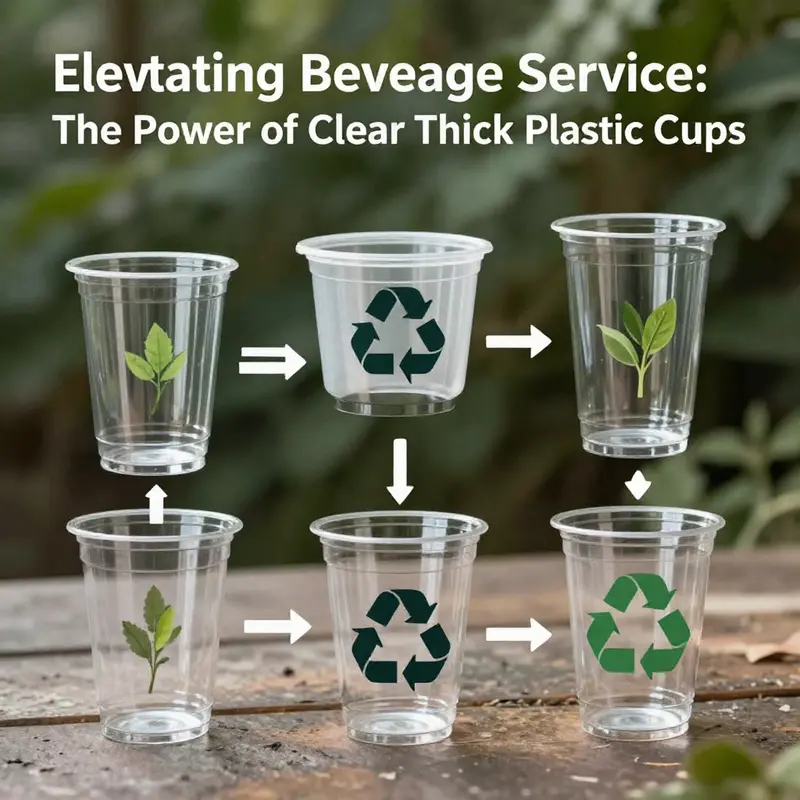
Clear thick plastic cups sit at the intersection of practicality and perception. Their transparency showcases the hue of a drink, their rigid walls lend confidence in handling, and their thick walls offer a kind of insulation that fends off the temperature swings of outdoor events or a crowded café environment. Yet the same features that make these cups so useful—clarity, strength, and a sensory appeal—also illuminate a broader environmental conversation. This chapter traces how the materials and design choices behind clear thick plastic cups shape their environmental impact, and it explores how a more sustainable path can be charted without sacrificing the benefits these products deliver. In doing so, it anchors the discussion in the realities of modern consumption, where convenience often collides with responsibility, and where the quest for durable, on-trend serving ware must reckon with the urgency of a more circular economy.
At the core of the environmental dialogue are the materials that give clear thick cups their character. Most of these cups are manufactured from PET, a clear, stiff plastic prized for its optical properties and structural rigidity, or from PP, which offers enhanced heat resistance. PET’s clarity is unmatched, and its strength makes the cups resilient to cracking under typical handling and transport. PP brings a robustness that supports hot beverages and reduces warp or deformation when a cup is filled with ice and liquid. But even as these materials perform well in daily use, they are not free from environmental considerations. The journey from cradle to grave for PET and PP cups is tightly linked to fossil fuel use, energy consumption, and end-of-life outcomes that often do not favor the circular economy models many brands aspire to implement. The issue is not merely the existence of these plastics, but the way they are commonly managed after serving their purpose.
Recycling is central to the sustainability narrative, yet it is where many gaps appear. PET is technically recyclable, but practical recovery rates remain hindered by contamination from residual liquids and food debris, as well as the complexity introduced by multi-material designs that blend materials or incorporate labels and adhesives not easily separated in standard recycling streams. Given that many clear thick cups are designed for one-time use and then disposed of in mixed municipal streams, a sizable portion ends up in landfills or, worse, the natural environment. The problem extends beyond end-of-life disposal. The production of these cups relies on fossil fuels and energy-intensive processes that contribute to greenhouse gas emissions. In the aggregate, the lifecycle footprint—encompassing extraction, manufacturing, distribution, usage, and disposal—often tilts toward a higher environmental cost when viewed against reusable or compostable alternatives.
An additional layer of concern arises from the environmental impact of plastics in the broader ecosystem. When products like clear thick cups enter land or sea, they can fragment into microplastics that infiltrate soils and waterways, eventually entering food chains. The presence of microplastics is not just an environmental problem; it raises questions about human health and ecosystem integrity as well. While advancements in recycling technology and waste management are moving targets with regional variation, the overarching message remains clear: reliance on single-use, clear thick plastic cups intensifies the demand for materials that are not always effectively captured by existing systems.
The pursuit of sustainable options does not require abandoning the demand for clear, sturdy serving ware. Instead, it invites a shift toward a portfolio of strategies that can reduce environmental impact while preserving the user experience. One such strategy is to expand the adoption of paper-based cups featuring bioplastic linings, such as PLA. These designs leverage renewable resources—often derived from wood pulp or corn starch—to build a cup that is clear enough for beverage presentation and sturdy enough for practical use, while offering partial compostability under industrial conditions. This does not imply a simple substitution; rather, it signals a broader rethinking of end-of-life pathways and the infrastructure needed to realize the environmental benefits. In regions with industrial composting facilities, PLA-lined paper cups can be composted, transforming what would be a long tail of plastic waste into a more manageable organic residue. Yet the success of such solutions hinges on consumer participation in appropriate disposal streams and on the availability of composting facilities capable of handling these materials, as well as on corporate commitment to sourcing and systems-level changes that support recycling and composting frameworks.
For organizations that host events, run cafés, or manage catering operations, the shift toward sustainability also entails exploring reusable options. Reusable thick plastic cups, especially those made from BPA-free, food-grade materials, present a compelling long-term alternative by reducing waste generation over time. The calculus, however, is nuanced. Upfront costs rise, which can be a barrier for small businesses or one-off events. The lifecycle benefits depend on how many times the cups are used, the efficiency of washing and sanitization processes, and the energy and water inputs required for cleaning. When reused multiple times, a cup’s environmental advantage grows, but it must be paired with a robust take-back and sanitation system to ensure safety and hygiene. Rethinking handling logistics—stewarding dishwasher capacity, optimizing loading patterns, and ensuring reliable supply—becomes as essential as the choice of material itself.
Design and system-level thinking are integral to extending the life of clear thick cups within a circular economy framework. A crucial practical insight is that recyclability is not a fixed trait of a material but a function of system design. Cups that embody a single-material construction and clear labeling can simplify sorting and recovery. Conversely, complex multi-material assemblies, decorative coatings, or embedded adhesives can stymie recycling streams and undermine the potential for material recovery. This is a collective challenge that involves brands, manufacturers, waste managers, and regulators. It invites a broader conversation about product stewardship and the incentives that motivate the development of materials and designs that align with end-of-life processing capabilities.
From a consumer behavior perspective, the path toward sustainability hinges on awareness and action. When audiences are informed about disposal options, the probability of diverting cups from landfills increases. In practice, this means clear labeling, accessible information about recycling or composting, and convenient collection points at events or venues. It also means a willingness to alter behavior—accepting reusable options, returning cups for cleaning, or choosing packaging solutions that fit the local waste management ecosystem. Education, in tandem with infrastructure, forms a practical engine for change. The ideal scenario is one in which consumers can confidently dispose of or reuse cups in a way that aligns with regional capabilities, reducing the friction between desire for a crisp, clear presentation and commitment to environmental stewardship.
Where does this leave the notion of a commitment to sustainability for clear thick plastic cups? It leaves room for a nuanced, layered approach. Some situations may call for a pivot toward compostable paper alternatives, especially in events with on-site composting infrastructure or clear post-event waste separation. Others may benefit from a well-implemented reusable cup program, supported by deposits, returns, and efficient sanitation. There remains a place for improved recycling practices, aided by better labeling, streamlined sorting, and collaborations that remove barriers to material recovery. The overarching goal is to shrink the cups’ environmental footprint without eroding the functions they fulfill: clarity, strength, temperature stability, and ease of use in a fast-paced service environment.
For those exploring practical options beyond narrative advocacy, the conversation can include a tangible pivot toward discussions of alternative serving ware. The idea is not to cast off plastic entirely but to recognize when and where plastic can be responsibly integrated into a broader sustainability strategy. In alignment with this, readers may consider exploring the broader landscape of disposable and reusable cup options that balance performance with environmental accountability. For those curious about the comparative advantages of alternative materials and designs, a useful starting point is the broader family of eco-friendly paper cups with lids that are designed for on-the-go consumption and can be part of a composting or recycling plan in appropriate contexts. eco-friendly paper cups with lids can serve as a practical reference point for teams weighing a transition away from single-use clear thick plastic cups.
In this analytic frame, the sustainability of clear thick plastic cups becomes less about absolutes and more about a spectrum of outcomes shaped by material choices, end-of-life pathways, and the logistics of reuse and recovery. The environmental footprint of a single event cup is the sum of its material origin, production energy, transport, usage, and ultimate disposal or recovery. If a venue or brand can channel that footprint into a well-structured system—one that emphasizes reuse, efficient washing, and accessible recycling or composting—the relative burden of this familiar serving ware can be mitigated. If not, the cups risk becoming a persistent reminder that convenience and waste can co-exist, but only at a cost to the environment over time.
To reinforce the larger point: sustainability is not a one-size-fits-all prescription. It is a pragmatic, context-dependent choice that requires aligning choices with local waste infrastructure, consumer behavior, and economic realities. For some operators, the most pragmatic path may include a blend of strategies—utilizing reusable cups where feasible, transitioning to compostable paper alternatives in appropriate contexts, and strengthening recycling and waste-management practices for remaining plastic cup streams. In all cases, the objective remains the same: to preserve the user experience that cups deliver while reducing their ecological footprint. This balanced approach invites ongoing dialogue among manufacturers, event organizers, retailers, and communities about how best to design and deploy serving ware that respects both the needs of customers and the planet’s limits.
External resource for further reading on material standards and engineering applications related to disposable cup materials can be found at a widely used industry information portal: https://www.partycity.com/education/plastic-cups-pack-100-key-standards-physical-properties-and-engineering-applications
Clear Strength, Smart Design: Innovations in Thick Plastic Cups for Modern Beverage Service
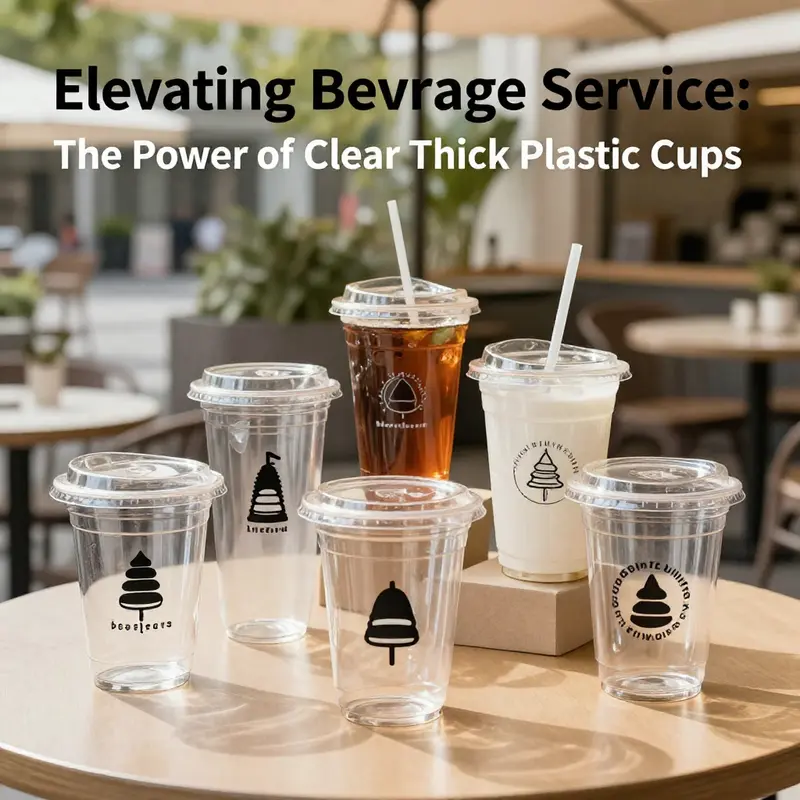
Clear thick plastic cups occupy a paradox of sorts. Their beauty lies in transparency, allowing the color and texture of a drink to take center stage. Their utility rests on a suite of design choices that are not always visible. When you lift a cup and hear the click of a rigid wall, you feel the culmination of focused engineering aimed at reliable performance in busy service environments. This chapter traces how innovations in double-wall insulation, material composition, ergonomic shaping, printing, and sustainability redefine what a clear, thick plastic cup can do. It is a story of form meeting function, aesthetics with practicality, and a vessel that supports hot coffee, iced tea, cocktails, and smoothies with equal ease, all while meeting modern safety and stewardship expectations. The setting shifts—from sunlit festivals to busy cafes—and the cup must adapt without losing its essence: clarity, strength, and calm usability.\n\nThe double-wall approach is a visible but subtle frontier. The air gap between walls reduces exterior heat transfer and minimizes condensation on cold drinks. The outer wall stays comfortable to touch even when the interior holds a steaming beverage; the inner wall remains clear while resisting deformation under pressure. The result is a cup that feels solid in the hand, allowing a lid and straw to be used without scalding fingers or slippery surfaces. Insulation also helps preserve the beverage’s profile longer, which matters for drinks with layered flavors. The challenge is maintaining optical clarity through two layers, which advances in polymer processing, wall alignment, and surface treatment help achieve, producing a cup that communicates reliability through performance as well as appearance.\n\nMaterial composition and structural reinforcement are the quiet workhorses behind the visible strength. Clear thick cups are commonly molded from high-grade PET or polystyrene, chosen for clarity, rigidity, and resistance to cracking. A thicker wall contributes to durability and a more confident grip, while careful balance prevents a bulky feel. Some formulations include additives that improve crack resistance and impact tolerance without sacrificing clarity. In hot beverages, insulation combines with these materials to reduce exterior heat buildup so users can hold the cup confidently; in cold drinks, the same cues help prevent warping during service. The upshot is consistent performance across beverages, from a delicate tea to a robust iced coffee.\n\nErgonomic shaping rounds out the practical core of the design story. Enhanced base geometry improves stability on surfaces and during transport, reducing tipping on uneven terrain or in crowded bins. Contoured grips and reinforced rims support a secure hold, even with gloves or while on the go. A wider base aids stacking efficiency, easing storage and reducing toppling risk. Rim design is carefully rounded to prevent lip fatigue and maintain a comfortable mouthfeel for hot or cold drinks. In practice these details translate to fewer spills and more dependable service, with accessibility that accommodates a broad range of grip strengths.\n\nPrinting and decoration techniques now honor function and branding while preserving clear, thick walls. Modern printing can deliver full-color, high-resolution artwork directly onto the surface without compromising clarity or wall strength. This is strategic for venues relying on visual branding—the logos, motifs, and color palettes that differentiate experiences. Inks must adhere securely, resist smudging, and stay bright after heat exposure and repeated washing. The cup becomes a neutral canvas that enhances the beverage’s presentation, with colors and brands reading true from rim to base. Durable, color-fast formulations resist yellowing and abrasion, maintaining a strong brand image across many service cycles.\n\nSustainability threads through the design narrative as a guiding principle. Recyclability, post-consumer recycled content, and bio-based options are considered to maintain optical clarity and structural integrity. Cups are designed for reuse where appropriate and dishwasher-safe where possible, with end-of-life pathways that fit existing recycling streams to reduce contamination. The trade-offs are balanced: higher PCR content may require purification or formulation tweaks to avoid haze. Durable design also reduces waste by extending usable life, supporting reuse in busy service environments.\n\nThe implications of these innovations extend to cafes, catering, outdoor events, and home entertaining. A clear thick cup communicates the drink’s color and texture, while its sturdy wall and comfortable grip enable confident handling in fast-paced settings. The design choices—double-wall insulation, robust materials, ergonomic shaping, precise printing, and sustainable thinking—cohere into a system that supports safety, efficiency, branding, and responsible resource use. Looking forward, ongoing research aims to push heat resistance, improve insulation at minimal weight, and expand recycling compatibility, all while preserving clarity and a premium feel. The overarching message is that the cup is not just a disposable prop but a thoughtfully engineered instrument that carries warmth, refreshment, and a moment of sensory delight with composure.\n\nReaders seeking performance benchmarks will find that double-wall solutions are evaluated for heat retention, ergonomics, surface temperature, and user comfort across beverages. Material integrity tests measure cracking resistance and deformation under load, while clarity metrics track haze and color neutrality after handling and washing. Printing durability tests examine colorfastness and edge fidelity under abrasion and moisture exposure. Sustainability assessments quantify recycled content, recyclability, energy use, and lifecycle impact, offering a nuanced view of how design affects daily use and environmental responsibility.\n\nExternal resources provide context for evaluating clear thick cups in commercial settings, including temperature stability, handling comfort, and durability under challenging service conditions. Access to these benchmarks can inform purchasing decisions, quality control, and sustainability planning for foodservice operators.\n\nIn sum, innovations in clear thick plastic cups arise from collaboration among materials science, ergonomic insight, branding sophistication, and environmental awareness. The result is a vessel that enhances the beverage experience while respecting safety, practicality, and responsible stewardship. The chapter invites readers to recognize how design decisions—quietly embedded in a simple object—shape everyday moments of refreshment, gathering, and celebration. As service contexts evolve and consumer expectations sharpen, the cup’s narrative will continue to adapt, remaining faithful to clarity, strength, and a reliable, elegant user experience, while pushing toward a sustainable future for clear, thick plastic serving solutions. The chapter ends with a nod to the enduring link between human ritual and crafted hospitality, inviting readers to anticipate the next exploration of how cup design intersects with service workflows, containment strategies, and eco-conscious dining.
Final thoughts
Throughout this exploration of clear thick plastic cups, it’s evident that their durable nature, diverse applications, and eco-friendly aspects make them an indispensable asset in the beverage sector. With a keen focus on materials, market trends, sustainability, and design, businesses can leverage these cups to enhance customer experiences and elevate their service offerings. As industries adapt to the increasing demand for high-quality, attractive beverage solutions, clear thick plastic cups stand out as a viable choice for a wide range of environments.