
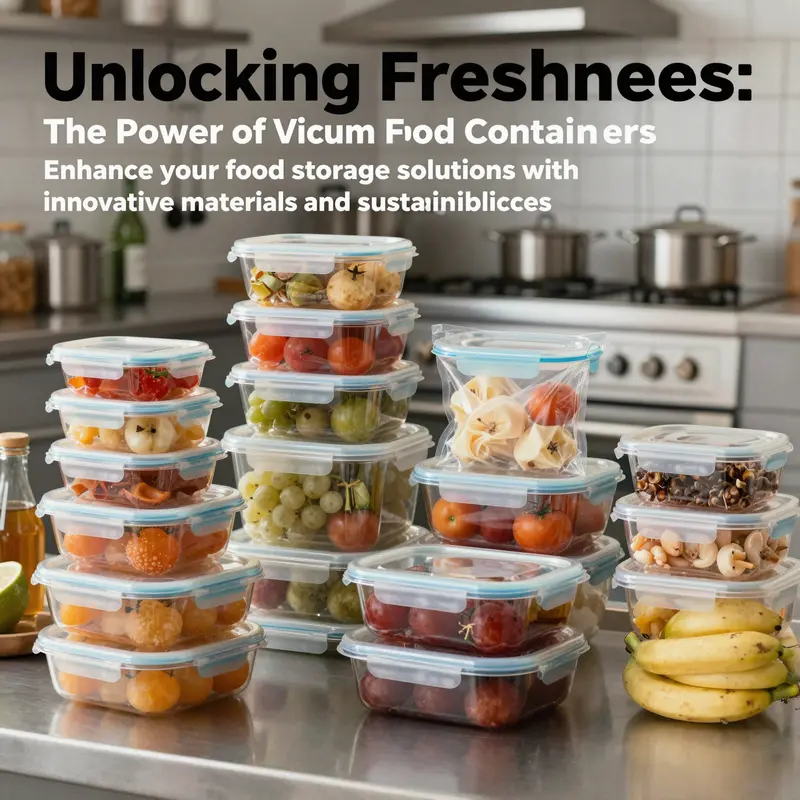
In the culinary world, where freshness and flavor are paramount, optimizing food storage has never been more critical. For bubble tea shops, beverage chains, restaurants, food trucks, catering services, and event planners, wholesale vacuum food containers stand out as an essential solution for extending the shelf life of goods while ensuring quality. This article delves into material innovations that enhance functionality, the growing sustainability trends reshaping the marketplace, and the crucial features and customization options that can help businesses select the right vacuum food containers. By the end, you’ll be equipped with the knowledge to elevate your food storage practices effectively.
Material Innovations Redefine Wholesale Vacuum Food Containers
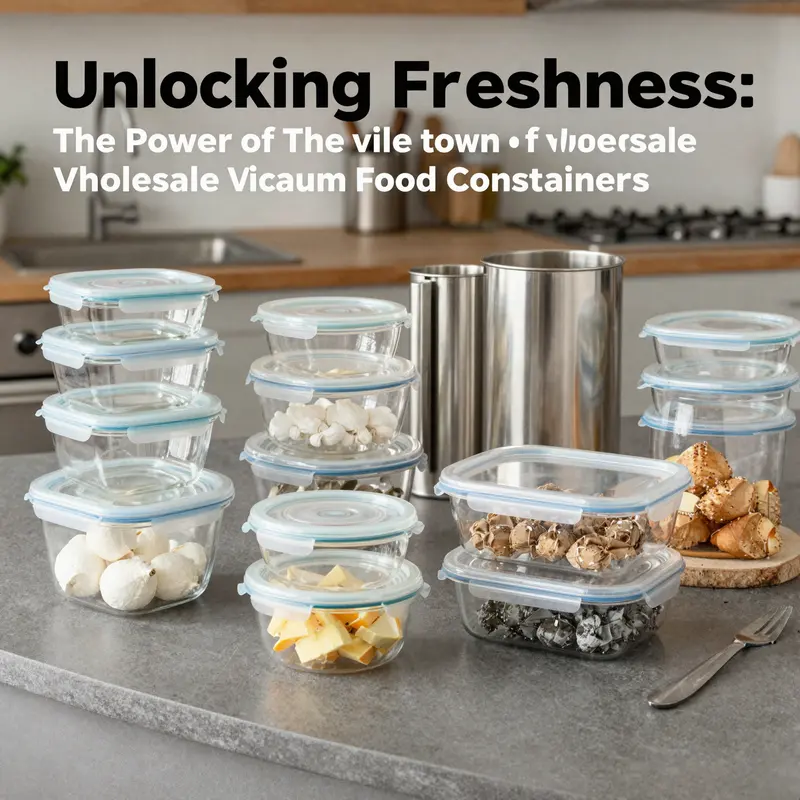
A concise overview of how advanced materials and barrier technologies are transforming wholesale vacuum food containers. Multi-layer barrier films, recyclable and bio-based polymers, and smart features expand performance while supporting sustainability goals. The narrative covers barrier performance, durability under temperature fluctuations, and the role of recycled content in meeting regulatory safety standards. It also notes the importance of compatibility with existing vacuum-sealing equipment and end-of-life considerations, including recyclability and compostability where feasible. Practical implications for procurement, branding, and supplier collaboration are highlighted, with emphasis on reducing waste, lowering total cost of ownership, and enabling flexible packaging strategies across diverse food categories.
Sustainable Shifts in Wholesale Vacuum Food Containers: Biodegradable Materials and Smart Preservation
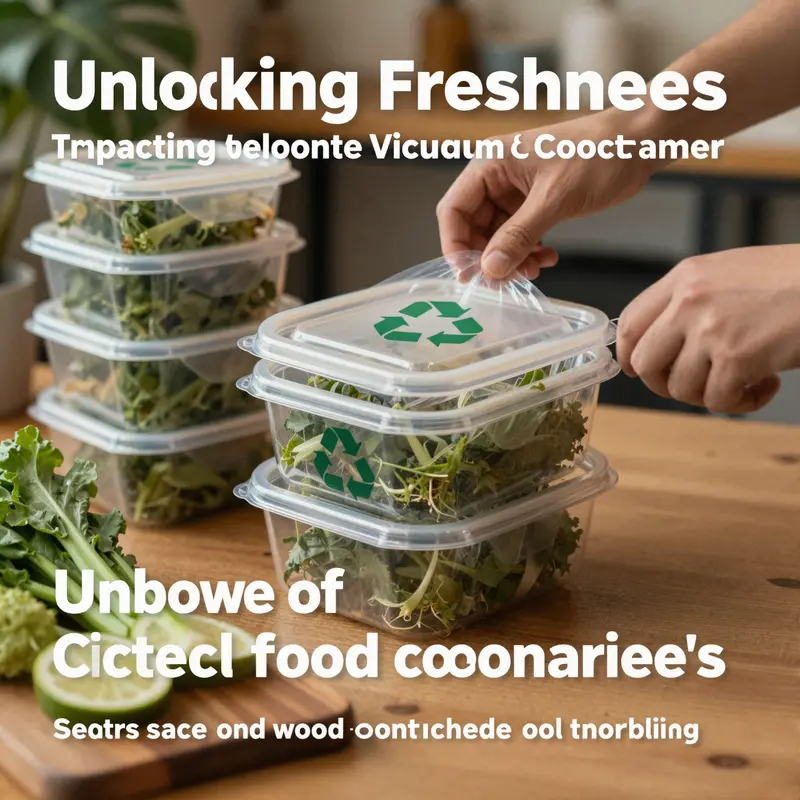
The wholesale vacuum food container market stands at a crossroads where the drive to extend shelf life and protect food quality converges with a growing mandate to reduce environmental impact. Stakeholders across food service, manufacturing, and distribution are increasingly asking not only how long a product stays safe and fresh but also how its packaging fits into a broader sustainability strategy. Vacuum storage excels at preserving freshness by removing air and limiting oxidation, moisture loss, and freezer burn. Yet the packaging that houses that preservation can either amplify or undermine sustainability goals. As consumer expectations shift toward eco-friendly options and as regulators tighten standards, the industry is learning to balance performance with responsibility, crafting products that perform under pressure while leaving a smaller environmental footprint.
Biodegradable materials have moved from a niche interest to a core consideration for many producers and buyers. The demand for packaging that can be degraded through biological processes—whether in industrial facilities or in home composting environments—has grown as stakeholders seek to close the loop on product life cycles. In the vacuum container arena, this has translated into experiments with plant-based polymers, bio-derived resins, and composite blends designed to break down more readily after use. Polylactic acid and certain newer biobased polymers, as well as starch-based blends, are increasingly discussed as viable avenues for forming durable vacuum seals and rigid walls that can withstand regular handling. In practice, however, the story is nuanced. Biodegradable materials can offer meaningful reductions in certain waste streams, but their performance profiles still need to meet the demanding requirements of commercial kitchens and large scale operations. Barrier properties, heat resistance, and vacuum seal reliability must align with food safety standards, while laminates and coatings must not compromise compostability or recyclability. This tension has driven a more holistic approach to design—one that prioritizes end of life alongside initial performance.
To reconcile these dynamics, many manufacturers are exploring monomaterial designs that preserve the integrity of the vacuum without introducing incompatible layers that muddle recycling streams. The industry increasingly prizes single-material structures that can be sorted and processed by municipal facilities, thereby enabling real circularity. At the same time, gaskets and seals, which are essential to maintaining airtight environments, are being redesigned to be either biodegradable along with the container or easily detachable for separate recycling streams. The goal is a clean material break down where possible, and at minimum a clearly defined path for recovery and processing. Simultaneously, there is heightened attention to safety certifications and food contact compliance. Materials intended for consumer use must be BPA-free and comply with recognized safety standards, while the overall design favors recyclability and reduced contamination risk. This is not merely a theoretical exercise. For buyers who purchase in wholesale quantities, the implications are practical: reduced waste disposal costs, clearer supplier responsibility for end of life, and a clearer alignment with corporate sustainability pledges.
Beyond the material debate lies a broader shift: the integration of smart technology into vacuum storage solutions. The Internet of Things is moving from novelty to necessity in the food packaging ecosystem, with sensors and connectivity embedded in containers to monitor vacuum integrity, temperature, humidity, and even time since opening. These capabilities transform how storage outcomes are managed in commercial kitchens, warehouses, and retail outlets. A vacuum container that can alert staff when a seal compromise occurs, or when a product has surpassed an optimal freshness window, can dramatically reduce spoilage and waste. Smart containers collect data that can be analyzed to optimize inventory turnover, understand spoilage patterns, and align procurement decisions with actual usage rather than guesswork. This data-driven approach dovetails with sustainability by preventing unnecessary disposal and by enabling more precise portioning, reducing overproduction, and saving energy associated with refrigeration and cold chain management. It is not an exaggeration to say that the merging of vacuum technology with IoT creates a feedback loop: better preservation leads to less waste, and real-time insights support more responsible sourcing and product stewardship across the value chain.
The sustainability conversation also places a premium on recycled content and the prompt adoption of circular economy models. Recycled content—particularly recycled PET or other high-quality post-consumer materials—has progressed from a marginal option to a credible performance proposition for many wholesale buyers. Producers are investing in processes that ensure food contact safety while incorporating higher shares of recycled input. The appeal lies in the potential to lower the life cycle carbon footprint and to support closed-loop systems where containers are returned, cleaned, and re-filled or reprocessed rather than sent to landfill. Standards and certifications matter here; regulators and independent bodies scrutinize the safety of recycled materials used in contact with food and the ability of the material to meet stringent performance benchmarks through repeated cycles. When implemented thoughtfully, recycled content can deliver tangible environmental benefits without sacrificing the airtight performance essential to vacuum storage. It is a balancing act—ensuring the recycled material retains the necessary rigidity, clarity (where glass or transparent plastics are involved), and chemical inertness, while also avoiding color bleed, odor transmission, or surface degradation that could undermine user trust.
A notable dimension of the market is the convergence of sustainability with regulatory expectations and consumer preferences. Regulatory bodies around the world increasingly require packaging to be responsibly sourced, to minimize hazardous additives, and to be compatible with recycling streams. In response, manufacturers are shifting away from multi-layered laminates that hinder recyclability toward designs that can be easily segmented within existing waste management systems. This transition is not just about meeting compliance; it is about differentiating products in wholesale channels where buyers actively compare the environmental attributes of competing offerings. In practical terms, this means prioritizing materials and constructions that support easy disassembly for recycling, marking systems that guide end users on proper disposal, and avoiding coatings or adhesives that complicate processing. It also means transparent communication about the environmental attributes of a container, including clear disclosures about recyclability, compostability, and the expected lifecycle of the product.
Economic considerations shape how quickly these sustainability shifts are adopted across different market segments. While biodegradable or biobased materials can command price premiums, the total cost of ownership may be favorable when waste reduction, reduced regulatory risk, and improved supply chain resilience are factored in. For wholesale buyers, the decision often hinges on a mix of upfront cost, reliability of performance, and the ability to align packaging choices with sustainability targets and customer expectations. In sectors such as restaurants, catering, and institutional dining, where large volumes of leftovers are generated and food safety is paramount, the value proposition for high performance, longer lasting freshness competes directly with the premium attached to eco-friendly materials. In many instances, a tiered approach emerges: basic lines may prioritize cost efficiency while entry into greener collections—featuring biodegradable or recycled content—appears for more sustainability-oriented clients. The result is a market that does not force a single solution but offers scalable options that match a range of operational needs and environmental commitments.
The conversation about sustainability in vacuum containers is not isolated from broader packaging trends. The shift toward eco-friendly materials interacts with consumer demand for transparency, with buyers seeking assurances about the origin of materials, the lifecycle impacts of products, and the ability to recycle or compost. At the same time, smart technology expands the scope of what it means to preserve food responsibly. It is no longer enough to simply prevent spoilage; the most advanced systems capture and share actionable data that supports responsible stewardship across the entire supply chain. For wholesale procurement teams, the combination of biodegradable material options, recycled content, smart preservation features, and recyclable design offers a toolkit to optimize both the environmental and financial performance of storage solutions. The outcome is a more resilient, adaptable packaging ecosystem that can meet the evolving demands of customers, regulators, and the planet.
Consider, for a moment, the practical implications for procurement and operations. Sourcing decisions can no longer hinge solely on price or initial performance; they must account for end of life, supply chain risk, and the potential for waste reduction through smarter storage. A wholesale buyer may evaluate a container’s performance across several axes: the reliability of the vacuum seal after repeated handling, the ease of cleaning and sanitation, the safety credentials of materials in contact with food, and the container’s contribution to overall waste reduction. When smart technology is embedded, additional questions arise about data privacy, interoperability with existing inventory management systems, and the long-term support for software updates or sensor calibration. Yet the benefits are tangible. A smart vacuum container network can provide real-time alerts for spoilage, guide staff on best practices for storage and rotation, and help kitchens and warehouses shift toward more efficient use of resources. The maturation of these technologies, coupled with a growing emphasis on sustainable materials, suggests a future in which wholesale vacuum storage becomes not only a matter of preserving food but also a central component of a holistic, environmentally responsible supply chain.
As these trends unfold, several strategic opportunities emerge for market participants. For manufacturers, the imperative is to invest in material development that can satisfy the dual aims of performance and sustainability. This means extending research into biodegradable and compostable options without compromising the airtight seal and impact resistance necessary for heavy use. It also means exploring polymer blends and coatings that support recyclability while maintaining barrier properties. For suppliers of wholesale packaging, there is value in expanding offerings that emphasize recycled content and monomaterial packaging, along with clear labeling that helps end users navigate disposal options. For buyers, there is a growing incentive to seek partners who can provide a full lifecycle perspective—materials with credible certification, documented end-of-life pathways, and compatibility with smart storage ecosystems that enable data-driven decisions. In this evolving landscape, success hinges on partnerships that align product design with environmental goals, operational efficiency, and the practical realities of large-scale, high-velocity storage and distribution.
To illustrate the practical side of this evolution, consider the packaging ecosystem as a whole and how it intersects with wholesale vacuum containers. A prominent feature of the sustainability trajectory is the emergence of packaging options that integrate plain, recyclable materials with clear, accessible end-of-life guidance. For instance, there are eco-friendly kraft paper take-away boxes with clear lids that can serve as analogs or complements to vacuum containers in mixed packaging applications. These solutions emphasize material transparency, recyclability, and the use of responsibly sourced inputs, offering a tangible example of how sustainability principles translate into concrete product choices in wholesale channels. For buyers exploring such options, a representative example is available through suppliers offering kraft-based take-away packaging with customizable prints, ensuring that eco-friendly choices can be aligned with branding and operational requirements. See an example of this approach here: eco-friendly kraft paper take-away box with clear lid. This link illustrates how sustainability-oriented packaging can be scaled for wholesale uses while preserving the convenience and performance demanded by food service operations, and it serves as a practical touchstone for discussions about recyclable and compostable design in a vacuum-dominated storage ecosystem.
Beyond the present moment, the research landscape points to continued expansion of both biodegradable materials and smart functionality as core drivers of future growth. Market analysts highlight that sustainable packaging is now treated as a central competitive factor rather than a peripheral enhancement. This suggests a trajectory in which the share of materials derived from renewable sources, the degree of recyclability, and the sophistication of sensor-enabled systems collectively determine competitive strength. The implications for wholesale buyers include not only the opportunity to reduce environmental impact but also the potential to create new value through data-powered optimization of shelf life, inventory, and waste reduction. As regulators tighten standards and consumers demand clearer accountability, the most successful players will be those who can demonstrate a credible, verifiable path from material choice to end of life. They will show not only how their products preserve freshness but how they contribute to a circular economy, where materials are reclaimed, repurposed, and reintroduced into the supply stream with minimal environmental disruption.
In sum, the sustainability trends shaping the wholesale vacuum food container market are not a passing phase. They reflect a broader evolution in how packaging is designed, used, and disposed. Biodegradable and bio-based materials hold promise for reducing environmental impact, but must be balanced with performance and practical end-of-life realities. Monomaterial and recycled content solutions address recyclability and carbon footprints while preserving the airtight integrity that makes vacuum storage effective. Smart technology adds a new layer of value by enabling proactive preservation, data-driven decisions, and waste reduction across the supply chain. Taken together, these trends point toward a future in which wholesale vacuum containers are not only guardians of freshness but also active participants in sustainability storytelling, corporate responsibility, and systemic efficiency. The path forward will require continued investment in material science, system integration, and transparent communication with both regulators and consumers, ensuring that the promise of extended shelf life does not come at the cost of a healthier planet.
Guardians of Freshness: How Wholesale Vacuum Food Containers Reframe Storage, Sustainability, and Kitchen Efficiency
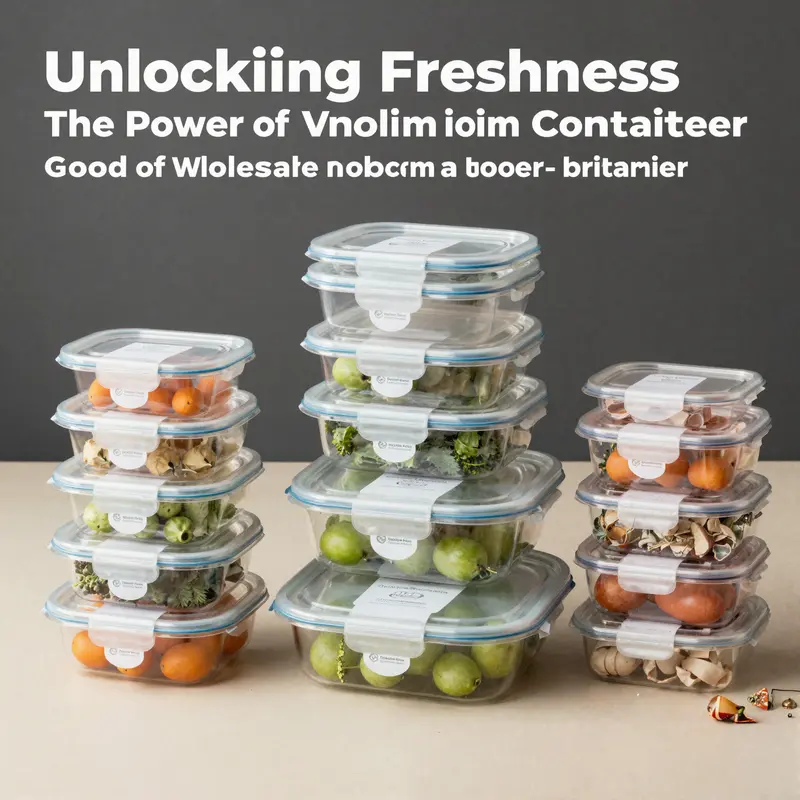
Wholesale vacuum food containers sit at the intersection of science and practical operations, quietly transforming the way kitchens manage time, safety, and waste. They are not just plastic boxes with a seal; they are engineered systems that remove air, limit oxygen exposure, and create stable microenvironments where food can rest for longer without losing flavor, color, or nutrients. In commercial kitchens, food manufacturing facilities, and even in households that treat leftovers with respect, these containers function as the backbone of a disciplined approach to storage. They are designed to address a spectrum of pressures: the need to extend shelf life, the demand for consistent quality across shifts or days, the urgency of reducing spoilage costs, and the growing imperative to align storage practices with environmental stewardship. A well-implemented vacuum storage regime can be a quiet, relentless contributor to margin protection and sustainability, while also offering a visible signal of professionalism to guests, customers, or stakeholders who enter a facility that cares about how food is treated from harvest to table.
At the heart of every wholesale vacuum container is a simple, powerful principle: air is the enemy of freshness. Oxygen fuels oxidative reactions that dull flavors, fade colors, and dry out tissues. It also supports the growth of aerobic bacteria and molds, which can undermine safety and safety compliance in food handling. By removing air and maintaining an airtight seal, these containers slow down microbial activity and enzymatic processes that would otherwise degrade quality. The result is a product that behaves as if it had more ‘real estate’ in the cold chain. It resists freezer burn, it minimizes moisture loss, and it reduces the chance that delicate aromas and volatile compounds escape during storage. In practical terms, this helps kitchens keep prepared meals and prepped ingredients in a state that is closer to the day they were produced, allowing chefs and operators to deliver consistent results across menus and service periods.
The market for wholesale vacuum storage reflects a broad spectrum of needs, and that spectrum is mirrored in the materials and designs on offer. Plastic containers crafted from food-grade polymers provide lightness, affordability, and resilience under travel or rough handling. They are particularly appealing in prep kitchens that demand portability and quick turnover, where the trade-off between budget and performance is carefully balanced. However, these plastic options can absorb odors over time and may not be ideal for high-heat applications. They also require careful attention to sealing mechanisms and gasket integrity, since the vacuum is only as strong as the seal that preserves it.
Glass containers, often produced from borosilicate or tempered soda-lime glass, present a different constellation of advantages. They bring a premium feel and inert chemistry—no flavor carryover, no staining, and compatibility with a wide range of reheating methods in many cases. They are recyclable and resilient to chemical interactions with most food items, which makes them attractive for brand-conscious operations and households that value a clean, transparent aesthetic. The downsides are clear: heavier weight, a non-negligible risk of breakage during transport or frequent handling, and a higher upfront cost. For many professionals, glass represents a balance between durability and perceived value rather than a strict cost calculation, especially where presentation, microwaving, or hot-fill processes are involved.
Stainless steel vacuum containers offer the strongest performance in terms of durability and temperature retention. They excel in environments that require rugged equipment, long-term storage, or transport between locations. Double-walled insulation minimizes heat or cold transfer, enabling hot foods to stay hot and cold foods cold for longer, which is a critical capability in catering, meal-prep services, and multi-site operations. The investment is higher, and the aesthetic can be more utilitarian, but the long-term payoff in lifecycle performance—and in the avoidance of chemical interactions with acidic or salty foods—can be compelling for institutions that prize resilience and food safety across the board.
Sustainability has become a guiding thread in product development in this space. Companies are pursuing recyclable or reusable solutions that fit into broader environmental strategies without compromising performance. A notable trend is the deployment of recycled content and post-consumer materials, such as advanced R-PET (recycled PET) technologies, to produce food-grade packaging that aligns with international safety standards. This enables containers that can be safely cleaned, reused, and recycled, supporting circular economy goals while preserving the integrity of the food stored inside. The push toward sustainability is not cosmetic; it is increasingly codified in supplier requirements, procurement policies, and franchise or brand standards, making the selection of a vacuum storage system a strategic decision that touches procurement, operations, marketing, and sustainability reporting.
When sourcing wholesale vacuum food containers, buyers must translate broad benefits into tangible procurement criteria. A size range that covers everything from small portions to large batch storage is essential. Many buyers favor a mix that includes stackable canisters for space efficiency, as well as tall jars or wide-mouthed designs to accommodate different types of food—meats that need secure, oxygen-reduced storage, dry goods that benefit from clear visibility, and vegetables or pre-cut fruits that demand easy access and portion control. The sealing mechanism is equally critical. Silicone gaskets are common for their resilience and cleanability, but the geometry of the lid, the integrity of the threads, and the precision of the seal all influence the efficacy of the vacuum. Any compromise—an o-ring that tears, a lid that warps after repeated wash cycles, or a gasket that discolors or crowds the seal—erodes the reliability of the entire system.
Safety and compatibility considerations also dominate decision-making. For many facilities, BPA-free plastic is a default requirement, grounded in regulatory expectations and consumer safety concerns. Certification labels from recognized bodies—though the exact standards may vary by jurisdiction—provide a baseline of confidence that the materials will not leach harmful substances during typical storage and reheating scenarios. In addition to chemical safety, thermal compatibility matters. Some containers are designed to be microwave, oven, or dishwasher safe in certain configurations, while others may tolerate heat only in limited circumstances. The ability to withstand repeated cycles of freezing, storage, and reheating without cracking or degrading is a practical measure of a container’s true value in a busy operation.
Beyond core functionality, customization emerges as a powerful differentiator. In wholesale markets, brands seek containers that carry their identity while also delivering practical advantages in kitchen workflows. Branding enhancements—logos, colors, or lid color-coding—can transform a generic storage system into a comprehensive organizational tool. Color-coding lids, for example, makes it easier to prevent cross-contamination in prep areas by visually separating proteins, vegetables, and ready-to-eat items. This is not just cosmetic; it translates into safer handling practices and faster service, especially during peak periods when staff rotate quickly through stations. Some suppliers offer specialized designs such as compartmentalized trays or leak-proof seals tailored to marinating, sous-vide preparations, or segmented sauces. While these features add a layer of sophistication, they also reflect a clear understanding of how different storage tasks require different packaging architectures.
Bulk ordering is another practical consideration. For many operators, the economics of scale matters. Wholesale platforms often enable orders starting from a threshold that makes sense for multi-location chains, catering companies, or large meal-prep services. Purchasing in bulk can produce cost-per-unit savings and streamline procurement workflows, but it also requires a reliable supply chain and consistent quality across batches. In such contexts, suppliers that can meet stringent standards for food safety, mechanical durability, and thermal performance while delivering on time become strategic partners rather than mere vendors. The value proposition, then, extends beyond the container itself to include the service ecosystem—responsive customer support, clear technical specifications, fast shipping, and the ability to customize packaging to align with corporate identity or operational needs.
The selection process is best understood as an exercise in balancing performance with practicality. In some scenarios, a lighter, more affordable plastic option may deliver the best return on investment for basic storage needs or high-volume, low-cost operations. In others, the premium feel and superior thermal performance of glass or stainless steel can justify the higher upfront cost by reducing waste, improving conditioning of ingredients, and supporting high-service environments where presentation and safety standards are paramount. The most successful buyers approach storage as an integrated component of the broader food system—one that interacts with procurement, inventory control, production planning, and waste analytics. For example, effective vacuum storage can enable more accurate portioning, which in turn reduces spoilage, supports tighter inventory control, and minimizes the need for overproduction. When these containers are part of a well-orchestrated system, they help unlock operational efficiency that ripples through the entire kitchen or facility.
In practice, the path to an optimized vacuum storage setup begins with thoughtful mapping of storage needs. Operators consider the typical life cycle of ingredients, the cycle frequency of their prep processes, and the service models in which they operate. A restaurant with a high turnover of prepared sauces and marinated proteins, for instance, benefits from modular, stackable designs that fit neatly into refrigerated shelves and that can be introduced into the line without disrupting workflow. A meal-prep operation that handles daily pre-portioned ingredients might prioritize containers with clear visibility and easy labeling capabilities, so staff can quickly identify contents and use-by dates at a glance. In both cases, the ability to customize with branding is not merely a marketing exercise; it reinforces a standard operating procedure that clarifies handling rules and reduces confusion across shifts and teams.
From a sustainability perspective, the decision matrix increasingly favors containers that can be repeatedly used, cleaned, and repurposed. Recyclability is valuable, but the most enduring impact comes from designing a system that minimizes waste at every stage—during procurement, storage, and eventual disposal. Recycled-content plastics and metal designs can lower the environmental footprint while preserving the required performance. In such configurations, the choice of material resonates with the broader values of the business, contributing to consumer trust and corporate responsibility reporting. It is not unusual for buyers to conduct life-cycle assessments or to align container choices with certifications that reflect responsible sourcing, safe manufacturing practices, and end-of-life options. The result is a storage ecosystem that supports both cost containment and public accountability.
In addition to hardware considerations, successful adoption often hinges on how well the team understands and uses the technology. The best containers are not merely purchased and stored; they are integrated into standard operating procedures, training modules, and daily rituals of the kitchen or facility. Staff education about sealing techniques, gasket maintenance, and proper cleaning practices is essential. Vacuum seals can degrade if gaskets become clogged with residue or if lids are not cleaned and dried properly, which can compromise the vacuum and introduce safety concerns. A proactive maintenance approach—regular inspection of seals, routine replacement of aging gaskets, and clear guidelines for dishwashing compatible configurations—ensures longevity and consistent performance. In many operations, the adoption of these containers goes hand in hand with better labeling and traceability. Clear labeling of contents, dates, and batch identifiers supports not only food safety but also traceability in recall scenarios, which, while rare, are an ever-present consideration in larger facilities.
The procurement journey also benefits from a transparent exchange of specifications between buyer and supplier. Detailed technical sheets that outline material composition, temperature ranges, chemical resistance, and compatibility with different vacuum sealer systems reduce the risk of misalignment and post-purchase surprises. Some buyers require certifications that attest to BPA-free formulations or other safety assurances; others emphasize the need for equipment compatibility with their existing vacuum machinery. The conversation then expands into a discussion of service levels: lead times, minimum order quantities, customization options, and post-sale support. A reliable supplier is measured not only by the quality of the containers but also by their responsiveness, their willingness to accommodate specific requirements, and their ability to support a client through scale-up as the business grows.
In sum, wholesale vacuum food containers offer a practical, scalable answer to the perennial challenge of preserving quality while controlling costs. They enable kitchens and food businesses to reduce waste, improve safety, and demonstrate a commitment to sustainability without sacrificing performance. The right choice—whether plastic, glass, or stainless steel, with or without advanced vacuum features—depends on a careful alignment of use-case, budget, and long-term strategy. A savvy buyer examines not only the physical attributes of the container but also the wider ecosystem it inhabits: the sealing reliability, the compatibility with existing storage systems, the ease of cleaning and maintenance, and the flexibility to adapt as needs evolve. They recognize that storage is not a passive activity but a strategic lever that can influence menu reliability, service speed, and brand integrity.
For readers seeking a tangible example of how one line of packaging options can be explored within a broader portfolio, a practical, real-world reference to specialized packaging options can be explored here: kraft-paper octagonal bowl with lid. This example illustrates how a packaging system can be designed to support not only containment and preservation but also efficiency, labeling, and aesthetic cohesion across products. It highlights how customized designs and material choices can be tailored to address specific storage challenges—whether marinating needs, sauce containment, or the practical realities of portion control and inventory management in a busy operation.
For those who want to explore external market dynamics further, a foundational reference outlining the broader landscape of wholesale vacuum container options can be consulted. External resources provide insight into how suppliers balance performance criteria with cost efficiencies and how market demand is shaping innovations in materials, seals, and customization capabilities. External resource: https://www.alibaba.com/product-detail/Wholesale-Vacuum-Food-Containers-Airtight-Stackable_1600423856527.html
Final thoughts
As the demand for freshness and sustainability in food storage intensifies, investing in high-quality wholesale vacuum food containers becomes a vital strategy for businesses. By understanding the innovations in materials, embracing sustainability trends, and exploring key features and customization options, bubble tea shops, restaurants, food trucks, and catering services can ensure optimal food preservation and enhance their operational efficiency. This strategic investment not only supports food safety and quality but also aligns with growing consumer preferences for environmentally friendly practices, making wholesale vacuum food containers a smart choice for future success.