

Cool clear plastic cups have become a staple in beverage service, celebrated for their combination of elegance and practicality. Whether it’s a bustling food truck, a chic bubble tea shop, or a sophisticated corporate event, these cups enhance the beverage experience while offering a safe and durable option for service. This article will explore the material properties behind these cups, their aesthetic advantages, the environmental implications, and current market trends that underline their popularity. Each chapter will provide insights that are crucial for businesses aiming to make informed choices about their beverage service products.
Clarity in Motion: How Material Science Shapes the Look, Feel, and Utility of Cool Clear Plastic Cups

Clarity in beverages is not just about seeing color; it is about a subtle, everyday collaboration between light, polymer science, and user experience. The world of cool clear plastic cups sits at a fascinating intersection where optical performance, mechanical resilience, heat handling, and environmental considerations converge to create a product that is as much a stage for a drink as a vessel for social moments. To understand why these cups look the way they do, how they perform under pressure, and where they are headed, one must follow the thread from the raw polymer chain to the finished cup in the hand. The core materials that anchor this story are thermoplastic polymers whose properties are tuned through chemistry, processing, and design. Among the most common choices are polypropylene and polystyrene, each bringing a distinct balance of clarity, strength, and practicality to the table. Polypropylene, with its high impact resistance and robust heat tolerance, has become a favored option for disposable cocktail cups and other serveware intended to hold both hot and cold beverages with confidence. When PP is processed with careful control over crystallinity, molecular orientation, and surface finish, it can maintain a sparkling transparency even after exposure to temperature swings that would cloud or deform other plastics. It can also resist fingerprinting and condensation to a noticeable degree, which helps maintain a pristine appearance during a service period when hands, humid air, and condensation all conspire to leave a mark. While no material is perfect, the relatively high heat tolerance of PP—often quoted in the range of one hundred to one hundred thirty degrees Celsius for short-term exposure—supports a wide range of use cases, including hot beverages from tea to mulled drinks, without the risk of rapid deformation. This capability is particularly valuable in settings that require versatility, such as weddings, corporate events, and catering services, where a single cup design may need to handle both chilled cocktails and warm beverages without requiring a separate line of vessels. In the realm of aesthetics, PP’s clarity depends not only on the base resin but also on processing conditions. Flow characteristics, mold design, and the degree of polymer organization inside the wall of the cup determine how light travels through the material. When processed with tight control over defects and surface smoothness, PP cups exhibit a level of optical clarity that highlights the beverage’s color, viscosity, and even subtle stratification in layered drinks. The result is a presentation that feels premium without the fragility of glass. The surface chemistry of PP also plays a role in how the cup handles visits from oils, condensation, and fingerprints. The oiliness left by a touch can migrate to the surface, creating a temporary sheen or, in some cases, a visible fingerprint. Yet, PP’s surface energy can be manipulated through additives or surface treatments to reduce this effect, helping the cup stay visually clean through service. For designers and operators, this translates into practical guidance: choose materials and surface finishes that preserve clarity under real-world handling, and pair them with lids or prints that do not disrupt the visual purity. Another material often explored in this space is polystyrene, particularly its transparent, crystal-clear variety. PS offers exceptional optical clarity that can rival or exceed that of glass at a lower cost and with lighter weight. The glass-like appearance of PS has long made it a staple for single-use cups, delivering a crisp, bright visual that makes drinks look vibrant. However, PS has limitations in thermal resistance compared with PP. It can become brittle when subjected to abrupt temperature changes or prolonged exposure to heat, which is a factor to consider for hot beverages or long event timelines where temperature fluctuations are common. To mitigate this, processing methods and surface treatments can help. For example, plasma treatments or coating layers can improve adhesion for prints, inks, or moisture barriers, extending the cup’s utility in venues that require branding or specialized finishes. Yet even with these enhancements, the natural brittleness of PS under thermal stress remains an important constraint. Designers must weigh the allure of glass-like transparency against the practical risks of cracking or warping in hot or rapidly changing environments. The chapter would be incomplete without acknowledging eco-conscious threads that are increasingly woven into the story of clear plastic cups. The sustainability conversation in this field often centers on alternative polymers such as polylactic acid (PLA) and polyhydroxyalkanoates (PHA), which are derived from renewable resources and can offer biodegradability or compostability under certain conditions. PLA, sourced from plant-based feedstocks, can deliver excellent clarity comparable to traditional plastics, making it appealing for clear cups. Yet its heat resistance is generally lower, typically up to about fifty-five to sixty degrees Celsius, which constrains hot beverage use and raises questions about lifecycle performance in real-world service. PHA polymers broaden the palette further, offering biodegradability and a wider range of mechanical properties due to biosynthetic diversity. These bio-based options align with broader global goals to reduce single-use plastic waste, but they also come with trade-offs in processing, cost, and end-of-life management. In practice, many users balance the desire for clarity and convenience with the realities of waste streams and recycling infrastructure. The landscape is evolving quickly as researchers refine polymer chemistry, surface science, and recycling technologies to close the loop in a circular economy. Even when discussing clear cups that are not inherently biodegradable, the choice of polymer interacts with the broader system of waste management, composting facilities, and consumer behavior. The clarity that makes a drink look appealing can, paradoxically, complicate recycling if the cup’s material is mixed with other polymers in the same batch. This reality has prompted ongoing innovation in lid compatibility, printing, and barrier coatings that preserve appearance while simplifying disassembly or sorting at end of life. It is here that the chapter touches the social dimension of material choice. A clear cup’s aesthetic value is not only about the drink’s appearance; it is about user confidence and perceived quality. A high-gloss, crystal-clear surface conveys a sense of purity and care, which can elevate perceived sophistication at weddings, corporate receptions, or hospitality settings. The ability to showcase the beverage’s layers—think a carefully layered cocktail, a sunset-hued juice, or a beaded, ice-cold tea—depends on the optical homogeneity of the plastic and the absence of surface imperfections. Scratches, micro-scratches, or clouding can disrupt that visual dialogue, making scratch resistance another practical criterion. In practice, manufacturers pursue a balance of hardness and toughness to resist scratch marks while maintaining clarity. Treatments such as co-extruded layers or carefully chosen additive packages can help the cup resist surface damage without compromising optical performance. In addition to optical considerations, the user experience touches on thermal management. As demand grows for on-the-go beverages and portable service, insulated or double-wall variants have gained traction. These designs often employ an inner wall that creates a vacuum or air gap with the outer wall, delivering better temperature retention for both hot and cold drinks. The result is a cup that remains comfortable to the touch even when the contents are extreme in temperature. Yet insulation brings its own complexities: the extra material and potential interference with clarity, plus the need for secure, leak-proof lids to maintain the illusion of simplicity while delivering performance. The evolving frontier of material science thus threads together several strands: achieving optical clarity that reveals the beverage’s color and texture, delivering sufficient strength and heat tolerance to meet varied service conditions, and aligning with environmental and end-of-life considerations that increasingly shape purchasing and design choices. It is a dynamic equilibrium rather than a single winning formula. In the wider ecosystem of beverage service, the choice of clear plastic cups also interacts with branding and consumer perception. A subtle, crisp silhouette that holds its shape under chop and clatter can reinforce a brand’s message of reliability and modernity. Conversely, a cup that fogs or shows fingerprints can diminish that impression, underscoring the practical importance of surface chemistry and handling dynamics. To illustrate the branding and sustainability thread without pulling focus from core material science, one can consider how branding elements are incorporated in related serving ware, such as eco-friendly printed logo options for paper cups on the market. These examples illuminate how material choices are not isolated decisions but part of a broader strategy that marries aesthetics, performance, and values. For readers who want a concrete bridge between theory and practice, a concise example of the branding approach might be worth exploring in context: eco-friendly printed-logo paper cup options. Though these cups belong to a different material family, the underlying principle remains: surface design and material selection must harmonize with user expectations for clarity, temperature, and handling. In the end, the future of cool clear plastic cups rests on a continual refinement of polymer science, processing techniques, and life-cycle thinking. Researchers pursue ever-finer control over molecular orientation, crystallinity, and surface energy to push clarity higher while reducing haze and micro-roughness. They also test new blends and compatibilizers that unlock improved scratch resistance without sacrificing the crisp optical appearance. Meanwhile, the push toward more sustainable materials drives exploration of bio-based resins and compostable options, paired with innovations in recycling and waste management that make end-of-life outcomes more favorable. The narrative is not merely about what the cups look like; it is about how they behave in the hands of a waiter, in the warmth of a summer event, or in the hands of a guest who values both style and responsibility. The conversation between form and function continues to evolve, yielding clear cups that are not only visually compelling but also capable, durable, and considerate of a broader environmental context. As the industry advances, the line between luxury and practicality remains thin, and that tension fuels ongoing experimentation with polymer chemistry, processing, and design strategies. The result is a class of serving vessels that can carry beverages with elegance and ease, enabling experiences that feel effortless while resting on a foundation of careful materials science. External references to ongoing research and industry developments provide a backdrop for this evolution, offering deeper insight into how the next generation of clear cups may combine optical brilliance with smarter, more sustainable life cycles. External resource: https://www.mdpi.com/2073-4395/16/3/428
Seeing Through Style: The Aesthetic Power and Practical Precision of Clear Plastic Cups
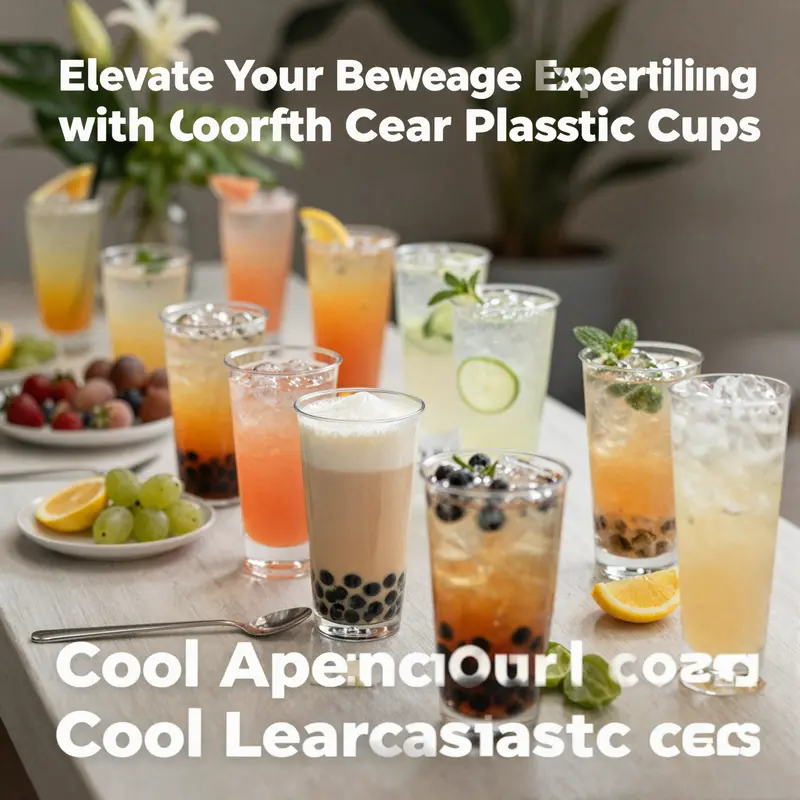
Clear plastic cups are among the most quietly influential tools in modern beverage service. They do not shout with color or ornament, yet they frame every drink with a precision that makes the liquid itself feel more vivid, more inviting. When light passes through a crystal-clear cup, it scatters into the visual story of the beverage—the amber of a well-aged whiskey, the emerald glow of a lime-infused soda, the ruby swirl of a layered cocktail. The aesthetic payoff is not merely decorative; it is instrumental in how a drink is perceived. Clarity reveals texture, viscosity, and even the tiny bubbles that signal freshness. This is not just about taste; it is about expectation. Guests look at a cup and unconsciously decide whether the beverage will taste bright, balanced, and well made. In this sense, the cup acts as a silent co-host, shaping mood and perception long before the first sip is taken.
What makes these cups so effective begins with their material science. Most clear cups are formed from lightweight thermoplastics chosen for their clarity and strength-to-weight ratio. When a cup is PET-based, PS-based, or even PLA-based, the emphasis is on a balance: a material that is food-safe, free of bisphenol concerns, and transparent enough to render color without distortion. The result is a container that looks almost invisible, letting the drink occupy center stage. This transparency also supports branding efforts in service settings, where the cup becomes a transparent stage for the product and the occasion. In weddings, corporate events, or casual celebrations alike, the goal is not to distract with the container but to elevate what goes inside.
From a consumer experience perspective, the allure of a clear cup lies in its ability to showcase the beverage while staying practically timeless. The cup’s slender profile and smooth rims invite a comfortable grip, reducing the sense of bulk that can come with other disposables. The lightweight nature of these cups makes them easy to handle during busy service periods, and their disposability translates to efficient cleanup at the end of an event. Yet the convenience of disposability is not the sole virtue. Clear cups are designed to resist shattering, which brings a safer alternative to glassware in high-energy environments. For guests, this translates into a sense of freedom to savor rather than worry about breakage. For servers, it translates into speed and efficiency in bustling rooms where every second counts. The combination of safety and simplicity is a powerful pair that has driven the widespread adoption of clear plastic cups across venues large and small.
Aesthetic appeal and practicality are not mutually exclusive. Clarity does more than present color; it registers the weight and stability of the drink inside. A well-balanced cocktail, with its amber hues and layered density, becomes a visual symphony when viewed through a transparent vessel. The cup’s edge, its rim, and even the way it sits on a tray contribute to a moment of perceived quality. When service staff present a tray of drinks, the clean lines and pure transparency of clear cups help create a sense of cohesion and order. This is particularly important in settings where branding and visual storytelling are foregrounded. A beverage served in a clear cup becomes a canvas for color and composition, enabling the host or caterer to guide attention without crowding it with extraneous décor. The transparency invites the guest to observe and savor, a small but meaningful enhancement to the overall sensory experience.
The functional design of clear cups extends well beyond visuals. Their disposable nature addresses practical realities of event management: rapid turnover, streamlined cleanup, and the ability to supply drinks to a large number of guests without the labor-intensive demands of reusable glassware. Yet even within single-use contexts, manufacturers emphasize durability. Cups are engineered to withstand moderate handling and stacking without deforming or cracking. This resilience matters when staff must move many drinks quickly from kitchen to event floor, often under varied temperatures and humidity. A well-made clear cup holds its shape and clarity through this journey, maintaining a crisp appearance from the moment it is filled to the moment it is emptied.
Advances in design have also expanded the functional envelope of clear cups. Innovations in manufacturing now enable 3D clear plastic cups that marry depth and strength in new ways. These cups leverage nuanced wall geometry and laser-cut precision to preserve clarity while enhancing rigidity. The result is a cup that maintains transparent appeal even when scuffed or lightly scratched through repeated use. Alongside these geometric advancements, practical enhancements in lid design have joined the conversation. Dome lids without holes, for instance, improve spill resistance and provide a neat, streamlined silhouette when paired with a clear cup. Such details may seem minor, yet they yield meaningful benefits in retail or catering scenarios, where leakage and spillage represent real losses in both product and presentation. The interplay between cup clarity, wall construction, and lid design embodies a holistic approach to beverage service where aesthetics and function reinforce one another rather than competing for attention.
Another layer of functionality emerges with insulated variants. Double-wall construction or foam lining offers a tangible temperature shield that helps maintain the drink’s original character longer. Cold beverages stay icy without forming an intimidating condensation halo on the outside of the cup, which can be uncomfortable to hold and visually distracting. Hot drinks, when served in insulated clear cups, offer the same principle: the interior remains warm, while the exterior surface remains comfortable to touch, preserving the social ritual of sharing without the hazard of burnt fingertips. This insulation is especially valuable for on-the-go consumption, where customers may carry a drink through a corridor, into a meeting, or along a street. The capstone of this design approach is the combination of a secure lid, a solid seal, and ergonomic contours that encourage confident handling in transit, all while preserving that exemplary visual clarity that defines the category.
The contexts in which clear cups thrive are as varied as the beverages they hold. Weddings that seek a modern, uncluttered aesthetic, corporate events that call for sleek, low-profile service, and everyday home use all benefit from the same core attributes: the cups’ ability to present color clearly, their safe and practical construction, and the ease with which they support a fast-paced service environment. In these settings, the cup becomes more than a vessel; it is a stage for color control, texture perception, and sensory expectation. The guest does not notice the container at the moment of celebration necessarily, yet its presence informs the perception of the drink’s quality and its alignment with the occasion. In this sense, the simplicity of a transparent cup conceals a nuanced balance of material science, form, and user experience. The result is a beverage experience that feels both sophisticated and approachable, capable of elevating casual gatherings into moments that feel well curated and thoughtful.
Of course, no material system is without its trade-offs. The same clarity that makes the cup so compelling can also reveal fingerprints, condensation, and any residual film from cleaning. In busy environments, a cup might accumulate smudges or marks, which can dull the very brightness that makes the container appealing. Condensation can form a bead of moisture on the outside, especially when a drink is cold and the room temperature is warm. These are not fundamental flaws but practical considerations that operators must manage with routine cleaning and mindful handling. Scratches can accumulate with repeated reuse, gradually eroding clarity. The glare and depth of color may no longer read as crisply, and the consumer’s visual impression will shift. While these cups are designed for durability, their life cycle is not infinite, and careful judgment about reuse versus disposal remains important for maintaining the intended aesthetic and safety standards. Another dimension to consider is the environmental footprint. Not all clear cups are biodegradable, and many rely on petroleum-based polymers. That reality has driven attention toward eco-friendly alternatives such as plant-based resin options, while acknowledging that biodegradability and practical performance do not always align perfectly in real-world service. In many cases, a layered strategy works best: choose a cup that fits the event’s durability needs, then pair it with a responsible recycling or composting plan where feasible.
The practical wisdom, then, is to treat the cup as part of a broader system rather than a standalone object. Selecting a clear cup involves assessing the event’s tempo, the beverage profile, the expected duration of service, and the desired presentation. For a fast-paced, color-forward beverage service, a cup with exceptional clarity and a reliable lid system delivers the most consistent return on investment. For events that emphasize sustainability, a program that certifies compostable or recyclable materials—paired with clear labeling about disposal options—can help guests feel aligned with environmental values. The best outcomes arise when the cup’s design, material choice, and service process are planned in concert with lighting, tableware, and the beverage program. In this sense, the cup becomes a small but vital collaborator in the overall experience rather than a mere container.
Within this framework of clarity and care, it is instructive to acknowledge the broader ecosystem of products that share a similar design philosophy. Even as clear cups earn their place on tables and trays, other packaging options extend the same principles of visibility, portability, and safety. The family of single-use disposables that emphasize environmental responsibility, ergonomic handling, and ease of service demonstrates how thoughtful design can harmonize with customer expectations. For those who want to explore related packaging solutions that sit alongside the clear cup in the broader catalog of take-away and serviceware, a related product page offers a concrete example of how the same design language translates across different formats. senang05-food-grade-500-750-1000ml-take-away-bowl-with-lids-packing-food-single-wall-fast-food-salad-bowls. It serves as a reminder that the attention given to one element of the system often informs choices across the entire lineup, reinforcing the idea that presentation, safety, and practicality are interconnected in the world of modern food and beverage service.
The practical and aesthetic story of clear plastic cups thus unfolds as a careful balance. Clarity invites admiration and trust, while design details—from wall thickness to lid geometry and insulation—protect the drink’s integrity and the guest’s comfort. Environmental considerations add another layer of complexity, urging designers and operators to weigh biodegradability, recyclability, and lifecycle impacts alongside conventional performance. The result is a versatile tool that can suit the most demanding events and the most intimate gatherings alike. The cup is a quiet workhorse that makes a visible difference without stealing attention from the drink it carries. In an industry that thrives on color, texture, and cadence, the clear plastic cup remains a reliable canvas—one that supports the beverage, the brand, and the moment with composure and clarity. For researchers, designers, and service professionals alike, that balance between aesthetic force and practical reliability is what ultimately defines the enduring value of this staple.
External reference for further material considerations and production standards can be found here: https://www.alibaba.com/product-detail/Buy-In-Bulk-Transparent-Plastic-Cups-19k_1602548374567.html?src=productSearch&spm=a2700.16907944.0.0
null

null
Clear Visions, Global Markets: The Economic Pulse of Cool Clear Plastic Cups

The market for cool clear plastic cups with lids is a study in how simple everyday objects become nodes in a global system of production, transport, and appetite. On the surface, these cups are straightforward: transparent, lightweight, inexpensive, and capable of showing off the colors and textures of beverages. But beneath that clarity lies a finely tuned balance of materials science, factory automation, supply-chain choreography, regulatory compliance, and shifting consumer expectations. In recent years, these forces have coalesced into a market that rewards efficiency and adaptability as much as it rewards aesthetic appeal. The result is a dynamic landscape where economic logic, design pragmatism, and environmental considerations must stay in step if the category is to grow and stay resilient.
The backbone of this market is manufacturing capability that can scale to demand without sacrificing safety or clarity. China has emerged as a central node in this ecosystem, with core provinces that host integrated networks of raw-material suppliers, toolmakers, mold shops, and contract manufacturers. The proximity of these related services enables rapid feedback loops: a design tweak for a multi-color print, a change in lid geometry to improve spill resistance, or adjustments to meet a new regulatory requirement can pass from concept to pilot to full production with remarkable speed. In provinces known for plastics processing and thermoforming, facilities are routinely set up to churn out tens of millions of units each month, with the flexibility to handle both conventional bulk orders and more intricate branded runs. When buyers seek customization—logo placement, color matching, or specialized lid shapes—the supply chain can often accommodate these requests within tight timelines, thanks to established, well-coordinated supplier ecosystems. This capacity is not a luxury; it is the engine that sustains pricing discipline while expanding the range of offerings available to foodservice operators, retailers, and event organizers.
Pricing dynamics in bulk clear cup markets are deeply influenced by scale, material choice, and the reliability of delivery timelines. Competitive pricing emerges from high-volume production, automated workflow, and standardized quality-control regimes. In wholesale channels, typical delivery windows from a producing region to an international buyer compress into weeks rather than months, a testament to the maturity of the logistics and manufacturing ecosystems surrounding these products. The cost structure of a clear plastic cup is a study in material efficiency: the choice between PET, PS, or more sustainable options like PLA can swing unit costs, but so too can wall thickness, mold complexity, and the degree of customization. Buyers frequently optimize for a balance between price and perceived value—recognizing that a cup’s clarity and structural integrity are worth paying a premium when brand visibility or presentation matters at a large scale.
The appetite for branded and customized cups is no longer confined to large events or premium hospitality clients. Branded cups serve as moving billboards at trade shows, conferences, and seasonal campaigns, translating brand recognition into tangible impressions at every sip. The trend toward customization has become more pronounced as buyers seek to create cohesive experiences across all touchpoints of an event or venue. In many cases, this demand for customization is met via streamlined print capabilities and efficient production lines that can handle short-run runs without compromising the economics of bulk orders. As a result, the market has seen a convergence of two capabilities: high-volume, low-cost production for standard clear cups, and flexible, cost-conscious customization for branded outputs. The sweet spot is a blend of predictable pricing with a side of creative differentiation that remains accessible to a broad spectrum of buyers—from small catering outfits to large venue operators.
Sustainability considerations have moved from a peripheral concern to a central decision factor in supplier selection and product design. While traditional clear cups have long been associated with single-use convenience, environmental awareness now informs both consumer preference and procurement policy. A growing segment of the market surveys options like recyclable or compostable materials and lightweight designs that maintain performance while reducing material usage. In practice, this translates into a few parallel streams of product development. First, there is ongoing refinement of lightweight yet rigid cup profiles that preserve clarity and strength with thinner walls. Second, there is increasing interest in plant-based or bio-derived plastics that offer improved end-of-life outcomes without compromising safety or performance. Third, vendors are investing in clearer labeling and traceability so buyers can document compliance with food-contact regulations and sustainability commitments. Even as these shifts introduce additional variables into the supply chain, the appeal of a responsibly produced, visually pristine cup remains strong for venues where presentation matters and the guest experience is measured in milliseconds of impression.
Regulatory compliance remains the non-negotiable layer that underpins trust in the market. Across major markets, food-contact plastics must meet stringent standards that validate safety for consumer use. For products intended for sale in Europe and North America, this often means documentation that verifies material composition, additive safety, and environmental compliance. As regulatory regimes evolve to address emerging concerns about plastic waste and microplastics, suppliers increasingly bear the cost and complexity of maintaining up-to-date certifications, test reports, and declaration-of-conformity paperwork. Buyers benefit from this because it reduces the risk of non-compliance and the costly disruptions that can follow a shipment hold or recall. The practical upshot is a procurement environment that rewards transparency and reliability. When a supplier can demonstrate that every batch carries traceable materials, that batch passes required safety tests, and that the product aligns with recycling and waste-management standards, buyers gain confidence to commit to larger orders and longer-term contracts.
In this setting, the role of digital sourcing platforms has grown from convenience to strategic necessity. Platforms that aggregate supplier data, enable real-time assessments, and provide access to verified manufacturers have become central to procurement decisions, especially for buyers operating at scale or across borders. The ability to compare suppliers on variables such as lead times, certification status, and historical on-time delivery metrics is a meaningful value-add that complements traditional touchpoints like samples and audits. The result is a more resilient procurement model where seasonal swings and promotional campaigns can be met with greater agility. For buyers who are expanding into new markets, these platforms reduce the friction of vetting unfamiliar suppliers and help ensure that the cost and safety standards traveled from factory floor to customer table remain consistent across regions.
The economics of delivery play a crucial role in shaping buyer behavior. International buyers commonly experience lead times that span two to six weeks, depending on production schedules, customization complexity, and the efficiency of the logistics chain. Suppliers that can align production calendars with the peaks of hospitality seasons or regional promotional periods unlock additional value for their customers. A key amplifier of this alignment is the integration of just-in-time planning and flexible manufacturing capabilities. When a supplier can retool a line or switch between cup sizes, lid configurations, and print runs without triggering disruptive downtime, the result is a smoother, more predictable supply curve for buyers. This, in turn, helps event planners and foodservice operators budget with greater certainty. The ability to secure containers and lids that fit a precise design, while preserving a consistent level of clarity and performance, becomes a strategic advantage in markets where margins are tight and the pace of business is relentless.
The market is not static, and a few micro-trends shinethrough the larger narrative. The rise of thinner, more transparent wall constructions has fans among operators who want to emphasize product visibility without sacrificing structural integrity. The growing preference for flat-lid configurations—particularly for beverages like iced coffee and lemonade—reflects user preferences for spill resistance and a clean, modern form that complements a no-fuss take-away experience. These lid designs also contribute to a perception of premium quality, reinforcing the idea that a simple cup can support a refined presentation when paired with well-chosen beverages and glass-clear clarity.
Another chain of influence comes from consumer expectations around convenience and sustainability in tandem. While many buyers still prize the reliability and cost-effectiveness of traditional clear cups, there is an expanding cohort that values end-of-life options and reduced plastic footprints. This duality keeps the market honest, encouraging suppliers to test and certify alternative materials, reductions in wall thickness, and compatible compostable or recyclable lids. The environmental dialogue is not merely a PR exercise; it enters the procurement brief as a measurable criterion, affecting supplier selection, contract terms, and long-run strategic planning. The economic implication is nuanced: while greener options may initially carry a premium, they can unlock access to markets with stricter waste-management requirements and brand preferences that favor sustainability. Over time, volume growth and policy-driven incentives could shift the cost balance in favor of these options, even as performance metrics remain high across traditional clear plastics.
The internal ecosystem of the market also reflects a broadening set of buyers beyond the foodservice sector. Promotional events, retail displays, and on-site sampling campaigns increasingly depend on the ability to deliver clear, high-clarity cups with reliable lids that can withstand transient environmental conditions and the rigors of transport. The versatility of these cups—the way they can be used for cold and warm beverages, the ease of stacking for storage, and the potential for branding—makes them a staple tool for marketing campaigns that hinge on immediate sensory impact. Consequently, the supplier base continues to diversify, with a continuum that spans basic, cost-conscious options to premium, customization-forward offerings designed to maximize visibility and consumer recall.
For buyers navigating this landscape, supplier selection increasingly resembles a strategic partnership. Beyond price, decision-makers weigh technical capability, quality-consistency, compliance readiness, and reliability of on-time delivery. The ability to scale production during peak demand, to support multi-color branding or limited-edition prints, and to provide accurate documentation for safety and sustainability claims becomes as important as price per unit. In this context, the procurement mindset shifts toward risk management and value creation. Buyers seek long-term collaborations that can weather supply shocks, regulatory changes, and shifts in consumer sentiment. The calculus thus extends from a single purchase to a broader governance framework that prioritizes transparency, accountability, and mutual resilience.
The body of knowledge surrounding clear cups with lids continues to grow through industry forums, trade data, and supplier feedback. While public perception often simplifies these products as mere packaging, the economic currents tell a more intricate story. Clarity is not only about the visible transparency of the cup; it is about the clarity of the supply chain, the clarity of compliance, and the clarity of the value that the cup adds to the consumer experience. When a vendor can deliver a consistent, compliant, and visually appealing cup at scale, the market recognizes that reliability as a form of competitive advantage. In turn, buyers respond with longer-term commitments, more standardized specifications, and a willingness to invest in higher-grade materials or finishes that preserve clarity under a wider range of handling conditions.
As buyers consider the broader macroeconomic backdrop—fluctuations in raw-material costs, currency movements, and import duties—the appeal of a well-managed supplier base becomes even more pronounced. The most successful operators in this space view clear cups with lids not as a disposable commodity but as a critical component in a larger system of hospitality and brand experience. The practical upshot is a market that rewards efficiency, quality, and adaptability, while continuing to experiment with sustainable approaches that align with evolving regulatory and consumer expectations. The story of these cups, then, is less about a single product and more about a resilient, interconnected market that can support moments of celebration, routine service, and brand storytelling with equal reliability.
External resource: For a broader industry context on how bulk clear cups with lids are sourced and priced on global platforms, see Alibaba’s Bulk Clear Cups with Lids Supplier Guide. Alibaba Bulk Clear Cups with Lids Supplier Guide.
Internal link example: Buyers looking for cost-efficient, basic cup options can explore wide-volume availability through pragmatic options like Best-price 8oz disposable cups to compare baseline pricing and then layer in customization and branding as needed. The capacity to mix and match between standard offerings and branded runs is one of the core strengths of today’s market for clear plastic cups with lids, and it is a trend that shows no signs of waning as consumers and events continue to demand clarity in both form and function.
Final thoughts
Cool clear plastic cups are more than just a convenient serving option; they represent a blend of modern design, functional utility, and environmental considerations. As businesses increasingly focus on aesthetic perfection and sustainability, these cups offer a solution that meets these demands effectively. By understanding the materials they are made from, the presentation benefits they offer, and the importance of eco-conscious choices, businesses in the beverage sector can elevate their service and appeal to a broader audience. Choosing the right cups could make a significant impact on customer satisfaction and brand perception.