
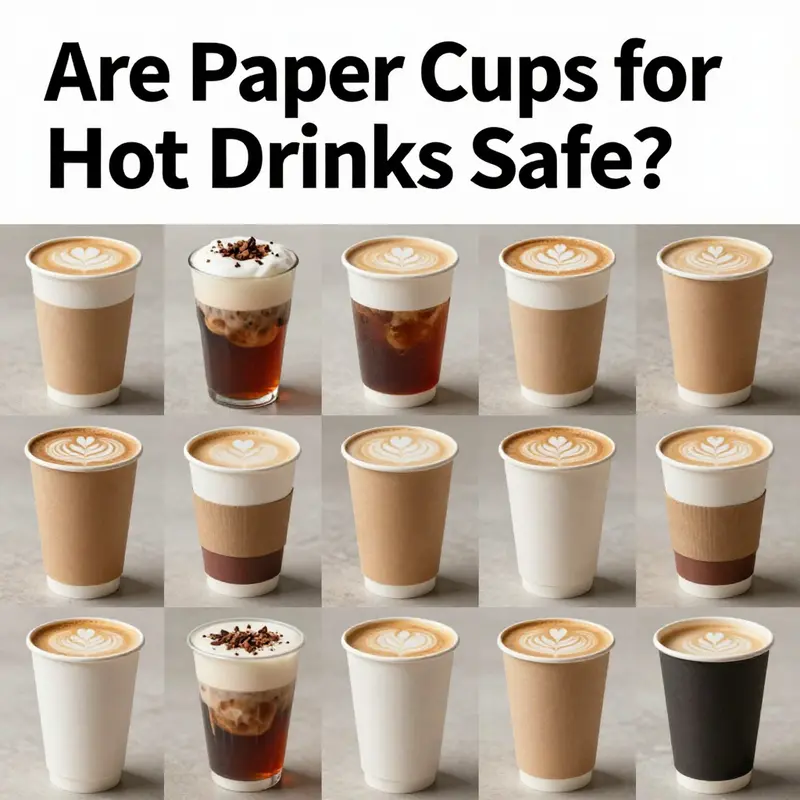
The beverage industry has embraced paper cups as a convenient solution for serving drinks, particularly hot beverages like coffee or tea. However, questions surrounding the safety of these paper cups are paramount for businesses that aim to protect their customers and enhance their brand reputation. Understanding the distinctions between various types of paper cups, the associated health risks, regulatory standards, and best practices not only promotes safety but also enhances service quality. This article will guide you through the critical aspects to consider while using paper cups for hot drinks, ensuring that your establishment remains compliant and your customers keep coming back.
From Wax to Plastic: Navigating the Safety of Paper Cups for Hot Drinks

Paper cups sit at the intersection of convenience and public health, a small vessel with big implications when it comes to hot beverages. For anyone who spends mornings with a cup of coffee or afternoons with a steaming tea, the question of safety is rarely asked aloud. Yet the details behind what keeps the liquid from leaking, what heat does to the lining, and how the materials interact with caffeine and heat are essential. A practical way to approach this topic is to follow the path from manufacture to mouth, tracing how the cup’s structure responds to the heat of a hot drink, how additives and coatings behave under prolonged exposure, and how consumer choices either minimize or magnify risk. This chapter does not simply declare the obvious safe or unsafe categories; it maps the landscape in which color-coded labels, material science, and regulatory oversight converge. The result is a clearer understanding of when a paper cup can be trusted for hot beverages and when it is prudent to switch to alternatives that bypass some of the uncertainties entirely.
At the core of the safety discussion is the divide between cold-drink cups and hot-drink cups. Cold-drink cups are typically coated with paraffin wax, a hydrophobic seal meant to repel moisture and reduce leakage. The wax has a relatively low melting point, often cited as under 60°C. For a beverage kept cool or heated only briefly, this works fine. But when a hot beverage—coffee, tea, or a drink poured at or above typical serving temperatures—occupies the cup, the wax can soften. In such scenarios, the wax can migrate toward the liquid, potentially introducing melted wax and trace contaminants into the drink. Even though food-grade wax is designed for contact with foods, the heat dynamics of a hot drink can alter the interaction. The practical risk is not simply presence of wax but the possibility that the cup’s internal integrity begins to degrade, inviting leaks or burns for the person holding the cup and, more importantly, for the liquid’s recipient when the cup fails.
By contrast, hot-drink cups are designed with different expectations. The inner lining of these cups is typically a polyethylene-based plastic layer, sometimes reinforced with additional coatings or barrier layers to preserve rigidity and prevent penetration. This plastic lining is chosen for heat resistance; it resists softening and dissolution when exposed to hot liquids. The goal is straightforward: keep the beverage from seeping through the paper while maintaining structural integrity as the cup is held and sipped. Yet the very resilience of the lining introduces distinct questions about safety under prolonged exposure or repeated use. If the cup is used correctly—designed as a single-use item and not subjected to microwaving or strong mechanical stress—the lining remains stable, and the risk of immediate leaching is reduced. The nuance lies in how heat, time, and handling may interact in real-world settings where cups sit in warm car interiors, where someone holds the cup for longer than usual, or where the liquid nears a simmering point.
A central thread in the safety narrative concerns what happens at the boundary where the cup and liquid meet. When hot liquids are contained, the boundary layer can experience slow, micro-level changes. The inner plastic coating, though chosen for heat resistance, is not completely inert under long exposure. Researchers have examined how this layer behaves as temperatures rise and as the contact time with hot liquids extends. A growing body of work has drawn attention to the phenomenon of microplastics—tiny plastic particles that can be shed from the cup’s interior lining and find their way into the drink. In addition to microplastics, concerns about potential chemical migration include small molecules associated with polymer additives or processing aids. Even when the cup is manufactured to meet food-contact standards, questions remain about long-term exposure and cumulative intake across a lifetime of daily hot-drink use. A study by A Joseph in 2023 highlighted that disposable paper cups can release microplastics, fluoride ions, and other contaminants into hot water, especially when the beverage is hot or consumed over extended periods. While such findings raise important alarms, interpretation must be balanced with real-world context, including typical consumption patterns and regulatory safeguards. The takeaway is not certainty about a singular hazard but a nuanced reminder that heat enhances certain interactions at the cup–drink interface.
The regulatory and quality control landscape frames what counts as acceptable risk in practical terms. Papers and cups that reach store shelves are supposed to be produced under food-safety standards that define acceptable materials, permissible additives, and testing protocols. In many jurisdictions, agencies such as the U.S. FDA or European authorities offer guidance on materials intended for contact with food and beverages. Yet standards can vary by region, and the existence of a standard does not automatically translate into universal safety in every use scenario. This is partly why the marketplace sees a spectrum of products—from cups marketed as vegan, compostable, or PLA-based to others that still rely on more traditional, petroleum-derived barriers. The risk profile escalates when cups are cheaply produced, poorly inspected, or not clearly labeled for hot-use. A damp outer sleeve or a stack of cups that moisture compromises can become a breeding ground for mold or microbial growth, which in turn can pose an additional risk if such contaminants find their way into the drink. This is not a warning against all single-use paper cups, but a call to recognize that quality control and labeling are integral to safety, not optional add-ons.
Best practices for consumers naturally arise from this layered understanding. The simplest and most reliable guideline is to read the packaging and choose cups explicitly labeled for hot drinks. Labels act as a cue about the intended use and the type of lining inside. Microwaving paper cups is discouraged because heating can alter the integrity of the lining and accelerate degradation or deformation of the cup walls. While it might be tempting to reuse a cup or to repurpose it for carrying a different beverage, the inner lining is not designed for repeated exposure and can behave unpredictably after the first use. Alcoholic beverages deserve special caution, as alcohol can interact with coatings in ways that promote leakage, so using a dedicated cup for alcohol or transferring the drink to a more stable container is a prudent precaution. In a busy café or office setting, it is tempting to rely on a stack of inexpensive cups, but this convenience should be weighed against the potential for compromised performance if the cups are not stored properly or if exposure to heat is inconsistent. Readers can minimize risk by prioritizing single-use cups designed for hot beverages or by opting for reusable alternatives such as ceramic, glass, or stainless steel mugs, which do not carry the same lining concerns and thus reduce the potential for chemical migration.
Even when choosing disposable options, there is merit in considering brands that advertise plastic-free or compostable linings. Some plant-based liners, such as those derived from polylactic acid (PLA), are presented as safer alternatives. However, PLA and other biobased coatings still require careful scrutiny. They may perform poorly at high heat or under certain storage conditions, complicating the assumption that “biobased means safer.” The overarching message is that, for hot drinks, the safest approach is to minimize reliance on single-use paper cups by prioritizing reusables whenever possible. When a disposable path remains essential, look for hot-drink-specific labeling, inspect the cup for clean, dry outer surfaces, and avoid cups that show visible wear or dampness in the stacking area. Additionally, be mindful of the environment where the cup is used; for instance, a cup left in a hot car can reach temperatures that intensify any potential leaching, making the timing of consumption a practical safety factor.
For those who must use disposable cups, an additional practical approach is to consider the broader materials context. Some consumers might seek out a cup that is marketed as plastic-free or with a plant-based lining, accompanied by transparent testing data or third-party certification. The idea is not to guarantee absolute safety but to reduce the likelihood of exposure to questionable additives and to improve confidence in the cup’s performance under hot conditions. The comfort of choosing a cup labeled for hot drinks aligns with the principle of using the product for the purpose it was designed for, rather than improvising with a product that was built for a different use case. One easy way to connect with this guidance in everyday life is to reference available take-away options designed with hot beverages in mind; for instance, consider a paper cup for take-away coffee as a practical starting point when shopping for cups. This approach emphasizes alignment between the user’s needs and the cup’s intended purpose, a fundamental safeguard in both consumer health and consumer satisfaction.
From a consumer education standpoint, the message that emerges is one of informed choices rather than blanket judgments. The evidence points to real, measurable interactions at the cup–drink boundary when hot liquids are involved, but it also points to a path of safer practice through labeling, material transparency, and personal responsibility. The ecosystem includes manufacturers who invest in better barrier technologies, retailers who enforce clear labeling, and researchers who continue to explore the nuances of leaching, microplastics, and timing. In this sense, the safety of paper cups for hot drinks is not a fixed verdict but a dynamic situation shaped by material science, regulatory oversight, and consumer behavior. The aim is to balance the undeniable convenience of these cups with a robust, everyday caution that helps people make choices aligned with their risk tolerance and health priorities.
External resource: Understanding Microplastics and Chemical Leaching from Paper Cups. https://www.sciencedirect.com/science/article/pii/S136455242300157X
When Heat Meets Paper: The Subtle Safety Equation Behind Cups for Hot Drinks

Every day, millions of people reach for a disposable paper cup to cradle a hot drink. The ritual is simple: a sturdy vessel, a lid, a comforting aroma, and a moment of pause. Yet beneath the familiar brown and white, a safety equation unfolds that not all cups are equipped to solve. The core question is not merely whether a cup can hold hot liquid, but which cup design and manufacturing choices actually make that heat safe. The answer hinges on a careful balance of materials, coatings, and standards, and it matters because the temperature of a drink can push boundaries that a cup is not meant to cross. In practice, the safety of hot-drink paper cups rests on recognizing a fundamental division in the world of disposables: cups made for cold beverages and cups engineered for heat. Cold-drink cups are often lined with paraffin wax to repel moisture. That wax has a melting point well below typical hot beverage temperatures. When hot liquids meet these wax-coated walls, the risk is not merely a softened cup; there is the potential for wax to melt and migrate into the drink, a scenario that can surprise even careful users who assume all disposable cups behave the same way under heat. The distinction is not academic. It translates directly into what you pour, how long it sits, and how you dispose of the cup afterward. Hot-drink cups, by contrast, are designed with a different inner layer—one that is more resistant to heat, typically a polyethylene or other food-grade plastic lining. This interior barrier is engineered to stand up to the warmth of coffee or tea, to resist dissolution, and to minimize the risk of leakage. Yet even among cups marketed as hot-drink solutions, a precautionary truth persists: heat challenges materials, and small differences in coatings can alter safety profiles in measurable ways. A consumer who chooses a cup labeled for hot drinks is making a safer bet than someone who uses a cold-drink cup in the same scenario, but the choice is not a guarantee of complete safety. The practical implication is simple and powerful: always read the labeling. If a cup is not explicitly described as suitable for hot liquids, treat it as a cold-drink cup and avoid using it with hot beverages. The literature across different jurisdictions emphasizes this boundary, and while standards vary, the central logic holds: temperature guides material performance, and the best protection comes from aligning the cup with the beverage it is meant to hold.
The implications of material design extend beyond the inner lining, however. The problem set expands with questions about chemical migration, microplastics, and even the inks used on the exterior surface of cups. In a world where public concern about microplastics has grown, several studies have highlighted that heating can increase the release of tiny plastic fragments from plastic linings. The inner plastic layer, while intended to be stable, can gradually shed microscopic particles when exposed to hot liquids, especially over repeated exposure or prolonged contact. The scale of this phenomenon is alarming to some researchers and troubling to consumers who rely on a quick, convenient hot beverage in a single-use cup. In a recent line of inquiry from Zhejiang University, researchers reported that hot water exposure could lead to the release of microplastics from disposable cups. The magnitude of the release—tens of thousands of microplastic particles per liter in some tested conditions—has prompted questions about daily consumption patterns and cumulative exposure. The idea that a routine coffee run could contribute microplastics to the body is unsettling to many, even as the broader health implications remain a topic of ongoing study. The takeaway for consumers is that there is no single risk to map in isolation. Instead, the risk arises from the combination of heat, coating type, and the frequency with which hot beverages are consumed through single-use cups. If the inner lining is plastic and the beverage is very hot, microplastic exposure becomes a plausible concern. The same line of research also points to potential changes in gut microbiota and immune function when daily exposure accumulates. Independently, other researchers have highlighted that even in sipping contexts outside the lab, microplastics can travel beyond the stomach and interact with biological systems in ways that require further investigation. While not all findings translate into immediate medical advisories, they do push a precautionary boundary: repeated use of hot beverages in disposable paper cups—especially those not explicitly rated for heat—merits careful consideration.
To complicate the narrative further, the inks and fluorescent agents used on the exterior of some cups warrant attention. Inexpensive or counterfeit cups may employ inks that are not food-grade, and certain brightening agents have raised concerns about safety when heated. Fluorescent brightening agents, for example, can degrade into substances that have mutagenic potentials, though such risks are still the subject of debate and regulatory scrutiny. The responsible takeaway is not alarm, but awareness: the cup’s outer aesthetics should not overshadow a sober assessment of what happens when heat and ink meet, especially under conditions that involve prolonged contact or high temperatures. In a crowded supply chain, where damp, unseparated stacks become a moisture reservoir, the outer surface can become a hidden vector for contamination. If mold gains a foothold between stacked cups, the risk shifts from the drink itself to the environment and the handling process, potentially transferring contaminants to the cup interior during use. For this reason, quality controls and hygienic handling become essential elements of safe, safe-appearing packaging.
Beyond the chemistry of coatings and inks lies a practical truth about durability and reuse. Disposable cups are designed for single use, and repeated exposure to heat accelerates the deterioration of the inner layer. When a cup is reused, the risk compounds: the lining can degrade, leaching may increase, and bacterial growth can emerge in residual moisture. The safety of a reusable habit is not simply about avoiding microplastics; it is about recognizing that a single-use product, when repurposed, loses its designed protective features. This is why public health guidance consistently warns against reusing disposable cups for hot drinks. The safest option remains clear: if you want hot beverages, choose a cup explicitly designed for hot drinks and avoid re-purposing a cold-drink cup or reusing a single-use container for extended periods.
A central thread that runs through these considerations is the quality and regulatory framework governing cup manufacturing. In many jurisdictions, food-contact materials must meet approved standards, and credible manufacturers will display compliance marks and labeling indicating suitability for hot beverages. However, the supply chain can include low-quality or counterfeit cups that rely on non-food-grade materials or inadequate coatings. A damp outer layer or mislabeling can contribute both to physical damage—such as leakage—and to potential chemical exposure. For consumers, the practical guidance is straightforward: scrutinize the label, prefer cups that clearly state they are for hot drinks, and trust products from manufacturers with transparent processes and recognized certifications. If the label is ambiguous or missing, the prudent choice is not to risk exposure by heating a drink in that cup.
From a consumer behavior perspective, one reliable strategy is to use cups marked for hot beverages, pair them with appropriate lids, and avoid microwaving the cup itself. The outer container can still heat up, and the interior lining is not designed for direct microwave exposure; heating can degrade the lining and increase the likelihood of chemical migration. For those who seek to minimize exposure altogether, reusable options such as ceramic or stainless steel provide a more robust barrier to heat and to the concerns described above. Reducing reliance on single-use paper cups is not merely an environmental choice but a public health decision, given the uncertainties around long-term exposure to additives, microplastics, and contaminants. Taking these steps does not require abandoning the ritual of a warm beverage; it simply means choosing the right vessel for the temperature and prioritizing materials and processes with stronger safety assurances.
In thinking about how to translate these insights into everyday practice, it helps to imagine the cup as a system rather than a single component. The heat resistance of the lining, the stability of the outer surface, the integrity of the seal at the rim, and the hygiene offered by stacking and handling all contribute to the final safety profile. A cup that excels in one dimension but falters in another may still pose risk under certain conditions. The best-informed choice is to lean toward cups specifically designed for hot liquids, rely on verified labeling, and minimize exposure by limiting reuse and avoiding heating the cup itself. The cumulative effect of these practices reduces the likelihood of wax migration, plastic leaching, microplastic release, or microbial contamination while still preserving the practical benefits of disposable convenience when needed.
For readers who want to explore a broader, evidence-based backdrop to these points, a detailed scientific account of microplastics in cups can be found in external research that examines how even brief hot-liquid contact can prompt material migration. This work underscores the growing attention these questions are receiving in the scientific community and highlights why regulatory and industry responses continue to evolve in response to new findings. https://news.zju.edu.cn/en/2024/0823/c123456.html
Within the broader discussion of safe practices, it is also useful to consider how industry documentation and consumer-facing materials present information. Some suppliers and manufacturers publish internal pages that describe the intended use of their cups, including labeling that distinguishes hot-drink designs from cold-drink styles. While such pages can be informative, readers should approach them with a critical eye, recognizing that marketing claims do not always translate directly into safety outcomes. The safest approach remains one rooted in labeling accuracy, regulatory alignment, and, where possible, the preference for reusables when the context allows.
Meanwhile, the public health takeaway is practical: do not assume heat safety simply because a product is made of paper. If a cup is intended for hot drinks, it should be clearly labeled as such, incorporate a heat-resistant interior lining, and be supported by appropriate regulatory assurances. If any of these conditions is missing, treat the cup as unsuitable for hot beverages. In daily life, this translates to choosing the right cup, avoiding heating the cup, and not reusing disposable cups for hot drinks. It also means staying informed about ongoing research and updating habits as evidence evolves. The conversation around hot-drink safety is not a fixed endpoint but an ongoing calibration of materials science, regulatory standards, and consumer behavior, all aimed at preserving both the practicality of single-use containers and the health of those who rely on them.
To connect these ideas to everyday choices, consider a moment of mindful selection each time you reach for a cup. Read the label with attention to the temperature specification. If you are unsure, opt for a cup clearly marked for hot drinks or choose a reusable vessel. When feasible, avoid reheating liquid in the cup and skip reuse altogether. And if you want to explore examples of how the industry communicates about hot-drink compatibility, you can view a supplier’s page that demonstrates hot-drink labeling and material claims through a direct link: https://cupbowlpack.com/product/senang01-hot-sale-customized-disposable-single-wall-paper-ice-cream-cups-with-lid-eco-friendly-food-grade/. This internal link provides a sense of how hot-drink compatibility is framed in some product listings, though it is one of many sources you might encounter when navigating the market. It is a reminder that behind every cup there is a design choice, a set of materials, and a regulatory story that affects safety in subtle, real ways.
In sum, the safety of paper cups for hot drinks is not a single metric but a composite outcome built from correct cup selection, rigorous manufacturing standards, and disciplined consumer habits. When a cup is explicitly designed for hot liquids, lined with a heat-stable interior, and backed by credible certifications, it offers a safer experience. When a cup is used outside its design intent, heat can reveal weaknesses that were not obvious at first glance. By prioritizing labeled hot-drink cups, avoiding microwaving, not reusing disposable cups, and considering durable reusables when possible, consumers can reduce exposure to potential risks while still enjoying the convenience of hot beverages.
External resource for further reading: https://news.zju.edu.cn/en/2024/0823/c123456.html
Guardrails for Warm Brews: The Regulatory Architecture Behind Safe Paper Cups for Hot Drinks

Pouring a hot beverage into a paper cup might seem simple, but the safety questions behind that act run deep. The journey from a sheet of pulp to a ready-to-use cup involves a regulatory framework that governs every layer, from coatings and inks to adhesives and finishes. This system aims to prevent migration of substances into the drink and to ensure that what touches lips during a hot beverage is safe under expected temperatures. In practice, regulators review the whole lifecycle of a cup to ensure compatibility with heat and food-contact safety. The result is a network of standards and testing that supports the daily ritual of warmth without visible safety concerns.\n\nA key distinction is the cup’s intended use. Cold-drink cups and hot-drink cups are not interchangeable from a safety perspective. Cold cups are often lined with a wax layer that can soften with heat, potentially releasing substances into the beverage. Hot-drink cups use heat-stable linings—such as polyethylene-based or other polymers—that act as barriers to migration at serving temperatures. Beyond linings, migration testing for inks, adhesives, and surface finishes ensures that all materials in contact with hot beverages meet food-safety criteria.\n\nPractically, manufacturers document materials, testing methods, and results to prove safety during repeated use and varying temperatures. Noncompliance can trigger recalls, penalties, or loss of market access. The trend toward transparency also pushes brands to disclose materials and obtain third-party certifications, reinforcing consumer trust.\n\nRegionally, the regulatory architecture includes frameworks for food-contact materials that set migration limits and require that coatings, inks, and adhesives are food-safe. In the U.S., titles within the Code of Federal Regulations govern these concerns, while in the European Union, EU Regulation 1935/2004 and related directives provide parallel safeguards. EFSA supports safety assessments that inform company choices and limit setting. This regulatory mosaic drives consistency across manufacturing, testing, and reporting, helping to ensure that hot-drink cups perform safely in real-world use.\n\nAs sustainability and safer materials advance, regulators respond with updated guidance and tightened limits where needed. Plant-based coatings and water-based inks show promise for reduced environmental impact, but they also require rigorous migration testing to confirm continued safety under heat. The result is a dynamic collaboration among science, industry, and public health, where safety, transparency, and environmental goals converge to enable a dependable hot beverage experience. Consumers benefit from explicit labeling, accessible material disclosures, and the ongoing availability of safer, compliant choices.\n\nTo connect this discussion to practical choices, readers can explore resources illustrating compliant cup materials and safer options while maintaining safety standards. For example, a representative option highlights plant-based and compliant formulations that meet migration limits and regulatory expectations. See the resource linked here: senang07-eco-friendly-printed-logo-buy-paper-cup-take-away-coffee-cup-8-oz-12-oz-paper-cup.\n\nAs regulations continue to evolve, the core message remains consistent: hot-drink cups are designed to withstand heat when manufactured and used as intended, with materials vetted for safety under real-use conditions. Always distinguish hot-drink–designated cups from cold-drink ones, check labeling for hot-liquid suitability, and consider reusable options where practical. The regulatory scaffolding thus supports both safety and trust, enabling the simple pleasure of a warm drink with confidence.
Protecting the Sip: Safety, Standards, and Smart Choices for Hot-Drink Paper Cups

When we pour a steaming drink into a paper cup, we rarely pause to consider the wall that contains the warmth and aroma. The safety of that everyday package hinges on design choices we often overlook. Not all paper cups are built to perform in the same way once heat is added. Cold-drink cups, commonly stacked in cafés near doors, are typically lined with paraffin wax to repel moisture and keep costs down. Wax, however, has a low melting point, and when hot beverages exceed about 40°C, it can soften, melt, or even separate from the paper. In practice, that means a cup that feels sturdy can suddenly become malleable as you hold it or as the drink tests the barrier. Leaks become more likely, and the cup may lose its structural integrity. There is also concern about any additives used in the wax or coatings; heating can change their behavior. The result is not just an aesthetic issue or a temporary dulling of taste; it is a matter of physical resilience under heat and potential chemical migration. The consumer’s daily experience—whether in a shopping mall, a university cafe, or a street-side kiosk—depends on this microscopic balance between heat and barrier. In many moments, the choice of cup design is invisible until the drink becomes hot and the cup must perform under pressure. In everyday life, that small fault line in heat tolerance can become a real disruption to a pleasant cup of coffee or tea.
By contrast, hot-drink cups are designed with heat in mind. They rely on a barrier layer—often a plastic liner such as polyethylene—that is resistant to the temperatures of coffee and tea. This inner lining is the critical line of defense, not merely an afterthought. It is meant to stay intact while the cup holds a scalding liquid and to prevent direct contact between heated liquid and the paper fibers. Yet heat can challenge even robust barriers. Some studies and reviews highlight that, with repeated exposure or when the coating is degraded, small amounts of substances can migrate into the beverage. Microplastics have become a focal point in ongoing discussions about safety, because degradation pathways may allow minuscule particles to enter the drink. Although the findings are complex and sometimes context-specific, the core concern is that high temperatures can nudge materials toward altered performance. This doesn’t imply universal danger, but it does map out a scenario where material choice, manufacturing controls, and predictable performance matter for every cup. It also explains why many manufacturers invest in thicker barrier layers and gentler adhesives to ensure a stable stack that doesn’t fail under typical cafe use. The practical takeaway is that hot-use cups are a different class, engineered to resist the dual pressures of heat and duration.
Beyond the chemistry, the overall safety picture rests on quality and regulatory compliance. Reputable manufacturers align products with recognized food-safety standards that govern what can contact hot beverages. The inner lining, the adhesives, and even the outer ply must be designed for hot use and tested accordingly. When standards are met, cups perform their barrier role without leaching harmful substances under ordinary use. The danger rises when corner-cutting slips into the supply chain, or when counterfeit materials infiltrate distribution. In such cases, contaminants may be present, or damp outer surfaces can harbor mold that later contaminates the drink. Consumers can reduce risk by seeking clear labeling that communicates hot-use suitability and by choosing cups with documented safety certifications. The language on the packaging matters because it translates complex chemistry into actionable instructions for daily use. A label that states the cup is intended for hot beverages is more than a marketing claim; it is a warranty of tested performance within a specified temperature range. Additionally, attention to the production environment—clean rooms, validated coatings, and robust supplier audits—helps ensure that a cup’s journey from pulp to pour remains safe. In regions with diverse regulatory regimes, differences in what counts as acceptable materials can appear, underscoring the value of global or multi-lateral certifications that cross borders and simplify buyer decisions.
Practical safety for hot drinks thus blends informed purchasing with mindful handling. It means reading the label and selecting cups explicitly designed for hot liquids. It also means avoiding misuse—such as attempting to heat or reheat drinks inside the cup itself, or microwaving a paper cup, which can compromise the lining and alter barrier properties. Those who want to combine safety with sustainability should look for credible third-party certifications and transparent disclosures about materials. If you are drawn to eco-conscious options, you may encounter cups that advertise plant-based resins or compostable linings and, occasionally, printed logos for branding. The essential step remains to verify that these options maintain food safety standards for hot liquids. For instance, you can explore options such as the eco-friendly-printed-logo cup for take-away coffee eco-friendly-printed-logo cup for take-away coffee. The related product page highlights a category of cups designed to balance environmental performance with barrier integrity. This shows that safe hot-use cups can coexist with responsible design, and that brands are increasingly explicit about their materials and testing processes. In short, smart shopping means looking beyond color and price to the transparency of the cup’s safety narrative. Some brands pursue third-party verification of their coatings and glues, while others rely on in-house testing that mirrors real-world use in busy service settings. The industry is moving toward more explicit safety storytelling that helps consumers make informed decisions rather than rely on marketing alone.
Handling and storage conditions further influence safety. A damaged lining is a warning sign. Warping, cracking, or peeling indicate that protective barriers have degraded. In such cases, replacing the cup is prudent. In busy environments, a quick visual check can prevent spills and potential contamination. The storage environment matters as well. Cups should be kept dry and away from direct sun, heat sources, and moisture. Even a seemingly pristine box can shelter a few units with compromised coatings if moisture has penetrated. For that reason, many operations rotate stock, ensuring older cups are used first and that a small sample from a stack is inspected before filling with hot drinks. Proper handling reduces the chances of heat-related failure and helps protect workers and customers alike. It is a simple but effective habit that aligns with broader food-safety principles, reminding us that safety is a continuous process rather than a one-off guarantee. Finally, when cups are stored in stacked configurations, keeping them off damp surfaces and ensuring air flow can help preserve the integrity of the inner lining until use. Regular maintenance, including cleaning the storage area, reduces the risk of cross-contamination from damp cartons and manifests of mold. In practical terms, the safe path is to trust the cup’s declared use and to handle it with the same care you would give any hot container that should remain intact until the first sip.
Environmental considerations add another layer to the decision matrix. The market now offers biodegradable or compostable cups, sometimes with plant-based coatings. These innovations reflect rising demand for sustainable packaging, but they require careful scrutiny. Compostable does not automatically mean home-compostable, and many products need industrial facilities to break down properly. In other words, eco-friendly can be compatible with hot-use safety, but only when the product is explicitly labeled for hot beverages and designed to maintain barrier integrity throughout its intended lifecycle. Consumers should watch for credible certifications and disposal guidance that fit their local waste streams. By choosing cups with transparent standards, customers can enjoy hot drinks with confidence while supporting products that aim to minimize environmental impact without compromising safety. This is not to discourage innovation but to emphasize that safety and sustainability must travel together, backed by clear evidence and practical disposal pathways. The right choice respects both the drink’s integrity and the planet’s health.
Ultimately, the message is straightforward. Hot-drink cups that are labeled for heat are generally safe when used as directed. The risk rises if the cup is mislabeled, used for the wrong temperature, or exposed to conditions beyond its tested range. The best practice is to rely on explicit hot-use labeling and credible material disclosures, and to recognize that safe packaging is a system achievement. The cup, the liquid, and the user all participate in the chain. Companies and institutions that issue guidance should provide clear, evidence-based information about the materials and the temperature ranges involved. As science and regulation evolve, the core goal remains the same: a predictable barrier that keeps heat contained, protects the beverage’s flavor, and limits unwanted migration. The everyday act of pouring, sipping, and returning a cup to its resting place should feel routine, not risky, when the cup was designed for hot use and the user respects its limits. In that light, small questions about labeling become major safeguards for public health and consumer confidence. The story of the humble cup thus becomes a window into how evidence, engineering, and everyday choices shape safety.
For authoritative guidance on food-contact materials and what may migrate into beverages, consult official regulatory resources. You can explore these guidelines here: https://www.fda.gov/food/food-contact-materials-labeling/food-contact-materials-what-you-need-know
Brewing Trust: The Next Chapter in Safe Paper Cups for Hot Drinks

Every day, countless people reach for a hot drink in a paper cup and savor the ritual as much as the warmth. The moment when steam curls from a lid and the first sip touches the tongue is simple and shared. Yet behind that routine lies a web of choices about materials, coatings, and manufacturing that can alter safety as surely as the beverage alters the temperature. The central question—are paper cups for hot drinks safe?—is not a single verdict but a spectrum shaped by the cup’s design, the standards it meets, and how it is used. The distinction between cold-drink cups and hot-drink cups is not merely technical; it is about how heat interacts with the package. Cold-drink cups have traditionally relied on paraffin wax coatings, chosen for their barrier properties and cost. The problem emerges when heat rises high enough to challenge those coatings: above about 60°C, the wax can soften, melt, or migrate. In practical terms, a hot beverage poured into a wax-coated cup can risk leaking or, worse, introducing wax and other additives into the drink. This is not just a theoretical concern but a safety-critical one that underscores why cups intended for hot liquids rely on a different internal barrier.
Hot-drink cups are designed with a plastic or polymer-based lining, typically polyethylene, which resists dissolution in hot liquids and maintains structural integrity as temperatures climb toward the scalding end of the spectrum. The lining is not merely a convenience; it is a barrier fashioned to keep the beverage, and the cup, from degrading under heat. But even with proper hot-drink design, safety hinges on more than the intended use. The integrity of the inner coating can be compromised by heat over time, and there is growing attention to what happens as cups endure repeated exposure to hot beverages or are used in high-traffic settings. A thread of concern links not only to melting wax but to the broader issue of what migrates from the cup into the drink. The inner lining, while designed for safety, can, under certain conditions, release microplastics or trace additives into the liquid. This possibility has been highlighted by research showing that degradation of the inner coating can release microplastics into hot drinks within minutes, a scenario that invites questions about short- and long-term exposure, especially for frequent consumers.
In parallel with these material questions, there is a governance dimension that shapes everyday safety. The quality of a paper cup is only as good as the standards that govern its manufacture and the rigor of its testing. Reputable manufacturers align with national food-safety frameworks, be they FDA in the United States, EFSA in Europe, or other regulators globally. Yet the marketplace is not monolithic. Counterfeit or substandard cups can slip into circulation, and even damp stacks of cups can harbor mold that, if misused, finds its way into the drinking experience. The concerns extend to labeling and packaging, where a lack of clear guidance about hot versus cold use can lead to automatic misapplications. A straightforward precaution—read the label before use—makes a meaningful difference. In some contexts, the safest guidance is to opt for cups explicitly labeled for hot drinks and to avoid microwaving any disposable cup, as heating can erode protective layers and alter barrier properties.
The health dimension, however, is not limited to what happens inside a single cup. A growing body of work has linked frequent exposure to certain additives and microplastics with broader health considerations. Studies have explored how regular ingestion of microplastics could influence gut microbiota, metabolic function, and immune health, and in some lines of inquiry, have raised concerns about potential reproductive implications. The precise long-term health outcomes of microplastic ingestion remain a developing field, yet the precautionary principle urges vigilance, especially for individuals who consume hot beverages daily and in greater quantities. It is here that the issue of coating safety and the quality of manufacturing converge with consumer education. When people understand that a cup’s inner surface is designed to be a barrier, not a reservoir for unknown substances, they can make more informed choices about the brands and types they trust. This is why the branding and labeling conversation matters as much as the material science behind the cup itself.
Among the practical implications for daily life is the admonition to avoid using a cup intended for cold beverages to house a hot drink. The wax barrier in such cups is not built to withstand sustained high temperatures, and the resulting leaching or softening compromises both the cup’s integrity and the drink’s safety. Conversely, hot-drink cups carry the promise of better performance, but this promise rests on adherence to labeling and on the continued refinement of coatings that are non-toxic, food-safe, and resilient under real-world use. The notion of safety also intersects with environmental considerations. The disposable nature of these cups has always carried a trade-off: convenience versus waste. As consumers become more conscious of plastic and microplastic pollution, the industry is pressed to innovate not only for safety but for sustainability. A shift is underway toward BPA-free plastics, biodegradable or compostable materials, and truly recyclable designs. In parallel, awareness of the full lifecycle of a cup—from production to disposal—drives more transparent manufacturing practices and clearer communication with users about how to recycle or reuse.
An essential part of the evolving landscape is the evidence that regulatory bodies gather through inspections and testing. For instance, regulatory updates from a major consumer market in early 2025 underscored ongoing safety concerns, with a portion of tested food-contact paper containers failing to meet safety standards. These findings, while not focusing exclusively on hot beverages, illuminate the broader imperative for robust screening of all paper-based food-contact materials. The takeaway is not alarm but accountability: safety standards exist to be met and continuously improved as new data emerge. In addition to chemical safety, there is growing attention to the sensory and visual quality of cups, including the presence of fluorescent substances or other defects that can signal lapses in production controls. Such issues may seem peripheral to the drink itself, but they point to the entire chain of custody—from raw materials to finished, filled cups—and stress the need for rigorous GMPs, supplier qualification, and quality assurance practices.
From a consumer-facing perspective, the path to safer hot-drink cups also involves practical decision-making at the point of purchase. It is prudent to choose products that clearly state their hot-drink readiness and to scrutinize packaging for alignment with temperature use. For some readers, this means prioritizing cups with reliable inner linings and avoiding those that rely on wax-based barriers for hot liquids. It also means recognizing the role of reuse and the benefits of ceramic or stainless-steel vessels for hot beverages in contexts where the aim is to minimize exposure risks altogether. Yet the reality remains that single-use cups will continue to serve fast-paced environments like offices, cafés, and events. In that context, the industry’s challenge is to advance coatings that are non-toxic, heat-stable, and demonstrably safe for frequent contact with hot beverages, while also pursuing more sustainable materials and end-of-life solutions.
To illustrate the way this field is evolving, consider the consumer journey of a take-away coffee cup. There is value in seeking cups explicitly designed for hot beverages, with a lining engineered to resist high temperatures. The choice is not merely about temperature tolerance but about the overall safety profile of the cup. For readers who want to explore options in practice, a plausible, safety-conscious route is to seek out cups marketed for take-away coffee and hot drinks, and to pair that with a mindful habit of verifying the cup’s labeling before use. For an example of how industry discussions translate into consumer-facing options, see this example of take-away cup designs marketed for hot beverages: paper cup for take-away coffee.
As the chapter on the future unfolds, the conversation centers on what comes next. The push toward safer cups for hot drinks is aligning with environmental imperatives: lower-carbon production, non-toxic coatings, and materials that can be responsibly returned to the cycle through composting or recycling. Researchers and policymakers increasingly advocate for material innovations that do not merely dodge risk but actively reduce it. Among the most promising directions are non-toxic, heat-resistant coatings that can replace older wax-based barriers, the scaling of truly compostable or biodegradable cup substrates, and a more transparent chain of custody that allows consumers and regulators to trace safety assurances back to source materials and manufacturing practices. Parallel to this is a growing emphasis on water-based or bio-based barrier coatings that can meet the same performance standards as conventional plastics while offering improvements in environmental performance. The aim is to cut microplastic release at the source, minimize chemical leaching, and maintain the integrity of the beverage’s flavor and aroma, which can be compromised by poorly engineered packaging.
This evolving landscape invites a broader cultural shift: packaging literacy. Consumers who understand the difference between hot-drink and cold-drink cups, who read labels, and who demand accountable manufacturing practices are powerful agents of change. Brands respond to that demand by investing in safer coatings, clearer labeling, and more responsible sourcing. In turn, regulators respond to industry data with updated guidelines, helping ensure that new materials and processes meet evolving safety expectations. The net effect is a more trustworthy ecosystem where the act of pouring a hot drink into a cup is less a gamble and more a predictable, well-regulated experience. Yet the story remains unfinished. The full realization of safe, eco-friendly hot-drink cups depends on continued collaboration among researchers, manufacturers, regulators, and consumers who are willing to prioritize health and sustainability over convenience alone.
In closing, the future of safe paper cups for hot drinks rests on three pillars: safer inner coatings that withstand heat without releasing substances, genuinely compostable or recyclable materials that minimize environmental impact, and transparent, enforceable standards that make safety verifiable at every step. The path forward is not a single invention but an ecosystem of material science, quality assurance, and responsible consumer behavior converging to keep the warmth in your cup and the worry out of your day. For readers seeking a broader regulatory perspective on food-contact materials and ongoing testing, see the latest guidance from national regulators and industry observers. External resource: https://www.samr.gov.cn/zwgk/tzgg/tjxx/202501/t20250126_478825.html
Final thoughts
Ensuring the safety of paper cups for hot drinks is essential for businesses in the beverage industry. Proper selection, understanding health risks, adhering to regulatory standards, and implementing best practices are crucial steps that not only protect consumers but also enhance the service provided. As the industry evolves, embracing innovative and eco-friendly designs will help businesses remain at the forefront of safety and sustainability, ultimately leading to greater customer satisfaction and loyalty.