

In the beverage industry, particularly for bubble tea shops, restaurants, and food trucks, the choice of disposable tableware can significantly affect both operations and customer satisfaction. As the demand for convenience and cost-effectiveness grows, cheap disposable paper cups have emerged as a popular solution. Not only do these cups provide a practical option for serving a variety of beverages, but they also reflect increasing environmental consciousness among consumers and businesses alike. This article delves into four critical areas: the economic impact of these cups, their environmental considerations, current market trends, and essential health and safety standards. Each chapter will enhance your understanding of how inexpensive disposable paper cups can benefit your business while aligning with societal trends.
Cheap Cups, Big Markets: The Economic Currents Behind Disposable Paper Cups
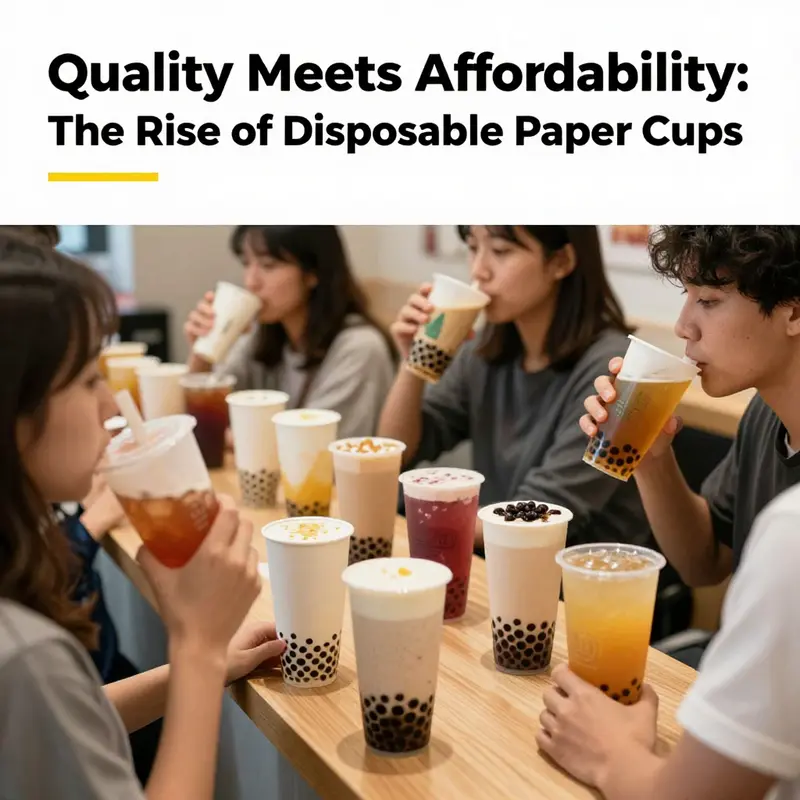
The proliferation of cheap disposable paper cups has quietly become a powerful economic current, shaping the rhythms of everyday service and the broader contours of manufacturing, logistics, and waste management. Their affordability, compatibility with hot and cold beverages, and the convenience of pairing cups with lids have altered how cafes, food trucks, and event organizers operate. In many regions, manufacturers have built capacity to produce an array of sizes—from tiny 2.5-ounce vessels to generous 22-ounce servings—using scalable processes that rely on broad MOQs and streamlined supply chains. The practical impact of this accessibility is visible across sectors: a coffee stand can stock a uniform cup line that travels well from morning rush to late-night service; a catering outfit can select a single cup family to cover espresso, tea, soft drinks, and even cold desserts, all while presenting a consistent brand image. The economics of this setup rest on a few core pillars. First, the unit cost in bulk can be astonishingly low. For very large orders, a ripple-walled eight- to sixteen-ounce cup can approach a fraction of a cent per piece, with price points hovering around a penny or less under tens of thousands of units. In contrast, simpler single-layer or double-layer designs commonly trade around a few hundredths of a dollar per cup when orders stretch into the tens of thousands. These numbers reflect the raw material costs, labor efficiencies, and the scale economies that large suppliers leverage. They also highlight a broader market dynamic: a global production base that can absorb fluctuations in demand and pivot to meet diverse customization needs, from internal branding to printed logos and color schemes, all while ensuring compatible lids and packaging are available to ease distribution and uptake by busy operators. The market narrative around disposable cups is inseparable from the broader demand for eco-conscious choices. Many producers promote plant-based fibers, degradable or compostable formulations, and papers certified for food safety, along with products designed to resist leaks and withstand hot beverages without compromising strength. The scale of this supply chain means that even modest shifts in consumer preference or regulatory pressure can ripple through the pricing and availability of cups across regions. The market analysis of recent years corroborates this pattern. A figure cited in market intelligence indicates that the disposable paper cups market, valued in the vicinity of US$8.7 billion in 2021, is projected to surpass US$11 billion by 2028. This trajectory signals sustained investment in materials science, conversion efficiency, and brand-agnostic customization that supports a wide spectrum of operators—from single-store independents to mid-market chains and mobile vendors. The result is a sector that thrives on throughput and breadth as much as on margins. Yet the same economy that fuels growth also locks the industry into a delicate balancing act. The affordability of cups translates into lower entry barriers for small businesses and startups, enabling them to deliver quick-service experiences with minimal capital outlay. A café can test new beverage lines, a food truck can offer seasonal novelties, and a pop-up can stage a branded experience with relatively modest upfront costs. In turn, suppliers are incentivized to keep MOQs high—often tens of thousands of units—to sustain production lines and ensure cost efficiency. This relationship fuels job creation across the supply chain: from the upstream pulp and paper mills to the downstream converting plants, and through the logistics networks that move finished cups to distant markets. The economic logic is simple yet powerful: scale lowers per-unit cost, which in turn sustains aggressive pricing strategies, enabling widespread adoption. For many operators, the economics justify the entire business model. A small coffee shop that buys in bulk can price beverages competitively while maintaining margins through volume, a dynamic that expands job opportunities not just for cooks and baristas but for drivers, packers, and warehouse staff involved in replenishment and distribution. The ripple effect extends into ancillary services—custom printing, branding, and branded packaging—that create avenues for small firms to differentiate themselves without sacrificing price competitiveness. The broader macroeconomic implications of this growth touch upon regional development and global trade patterns. In economies with large-scale manufacturing capabilities, such as those that can support high-volume, standardized production, the influx of cheap cups correlates with increased outsourcing and export activity. Regions that have invested in efficient supply chains and skilled labor markets reap benefits in terms of throughput and resilience. The ability to meet international demand with consistent quality and predictable pricing supports employment growth, supplier diversification, and the spread of related industries, including lid production, sleeve packaging, and compatible carrying bags. The market’s expansion, however, cannot be viewed through the lens of immediate revenue alone. The hidden costs tied to environmental management and social externalities demand careful consideration. Even as cups are marketed as eco-friendly, a substantial portion of disposable cups still ends up in landfills or informal waste streams. A growing body of research points to the environmental burden associated with single-use items, including microplastic contamination and the energy and water inputs required for production. In this sense, the economic story of cheap disposable cups is inseparable from environmental accounting. The short-run gains for manufacturers and retailers can obscure longer-term costs that society bears in cleanup, remediation, and regulatory compliance. The tension between affordability and sustainability presses operators to rethink waste management at multiple levels: from packaging design and material selection to the efficiency of local recycling streams and the viability of composting programs. If the supply side pushes for ever-lower prices through greater automation and economies of scale, then the demand side bears the moral and logistical consequences of waste handling and environmental stewardship. It becomes clear that price alone does not capture the full value of these products. The true cost includes the downstream resources needed to manage discarded cups, the energy used to process and transport raw materials, and the potential public health and ecological impacts of improper disposal. In some markets, local governments and waste processors are experimenting with more robust recycling infrastructure and clearer labeling to improve contamination rates and recycling yields. These efforts require coordination among producers, retailers, and municipalities, along with consumer education that nudges behavior toward responsible disposal. The economic calculus for operators also evolves with this infrastructure. When recycling or composting options become more accessible and effective, the perceived value of choosing a more expensive but more sustainable cup design can rise. Consumers respond to branding and messaging that emphasizes environmental responsibility, which in turn influences purchasing decisions and loyalty. In other words, the affordability of the cup is only one dimension of a broader value proposition. The ability to offer consistent branding, reliable performance, and responsible end-of-life options becomes part of the competitive equation. From a strategic standpoint, businesses that integrate packaging decisions with broader sustainability goals position themselves to withstand regulatory shifts and evolving consumer expectations. A practical implication is the growing importance of designing for recyclability or compostability, selecting materials that align with local waste-management capabilities, and communicating those choices clearly to customers. This alignment can also unlock partnerships with waste-management firms, municipalities, and certification programs that recognize responsible packaging. The net effect is a more nuanced market environment where price remains a decisive lever, but the lever is pulled within a lattice of considerations—brand perception, supply-chain resilience, and environmental accountability—that determine long-term viability. The integration of customization with cost efficiency is another hallmark of how cheap disposable paper cups shape market behavior. Operators increasingly seek not just a low price, but a cup that serves as a medium for brand storytelling, customer engagement, and experience design. A single cup design can carry a logo, a color palette, and a seasonal motif, translating into stronger recall and repeat business. In a crowded field, the ability to offer customized cups at volume becomes a differentiator that can be leveraged across menus, events, and campaigns. Suppliers respond with flexible manufacturing setups that permit shorter run sizes or one-off runs for branded campaigns, balanced by the scale advantages of traditional mass production. The result is a supply ecosystem that can accommodate both the needs of large institutional buyers and the experimentation of emerging ventures. As with any market of scale, the question lingers about how far the affordable option can go before costs catch up with value. The evidence suggests that while unit costs can stay low, the total cost of ownership—considering waste, disposal, and environmental management—tends to rise in proportion to consumption. This realization fuels ongoing debates about the optimal path forward: should the focus be on pushing cheaper cups as long as waste systems improve, or should the emphasis shift toward materials innovations and circular models that reduce reliance on single-use items altogether? The literature and industry reports point to a pragmatic middle path. Investments in recycling infrastructure and standardized labeling improve end-of-life outcomes. Simultaneously, innovations in materials—such as coatings that enable easier biodegradation without compromising performance—offer potential reductions in environmental impact without sacrificing price competitiveness. For operators, this means adopting a portfolio approach to packaging: select cups that meet operational needs, align with branding goals, and fit within local waste-management capabilities. It also means staying informed about evolving standards and potential policy shifts that might incentivize better end-of-life management or push for alternatives to single-use packaging. The economic opportunity embedded in cheap disposable paper cups is inextricably linked to these broader dynamic forces. The price, the volume, the customization potential, and the logistical convenience combine to produce a product category that remains central to many service-oriented businesses. Yet the true measure of success will increasingly hinge on how well the industry can marry affordability with responsibility, ensuring that the growth generated by volume is matched by advances in sustainability, efficiency, and transparent accounting of social costs. In this sense, cheap cups become a mirror for contemporary economic ecosystems: they reveal how cost, scale, and flexibility can drive rapid market expansion, while also exposing the need for coordinated efforts to address the environmental and social footprints that accompany mass consumption. For stakeholders across the spectrum—from manufacturers to small operators to policy-makers—this alignment holds the key to a resilient, responsible, and prosperous future. External reference on broader market dynamics and projections can be found in industry analyses that track market size, growth rates, and the long-run implications of single-use packaging in a changing regulatory and consumer landscape: https://www.researchandmarkets.com/reports/6279592/disposable-paper-cups-market-size-share-analysis-report-2028
Beyond the Price Tag: The Hidden Environmental Footprint of Cheap Disposable Paper Cups
The conversation around cheap disposable paper cups often centers on cost, convenience, and the visual appeal of brandable design. In café windows and event halls, the familiar white or kraft-colored cups announce a quick solution to dispensed beverages, from hot coffee to icy slush. Yet beneath the surface of their affordability lies a more complex story about resources, waste, and the long arc of consequence that follows a single-use choice. When we slow down the pace enough to examine how these cups are made, used, and disposed of, we discover a paradox: the same paper that is celebrated as renewable can be mired in a web of materials, processes, and end-of-life challenges that overwhelm any per-unit savings. This chapter traces that hidden footprint, weaving together the practical realities of production, the harsh arithmetic of waste, and the ethical questions that arise when a “green” label meets the realities of mass consumption. The aim is not to vilify an ordinary product but to illuminate how a simple choice—what cup to serve a drink in—fits into a larger climate story that organizations and individuals must confront if they want genuine, lasting sustainability.
A first look at composition dispels the initial assumption that paper cups are inherently kinder to the environment. The paper content itself is, in theory, renewable and biodegradable. In practice, though, the vast majority of disposable cups used for hot or cold drinks are lined with a thin film of polyethylene. This plastic barrier is essential to prevent leakage, especially with hot liquids, but it also makes recycling exceptionally difficult. In the United States, for example, recycling streams often categorize lined cups as contaminated by plastic, which disqualifies them from standard paper recycling outputs. The end result is a striking statistic: far less than 1 percent of these cups are actually recycled. The rest end up in landfills or are discarded in ways that do not recover value or prevent environmental leakage. When streams of disposable cups accumulate in landfills, they contribute to long-term space challenges and, through fragmentation, to microplastic pollution that can travel into waterways and oceans. The ecological implications extend beyond the cup itself to the contents and the packaging ecosystem around it, creating a cascade of waste that is hard to reverse once set in motion.
Even when a cup is marketed as biodegradable or compostable, end-of-life realities can blunt those promises. The polyethylene lining, coupled with inks and printing, complicates compostability in municipal facilities that lack specialized processing. The result is a gap between product labeling and actual disposal outcomes. The relatively low per-unit cost may make these cups attractive to price-sensitive buyers, but the aggregate effect of tens or hundreds of millions of cups discarded each year accumulates quickly. In the broader environmental calculus, the per-use advantage of a cheap cup can be overshadowed by the sheer scale of consumption. The environmental footprint is not merely about the cup’s material content; it encompasses the energy and water required to produce the cup, the transportation emissions to move raw materials to factories and finished goods to markets, and the subsequent treatment or mismanagement of the waste stream.
To understand the resource intensity involved, one need only consider the production sequence. Paper alone, while renewable, is not generated without energy, water, and chemicals. The plastic lining adds another layer of complexity, requiring petroleum-based feedstocks and additional processing. Even if the cup is lightweight and seemingly disposable, the embedded energy and water per cup accumulate as volume increases. The manufacturing footprint expands when you factor in the layers of ink used for branding and the adhesives or coatings applied during assembly. The ripple effects extend into the supply chain: the need for forests managed for paper, the logistics of distributing cups from manufacturing hubs to cafés, and the packaging waste generated to ship and shelve these products at scale. In markets where wholesale pricing can drop to remarkably low levels—driven by large-order discounts and competitive manufacturing—these resource costs may seem small on a per-cup basis. Yet the per-day total across thousands of outlets reveals a coastline of environmental impact that cannot be dismissed with a simple price tag.
The health and safety questions surrounding coatings and inks add another dimension to the conversation. Some studies have highlighted concerns about potentially toxic elements present in coatings or printing used on paper cups. When a hot beverage sits within contact with a coated surface, there is a theoretical risk, albeit varying by composition and usage, that trace elements could migrate into the liquid. While regulators and manufacturers may implement safeguards, the existence of these concerns invites scrutiny about what is truly safe, especially for children or vulnerable populations who might be more sensitive to any leaching. The conversation around toxicity is not limited to human health in isolation; it also intersects with environmental fate. If a cup is disposed of improperly or if its recycling stream is compromised by coatings or inks, the downstream effects—soil contamination, waterway exposure, and the difficulty of remediating polluted streams—become part of the same problem that seems so routine in daily life. The risk is not a single diagnosis but a spectrum of potential outcomes that reflect the complexity of modern materials and the systems designed to manage them.
The scale of consumption compounds all these factors. Cheap disposable cups often win favor precisely because they fit budget constraints and enable rapid service. The economics can be compelling: suppliers repeatedly price cups within tight margins, with bulk discounts that reduce the per-unit cost and make it feasible to offer a fast, standardized experience in busy settings. In some cases, wholesale pricing for certain cup families—when ordered in tens of thousands or more—approaches a few hundredths of a dollar per cup. These figures are meaningful for business models built on volume and turnover, yet the environmental arithmetic remains large. The daily churn of cups at global scale translates into mountains of waste if end-of-life options are limited or mismanaged. The paradox is clear: affordability can coincide with a deeply embedded ecological cost, particularly when circular economy principles are not fully operational in a given market. The desk draw of a cheap cup hides a longer, more stubborn timeline of environmental consequences that stretches beyond a single business quarter.
What then is the path forward for buyers who want to reconcile the demand for low-cost, convenient beverages with a genuine commitment to sustainability? One obvious route is to reduce overall consumption or to shift toward reusable alternatives that are designed for durability, such as metal or glass vessels. The higher initial production footprint of a durable cup may be offset by repeated reuse over a longer period, and if facilities can support proper cleaning and safe use, the net environmental benefit grows. Yet such a transition is not universal or straightforward. It requires changes in consumer habits, logistics, staff training, and the physical infrastructure of cafés and venues. In some contexts, reusable systems demand deposits, cleaning capabilities, and dedicated handling that can complicate operations. Therefore, the conversation often lands at a pragmatic compromise: exploring ways to minimize the most wasteful components of the current supply chain while preserving the essential functions that cheap cups deliver—speed, service consistency, and the ability to scale for large audiences.
Another dimension of the dialogue concerns design for end-of-life. There is growing interest in cups engineered to separate or replace problematic coatings, to improve compostability, or to enable effective recycling within municipal streams. The potential benefits are clear: if a cup can be reliably sorted, processed, and repurposed, its environmental toll declines dramatically. However, achieving that outcome requires collaboration across the supply chain—the paper producers, the coating formulators, the ink manufacturers, the packaging designers, the waste management operators, and policymakers who set the lines of permissible disposal. The alignment of incentives is rarely automatic; it demands deliberate strategies, standardization, and investment in modern waste processing infrastructure. In the meantime, consumers and businesses can make incremental improvements. For instance, selecting cups with simplified, recyclable coatings and partnering with suppliers who can provide clear end-of-life pathways may reduce the likelihood that a cup becomes a long-term pollutant. Such steps are not magical fixes; they are practical moves that, when aggregated, can tilt the environmental balance toward a more responsible outcome.
A final note emerges when we connect these threads to the broader spectrum of packaging and consumer goods. The field is moving toward transparency around composition, lifecycle assessment, and environmental claims. That shift means more than just better labeling; it implies a demand for verifiable data about energy use, water consumption, and end-of-life performance for each product class, including cheap disposable cups. It also invites buyers to consider not only the cup but the entire beverage experience—the vessel, the lid, the sleeve, and the associated waste stream. If we choose to standardize on a single-use habit, the opportunity costs become less visible but no less real. In contrast, when we favor choices that illuminate the full lifecycle—from forest to landfill to possible recovery—the chapter of waste opens wider to include policy levers, business models, and consumer behavior that collectively shape a more sustainable future.
From a practical standpoint, the decision matrix for businesses negotiating between price and responsibility includes several levers. The supply ecosystem offers a range of cup formats, from ripple-wall designs that reduce wall thickness while maintaining strength, to single-wall and double-wall configurations that affect insulation and consumer experience. The price points for large orders can be astonishingly low, underscoring why these cups proliferate in high-volume settings. Yet the real cost of a cheap cup should not be measured only in dollars saved at the register. It should be evaluated in terms of waste management costs, environmental remediation, and the health implications of long-run exposure to potential contaminants in coating and ink. When businesses recognize that a small step—such as selecting a cup with more recyclable potential or working with suppliers who provide clear disposal guidance—can produce outsized environmental benefits, a more balanced approach to procurement emerges. This does not require abandoning practicality; it invites a more rigorous, informed approach to choosing packaging that aligns with both business goals and ecological stewardship.
To illustrate how design and procurement choices can intersect with user expectations, consider how a café might present its offering. The value proposition could emphasize not only the speed of service but also the clarity of disposal guidance and the availability of a robust recycling or composting stream. An internal policy can encourage customers to reuse cups whenever feasible, or to switch to a take-away solution that minimizes waste while maintaining food safety and beverage quality. The net effect is a more intentional approach to packaging that acknowledges cost constraints while aggressively pursuing better environmental outcomes. In this light, the price tag on a disposable cup becomes a starting point for deeper questions about the life of a product and the responsibilities we share for its fate after the last sip is taken.
For readers exploring this topic in more depth, it is helpful to anchor the discussion in concrete examples of how customization, branding, and packaging choices interact with environmental goals. Some manufacturers offer a range of customizable cups with lids and branding options designed to meet the needs of cafés and event planners. These choices can influence not only aesthetics but also the disposal pathways that customers encounter at the point of use. When selecting a supplier, look beyond unit cost and toward the supplier’s commitments to end-of-life performance, the presence of certifications, and the availability of samples that allow you to assess how the cup performs under typical conditions of use. For instance, a hot beverage cup that is marketed as eco-friendly but relies on a high-penetration plastic lining might be technically feasible but operationally challenging to recycle. In contrast, a cup that presents a simplified coating system and speaks clearly to recyclability can be a more sustainable choice even if its initial price is modestly higher. The aim is not to find a perfect product but a more responsible one within the realities of today’s manufacturing and waste-management ecosystems.
Ultimately, the chapter on cheap disposable paper cups invites a broader view of sustainability that integrates economics with ecology. The pursuit of affordable packaging will always matter to business viability and consumer convenience. Yet the true sustainability story emerges when affordability is coupled with a proactive stance on end-of-life, material choices, and system-level waste management. The path forward is not just about selecting a different cup—it is about embedding a lifecycle mindset into procurement decisions, staff training, and consumer engagement. When that mindset takes hold, even a ubiquitous, inexpensive object like a disposable paper cup can become a vehicle for meaningful, measurable progress toward a more circular and less polluting packaging landscape. To connect the theoretical with the tangible, consider the potential impact of a single supplier that offers hot-sale customized disposable single-wall paper cups with lid as one option among a broader strategy that prioritizes recyclability and responsible disposal. Such choices matter, not because they erase the cup’s footprint, but because they reframe it within a more deliberate, transparent, and accountable system. For readers seeking a practical entry point into this shift, a representative example of the broader packaging landscape—through a product that blends customization with functional performance—can be found here: hot-sale customized disposable single-wall paper cups with lid.
External resource for further reading and empirical context: https://www.sciencedirect.com/science/article/pii/S235218642500079X
Cheap Cups, Big Currents: How Market Trends Reshape the Everyday Disposable Paper Cup

A cheap disposable paper cup is more than a simple vessel for hot coffee or a cooling dessert. It is a microcosm of modern manufacturing, policy shifts, and consumer expectations that ripple through every corner of an economy built on quick service, takeout, and on-the-go consumption. In the Chinese market context, the sector is expanding with remarkable velocity. Projections place the market size somewhere around 185 to 200 billion RMB by 2026, a notable rise of roughly 23 to 33 percent from 2024. That growth is not evenly distributed, but it is sustained by the rapid expansion of fast-food outlets, takeout chains, and a crowded array of independent shops that rely on convenient, hygienic packaging to support their business models. The cup has become a critical piece of the customer experience as much as a functional container, and its price point often determines whether a small cafe can scale or a takeaway vendor can keep margins intact in a highly competitive environment.
From the consumer’s perspective, the cheap disposable paper cup offers a predictable, familiar ritual. For operators, it is a balance between cost, performance, and perception. The market’s breadth is evident in the range of sizes available, from tiny 2.5-ounce samples to the 22-ounce offerings that support large cold drinks. Inside that range, there are design choices that matter just as much as capacity. Ripple-walled cups, sometimes marketed as wave or ripple variants, are common because the texture provides a tactile grip and can contribute to a perception of sturdiness, even when prices are deliberately kept low. When volume targets are high, wholesale customers may see unit costs dip sharply. For example, suppliers report prices as low as around $0.01 per cup for orders of 10,000 or more, while single- or double-walled variants typically land in the $0.046 to $0.07 per cup band for orders in the vicinity of 50,000. Such price points, paired with leak-resistant designs, address the essential concerns of both hot and cold beverage service and align with the broader goal of keeping customers satisfied without inflating costs for operators.
This affordability, however, does not come at the expense of responsibility. The run-up in demand has coincided with a decisive shift toward eco-friendly materials and sustainable production practices. Consumers are increasingly selecting products that minimize environmental impact, and policymakers have begun to reflect that shift in regulation. By 2026, it is anticipated that eco-friendly paper cups will command more than half of the market share. That transition is propelled not only by consumer preference but also by government policy, notably the so-called plastic ban 2.0, which constrains the use of conventional plastics in packaging and nudges manufacturers toward paper-based solutions and more compostable coatings. The result is a packaging sector that is becoming more transparent about materials, coatings, and lifecycle implications. Eco-friendly cups often incorporate biodegradable or compostable coatings, post-consumer fiber, or bio-based alternatives such as PLA. The choice of material influences not only end-of-life outcomes but also the cup’s performance in different environments, including cold drink applications and hot beverage service, where barrier properties and moisture management are critical.
The evolution in materials sits alongside a parallel drive toward smarter production. The industry is embracing intelligent manufacturing and automation to lift efficiency while maintaining safety and quality. A 30 percent gain in production efficiency is frequently cited by manufacturers that have adopted advanced automation, sensors, and data analytics across their lines. In tandem, product qualification rates have climbed toward the high end, with figures near 99.8 percent frequently reported. Such improvements translate into real cost advantages for standard disposable cups, even as product designers experiment with more demanding specifications and more sustainable material stacks. In practical terms, manufacturers can offer competitive pricing without sacrificing reliability, which is crucial when the same supply base is asked to support a broad spectrum of sizes, coatings, and customization options.
Material science itself is undergoing a quiet revolution. Traditional choices—wax-coated paper for cold drinks and plastic-coated variants for hot drinks—continue to dominate, but the industry is increasingly experimenting with multi-coated papers, recycled content, and bioplastics. Post-consumer fiber, which uses recovered paper fibers, is gaining ground as a straightforward way to reduce virgin material use. Bioplastics, particularly polylactic acid (PLA) and similar derivatives, are being explored for their environmental benefits, including improved compostability under the right conditions and reduced reliance on fossil-based feedstocks. These materials promise to deliver the needed barrier properties against moisture and grease while meeting evolving sustainability standards. Yet the trade-offs remain real: coating choices affect heat retention, lid compatibility, and shelf life, and every substitution can alter the cup’s performance in a busy cafe or a high-turnover vending environment.
Design and aesthetics are no longer afterthoughts either. Buyers are more vigilant about hygiene, convenience, and the brand experience that a simple cup can convey. A cup’s surface becomes a canvas for color, logo, and messaging, and that design layer can influence purchasing decisions as surely as the beverage inside. The rise of e-commerce and online sales platforms has widened distribution channels, enabling manufacturers to reach food-service operators and consumers directly. This shift in channel strategy helps keep prices competitive while allowing for customization at scale. Operators can now request printed designs, lids with branding, or even packaging that aligns with a restaurant’s identity without paying a premium that once seemed inevitable. The capability to mix customization with cost control is a defining feature of the current market, and it explains why many suppliers offer bundled options that include cups, lids, and related packaging in a single procurement package.
As the market grows and matures, the relationship between price and performance becomes more nuanced. The cheapest version of a cup may serve a basic takeout need, but a broader set of choices is increasingly driving value beyond price alone. The ability to offer multiple sizes—ranging from a compact 8-ounce cup suitable for a quick espresso to a larger 16-ounce or 22-ounce variant for iced drinks—along with reliable leak resistance, heat retention, and compatible lids, all contribute to a positive consumer experience. The value equation expands when suppliers can demonstrate consistent product quality, a robust supply chain, and flexible customization options. In this environment, a credible sourcing strategy often hinges on three pillars: direct contact with manufacturers, transparent material disclosures, and access to credible B2B platforms that streamline procurement and sample requests. Direct engagement with factories ensures that buyers understand the production processes, coatings, and certifications involved, while platform-mediated inquiries can help validate lead times, minimum order quantities, and the availability of sample cups before large-scale commitments.
A practical path for buyers pursuing both affordability and sustainability is to view the cup as a system rather than a standalone item. The cup, lid, and sleeve—or bag for takeaway—comprise a packaging system that must function cohesively: the lid must seal securely, the sleeve should provide insulation without promoting excessive waste, and the cup’s interior coating must withstand beverage type and temperature while remaining compatible with end-of-life options. In a market where the price per unit can hinge on order quantities, buyers benefit from understanding the economies of scale and the ways suppliers can optimize processes to maintain price stability even as materials evolve toward more sustainable options. The emphasis on scale is evident in the numbers: price points are tightly linked to order size, and those who can commit to larger volumes often enjoy substantial unit-cost advantages. Yet even with aggressive pricing, buyers must carefully weigh coating choices, barrier performance, and recyclability or compostability to ensure alignment with sustainability goals.
For readers seeking a concrete example of the eco-friendly, branded side of this market, a practical reference is the supplier’s page focused on printed-logo, take-away cups. This page highlights a streamlined option for businesses that want to project their identity while staying within an economical framework. It demonstrates how a single product line can deliver both customization and performance, an appealing combination for operators who must balance branding with margins. You can explore this specific example here: eco-friendly-printed-logo-buy-paper-cup-take-away-coffee-cup-8-oz-12-oz-paper-cup.
The broader picture remains clear: the cheap disposable paper cup is evolving from a commoditized item into a strategic packaging choice that reflects the priorities of modern consumption. It is not merely the cheapest option on the shelf; it is a carefully engineered product whose design, materials, and manufacturing lineage are increasingly visible to buyers who care about hygiene, sustainability, and brand experience. The rise of eco-friendly options does not replace cost-aware thinking; rather, it reframes it. Buyers learn to ask about coatings, recyclability, and lifecycle impacts with the same urgency they bring to price per cup and lead times. This evolution is particularly pronounced in the Chinese market, where rapid sector growth has catalyzed a broader transition toward sustainable materials and more efficient production methods. In practical terms, operators who plan for the medium term will likely adopt a mixed portfolio: cost-conscious standard cups for high-volume days and more durable, sustainability-minded options for campaigns or channels that demand a stronger environmental footprint.
The next chapters will build on this foundation by examining how businesses translate market trends into operational choices—how they balance supplier relationships, material selection, and design to meet evolving consumer expectations. They will also explore how digital platforms, sampling strategies, and certification programs influence procurement decisions, and how emerging coatings and barrier technologies might reshape the performance landscape for hot and cold beverages alike. In this sense, the cheap disposable paper cup becomes not just a packaging item but a strategic lever in competitive hospitality and retail ecosystems.
External resource: https://www.un.org/sustainabledevelopment/sustainable-consumption-production
Thin Walls, Heavy Consequences: Health and Safety in Cheap Disposable Paper Cups

Cheap disposable paper cups are a familiar sight in many daily routines. They promise convenience, low per-unit cost, and the ease of serving beverages from coffee to cold treats in moments. But beneath the surface of their affordability lies a set of health and safety considerations that deserve careful attention. The chapter you are about to read does not aim to scold industry or dismiss the appeal of low-cost solutions. Instead, it seeks to understand how cheap cups perform in real-world conditions, where heat, time, and a stream of often imprecise manufacturing steps interact with the human body. The story of these cups is not simply about materials, but about how those materials interact with our habits, our health, and the broader systems that regulate food contact products.
At the core of most cheap disposable paper cups is a simple yet critical engineering choice: an inner lining that keeps the cup waterproof and the beverage from soaking through the paper. This lining is typically a thin polymer layer, most commonly polyethylene, which creates a barrier between liquid and the paper. In theory, this is a sensible design. It prevents leaks, preserves the integrity of the cup, and enables a broad range of beverage options. In practice, however, the lining is also a pathway for substances to migrate from the cup into the drink, especially when heat is involved. Heat changes the dynamics. When a hot beverage meets the cup, the temperature gradient accelerates the movement of small molecules. Over minutes, microplastics and a variety of additives or contaminants lingering in the lining can migrate into the liquid. This is not just a theoretical concern. A 2026 study published in Environmental Science & Technology drew attention to the fact that disposable paper cups can release microplastics and several toxic chemicals into hot liquids within minutes of contact. The list included substances such as phthalates like Diethyl phthalate, bisphenols, and styrene. Each of these is associated with endocrine disruption, which means they can interfere with hormone function and potentially contribute to a spectrum of health issues over time, including reproductive challenges and developmental concerns. The study also noted that even when beverages are at room temperature, trace migration can occur, though the effect is markedly amplified by heat. This finding strikes a chord with everyday users who might pour a hot latte, steam milk, or add hot water to a cup that will later cool down but has already exchanged substances with the cup lining.
The concern does not end with the inner lining. The inks, adhesives, and surface treatments used to decorate or seal a cup can also leach compounds. In many markets, the strictest safety frameworks for food contact materials require that every component that touches a beverage, including inks and glues, meet food-safe standards and not transfer harmful substances to liquids. Yet in the arena of budget cups, there is a risk that lower-grade materials slip through the gaps in oversight, especially when manufacturing occurs in jurisdictions with uneven regulatory rigor. The risk profile expands when we consider surface finishes used to print brand designs or logos, coatings applied for gloss or moisture resistance, and the adhesives used to bond layered structures or attach lids. Each of these contributes to a potential migration pathway, particularly when cups are used for hot drinks or held in warm environments for extended periods.
Regulatory bodies are aware of these challenges. In the United States, safety standards for food contact materials are built around the principle that materials should avoid transferring harmful substances to food at levels that pose a risk to human health. The European Union maintains a similarly strict framework, balancing consumer protection with the practical needs of a global supply chain. However, the reality is nuanced. The 2025 EFSA report highlighted that compliance with safety standards hinges heavily on proper sourcing, quality control, and documentation throughout the supply chain. The report noted that some budget-friendly cups lack adequate testing for migration, and trace amounts of hazardous elements such as lead, cadmium, and arsenic have been detected in some non-compliant products. While the detected levels are often low, the cumulative effect of chronic exposure, particularly in high-use settings like campuses, airports, or event venues, remains a concern for researchers and health professionals.
What does this mean for everyday users and for the businesses that supply them? First, it means recognizing that price is not a perfect proxy for safety. A cup can be cheap because it uses a straightforward, efficient production line or because it leverages lower-cost materials. It can also be cheap because it originates in a region with less rigorous oversight, where testing regimes are sporadic or partially undocumented. For users, this translates into a practical takeaway: minimize the use of cheap disposable cups for hot beverages whenever possible. Reusable alternatives—such as glass, stainless steel, or ceramic mugs—offer a robust way to reduce exposure to potential microplastics and chemical migrants. When disposables are unavoidable, selecting brands that carry credible safety certifications, such as documentation attesting to food-grade status for every component, becomes crucial. In some cases, avoiding cups with inner prints or coatings on the inside can reduce the number of potential leachables, since complex printing layers and solvent-based inks may contribute additional migration risks.
From a consumer health perspective, the most concrete remedy is informed choice. The chain of custody for a disposable cup begins with raw materials and ends with the consumer tongue, but the most actionable steps lie in the middle: how cups are produced, how they are tested, and how thoroughly a supplier documents compliance. This is where the importance of transparent supplier practices becomes clear. For businesses, requesting detailed material safety data sheets, migration test results, and third-party certifications is not simply bureaucratic overhead; it is a practical risk-management strategy. It is not enough to say that a cup is recyclable or compostable. Operators should probe whether its inner lining has undergone migration testing under representative beverage temperatures, whether inks used for branding are explicitly approved for food contact, and whether adhesives used between layers comply with recognized food safety guidelines. The EFSA and FDA frameworks provide a scaffold for these inquiries, but the real value comes from a supplier who actively maintains current certifications and provides clear documentation.
A practical reminder for operators is to look beyond the surface grade or the apparent affordability. Engaging with suppliers who can demonstrate traceable quality control, batch testing, and consistent compliance across production lots helps ensure that a cup does not become a source of contamination. It is not enough to rely on a single certification displayed on a box. The best practice involves a combination of product specifications, independent laboratory testing, and ongoing audits of supply chain integrity. In practice, this means asking for the specific test standards used for migration assessments, the temperature profiles tested, and the duration of tests to reflect typical user scenarios. It also means requesting confirmation that coatings or printing inks used on the interior are not intended to migrate and that any additives present in the cup’s coating meet current safety thresholds.
In the midst of these complex considerations, one can still find opportunities to connect theory with practice through carefully chosen resources. For instance, a relevant practical reference to a compliant option can be found in the broader ecosystem of kitchenware pages that catalog safe, food-grade disposable options. For readers looking for a concrete example of a product that aligns with safety expectations while maintaining cost efficiency, a page detailing hot-sale customized disposable single-wall paper ice-cream cups with lid eco-friendly food grade offers a useful case study in the balance of form, function, and safety. This resource, accessible at the linked product page, demonstrates how a supplier communicates safety attributes and practical use cases to customers who need both reliability and affordability. See here for a direct example: hot-sale customized disposable single-wall paper ice-cream cups with lid eco-friendly food grade.
The takeaway for readers who manage beverage service operations or who are responsible for public health outcomes is straightforward. If the goal is to minimize exposure while preserving the convenience that cheap disposable cups offer, it is essential to adopt a layered approach. First, prefer reusable vessels whenever possible, especially for hot beverages. Second, when disposables must be used, source from suppliers who can substantiate food-grade status for every component and who provide clear migration testing data. Third, scrutinize the deployment context. Occupied venues with high turnover and prolonged beverage contact—think events, festivals, or student housing—are settings where cumulative exposure is most relevant and where robust supplier oversight yields the most benefit. Finally, maintain a vigilant stance toward newer materials and coatings that claim to be eco-friendly or microplastic free. The science around microplastics and chemical migration in food contact materials continues to evolve, and keeping pace with regulatory developments helps ensure safety keeps step with affordability.
In considering how to apply these insights, one might think in terms of an ongoing due diligence process rather than a one-off certification. Establish a vendor qualification program that includes documented risk assessments, periodic batch testing, and a commitment to transparent reporting. Create a standard that any cup in your lineup must meet, and require that every new supplier demonstrate the same level of transparency before you place an order. If organizations can embed this approach into their purchasing culture, they can preserve the practical benefits of cheap disposable cups while reducing the potential for health-related pitfalls. The broader public health implications are meaningful: by elevating the standard for what is acceptable in food contact materials, communities gain a measure of protection that aligns with the cost efficiencies these products promise.
For readers who want to explore the regulatory framing in more depth, consider the broader context provided by external resources that summarize safety standards for disposable cups. This material offers a clear map of how migration testing, toxicity considerations, and compliance marks interrelate in real-world supply chains and helps translate the science into actionable procurement decisions. For a broader context on regulatory safety standards, see https://www.epa.gov/chemical-research/safety-standards-disposable-paper-cups.
Final thoughts
Cheap disposable paper cups are not merely a cost-effective choice; they represent a growing synergy between practicality and responsibility in the beverage industry. Recognizing the economic impact, embracing sustainable practices, staying ahead of market trends, and adhering to health standards will not only enhance your service but also contribute positively to the environment. As businesses evolve and consumer demands shift, affordable disposable tableware will likely continue to hold a crucial place in catering to diverse needs while aligning with the global push for sustainability.