
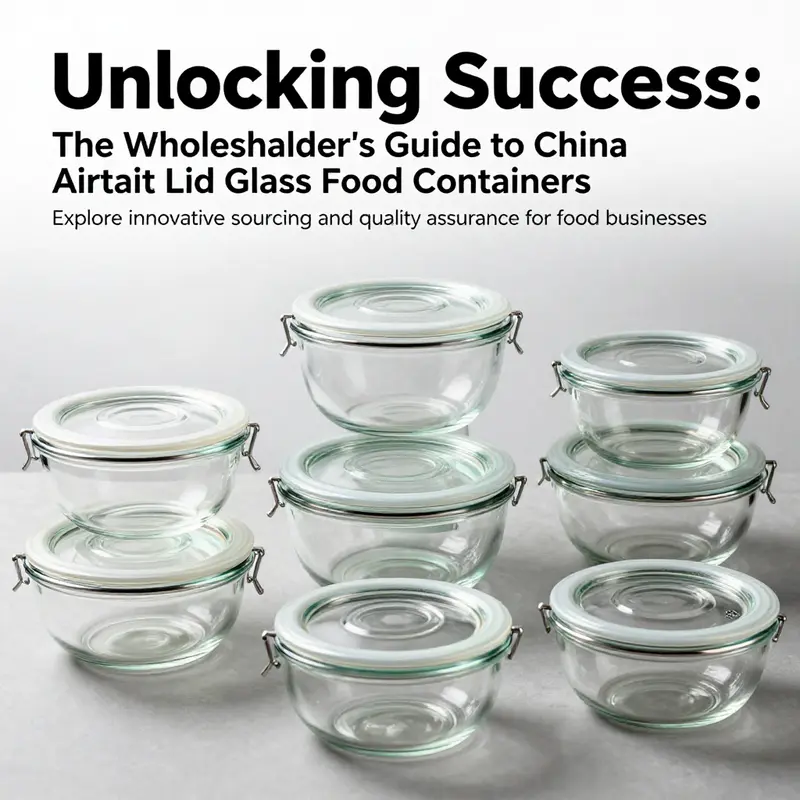
The wholesale market for airtight lid glass food containers from China has become a crucial player in the foodservice industry, catering to bubble tea shops, restaurants, food trucks, and catering services. As culinary professionals increasingly prioritize sustainability and aesthetics in storage solutions, understanding market dynamics, effective sourcing strategies, and quality assurance becomes imperative. This comprehensive exploration will detail the evolving landscape of this market, equipping stakeholders with the insights needed to make informed decisions.
Sealed for Sustainability: Navigating China’s Airtight Glass Storage Container Wholesale Dynamics
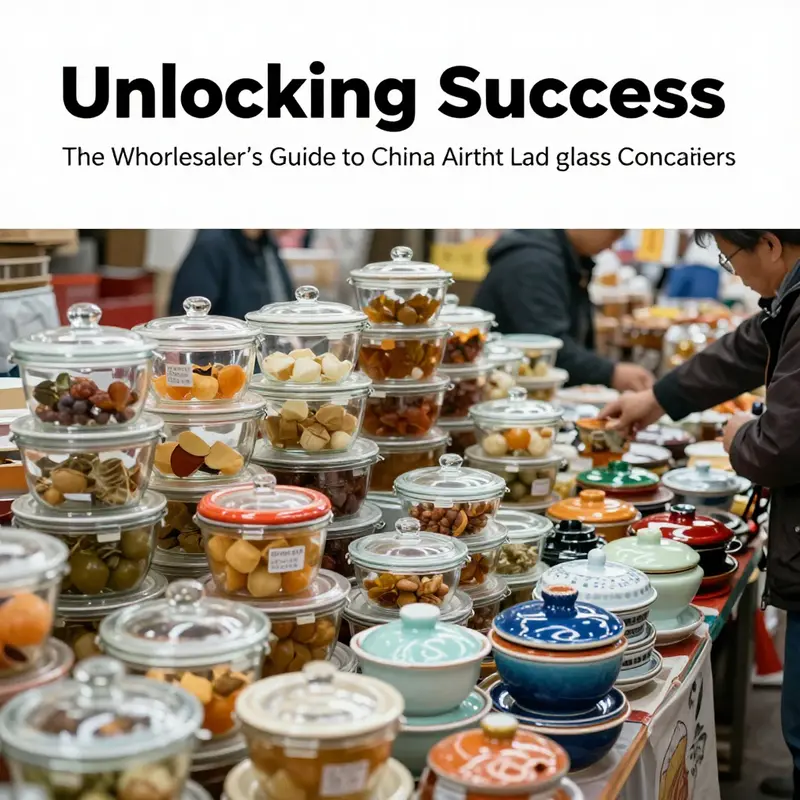
The wholesale market for airtight lid glass food containers in China has unfolded into a sophisticated ecosystem where material science, manufacturing prowess, and global trade pressures converge. This chapter traces the currents shaping demand, the strategies wholesalers deploy to navigate risk and opportunity, and the evolving value proposition that defines success in a market aimed at both domestic kitchens and international shelves. At the heart of these dynamics lies a simple premise with broad implications: modern households and commercial kitchens alike are increasingly moving away from disposable plastics toward durable, non-toxic storage solutions that protect flavor, nutrition, and the planet. In China, that shift manifests not only in product design but in the architecture of supply chains, pricing models, and quality assurances that are essential to sustaining wholesale volumes across diverse markets. The result is a market that rewards durability, transparency, and sustainability as much as it rewards scale and speed. Across this landscape, the role of glass with airtight closures emerges as a durable, reusable choice that satisfies both everyday practicality and a growing demand for environmentally responsible solutions. The capability to preserve aromas, textures, and freshness without reliance on plastics speaks to a broader consumer trend toward mindful consumption, a trend that wholesale buyers track as a leading indicator of long-term viability for inventory, pricing, and partnerships.
The market’s breadth reflects varied consumer applications and channel needs. On one end, simple, high-turnover storage solutions find homes in mass-market retail ecosystems where retailers seek reliable, low-depth inventories that can be replenished quickly. On the other end, more specialized configurations—such as glass containers with hermetic lids designed to keep spices, grains, or brewed teas vibrant for extended periods—satisfy niche segments within gourmet, hospitality, and artisanal foodservice channels. This product variety is not merely a reflection of consumer taste but a strategic response to the logistics of wholesale distribution. For manufacturers and distributors, it translates into a commitment to modular design, allowing a single production line to yield multiple SKUs with different lid styles, seal technologies, and closure aesthetics. Even when the lid material changes—from ceramic to bamboo or cork-like closures—the underlying imperative remains consistent: a seal that minimizes air and moisture ingress while offering ease of use, dependable cleaning outcomes, and a visually appealing presentation. The market thus rewards suppliers who can balance functional reliability with design sensitivity, recognizing that compelling storage solutions must be both practical and pleasing.
The manufacturing and supply chain backbone of this sector in China is anchored in a robust, integrated ecosystem. Chinese manufacturers benefit from a long-standing specialization in glass production and precision molding, supported by a dense network of component suppliers, coating and finishing services, and logistics hubs that streamline export workflows. This ecosystem creates a compelling value proposition for international buyers seeking bulk purchases with consistent quality at competitive unit costs. In practice, wholesalers and traders rely on established, transparent processes to manage color, clarity, thickness, and finish while ensuring that glass retains its strength under practical handling and stacking conditions. Importantly, the market is accustomed to negotiating flexible MOQs, which provides retailers—especially those testing new geographic markets or launching private-label programs—an opportunity to start small and scale gradually. The ability to adjust order quantities in line with demand signals is a strategic advantage that reduces risk and accelerates time to revenue for both sides of the transaction.
Quality assurance threads through every stage of product development and procurement. Buyers increasingly demand clear benchmarks for seal integrity, material safety, and resistance to thermal cycling, since these factors determine how well a container performs in a busy kitchen or a commercial storage environment. In response, manufacturers invest in rigorous testing—leak tests, drop resistance evaluations, and thermal shock assessments—to validate performance. They also pursue sustainable material choices that align with evolving regulatory expectations and consumer values. High-quality borosilicate or tempered soda-lime glass often emerges as preferred substrates because of their resilience and chemical stability. The choice of lid closure—whether ceramic, bamboo, or cork-inspired—carries implications for ergonomics, stackability, and reusability, all of which influence consumer satisfaction and repeat purchases. Each design decision is weighed against the broader market demands: long product life cycles, ease of cleaning, and a convincing story about environmental impact. In a market that increasingly expects suppliers to demonstrate traceability, provenance, and responsible sourcing, transparent documentation and contract terms become as important as the physical product itself. The wholesale buyer’s confidence hinges on a clear demonstration that the stated materials, finishing processes, and lid technologies can withstand the rigors of daily use without compromising safety or performance.
One of the clearest signals of market maturity is the diversity of product configurations available to wholesale buyers. The landscape features everything from straightforward, 500ml-style transparent vessels with secure locking lids to more elaborate schemes that pair glass containers with specialized closures. These configurations support a spectrum of use cases—food storage, spice organization, tea preparation, and even segment-specific applications in culinary classrooms or hotel operations. The ability to tailor shipments to specific market requirements—such as different lid closures, gasket materials, and dimension tolerances—helps wholesalers maintain relevance across multiple regions and retail channels. The market’s competitive intensity is tempered by this breadth; not every supplier pursues a one-size-fits-all approach. Instead, many adopt a modular mindset, designing families of products that can be mixed and matched to fulfill a client’s private-label or custom-branded objectives. This adaptability is particularly valuable when responding to evolving consumer expectations around aesthetics, ease of use, and the ability to maintain freshness across varying climatic conditions.
A critical dimension of the wholesale equation is price discipline, which is closely tied to supply chain efficiency and volume commitments. The region’s manufacturing base provides economies of scale, yet the complexity of glass handling, quality testing, and custom closures means unit costs can fluctuate with input prices and logistics rates. Buyers increasingly value suppliers who can offer realistic, predictable pricing over longer horizons, coupled with bundled services such as pre-shipment QA checks, packaging optimization, and even labelling support. The market’s pricing dynamics are further influenced by cross-border considerations, including tariff regimes and regulatory compliance, which can shift profit margins and lead times. In this sense, the wholesale buyer must adopt a broad perspective that integrates production scheduling, supplier capacity, and international shipping contingencies to sustain supply without compromising quality. A robust supplier network built on mutual trust and consistent delivery performance becomes a strategic asset in times of volatility, allowing buyers to maintain market presence even when external conditions complicate planning.
In light of these realities, the sector faces concrete challenges that shape strategic decisions. Shipping and handling costs have risen in step with global logistics complexity, creating pressure on margins for wholesalers who rely on steady, cost-effective delivery to international markets. Geopolitical tensions, including tariff implementations, have introduced additional uncertainty for pricing strategies and export routes. The October 2025 tariff environment mentioned in industry analyses serves as a reminder that wholesale success is contingent not only on product quality but also on the agility to adapt to changing policy landscapes. Some manufacturers address these pressures by optimizing packaging to reduce dimensional weight, negotiating more favorable carrier terms, and diversifying inbound routes to mitigate port congestion. Others pivot to closer-to-market production sites or regional distribution hubs, thereby shortening lead times and reducing inventory risk for buyers who must adapt quickly to shifting demand signals.
Despite these formidable headwinds, innovation remains a guiding force in the market. The most resilient suppliers actively blend design refinement with manufacturing discipline, delivering products that offer improved seal performance, ergonomic handling, and aesthetically thoughtful presentation. There is a clear emphasis on reducing the risk of spoilage and contamination through smarter gasket geometries, more reliable locking mechanisms, and thoughtful user interfaces that make everyday operation intuitive. Beyond mechanical improvements, manufacturers are exploring smart functionalities that connect storage solutions to broader kitchen ecosystems. Think of lids or containers engineered for easier cleaning, compatibility with stackable storage systems, or sensors that integrate with home-management platforms to monitor freshness or temperature conditions in real time. While some of these innovations are still emerging, their presence signals a shift toward value-added offerings that justify premium pricing and longer-term contracts. In tandem with hardware improvements, wholesalers are turning to digital tools that optimize marketing, inventory management, and customer engagement. Data-driven insights from large wholesale platforms help sellers forecast demand, manage seasonal spikes, and tailor promotions to specific market segments, reducing waste and improving overall supply chain efficiency.
Against this backdrop, the overall market trend has shifted from simple volume growth toward higher-value, quality-focused, and sustainability-oriented offerings. Consumers increasingly expect transparency about materials, production processes, and end-of-life considerations. In response, wholesalers and manufacturers alike emphasize traceability, responsible sourcing, and clear communication about the environmental footprint of their products. This alignment with social and environmental expectations is not merely a regulatory compliance exercise; it represents a strategic opportunity to differentiate in crowded marketplaces. By consistently delivering glass storage solutions that balance safety, longevity, and design, Chinese manufacturers position themselves as reliable partners for retailers seeking to brand confidently across borders. The combination of robust manufacturing capability, adaptable product configurations, and a growing emphasis on sustainability has helped China maintain a leadership position in the global wholesale market for glass food containers. Buyers benefit from the predictability that comes with a mature ecosystem, where quality standards and logistical reliability help ensure that distributed inventories meet retailers’ customers’ expectations.
For readers seeking a concise orientation to how these market dynamics translate into practice, consider how a wholesale buyer might navigate an established online wholesale environment. The buyer begins with a preference for non-toxic, durable glass that sustains freshness over a practical shelf life. They evaluate several lid combinations and seal technologies to identify options with consistent performance. They then explore a spectrum of MOQs, appreciating that smaller commitments enable market testing while larger orders support scale efficiencies. They examine documentation for material safety and regulatory compliance, confirming that product specifications align with both domestic and international requirements. Finally, they enter into negotiations that balance price with value-added services, such as packaging optimization, QA validation, and post-sale support. In this milieu, the ability to adapt—whether by adjusting SKUs, pivoting between lid types, or rerouting shipments to minimize transit times—determines whether a supplier remains a trusted partner over multiple cycles of demand.
For readers who want to explore related topics within this ecosystem, the storage containers category provides a practical gateway to a wide range of glass storage options. Storage Containers category offers a view into how retailers and brands curate product assortments, compare closure styles, and balance aesthetics with function. This linkage serves as a bridge to broader conversations about how wholesalers curate product assortments that align with evolving consumer expectations while maintaining efficient, cost-effective operations. The dynamic interplay between product design, material choices, and channel strategy illustrates why wholesale markets in China remain a focal point for global buyers seeking reliable, scalable access to airtight lid glass storage solutions.
External resource: For broader, global demand and e-commerce dynamics driving this market, see https://www.alibaba.com/product-detail/Wholesale-airtight-glass-snack-container_1600479832692.html?spm=a2700.189083.0.0.3f5b3e3d3f5b3e3d
From Borosilicate Craft to Global Shelves: Sourcing Airtight Lid Glass Containers in China’s Wholesale Network
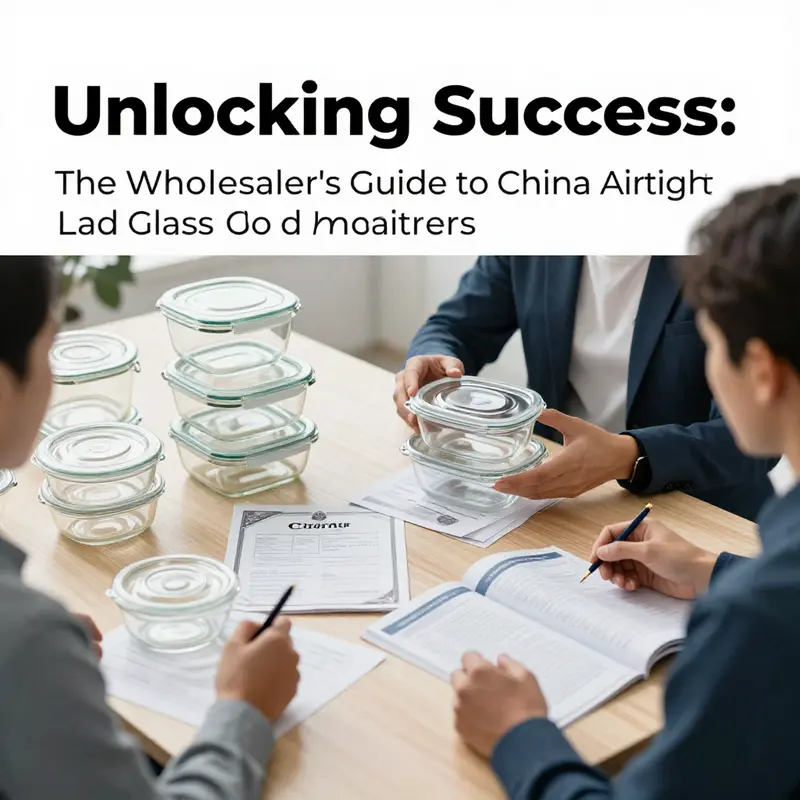
China has long been a magnet for industrial specialization, but the market for airtight lid glass food containers reveals a strategic convergence of material science, process engineering, and global procurement discipline. The wholesale ecosystem that serves domestic demand and international buyers alike has matured into a finely tuned system where Borosilicate glass, precision manufacturing, and regulatory readiness intersect with fast, reliable logistics and transparent trading practices. In this chapter, we follow the path from molten silica to shelf-ready storage solutions, tracing the sourcing logic that makes China a preferred origin for wholesale suppliers of airtight lid glass containers. The narrative is not a parade of products; it is a map of capabilities, standards, and partner dynamics that shape how buyers translate design intent into scalable supply, with speed, predictability, and sustainability as constant anchors.
At the center of this sourcing equation are the industrial clusters that dominate China’s glass container sector. The most active corridors run through Hebei, Jiangsu, Shandong, Anhui, and Guangdong, where the entire value chain—raw material sourcing, glass melting, precision pressing, automated annealing, lid sealing, and final packaging—often occurs within tight geographic radii. The practical effect is a dramatic reduction in logistics costs and lead times. For international buyers, this geographic advantage translates into a reliably shorter order-to-shipment cycle, commonly averaging 15 to 30 days. This speed is not a marketing claim but a consequence of a vertically integrated ecosystem that minimizes handoffs and inventories across multiple suppliers. When a buyer places an order in one cluster, the response is swift not only because equipment is modern but because the workforce is tuned to volume, accuracy, and repeatability. From a procurement perspective, the speed advantage complements the reliability of supply, which is essential for brands that operate under just-in-time inventory models.
Within these clusters, certain cities have emerged as centers of technical maturity. Shijiazhuang in Hebei and Xuzhou in Jiangsu, for example, have specialized in borosilicate glass processing, featuring state-of-the-art annealing lehrs and computer-controlled pressing lines. Borosilicate glass offers superior thermal resistance and a higher resistance to thermal shock than soda-lime glass, properties that are critical when containers must withstand microwave use, oven transitions, or rapid temperature changes in household settings. These capabilities matter not only for performance but for the trust buyers place in the material through compliance demonstrations and test reports. The facilities in these hubs often boast in-house mold design and tooling teams, enabling rapid iteration on container shapes, lid geometries, and sealing interfaces. Such in-house capability reduces development lead times and supports tighter customization cycles, from prototyping to pre-production to scaled output. In practice this means a supplier can accommodate prototyping MOQs as low as 2 to 10 units, a level that is particularly valuable for startups or private-label brands that want to test a concept before committing to larger runs.
Quality control in these environments is anchored in a triad of material integrity, process stability, and seal performance. Material-wise, most reputable suppliers insist on food-grade borosilicate glass with silica content well above soda-lime formulations. The aim is to ensure durable, thermal-shock resistant containers that maintain clarity and resist crazing through repeated cycles of heating and cooling. The regulatory lens for global buyers demands compatibility with major safety frameworks. In the negotiation phase, suppliers will typically provide official test reports to verify thermal shock resistance and sealing performance under vacuum. Buyers looking to expand into new markets benefit from a supplier’s demonstrable compliance with standards such as FDA 21 CFR, EU Regulation No. 1935/2004, and LFGB. The ability to present third-party testing data and certifications is a strong predictor of a supplier’s reliability for ongoing, large-scale orders.
A structured supplier evaluation framework can feel onerous, but it pays dividends in stability and long-term profitability. Beyond the obvious considerations of price and minimum order quantity, a meaningful evaluation touches four interlocking dimensions: material and regulatory compliance, operational reliability and scalability, transactional security and transparency, and delivery agility anchored by trade logistics. On material and regulatory compliance, buyers should confirm that the glass is borosilicate and not soda-lime glass, verify that all components including lids meet food-contact safety standards, and request formal test reports for thermal shock and seal integrity under vacuum. Operational reliability is assessed by looking at the supplier’s capacity for automation, their track record in maintaining consistency during high-volume runs, and whether they maintain in-house tooling and mold design capabilities. Transaction security involves licensing verification, trade references, and experience in export transactions, including the use of verified platforms that mitigate risk through escrow, payment guarantees, or trusted buyer-supplier verifications. Finally, agility is reflected in a supplier’s ability to scale production in response to demand spikes, maintain lead times in the 15–30 day window, and maintain predictable delivery schedules across multiple shipments.
In practical terms, the sourcing math often begins with proximity to port infrastructure and the efficiency gains that derive from it. Fengyang County’s silica-rich zone in Anhui is a good illustration: it sits near major entry points at Shanghai and Qingdao, which streamlines export cycles for brands targeting European and North American markets. Proximity to port facilities matters because shipping costs are a function not only of container space but of cycle times and dwell times in transit and transhipment. A supplier who can compress those cycles by hundreds of hours per year effectively lowers landed cost and reduces the buyer’s exposure to volatility in freight markets. The strategic significance of port access becomes even clearer when buyers evaluate the total landed cost across multiple suppliers. When a factory can deliver a test batch quickly and then ramp to full production while keeping the same lead times, the flow of goods remains uninterrupted and predictable across the supply chain.
The human and technical capital behind these capabilities also shapes the kinds of partnerships that form between buyers and suppliers. Factory floors in these districts often blend automated lines with skilled craft oversight, creating a hybrid model that can deliver both mass-market standard products and custom-engineered solutions. The result is a spectrum of options for international buyers: off-the-shelf designs that align with standard packaging needs, rapid-prototyping services for customized lid profiles, and complex, multi-component systems where lid seals are engineered to meet vacuum or high-humidity storage requirements. For procurement professionals, this spectrum translates into a practical approach: define the performance envelope (thermal stability, seal integrity, compatibility with microwave use, transparency of the glass, and ease of cleaning), then identify a supplier that can deliver within those limits while offering transparent pricing, clear MOQs, and verifiable capacity projections.
Pricing and samples are a tangible bridge between design intent and production reality. A common practice in these markets is to offer accessible sample pricing, which serves as a low-risk test for quality and fit with a buyer’s product line. For instance, potential buyers can evaluate in-hand quality, material thickness, lid fit, and sealing behavior by ordering a small number of samples at a modest per-piece price. This approach helps buyers avoid large procurement bets on unproven designs. It also creates a feedback loop that accelerates design refinement and reduces the risk of product returns after launch. In combination with robust test data, samples become a credible prelude to larger production orders and long-term supplier relationships.
From a procurement workflow perspective, the process is often anchored by transparent, secure transactions that reassure buyers who operate across borders. The market’s digital marketplaces frequently provide supplier verification services, documented licenses, and references that can be contacted for reassurance about performance and reliability. These platforms also guide buyers through the nuance of international trade documentation and regulatory expectations. For instance, the HS Code 70134900 is a reference point used in customs processing for certain glass containers and related components. Correct classification helps streamline duties, simplify compliance, and shrink customs clearance times—an important consideration for buyers who operate on tight launch calendars or who need to maintain high service levels across multiple regions.
Sustainability has become more than a rhetorical goal; it is now a critical criterion in supplier selection and ongoing supplier development. Chinese manufacturers are responding to global environmental standards by integrating eco-friendly materials and production methods within the supply chain. For airtight lid glass containers, this often means adopting energy-efficient glass melting processes, reducing waste through improved mold design, and selecting glazes and sealing compounds that minimize environmental impact while preserving food safety and performance. Buyers can and should ask for environmental management system attestations, energy utilization data, and waste reduction strategies as part of the supplier evaluation. The result is not only a greener footprint but a stronger, more resilient supply chain. In a market where consumer demand places a premium on sustainability, the ability to demonstrate eco-conscious production becomes a differentiator that can influence long-term procurement decisions.
Within this context, regional dynamics matter. The Fengyang district in Anhui, with its silica-rich resources and proximity to Shanghai and Qingdao, epitomizes the synergy between raw material excellence, technical capability, and logistical efficiency. The combination of high-purity silica sourcing, borosilicate glass processing prowess, and accessible export routes creates a compelling value proposition for international buyers seeking reliable, high-quality airtight lid glass containers. The experience of these suppliers demonstrates how a well-orchestrated mix of automation, in-house tooling, and rigorous quality assurance can deliver consistent results even as demand scales. In essence, the sourcing story is not simply about acquiring glass jars with lids; it is about establishing a partnership framework where material science, manufacturing discipline, and regulatory compliance operate in concert to meet the needs of modern households and commercial kitchens around the world.
For buyers, this means translating supplier capabilities into a smart, auditable procurement plan. Start with a clear specification for glass type, lid sealing mechanism, and heat resistance. Validate that the supplier can meet FDA, EU, and LFGB expectations, and request formal test documentation for thermal shock and seal performance. Assess capacity and automation maturity to ensure scalability from prototypes to high-volume runs without sacrificing quality. Emphasize transparency in pricing, MOQs, production schedules, and shipment timelines. Confirm the supplier’s ability to provide reliable samples and a clear path to mass production, including tooling and mold lead times. Consider the advantages of clusters with multiple suppliers that can share demand risk and offer redundancy in the event of machine downtime or supply shocks. The goal is a sourced network that aligns with the buyer’s product roadmap while remaining flexible enough to respond to evolving consumer preferences and regulatory landscapes.
The value of a well-structured sourcing strategy is not merely in cost efficiency. It lies in the confidence to introduce innovative glass storage solutions to diverse markets with assurance on safety, performance, and sustainability. When a buyer understands that borosilicate glass is the backbone of reliable heat resistance, that automated lines can produce consistent glazes and lid fits, and that regulatory and logistical frameworks are manageable, the path to scale becomes clearer. In such a system, a small test batch can grow into a reliable supply chain capable of supporting seasonal campaigns, private-label collaborations, and long-term brand partnerships. The result is a wholesale market where China’s glass container manufacturers are not just suppliers but strategic manufacturing partners who help shape product performance, packaging aesthetics, and consumer trust across continents.
Internal linkage to related procurement content can further empower buyers to navigate the landscape. For ongoing exploration of how storage solutions fit within broader packaging ecosystems, readers can consult the storage containers category for related packaging options and capacities. This internal resource can provide a practical context for how glass storage containers integrate with other forms of packaging and storage practices, helping buyers align glass solutions with complementary lines and consumer needs. storage containers
To complement the sourcing narrative, it is important to keep a forward-looking view on regulatory evolution and market expectations. The regulatory environment for food-contact materials continues to emphasize traceability, safety, and environmental stewardship. Buyers should monitor updates to food-contact material guidelines, be prepared to audit supplier test reports, and maintain a dialogue with manufacturers about continued improvements in process controls and sustainability metrics. In this light, the strongest supplier relationships are those built on mutual transparency, evidence-based quality assurance, and shared commitments to responsible production. This approach turns sourcing from a transactional exercise into a collaborative journey that supports product integrity, consumer safety, and environmental responsibility across global markets.
External context is also essential for informed decision-making. For readers seeking regulatory guidance that underpins the expectations for glassware used in food storage, the U.S. Food and Drug Administration’s materials notifications and guidance provide foundational standards and testing expectations for glass as a food-contact material. Access to official FDA resources helps buyers understand what constitutes acceptable documentation, what constitutes acceptable heat resistance testing, and how to interpret regulatory compliance in the context of cross-border supply chains. This external reference anchors the sourcing discussion in a credible framework and supports the due diligence process that international buyers rely on when engaging with Chinese suppliers. https://www.fda.gov/food/food-contact-materials-notifications/food-contact-materials
Ensuring Safety and Compliance: Quality Assurance Practices for Sourcing Airtight Lid Glass Food Containers from China
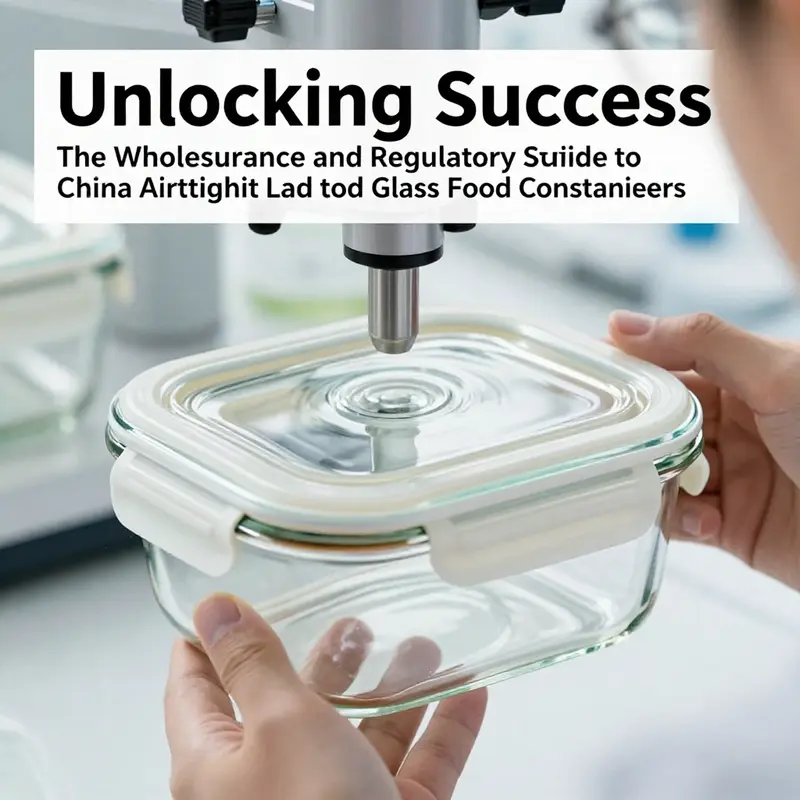
A single reliable supplier can determine whether your airtight lid glass food containers arrive market-ready or become a costly compliance problem. When procuring glass food containers from China, quality assurance and regulatory compliance are inseparable. The manufacturing landscape offers scale, competitive pricing, and innovation. It also requires a methodical approach to confirm that materials, seals, and production processes meet the safety and performance expectations of global markets. This chapter explains how to evaluate materials, test functional performance, verify certifications, and build an audit-ready relationship with a China-based wholesaler, with practical considerations that reduce risk and protect brand reputation.
Start with material specification. Glass formulations differ, and the choice has immediate implications for safety and use-case claims. Soda-lime glass is common and cost-effective. It suits dry storage and most refrigerated uses. Borosilicate glass, however, offers superior thermal resistance. It withstands higher temperature swings and is the preferred option for oven- or microwave-safe claims. Confirm the exact glass type in writing. Ask the supplier for composition sheets and third-party lab reports. These reports should measure thermal shock resistance, impact resistance, and chemical stability. Thermal shock tests show whether a jar will crack with sudden temperature change. Impact resistance and drop tests demonstrate durability during shipment and handling. Chemical migration testing reveals whether materials leach substances into food. Demand quantitative results, not just pass/fail statements. Numbers matter when you must declare compliance with strict regional laws.
Seals and lids determine real-world airtight performance. A glass jar without a reliable gasket cannot claim extended shelf life or leak-proof stability. Most airtight designs use silicone gaskets, sometimes combined with molded polymer components or ceramic tops. Verify the gasket material grade and request migration and extractables testing for the gasket itself. Silicone can be food-grade, but formulations vary. Confirm that the gasket maintains elasticity and sealing force across expected temperature ranges. This is especially crucial for freezer applications, where silicone can contract, and for hot-fill processes, where expansion can break the seal. Ask for results of vacuum tests, pressure cycling tests, and aging tests. Vacuum tests show initial seal effectiveness. Pressure cycling simulates opening and closing. Aging tests demonstrate whether repeated use degrades the seal. For any container advertised as airtight, these documented performance tests are non-negotiable.
Examine the manufacturing process for consistency. Large-scale wholesalers succeed by delivering predictable product quality at scale. Automated production lines for glass forming and injection molding bring consistent dimensions, uniform wall thickness, and controlled annealing. Request factory process flow diagrams. These should show production steps, in-line quality control points, and final inspection routines. Look for evidence of controlled annealing cycles to relieve internal stresses in glass. Ask how the glass is inspected for micro-cracks and internal defects. Optical inspection systems and automated rejection stations reduce the risk of defective units leaving the factory. For lids and gasket components, verify injection-molding tolerances. Dimensional consistency ensures a repeatable fit between lid and jar. Small deviations can cause leaks or poor stackability, which create costly customer complaints.
Certification evidence is essential for market access. A reliable wholesaler will provide verifiable documentation from recognized testing bodies. For U.S. markets, FDA compliance under 21 CFR for food-contact materials is fundamental. For Europe, EU Regulation (EC) No 1935/2004 defines migration limits and requires traceability. German LFGB testing often exceeds EU minimums and is a strong indicator of product safety for the broader European market. CE marking may apply as a declaration of conformity with applicable EEA requirements when additional safety directives apply. Insist on recent certificates from accredited labs. Third-party testing from organizations such as SGS, Bureau Veritas, or Intertek adds credibility. When a supplier claims compliance, verify the certificate numbers, issue dates, and scope of testing. Certificates should reference the specific material and component tested—not generic product families.
Operational reliability also affects compliance. Lead times, batch traceability, and production capacity shape the supplier’s ability to meet demand without shortcuts. Typical lead times for standard orders from Chinese wholesalers range from three to six weeks. Confirm minimum order quantities and the supplier’s monthly output capacity. Some factories can produce hundreds of thousands of units per month. Larger capacity is useful but meaningless without traceability. Request batch numbering and manufacturing records. These records allow for rapid recall or targeted investigation if a compliance issue arises. Also discuss the supplier’s change-control policies. If the supplier changes a raw-material source or a gasket compound, you must know before a new batch ships. A robust supplier will notify you and provide updated test reports.
Quality management systems reduce the chance of variance across batches. Ask whether the factory is certified to recognized standards, such as ISO 9001 for quality management. An established quality system will show defined inspection checkpoints, failure analyses, and corrective actions. In the absence of such certification, you need to see documented internal audit reports and quality control plans. Discuss acceptable defect rates and how the supplier measures them. For food-contact containers, acceptable cosmetic and functional defect rates should be very low. Clarify grading standards for visual defects, such as bubbles or surface inclusions, and for functional defects, such as seal failures. Make these standards part of your contract.
Sample testing is a critical step that reduces procurement risk. Request product samples before placing volume orders. A reasonable sample fee reduces frivolous requests while allowing buyers to validate material, fit, and finish. Use samples to perform in-house or third-party tests before committing. Heat the jar, cool it rapidly, and check for integrity. Fill it with acidic and fatty foods for migration testing. Freeze and thaw several times to assess gasket performance. If you plan private labeling or custom molding, request a prototype run. The sample stage is also the right time to evaluate packaging options. Protective packaging that prevents chipping during transit is just as important as the jar itself.
Audit the supplier’s compliance culture through on-site visits or third-party factory audits. Factory tours reveal production hygiene, material storage practices, and worker training. Look for separation between raw-material storage and finished goods. Check how suppliers document raw-material origins. Traceability is impossible without clearly recorded input sources. Confirm that the supplier enforces a non-contamination policy in production areas. Gasket and lid production should be conducted in clean environments, with dust control and proper handling procedures. If an on-site visit is impractical, commissions and independent auditors can perform detailed factory assessments and share objective reports.
Packaging and labeling are part of compliance. Labels must include material declarations, safety instructions, and regulatory markings when required. For example, EU markets expect compliance declarations and traceability information. For U.S. retail, accurate labeling of microwave or oven suitability helps avoid misuse. Discuss multilingual labeling options for your target markets and confirm that any claims, such as “oven-safe” or “BPA-free gasket,” are supported by test documentation. Packaging must also protect the glass during shipping. Design packaging that prevents abrasion and cushions impact. Consider using inner corrugated inserts or foam to protect delicate shapes.
Finally, structure commercial terms to protect your interests. Include warranty terms and quality acceptance criteria in your purchase agreement. Define the inspection window after arrival and the procedures for returning defective batches. Set clear liability terms for non-conforming goods and require corrective action plans. Consider using escrow or staged payments tied to inspection milestones. Include audit rights in the contract to enable periodic verification of ongoing compliance.
For practical reference, a supplier who reliably provides the following will be easier to work with: documented glass type with lab reports, gasket material test certificates, vacuum and pressure cycle test results, ISO-level manufacturing records, and third-party compliance certificates relevant to your target markets. These documents form a defensible compliance package for customs and retail partners. They also provide the evidence needed during retailer onboarding and regulatory scrutiny. When companies demand LFGB or EU 1935/2004 proof, you can supply the proper documentation quickly.
Working with a China wholesaler does not mean accepting opaque practices. A transparent supplier will welcome your questions, share test reports, and allow independent inspections. The best partnerships combine China’s manufacturing strengths with western-style quality processes. This approach yields consistent, compliant products that perform as promised. It protects consumers and secures your brand against costly recalls.
If you want practical next steps while vetting suppliers, begin by requesting samples and specific test reports. Ask for batch-level traceability and a documented production flow. Schedule a supplier audit or third-party factory inspection. Make compliance evidence a contractual requirement. These steps reduce surprises and strengthen your market position.
For buyers who also handle other packaging and storage lines, consider integrating your new jars into broader storage solutions. For inspiration on complementary items, review examples of related storage containers and kitchen storage products offered for wholesale at this resource on storage containers. For authoritative regulatory details, consult the U.S. Food and Drug Administration’s code of federal regulations for food-contact materials at https://www.ecfr.gov/current/title-21.
By approaching procurement with a focus on documented performance, transparent processes, and binding quality terms, you will secure airtight lid glass food containers that meet global standards. This due diligence protects consumers, supports brand integrity, and enables smoother market entry across regions with strict regulatory expectations.
Final thoughts
The landscape of airtight lid glass food containers from China is marked by growth driven by sustainability, innovation, and quality control. As bubble tea shops, restaurants, and catering businesses seek reliable storage solutions, understanding market dynamics and effective sourcing strategies will empower them to thrive in a competitive marketplace. By prioritizing quality and environmentally-friendly practices, stakeholders can not only enhance their service offerings but also contribute to a more sustainable future.