
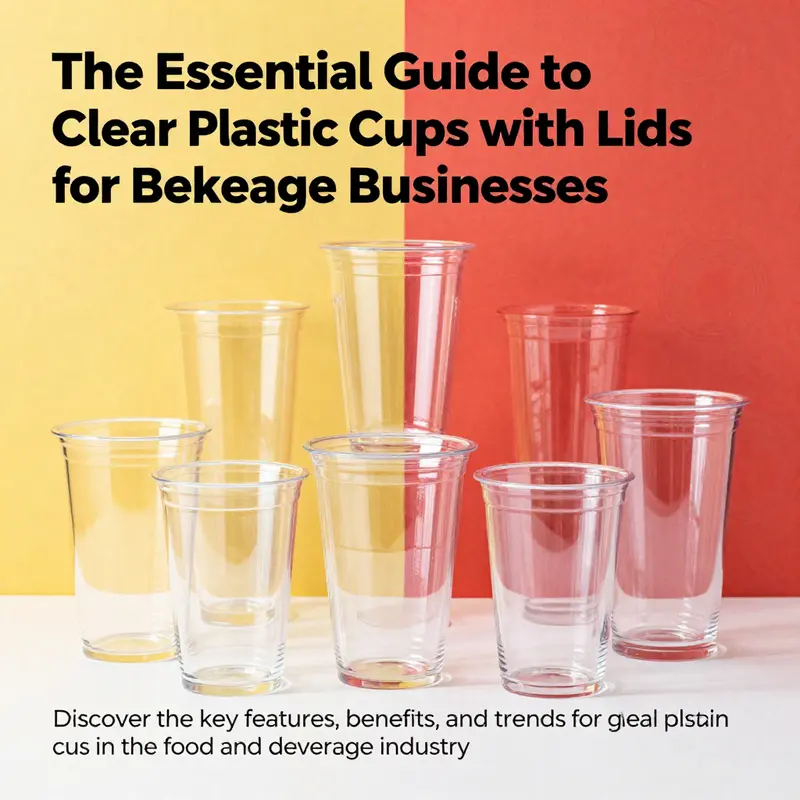
Clear plastic cups with lids have become indispensable across the food and beverage landscape, catering to the diverse needs of bubble tea shops, restaurants, food trucks, and more. These versatile containers offer a perfect blend of functionality, hygiene, and visual appeal, making them essential for anyone in the beverage sector. In this comprehensive guide, we will explore the material composition of these cups, delve into their design variations, and highlight the industrial benefits they offer. We’ll also address sustainability concerns and market trends, helping you make informed decisions for your business that align with current consumer preferences. Whether you’re an event planner or a procurement team member, understanding these aspects will position you to better meet the demands of your clientele and enhance your service offering.
Crystal Clarity and Strong Seals: The Material Language Behind Plastic Clear Cups with Lids
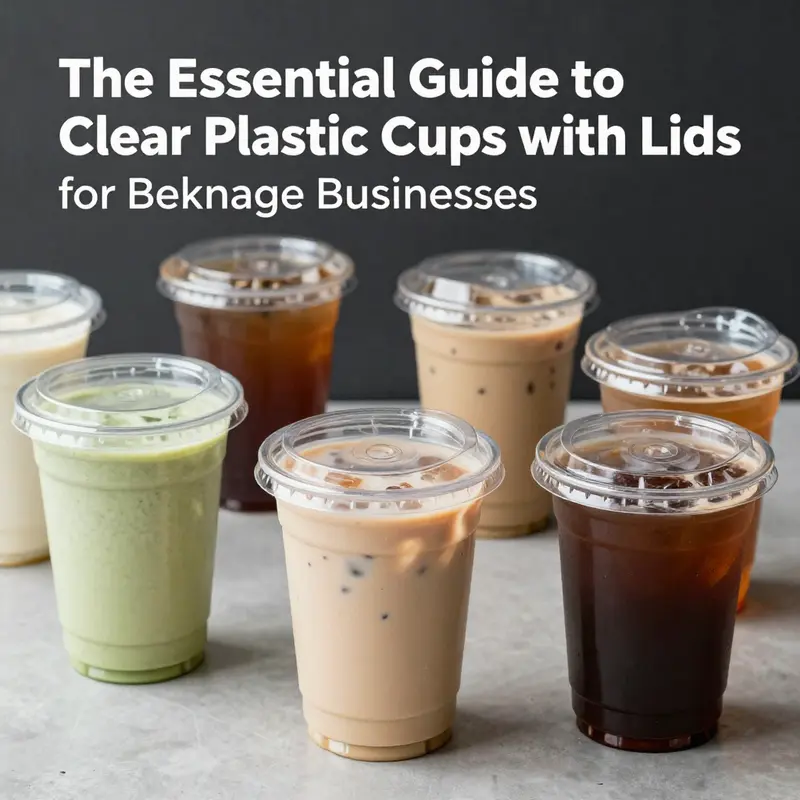
Clear plastic cups with lids speak a language of material science written in the language of light and resilience. Their appeal rests not just on how well they showcase a vibrant drink, but on how the cup and its lid manage heat, weight, barrier properties, and the journey from counter to consumer. When we peel back the surface, the choice of resin becomes a story of clarity, safety, and cost—each decision shaping performance in subtle and obvious ways. At the core, the cup body is most often molded from Polypropylene (PP) or Polystyrene (PS), while the lid is typically fashioned from Polyethylene (PE) or PP, with occasional multi-layer combos that blend the best traits of each material. This combination of materials is not incidental. It is the result of decades of scale-driven engineering where manufacturers balance clarity, rigidity, heat tolerance, and consumer expectations for a clean, spill-free experience. Within this framework, the material language translates directly into everyday realities: a smoothie that gleams through a crystal wall; a hot coffee that warms the hand without the cup deforming; a lid that seals tightly enough to survive a bumpy commute yet releaseable with a simple twist when needed.
The most common cup bodies are PP or PS, each bringing distinct advantages. Polypropylene is favored for hot beverages, thanks to its higher heat resistance and resilience. Its walls can be made thin and transparent without sacrificing strength, enabling a lightweight profile that reduces both shipping costs and the energy required to produce and transport millions of cups. The translucence of PP is often slightly softened by the molding process, but it remains clear enough to display the beverage’s color, layering, and texture. This visibility matters for consumer appeal; a latte’s crema, a fruit smoothie’s hue, or the gradient of a layered drink can all influence perception and desire. In contrast, Polystyrene—especially the crystal-clear variant—is prized for its optical purity. PS cups can deliver an almost glass-like transparency that heightens the visual impact of light and color. However, PS typically carries lower heat resistance, making it more suitable for cold or iced beverages. The choice between PP and PS, therefore, becomes a decision about intended use: hot or cold, durability in transit, and the degree of visual clarity required by the product and brand.
These fundamental choices are sometimes nuanced by alternative materials that exist alongside the mainstream. PET cups, for instance, offer exceptional clarity and barrier properties, particularly for cold drinks and products with vivid visual appeal. PLA-based options, derived from renewable resources like corn starch, present an eco-friendly alternative for brands aiming to reduce environmental impact. PLA is biodegradable and compostable under industrial conditions, though its performance in heat resistance and barrier properties generally lags behind conventional plastics. This trade-off between sustainability and performance becomes a strategic consideration for processors and retailers who must balance consumer demand for greener packaging with practical requirements such as product integrity during transport and shelf life. In many cases, manufacturers pursue a mixed material strategy, using PP or PS for the cup body and pairing it with increasingly sophisticated lid designs that can improve sealing, stackability, and user experience. The end result is a family of cups whose primary function is to preserve the beverage’s appearance while safeguarding hygiene and preventing leaks during handling and consumption.
Lid design complements material choice in ways that deepen the interplay between form and function. Lids fabricated from PE tend to be more flexible and forgiving, allowing a snug seal that is cost-effective for mass production. They can incorporate threading or snap-fit features that accommodate a wide range of cup diameters, contributing to the universality that many cafés prize. On the other hand, PP lids are stiffer and can offer better heat resistance, which is valuable when a lid must perform under warmer beverages or direct sunlight during outdoor service. In some cases, manufacturers employ multi-layer lids that combine PP’s rigidity with PE’s sealing properties. This layered approach aims to balance the seal’s reliability with the lid’s structural integrity, particularly for larger sizes or for lids that are designed to accommodate domes or splash guards.
Domed lids, for example, create headspace for foamy toppings, whipped cream, or boba pearls, and their shape helps preserve the beverage’s appearance by preventing the top from being crushed during stacking or transit. Flat lids, while offering a fully sealed closure ideal for transport and outdoor events, emphasize reliability and containment over presentation. The material choice within these lids also affects consumer experience: the rigidity of PP can resist deformation when pressed by the drinker’s straw or when stacked in crowded storage, while PE’s flexibility helps form a reliable seal around the cup lip and contributes to leak resistance. In practice, many clear cup systems mix these properties to optimize both performance and cost across a range of sizes, with the 16 oz standard serving widely across coffee shops, beverage bars, and event-based settings.
Beyond performance, safety considerations anchor all material choices in food contact markets. These plastics are deemed suitable for food contact when used as intended, but regulators in different regions set guidelines that influence what materials can be used with which beverages and at what temperatures. For instance, polystyrene has known limitations with hot liquids, with recommendations to avoid high temperatures that could lead to deformation or leaching concerns. The broader regulatory frame encourages manufacturers to test for clarity retention, migration, and overall safety under anticipated consumer use, taking into account the beverage’s temperature, the duration of contact, and the potential for interaction with the lid or straw. In the United States and Europe, official bodies maintain guidance on materials used for food contact. While the detailed, up-to-date dictates vary, the underlying principle remains consistent: manufacturers should minimize risk and ensure that the cup and lid perform as a hygienic barrier from the supplier to the consumer. This emphasis on safety, clarity, and reliability is what makes PP and PS the dominant choices for cup bodies and PE or PP for lids in mainstream single-use packaging.
In the broader discussion of sustainability, the material conversation becomes more nuanced. PLA, a bioplastic derived from renewable resources, offers a compelling option for brands pursuing compostable lines. However, the practical realities of industrial composting infrastructure, consumer behavior, and the need for performance under heat and mechanical stress mean that not all PLA cups will behave identically to their petroleum-based counterparts. A growing segment of the market seeks BPI-certified materials to assure compostability and compliance with recognized standards. This certification speaks to a chain of custody and end-of-life management that aligns with consumer expectations for responsible packaging. Yet even with eco-friendly alternatives, the practicalities of supply chains—cost, compatibility with existing equipment, and the capacity of composting facilities—govern how widely these options are adopted in daily operations. Amid this landscape, the appeal of clear cups with lids remains anchored in reliability, visibility, and convenience. The material choices provide a predictable baseline for performance across cafés, catering operations, and retail environments, where consistency matters as much as any other attribute.
Manufacturers’ ability to scale these cups hinges on the balance between clarity, rigidity, and process efficiency. PP and PS are amenable to high-volume injection molding, enabling rapid production cycles and consistent wall thickness across millions of units. The transparency of these materials is preserved through careful molding and finishing, ensuring that beverage color and texture are accurately perceived by the consumer. The lid’s materials, whether PE or PP, contribute to a cost-effective seal that can withstand repeated handling and transportation. Occasional multi-layer lid configurations reflect a strategic engineering choice, leveraging the complementary strengths of each polymer to deliver both a secure seal and a predictable user experience, including compatibility with straw insertion and spill resistance. In practical terms, this means bars and shops can rely on a unified sizing system, supported by standardized tooling and consistent performance, from first pour to final sip.
As the chapter progresses, it becomes clear that the material composition of plastic clear cups with lids is not merely a matter of choosing one resin over another. It is a layered decision that integrates heat tolerance, optical clarity, barrier performance, mechanical strength, regulatory compliance, and end-of-life considerations. The result is a family of packaging options that can be tuned to specific beverage profiles, service contexts, and sustainability goals without sacrificing the essential attributes—clarity, cleanliness, and reliability—that define the everyday experience of a well-sealed drink on the move.
For readers seeking a deeper dive into the regulatory and material spec landscape, the broader literature and guidelines from recognized food-contact authorities provide a foundation for design and procurement decisions. They remind us that every pint of clarity and every reliable seal is the product of a careful balance among polymers, processing technologies, and policy frameworks. As the conversation around packaging evolves, the continued refinement of PP and PS cups, along with innovative lid formulations and eco-minded variants, will shape how beverages travel in the hand and in the mind of the consumer. In the chapters that follow, we will explore how brands translate these material choices into branding, performance testing, and consumer trust—without compromising on the tangible benefits that make disposable clear cups with lids a staple of modern food and beverage service.
External resource: For broader guidance on food-contact materials and safety considerations, see the U.S. Food and Drug Administration’s guidance on FDA Food Contact Materials: https://www.fda.gov/food/food-contact-materials
Clear-Canvas Craft: The Design Variations of Plastic Cups with Lids and Their Hidden Impacts

Every cup is more than a vessel; it is a design statement that folds function, form, and brand into a single, portable experience. In the realm of plastic clear cups with lids, design variations are not cosmetic flourish but carefully engineered responses to how people drink, how beverages travel, and how a business communicates its values at a glance. The spectrum spans practical, aesthetic, and material dimensions, each variation altering the cup’s behavior in the world while influencing how a consumer perceives the drink inside. When these cups are viewed as design vehicles rather than mere containers, their subtle choices—whether an air-filled double wall or a lid with a precise sip-spout—become signals about temperature control, user convenience, and even environmental responsibility. The result is a narrative of design that travels with the beverage, revealing itself in every sip, lift, and seal.
Thermal performance is a foundational driver of design, and double-wall insulated cups epitomize how a simple geometry can redefine user experience. By sandwiching an air gap between two plastic layers, these cups create a buffer that slows heat transfer, letting a hot drink hold its heat while a cold drink remains refreshing longer than a single-wall counterpart. This isn’t only about comfort; it translates into broader operational advantages. Cafés can extended serving windows without fearing rapid temperature drift, and customers enjoy sipping without immediate burns or condensation soaking through the sleeve. In practice, these cups often integrate thoughtful details such as a built-in straw holder or a slightly recessed lip that accommodates a straw without compromising the seal. Such features illuminate a design logic that is both pragmatic and perceptual: the cup communicates reliability at a glance, then executes that promise with a tactile, human-centered touch.
On the go, travel-ready and leak-proof designs redefine how beverages travel from vendor to venue to bag. Lids engineered with twist-lock or push-button mechanisms create a reliable barrier against spills, a feature that resonates with commuters, parents, travelers, and event-goers alike. The seal is not merely functional; it is a promise of containment during bumpy rides or crowded handoffs. Ergonomic grips and spill-proof sipping spouts further elevate the experience, balancing ease of use with the risk of leaks. In a design sense, such cups become portable stages for beverages—where the lid design, the diameter of the sipping opening, and even the curvature of the rim all play roles in shaping the user’s interaction with the drink. The elegance of these designs lies in their quiet confidence: you know the cup will protect its contents and deliver a predictable drinking experience, even in imperfect conditions.
Space-saving logistics prompts a different kind of design intelligence: stackability. A tapered geometry allows empty cups to nest, reducing storage footprint and simplifying inventory management for busy environments. Stacking is more than a space saver; it reflects an understanding of how workflows operate in kitchens, cafes, and event concessions. When cups nest efficiently, workers handle fewer units, lines move faster, and waste is curtailed by reducing mishandling during restocking. The design language here is efficiency without sacrifice; the cups must still maintain clarity for the beverage, maintain structural integrity when full, and fit within standardized cup holders or lid assortments. The result is a continuum of size, shape, and rim thickness that preserves legibility of contents through transparency while keeping the stack compact and functional.
Varied lid architectures expand the design palette beyond the flat, transparent body. Dome lids, for instance, provide extra headspace to showcase foamy toppings, whipped creams, or bead-like toppings such as pearls in bubble tea. The arched profile protects delicate surface features from being crushed during transport and presentation, enhancing the aesthetic potential of layered beverages. By contrast, flat lids emphasize containment and barrier protection, delivering a sealed experience ideal for transport and outdoor use where wind and dust might threaten a drink’s integrity. The choice of lid also echoes brand strategy; a cap with a clean, minimalist finish communicates a different tone than a lid with a vibrant color or a playful pattern. There is room for personalization here as well: integrated straws or straw-compatible lids offer a seemingly small but impactful touch that aligns with a brand’s on-the-go lifestyle narrative. Each lid variant is a design decision with cascading implications for usability, safety, and presentation.
Branding and customization sit at the intersection of design and market strategy. Branded and customizable cups have become a powerful marketing tool, transforming disposable packaging into a micro storefront. Direct printing on the cup or lid, or the use of complementary lid colors and patterns, creates a visible, durable surface for logos, slogans, or graphics. The aesthetic payoff is not limited to the cup’s moment of use; consistent branding across cup families reinforces recognition in photos, social posts, and retail displays. This capability aligns with broader consumer expectations for personalization, allowing firms to tailor packaging to campaigns, seasonal menus, or corporate partnerships. The design conversation here extends beyond appearance. Customization agreements often involve color-fast inks, durability under cold or hot fill, and compatibility with the chosen plastic material, ensuring that the branding remains crisp and legible throughout the beverage’s journey from machine to mouth.
Material science introduces another layer of variation. Tritan plastic, for example, is prized for clarity, impact resistance, and BPA-free safety, offering a premium look and performance for reusable or semi-disposable contexts. While PET remains the mainstream standard for its optical clarity and general compatibility, Tritan or similar advanced plastics push the envelope for durability and feel, inviting a more premium perception from consumers who expect resilience in takeaway settings. Integrated handles on larger cups illustrate how design can adapt to user comfort, especially for children or hands-on customers who crave a firmer grip. Rim design—even if flared for comfort or thicker for durability—affects not only the drinking experience but also how the cup interacts with lids and seals during rapid service or delivery.
This design complexity does not emerge in isolation. It results from a conversation among performance, aesthetics, sustainability, and brand intent. For example, eco-conscious lines increasingly emphasize recycled content, plant-based materials, or compostable options where feasible. Even in a world of clear cups defined by visibility, designers chase tactile and emotional cues—gloss or matte finishes, subtle texture around the lip, or a minimalist silhouette that signals modernity and simplicity. In practice, these choices guide consumer behavior: a cup that feels solid in the hand and looks pristine under showroom lighting communicates quality, encouraging trust that the drink is handled with care from source to sip. This trust is essential for beverages that rely on appearance to convey freshness, premium ingredients, or artisanal crafting.
The business implications of design variation are equally consequential. Lightweight construction reduces shipping costs and storage space, while disposability addresses hygiene and eliminates cleaning infrastructure. This alignment of material economies with consumer expectations creates a practical calculus for operators: the cup must perform when needed and disappear cleanly after use. When manufacturers offer OEM ODM capabilities, buyers gain the opportunity to tailor the entire cup ecosystem size families, colorways, lid configurations, and branding into cohesive kits that support marketing programs, seasonal promotions, and retail packaging. In that ecosystem, the 16 oz standard remains a flexible anchor, capable of hosting a broad spectrum of beverages from iced coffee to fruit smoothies, while still fitting into a standardized lid ecosystem and a uniform branding strategy.
For designers and buyers alike, the most compelling design philosophy is not singular novelty but thoughtful integration. A well-considered cup design respects the beverage’s characteristics, the environment of service, and the consumer’s experience. It balances headspace and spill resistance, clarity and branding potential, and the competing priorities of cost, sustainability, and performance. The narrative of a plastic clear cup with a lid, then, becomes a story of intentional variation: each design decision serves a purpose, from how much heat the cup can cradle to how a brand’s logo travels from counter to camera to consumer. The onus is on designers to anticipate real-world use, to test under diverse conditions, and to translate that testing into form that feels inevitable once chosen. When a customer picks up a cup and experiences its precise sip, grip, and seal, they are not merely drinking. They are participating in a carefully choreographed design narrative that begins long before the beverage is poured and ends only when the cup is disposed of or recycled.
Internal link note: design variation is deeply tied to branding and customization opportunities. For teams exploring branded customization in a cup-like format, a relevant example of customizable cup design can be explored here: custom-logo-for-coffee-tequila-cups. This link offers a window into how logos and design elements can be integrated into a disposable, portable drinking vessel, illustrating the broader principle that even single-use items can carry multi-layered messages about a brand, a product’s quality, and a company’s sustainability commitments. As the industry evolves, design variations will continue to be the primary drivers of how plastic clear cups with lids meet the demands of hot and cold beverages, on-the-go consumption, and the increasing desire for responsible packaging.
Seeing Through Efficiency: The Industrial Advantage of Plastic Clear Cups with Lids

Clear plastic cups with lids are more than simple vessels; they are strategic assets in a packaging and service ecosystem that prizes visibility, hygiene, and speed. When a beverage or a layered dessert sits in a transparent container, the product itself becomes part of the display—an invitation to the consumer that does not require a costly shelf-stopper. The lid is not merely a seal; it is a fail-safe against spills, a barrier against contamination, and in many cases a gubernator of portability. The industrial value of these cups is multidimensional, shaped by material science, production engineering, and the realities of logistics and consumer behavior. Taken together, they illustrate how a seemingly ordinary disposable component can drive performance across a supply chain and influence brand trust at the point of sale.
At the core of this value proposition lies material versatility. The two polymers most commonly employed in clear cups with lids are polypropylene (PP) and Tritan, each offering a distinct balance of clarity, heat tolerance, and processability. PP is celebrated for its lightweight resilience, color and transparency options, and ease of molding. Through injection molding, manufacturers can craft cups in precise diameters and wall thicknesses, from slender vessels designed for cold beverages to sturdier forms that resist minor dents during handling. Intricate branding—raised textures, subtle color accents, or embossed logos—can be integrated directly into the cup wall, reducing the need for separate labeling while elevating shelf presence. This design flexibility is not just about aesthetics; it translates into faster time to market and reduced tooling complexity when lines shift from one product variant to another.
Tritan, by contrast, is chosen for higher temperature tolerance and exceptional chemical resistance. It withstands hot liquids without warping and maintains clarity over longer service life in environments where harsh cleaning agents are routine. For industries that require both safety and reliability, Tritan reduces the risk of leaching and deformation, an assurance that resonates with retailers and regulators alike. The practical implication is straightforward: cups made from these materials can perform reliably across a spectrum of use cases—from iced coffee to hot tea—while preserving the visual appeal that drives consumer choice. This reliability also supports more ambitious branding strategies. When a cup remains crystal-clear during a hot pour or a frothy top, the product’s color and texture become central to the customer experience, enhancing perceived quality and encouraging repeat purchases.
Production efficiency is another cornerstone of the industrial value. Plastic cups lend themselves to high-speed manufacturing with standardized molds. Once a line is calibrated, cycles can run at impressive rates, delivering uniform quality and predictable output. The ease of replacing molds enables rapid adaptation to seasonal campaigns or new SKUs without incurring prohibitive downtime. For manufacturers serving large retailers or food-service chains, this scalability is crucial. It supports just-in-time production and helps keep inventories lean, which in turn reduces carrying costs and minimizes the risk of obsolescence when demand patterns shift. In practice, a single mold can spawn multiple variation families with minor adjustments to the wall profile or lid interface, streamlining the transition from one promotional period to the next.
Beyond the mold and material, the functional performance of these cups addresses real-world conditions in which food and beverage products exist—from manufacturing floors to supply trucks, from cafe counters to outdoor events. The cups’ resistance to impact, oils, acids, and common cleaners protects product integrity during storage and transport. The inclusion of a lid provides a secure seal, preventing leaks and contamination while preserving flavor and aroma. For hot beverages, materials like Tritan offer high-temperature stability, avoiding deformation or chemical migration that could compromise safety. In many configurations, the lid also serves as a drinking interface that reduces the chance of spills during transit, an especially valuable attribute for mobile service models such as drive-thru windows, catering, and delivery platforms. The lid shapes themselves—ranging from dome designs with ample headspace to flat, fully sealed closures—are chosen to suit the beverage’s texture and the consumer’s consumption mode. Dome lids protect whipped toppings, foams, and layered aesthetics, while flat lids deliver maximum protection for transport and outdoor exposure. Integrating straw compatibility or built-in sipping options adds another layer of convenience, supporting quick consumption while maintaining a spill-resistant profile.
Logistical efficiency follows closely from the cups’ light weight and compact form. In bulk shipping, lighter containers translate into lower freight costs and reduced energy use per unit moved. Constrained warehouse space benefits from stackable designs and consistent dimensions, which simplify racking and storage planning. These efficiency gains ripple throughout the distribution network: distributors can consolidate orders more effectively, retailers experience lower handling times, and service providers can scale to meet peak demand with less capital tied up in packing materials or handling equipment. The predictability of plastic cup production—consistent wall thickness, uniform bottoms, and reliable lid fit—further reduces the need for rework at packing stations, ensuring a smoother handoff from factory floor to storefront shelf or catering event.
From the consumer’s perspective, the visible contents and reliable sealing are central to confidence and repeat behavior. A clear cup allows customers to see fruit chunks, color gradients, or the cream swirl that defines a signature beverage, which in turn communicates freshness and quality without word-of-mouth or lengthy descriptions. The combination of a secure lid and a clean, transparent surface communicates hygiene and care in preparation, reinforcing trust across take-away channels where customers cannot inspect the product before purchase. The option to customize cups through branding—logo placement, color accents, or printed patterns—adds marketing impact at no extra post-production cost. Branded cups act as mobile advertisements, extending the store’s presence into the consumer’s routines and social spaces. This integration of form and function—visibility, protection, and branding—contributes to higher perceived value and fosters brand loyalty as customers repeatedly choose familiar, dependable packaging that aligns with their expectations for quality.
Sustainability considerations increasingly influence industrial decisions around clear cups with lids. The choice between PET and polylactic acid (PLA) blends the desire for clarity and stiffness with environmental commitments. PET provides excellent clarity and durability, making it a workhorse for cold and even warm beverages when engineered to tolerate temperature differentials. PLA, derived from renewable resources like corn starch, offers a compostable path suitable for industrial facilities that operate controlled composting processes. Yet the compostability of PLA depends on proper waste-stream sorting and available facilities, highlighting that end-of-life benefits must align with local infrastructure. Certifications such as BPI or similar standards are often pursued to demonstrate compostability, and manufacturers frequently align with OEM/ODM services to provide recyclable, biodegradable solutions that fit client sustainability goals without sacrificing performance. In practice, manufacturers must balance the appealing visuals and cost-effectiveness of PET with the environmental advantages of PLA where feasible, always with an eye toward end-of-life options and how consumer and municipal systems handle disposal.
The industrial appeal of plastic clear cups with lids also includes the capacity for customization at scale. OEM and ODM collaborations allow brands to imprint logos, brand colors, or thematic graphics directly onto the cups. This capability extends packaging beyond a mere container to a portable brand touchpoint, reinforcing product identity in busy service environments. The result is a twofold benefit: visually distinctive packaging that stands out on crowded shelves or display coolers, and improved traceability and differentiation in a market crowded with similar beverages and snacks. When combined with robust lid designs that minimize leakage and maximize user convenience, these cups become a reliable component of a broader packaging strategy that emphasizes speed, safety, and customer experience. The conversation around these advantages is not limited to the factory floor; it continues in procurement offices, marketing departments, and sustainability teams, where trade-offs between cost, performance, and environmental impact are weighed against the need to maintain consistent quality across millions of units.
Ultimately, the industrial benefits of plastic clear cups with lids arise from their ability to bridge material science, manufacturing discipline, and consumer expectations. They enable rapid innovation without sacrificing reliability, support efficient logistics through standardized, scalable production, and deliver a visual and tactile product experience that strengthens brand perception. They also offer a pragmatic pathway toward responsible packaging, where the choice of polymer and end-of-life options can align with broader sustainability targets without compromising the core values of hygiene, safety, and performance. As these cups continue to evolve—whether through next-generation polymers, improved lid mechanisms, or smarter integration with branding ecosystems—the underlying principle remains constant: clear containers that protect and present the product in a compelling way while maximizing efficiency across the supply chain. For anyone shaping the next wave of on-the-go packaging, these cups illustrate how form, function, and flow converge to create a reliable, scalable, and trustworthy packaging solution.
External resource: https://www.americanchemistry.com/
From Clarity to Responsibility: Reassessing the Sustainability of Clear Plastic Cups with Lids
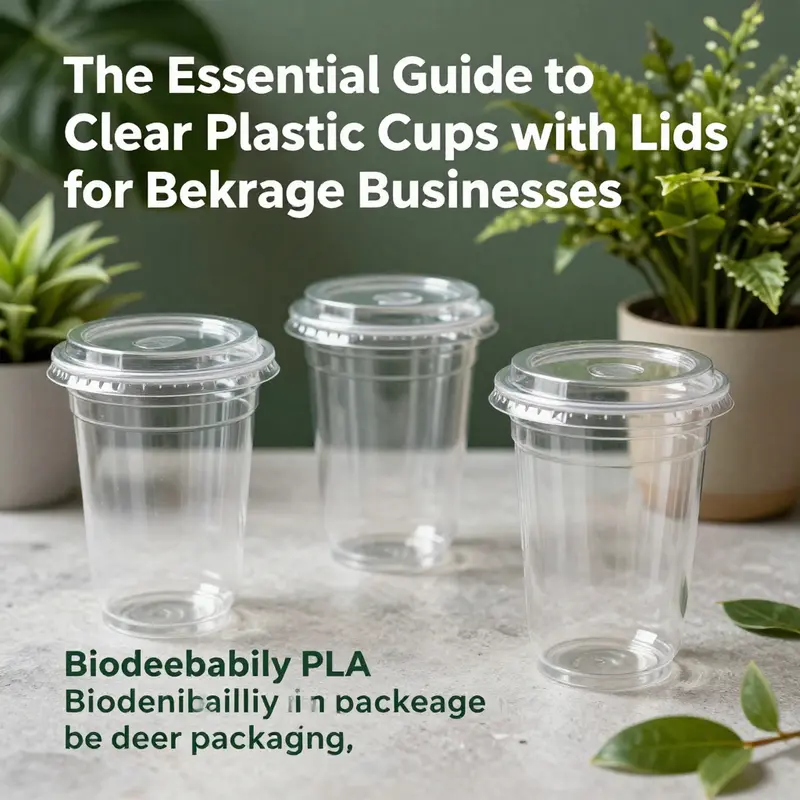
Clear plastic cups with lids are ubiquitous in the beverage economy, yet their apparent simplicity masks layered choices about materials, production, and end-of-life. They are the kind of packaging that customers can see through, which makes the content feel trustworthy at the moment of purchase. But the transparency of the cup does not automatically translate into environmental clarity. To understand their sustainability, it helps to trace the journey from raw material to disposal, and to consider how design decisions interact with waste-management systems that are unevenly distributed across regions.
Two primary families dominate the landscape of clear cups: those made from PET, prized for clarity and resilience, and those made from PLA, marketed as renewable and compostable under industrial conditions. PET delivers the crisp visibility that brands want, allowing the color and texture of a drink to shine through. It withstands both cold and hot beverages and maintains structural integrity during shipping and handling. Yet the environmental trap is evident: PET is not biodegradable, and recycling rates are highly variable. Even when PET cups are recycled, the process is energy-intensive and can be complicated by the presence of lids, straws, inks, and coatings that may not be compatible with the same recycling stream. The result is often a mismatch between what is collected and what can be recovered, leading to losses that accumulate across millions of cups each year.
PLA cups, on the other hand, arise from renewable feedstocks such as corn starch or sugarcane and are designed to break down in industrial composting facilities into carbon dioxide and water. The idea is appealing: a single-use cup that leaves less long-term residue. In practice, however, the system is uneven. Industrial composting facilities are not universally accessible, and many PLA cups end up in landfills or find their way into recycling streams that cannot process them. Home composting is generally ineffective for these materials, which means that the environmental advantage rests on a functional composting infrastructure and on consumer and business adherence to proper disposal practices. In the absence of reliable end-of-life pathways, the theoretical benefits of PLA can be undermined by practical realities, making the lifecycle impact highly context dependent.
Even when the material choice is sound, the design of the cup and its lid influences sustainability in ways that are easy to overlook. Dome lids create headspace for froth, whipped cream, or boba pearls and help preserve the beverage’s presentation, but they can complicate separation in recycling streams if the lid and cup are made from different polymers or if the lid uses adhesives or labels that confound disassembly. Flat lids offer a tighter seal and can be easier to stow and transport, yet they provide less headspace and can alter the customer experience. The lid’s construction matters because it adds materials and potential points of contamination to an end-of-life stream. A multi-material combination—plastic cup with a plastic lid, colored inks, and a cardboard sleeve or label—presents a greater challenge to sorting facilities, increasing the odds that the whole package ends up in a landfill when streams cannot separate components efficiently.
Design choices ripple through the supply chain, too. The lifecycle of a clear cup includes raw-material extraction, polymer processing, molding, printing, assembly with lids and accessories, packaging, distribution, consumer use, and disposal. Each step consumes energy and generates emissions. A life-cycle view reveals that the environmental impact of a single cup depends not only on the material’s intrinsic properties but also on production efficiency, transport distances, and the availability of end-of-life options. For instance, a PLA cup’s advantage can disappear if it requires more energy to produce than a conventional PET cup and if the composting infrastructure is inadequate or misused. Conversely, a PET cup with a straightforward recycling pathway can outperform a more glamorous compostable option in regions where industrial facilities are sparse. The practical takeaway is that sustainability cannot be reduced to a single feature; it must be evaluated across the entire chain and tailored to local waste-management capabilities.
Credible certifications play a crucial role in navigating this complexity. Independent bodies assess compostability and safety, and credible certifications signal that a product meets stringent standards rather than relying on marketing claims alone. The presence of a certification indicates that a cup or lid has been evaluated for end-of-life handling in controlled conditions, and it helps buyers align procurement with the waste-management reality of their communities. This is essential because terms like biodegradable or compostable can be misused if there is no corresponding disposal infrastructure to match the claim. Certifications give buyers greater confidence that their packaging choices align with practical outcomes, not merely aspirational statements about the planet.
Transparency matters to consumers as well. Today’s customers want to understand how a cup was made, what it is made from, and how it should be disposed of. Brands that provide clear disposal guidance, coupled with visible labeling and consistent communication about end-of-life options, can foster responsible behavior even when the packaging remains plastic. The industry is responding by offering a broader palette of materials and by investing in packaging designs that facilitate disassembly and recycling. Simultaneously, brands are exploring compositions that balance clarity, performance, and lower embodied energy, aiming to reduce the environmental footprint without sacrificing the consumer experience.
For operators, practical decision-making means balancing function, safety, and end-of-life realities. The choice between a recyclable PET cup with compatible lids and simple, consistent labeling versus a compostable PLA option depends on local waste streams. In communities with robust curbside recycling, the emphasis might be on minimizing contamination and ensuring easy separation of cup and lid. In areas where composting is well established, compostable options can be a viable pathway to reducing waste volumes, provided the disposal system is designed to receive and process these materials correctly and consistently. The overarching aim is to select packaging that is compatible with available recovery pathways rather than pursuing a universal ideal that cannot be realized in practice.
The broader ecosystem of take-away packaging illustrates how these decisions unfold in real life. The lifecycle advantages of any cup depend on consumer behavior, the accessibility of waste streams, and the efficiency of local processing facilities. Waste-management economics also matters; sorting costs, processing capacity, and market demand for recovered materials influence whether communities invest more in recycling or composting infrastructure. When businesses, policymakers, and consumers align around realistic end-of-life pathways, clear cups can contribute to a more sustainable beverage service while preserving the clarity, hygiene, and presentation that customers expect.
This alignment is reflected in packaging design and procurement discussions that emphasize end-of-life realities alongside material performance. For instance, when choosing between headspace optimization and end-of-life simplicity, many operators find value in adopting a design-for-recovery approach: select materials that are accepted in local streams, minimize multi-material combinations, and standardize labeling to aid sorting. The combination of clear presentation and a well-considered disposal plan can transform a simple cup into a component of a responsible packaging system. For readers seeking a closer look at eco-friendly take-away packaging and how design choices influence disposal, see this example senang07-eco-friendly-printed-logo-buy-paper-cup-take-away-coffee-cup-8-oz-12-oz-paper-cup.
From a policy perspective, progressive regulations and standards are shaping how manufacturers design with disposal in mind. Extended producer responsibility schemes, for example, encourage producers to plan for end-of-life outcomes before releasing a product. When packaging components are designed to be separated and directed into distinct waste streams, the system becomes more efficient and less wasteful. The goal is to enable ecological compatibility without sacrificing the consumer experience. In this light, clear plastic cups with lids can contribute to a more sustainable beverage service if their life cycle is optimized and if the infrastructure exists to capture and recover materials.
Finally, the narrative around clear cups intersects with broader cultural shifts toward responsible consumption. The move away from a purely disposable culture toward a mindset of reuse, return, and responsible disposal reflects evolving public expectations. Companies that invest in transparent labeling, disposal guidance, and visible waste-stream alignment are not merely complying with standards; they are building trust with customers who care about plastic footprints. The clarity of the cup becomes a metaphor for corporate transparency—clear on the surface, but with a plan for how waste is handled behind the scenes. For readers seeking a concise pointer to how eco-friendly packaging can be integrated into a take-away system, see the linked example above. It highlights that even as alternatives expand beyond traditional plastic, ecosystems of care around disposal remain central.
To close this chapter, the environmental impact of clear cups with lids can be framed not as a binary choice between plastics and compostables but as a continuum of choices guided by end-of-life realities, life-cycle thinking, and credible certification. Businesses that embrace this complexity—through transparent supply chains, responsible design for disassembly, and a commitment to local waste-management capabilities—offer a practical path forward. In the end, the clarity customers seek should extend beyond the drink to the packaging itself, a clarity that integrates function, safety, aesthetics, and environmental stewardship. External resource for further standards and compostability information: https://www.bpiworld.org
null

null
Final thoughts
As the food and beverage sector continues to evolve, clear plastic cups with lids emerge as a pivotal solution for operators aiming to enhance service, streamline operations, and cater to customer preferences. From understanding material options to leveraging design variations, businesses can position themselves competitively by adopting these practical solutions. Sustainability is no longer a niche concern; it is central to consumer decision-making today. By choosing environmentally friendly options like PLA cups, beverage providers can appeal to a growing cohort of eco-conscious customers. Furthermore, staying abreast of market trends will guide you in aligning your offerings with consumer expectations, ensuring continued relevance in a competitive landscape. Investing in quality clear plastic cups is more than a tactical decision; it’s a strategic move towards building a brand that resonates with modern values.