
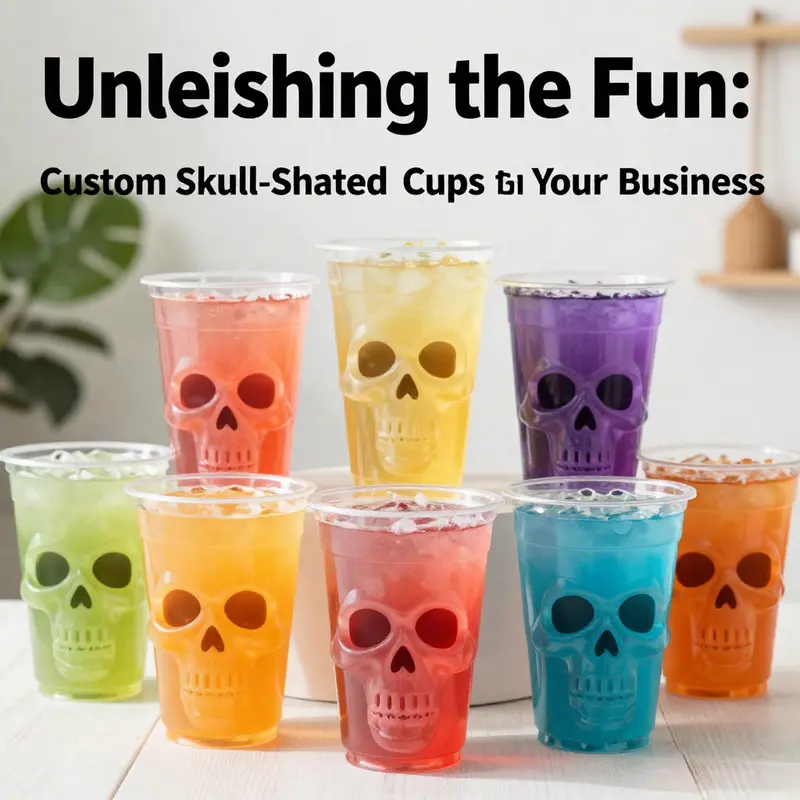
Custom cups featuring skull logos are a delightful blend of aesthetics and utility, making them a strategic marketing tool for various businesses, especially Bubble Tea Shops, restaurants, and catering services. As these cups become increasingly popular in events and themed gatherings, their unique design captures consumer interest while providing businesses with an opportunity to enhance brand visibility. This article explores marketing opportunities created by custom cups, delves into the materials and production methods of these delightful items, and examines their cultural significance and environmental impact. Each chapter offers insights that are beneficial for professionals seeking to leverage these captivating cups in their operations.
Brand as a Bite: Unlocking Marketing Power Through Skull-Logo Custom Cups

A skull is more than a silhouette on a cup; it is a portable emblem that travels with every sip and every social moment. Custom cups with skull logos sit at a curious crossroads of practicality, art, and brand storytelling. They are disposable vessels, yes, but they are also canvases that carry a brand’s personality into crowded rooms, neon-lit venues, and everyday routines. In markets that prize quick takes and social transmission of ideas, such cups perform double duty: they satisfy a functional need—holding a hot or cold drink—while quietly broadcasting a message about who the brand is, what it values, and how it wants to be perceived. The skull motif taps into a broad cultural grammar that many consumers already recognize and interpret. It signals rebellion, individuality, and a certain wedge of edginess that can make a brand feel more daring and accessible at once. When this symbol is printed on a cup, it becomes a micro-endorsement of a lifestyle or a mood, a seed that can grow into a broader conversation about identity and community around a brand.
The opportunity here is not merely in the novelty of a skull-shaped or skull-printed cup. It is in the way a well-designed cup becomes a walking advertisement, an unintentional ambassador that travels beyond the walls of a shop or a festival booth. At events, these cups turn attendees into moving brand touchpoints. Each sip, each refill, each take-home moment creates a micro-memorial of the event and the sponsor, embedding a moment of awareness in the consumer’s memory long after the music fades or the lights go down. In cafés and pop-up shops that serve youth-leaning or alternative scenes, skull-logo cups help a venue reinforce its brand identity. They present a consistent visual language that says the space understands a certain tonal frequency—one that resonates with audiences who seek something a little offbeat, a little fearless, and a lot expressive.
From a production standpoint, the choice of materials matters as much as the visuals. Plastics like polypropylene are often favored for disposable cups due to their durability, heat resistance, and cost-effectiveness. A skull cup made from PP can maintain a crisp print, resist heat from hot beverages, and withstand the rough handling that often accompanies large gatherings. That practical reliability is essential; no matter how striking a design is, if the cup fails under normal use, the branding value dissolves along with a spilled drink. The durability of the form helps ensure that the skull motif remains legible, consistent, and recognizable as it is carried from table to hand and into social feeds. The material choice also informs the sustainability conversation surrounding these items. In a market increasingly attentive to ecological footprints, many manufacturers are exploring alternatives—bio-based plastics, recycled content, or compostable options that maintain print fidelity while reducing environmental impact. The tension between aesthetics, performance, and responsibility becomes a central strategic consideration for any brand contemplating skull-logo cups.
Visual impact is the first doorway into effective branding, but the story does not end there. The skull motif is loaded with cultural resonance; it evokes courage, mortality, and nonconformity. For many younger consumers, these cues align with anti-mainstream sensibilities that prize authenticity and a certain fearless attitude. When a brand leverages this feeling through a well-crafted skull design, it is not simply selling a product; it is inviting customers to participate in a mood, a subculture, or a moment of shared understanding. This is where design fidelity converges with psychological resonance. A skull on a cup becomes a dialogue starter—an icebreaker among friends at a festival, a conversation starter in a campus lounge, or a bold feature in a saturated retail environment. The emotional arithmetic works because the symbol is compact, instantly legible, and culturally legible across demographics that care about self-expression, independence, and a sense of belonging to a tribe that values bold choices.
A crucial dimension of these campaigns is the functional branding provided by the cups. A skull-logo cup is a mobile billboard. It does not require an aggressive ad push in a consumer’s home; it appears in transit, in social spaces, and in shared moments. It is not just about visibility; it is about context. A skull on a cup in the hands of a festival goer situates the brand within the event’s ethos, linking memory with atmosphere. In a world where moments are captured, shared, and replayed, even a fleeting cup can etch a brand into the fabric of the consumer’s social narrative. This alignment between event atmosphere and branding is powerful because it transforms a product into a narrative device. A coffee cup, a cold drink cup, or a dessert cup bearing a skull motif can be woven into scenes of camaraderie, risk-taking, and rebellion—emotions that are compelling for brands looking to be perceived as culturally relevant rather than merely consumer goods.
The potential for community engagement is another layer of value that skull-logo cups offer. Within punk, goth, EDM, and other alternative scenes, a cup carries symbolism that is familiar and affirming. When a café or a venue adopts this aesthetic, it sends a clear signal about who belongs and who can belong. Customers interpret this as a cue about safety, shared taste, and a sense of cultural literacy. For brands, this means a steadier path to loyalty: when customers feel understood and represented, they are more likely to return, to recommend, and to participate in collaborative campaigns. The cups become not just containers but conversation pieces that invite stories—about concerts attended, parties hosted, or late-night talks over drinks. That storytelling potential is what elevates skull-logo cups from novelty items to strategic brand properties that can echo through multiple touchpoints, from merchandising to social media to in-store experiences.
Behind the scenes, the choice to pursue skull-logo cups is shaped by consumer psychology and market dynamics. The skull, as a visual shorthand, compresses a complex set of associations into a single, quickly identifiable glyph. Consumers who resonate with rebellion, independence, or nonconformity may be nudged toward a brand that embraces that mood. Even consumers who are not explicit fans of the motif can perceive a cup as a bold, distinctive object in a sea of generic packaging. It is this contrast—between predictability and surprise—that often makes novelty branding so effective. A well-executed skull cup communicates not only style but intention: a predisposition toward experiential branding, a willingness to challenge the status quo, and a no-nonsense approach to quality and presentation.
In developing these products, brands can pursue several advanced strategies that amplify the skull motif without diluting its meaning. Limited editions and collaborations can generate urgency and collectibility, as can partnerships with designers, street artists, or local musicians. Each limited run carries a narrative arc—the idea that this particular cup captures a moment in time, a collaboration, or a theme tied to a festival or season. When a brand leans into collaborations, it taps into the social currency of exclusivity; fans feel part of a community that values insider access and unique artifacts. Such strategies can also broaden reach: artists and collaborators bring different audiences into contact with the brand, expanding visibility while reinforcing the core personality the skull motif communicates.
Sustainability considerations inevitably enter the discourse around disposable cups. Although skull-logo cups offer strong branding, they also challenge brands to balance aesthetics and ethics. Today’s consumers increasingly expect responsible choices, even for promotional items. Brands can respond by integrating sustainable materials, such as biodegradable or recyclable options, or by designing for recyclability in a closed-loop system. The messaging around sustainability should be honest and transparent, highlighting how materials are sourced, how waste is managed, and how design choices minimize environmental impact without compromising the visual integrity of the skull print. In some cases, blends of PP with recycled content or compostable alternatives can meet practical needs while staying aligned with eco-conscious consumer segments. The marketing narrative then expands beyond a moment of promotional use to a longer conversation about a brand’s overall responsibility and long-term values. When sustainability is part of the skull cup’s story, the symbol evolves from rebellion and individuality into a statement about stewardship and integrity.
The path to meaningful impact with skull-logo cups is also a path of careful execution. The design must maintain readability and edge across different sizes, lighting conditions, and handling circumstances. The cup’s silhouette should remain recognizable when stacked, carried, or fingered by a crowd. Print fidelity matters; a blurred or smeared skull undermines the symbol’s power in a split second, and that can ripple through the consumer’s impression of the brand. Colors must be chosen with contrast in mind, ensuring legibility whether in a dim club or a sunlit festival square. The intrinsic geometry of skull imagery can be exploited to fit the cup’s curvature, turning a two-dimensional emblem into a three-dimensional experience that feels tactile and alive. The design process often involves collaborative iterations between brand teams and designers who understand mass production constraints and the need for consistent reproduction at scale. It is a balancing act between artistry and practicality, where every line, curve, and shade serves a purpose in the consumer’s moment of recognition.
Inconsiderate licensing and intellectual property considerations can complicate skull-themed branding. Skull icons carry cultural meanings and sometimes require careful handling to avoid misinterpretation or misappropriation. Brands should engage in due diligence to ensure that their skull designs are original or properly licensed for the intended contexts, whether it be festival giveaways, coffee shop takeaways, or event merchandising. The goal is to preserve the boldness of the motif while respecting creative rights and avoiding legal pitfalls that could derail a campaign at a critical moment.
From a strategic vantage point, the most compelling value proposition of skull-logo cups lies in their potential to fuse form, function, and feeling into a unified brand moment. They are not just packaging; they are experiential artifacts that live in the social space long after the drink is gone. They prompt conversations, trigger memories, and reinforce a sense of belonging to a brand narrative that values risk-taking, individuality, and a certain fearless optimism. When rolled out with a clearmatic for target audiences—young consumers who live for music, nightlife, and cultural subcultures—these cups can become durable components of a brand’s identity toolkit. The visual language of the skull, when paired with thoughtful material choices and responsible production practices, crafts a lasting impression that extends beyond a single campaign or event. It contributes to a broader brand ecosystem, where promotional merchandise doesn’t merely accompany a product launch but becomes a signal of ongoing alignment with values that customers want to see reflected in the brands they choose to support.
In this context, the content strategy around skull-logo cups can echo Forbes’ broader insights on branded merchandise. Merchandise, when thoughtfully designed and authentically connected to a brand’s narrative, has the power to build loyalty and deepen engagement beyond the initial purchase. The skull motif is particularly well-suited to convey a specific posture—one that is defiant yet confident, artistic yet accessible. It invites customers to become co-authors of the brand story, to carry a piece of that story with them into their daily lives, and to share moments that extend the life of the promotion through social sharing and word-of-mouth. The net effect is not a one-off spike in attention but a durable, evolving relationship that grows stronger as the brand stays true to its chosen mood and community.
To illustrate how these principles come together in practice, consider a hypothetical festival context where a sponsor distributes skull-logo cups to attendees as part of a broader experiential activation. The cups serve as both functional drinkware and memory carriers, encoding the festival’s atmosphere on the surface and in the experiences of those who hold them. Attendees who photograph their drinks, post images to social feeds, or collect cups as souvenirs become ambassadors in a decentralized, peer-driven marketing model. The skull cups thus perform as catalysts for social storytelling, amplifying brand reach through real-world interactions rather than relying solely on paid media. In cafés and pop-up venues, the same logic applies: a rotating skull design can intersect with local art scenes, turning the cup into a mini-gallery of cultural expression. Patrons who appreciate the aesthetic can feel seen and connected, reinforcing their loyalty not merely through taste but through an aligned sense of style and values.
Consumers’ growing consciousness about the ecological implications of disposable products adds nuance to the marketing conversation. Skulls can be a gateway to sustainable branding when paired with transparent commitments to responsible materials and end-of-life stewardship. The narrative shifts from a single promotional event to a longer arc of environmental accountability and design excellence. Brands that communicate clear choices—such as using recyclable PP or offering a take-back program for cups—can turn a simple beverage experience into a broader talk about sustainability and community responsibility. This approach allows skull-logo cups to maintain their edge while aligning with broader consumer expectations about corporate responsibility, a factor that can influence repeat purchase and long-term brand affinity.
Incorporating all these threads—visual impact, mobility, community resonance, psychological engagement, and sustainable practice—creates a compelling blueprint for leveraging skull-logo cups as a core branding asset. The opportunities extend into product diversification (different sizes and configurations to suit various beverage programs), collaborative design (artist-led editions that deepen cultural relevance), and experiential marketing that harnesses the cup’s portability to maximize exposure. The result is a coherent, multi-layered branding strategy in which a disposable cup becomes a durable instrument of identity, community, and value alignment. As brands navigate an increasingly crowded landscape, the skull-logo cup offers a concentrated way to distill personality into a tangible, shareable experience that travels with the consumer—an emblem of bold choices and enduring connections.
For readers seeking a concrete example of how branded merchandise can cultivate customer loyalty and reinforce brand narratives, the broader literature on brand merchandising offers a wealth of insights that complement this discussion. A cited external resource further illuminates how purposeful merchandise strategies translate into lasting consumer relationships and loyalty over time. See the Forbes article on the power of branded merchandise in building customer loyalty for a perspective that aligns well with the skull-logo cup approach.
One practical takeaway for practitioners is to treat skull-logo cups as a living part of the brand’s ecosystem rather than a standalone promotional item. Integrate the cup design with in-store experiences, social campaigns, and event activations. Coordinate color schemes, print fidelity, and messaging across different channels so that the skull motif remains legible and impactful in every context. Consider offering limited-edition runs tied to artists or local scenes, creating a collectible impulse while reinforcing the brand’s connection to culture and community. And acknowledge sustainability as a core dimension of the narrative, not an afterthought. Consumers will reward brands that deliver both style and responsibility, turning a striking cup into a reliable touchpoint that strengthens loyalty and invites ongoing engagement.
To explore a concrete example of a skull-themed branding approach in a practical product context, see the following internal resource that highlights eco-friendly printed logo cup options as a viable path for coffee and beverage programs with take-away culture. senang07-eco-friendly-printed-logo-buy-paper-cup-take-away-coffee-cup-8-oz-12-oz-paper-cup
From Resin to Reveal: Materials, Manufacturing and Compliance for Disposable Skull-Shaped Logo Cups
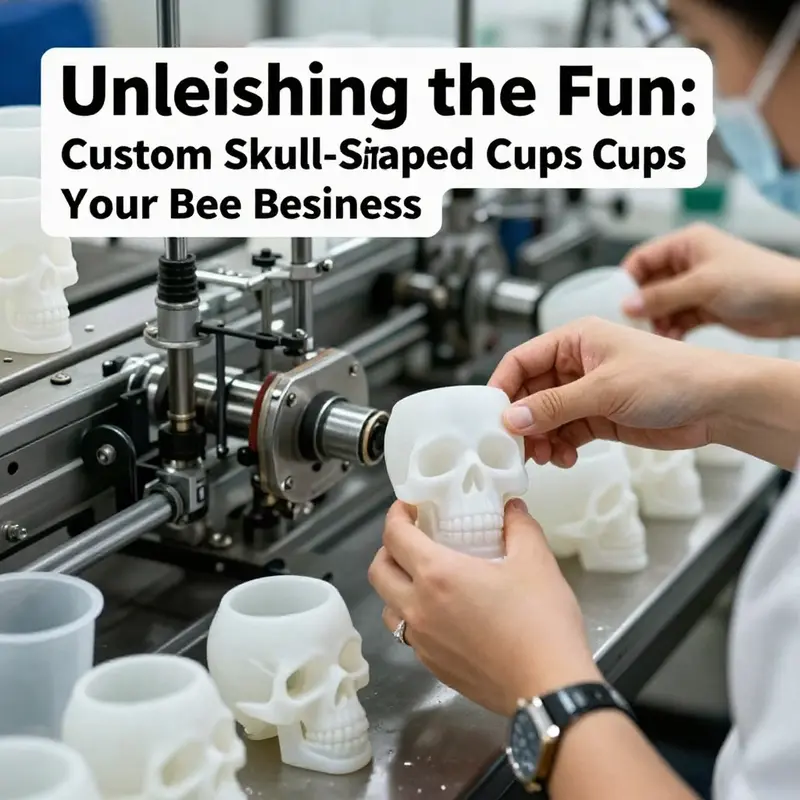
Disposable skull-shaped cups with logos occupy a curious place between novelty and brand tool. They must marry striking visual design with safe, repeatable manufacturing. Material choice, molding methods, decoration techniques and regulatory compliance all shape the final product. This chapter follows the full path from raw resin to finished cup, and it highlights practical trade-offs for designers, buyers, and producers.
The starting decision is the resin. Two polymers dominate novelty cup production: polystyrene and polypropylene. Each brings different visual, mechanical, and cost traits. Crystal-clear rigid polystyrene delivers a glass-like clarity that makes skull contours pop. It is inexpensive and molds easily into fine detail. That clarity enhances printed or internal lighting effects, which are popular with skull cups used at themed events. Polystyrene is brittle compared with some other plastics, however. Thin-wall parts can crack if handled roughly. It also softens at moderate heat, which makes it unsuitable for hot beverages unless specifically engineered.
Polypropylene offers a contrasting profile. It is tougher and less prone to brittle fracture. It has better heat resistance, so cups made from polypropylene can sometimes be used with warm liquids. The surface finish is less glass-like than polystyrene, but it is more forgiving for repeated handling. Polypropylene also welds and joins well in automated assembly. The trade-offs are cost and appearance: PP often requires design changes to maintain the same visual impact as transparent PS.
Beyond polymer family, formulators tune resin properties to meet application needs. Additives can increase impact strength, improve flow for thin sections, or alter translucency. Food-contact grades must avoid certain chemical additives. UV stabilizers or colorants are chosen with care so they do not migrate into liquids. For branded skull cups, the resin lot and certificates should match the intended use and the regulatory claims printed on the packaging.
Injection molding is the standard production method for plastic skull cups. The process suits high volumes and captures the fine anatomical detail that makes skull cups visually compelling. A typical operation begins with mold design. Designers must consider draft angles, undercuts, and wall thickness. Skulls have complex geometry, so designers include features to allow the part to eject cleanly. Core pulls, side actions, or multi-part molds are common for deep eye sockets and jaw recesses.
Tooling costs are significant. Steel molds require an upfront investment that scales with cavity count and complexity. A single-cavity mold may suffice for short runs or prototypes, but multi-cavity tools reduce per-piece cost in volume production. Mold life is influenced by steel grade and maintenance. For novelty items sold seasonally, an economical balance often favors reusing existing molds or specifying interchangeable inserts for minor design variations.
Cycle time in injection molding affects both throughput and the part’s crystalline structure. Faster cycles increase output but risk incomplete filling in thin sections. Slower cooling can improve dimensional stability and reduce warpage. For clear polystyrene skulls, careful control of melt temperature and cooling channels is essential to avoid hazing or sink marks. Manufacturers often run trials to optimize gate size and location. Proper gate placement helps fill deep cavities like eye sockets without leaving visible blemishes.
Once parts are molded, secondary operations prepare them for branding. Trimming and deflashing remove excess material at gates and parting lines. Certain skull cup designs add functional features such as ribbed sides for grip, integrated handles, or snap-fit lids. These features require precise molding and sometimes post-mold assembly.
Decoration is central to converting a shaped cup into a marketing asset. Printed logos, spot colors, and metallic inks can transform a skull cup into a memorable centerpiece. Two printing methods are prevalent. Pad printing transfers ink from a silicone pad to the curved plastic surface. It works well on irregular contours and small graphic areas, such as forehead logos or cheek detailing. Screen printing lays down thicker ink layers and suits larger artwork on flatter regions. Both methods can be adapted to curved surfaces, but pad printing excels in recesses and shallow cavities.
For full-wrap imagery or complex color blends, heat transfer or digital printing may be used. Digital UV printing offers rapid customization for short runs. It also enables variable data printing, which is helpful for limited-edition promotions. When choosing inks, manufacturers select formulations compatible with the resin and the cup’s intended use. Solvent-based inks can adhere strongly to polystyrene but must be cured properly. For food-contact items, inks and finishes must meet regulatory limits for migration.
Aesthetic choices extend beyond ink. Transparent or tinted plastics provide different moods. Frosted finishes soften the skull outline and diffuse interior lighting. Opaque or colored resins hide contents for costume-themed events. Some decorative effects use insert molding or two-shot molding to create multi-material parts. For example, a glow-in-the-dark insert can be molded into the base to add a backlit effect. These approaches raise tooling complexity and unit cost but deliver eye-catching results.
Safety and compliance are non-negotiable when cups hold liquids consumed by people. Even when a product is sold as a novelty, buyers sometimes use it for drinks. Materials must either meet food-contact regulations or be clearly labeled as non-food items. The relevant regulatory framework varies by market, but producers typically follow established guidance and testing standards to demonstrate compliance. Documentation should include certificates of compliance for resin lots and test results for overall migration, heavy metals, and other regulated substances. For a reliable reference, manufacturers and buyers can consult authoritative food contact material guidance, such as the FDA resource on food contact substances. https://www.fda.gov/food/food-contact-materials
Beyond chemical safety, mechanical safety matters. Thin-walled polystyrene parts can fracture and create sharp edges. Designers minimize stress concentrators and ensure radiused corners to reduce breakage risk. For products that might contain hot liquids, the designer must evaluate heat deformation and insulating properties. Double-walled constructions add thermal protection. Alternatives such as polypropylene and double-wall assemblies increase safety but also change the tactile feel and cost.
Sustainability is a rising concern for buyers and event planners. Traditional disposable plastics face scrutiny due to environmental impact. Producers respond with several approaches. First, they can select recyclable polymers and mark parts with recycling codes to facilitate proper sorting. Clear polystyrene and polypropylene may be recyclable in many regions if collected and processed correctly. Second, manufacturers can reduce material use by optimizing wall thickness and design. Thinner parts use less resin but require careful structural design to avoid fragility.
Third, some suppliers offer bio-based or compostable alternatives. These materials are less common for complex shapes because their performance under injection molding, clarity, and shelf stability differ from conventional resins. Still, for buyers focused on eco-credentials, paper-based alternatives exist for some cup types, and they may be more appropriate for certain audiences. If sustainability is a priority, consider linking the novelty cup with other eco-friendly tableware to create a consistent event narrative, such as pairing the skull cups with compostable utensils and plates. For an example of how alternative materials and printed logos are used in beverage service, see eco-friendly printed paper cup options.
Quality control spans the entire process. Incoming resin checks verify melt flow index and color consistency. In-mold inspections catch short shots or flash. Dimensional gauging ensures lids and collars mate correctly. Print registration must be monitored across shifts. Batch numbering and lot traceability help isolate issues when they arise. For seasonal runs, storing molds and resins under controlled conditions preserves long-term quality. Packaging also contributes to consistent impressions; clear bulk cartons, protective dividers, and labeling reduce damage in transit.
Cost remains central. Tooling expenses, resin choice, cycle time and decoration fees determine the per-piece price. Buyers often negotiate based on volume tiers and decoration complexity. Single-color pad printing and simple translucent resins are cost-effective. Multi-color full-wrap prints and two-shot molding elevate the price. A realistic procurement strategy balances brand impact with budget. Limited-edition runs can justify higher decoration costs if they deliver strong engagement at events.
Logistics and inventory planning help avoid last-minute rushes during peak seasons like October. Production lead times include tool manufacture, mold trials, initial sample approvals, and full production runs. For new designs, prototype molds and low-volume sampling allow testing of fit, finish and printing compatibility. Manufacturers should anticipate longer lead times for complex molds or new material qualifications.
From a design-for-manufacture perspective, designers should favor features that ease mold release and material flow. Consistent wall thickness minimizes warpage. Smooth transitions and generous radii reduce stress risers. Strategic placement of gates and vents improves fill and reduces weld lines in visible areas. Early collaboration between brand designers and tooling engineers shortens iteration cycles and preserves the aesthetic while lowering production risk.
For brands and event organizers, skull cups are memorable because they combine tactile novelty with visual storytelling. When the cup is both an object and a canvas for a logo, the production choices behind it directly affect brand perception. A crisp, well-printed logo on a clear molded skull signals quality and attention to detail. Conversely, poor printing, hazing, or brittle parts can undermine a campaign. Clear specifications for intended use help the manufacturer choose materials and tests that align with expectations.
Finally, consider end-of-life and user guidance. Clear labeling about recyclability or compostability reduces contamination in waste streams. If a product is not food-grade, prominent labeling prevents misuse. For reusable designs, guidance on cleaning and storage extends the product’s life and improves the user’s impression of the brand.
Throughout the production chain, transparency and documentation build trust. Suppliers should provide material safety data, compliance certificates, and print proofs. Buyers should require sample approvals and clarify expected tolerances. With skull-shaped cups, where novelty and branding meet regulatory and sustainability pressures, this clarity converts a striking prop into an effective marketing tool that meets safety, aesthetic, and environmental expectations.
From Memento Mori to Market: The Cultural Pulse and Ecological Toll of Skull-Inspired Disposable Cups
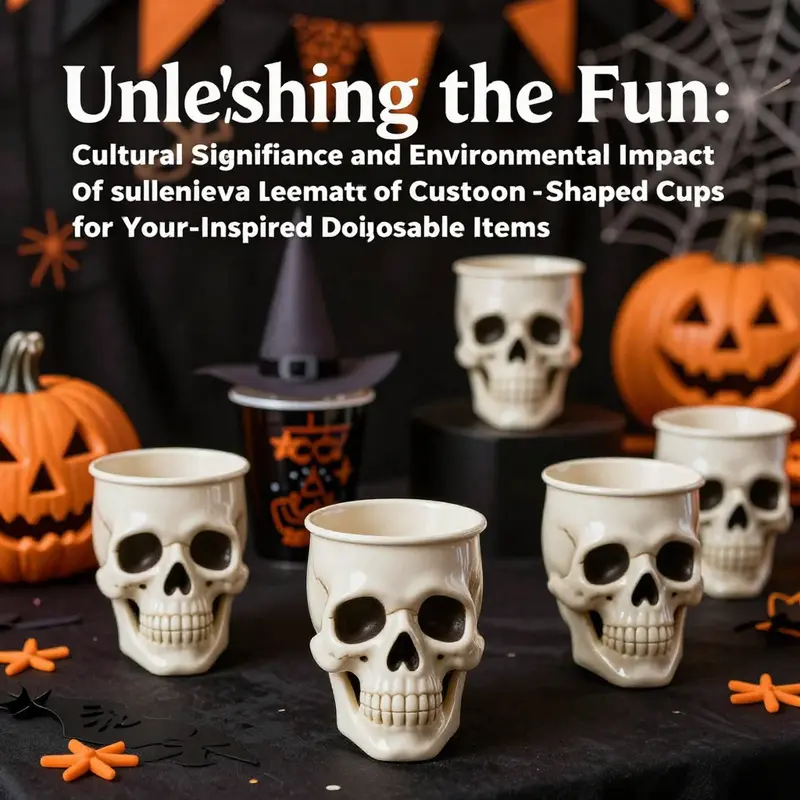
Skull imagery travels a long arc, moving from solemn meditation to party prototype and finally to a curious instrument of branding. In many cultures, skulls carry layered meanings that touch memory, mortality, and communal ritual. They can symbolize loss and remembrance, but they can also embody playfulness, defiance, and a shared sense of ceremony when deployed in festive contexts. The most resonant example of this double life lies at the intersection of culture and commerce: skull-inspired disposable cups that carry logos and messages at events, parties, and themed gatherings. These cups are not mere vessels; they are portable signs that perform branding while carrying a fragment of cultural symbolism into everyday consumption. In this sense, they become a microcosm of how modern markets negotiate meaning, memory, and material impact in a single, disposable form.
The cultural resonance of skull motifs is most vividly observed in celebrations that honor memory while inviting collective joy. Día de los Muertos, or Day of the Dead, for instance, enshrines skulls as joyful remembrances rather than grim tokens. Sugar skulls, painted in vibrant hues, encode love, remembrance, and continuity across generations. They transform mortality from fear into a bridge that connects the living with those who are gone, a ritual of memory that is at once intimate and public. When designers translate these symbols into consumer items—such as cups, napkins, or decorations—the cultural language persists, but it travels through the din of a crowded event, bent toward momentary use and brand exposure. The skull becomes a talking point, a visual hook, and, in many settings, a way to signal an affinity for a particular aesthetic—gothic, macabre, or cult-favorite—without requiring attendees to articulate a complex set of beliefs.
This cultural language feeds directly into the way these cups function in the marketplace. They are highly effective promotional tools. The surface can be personalized with logos, marketing messages, or artwork, creating a memorable font of visibility for brands in social spaces. In a festival, club night, or themed party, a single cup can do more than hydrate a guest; it can cue a mood, establish an atmosphere, and reinforce a narrative about the event’s identity. The ability to imprint a logo or design on a disposable cup expands the signifying power of the skull motif, turning a symbolic icon into a branded experience that travels from server to guest and from guest to shared social feeds. The practical flexibility matters here: these cups come in common sizes, such as 12 or 16 ounces, to suit varied contexts, from casual refreshment to specialty cocktails or mocktails. The material choice, typically a robust plastic such as polypropylene, supports durability and heat resistance, ensuring the cup can be filled with hot or cold beverages without warping or losing legibility of the imprint. The economics of these cups are not incidental. The combination of a low unit cost, reliable printability, and broad consumer appeal makes skull-inspired cups a compelling promotional instrument for events and venues that want to set a distinctive tone while keeping logistics straightforward.
Yet as much as the skull icon heightens aesthetic impact and brand recall, its deployment in disposable form raises questions about environmental responsibility. The lifecycle of a disposable plastic cup is a reminder that symbol and service intersect with a planetary budget. When a skull motif is printed on a single-use item, the symbol’s energy is amplified not only in attention but in volume. The plastics commonly used in these cups—polymers selected for clarity, strength, and cost—are designed for short-term utility but often endure in ecosystems for far longer than the moment of use. The same properties that make these cups practical—rigidity, translucence, resistance to moisture, and the capacity to bear a printed logo—also complicate recycling and end-of-life processing. The environmental footprint extends beyond the factory floor to the disposal stage, where the fate of a disposable skull cup is tied to local waste systems, consumer behavior, and the design decisions that determine recyclability or biodegradability.
A broader conversation about disposables versus reusables provides a useful frame here. A 2023 environmental impact assessment focusing on reusable and disposable products highlights how even seemingly minor disposables can accumulate substantial ecological costs when viewed over a lifecycle. The energy used in extraction of raw materials, the manufacturing process, the logistics of distribution, and the challenges of end-of-life management all contribute to an ecological footprint that can outlive the brief moment of a party or event. The skull cup becomes a case study in this larger narrative: a vivid, memorable object that, in practice, may contribute to resource depletion and waste streams if not managed thoughtfully. The paradox is stark—an item designed to celebrate memory and life can risk complicating the very environments the celebration depends on, especially when it becomes part of a culture of single-use consumption without a clear plan for recycling or reuse.
What can balance the vitality of skull-inspired branding with ecological stewardship? The answer unfolds along a spectrum that includes material substitution, design for recycling, and a shift toward reuse. Bioplastics, compostable and biodegradable options, and recyclable substrates offer pathways to preserve the visual punch of skull motifs while reducing long-term waste. The industry is increasingly aware that the aesthetic success of a design is inseparable from its lifecycle implications. Consumers, too, are more attuned to ecological consequences, seeking products that align with values of conservation and responsible consumption. In this context, the skull cup is not merely a novelty; it becomes a platform for practicing mindful branding—an opportunity to tell a story that honors culture without compromising the future.
The cultural potency of skull symbolism is not diminished by these concerns. If anything, it is sharpened by the demand for responsible expression. The skull as a motif can remain a locus of memory, ceremony, and solidarity while the material that carries it is chosen with care. Designers and manufacturers are reimagining the container itself: selecting substrates that balance print fidelity with end-of-life options, adopting packaging that communicates recyclability, and pursuing manufacturing efficiencies that lower energy intensity. In some cases, this means prioritizing reusable cups for recurring events or adopting cup formats that transition seamlessly to composting streams when a suitable facility exists. It also means embracing life-cycle thinking in the earliest stages of design, a shift that aligns the cultural intent of the skull with ecological integrity.
The conversation around skull cups also intersects with broader debates about branding and ritual. In events, the emblematic power of a skull can unify a crowd around a shared atmosphere. It evokes a sense of community that goes beyond simple consumption. But when branding overshadows stewardship, the symbol risks becoming a memory that fades into waste. The challenge is to preserve the emotional resonance of the skull—its mood, its heritage, its capacity to spark conversation—while ensuring that the object’s end of life is as deliberate as its creation. The most promising strategies integrate a seamless chain of responsibility: print on substrates designed for recycling, clear labeling that informs users how to dispose of or reuse, and partnerships with suppliers who offer alternatives that reduce the environmental burden without diminishing the design’s impact.
The practical implications of these ideas unfold in the choices a brand makes about where and how to source such cups. For instance, suppliers that offer eco-friendly or recyclable options for logo imprinting on take-away cups illustrate the direction in which the market is moving. The trade-off between vivid logo fidelity and compostable or recyclable material often guides design decisions. Some solutions involve switching to paper- or kraft-based substrates that can be recycled more readily, or to plastic composites engineered to break down in specific facilities. Others leverage dual-use strategies where cups are designed for reuse within a venue network, or where events encourage patrons to return cups for cleaning and reuse, blurring the line between disposable and reusable in nuanced ways. In every case, the objective remains: sustain the cultural energy of skull imagery while honoring an advancing commitment to ecological responsibility.
The tension between cultural symbolism and environmental impact thus becomes a central theme of contemporary branding. Brands that adopt skull motifs in disposable formats are uniquely positioned to tell two intertwined stories at once: a narrative of heritage and community, and a narrative of accountability and stewardship. The success of this approach depends on more than the visual design; it rests on the broader system in which the cup is produced, used, and finally disposed of. The cup’s surface, the ink it bears, and the substrate it rests on all participate in a memory of a moment that, if managed well, can leave a positive imprint on the world rather than a footprint that outlives the moment itself. In this light, skull-inspired disposable cups are not merely marketing artifacts; they are artifacts of cultural expression that demand a responsible lifecycle.
As designers and marketers push toward more sustainable expressions of the skull motif, a small but meaningful shift is visible in the options they choose to imprint logos and messages. The same appetite for customization that makes skull cups compelling can be aligned with sustainability goals by embracing materials and processes that lower environmental impact while maintaining aesthetic impact. With smart design choices, the skull symbol can continue to function as a catalyst for social gathering and a sign of shared memory—and, at the same time, a signal of a conscientious approach to waste and resource use. The future of skull-themed branding in disposable formats hinges on this balance: preserving the cultural resonance while reducing the ecological footprint. The path forward invites designers to treat the cup not as a throwaway prop but as a responsible mediator between memory, moment, and material life. To that end, collaborations between event organizers, manufacturers, and researchers will be essential, ensuring that the cultural potency of skull imagery remains intact even as the industry evolves toward more sustainable practices.
For readers who want a concrete glimpse into how suppliers are addressing these issues, consider exploring options that emphasize eco-conscious printed logos on take-away cups. senang07-eco-friendly-printed-logo-buy-paper-cup-take-away-coffee-cup-8-oz-12-oz-paper-cup. This example illustrates how customization and sustainability can align, offering a model for brands that want to maintain strong visual identity without compromising ecological values. The broader takeaway is not simply to replace one material with another, but to rethink the lifecycle of design itself—how a symbol communicates, how it travels through use, and how it returns to the earth or to a recycling stream when its moment has passed.
In sum, skull-inspired disposable cups sit at a crossroads of cultural significance and environmental consequence. They capture a dual impulse: to honor memory and to celebrate community through vivid, shareable design, while also inviting a serious assessment of the waste that accompanies modern consumption. The challenge is not to diminish the symbol’s power but to harness it in ways that honor both culture and responsibility. By choosing materials with clear end-of-life pathways, by designing with recycling and reuse in mind, and by communicating those choices to consumers, brands can keep the skull’s cultural resonance alive while ensuring that its material life contributes as little as possible to a polluted planet. In this way, the skull remains a compelling emblem of how humans remember, how communities gather, and how we collectively decide what to leave behind for future generations. The future of skull-inspired disposable items, then, rests on a disciplined attention to culture, craft, and consequence alike, so that memory and meaning endure well beyond the last sip.
External resource for further reading: https://www.mdpi.com/2071-1050/15/18/12946
Final thoughts
As the beverage market continues to evolve, custom cups with skull logos are proving to be not just fun and engaging items but also valuable assets for branding and marketing strategies across various sectors. They combine utility with aesthetic appeal, catering to both businesses and consumers who appreciate novelty in their experience. By understanding the production processes and cultural significance of these cups, businesses can align their offerings with consumer preferences while being conscious of environmental factors. Embracing such unique products can indeed set brands apart in a competitive landscape.