
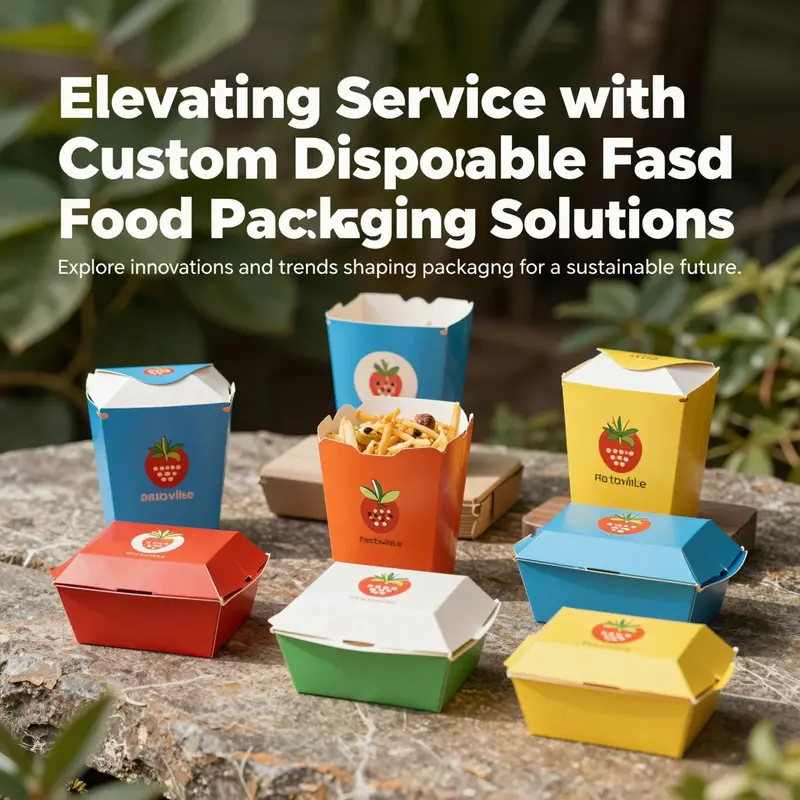
The rise of custom disposable fast food packaging boxes is redefining how businesses in the food industry present their offerings. With Bubble Tea Shops, Beverage Chains, Restaurants, and Food Trucks at the forefront, these innovative packaging solutions not only contribute to brand identity but also align perfectly with the increasing demand for sustainability. As consumer expectations shift, event planners and corporate procurement teams are also turning to these custom solutions, appreciating practicality without compromising on ethics. This article will cover technological advances enhancing packaging design, the economic implications of adopting these innovations, necessary regulatory considerations to maintain safety and responsibility, societal trends pushing for eco-conscious choices, and finally, the crucial aspect of environmental sustainability. Each chapter will deepen our understanding of how custom fast food packaging boxes are not just a means of serving food but an essential component of modern business strategy.
Engineering Sustainability: The Technological Leap in Custom Disposable Fast-Food Packaging
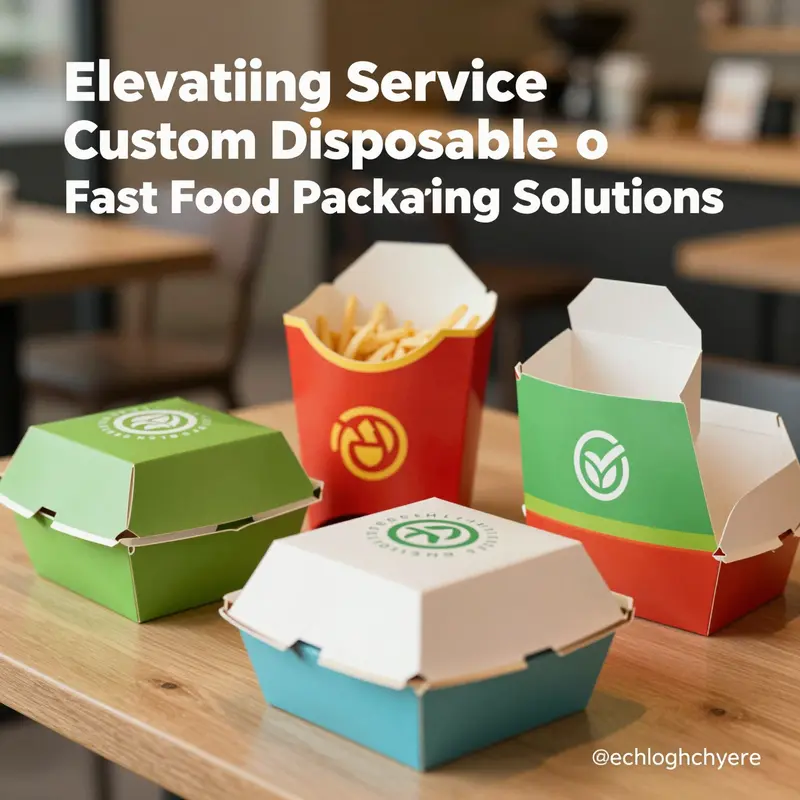
The disposable fast-food box has evolved from a simple release mechanism into a technology-forward platform that carries flavor, brand trust, and environmental responsibility in a single form. The shift is not merely about a box that holds a sandwich or fries; it is about engineering a container that respects speed of service, the integrity of the food, and the expectations of a growing segment of consumers who see packaging as a proxy for a company’s values. In this context, technology acts as a bridge between practical performance and purposeful sustainability, turning what used to be a commodity into a flexible solution capable of meeting diverse operational demands across global markets. The trajectory is clear: more durable, more recyclable or compostable, more intelligent, and more aligned with regulatory expectations, all while preserving the sensory and tactile cues that influence a customer’s moment of brand engagement. Material innovation sits at the heart of this transformation. The pursuit of environmentally responsible alternatives has moved beyond a simple substitution of plastics with paper or cardboard. Manufacturers are investing in compostable and recyclable options that still deliver the barrier properties necessary for a wide range of foods. Biodegradable options rooted in plant-based polymers, such as polylactic acid (PLA) derived from corn, have matured into practical components of the packaging mix, offering a pathway to end-of-life options that align with circular economy goals. In markets where regulations and consumer sentiment push toward more sustainable solutions, these materials are no longer niche choices but mainstream components of the product portfolio. The trend across regions is not uniform, but the underlying logic—reduce long-term environmental impact without compromising performance—has universal appeal. In parallel, there is a continued exploration of fiber-based and bagasse-derived formulations, which leverage natural fibers to deliver rigidity, heat resistance, and grease handling without resorting to traditional vinyl or non-biodegradable coatings. Coatings and surface engineering play a pivotal role in delivering the grease resistance and water repellence that fast-food items demand. Modern coatings are engineered to balance barrier performance with recyclability or compostability, using thin, engineered layers that minimize material use while maximizing function. This is critical when the objective is to keep fries crisp, ensure a dry exterior for sandwiches, and maintain the structural integrity of a lid-and-box system through the rigors of delivery and stacking. The design language has shifted accordingly: containers now emphasize modularity, with integrated compartments and dedicated sauce cups that reduce spillage and facilitate on-the-go consumption. The reported improvement in spill resistance—approximately 40 percent compared to traditional designs—illustrates how engineering choices translate into tangible service benefits that reduce mess, waste, and customer dissatisfaction. Such gains are not merely about convenience; they directly impact the bottom line by lowering damage rates during transit, reducing returns, and enhancing the overall dining experience for a quick-service format. Beyond materials and coatings, the packaging ecosystem is increasingly adopting smart and data-driven dimensions. Active packaging that can interact with the product to extend shelf life, and intelligent packaging capable of monitoring temperature and humidity during transit, are becoming more common in ready-to-eat and delivery-focused channels. Antimicrobial surfaces and coatings offer an extra layer of safety by inhibiting microbial growth on high-touch surfaces. Taken together, these technologies convert a disposable item into a dynamic component of the supply chain, capable of showing real-time status to operators and, in some cases, to customers via visible indicators or integrated digital interfaces. The upshot is not only improved safety and quality but also a richer, more responsive service model that can adapt to the fluctuating demands of peak hours, weather contingencies, and delivery windows. The production processes that undergird these advances have also become more precise and sustainable. Precision cutting and automated sealing minimize waste, while eco-friendly printing techniques support branding without introducing excessive inks or solvents into the manufacturing stream. The move toward digital printing, in particular, enables a high degree of customization without sacrificial setup costs, allowing brands to tailor packaging designs to specific campaigns, regional tastes, or seasonal menus. This capability dovetails with a broader shift toward personalized packaging experiences, where customers may encounter packaging that communicates sustainability commitments, provenance stories, or localized messaging in a manner that is both legible and visually compelling. The capacity to customize at scale is a strategic advantage for operators who wish to differentiate themselves in a crowded marketplace. The economic dimension of this technological evolution is nuanced. On one hand, the drive for higher-performance materials and smart features can elevate unit costs, especially when sophisticated coatings, barrier layers, and sensors are involved. On the other hand, economies of scale in manufacturing, improved supply chain predictability, and reductions in product damage and waste can offset the incremental costs over time. The cited price range for disposable plastic fast-food packaging—roughly a few cents per unit—reflects a market dynamic where buyers seek competitive pricing to satisfy bulk needs while insisting on consistent quality. The market is sensitive to minimum order quantities, which can be a hurdle for smaller operators but provides stability for large chains and contract manufacturers. In practice, the most successful packaging strategies balance a tiered approach: standard, high-volume formats for daily operations, and premium, customized variants for limited-time offers or branding initiatives. The future likely holds a continuum where basic boxes are optimized for cost and reliability, while specialized formats—featuring enhanced barrier properties, smart features, or premium aesthetic treatments—cater to brands seeking to elevate their consumer perception. Regulatory considerations hover as a constant in this evolution. Safety standards, environmental compliance, and labeling requirements shape every design decision. In regions governed by stringent food-safety rules, packaging must meet criteria that govern material composition, migration limits, and compatibility with a broad spectrum of foods and temperatures. Compliance becomes a collaborative process, involving material suppliers, packaging manufacturers, and food-service operators who must align on testing protocols, certification processes, and traceability. The relevance of EU food safety standards, for example, underscores the need for compatibility across shipping, storage, and retail environments, where packaging is not only a container but a carrier of brand integrity and public health responsibilities. The emphasis on responsible materials—whether compostable polymers, fiber-based solutions, or recyclable plastics—reflects a broader, multi-stakeholder push toward sustainability that extends from the farm to the table. Societal expectations amplify the importance of these technical shifts. Consumers increasingly view packaging as a signal of a brand’s ethics, environmental stewardship, and transparency. The packaging choice communicates responsibility to stakeholders who may be weighing the trade-offs between convenience and ecological impact. As the public grows more attuned to waste streams and end-of-life options, there is a rising demand for packaging that is clearly recyclable or compostable, clearly labeled, and designed for minimal environmental footprint. This demand informs product development, supplier relationships, and end-of-life strategies, driving a feedback loop in which consumer preferences influence material choices, which in turn push regulatory and industry standards toward more sustainable baselines. In such a context, packaging becomes a storytelling device as much as a functional container. The ability to convey a brand’s commitment to sustainability—through material choices, labeling, and even design for disassembly in recycling streams—augments brand reputation and fosters trust with a customer base that values responsible practice as highly as speed and price. Geographically, there are notable variations in how these technological advances unfold. In some markets, shifts toward biodegradable and compostable options reflect a confluence of regulatory pressure and consumer demand, while other regions emphasize optimized recycling streams and robust performance in demanding service environments. The Iran example, where vendors are actively moving toward corn-based biodegradable options and other compostable solutions, signals a broader shift that crosses cultural and economic boundaries. It demonstrates how local market pressures can accelerate the adoption of sustainable packaging technologies, prompting suppliers to tailor formulations to climate, waste management infrastructure, and consumer behavior. Such localization underscores a critical truth: technology in packaging is not a monolith but a flexible toolset that must be adapted to fit diverse systems of production, consumption, and waste processing. Looking forward, the arc of development suggests a packaging landscape that blends material science, engineering prowess, and digital capability into cohesive, end-to-end solutions. New materials will continue to push the envelope of biodegradability and barrier performance, while coatings and surface engineering will enable ever-greener products with superior functionality. Smart packaging technologies will provide actionable data for operators, enabling smarter inventory management, improved food safety, and enhanced customer engagement. Manufacturing ecosystems will evolve toward leaner, more precise production lines that minimize waste and allow for rapid customization without sacrificing throughput. Even as cost considerations persist, the total value of these innovations—reduced spoilage, stronger brand differentiation, and a more environmentally aligned business model—will increasingly justify investment. In this sense, custom disposable fast-food packaging boxes are not a liability of disposable culture but rather a dynamic platform that supports efficient service, premium customer experiences, and responsible stewardship of resources. For practitioners seeking practical paths forward, the synthesis is straightforward: embrace materials and processes that meet the dual mandate of performance and end-of-life responsibility, explore coatings and barrier technologies that preserve food quality while supporting recyclability, and deploy smart features that align with delivery and dining experiences. Engage with suppliers who can offer customizable formats—such as windowed kraft packaging with scalable size and embossing options—to reinforce branding while delivering sustainability benefits in a way that resonates with customers and regulatory bodies alike. The integration of these elements—material innovation, advanced coatings, smart packaging, and efficient manufacturing—constitutes the technological leap that will define success in the disposable fast-food packaging arena for years to come. In this evolving ecosystem, packaging ceases to be a passive vessel and becomes an active contributor to safety, taste, and trust, reinforcing a brand’s promise with every wrap, lid, and seal.
Value, Velocity, and Vectors: The Economic Dynamics of Custom Disposable Fast-Food Packaging Boxes
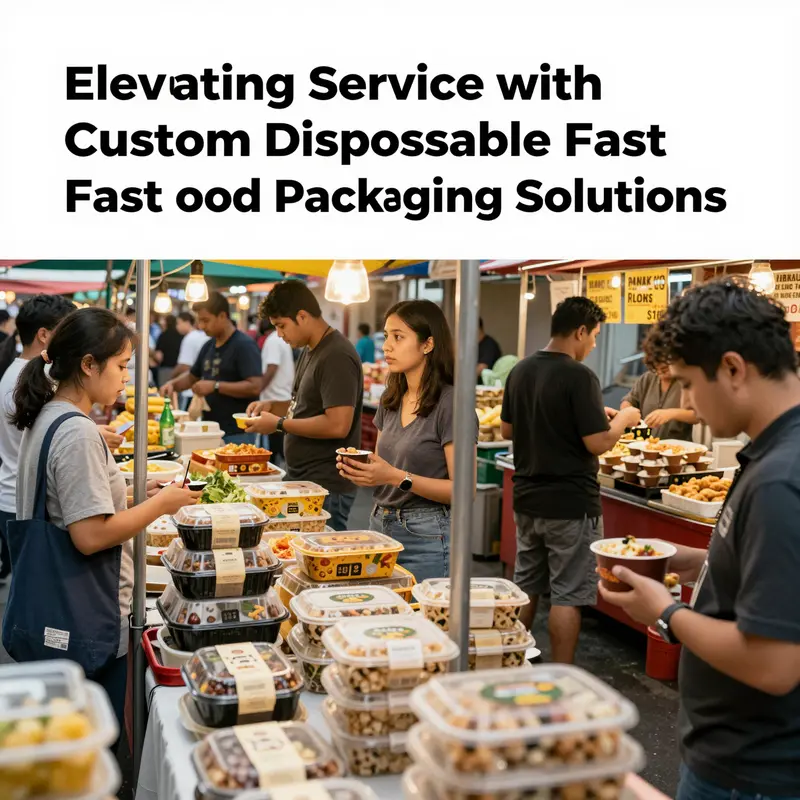
The economics of custom disposable fast-food packaging boxes sit at the intersection of branding, operations, and sustainability, a convergence that reshapes how fast-service concepts translate into market value. When a restaurant or takeaway service adopts packaging that is tailored to the brand, designed for efficiency, and aligned with environmental expectations, the effect ripples through revenue, costs, and the broader competitive landscape. The discussion treats packaging not as a mere receptacle for food but as a strategic instrument one that can amplify brand recall, streamline workflows, and unlock new economic efficiencies even as it contends with rising material and regulatory pressures. The core idea is simple: small alterations in packaging design and material choice can yield outsized shifts in customer perception, supply chain resilience, and profitability over time, especially in a sector defined by razor-thin margins and relentless throughput.
Brand identity and the economics of perception intertwine in tangible ways in custom packaging. A box or sleeve printed with a logo, a color story, or a distinctive pattern becomes a mobile advertisement. It travels from the counter to the customer’s home, and with every handoff it reinforces recognition and crucially trust. This branding power translates into greater customer loyalty and higher repeat visit rates, two levers that can materially influence the lifetime profitability of a business. While the upfront unit cost for basic, non-branded paper boxes may hover in the modest range, the premium for customization logos, color schemes, unique shapes, and compartmentalized layouts enters as a marketing expense that often pays for itself through enhanced perceived value. The economics here are not just about what is paid at the point of purchase, but about the downstream effects on basket size, order accuracy, and brand retention. When packaging is designed with clear compartments or printed labels that reduce mis-orders and mis-grips, it minimizes rework and waste in food preparation and delivery, creating an efficiency dividend that compounds over time.
From a consumer standpoint, packaging often influences willingness to pay and the perceived quality of the experience. A growing segment of customers values eco-conscious choices, and products that utilize FSC-certified cardboard or biodegradable materials can command a modest premium. In practice, the premium is not universal, but the market is moving toward economies of scale that make sustainable choices more affordable. For large-volume operators, bulk production can bring unit costs down to competitive levels, even when the product carries a sustainability label. For example, bulk orders can dramatically reduce the per-unit price, illustrating how scale can bridge the gap between eco-friendly aspirations and budget realities. This scalability is a crucial part of the macroeconomic picture: it supports a broadening ecosystem of suppliers and manufacturers who invest in greener options, expanding availability and pushing prices downward as demand grows.
The macroeconomic implications extend beyond the balance sheet of individual businesses. As consumer preferences shift toward sustainable packaging, production and logistics chains recalibrate. The market responds by investing in green manufacturing capacity, recyclable or compostable solutions, and compliant materials that meet international standards. Suppliers increasingly emphasize certifications such as CE and RoHS alignment, echoing global regulatory expectations and minimizing future compliance risk for buyers who need access to regulated markets. The EU framework, including EC 1935/2004, is more than a checklist; it signals a longer horizon in which packaging choices support not only food safety but also environmental stewardship. This regulatory backdrop, in turn, shapes investment flows, encouraging plant modernization, automation, and innovations in material science that make durable, leak-resistant, and temperature-stable packaging both feasible and financially viable at scale. In a world where takeout and delivery are expanding avenues for growth, the demand for durable, well-designed packaging that preserves product integrity under pressure during transit, in climate variation, and across long delivery routes, becomes a driver of capacity expansion and job creation in manufacturing and logistics.
Operational efficiency forms another pillar of the economics of packaging. A well-engineered box can reduce operational frictions from order fulfillment to packaging and loading. For fast-food and quick-service operations, the ability to assemble orders quickly and reduce cross-contamination risk with well-designed compartments translates into lower labor costs and less waste. A spill-resistant design, such as integrated compartments and dedicated sauce cups, does more than protect the meal; it protects margins by reducing product loss and customer dissatisfaction, which in turn lowers the cost of returns or replacements and supports repeat business. The durability of the chosen material whether cardboard, pulp-based composites, or biobased alternatives also matters. Stronger, more resilient boxes withstand the rigors of inventory handling, stacking, and transport, reducing damage rates and discarded goods. When these factors are coupled with efficient labeling and branding elements, the packaging becomes a lightweight logistics system in its own right, contributing to smoother workflows and a more reliable delivery experience.
Cost structures for these packaging choices reveal a nuanced interplay between savings and spending. The literature points to a baseline range for basic, non-branded boxes in the lower tens of cents per unit, with significant capture potential through customization. This creates a spectrum modest increments for branding and design, balanced against the potential for higher long-term returns through customer loyalty and reduced wastage. The economic logic favors large operators who can amortize design and tooling costs across tens or hundreds of thousands of units, yielding per-unit economics that make premium packaging not only feasible but attractive. Conversely, smaller operators or early-stage ventures face higher per-unit costs, but the same dynamics brand differentiation, order accuracy, and customer willingness to pay for sustainable packaging can still justify the investment when viewed as a strategic lever rather than a pure cost center. The interplay of these forces branding premium, waste reduction, supply chain efficiency, and sustainability compliance often determines which operators win in a competitive market.
There is a broader, longer-view dimension to these packaging choices. The shift toward sustainable materials and designs does not occur in a vacuum. It interacts with labor markets, technology adoption, and global trade patterns. As manufacturers invest in more durable packaging solutions, supply chains reorganize around standardized, scalable processes that can accommodate large orders with consistent quality. The rising demand for environmentally friendly materials biodegradable laminates, compostable coatings, and responsibly sourced fibers drives investment in new feedstocks, processing equipment, and quality assurance protocols. These investments are not merely cost centers; they create jobs and spur ancillary services in logistics, warehousing, and recycling infrastructure. The net effect is a more resilient sector capable of weathering price volatility in raw materials and supply disruptions, provided that buyers maintain steady demand and a willingness to embrace longer-term planning horizons.
A practical implication of this economic calculus is a careful alignment of packaging strategy with business goals. Companies that treat packaging as a strategic asset integrating branding, functional design, and sustainability from the outset tend to realize a stronger market position, not only through revenue growth but through more predictable margins and cash flows. This alignment requires an understanding of consumer sensitivities, an openness to scalable supply solutions, and a willingness to invest in design and testing that ensures the packaging performs as intended under real-world conditions. It also means recognizing that the economics can be dynamic; shifts in materials, regulatory requirements, and consumer expectations can alter the cost-benefit equation over time. The most successful operators are those who balance the immediacy of cost control with the strategic advantages of durable branding and dependable delivery performance.
To illustrate the complementary role of branding and packaging economics, consider the link between eco-conscious branding and customer perception. The packaging ecosystem now often links visual identity with sustainability signals, turning a simple takeout box into a co-branding vessel that can reinforce corporate values and win over environmentally minded consumers. For readers who want concrete examples of how eco-friendly branding is implemented at the packaging level, a useful reference is the resource focused on eco-friendly printed-logo paper cups and related ware. This example demonstrates how brands embed identity into everyday takeout items while maintaining practical considerations like lid compatibility and leak resistance. https://cupbowlpack.com/product/senang07-eco-friendly-printed-logo-paper-ice-cream-cups-with-lid-ice-cream-paper-bowl-paper-ice-cream-cups-with-lid/
The economic narrative then circles back to risk and opportunity. Upfront costs, while real, must be weighed against the gains in brand equity, order accuracy, packaging performance, and regulatory alignment. The most robust business cases account for price trajectories, potential incentives for sustainable procurement, and the ability to scale packaging design across multiple channels dine-in, takeout, and delivery without sacrificing consistency. In a sector where speed, reliability, and perception converge to determine market success, packaging emerges as a strategic lever rather than a passive cost. The most enduring advantage is not a single feature but a holistic package a design that supports efficient operations, a material choice that aligns with environmental expectations, and a brand story that resonates with customers who increasingly view packaging as part of the product experience.
External reference note. External resource that sheds light on industry dynamics and market-ready offerings complements this chapter. It provides an illustrative glimpse into the broader market landscape for custom, box-based packaging solutions and the kinds of design features that buyers seek in large-scale procurement. This external reference can help readers connect the economic arguments here with real-world supply opportunities and standards. https://www.alibaba.com/product-detail/Custom-Printed-Fish-and-Chips-Packing_1600578589527.html
Compliance, Craft, and Confidence: Navigating Regulations in Custom Disposable Fast-Food Packaging
Regulatory expectations surrounding custom disposable fast-food packaging boxes shape design, production, and service. In fast-service contexts, compliance touches material selection, labeling, traceability, and end-of-life claims. This chapter outlines how food-safety certifications, environmental rules, and transparent documentation drive reliability and brand trust. Material choices must be food-grade and verifiable; in the U.S. this relies on approved processes and testing; in Europe, harmonized standards guide approvals. Environmental rules push for recyclable or compostable options and clear disposal pathways; claims must reflect real end-of-life infrastructure. Labeling and traceability require clear information on contents, materials, allergens, recyclability, and lot-level documentation. Safety and performance standards demand grease resistance, heat tolerance, leak resistance, and structural integrity across service conditions, often validated by third-party testing. Waste management guidelines specify disposal routes and support honest environmental claims. The path to compliance is collaborative: work with suppliers who provide certificates, test reports, and change notifications, and embed regulatory diligence early in product development. Design implications include spill resistance, divided compartments, and sauce cups that comply with safety and disposal needs. Global variation requires adaptable packaging strategies to meet regional rules. Future-proofing emphasizes modular designs and adaptable labeling to accommodate evolving standards. The practical takeaway is that compliant packaging is a strategic asset that supports safety, sustainability, and a trustworthy customer experience.
Eco-Conscious, Convenience-Driven: The Social Currents Guiding Custom Disposable Fast Food Packaging
Across dense urban grids and suburban corridors alike, the culture of grabbing a quick meal has become inseparable from the packaging that carries it. The box is no longer a mere container; it is a messenger of values, a material artifact that communicates a brand’s ethics, efficiency, and responsiveness to a public increasingly focused on sustainability. The societal pressures shaping custom disposable fast food packaging boxes are real and measurable. They show up first as a rising tide of environmental awareness, where consumers, regulators, and industry players recognize that the way food travels from kitchen to customer matters just as much as the food itself. This awareness has accelerated a shift in materials and design that go beyond brief trends to redefine what counts as acceptable, responsible packaging in the fast food sector. In markets around the world, but with visible momentum in regions wrestling with plastic waste and waste management infrastructure, biodegradable and recyclable options are moving from niche experiments to mainstream propositions. Materials such as polylactic acid derived from plant sources, reinforced cardboard, and laminated paperboard are gaining ground as credible alternatives to conventional plastics. These materials are not simply more eco-friendly; they are engineered to withstand the rigors of fast-paced operations, from stacking in crowded takeout lanes to surviving the rigors of courier deliveries. In practice, this means packaging that can maintain temperature, resist leaks, and protect contents during transit, all while offering a route to end-of-life solutions that align with circular economy principles. Such shifts are already evident in diverse markets, including places where vendors are actively incorporating compostable or recyclable packaging to minimize plastic waste. A notable example in design terms is the emergence of robust, multi-compartment formats and heat-retentive coatings that reduce the temptation to overpack or overheat meals in transit. These innovations are not just about performance; they reflect a broader societal expectation that the box and the brand it bears should be part of a sustainable lifestyle. When a consumer discards a package, they are casting a vote about the company’s priorities, and that vote increasingly favors packaging that clearly signals responsibility and compliance with contemporary environmental norms. The material conversation also intersects with brand storytelling. Consumers increasingly want to understand the journey of their packaging from forest or field to landfill or recycling bin. Labels, certifications, and traceability become part of the consumer experience, reinforcing trust at the exact moment when a customer forms a perception of a brand’s values. In this sense, packaging becomes a canvas for corporate responsibility, offering tangible cues about how seriously a company takes its environmental duties. The social conversation surrounding packaging extends beyond the walls of food service. It encompasses the way cities manage waste, the education of younger consumers about recycling, and the role of packaging designers in reducing the ecological footprint of a delivery economy that continues to expand. Against this backdrop, the demand for custom disposable fast food packaging boxes has grown into a significant market channel. The economics of this shift are nuanced. On one hand, there is a visible push toward sustainable options that carry a premium in some cases, given the costs of biodegradable materials, specialized coatings, and supply chain adjustments. On the other hand, the long-term savings in waste handling, reduced mispacks, and improved customer satisfaction can offset higher unit costs as brands compete not only on price but on perceived responsibility and reliability. The balance between cost and value, between aesthetics and practicality, becomes a core strategic consideration for operators who want to preserve margins while upgrading their packaging. In that tension, the notion of custom design takes on new meaning. Personalization is no longer an indulgence but a way to communicate a brand’s identity at the point of purchase and the moment of unboxing. Consumers crave unique dining experiences; they want packaging that tells a story, that aligns with their own ethical and aesthetic sensibilities, and that makes the act of eating a little more memorable. The unboxing moment has become an important experiential facet of modern consumer culture. For fast food brands, this means opportunities to print logos, reinforce eco-friendly messages, and present packaging that mirrors the care put into the food within. The packaging thus becomes a multi-sensory extension of the brand. It is here that the conversation about customization intersects with sustainability. Black-letter metrics, such as the ability to segregate sauces, maintain heat, or resist spills, merge with the softer, more intimate expectations about design and identity. A box that keeps stew from leaking and keeps its contents at an appealing temperature while offering a logo a consumer wants to show off on social media can drive repeat business and word-of-mouth recommendations. The regulatory and societal context amplifies these shifts. Stakeholders—whether they are consumers, civil-society organizations, or policymakers—are increasingly vocal about corporate accountability for packaging waste. Regulatory frameworks in many regions emphasize safe packaging and recyclability or compostability, prompting manufacturers to innovate not just for performance but for compliance. The public discourse around packaging has evolved from a peripheral concern to a central criterion for evaluating a brand’s overall stewardship. Even as the global disposable plastic market continues to show growth, there is a powerful and growing impetus toward sustainable substitutes. This does not mean a simple opt-out of plastics; rather, it represents a strategic pivot toward packaging systems that can deliver the same convenience and reliability with a lighter environmental footprint. For companies, this often translates into rethinking supply chains, investing in renewable or recycled content, and embracing coatings and processes that preserve barrier properties without locking in persistent plastics. It is a careful balancing act—satisfying the demand for dependable, leak-proof packaging while addressing the legitimate concerns about plastic waste. The market forecast suggests a robust pathway forward for disposable boxes, with growth projected in the near term but a clear trajectory toward sustainable alternatives over time. Reports that analyze “Disposable Plastic Fast Food Box Market” emphasize that while demand remains resilient, the trajectory is tempered by a shift toward compostable and recyclable formats. Businesses that align with this trajectory by offering customizable, sustainability-forward solutions can attract a broader customer base, including operators who seek to differentiate themselves through environmental responsibility as much as through taste and price. This alignment matters not only for competitiveness but for social legitimacy. In practical terms, the industry is already witnessing a convergence of design, material science, and regulatory insight. The design of a custom box now considers not only how it carries and protects food but how it can be optimized for recycling streams, how it can be produced with lower energy and water inputs, and how the end user experiences it in the moments after the meal is consumed. The economics of such decisions are non-trivial. The literature points to material choices that can carry a premium but also to economies of scale when manufacturers achieve consistent demand and supply. In parallel, there is evidence that consumers are willing to reward brands that demonstrate clear commitments to sustainability through packaging choices, even if the initial price point is modestly higher. The social dimension extends into branding and community signaling. Custom packaging provides a platform for expressing a brand’s values, telling stories about local sourcing, ethical labor practices, or community initiatives. The packaging becomes a visible statement that travels with the meal and can be shared through social channels, influencing perceptions far beyond the dining table. In this sense, packaging evolves from a functional necessity into a strategic asset that can elevate brand reputation, engender loyalty, and differentiate offerings in a crowded field. For designers and procurement teams, this shift implies a reimagined collaboration across disciplines. Material science teams, supply chain managers, and marketing strategists must work together to produce packaging that meets performance targets while aligning with environmental commitments and consumer expectations. The result is a more resilient packaging ecosystem—one that can support fast-turnover dining environments, withstand long-distance delivery, and still be recyclable or compostable at scale. One avenue of practical design evolution involves the inclusion of multi-compartment configurations and leak-resistant features that preserve meal integrity without compromising recyclability. This approach supports a wider range of menu items, including stews, rice bowls, and saucy preparations, while offering clearer separation of components for easier disposal. It also opens the door to coatings and barrier technologies that improve heat retention, reducing customer complaints about temperature drop during transit. The conversation around customization then circles back to the consumer experience. Brands increasingly view packaging as part of the overall dining narrative. Custom typography, color schemes, and eco-labels reinforce a sense of place and identity, while the box itself can become a tool for storytelling, education, and engagement. The lesson for industry players is not to chase novelty at the expense of responsibility but to pursue thoughtful innovation that integrates material science, logistics, and consumer psychology. In line with this, a representative design approach would be to offer adaptable formats that can be scaled across multiple service levels—from quick-service to mid-scale delivery operations—without compromising end-of-life outcomes. A practical reminder of what is possible is visible in in-stock design options such as the salad rectangle takeaway kraft paper octagonal box with lid, which illustrates how a single container can deliver functional advantages, branding opportunities, and environmental compatibility in a single, elegant package. senang03-in-stock-new-design-salad-rectangle-takeaway-kraft-paper-octagonal-box-with-lid This kind of packaging option demonstrates how customization can align with sustainability goals while preserving practicality for fast-paced service and distance delivery. The social currents described here are not ephemeral; they reflect a shift in how society perceives responsibility, efficiency, and identity in food service. They demand packaging that performs under pressure, respects end-of-life realities, and communicates values to a broad audience without sacrificing the simplicity customers expect when they choose to eat on the go. For operators and manufacturers, the path forward involves careful calibration of material choice, design flexibility, and cost management. It is about building a portfolio of packaging options that can be tailored to menu, geography, and customer base while staying true to environmental commitments. It is about embracing transparency and traceability so that consumers can understand the lifecycle of the packaging they choose. And it is about recognizing that the box is not just a vessel but a reflection of culture, community, and care for tomorrow’s world. External reference: for a broader market perspective on how disposable packaging fits into evolving consumer and regulatory landscapes, see the industry analysis at https://www.researchandmarkets.com/reports/598741/disposable-plastic-fast-food-box-market-by-type-by-application
Guardians of the Green Takeout: Weaving Environmental Stewardship into Custom Disposable Fast-Food Packaging
The rapid rise of custom disposable fast-food packaging is not just about operations speed or brand visibility. It is increasingly about a deliberate, measured commitment to environmental stewardship that can coexist with the demands of a bustling service environment. As consumer awareness expands, and as regulatory expectations tighten, the packaging that carries meals becomes a platform for sustainability. In this landscape, the most successful operators are those who see packaging not as a disposable afterthought but as an integral component of the entire value proposition—one that communicates responsibility to customers, supports efficiency in kitchens, and reduces waste across the product life cycle. The shift is both economical and ethical, and it is reshaping how designers, suppliers, and restaurateurs think about what it means to serve fast food responsibly.
The transition from traditional plastics to sustainable materials marks a foundational shift. At the core of this transition is a move toward FSC-certified cardboard and a spectrum of biodegradable, compostable, and recyclable materials that still meet the practical needs of fast-service environments. The use of responsibly sourced cardboard ensures that forests are managed with long-term health in mind, while the integration of biodegradable options helps reduce landfill burden without compromising performance. In practice, this often means packaging capable of withstanding grease, heat, and the rigors of high-volume service, while still breaking down within appropriate industrial or household composting streams. The durability of these solutions is notable; for instance, robust 2mm-thick corrugated constructions have demonstrated superior resistance to heat and grease, preserving structural integrity during service and transit. This strength is not a trade-off with sustainability but rather an example of how modern materials science can deliver both performance and eco-friendliness in one package.
Beyond material choices, design innovations are redefining what a takeout container can accomplish. Spill resistance, previously the Achilles’ heel of many disposable boxes, has become a focal point of modern packaging design. The incorporation of divided compartments and dedicated sauce cups is not merely about reducing mess; it is about optimizing the eating experience in a way that aligns with sustainability goals. When a box resists leaks more effectively, it minimizes contamination risks, reduces the need for additional wrap or barrier layers, and enhances recyclability by keeping contents contained. In some configurations, advanced packaging concepts like vacuum packaging have begun to play a role in controlling oxidation and microbial growth. By extending shelf life and reducing food waste, these designs contribute to a more efficient supply chain and a smaller environmental footprint. This approach mirrors broader shifts in the industry toward packaging that does more with less, which in turn supports both environmental and economic objectives.
For urban restaurants and delivery services, the selection of eco-friendly options expands to include plant-based composites, recycled paper, and bamboo. These materials offer rapid renewability or high post-consumer content while remaining compatible with the demands of busy kitchens and on-the-go consumption. Plant-based composites can balance strength and versatility, enabling shapes and sizes tailored to various menu items. Recycled paper reduces virgin material use, and bamboo offers a fast-growing, renewable resource with a distinctive natural aesthetic that can reinforce a brand’s sustainability story. The challenge, of course, is not merely choosing a material but ensuring that it performs under heat, grease, moisture, and rough handling typical of takeout and delivery. In response, manufacturers are increasingly investing in coatings and barrier technologies that preserve product integrity while maintaining compostability or recyclability. The outcome is a packaging ecosystem in which performance and responsibility reinforce each other rather than compete.
Regulatory frameworks provide the scaffolding that guides responsible packaging development. In Europe, for example, health and environmental standards for food contact materials shape what is permissible and how materials must behave in real-world conditions. Certifications and compliance signals—such as CE-recognized safety considerations or EU food safety standards—provide reassurance to buyers and end-users that packaging materials are designed to protect both people and planet. While RoHS is widely associated with electronics, the broader principle of restricting hazardous substances underpins many packaging requirements, reinforcing the need for careful material selection. When these standards are properly integrated, they enable brands to communicate a credible commitment to safety and sustainability while navigating a complex regulatory landscape. Strategic sourcing then becomes essential: connecting with verified suppliers who can deliver packaging that meets both performance and sustainability criteria, while offering transparent data about material composition, recyclability, and end-of-life options.
The social dimension of sustainable packaging cannot be underestimated. Consumers increasingly expect brands to take action on the environmental front, viewing packaging as part of a broader ethical stance. This expectation is not merely about reducing plastic waste; it is about supporting forests, promoting renewable resources, and demonstrating accountability across the supply chain. Packaging choices become a visible, tangible expression of values—one that customers can assess with their wallets and their words. When a fast-food operator adopts FSC-certified cardboard, or embraces compostable alternatives that align with local waste streams, it often translates into stronger brand loyalty and trust. The branding opportunity here is powerful: packaging that stands up to scrutiny while delivering consistent performance can reinforce a company’s narrative about caring for communities and the environment. In this sense, sustainability is not a cost but a differentiator that can drive customer preference and long-term resilience.
Economics are integral to the adoption of sustainable packaging, and the math is nuanced. On one hand, the initial outlay for eco-friendly materials and sophisticated designs may be higher than for conventional plastics. On the other hand, the life-cycle costs often favor greener solutions. Stronger material performance can reduce waste, lower the frequency of returns or complaints, and streamline logistics by reducing box damage and leakage. The market has responded with competitive pricing in some segments, offering a spectrum from affordable, bulk-friendly options to premium, high-durability configurations. Even so, the decision to switch or upgrade is rarely about price alone. It hinges on total cost of ownership, the alignment with corporate sustainability goals, and the capacity to meet regulatory demands across markets. In practice, that means a careful evaluation of supplier capabilities, the availability of recycled content, and the ability to provide clear environmental data—such as compostability or recyclability scores, certifications, and end-of-life guidance.
In parallel, the literature points to a strategic sourcing approach that emphasizes verified suppliers and high-performance products aligned with sustainability goals. This approach involves evaluating material streams, examining supply chain traceability, and prioritizing packaging solutions that support circular economy models. It also underscores the importance of consistency in packaging performance across different menu items, service levels, and geographic markets. A reliable supplier network can help ensure that eco-friendly choices do not compromise food safety or customer experience, and that the packaging remains adaptable to evolving regulations and waste management infrastructure. The broader takeaway is that sustainability in fast-food packaging is most effective when it is embedded in a well-managed supply chain, not when it is treated as a one-off initiative.
From a design perspective, the future of custom disposable packaging lies in solutions that harmonize form, function, and environmental responsibility. The physical attributes—thickness, barrier performance, and heat resistance—must be married to design features that reduce waste and streamline end-of-life processing. This often means optimizing box geometry for stackability and transport efficiency, minimizing excess material, and incorporating easy-to-segregate components that facilitate recycling or composting. It also means acknowledging the varied contexts of use: whether a consumer is grabbing a quick bite on a hurried street corner, collecting a late-night order from a drive-through, or receiving a delivery in a dense urban environment. In every case, the packaging should feel reliable, relevant, and responsible. The result is a takeout experience that is cleaner, more efficient, and more aligned with the values of today’s consumers. It is not about sacrificing the sensory enjoyment of food but about delivering that enjoyment with a smaller environmental footprint.
To bring these ideas to life in a way that respects the realities of fast-food business, operators can adopt a holistic mindset. This includes integrating sustainability criteria into procurement practices, communicating environmental commitments clearly to customers, and leveraging packaging design as a storytelling tool. The packaging itself can become a component of the brand narrative—a tangible reminder that the company prioritizes resource stewardship, ethical sourcing, and compliance with international standards. As eco-conscious options mature, the opportunity to create a seamless blend of performance and responsibility grows, enabling brands to differentiate themselves not only by taste but by the way they take care of the world around them. This alignment of sustainability with everyday service creates a powerful feedback loop: better packaging supports better operations, which in turn reinforces trust and loyalty among a growing base of environmentally minded diners.
For readers seeking a concrete example of how such packaging can be framed, consider the broader ecosystem of options that emphasize green credentials without sacrificing practicality. Within this landscape, one practical pathway is to engage with packaging solutions designed around plant-based and recycled content, barrier protection that preserves food quality, and end-of-life options that fit local waste-management capabilities. The emphasis is on intelligent design that reduces waste, enables efficient sorting, and preserves the user experience. The challenge remains to balance cost, performance, and sustainability in a way that translates into real-world benefits for both operators and customers. Yet the ongoing collaboration among designers, manufacturers, regulators, and retailers continues to push the envelope toward packaging that is not only disposable but also responsible, recoverable, and regenerative.
Internally, brands can explore partnerships that enable consistent messaging about environmental commitments across markets. Practical steps include sharing clear material data, aligning with regional standards, and communicating recycling or composting instructions to customers in a straightforward, actionable way. In doing so, packaging becomes an instrument of trust—a reminder that the meals inside were prepared with care for people and the planet. While the journey toward full circularity is ongoing and complex, the direction is clear: sustainability in custom fast-food packaging is now an essential dimension of quality, safety, and brand integrity, not a peripheral concern. This is where the discipline of packaging design intersects with the ethics of consumption, creating a future in which the act of taking out food no longer necessitates compromising the world we share.
For readers who want to explore more about eco-friendly packaging options in a practical context, a comprehensive resource devoted to sustainable takeout options offers further insight into materials, certifications, and sourcing strategies. You can learn more about such options here: senang02-disposable-eco-friendly-kraft-box-boat-shape-pla-coated-custom-packaging-for-fast-food-cookie-sugar-tray.
External reference: In addition to these discussions, broader industry data and evolving supply-chain dynamics can be explored through global supplier platforms that catalog a range of sustainable packaging solutions and materials. For instance, a recent listing demonstrates how eco-friendly packaging can be presented for consumer scrutiny while maintaining compliance and performance across multiple markets. External reading is available here: https://www.alibaba.com/product-detail/Custom-Printed-Fish-and-Chips-Packaging_1600487225885.html?spm=a2700.1.wl.seller-product-1600487225885
Final thoughts
The evolution of custom disposable fast food packaging boxes is a testament to how the food service industry adapts to shifting consumer preferences and regulatory landscapes. With advancements in technology enhancing durability and sustainability, economic implications driving competitive pricing, stringent regulations ensuring safety, and societal trends favoring eco-conscious brands, it is essential for businesses—whether food trucks, catering services, or restaurants—to stay ahead in the game. By embracing these packaging innovations, brands can build a stronger reputation while contributing positively to the environment. In this era of conscious consumerism, the right packaging solutions can set a business apart, ensuring both efficiency and a commitment to the planet.