
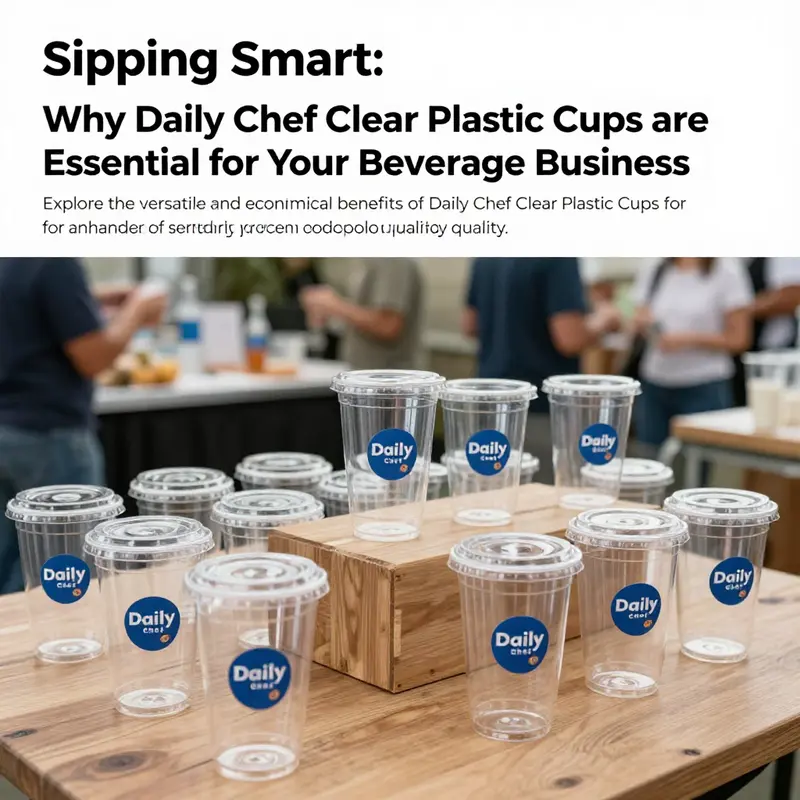
When it comes to serving beverages, the choice of cup can be just as important as the drink itself. Daily Chef Clear Plastic Cups, available in a convenient 240-count 9 oz size, are a smart option for various businesses, from bubble tea shops to event planners. These versatile cups not only enhance the customer experience but also support efficient operations across the beverage and food industry. In this discussion, we will delve into the numerous applications of these cups, examine their economic benefits, and provide a comprehensive buying guide to help your business make the most informed purchasing decisions.
From Beverage Service to Buffet Displays: The Everyday Utility of 9-Ounce Clear Disposable Cups
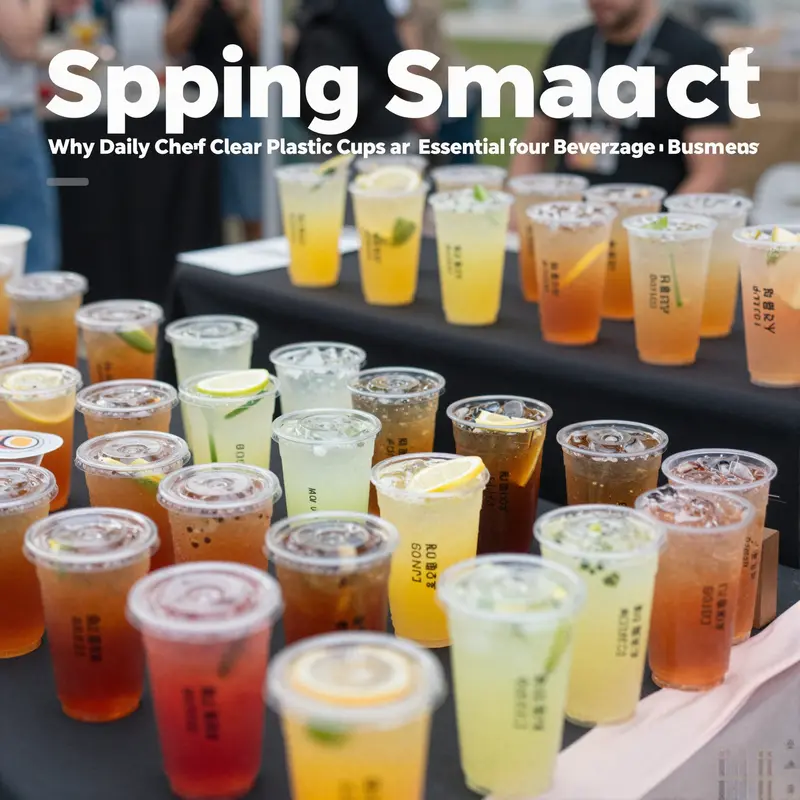
The 9-ounce clear disposable cup in a bulk pack is more than a convenient tool for serving drinks. It is a flexible instrument that shapes how hosts approach hospitality, how vendors stage a buffet, and how households manage daily routines. In spaces both indoors and outdoors, the simple, transparent silhouette invites a clear appreciation of color and texture, turning ordinary beverages into accessible experiences. When you examine how this everyday vessel is employed, you begin to see a pattern: economy meets practicality, while presentation remains thoughtful and deliberate. The cup’s size—neither too small to leave guests thirsty nor so large that it invites waste—lines up with a practical philosophy: serve what you need, miss nothing, and make cleanup predictable. The appeal rests not just in quantity, but in versatility. A single 9-ounce cup can hold a measured portion of water, juice, or iced tea, and can just as readily serve small portions of snacks, sauces, or desserts. The clear plastic surface is an invitation to the eye; it showcases the natural hues of the drink, the layered tones of a fruit punch, or the subtle pearl of a dessert mousse. In a setting where the flow of guests matters, where lines and rhythms govern service, that visual clarity becomes a subtle cue for pacing. Guests can assess the amount left in their cup, the color of the liquid, and the freshness of a beverage at a glance. This immediacy reduces the need for frequent checks, frees staff to focus on broader tasks, and helps avoid overfilling or under-serving. The modest scale of the 9-ounce cup also aligns with the practical realities of busy gatherings. It supports portion control without demanding special measuring tools or complex protocols. For parents, teachers, or organizers, this kind of built-in measurement helps manage portions for kids, ensuring a consistent serving size that is easy to track and adjust as needed. In educational settings or community events, where a quick turnover matters, that consistency translates into smoother food lines, clearer sanitation routines, and a calmer atmosphere overall. At a more tactile level, the material itself is the quiet workhorse of the kit. Clear plastic is lightweight, resistive to shattering, and capable of maintaining its shape under the weight of a chilled beverage or a light, semi-solid snack. The shatter-resistance is not about pretending glass isn’t fragile; it’s about acknowledging the realities of outdoor events, high-traffic venues, and the inevitability of small accidents. When a cup slips from a tray or slides along a tabletop, its integrity matters. The sturdy, transparent walls hold up enough to prevent leaks and spills, yet remain easy to grip. This combination—visibility, durability, and a sensible capacity—forms the backbone of everyday service. In many venues, the cups are deployed in bulk for the sake of efficiency. A 240-count pack means organizers can kit out an entire event without frequent restocking. The logistical advantage is substantial: fewer trips to the storage closet, simplified inventory tracking, and a straightforward approach to cleanup. When staff or volunteers know there will be enough cups to cover the duration of an event, the tempo of service tends to stay steady. The bulk-pack reality also supports cost-conscious planning. The per-unit price in bulk is typically lower than purchasing in small lots, which means a larger budget can be allocated to beverages, garnishes, or additional disposables that enhance guest experience without inflating the overall cost. Of course, the minimalist design does not constrain imagination. The same cups used for water can complement a fruit-infused tea station, a lemonade bar, or a craft-soda corner. In outdoor venues, these cups stand up to wind and sun, and their clear transparency keeps the beverage visually inviting under natural light. The versatility extends into presentation scenarios beyond beverages. At buffets and potlucks, the cups can cradle small snacks or desserts, turning them into edible displays that guests can pick up and carry with ease. A scoop of pudding, a sample of fruit salad, a handful of popcorn, or a few nuts can be presented in a way that remains tidy and accessible. The clear walls allow guests to see the contents’ color and composition, which can heighten appetite and curiosity. The cups also perform well as temporary containers for sauces, dips, or condiments during casual gatherings. A small portion of hummus, salsa, or yogurt can be organized into multiple serving points with clean, disposable vessels. In these contexts, the 9-ounce size is particularly well-suited because it respects guests’ appetite while encouraging mindful consumption. Even with the casual nature of disposable tableware, there is a discipline to their use that bears noting. The transparent cups invite guests to observe the portion before sampling, which can encourage alternative choices (such as choosing a lighter beverage or a smaller dessert portion) and reduce waste. For hosts and event planners, this is an important dimension: the cups become not only vessels but subtle guides to serving behavior. The cups’ utility is not limited to the social sphere. In domestic settings, they function as reliable tools for daily routine management. A parent organizing a kid’s lunch can fill a cup with a measured portion of milk, water, or juice, while the same container doubles as a snack cup for small treats. The ease of use—easy to grip, straightforward to dispose of—makes routine tasks faster and less tedious. In offices and workplaces, these cups fit neatly into break rooms, offering a dependable, clean option for hydration stations or meeting-room beverages. The bulk pack makes replenishment straightforward, ensuring that the break area remains organized and inviting without frequent administrative intervention. A key advantage of the clear design lies in its ability to minimize the cognitive load of serving. Guests do not need to guess what is inside; a quick glance reveals color and content. This transparency also helps staff identify cleanliness and quality at a glance. When multiple beverage options are on display, the cups unify the presentation by keeping all drinks in clear, uniform vessels. The result is a cohesive visual language across a venue, which reduces confusion and supports smooth guest movement through service areas. Of course, no discussion of disposables would be complete without acknowledging environmental considerations. Disposable cups, by their nature, generate waste, and responsible choices matter as much as convenience. The clear cups in question are typically designed for single use, with a preference for safe disposal and, where available, recycling options. In contexts where sustainability is a priority, hosts often pair these cups with clear signaling about recycling or compostable alternatives, if present, to help guests dispose of materials appropriately. It is prudent to be mindful of local guidelines for recycling streams, as well as any venue requirements that specify which disposables are acceptable. Those who plan for longer life cycles might also explore options that balance convenience with eco-conscious choices, such as selecting cups that are recyclable in the local system or that pair with lids and sleeves to minimize spillage and maintain cleanliness during transport. In many event scenarios, this approach translates into thoughtful logistics. Planning ahead—counting cups per table, assigning restocking roles, and establishing a simple disposal flow—reduces bottlenecks and keeps the event moving. The bulk nature of the pack supports these strategies: as long as stock is managed, service areas remain uncluttered, and cleanup crews can harvest the cups in one sweep rather than chasing scattered remnants across the venue. There is also a psychological dimension to the disposable format. The ease of cleanup reduces the perceived burden of hosting. When guests sense that the event will wind down with a straightforward cleanup process, they are more likely to participate in activities, linger for conversation, and leave with a positive impression. This is not merely about convenience; it is about enabling the host to focus attention on the guest experience rather than waste management. For caterers and professional servers, the cups can be integrated into broader service workflows. They align with quick-assembly beverage stations, pre-filled sample bars, and grab-and-go snack corners. The unobtrusive design ensures they do not compete with the aesthetics of a well-designed spread while still offering practical functionality. The cups’ compatibility with lids and seals adds another layer of versatility, especially for outdoor gatherings where the risk of spills or contamination increases. Lids can turn a simple drink into a portable option, expanding service possibilities from a café-like station to a mobile event setup. In summary, the 9-ounce clear disposable cup embodies a quiet efficiency that blends practicality with presentational clarity. It supports portion control, speeds service, and reduces cleanup frictions, all while preserving a clean and visually appealing display. Its value grows when used as part of a bulk-pack strategy, which helps planners—whether at home, in classrooms, in offices, or at large events—manage both human experience and operational efficiency. The simple act of selecting a cup, then pairing it with appropriate beverage choices and serving logistics, becomes a small yet meaningful decision that shapes the flow of an entire occasion. For readers seeking to delve deeper into packaging options that complement clear plastic cups, a related resource on clear plastic pastry and dessert packaging offers a broader look at how these materials can interlock with disposables to create cohesive, visually appealing presentation systems. clear plastic pastry and dessert packaging options. For those who want a broader sense of how such disposables are viewed in the marketplace, an external reference provides context about typical product uses and consumer expectations on the public retail channel. External resource: https://www.amazon.com/Daily-Chef-Clear-Plastic-Cups/dp/B07ZP3VQXW
The Cost Equation of Bulk Clear Cups: Weighing Convenience, Waste, and Cash Flow in High-Volume Settings
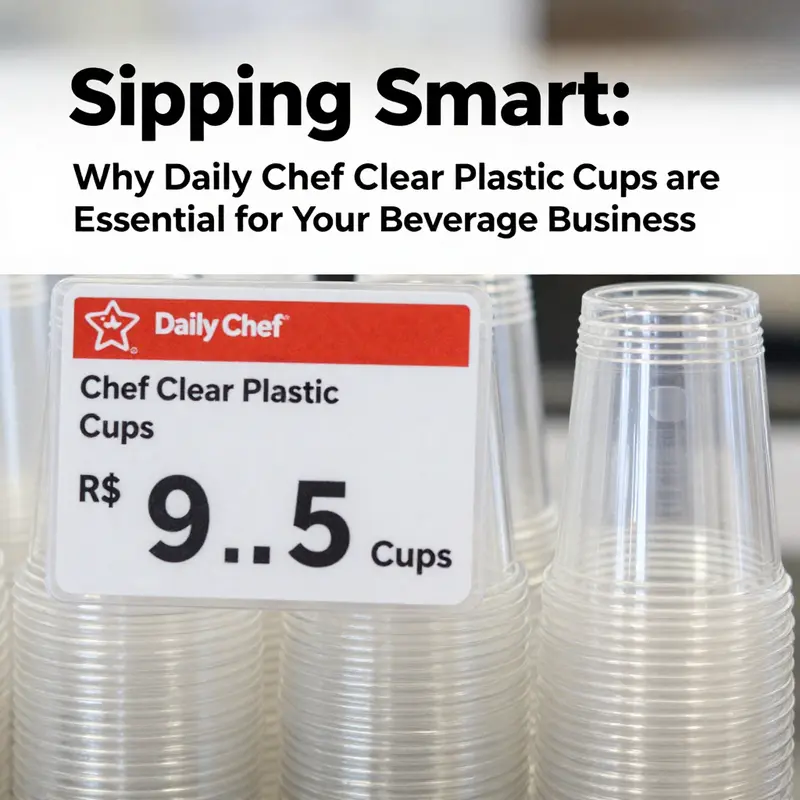
Cost is often the quiet driver behind decision making in every corner of service operations. When a venue or business contemplates stocking 9-ounce clear plastic cups in bulk, the calculation goes beyond sticker price. It becomes a balance sheet moment, a test of logistics, and a reflection of the values a brand wants to project to customers. These clear cups, sold in bulk as 240-count packs, are designed to deliver immediate value in environments where pour lines must stay steady, service must stay swift, and the rhythm of a busy day never slows long enough to rethink a basic tool of service. The price tag itself tells a story: at roughly $15.99 for a 240-pack, the unit cost hovers in a space that many operators find compelling for high-volume use. It’s not a luxury item but a practical workhorse, a disposable option that unlocks the efficiency of quick service, event operations, and household routines that demand reliability with every sip.
To understand the economic logic, it helps to map the flow from purchase to disposal. The per-unit cost is easy to calculate: take the pack price, divide by the number of cups, and you arrive at a cost per cup that is simple to multiply across a large service window. In many retail and food service contexts, that per-cup figure becomes a baseline for budgeting every shift, every event, and every promotional campaign that relies on single-use serving ware. The appeal of a 240-count pack lies not only in the low per-unit price but in the way it reduces the frequency of reorders. A large pack often means fewer trips to the supplier, less administrative overhead, and a predictable cadence for inventory control. For managers juggling schedules, suppliers, and demand forecasts, that predictability translates into a steadier cash flow and less risk of stockouts during peak periods.
Yet the economic narrative cannot pretend that cost is the only factor in play. The pragmatic operator weighs storage capacity. A bulk-pack solution demands square footage to store, and it invites a routine for rotation so that older stock is used before newer stock is introduced. Space in a back room or closet matters, especially in smaller cafes or mobile operations that operate out of limited storefronts or pop-up venues. On the other hand, the sheer scale of a 240-count pack has a countervailing benefit: it reduces the frequency of reordering. Fewer orders can translate into reduced shipping charges per unit, more stable supplier relationships, and the opportunity to negotiate slightly better terms on bulk purchases. This is not just about saving pennies on a single cup; it’s about shaping a purchasing pattern that minimizes administrative friction and stabilizes operational calendars.
Beyond the arithmetic, a broader cost calculus includes what happens after the cups are used. Disposable clear cups are non-biodegradable in most conventional contexts, and this nondurability reshapes the lifecycle cost in a meaningful way. The immediate purchase price represents only a sliver of the total cost of ownership. End-of-life costs, whether they appear as waste disposal fees, regulatory costs, or corporate sustainability initiatives, can accumulate over time. In jurisdictions where waste management policies become more stringent or where consumer expectations tilt toward environmental stewardship, the operational costs associated with disposal can influence supplier choices and even menu design. It is not only about how much is spent today but also about the potential penalties or incentives that shape long-term budgets. Even when a business operates under a straightforward model of use, the shadow of sustainability concerns can quietly alter the true cost of relying on single-use plastics, especially in settings with high daily throughput, recurring events, or a visible commitment to eco-conscious branding.
The economic case for bulk clear cups often sits alongside considerations of convenience and reliability. In many fast-service contexts, the primary objective is speed. A consistent, familiar cup size reduces confusion in the hands of staff and ensures that the workflow remains smooth during rushes. The cups’ shatter-resistant characteristics, commonly highlighted in product descriptions, are more than a marketing note. They translate into fewer broken cups and fewer interruptions during service, events, or outdoor scenarios where accidents and mishaps are more likely to occur. In places where a lot of beverages are served in a standing environment—think festivals, campus events, or office break rooms—the durability of the cup affects the bottom line not only in the number of cups wasted but also in the reliability of the beverage service itself. When staff can trust a cup to resist minor drops and tumbles, there is less loss, less replacement waste, and, critically, less nervous energy spent on mitigating breakage. That reliability becomes part of the operational value proposition: a straightforward, predictable platform for serving beverages that supports a consistent guest experience.
In the broader framework of budgeting and financial planning, it is useful to compare this bulk option to reusable alternatives. The economic logic becomes more nuanced when you factor in the initial cost of the reusable cups, the investment in washing and sanitizing equipment, and the ongoing labor for cleaning, drying, and storage. The upfront cost for reusable beverage ware and the corresponding depreciation over time must be weighed against ongoing disposal costs and the volume of service. For organizations that carry heavy foot traffic and require a high turnover rate of customers, the per-use cost of a disposable cup might appear more favorable in the near term. This is especially true when the facility lacks the infrastructure for an efficient washing program or when the operating budget must avoid capital-intensive investments. In such scenarios, the bulk disposable cup becomes a practical economic instrument—a bridge between today’s service demands and tomorrow’s sustainability goals, allowing managers to adapt to immediate needs while planning the longer arc of waste reduction and brand alignment with eco-friendly practices.
Despite the logic of bulk economics, there is a conversation to be had about opportunity costs. The choice to deploy disposable cups at a certain price point can shift attention away from investments that might yield longer-term savings. A business might explore alternative materials that, while more expensive upfront, offer extended life cycles and lower disposal footprints. Materials such as Tritan or BPA-free polypropylene may tolerate repeated use with more manageable cleaning protocols and reduced environmental impact. The trade-off is a heavier load on the storage, a more complex maintenance routine, and the need to ensure that the cleaning infrastructure can handle the throughput without causing delays in service. These heads-up considerations make it clear that the “best” choice is rarely universal. Instead, it is situational, dependent on the business model, the event calendar, the capacity to manage waste, and the customer expectations a brand seeks to meet.
One of the quieter but crucial dimensions of the economic equation is the impact on brand perception. A cost-conscious approach that foregrounds the value of bulk disposable cups can be appealing in contexts where customers are drawn to practical, no-nonsense service. Yet in a market where sustainability conversations increasingly shape consumer choices, even a well-priced bulk pack can signal a mixed message if it appears that environmental commitments are secondary. The tension between cost efficiency and environmental responsibility is not a simple binary. Operators can address it through a thoughtful procurement strategy that preserves the efficiency of disposables for peak times while investing in more sustainable pathways for everyday operations. For instance, a hybrid model might use disposable cups for high-volume, time-critical periods while promoting reusable options at off-peak times or in venues that emphasize environmental stewardship. The objective is clear: manage cash flow, align with brand values, and maintain service quality without becoming hostage to a single format.
Procurement realism must also consider supplier reliability and the broader supply chain context. In bulk buying, the risk of stockouts, delayed shipments, or quality mismatches can ripple through the service flow. A bulk pack of 240 cups offers a clear scale advantage, but it can also create a bottleneck if demand surges beyond anticipated levels or if a supplier’s logistics fail to keep pace. Smart buyers mitigate this risk by balancing bulk orders with smaller replenishment quantities and by maintaining visibility into supplier performance, lead times, and product quality. The savings from bulk pricing can evaporate if stockouts force expensive expedients—like emergency orders at higher than planned rates or substitutions that disrupt the guest experience. This is where data becomes a silent partner in the cost equation. A well-maintained forecast, informed by past events, seasonality, and expected promotions, helps ensure that bulk purchases remain a lever for efficiency rather than a stray cost tied to misalignment between supply and demand.
Amid the arithmetic and strategy, the end user experience threads through every choice. A cup’s size, the clarity of the plastic, and the perceived sturdiness of the vessel all contribute to the moment when a guest lifts the cup and tastes a beverage. These sensory cues can subtly influence the guest’s evaluation of the entire service encounter. The 9-ounce size frequently proves versatile, accommodating a range of beverages—from water and juice to soft drinks and iced tea—without forcing guests to reorder or crowd the service line with multiple presentation options. A consistent sizing approach also simplifies the training process for staff, because new hires can master a single format more quickly, reducing the likelihood of mis-pours or confusion under pressure. In a busy environment, every second saved on a practice drill translates into more productive time at the counter and a more relaxed rhythm on the floor.
Where does that leave the strategic decision about whether to rely on bulk clear cups? It comes down to a disciplined synthesis of cost, convenience, capacity, and customer experience. For operations with predictable demand, a bulk 240-count pack at a modest price point provides a steady backbone for daily activity, special events, and high-traffic periods. It is not a panacea for waste, nor is it a mandate against sustainable choices. It is a pragmatic tool that, when used thoughtfully, helps control costs while preserving the speed and reliability that customers expect. The decision should be revisited regularly as volumes shift, as disposal policies evolve, and as the organization’s sustainability ambitions mature. In other words, the economic considerations of bulk cups are not a one-off pricing exercise; they are a living component of a broader operational philosophy that values efficiency without sacrificing responsibility, practicality without compromising guest trust, and financial discipline without closing the door to smarter, more durable alternatives when the time is right.
For readers who want to explore related ideas beyond disposable cups, consider a broader view of packaging formats and their implications for operations. A well-curated selection of paper-based options, for instance, can illuminate alternative approaches to meet seasonal demand or event-specific needs while still managing costs. This broader lens helps you see where the bulk plastic cup sits within a spectrum of possibilities, offering a baseline against which you can measure the benefits and trade-offs of each format. In practice, this means evaluating not only the unit price but also the total cost of ownership across a service cycle, including storage, maintenance, waste management, and brand alignment. It also means acknowledging that the best choice is rarely static; it evolves with business goals, customer expectations, and external factors such as policy changes and market dynamics.
As the chapter concludes, the central idea remains unchanged: the economics of bulk clear cups is a narrative of balance. The pack size, the per-unit cost, the reliability during peak service, and the environmental considerations together shape a decision that supports day-to-day operations and longer-term strategic aims. A 240-count bundle offers tangible advantages in simplicity and speed, but those advantages are most powerful when they are part of a broader strategy that respects both the costs of disposal and the value of responsible procurement. The best practice is to approach the decision with a clear view of the full cost landscape, a robust plan for waste and storage, and a willingness to adapt as circumstances change. This is how a simple tool—one cup among many—can anchor a responsible, efficient, and guest-friendly operation in an increasingly complex marketplace.
For readers seeking a practical pointer toward broader context, consider a resource that sheds light on disposable formats across different materials and applications. It offers a look at how formats vary and how buyers weigh the trade-offs between convenience, cost, and sustainability. senang-disposable-double-wall-craft-paper-cups-multi-size-6-24-oz-custom-logo-for-coffee-tequila
External resource for additional context on bulk disposable cup economics: https://www.amazon.com/Daily-Chef-Plastic-Disposable-Drinking/dp/B08QZ7YJ6C/
From Bulk Planning to Daily Pour: A Thorough Guide to 9-Ounce Clear Plastic Cups in 240-Count Bulk Packs

When a gathering grows from a trickle to a stream, beyond the menu and the music the real work happens in the cups. The choice of drinkware can influence the flow of a event or daily routine as surely as the choice of beverages itself. In the realm of disposable clear plastic cups, a 9-ounce capacity organized into a bulk 240-count pack offers a practical balance between generous serving size and manageable waste. A bulk purchase often emerges not as a mere cost savings, but as a strategic move that reduces last-minute trips to the store, lowers per-unit costs, and creates a predictable supply chain for kitchens, offices, and venues that depend on steady beverage service without the friction of frequent reordering. The value of such a pack, when chosen with care, extends beyond pennies shaved from the price tag. It translates into efficiency in setup and teardown, more consistent portion control, and a smoother experience for guests, employees, or family members who rely on quick, easy serving during busy moments. The first impression these cups make is visual: their transparent walls reveal the liquid level inside, a feature that not only looks clean but also helps servers monitor pour portions at a glance. This visibility can reduce spillage during busy service times because the drinker and the server can quickly confirm that a cup is filled to the desired level without lifting and tilting. The 9-ounce size itself is one of those sweet spots that tends to suit a wide range of beverages, from cool water and iced tea to juice, lemonade, or even a modest coffee-based drink at informal gatherings. It is small enough to feel manageable for kids, yet sturdy enough to avoid accidental tipping under normal handling, and it sits comfortably in most hands, making it a versatile option for self-serve stations, buffet lines, or office break rooms where speed matters. The material used for these cups—clear plastic—carries its own set of expectations. Clarity matters because it allows the drink to be the star of the moment, showcasing color, fizz, or a splash of garnish. It also makes it easy to spot residual ice or floating particles that could indicate a need for a quick refresh. Beyond aesthetics, the material is chosen for practical reasons. It provides a level of shatter resistance that supports use in both indoor and outdoor environments, in settings where surfaces may be busy, trays may be jostled, and cups might be stacked in a cart or a cabinet with other disposables. In a world where reusables and disposables sit on opposite ends of a sustainability debate, a careful buyer recognizes that the choice between reusable glass or ceramic and disposable plastic cups hinges on the context. For events with limited cleanup resources, outdoor activities with a high turnover of cups, or office spaces that require rapid cleanup after meetings, the bulk 9-ounce clear cups offer a convenience that reduces bottlenecks and keeps service moving. It is essential, however, to consider how these cups perform when the beverage line includes hot liquids or the station experiences frequent handling. While the literature around these items often notes that they can handle typical warm drinks without deforming under normal use, not all clear plastics are created equal when exposed to higher temperatures. A prudent buyer asks about heat resistance and the potential for the cup to soften, warp, or impart any unwanted taste or smell to the drink. This is not merely a theoretical concern; it translates into real-world decision-making about when to choose lids, whether to designate these cups for cold beverages only or to reserve a separate line for warm drinks, and how to communicate handling guidelines to staff and guests. In practice, many users find that a 9-ounce clear cup without a lid remains ideal for cold beverages or room-temperature mixes, while hot drinks may benefit from specialized lids and slower pours that minimize direct contact with the cup walls. The lid compatibility question becomes part of the broader quality puzzle: does the cup’s rim accommodate a secure seal with a standard lid, or is there a mismatch that could lead to leaks during transport or service? A liquid’s journey from pour to sip should feel seamless, and the right combination of cup and lid can make that journey reliable even in crowded spaces. The bulk 240-count pack also invites considerations about storage, logistics, and handling. The sheer volume requires sensible organization: a clean, dry shelf with clear labeling, so the cups are accessible without becoming a source of clutter. For event planners or office managers, stacking efficiency and container weight are not afterthoughts; they directly influence how smoothly a pastry table, coffee corner, or beverage station can be set up and broken down. The cups’ light weight makes them easy to transport in bulk in carts or bins, while their rigidity helps resist mid-roll bumps or minor knocks during a setup or cleanup sweep. Yet even with a bulk pack, the goal remains clear: minimize waste, maximize usability, and ensure that every cup that leaves the storage area meets basic standards of hygiene and convenience. Hygiene is a natural concern with disposables. The cups are designed to be used once and discarded, a feature that aligns well with cleaning schedules and the expectations of modern service settings. In practice, this means that cups should be kept clean in their packaging, protected from dust and moisture, and stored in a dry place until needed. The ease of disposal after use is a strong selling point for communities, workplaces, and households that want to minimize post-event cleanup. The 240-count packaging is especially attractive for those who host frequent gatherings, run small catering services, or operate break rooms that see a constant turnover of beverages. Because the bulk package reduces the frequency of reorders, it also reduces the chance of running out during a busy period, which is a logistical risk many organizers are keen to avoid. Pricing dynamics often play a central role in this decision. A bulk purchase can slash the per-cup cost dramatically when compared to buying smaller packs. This is not merely about price per unit; it is about predictability in budgeting and the ability to forecast supply needs for a given period, whether a week of meetings, a month of office events, or a seasonal schedule of parties and gatherings. The decision to buy in bulk also conveys a broader philosophical approach to event planning and daily kitchen routines: preparation, organization, and the discipline to anticipate demand. In that sense, a bulk 240-count pack of 9-ounce clear cups becomes more than a container for beverages; it becomes a silent partner in the choreography of service, a component that helps maintain rhythm and pace at the moment of consumption. When selecting among bulk options, a wise buyer looks beyond the immediate capacity and price and weighs the days ahead: the number of events planned, the typical guest count, the types of beverages most frequently served, and the likelihood of spill risk at particular venues. They consider the practicalities of distribution: whether to place the cups at a central station, distribute them across multiple service points, or keep a reserve on a side table for quick refills during crowded periods. This kind of planning benefits from thinking in terms of workflow rather than a single moment of serving. The affiliation to a particular cup’s design matters too: a clear wall that showcases the beverage without tinting or clouding helps in beverages with natural color, like fruit-infused waters or citrusy mixes, where the visual appeal can be part of the experience. The edge of the rim should feel smooth to the lips, which reduces the chance of discomfort during longer gatherings or for younger guests. A secure, consistent edge—free from micro-splinters or roughness—speaks to a standard of care that many hosts value as part of a dependable service. In the broader ecosystem of disposable serving ware, a sensible approach to choosing cups inevitably leads to examining the available options for accessories and compatible products. For instance, if a host anticipates a beverage library with multiple temperature ranges and flavor profiles, they may explore alternate materials that offer different aesthetic cues or environmental attributes while preserving the convenience of disposables. If readers are curious about adjacent options that balance convenience with material differences, consider looking at disposable double-wall craft paper cups as a potential comparison. Even though paper-based disposables and clear plastic cups serve different visual narratives, the underlying principle remains consistent: evaluate the context, the audience, and the practical demands of the event before selecting a favored format. The buying process itself, while straightforward on the surface, benefits from a careful check of a few practical details that can influence the user experience long after the purchase. First, confirm the capacity is truly 9 ounces and that the measurement aligns with your standard serving sizes. The difference between a slightly underfill and a truly accurate 9-ounce measure can become significant over dozens or hundreds of servings. Second, consider the cup’s depth in relation to the beverage type. A tall, slender profile can be less accommodating for thick smoothies or foamy drinks, while a squat, slightly wider mouth makes for easier sipping and better stacking with lids. Third, assess whether the cups can be safely used with the kinds of lids and straws you prefer. The compatibility of lids and straws is not a trivial matter when you are serving a crowd, particularly at a casual event or an on-the-go setting where cups may be stacked, transported, and quickly handed to attendees. The importance of compatibility grows when you think about the logistics of a self-serve station, where patrons may mix drinks while lines move swiftly. A mismatch here can slow service or cause a cascade of leaks and spills, undermining the intention of a smooth experience. In addition to the practical considerations, a buyer will naturally examine the sustainability angle, even within the temporary nature of disposable ware. Clear plastic cups, like many disposable products, pose questions about environmental impact, recycling feasibility, and the lifecycle of single-use items. For many buyers, this translates into a nuanced trade-off: the benefit of reduced labor and faster cleanup against the footprint of waste. The most deliberate approach acknowledges this tension by combining bulk purchases with responsible disposal planning. It means choosing a reliable waste stream, encouraging guests to recycle where possible, and coordinating with facilities to ensure that the disposal flow is efficient and consistent with local guidelines. It also means recognizing that the decision is not merely about one event, but about a pattern of use that spans multiple gatherings, office breaks, or family routines. In this sense, the 240-count bulk option serves as a dependable baseline for planning. It can be paired with a well-thought-out storage plan, an understanding of daily beverage routines, and a tolerance for the occasional spill or break that accompanies busy service moments. The chapter’s aim is not to prescribe a single path but to illuminate a framework: how to align product features with real-world use, how to balance cost with convenience, and how to preserve the dining or drinking experience even as you embrace the practicality of disposables. It is about crafting a workflow that respects both the guest experience and the operational realities of service environments—whether in a kitchen, an office, a party venue, or a home setting. In closing, the decision to invest in a bulk 240-count pack of 9-ounce clear plastic cups reflects a broader philosophy of preparation, organization, and proactive provisioning. It embodies a readiness to meet varying beverage needs with minimal friction, a commitment to clean and efficient service, and an eye toward value that persists beyond the initial purchase. The cups become a reliable ally in the daily choreography of meals, meetings, and celebrations, supporting smooth pours, easy disposal, and the comfort of knowing that a dependable supply is on hand when the moment demands it.
Final thoughts
Choosing Daily Chef Clear Plastic Cups can significantly elevate the beverage service experience for various businesses. Their versatility allows for a broad range of applications, from casual parties to formal catering events, making them an indispensable tool for any operation focused on quality and efficiency. Coupled with their economic advantages, these cups are not just a minor accessory but a vital investment for enhancing service delivery. Let this guide empower your purchasing decisions and help you serve your customers better.