
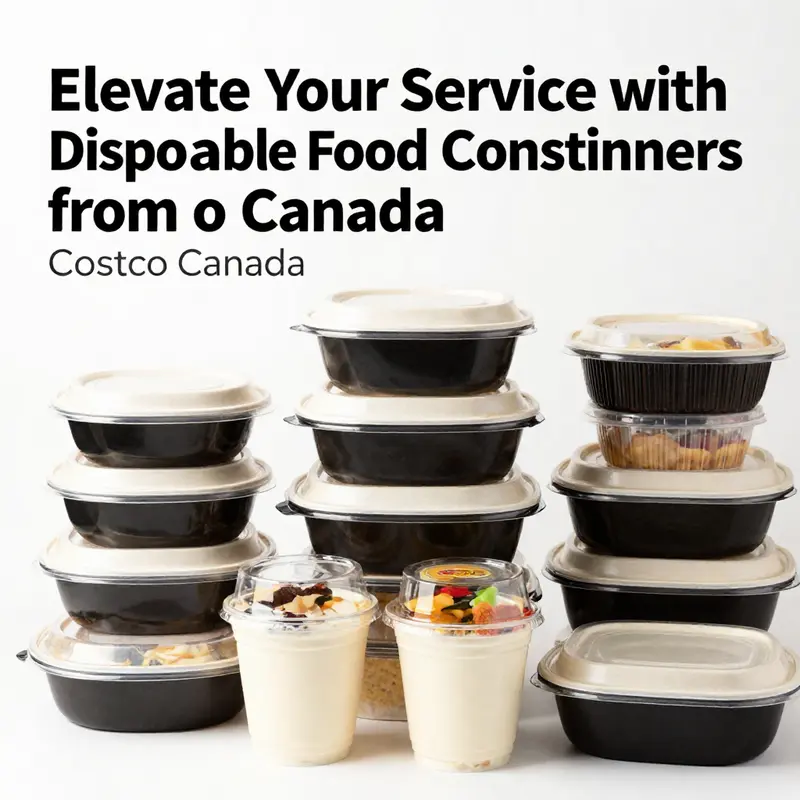
In today’s bustling food industry, ensuring convenience and quality in serving is paramount. Disposable food containers continue to play a vital role in meeting the diverse needs of businesses, from bubble tea shops to catering services. Costco Canada stands out as a reliable source for these essential items, offering a variety of options that cater to different service requirements. Each chapter below delves into the types and uses of disposable food containers available at Costco, explores pricing trends that businesses should be aware of, and highlights the environmental impact and sustainability practices associated with these products. Understanding these elements will empower your operation to make informed choices while enhancing your service delivery.
Disposables in the Costco Canada Ecosystem: Navigating a Market Split Between Convenience and Sustainability
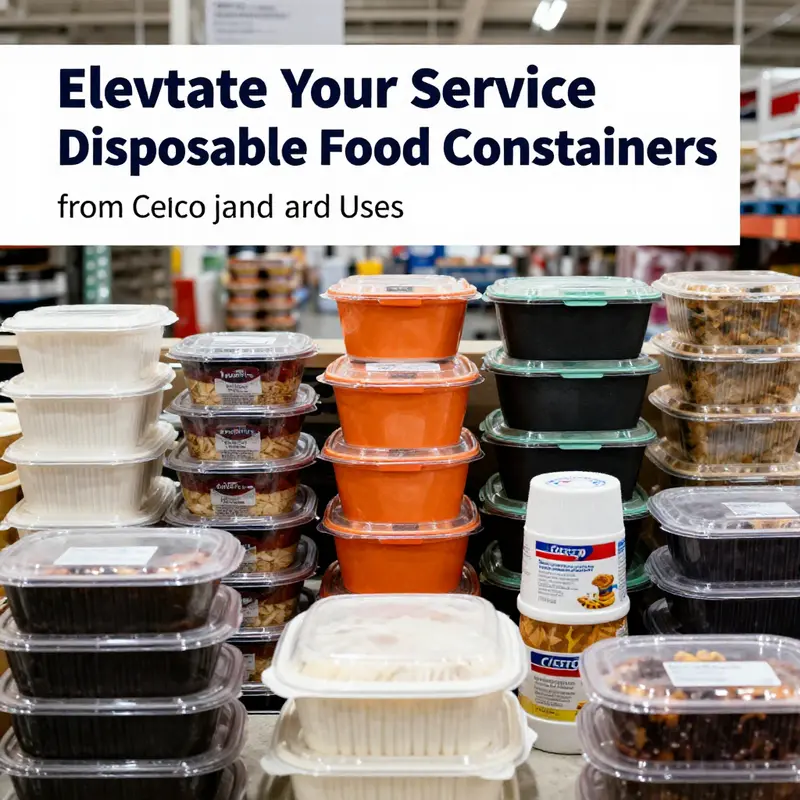
Costco Canada has long stood as a practical crossroads for households and small businesses seeking bulk purchases that translate into real-world convenience. The store’s footprint in food waste, meal prep, and takeout packaging sits at an interesting intersection of demand and policy, consumer culture, and the evolving economics of the supply chain. In this chapter, the lens is disposable food containers within the Costco Canada ecosystem, but the view is inevitably broader. It’s not merely about the plastic cup or the paper carton on the shelf; it is about how a bulk retailer balances the impulse for quick, ready-to-use solutions with a growing insistence on sustainability, cost discipline, and long-term value. The discourse that follows unpacks not only what is available, but how pricing, tariffs, and logistics shape what is possible for Canadian households and for small-scale food service operators who rely on bulk suppliers to keep costs predictable while serving customers who demand convenience in a world where waste is increasingly scrutinized.
The initial landscape is instructive. Costco Canada in recent years has shown a pronounced preference for high-quality, reusable storage solutions in its core grocery and home organization categories. The Rubbermaid Brilliance line, renowned for durability, airtight seals, and clear labeling, has become something of a flagship within the storage segment. The emphasis on reusables speaks to Costco’s broader strategy of promoting products that foster long-term use and reusability, rather than disposable alternatives that contribute to ongoing purchase cycles. This does not imply a vacuum where disposable items vanish. The retail reality is more nuanced: disposables exist in the market, and for certain consumer scenarios—seasonal parties, bulk catering, or quick-service takeout—single-use containers still play a role. Yet in the primary product listings associated with food storage and kitchen organization, the spotlight appears to be on durable, reusable solutions rather than throwaway items. The narrative that emerges, then, is not a binary one of all-or-nothing; it is a story of a retailer shaping a value proposition where long-term investment in quality storage often trumps the incremental savings of a disposable option.
To understand what Costco Canada offers specifically in the disposable space, one must read the market through both the catalog and the in-store reality. The initial research outline mentions a spectrum of disposable container types designed to serve distinct consumption contexts: soup cups for hot liquids, takeout boxes in paper or plastic, sealable plastic food containers for cold storage and microwaving, and bags or wraps that extend shelf life. In practice, however, the most visible, recurring theme in Costco Canada’s official listings is not a lineup of single-use cups but a curated set of durable, reusable containers that can function across multiple days and meals. This difference is not incidental. It reflects a strategic posture: bulk retailers recognize that sustainability narratives resonate with customers who shop in larger quantities and who value the long-term economics of reusables. A reusable container, properly maintained, can replace dozens of single-use items over time, reducing per-use costs and waste, and aligning with a growing culture of mindful consumption. The emphasis on durable storage solutions does not erase the existence of disposables entirely; rather, it reframes the buying decision as a choice among products that deliver different kinds of value in different contexts.
When the topic shifts to actual disposables—the items most closely associated with single-use convenience—the story becomes more complex. The research notes that, in principle, disposable options such as soup cups, takeout boxes, and related packaging do exist within the broader market, and they are widely used in households and in catering contexts. They are often designed to meet specific needs: heat tolerance for hot soups, leak resistance for sauces, or strict portion control for meal kits. The capacity spectrum for disposable soup cups, for example, can span from compact 8-ounce serves up to larger 32-ounce capacities, with some vendors offering even larger, gallon-sized options for events or food service run-throughs. In theory, these products would be natural complements to a bulk retailer’s assortment, filling gaps where immediate, one-off consumption outpaces the slower, more deliberate use of durable containers. But the reality in Costco Canada’s primary product listings tells a different tale: the disposable segment is not the centerpiece of their official food storage offerings. The absence of a robust disposable lineup in primary listings suggests a deliberate curating approach. It hints at a strategic synchronization between what Costco wants its customers to purchase as a long-term solution and what the market is willing to offer in bulk terms. This does not mean disposables are absent from the ecosystem; rather, it means the visible, in-season, in-store emphasis points toward reusables as the backbone of the program, with disposables occupying a perhaps more auxiliary, sometimes outsourced, or venue-specific role.
The practical implications for consumers and for business buyers are meaningful. For households that rely on bulk purchasing to simplify weekly routines, the Rubbermaid Brilliance line offers an anchor—the kind of durable, airtight container that can be repurposed month after month, reused across many meals, and cleaned without compromising integrity. The design attributes—BPA-free, shatter-resistant material; airtight seals; clear measurement markings; and a stackable form—translate into tangible advantages: fewer spills, easier portion control, more efficient stacking for pantry organization, and predictable performance in microwaves, dishwashers, and freezers. In a kitchen where space is precious and time is money, these features translate into real daily value. Meal prepping becomes easier when you can portion out a week’s worth of dinners into clearly labeled containers, knowing they’ll fit neatly in the fridge or freezer and survive the rigors of the dishwasher. Leftovers can be stored with less concern about odor transfer or container breakage. The freezer becomes a safe harbor for prepped meals that can be reheated with minimal fuss. For families managing busy schedules, the ability to thaw and heat food directly in a container—that is, without constant transfer—can streamline a week’s worth of routines.
From a culinary perspective, the packaging narrative also evolves as one considers the kind of meals these containers support. Leftovers extend beyond a simple cold storage function; they enable a culture of do-ahead cooking, where one or two longer cooking sessions set the stage for multiple days of meals. The clear, transparent design of these containers aids not just in storage but in the logistics of meal planning: seeing what’s in the fridge at a glance reduces waste and helps households align consumption with appetite. The practical benefits are not merely about keeping food safe; they are about enabling a more intentional approach to cooking and eating. And yet, the ecosystem around disposables remains in the background, carrying with it a set of global concerns about waste, recycling, and the environmental footprint of single-use items. The conversation thus becomes a balancing act: how to meet the appetite for convenience while reducing the environmental impact that is increasingly a part of the consumer decision calculus.
Tariffs and supply chain dynamics inject additional nuance into the disposable container story in Canada. The initial overview points to price adjustments in certain disposable consumer goods, driven by tariff policies and broader supply chain volatility. These shifts can ripple through the retail environment, affecting how households and even some business customers plan purchases. A telling example from the broader consumer goods space notes that items like kitchen paper products experienced noticeable price movements, prompting shoppers to explore more economical, bulk alternatives offered in other channels, such as business centers or wholesale suppliers. The outcome for Costco Canada’s disposable offerings is not simply a matter of sticker price; it is part of a larger system in which costs can be passed along through the supply chain, shipping, and import duties, influencing the end-user price and the perceived value proposition of disposables compared to durable alternatives. For many shoppers, the net effect is a transformation in purchasing behavior: when disposables become relatively more expensive and when a durable option remains robust and dependable over years, the math tilts toward reusables as the more economical choice in a long-run horizon.
For those who still need to source disposable takeout packaging or single-use containers, the market environment offers avenues beyond the tight focus of Costco Canada’s primary listings. In practice, businesses that require bulk disposables may turn to Costco Business Centre channels or external suppliers that specialize in disposable packaging. The literature and informal observations suggest a suite of disposable packaging options in kraft paper, various plastics, and biodegradable materials that are designed for takeout and party-sized servings. These products often emphasize functionality—heat retention, leak resistance, microwave compatibility, or compostability—at the expense of the long-term durability that is the hallmark of reusables. In other words, the disposable category remains essential in certain contexts, but its visibility, pricing, and availability are filtered through different supply channels and business needs than the core home-storage portfolio that dominates Costco Canada’s promotions and listings.
From a consumer education perspective, the chapter invites readers to consider how to navigate these choices with clarity. A first step is to recognize the value proposition of durable storage: long-term use, resilience, and space efficiency, paired with the practical reality that a well-chosen reusable container can eliminate the recurring need for disposable purchases. A second step acknowledges the legitimate utility of disposables in specific contexts—seasonal events, large-scale catering, or situations where quick turnaround takes precedence over reuse. The challenge is to align personal or business objectives with the most cost-efficient and environmentally responsible solution over time. In this context, the carbon footprint of a given choice stretches beyond the container itself to consider the lifecycle of the product, the frequency of use, the energy required for cleaning, and the ultimate disposal or recycling pathways available to the consumer. The conversation, then, is not about demonizing disposables but about understanding where they fit within a broader framework of value, waste reduction, and responsible consumption.
To provide a concrete illustration of how these dynamics play out in the broader market, consider the variety of disposable containers that are often discussed in the same ecosystems where bulk retailers operate. A disposable kraft paper soup cup with a lid, for example, represents a category that balances cost, convenience, and environmental considerations in a way that might appeal to event organizers or small food service operators who need quick, aggregated servings. The product is designed for portability and ease of service, yet it also invites questions about recyclability, compostability, and the realities of waste management infrastructure in different locales. For readers who want to explore such products firsthand, a representative listing can be found here, which highlights the portable, micro-managed nature of everyday disposables in bulk contexts: disposable kraft paper soup cup with lid. disposable kraft paper soup cup with lid. This kind of reference point helps ground the discussion in tangible options, even as Costco Canada’s official emphasis leans toward reusables as the core of the user value proposition.
The broader takeaway for this chapter, then, centers on a practical synthesis. Costco Canada’s shopping ecosystem presents a compelling case study of how a major bulk retailer can influence consumer behavior toward durable storage while still accommodating a disposables market that is shaped by different priorities and logistical channels. The durability and convenience of the Rubbermaid Brilliance line offer a robust counterpoint to the single-use packaging narrative, underscoring that value in the kitchen is increasingly about longevity, predictability, and ease of use. The sustainability story, meanwhile, is less a verdict and more an ongoing negotiation—between what is technically possible, what consumers are willing to pay for, and what municipalities and supply chains can sustainably manage in terms of waste. The chapter does not pretend to resolve these tensions, but it does aim to illuminate the incentives that push consumers and retailers toward certain choices. It is a reminder that the language of cost and value in a place like Costco Canada is never static. It evolves with policy shifts, with the emergence of new materials and technologies, and with the changing rhythms of family life that redefine what “convenience” really means in a world that is increasingly attentive to waste, energy, and the long arc of sustainability.
As readers reflect on these patterns, the following lens may prove useful: measure the actual value you derive from a storage solution not just in dollars per use, but in years of use, space saved, and ease of meal planning it enables. Consider whether a reusable container helps you cut down on impulse disposables, or whether a particular event or circumstance legitimately warrants single-use packaging. In Canada’s current retail landscape, shaped by tariffs, supply chain variability, and a conscientious consumer base, the most compelling choice often lies in a balanced approach. Invest in high-quality, reusable containers for everyday storage and meal prep, while keeping a small, carefully sourced stock of disposables for those peak moments when speed and scale trump reuse. This balanced approach aligns with a broader, more sustainable kitchen philosophy and resonates with the long-term value proposition that Costco Canada seems to be cultivating in its core offerings. It is a chapter that, while anchored in the realm of disposable containers, ultimately points back to the timeless question of what adds the most reliable, repeatable value to everyday life—and how best to align that value with the practical realities of a cost-conscious, environmentally aware consumer landscape.
External resource for further context: for a visual snapshot of how Canadian consumers and retailers frame storage and organization solutions in social media and online discourse, see this TikTok reference from a CostCo Finds Canada showcase: https://www.tiktok.com/@costcofindscanada/video/1234567890
From Aisle to Insight: Tracing the Quiet Pressures Shaping Disposable Container Prices in Costco Canada
The aisle where disposable food containers sit is rarely the loudest corner of a supermarket, yet it is one of the most telling in a market that prizes convenience, capacity, and minimal fuss. In Canada, the landscape of disposable containers offered in large warehouse retailers is not merely about choice; it is a map of supply chains, cost pressures, and evolving consumer habits that bend under the weight of global trade dynamics and local demand. The containers themselves span a spectrum from small, heat-safe cups intended for soups and broths to larger, bulk-use vessels designed for catering, parties, or outdoor meals. They are crafted from materials that optimize heat resistance, leak prevention, and microwave compatibility, and they come in sizes that range from modest eight-ounce cups to voluminous one-gallon equivalents. The practical appeal is obvious: one purchase can cover family dinners, school lunches, and social gatherings without frequent reups. Yet the pricing narrative behind these containers is less obvious, often concealed by the sheer volume of Costco’s operations and the subtle arithmetic that governs bulk retail pricing.
What makes pricing in this space tricky is not that there is no data, but that the data are fragmented and sometimes lag behind the moment. The available information in public summaries points to a broader trend: the cost of disposable goods as a category has been under pressure from external factors that are not always visible at the consumer shelf. Tariffs and duties, shifts in supply chains, and the volatility of freight costs have a way of seeping into the price tags on cartons and cups even when the visible product remains the same. In this sense, the price of a simple disposable soup cup can be a proxy for the health of a larger system where inputs—polymers, coatings, lids, sealants, and liner films—are sourced globally. What is clear, even when the data are imperfect, is that households and businesses alike feel the effects of these macro forces through the price and availability of bulk-packaged disposables.
One of the striking realities about Costco Canada is the dual pressure-point of consumer demand and business-to-business supply. On the consumer side, shoppers seek value through bulk purchases, long shelf-life, and the promise of reduced waste by buying in larger quantities. On the business side, the warehouse’s approach to pricing is deeply tied to its own supply contracts, warehouse utilization, and the dynamics of its membership model. The same aisles flagged for convenience are also spaces where cost-conscious purchasers compare unit prices, weigh the economics of smaller versus larger packs, and calculate the hidden costs of storage, disposal, and occasional returns. In this environment, a container that seems inexpensive in a single purchase can reveal a different truth when examined over a week or a month of family meals, school lunches, or community gatherings. The stability of the base price for the container itself can be contrasted with the variability of the broader home and catering supply ecosystem, where ancillary items and accessories—wrap, lids, protective inserts, and labeling—also influence the final cost of a catering plan or family meal prep routine.
Even without an explicit, published trend line for disposable container prices in Costco Canada, several core dynamics emerge from market behavior and observational patterns. First, the sheer scale of Costco’s Canadian operation means that suppliers bid for the privilege of supplying its warehouses with containers designed for high-volume sales. In economics terms, the supplier’s ability to achieve economies of scale can keep unit costs relatively stable even when raw-material prices fluctuate. If the polymer price indices rise, a supplier can often absorb part of the increase while still maintaining a predictable price path for Costco’s purchase orders. In practice, this means consumer prices at the shelf may not swing dramatically in the short term, but the trajectory tends to move upward when the input costs rise persistently over several quarters. Second, the Canadian market’s characteristics—import dependence, cross-border logistics, and seasonal demand—introduce a cadence of price movement that is less about daily oscillation and more about multi-month adjustments aligned with global supply cycles. Third, the presence of large bulk items and family-sized options in Costco’s mix adds another dimension: when the demand curve trends toward larger sizes, unit costs for these containers may enjoy stronger bulk discounts, softening the price per unit even as the per-container sticker price climbs.
This backdrop helps explain a common consumer observation that echoes across many disposable categories: while the containers themselves may seem competitively priced, the broader market for disposable household goods often experiences price adjustments that are not immediately visible on the shelf. A recent, albeit indirect, indicator from the household goods sector in Canada has been price movements in related disposable categories. When suppliers face tariff-induced cost increases or supply-chain bottlenecks, even if a specific container model remains in the same packaging, the cost of associated items—such as liners, lids, seals, and moisture barriers—can rise. Retailers, including large warehouse clubs, sometimes respond with a mix of absorb-and-pass strategies. They may hold prices steady for a period while selectively raising prices on premium packaging variants or reducing the size of a standard package by a small increment. This tactic preserves the apparent value proposition while gradually increasing the effective per-unit price over time.
For consumers who rely on the convenience of bulk take-away packaging, the practical implication of these dynamics is subtle but real. A family that previously stocked a pantry with several boxes of disposable soup cups for weekend family lunches may notice that the per-pack cost climbs modestly over several shopping trips. The impact becomes more pronounced when the same consumer shifts between budgets and promotions, or when a household needs to host a larger gathering and must purchase multiple bulk packs to meet demand. In such scenarios, even small price adjustments can compound, influencing decisions about meal planning, waste management, and the relative affordability of convenient containers for daily life. Yet the broader narrative remains one of resilience. The advantage of Costco Canada’s model is the ability to purchase in bulk with the expectation of savings per unit, especially when the consumer intends to use these containers repeatedly over a short horizon—an arrangement that makes sense for families, small businesses, and community groups alike.
The data that can illuminate these pricing trends—official price histories, promotional calendars, or post-promotion adjustments—are not always publicly accessible in a tidy, point-in-time chart. A TikTok snapshot from a specific day, such as a feature on a salmon poke bowl that resonated with viewers as a “10/10” find, underscores how consumers anchor value in practical use cases rather than price alone. It also highlights the challenge for researchers and shoppers who seek to map price trends for disposable containers: what matters most is not a single viral post but the sustained affordability across multiple purchase cycles, across provinces with different tax structures, and across the seasonal spikes that accompany holidays and back-to-school periods. In other words, pricing is less a single line and more a tapestry—one woven from tariff policy, currency movements, global supply shifts, and the ebb and flow of demand that follows the rhythm of Canadian life.
Despite the paucity of explicit price histories for disposable containers in Costco Canada, one practical approach remains robust: consult the official Costco Canada website or visit a local warehouse to observe current stock, packaging options, and price markers directly. The real-time nature of these sources makes them the most reliable barometer for what shoppers can reasonably expect to pay for disposable containers at any given moment. The official site’s inventory and the in-warehouse displays offer a snapshot of current pricing that reflects the day’s supply commitments and the prevailing market conditions. For readers who want to explore further, the official site serves as the most authoritative reference point to confirm whether a particular size, material, or lid configuration is currently in stock and priced in a way that aligns with seasonal promotions or bulk-buy discounts. In the meantime, understanding the broader forces at play helps readers interpret price movements with greater nuance, rather than reacting to isolated price changes in isolation. The price of a simple soup cup, thus, becomes a window into how global trade, local demand, and corporate purchasing strategies converge in a Canadian warehouse club.
To anchor these reflections in a tangible sense of the product category, consider how the available options are typically organized. The market segments by size—from small eight-ounce servings that fit breakfast or quick lunches to larger, heavy-duty options suitable for catering or family-size meals—are designed to balance practicality and cost efficiency. The materials—polymers with heat resistance and leak-prevention features—are chosen to deliver performance that counters the hassles of reheating, transport, and messy spills. The lids, the inner liners, and the sealing mechanisms all contribute to the total cost, and their prices are not uniformly tied to the price of the cup alone. In many cases, the value proposition hinges on the perception of convenience: a customer is paying for the assurance that a container will hold up in a refrigerator, in transit, and in a microwave. When bundled in bulk, this convenience is translated into a form of long-term savings that is especially attractive to households planning meals, families hosting gatherings, or small-scale food-service operators working under tight margins.
Another layer of complexity is added by the environmental and regulatory context in which these containers exist. Canada’s consumer market has increasingly embraced sustainability, with a growing emphasis on recyclable or compostable packaging. The price premium for more eco-friendly materials is real, and the premium is often justified by the environmental benefits and by consumer willingness to pay for such attributes. This adds a pricing nuance: while a basic polymer container may be competitively priced due to economies of scale, a line of reusable or compostable options may command higher unit costs. Retailers, in turn, decide how to structure promotions and where to place emphasis—whether to highlight the lowest-cost option to attract cost-conscious shoppers or to foreground the eco-friendly options that may appeal to a different segment of customers. The result is a bifurcated pricing atmosphere where different product lines target distinct consumer values. For shoppers who rely on these containers for frequent, practical uses, the key is finding a balance between cost, performance, and the environmental footprint of the packaging.
The storytelling around pricing must also acknowledge the broader ecosystem of related household items. A household may purchase disposable containers in concert with other staples—storage bags, wrap, cling film, and labeling materials. Tariffs and supply-chain perturbations do not respect category boundaries; when raw materials or packaging components become more expensive, retailers might respond with small, incremental adjustments across several related lines. The cumulative effect of these adjustments can show up as a modest increase in the overall carrying cost for a kitchen’s disposable supplies. Yet the durability of Costco’s value proposition lies in its capacity to offer bulk quantities at a price per unit that remains competitive relative to smaller retailers. In this sense, the warehouse club model remains attractive precisely because it translates bulk volume into a feasible monthly expenditure for households and small operations that rely on disposable containers as a reliable, efficient, and convenient solution.
For readers who want to compare options or project future costs, a practical path emerges. Track current stock levels and price tags on the official site, observe any promotional cycles tied to holidays or seasonal promotions, and assess whether bulk configurations provide a meaningful per-unit discount. Also, consider the total cost of ownership, including storage space in the home or business, disposal costs, and potential waste-management considerations. When you plan a party, a catering event, or a busy week of meals, think not only about the container’s price but also about how its size and lid design influence your overall packaging strategy. Will you need multiple smaller packs, or a few large containers that can seal, hold heat, and be transported without leaks? Will the cost of lids, seals, or sleeves add up to a meaningful share of the total expense? These are the questions that help households and small operators navigate the price landscape with clarity rather than simply chasing the lowest sticker price.
As a way to ground this discussion in a concrete reference without losing the thread of broader market forces, consider a practical example of what an individual consumer might encounter when shopping for a disposable container designed for take-away meals. A typical setup can include a heat-tolerant cup, a matching lid, a protective sleeve or liner, and perhaps a complementary sauce cup and a sealing film. If a household uses this configuration for weekly meal prep, the unit cost per meal can be calculated by dividing the total monthly spend by the number of meals prepared. When tariffs, freight charges, and currency shifts push input costs up, the per-meal price climbs, but the overall value proposition remains compelling if the container does not become a bottleneck in the meal-prep process. In that sense, pricing trends are not merely about the numbers on a shelf tag; they are about whether the packaging supports the user’s goals—simplicity, reliability, and the ability to serve meals with minimal fuss.
Understanding these dynamics is not about predicting a single future price point. It is about recognizing the contours of a market where bulk purchasing, supply chain realities, and consumer behavior converge. For shoppers curious about the exact current pricing, the most reliable source remains the official Costco Canada site or a direct in-store inquiry. The data behind price movements are too often distributed across multiple channels—supplier catalogs, regional promotions, and warehouse-level inventories—to be distilled into a single, static trend line. In this sense, the pricing story for disposable containers is less a fixed trajectory and more a living, evolving narrative tied to the rhythms of global trade and local demand. And as readers continue to follow these trends, they will likely discover that the true value of bulk, disposable packaging lies in its capacity to simplify meals, reduce planning friction, and enable a flexible approach to everyday catering—whether at a kitchen table, a school lunch program, or a community event.
For readers who want a tangible next step in exploring this topic, a practical option is to examine a widely used category of disposable containers that marries convenience with sturdy construction. The linked product page offers a representative glimpse into the world of kraft paper-based disposables, designed for take-away and catering uses. Explore this example to visualize how material choice, size, and lid integration come together to create a reliable, transportable food container. senang kraft paper octagonal bowl with lid
In sum, while explicit, published pricing trends for disposable food containers in Costco Canada may not be readily accessible in public datasets, the guiding patterns are discernible. Large-volume buyers benefit from bulk discounts and stable supply pipelines, while macroeconomic factors—tariffs, exchange rates, and freight costs—inject a degree of volatility into input prices that can translate into modest, steady changes on the shelf. The consumer-facing price stability often masks a more complex balancing act behind the scenes, where retailers and suppliers navigate a web of costs and constraints to maintain the availability and performance that customers rely on. As Canadian households increasingly value both efficiency and sustainability, the pricing conversation is likely to evolve toward a more nuanced spectrum. It will feature not only the unit price of a cup but also the broader calculus of waste, reuse, and the environmental footprint embedded in every disposable choice. The next chapters will trace how these choices intersect with consumer preferences, regulatory trends, and the ongoing quest for affordable, dependable packaging across the country’s diverse markets.
External resource for further reading: https://www.costco.ca
Between Bulk Bargains and the Planet: Reimagining the Environmental Footprint of Disposable Food Containers in Costco Canada
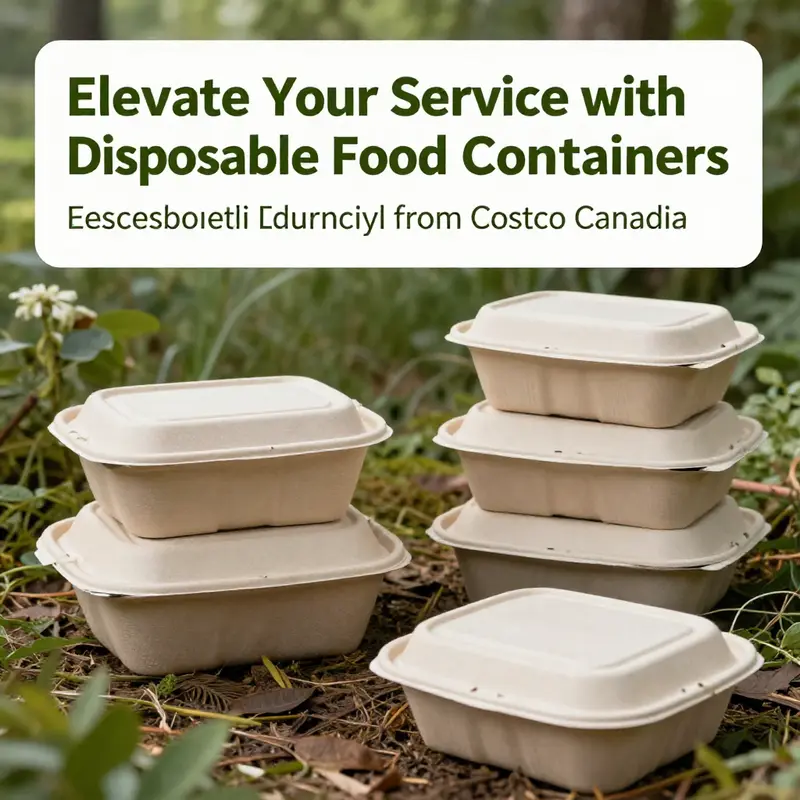
Every aisle that promises a bulk bargain also carries an implicit wager about appetite, convenience, and the planet. In a country where households increasingly weigh the trade-offs between price, utility, and sustainability, the disposable food container becomes more than a quick convenience. It is a microcosm of a larger economic system that prizes scale and affordability, yet leaves a trail of waste that clusters in landfills and, sometimes, in the landscapes that border urban centers. The conversation about disposable containers in Canada’s large-format retailers is not simply about what is cheapest or most convenient. It is about how choices made at the point of sale ripple outward into municipal waste streams, recycling facilities, and the daily rituals of households, offices, and street corners where meals are reheated, shared, or taken on the go. In the context of a warehouse club model, where millions of meals may be packaged, distributed, and consumed with a single trip, the environmental implications of disposable containers become especially pronounced. They reveal a tension between the principle of “more for less” and the longer arc of environmental stewardship that a modern economy must navigate if it hopes to remain viable for future generations.
The core issue begins with volume. Cost-effective bulk packaging thrives on creating the illusion of abundance: supplies that feel almost inexhaustible, ready to be opened and used without the friction of buying smaller, specialized lots. This abundance, however, encourages a kind of consumer behavior that is sensitive to price and convenience, and less sensitive to the downstream costs of packaging waste. When tens or hundreds of thousands of containers are produced in a month, the aggregate impact of even modest per-unit waste becomes substantial. A modern supply chain that ships, stores, and sells large quantities must account for the life cycle of its packaging, from raw material extraction to end-of-life disposal. Yet in the real world, many disposables—made from plastics, foams, or other single-use materials—are not easily recycled in municipal programs. They may be technically recyclable in a lab, but not economically or practically within the infrastructure that serves most Canadian communities. This gap between potential recyclability and actual recoverability is at the heart of the sustainability challenge.
The environmental footprint of disposable containers is not just about waste volume; it is also about the emissions and energy that accompany production, distribution, and waste management. Every ton of plastic or foam that is produced carries with it a footprint of greenhouse gas emissions, air and water pollution, and the use of fossil fuels. When volume is high, emissions compound. The effect is not limited to the containers themselves. It extends to the sourcing of raw materials, the manufacturing processes, the transportation to distribution centers and retail floors, and the handling of waste after use. In a system designed to deliver value through scale, there is a risk that environmental costs become an externality—felt by communities and ecosystems long after the consumer has discarded a cup, a clamshell, or a noodle box. This is not an abstract argument. It is an empirical one, bolstered by studies that show how packaging choices influence the rate of waste generation and the burden on landfills. The 2024 analysis cited in industry discussions underscores that large-volume packaging can contribute to both surplus food waste and packaging waste, creating a dual pressure on climate and resource use. The irony is stark: the same logic that makes bulk packaging attractive—efficiency through standardization—also makes it easier to overproduce and underutilize, as the sheer mass of available containers invites quantities that outstrip actual consumption.
Beyond the question of weight and cost lies the material reality of the containers themselves. The most common disposables in high-volume food service settings are plastics and foams designed for quick heat transfer, leak resistance, and stackability. In many jurisdictions, those materials carry a mixed reputation. Plastics can be recycled, but only if there is an effective local program, consistent sorting, and a market for the recycled resin. Foams often have limited recycling options and can be harder to process, leading to a higher likelihood of disposal in landfills or informal dumpsites. This mismatch between the technical recyclability of a material and the practical realities of a recycling stream is one of the stubborn barriers to meaningful improvements in packaging sustainability. The consequence is that much of the disposable container waste from large retailers ends up in landfills or is dispersed in the environment, where it can persist for decades.
Costco-style retail ecosystems magnify these dynamics. The store’s appeal rests on offering a wide range of bulk goods at predictable prices. The same logic applies to food service containers: standardized, easy-to-store, and compatible with a broad set of foods. But standardization can also entrench a particular waste profile. When the default option is a cheap, single-use container, the default habit becomes disposal rather than reuse. This matters because consumer behavior is not isolated from corporate practice; it is reinforced by the very design of the retail environment. Shelves stocked with disposables signal availability and normality, shaping expectations about what is appropriate to use and what should be discarded after a single meal. Over time, such signaling can normalize a level of consumption that outstrips the planet’s capacity to absorb it.
There is also an important, practical dimension to consider: the hygiene and safety considerations that drive the use of disposables in large-scale food service. For many operations, especially those that prepare meals in advance for takeaway or catering, disposable containers deliver predictable performance. They are easy to store, lightweight for transport, and designed to withstand reheating or cold storage without compromising food safety. The problem emerges when the same durability and convenience become the default for everyday use in households and informal gatherings. The line between “necessary for safety and convenience” and “excessive for a steady climate” can blur in environments where portion control, food storage, and distribution are handled by busy workers or time-strapped families. Here, the sustainability narrative must contend with everyday practicality. It is not enough to advocate for seizing every possible environmental improvement; policy and business strategies must align with realistic consumer behavior patterns and the realities of life in a busy household.
One of the core tensions lies in the availability of alternatives. The call for compostable or biodegradable containers, often plant-based and designed to break down under appropriate conditions, has gained momentum. Yet the adoption of these alternatives is not a simple substitution. Compostable materials require specific industrial composting facilities to achieve meaningful end-of-life outcomes. If a facility is not present in a region or if sorting and collection practices do not direct compostables to the correct stream, the benefit can be minimal or even counterproductive. In many cases, compostable containers still rely on correct disposal behavior to be effective, which means consumer education becomes as crucial as product design. Without clear guidance and accessible infrastructure, even the most well-intentioned packaging can fail to deliver the anticipated environmental gains. The broader challenge is to align product design with local waste management realities, an alignment that often varies from one city to another province. In a country with diverse regional systems, achieving uniform sustainability gains requires a combination of policy signals, retailer commitments, and consumer participation that supports a common goal.
The literature and industry analyses point toward a multipronged strategy. First, reducing reliance on single-use options through incentives and design choices can shift demand toward reusables where feasible. Instituting programs that reward customers for bringing their own containers or for selecting more durable, reusable options can create a measurable impact over time. The internal rhythm of a warehouse club suggests a natural fit for such programs: bulk purchases, larger families, and frequent gatherings are precisely the contexts where reusables can become practical and cost-effective, especially when paired with clear incentives. Second, advancing the market for compostable and biodegradable containers can help, but only if this is accompanied by transparent labeling and robust infrastructure. Plant-based materials should be assessed not only on their compostability but also on their full life cycle, including cultivation, processing energy, and end-of-life pathways. Third, there is a need for standardized recycling streams that can accommodate a broader set of materials. The lack of a widely accepted, scalable recycling regime for many disposable containers remains a major hurdle. When municipalities cannot process these items, even materials marked as recyclable can end up in landfills. Fourth, the corporate strategy around packaging should embed lifecycle thinking into the procurement and product design processes. This means selecting materials that minimize environmental impact across extraction, production, use, and disposal, while maintaining safety and performance. It also means exploring packaging innovations that reduce material use without compromising the integrity of the food product. Finally, consumer education and public policy must work in concert. Consumers who understand the environmental implications of their choices are more likely to favor options that reduce waste. Public policy, in turn, can provide the framework and incentives that nudge both producers and consumers toward sustainable behaviors.
A practical glimpse into the complexity of this transition can be found in the way municipalities and retailers approach packaging waste. In regions where municipal programs provide robust separation streams for organics and recyclables, compostable containers clearly outperform their plastic counterparts in terms of end-of-life outcomes. Yet in places where the recycling system is underfunded or fragmented, the same compostable options may not deliver the desired environmental benefits. This reality emphasizes the need for a systems perspective—one that recognizes that packaging choices must be integrated with local waste management capacity, consumer behavior, and the broader political economy that shapes product availability and price.
The social dimension of sustainability also deserves attention. The adoption of sustainable packaging is not a neutral act; it has distributive implications. Price pressures and supply chain dynamics influence which households can access newer, more environmentally friendly options. In a market that prizes affordability, there is a risk that the most sustainable choices become a luxury for some consumers while remaining out of reach for others. Addressing this inequity requires thoughtful policy design and retailer strategies that avoid reversing progress by creating new or unintended barriers to access. It may mean offering subsidized or lower-cost sustainable options, scaling up the production of plant-based materials to reduce costs, or creating tiered packaging choices that let households decide how much environmental impact they are willing to bear within their budgets.
The environmental question also intersects with the broader narrative of corporate responsibility. The chapter’s focal point—large-volume packaging in a discount retailer—highlights how a business model built on efficiency and cost control can either exacerbate waste or become a platform for meaningful change. The path forward is not about abandoning bulk convenience; it is about reimagining it. It involves designing packaging that performs as well for food safety and usability while leaving a lighter footprint on the environment. It involves creating supply chains that reward lower waste, higher recyclability, and greater transparency about end-of-life outcomes. It involves listening to consumer concerns and responding with options that balance savings with stewardship.
In this evolving landscape, the consumer’s role remains central. The small, everyday acts—choosing a reusable container for leftovers, selecting a compostable option when available, and supporting retailers who publish clear information about packaging waste and recycling options—accumulate into tangible environmental benefits. The challenge is to convert intent into routine: to normalize the practice of thinking about packaging beyond the instant convenience of a meal, toward a habit that values the longer arc of environmental health. Retail environments can support this by providing clear pathways to reuse, by offering discounts for bringing your own container, and by making sustainable options visible and affordable at the point of sale. When such practices become part of the shopping culture, they can begin to offset the inertia that makes disposables so deeply entrenched in the everyday routines of modern life.
The discussion, of course, cannot ignore the economic and policy context that frames these choices. Tariff shifts, supply chain volatility, and the broader pressures on household budgets all influence the cost dynamics of disposable containers. Prices may rise for some categories as a result of external factors, and shoppers may respond by seeking cheaper alternatives or larger, more economical options. This is not inherently at odds with sustainability; rather, it underscores the need for a balanced approach that preserves affordability while advancing environmental objectives. It invites retailers to think about how to hedge against volatility by diversifying materials, investing in domestic or regional manufacturing capabilities for sustainable packaging, and sharing information with customers about how best to dispose of or reuse containers in ways that minimize harm.
Ultimately, achieving a sustainable equilibrium in a cost-conscious retail ecosystem requires a long-term commitment from all players: retailers, manufacturers, policymakers, and consumers. It invites a reexamination of what counts as success. Is success measured solely by low price and high sales volume, or by the durability of the ecosystems that support the meals we share? The environmental footprint of disposable containers is not an abstract statistic; it is a living indicator of how society balances convenience, health, and responsibility. The path forward is not a single, sweeping reform but a tapestry of coordinated steps—design innovations, improved waste infrastructure, consumer education, and economic incentives that encourage smarter choices without stripping away the benefits that make bulk shopping appealing in the first place.
For readers seeking a concrete point of connection to this broader discourse, one practical entry point is the ongoing discourse about eco-friendly disposables and how they can be integrated into ordinary shopping and meal routines. These options may include plant-based or biodegradable materials, bags designed for multiple uses, and utensils crafted to minimize environmental impact while maintaining performance. The idea is not to upend the value proposition of bulk shopping but to invite a graceful evolution toward packaging that respects both user needs and planetary limits. In this transition, the retailer’s influence matters: by curating a mix of durable, recyclable, and compostable options, and by providing clear guidance on disposal pathways, they can help shift norms and reduce waste without sacrificing affordability.
To broaden the perspective beyond the walls of the warehouse club, it is instructive to consider the wider body of research on corporate packaging strategies and their environmental consequences. A contemporary critique of the “more for less” approach argues that under certain conditions, the emphasis on volume and low prices can be corrosive to environmental goals if it discourages investment in sustainable alternatives or crowds out consumer demand for greener options. This argument does not condemn bulk sales per se; it challenges the idea that affordability and convenience should be pursued in isolation from environmental costs. It invites a more integrated model in which pricing, packaging design, waste management infrastructure, and consumer behavior are aligned toward long-term resilience rather than short-term savings.
In this sense, the Costco Canada context offers a particular lens on national and regional waste management realities. Canada’s diverse municipal landscapes mean that packaging decisions reverberate differently from coast to coast. A cohesive national strategy for sustainable disposables must account for these regional differences while providing a shared framework for recyclability, compostability, labeling, and consumer education. The chapter’s argument is not that all disposables are inherently bad. It is that the system as a whole works best when packaging design, consumer behavior, and waste infrastructure move in a coordinated direction. The result is not the disappearance of convenience but the emergence of smarter convenience—an everyday practice in which households and retailers collaborate to minimize environmental harm while maintaining affordability and efficiency.
As the conversation evolves, there is cause for cautious optimism. Innovations in packaging science point toward materials that combine barrier properties with lower environmental footprints. The market for compostable packaging is expanding in regions with suitable composting capacity, and retailers who experiment with reusable or returnable packaging systems show that it is possible to balance operational demands with environmental goals. The challenge remains to scale these approaches to the size and speed of a warehouse club model without eroding cost advantages or accessibility. The equilibrium will likely be found in a portfolio approach: keeping the most essential disposables where they add clear value for safety and practicality, cornering on reusables for meals and beverages when feasible, and expanding compostable or recyclable alternatives where waste infrastructure supports proper end-of-life processing.
This nuanced stance—neither romanticization of disposables nor uncritical vilification—frames the path toward a more sustainable packaging ecosystem in Canada’s bulk retail environment. It acknowledges the reality that convenience has a price, both in money and in ecological terms, and it invites ongoing collaboration among retailers, policymakers, and consumers to rebalance that price. It is a call to incremental, evidence-based progress: better materials, better disposal options, better consumer education, and better alignment of pricing with true life-cycle costs. If such progress can be achieved, the bulk experience can coexist with planetary health, enabling families and communities to enjoy the benefits of value and efficiency without compromising future generations’ ability to meet their own needs.
For readers who wish to explore broader perspectives on this topic, a recent critique of the sustainability rhetoric surrounding “more for less” highlights the corrosive effects of overemphasis on cost-cutting when it ignores environmental externalities. While the argument is general, it offers a valuable lens through which to view the packaging decisions of large retailers in Canada. It underlines the importance of coupling price signals with environmental performance metrics, ensuring that reductions in cost do not come at the expense of long-term ecological integrity. This framing helps anchor the discussion in a wider societal debate about how economies should grow in harmony with the natural world. External readers may find the linked analysis offers a provocative counterpoint to the prevailing narrative of convenience and affordability, encouraging a more holistic evaluation of what constitutes responsible consumption and production in today’s global markets.
In sum, the environmental impact and sustainability of disposable food containers in a major Canadian retailer context are not fixed or isolated phenomena. They are dynamic, evolving outcomes shaped by material choices, consumer behavior, infrastructure, policy, and the incentives embedded in pricing. The challenge—and the opportunity—is to steer this system toward options that honor the practical needs of families and the operational realities of a busy retail ecosystem while investing in future-proof packaging that minimizes ecological harm. This requires patience, experimentation, and a shared commitment to measuring success not just by short-term savings or sales volume but by the durability of the social and ecological systems that support everyday life. As the discourse continues to unfold, it remains essential to keep sight of the everyday experiences that bring meals from shelves to tables, and to recognize that even the smallest choices—what cup or lid is chosen for a quick lunch—can contribute to a larger narrative about stewardship, fairness, and resilience for communities across Canada.
For readers seeking a practical entry point into this unfolding conversation, consider exploring sustainable disposable options and the choices they enable in everyday use. These options illustrate how a seemingly small decision about a cup or a container can ripple through supply chains, waste streams, and the daily routines that shape a family’s consumption patterns. The pursuit of sustainability is not a single product fix but a continuous process of redesign, testing, and adaptation that requires input from designers, engineers, policymakers, retailers, and shoppers alike. The goal is not to eliminate disposables overnight but to transition toward a packaging ecosystem that preserves safety, reduces waste, and respects cost constraints. In this moment of transition, the pathway forward lies in thoughtful design, robust infrastructure, and a shared commitment to responsible consumption that honors both human needs and the planet’s finite resources.
Internal reference: eco-friendly disposable cutlery.
External resource: For a broader perspective on the tension between affordability and environmental responsibility in corporate strategies, see the discussion on the sustainability consequences of the “more for less” model at https://www.linkedin.com/pulse/costco-eco-more-less-corrosive-all-michael-johnson/.
Final thoughts
Understanding the options, pricing, and environmental considerations of disposable food containers available at Costco Canada is crucial for businesses in the food industry. From enhancing customer experience to maintaining budget efficiency, these insights enable you to make better procurement choices. With a wide selection of durable and functional products, you can confidently meet the demands of your clientele while aligning with sustainability goals. As the market evolves, staying informed about supplier offerings and innovations will further ensure your operation remains at the forefront of service excellence.