
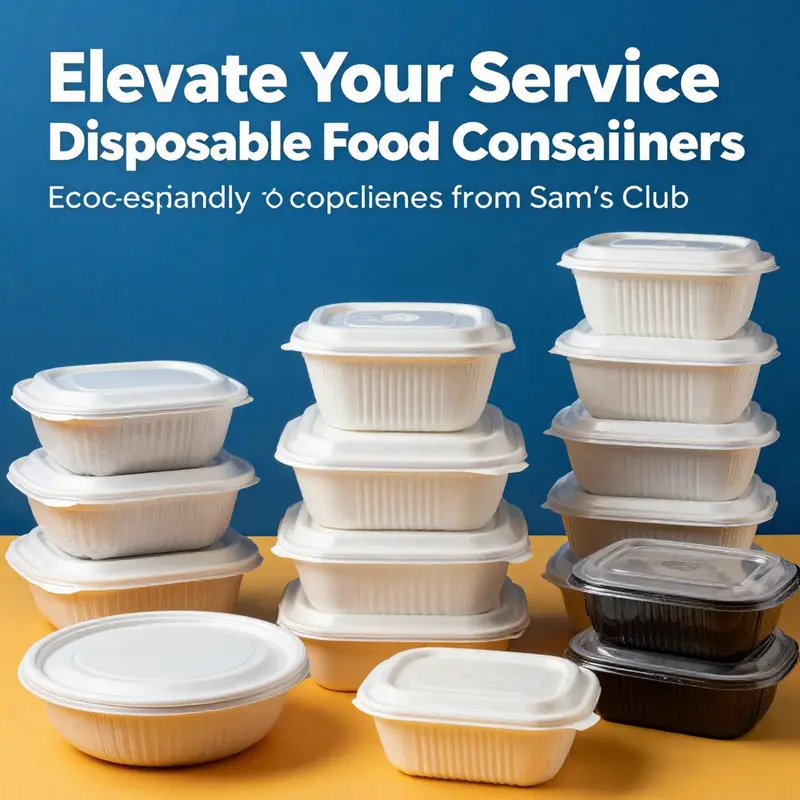
In the competitive landscape of food service, from bubble tea shops to catering services, the choice of food containers can make all the difference. Sam’s Club offers a diverse range of disposable food containers that not only cater to different needs but also prioritize eco-friendliness and compliance with safety standards. This article delves into four key aspects of disposable food containers at Sam’s Club: an overview of their offerings, the materials used and their environmental impact, the safety standards and regulations they meet, and finally, their practical applications in various food service scenarios. By the end, you’ll be well-informed about how these containers can enhance your business operations while being responsible stewards of the environment.
Balancing Convenience and Care: A Deeper Look at Disposable Food Containers at Sam’s Club

When planning meals that travel from kitchen to picnic table, the choice of disposable food containers can shape everything from taste and texture to the footprint left behind. The landscape of options at Sam’s Club spans plastic, paper, and environmentally friendlier alternatives made from plant fibers or pulp. The goal is not merely to seal and transport food; it is to do so with safety, practicality, and a consideration for the world we share. The decision process hinges on how the containers are made, how they perform in real-life conditions, and how they align with longer-term values about waste, recycling, and compostability. In that sense, disposable containers are not a single-use afterthought but a small intersection where food safety, convenience, and environmental responsibility meet at the counter and in the trash can alike.
Material safety sits at the top of the list for any buyer who often stores, heats, or transports food. Plastic containers marketed for food storage are expected to be BPA-free, a label that signals avoidance of certain harmful substances linked to hormonal disruption in lab studies. But safety is broader than a single label. The packaging and the materials themselves should be suitable for contact with food and free from substances that could migrate into meals. Paper and compostable options sometimes carry their own caveats. While many are marketed as eco-friendly, true ecological advantage depends on the end-of-life path—whether the product is compostable, recyclable, or designed for industrial composting rather than home disposal. Labels such as “certified compostable” or “biodegradable” carry weight only when they are backed by recognized standards and clear usage instructions. For careful buyers, a quick scan of the packaging for certifications and guidance on safe use—especially around heating in microwaves or exposure to freezer conditions—can prevent both food safety hazards and disappointment at transfer time.
FDA compliance enters the conversation as the practical benchmark that translates labeling into real-world safety. Containers intended for hot foods or foods with acidic components must meet criteria for food contact substances. This assurance is not a luxury; it is a baseline expectation for households that routinely reheat meals, store leftovers, or ship prepared dishes for gatherings. The practical implication is straightforward: if a container is designated as microwave-safe, it is typically tested and labeled to withstand the conditions of heating without warping, leaching, or compromise of the seal. If a container is meant for freezer storage, its design should minimize ice crystal formation and maintain lid integrity when subjected to cold, then reheated or thawed. While the exact standards can vary by material, the underlying principle remains the same—the container must protect the food, not contaminate it, during its intended use. In a setting like Sam’s Club, where bulk purchases prove helpful for family events or community gatherings, the emphasis on FDA-compliant food-contact materials provides a reassuring backbone for decision-making, especially for shoppers who want to balance convenience with safety.
A practical look at the product offerings reveals a spectrum designed for different lifecycles of food and different moments in the day. There are bulk-solution packages that mix reusable and disposable-style containers. This approach acknowledges that many households prepare meals in advance or host events where a single-use option may be convenient upfront but not the only storage solution. The presence of durable, stackable containers alongside disposable variants adds a layer of versatility. For families who meal-prep regularly, a bulk pack of mixed sizes can support everything from portioned lunches to party appetizers. The versatility of these sets helps reduce the friction of transitioning between home storage and on-the-go meals, since the most common sizes and shapes—rectangular and round, shallow and deep—cover most practical scenarios. Yet even within these broad categories, the choice is never purely about capacity. It is about how the container handles real conditions: whether a lid seals tightly enough to prevent leaks during transport, whether the sides resist warping when hot sauce is packed, and whether the interior surface resists staining and odor transfer after multiple uses or long-term storage.
When it comes to eco-conscious options, the array becomes even more nuanced. Traditional plastic and outer-paper containers still hold value for everyday, short-term storage and simple disposal routines. For shoppers who prioritize sustainability, compostable or biodegradable lines present an attractive alternative. These options are often built from plant fibers or pulp, occasionally with bagasse or kraft-paper bases, and sometimes incorporate a coating or treatment that renders the product waterproof and sturdy without relying on conventional petroleum-based plastics. The environmental impact of these choices hinges on both the material and the disposal pathway. If a compostable container ends up in a home trash bin rather than an industrial compost facility, its environmental benefits can be reduced. That is why explicit certifications and usage instructions play a critical role in guiding consumers toward responsible end-of-life outcomes. The journey from fiber to dish is not just about being green in principle; it is about being practical in the places where waste streams exist and the processing infrastructure can or cannot handle certain materials.
Appreciating the lifecycle of these containers naturally leads to considerations of how Sam’s Club presents and curates its disposable options. The retailer often places emphasis on bulk packaging and value-driven bundles, recognizing that households hosting gatherings benefit from cost efficiency and reduced frequency of shopping trips. The bulk approach does not inherently negate sustainability. On the contrary, it can support more efficient warehousing and transportation, with fewer trips and more passive storage space per item. The trick is to balance the economies of scale with the right materials for the intended use. For instance, a party setup may lean toward leak-proof designs for carry-out and buffet-style service, while a home kitchen might favor container stacks that maximize storage density, ease of labeling, and compatibility with existing kitchen appliances. The practical upshot is a spectrum of products that respond to diverse scenarios—from leftovers to mobile lunches, from a small family dinner to a larger neighborly gathering.
For shoppers seeking precise information on product specifications and availability, the best move is to consult the store’s online listings. Real-time pricing and stock levels can shift quickly based on promotions, seasons, and supplier updates. In many cases, you will find a searchable category labeled simply as disposable food containers, accompanied by filters for size, material, and whether the item is microwave- or freezer-safe. The ability to refine by material—plastic, paper, or plant-fiber alternatives—allows shoppers to align their purchase with personal safety preferences and environmental considerations. It is worth noting that while bulk bundles provide excellent value, they may span a range of container qualities within a single package. Some items are exclusively disposable, while others blend in durable, reusable components to enhance longevity. This blending of disposables with reusables underscores a practical philosophy: optimize for the moment when it matters most—whether it is the rush of a party, the routine of meal-prep, or the logistics of transporting meals to distant loved ones—without surrendering safety or responsibility.
To ground these reflections in a tangible example of how packaging evolves to meet everyday needs, consider the takeout-ready kraft-paper options that are designed for durability while leaning toward environmental friendliness. The takeout box, with its lid and sturdy walls, represents a practical compromise between weight, cost, and environmental efficiency. Kraft-paper-based designs often rely on natural fiber composites and water-resistant treatments that keep contents secure during transport. They can be sketched in larger formats for family-style dishes or compact for single servings, and they may incorporate features such as foldable for easy stacking or vented lids to accommodate steam. The result is a versatile category that supports both casual meals and more formal gatherings, all the while hinting at a broader shift in consumer expectations: packaging that protects, travels well, and at least aspires to a gentler footprint when responsibly disposed of.
For readers who want a concrete example that illustrates the practical side of these packaging choices, one option in the broader ecosystem embodies the concept of eco-friendly kraft-based containers with practical lids and shapes that suit party-size and family-size servings. See this option here: senang03-in-stock-new-design-salad-rectangle-takeaway-kraft-paper-octagonal-box-with-lid. While this is only one instance in a crowded field, it helps visualize how form and function come together in a way that supports both convenience and sustainability. The takeaway box shape with a lid, paired with kraft paper and water-resistant coatings, mirrors the real-world demand for containers that carry well, protect contents, and respect environmental considerations—especially during longer events or multi-day storage scenarios. The broader lesson is that the right container is not a single, inflexible choice; it is a set of options that can be combined and rotated to fit the occasion, the foods involved, and the disposal pathway that makes the most sense in a given community or household.
As buyers weigh technological and material trade-offs, the decision often narrows to how much of the risk is acceptable for their particular use. A leak-proof design may be essential for sauces and gravies, while a vented lid might be crucial for hot dishes that still need to breathe as they travel. Microwave compatibility becomes a deciding factor for people who frequently reheat meals in a shared kitchen, while freezer compatibility matters for those who insist on preserving portions for weeks or months ahead. The variety available in a major retailer’s catalog supports this nuanced decision-making, rather than forcing consumers into a single category. It becomes possible, then, to design a meal plan that minimizes waste and maximizes convenience without compromising on safety. This is the balance that shoppers seek: containers that seal reliably, perform under the stress of real-life use, and align with a personal commitment to sustainable practices—whether that means choosing compostable options or selecting sturdy, reusable components within mixed-pack bundles.
For those who want to supplement their understanding with additional context beyond product labeling, general guidelines from food-safety authorities provide a helpful backdrop. It is wise to recognize how regulatory expectations shape everyday choices, particularly for families preparing meals for the week, organizers coordinating a community event, or individuals transporting food across distances. The framework is not about restricting creativity; it is about preserving the integrity of the food and the health of the people who handle it. By paying attention to the material composition, the safety certifications, and the practical usage directions, shoppers can assemble a collection of containers that supports both their practical needs and their longer-term goals for responsible consumption. In the end, the most satisfying purchases are those that keep food safe and appetizing while enabling carefree handling before, during, and after meals.
In the context of the Sam’s Club offering, the emphasis on bulk capacity, safety, and material variety demonstrates a broader trend: the desire to make everyday meals and special occasions alike easier to manage without compromising health or the planet. Whether the occasion calls for a simple lunchbox, a stack of buffet-ready trays, or a takeout-friendly assortment for a neighborhood gathering, the right disposable containers can be a quiet force multiplier. They help ensure that leftovers remain appetizing, that carrying food between locations stays clean and convenient, and that the disposal choices reflect a thoughtful stance toward waste and resource stewardship. The chapter on disposable food containers at Sam’s Club thus reveals more than a catalog of options; it uncovers a practical philosophy: that modern convenience and mindful consumption can coexist through informed choices about materials, safety standards, and end-of-life pathways.
External resource: For further reading on how food-contact materials are regulated and the safety expectations that guide container design and labeling, see the broader guidance from food-safety authorities. https://www.fda.gov/food/packaging-food-contact-materials
From Packaging to Planet: The Materials and Environmental Footprint of Disposable Containers in Sam’s Club
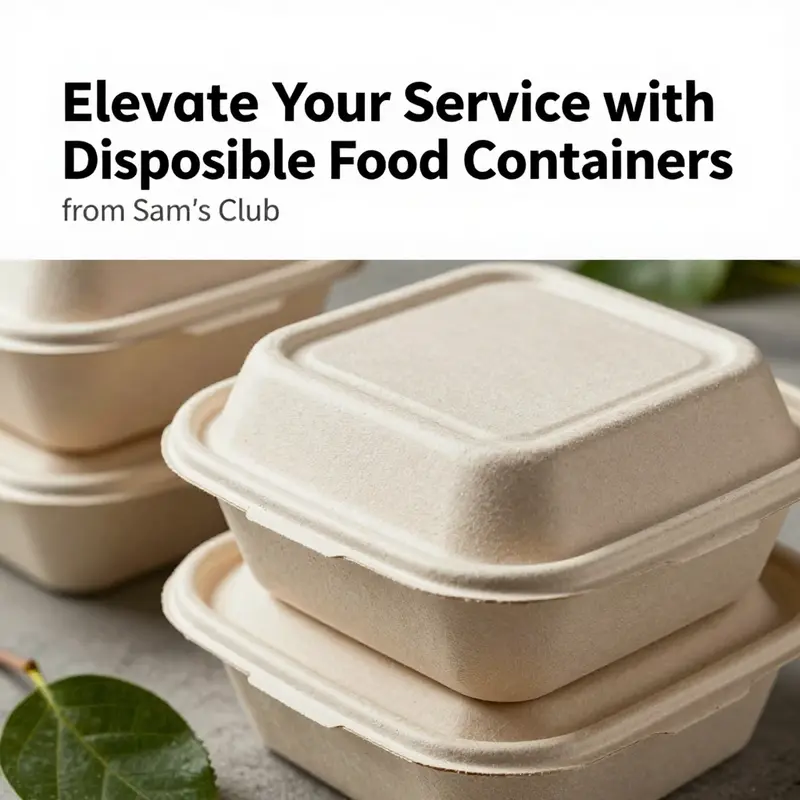
A glance at the shelves where disposable food containers sit would not reveal the quiet drama of materials science and global supply chains. Yet those containers, chosen by a retailer with a nationwide reach, carry more than a lid and a label. They carry decisions that ripple through forests, farms, factories, kitchens, and landfills. For Sam’s Club, a retailer that moves products in bulk to households and small businesses, the spectrum of material options for disposable containers reveals a broader story about safety, practicality, and environmental responsibility. The choices are not merely about keeping food fresh or preventing leaks. They are about balancing food safety standards, microwave and freezer compatibility, cost, and the evolving expectations of customers who increasingly demand transparency about what their meals travel in and what becomes of those vessels after use. In the daily cadence of meals and gatherings, these containers play a surprisingly influential role in shaping consumption patterns and end-of-life outcomes.
To understand the underlying math of this practice, it helps to start with the core materials that define most disposable containers in mass-market settings. Plastics like PET and PP have long been favored for their seal, clarity, and heat resistance. They enable reliable microwaving and re-sealing after temporary storage, and their mechanical performance is well understood by manufacturers and handlers. But they are not without baggage. PET and PP are not biodegradable; in many environments they persist for centuries, and the global recycling rate remains disappointingly low. The consequence is a steady accumulation of plastic in landfills and, through complex pathways, in soils and oceans. The problem is not just disposal; it is the entire lifecycle, from virgin petrochemical feedstocks to end-of-life fate. When Sam’s Club considers its broad assortment, it must weigh the durability and convenience of these plastics against mounting concerns about environmental footprints and the social license to operate in a world that increasingly values circularity.
Foam plastics, often mass-produced for their exceptional insulating properties, used to be common in take-out and meal containers. Yet the allure of foam is tempered by a growing chorus of regulatory and community-level actions aimed at reducing reliance on easily discarded, poorly recyclable materials. The reasons are practical as well as ethical: foam is hard to recycle in many municipal systems, and its lightweight, crumbly nature can complicate waste sorting. As cities and regions refine their waste management infrastructure, retailers are compelled to re-evaluate the trade-offs of foam and the downstream costs of its continued use. In a market where the long tail of packaging waste can be as consequential as the upfront price, many retailers pivot away from foam toward more recyclable or compostable alternatives.
In the conversation about sustainability, the emergence of renewable and compostable materials offers a compelling counterpoint to traditional plastics. Bagasse, the fibrous residue left after extracting juice from sugarcane, is one of the most cited examples. It is a biomaterial that aligns with the reality of a rapidly growing bio-based economy. Bagasse-based containers can offer the heat tolerance and moisture resistance needed for hot foods, and industrial composting facilities can break them down into organic matter rather than persistent waste. The upshot is a lower net environmental burden in many lifecycle analyses, particularly when the supply chain is optimized for local or regional sourcing. Bagasse is not a perfect silver bullet, though. It typically cannot be recycled in the same streams that plastics are, and it relies on composting infrastructure that may not be universally accessible. This caveat matters for a nationwide retailer whose operations span diverse municipalities and waste systems.
Other plant-based possibilities—such as bamboo fiber and molded pulp—bring natural aesthetics along with performance that can suit both dry foods and moist goods. Bamboo fiber and pulp-molded products often eschew heavy chemical coatings, which can reduce certain environmental and health concerns. They tend to be sturdy enough for single-use applications while offering a more appealing end-of-life story if industrial composting is available. The material safety considerations for food contact are critical, especially for products that are meant to withstand exposure to heat or fats. In such contexts, ensuring compliance with established food safety standards is essential. The Food and Drug Administration (FDA) or equivalent regulatory bodies in other regions provide the guardrails that help ensure that contact materials do not introduce unsafe substances into meals. For a retailer the size of Sam’s Club, aligning with these standards across a broad supplier base is a baseline expectation rather than a luxury.
A third category—polylactic acid (PLA) and other plant-based polymers—promises biodegradability and a narrative of reduced reliance on fossil fuels. PLA, for example, can be compostable under industrial facilities, turning into organic matter rather than lingering as waste. The key caveat is timing and environment. Home composting rarely achieves the necessary conditions for PLA to break down, and not all municipal programs accept PLA for composting. The disconnect between consumer expectations and the realities of industrial composting can lead to confusion unless labeling is precise and disposal pathways are well explained. In practice, the implication for a retailer is a need to educate customers and to ensure that packaging labels convey the actual end-of-life pathway.
The labeling and safety assurances around these materials become even more pressing when the containers are intended for microwave use or for freezer storage. The practical realities of home kitchens—where microwaves are ubiquitous and freezers are a common staging ground for meal prep—demand materials that resist warping, impart no toxins, and tolerate repeated temperature fluctuations without compromising food safety. In the case of conventional plastics, there can be concerns about migration of additives under heat. Plant-based alternatives often tout better safety profiles, but they also require careful monitoring of coatings and barrier properties to ensure that moisture and fats do not compromise the container or the food inside. In a system as large as Sam’s Club, these considerations translate into detailed supplier criteria, testing regimes, and ongoing product stewardship that aims to preserve safety without sacrificing performance or affordability.
The broader environmental lens, however, compels more than a pass/fail assessment of compliance. A lifecycle perspective evaluates energy use, water consumption, emissions, and the end-of-life fate of each material. The narrative is not simply one of plastic versus paper; it is a spectrum where recycling rates, composting capabilities, and the availability of waste-management infrastructure determine the real-world outcomes of packaging choices. A peer-reviewed synthesis of takeaway packaging highlights the uneven distribution of impact across regions. It notes that plastics, though derived from fossil fuels, can benefit from high-efficiency recycling loops in some contexts. Yet the global picture reveals sobering realities: only a fraction of plastics are recycled at present, while the rest contributes to landfills, or worse, leaks into natural ecosystems where microplastics become pervasive. The same study points out a promising contrast: some bio-based materials can lower carbon footprints relative to conventional plastics, if and only if the production and distribution chains are optimized. In practical terms, this means that a retailer like Sam’s Club must push for supply chains that minimize transport miles, maximize the use of renewable energy in production, and align with local waste-management capabilities. When bagasse or molded pulp is sourced nearby and processed in facilities that can handle industrial composting, the resulting container can show a meaningful advantage over petroleum-based rivals. Conversely, if a compostable option is shipped across great distances and ends up in a landfill due to a lack of composting infrastructure, the expected environmental benefits may be reduced or negated.
The environmental footprint of disposable containers also interlocks with broader business strategies. In practice, Sam’s Club and similar retailers are increasingly attentive to packaging reduction, not just substitution. Reducing the amount of material per container, improving structural efficiency, and curbing overpackaging are measures that can yield tangible savings in both costs and waste. When suppliers are encouraged to design for minimal packaging without compromising food safety, the downstream effects can be substantial. This is not merely a sustainability badge but a competitive differentiator; consumers are more likely to support a retailer that demonstrates a transparent commitment to responsible choices across its product portfolio. The corporate and cultural shift toward such transparency is not trivial. It requires rigorous supplier audits, credible third-party labeling, and robust education campaigns for customers that explain why certain materials are chosen and how to dispose of them correctly.
The question of disposal takes on a practical urgency in the context of a nationwide store network. Not all communities offer the same recycling streams or composting facilities, and consumer behavior does not automatically align with ideal end-of-life pathways. This is where communication becomes a critical feature of packaging strategy. Clear labeling about whether a container is industrially compostable or recyclable, and explicit guidance on the disposal stream, helps consumers participate in responsible waste management rather than inadvertently contributing to contamination or waste leakage. In turn, this requires coordination with waste-management systems and local governments to ensure that the intended pathways—the ones that confer environmental benefits—are accessible and reliable.
The implications for Sam’s Club, given its scale and reach, extend beyond product selection into supplier relationships and in-store practices. The retailer’s procurement teams can encourage lighter packaging, simpler materials, and the use of recyclable or compostable options where feasible. They can also pursue supplier partnerships that emphasize cradle-to-cradle thinking, where packaging materials are designed to be returned, reused, or reintegrated into production streams. In-store practices, such as providing facilities for customers to learn about disposal and offering guidance on sorting waste, reinforce a holistic approach. This is not simply about what sits on shelf; it is about shaping a culture that recognizes packaging as part of the food system’s environmental footprint.
An important nuance in this landscape is the distinction between biodegradability and compostability. These terms are sometimes used interchangeably in marketing, but they describe different realities. Biodegradability indicates that a material can be broken down by natural processes, but the timeline and conditions matter. Compostability implies a specific pathway to benign organic matter within defined facilities. The presence of an “industrial compost” certification or equivalent label helps prevent consumer misperception. For a large retailer, presenting accurate labels requires diligence and ongoing verification across a broad network of suppliers. The net effect is that packaging choices become a signal—not just of a product’s performance, but of a company’s commitment to accurate information and responsible waste systems.
One practical takeaway from the environmental discourse is the potential for curated product sets that highlight materials with clear end-of-life advantages in specific locales. If a community offers industrial composting and has the capacity to handle bagasse or molded pulp, these materials can provide genuine environmental benefits. If not, the same products may underperform relative to recycled paper or refillable packaging in that particular setting. In other words, the alignment between packaging strategy and local waste infrastructure matters as much as the intrinsic properties of the materials themselves. This alignment demands data-sharing and continuous learning across the supply chain, so that decisions about which materials to offer, in which quantities, and at what price points, are informed by practical waste realities as well as theoretical advantages.
To give a sense of the environmental stakes, researchers have highlighted several facets of impact that matter for large retailers and their customers. Resource use, for instance, encompasses the energy and water consumed in creating a container, plus the emissions released during transport and processing. The end-of-life phase—whether the material ends up in a landfill, recycling stream, or compost facility—often dominates the long-term footprint of disposable packaging. The microplastic issue adds another layer of complexity, as plastics fragment over time and can find their way into soil and water supplies. When bagasse or bamboo-based options replace petrochemical plastics in a region with robust composting infrastructure, the reductions can be significant. Conversely, in areas lacking such infrastructure, the same substitutions may yield ambiguous gains. The literature consistently underscores the necessity of a lifecycle perspective to avoid counting benefits prematurely or misplacing them in a local or global context.
For a retailer operating at the scale of Sam’s Club, these technical considerations translate into concrete decisions for product assortment and supplier engagement. It means asking tough questions about feedstock origins, processing energy, coating chemistries, and certifications that reassure customers about safety and environmental integrity. It means acknowledging the trade-offs inherent in any substitution: lower carbon in one dimension may come with higher water use, or a compostable option may demand facilities that are not universally available. The most resilient path, then, combines material science with logistics, certification, and honest communication. It requires a disciplined approach to governance—clear standards for material safety, credible third-party verification of compostability claims, and transparent labeling that clarifies end-of-life options. In this sense, the chapter of disposable containers is not a narrow product story but a case study in modern retail sustainability.
From a consumer and community standpoint, the practical impact hinges on how the transition is communicated and executed. If customers are guided to dispose of containers correctly and if stores can demonstrate the availability of appropriate disposal options or return streams, the environmental benefits become more tangible. This is not an abstract ideal; it is an operational blueprint for how a mass retailer can contribute to a cleaner, more efficient material loop. In practice, that means collaborating with suppliers to reduce unnecessary packaging, selecting materials that align with real-world waste systems, and investing in customer education so disposal behavior follows the intended pathways. The result is a packaging ecosystem that supports food safety, practical use, and environmental stewardship in equal measure.
For readers who want a deeper dive into the science underpinning these assessments, a thorough peer-reviewed analysis consolidates diverse findings on the environmental impacts of takeaway food containers. It offers a rigorous, lifecycle-based evaluation that helps translate generalized promises into concrete expectations for performance and sustainability. This external resource provides a broader context to the specific retailer-focused narrative and invites readers to consider how lifecycle thinking can inform everyday choices and corporate strategies alike. The link below fleshes out the nuances discussed and situates disposable container choices within a larger framework of waste management and climate considerations.
External resource: https://www.sciencedirect.com/science/article/pii/S0956053X1830473X
Internal linkage to a practical material option that echoes the kind of packaging used in many regional markets can illustrate how retailers blend performance with end-of-life practicality. For example, one commonly cited option within a regional packaging ecosystem is a kraft paper-based container system that blends strength, moisture resistance, and compostability in a single design. This approach demonstrates how a retailer can showcase materials that support both food safety and environmental objectives, while still delivering the convenience and durability required by large-scale operations. A concrete example from the broader marketplace is the kraft-paper octagonal bowl with a lid, a design that combines sturdy construction with a straightforward end-of-life pathway in settings equipped to manage compostable streams. This kind of packaging, when aligned with appropriate disposal infrastructure and clear labeling, can help close the loop between in-store decisions and community waste systems. For those interested in exploring a concrete option that mirrors this approach, a representative product in the broader ecosystem is available online under the title kraft-paper-octagonal-bowl-with-lid, which demonstrates how packaging geometry and material choice interact to support practical use and responsible disposal. Readers can review such options in the supplier catalogs that inform store assortments, which helps bridge the gap between material science and everyday household practices.
Safety at Every Seal: How Regulatory Standards Shape Disposable Food Containers in a Sam’s Club Era of Convenience and Stewardship

A corridor of disposable containers in a large retailer tells a story of safety, regulation, and responsibility. The standards that govern what can touch food guide what gets stocked, how it is tested, and how it is labeled for shoppers. For retailers, compliance with a patchwork of federal, state, and local rules is as important as price and availability. The framework that matters most is the FDA regulation of food contact materials, anchored by codes in the Code of Federal Regulations. In practice, this means that containers must be made from materials that do not release harmful substances into food under normal use, with standard temperatures, typical contact times, and realistic exposure. The migration principles drive testing and the communication retailers provide to customers about safe use.
Foam based options have faced scrutiny. Polystyrene offers lightness and stiffness but its safety profile under heat or when contacting oily foods has prompted regulatory attention. State level restrictions have pushed retailers to diversify toward safer, more recyclable or compostable options. California and other states influence portfolio decisions even without a nationwide federal ban. The result is a risk management approach that weighs safety, performance, and environmental implications.
Regulatory reality extends beyond the United States. The European Union Plastics Strategy pushes toward recycled or degradable materials, and global supply chains respond with alternatives like molded fiber, bagasse, and plant based bioplastics. Retailers adjust assortments to meet safety standards while pursuing sustainability goals. A container becomes a product that protects food, respects waste streams, and supports end of life goals.
Practical implications for a large retailer include end to end supplier management, material safety assessment, and performance testing. Material safety assessments identify substances that could migrate and inform supplier requirements. Performance testing verifies leak resistance and temperature tolerance. Clear labeling about microwave use, freezer compatibility, and handling reduces misuse and incidents, protecting health and brand trust.
End of life matters too. The shift away from foam toward molded paper pulp, bagasse, and other sustainable feedstocks requires credible recyclability or compostability data and collaboration with waste programs. Retailers educate customers and align packaging strategies with local recycling or composting capabilities, reducing environmental impact and confusion at the point of disposal.
In practice, assortment decisions reflect science, policy, and consumer expectations. Designs emphasize leak resistance, temperature stability, and compatibility with common reheating methods while avoiding materials under regulatory scrutiny. The shopper experience improves as clear labeling and predictable performance create confidence in safety and sustainability.
For readers seeking more technical context, federal guidance on food contact materials and regulations provides the anchor. Manufacturers and retailers rely on this framework to justify material choices, testing regimes, and labeling strategies. Global developments shape sourcing and product development, reinforcing that safety and environmental responsibility go hand in hand in a large retailer setting.
A practical example helps readers see how material choice translates to everyday use. A kraft paper based, leak resistant container with a compatible lid illustrates how design choices balance barrier properties, performance, and sustainability. The broader safety framework remains anchored in regulatory guidance, and continual learning from regulators, industry, and consumers keeps retail packaging safe, practical, and responsible.
From Pantry to Party: The Practical World of Disposable Food Containers at Sam’s Club

Disposable food containers sit at the intersection of daily routines and event planning. They are the workhorses that keep kitchens organized and events running smoothly. Materials vary from biodegradable plant fibers and molded fiber to PET and PP plastics, each with its own strengths and end-of-life considerations. At Sam’s Club you can find a spectrum that balances performance with value, designed to withstand storage, transport, and presentation while aiming for responsible disposal. The choice is rarely about a single best material but about matching a container to its use, duration of storage, and a practical approach to waste and recycling. Safety and compliance thread through these decisions, with food-contact materials evaluated for migration and integrity, and products that align with FDA guidance and other standards. Reading product specs is essential, especially for items intended for oily foods, sauces, or brief reheating. While many disposables are optimized for cold or room-temperature use, certain liners or coatings may enable short reheating, but long oven exposure remains risky for most general-use containers.
The range of formats reflects evolving priorities. Biodegradable and compostable options such as bagasse offer green profiles in homes and professional kitchens, while recycled pulp-based containers provide lightness and strength for cold meals. PET and PP plastics deliver clear visibility and strong leak resistance, ideal for salads, snacks, or pre-portioned meals. Translucent containers can streamline operations by letting staff and customers see contents at a glance, a practical advantage in cafeterias, take-out counters, and catering settings where speed matters.
Density of use matters: leak resistance, secure lids, and stackability influence transport, service speed, and presentation. Lids that seal snugly reduce spills during busy periods, while nestable designs save space in prep areas and during transit. The geometry of the container—square, round, or rectangular—can affect portion control and presentation, with branding opportunities through simple logos or color schemes.
From home meal prep to professional catering, the practical use cases cover batch cooking, school lunches, leftovers, and event service. For households, containers aid batch cooking, freezing, and quick reheats. For small businesses and venues, disposables translate to tangible time savings and predictable service quality, especially during peak periods. Clear or semi-clear options support quick identification of contents in fast-paced settings.
Choosing wisely means weighing several factors: how the container performs in cold storage and brief reheating, its compatibility with freezing, and its end-of-life options. Consumers and operators should verify material safety data, confirm compliance with food-safety standards, and follow heating guidelines. A mindful approach balances upfront cost with the value of reduced washing, easier distribution, and reliable performance. In practice, most users benefit from a balanced assortment: sturdy leak-resistant options for takeout and catering, lightweight clear options for quick service, and eco-friendly choices for daily use when feasible.
For a quick path to options, retailers like Sam’s Club offer extensive catalogs of disposable containers. Look for clear specifications on heat tolerance, lid compatibility, and recycling or composting guidance. The goal is a dependable supply that supports service speed, product integrity, and responsible end-of-life management. The conversation around disposables is dynamic, with ongoing improvements in materials, design, and waste infrastructure. The chapter shows that the best choice is a coherent kit aligned with cooking, serving, and sustainability goals.
If you want a concrete example, search the Sam’s Club assortment for eco-friendly kraft packaging or compostable options designed for takeaway. A typical option might be a kraft paper bowl with a secure lid for hot or cold foods, illustrating how material choice, design, and practicality come together to support efficient service and mindful waste management. By evaluating core criteria—material integrity, lid performance, and end-of-life options—buyers can assemble a versatile lineup for households and businesses alike.
External resources and catalog listings can help buyers compare options across retailers, with search terms like disposable food containers to locate the latest listings and stock conditions. The landscape continues to evolve with advances in materials science and recycling infrastructure.
External resource: https://www.samsclub.com/s/category/disposable-food-containers/102769513?_requestid=123456789
Final thoughts
The choice of disposable food containers is crucial for food service businesses, impacting not only efficiency but also environmental responsibility. Sam’s Club offers an impressive variety of eco-friendly containers that meet stringent safety standards, making them an excellent choice for bubble tea shops, restaurants, food trucks, and event planners. With their commitment to providing quality products that cater to diverse needs, investing in these containers can positively affect your service delivery and sustainability goals. Choose wisely and make a difference – your customers and the planet will appreciate it.