
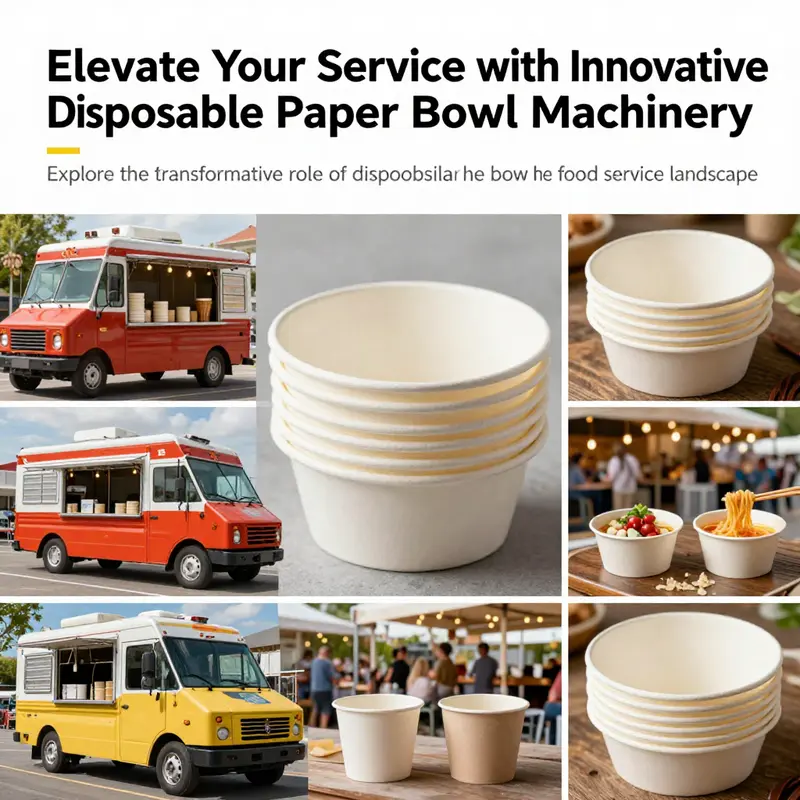
As the food service industry continues evolving, the demand for efficient, disposable tableware solutions has surged, especially in venues like bubble tea shops, restaurants, food trucks, and catering services. Disposable paper bowls present a convenient, eco-friendly option for serving delectable dishes and beverages. This article delves into the operations of disposable paper bowl machine factories, including their innovative technologies, economic influence on local markets, and commitment to sustainability. By understanding these facets, businesses can better appreciate how investing in high-quality disposable paper bowl machinery can contribute to their success and sustainability objectives.
Inside the Gears of Volume: Factory Operations Behind Disposable Paper Bowl Machines
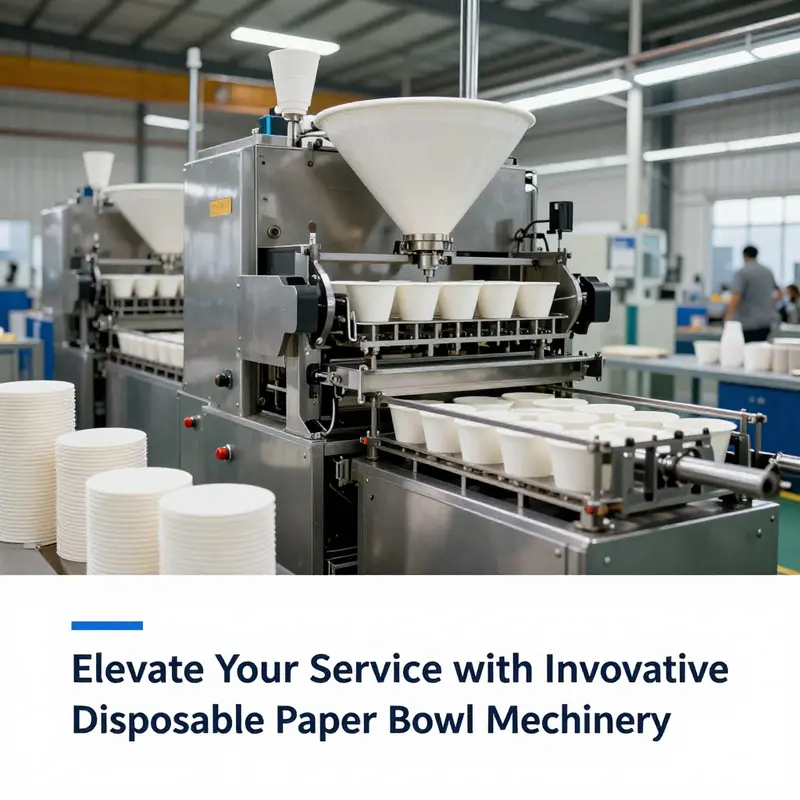
The factory floor that produces disposable paper bowls reads like a well-timed orchestra, where each station contributes a precise note to the overall harmony of mass production. From the moment the material enters the line to the final stack of finished bowls, the operation follows a rhythm built on automation, material discipline, and quality control. This is more than a machine shop; it’s the story of how modern packaging scales to meet takeout, catering, and institutional needs while upholding hygiene and cost efficiency. The process begins with the raw material—a roll of paper that may be PE-coated for moisture resistance or coated for other needs. The factory relies on a steady supply chain that must be compatible with high-speed forming, sealing, and finishing. To maintain tempo, lines minimize handling, reduce waste, and anticipate variations in density and moisture. Small deviations in thickness or coating can cascade into misfeeds, imperfect seals, or uneven edges, threatening throughput. The goal is a predictable feed that translates into predictable performance, every shift.
At the heart of the operation is the forming sequence. The material is fed, preheated, and formed into a bowl-like cavity. Dies and cams work with roll-fed paper to maintain geometry. Sealing follows, binding the rim to the body with heat or ultrasound. The seal must be airtight enough to resist leakage but gentle enough to avoid brittleness. After sealing, the line proceeds to bottom cutting, knurling, and curling, refining structural integrity and grip. The final collection gathers bowls for counting, quality checks, and packaging. Synchronization and timing matter; the system must absorb minor disturbances without cascading stoppages.
The machinery is designed to feel seamless to the operator. Automated panels monitor cycles, sealing temperature, and feed rates. Sensor alarms warn of drift before faults become bottlenecks. Equipment supports multiple product types without a full line rebuild; adjustable molds, configurable cavities, and scalable feeds enable quick changeovers. Typical limits—top diameters around 185 mm, bottom around 165 mm, height near 80 mm, edge tilt of 4–8 degrees—define the envelope within which customization can occur. These precise parameters standardize tooling while allowing variations to meet client specs.
The reliability rests on mechanical design and power infrastructure. Three-phase power at standard industrial levels (typically 380 V, 50 Hz) plus an auxiliary air system maintain consistent pressure for forming and sealing, with an air compressor delivering 0.6–0.8 MPa. An open cam system driven by gear motors favors precision and uptime. The goal is high speed with high reliability, extended operation, and clear maintenance indicators. Operators calibrate, monitor seals, inspect edges, and verify tolerances to preserve the integrity of the production chain.
Customization emerges as a defining feature. Lines can be tuned for standard shapes and sizes, with many factories offering mold design to match client branding or packaging needs. This extends beyond aesthetics; it influences stacking, sealing, and transport performance. Factories leverage standardized tooling and custom molds to deliver diversity without sacrificing throughput. Capacity, often several hundred thousand bowls per month across multiple lines, supports global demand for durable, hygienic, and cost-effective containers.
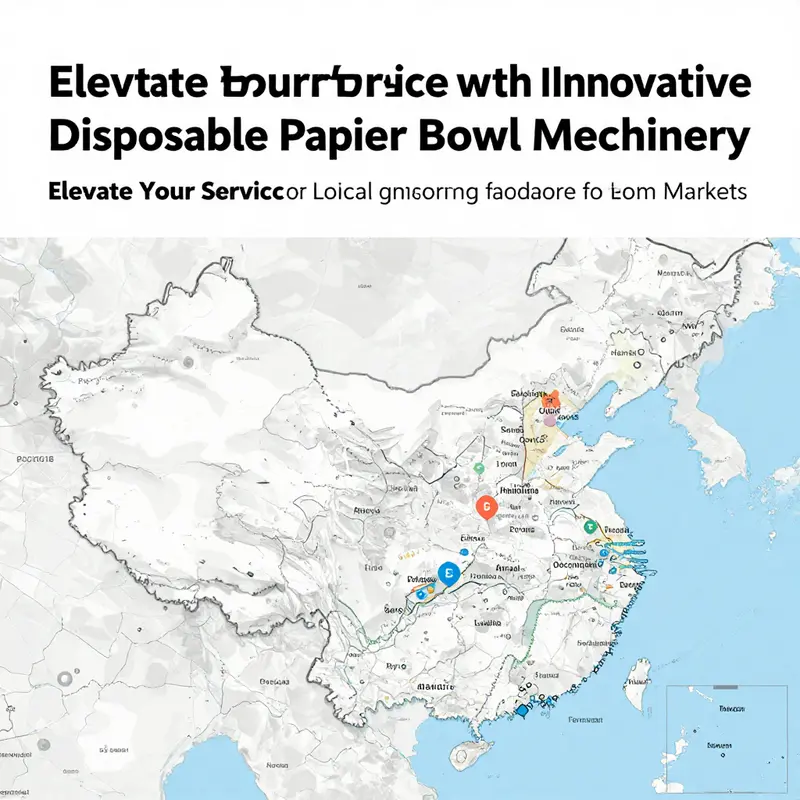
In geographic terms, high-speed automation clusters in regions such as Zhejiang, China, where engineering talent and supplier ecosystems converge. This clustering supports rapid tooling iterations, process control software updates, and quality assurances. Buyers benefit from shorter lead times for standard and customized orders, a factor in procurement decisions where time-to-market matters.
The broader picture shows that customization and standardization go hand in hand with material choices and downstream packaging needs. Some clients demand eco-friendly coatings and recyclable substrates; others require strong moisture barriers for soups or noodles. The form line’s flexibility, seal stability, and edge treatments all contribute to final performance. The industry is evolving toward smarter control, better packaging integration, and proactive maintenance—keeping producers nimble as demand and technology shift. The result is a durable, hygienic, and adaptable product that travels from cafe to stadium, meeting reliability expectations from first bite to last.
For readers seeking broader context, related packaging ecosystems illustrate how same-line performance can support product variety and sustainability goals. The flow from raw materials through forming, sealing, finishing, and packaging explains why disposable paper bowls remain a staple in the foodservice economy.
Smart Molds, Silent Sensors: Navigating the New Era of Disposable Paper Bowl Manufacturing
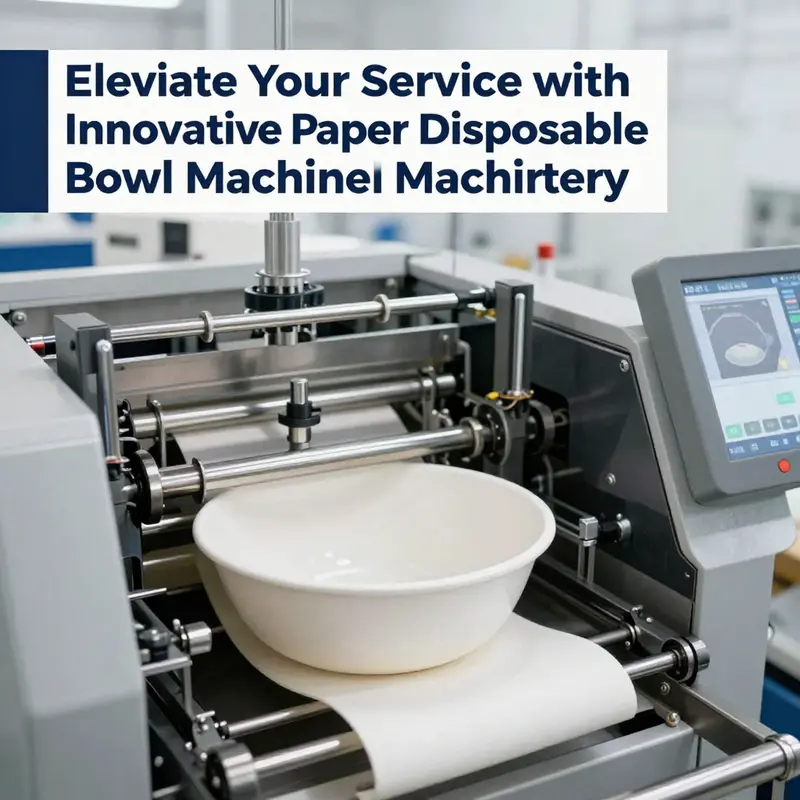
The factory floor for disposable paper bowls is being reimagined. Automation, data streams, and predictive insight are replacing manual alignments and fixed dies. The result is better quality, more consistent wall thickness, and faster adaptation to different product needs.
The core of the change is smarter control. Modern lines employ centralized computer control, real time sensing, and AI-driven adjustments that keep temperature, pressure, and feed rates within tight tolerances. This yields bowls with uniform edges, reliable sealing, and reduced waste. When deviations appear, the system can nudge parameters or pause a run to protect quality without lengthy downtime.
The mechanical heart of the line has tightened as well. Open cam mechanisms paired with robust gear motors provide precise forming and quick changeovers. The combination supports larger sizes and more intricate geometries while maintaining durability across thousands of cycles. Together with advanced sealing methods, such as ultrasonic fusion, lines achieve clean, adhesive-free seams that improve hygiene and recyclability.
Automation extends beyond forming and sealing. Automatic paper feeding, preheating, embossing, oil injection, and downstream cutting are integrated into a single orchestrated sequence. Sensors verify completion of each step and prevent progression until quality criteria are met. This end-to-end automation reduces manual handling, improves traceability, and enables rapid response to evolving customer requirements.
Customization remains a central goal. Modern lines support a spectrum of top diameters, from compact bowls to larger servings, with heights and paper weights that span a wide range. Coating options and printing capabilities further tailor performance and branding while keeping end-of-life considerations in focus. The result is a flexible manufacturing platform that can switch between product families with minimal downtime.
null
null
Greener Machinery, Clearer Packaging: Sustainability at the Core of Disposable Paper Bowl Production
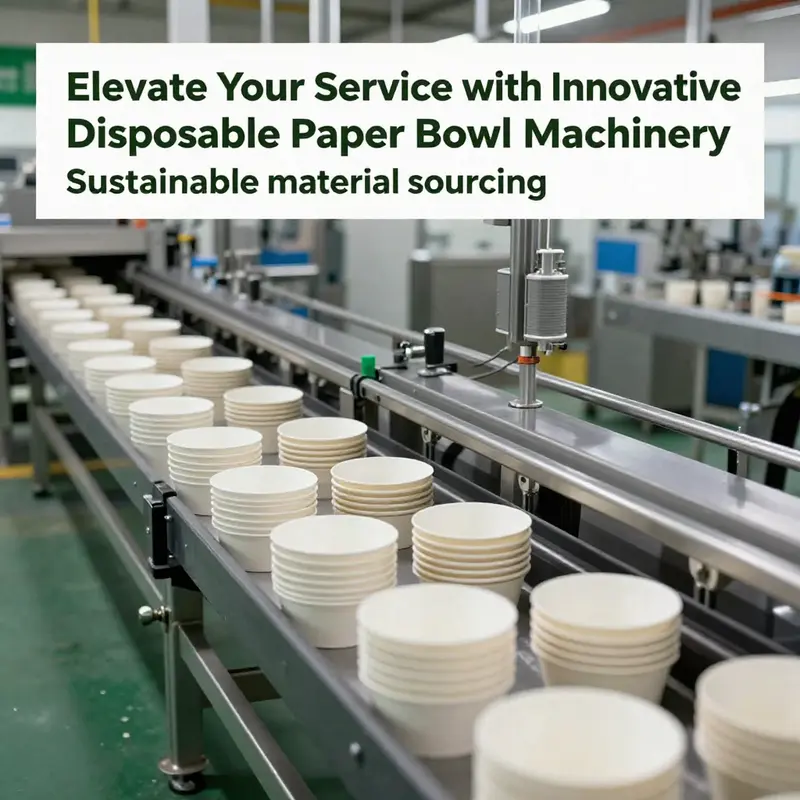
The landscape of disposable paper bowl production is changing under global environmental concerns and consumer expectations for packaging that aligns with a low-carbon, low-waste economy. On the factory floor in Zhejiang, the pace of change shifts from speed to sustainability. The machinery that forms, seals, and finishes bowls is redesigned to minimize material waste, reduce energy use, and ease end-of-life processing. This evolution arises from a broader rethinking of how a high-speed line can deliver reliable performance while shrinking its environmental footprint. In practical terms, machines are engineered to cut waste at every stage, processors optimize energy consumption, and finishing steps leave bowls with cleaner, more recyclable or compostable properties. The result is a production system where sustainability is inseparable from efficiency, reliability, and a scalable response to demand.
A central pillar is material optimization. Modern automatic systems extract maximum value from every sheet of paper and coating, reducing scrap and improving recyclability downstream. Raw materials choices matter as much as line speed. Many manufacturers pursue FSC-certified pulp to support responsible forest management and long-term supply stability. Coatings and alternatives are under review; plant-based coatings such as PLA are gaining favor over petroleum-based or wax finishes in some applications. These coatings balance moisture resistance with end-of-life compatibility, helping bowls to be compostable where facilities exist or easier to recycle in compatible streams. Adhesives and lamination layers are chosen for performance and for recyclability. Even small decisions—how a sheet is cut, where a seal is placed, what finishing touches are applied—ripple through the life cycle of the product and its end-of-life handling.
The industry also moves toward clearer, more responsible manufacturing. Clean-label tendencies extend to packaging technologies that carry food to consumers, including transparent supply chains, traceable materials, and reduced non-recyclable additives. Certification marks such as CE and SGS signal adherence to guidelines covering safety, quality, and environmental responsibility. For buyers, these signals show that sustainability is woven into production. The factory can offer customization, including design and sample customization, enabling food service operators to reflect sustainability commitments while maintaining performance and consumer appeal.
Energy efficiency remains a critical axis. High-speed lines balance throughput with energy use through variable frequency drives, heat recovery systems, efficient lighting, better insulation, and software that optimizes cycle times. These features reduce the carbon footprint of continuous production and demonstrate responsible manufacturing practice.
Water use is being reduced through closed-loop systems and careful process management. Closed-loop water systems minimize fresh-water intake and wastewater generation, while advanced filtration ensures water discharged is clean enough to be reused. Life-cycle thinking shows water stewardship as a differentiator that lowers operating costs and aligns with customer expectations for environmental performance.
Material efficiency and process optimization also cut waste at the source. Modern machinery nests and cuts patterns with minimal gaps, reduces trim waste, and diverts scrap streams for recycling. Packaging decisions extend the sustainability story by selecting materials and formats that maximize protection while minimizing weight and volume for transportation.
The market trend toward sustainable packaging options is mirrored by an increased availability of eco-friendly substrates used with bowls and lids, designed for recyclability and, where possible, compostability. Practically, kraft packaging options and similar materials help close the loop between manufacturing and consumer disposal. This approach supports responsible end-of-life handling without compromising product integrity or performance.
Customization capabilities enable operators to tailor form and function to environmental goals. Some buyers require coatings for moisture resistance while preserving recyclability, others seek branding that reduces secondary packaging or clarifies disposal. The goal remains to harmonize performance with environmental responsibility so that each bowl delivers reliable containment and can be processed in recycling or composting streams with minimal contamination.
The broader impact extends to cost and competitiveness. Reduced material waste and lower energy and water use translate into lower operating costs and improved margins, while signaling a culture of responsible stewardship. When a factory demonstrates environmental accountability, it reinforces trust with customers and communities and helps navigate regulatory and reputational pressures around packaging waste and end-of-life processing. Sustainability becomes a strategic capability that strengthens supplier relationships, informs R&D, and supports long-term value for end users.
As the chapter threads technical, environmental, and strategic strands, it shows sustainability in disposable paper bowl production as a holistic, forward-looking approach. The factory floor becomes a proving ground for innovations in paper handling, coating choices, and energy management, tested against the goal of bowls that perform impeccably with a light footprint. The result is a scalable operation aligned with evolving standards and consumer expectations, delivering a product line that earns trust for its responsible stewardship from raw material to end-of-life.
External insights into this evolving field are available in studies of sustainable practices in the sector, offering broader perspectives on material optimization, energy efficiency, and water stewardship.
Final thoughts
Understanding the intricate workings of disposable paper bowl machine factories sheds light on their significance in the food service industry. These factories not only meet the rising demand for practical, stylish, and disposable tableware but also contribute to local economies and sustainability efforts. By incorporating cutting-edge technology and sustainable practices, they pave the way for businesses to thrive while remaining environmentally responsible. This holistic perspective emphasizes the importance of selecting the right partners in disposable tableware manufacturing to ensure a successful and sustainable operation.