
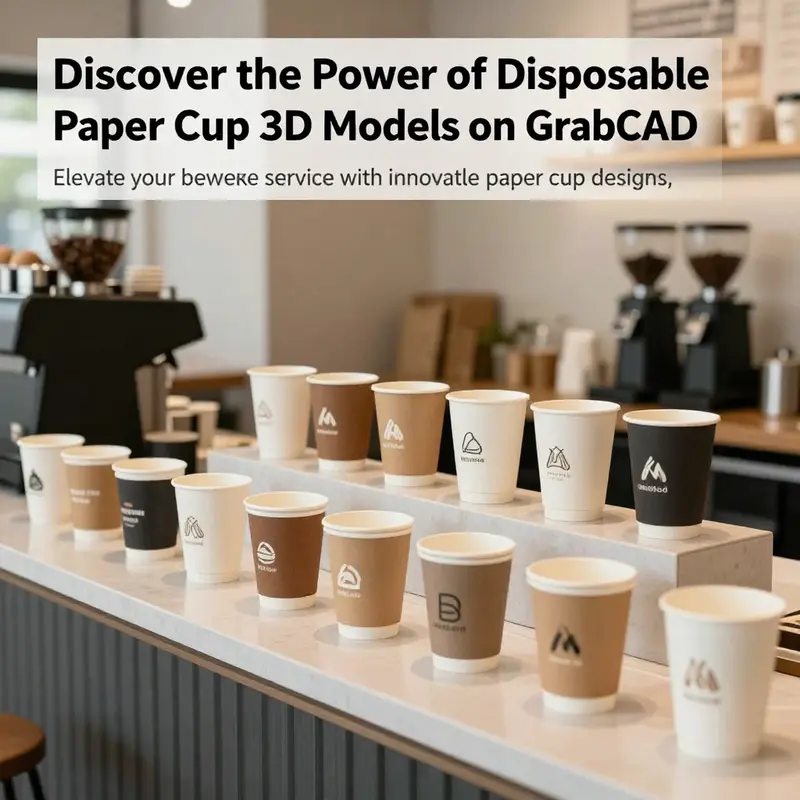
In an era where presentation matters as much as product quality, disposable paper cups have become essential for beverage businesses. Whether you run a bubble tea shop, a bustling restaurant, or a food truck, the design of your serving containers can set your brand apart. Understanding the nuances of disposable paper cup 3D models, which can be found on platforms like GrabCAD, provides you with the ability to customize and innovate. This article dives into the various aspects of these 3D models, including their specifications, applications, and environmental impact. Each chapter delves into critical components that will enable your business to not only meet but exceed customer expectations.
From CAD to Cup: How a GrabCAD 3D Model Maps the Lifecycle of a Disposable Paper Cup
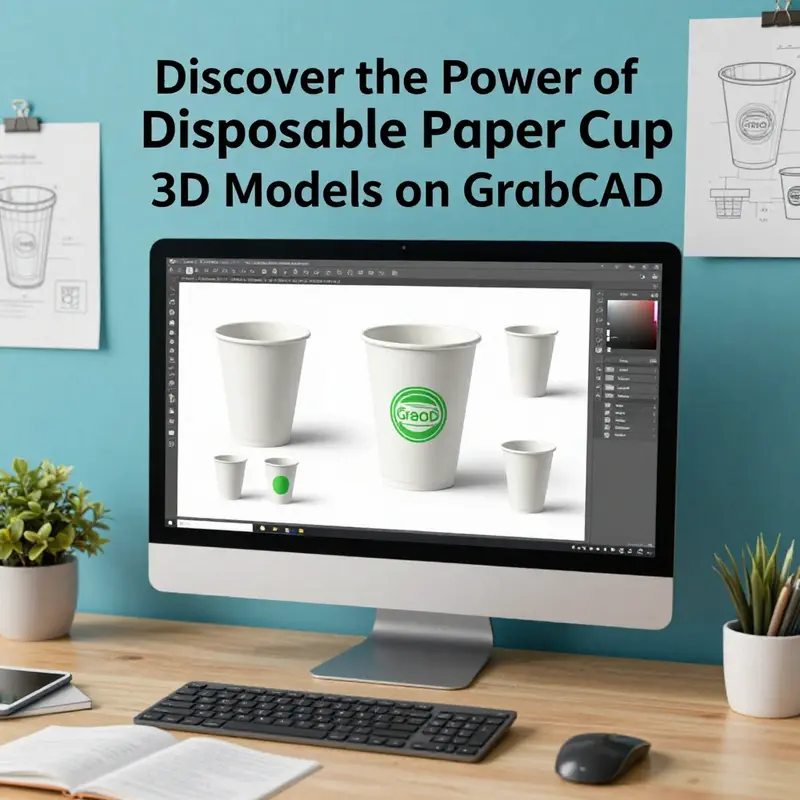
The disposable paper cup sits at the intersection of fast-moving consumer culture and careful engineering. It is a small object with outsized impact, a symbol of convenience that must balance stiffness and flexibility, heat resistance and environmental responsibility, branding and manufacturing efficiency. In the world of product development, a 3D model is more than a digital placeholder; it is a shared instrument that lets designers, engineers, and suppliers simulate, test, and refine before a single tray goes to market. The Disposable Paper Cup 3D Model available on GrabCAD embodies this philosophy. It is a digital twin of a physical form, crafted to support engineering analysis, packaging optimization, and even additive manufacturing workflows. When a team opens that model, they encounter a detailed digital sketch of a real object, with dimensions calibrated for accuracy, material properties that approximate paper thickness and coating behavior, and structural details that reveal how a cup assembles in the real world. It is precisely this integration of geometry, materiality, and structure that makes such models invaluable in a landscape where cups must be designed to fit into automated beverage machines, to nest efficiently on production lines, and to degrade responsibly after use.
The GrabCAD resource is distinguished by its focus on practical engineering outcomes. The model’s dimensions, while exacting, are not abstract; they reflect the real-world constraints of 7-ounce single-wall hot-drink cups as well as variations such as base-coated cups and single-layer kraft versions that are increasingly pursued for their biodegradability. In practice, the model can be used to simulate how the cup interfaces with a lid, whether a heat sleeve is needed for comfort, and how the rim presents a user-facing edge that must be comfortable to sip from for miles of sticky morning routines. The model also captures the cup’s profile as it relates to stacking, nesting, and transport within vending and dispensing ecosystems. In other words, it is a tool to predict not only how the cup holds liquid, but how it behaves in the network of devices and processes that surround it—from filling lines to recycling streams.
For teams working in design and manufacturing, the model acts as a bridge between concept and factory floor. The digital representation carries material properties that matter in simulations: paper thickness, the nature of any internal coating, and the way those properties interact with heat, moisture, and mechanical stress. Although the real-world paper is a living substance—susceptible to humidity, temperature, and variable coatings—the model provides a consistent basis for computational testing. Engineers can run finite element analyses to examine how a hot beverage of a certain mass and temperature will stress the cup’s walls, or how the flared rim distributes pressure when a lid is pressed onto the cup. In simulations that involve automated beverage dispensing machines, the model can reveal clearance issues, fit tolerances, and potential jam points. The capacity to test fit within a larger system—like a machine that rows cups through a dispensing nozzle or stacks them into a carton—helps teams preempt costly late-stage changes.
One of the core strengths of the GrabCAD offering is that it preserves compatibility with major CAD ecosystems. The full model is downloadable in formats that suit SolidWorks, AutoCAD, and Fusion 360 users, among others. This interoperability matters because it lets a design team import the cup geometry into broader assembly models—lid assemblies, sleeve inserts, branding skins, and even downstream automation fixtures. When a cup exists only as a flat drawing, its potential is limited; in three dimensions, it can participate in a simulated ecosystem. This is critical when evaluating how a seven-ounce single-wall construct performs under repeated use, how it seals at the base with a coated surface, or how a kraft variant maintains barrier properties while showing the natural texture of the paper.
The chapter’s focus is not only on the geometry of the cup, but also on the ways in which that geometry encodes manufacturing and lifecycle decisions. The model’s accuracy with respect to material properties—such as the degree of papery stiffness, the presence of coatings that influence moisture barrier performance, and the way the rim is formed—allows engineers to forecast a product’s behavior from filling to disposal. A cup with a coated base, for instance, may require different handling in the packaging line or in the waste-stream separation process compared to a single-wall kraft version. These subtle differences, captured in a precise 3D model, drive decisions about equipment settings, quality checks, and sustainability goals. In this sense, the GrabCAD model functions as a repository of engineering hypotheses that can be tested and refined without prototypes that would consume time and materials.
From a design perspective, the model is a canvas and a contract. It invites iterations on size and geometry while enforcing a shared standard for the geometry itself. This standardization is essential when multiple vendors are involved in a project—from raw-material suppliers to lid manufacturers and recycling solution providers. When a coffee brand or a quick-service restaurant is evaluating a new cup family, the model’s reference to dimensions, wall thickness, and rim geometry becomes a contractual baseline. It reduces ambiguity around fit, finish, and function, and it accelerates decision-making by providing a common language across teams and geographies. The model also serves as a reliable input for marketing and branding efforts. While the visual presentation of a cup often takes center stage in consumer-facing contexts, the engineering data behind that visual is what ensures the product can scale from a handful of experimental units to millions of everyday servings.
The lifecycle narrative that begins with a 3D model extends into sustainability discussions that are increasingly central to cup design. The move toward single-layer kraft cups reflects a willingness to embrace materials that can degrade more readily under suitable conditions, while still delivering reliable thermal performance for hot beverages. The modeling work enables a balanced exploration of trade-offs: thickness versus strength, barrier performance versus recyclability, and cost versus environmental impact. In simulations, designers can stress-test coatings for heat resistance while tracking how those coatings influence recyclability or compostability. The 3D model thus becomes a tool not only for engineering judgment but for environmental stewardship, enabling teams to forecast how material choices affect end-of-life outcomes and to adjust designs accordingly before any production run occurs.
For teams needing a direct initiation path, the GrabCAD-hosted model provides a clear starting point. The official page hosts the full model file, with user reviews and technical specifications that illuminate how practitioners in the field actually use the data. The model’s utility transcends simple visualization; it is a working dataset that supports a spectrum of industrial workflows. In practice, engineers drop the model into their assembly, align it with lid geometries, and check for interference with dispensing nozzles or beverage streams. They can compare the single-wall base with coating against the kraft option to see how each variant influences the machine’s feeding behavior, shipping tolerances, and stacking efficiency in pallets. The net effect is a more robust product development cycle: faster validation, clearer communication, and better alignment between design intent and manufacturing reality.
To those pursuing deeper discovery, the GrabCAD link serves as the primary, authoritative source for the model. It points to the full file the original creator uploaded, the range of compatible CAD platforms, and the practical notes that help teams decide how to incorporate the model into their workflows. This is not simply a digital artifact to be admired; it is an actionable asset that anchors cross-functional collaboration across design, packaging engineering, automation, and sustainability teams. The model’s value multiplies when used in tandem with the broader ecosystem of materials science data, process simulations, and lifecycle assessments that modern cup programs rely on.
For readers who want a hands-on touchpoint beyond the narrative, consider exploring related pages that illustrate how eco-friendly and brand-specific cups are positioned within the market. An example of this broader ecosystem is the page focused on eco-friendly printed-logo paper cups, a resource that demonstrates how branding and sustainability converge in real-world products. This page exemplifies how file-based designs extend into marketing and product differentiation without sacrificing performance or manufacturability. It also highlights the ongoing demand for customization while preserving the engineering integrity of the base cup geometry. If you’re curious about branding options that align with an eco-conscious narrative, you can examine this related resource.
External resources provide complementary context. A comprehensive, directly accessible external reference to the model is available on GrabCAD, where the repository is described and maintained by its creator. The page includes download options compatible with major CAD software, enabling teams to bring the model into their preferred design environment and begin iterative testing. This external resource offers practical insight into how such models are structured, what metadata accompanies the geometry, and how the community evaluates and enhances these digital assets over time.
In addition to the technical and lifecycle perspectives, the chapter acknowledges the practical realities of procurement and production. The seven-ounce single-wall hot-drink cup, with its simple geometry and straightforward material stack, often serves as the baseline for new development. The coated-base variant introduces an extra layer of complexity, particularly in coating adhesion and heat transfer behavior at the lip. The kraft-based option emphasizes sustainability, signaling a shift in consumer expectations and regulatory landscapes that increasingly reward recyclability and compostability. The 3D model provides a single, coherent representation of all these variants, allowing designers to toggle materials and geometry while preserving a stable reference frame for assembly interfaces, lids, sleeves, and downstream equipment. This capability matters when a team must test how a lid seal interacts with a rim that has been molded or crimped, or when a sleeve’s inner diameter must accommodate slight variations in wall thickness across material types.
The coupling between digital models and physical prototypes remains essential, and the GrabCAD model supports a lean, efficient path from concept to validated design. Additive manufacturing, rapid prototyping, and CNC-inspired workflows can leverage the geometry to print or machine physical surrogates that help teams sense the human factors of use, such as grip comfort and spill resistance. By merging tactile feedback with rigorous computational analyses, design teams can converge toward a cup that performs reliably in high-volume operations while still presenting a thoughtful, brand-appropriate silhouette to the consumer.
At the same time, the chapter recognizes that the model is part of a broader system. Once a cup is designed, tested, and refined, it must flow through supply chains that deliver consistency at scale. The model’s accurate geometry and material assumptions enable accurate budgeting and vendor communication. Engineers can provide precise tolerances to mold makers, coating suppliers, and packaging equipment providers. The ability to simulate a receptive downstream environment—for example, a recycling facility that sorts by material type or a waste-management line that must accommodate different coatings—translates into practical guidance on how to design for end-of-life or recovery. Such foresight reduces the risk of mismatches between product design and process capability, a mismatch that can otherwise derail a project late in development.
In this sense, the GrabCAD Disposable Paper Cup model is not a finished product but a platform for informed decision-making. It encapsulates geometry, materials, and interfaces in a way that supports multi-disciplinary dialogue. It invites questions about how to optimize thickness for cost and performance, how to ensure coating compatibility with hot liquids, how to maximize stacking density on pallets, and how to steer the final design toward recyclability without compromising consumer experience. These questions are not purely theoretical; they translate into concrete choices during tooling, line setup, and quality assurance. The model’s precision helps ensure that the path from design brief to factory floor remains coherent, predictable, and auditable, which is particularly valuable in a sector where speed and compliance must coexist.
As teams continue to explore the evolving landscape of disposable cup design, the role of digital models like the GrabCAD offering will only grow. The ability to test, iterate, and validate in a virtual environment keeps pace with the demand for more sustainable materials, more accurate dispensing interfaces, and more resilient packaging systems. The chapter’s narrative ends not with a conclusion about a single cup variant but with a recognition that a well-crafted 3D model is a living tool—one that evolves as materials science, manufacturing technologies, and consumer expectations shift. It remains the central touchpoint for cross-functional collaboration, a shared anchor in a global supply chain, and a practical map for the next generation of disposable cup engineering.
Internal reference for related considerations and branding options: For teams seeking branding possibilities that align with eco-conscious packaging, this resource offers relevant insights into printed-logo cup design and procurement options. eco-friendly printed-logo paper cup
External resource: For a broader view of the model itself and its place in the CAD ecosystem, see the primary GrabCAD entry that hosts the file and documents its compatibility with major CAD platforms. External resource: Disposable Paper Cup 3D Model on GrabCAD
Design Rules and Standards That Shape Disposable Paper Cup 3D Models
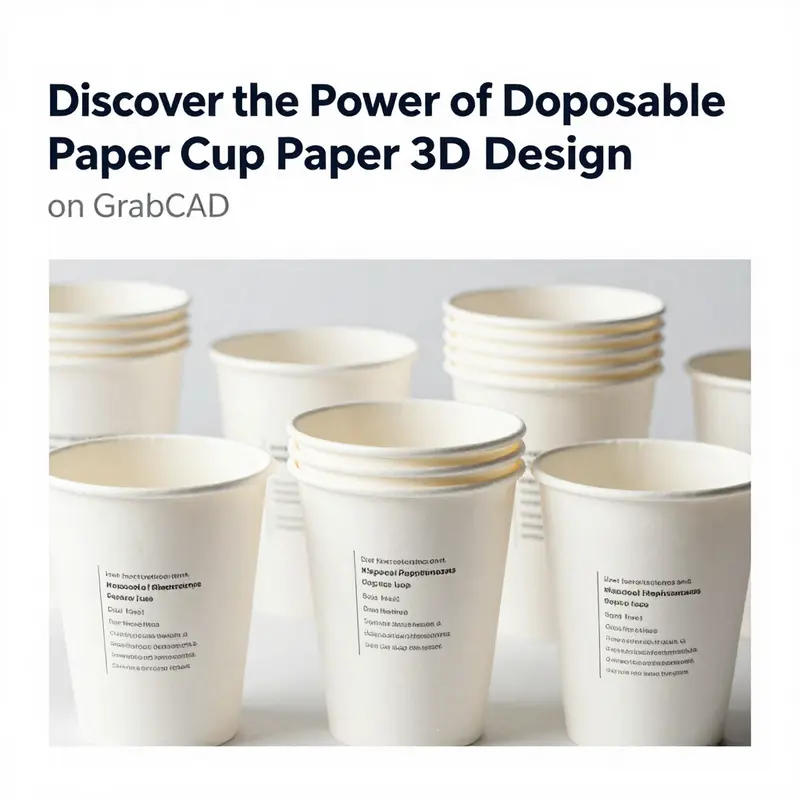
Material and regulatory constraints define every successful paper cup model. When preparing or evaluating a disposable paper cup 3D model for use on repositories like GrabCAD, it helps to think like both an engineer and a packaging specialist. The digital model must represent real-world manufacturability, regulatory compliance, functional performance, and end-of-life behavior. That starts with the material stack: the paperboard body and the interior liner. Virgin fiber-based paperboard is typical for strength and printability. Its structural behavior under load and heat must be considered in the CAD model through wall thickness and radii. The interior liner is critical to barrier performance. Food-grade polyethylene (PE) is ubiquitous because it is thin, inexpensive, and effective at preventing liquid penetration. Polylactic acid (PLA) is an alternative that aims to be compostable, but it alters thermal and mechanical properties. Modelers should indicate liner type in their part metadata and account for how the liner changes dimensional stability during production.
A realistic 3D model embeds functional features that relate directly to standards. Thermal protection, stability, and sealing are not optional details; they influence rim geometry, base profile, and wall taper. Hot beverage cups may be single-wall or double-wall. Single-wall cups rely on material thickness and a gentle taper to provide structural integrity. Double-wall designs add a secondary sleeve or formed air gap for insulation, which requires additional assembly geometry such as a snap-fit lip or a separate sleeve component in the CAD file. Bases are often molded with a shallow convex profile to avoid pooling and to increase stability; rims are reinforced with a curled or beaded edge to accept lids and to resist deformation. These features must be modeled with manufacturable radii and draft angles to reflect forming and curling processes.
Standard sizes and tapers translate into measurable model parameters. Designers typically define the top diameter, bottom diameter, height, wall thickness, and draft angle. Common draft angles fall between 5 and 8 degrees; this allows efficient nesting during production and reliable forming in cup machines. Wall thickness for single-wall hot cups usually ranges from 0.22 mm to 0.35 mm of paperboard, plus a lining layer. Double-wall or insulated cups will have additional thickness or a distinct inner wall, and these configurations must be modeled as separate shells or as an assembly so that renderings and simulations are accurate. Include tolerances for each critical dimension, especially for lid-fit features. The lid bead—its outer diameter, engagement depth, and interference clearance—directly controls leakage risk and user experience.
Food safety and environmental standards directly shape material choices and design details. Paperboard intended for food contact must comply with local food-contact regulations; any additives, inks, or coatings must be declared. Compostable certifications are governed by standards such as ASTM D6400 and ASTM D6868, which relate to the degradability of plastic-like linings and coated paper products. These regulations require that the product break down under industrial composting conditions within a specified time and leave no harmful residues. When a modeler specifies a PLA lining, they should annotate the model with the relevant standard references and expected limits for barrier performance, because PLA behaves differently in heat and moisture compared with PE. Models intended to demonstrate recyclable or compostable behavior should include notes on the coating composition and the steps required in downstream waste streams for proper separation.
Manufacturing and tooling constraints must be explicit in any practical 3D model. Paper cup production uses roll-fed paper converting, die-cutting, and forming processes. The digital model should therefore respect forming radii and minimal feature sizes. Sharp internal corners are not realistic; instead, specify minimum fillet radii where the sheet will be folded or glued. Seam geometry for side seals is another critical area: whether the cup uses a lap seam or a spiral wound construction dictates the location and size of gluing surfaces. Indicate glue flaps and adhesive zones as discrete faces in the CAD file so tooling designers can extract cut patterns or flattening data. If the cup has embossing or an embossed logo, include the depth and draft so that the embossing can be translated into the die design without causing paper failure.
Functional performance is often verified through a combination of simulation and physical testing, and a robust 3D model should support both. Structural simulations require accurate material properties: modulus, Poisson ratio, and thickness for the paperboard and liner. Thermal simulations require coefficients for insulation layers and contact conductance where a lid or sleeve interfaces. For vibration or stacking tests, the model must reflect realistic contact surfaces and stacking clearances. Designers creating assets for online libraries should include recommended test conditions and expected failure modes in the model description: hot-beverage deformation limits, maximum stacking height, and conditions under which the liner delaminates. Such metadata helps engineers and product designers select appropriate models for prototyping or for further finite-element analysis.
Interactivity and assembly features increase the value of a shared model. A reusable 3D asset should include separate parts for the cup body, lid, and any sleeve or sealing gasket. Parametric features—top diameter, bottom diameter, height, and wall thickness—allow downstream users to adapt the cup to different volumes or machine settings. Where possible, provide flattened patterns derived from the 3D geometry for die-making. These patterns bridge the gap between CAD and CAM and are indispensable for manufacturers. Annotate seams, glue areas, and printing zones. If the design supports custom print finishes or varnishes, indicate printable height and permissible ink coverage.
Sustainability considerations should be visible in the model documentation. State the expected recyclability or compostability of the cup and the trade-offs associated with the chosen liner. For example, PE linings generally make the cup difficult to recycle in standard paper streams unless specialized recycling processes separate the plastic. PLA linings can be industrially compostable but are sensitive to high temperatures and may warp during hot-fill processes. Designers should also note the potential for material substitutions—bagasse or sugarcane fiber cores, kraft paper, and other renewable fibers—and how these substitutions affect thickness, stiffness, and folding behavior. Provide recommended alternatives and their expected mechanical implications in the model notes.
Practical modeling tips will help your file succeed on a community platform. Use common unit systems and name them clearly in the file metadata. Include a reference plane and origin aligned to the cup center axis to simplify mating and assembly. Keep meshes clean if you export triangulated data for visualization; avoid unnecessary high-resolution meshes that bloat files. Provide STEP or native CAD files with full feature history when possible so other engineers can modify critical parameters. Label critical dimensions in the 2D views and attach a simple tolerance table. Lastly, include an image or render showing lid engagement and the cup in a stacked state.
A 3D model that accurately captures the constraints of real production and the requirements of standards becomes a practical tool rather than just a visual asset. It helps product engineers validate designs, enables packaging teams to plan decoration and labeling, and assists procurement in understanding material trade-offs. When you prepare a disposable cup model for sharing, annotate compliance with ASTM D6400 or D6868 where relevant, specify liner type, and provide manufacturing-related notes about seams, embossing depths, and die patterns. If you need an example of a single-wall product for reference when modeling, see the single-wall food-grade paper cup product page for practical dimensions and assembly cues: single-wall food-grade paper cup product page.
Standards resources provide the final layer of authority designers need to include. For compostable and coating-related requirements, refer to the ASTM guidance on compostable and paper-based standards.https://www.astm.org/Standards/D6400.htm
From CAD Draft to Consumer Experience: Applications and Use Cases of Disposable Paper Cups in 3D Modeling
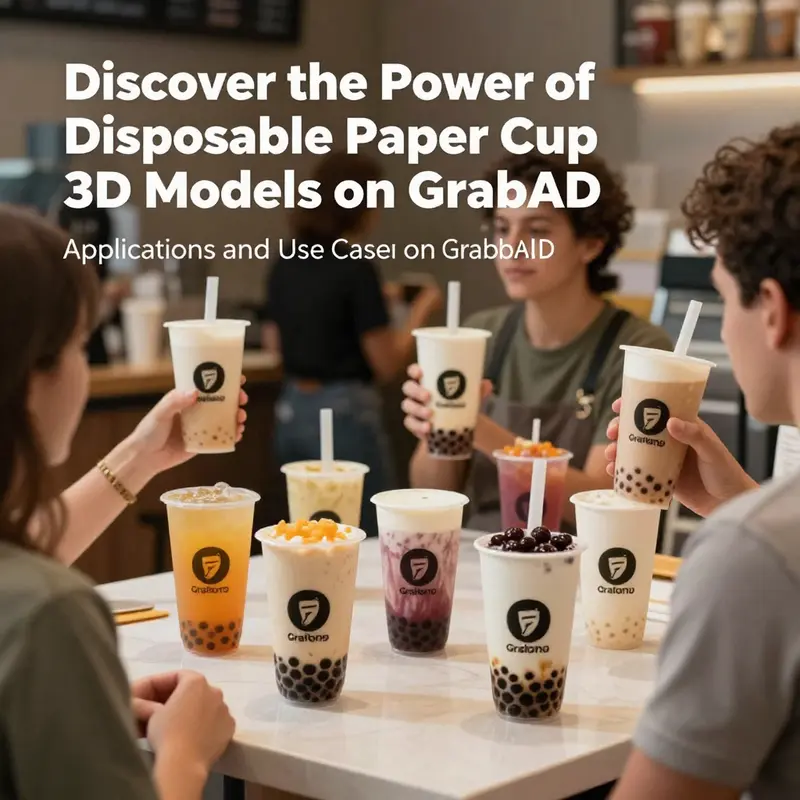
A disposable paper cup might seem ordinary, yet in the realm of 3D modeling its value is surprisingly rich. Designers, engineers, and marketers increasingly treat the cup as a living document—an object whose geometry, materials, and assembly sequences can be explored, tested, and refined long before a single sheet of production stock is cut. In the context of GrabCAD and similar design communities, the disposable paper cup becomes a practical classroom for learning how form, function, and feasibility intersect. The cup’s popularity across foodservice—hot drinks, cold beverages, soups, and snacks—ensures that its modeling challenges are realistic and varied. Even without a dataset in hand, the observable market lineup reveals essential categorical differences: seven-ounce single-wall cups that emphasize lightness and quick service; cups with a coated base to stabilize beverages and resist moisture; and a growing interest in single-layer kraft or unbleached variants that lean toward sustainability. Each type carries a distinct set of geometrical features, tolerances, and material cues that 3D artists must capture to convey authentic behavior when different lids, liners, and sleeves interact with the cup.
The practical value of 3D models of disposable cups extends beyond aesthetic fidelity. In many venues—dessert kiosks, mobile vendors, food trucks, and family outings—the cup serves not only as a vessel for liquid but as a packaging system with a layered engineering mindset. The inner lining, often a food-grade wax or polyethylene (PE) film, acts as a barrier to moisture and grease, while the outer surface may bear branding, texture, and color treatments. The lid, when used, becomes a critical interface that governs spill resistance and thermal retention. In 3D scenes, these features are not ornamental; they are functional cues that impact how a model interacts with other components in a digital kitchen, a retail display, or a delivery workflow. The more accurately these components are modeled, the more useful the digital representation becomes for design reviews, ergonomic testing, and market simulations.
When a modeler approaches a disposable cup, the first question is not simply how the exterior looks, but how it is built. The geometry typically begins with a revolved profile or a lofted cross-section that traces the cup’s outer contour. This geometry must then be given thickness, often through a shell operation, to reflect real-world wall capabilities. The inner lining, which is essential for performance with hot liquids, is modeled as a separate, slightly inset surface that either slides into the base geometry or is integrated as a cylinder that nests within the main body. This separation mirrors production realities where a liner is a separate part in the assembly, yet must align perfectly with the cup’s body to prevent leaks. In practice, the designer often adopts a modular workflow: core geometry for the cup body, a secondary module for the liner, and another for the lid or base coating if present. Such an approach makes it easier to swap materials, alter dimensions, or test fit with other components without starting from scratch each time.
Another fundamental consideration concerns the cup’s profile details. The lips, the taper rate along the body, the presence or absence of grip rings, and the transition from wall to base all influence both manufacturing feasibility and user interaction. In a 3D scene, the lip curvature must reproduce a comfortable interface for sipping and for the possible insertion of a lid’s sealing rim. Grip features like ridges or indentations are not solely for aesthetics; they affect how a real cup feels in the hand and how a lid sits when the cup is moved, filled, or knocked gently on a table. The base, sometimes coated or reinforced, interacts with surfaces and with the supporting hardware at the point of sale or in a transport scenario. When these elements are modeled with intent, the digital cup can be evaluated for spill risk, thermal performance, and even ergonomic suitability as a customer engages with a brand on a virtual shelf.
Texture and material realism play a central role in translating a CAD concept into a believable digital object. The outer surface may carry a kraft, coated, or dyed finish, each with a unique light response. A kraft exterior exhibits a rougher microstructure and a matte or semi-matte appearance that catches light differently than a wax-coated interior that gleams under subtle reflections. In many 3D pipelines, artists use a combination of procedural textures and high-resolution maps to simulate fibers, grain, or layer seams without bloating the model with excessive geometry. The interior film, in contrast, often presents a distinct shine or translucence that hints at a barrier layer. The combination of rough exterior and glossy interior instantly communicates both the function and the environmental context—the cup’s dual life as a disposable item and a product surface ready for branding elements, whether on a bakery counter, coffee bar, or online catalog.
From a workflow perspective, 3D modeling disposable cups benefits from a parametric mindset. By keeping key dimensions—top diameter, bottom diameter, height, wall thickness, lip radius, and liner inset thickness—driven by adjustable parameters, designers can quickly explore a family of parts. This approach aligns naturally with the way packaging often migrates through versions, where a brand might test slightly different volumes, wall thicknesses to balance cost and performance, or liner materials to respond to sustainability goals. The ability to swap materials and re-tune tolerances without rebuilding geometry from the ground up is especially valuable when models are shared on platforms that foster collaboration, such as community-driven CAD libraries. In these contexts, a well-constructed cup model becomes a reusable asset that can be assembled with lids, sleeves, or related packaging components to form complete packaging solutions.
Digital realism also extends to the dynamic aspects of the cup’s use. A 3D model is not static in the real world; it participates in scenes where beverages are poured, lids are sealed, and condensation may form along the exterior. While the latter involves environmental conditions more than geometry, clever shading, subsurface scattering, and microfacet reflections can simulate the moment when a hot coffee meets a cooler air mass, producing a believable sense of warmth. For a virtual merchandising display, such details are not merely decorative; they help customers envision the sensory experience of a cup in a café setting. In a production-focused workflow, dynamic simulations—such as heat transfer into the liner or spill resistance under tilting scenarios—can be run in a virtual environment to anticipate performance before a prototype tap is opened.
Educationally, the cup model serves as a versatile teaching tool. Students and professionals can study how small changes in the geometry affect fit with lids, how material choices influence sealing, and how different textures contribute to perceived quality. Tutorials circulating in digital ecosystems often use the cup as a concise example of how to model complex curved surfaces, apply layered materials, and optimize scenes for product photography. Even platforms oriented toward creative expression, like social storytelling around food service, reap benefits: a photorealistic cup can become a character in a marketing narrative, conveying warmth, safety, and sustainability through its surface language.
In the broader ecosystem of 3D assets, curated resources offer a bridge between hobbyist experiments and production-grade visuals. For modelers seeking ready-made realism, asset libraries provide detailed cup models complete with accurate texture maps that emulate paper fiber, waxy linings, and glossy interiors. These assets can be integrated into scenes featuring beverages, retail displays, or delivery logistics, dramatically reducing digital production time while maintaining high fidelity. The practical value of such resources is elevated when the models are created with clean topology, proper UV layouts, and an organized naming scheme for components like the body, liner, lid, and base coating. The ability to drop a realistic cup into a virtual kitchen or a storefront mockup accelerates decision-making and supports stakeholder alignment throughout the product-development cycle.
For designers who want to study the market through a 3D lens, the workflow can extend into sustainability analytics. The same model that helps visualize a packaging solution can also host simulations to compare alternative materials, like different grades of kraft or biodegradable composites. In a digital test bed, one can assess how a thinner wall might reduce material usage and whether it compromises integrity under heat or with a sealed lid. These analyses help teams evaluate eco-friendly options without incurring the time and cost of multiple physical prototypes. The capacity to evaluate trade-offs in a virtual space is particularly relevant given the growing consumer and regulatory emphasis on responsible packaging.
Resources for modeling and visualization reinforce these practices. Reputable asset providers offer curated collections of 3D assets that capture the form and surface properties of disposable cups with high fidelity. While the primary aim is to enable compelling visuals, the underlying data can support engineering checks, assembly studies, and marketing demonstrations. Tutorials abound as well, with practitioners sharing techniques for modeling flexible materials, folding patterns, or re-creating the subtle curvature changes that occur along a cup as it transitions from a cylindrical body to a tapered bottom. These techniques are transferable across product categories, reinforcing the idea that mastering a cup is a gateway to more ambitious packaging projects.
To connect practice with real-world examples, consider resources that showcase a range of cup-related assets and their applications. An extensive catalog of 3D cup models can guide a designer toward credible sampling of textures, thickness ranges, and interface geometries. For further context on how the industry visualizes these objects in professional workflows, the following external resource offers insight into available 3D assets and their use in design storytelling: https://stock.adobe.com/en/3d/paper-cup-3d-models. This reference helps frame the possibilities for photorealistic rendering and informed decision-making as teams iterate toward production-ready packaging concepts.
From an internal perspective, the community-driven exploration of disposable cup models on collaborative platforms is equally instructive. For practitioners seeking inspiration or a head start on a project, a curated internal link to a repository of design assets can be valuable. For instance, a page dedicated to eco-friendly and printable cup designs can illuminate how brands convey sustainability through surface treatment and texture choices. Such assets are not mere decoration; they become touchpoints in a design conversation that ties form to function, branding to ergonomics, and cost to manufacturability. A practical example of this approach can be found in an internal catalog entry that highlights an eco-friendly printed-logo paper cup with lid, illustrating how branding considerations can be prototyped within a digital package. eco-friendly printed-logo paper cup with lid. This link is not merely about aesthetics; it demonstrates how a design language can be embedded in a 3D model to support marketing and product storytelling while keeping production realities in view.
In summary, the disposable paper cup is a compact but potent vehicle for exploring 3D modeling techniques that matter in the real world. Its simple exterior belies a robust set of engineering and design considerations that practitioners can study and iterate within a flexible, modular workflow. The cup’s ubiquity in daily life makes it an accessible testbed for geometry, materials, assembly, and rendering. It is a natural entry point for collaboration across disciplines—from industrial designers and mechanical engineers to marketing teams and sustainability officers. As 3D modeling continues to mature as a language for product development, the disposable paper cup remains a practical, scalable, and instructive subject that helps teams align vision with feasibility, aesthetics with performance, and digital representations with tangible outcomes.
External resource: https://stock.adobe.com/en/3d/paper-cup-3d-models
From 3D Models to Real-World Footprints: Tracing the Lifecycle of Disposable Paper Cups
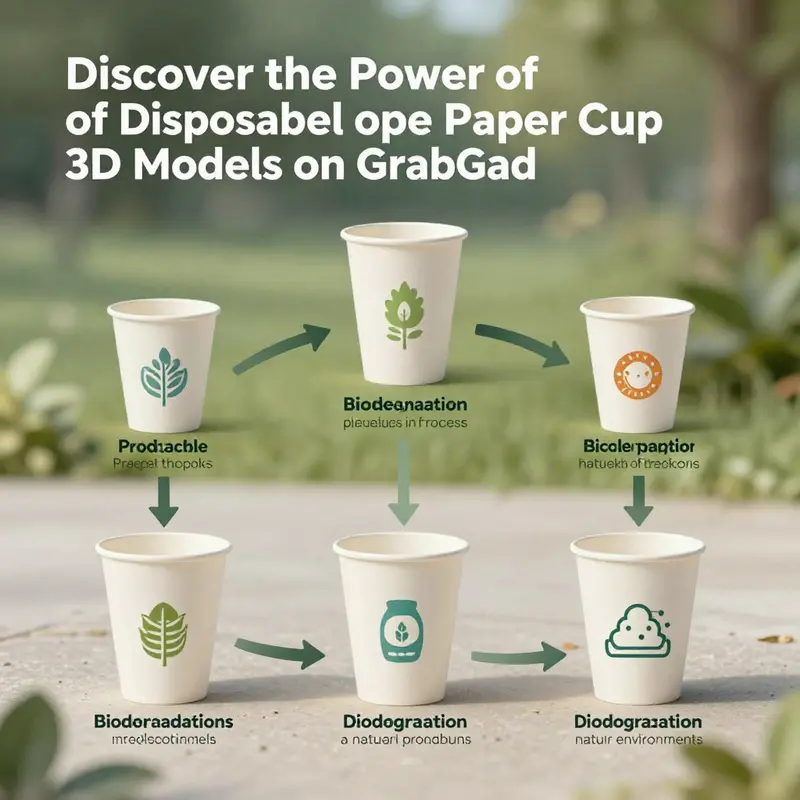
The story of a disposable paper cup begins far before it leaves the consumer’s hand. It starts in forests and pulp mills, travels through chemical plants and converting lines, and ends in a landfill or a recycling stream that may or may not reclaim most of its materials. In design circles, especially within CAD and 3D modeling communities, this journey has become increasingly legible when viewed through the lens of a lifecycle. The advent of accessible 3D models for disposable cups—often shared in online repositories and design hubs—allows engineers, researchers, and policy makers to visualize more than shape. They can visualize layering, material interfaces, and the subtle complexities that govern end-of-life behavior. The GrabCAD ecosystem, for example, hosts a spectrum of models that replicate the geometric and material complexities of disposable cups, from hot-beverage single-wall variants to coating-backed designs and even kraft-paper base configurations. These digital replicas are not mere proofs of concept; they are analytic tools that enable designers to interrogate the environmental consequences of a product long before it reaches the factory floor. They provide a common ground where mechanical fit, manufacturing feasibility, and ecological impact intersect, offering a more holistic approach to product development in an industry accustomed to quick turnover and mass production.
Despite a surface-level perception of disposables as inherently biodegradable or easily recyclable, the environmental reality is layered and often counterintuitive. Most disposable paper cups are lined with polyethylene or another plastic barrier to provide waterproofing, which transforms what seems like a simple paper package into a hybrid material. This laminated structure makes recycling far more challenging because the paper fibers and plastic barrier are typically dissimilar polymers that resist separation in conventional recycling streams. The resulting recycling rate is not solely a measure of the cup’s absence of waste; it is a reflection of the system’s ability to properly recover and segregate the composite materials. In many regions, improper disposal or contamination of recycling streams by these coatings leads to lower recovery rates and, ultimately, more waste ending in landfills. The invisible cost embedded in this design choice extends beyond a single use; it propagates through waste management infrastructure and consumer behavior, influencing the overall environmental footprint of even a brief act of consumption.
A robust life cycle perspective helps quantify this footprint. A widely cited lifecycle assessment (LCA) indicates that producing a typical 16-ounce disposable cup requires substantial virgin wood pulp and water, underscoring that even a seemingly lightweight item carries embedded resource demands. The figures—approximately 25.2 grams of virgin wood pulp and about 2.33 liters of water per cup—capture the chemical and physical intensity behind a product designed for single use. The energy embedded in both the paper and the plastic components amplifies the total carbon footprint, a reminder that materials selection and processing choices have far-reaching climate implications. This emphasis on energy and material flows is essential when interpreting model data. A useful comparative benchmark comes from research on PET-based cold-drink cups, which reports reductions in material performance relative to weight, but with substantial greenhouse gas implications—more than 80 grams of CO2 per cup in some analyses. It is important to note that this PET figure refers to a different category of cup, illustrating how small design decisions ripple across the lifecycle. The overarching lesson is clear: a cup’s environmental impact cannot be equated with its appearance or its compostability label alone. The truth lies in the intertwined paths of forestry, pulping, coating, molding, filling, distribution, and disposal.
The lifecycle foregrounds not only raw material inputs and emissions but also the logistical and regulatory contexts that influence end-of-life outcomes. Even when a cup is marketed as compostable or recyclable, real-world performance depends on local waste management capabilities, consumer behavior, and the presence of separation technologies for multilayer materials. The polyethylene or other plastic barrier often complicates composting streams and can contaminate recycling streams, reducing overall material recovery. The environmental toll thus emerges from a chain of decisions spanning multiple scales—from forestry practices to coating chemistry, from machine optimization to consumer habits. In this context, digital models can illuminate trade-offs. A 3D representation of a disposable cup can reveal the thickness of the paper, the layer interfaces, and the geometry that governs stacking efficiency and transport energy. More importantly, it can model how an alteration in coatings or fiber sources would affect separability and recyclability. With the right data, a designer can simulate how a mono-material approach or a more easily separable barrier could alter the end-of-life stream, potentially improving recyclability without sacrificing waterproofing or thermal performance.
In this landscape, 3D models serve a dual purpose. On one level, they are design canvases for product optimization. On another level, they are visualizations of resource flows and material constraints. When a model clearly shows a paper layer bonded to a polymer barrier, stakeholders can discuss the feasibility of redesigned structures that maintain performance while improving recyclability. This conversation is particularly relevant for the design communities that share and refine models on collaborative platforms. The ability to manipulate the geometry of a cup, to adjust the thickness of the coating, or to substitute fiber types in an open-access file, accelerates the exploration of eco-friendly alternatives. It also invites a more nuanced debate about the true sustainability of disposable cups, moving beyond simple labels toward data-driven assessments of how design choices affect resource use, energy demand, and waste streams.
The environmental discourse surrounding disposable cups gains depth when paired with tangible examples from the literature and industry data. Studies document that the production of a single cup involves not only the direct extraction of wood and water but also the upstream energy-intensive processes that convert raw materials into finished products. Pulp mills, paper machines, and coating lines require substantial energy input, while the polymer barriers add another layer of processing, sourcing, and refining. The cumulative energy input contributes to greenhouse gas emissions across manufacturing, transport, and end-of-life management. These insights highlight why modeling the lifecycle is crucial for responsible product design. Rather than focusing solely on post-consumer disposal, the lifecycle approach encourages designers to consider how choices at the earliest stages—such as fiber sourcing, coating chemistry, and manufacturing sequence—affect cumulative environmental impacts.
To anchor this discussion in a concrete, design-oriented context, the GrabCAD and similar repositories offer models that mirror the actual production realities of disposable cups. These models enable engineers to examine diameters, heights, lip radii, and internal geometry that influence how a cup stacks in a manufacturing line, how it tolerates heat, and how it interfaces with lids and sleeves. Yet, beyond these mechanical considerations, the same models can be annotated with material layers and thicknesses, turning a purely geometric file into a learning tool about material science and end-of-life behavior. The ability to view, modify, and reconfigure a model’s coatings and fiber compositions fosters an iterative process where environmental performance is treated as a design constraint rather than an afterthought. In practice, this means that a 3D model becomes a platform for simulating various scenarios—changing the barrier material, substituting an alternative fiber, or adjusting the coating to improve recyclability—and then comparing the resulting cradle-to-grave effects.
For designers who want to connect the digital with the real world, a practical pathway exists. By examining publicly available models of disposable cups under different configurations—hot beverage single-wall variants, lined base designs, and kraft-paper alternatives—designers can map the material stack and identify critical junctions where recycling is hindered. In doing so, they can identify opportunities to simplify the material system, enabling simpler separation or even the adoption of alternative barrier technologies that are more compatible with current recycling infrastructures. The potential to simulate disposal outcomes—whether through simple mass-balance assumptions or more sophisticated life cycle impact modeling—can transform how products are imagined, validated, and ultimately disposed of.
In this narrative, the role of online communities is pivotal. The GrabCAD ecosystem, with its diverse repositories of user-generated models, provides a living archive of how real designers think about these products. One notable thread in this space involves models that explore eco-friendly design features, from logos printed with environmentally mindful inks to lid configurations that minimize material use while preserving functionality. For readers who want to explore a concrete example within this community, the repository hosts a model focusing on eco-friendly printed logo designs for disposable cups, which can be accessed via the following link: senang07-eco-friendly-printed-logo-paper-ice-cream-cups-with-lid-ice-cream-paper-bowl-paper-ice-cream-cups-with-lid. This entry illustrates how a design team might balance aesthetics, branding, and environmental considerations within a single digital file. The integration of such models with lifecycle thinking helps ensure that visual appeal does not eclipse end-of-life performance.
Yet the science remains that a substantial portion of disposable cup climate impact originates upstream. Forestry practices, pulp processing, fiber refining, and the production of barriers all contribute to energy demand and emissions. The data, while variable by region and technology, paint a consistent picture: a large share of the cup’s footprint is embedded well before it is filled with coffee or tea. In this sense, the 3D model is not just a representation of a product’s geometry; it is a scaffold for understanding where the most impactful improvements can occur. If a designer can reduce the need for virgin pulp through the use of recycled content, or if a barrier can be redesigned to permit easier recycling without compromising waterproofing, the resulting lifecycle benefits can be meaningful on a system level. The goal is not to pretend that one design tweak will solve all environmental challenges but to empower designers to test hypotheses quickly and communicate those outcomes with stakeholders—from suppliers to policymakers.
The broader implication is that digital design and lifecycle thinking should be inseparable in the development of disposable paper cups. As environmental data become more granular and as waste management systems evolve, the value of accurate 3D representations grows. They offer a platform where engineers can visualize trade-offs between material performance and environmental performance, where students and professionals can explore how small changes at the design stage echo through the supply chain and the waste stream, and where industry and researchers can align on best practices for material selection, manufacturing efficiency, and end-of-life recovery. In sum, the real utility of 3D models lies in their ability to decouple shape from footprint, to show how form and function relate to resource use, and to reveal opportunities for improvement that were invisible in traditional CAD workflows.
The environmental narrative of disposable cups is not a verdict but a call to more transparent design processes. 3D models grounded in lifecycle data invite a richer, more honest conversation about what sustainability means in a product category defined by convenience and mass production. They also invite cross-disciplinary collaboration—mechanical engineers working with material scientists, waste management experts, and policy analysts—to reimagine a category that often serves as a litmus test for how modern economies handle single-use goods. The ultimate objective is clear: to align digital prototypes with real-world outcomes so that every cup design decision moves us toward less waste, easier recycling, and clearer accountability across the lifecycle. External research continues to illuminate this path, emphasizing that a holistic approach to environmental impact requires attention to every stage of a cup’s life, from forest to landfill and beyond.
External reference: ScienceDirect provides in-depth analyses of the environmental implications of disposable cup production and disposal, offering context for the numbers discussed above and highlighting the urgency of rethinking materials and end-of-life strategies. See: Disposable paper cup environmental bane – ScienceDirect.com.
Final thoughts
The lush world of disposable paper cups paired with 3D modeling technology offers significant advantages for beverage businesses. By exploring 3D models on GrabCAD, businesses can tap into customization, innovative designs, and optimal functionality. Each cup carries the potential to impress customers not just through taste but through visually appealing and sustainable designs. As we move towards a greener future, understanding the lifecycle and environmental impact of these products becomes increasingly essential. Embrace innovation in your beverage service and lead the way in sustainability with carefully selected disposable tableware.