
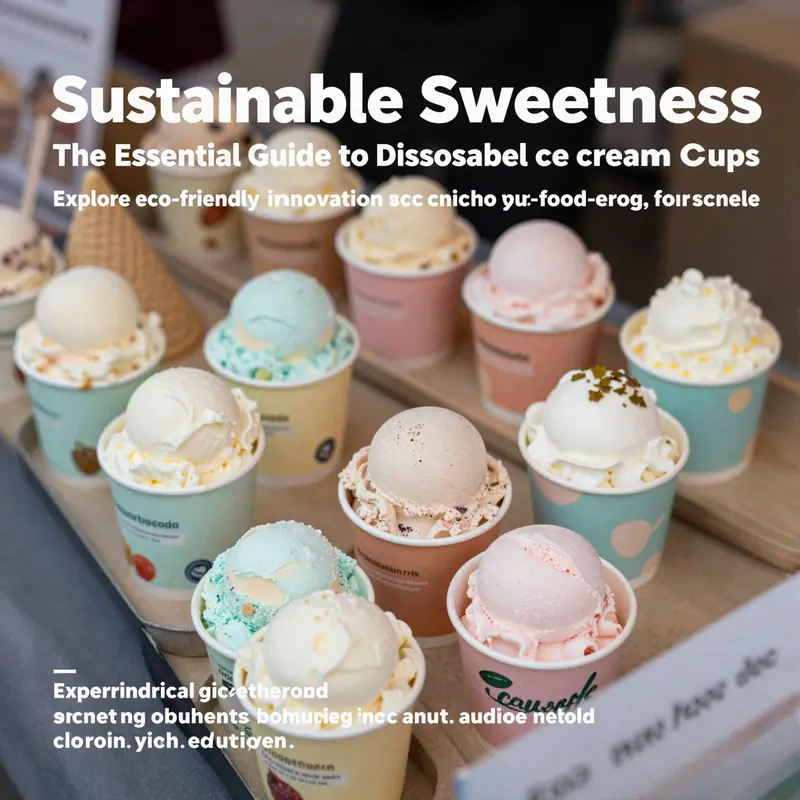
In a world where sustainability and aesthetics are paramount, disposable paper ice cream cups have emerged as a game-changer for beverage chains, restaurants, food trucks, and event planners. As consumer preferences shift towards eco-friendly options, these cups provide a responsible alternative without compromising on quality or design. This article delves into the key features of these cups across several chapters, highlighting eco-friendly materials, design and customization options, cost analysis, and essential health and safety standards, all tailored to inspire businesses to elevate their service offerings while supporting sustainability.
From Forest to Frost: How Eco-Friendly Materials Reimagine Disposable Paper Ice Cream Cups
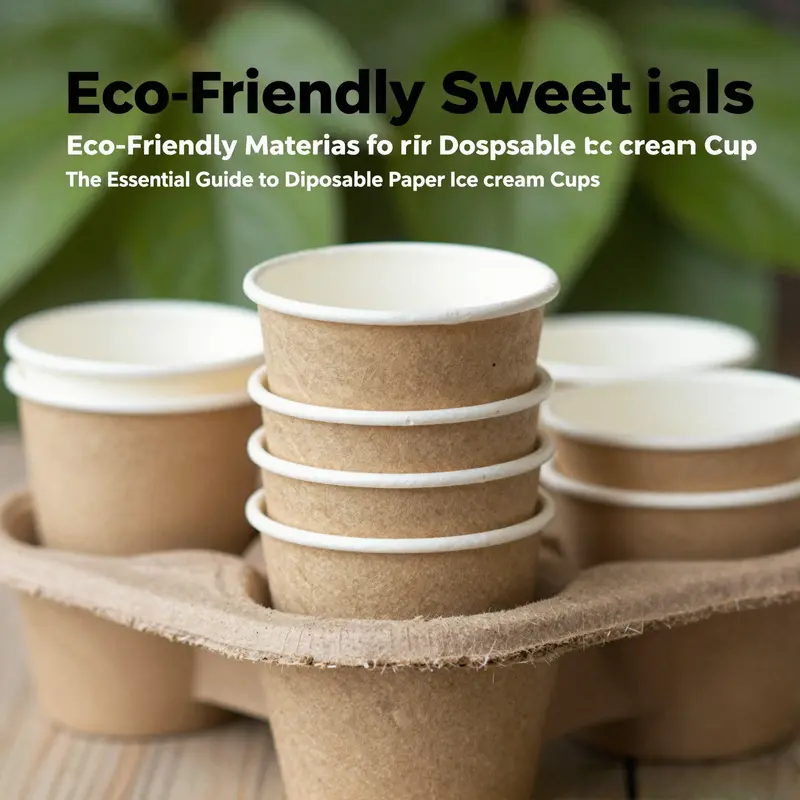
Sustainability in packaging has moved beyond a trend and into a standard that shapes how foods travel from counter to customer. Disposable paper ice cream cups are at the heart of this shift, blending performance with responsibility in a way that appeases both the palate and the planet. The core of this transformation lies in the materials themselves. Many eco-conscious cups are built from FSC-certified kraft paper that is derived from 100% recycled inputs. This choice is more than a certificate on a spec sheet; it signals a commitment to a closed-loop mindset, where paper fibers begin their lives in responsibly managed forests and, after use, re-enter the recycling stream rather than ending up as waste. In practice, this means each cup contributes to a smaller footprint across its life cycle, especially when supply chains prioritize high recycled content, efficient manufacturing, and robust end-of-life options. The tactile heft of kraft paper—its natural texture and creamy color—also helps brands communicate a message of earth-minded quality without sacrificing consumer appeal. The importance of source material becomes even clearer when considering the interior lining. Some cups employ a pure wood pulp layer with a polyethylene, or PE, film lining. This double-layer approach creates a moisture barrier that protects both the ice cream and the cup walls, reducing the risk of leakage or weakening caused by cold, damp contents. Such a lining is not inherently counter to sustainability goals if it is designed to maximize product freshness and extend container life, thereby lowering waste associated with spills, returns, or compromised goods. It is a balancing act between barrier performance and recyclability, and the best designs manage to narrow that gap rather than widen it.
The structural philosophy behind these cups also matters. Many products use a single-wall configuration, which provides enough rigidity for scooping and transport while keeping the material profile lean. A single-wall design often pairs well with a tight lid that seals securely, further preventing leaks during delivery or long walks from car to counter. For operations that require extra insulation or longer hold times, some manufacturers offer double-wall variants or sleeve-like constructions that retain temperature without encouraging condensation on the exterior. In any case, the material choice must harmonize with the lid’s design and the overall handling routine—from takeout and drive-thru to event catering and food trucks. The integration of barrier coating, wall thickness, and lid fit is a careful orchestration, and it shows how materials, engineering, and usability converge in a single package to deliver a reliable customer experience.
Beyond the tangible performance, the environmental narrative is reinforced by certifications that reassure retailers and consumers alike. Cups marketed as eco-friendly are often aligned with broad food safety and environmental standards. For instance, under EU Regulation (EC) No 1935/2004, these products are deemed safe for direct food contact, which is essential given that desserts are frozen and repeatedly exposed to moisture, fats, and sugars that can challenge packaging stability. Extended Producer Responsibility frameworks in Germany and France add another layer of accountability, encouraging producers to take responsibility for the end-of-life management of their packaging. On the quality assurance side, many manufacturers adhere to ISO 9001 and related systems, supported by independent attestations such as SGS or similar schemes. Collectively, these certifications signal a robust commitment to health, safety, and environmental stewardship.
The environmental calculus of these cups extends beyond certification. They are designed to participate in a circular economy, a model that aspires to keep materials circulating rather than discarding them after a single use. When waste management infrastructure accepts recycled paper and compostable components, the cups can be diverted from landfills and reprocessed into new paper products. Even in regions where recycling or composting remains a work in progress, the emphasis on renewable materials and lower initial carbon footprints offers tangible improvements over conventional plastic packaging. The eco-friendly approach thus becomes a blend of material science and regional waste realities, requiring ongoing collaboration among manufacturers, suppliers, waste managers, and freezing operations to maximize positive environmental outcomes.
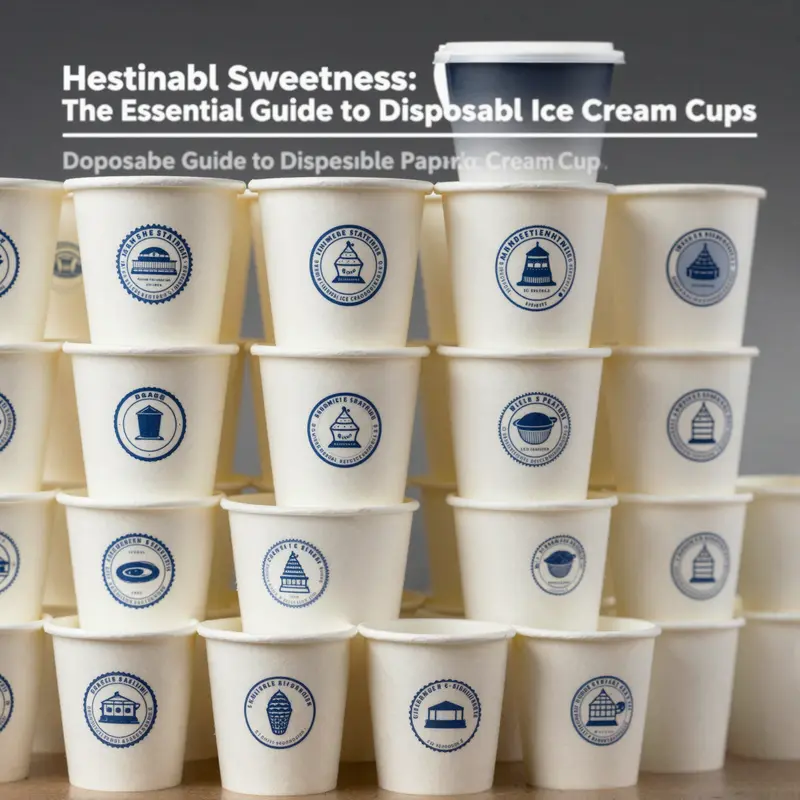
Customization plays a pivotal role in making eco-friendly cups viable for widespread adoption. The white, single-wall base serves as a versatile canvas for branding through offset or flexo printing. A strong visual identity on packaging can elevate consumer perception, helping a dessert brand convey its sustainability story with every scooped bite. The market increasingly supports a range of sizes—from compact 4 oz portions to larger 32 oz servings—so operators can tailor portions to menus, events, or promotional campaigns. Shape customization is also expanding, with some producers offering square designs that stand out on a crowded display and create a distinctive brand impression. In this way, sustainability becomes a differentiator, not a compromise. Yet every customization must be balanced with recyclability and safety requirements. The inks used for branding are typically food-grade, designed to remain stable under cold temperatures and not contaminate the contents. Printing lines must be tightly integrated with barrier layers and the paper substrate to ensure durability through the product’s lifecycle.
The manufacturing ecosystem behind eco-friendly cups is characterized by rigorous quality management and scalable production. Leading producers invest in modern production lines and systematic QA processes that track raw materials, coating quality, and finished cups. Certifications such as ISO 9001 reflect a disciplined approach to process control, while third-party audits assure customers that every batch meets defined standards for cleanliness, strength, and consistency. The practical upshot is reliability: a cup that holds its shape, protects the product, and withstands the rigors of transport, all while aligning with a brand’s environmental commitments. This blend of reliability and responsibility helps operators expand their use of sustainable packaging from special events to everyday service.
Cost is a practical truth that every buyer considers when choosing eco-friendly cups at scale. The economics of bulk purchasing often favor larger orders, with price points moving closer to material and production efficiencies as volumes rise. Industry observations suggest that very large runs can reach roughly six to ten cents per piece, depending on thickness, barrier needs, and the presence of printing. However, for standard, non-branded cups designed for generic use, bulk pricing can dip well below this range when order volumes exceed tens of thousands of units. For custom logo printed cups, unit costs typically increase in proportion to the complexity of the branding, yet the premium remains modest relative to the value of stronger brand exposure at point of sale and in take-home experiences. It is common to see custom designs starting in the low single digits per unit in very large runs, with price sensitivity driven by color counts, decoration area, and substrate compatibility. Suppliers often note that minimum order quantities—ranging from tens of thousands to fifty thousand units—enable the most favorable pricing. This is not merely a matter of financial arithmetic; it reflects the realities of converting recycled materials into finished cups with precise coatings, stable inks, and strict quality checks.
For businesses wrestling with supplier selection, due diligence is more than a formality. A practical approach begins with credential verification: confirm that producers hold recognized certifications and that those credentials are current. Request samples to judge material feel, barrier performance, and print fidelity. In doing so, buyers can assess whether the cup delivers on both sustainability and sensory experience. In parallel, consider the overall supply chain: how quickly can the supplier scale production to meet demand, what are the lead times, and how flexible are the options for coatings, sizes, and branding? These questions are essential to ensure that the packaging not only aligns with sustainability goals but also supports concrete business objectives—be it faster delivery, enhanced in-store visibility, or more cohesive takeout branding.
For readers exploring how packaging categories interrelate with sustainability goals, the broader paper packaging section offers a curated view of materials, processes, and options that can inform decisions about eco-friendly ice cream cups. You can explore this category to understand how different substrates and coatings influence both performance and end-of-life pathways.
External resource: https://www.alibaba.com/product-detail/Customer-printed-disposable-paper-ice-cream-cup_1601485278376.html
From Form to Flavor: Design Features, Insulation, and Branding in Disposable Paper Ice Cream Cups
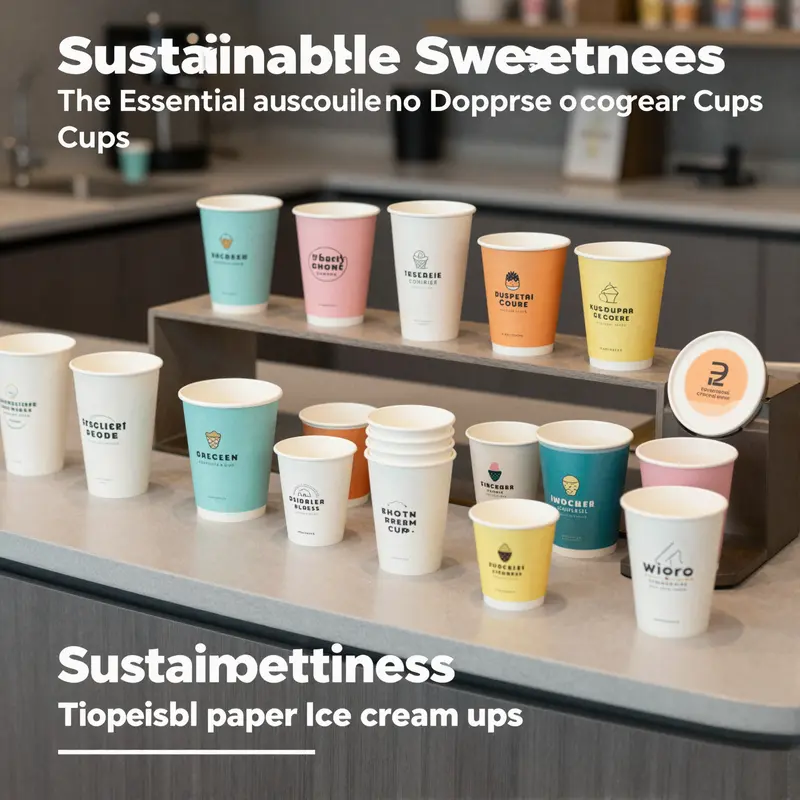
Designing disposable paper ice cream cups focuses on more than merely holding a frozen treat. It combines material science, engineering, and brand storytelling, where each design choice influences temperature stability, handling comfort, and the way a cup communicates a flavor, a moment, or a seasonal memory to the consumer. In this chapter we examine how form and function merge—from insulation that keeps ice cream at an optimal temperature to branding opportunities that turn a simple cup into a mobile advertisement for a shop, a saison, or a seasonal collection. The aim is to elevate the entire experience of purchasing, transporting, and enjoying a frozen dessert, whether in a cafe, a street-side line, or at a pop-up event. A well-designed cup makes a first impression through feel, lid fit, and spill resistance, becoming a subtle endorsement of the dessert itself. The cup becomes both tool and canvas, carrying flavor imagery, color, and brand voice through print, texture, and shape. The best designs balance efficiency with delight, while meeting growing expectations for sustainable packaging that performs as well as traditional plastics.
A central pillar of good cup design is thermal performance. Modern disposable cups often use double-wall parchment construction, which provides superior insulation and can offer noticeably better performance than single-wall options. The interior maintains the dessert’s temperature while the exterior remains comfortable to touch, reducing condensation and sogginess on the surface. This creates a more premium feel and supports longer hold times without compromising the dessert’s texture.
Material choices also shape the environmental narrative. Many cups use FSC-certified kraft paper sourced from recycled or responsibly managed materials. A moisture barrier, often a polyethylene coating, protects against leaks and preserves mouthfeel for soft-serve or premium ice cream. The coating aids durability during handling and transport and aligns with food-safety standards governing contact materials. Cup surfaces commonly reflect safety and regulatory compliance for direct contact with edible products across markets.
Customization is where cups tell a brand’s story most directly. Manufacturers offer extensive color and graphic options, enabling operators to align packaging with flavors and campaigns. Shape variation—round, square, or rectangular—gives brands a distinctive visual identity on crowded shelves. Sizes from small samples to large family servings allow a cohesive packaging system when paired with tailored lids.
Printing capabilities further support this customization. White, single-wall bases provide a platform for offset and flexo printing, delivering vibrant color and stable reproduction that withstands cold storage. Consistent branding across SKUs reinforces recognition as customers move through lines and to tables or cars. A well-branded cup acts as a mobile billboard, encouraging repeat purchases and social sharing when presented with cohesive packaging elements.
Practical features enhance the user experience beyond visuals. Integrated spoons offer compact, all-in-one functionality, while secure lids reduce spill risk during transport for delivery, catering, or street sales. These features boost operational efficiency and customer satisfaction, helping a customer feel confident in choosing that brand again.
From a manufacturing perspective, modern cup production uses high-speed lines and automation to achieve multi-size compatibility and tight tolerances. Operators monitor metrics such as thickness, seal integrity, and coating uniformity to ensure quality and reduce waste. The result is a scalable solution capable of meeting seasonal demand without sacrificing performance.
Compliance with food-safety standards remains foundational. Reputable manufacturers ensure products meet international regulations and third-party attestations, providing confidence that packaging will not contaminate food and will pass regulatory checks across markets.
Weight and logistics also matter. Lighter designs translate into lower shipping and fuel costs, supporting a smaller environmental footprint across the supply chain. Cradle-to-cradle thinking—where materials can re-enter the resource loop after use—drives decisions about compostability or recyclability in paper-based products.
All of these considerations—thermal performance, material selection, customization, printing, features, manufacturing technology, and compliance—combine to tell a broader story: a cup that supports flavor, storytelling, and operational efficiency while aligning with sustainability goals. The cup becomes a partner in the dessert experience, inviting photos and social sharing and extending a brand’s reach beyond the counter.
Cost, Capacity, and Confidence: Navigating the Supplier Landscape for Disposable Paper Ice Cream Cups
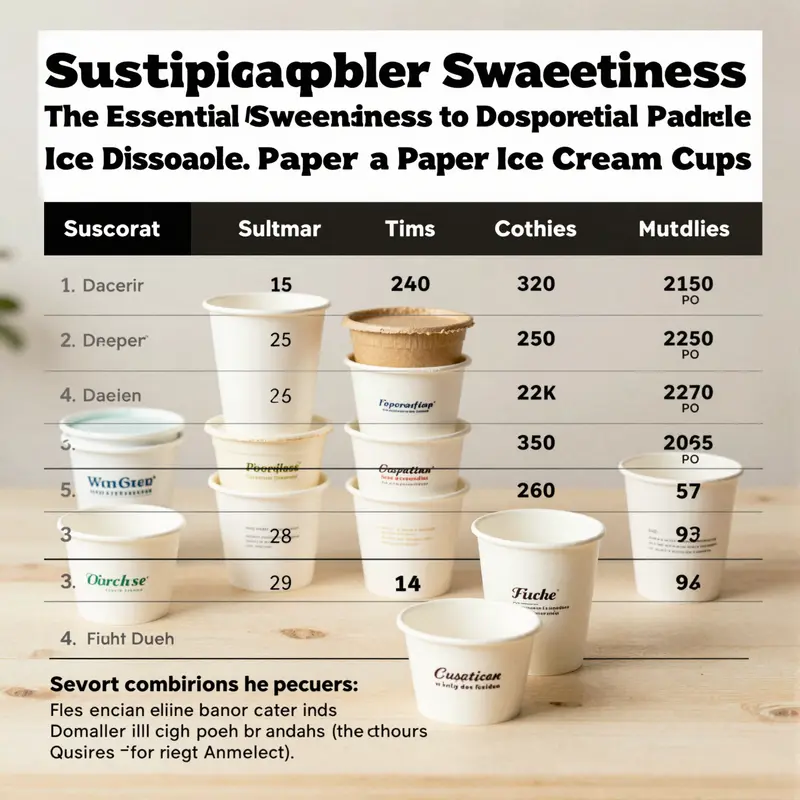
When a food business pivots from plastic to disposable paper ice cream cups, the decision ripples far beyond the counter. Cost becomes a guiding thread that weaves through sourcing, quality, and speed-to-market, while capacity and confidence in a supplier underwrite every scoop sold, from a bustling café to a seasonal festival. In this chapter, the emphasis is not merely on the sticker price but on how price interacts with size, coating, customization, and order rhythm to shape a packaging strategy that sustains margins without compromising the guest experience. The economics of these cups are driven by several overlapping levers. First, size matters. The market typically segments by small, medium, and large volumes, and the unit price reflects both material use and the production line’s efficiency. For small orders—think 1,000 to 5,000 pieces—the prices tend to be higher per unit, often in the range of four to eight cents each. This premium is a consequence of setup costs, knife-edge tooling, and the churn rate of printing and finishing stations that must be amortized over fewer units. As volumes rise, unit costs fall sharply. Medium orders, roughly 5,000 to 49,999 pieces, commonly settle in the two to three-cent territory per piece for standard, unprinted or lightly printed options. The most dramatic savings show up at bulk scales—orders exceeding half a million cups can press the unit price down toward a penny or less. The logic is straightforward: fixed costs for materials, coatings, and automation are spread across a far larger number of cups, so the economy of scale becomes the business driver for the buyer who can forecast demand and align procurement to that forecast. Beyond sheer volume, the size of the cup itself influences cost. A 4-ounce or 6-ounce footprint uses less material than a 12-ounce or 16-ounce vessel, so the per-piece cost naturally reflects the extra material weight. Suppliers frequently price these standard sizes with a broad range because the same production line can switch between multiple diameters and heights with minimal downtime. In addition to base size, the coating and material choice can shift the total bill. Kraft paper that is double PE-coated offers durability and a moisture barrier at a modest premium over plain white paperboard or single-coated options. Typical cost ranges for kraft-based cups with double PE coating sit around eight to fifteen dollars per thousand pieces, translating to roughly $0.008 to $0.015 per piece. White paperboard cups, which are often PE-coated, carry a similar but slightly higher or lower band depending on printing feasibility and finish. If a business prioritizes the most eco-friendly credentials, compostable films like PLA-coated cups present a premium path. The trade-off is real: PLA-coated options may command a higher price, sometimes in the range of $0.02 to $0.08 per piece or more, reflecting the material’s cost and the complexities of compostability standards. For brands intent on bold, high-visibility branding, customization becomes a separate dimension of cost. Full-color, edge-to-edge logo printing or square, branded shapes incur additional charges, especially when run lengths are short. In such cases, a 30 to 50 percent increase in cost relative to standard stock cups is not unusual for small batches, though the premium diminishes meaningfully as volume grows. For teams prioritizing a flawless brand presentation, this is an investment that pays off in event impact and in-store recognition, where packaging becomes a walking advertisement and a customer touchpoint beyond the scoop.
The market’s price architecture is also shaped by how a supplier structures the deal. Many buyers discover that the loudest bargains come with longer lead times, standardized shapes, and fewer customization options. Conversely, when a project demands a distinctive shape, a custom lid pairing, or a logo on every cup, the supplier typically requests a higher minimum order quantity and advances a more substantial per-unit price lift. The practical threshold for bulk buyers is often set by the minimum order quantities, which can range from 30,000 to 50,000 pieces to unlock factory-direct pricing. When a retailer scales to those volumes, the incentive is strong enough to justify the complexity of design work and the logistics of large shipments. A parallel dynamic appears in the coating choice itself. PE-coated kraft cups remain the most economical option for mass markets, balancing barrier properties with affordability. For brands exploring higher-end eco credentials, PLA-coated or fully compostable options are increasingly viable, but they require careful cost-benefit analysis against regulatory expectations, consumer perception, and end-of-life infrastructure. In practice, the right material becomes a strategic call: does the business prioritize cost containment, or does it aim for a sustainability narrative that resonates with a diligent, environmentally conscious audience? The answer often lies in a mixed strategy. A core lineup might use PE-coated kraft for standard takeout and in-store consumption, while reserve editions of PLA-coated or compostable cups for special events or promotions that align with a sustainability program. This approach preserves margins on everyday sales while supporting a compelling brand story during campaigns and festivals. The supplier landscape mirrors these strategic considerations. A handful of manufacturers in major exporting regions consistently deliver reliable, scalable output, supported by export experience and quality assurance systems. These suppliers typically emphasize certifications, which provide a clear signal of compliance for direct food contact and packaging standards. For buyers, the chat with a supplier often begins with a request for two critical items: a sample kit and a specification sheet that delineates material composition, coating type, print capability, and safety certifications. The value of samples cannot be overstated. They enable a brand to confirm barrier performance, print fidelity, and the practical feel of the cup in hand, before committing to larger spend. Once a supplier’s quality is validated, the negotiation can shift toward volume tiers, lead times, and payment terms. In the realm of payment terms, common patterns include telegraphic transfers, letters of credit for certain orders, and card-based payments via procurement platforms. Buyers should also scrutinize the logistics portion of the quote, especially for international orders. Shipping costs are seldom included in the unit price and can quickly alter the overall cost picture. Freight terms, incoterms, and destination charges need careful alignment with the supplier’s stated prices. For a café chain, festival organizer, or bulk buyer, a practical way to optimize total cost is to lock in a predictable replenishment cadence. Predictable volumes help a buyer gain favorable lead times and service levels, reducing risk of stockouts during peak periods. Many businesses find that aligning packaging purchases with seasonal demand, such as summer pops or fall events, smooths production cycles and stabilizes unit costs. In terms of brand-building potential, the packaging choice becomes a story a venue can tell. The ability to print in full color or to deploy a consistent shape that stands apart on shelves or in line queues elevates branding opportunities. Some producers will even accommodate unique shapes—square wrappers or distinctive rim profiles—that catch the eye and reinforce the brand identity. This kind of differentiation, when paired with strong supply chains and steady pricing, translates into measurable marketing value and improved customer recall. The decision tree for a buyer is thus a balancing act. It weighs the cost per unit against the desired branding impact, the expected order volume, the time frame for delivery, and the environmental stance the business wants to project. The most effective approach combines a robust base program with strategic, limited-run customization for promotions, while maintaining a core of economical, reliable stock cups. For the reader who wants a practical starting point in this landscape, consider exploring the catalog of paper cups and lids via internal resources that reflect the broader product family. For instance, you can browse the dedicated category that houses paper cups to identify standard sizes, coatings, and printing capabilities. This route saves time and helps teams compare options side by side, ensuring that the chosen cups align with both budget and brand goals. paper cups category.
As you map this cost and supplier terrain, remember that the ultimate objective is to deliver a seamless guest experience without compromising profitability. The packaging should feel transparent and reliable, echoing the quality of the dessert inside. When a cup performs well in heat and ice, resists leaks during transport, and carries a brand message that customers remember, the economics of that choice extend beyond a single transaction. They influence repeat visits and positive word of mouth, both of which contribute to long-term growth and sustainability goals. The balance between material cost, customization, and supply reliability is not a static calculation but a dynamic negotiation that reflects changing fashions in packaging, regulatory environments, and consumer expectations. To stay ahead, buyers should maintain open dialogue with suppliers, request updated pricing for forecasted volumes, and seek samples whenever a new coating or shape is introduced. This disciplined approach helps ensure that the cost picture remains actionable rather than opaque and that every cup becomes a reliable vehicle for flavor, service, and brand storytelling.
External resource for additional context and supplier profiles can be found here: https://www.made-in-china.com/products-detail/AnhuiYuanchiImport_ExportTradingCoLtd/765432109876.html
Guarding Taste and Trust: Health and Safety Standards for Disposable Paper Ice Cream Cups
Health and safety standards for disposable paper ice cream cups are a pledge to consumers that the dessert remains safe from contamination from scoop to hand. This requires careful alignment of materials, processes, and lifecycle responsibilities to ensure direct contact materials do not introduce harmful substances. The regulatory framework includes EU Regulation (EC) No 1935/2004 and extended producer responsibility obligations that govern packaging throughout its life, including end-of-life disposal. These standards shape each stage of the cup’s journey, from fibers and coatings to tests that verify inertness during freezing, thawing, and occasional heating of toppings.
Food contact materials focus: Regulation 1935/2004 covers materials and articles intended for contact with food that must not endanger human health or modify the food. For disposable paper cups, this means controls on substances that may migrate into food. It requires migration testing, approved material lists, and documentation of compliance. The cup stack—paper substrate, barrier coating, inks, and any sealants—must be designed to minimize migration under serving conditions, especially with moisture and fats that can affect coatings and occasional high serving temperatures.
Lifecycle and sustainability: Safety extends beyond the moment of contact to the cup’s life cycle. Extended Producer Responsibility in some regions pushes for packaging designed for disposal, collection, and recycling, while maintaining safety. Materials should be compatible with recycling streams and composting where applicable. Claims about eco-friendly fibers or coatings must align with safety and packaging regulations. Supplier oversight and material declarations support transparency and traceability.
Production practices: The cup architecture typically uses a base paper with a moisture barrier coating, often a polyethylene layer, that prevents leaks. Coatings and adhesives must be food-grade and compatible with the substrate. Inner surfaces are critical interfaces where migration could occur if coatings are inadequate. Quality management systems, such as GMP and QA checks, help detect issues early and maintain consistency across batches.
Procurement and testing: Buyers should verify supplier declarations of compliance and request material declarations and batch-level testing. Seek evidence of a formal quality management system and third-party verification. The packaging ecosystem can guide comparisons of materials and coatings in light of local regulations. The goal is a safe, reliable product that performs well and communicates a safety posture to customers.
In practice, health and safety become a guiding principle that informs design choices, supplier relationships, and customer communication, supporting both safety and satisfaction at scale.
Final thoughts
Incorporating disposable paper ice cream cups into your business operations is a strategic move towards sustainability, customer engagement, and operational efficiency. By selecting eco-friendly materials, exploring creative designs, and understanding cost dynamics, businesses can enhance their offerings while adhering to health and safety standards. Adopting these environmentally responsible products not only leaves a positive impact on the planet but also resonates with the growing consumer demand for sustainable choices. Embrace the future of food service with innovative and reliable packaging solutions that speak to your brand’s values and commitment to the environment.