
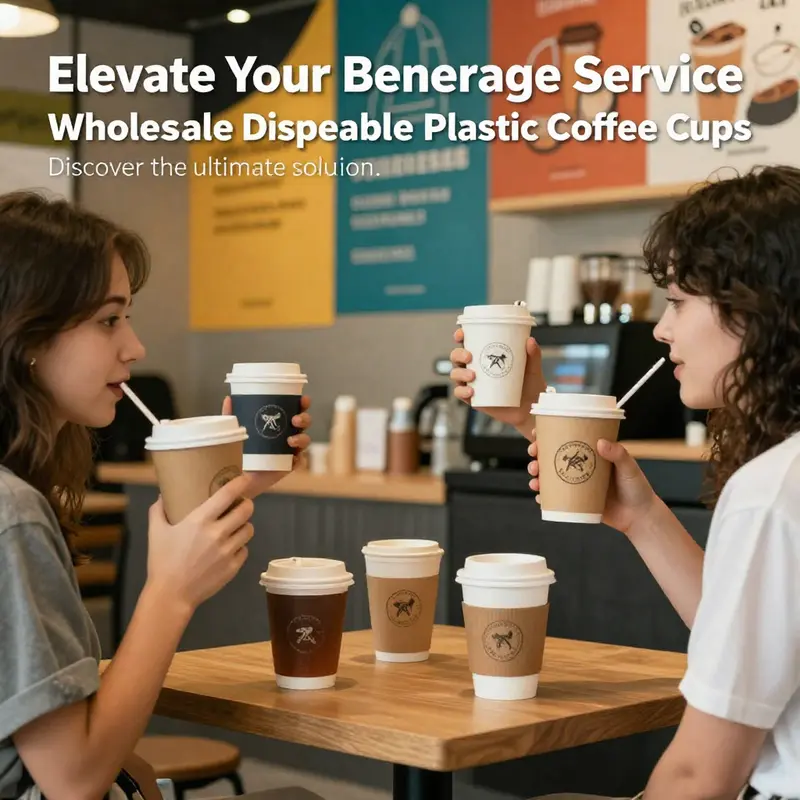
In today’s competitive beverage landscape, providing quality service is paramount. Disposable plastic coffee cups are not just practical; they’re a vital component of your brand’s identity. From bubble tea shops to catering services, understanding the nuances of wholesale disposable plastic coffee cups can significantly enhance your operational efficiency. This article delves into the key attributes of these cups and what makes them indispensable for various businesses, exploring everything from materials and features to pricing and supplier logistics.
From Cap to Cup: The Integral Lifecycle of Wholesale Disposable Coffee Cups

Wholesale disposable coffee cups sit at the intersection of supply chain efficiency, brand communication, and consumer convenience. They are the unglamorous workhorses of coffee service, quietly enabling rapid service, consistent presentation, and predictable waste streams. In a market where volume and reliability trump novelty, wholesale options must balance performance with cost, all while offering avenues for customization that translate into measurable brand value. The narrative of these cups begins with material science and ends in a crowded marketplace where every millimeter of space saved, every color printed, and every shipment on time can tip the balance between a smooth operation and a stalled line at peak hours. In this chapter, we explore the core elements that define wholesale disposable coffee cups, from materials and design to pricing, sustainability, and practical use in diverse service environments.
At their core, these cups are crafted from two main polymers: PET and PP. PET brings the clarity and rigidity prized for cold beverages, where customers expect to see the color and texture of their drink through a transparent wall. It offers reliable shatter resistance and is widely recyclable, attributes that align with evolving consumer expectations for safety and end-of-life handling. PP, on the other hand, betters PET in heat resistance, making it the preferred choice for hot drinks where a comfortable grip and structural integrity under thermal stress matter most. The single-wall construction common in many wholesale options keeps the weight down and the cost manageable, but the lid, insulation, or dual-layer options can be layered in where heat retention or spill prevention is crucial. Taken together, PET and PP provide a practical spectrum of performance, enabling suppliers to tailor cups to a restaurant’s staple offerings—from iced coffee to hot cappuccinos—without overcomplicating the supply chain.
Size and shape are the practical languages by which cup lines communicate with operators and customers alike. Wholesale inventories typically span from small to large, approximately 8 to 32 ounces, with standard configurations such as 12 and 16 ounces being particularly prevalent. The shapes favor stability and stacking efficiency: U-shaped or square-bottom forms optimize space in storage bins and during handling, while round, cylindrical designs target universal compatibility with cup holders and vehicle cup slots. The stacking feature is not a luxury but a logistical imperative. When cups nest neatly, warehousing and transportation costs drop, often by as much as 30 percent compared with non-stackable variants. This efficiency translates into lower landed costs for buyers and, ultimately, more consistent pricing across large-scale deployments like cafes or event catering.
Customization elevates wholesale cups from mere packaging to a vehicle for brand storytelling. Suppliers routinely offer silk printing across multiple colors, commonly up to six, allowing a business to imprint logos, taglines, or promotional messages directly onto the cup sleeve or exterior. In practice, this means a takeaway cup can become a walking billboard, reinforcing brand recognition in busy streets, crowded events, and on social media feeds. The ability to customize at scale makes disposable cups a cost-effective channel for retail marketing, seasonal campaigns, and corporate giveaways. Yet customization must be approached strategically. The same production lines that enable vibrant branding also demand stringent quality control to maintain legibility and color fidelity across tens or hundreds of thousands of units. The balance between visual impact and production reliability is a central consideration for wholesale buyers who demand consistency as volumes climb.
Sustainability is no longer an afterthought but a baseline expectation in many markets. Most cups marketed as recyclable or BPA-free meet a minimum standard for safety and environmental responsibility. A growing subset of options includes biodegradable or compostable variants that appeal to environmentally conscious segments and regulatory environments that favor compostable packaging in certain applications. The discourse around sustainability in wholesale cups also encompasses end-of-life realities: how efficiently a facility can sort, collect, and recycle cups, and how design choices—such as reducing unnecessary coatings or selecting materials with higher recycling compatibility—affect the overall environmental footprint. For buyers, the objective is clear: align product selections with the environmental preferences of their core customers while maintaining the cost and performance that support a scalable business model.
Pricing in the wholesale space reflects both the economics of materials and the scale of demand. For polypropylene cups, basic cost structures can begin around two cents per piece for very large orders, with minimums in the tens of thousands of units. Polypropylene often carries lower per-unit costs at volume, while PET cups, prized for their clarity for cold drinks, may hover in a slightly higher range per piece, particularly when aiming for high-clarity stock and tight tolerances. When order volumes rise to the 50,000 to 100,000 piece range, bulk discounts can push unit prices down substantially, approaching or dipping below the two-cent mark. The balance of price, performance, and lead time is where wholesale buyers spend significant attention. Lead times for first orders typically extend into the month and a half range, reflecting production setup, customization, and logistics. Replenishment cycles, however, improve dramatically—repeat orders can often be fulfilled in a couple of weeks or less, a critical factor for operations that run on just-in-time inventories to maintain shelf space and cash flow.
Beyond price and production, certifications anchor trust in the wholesale landscape. Reputable suppliers commonly certify their products to global safety and quality standards, including FDA compliance for food contact and ISO 9001 for quality management. EU regulatory compliance is also frequently noted, signaling readiness for cross-border distribution. While these standards do not guarantee consumer adoption by themselves, they reassure buyers that the cups meet recognized benchmarks for safety and reliability. Coupled with transparent packaging and straightforward shipping terms, these certifications help reduce supply risk when sourcing at scale. Packaging itself is another practical pillar of wholesale efficiency. Standard export cartons, predictable palletization, and defined loading ports—all from a central manufacturing hub—streamline the movement of tens or hundreds of thousands of cups to multiple regional locations.
The practical, day-to-day implications of these design and sourcing choices reveal themselves in a few telltale use cases. Cafés and coffee shops count on leaked-proof performance and dependable lids to support on-the-go service. In high-traffic settings, even minor design enhancements—such as a shallow rib for a better grip or a lip that reduces spill risk when stacking—can have meaningful impacts on customer experience. Event organizers and corporate sponsors rely on the branding potential of custom-printed sleeves to maximize visual reach without resorting to more expensive packaging. Fast-food chains and delivery-centric ventures prize the combination of rugged durability, efficient stacking, and reliable color branding that remains legible despite outdoor lighting and frequent handling. Even as the market evolves toward more sustainable packaging, the underlying logic remains: a reliable cup that travels well from kitchen to curbside, preserves its contents, and communicates a brand promise clearly.
One of the most compelling aspects of wholesale cups is how they enable businesses to test concepts at scale. The ability to request samples before committing to large runs helps operators assess print fidelity, structural integrity, and user experience without overcommitting dollars. This testing phase is essential because it converts theoretical branding choices into measurable outcomes when millions of impressions occur across a season. The strategy becomes particularly powerful when combined with careful planning of color palettes, legibility, and the practical realities of cold versus hot beverages. The result is a product suite that does not merely hold drinks but reinforces the business model itself—front-of-house efficiency paired with back-end predictability.
For readers seeking a broader perspective on related packaging choices, a linked exploration focuses on eco-friendly, printed-logo cups used in different contexts. The resource highlights how branding and sustainability can converge within a single packaging format, illustrating the broader design thinking that informs wholesale cup programs. See the discussion here: eco-friendly-printed-logo-paper-ice-cream-cups-with-lid-ice-cream-paper-bowl-paper-ice-cream-cups-with-lid.
As the market continues to mature, the blend of material choice, design efficiency, and branding capability will continue to shape wholesale pricing and availability. Buyers who align with platforms that offer scalable customization, robust safety certifications, and reliable logistics will find competition increasingly manageable. The chapter-long arc of these cups—from raw material to branded takeaway—embodies the broader dynamics of the wholesale disposable packaging sector: high-volume, cost-sensitive, and relentlessly focused on performance and perception. In practice, the most successful buyers treat the cup as a critical touchpoint in the customer journey, ensuring that every sip is delivered with consistency, safety, and a subtle reminder of the brand’s promise. For practitioners, the takeaway is straightforward: invest in capabilities that improve stackability, strengthen branding, and clarify end-of-life pathways, and you will find that wholesale disposable cups do more than hold beverages; they support a resilient, scalable retail experience.
For researchers and procurement professionals, a current listing illustrating the breadth of options in the wholesale space provides useful context on dimension, clarity, and packaging configurations—along with the typical certifications that accompany these products. External reference: https://www.alibaba.com/product-detail/500ml-PET-Plastic-Cups-16oz-Clear_1600497417684.html?spm=a2700.1.women.1
null

null
Sizing the Sip: Navigating Wholesale Pricing and MOQs in Disposable Plastic Coffee Cups

Pricing and minimum orders are not mere numbers on a catalog; they shape the entire supply chain from the moment a café places its first inquiry to the moment product stock finally lands on a shelf. In the world of disposable plastic coffee cups, three forces meet at the negotiating table: material choice, customization, and volume. Each of these elements carries its own cost corridor, and together they determine whether a retailer can offer consistent pricing, maintain reliable stock, and protect margins during peak seasons. As buyers weigh options, the decisions extend beyond unit cost. They reach into storage, logistics, branding, and the reliability of supply. Understanding how these levers work helps align procurement with demand, so a shop can serve customers without surprises when the bill comes due.
At the heart of pricing are material choices and the intended use. Cups fashioned from polypropylene and PET offer distinct advantages that ripple into cost structures. PP cups boast durability and heat resistance, making them trusted workhorses for hot beverages. PET cups shine in clarity and rigidity, presenting a premium look for cold drinks and visual appeal for merchandising. Both materials are typically food-grade, BPA-free, and recyclable, aligning with contemporary consumer expectations. But the base price between PP and PET is not the only factor. The design features that accompany these cups—whether they are stackable, have tight-fitting lids, or incorporate special finishes—scale pricing in meaningful ways. For instance, a stackable design improves warehouse efficiency and reduces handling costs, which translates into lower storage and transport costs per unit. In many supply offers, those savings accumulate as volume increases, making the unit price more attractive at higher quantities.
When customization enters the equation, prices begin to bend more steeply. A simple, unprinted cup may sit near the bottom of a price ladder, especially when ordered in large quantities. Add a logo, a color band, or a branded message, and the per-unit cost typically climbs. Customization—often realized as silk printing in a few to several colors—enables brand visibility and consumer recall, turning a disposable product into a promotional asset. The price swing depends on the complexity and color range, with a common range for custom-printed cups hovering between two and seven cents per piece, though the ceiling can rise markedly when premium finishes, rigid color matching, or multiple print placements are required. In practice, larger orders do benefit from volume-driven discounts, which can help offset the incremental cost of branding. For businesses testing branding impact or piloting a seasonal promotion, the decision often hinges on the anticipated return from increased consumer recognition rather than on unit cost alone.
A separate but related variable is the adoption of eco-friendly or specialty materials, such as biodegradable or compostable variants. These premium options contend with higher price points—sometimes significantly higher—because the raw materials and production processes are more costly. They appeal to markets where environmental messaging strengthens purchase decisions. When a buyer weighs whether to pursue a standard PP or PET cup versus a PLA or other green variant, the cost calculus must include not only the unit price but also potential logistics considerations, certifications, and consumer demand signals that could drive higher volumes in certain channels and seasons.
Volume is the most powerful amplifier in the pricing equation. The very low-volume tier, typically accessible only through niche suppliers or with less customization, can still offer tempting unit prices. In practice, unit costs can dip to a penny or two per cup for very large orders—often 10,000 pieces or more. Those figures reflect unprinted or minimal-printed cups where the supplier’s fixed costs are spread across a massive quantity. The standard wholesale range for customized cups tends to fall between two and seven cents per unit, with the price drifting downward as order quantities rise. Higher-end or more specialized products—such as those using biodegradable materials, frosted finishes, or specific lid configurations—can push the unit price toward the upper end of the spectrum, sometimes reaching around fifteen cents per piece. For a café evaluating a holiday promotion or a corporate event, those higher costs may be justified by the promotional lift and the desire for a cohesive brand presentation.
Minimum order quantities (MOQs) are the counterpart to price bands and a critical planning parameter for buyers. A common benchmark across many suppliers is an MOQ of 10,000 pieces for bulk purchases. This standard reflects the optimization of production lines, packaging, and logistics to achieve favorable economics. Yet there is growing flexibility in the market. Some suppliers offer lower MOQs to accommodate small businesses or pilot programs: 5,000 pieces is fairly common for transparent PP cups, and 3,000 is sometimes available for certain product lines. In a few cases, suppliers will accept orders as low as 1,000 or even 500 pieces when digital printing capabilities or smaller format cups are involved. While lower MOQs broaden access, they often come with higher per-unit costs or restricted customization options. The trade-off is straightforward: smaller runs enable experimentation and rapid iteration, whereas larger runs maximize unit savings and reduce per-event procurement risk.
Lead times and delivery windows further frame the financial planning around MOQs. First orders typically require longer lead times, often in the range of 30 to 45 days, due to production setup, customization, and international shipping cycles. Repeat orders, where the supplier already has fixtures and color matches established, can be fulfilled much faster—often in 7 to 15 days. For buyers who anticipate fluctuating demand, this pattern makes it possible to maintain branding consistency across campaigns without tying up capital in excessive inventory. The ability to secure shorter lead times at scale can be a decisive factor when retailers align supply with peak demand, such as seasonal promotions, back-to-school periods, or large events.
Logistics and certifications contribute to the overall cost picture as well. Reputable suppliers typically provide standard export packaging in cartons designed for safe freight under international shipping conditions. The port of loading and the origin matter for transit times and duties, while quality assurances—FDA compliance, ISO 9001 certifications, and alignment with EU regulations—offer confidence that the cups perform as expected in real-world use. This assurance reduces risk for buyers who must commit to large MOQs and longer lead times, knowing the product will meet safety and performance standards upon arrival. In practical terms, this means fewer delays and returns, which in turn supports more predictable cash flow and inventory planning.
From a commercial perspective, the decision to pursue a higher MOQ for a branded cup versus a lower MOQ with a simpler design often hinges on several factors. Brand strategy matters: a strong logo and color identity on a cup can become a moving billboard, delivering incremental revenue through higher average ticket sizes when customers feel a stronger brand connection. Event-driven campaigns—conferences, sports gatherings, or festivals—may justify higher up-front costs in exchange for heightened visibility and post-event demand. Operationally, retailers with multi-channel footprints can leverage larger MOQs by consolidating orders across locations, thereby achieving bulk discounts that reduce average unit prices. Conversely, micro-retailers and coffee huts experimenting with a new neighborhood concept may favor lower MOQs to minimize risk, even if the per-unit cost is marginally higher. The practical upshot is that there is no one-size-fits-all answer;Instead, buyers optimize for a blend of price, branding impact, supply reliability, and the ability to adapt to shifting demand curves.
To illustrate how these levers interact in real markets, consider a practical purchasing scenario. A small chain plans a seasonal rebrand campaign and wants to feature custom-printed cups across 12 outlets. They weigh a standard, unprinted 12-ounce cup against a branded option with a two-color logo and a frost finish. The unprinted option comes at a lower base price, but the branding opportunity elevates the value proposition. If the chain commits to a 10,000-unit MOQ for the branded cups, it may secure a price near the lower end of the customization range, say around two to three cents per piece, with volume discounts further trimming costs as orders scale to 50,000 units or more. The decision hinges on the projected lift in sales and the longevity of the branding imprint. If the promotion yields measurable gains, the incremental spend can be justified. If, on the other hand, the campaign is exploratory, a smaller MOQ with a simpler design might be a wiser first step to gauge consumer response without locking capital in a large temporary stock.
For buyers seeking to balance branding potential with cost discipline, it helps to think of the supplier offering as a partner rather than a mere vendor. There are practical steps to optimize outcomes: plan demand with a realistic forecast, synchronize orders across multiple locations when possible, and weigh the incremental value of each customization tier. Above all, balance the desire for brand visibility with the realities of cash flow, storage capacity, and the risk profile of promotional campaigns. In doing so, a retailer can navigate the pricing ladder with confidence, leveraging MOQs to secure favorable unit costs while preserving the flexibility to adapt to market fluctuations.
For teams exploring branding options while staying mindful of costs, branding decisions can be supported by exploring related formats that still align with a cohesive marketing strategy. For teams interested in branding and sustainability considerations, there are accessible options that integrate branding with eco-friendly messaging. In practice, many suppliers offer eco-conscious printing and paper cup collaborations that emphasize responsible messaging alongside branding—an approach that can harmonize with corporate social responsibility goals even when evaluating plastic cups. This point can be particularly relevant for businesses assessing whether to expand into printed branding on cups or to explore other merchandising channels as complementary touchpoints. For teams seeking further inspiration on branding opportunities in cups beyond plastic, an example page describing eco-friendly printed-logo options can be useful, and it can be explored here eco-friendly printed-logo paper cups.
In sum, wholesale pricing and MOQs for disposable plastic coffee cups are governed by a dynamic mix of material choice, customization, and volume. The most economical path depends on demand forecasts, branding aims, and the ability to absorb inventory over time. A well-structured procurement plan will outline a clear map of where bulk discounts begin to pay off, how MOQs influence cash flow and storage, and when a promotional premium justifies a higher per-unit price. The right balance turns a simple, disposable cup into a strategic instrument for growth, brand equity, and customer experience across multiple channels, rather than a mere line item in a supply bill. While numbers will vary by supplier, geography, and product line, the underlying logic remains consistent: leverage volume to drive unit costs down, align customization with tangible branding value, and plan with realistic lead times to maintain consistency across all locations. The result is a procurement profile that supports steady service delivery, scalable marketing, and resilient margins in a competitive beverage landscape.
From Supplier Data to Doorstep: Managing Wholesale Plastic Coffee Cups

In the wholesale market, buying disposable plastic coffee cups is more than picking a price tag; it is a coordinated process that links product specifications, supplier credibility, and logistics efficiency. The first step is to understand the two primary material families—polypropylene (PP) and polyethylene terephthalate (PET). PP cups excel in hot‑drink applications because they resist deformation at temperatures up to 100 °C, while PET cups provide crystal‑clear aesthetics and superior rigidity for cold beverages. Both grades can be food‑grade and recyclable, but the choice hinges on the intended service temperature, branding needs, and the downstream handling environment.
Once the material is selected, the buyer must evaluate the supplier’s certification portfolio. FDA food‑contact approval, ISO 9001 quality management, and any regional compliance (e.g., EU CE) act as risk‑mitigating signals for large‑scale orders. Requesting a sample kit that includes a cup, matching lid, and a printed mock‑up allows verification of wall thickness, seal integrity, and print fidelity before committing to volume.
Logistics considerations start with the cup’s structural design. Stackable profiles reduce pallet height and increase container utilization, directly lowering landed cost. A stable lid‑cup interface also minimizes spillage during transport, which is crucial for mobile vendors or event catering. Buyers should ask suppliers for the carton dimensions, pallet configuration (e.g., 40‑pallet loads), and weight per cubic meter. This data feeds into warehouse planning and freight quoting.
Lead‑time management is another pillar. Initial orders typically require a 30‑45‑day production window to cover tooling, raw‑material procurement, and quality checks. Repeat orders can shrink to 2‑3 weeks if the supplier maintains a buffer stock of pre‑molded blanks. Aligning order cadence with promotional calendars—such as back‑to‑school or holiday campaigns—prevents stock‑outs and enables just‑in‑time replenishment.
Customization adds value but also complexity. Silk‑screen or digital printing in up to six colors enables brand messaging without extra packaging. However, each additional color can increase setup time and cost, so buyers should define a clear artwork approval workflow: artwork submission → proof review → sample production → final approval. Embedding this workflow in the purchase order reduces miscommunication.
Sustainability expectations are rising. While traditional PP and PET remain recyclable, many buyers now request biodegradable or compostable alternatives (e.g., PLA‑based cups). When evaluating such options, confirm the supplier’s end‑of‑life certification and ensure local waste infrastructure can process the material; otherwise the environmental claim may be moot.
Finally, risk mitigation through supplier audits is advisable for high‑volume contracts. On‑site visits or third‑party assessments verify material storage conditions, equipment maintenance, and traceability practices. Even a brief virtual audit can reveal red flags before a large shipment is dispatched.
In summary, mastering wholesale disposable plastic coffee cups requires a holistic view: material choice aligned with beverage temperature, rigorous supplier certification, stack‑friendly design for logistics efficiency, clear customization processes, and proactive sustainability and risk‑management strategies. By integrating these elements, buyers can secure reliable, cost‑effective supplies that support brand consistency and operational agility.
For further reading on food‑contact material regulations, see the FDA guidance at https://www.fda.gov/food/packaging-labeling-food-contact-materials/food-contact-substances-fda-regulations.
Clarity, Carry, and Custom Branding: A Wholesale View of Disposable Plastic Coffee Cups

Stepping into the wholesale arena for disposable plastic coffee cups reveals a market shaped as much by function and branding as by material science and supply chains. Buyers range from small cafés to large chains and event organizers, all seeking a balance between reliability, cost, and a touch of personality in every cup. At the core of this ecosystem are two widely used materials: polypropylene and PET. Polypropylene cups are prized for their durability and heat resistance, making them a pragmatic choice for hot beverages. PET cups, by contrast, offer exceptional clarity and shatter resistance, which translates into a premium feel for cold drinks and layered beverages where visibility matters. Both materials are typically food-grade, BPA-free, and recyclable, aligning with growing consumer expectations for safety and environmental responsibility. The choice between PP and PET often hinges on the intended beverage temperature, the desired visual appeal, and the logistical realities of the business, including shelf life and transport. When a buyer weighs these factors, the decision becomes less about a single cup and more about a cohesive cup family that travels with a brand from the storefront to the customer’s hand.
Beyond the material choice, design features play a decisive role in performance and profitability. A well-made disposable cup is engineered to resist leaks and spills during transit, a feature that protects both the product and the brand’s reputation. Stackability is another practical attribute that cannot be overlooked. Modern cups often feature a stackable design that can save significant warehouse space and streamline distribution. In some cases, storage and shipping efficiency improvements approach thirty percent compared to non-stackable alternatives, a detail that translates into lower handling costs and quicker restocks during peak periods. The presence of an effective lid system further enhances portability and customer trust, reducing the risk of leaks when cups are carried by delivery personnel or customers on the go. In this context, the container becomes more than a vessel; it is a reliable interface between beverage quality and the consumer’s daily routine.
Customization is the bloodstream of wholesale cup programs. Suppliers offer silk printing in a range of colors, typically from one to six, enabling brands to carry logos, taglines, or promotional artwork directly onto the cup. This capability turns a simple take-away cup into a moving billboard for a brand, which is especially valuable during events, corporate partnerships, and retail promotions. Even for businesses with tight budgets, there is room for branding through careful color selection and placement, ensuring that the cup remains legible and visually striking without driving up costs prohibitively. In parallel with branding, capacity for eco-conscious variants has grown. In addition to traditional recyclable cups, suppliers increasingly offer biodegradable or compostable options for certain product lines. While these variants may command a premium and depend on local waste management infrastructure, they respond to consumer demand for lower environmental impact and provide a path for brands to diversify their product stories.
Price and scale are inseparable from the wholesale decision framework. For polypropylene-based cups, price points often begin at very competitive levels when orders reach tens of thousands of units. In practice, buyers can expect prices around a few cents per piece for large-volume purchases, with marked reductions as order quantities increase. PET cups—valued for clarity and cold beverage performance—tend to be priced slightly higher per piece but remain highly competitive at scale, especially when the order includes standard cold-drink formats and matching lids. The economics are overwhelmingly driven by volume, so mastering the supplier’s minimum order quantities and preferred packaging configurations is essential to delivering cost savings without sacrificing service levels. Bulk discounts can reduce unit costs further, making a sizable difference for chains that operate multiple outlets or for event organizers with large, time-bound beverage needs.
Another critical thread in the wholesale tapestry is supply-chain reliability. A prominent supplier in this space offers typical MOQs ranging from ten to fifty thousand pieces, tailored to the product line and packaging configuration. Lead times for first orders can extend beyond a month, given production setup and customization steps, while repeat orders are generally fulfilled more quickly, in the range of one to two weeks. This cadence underscores the importance of forecasting and inventory planning, particularly for businesses with seasonal demand or tight launch windows. Certification and quality assurance underpin confidence in the supply chain. Products commonly carry FDA approvals and ISO 9001 certification, with compliance to relevant EU regulations in markets outside North America. Such assurances ensure that cups meet baseline safety and quality standards while providing a framework for audits and compliance reporting. Export packaging typically relies on standard cartons, and logistics are anchored by a loading port in Asia, which remains a pivotal gateway for global distribution.
To bring this wholesale narrative to life, consider three top-format examples that buyers frequently evaluate when building a cup program. First, a 500ml PET clear cup designed for cold beverages. Its core strengths lie in its food-grade PET clarity, impact resistance, and the ability to showcase the drink visibly through the transparent walls. The design often features a stackable profile and a tightly sealing cap to prevent leakage during transport. The second example centers on a 16-ounce cup with a classic, ergonomically shaped profile that blends PP strength with PET-like clarity in some variants. The design emphasizes a comfortable grip, heat resistance, and compatibility with standard lids, making it a versatile option for both hot and cold beverages. The third example highlights a low-cost PET cup in 12-ounce or 16-ounce sizes, optimized for price-sensitive scenarios. While it prioritizes functional reliability and leak protection, this variant keeps the lid design compact to maintain budget-friendly pricing for high-volume outlets such as quick-service restaurants and pop-up events. Taken together, these formats illustrate how a single wholesale program can accommodate a spectrum of drink types, service contexts, and branding ambitions without fragmenting the supply chain.
The application landscape for these cups is broad. Fast-casual restaurants, coffee chains, convenience stores, and mobile catering all lean on reliable cup performance to protect beverage quality and brand perception. The ability to customize means a cup can carry a brand’s identity from counter to curb, while the durability and leak resistance support seamless delivery and take-out experiences. In an era when consumer expectations hinge on consistency and convenience, the cup becomes a strategic touchpoint. It is where brand storytelling meets practical utility, and the cost per unit, though small on an individual basis, scales into meaningful savings or expenditures across hundreds or thousands of daily usages. Sustainability considerations increasingly inform supplier selections and product lines, with many buyers weighting recyclability and the availability of compostable options alongside traditional recyclables. The conversation around eco-friendly cups is nuanced, shaped by local waste-management capabilities and the life-cycle footprint of each material choice.
In evaluating a wholesale program, buyers also weigh packaging, shipping, and risk management. Packaging solutions that optimize space and protect the product in transit reduce damage and returns, while efficient shipment schedules help ensure stock availability during peak demand. A well-structured supplier relationship includes clear communication on lead times, customization capabilities, and contingency planning for supply disruptions. As companies align their cup programs with broader branding and sustainability initiatives, the cup becomes a strategic asset rather than just a consumable. The most successful wholesale programs balance cost with performance, enable flexible customization, and partner with suppliers that can deliver consistent quality at scale while meeting evolving regulatory and environmental expectations.
For readers exploring adjacent packaging formats, a closely related avenue is covered by eco-friendly, single-wall paper cups with lids, which illustrates how brands can extend their comfort with disposables beyond plastics and still preserve branding and user experience. This broader ecosystem helps retailers and food-service operators craft coherent packaging narratives across categories while maintaining operational efficiency. External reference materials provide additional context on material choices, supplier capabilities, and market dynamics; one widely cited listing sheds light on the PET clear cup segment and its suitability for cold beverages on a global scale. For reference, see the external resource: 500ml PET Plastic Cups 16oz Clear Disposable Ice Cold Beverage Packaging.
Internal linking to related content can further enrich understanding of the broader packaging ecosystem. For readers seeking parallel formats in a greener space, the eco-friendly disposable single-wall paper ice-cream cups with lid page offers a related design and customization narrative, illustrating how branding and practical design converge across materials. This reference helps readers compare the core customer experience across cup families while remaining anchored to wholesale decision-making. If you’re exploring the complete spectrum of cup options, consider how paper-based solutions may fit alongside plastic formats in a cohesive takeaway strategy, particularly in markets with strong emphasis on compostability or where paper-based branding can be leveraged for premium events and seasonal campaigns.
Final thoughts
Wholesale disposable plastic coffee cups are not just a practical choice; they are essential aids in enhancing your beverage service’s efficiency and quality. By understanding their features, pricing, and supply logistics, businesses can make informed decisions. Emphasizing durability and eco-friendliness in your choice will resonate with customers while showcasing your commitment to quality. With numerous options available tailored to your specific needs, investing in these cups can significantly boost your brand visibility and operational success.