
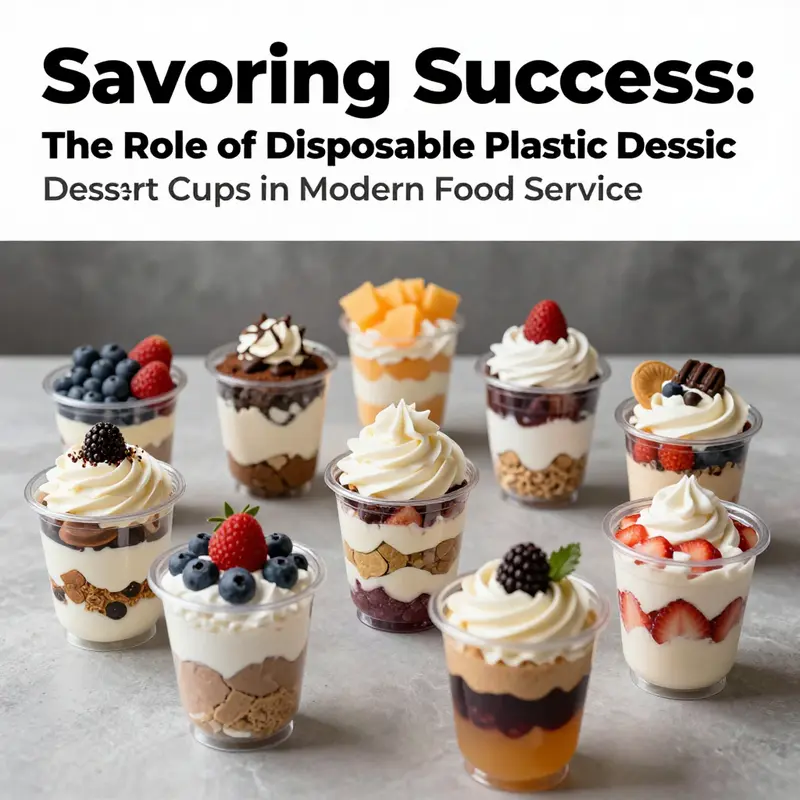
Disposable plastic dessert cups have revolutionized the way businesses serve sweet delicacies, ranging from ice cream to intricate desserts. As Bubble Tea Shops, Restaurants, Food Trucks, Catering Services, Event Planners, and Corporate Procurement Teams increasingly seek functional yet appealing serving solutions, understanding the benefits of these versatile cups is vital. In this article, we delve into the innovations in materials and design features, examine market dynamics and consumer preferences, assess the environmental impact and sustainability challenges, and explore various applications within the food service industry. Each chapter highlights essential insights to enhance your offerings and elevate the dessert experience for your customers.
Material Shifts and Smarter Shapes: How Modern Design Reinvents Disposable Dessert Cups
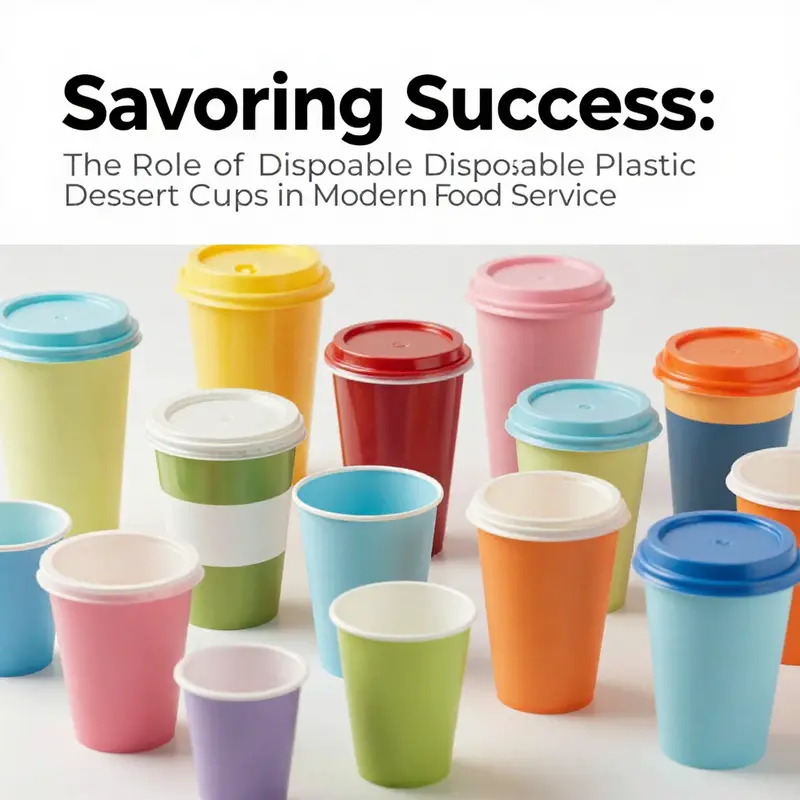
Materials and Design: The New Standards for Dessert Cups
Disposable dessert cups have evolved from simple single-use vessels into purpose-built packaging that balances presentation, performance, and environmental concern. Innovations in material science now bring plant-derived plastics, improved food-grade polymers, and faster-degrading formulations to the table. Meanwhile, design advances refine usability, transport safety, and thermal control. Together, these changes expand how dessert cups perform across catering, retail, and home settings while redefining expectations for sustainability.
Manufacturers are responding to two pressing demands. First, consumers expect packaging that preserves texture, flavor, and appearance. Second, regulators and buyers demand lower lifecycle impacts. These pressures drive a shift away from legacy petroleum-based resins toward options that reduce long-term waste and improve end-of-life outcomes. One prominent move is the increased use of bioplastics derived from renewable feedstocks. Polylactic acid is now commonly formulated for clear, rigid cups intended for cold desserts. PLA mirrors the clarity and stiffness of conventional plastics while offering lower fossil carbon content. It performs well with chilled treats and provides the glossy transparency consumers favor for layered desserts.
Despite these gains, trade-offs remain. Bioplastics such as PLA require industrial composting to biodegrade effectively. They may not belong in municipal recycling streams designed for PET or PP. Producers therefore pair material choice with clear labeling and supply-chain solutions that match disposal methods to the product. Brands that invest in compostable certification and collection partnerships reduce confusion and improve actual environmental outcomes.
Concurrently, traditional food-grade polymers have improved. Modern PET blends are formulated without bisphenol compounds and meet strict migration limits. These BPA-free PET cups deliver high clarity and strong barrier performance. Their shatter resistance suits takeout and transport, and their wide acceptance in curbside recycling systems remains an advantage. For heavy, layered desserts, manufacturers are using higher-gauge PET and engineered polystyrene substitutes that resist deformation. These thicker constructions help desserts keep their structure from prep to plate.
Innovation also emerges in specialty formulations that accelerate breakdown compared to standard plastics. Some polystyrene variants are modified to fragment and biodegrade faster under certain conditions. While these materials may offer measurable reductions in environmental persistence, they require careful certification and testing. Standardized safety evaluations ensure they remain inert in contact with food and comply with regulatory frameworks for food-safe materials.
Material choice increasingly integrates lifecycle thinking. Designers analyze embodied carbon, end-of-life pathways, and real-world disposal behavior. This holistic view guides decisions that avoid problem-shifting. For example, switching to a theoretically compostable resin only improves sustainability if composting infrastructure exists. Conversely, selecting highly recyclable PET for a product sold in markets with strong recycling access can reduce net impacts more than a compostable option with no collection route.
Design innovations complement material progress. Small changes in shape, closure, and accessory integration yield meaningful gains in convenience and product protection. One widely adopted feature is the built-in spoon integrated into the lid. This simple addition eliminates the need for separate cutlery, reduces packaging complexity, and enhances portability. It supports on-the-go consumption scenarios like vending, convenience stores, and mobile food services. Designers orient spoon placement to minimize contact with the food surface until use, preserving hygiene and aesthetics.
Thermal control is another area of rapid improvement. Double-walled constructions and air-gap designs now appear in disposable dessert cups. The insulating layer reduces heat transfer, helping frozen desserts resist melt and hot preparations remain warm longer. This not only improves the eating experience; it protects product integrity during short transport windows. For cold desserts such as parfaits and mousse, thermal stability preserves texture and prevents condensation that can blur visual layers.
Structural reinforcement targets specific use cases. Cups intended for gelatin-based desserts, or for foodservice environments where rough handling is common, are produced with reinforced walls and snap-on lids. These reinforcements reduce risks of tipping, compression, and sudden bursts. Snap-fit lids with interlocking features secure contents for transit. When paired with tamper-evident seals, they also increase consumer confidence in packaged desserts sold in retail or for pick-up.
Shape and proportion have an aesthetic and practical role. Deeper, wider cup geometries allow intricate layering and create room for garnishes without crowding. Taller profile cups work well for parfaits and trifle-style desserts, while wider bowls display fruit, sauces, and textural contrasts that appeal visually. Dome lids and spill-resistant profiles retain toppings and prevent smearing, especially for whipped or peak-laden desserts. Designers balance rim diameters, wall taper, and base stability to maintain stackability and to ensure secure nesting when lids are attached.
Surface treatments and coatings advance both function and appearance. Anti-fog coatings preserve clarity inside clear cups, preventing unsightly condensation from hiding layered presentations. Matte and tactile finishes enhance grip and reduce average slippage in hand. Barrier coatings that repel oils and sauces prevent leakage and minimize flavor transfer between layers. Print-ready surfaces and low-temperature lamination permit branding and labeling without compromising recyclability when chosen carefully.
Manufacturing flexibility underpins many of these advances. Modern production lines accommodate a wide range of volumes, from single-serving 2-ounce dessert shooters to larger 32-ounce takeout tubs. Injection and thermoforming processes now allow precise wall thickness control, enabling areas of reinforcement without excessive material use. This targeted reinforcement reduces weight while maintaining strength. It also allows producers to offer multiple lid styles, integrated spoons, and nested stacking systems suited to retail and catering.
Safety and regulatory compliance remain central to design choices. Manufacturers validate materials against migration and toxicity limits established by food-contact regulations. Certifications for compostability and food safety provide buyers confidence. Labels that identify resin types and disposal instructions help consumers make informed choices. Clear instructions reduce contamination in recycling and composting streams.
Ecosystem thinking shapes the next wave of innovation. Rather than focusing solely on the cup, designers consider the full serving system. That includes lids, spoons, and secondary packaging. Combining compostable cups with compostable lids and utensils yields better outcomes than mixing incompatible materials. Similarly, designing lids that fit multiple cup sizes simplifies inventory and reduces waste. Modular lid systems that snap onto related bowls create economies for foodservice operations.
The market is also seeing creative cross-material solutions. Hybrid designs marry a clear, recyclable window with a paperboard body. These formats deliver the visual appeal of transparency while relying on renewable fibers for the main structure. Adhesives and coatings are selected to allow disassembly or recycling where available. Such hybrid packages provide a transitional option for businesses seeking lower fossil carbon intensity without sacrificing shelf presence.
Operational benefits influence adoption. Cups that nest efficiently when empty reduce storage footprint and shipping costs. Lids designed to stack separately minimize damage and enable rapid loading on assembly lines. Units that accept portion-control inserts streamline back-of-house operations and reduce food waste. When paired with printed portion guides, they also help staff maintain consistent servings.
Emerging trends point toward smarter functionality. Antimicrobial additives and odor-resistant liners extend product freshness in some markets. Biodegradable inks and water-based coatings reduce chemical burdens. Digital-ready labels and QR codes connect consumers to information about materials, disposal options, and origin stories, enhancing transparency.
The trajectory of disposable dessert cups favors materials chosen for real-world benefits, not just laboratory claims. The most effective innovations consider local infrastructure, user behavior, and the full value chain. Designers who align material selection with closure design, accessory integration, and clear labeling create a package that is functional and responsibly conceived. As dessert offerings grow more sophisticated, the cups that hold them will continue to match complexity with thoughtful engineering and cleaner lifecycle outcomes.
For businesses exploring compostable options with convenient utensils, see this example of biodegradable ice cream paper tubs with lid and spoon for inspiration: https://cupbowlpack.com/product/senang-120ml-220ml-disposable-waterproof-biodegradable-single-wall-icecream-paper-tub-with-lid-and-spoon/.
Further reading on industry developments is available from trade analysis and innovation reports at Plastic News: https://www.plasticnews.com/innovations-in-disposable-plastic-cups
null

null
The Double-Edged Scoop: Rethinking Disposable Plastic Dessert Cups in a World Shaped by Waste

Disposable plastic dessert cups sit at the intersection of convenience and consumption. They offer a tidy, familiar vessel for everything from gelatin desserts and layered mousses to yogurt-based parfaits and single-serve ice creams. Their presence in school cafeterias, event buffets, and coffee-shop cases is a quiet testament to modern food service: a small, portable architecture that delivers portion control, visual appeal, and safety. Yet these same cups illuminate a broader tension facing the food industry and everyday life—how to balance short-term practicality with long-term environmental responsibility. The narrative of these cups moves beyond sight and sound of their snap-on lids or their translucent surfaces. It moves into questions of materials, end-of-life fate, and the ecosystems that could sustain their use without compromising planetary boundaries. In this chapter, we explore not only what these cups are made of and how they are disposed of, but also what kinds of design choices, material shifts, and consumer habits could steer the industry toward alternatives that honor both taste and the health of the environment.
At the core of the environmental conversation is the simple fact that most disposable dessert cups are composed from fossil-fuel-derived polymers, most commonly PET (polyethylene terephthalate) for clear, rigid cups and PS (polystyrene) for lightweight, stiff variants. PET is prized for clarity and strength, making it a dependable choice for cold desserts and beverages. PS, with its rigidity and low weight, has historically enabled cost-effective packaging that can be molded into a variety of shapes. But the advantages of these materials come with a price tag that is not immediately visible in a store aisle. The carbon footprint of production, the energy intensity of manufacturing, and the persistence of plastic in the environment all contribute to a lifecycle that stretches far beyond a consumer’s fleeting pleasure from a sweet bite or a celebratory treat.
The environmental footprint of plastic dessert cups is inseparable from the fate of the materials once they leave a consumer’s hands. Even when a cup is labeled as recyclable, recovery rates vary dramatically around the world. Recycling infrastructure is unevenly distributed, and contamination from food residues can derail processing streams, turning a potentially recyclable cup into waste. As a result, many cups end up in landfills or, worse, as litter that fragments into microplastics and infiltrates soils and waterways. The problem compounds when we consider the sheer volume of daily takeout and dine-in service in which these cups participate. The scale is not just a matter of numbers; it is a matter of how frequently a disposable item is discarded and how rarely it is properly captured by a recycling loop. This is not merely a curbside issue; it is a systems issue that touches waste collection, sorting technologies, consumer behavior, and the incentives that govern supply chains.
From a materials science perspective, the two most common families—PET and PS—offer a clear dichotomy. PET’s strength, clarity, and resistance to shattering are assets during transport and display, particularly for cold treats. Yet PET is not universally collected or recycled, and its end-of-life reality depends heavily on local programs and consumer participation. PS is lightweight and economical but raises concerns about environmental persistence and health considerations when heated, limiting its suitability for hot desserts and certain high-fat, high-sugar formulations. In both cases, the environmental narrative is driven by two forces: the availability of appropriate waste management systems and the willingness of markets to invest in better end-of-life pathways. Without robust, accessible, and properly funded recycling or composting networks, the benefits of material innovation are undermined by gaps in infrastructure.
The chapter must also acknowledge a growing frontier in sustainable packaging: alternatives designed to be more friendly to the planet. A broad and increasingly visible family includes bioplastics and plant-based composites. Polylactic acid (PLA), derived from renewing resources such as corn starch or sugarcane, promises a path toward compostability in principle. Sugarcane bagasse and bamboo fiber represent other avenues, offering biodegradability and potential reductions in fossil-fuel dependence. These materials are not without caveats. PLA, for example, often requires industrial composting facilities with controlled temperature and moisture conditions to break down in a reasonable time frame. In home composting, PLA may persist far longer than expected. Similarly, bagasse and bamboo fibers hold promise for heat resistance and structural integrity, but their compostability, leakage protection, and shelf stability hinge on specific waste-management contexts. A recurring theme emerges: the environmental advantage of any alternative depends on the existence of appropriate downstream systems that can complete the material’s lifecycle.
Industrial composting, where available, can unlock meaningful reductions in the environmental footprint of plant-based cups. The central idea is simple: feedstock that is designed to break down quickly in an industrial composting setting can reduce long-term waste accumulation and mitigate microplastic formation. However, much of the world still lacks convenient access to these facilities or maintains confusing labeling that obscures whether a product is truly compostable in a given locale. In practice, a compostable cup that ends up in a municipal landfill may not break down as intended and could behave like a conventional plastic bottle or container. This reality underscores a crucial policy and planning question: invest in better materials, or invest in better waste management, or ideally, invest in both in a coordinated fashion that aligns product design with end-of-life capabilities.
Beyond plant-based materials, the case for reusable solutions remains strong in many settings. For venues with steady streams of guests and predictable volumes, durable, washable cups—crafted from glass, stainless steel, or other robust materials—offer a route to significantly reduce single-use waste. The trade-offs are clear: higher upfront costs, the need for washing and sanitization infrastructure, and the logistics of collecting and returning used cups. Yet, when lifecycle analyses consider multiple reuse cycles, the environmental benefits can be substantial. The challenge is in balancing the convenience and cost advantages of disposables with the resource requirements and organizational demands of a reuse system. In fast-paced food-service contexts, the allure of disposables often stems from the expectation of quick turnover and minimal labor; reframing this into a reuse-first operational model requires careful workflow redesign, staff training, and customer engagement strategies that emphasize sustainability as a value proposition rather than a trade-off.
The narrative around material choice is intertwined with design decisions that influence both performance and end-of-life outcomes. Cups for gelatin-based servings, for instance, are typically designed with thicker walls and secure lids to withstand transport and handling, particularly in environments where children are present or where back-of-house prep involves multiple steps. This durability is a strength for safety and presentation but can translate into greater material use and a heavier product that takes longer to degrade if mismanaged at disposal. In contrast, deeper, more substantial cups designed for layered or multi-component desserts—such as those used for mousse or tiramisu-inspired servings—prioritize stability, a sense of luxury, and a premium dining experience. Here again, the material story matters. Heavier-duty plastics may offer the needed support, yet if the same cup enters a recycling stream with uncertain processing capacity, the environmental advantage shrinks to fit the local context.
In assessing alternatives, it is important to separate marketing claims from material realities. A cup marketed as biodegradable or compostable must be evaluated against credible standards and local waste-management practices. Certification regimes, labeling rules, and third-party verifications can help avoid greenwashing, but they also add complexity to the supply chain. Consumers and operators alike must remain vigilant about what is actually possible in their region. The EU’s food-safety framework, which governs contact with food and regulatory compliance, serves as a reminder that environmental strategies do not exist in a vacuum. Material choices must meet safety and performance criteria while maintaining a coherent end-of-life plan. In practice, this means that substitutes to traditional plastic cups should be evaluated not only for their compostability or biodegradability but also for their practicality in everyday use, their compatibility with existing equipment, and their impact on overall waste streams.
One pragmatic pathway toward meaningful change lies in the balance between performance and end-of-life clarity. For many operators, the simplest route is to select packaging that aligns with available waste-management options, while progressively integrating more sustainable materials where feasible. This incremental approach can help avoid abrupt shifts that disrupt service quality or inflate costs. A gradual transition might include migrating to cups with greater recyclability or reduced weight, adopting biobased materials in contexts where industrial composting is established, and piloting reusable systems in venues with the capacity to handle them. Such a phased strategy acknowledges the realities of global supply chains and regional waste infrastructure while signaling a commitment to reducing single-use plastic waste.
From a consumer experience perspective, the story is not only about disposal but also about education and behavior. Clear, consistent labeling that explains waste pathways helps customers participate more effectively in recycling or composting programs. Visual cues on packaging, coupled with accessible information about local facilities, can shift habits toward better disposal practices. The design of the cups themselves can reinforce these behaviors. For example, cups that are easy to cleanly rinse and separate from lids promote smoother recycling or composting workflows. Where compostable materials are used, robust certifications and transparent supply-chain communication are essential so that customers understand what happens after the last bite. In such a frame, packaging becomes not just a vessel for dessert but a conduit for responsible consumption, reinforcing the idea that small choices at the point of purchase can ripple through waste streams and municipal systems.
A practical note for practitioners is the potential to explore hybrid strategies that capitalize on the strengths of different materials. For certain applications—where the sensory experience, display, and transport conditions demand reliability—durable plastics may still be appropriate, provided they can be collected, sorted, and processed within a functioning waste-management network. In other settings, where infrastructure supports it, plant-based or bagasse-based options can reduce reliance on fossil-fuel-derived polymers without sacrificing customer satisfaction. The challenge, of course, is ensuring these alternatives actually translate into lower environmental impact in real-world conditions. This requires transparent life-cycle assessments, credible certifications, and strong collaboration across suppliers, waste-management providers, and policymakers.
To connect the broader narrative with concrete practice, consider how a restaurant, café, or catering operation might chart a path forward. Start with a materials inventory: what proportion of cups are plastic, what is the average disposal method, and what are the available end-of-life options in the local area? Next, map the end-to-end process, from procurement to service to waste-handling. If a material substitution is contemplated, assess the supply-chain readiness, including yield, cost, and shelf life, as well as any changes to equipment or storage needs. Then pilot a limited rollout of selected alternatives in a controlled setting where staff can provide feedback on performance, customer reception, and waste outcomes. A successful pilot can generate the data and the internal buy-in needed to scale up a sustainable switch. Throughout, ensure that the dialogue among procurement, operations, and sustainability teams remains open, with a shared understanding of trade-offs and shared goals.
For readers who want a direct point of reference in the ongoing dialogue around material performance and industry practices, a detailed analysis by a renowned industry source offers valuable context. It examines standards, grades, and real-world applications for disposable dessert cups, providing a framework to compare materials, performance, and environmental implications across different use cases. This external resource helps connect the practical realities of serving desserts with the scientific and regulatory considerations that shape packaging choices. https://www.foodserviceinsider.com/disposable-plastic-dessert-cups-standards-grades-industry-applications/
Within this evolving landscape, the integration of sustainable packaging alternatives remains both a necessity and an opportunity. The shift will not be uniform across regions or sectors; it will emerge through a mosaic of strategic decisions, infrastructure development, and consumer expectations. The opportunity lies in recognizing that the iconic dessert cup can remain a vehicle for delight and convenience while becoming an instrument for stewardship. It is possible to preserve the sensory and social value of desserts—the shared moments, the celebratory rituals, the simple pleasure of a well-presented treat—without compromising the health of ecosystems that nourish those very moments. The path forward may look like a spectrum: continue using high-performance plastics where waste management is mature, diversify into compostable or biodegradable options where industrial facilities exist, and increasingly promote reusable solutions in settings where the economics and logistics align. In every case, success will hinge on coordinated action across design, production, distribution, waste collection, and consumer participation. The cup, then, becomes more than a disposable vessel; it becomes a lens through which communities can learn, adapt, and invest in a more sustainable future for everyday food experiences.
Internal link reference: For a practical example of an eco-friendly cup option that aligns with the conversation above, see the discussion of single-wall paper ice cream cups with lids and food-grade safety in this product page: eco-friendly disposable single-wall paper ice cream cups with lid. This link highlights how practitioners are experimenting with paper-based solutions that aim to decouple dessert presentation from petroleum-based plastics while maintaining functional performance and consumer appeal.
In sum, the environmental impact of disposable plastic dessert cups invites a measured, evidence-driven rethinking of material choices, lifecycle thinking, and system-level collaboration. The conversation is not about abandoning convenience but about reimagining it in a way that aligns taste, safety, and social responsibility with a healthier planetary future. As the conversation advances, stakeholders—from designers and manufacturers to operators and policymakers—will increasingly rely on robust data, transparent labeling, and shared best practices to ensure that every dessert served carries with it a lighter footprint and a clearer path toward responsible disposal. The cups we choose, and how we choose to manage them after use, will tell a story about our collective capacity to balance delight with duty—and to translate that balance into action across a global supply chain.
Portable Delights, Precise Portions: How Disposable Plastic Dessert Cups Shape Modern Food Service
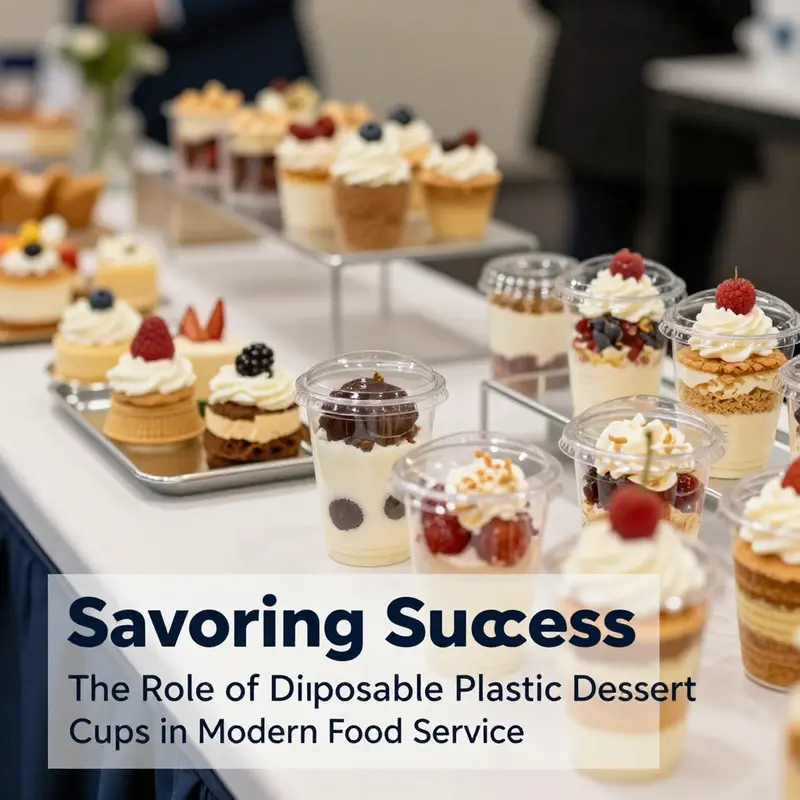
Disposable plastic dessert cups are more than simple vessels. They are integral elements of menu design, service flow, and brand experience in modern food service. Their real value emerges when they are viewed not as throwaway containers but as part of an orchestrated system that governs portion control, presentation, hygiene, and transport. In practice, the cups coordinate the way a dessert travels from kitchen to customer, preserving texture and visual appeal while supporting efficient operations in kitchens that must accommodate hundreds or thousands of portions in a single day. The right cup can elevate a layered parfait, a mousse, or a gel-based treat from a mere bite to an event, a small ceremony in a takeaway world where convenience and aesthetics must coexist.
In large-scale operations, the logic behind choosing certain cups becomes a matter of consistency and predictability. Standardized walls, predictable depths, and compatible lids ensure that each serving looks the same, feels the same, and travels without distortion. This is crucial for caterers handling multi-course events where dozens of dessert stations must align with a single visual language. The cups themselves act as a canvas, offering a clean, uncrowded stage for color, texture, and composition. When a kitchen can rely on a uniform cup, the rest of the crew can focus on timing, layering, and garnishing rather than chasing inconsistent containers.
Catering services, whether they are corporate gatherings or weddings, depend on cups that balance elegance with practicality. The deeper profiles of certain designs support heavier, multi-layered presentations such as mousse towers or tiramisu-inspired creations, while more straightforward shapes are ideal for simpler layers and fruit-based desserts. The sealed or snap-on lids protect delicate layers during transport, reducing the risk of leaks or toppled toppings. The visual clarity of clear cups enhances the perception of abundance, inviting guests to savor the layers through the glass rather than relying on a single surface impression. In this sense, the cup becomes a storytelling device, framing the dessert in a way that whispers about texture, color harmony, and portion size before the first bite is taken.
Fast food chains and dessert kiosks rely on the same underlying principles but with a sharper focus on speed, portability, and spill prevention. Single-serving items like smoothies, puddings, fruit parfaits, and gelatin desserts travel best when the cup and lid form a reliable seal that minimizes spills during crowded service or crowded commutes. Dome lids, straw slots, and compatible sip-friendly designs enable quick service without sacrificing the integrity of the dessert. For thick beverages and dense desserts, a secure lid and a snug-fit cap reduce the chance of leaks on the way to the customer, whether they are stepping off a curb, riding a bus, or threading through a busy line. In those settings, the cup is as much a transport device as a vessel for flavor.
School cafeterias and institutional dining rooms place a premium on hygiene, portion control, and straightforward waste management. Clear, durable cups allow food service managers to monitor portions at a glance, ensuring that each student receives a consistent serving. The ability to stack cups neatly during prep and storage saves valuable kitchen real estate, while lids prevent cross-contamination and protect desserts from dust, moisture, or accidental contact. In environments where meals arrive in stacks and must be distributed quickly, the cup becomes a predictable unit—one more element in a system that aims to deliver safe, satisfying food with minimal friction.
Milkshake bars and specialty beverage vendors expand the role of cups beyond mere containment. In these settings, the cups often feature additional design considerations, such as deeper wells for thick, blended treats and lids that accommodate dome shapes or integrated straw openings. This design speaks to the user experience: a customer can lift a single cup and walk away with a ready-made beverage or dessert in hand, confident that the contents remain intact until the last sip or bite. The interplay between cup depth, lid rigidity, and the surface geometry of the treat itself enables more ambitious presentations, from multi-layered gel layers to airy mousse constructions, all while preserving the visual integrity of the dessert during transport.
Retail and grab-and-go markets hinge on dual-purpose cups that can hold multiple components in one convenient package. A well-chosen cup can support a fruit salad with a separate beverage, or a layered dessert with a built-in mechanism for taste transitions as the consumer nibbles or sips. The goal is a compact, visually appealing product that minimizes prep steps and maximizes shelf life and portability. In practice, retailers seek designs that stack cleanly, resist leaks, and offer a clear view of the contents so shoppers can assess flavor, freshness, and quality at a glance. These attributes translate to faster sales cycles and reduced handling, which in turn lowers the total cost of ownership for the operator.
Event planning and party catering increasingly rely on specialized forms of the disposable cup to address nuanced presentation needs. For formal affairs, souffle-like cups with deeper profiles support delicate, airy desserts and dense fillings alike, while sturdier cups with snap-on lids serve families and children with dependable durability. The structural integrity of these cups matters not only for the display but for the guest experience: a dessert that holds its shape from display case to table and then into a plate, without tipping or leaking, contributes to a cohesive, professional impression. The design language also extends to color and translucency, enabling organizers to tailor presentations to a color palette or theme without complicating logistics or inventory.
Beyond looks and transport, the performance aspects of these cups matter when considering safety and sustainability. Modern disposable dessert cups increasingly rely on materials that balance clarity and strength with food safety. BPA-free options formulated in clear, shatter-resistant polymers provide excellent visibility of the dessert while maintaining structural integrity in cold environments, from the freezer to a hand-held moment at the counter. These materials fare well in a variety of cool dessert contexts, including custards, mousses, and gel-based treats, where clouding or wicking could undermine the presentation. For producers seeking greener options, there are biodegradable alternatives in the same family of polymers. These materials aim to reduce environmental impact by enabling faster breakdown under appropriate conditions, offering a practical compromise between convenience and responsibility for operators who serve a broad audience.
A cornerstone of these choices is the broad range of capacities available. From tiny 2-ounce portions that showcase fineness and precision to generous 32-ounce sizes that accommodate a family-style or tasting-flight approach, the spectrum supports both bite-sized samples and crowd-pleasing portions. In practice, this means a single supplier ecosystem can cover a restaurant, a school, and a pop-up with a consistent palette of cups that share core features—clear visibility, reliable seals, and safe contact with food. In short, the cup acts as a scalable component of service design, adapting to the needs of the meal program while keeping the focus on the dessert itself.
The topic of sustainability finds its way into daily decision-making through both materials and design. Where possible, cups are produced with clear, food-grade plastics that minimize the risk of leaching, prioritize recycling compatibility, and offer options within a circular economy framework. Some manufacturers have moved toward biodegradable polystyrene variants and other compostable materials, seeking to reduce the environmental footprint of disposable serviceware. While no single cup solves all sustainability challenges, a growing set of choices allows operators to align their dessert programs with broader environmental goals, from sourcing to end-of-life. Certifications and eco-friendly credentials, while not a universal standard, provide a path for customers to identify products that meet particular safety and environmental criteria.
In addition to material choices, the geometry of the cup and its lid plays a pivotal role in shaping the customer experience. Transparent cups showcase the dessert, but some scenes benefit from deeper, more substantial cups that can host rich layers and generous toppings without compromising stability. Snap-fit lids or dome-shaped lids with secure seals reduce leakage during transport, a constant concern for take-away and catering where traffic and handling involve multiple hands. Lids with built-in spoons or straw ports add a layer of convenience, enabling a complete, self-contained dessert experience and a sense of value for the customer. These features, while practical, also influence the storytelling aspect of the dessert, guiding how the eater perceives texture, richness, and freshness as they approach the last bite.
The choices embedded in disposable dessert cups—shape, depth, clarity, lid type, and material—collectively shape how a dessert is perceived, enjoyed, and remembered. The cups are not merely passive packaging; they are active participants in the culinary experience, informing everything from portion size to how the dessert travels through the service chain and into the consumer’s hands. In this sense, the cup is a partner to the chef and the service team, enabling precise portions while supporting an elegant presentation, a hygienic workflow, and a sustainable footprint that aligns with evolving consumer expectations.
For readers seeking concrete illustrations of customizable options that blend form and function, see this example of adaptable, single-wall ice-cream cups with lid, which demonstrates how color, texture, and lid compatibility can be engineered to meet diverse event and venue needs. customizable disposable single-wall paper ice-cream cups with lid.
As these cups continue to evolve, so too do the considerations that shape their adoption. Operators weigh the balance between clarity and opacity, the choice between recyclable and biodegradable options, and the implications of heavier or lighter wall thickness for transport and stacking. The best practice is to map the dessert program to the cup family, ensuring that every offering—whether a delicate mousse or a hearty tiramisu—has a fitting vessel that enhances the eating experience without complicating kitchen operations. In turn, guests experience consistency, reliability, and delight in every portion, a quiet kind of magic that underpins successful service across hospitality, education, retail, and beyond.
External resource: Understanding 16oz Disposable Plastic Cup With Dome Lid
Final thoughts
The evolution of disposable plastic dessert cups has significantly impacted the food service landscape, providing practical, visually appealing options for serving sweet treats. As Bubble Tea Shops, Restaurants, Food Trucks, Catering Services, Event Planners, and Corporate Procurement Teams continue to prioritize efficiency, sustainability, and customer satisfaction, these cups serve as a powerful tool in enhancing the overall dining experience. By embracing innovative materials, understanding market trends, and considering environmental alternatives, stakeholders can ensure their dessert presentations not only captivate the palate but also align with contemporary values. Investing in quality disposable dessert cups is a step toward elevating your brand and ensuring lasting customer delight.