
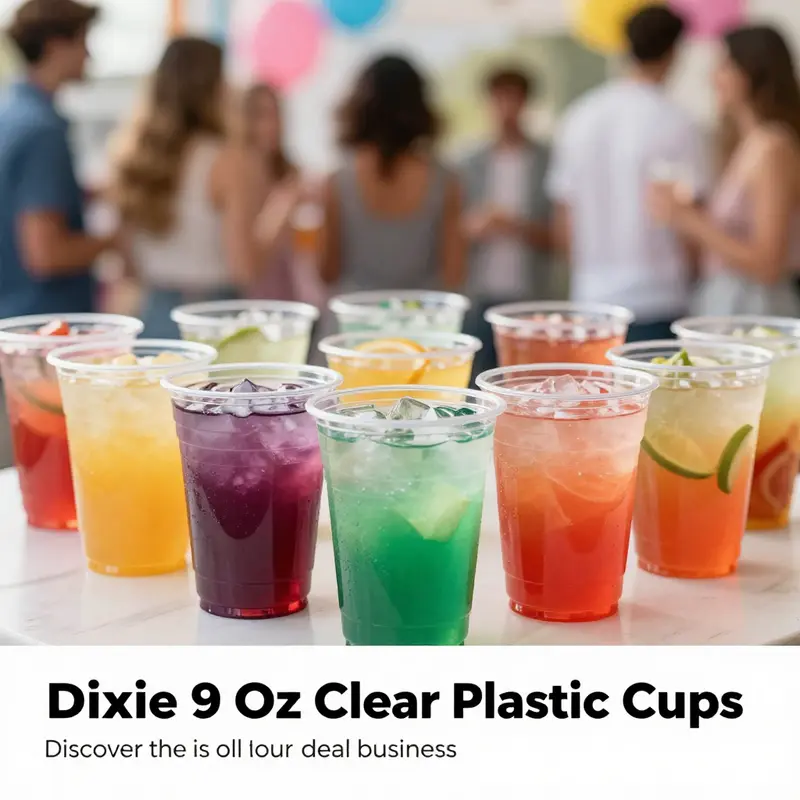
As the beverage and food industry evolves, the choice of serving containers significantly impacts both customer satisfaction and operational efficiency. Dixie 9 oz clear plastic cups stand out as a premier choice for bubble tea shops, restaurants, and event planners seeking quality, convenience, and eco-friendly options. Their durable design, recyclability, and aesthetic appeal make them an essential component in any beverage service. This article explores their features, environmental considerations, economic benefits, and practical applications, offering comprehensive insights tailored for beverage chains, food trucks, and corporate teams navigating today’s market demands.
Clear, Capable, and Convenient: The Design and Specifications of 9-Ounce Clear Disposable Cups

Clear plastic cups in the 9-ounce size have earned a quiet reputation among hosts and organizers for delivering reliability without fuss. They are the kind of ware that disappears into the background, letting the beverage and its color do the talking while still offering enough structure to handle everyday service. The typical user requests a cup that is light enough to carry with one hand, sturdy enough to hold a cold drink without warping, and transparent enough to showcase the beverage’s appearance from every angle. When these cups are designed with PET, polyethylene terephthalate, they carry a promise that blends practicality with a degree of refinement: a crystal-clear view of the contents, a surface that resists fogging when ice and condensation roll in, and a form that feels substantial in the hand even though the material is lightweight. In many ways, this category embodies a balance between presentation and practicality, a combination that matters in everything from casual gatherings to more organized events.
The material choice—clear plastic, predominantly PET—anchors the cup’s performance in several essential ways. PET is known for its clarity, which means beverages show their true color and carbonation, making a simple lemonade glow and a cocktail sparkle. Beyond aesthetics, PET contributes to a durable, shatter-resistant experience. The container can be handled briskly by servers, passed along a long table, or given to guests who are in a hurry, without fear of cracking or leaking from normal use. The clarity is not merely cosmetic; it helps guests gauge portions at a glance and can even reduce spill risk because the edge of the liquid is easy to see as it moves toward the rim. The BPA-free claim often accompanies these cups, offering reassurance to health-conscious consumers who want the convenience of disposable cups without compromising safety. And because PET is widely recyclable, these cups fit into a responsible disposal cycle when the opportunity for recycling exists in the venue’s waste management plan.
Capacity matters, and the 9-ounce size slots neatly into a broad spectrum of beverages. It comfortably accommodates water, juice, iced tea, soda, and even lighter cocktails during social gatherings, where guests may want to pace themselves or sample a few different drinks without committing to a large serving. The 9-ounce footprint also keeps portion control intuitive for both hosts and guests, which can simplify event planning and reduce waste. Packaging options for these cups reflect the realities of varied event scales. In some cases, they appear in packs of 50, which can be ideal for smaller gatherings, break rooms, or office events where guests arrive in waves. In other contexts, a 100-pack is preferred for larger celebrations or for caterers who must restock a serving station quickly. The ability to select a pack size that fits the occasion is more than a convenience; it’s a practical way to manage inventory, minimize replenishment time, and keep beverage service running smoothly during peak moments of a reception or conference.
The design emphasizes both ease of use and efficient storage. The cups’ straight or gently curved sides promote stable stacking, a feature that matters when stockrooms are tight and transport is frequent. A simple, straightforward lip at the rim ensures that sipping feels comfortable and predictable, reducing the chance of spills during busy service periods. The overall aesthetic—a clear, clean cylinder with an unobtrusive profile—carries a modern, professional look that can align with different event themes, from casual backyard gatherings to more formal corporate mixers. The decision to use a disposable format is, for many, a deliberate choice driven by sanitation and convenience. When the event ends, there is no need to return to a sink for washing; the cups can be discarded, saving time and labor and allowing staff to focus on cleaning up other areas. This is especially valuable in high-volume settings, where the labor resources saved on dishwashing can translate into more attentive service elsewhere.
From a functional standpoint, durability, temperature tolerance, and leak resistance are the hallmarks of this cup class. While it is designed for cold and room-temperature beverages, it’s prudent to avoid pouring boiling liquids into any disposable plastic cup, as extreme heat can compromise integrity and comfort in handling. Even within cold or ambient conditions, the cups stand up to the rigors of transport—being moved from storage to service tables, stacked on carts, and placed at self-serve stations. The shatter-resistant nature of the material is not merely a reassuring label; it translates into tangible outcomes: fewer broken cups on the floor, less worry for guests maneuvering through crowded spaces, and a more seamless guest experience overall. The clean, transparent surface also means that the appearance of the drink remains blur-free and inviting, a small but meaningful detail that impacts perceived quality and guest satisfaction.
Environmental considerations form an essential part of the conversation around disposables. The combination of a recyclable material and a BPA-free composition is frequently highlighted in product descriptions because it aligns with broader sustainability goals that many organizations pursue today. The disposable nature of these cups is framed as a practical hygiene choice rather than a throwaway impulse. When used thoughtfully, they reduce water use and labor costs associated with washing, which has its own environmental footprint. Of course, the ultimate environmental impact depends on the end-of-life handling: recycling programs must be in place, and guests should be guided to place clean recyclables in the appropriate stream. In some event contexts, venues or caterers supplement these cups with compostable or biodegradable alternatives, expanding the conversation from a simple disposable versus reusable dichotomy to a more nuanced spectrum of options that balance convenience, cost, and environmental responsibility.
For purchasers, the decision often hinges on the specific needs of the event and the operational realities of service. The 9-ounce clear disposable cup offers a reliable baseline from which to plan. It is an affordable, versatile option that pairs well with a wide range of beverages and presentation styles. The value rests not merely in the per-unit price, but in the efficiencies it enables: quicker service at fill stations, faster replenishment, and easier cleanup after hours of activity. Because these cups are widely available, buyers can source them from general retailers, catering supply catalogs, or bulk distributors, aligning cost with expected usage. The choice between 50 and 100-cup packs, for instance, will reflect anticipated guest count, the duration of the event, and the frequency of refills. In long sessions or multi-day gatherings, the larger pack can mitigate the risk of running out mid-service, while for intimate gatherings a smaller pack reduces overstock and minimizes waste.
As with any disposable serving item, cross-comparisons with alternative materials and formats can clarify what matters most to a particular event. For someone who wants a glass-clear presentation with simple disposal, the 9-ounce clear cup is a straightforward solution. For those balancing presentation with a stronger focus on sustainability, lightweight paper or compostable options may be explored in parallel. Readers curious to explore related take-away options—such as paper cups with lids designed for wine or soup—can consult a related offering that emphasizes lid compatibility and single-wall construction, which broadens the conversation beyond plastic to encompass broader beverage service choices. For a practical look at comparable disposables, you can learn about disposable paper cups for wine and soup with lids, which demonstrates how different formats approach the same service challenge with a distinct set of material properties and user experiences. disposable paper cup for wine and soup (8oz–32oz) with lid.
In the end, these 9-ounce clear cups embody a synthesis of clarity, dependable performance, and operational ease. They serve as a dependable workhorse in a crowded service environment, providing guests with an unobtrusive, appealing vessel that makes the beverage the center of attention rather than the container. As organizers plan for future events, the choice to employ such cups will likely be guided by a balance of cost, convenience, and presentation—the very triad that defines successful serveware in today’s fast-paced, hospitality-focused landscape. The chapter on features and specifications thus circles back to the heart of the matter: a simple, well-designed cup can elevate the experience by offering both practical reliability and a visual clarity that complements the beverages it holds, leaving hosts and guests alike with one less thing to worry about as they focus on the moment and the memory it creates.
The True Cost: Environmental Consequences of 9 oz Clear Plastic Cups
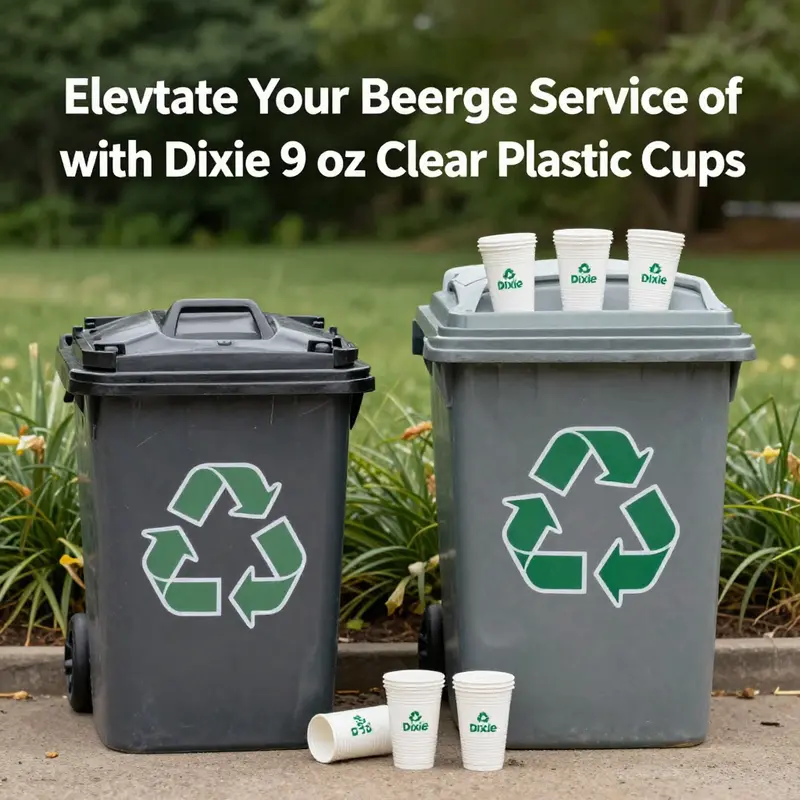
The lifecycle of a 9 oz clear plastic cup reveals hidden environmental costs that rarely appear on product labels. Many clear disposable cups are produced from fossil-fuel–derived polymers. The manufacturing stage consumes nonrenewable resources and emits greenhouse gases. Extraction of feedstock, polymerization, and molding all require energy. Those upstream impacts set the baseline for the cup’s environmental footprint before it ever holds a drink.
Material choice matters. Clear cups are often made from polypropylene (PP) or similar plastics. PP is lightweight and offers useful strength for cold beverages. It is also technically recyclable. However, a recyclable label does not guarantee recycling in practice. Local collection systems vary. Markets for recycled resin fluctuate. Contamination from liquids, ice, or syrup often disqualifies small, single-use items from sorting lines. As a result, many cups labeled recyclable end up routed to landfills or incineration.
When these cups are disposed of in landfills, they persist. Plastics fragment slowly into microplastics over decades. Microplastic particles migrate through soil and water systems and enter food chains. Even if a cup breaks down into tiny particles, it does not mineralize into benign components in a short period. That persistence contributes to long-term pollution and ecological stress.
Incineration is sometimes used as alternative disposal, but it is not impact-free. Burning plastics emits carbon dioxide and can release toxic pollutants if controls are inadequate. Energy recovery offsets some fossil-fuel use, yet combustion still produces greenhouse gases. For regions relying on incineration, single-use plastics trade immediate waste volume for atmospheric emissions.
Recycling systems face practical limits. Thin-walled cups can jam sorting machines. Clear polypropylene may be desirable for some recyclers, but small quantities and contamination reduce value. Many municipal programs accept rigid plastics but exclude lightweight single-use items. This mismatch between labeling and local infrastructure leads to consumer confusion. Users assume recyclability, yet the product’s end-of-life path often remains landfill.
Single-use behavior compounds the problem. Events, offices, and food-service outlets choose disposables for convenience. Each use generates immediate waste. Repeated reliance on single-use products multiplies resource extraction and waste management burdens. Over time, even small items scale into significant material flows that strain municipal services and landfill capacity.
Beyond disposal, the production footprint matters. Manufacturing plastic cups emits greenhouse gases and consumes water. Transport from factories to distribution centers adds more emissions. Packaging and wholesale quantities influence shipping efficiency. Buying in bulk reduces per-cup shipping and packaging impacts, but it does not eliminate the expected end-of-life issues.
There are more sustainable choices that reduce harm. Paper-based cups with plant-derived linings or compostable coatings exist. These designs aim for industrial compostability. Under proper conditions, they break down faster than petroleum plastics. However, industrial composting is not the same as backyard composting. Facilities require specific temperatures and management to process compostable materials. If compostable cups are landfilled or incinerated, their advantage is lost.
Material substitution requires alignment with local infrastructure. If a region has industrial composting, switching to compostable paper cups can drastically reduce persistence and microplastic generation. If composting is unavailable, the environmental benefit may be limited. Making the right choice depends on matching material types to the actual disposal pathways that exist locally.
Operational changes also reduce impact. For events, encouraging reuse with durable cups substantially lowers waste. Reusable options shift the burden upstream to cleaning and storage, but they reduce per-use material and waste dramatically. For businesses, offering incentives for patrons who bring reusable cups or using deposit-return systems can cut reliance on disposables. Where reuse is infeasible, providing separate collection streams for recyclables and compostables helps ensure materials follow intended routes.
Procurement decisions send market signals. Buyers who prioritize materials compatible with local recovery systems encourage suppliers to adapt. Purchasing compostable paper cups in areas with composting infrastructure, or selecting easily recyclable rigid plastics where recycling is reliable, helps close the loop. Contracts that require post-consumer recycled content can stimulate demand for recycled resin and create a stronger market for collection and processing.
Small operational practices matter too. Rinsing cups before recycling reduces contamination rates. Clear signage at disposal stations helps users sort correctly. Training staff at venues to manage waste streams improves capture rates for recyclable and compostable items. These modest steps often yield significant improvements in the actual recycling rate.
Transparency also helps. Manufacturers and suppliers can provide clearer guidance on ideal disposal routes and the conditions required for composting. Labels that simply state “recyclable” without context mislead consumers. Clear instructions about whether an item needs to be rinsed, whether it is suitable for curbside recycling, or whether it requires industrial composting enable better choices.
Policy and community solutions have a role. Municipalities can standardize accepted materials and invest in the sorting and composting infrastructure needed to handle modern packaging. Financial incentives, extended producer responsibility programs, and clearer collection standards reduce the burden on consumers and improve recovery rates. When policies favor materials that local systems can actually process, the overall environmental footprint declines.
For purchasers choosing between disposables, weigh disposal reality alongside material claims. If industrial composting is not available, a paper cup with a compostable lining may not break down as intended. If recycling markets are weak, a recyclable plastic may still become waste. Where possible, opt for reusable systems. When disposables are necessary, choose materials aligned with local recovery services.
Practical steps for reducing impact are straightforward. First, assess local recycling and composting options. Second, favor materials compatible with those systems. Third, implement clear on-site sorting and cleaning practices. Fourth, prefer bulk purchasing to reduce packaging and freight emissions. Finally, communicate with suppliers about recyclability and recycled-content goals.
Switching materials is not a universal cure, but it helps when paired with the right infrastructure and operation. Choosing alternatives designed for industrial composting, and ensuring those alternatives are actually processed correctly, lowers long-term pollution and reduces microplastic formation. For those who must use disposables, targeted changes at procurement and event management can make measurable differences.
For a practical alternative to traditional plastic cups, explore eco-friendly printed paper cup options that fit composting or recycling programs. More technical details on material types and manufacturing standards can be found in supplier listings and product specifications. For further reference on commonly used clear plastic cup materials and their sourcing, see this industry listing: https://www.alibaba.com/product-detail/Dixie-Clear-Plastic-Cups-957-9oz_1600287342247.html
9-Ounce Clear Plastic Cups: A Clear Comparison of Value, Durability, and Design
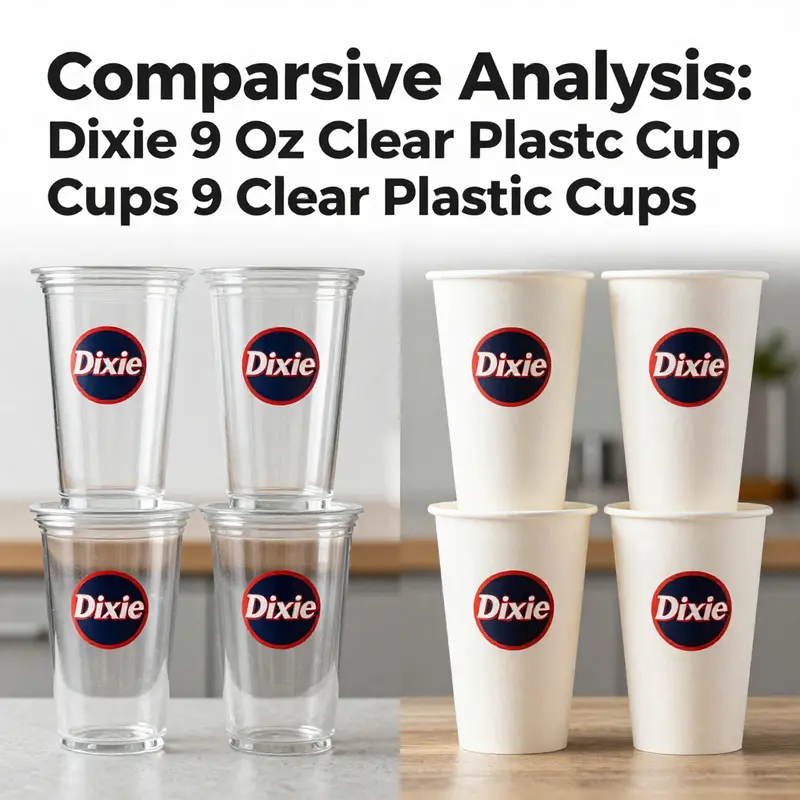
The 9-ounce clear disposable cup is a small but essential workhorse in event and hospitality settings. Its compact capacity suits beverages from water to mixed drinks, while its clear PET body showcases the drink and supports quick visual checks of fill levels. Key strengths include rigidity, light weight, and cost-effective bulk packaging. PET is BPA-free and widely recyclable where programs exist, contributing to responsible disposal and straightforward waste management. The standard wall thickness balances strength with economy; cups that feel noticeably thicker can reinforce durability but raise price, whereas thinner walls may bend or crack under heavier use or warmer drinks. Heat tolerance is generally sufficient for room-temperature and cold beverages, with limited margins for hot liquids; care should be taken to avoid thermal shock or deformation when serving hot coffee or tea in these cups. Stacking stability and rim integrity influence service speed, spill resistance, and guest satisfaction, especially during busy events. Consistency across batches in diameter, height, and lip shape ensures compatibility with lids, sleeves, and accessories, reducing the risk of leaks or misfits. Eco considerations remain important: brands promote recyclability and minimize material where possible, and buyers weigh these factors alongside performance and cost. The overall takeaway is that the 9-ounce clear cup offers dependable performance, unobtrusive presentation, and compelling value for high-volume service, while customers may consider paper-based or insulated options when insulation or sustainability narratives drive purchasing decisions. External references and retailer pages typically highlight thickness, rigidity, heat tolerance, and disposal pathways as the main differentiators among competing options.
For readers comparing options, the bottom line is: choose the cup that best aligns with the beverage profile, service style, and waste management plan of the venue; in many cases, the 9-ounce clear cup remains the default for versatility, speed, and predictable results.
Economic Clarity for 9 oz PET Cups in High-Volume Service
In high-volume service, cup selection directly affects margins. The 9 oz clear PET cup offers predictable per-unit costs, reliable performance, and easy handling. Its transparency supports a clean presentation and quick beverage identification, contributing to faster service. When managers view purchases through total cost of ownership rather than sticker price alone, the economic case for this cup becomes clearer.\n\nLabor remains the most visible cost in service. Single-use cups reduce washing, drying, and return trips for broken wares, translating into smoother shifts and fewer delays during peak times. The cups stack neatly and fill consistently, supporting training and throughput. The net effect is a more predictable workflow and improved staffing efficiency.\n\nUtilities matter as well. Dishwashing consumes water and energy, and reducing the need for a washing station lowers bills. At scale, the savings on labor and utilities compound, making bulk purchasing advantageous. PET cups also resist cracking, minimizing replacement needs and service interruptions.\n\nDurability and design drive operational efficiency. A well-matched cup aligns with lids, stacks, and fill lines, simplifying inventory and reducing waste from misfills. The 9 oz size works well for water, iced tea, soda, or cocktails in many settings, balancing volume with ease of handling.\n\nFrom a purchasing perspective, bulk economics reduce unit cost and simplify budgeting. When combined with lower labor and utility costs, the total cost of ownership often favors standardized disposable cupware across departments and events.\n\nSustainability considerations matter too. PET cups are recyclable where facilities exist, and clear disposal options support responsible waste management. The economic case thus combines short-term savings with alignment to broader environmental goals.
Seeing the Sip: The Everyday Versatility of 9-Ounce Clear Plastic Cups

Clear, unassuming, and almost always present on a kitchen shelf, the 9-ounce clear plastic cup is more than a disposable fallback. In homes, offices, and event spaces, it often performs a quiet, dependable service, turning ordinary moments into small, organized rituals. The appeal rests not in novelty but in a careful balance of size, durability, and presentation. These cups are made from PET, a material that blends lightness with strength. PET cups are BPA-free and widely recognized as recyclable in many curbside programs, though local guidelines can vary. That combination of safety, recyclability, and straightforward utility makes them a versatile choice for everyday beverages and quick, no-fuss servings. The capacity—nine ounces—lends itself to a range of applications without inviting waste, making them an easy fit for family dinners, casual gatherings, and busy breakrooms alike.
In terms of beverage serving, the 9-ounce size is ideal for cold drinks that invite a slower, contemplative sip or a quick, refreshing gulp between activities. Water and iced tea benefit from the clear container, which showcases the drink’s color and brightness. Iced coffee, smoothies, or sparkling beverages remain visually appealing, their hues and textures clearly visible through the transparent walls. For informal gatherings, a single, well-chosen cup can accommodate a modest pour of juice or lemonade, a light spritz of wine at a casual mixer, or a tiny cocktail, all without the heaviness of a larger vessel. The visual clarity also makes it easier to regulate portions, which is handy for family meals, potlucks, or classroom events where consistency matters as much as simplicity.
Durability and safety are another core part of the cup’s everyday usefulness. The shatter-resistant design reduces the hazard of dropped cups in busy environments—think bustling breakrooms, lively family kitchens, or the fast pace of a café’s self-serve area. The cups’ rigidity supports handling by both adults and children, a practical feature when little hands are involved in pouring or serving. Their light weight makes them easy to grip, stack, and transport, which translates into less piano-key clattering at gatherings and more efficient cleanup afterward. Clear plastic also means fewer surprises when guests misidentify a drink—there’s no need to rummage for lids or markers to denote contents; the color and transparency of the liquid tell the story at a glance.
Their use does not stop at beverages. The same 9-ounce footprint lends itself to small portions of food and desserts, turning the cups into convenient, disposable vessels for samples, bite-sized treats, or pantry-friendly servings. Jellies, puddings, yogurt, fruit slices, or bite-sized cheeses can be plated directly within the cup for easy, single-serving portions during family-style dinners or event tastings. In a retail or food-service setting, this versatility can streamline service lines by letting staff offer a consistent, compact portion without introducing additional dishware. Keeping the cups for tasting flights or small sampling events aligns with a philosophy of simple, fast, and clean service—where guests can easily pick up and dispose of a serving without slowing down the flow of an event.
Sustainability remains a key consideration for many buyers, and the PET-based construction of these cups offers an accessible path to responsible disposal. PETE, the resin identification code often stamped on the bottom of clear cups, signals recyclability to many local programs. But the practical reality is nuanced: while recycling options exist, success depends on rinsing, sorting, and following local guidelines. In households and workplaces alike, a quick rinse and proper disposal in the recycling stream keeps the cups out of landfills and allows the material to re-enter the production cycle. This makes the cups not only a practical choice for single-use convenience but also a small, everyday step toward sustainable habits. For large events, communicating a simple reminder about recycling can further reinforce the environmental practicality of disposable, clear cups, while still delivering the convenience audiences expect.
Availability plays a decisive role in their everyday practicality. These cups are commonly sold in bulk—packs that are conducive to replenishing a breakroom, stocking a café, or outfitting a home party. The economics of bulk purchases help ensure that gatherings, whether intimate or large, can be served without tedious restocking breaks or last-minute shopping runs. The combination of a standard size, straightforward design, and bulk-value makes them especially reliable for settings that require predictable, repeatable service and quick turnover of cups between pours. In a world where planning a menu for a crowd often hinges on how smoothly service can run, a dependable cup becomes a quiet backbone of reliable hospitality.
Even as many buyers look for the familiar combination of value, accessibility, and practicality, there is growing interest in complementary options. Some readers may explore alternatives that align with different sustainability goals, such as paper-based or biodegradable disposables designed for single-use convenience while staying mindful of the environmental footprint. For those curious about these broader options, a related supplier catalog can be browsed here: senang01-hot-sale-customized-disposable-single-wall-paper-ice-cream-cups-with-lid-eco-friendly-food-grade. While not a direct replacement for clear PET cups, such resources illustrate how the disposable category can adapt to varied needs—without sacrificing the ease and speed that everyday use requires. This broader perspective can help organizers balance the quick-service benefits of clear cups with an awareness of environmental considerations and evolving consumer expectations.
Of course, for readers seeking further context on consumer expectations and practical product attributes, industry references provide corroborating perspectives on how clear, disposable cups perform in real-world settings. The following external resource offers additional context on the broader landscape of disposable drinkware and its role in everyday life: https://www.walmart.com/ip/Dixie-Foods-Clear-Plastic-Cold-Cups-50-Pack-9-fl-oz/10328674. This external touchpoint can help situate the everyday utility of the 9-ounce clear cup within a larger ecosystem of serviceware that supports both convenience and responsible usage.
In the end, the value of a simple, clear nine-ounce cup lies in its quiet versatility. It is the kind of tool that individuals notice most when it is absent: the unglamorous, always-ready ally that makes a party run smoothly, a meal feel less formal, and a busy day in the office or at home just a little easier. By presenting beverages with clarity, supporting practical portion control, and offering a reliable, safe, and recyclable option, these cups prove that some of the strongest solutions in daily life are the ones we barely notice—until we reach for them and realize how seamlessly they fit into the flow of everyday moments.
Final thoughts
Dixie 9 oz clear plastic cups prove to be an invaluable asset for any business involved in the beverage sector. Their unique combination of durability, environmental consciousness, and aesthetic appeal enhances not only the customer experience but also operational efficiency. By choosing Dixie cups, companies can align their service with consumer preferences and sustainability goals, ultimately giving them a competitive edge. Investing in quality products reflects a commitment to service excellence, proving that every detail matters in the bustling food and beverage industry.