
Choosing the right plastic containers for food and beverages is crucial in maintaining safety and quality standards. With consumers becoming increasingly aware of packaging materials, understanding the markings on food safe plastic containers is more important than ever. In this article, we will explore key markings like the Resin Identification Code that delineate safe plastic usage, delve into certification standards and common labels, and discuss consumer awareness regarding chemical safety concerns. Each chapter aims to enrich your knowledge and aid in selecting compliant and safe packaging options for your businesses, from bubble tea shops to catering services.
null
null
Decoding Food-Safe Plastic Container Markings: Certification, Standards, and What They Promise
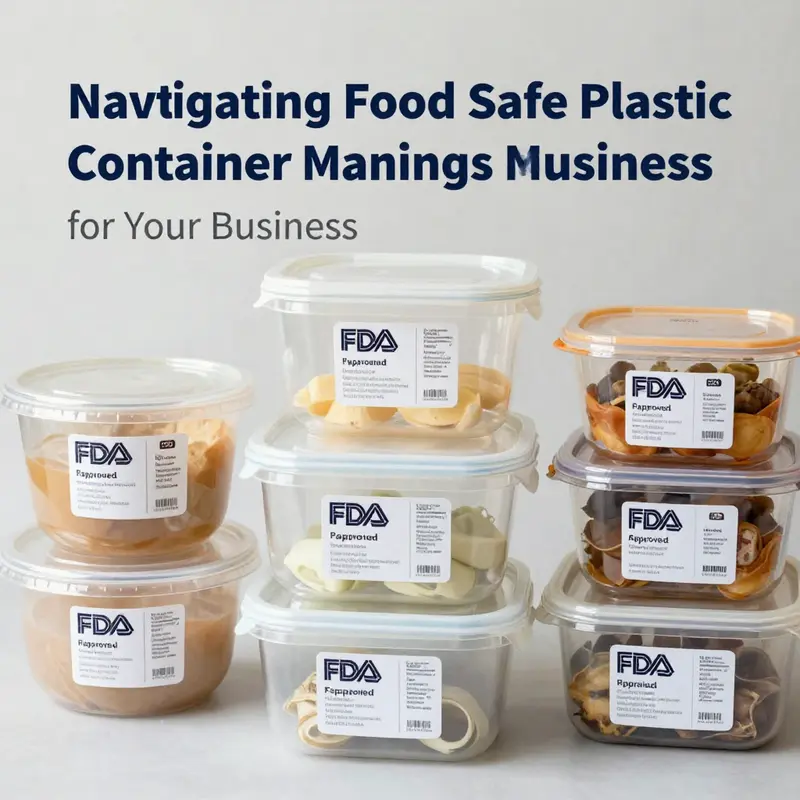
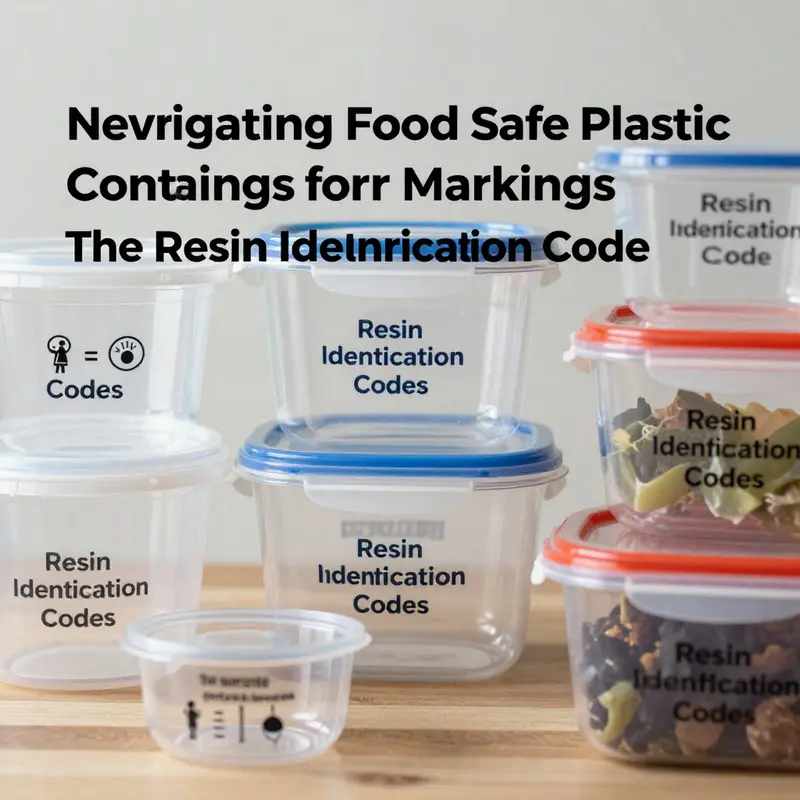
Markings on food-safe plastic containers do more than identify a material. They carry a concise narrative about safety, performance, and regulatory trust. When a consumer picks up a container, the markings should illuminate not only what the container is made of, but how it can be used, stored, and heated. This is not mere ornamentation. It is a compact contract between manufacturer, regulator, and user, a promise that the container will not release harmful substances into food under defined conditions. To read that contract well, it helps to follow the thread from resin codes to third‑party certifications, and then to the practical cautions that accompany everyday use. The core of this narrative is the resin identification code, commonly known as the SPI code, which accompanies a sequence of numbers from 1 to 7. Each numeral corresponds to a distinct plastic family with its own chemistry, stability, and potential for interaction with food. In the realm of food storage, certain resins are generally considered safer or more stable for contact with food than others. HDPE, the code #2, is the workhorse for milk bottles, juice bottles, and a surprising number of sturdy food containers. Its chemistry is notably stable, resisting many chemicals that might migrate into food, and it tolerates a range of temperatures without losing its integrity. LDPE, code #4, is another familiar face in the kitchen—found in cling films and some flexible bags. Its stability is similar in many common food-use scenarios, with relatively low risk of leaching under typical refrigeration conditions. PP, code #5, has earned a strong safety profile for microwaveable containers, baby bottles, and sealed jars. Its higher heat resistance makes it a preferred choice when containers are designed for both storage and reheating. These practical realities shape preference lists for households and institutions alike. Yet not all codes carry the same reassurance. PET, code #1, and PS, code #6, appear widely—on beverage bottles and certain disposable containers—but they are not ideal for long‑term food storage or heating. PET can release trace substances under high heat, and PS can become brittle or migrate more readily when exposed to high temperatures or fats. The take-home is straightforward: for food storage that may involve warmth or direct contact with hot foods, opt for #2, #4, or #5. This does not absolve the need for caution, because even these plastics can release different substances under extreme conditions. Food safety is not a single moment, but an ongoing boundary that depends on formulation, additives, processing, and use. In practice, a labeling system that supports informed choices couples the resin code with clear statements about safety for food contact. A product may display a phrase such as “food contact approved” or “food packaging use,” signaling alignment with accepted standards. The spoon-and-fork symbol—an international icon known as the cup-and-fork indicator—often appears on packaging to signal that the item meets the basic criterion for food contact. In many markets the symbol is placed where a potential buyer can see it, typically near the bottom or side of the container, alongside the resin code. Together, these marks translate complex chemistry into actionable information. The importance of a recognizable symbol is not to be underestimated. It provides a quick, visual cue for buyers who may not have the time to read detailed specifications. In a broader sense, such marks reflect regulatory intent: to standardize what “safe for food contact” means and to give both regulators and consumers a shared language. The conversation, however, does not end with the resin code and the fork-and-spoon emblem. As markets expand globally, many manufacturers supplement basic markings with third‑party certifications. In the field of food-contact materials, certifications from recognized bodies can offer an additional layer of assurance beyond the factory label. Certifications such as those from ISO or SGS provide external verification of safety, performance, and compliance with defined criteria. ISO, for instance, represents a family of standards that include requirements for materials, testing, and traceability. When a container bears an ISO mark, it signals conformity to internationally recognized guidelines, which can be reassuring for buyers who operate across borders. SGS, a prominent testing and certification body, offers comprehensive coverage for food-contact products. Their evaluations consider not only the safety of the material itself but also process control, migration testing, and performance under simulated use conditions. The presence of such marks implies that the product has undergone rigorous testing conducted by an independent party, which can elevate confidence for users who need consistent performance, particularly in the food-service sector. In practice, a consumer’s decision often hinges on visible certification marks alongside the resin code and standard food-contact statements. For many buyers, this combination is the gateway to trust: the resin identity provides the raw material story, the cup-and-fork symbol conveys a regulatory intent, and third‑party certifications supply corroborating evidence of safety and performance. The regulatory landscape adds further texture to this tapestry. In the United States, for example, the Food and Drug Administration does not require a container to bear a strict “food safe” label to be compliant. Yet this regulatory posture does not diminish the value of verification. The FDA maintains a broad framework that governs what materials may contact food, how they must be tested, and under what conditions migration may occur. In practice, many manufacturers pursue FDA compliance and test results that demonstrate acceptable migration levels for specific food types and temperatures. For buyers, a practical rule emerges: prioritize containers that display explicit labeling such as “FDA Approved” or “Food Safe” along with the resin code and a documented test or certification. The emphasis on explicit labeling matters especially when the product will be used for hot foods, microwaving, or long‑term storage. The act of heating can escalate the migration of substances, especially with materials that have limited heat resistance or with containers that have not been designed for such use. The careful reader will also note the broader regulatory context in other regions. In some markets, national standards govern what materials can contact which foods and under what processing conditions. China’s regulatory landscape, for instance, has articulated expectations for 2026 consumer tips for food-related products that require clear statements about whether a product is intended for food contact. The information to look for includes material type, compliance with standards such as GB 4806.1—2016, and details about the manufacturer and production date. The GB 4806.1 standard is a reference point for material safety in consumer products, including plastics used for food contact. While this standard is more familiar to readers in China, its existence underscores a global tendency: safety claims should be traceable to specific, auditable standards. The practical upshot is straightforward. Consumers should examine the labeling not in isolation but as part of a network of assurances: resin identification, food-contact symbols, explicit safety statements, and, where possible, third‑party certifications. And when products advertise specific attributes—such as being BPA-free or phthalate-free—these declarations add a layer of public health context that has become increasingly central in consumer decision-making. BPA, bisphenol A, has long been scrutinized as a potential endocrine disruptor. Even though many jurisdictions have restrictions, the presence of a “BPA-Free” claim remains a widely recognized marker of consumer safety for many shoppers. Similarly, statements such as “Phthalate-Free” respond to concerns about plasticizers that can migrate, especially in flexible films and packaging. These statements do not replace the need for solid testing, but they do influence purchasing behavior and risk perception. For goods that must withstand microwaving or the rigors of a busy kitchen, it is worth seeking explicit assurances that the container is intended for hot foods and capable of maintaining integrity under heating. A good approach is to read the product description and the labeling together, watching for a microwave symbol or explicit microwave‑safe language, coupled with heat resistance information. The narrative of safety is dynamic. Regulations evolve, materials science advances, and consumer expectations shift as new data emerges. This is why credible manufacturers and retailers lean on continuous testing and transparent documentation. A solid marking system today can include a combination of resin codes, safe-for-food statements, heating guidelines, and independent certification marks. The presence of a third-party mark, such as an ISO certificate or an SGS verification, signals that the product has undergone external scrutiny and that the supplier has committed to maintaining consistent standards across batches. It is also important to recognize how these markings appear on the product itself. Markings are typically located on the bottom or the side near the recycling code, but their placement can vary by manufacturer. The layout is not arbitrary; it is designed for quick recognition in a busy consumer environment. The familiar practice of placing the cup-and-fork symbol alongside a resin code helps shoppers quickly cross-check the material, the intended use, and the safety assurances. In a marketplace that increasingly values sustainability alongside safety, more manufacturers supplement the marks with additional statements about recyclability, recyclability codes, or even claims about BPA-free or phthalate-free content. These statements can reinforce safe use when combined with appropriate care instructions. They also underscore the reality that a product’s safety profile is not static; it depends on how the container is used. For example, a container may be safe for cold storage but not for microwaving, or it might tolerate dishwasher cycles but not high-heat ovens. The user’s responsibilities include following the manufacturer’s care instructions and recognizing the limits of each material. Incorporating a tangible example helps illuminate how these markings work in practice. Consider a hypothetical food container that carries the resin code #2, the cup-and-fork symbol, and the claim “BPA-Free.” It might be marketed as suitable for cold storage and short-term refrigeration, with a note that it is not recommended for microwave heating. In another scenario, a container with #5 and a microwave-safe emblem, along with ISO or SGS certification marks, signals a design optimized for reheating while meeting international safety criteria. The reader can translate these signals into everyday decisions: when in doubt, keep hot foods in containers explicitly rated for heating, avoid transferring fatty or acidic foods into containers that lack robust heat resistance, and prefer products carrying independent certifications for peace of mind in settings where safe handling is critical. The exchange between markings and behavior becomes particularly salient for households with young children, institutional kitchens, or vendors dealing with large volumes of saleable prepared foods. In such contexts, the reliability of the markings can reduce the risk of misusing containers and can also simplify procurement by providing a consistent framework for comparing products. The literature and regulatory guidance converge on one practical conclusion: prioritize materials that have established safety profiles for food contact, verify the presence of explicit, credible safety statements, and seek independent certification where possible. This approach reduces ambiguity and aligns consumer expectations with the realities of material science and regulatory oversight. For readers who want to explore a concrete example of compliant packaging in the broader ecosystem, consider this long-lasting, biodegradable sushi box example: 100-biodegradable-customizable-sushi-box-pallet-box-with-kraft-paper-matt-lamination-uv-coating. It illustrates how a packaging solution can pair eco-friendly intent with robust safety and regulatory considerations, including material choices, printing methods, and testing that confirms suitability for food contact across supply chains. Returning to the general landscape, the key habit for readers and practitioners is to cultivate an interpretation of markings as a spectrum rather than a single verdict. The resin code provides a material identity, but the safety of a container is earned through a chain of assurance: the manufacturing process, the testing regime, the availability of migration data, and the presence of trustworthy certifications. In a global market, this chain is only as strong as its weakest link, which is why independent testing and transparent documentation matter so much. The consumer-facing takeaway is accessible and actionable: look for resin codes #2, #4, and #5 when the product is intended for food contact and potential heating; ensure there is a clear statement about food safety and, if possible, a recognizable certification mark from a credible organization; and be mindful of any BPA-free or phthalate-free declarations, understanding that these are protective health statements that function best when supported by data and testing. For professional readers—retailers, educators, and policy advocates—the opportunity lies in building consumer literacy around these markings and advocating for standardized disclosure across product categories. It is not enough to print a logo or a symbol; the organization behind it should be able to substantiate claims through independent testing and to provide accessible, verifiable evidence. That is the essence of a robust safety culture in food packaging. The broader narrative also invites readers to probe the interface between safety and sustainability. As material science evolves, new polymer blends and alternative additives may alter the migration landscape. In response, labeling schemes will continue to adapt, potentially embracing more comprehensive migration data, clearer heating instructions, and broader international recognition of safety standards. This dynamic underscores why ongoing education is essential. Consumers who understand the language of markings become better stewards of their health and more discerning participants in the marketplace. They empower themselves to ask better questions about where a container comes from, how it is tested, and what it can safely do. The linking thread through resin codes, symbolic assurances, regulatory marks, and third-party validation is not merely a technical curiosity; it is a practical framework that helps people live safer, cleaner, and more informed lives. For those who want a more concrete look at how packaging can harmonize safety with environmental considerations, the linked example above demonstrates how a product line can articulate its compliance and performance through a thoughtful combination of material choice, labeling, and certification. External resources reinforce this, offering broader perspectives and step-by-step guidance on verifying food-grade materials in everyday contexts. For a useful general guide, see the external resource that outlines practical steps to identify food-grade materials and their safety profiles: https://www.wikihow.com/Identify-Food-Grade-Buckets. By combining material-specific markings with independent verification and clear usage instructions, readers gain a reliable compass for navigating the increasingly complex landscape of food-safe plastics. In the end, the markings are not merely decorative. They encode a disciplined approach to safety, informed choice, and shared accountability across manufacturers, regulators, and users. They remind us that the integrity of what we store and heat in a plastic container depends on the transparency and credibility of the signals we see on every package. The more consistently such signals appear, the more confidence people can have in the safety of everyday food storage, and the less room there is for guesswork in kitchens, cafeterias, and homes around the world.
null

null
Final thoughts
Understanding food safe plastic container markings is essential for businesses in the food and beverage industry. By prioritizing knowledge of the Resin Identification Code, certification standards, and consumer safety concerns, you can make informed choices that contribute to both compliance and customer trust. Remember that safe packaging not only protects your products but also fosters confidence among your customers. Stay informed, select wisely, and continue to thrive in your industry.