
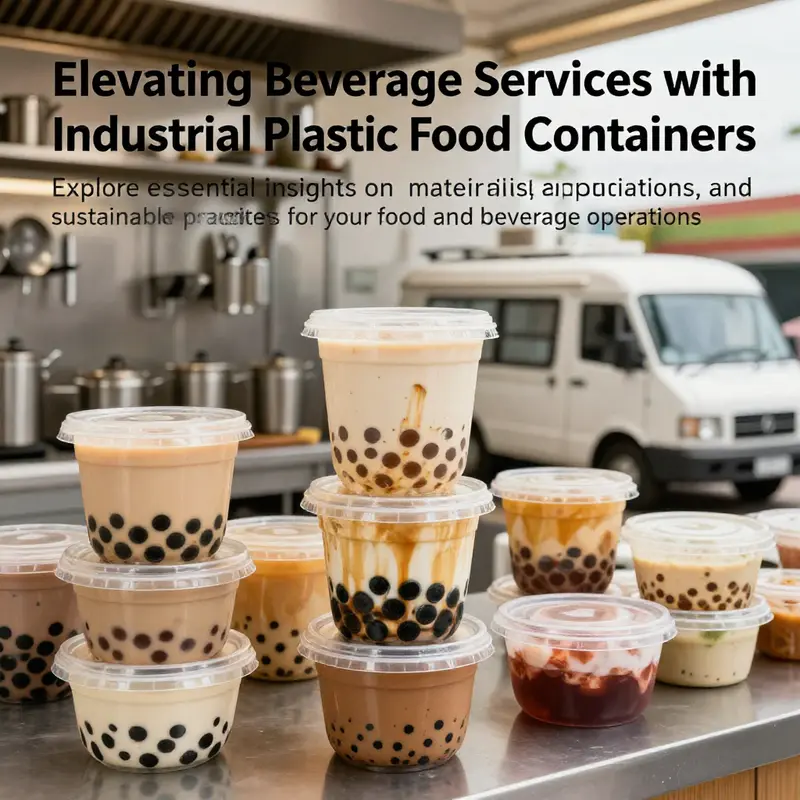
In the competitive landscape of food and beverage service, ensuring the integrity and quality of your offerings is paramount. Industrial plastic food containers play a crucial role in this endeavor, offering safe, efficient, and versatile solutions tailored for businesses like bubble tea shops, restaurants, food trucks, and catering services. This article delves into the key aspects of these indispensable containers, including their materials and design features that enhance functionality; their diverse applications across various industries; and the safety standards and sustainability practices that ensure compliance and responsible sourcing. By understanding these elements, businesses can make informed decisions that elevate their service and operational efficiency.
Durability, Safety, and Circularity: The Material Science and Design Logic of Industrial Plastic Food Containers
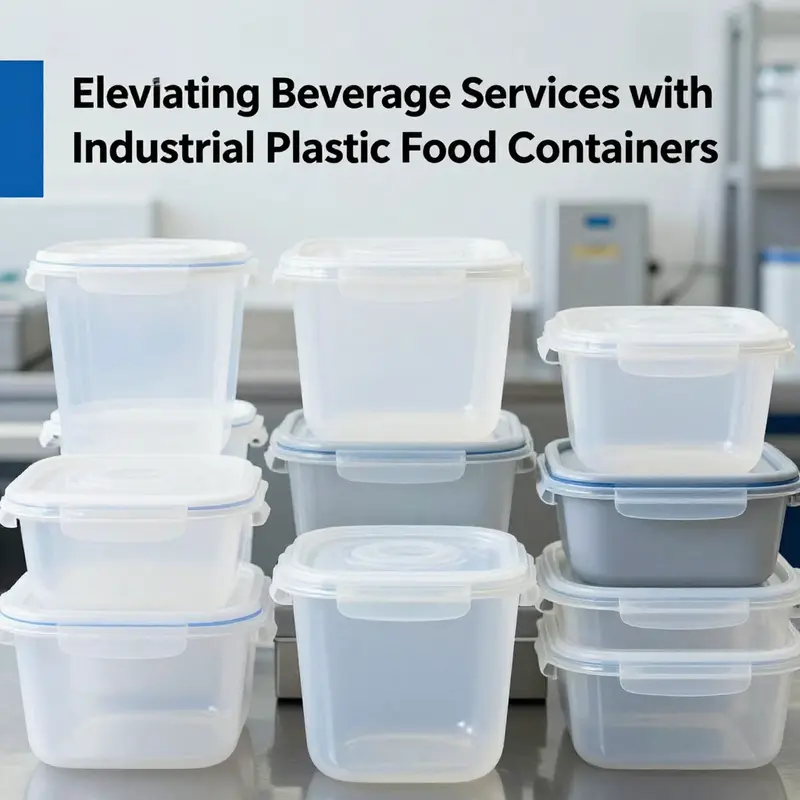
Industrial plastic food containers sit at the quiet edge of the production line, yet they carry a heavy freight of expectations. They must endure the rough realities of a food supply chain that runs on efficiency, hygiene, and speed. They must shield contents from contamination, minimize losses through leakage, and survive repetitive handling by forklifts, pallet jacks, and automated conveyors. They must also align with evolving safety standards and growing sustainability targets. In short, the material choices and the geometry of these containers are not afterthoughts; they are the core competencies that determine how reliably a supplier can transform raw ingredients into safe, traceable products that reach kitchens and customers intact. In this sense, the chapter that follows examines not only what these containers are made of, but why they are made that way, and how design decisions ripple through the entire food ecosystem from raw material storage to final consumption.
At the heart of material selection is a balancing act among chemical resistance, thermal stability, mechanical strength, and end-of-life considerations. The most common materials used in industrial contexts are polyethylene terephthalate (PET), high-density polyethylene (HDPE), polypropylene (PP), and, to a lesser extent in some applications, polystyrene (PS). Each comes with a distinct profile of properties that makes it suitable for particular tasks in the chain of storage, transport, and handling. PET is prized for clarity, rigidity, and excellent barrier properties against gases and moisture. It is highly recyclable and often chosen for large-scale beverage containers and rigid food packaging where visibility and structural integrity matter. HDPE, by contrast, emphasizes chemical resistance, impact strength, and toughness across a wide temperature range. It is opaque and provides robust moisture and vapor barriers, making it a workhorse for dairy products, sauces, and other liquids that might encounter a broad spectrum of handling scenarios. PP offers a higher heat resistance, enabling hot-fill processing, pasteurization, and even microwave heating in some contexts. This makes PP a preferred platform for ready-to-eat meals, baked goods, and other products that benefit from thermal processing or direct heat exposure during use. PS, while less common in the largest, heavy-duty containers due to brittleness, still plays a role in certain molded foam packaging for delicate items, where cushioning and light weight are required. In short, the material choice is not a single variable; it is a matrix of properties that collectively determine a container’s performance envelope.
The design logic that accompanies material selection reinforces the same messaging: durability, hygiene, and logistics efficiency must be woven together in every contour and feature. Structural integrity is a primary concern; containers are reinforced with corners, ribbed walls, and thick bases to resist crushing during stacking and transport. A common feature in bulk bins and pallets is a base geometry—often honeycomb or grid-like—that distributes load more evenly and reduces the chance of failure under heavy stacking pressure. When space is at a premium, as in warehousing, stackability and interlocking systems become the silent heroes of the operation. Interlocking sides and tapered profiles enable stable stacking, which minimizes wasted space and curtails the risk of collapse that can lead to product loss or safety incidents.
Sealing and closure mechanisms are equally critical. Secure lids, gaskets, and snap-on closures help prevent contamination, leakage, and exposure to air or moisture. In environments where products may undergo multiple transfer steps, tamper-evident features add another layer of assurance. The surface finish and hygiene profile of the container are also essential. Smooth, non-porous surfaces—achieved through precise injection molding and finishing processes—lower the risk of microbial harboring and simplify cleaning in high-throughput facilities. This is not merely about aesthetics; it is about practical hygiene, repeatable sanitation protocols, and the consistency required by large-scale operations that must pass periodic audits.
From a traceability perspective, labeling and identification are not cosmetic additions but crucial mechanics of safety and compliance. Containers in the food supply chain are typically marked with standardized resin identification codes and other identifiers that convey the material type (#1 PET, #2 HDPE, #5 PP, etc.), alongside batch numbers and manufacturer data. These markings support quality control, recall readiness, and regulatory compliance across regions. The design language here is simple but powerful: material identity, production provenance, and portability of information all come together to enable quick traceability if a safety event were to occur. In practice, this means containers are designed to carry data in durable, legible formats that survive the rigors of cold storage, mechanical handling, and repeated wash cycles.
Beyond function, sustainability has become a driving force shaping both material choice and container architecture. Modern industrial containers increasingly favor mono-material constructions to simplify recycling streams. The push toward recyclable or reusable configurations has accelerated the adoption of durable HDPE or PP designs that can withstand hundreds of reuse cycles and be recycled into new containers at end of life. This circular economy view is not about a single end-of-life moment; it is about the entire life cycle—from gentle handling in the loading dock to how the container is reprocessed into the next generation of packaging. In some cases, recycled or bio-based content is introduced to reduce the material’s life-cycle footprint, though this must be balanced against performance requirements such as chemical resistance and mechanical strength. The challenge lies in delivering material properties that are robust enough for industrial environments while maintaining compatibility with recycling infrastructure and waste separation streams.
The design narrative also intersects with safety and regulatory frameworks that vary by geography but share a common aim: to ensure that containers that come into contact with food do not transfer harmful substances or contaminants. In the United States, the U.S. Food and Drug Administration (FDA) provides guidelines for materials intended for food contact, including lists of acceptable resins and guidance on migration limits. In Europe, EFSA guidance shapes expectations for safety assessments and allowable substances, while in other regions, standards bodies and national regulators specify similar requirements. The British market, for example, relies on harmonized standards and national implementations that align with global best practices. In industrial settings, those rules translate into manufacturing controls, supplier qualification, and facility certifications such as ISO 9001, which codify quality management systems and continuous improvement practices. There is also practical nuance in certain markets: for example, in some jurisdictions, manufacturers must hold specific licenses or certifications to legally produce food-contact plastic containers, underscoring that compliance is an operational discipline as much as a technical one.
The practical implications of material and design choices extend into the operational realities of the cold chain, the warehouse, and the plant floor. Cold chain logistics demand plastics that maintain integrity at low temperatures, resist embrittlement, and preserve contents without increasing risk of condensation or contamination. In contrast, hot-fill or pasteurization processes require plastics with heat resistance and dimensional stability to withstand thermal cycles without warping or losing shape. The way a container is engineered—its wall thickness, rib geometry, and lid fit—determines its behavior under these thermal regimes. A well-designed HDPE container, for instance, can provide sturdy performance in refrigerated environments while still offering excellent chemical resistance to dairy and acidic sauces. A PP container may shine in high-temperature scenarios given its elevated heat tolerance, but it is essential to match the resin to the anticipated processing and service conditions to avoid warping or degradation.
From a manufacturing standpoint, the production of industrial plastic containers integrates advanced polymer science with precision molding and quality assurance. Injection molding is a common technique for producing rigid, smooth-surfaced containers with consistent wall thickness and complex features. Blow molding, including extrusion blow molding, is often used for hollow, bottle-like shapes and large-volume drums that must maintain uniform wall integrity. For large-tank and intermediate bulk container (IBC) applications, the geometry becomes more specialized, balancing stiffness with impact resistance and ease of handling. Surface finishes are engineered to minimize micro-crevices where residue and microbes can accumulate, while finish quality supports cleanability across repeated wash cycles that are typical in food processing and distribution environments. The interplay between mold design, processing temperatures, and material rheology is a delicate one; it shapes not only the final product’s performance but also the yield, cycle times, and cost per unit that determine the container’s suitability for mass deployment in industrial contexts.
Visual cues of a container’s design can reveal much about its intended use. For example, thick bases and reinforced corners tell of heavy stacking requirements, while integrated handles and ergonomic grips indicate a focus on manual handling and worker safety. Integrated lids with gaskets point to a priority on hygiene and leak prevention, especially for liquids susceptible to contamination or evaporation. Interlocking features and nesting reliefs speak to warehousing efficiency, enabling dense storage without compromising access. The labeling strategy, including resin codes and batch identifiers, is not a mere formality but a necessary element in regulatory compliance and operational traceability. In practice, designers think not only about how a container performs in isolation but how it behaves within a system—how it interfaces with other pallets, racking systems, forklifts, and automated lines, and how it communicates through its markings with downstream users who must verify product origin, safety, and freshness.
Despite the breadth of options, the industry advances by continually refining materials and designs to extend service life while maintaining safety and recyclability. Research into polymer blends and enhanced fillers promises to improve barrier properties and mechanical resilience without switching away from commonly approved resins. Innovations in barrier coatings and surface treatments can help PET, HDPE, and PP containers resist permeation by moisture, oxygen, and certain solvents, thereby extending shelf life and reducing waste. Simultaneously, the push toward mono-material packaging challenges designers to preserve barrier and mechanical performance while avoiding the material incompatibilities that complicate recycling streams. In practice, this means a careful calibration of resin selection, wall thickness, and reinforcement strategies to deliver a package that can be reused or efficiently processed at the end of its life without compromising safety.
A practical takeaway for practitioners working with industrial plastic containers is the recognition that material choice and design are inseparable from supply chain priorities. The containers must align with processing capabilities, cleaning regimes, regulatory expectations, and sustainability targets. Procurement teams evaluate resin certifications, supplier process controls, and testing regimes that verify compliance with safety standards and environmental goals. Operations teams translate those materials and designs into racks, pallets, and handling procedures that minimize damage, reduce downtime, and protect product integrity during commissioning, transport, and storage. Engineers and quality professionals collaborate to validate performance through mechanical testing, thermal cycling, chemical compatibility assessments, and migration studies. Together, these activities form a robust system in which the container is not a passive vessel but an active enabler of safe, efficient, and responsible food production and distribution.
To ground this narrative in a practical context, consider the broad family of containers designed for bulk storage and transport, spanning from modest 5-liter and 10-liter canisters to 20-liter and 50-liter units, up to 200-liter drums and large IBC tote bins. These are not mere containers; they are modular pieces of the logistics architecture that keep ingredients moving from storage to processing to packaging and distribution. Their design must harmonize with the temperatures, chemical exposures, and physical demands they will encounter along the way. The ongoing evolution of these containers reflects a balancing act among durability, safety, and sustainability. It is not simply about withstanding a single use; it is about performing reliably across many cycles of use, cleaning, sterilization, and potential recycling. The result is a scalable, adaptable packaging platform capable of supporting a diverse set of food products—from dairy and oils to syrups and complex ready-to-eat formulations—while meeting stringent safety standards and evolving environmental expectations.
For readers seeking a concrete example of food-contact packaging practice, this chapter also invites a closer look at exemplars that populate industrial workflows. Such resources illustrate how a container’s physical form translates into real-world efficiency and safety benefits. See the linked resource on food-grade disposable kraft paper soup cups with lids for a sense of how a packaging option can blend functional integrity with accessibility and ease of reuse or recycling in a fast-moving service environment. food-grade disposable kraft paper soup cup with lids.
The broader takeaway is clear: material science and thoughtful design underwrite the reliability of industrial plastic food containers. They determine how long a container lasts in service, how easily it can be cleaned between batches, how effectively it protects the product from the rigors of the cold chain, and how simply it can be integrated into a circular economy. In a sector where margins depend on speed, safety, and waste reduction, the investments in better materials, smarter geometries, and smarter disposal or recycling pathways pay off in reduced downtime, lower risk, and a clearer path toward sustainable growth. As regulations evolve and the push toward responsible packaging intensifies, the trajectory points toward containers that are not only tough and trustworthy but also harmonized with the goals of recovery, reuse, and responsible resource use. The chain of custody for food begins with the container; the container, in turn, both protects and reveals the story of the food that moves through the industrial system.
External resource for safety considerations and standards in food contact materials: https://www.cfs.gov.hk/english/programme/programme_foodcontactmaterial.html
Pack, Protect, Deliver: The Integral Role of Industrial Plastic Food Containers Across Food-Driven Industries
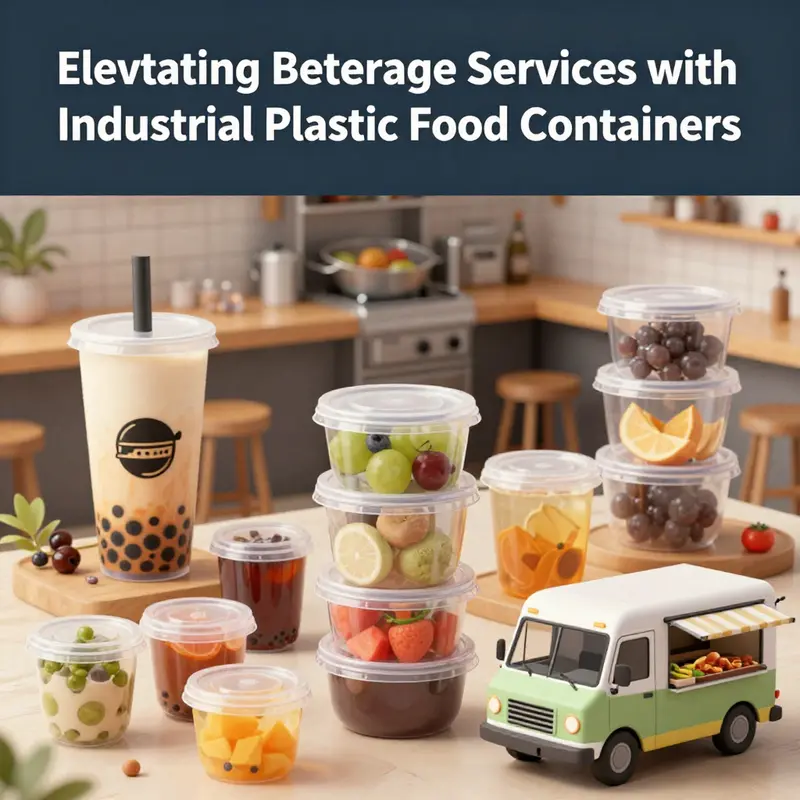
In the modern industrial food system, containers are more than passive vessels. They are the unsung infrastructure that shapes hygiene, efficiency, and velocity from raw material intake to the plate. Industrial plastic food containers stand at the intersection of safety, logistics, and sustainability, translating the properties of polymer science into practical performance on crowded warehouse floors, in automated lines, and through the hands of cooks and delivery drivers. They carry a quiet authority: resisting acids and solvents, withstanding temperature swings, and still presenting a clean, non-porous surface that can be cleaned and sanitized repeatedly. The containers under discussion are typically molded in HDPE or other food-grade plastics, chosen not only for their resilience but for their capacity to meet strict regulatory expectations while keeping costs manageable in high-volume operations. The choice of material, the geometry of the container, and the ease with which it integrates into mechanized handling systems all matter in ways that ripple through the entire supply chain. In this light, plastic food containers are a foundational element in the efficiency and safety that define contemporary food production and distribution.
The material story matters because it governs how far a container can travel through a facility’s processes and across markets without compromising safety. HDPE, in particular, has earned its place in many large-scale settings because it offers robust chemical resistance, a broad temperature tolerance, and a stable, non-porous surface. These attributes help prevent microbial ingress and cross-contamination, two pivotal concerns in any environment where raw ingredients meet finished products. PP and PET also appear in specific uses, chosen for their mechanical properties or optical clarity, depending on whether a container must withstand high temperatures, resist particular solvents, or enable easy visual inspection of contents. The material choice thus anchors decisions about sanitation cycles, cleaning agents, and the potential for sterilization procedures that a production line may require. In aggregate, the material choices reflect a balancing act between durability, food safety, and the economic realities of moving large volumes of product through a complex ecosystem.
Design philosophy follows from material science and the realities of industrial workflows. Containers range from compact 5-liter units suitable for line-side usage to massive 200-liter drums and Intermediate Bulk Container (IBC) totes that handle bulk liquids, powders, or semi-solids in a single synchronized step of production, storage, and transport. One core objective is stackability. Stackable designs free warehouse square footage for other operations, an advantage that compounds as facilities expand and inventories turn over more quickly. Integrated handles, secure lids, and reliably sealable rims reduce the risk of spills during automated handling and manual transfers alike. In environments where forklift and pallet jack movements are routine, the geometry and balance of a container become as important as its chemical resistance. A well-conceived design will deliver predictable performance across cycles of washing, sanitizing, and refilling, with hardware that supports quick, tool-light maintenance. The capacity to withstand repeated cleaning cycles without swelling, cracking, or delamination is a practical threshold that separates containers suitable for high-throughput operations from those that become bottlenecks.
Hygiene is the throughline that connects every application, from a dairy plant to a processing line in a snack manufacturer, a hospital nutrition department, and a fruit packer. The surfaces of plastic containers are deliberately non-porous and easy to dry, which means that a rigorous cleaning protocol can be applied without compromising material integrity. In food processing and manufacturing, containers are used across stages: as vessels for raw materials, as intermediate carriers during mixing or marination, and as final packaging for ready-to-use products. The modularity afforded by standard sizes ensures that lines can be configured for parallel processing, with pallets sized to harmonize with automated storage and retrieval systems. In many settings, the ability to sanitize containers between shifts or production runs is not a luxury but a logistical necessity. The containers endure repeated exposure to disinfectants and high-temperature wash cycles, maintaining their surface integrity and free from residual odors or residues that could contaminate subsequent batches. These attributes are central to meeting food safety standards such as FDA and EFSA requirements, while supporting internal quality systems like ISO 9001–based hygiene controls that some facilities pursue. The result is a system in which the container becomes a reliable, repeatable element in a chain of custody that keeps products safe, traceable, and compliant across diverse environments.
Across the food processing and manufacturing landscape, the choice of container shapes the flow of ingredients and finished goods. In raw-material storage, containers must resist moisture ingress and maintain cleanliness even in high-humidity warehouses. For intermediate products, durability under mechanical handling matters, because containers may be stacked on conveyors, transferred between lines, or rotated within automated racking systems. Designed for repeated cycles, HDPE and related plastics must tolerate acid and base exposures associated with certain cleaning or immersion steps, without degrading or shedding micro-pibers that could compromise product safety. The containers must also withstand thermal shocks as products move between processes that happen in quick succession, such as pasteurization steps or steam-assisted cleaning cycles. In the realm of finished goods, packaging must protect products during cooling, packaging, and distribution, while enabling efficient inventory management and fast retrieval. Here, the stackable geometry, lid integrity, and ease of labeling or coding play practical roles in traceability and anti-tamper considerations. Collectively, these design and material choices support a production ecology where hygiene, efficiency, and cost are balanced in real time, with each container functioning as a reliable node in the larger system.
The food service and restaurant sector, accelerated by bold shifts in consumer behavior and delivery models, illustrates another dimension of industrial plastic containers. As meal kits, grab-and-go meals, and ready-to-eat offerings proliferate, containers must perform in environments that demand leakage resistance, microwavability, and temperature retention during transit. In many cases, the containers are designed with compartments or vented lids to preserve texture and moisture balance for a range of dishes, from soups to salads to multi-component meals. The emphasis on leak-proof performance protects drivers and customers alike, reducing the risk of spills that can destabilize logistics or contaminate other items in a delivery bundle. Microwave-safe materials broaden the use-case spectrum, allowing restaurants and preparers to deliver hot meals that reheat efficiently in consumer kitchens. In such contexts, the containers’ resilience to repeated washing between shifts and their compatibility with routine sanitation cycles are particularly valuable, as kitchens operate at high throughput and tight timing windows.
From the perspective of logistics and supply chain management, industrial plastic containers are strategic assets that enable cold chain integrity and inventory visibility. Perishable and semi-perishable goods demand containers that can survive extended transport in refrigerated conditions, resist humidity and corrosion, and yet be lightweight to maximize pallet density and reduce transportation costs. Modern containers increasingly integrate enabling technologies such as RFID chips or QR codes, embedding data that travels with the product through receiving docks, storage areas, and transport legs. Such traceability enhances recalls, quality control, and regulatory reporting by linking physical packaging to digital records. This capability dovetails with broader supply chain goals: reducing waste, improving demand forecasting, and enabling just-in-time replenishment that minimizes inventory while maintaining safety margins for perishable items. The ability to track contents and container lifecycle—from washing cycles to re-use or recycling—transforms containers from static tools into dynamic components of a data-rich, responsive system.
In the pharmaceutical and healthcare-adjacent space, food-grade containers sometimes extend their utility beyond conventional food use. Dietary supplements, medical nutrition products, and aseptically prepared ingredients require stringent hygiene and robust cleaning protocols. Containers designed for such settings emphasize microbial resistance, cleanability, and compatibility with sanitization agents used in pharmaceutical environments. While the primary focus remains on food contact safety, the cross-application potential underscores the versatility of plastic packaging in regulated contexts. In these environments, standards around microbial limits, surface cleanliness, and validated cleaning procedures influence container selection, reinforcing the need for materials and designs that endure repeated sterilization cycles without compromising performance or safety.
The agricultural sector and food distribution networks rely on plastic containers to protect freshness and reduce spoilage from harvest to consumer. Harvested produce, dairy, meat, and other perishables benefit from containers that cushion against physical damage, minimize moisture loss, and withstand rough handling during field collection, sorting, and transport. The ability to maintain product integrity during short-haul and long-haul transit is central to reducing waste and enhancing shelf life. As sustainability initiatives gain traction, growers and distributors increasingly explore recyclable or compostable variants that align with circular economy goals without sacrificing reliability in field and warehouse environments. These choices reflect a broader trend toward designing containers that can be reclaimed, reused, or repurposed with minimal environmental impact while meeting the rigorous demands of modern agrifood supply chains.
Safety and compliance extend beyond material choice to encompass manufacturing practices, facility certifications, and traceability of the containers themselves. Food-grade plastics used in industrial containers must meet regulatory prerequisites for food contact, including migration limits and material safety standards. The production environment often carries ISO certifications and adheres to hygiene practices that support consistent quality. In some markets, manufacturers require specific licenses or registrations that authorize the production of food contact plastics, reinforcing the legitimacy and traceability of the supply chain. The interplay between standardization and customization then becomes a practical balancing act. Facilities may customize dimensions, lid configurations, or labeling schemes to align with particular processing lines, while maintaining the core attributes that guarantee food safety and ease of cleaning. This equilibrium ensures that containers can be integrated into diverse workflows without compromising compliance or performance.
Sustainability considerations have moved from a peripheral concern to a central criterion in selecting industrial plastic containers. Recyclability remains a cornerstone; many containers are designed for end-of-life processing that supports circularity, whether through mechanical recycling streams or through programs that enable material recovery after a defined lifecycle. In some instances, producers experiment with recycled content or bio-based plastics to reduce virgin resin demand, while maintaining the necessary mechanical and chemical properties. The trade-offs between cost, performance, and environmental impact shape decisions at the plant and supply-chain levels. An emerging facet of sustainability is durability paired with cleanability. Containers that can withstand aggressive cleaning regimes without surface degradation extend usable life, reducing the frequency of replacement and the total resources consumed per unit of product packaged. The narrative around sustainability therefore evolves from a simple preference for recyclability to a comprehensive lifecycle approach that includes production energy, cleaning chemical use, transport efficiency, and end-of-life destinations.
The broader market context, as illuminated by recent market research, shows a growing recognition of plastic container systems as critical infrastructure for modern food economies. Market dynamics favor containers that combine light weight with strength, that tolerate the rigors of automated handling, and that enable transparent, data-enabled supply chains. This convergence of materials science, design engineering, and digital tracking is directing investment toward smarter packaging ecosystems. As industries push toward leaner inventories and seamless cross-docking between facilities, containers that accommodate high throughput while maintaining strict hygiene standards are increasingly indispensable. In practice, this means more modular sizes, standardized interface dimensions, and lids that seal reliably under fluctuating ambient conditions. It also invites ongoing research into surface coatings, seal technologies, and cleaning compatibility that reduce residue transfer and lower the risk of contamination.
The relationship between container design and process optimization cannot be overstated. When facilities standardize containers across lines, they minimize downtime caused by mismatched pallet sizes or incompatible rack systems. Standardization accelerates employee training, reduces errors in material handling, and makes automation more cost-effective. A container system that can be quickly integrated into RFID-enabled traceability programs enhances inventory accuracy and reduces the likelihood of mishandling or misplacement. The cumulative effect of these efficiencies is a more resilient supply chain that can respond to demand shifts, recall events, and seasonal production cycles with greater agility. In this sense, industrial plastic food containers are not simply packaging; they are an engineered platform that supports safety, efficiency, and accountability across the entire product lifecycle.
Looking ahead, the material toolkit behind these containers is expanding. Hybrid approaches that blend traditional HDPE with additives or bio-based alternatives promise enhanced sustainability without compromising performance. Developments in surface chemistry aim to ease cleaning, reduce microbial adhesion, and extend shelf life, while maintaining compatibility with established sanitation protocols. Recycling technologies continue to mature, allowing more containers to be reincarnated into new products rather than ending life in landfills. As smart packaging concepts become more cost-effective, containers may integrate sensors or be part of broader IoT ecosystems that monitor temperature history, moisture exposure, and handling events. The convergence of these trends suggests that industrial plastic food containers will become increasingly intelligent, traceable, and sustainable—without sacrificing the core advantages that make them essential to modern food systems.
In closing, the chapter on applications across industries reveals a tapestry woven from material science, design ingenuity, and disciplined operations. The containers discussed here stand as reliable stimuli to process efficiency, hygiene, and safety. They enable suppliers to move ingredients quickly and safely from harvest to table, support kitchens and manufacturers in delivering hot and cold goods with confidence, and help regulators ensure that safety standards are upheld across complex, global supply chains. As the industry continues to refine the balance between reusability, recyclability, and performance, the role of industrial plastic food containers will only deepen. They will remain a practical, scalable solution that underpins modern food systems—delivering protection, predictability, and progress in equal measure. For those seeking a broader context on market dynamics and future directions, the ongoing evolution of plastic containers in the food sector is charted in market analyses linked to global trends in packaging. External resource: https://www.fortunebusinessinsights.com/plastic-containers-market-103489
Safe, Sustainable, and Sturdy: Navigating Regulations and Green Practices in Industrial Plastic Food Containers
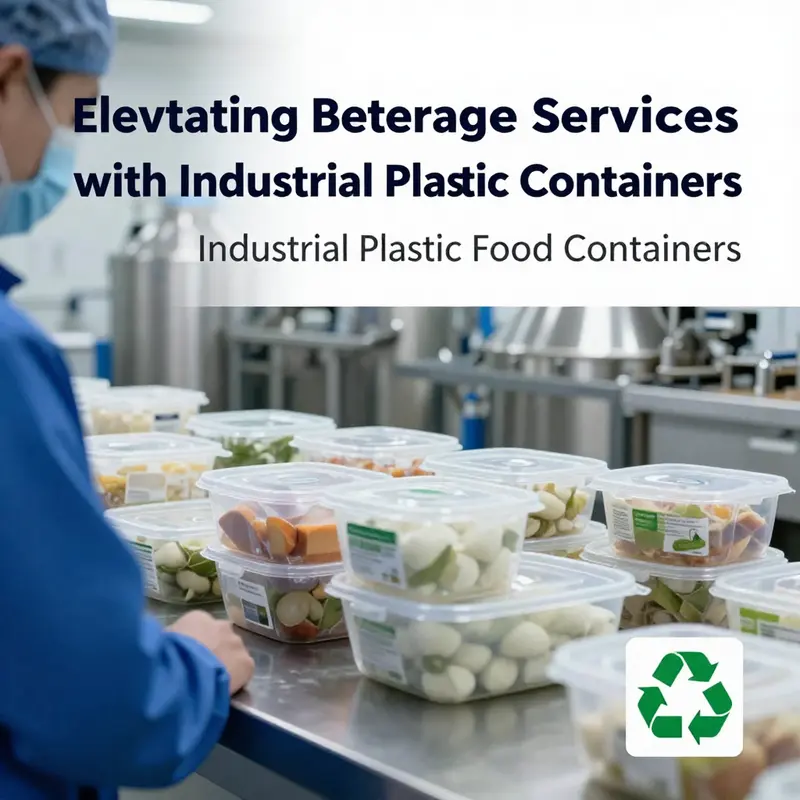
Industrial plastic food containers occupy a critical hinge between food safety, supply-chain efficiency, and environmental responsibility in modern processing and distribution networks. They carry the daily burden of raw ingredients, intermediate formulations, and finished goods through warehouses, production lines, and transport fleets. The chapter that follows traces the path from regulatory guardrails to design philosophy, showing how safety and sustainability are not competing priorities but complementary imperatives that shape every choice from polymer selection to lid latch design. In doing so, it stitches together the practical realities of large-scale operations with the evolving expectations of regulators, customers, and end consumers, offering a cohesive understanding of how industrial plastic food containers stay compliant, perform under demanding conditions, and move toward a cleaner, more circular economy without compromising integrity or safety.
At the core of safety is material selection. The most common workhorse polymers in industrial food contact applications—HDPE, PET, and PP—are prized for their strength, chemical resistance, and stability across temperature ranges. HDPE, in particular, is widely favored for its resistance to acids, bases, and many solvents, its toughness against mechanical handling, and its predictable performance in both storage and transport scenarios. PET and PP also play essential roles, each bringing distinct advantages. PET is favored when transparency or certain barrier properties are needed, while PP offers excellent heat resistance for applications involving hot liquids and steam cleaning cycles. The choice among these materials is rarely about a single property in isolation; it is about how a container performs as a system. Will a 50-liter drum endure repeated forklift handling without denting? Will a 10-liter tote maintain clarity and rigidity under cold-chain storage? Will a stackable design resist abrasion as pallets are re-stacked across lengthy distribution routes? These questions drive a design language that emphasizes long service life, reliable recyclability, and predictable safety outcomes.
No discussion of safety can ignore the regulatory backbone that governs materials used in food contact surfaces. Two major regulatory bodies—the U.S. Food and Drug Administration (FDA) and the European Food Safety Authority (EFSA)—set the global tone for what constitutes a safe, compliant material for food contact. They articulate limits and conditions under which monomers, additives, and processing aids may be used, and they impose migration criteria that seek to prevent any harmful substances from migrating into food, especially under conditions of heat, friction, or prolonged storage. In practice, this means a two-pronged approach: first, selecting materials and additives that are explicitly approved for food contact; and second, verifying, through testing and quality systems, that the finished container does not exceed specified migration limits under expected use. The emphasis on migration is crucial; even small quantities of certain substances can impact taste, odor, safety, or regulatory compliance. Containers designed for industrial contexts are often tested for both overall migration and specific migration of particular substances, with results that must meet the relevant regulatory thresholds before market release.
Within this regulatory framework, the difference between everyday consumer-grade packaging and industrial, food-contact containers is not merely scale but also the rigor of compliance. In addition to FDA and EFSA perspectives, manufacturers frequently align with broader quality-management standards such as ISO 9001 to demonstrate systematic control of production processes, traceability, and continual improvement. In truly global supply chains, that alignment helps ensure consistency across plants, batches, and shipments. Some markets further require country-specific or sector-specific certifications, such as HACCP-based approaches to food safety management and GMP-like practices in manufacturing environments. These standards collectively protect consumer health, reduce variability in product performance, and provide auditable evidence of compliance for customers who rely on these containers in critical operations—from dairy processing lines to beverage bottling and pharmaceutical manufacturing that uses compatible plastic components.
A material’s performance is intimately linked to its chemical stability and its behavior under the stresses of industrial use. For example, PS remains prevalent in certain foam-style or insulation-heavy packaging, but it must meet strict migration and thermal guidelines to ensure food safety. HDPE’s resistance to heat and chemicals makes it a versatile choice for containers used in hot-fill processes, cleaning-in-place (CIP) cycles, or prolonged shelf storage. PET’s clarity and barrier properties support applications where visibility of contents matters, while PP offers a robust option for high-temperature scenarios and chemical exposure. The design challenge is to marry these material traits with functional features that support safe handling, accurate dosing, and cleanability. Features like integrated lids, secure locking mechanisms, and stackable geometries contribute to a predictable hygiene profile and reduce the risk of contamination during transit and storage. The dialogue between material science and mechanical design is ongoing, driven by a commitment to hygienic performance, leak prevention, and ease of sanitation across thousands of cycles in large facilities.
From there, the design language extends into the way containers are used and reused. In industrial contexts, containment solutions are rarely single-use; they are part of extended workflows that demand durability, resistance to cleaning agents, and reliable performance at scale. A 20-liter or 50-liter container may be transported by forklifts and robotic handling systems, loaded onto warehouse racks, and cycled through multiple production lines. As a result, manufacturers invest in features that reduce damage and downtime: reinforced rims to resist impact, double-wrench closures to prevent leakage, and ribbed bodies to improve rigidity without adding excessive weight. Each design decision is weighed against total cost of ownership, which in turn includes the influence on energy consumption during manufacturing, the emissions associated with transport due to container weight and volume, and the ease with which post-use containers can be recycled or repurposed. The push toward lightweight, stackable designs is not just about reducing raw material use; it is about enabling more efficient logistics, greater pallet density, and lower fuel burn per unit of product moved. In a world where every kilogram moved through a supply chain has an environmental imprint, these design choices become a central component of sustainability strategy.
Sustainability, however, is more than performance in use; it encompasses the life cycle of materials and the end-of-life options that allow the industry to reduce long-term environmental impact. The modern container must fit into a circular economy where recycling and recovery are feasible across a broad spectrum of facilities. Thus, recyclability has become a design criterion, influencing resin selection, finishings, and compatibility with common recycling streams. HDPE and PET, in particular, are widely accepted in many post-consumer programs, albeit with local variations in contamination rates and processing capabilities. The challenge of cleanliness and contamination is particularly acute in industrial contexts where multiple products may share a single stream or where the same plant handles both food and non-food materials. To address this, manufacturers lean into closed-loop practices, clear labeling, and controlled color choices to prevent cross-contamination and to facilitate efficient sorting at processing facilities. Some producers also explore blends or bio-based solutions that maintain food safety standards while offering improved end-of-life behavior. Plant-based polymers, such as polylactic acid (PLA), are gaining attention for their lower carbon footprints; however, their compatibility with existing recycling streams and their performance in high-temperature food contact scenarios require careful evaluation. The overarching aim is to provide containers that perform reliably in the field while enabling downstream recovery and reducing the environmental burden associated with disposal.
A hallmark of responsible practice is transparency about compliance and performance. In practice, this means robust documentation of material declarations, additive identities, and processing conditions. It also means rigorous testing programs that simulate real-world use, from repeated wash cycles and aggressive cleaning solvents to exposure to accelerated aging and temperature cycling. For operations that manage large volumes of liquids—oil and sauces, dairy-derived products, beverage concentrates—the risk of migration or leaching must be understood in the context of the specific product, storage duration, and storage temperature. In some cases, heat exposure or long-term storage might alter barrier properties or increase the potential for minor migration, even if the materials are deemed generally safe for food contact. The regulatory expectation is not a one-size-fits-all standard but a risk-based approach that is proportionate to the use case and validated by testing and quality assurance records. This alignment between risk assessment, testing, and ongoing process control is the backbone of trust between manufacturers, processors, and the end customers who rely on safe, compliant packaging every day.
The Chinese market adds a distinct regulatory layer that underscores the global dimension of safety and quality. Manufacturers operating domestically and abroad often need to secure national authorizations beyond global standards. In many regions, factories that produce food-contact plastic containers must hold certifications and licenses that verify their capability to meet hygiene and safety standards throughout production and packaging. The XK license, for example, is cited by many factories as a formal recognition of legitimacy to produce food-contact plastic containers in certain jurisdictions. While the name and specifics may vary by country, the underlying principle remains universal: production facilities must demonstrate a credible system for hygiene, traceability, and continuous compliance to meet customer expectations and regulatory requirements alike. This global perspective reinforces the importance of harmonized testing methods, clear material declarations, and consistent quality management practices across borders.
If safety is about preventing risk, sustainability is about transforming it into opportunity. In practice, this means rethinking container design and material choices not only to comply with current regulations but also to anticipate future shifts in policy, consumer expectations, and waste-management infrastructure. For example, the push toward recyclable or biodegradable options does not stop at material selection. It extends to how containers are labeled, how lids are designed for easy disassembly, and how their finishes influence sorting behavior in recycling facilities. It also involves industry-wide partnerships with waste-management services to improve post-consumer recovery rates and to reduce contamination that can derail recycling streams. The goal is to create a packaging ecosystem in which every container is engineered for safe handling, predictable performance, and high recoverability, delivering value across the supply chain while reducing the environmental footprint associated with plastics.
A practical takeaway for practitioners is to integrate safety and sustainability considerations early in the product development cycle. This means adopting a requirements-driven design process that begins with regulatory mapping and moves through material selection, part geometry, fastener choices, and surface finishes. It means establishing clear testing protocols that reflect actual operating conditions—hot-fill processes, CIP cycles, long-term cold storage, and multiple cycles of use. It also means embedding a culture of continuous improvement, where data collected from production and end-use feedback informs iterative refinements in both product and process. When done well, this approach yields containers that are not only compliant with FDA, EFSA, and other relevant standards but also optimized for recyclability, energy efficiency in manufacturing and transport, and reduced waste across the system.
One striking implication of this integrated approach is how it reframes the relationship between safety and sustainability. Rather than viewing them as competing demands, industry leaders increasingly see them as mutually reinforcing. A well-engineered container that withstands rigorous cleaning and handling reduces the likelihood of damage and leakage, which in turn lowers contamination risks and extends the product’s usable life. A design that prioritizes stackability and light-weighting can dramatically cut transportation emissions without sacrificing performance. And materials with well-documented food safety profiles that are easily traceable in supply chains enable clearer labeling, better compliance reporting, and more reliable end-of-life sorting. In this sense, safety and sustainability are not abstract ideals but concrete performance criteria that guide every stage of container development and deployment.
For stakeholders seeking practical guidance, the regulatory landscape offers a structured path forward. Start with a materials-and-additives assessment that aligns with FDA or EFSA approvals, ensuring that any monomers or processing aids used in the container are permitted and properly declared. Implement migration testing that mirrors expected use scenarios, including heat exposure and long-term storage, to demonstrate that products stay within allowable limits. Complement this with a robust quality management system—ideally ISO 9001—that tracks supplier qualifications, batch traceability, sanitation standards, and corrective actions. In parallel, develop a sustainability strategy that encompasses end-of-life planning, recycling compatibility, and continuous reduction of material weight without compromising structural integrity. By linking regulatory compliance to lifecycle thinking, manufacturers can build containers that perform reliably, carry less environmental burden, and meet evolving industry expectations.
As this narrative unfolds, it becomes clear that the road to safety and sustainability in industrial plastic food containers is a collaborative journey. It involves material scientists, process engineers, equipment suppliers, food processors, waste-management partners, and regulators. It requires transparent communication about material choices, testing outcomes, and reuse options. And it demands a forward-looking mindset that embraces new materials, smarter design, and smarter systems for recovery and reuse. In the end, the most successful containers are those that balance technical performance with environmental stewardship, maintaining the integrity of the food they safeguard while contributing to a more responsible, efficient, and resilient supply chain. For readers who want to explore a practical example inside the broader ecosystem, a representative entry point to related product categories mirrors the kinds of take-away and storage solutions that exemplify the intersection of safety, efficiency, and recyclability. Food-grade 500-750-1000ml take-away bowls offers a concrete illustration of how a standardized, safety-compliant, and re-usable approach translates from concept to implementation in a real-world setting.
For those seeking a carefully curated external reference to deepen understanding of food-contact materials and chemicals, the U.S. FDA guidance provides foundational detail on how regulators view material safety, migration testing, and compliance expectations. This resource supports the practical decisions described above and helps align internal processes with current regulatory thinking. You can explore the official guidance here: https://www.fda.gov/food/food-contact-materials/food-contact-materials-and-chemicals
Final thoughts
Industrial plastic food containers are more than just functional packaging solutions; they represent a strategic investment in the quality and safety of your food and beverage operations. Understanding the material and design features, exploring their varied applications, and adhering to safety regulations and sustainability practices can significantly enhance your service quality and operational efficiency. By prioritizing these factors, businesses can not only meet compliance standards but also position themselves as responsible leaders in the industry, ready to meet consumer demands for safety, quality, and sustainability.