
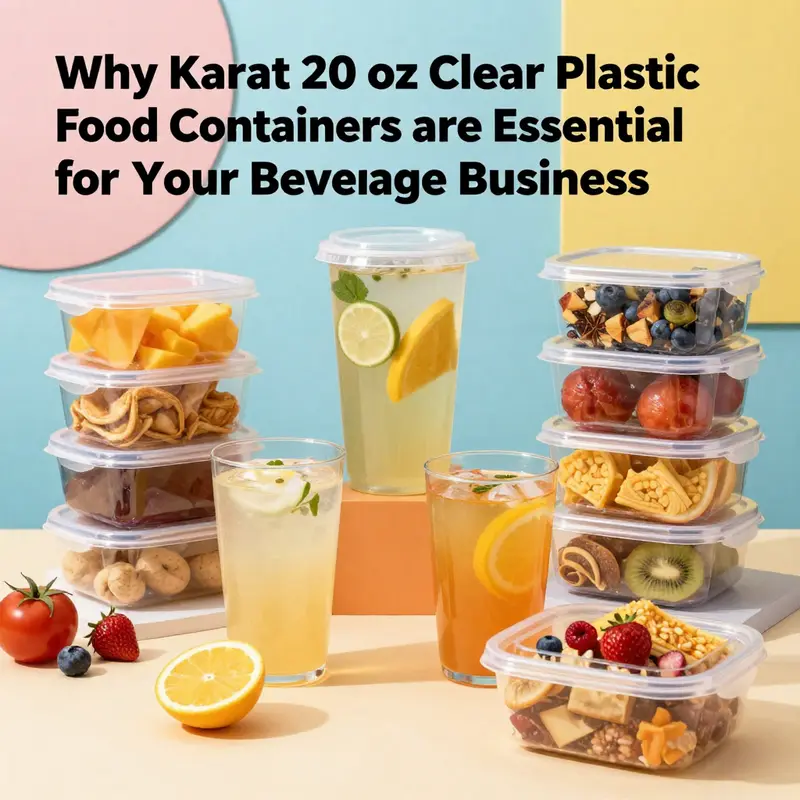
Karat 20 oz clear plastic food containers offer a seamless blend of functionality and aesthetics, becoming indispensable for beverage shops, restaurants, food trucks, and event planners. Their high-quality PET construction ensures durability while also being friendly to the environment, supporting sustainability initiatives. This article explores their standout features, various applications in food service, and the market trends that underscore their economic impact. Embrace these containers to elevate your service, enhance consumer experience, and stay ahead of industry trends.
Crystal Clarity in Motion: The 20-Ounce Clear PET Container and Its Central Role in Food Service
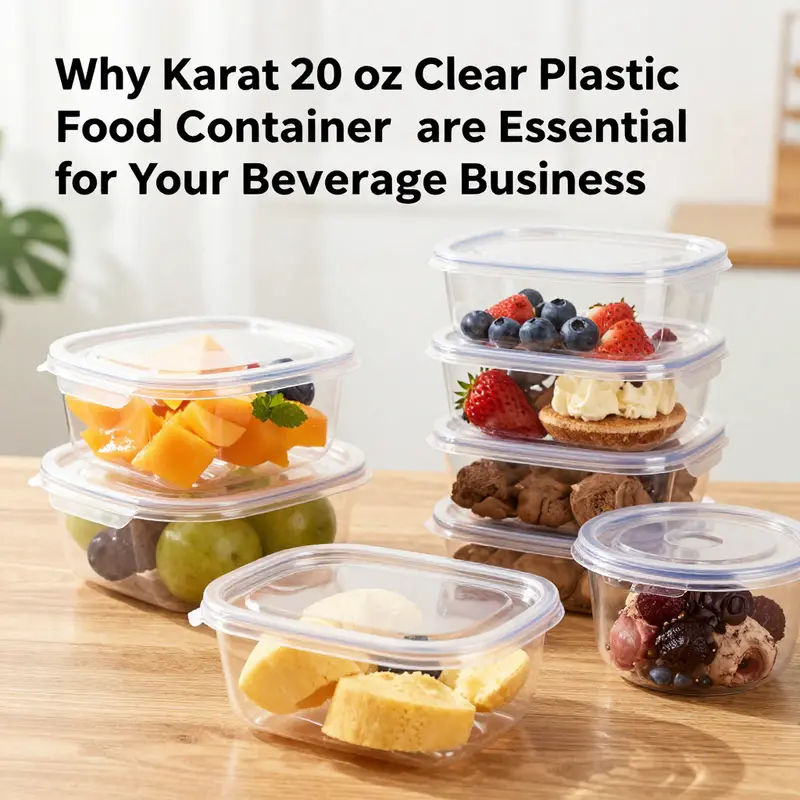
The way a food service operation presents its offerings often begins long before the first customer lifts the lid. In a crowded display of options, the 20-ounce clear PET container stands out not just for its size, but for what its clarity communicates: confidence in portion, freshness, and quality. This chapter unfolds the practical and strategic importance of this packaging choice, weaving together material science, usability, and the evolving expectations of today’s diners. It traces how a seemingly simple container can influence menu perception, streamline operations, and align with sustainability goals without compromising on performance.
At the core, the 20-ounce capacity is a sweet spot. It is large enough to hold a substantial portion of salads, desserts, or cold beverages, yet compact enough to be stacked, stored, and transported with efficiency. In a fast paced service environment, every ounce saved in packaging translates to tangible gains in space and handling. The container can shuttle an ample serving of mixed greens, grains, or fruit, while remaining comfortable to carry for takeout orders. For beverages, the 20-ounce silhouette accommodates ice and liquid in a way that preserves the drink’s visual appeal. The transparency of the container makes the color, texture, and layering of ingredients visible, which is a silent, powerful marketing tool. Visual appeal matters; the consumer often relies on what they can see as a cue for freshness and quality. A clear container allows the product itself to be the advertisement, reducing the need for elaborate labeling when the contents are already evident.
Material choice matters as much as size. The container is described as PET or recycled PET, which speaks to a balance between clarity, strength, and recyclability. PET is known for its high clarity, which helps preserve the appearance of foods and beverages. When a product looks vibrant and clean through the walls, it reinforces the perception of quality, even before taste is considered. The same material that delivers that crisp visibility also supports practical performance features that are crucial for commercial use. The walls resist cracking and maintain form under typical handling, which matters for both in-house service and third party delivery programs. In a kitchen where containers are piled onto carts, stacked in service lines, or transported in insulated bags, durability reduces breakage and waste.
A notable attribute of this specific PET approach is the use of recycled content, often described as rPET. This means that the container is built, at least in part, from previously used PET materials that have been reclaimed and reprocessed. From a sustainability perspective, rPET can lower the demand for new virgin plastic and contribute to a circular economy when recycling streams function effectively. However, the fact that the container is made from recycled content does not automatically resolve all environmental questions. The recycling rate for PET, the availability of recycling streams, and the end-of-life handling by consumers all influence the actual environmental footprint. Yet in practice, using recycled content aligns with goals many operators pursue: modestly reducing virgin material use, signaling environmental responsibility to guests, and supporting a packaging strategy that fits within a broader circularity narrative.
Even as clarity and sustainability figure prominently, safety and regulatory considerations remain central. The container is described as BPA-free, a feature that resonates with health-conscious operators and guests. Bisphenol A’s concerns have driven demand for alternatives in many packaging applications, especially those in contact with food and beverages. A BPA-free label helps reassure customers and supports compliance with food contact regulations that prioritize consumer safety. In addition, the container is described as microwave safe, which expands its utility in settings that offer quick reheating or meal assembly. The microwave capability is not a blanket invitation to heat any container with any contents; it rests on guidelines that typically include removing lids or venting arrangements and ensuring compatibility with the type and quantity of food. Operators who offer ready-to-heat meals or prepackaged lunches benefit from being able to reheat contents directly in the container, provided they follow the recommended practices. This capability can streamline service, reduce dishwashing, and improve the guest experience by delivering hot meals in a familiar, portable package.
Alongside safety and convenience, the practicalities of cold weather performance and leak resistance are part of the container’s value proposition. The packaging is designed to be leak-resistant, a critical feature for beverages and for dressings, sauces, or moist components in salads and desserts. In delivery scenarios where vehicles encounter motion and varied temperatures, the ability to limit leaks protects product integrity and reduces returns or complaints. The emphasis on leak resistance should not be mistaken for a claim of imperviousness to all abuse, but it does indicate a well-considered balance between wall thickness, seal geometry, and rigidity that minimizes unwanted seepage while preserving portability. For operators, this translates to fewer mispacked orders and a more reliable dining experience for customers who rely on takeaway meals as part of their daily routine.
Visibility and merchandising go hand in hand with the user experience. A clear wall makes it easier for front-line staff to identify contents during busy service periods, speeding up line checks and restocking. It also helps customers make quick decisions in self-serve settings or retail contexts. When the product is displayed in a refrigerated case, the natural light and translucent walls cooperate to showcase freshness and color. This is not merely cosmetic; it affects how a product is perceived and purchased. A container that helps present the food in its best light can reduce friction in the decision process and, by extension, can influence basket size and repeat purchases. The attractiveness of the presentation dovetails with practical concerns such as portion consistency. The clear container makes it easier for staff to gauge whether a portion meets standard specs, which is essential for inventory control, pricing integrity, and customer satisfaction.
From a logistics standpoint, the packaging supports efficiency across the supply chain. The 20-ounce size is compatible with common crate and case configurations in bulk supply, and its relatively light weight helps with handling during packing and shipping. For operators who run bulk takeout programs or catering operations, the ability to move high volumes with minimal weight reduces fatigue for staff and can lower labor costs. The standardization of a 20-ounce capacity means equipment, like scoops and ladles, can be tuned to deliver consistent portions, which further contributes to cost control. In this way, the container serves as both a platform for function and a lever for operational discipline. The combination of durability, clarity, and a sensible size underpins a packaging strategy that aligns with both daily tasks and longer-term efficiency goals.
A broader conversation around sustainability also underscores the container’s role in modern packaging. The fact that the container is recyclable matters in a market where end-of-life handling varies by region and by municipality. Recyclability supports downstream processing and potential reuse of the material stream, but it depends on clear labeling, consumer participation in recycling programs, and the existence of effective recycling infrastructure. Operators can contribute to better outcomes by providing clear disposal guidance and by choosing packaging options with established recycling pathways. For many, this means balancing the appeal of recycled content with the realities of regional recycling capabilities. The aim is to reduce waste wherever possible while maintaining the integrity of product presentation and guest experience. In practice, this involves not only selecting containers with recycled content but also ensuring that the entire packaging system — from the container to the lid, if used, and to the labeling — is designed to minimize contamination in recycling streams. The practical upshot is that a well-chosen clear container becomes part of a responsible, visible commitment to environmental stewardship that resonates with guests and with corporate social responsibility goals.
Of course, no packaging choice exists in a vacuum. The decision to adopt a 20-ounce clear PET container intersects with business models, customer expectations, and brand storytelling. For many operators, packaging is a touchpoint where product quality, service speed, and brand values converge. Clear packaging communicates transparency in both literal and figurative senses. Guests can quickly assess portion size and presentation, which helps them feel confident about what they are paying for. In a market where convenience often competes with sustainability, a container that supports both speed and responsibility can become a differentiator. It is not merely a vessel for food; it is a bridge between the physical act of eating and the broader story a brand tells about care, consistency, and consideration for the environment.
Looking ahead, the adoption of clear plastic packaging, including this 20-ounce option, will continue to be shaped by evolving consumer expectations and regulatory developments. The push toward recyclable materials, the ongoing need for safe food contact, and the desire for products that present well in customer-facing spaces will guide future design refinements. The container discussed here embodies a synthesis of these priorities: a practical size, high clarity, durable build, recyclable composition, and health-conscious features that together support a positive dining experience. In practice, this means a packaging choice that not only protects food but also enhances its appeal, supports efficient operations, and aligns with a broader commitment to responsible disposal and reuse. The result is a packaging solution that works behind the scenes to improve service outcomes while shining in the hands of guests who crave both quality and transparency.
As this narrative of the 20-ounce clear PET container comes full circle, it becomes clear that the choice of container is more than a matter of holding capacity. It is a strategic move that influences how food service teams operate, how customers perceive quality, and how a business positions itself in a crowded marketplace. Clarity is not just about the material’s optical properties; it is a signal of clarity in process, expectations, and accountability. When operated with thoughtful regard for durability, safety, recyclability, and the realities of bulk packaging, this container becomes a reliable partner in delivering consistent, appealing, and responsible food service experiences. In the end, the value of a clear option lies in its ability to support a smooth workflow, enable confident purchasing decisions, and contribute meaningfully to sustainability efforts without sacrificing the experiences customers expect from a modern, efficient food service operation.
External resources for deeper technical context can be found in industry guides that explore the standards, properties, and practical applications of clear food containers. For a thorough technical overview, see the external resource at https://www.foodserviceproducts.com/technical-guide-clear-food-containers-wholesale/.
Seeing Clear Value: How Karat 20 oz PET Containers Redefine Food Packaging Usability
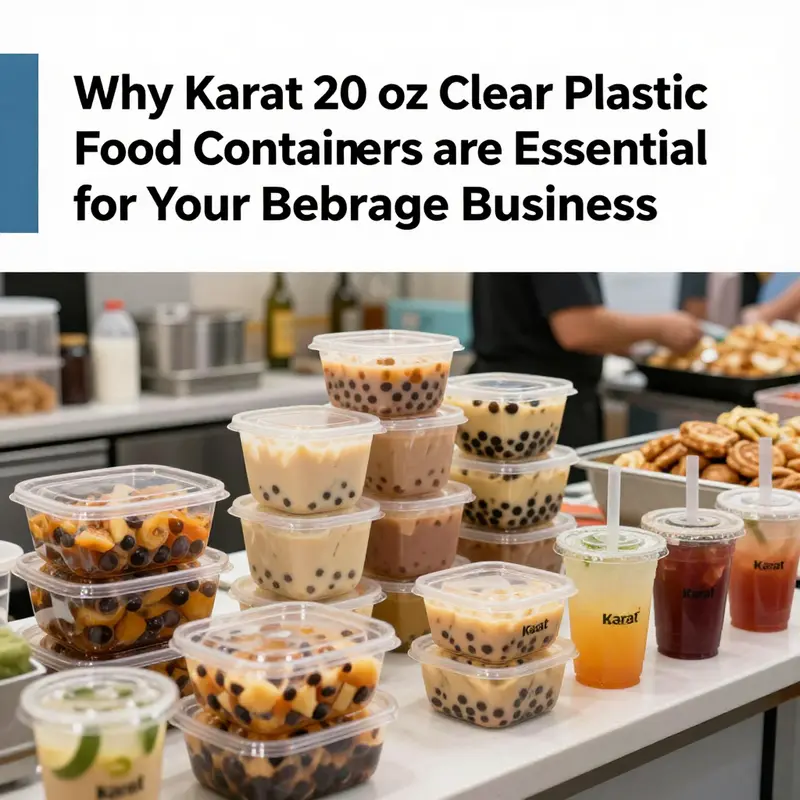
In the evolving world of food packaging, the choice of a container is less about a single attribute and more about a balance of clarity, reliability, and ease of use. The Karat 20 oz clear plastic container embodies that balance, offering a practical solution for a wide range of needs in both home kitchens and professional settings. Its design is anchored in a simple truth: when contents are visible, decisions are faster, and trust is built. This is especially valuable in fast-paced environments such as busy kitchens, office break rooms, school cafeterias, and small catering operations where efficiency is a daily requirement. The container’s essence rests on its PET construction, a material that has become a standard in food packaging for its light weight, durability, and transparent clarity. PET, or polyethylene terephthalate, provides a sturdy yet smooth surface that resists cracking and impact, an important feature when containers are handled by multiple hands, stacked for storage, or transported across rooms or venues. The choice of PET is not incidental; it is a deliberate alignment with the needs of users who demand both resilience and a clean, unobtrusive presentation of their food and beverages. The 20-ounce capacity itself is a practical sweet spot. It is large enough to contain substantial portions of salads, desserts, or meal-prep portions, yet compact enough to fit into standard lunch bags, compact refrigerators, and storage shelves without dominating space. This size is frequently suitable for a wide array of applications—from a hearty portion of fresh greens to a generous serving of yogurt and fruit, from a smoothie to a chilled beverage. The container’s light weight adds to its user-friendly profile, reducing fatigue for staff who handle dozens or hundreds of units per shift, and helping families manage groceries and meal-prep routines with less bulk and more control over portions. The transparency of the container is not merely an aesthetic choice; it is a functional decision that enhances operational efficiency. In a kitchen or service line, staff can identify contents at a glance, reducing the time spent lifting, opening, and guessing what lies inside. This is particularly valuable in settings where multiple products coexist, such as a salad bar, a dessert station, or a grab-and-go setup for events. The high clarity also supports quality control, making it easier to spot discoloration, moisture buildup, or leakage before a product leaves the premises. In practice, this means fewer mistakes, quicker service, and better customer satisfaction. The container’s durability extends beyond its resistance to cracking. It is designed for a range of handling scenarios that occur in real-world environments. From the back-of-house bustle to customer pickup, containers encounter temperature shifts, minor bumps, and the everyday rigors of transport. PET’s resilience helps prevent cracking and damage during stacking, shipping, and handling, which in turn reduces waste and replacement costs. The design also emphasizes leak resistance, an essential feature when transporting dressings, sauces, or moist salads. The lid system—often a snap-on or twist-on variant that pairs with a snug seal—contributes to this protection, helping to maintain product integrity even during longer periods of transport. Safety considerations are central to the Karat 20 oz container’s appeal. The material is BPA-free, addressing consumer concerns about bisphenol A and its potential health implications. This safety attribute resonates with households that reuse containers for different foods and with institutions that must comply with stringent food safety standards. The BPA-free claim supports a broader narrative of consumer well-being and responsible packaging, which has become a key factor in choosing products for families, schools, and workplaces alike. Beyond safety, sustainability remains a pivotal consideration. PET is widely recognized for its recyclability, a factor many buyers weigh as they plan waste streams and end-of-life disposal. While the container is primarily designed for one-time or limited reuse, its recyclability provides a pathway to responsible disposal, aligning with broader environmental goals and municipal recycling programs. In practice, this means that retailers, caterers, and households can participate in recycling initiatives with relative ease, supporting circular economy concepts that seek to minimize landfill impact. The Karat 20 oz container’s stackable form is another practical advantage that aligns with real-world workflows. When empty, these containers nest or stack in compact formations, conserving storage space in busy kitchens or distribution centers. This stacking capability translates to more efficient inventory management, quicker restocking, and easier transport in bulk shipments. It is a small design feature with outsized implications for cost savings and organizational clarity. Versatility is perhaps the most defining trait of the 20 oz Karat container. Its 20-ounce capacity makes it suitable for both savory and sweet items, and it does not constrain users to a single category. For meals, it supports balanced portions for meal-prep regimes and portion-controlled catering menus. For beverages, it can accommodate iced drinks or smoothies with appropriate lids that prevent leakage and preserve chill. For salads and desserts, the clear container presents layers and textures in a way that invites consumption. That visibility—paired with a robust lid—creates a dependable packaging system for customers who value both presentation and practicality. In this sense, usability extends beyond the container’s physical properties. It also encompasses the experience of using it, from the moment a food service professional selects a container to the moment a consumer opens it to enjoy the contents. The smooth rim and comfortable grip enhance handling, while the overall geometry supports stable stacking and efficient packing in a catering kit or lunchbox lineup. Such ergonomics matter in real-world settings where the difference between a smooth workflow and a snagged, frustrated moment can be a matter of minutes or even dollars. The practical benefits extend to cleaning and maintenance as well. These containers are designed to withstand microwave heating, enabling quick reheating of prepared meals without transferring contents to another dish. They are also dishwasher safe, simplifying post-use cleanup in busy kitchens and office environments. The ability to place the container directly into a dishwasher reduces workflow friction and lowers labor costs. Consumers who take meals home can appreciate the convenience of reheating in the same container and then rinsing it clean in the dishwasher after use. A core advantage of this packaging approach is the reduction in dishwashing and cleanup delays, which can be particularly meaningful during peak service periods or in institutional settings. When considering the broader packaging ecosystem, the Karat 20 oz container sits within a family of PET-based products that share common performance traits while offering a consistent user experience. The clarity, durability, and safety features of PET make it a reliable option for a broad spectrum of uses, from casual takeout to more structured catering operations. The ability to offer a single container type that can transition across different uses streamlines procurement for businesses. Instead of stocking multiple containers for different product lines, operators can leverage a uniform solution that reduces complexity in ordering, storage, and staff training. The 20 oz size, in particular, is aligned with typical consumer expectations for portion sizes in a takeout setting, as well as the practical needs of meal-prep enthusiasts who portion and label meals for the week. This alignment between product design and user behavior enhances the container’s value proposition because it minimizes friction—both for the operator and the end user. It also reinforces the importance of considering not only the material’s properties but also how those properties translate into daily routines. The synergy between clarity and usability becomes more evident when you observe how front-line workers interact with these containers. In a fast-food or quick-service environment, staff appreciate the ease with which products can be identified and grabbed from trays or display racks. The transparent walls serve as constant, passive inventory control, enabling workers to spot shortages and restock proactively. In a catering scenario, where presentation matters and timing is critical, the ability to present layered salads and carefully portioned meals with visible accuracy is a subtle but meaningful competitive advantage. Even in households, clear packaging supports healthier, more mindful eating by helping family members identify portions and keep leftovers organized. The 20 oz capacity makes it natural for a family meal—enough for an individual or a couple of smaller portions for a larger group, depending on appetite and dietary goals. The design’s lightweight nature also reduces the physical burden of daily kitchen tasks, especially for parents packing lunches or students preparing meals between classes. If one considers the lifecycle of a packaging choice, the cohesive blend of safety, recyclability, and reusability potential earns respect from sustainability-minded buyers. PET’s recyclability is a distinct advantage in regions with robust recycling streams. It offers a clear pathway for diverting materials from landfills when disposed of properly. The BPA-free assurance, while addressing health concerns, complements this narrative by reassuring users that the container’s performance does not come at the cost of safety. Taken together, these attributes form a holistic picture of usability that extends beyond a single use or a single context. They enable a consistent user experience, from the moment a consumer’s eyes catch the product on a display, through the time a kitchen staff member retrieves a container from a stack, to the moment a lunch is enjoyed. This continuity matters when a business seeks to build trust with customers. People value packaging that reliably performs and that communicates quality through its physical form. Clarity becomes a signal of transparency; durability becomes a signal of reliability; and safety features become a signal of responsibility. In this sense, the Karat 20 oz container does more than hold food. It contributes to a smoother service, clearer decision-making, and a more confident consumer experience. The practical reality is that packaging is a system. A container of this kind functions best when paired with appropriate lids, labeling systems, and, where necessary, compatible accessories that maintain integrity during transport. The ability to seal in flavors, to keep moisture in or out as needed, and to present meals with an inviting appearance is foundational to a packaging strategy built around speed and satisfaction. In markets that prize speed without sacrificing quality, such a system can be the backbone of a successful takeout operation or a well-organized meal-prep routine. It is worth noting that, while many containers perform admirably, the choice to use a 20 oz Karat PET container should align with the specific requirements of the user. For vendors who emphasize crisp presentation of salads or desserts, or for operators who serve beverages that benefit from a clear view of the liquid’s color and viscosity, the container’s attributes align well with these objectives. The combination of high clarity, sturdy design, leak resistance, and safe materials positions the 20 oz Karat container as a versatile option that can support a broad spectrum of offerings without needing a different vessel for each category. It is this versatility that makes the container appealing to a wide audience—from casual home cooks planning weekly meal prep to caterers managing multiple service lines across an event. Alongside this versatility, the container’s bulk availability is a practical consideration for businesses. Commercial users often source containers in bulk to optimize cost-per-unit and simplify procurement processes. Bulk packaging reduces ordering frequency, which in turn reduces administrative overhead and logistics complexity. It also supports consistent inventory planning, which is crucial in high-volume environments where the margin for error is minimal and the demand for reliable packaging is constant. The pricing discipline that comes with bulk purchasing can translate into tangible savings over time, helping operators allocate resources toward other aspects of the customer experience, such as product sourcing, sourcing sustainable lids, or enhancing the overall presentation of prepared foods. In sum, the Karat 20 oz clear plastic container is more than a simple receptacle. It is a thoughtfully engineered tool that bridges the needs of efficiency, safety, and presentation. Its PET composition, combined with high clarity, durability, and convenience features like microwave and dishwasher safety, offers a practical package that supports a wide array of culinary and service contexts. Its BPA-free status and recyclability anchor it in contemporary concerns about health and the environment, while its stackability and 20 oz capacity make it a flexible option for everyday use and occasional special occasions alike. The ultimate test of any container is how well it integrates into existing workflows and how it contributes to a positive consumer experience. In the case of this 20 oz Karat PET container, the answer appears to be one of clarity—literally and figuratively. The packaging solution reduces guesswork, supports consistent portioning, and maintains the visual appeal that motivates purchase and satisfaction. As industries continue to optimize for speed, safety, and sustainability, containers like these will likely remain a staple in many supply chains, serving as a dependable conduit between kitchen performance and consumer enjoyment. For those exploring packaging alternatives that align with more sustainable material narratives, a related option worth examining is kraft paper-based containers, which demonstrate how different materials can shape consumer perception and logistics in distinct ways. You can explore a related product example here: senang05-promotion-large-porridge-350ml-double-wall-eco-friendly-disposable-round-kraft-paper-soup-bowl-with-lid-cup-bucket. External resources provide deeper technical and sourcing details. For a deeper dive into the official Karat PET container specifications and availability, see the external reference: https://www.birsch.com/product/karat-pet-plastic-cups-20-oz-clear-1000-carton/.
Seeing Through Demand: The Economic Pulse of 20 oz Clear PET Food Containers in Modern Food Service
Clear, high-clarity plastic packaging has become a defining feature of the contemporary food service landscape. The 20-ounce clear PET containers, designed for cold beverages, salads, desserts, and ready-to-go meals, sit at a crossroads where consumer expectations for convenience, safety, and aesthetics meet the realities of manufacturing efficiency and waste management. In this chapter, we explore how these containers have grown into a staple of modern service models, why their economics hold up under pressure, and how sustainability narratives continue to shape investment, design, and policy in ways that ripple through the broader packaging ecosystem. The narrative remains grounded in the practical attributes that make these containers attractive to operators—from their clarity and leak resistance to their recyclability and BPA-free composition—while threading through the larger market dynamics that are redefining packaging choices across quick-service, casual dining, and meal-prep segments.
From the outset, the appeal of a 20-ounce clear PET container lies in what the eye perceives as much as what the hand experiences. Clarity matters. A product’s visibility is a silent salesperson, allowing consumers to inspect contents without lifting a lid or opening a seal. In a crowded display or at a table, the transparency of PET cups and containers makes it easier for customers to identify portions of salads, layered desserts, or beverages, which in turn can influence purchase decisions. For operators, this characteristic translates into reduced reliance on secondary labeling or opaque jams of packaging that might obscure the actual product. The material’s inherent crack resistance and light weight further reinforce the experiential advantages—cargo is easier to transport, containers stack efficiently in storage and on shelves, and the overall handling requirements for staff remain manageable even at peak service times.
But ease of use does not stop at physical handling. In a market where margins can hinge on efficiency, PET containers offer a compelling value proposition. Their manufacturing profile—conceptually simple, scalable, and energy-conscious relative to some alternatives—supports a cost structure that is favorable for mass production and bulk distribution. This is particularly salient for food-service providers that run multi-shift operations, cater events, or manage large takeout volumes. A single container design can serve multiple use cases, from a cold drink on a quick-serve line to a salad or dessert in a catering tray. The reduced complexity of inventory, the predictable performance across a broad temperature range, and compatibility with standard lids and seals all contribute to a streamlined procurement process. In the aggregate, these efficiencies translate into lower per-unit costs, not merely because PET is inexpensive, but because the supply chain can be optimized around a uniform format that travels well through warehousing, transit, and retail environments.
The economic rationale for PET-based packaging is further reinforced by consumer expectations around safety and health. The BPA-free characteristic, repeatedly emphasized by manufacturers, aligns with a broader public concern about avoiding potentially harmful additives. In a world where shoppers are increasingly mindful of what accompanies their food, packaging that communicates safety through material choices carries substantial value. PET’s chemical stability under typical cold-chain conditions supports that narrative without adding burdensome regulatory obstacles in many markets. This combination of safety assurances and practical performance helps explain why 20-ounce clear PET containers have emerged as a dependable choice for beverages such as iced coffees, iced teas, and other cold drinks, as well as for salads, desserts, and portioned meal components that are commonly featured in takeout and delivery formats.
From an industry standpoint, the rise of these containers parallels a broader global pattern in packaging consumption. The plastic packaging market, anchored by PET-based products, benefits from a resilient demand surge across food service providers, convenience retailers, and fast-casual chains. The logic is straightforward: customers seek reliable, convenient, and affordable packaging that supports rapid service and consistent product quality. When a container can withstand the rigors of daily use—from cold beverages to chilled salads—without compromising integrity, it reduces the risk of leaks or spoilage during transport. That reliability underpins customer satisfaction and repeat business, both of which contribute to the bottom line for operators and manufacturers alike. The scalability of PET production lends itself to bulk purchases, which in turn helps drive cost efficiencies and stable supply for large-scale food-service operations that require predictable pricing across long planning horizons.
Market signals in the broader PET container segment reinforce the soundness of continuing investment in this format. As major players in beverage packaging continue to rely on PET as a central component of their packaging mix, the material’s share in the packaging portfolio remains robust. That durability at the macro level cascades down to the micro level: manufacturers of clear PET containers benefit from a proven demand pattern, enabling investments in process improvements, quality control, and product design that emphasize clarity, crack resistance, and convenience. The economic logic extends to the recyclability narrative that accompanies many PET products. With growing emphasis on circular economy strategies, packaging designers and corporate buyers alike are increasingly evaluating the end-of-life pathways for containers. PET’s established recycling streams and the potential for high recycled content offer a tangible route to aligning with ESG (Environmental, Social, and Governance) goals, satisfying investor expectations, and meeting regulatory ambitions aimed at reducing plastic waste.
The role of recyclability in the economic calculus cannot be overstated. Recyclability is not merely a compliance checkbox; it interacts with supply chain planning, waste management costs, and consumer perception. Containers that are widely accepted by municipal recycling streams are more likely to be recovered and reprocessed into new materials, closing the loop in a way that supports long-term pricing stability and resource efficiency. For operators who emphasize sustainability, the choice of a clear PET container can be a practical bridge between immediate functional needs and longer-term environmental commitments. The story here is not simply about diverting waste from landfills; it is about integrating packaging decisions with broader sustainability strategies that include supplier collaboration, consumer education, and improvements to recycling infrastructure. The pace of policy development across jurisdictions—often driven by concerns about litter, municipal waste, and ocean health—adds another strategic dimension. Operators who preemptively align with recycling goals may benefit from smoother compliance, favorable procurement terms, and stronger relationships with waste-management partners.
In the context of the service economy, the 20-ounce clear PET container also intersects with the evolving geometry of consumer choice. The modern consumer landscape prizes convenience without compromising quality or safety. A container that preserves product appearance and integrity while remaining lightweight and easy to handle contributes to a smoother consumer experience. This, in turn, supports more confident purchasing decisions on-the-go, during quick-service visits, or when customers are selecting items for errand-based meals. The transparent design helps showcase portions and ingredients, reducing ambiguity and enabling a quicker, more intuitive decision process at the moment of purchase. The net effect is an enhanced perceived value that can influence demand elasticity in a market where price and convenience are frequently in play. For operators, this means that packaging choices can meaningfully shape consumer perceptions of value, which in turn affects transaction throughput and average check size.
From a strategic perspective, the interplay between packaging aesthetics and functional performance matters. The 20-ounce size occupies a versatile sweet spot: large enough to hold a substantial serving yet compact enough to be stacked and stored efficiently. In a takeout or catering scenario, this size strikes a balance between inventory versatility and handling practicality. It complements packed salads, snack portions, and dessert cups that are common features in modern menus, while maintaining a form factor that can be standardized across multiple service lines. The result is a packaging system that supports unified branding opportunities, consistent handling, and predictable waste streams across channels—from in-restaurant dining to curbside pickup and third-party delivery. The economic implication is clear: a standardized, scalable container reduces SKU proliferation, lowers warehousing complexity, and simplifies the training of front-line staff who must assemble, seal, and dispatch a range of products with speed and accuracy.
The sustainability narrative surrounding PET is nuanced, and it enters the economic conversation in both aspirational and practical ways. On the aspirational side, a growing cohort of brands emphasizes recyclable packaging and the use of recycled content as part of their sustainability commitments. On the practical side, manufacturers are investing in process improvements that reduce energy use, optimize resin usage, and lower material waste during production. These improvements can translate into real cost savings over time, not only through lower material costs but also through reduced waste disposal expenses and lower environmental compliance risk. Importantly, the cost trajectory for PET remains favorable relative to some alternatives, preserving the financial viability of these containers in a market that prizes both performance and affordability. Where this balance becomes particularly consequential is in sectors with tight margins and high volume, such as quick-service restaurants, coffee shops, and institutional catering services. For them, the ability to offer a visually appealing, dependable container at scale is instrumental in sustaining profitability while meeting sustainability benchmarks.
The broader market context also provides a backdrop for interpreting the trajectory of 20-ounce clear PET containers. The plastic packaging sector has shown resilience, supported by steady demand from food service players and retail channels that depend on efficient, reliable packaging to manage high-throughput environments. In this setting, PET-based solutions benefit from a track record of successful deployment and compatibility with a wide range of lids, seals, and accessory components. The compatibility factor is not incidental; it enables supply chain harmonization, reducing the risk of misalignment between containers and closures, and enabling faster procurement cycles. This is especially valuable for operators who must adjust to evolving demand patterns, seasonal spikes, or changes in menu offerings that require flexible packaging without compromising performance. The economic vitality of PET packaging is reinforced by its role in enabling takeout and delivery ecosystems that have become central to modern food service, particularly in urban areas where consumer expectations for convenience are high and the pace of service is brisk.
As we consider the road ahead, the interplay between consumer expectations, regulatory developments, and technological advances in materials science will continue to shape packaging choices. The future may bring enhancements in barrier properties, light stability, and even more sophisticated recycling streams that increase the proportion of post-consumer content in PET containers. Operators and manufacturers who monitor these developments will be well positioned to adapt swiftly, whether through minor design tweaks that improve stackability and seal reliability or through broader shifts toward circular economy commitments that entice investors and customers alike. In this sense, the 20-ounce clear PET container operates not only as a utility for today’s food service operators but also as a barometer of how packaging design can marry performance with responsibility in an evolving marketplace. The clarity that makes the product easy to evaluate at the point of sale also makes the packaging a canvas for storytelling—where brands can communicate safety, quality, and environmental values in a single, transparent format.
To bridge these insights with practical considerations for readers who are scanning the horizon for strategic guidance, it is useful to consider how packaging decisions interact with other elements of business strategy. Inventory management, for example, benefits from standardization of container formats. A single, reliable container type reduces the complexity of ordering, forecasting, and waste management. This, in turn, reduces carrying costs and improves cash flow—an important consideration in high-volume operations that must balance capital expenditure with ongoing operating expenses. The procurement perspective benefits as well: bulk purchasing, predictable pricing, and long-run supplier relationships can yield better terms, which help stabilize operating budgets in the face of fluctuating commodity prices. From a marketing lens, the transparency and clean lines of clear PET packaging enable product storytelling that emphasizes freshness and quality, aligning with consumer preferences for visible content and straightforward labeling.
The evolving regulatory and consumer landscape adds another layer of complexity—and opportunity. Governments and industry groups are increasingly attentive to packaging waste and recycling performance. Operators who proactively align with these expectations not only reduce compliance risk but also position themselves to participate more fully in recycling programs and deposit-return schemes where available. In practice, this translates to choices about resin grade, lid compatibility, and the potential use of recycled content. It also invites collaboration with suppliers who can provide verifiable sustainability credentials and end-of-life data that reassure customers, investors, and regulators alike. In other words, the market for 20-ounce clear PET containers is not a static snapshot of product performance; it is part of a dynamic ecosystem where packaging decisions interact with consumer behavior, corporate responsibility initiatives, and policy evolution in meaningful, measurable ways.
The narrative of growth for PET-based containers is, at its core, a narrative about balance. Operators must balance the drive for convenience and visual appeal with environmental responsibilities and long-term cost management. The 20-ounce clear PET container, with its blend of clarity, strength, and recyclability, embodies a pragmatic solution for many common food-service needs. It offers a tangible way to meet today’s demands while leaving room for future improvements in material efficiency and recycling infrastructure. As consumer expectations continue to color corporate ESG goals and as regulatory pressures escalate, the packaging choices that look simple on a shelf—transparent, lightweight, and sturdy—will likely prove to be among the most consequential levers for achieving sustainable growth in the food packaging segment. The market signals point toward a continued, measured expansion of PET-based packaging, driven by the fusion of operational efficiency, consumer trust, and responsible end-of-life management.
For readers seeking a broader statistical frame for these observations, a comprehensive market analysis of plastic containers provides a macro view of the forces shaping PET packaging today and into the near future. This external reference offers a structured lens on demand drivers, competitive dynamics, and regulatory trajectories that intersect with the practical realities described here. See Grand View Research’s Plastic Containers Market Analysis for an in-depth, data-driven perspective on the market backdrop against which 20-ounce clear PET containers operate. https://www.grandviewresearch.com/industry-analysis/plastic-containers-market
Internal link note: for practitioners exploring packaging formats that complement or contrast with PET in specific applications, a related discussion on eco-friendly, printed-paper cup designs can offer useful context for supplier conversations and brand storytelling. For a relevant example of such packaging options, see the resource linked here: senang07-eco-friendly-printed-logo-buy-paper-cup-take-away-coffee-cup-8-oz-12-oz-paper-cup. This reference underscores how brands leverage sustainability messaging and design variation within a paper-based format, highlighting both the diversity of packaging choices available to food-service operators and the ongoing emphasis on presenting safety, cleanliness, and appeal to consumers in the ordering environment.
Final thoughts
Karat 20 oz clear plastic food containers stand out as smart, versatile solutions for businesses in the food and beverage industry. Their combination of high clarity, durability, lightweight structure, and recyclability positions them as favorite options for packaging needs. Understanding their features alongside practical applications not only enhances service offerings but also aligns with current market trends that favor sustainable practices. Collaborating with reliable suppliers for these containers can elevate customer experience while ensuring adherence to safety regulations. Don’t miss out on the opportunity to optimize your operations with these containers.