
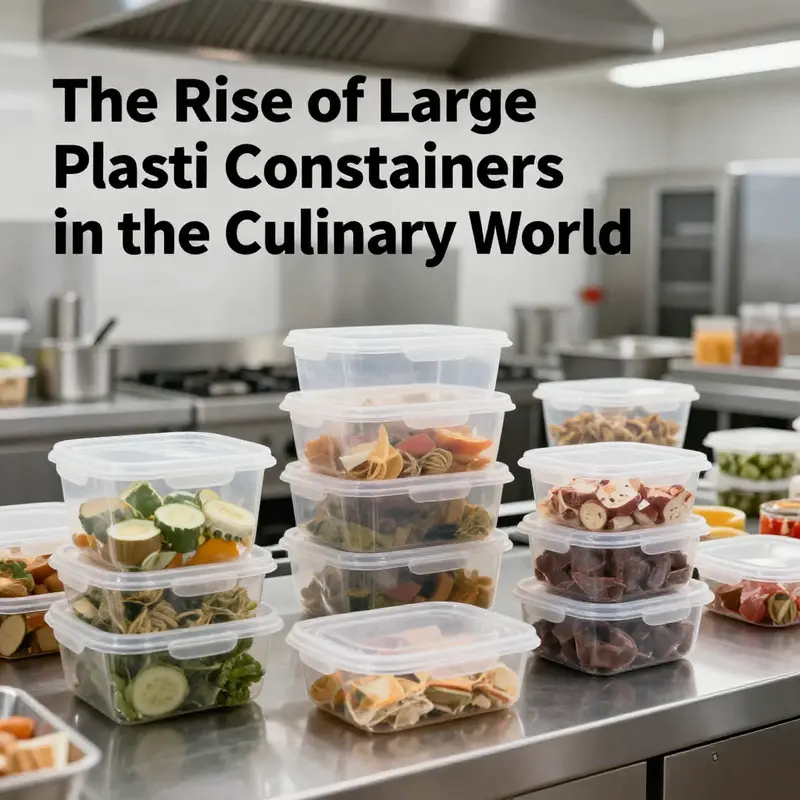
With the ever-increasing demand for efficient food service solutions, large plastic food containers have emerged as essential tools for various sectors, including restaurants, food trucks, and catering services. Their surge in popularity is driven by needs for bulk purchasing, hygiene, and convenience, especially evident during events and busy operational hours. Each chapter of this article delves into specific aspects of large plastic food containers, starting with their significant role in the food service industry, followed by their emergence in event catering, innovations in materials, and crucial health considerations. Dive in to understand why these containers have become a staple across food-related businesses.
Pop-Up Giants: The Rise of Large Plastic Food Containers in the Fast-Paced Food Service Ecosystem
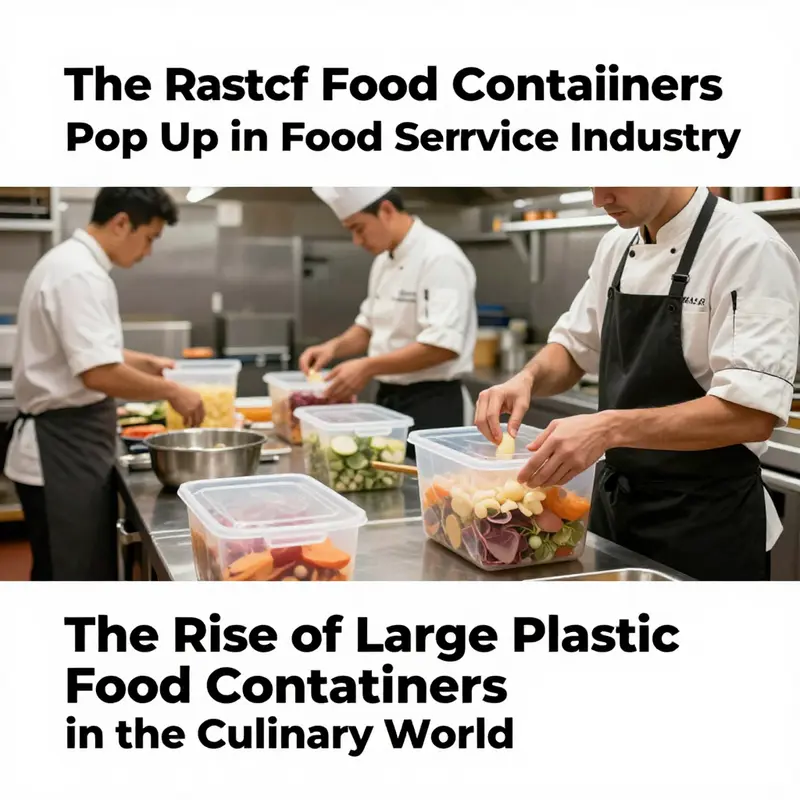
Across bustling streets and temporary kitchens, the emergence of large plastic food containers arriving in clusters has become a defining feature of modern food service. The shift is not only about keeping foods safe; it is about enabling a scalable, repeatable, and resilient operating model that can weather spikes in demand, seasonality, and the rhythm of pop-up events. As the e-commerce delivery ecosystem expands, operators who once relied on fragile, small cartons now lean into robust, stackable containers capable of holding generous portions, with lids that seal and seal again. The result is a packaging landscape that looks almost modular—containers that can be combined, transported, and reused across shifts and locations with minimal fuss. This shift reflects a broader organizational logic: the need to minimize downtime, avoid stockouts, and maintain hygiene at scale.
The commerce-side drivers behind the new normal of large containers are practical and data-driven. In fast-paced settings like food trucks and temporary event setups, the cost of running out of packaging is not a small inconvenience. It can translate into delays, frustrated customers, and missed sales windows. A wholesale approach to acquiring large plastic containers makes sense because it reduces the risk of stockouts during seasonal peaks, promotional pushes, or sudden surges in demand. When a kitchen can lean into a steady supply of durable, high-capacity containers, it gains a kind of operational inertia: fewer interruptions, shorter changeover times, and a more predictable service tempo. The logistics side matters, too, as large containers tend to be lighter per unit of food than many smaller equivalents, translating into lower shipping costs and easier handling during busy lunch rushes or crowded market events.
From a materials science perspective, polypropylene and polystyrene are common choices for busy food-service environments. Polypropylene offers chemical stability and high heat resistance, making it suitable for hot foods and insulated transport. Its light weight helps keep fleet logistics manageable, a non-trivial advantage when dozens or hundreds of containers must be loaded, unloaded, and stored daily. Insulation properties are a critical factor: better-insulated plastics help keep soups hot or salads cool until serving, reducing the risk of temperature abuse along the supply chain. For catering operations that rely on strict portion control and consistent presentation, standardized container sizes across multiple menus and outlets are a strategic asset. Durable, reusable designs reduce breakage and damage during transit, common pain points in mobile and pop-up contexts where handling can be rough and space is at a premium.
Yet the appeal of large plastic containers is not without tensions. Odor retention can haunt reusability, especially when containers transition from heavily spiced dishes to more neutral or aromatic offerings. Even when materials are inert, the washing and sanitizing process—followed by repeated cycles of use—can lead to lingering aromas that customers notice. This is not just a quality issue; it touches consumer perception of hygiene and the perceived value of a brand. Robust cleaning protocols, along with well-designed lids and seals, are essential to sustaining long-term performance. The science of odor control intersects with maintenance practices, reminding buyers that the lifecycle of a container includes careful sanitation, not just a single purchase decision.
On the safety front, the broader conversation about plastic contact with foods emphasizes caution. While polypropylene and similar materials are generally considered safe for food contact under standard conditions, heat and mechanical stress can alter leaching dynamics. Public health advisories and academic investigations have sounded alarms about chemical migration from plastics into hot foods, underscoring the importance of selecting the right materials for intended use. Operators should choose materials designed for high-temperature exposure when hot meals are expected, and avoid exposing non-apt materials to conditions beyond their design specifications.
Beyond the factory floor, market data paints a compelling picture of scale and ambition. Plastic containers dominate a substantial portion of the global container market, and this dominance is projected to endure. A mid-2020s assessment notes a global market share hovering in a broad range for different container categories, with overall growth continuing at a healthy pace. One widely cited projection points to a compound annual growth rate through 2030 of roughly 5 percent, driven by the rising tempo of food delivery services, gourmet packaging ambitions, and the need for sealable, portable solutions in both permanent outlets and ephemeral pop-up venues. In this context, large plastic containers function not merely as packaging but as a critical component of service design. They enable portion control that aligns with pricing models, provide a reliable barrier to contamination, and support a consistent customer experience across channels.
In the practical realm of day-to-day operations, the attractiveness of large plastic containers lies in their adaptability. Standardized dimensions simplify stacking, storage, and inventory control. In facilities where space is at a premium, this standardization translates into tangible efficiency gains: fewer misfits during restocking, quicker line changes, and a cleaner, more navigable workspace. The ability to wash, sanitize, and reuse containers across events also contributes to more predictable procurement costs. For managers, this means a clearer line of sight into monthly packaging budgets and a more stable revenue forecast, because the risk of a sudden packaging shortage becomes far less likely.
That said, many operators balance the push for scale with sustainability. The packaging ecosystem is under scrutiny for environmental impact, and large plastic containers are not exempt. The industry is exploring recyclable or reusable variants and reinforced designs that withstand repeated use without sacrificing performance. A portion of the market is turning toward alternative materials and packaging configurations, particularly in premium or eco-conscious segments. The tension between durability, cost, hygiene, and environmental responsibility invites a nuanced approach: organizations must weigh short-term savings against long-term liabilities and brand reputation, especially as consumer expectations for responsible stewardship grow louder. Still, even as recycled and biodegradable options gain traction, large plastic containers fill a core logistical niche. They offer a robust, scalable solution for high-volume service while maintaining the precise control features—temperature retention, sealing reliability, and portioning—that today’s fast-paced food economy demands.
In this evolving landscape, a single observation holds true: the emergence of large plastic containers is less a fad than a response to a systemic shift in where and how people eat. The rise of pop-up markets, ghost kitchens, and mobile catering has compressed timelines and increased the frequency of high-volume service events. With this pressure comes a demand for packaging that can perform under stress—stackable, durable, and capable of maintaining quality through the transit and turnover cycles that characterize contemporary food service. The containers become an instrument of operational discipline, enabling a kitchen to transition from one event to the next with minimal friction. They are bread-and-butter tools for portion control, sanitation, and speed, even as the industry grapples with the sustainability question and the science of safe, heat-tolerant materials.
In the broader context of packaging strategy, consider the alternative forms that customers and brands are experimenting with. The market shows growing interest in recyclable, reusable, and single-serving variants that reinforce a commitment to sustainability without sacrificing performance. The most effective operators increasingly view packaging not as a disposable commodity but as an integral part of the service experience—one that can be leveraged to reinforce brand values, enhance convenience, and optimize cost over the lifecycle of a product. In this sense, large plastic containers serve as a bridge between the efficiency demanded by scale and the care modern consumers expect regarding hygiene, safety, and environmental responsibility. The challenge, then, is to design and deploy these containers in a way that preserves their operational benefits while mitigating concerns about odor retention, chemical safety, and environmental impact. It is a balancing act that will continue to evolve as materials science advances, public health guidance sharpens, and consumer preferences tilt toward greener solutions.
As resources and attention converge on this topic, the narrative remains clear: large plastic containers have become a central, if sometimes controversial, feature of the food service industry. They are not merely containers; they are enablers of scale in a world where speed, reliability, and hygiene are non-negotiable. The ongoing dialogue between performance and safety, between convenience and sustainability, will shape how these giants of the packaging world evolve. Operators who can navigate this balance, selecting materials fit for purpose, implementing rigorous cleaning protocols, and embracing smarter lifecycle thinking, will likely find that large containers are not a temporary trend but a durable pillar of a modern, resilient food service operation.
Reconfigurable Giants: The Rise of Large Plastic Pop-Up Containers in Event Catering and Beyond
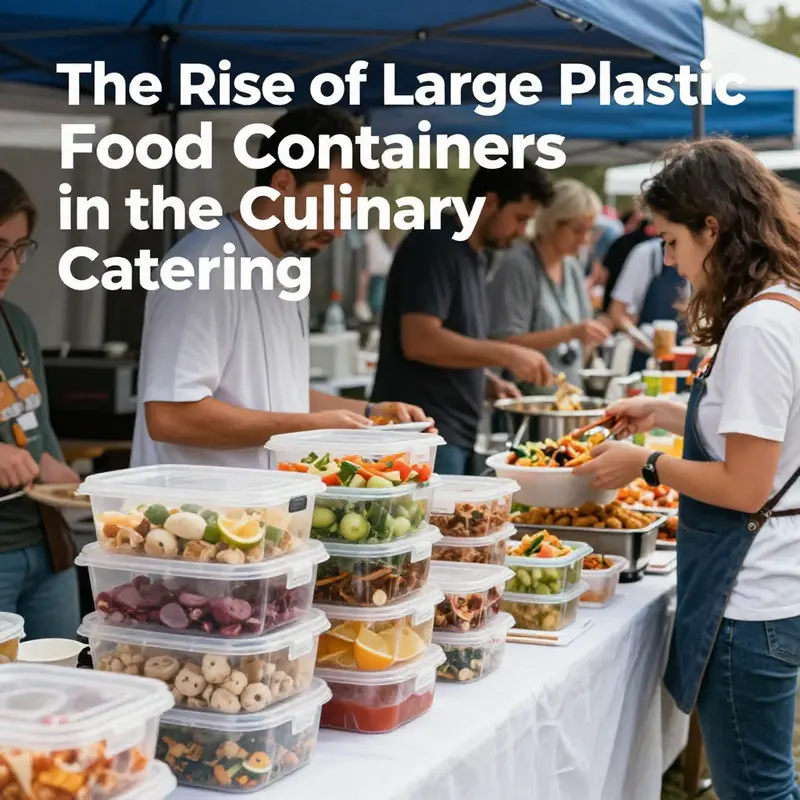
The visible shift in event catering over the last few seasons has arrived not only in the layout of tents, stages, and daily schedules but in the quiet, efficient ways organizers store, transport, and present food. Large plastic pop-up containers have emerged as a central piece of this shift, offering a blend of modularity, speed, and reliability that aligns with the tempo of modern temporary hospitality. They arrive folded and compact, then expand into stable, weather-ready storage platforms or serving surfaces at a moment’s notice. In bustling outdoor festivals, corporate gatherings, weddings, or improvised feast spaces, the containers drop into place like oversized puzzle pieces that customers cannot quite believe were tucked away just moments before. They are the kind of tool that does not shout for attention, but quietly multiplies the capacity of a single crew without demanding extra hands, tools, or long lead times. The premise sounds almost architectural: take a system designed to bear volume, adapt it to uneven ground, and deploy it with the same ease you would set up a handful of modular seating. Yet behind this ease lies a confluence of materials science, workflow design, and sustainability considerations that makes the trend more than a passing convenience.
At the heart of these containers is a design philosophy built around adaptability. The most visible advantage is the ability to reconfigure spaces as event needs change—often within hours or even minutes. A caterer might begin with a compact storage stack during setup, then expand sections into elevated serving stations, insulation panels, or divided prep zones as the guest list grows and the day progresses. A modular base can be stacked, and the unit can be raised off the ground with a recessed toehold to protect contents from damp earth or spilled liquids. Integrated dividers enable hygienic segregation of ingredients or plated meals, reducing cross-contact and simplifying cleaning cycles between service periods. This kind of structural flexibility translates directly into operational resilience: the team can respond to weather shifts, shifts in guest flow, and last-minute menu adjustments without scrambling for new containers or makeshift barriers.
The materials used in these pop-up giants matter as much as the design. Modern iterations lean toward durable plastics such as high-density polyethylene (HDPE) or polypropylene (PP). These polymers offer a combination of stiffness, impact resistance, and surface chemistry that makes them suitable for repeated handling and frequent cleaning. They also provide better barrier properties against moisture and contaminants, which is essential when containers function as both storage and display surfaces. Yet the spectrum of possibilities extends beyond plain plastic. In some versions, insulated panels or thermal layers accompany the shell to protect perishable items during transport or in outdoor climates where temperatures swing dramatically. The trend toward temperature-controlled transport in broader logistics circles mirrors this need in catering contexts: even temporary setups must prevent heat from accelerating bacterial growth, preserve delicate textures, and maintain the quality of prepared or prepped foods as guests move through service lines.
The safety conversation around plastic use has grown deeper in step with these advancements. While newer materials reduce leaching and enhance barrier properties, studies and regulatory advisories persist in reminding operators to tailor container use to the food type and service temperature. A number of observers caution against using certain plastics with hot foods, noting the potential cardiovascular risks associated with chemical migration when heat is involved. In response, manufacturers and suppliers emphasize selecting materials that are food-safe for the intended application and cleaning cycle. They also point to design features that minimize direct heat exposure to the container walls or to the contents, such as insulated cores or double-wall constructions. The objective is not to eliminate plastic from the equation but to ensure that the choices are appropriate for the scenario—hot service versus cold storage, for example—and that best practices accompany the equipment.
Another strategic layer of the pop-up container story is the supply and logistics dynamic of large quantities. The ability to buy wholesale packaging at scale offers a practicality that resonates with the operational reality of event catering. When a single event with a large guest list is on the calendar, the risk of a stockout can translate into service delays, dissatisfied attendees, and lost revenue. Large containers designed for rapid deployment help mitigate that risk by providing a predictable, durable supply that can be pre-staged, cleaned, and rotated through cycles as the event timeline evolves. The wholesale model also supports consistency in hygiene standards, because uniform containers mean uniform cleaning procedures, standardized stacking patterns, and predictable wear and tear across multiple events. In a landscape where time and reliability are paramount, the economics of scale can be as decisive as any culinary innovation.
Despite the advantages, operators must weigh trade-offs with the environment and the long tail of disposal and reuse. The push toward recyclable and biodegradable variants signals a conscientious turn in event planning. While plastic is often embraced for its durability and reusability, the industry is increasingly exploring materials and designs that balance performance with sustainability. The challenge lies in ensuring that these eco-friendly options still meet the rigors of temporary setups: they must withstand frequent washing cycles, temperature extremes, and rough handling without compromising safety or function. The goal is not a single best material but a spectrum of choices that can be tuned to the specific event, the cuisine style, and the expected turnover. When crews can select containers that align with both the day’s heat and the venue’s environmental commitments, they gain a kind of operational maturity that extends beyond the event.
In practice, these containers function as much as a transport system as they do storage and serving units. The hollow, collapsible or expandable forms enable easy on-site handling, reducing the equipment footprint on trucks and in loading zones. This is a notable advantage for mobile operations such as street-food concepts or temporary festival bars where space is at a premium. The modular approach also supports on-site workflow optimization: workers can access ingredients and finished foods in a sequence that mirrors the event timeline, rather than performing a constant, disorienting shuffle between storage zones and service counters. By providing a clear visual order—stacked bases, raised floors for dry storage, dividers for zone-specific ingredients—these containers help teams maintain hygiene standards while speeding up the sequence from prep to plate.
The broader implications extend to the planning culture of event organizers and the supply chain ecosystem that knit together the temporary food service landscape. As event scales fluctuate—from intimate weddings to multi-stage festivals—the same core system can be adapted to meet varying demand without redesigning infrastructure. This aligns with a larger movement toward modular, smart, and scalable event infrastructure. The rise of large pop-up containers mirrors other shifts toward standardized, reusable components that can be deployed rapidly, reconfigured with purpose, and cleaned efficiently between uses. It is a practical response to the dual pressures of demand volatility and the need for reliable hygiene in environments where turnover is rapid and guest expectations are exacting.
From a design perspective, the future of these containers will likely continue to push toward even more integrated features. Think of raised floors that double as containment for spills, built-in divider systems that snap into place with minimal effort, and perhaps sensor-enabled lids that indicate temperature or cleanliness status. The human factor remains essential, of course. Operators must train staff to anticipate the lifecycle of a container—from arrival and setup to cleaning, sanitizing, and rewrapping for the next event. The equipment itself cannot replace the practical know-how of a well-coordinated team, but it can amplify their effectiveness by removing friction in the handling chain.
In sum, the emergence of large plastic pop-up containers in event catering embodies a broader reorientation in how temporary food service operates. It is a story of modularity, resilience, and responsible material use woven together to meet the tempo of contemporary events. The containers are not merely vessels; they are active participants in the choreography of service, storage, and safety. They enable organizers to scale with confidence, adapt to the unpredictability of outdoor venues, and maintain consistent hygiene across shifting volumes. They also reflect a conscientious reckoning with the environmental implications of packaging choices, seeking pathways to recycle and redesign without sacrificing performance. In the end, what seems like a technical detail—the shape, the hinge, the weld, the snap—becomes a strategic advantage. It is the difference between a crowd line that flows smoothly and a service area that breathes with the rhythm of the event.
For readers who want a concrete anchor to this discussion, one avenue worth exploring is the PLA-coated, boat-shaped disposable box used in some fast-food and takeaway contexts. This type of container illustrates how design can marry a lightweight form with a robust, food-safe surface, offering a practical example of the brand-new logic of event-ready packaging. PLA-coated Kraft boat-shaped disposable box for fast-food. The link provides a representative sense of how similar products appear in the supply chain and what features are prioritized—durability, ease of cleaning, stackability, and the ability to withstand on-site handling in a dynamic environment.
As the industry continues to experiment with larger formats, the conversation expands beyond sheer capacity. It touches on how packaging choices shape service speed, hygiene discipline, and the emotional experience of guests who encounter a well-orchestrated setup in environments that demand both efficiency and hospitality. The large pop-up container is a small but potent piece of that system, quietly enabling events to scale gracefully, maintain standards, and adapt to whatever the day brings. For organizers, vendors, and cooks, the lesson is clear: the future of event catering rests not only in what is plated but in how the plates, ingredients, and packaging move together—swiftly, safely, and with a modular elegance that makes every gathering feel both bigger and better than the last.
External resource for deeper reading: http://www.industrialstorage.com/pop-up-containers-guide-2026
Bulk Brilliance: How Material Innovations Are Fueling Large Plastic Food Containers in Pop-Up Kitchens
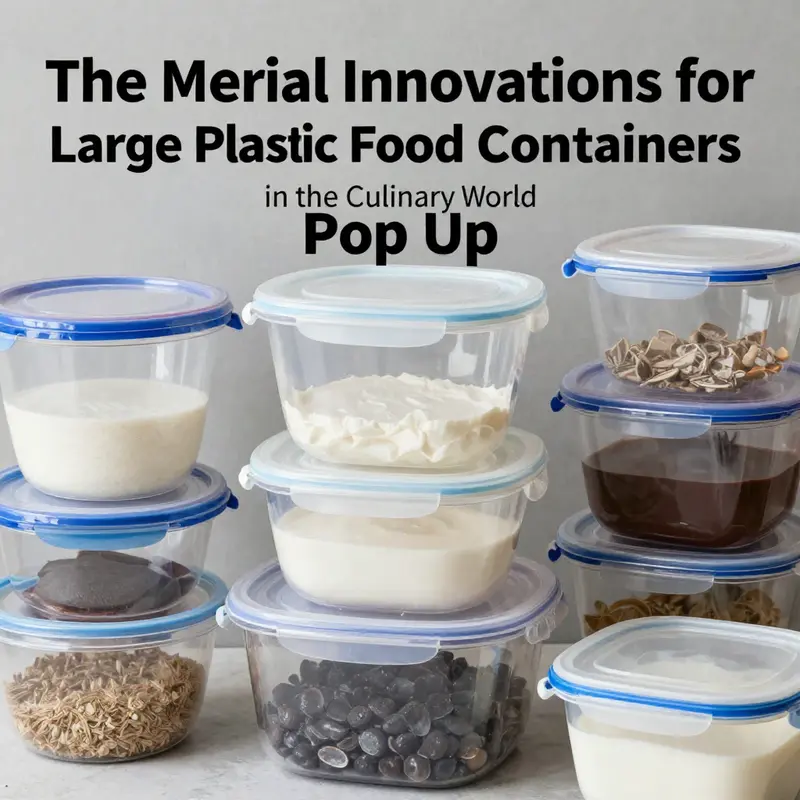
The rapid appearance of large plastic food containers in pop-up markets, food trucks, and temporary catering spaces marks more than a trend in packaging. It signals a shift toward scalable, reliable solutions that can keep pace with high-volume service while preserving hygiene, speed, and operational continuity. In crowded kitchen environments where every minute counts, the ability to store, transport, and reuse bulk quantities of ingredients and ready-to-serve meals hinges on containers that combine strength, safety, and practicality. The recent surge—sometimes described as a pop-up phenomenon—reflects a deliberate reconfiguration of how small businesses and temporary venues approach packaging as a core element of service design, not merely as a back-end afterthought. Behind this shift lies a matrix of material science, barrier technology, sustainability considerations, and regulatory guardrails that together push large plastic containers from a niche option to a standard tool in the pop-up ecosystem.
The material choices at the heart of these containers are more sophisticated than their predecessors. High-density polyethylene (HDPE) remains prized for its chemical resistance and rugged durability. It offers the kind of strength that supports heavy loads, resists deformation under stacking, and tolerates the rough handling that often accompanies street-side service and mobile logistics. HDPE’s resilience is crucial when containers must survive long shifts, frequent re-use cycles, and repeated washing without compromising their structural integrity. On the other side of the material spectrum, polypropylene (PP) provides a higher melting point and stiffness that make it appealing for hot-fill applications and microwave-ready storage. In environments where food service demands both heat tolerance and quick turnover, rigid PP containers help operators offer convenient reheating options to customers while maintaining a safe barrier between food and the external environment. This combination of HDPE and PP creates a versatile baseline for large containers that must function across cold storage, transport, and consumer-facing use without sacrificing performance.
Beyond the base polymers, the industry has increasingly embraced advanced barrier technologies to protect freshness and extend shelf life. Multilayer constructions that weave together materials such as EVOH with polyethylene or PP deliver superior gas and moisture barriers. These barriers slow oxidation, prevent moisture ingress, and reduce the risk of flavor loss in perishables, baked goods, and ready-to-eat meals held in transit or on display for limited windows of time. The practical payoff is measurable: longer shelf life in sometimes unpredictable pop-up conditions, reduced food waste, and more predictable supply chains. Operators can stock more items with less frequent restocking, a feature that matters when every square foot of a temporary kitchen is precious and restocking trips disrupt service.
Sustainability considerations have also moved front and center as the industry scales up for large-volume operations. Recycled PET (rPET) brings the clarity and strength of virgin PET at a lower environmental cost by leveraging post-consumer streams. When used judiciously, rPET helps reduce the carbon footprint associated with mass packaging while maintaining the performance required for bulky containers. The horizon further expands with bio-based plastics sourced from renewable feedstocks such as corn or sugarcane. These materials can lower life-cycle emissions and, in some cases, offer industrial composting pathways that align with circular economy goals. Although real-world compostability remains a nuanced issue for consumer adoption, the trend toward bio-based and recycled content reflects a broader industry commitment to responsible packaging.
As these developments unfold, regulatory standards are sharpening the safety and traceability of large plastic containers. Agencies such as the U.S. Food and Drug Administration (FDA) and the European Food Safety Authority (EFSA) increasingly require robust testing, documentation, and traceability for food-contact materials. This regulatory climate emphasizes that high performance and safety must coexist. For operators, this translates into greater confidence that the containers they rely on for bulk shopping, bulk prep, and high-volume service meet stringent thresholds for contact safety, migration limits, and compatibility with a wide range of foods. In practice, this regulatory framework supports a more predictable marketplace where materials are vetted before they reach kitchens, especially in fast-paced, temporally constrained environments.
In addition to the base polymers and barrier layers, manufacturers have advanced specialized applications that address the unique needs of large-volume operations. Vacuum-sealed large containers, for instance, utilize sophisticated films with layers of nylon, EVOH, and metallized polymers. These structures deliver exceptional protection against air, light, and microbial dialogue, enabling storage durations far longer than conventional packaging. The result is a compact design that saves warehouse space and reduces energy use across the supply chain, a critical advantage when pop-up setups must maximize every square meter of storage and prep area. By minimizing air exposure, such systems also mitigate freezer burn and dehydration, which can otherwise erode quality during bulk storage or during service events that stretch across days or weekends.
All these technical strides create a practical narrative for operators who manage logistics in the fast-moving, hardware-constrained world of pop-ups. Large plastic containers now offer a balance of strength, heat tolerance, barrier performance, and recyclability that makes them viable for hot, cold, and ambient storage. Yet the narrative is not simply about raw performance. It is about how these containers are selected, used, and maintained to protect food safety and customer experience. The Ningxia Medical University study cited in risk communications underscores a critical caveat: some plastics can leach substances when heated or stressed, reinforcing the need to align material choice with intended use. This caution is not a condemnation of plastic packaging but a reminder that material science must be paired with proper handling. When hot foods are involved, operators should favor materials with proven stability under elevated temperatures and avoid conditions that encourage leaching or degradation. The interplay between material choice, temperature, and handling practices becomes a core determinant of safety in the pop-up setting.
The economic logic behind the rise of large plastic containers in pop-ups cannot be ignored. A reliable, scalable packaging system reduces the risk of stockouts during seasonal spikes, promotional events, and sudden demand surges. A 2026 analysis highlighted how wholesale procurement of large containers can stabilize the supply chain, ensuring that kitchens and service points never face embarrassing delays or substitutions due to packaging shortages. In practical terms, the ability to purchase in bulk translates into more predictable pricing, easier inventory management, and smoother workflows when a pop-up scales from a single cart or stall to a multi-station operation. A key facet of this logic is the capacity of large containers to be cleaned, sanitized, and reused within tight operational cycles. Durable, washable designs that resist staining, odors, and cross-contamination contribute to faster turnarounds and reduced waste from disposable alternatives.
The conversation about large plastic containers in pop-ups is not only about what they can do today but also about how they fit into broader hygienic and logistical ecosystems. The ease of cleaning, the ability to withstand repeated washing, and the compatibility with standard storage and transport protocols all shape how operators deploy these containers. The continuous flow of innovations—ranging from high-clarity rPET options to multi-layer barrier systems, from heat-tolerant PP to vacuum-sealed configurations—means that the landscape will keep evolving as new food formats, new service models, and new venues emerge. In this sense, large plastic containers are less a fixed category than a dynamic toolkit that supports the flexible, temporary, and often unpredictable world of pop-up food service.
Another layer to consider is the consumer safety and communication aspect. As materials evolve, so too does the information landscape around what is safe for specific uses. Clear labeling about temperatures, reuse cycles, and care instructions helps operators avoid improper uses, such as heating in containers not designed for hot foods. The Ningxia study, while a cautionary note, also serves as a trigger for better materials education and safer practices. Operators who understand the temperature and handling boundaries of their packaging can maximize the safety benefits of modern containers while still delivering on the convenience and speed that define pop-up success.
With these threads interwoven, the pop-up packaging story becomes a tale of caution and capability. In a field defined by quick decisions and tight margins, large plastic containers are more than just receptacles; they are custodians of food safety, efficiency, and experience. They enable operators to keep products fresh, manage inventories more predictably, and serve customers with confidence, even under the pressure of ephemeral storefronts and busy event timelines. The convergence of material science, barrier engineering, sustainability considerations, and responsible use creates a robust framework for the next generation of pop-up packaging. In practice, it means choosing containers that are not only strong and versatile but also aligned with regulatory standards, environmental goals, and the practical realities of hot, cold, and ready-to-eat food service.
For readers seeking a tangible example of the kind of durable packaging that complements this broader trend, consider a practical reference page that showcases a robust, reusable option suitable for varied service contexts: top-fashion double-wall PP-coated lunch bowl with lid. This page exemplifies how a single, well-designed container can support hot and cold applications, ease of cleaning, and compatibility with diverse storage configurations—key attributes for pop-up operators who must pivot between menus and formats on short notice. The broader takeaway remains clear: large plastic containers are playing a central, increasingly sophisticated role in the pop-up economy, driven by material innovations that deliver safety, efficiency, and sustainability at scale.
External resource for safety and material standards: https://www.fda.gov/food/food-contact-materials/food-contact-substances-registry
When Size Pops Up: Unpacking Health Realities in the Rise of Large Plastic Food Containers
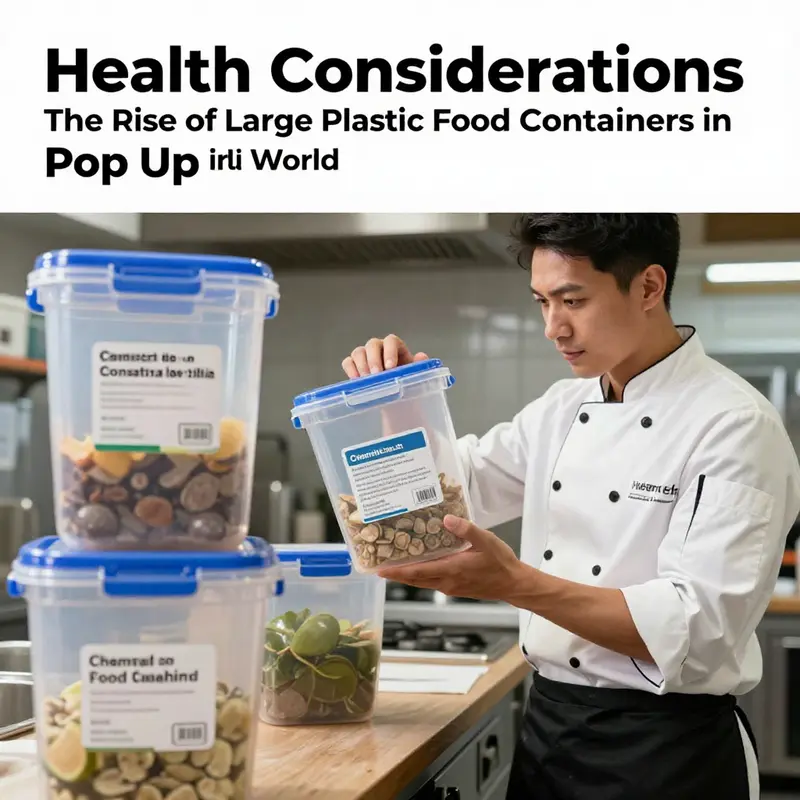
The surge of large plastic food containers in busy food ecosystems—pop-up markets, food trucks, event catering, and wholesale distribution—has taken many operators by surprise. These vessels promise efficiency at scale: they can hold substantial portions, withstand the brisk turnover of crowds, and simplify logistics from prep to service. Yet as the cartons, tubs, and bins proliferate, a quieter, more persistent question travels alongside them: at what cost to health and well-being do we embrace this convenience? The answer unfolds in a layered narrative that links material science, consumer safety, and the tightly choreographed tempo of pop-up operations. In spaces where speed and predictability govern every minute, large plastic containers are not just storage devices; they are a touchstone for how a business negotiates risk, hygiene, and trust with its customers. The trend toward bulk purchasing is partly a response to demand spikes and the fear of stockouts. During seasonal rushes or promotional events, the ability to draw from a ready reservoir of packaging can prevent operational delays, lost sales, and the reputational sting of a half-empty stand. Wholesale access to these containers makes sense financially and logistically, allowing outlets to standardize workflows and minimize the interruptions that can ripple through a kitchen or a street-side operation. But the same scale that fuels efficiency also magnifies the potential for exposure to chemical and physical hazards if the containers are not selected, used, and maintained with a critical eye toward safety. The literature on this topic converges on a cautionary refrain: the benefits of convenience must be balanced against the evolving science of leaching, microplastic migration, and material degradation under real-world conditions. In other words, the question is not only what these containers can do for a business, but what they can do to a body over time if used improperly or beyond their intended design. The Ningxia Medical University line of inquiry, for example, highlights health concerns tied to heating plastics and the possible cardiovascular implications of chemical migration. While such studies do not single out a single container type or a single use, they underscore a principle that practitioners in fast-paced settings should heed: temperature and contact with acidic or fatty foods can amplify the transfer of additives from plastic into meals. In the high-output rhythm of pop-up services, where meals may be held hot for longer than expected, this risk is not theoretical. It becomes a practical factor in menu planning, supplier selection, and the daily rituals of cleaning and reuse. The first layer of risk involves chemical leaching. Even when containers are labeled BPA-free, the story does not end there. Substitutes such as BPS and a host of other additives can carry their own ecological and biological questions. Endocrine disruption, concerns about reproductive health, and metabolic implications have framed a cautious perspective on what “safe” means in practice. The science repeatedly reminds us that heat accelerates chemical migration. When a hot sauce, a fatty sauce, or a heated dish sits in a container that has endured multiple cycles of use, the likelihood of substances migrating into food increases. The health implications may be subtle, accumulating over time rather than delivering an immediate alarm; yet in aggregate, they become meaningful for regular customers who rely on street food, pop-up catering, or large-volume takeout as a staple rather than an exception. A second modality of risk sprawls from microplastics. These microscopic fragments arise not only from the factory floor but from the very life cycle of the container—from washing, continued use, and repeated heating. Microplastics are not merely inert particles wandering through the digestive system; there is growing evidence of their presence in human tissues and blood, and studies suggest potential inflammatory and microbiome-related consequences. The problem intensifies when containers intended for cold or warm use are subjected to temperatures that push the material beyond its comfort zone. The argument is not to abandon plastic outright but to recognize the boundary conditions under which plastic remains a safe choice. Materials science has offered a clarifying lens here. Some large containers are built from polymers like polypropylene or other durable, non-reactive plastics designed to minimize leaching while preserving barrier properties. Yet the field has also acknowledged that not all plastics are created equal, and even high-grade materials can degrade when scratched, aged, or stressed by extremes of heat and mechanical wear. The third layer of concern—material degradation—connects directly to the repeated life cycle of containers in busy pop-up contexts. Even containers marketed as reusable or intended for heavy use can accumulate scratches, pits, and clouding over time. Each imperfection becomes a potential harbor for bacteria and a weak point where cleaning becomes a less effective barrier. The consequences extend beyond hygiene: physical damage can alter barrier properties, increasing the propensity for substances to migrate into food, especially when fatty or acidic components are involved. In fast-moving environments where speed often competes with meticulous sanitation, the tension between durability and safety becomes a daily balancing act. Heated storage, microwaving (when not explicitly sanctioned), and the practice of reusing single-use containers all amplify these risks. A body of research has shown that plastics can soften or warp under heat, which can change how residues cling to surfaces and how tightly containers seal. In turn, imperfect seals may expose contents to the environment, enabling migration of additives and even microplastics. A rat-based study cited in ecotoxicology literature illustrates how rapid exposure to plastic-associated conditions can influence gut microbiota and inflammatory markers, offering a stark reminder that food packaging choices do not exist in a vacuum. The practical reality is that pop-up businesses operate with high turnover and constant movement. The solution is not a theoretical prohibition of plastic but a disciplined approach to material selection, use protocols, and end-of-life management. The conversation extends to procurement strategies. The modern buyer for a bustling operation must navigate trade-offs: the economic efficiency of bulk packaging versus the potential for long-term health concerns and customer perception. A wholesale purchase might deliver a predictable supply, but it also peaks the risk exposure if the chosen containers are not designed for hot foods or repeated use. Businesses that thrive in this environment often adopt a risk-aware procurement framework. They insist on food-grade classifications and explicit temperature guidelines, and they favor materials with robust heat resistance and inert profiles. They also invest in staff training on safe handling, cleaning, and rotation practices that reduce the chance of using aged or damaged containers to hold or reheat meals. This is where the alternative packaging conversation becomes part of the operational playbook. Safeguarding public health in the pop-up sector does not require abandoning plastics entirely; it calls for thoughtful substitution in contexts where risk is higher. Durable alternatives such as glass, ceramic, or stainless steel can be integrated for certain functions—storage of cold dishes, reheating in suitable units, or presenting food in scoops and trays at service points. Yet for high-volume, disposable settings, the market for safer plastics and responsibly designed packaging remains substantial. The key is to align container choice with the food’s profile and the service method. A practical rule emerges: select containers that are clearly labeled as food-safe, preferably with documented compatibility for heating and fatty foods, and avoid those that rely on recycled materials where the source mix could introduce contaminants. For operators who must maintain a lean supply chain, a conservative approach to reuse is prudent. Do not reuse single-use containers for reheating or storing hot foods, and retire any container that shows scratches, clouding, warping, or signs of chemical migration. Regularly revisiting codes and materials can help teams distinguish between PET, HDPE, and PP plastics, and which of these align with the nature of the menu. When in doubt, the safer path is to pivot toward non-plastic or high-quality, certified non-toxic materials for critical uses. To illustrate a concrete option without naming brands, consider durable, reusable vessels designed to withstand frequent handling and cleaning while minimizing contact with heat and aggressive cleaning agents. An example approach is to employ sturdy, paper-based alternatives for certain applications, paired with compatible lids and liners that preserve the integrity of the food and the user experience. For operators exploring such options, a representative example of a safer packaging alternative is the heavy-duty, eco-friendly kraft paper octagonal bowl with a lid. This type of container embodies a design philosophy that seeks to reduce chemical exposure and microplastic risk while still delivering practical service benefits in high-volume contexts. heavy-duty eco-friendly kraft paper octagonal bowl with lid. Integrating this mindset into daily operations requires a quiet shift in how teams perceive packaging. It means planning for the long tail of safety: pre-allocate a portion of budget and space for safer alternatives, train staff to recognize telltale signs of aging containers, and build a culture that values hygiene and customer trust as much as speed. The health argument against blindly embracing large plastic containers is not a verdict against packaging science; it is a call for deliberate, informed choices that reflect both the realities of pop-up work and the evolving science of material safety. In practice, this translates into clearer labeling for heat compatibility, explicit guidance for reuse, and a preference for materials that minimize chemical migration without compromising the lean, fast-paced workflows that define these ventures. Consumers, too, increasingly bring a health lens to their choices. They notice when a vendor emphasizes convenience at the expense of safety and may interpret repeated use and heat exposure as a signal about the overall care given to the product. The social contract in the pop-up economy thus extends beyond taste and price. It anchors itself in reliability, consistent hygiene, and transparent communication about packaging safety. The path forward blends scientific insight with operational pragmatism. It invites businesses to reexamine the supposed inevitability of plastic-dominant packaging in light of the potential health implications and to explore a mixture of safer plastics and non-plastic alternatives that align with the menu, the service model, and the expectations of customers. The broader public health conversation also benefits from this recalibration. Public information resources emphasize reducing exposure to plastic-associated risks and adopting practices that minimize ingestion of microplastics and chemical migrates. For operators, this is a reminder that packaging choices matter not only for shelf life or transport efficiency but for long-term health outcomes that manifest in subtle ways over repeated exposures. The rise of large plastic containers in pop-up and mobile food economies thus represents a convergence of opportunity and caution. It is an invitation to redesign workflows with an eye toward safety, to diversify materials where appropriate, and to frame packaging as a core component of product integrity rather than a peripheral afterthought. In this light, the industry can continue to innovate without surrendering health, by choosing well-suited materials, maintaining rigorous cleaning and inspection practices, and embracing safer alternatives where heat and acidity intersect. The result is a more resilient, trustworthy system that serves speed, scale, and safety in equal measure. External resource: https://www.who.int/news-room/fact-sheets/detail/plastic-pollution-and-health
Final thoughts
Large plastic food containers are more than just packaging; they represent an evolving landscape in the food service industry. From enhancing efficiency in kitchens and catering events to leading the way with material innovations, these containers serve critical roles. However, the importance of selecting the right materials cannot be overstated, particularly concerning health safety. As we move forward, understanding these containers will be vital for businesses striving for excellence in food service and events.