
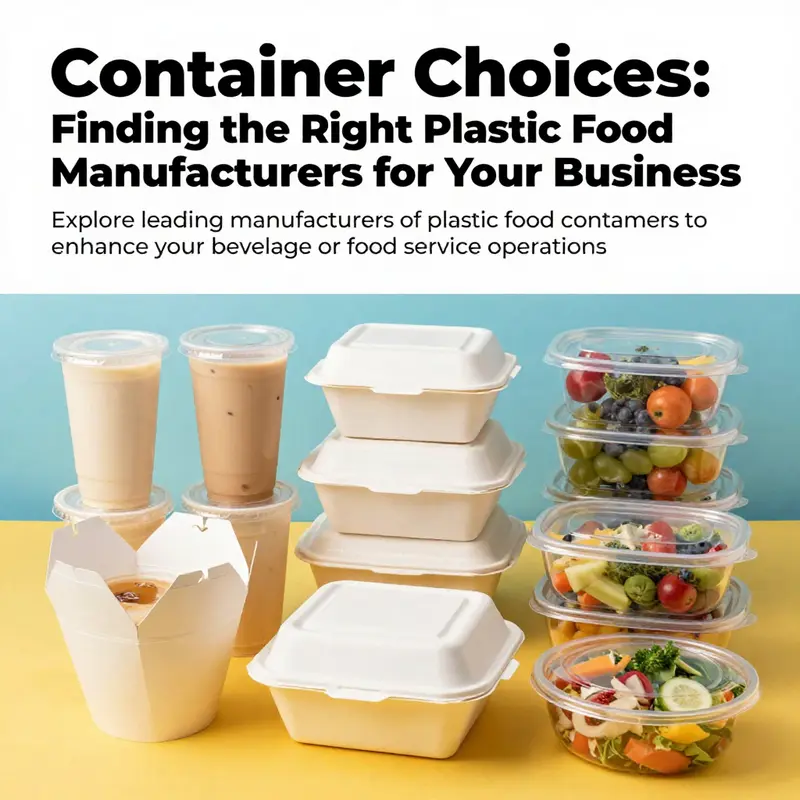
In the competitive landscape of food and beverage service, choosing the right packaging solutions is crucial for success. This article delves deep into the realm of manufacturers specializing in plastic food containers, essential for bubble tea shops, restaurants, food trucks, catering services, and more. We’ll explore the leading manufacturers, highlight sustainability trends, showcase innovative technologies, analyze economic impacts, and paint a picture of the global market landscape. Each chapter provides key insights tailored to enhance your packaging choices and support your business requirements.
Global Molders and Market Movers: A Deep Dive into the Manufacturers of Plastic Food Containers
Across the vast landscape of food packaging, plastic containers shape not just what we eat but how we think about convenience, safety, and sustainability. The chapter that follows moves beyond a mere roll call of factories to illuminate a dynamic ecosystem where scale, technology, regulatory enforcements, and environmental accountability converge. It is a narrative of how manufacturers—from sprawling Asian hubs to strategic European players—coordinate processes, push the boundaries of materials and design, and respond to an evolving mandate from brands, retailers, and consumers who demand both performance and responsibility. At the center of this story lies a recognizable truth: plastic food containers are not simply containers. They are engineered products whose success rests on a precise mix of engineering mastery, supply chain discipline, and a forward-looking commitment to circularity that increasingly defines competitive advantage in a crowded market.
In this global economy, three manufacturing clusters stand out for their maturity, throughput, and export capability. China has become the dominant force in plastic food container production, anchored by provinces that have developed sophisticated ecosystems around injection molding, tooling, surface finishing, and rapid prototyping. Within this landscape, Guangdong Province emerges as a particular focal point for innovation and export excellence. The province hosts a dense network of suppliers whose capabilities span high-volume, precision molding to advanced downstream finishing. These factories are not only equipped to handle a constant stream of orders; they also provide the flexibility that global brands rely on, offering small trial runs that can quickly transition into large-scale, long-term contracts without sacrificing quality. For B2B buyers, this translates into practical benefits: predictable lead times, clearer pricing signals, and a more agile response to shifting demand patterns, which is especially valuable in a market where consumer trends can swing quickly from seasonal favorites to health-conscious choices.
The Guangdong ecosystem operates across a broader geostrategic advantage. Its proximity to major ports reduces inbound and outbound logistics complexity, while its tightly knit supplier base fosters rapid iteration, stringent quality control, and a shared culture of compliance. These attributes are not incidental; they are built into the region’s industrial DNA. Dongguan, Foshan, Shenzhen, and surrounding municipalities function as a web of manufacturing capability that accommodates everything from standard rectangular containers to more complex shapes and feature-rich designs, including branding elements, microwave safety attributes, and freezer resistance. The result is a supplier base that can scale in tandem with a customer’s growth ambitions while maintaining product uniformity and traceability across batches—an essential consideration for multinational brands that distribute to a wide array of markets with varying regulatory demands.
Yet Guangdong’s strength does not stand in isolation. The Chinese manufacturing landscape—driven by three core clusters in Guangdong, Zhejiang, and Jiangsu—offers complementary advantages that collectively set a high bar for the sector. Zhejiang is renowned for its precision in production lines and a culture of rapid product development, often feeding into the more design-oriented and brand-driven needs that surface later in the supply chain. Jiangsu contributes to a balanced mix of process efficiency and advanced tooling capabilities, supporting the smaller batch runs that many startups require before scaling to mass production. This triad of clusters creates a robust, interdependent network where knowledge spillovers, standardized processes, and shared investment in equipment—especially in high-precision molding technologies—translate into measurable improvements in cycle times, defect rates, and overall manufacturability.
While the world’s attention often gravitates toward the heavyweights of packaging—global leaders that have built reputations around sustainability and performance—regional champions in China illustrate a fundamental truth about this industry: excellence is as much about capability as it is about alignment with customer needs. A major part of this alignment is regulatory compatibility. Global buyers increasingly require suppliers who conform to a suite of food-safety standards that enable smooth access to markets. In practice, that means factories that can demonstrate compliance with FDA requirements for food contact materials, EU regulation 10/2011, and LFGB safety standards in Germany. This regulatory triad is not a mere checkbox; it is a practical gate that shapes product development, material selection, and testing protocols. Suppliers read these requirements as a continuous design constraint rather than a hurdle, embedding compliance into the earliest stages of development so that the transition to production is seamless rather than remedial, with fewer reworks and reduced time to market.
Beyond regulatory compliance, the chapter’s landscape is increasingly shaped by the imperative of sustainability. The leading players—from globally diversified conglomerates to regional powerhouses—are pursuing circular economy principles with a seriousness that mirrors the commitments of brands and retailers. In this regard, several narratives converge. First, there is a clear and growing emphasis on recyclability and the use of recycled content without compromising barrier properties or mechanical performance. This is not a niche concern but a systemic objective that informs resin selection, molding methods, and the integration of design features that ease sorting and processing downstream. Second, there is substantial investment in recycling technologies, allowing for the recovery and repurposing of contaminated streams and the conversion of post-consumer plastics into usable feedstocks for new containers. This is where sustainability becomes not only a regulatory or reputational consideration but a practical business strategy that reduces material costs and mitigates supply risks tied to raw resin volatility.
Industry leaders are translating these ambitions into real product development efforts. The most advanced players are blending performance with environmental stewardship by exploring multi-material architectures that preserve clarity, strength, and heat resistance while enabling higher recycled-content levels. While this is technically challenging, it aligns with the broader trend toward lighter-weight designs and optimized wall thickness, which lower material consumption without sacrificing performance. It is also a trend that benefits from close collaboration across the value chain—designers working with injection molders, r&D teams sharing data with quality assurance, and brand owners coordinating on shelf-ready solutions that preserve product integrity during transport and display.
In parallel with these global dynamics, the supply chain architecture surrounding these manufacturers has evolved. The scale advantages of large clusters are reinforced by a sophisticated network of logistics, testing laboratories, contract manufacturers, and third-party auditors. The ability to demonstrate end-to-end traceability, from raw resin to finished container, becomes a differentiator in bids from major retailers and foodservice brands. This traceability supports not only compliance but also the confidence required for collaborative innovation, whether that means a brand seeking a novel closure system, a microwave-safe material, or a packaging solution designed for cold-chain performance. In this context, the most successful suppliers are those that blend manufacturing prowess with transparent reporting, standardized quality metrics, and proactive risk management—practices that reduce the likelihood of supply disruptions and strengthen partnerships over the long term.
For readers who are mapping supplier ecosystems or evaluating potential partners, it is helpful to consider practical routes for sourcing that align with the realities described above. The journey from supplier shortlist to contract award often hinges on a few decisive factors: the breadth of capability, from product design and customization to processing and finishing; the ability to deliver at scale without compromising quality; and a demonstrated commitment to safety and environmental stewardship. Importantly, the conversation around supplier selection now routinely includes questions about circularity—whether a manufacturer can incorporate recycled content, design for recyclability, and offer take-back programs or recycling-ready packaging options. Buyers increasingly expect a partner to share a clear roadmap for advancing sustainability alongside product performance. In this regard, regional hubs like Guangdong, with their capacity for rapid prototyping, rigorous testing, and scalable production, are uniquely positioned to meet these expectations. The same is true for Zhejiang and Jiangsu, where collaboration between design, process engineering, and compliance teams accelerates time to market while ensuring that every new container meets the stringent safety standards that the market now demands.
The conversation, however, cannot be limited to the factory floor. It must also account for how buyers approach supplier relationships in practice. A growing body of guidance emphasizes selecting suppliers who can offer a combination of reliable throughput, robust quality control, and flexibility in product customization. In this frame, it helps to think of the supplier as a partner who can contribute to a brand’s strategic objectives—be it expanding into new product formats, improving shelf appeal through branding and micro-geometry, or reducing environmental footprint through smarter material choices and end-of-life options. This mindset shift—from transactional supplier to collaborative innovator—holds particular resonance in regions where the industrial ecosystem supports rapid iteration and shared problem solving.
To readers curious about how to navigate this landscape with confidence, a practical synthesis exists in contemporary sourcing resources that discuss strategies for evaluating and selecting high-quality container suppliers. For example, a strategic guide on sourcing high-quality clear plastic container suppliers offers actionable steps for B2B buyers seeking to minimize risk and maximize value across supplier engagements. This resource illustrates how a well-structured supplier assessment framework—covering capability, compliance, and sustainability—can translate into faster onboarding, smoother audits, and more reliable performance across the life of a contract. The guide’s emphasis on clarity of process provides a useful counterpoint to the complexity of global supply networks and reinforces the importance of disciplined procurement practices in a market where fragmentation can obscure true capabilities.
In the end, the chapter’s portrait of plastic food container manufacturers is not a static snapshot but a living map. It captures how regional excellence in China, especially Guangdong’s export-driven ingenuity, interlocks with global players who push the boundaries of material science and packaging design. It also highlights a shared ambition across the sector: to deliver containers that marry safety, performance, and sustainability in a way that accelerates growth for brands while reassuring consumers that packaging can be both responsible and reliable. As manufacturing systems continue to evolve, buyers and suppliers alike will benefit from maintaining a posture of curiosity, rigorous evaluation, and mutual accountability. And while the path to better packaging may be paved with advanced machinery and streamlined logistics, the ultimate value rests in the agreements we forge around quality, transparency, and a future oriented toward circularity.
External resources for further exploration retain a practical resonance. For a broader synthesis of supplier evaluation and sourcing strategies in this space, see this industry analysis: https://www.supplychaindigital.com/sourcing/how-to-source-high-quality-clear-plastic-container-suppliers-a-strategic-guide-for-b2b-buyers
Internal reference for further product-sourcing context: senang02-top-fashion-double-wall-PE-coated-lunch-lid-matt-lamination-embossing-eco-friendly-rectangle-bowl-sushi-potato-chips
From Footprint to Framework: Rewriting the Sustainability Playbook for Plastic Food Container Makers
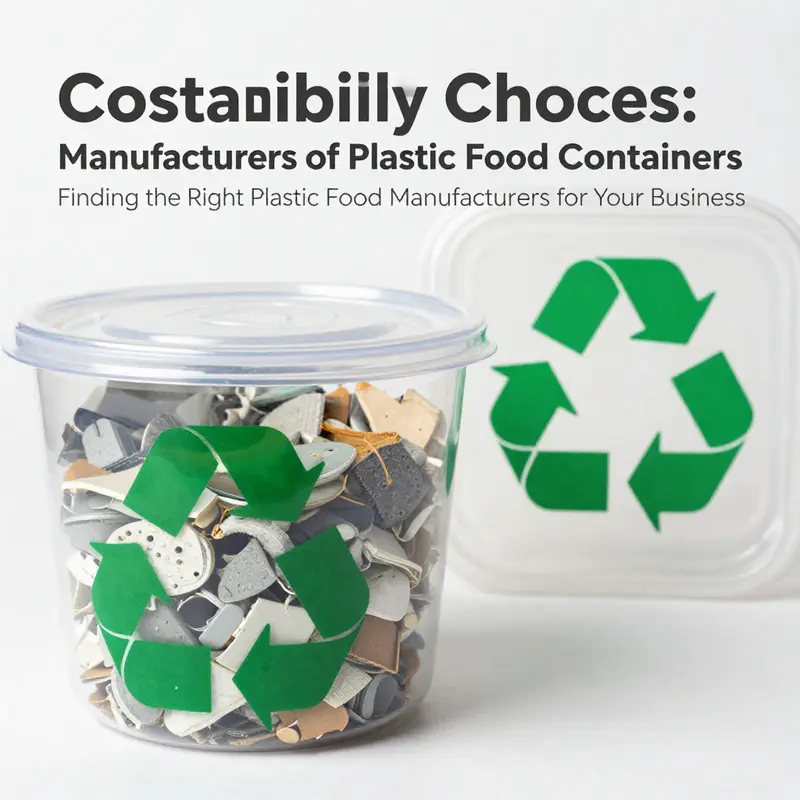
Sustainability in plastic food container manufacturing has moved from a peripheral concern to a central design principle. The field now faces a compact set of imperatives: deliver containers that safeguard health and food safety, minimize environmental impact across the full life cycle, and align with a regulatory and consumer landscape that rewards transparency and accountability. In this environment, the best manufacturers are those who can fuse engineering rigor with systemic thinking—designing products that fit into circular economies, while also communicating with crisp honesty about material choices, end-of-life pathways, and the limits of recycling infrastructure. The result is not a single “green” feature but a coherent framework in which material science, processing technology, supply-chain governance, and brand stewardship reinforce one another. In practice, this means moving beyond isolated eco-friendly choices to create cohesive packaging ecosystems that perform reliably in kitchens and marketplaces while steering waste away from landfills.
A core driver of this shift is the material palette itself. Leaders in the sector increasingly favor materials that can re-enter the recycling stream or that offer lower-carbon end-of-life options. PET, for instance, remains a workhorse for food-contact applications because it is widely recycled in many regions and can maintain clarity and strength when properly processed. Biobased alternatives—such as PLA and other bio-derived polymers—are being explored for their potential to reduce fossil-fuel dependence, though their performance and compostability claims must be carefully matched to actual waste-management capabilities. The bigger picture is not just choosing a green material but validating its sustainability through lifecycle analysis, ensuring that the gains in production or post-consumer recovery are not offset by upstream extraction or downstream processing realities. Moreover, manufacturers are investing in materials science to improve barrier properties and seal integrity without adding layers that complicate recycling. In some cases, this means rethinking multilayer architectures or seeking adhesive chemistries and lamination approaches that preserve recyclability rather than undermine it. Transparency about these choices becomes crucial, because consumers and regulators increasingly demand visibility into supply chains and material origins.
Lightweighting emerges as another pivotal strategy. By reducing the resin used per container, producers can lower both material consumption and distribution emissions, since lighter loads translate into fuel savings over the logistics chain. This is not merely a matter of shrinking walls; it is a careful optimization of geometry, wall thickness, and material performance to preserve drop resistance, thermal stability, and seal integrity. When executed well, lightweighting yields meaningful carbon reductions without compromising safety or consumer experience. But it also raises questions about end-of-life performance: will a lighter container still retain its shape and integrity when stored, transported, and heated? The answer lies in rigorous testing regimes, advanced resin formulations, and a design approach that anticipates the entire chain of custody—from bulk resin to consumer disposal. The metaphor is as important as the method: weight is a proxy for environmental impact, and reducing it signals a broader commitment to efficiency and responsibility.
The circular economy is no longer a distant ideal but a practical operating model. Brands and manufacturers are increasingly exploring return-and-refill programs for durable plastic containers, especially in foodservice contexts where reuse can be cost-effective and materially transformative. Such programs push suppliers to consider not only the material’s performance but the infrastructure required to reclaim, sanitize, and reintroduce containers into circulation. In favorable settings, this approach can close loops that have long functioned in a linear fashion. It also highlights a continuum between packaging design and service models: containers designed for multiple reuse cycles must be robust, easily cleanable, and resistant to wear from sanitization processes. The challenge, of course, is balancing durability with lightweighting and cost constraints. Yet the potential rewards—the avoidance of single-use waste, reduced material throughput, and stronger retailer partnerships—justify the investment in process engineering and lifecycle planning. In parallel, some manufacturers are piloting deposit schemes or leasing arrangements for select packaging formats, signaling a shift toward ownership models that incentivize end-of-life management and material recovery.
Closely linked to lifecycle thinking is the growing emphasis on sourcing transparency. Companies increasingly disclose where raw materials originate, how they were extracted, and what certifications govern the production process. Consumers today expect to know not just what is in a package, but how it was made and whether the supply chain respects environmental and social standards. Labeling that communicates recyclability, compatibility with local recycling streams, and the presence of recycled content becomes a competitive differentiator. This demand for clarity also pressures suppliers to standardize testing and documentation, reducing ambiguity around “recyclable” claims and helping downstream recyclers identify materials accurately. When sourcing is transparent, manufacturers can better illustrate the true environmental impact of their products, enabling retailers and consumers to compare options with greater confidence. The resulting trust is powerful: it lowers perceived risk for retailers, accelerates adoption of sustainable packaging choices, and fosters a more informed consumer base that values accountability as a feature, not a buzzword.
Concurrently, regulatory and industry standards exert a persistent influence on practice. Food-contact materials must comply with safety assurances and migration controls, while labeling and traceability requirements push for higher data integrity. In many key markets, regulatory frameworks incentivize or even mandate design-for-recyclability and the reduction of problematic additives or multi-layer constructions that hinder recyclers. This regulatory pressure aligns with a broader societal mandate to decouple packaging growth from environmental degradation. As a result, manufacturers invest in compliance governance, risk assessment, and supplier qualification processes as integral parts of product development. The most effective players view compliance not as a burden but as a competitive advantage: it accelerates acceptance in major retail channels, supports co-branding opportunities around sustainability, and reduces the costs and disruptions associated with non-compliance.
Beyond materials and compliance, there is an ongoing wave of packaging technology innovation aimed at expanding the range of viable options for food-contact applications. Advanced recycling technologies—mechanical and chemical—are being pursued to convert mixed or complex waste streams into usable feedstocks with higher purity. While chemical recycling remains debated in some regions, its potential to reclaim materials from multilayer or contaminated streams is acknowledged by many leading manufacturers as a strategic lever for circularity. At the same time, researchers and engineers optimize process efficiency, enabling faster conversion, lower energy use, and better integration with existing plastics streams. On the performance side, researchers refine barrier properties to extend shelf life without resorting to non-recyclable layers, while innovations in surface treatment and surface energy management can improve printability and customization without compromising recyclability. This confluence of breakthroughs supports a future where sustainability is compatible with the high performance demanded by food safety standards and consumer expectations.
Regional dynamics shape how these strategies unfold in practice. In some markets, economies of scale and a well-developed recycling infrastructure create favorable conditions for high-recovery packaging designs. In others, where collection, sorting, and processing remain fragmented, manufacturers prioritize simplicity, standardization, and regional material choices to minimize contamination risk and maximize the likelihood of successful recycling. Across regions, a common thread is the push toward design that communicates clearly to waste-management streams. Clear labeling, standardized resin codes, and consistent packaging geometry help ensure that the container can be properly processed, reducing the probability of “wishful recycling.” In this context, even small design moves—such as choosing a single polymer over a mixed-material approach, or using mono-layer constructions where feasible—can have outsized impacts on recyclability rates and the overall environmental footprint.
Brand strategy also plays a crucial role in translating sustainability into market viability. As retailers and food-service operators increasingly demand eco-conscious packaging, manufacturers are aligning product families with transparent storytelling about material choices, recycling paths, and end-of-life outcomes. In some cases, this alignment extends to collaborative programs with retailers that go beyond the packaging itself, linking packaging decisions to broader sustainability commitments like waste-reduction targets, composting initiatives, or community recycling campaigns. The selectors and designers within manufacturing firms are tasked with balancing demand for customization with the realities of scale and waste-stream compatibility. The result is a more disciplined approach to product development, where the environmental profile becomes a core specification rather than an afterthought.
An illustrative, practical expression of these trends appears in the way some packaging solutions are presented and deployed in real-world settings. For instance, an option that has gained traction in the market is a take-away box built around a kraft-based, lid-equipped design that can be marketed as recyclable in many municipal systems. Such designs emphasize modularity and reusability without sacrificing food integrity or convenience. They demonstrate how a seemingly modest choice—a box shape and lid design—can influence recovery rates, consumer behavior, and brand perception. This is not merely about materials; it is about aligning product architecture with the full life cycle, from production to post-consumer recovery. kraft-paper-octagonal-box-with-lid
As the chapter closes on this broad landscape, it is important to recognize that sustainability in plastic food container manufacturing is not a single destination but a continuous journey. The industry is moving toward a framework in which materials, design, process innovation, and governance reinforce one another to deliver packaging that is safer, more efficient, and more recoverable. This trajectory is supported by regulatory clarity, consumer demand for openness, and the relentless push for reductions in material use and energy intensity. The collaboration among material scientists, equipment engineers, supply-chain specialists, and sustainability officers is yielding packaging solutions that perform at kitchen temperatures, survive the rigors of distribution, and integrate into circular systems that extend beyond a single purchase. The path ahead will require ongoing investment in testing, data gathering, and cross-sector partnerships. It will also demand humility: packaging that looks sustainable on a label must prove its worth in recyclers’ bins, in municipal programs, and in the choices of everyday shoppers who want their meals to be both convenient and responsible.
For readers who want to explore the broader market dynamics and forecasts that underpin these developments, a comprehensive resource from a leading industry research firm offers detailed analysis and scenario planning that complements the themes raised here. External resources can shed light on how demand, technology, and policy are likely to shape packaging strategies over the next decade. External resource: https://www.grandviewresearch.com/industry-analysis/sustainable-packaging-market
Shaping Flavor, Footprint, and Trust: Technology-Driven Transformation in Plastic Food Container Manufacturing
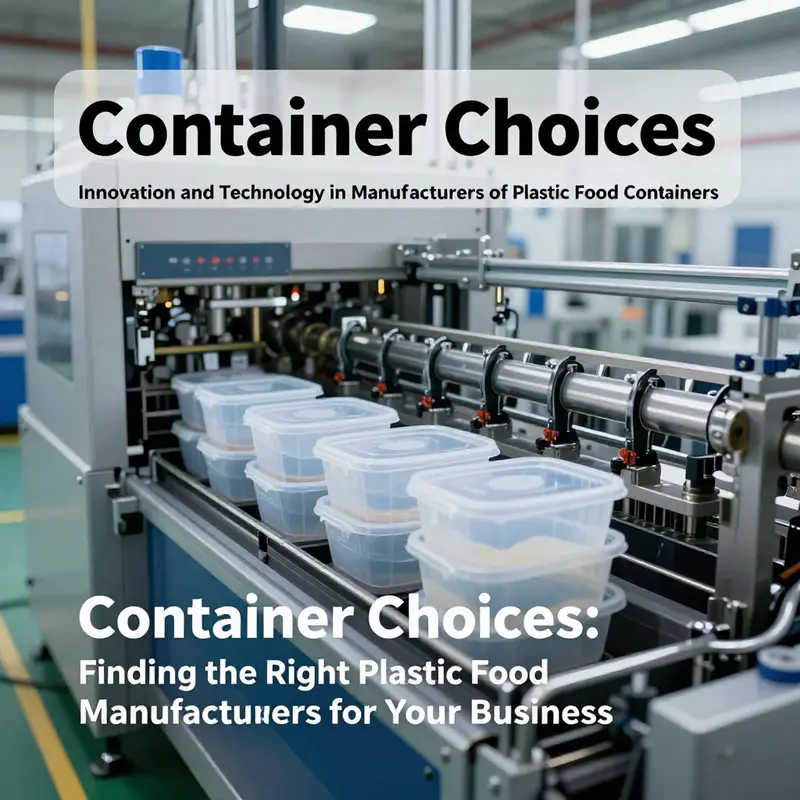
Plastic food container manufacturing is entering a period of rapid, interdisciplinary change driven by material science, process engineering, and digital visibility. Brands seek packaging that protects food while aligning with goals on waste reduction, energy efficiency, and transparent sourcing. Manufacturers respond by optimizing material choices, refining molding and sealing technologies, and redefining end-of-life pathways. Sustainability goals drive a shift toward recycled content, lower energy consumption, and stronger traceability across supply chains. Biobased and biodegradable options are evaluated against performance requirements like heat resistance, clarity, and barrier properties to support safe heating, freezing, and storage. The regulatory landscape grows more proactive, rewarding transparent disclosures and lifecycle thinking. Standardization and collaboration across suppliers, converters, and brand owners help extend recyclability to multi-material structures while maintaining seal integrity. Digital features such as temperature sensing, provenance labels, and authentication codes transform packaging from a passive container to a connected platform for safety and brand storytelling. The result is a balanced equation: performance, safety, and sustainability achieved through design-for-manufacture, rigorous quality control, and thoughtful end-of-life planning. As markets evolve, regional hubs specialize in capabilities from advanced molding to automated inspection, enabling scalable, consistent output. The most successful players pursue a cohesive strategy that integrates material science, process excellence, and data-driven decision making. This chapter outlines the major trends shaping the industry today and offers a framework for navigating the trade-offs between cost, functionality, and environmental responsibility.
null
null
null
null
Final thoughts
The landscape of plastic food container manufacturers is rich and diverse, with key players focusing on innovation, sustainability, and market responsiveness. As businesses navigate their packaging choices, understanding the offerings from leading manufacturers can enhance both customer satisfaction and operational efficiency. By prioritizing environmentally friendly practices and exploring the latest technological advancements, companies can not only meet regulatory standards but also align with consumer preferences for sustainability. As you seek to elevate your service quality, consider partnering with manufacturers who share your commitment to excellence and responsibility in packaging solutions.