
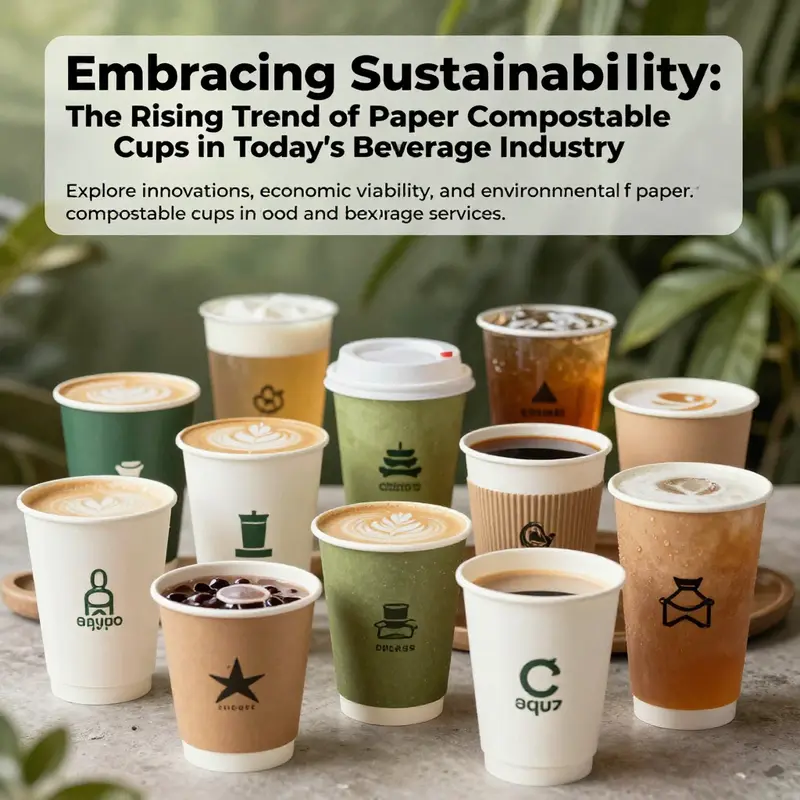
In an era where sustainability is more than just a buzzword, paper compostable cups are emerging as a key component for beverage shops, restaurants, food trucks, and event planners aiming to reduce their environmental footprint. Recent innovations have led to technological advancements that enhance the applicability and performance of these cups, making them ideal for a wide range of beverages, including your beloved bubble tea. Additionally, an analysis of market trends showcases their economic viability and growing popularity among consumers. This article explores the profound societal impact these cups impose, highlighting their numerous benefits for the environment, thereby establishing a compelling case for their widespread adoption.
Beyond Biodegradable: The Tech Drive Behind Next-Generation Paper Compostable Cups
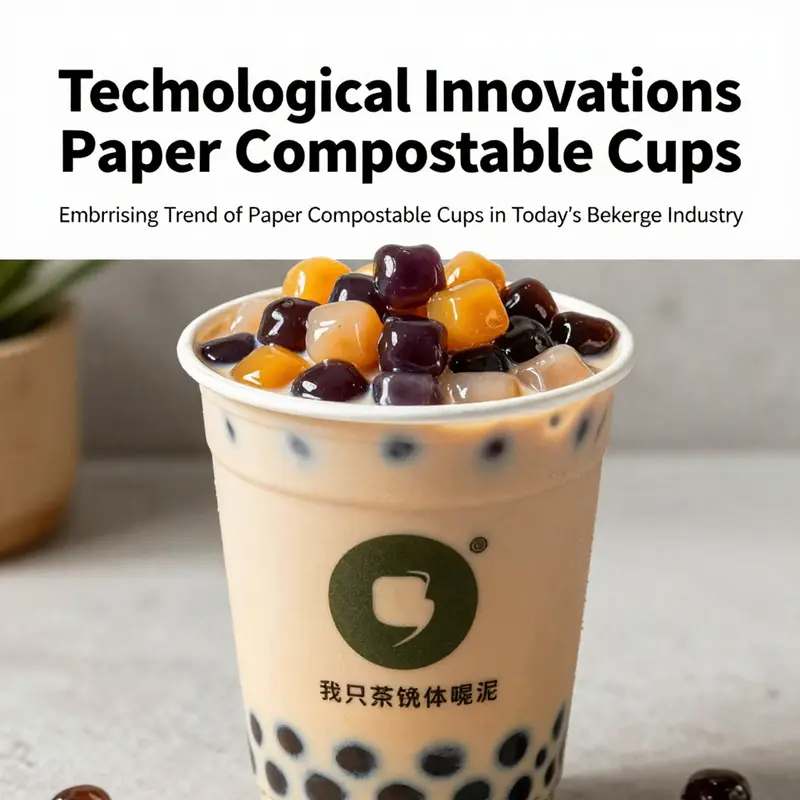
Shifting toward sustainability starts with a problem: traditional paper cups needed a plastic lining for leak resistance and heat retention, but that lining hindered compostability. The result was a misalignment between convenience and end-of-life outcomes. In the last decade, researchers and manufacturers have reimagined the cup as a single, compostable system. The core idea is to replace petroleum-based barriers with plant-based coatings that actively participate in composting, breaking down into water, carbon dioxide, and biomass under industrial conditions. The coatings must seal during use, vanish in composting, and remain compatible with printing and branding. Certification schemes ensure performance and end-of-life behavior, giving operators confidence to switch. Structural design also evolved: thicker or textured walls improve grip and insulation while enabling leaner material usage. Manufacturing aims for near-zero emissions, with renewable energy and closed-loop water use where possible. End-of-life tracing and sorting technologies help ensure compostable cups re-enter the circular economy rather than contaminate recycling streams. The result is a practical product that performs in cafés and dissolves in composting facilities within months, aligning with a circular economy rather than a linear take-make-waste model. The broader effect is to shift brand expectations toward environmental stewardship while maintaining convenience for customers.
Internal reference: for readers seeking a concrete case study, explore the eco-friendly, printed-logo paper cups page, and for broader context, review international coverage of innovations in paper compostable cups.
null
null
Closing the Loop: The Societal and Environmental Promise of Paper Compostable Cups
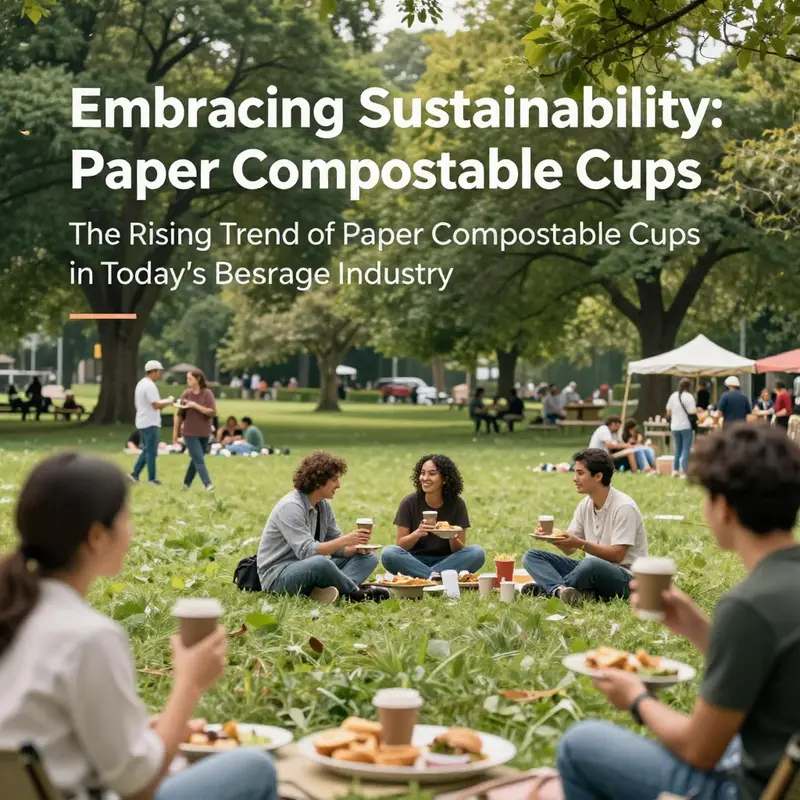
The growth of single use packaging has sharpened the attention of communities, businesses, and policymakers on what happens to cups after they vanish from sight. Paper compostable cups sit at a pivotal intersection of waste management, material science, and everyday choice. They are not a magical solution, but they embody a pragmatic shift away from petroleum based plastics toward materials and processes designed to fit into a cycle rather than a sink. At their core is a deliberate choice of materials that favors renewables and biodegradability, paired with a design that seeks to keep liquids contained without relying on fossil fuel derived coatings. This combination, when paired with verified compostability standards, offers a pathway to reduce the long tail of waste associated with hot beverages, cold drinks, and casual consumption in busy environments. Yet the real measure of their impact extends beyond a single product specification. It rests on how these cups influence culture, industry practices, and the broader systems that handle post use materials, especially in the context of an evolving circular economy.
The primary material often employed for these cups is solid bleached sulfate paperboard, a high purity and smooth surface substrate prized for its printability and durability. The choice of a paperboard base is not incidental; it anchors a design philosophy centered on end of life as much as performance during use. A plant based lining, typically a biopolymer such as polylactic acid derived from renewable resources, replaces conventional petroleum based plastics. This coating is engineered to provide leak resistance and heat tolerance, enabling the cups to handle both a hot coffee and a chilled smoothie without compromising liquid containment. The absence of a fossil fuel based plastic lining reduces the fossil energy embedded in the product and aligns more clearly with renewable resource claims. Still, the coating cannot be assumed to perform identically across all contents. High fat or oily liquids, for example, can stress the integrity of the structure, and careful consideration is needed when predicting how a cup will behave with those liquids.
The sustainability credentials of compostable cups are reinforced by third party certification. Recognized bodies assess whether the product truly meets compostability standards under industrial conditions. Certifications like BPI and TÜV OK Compost INDUSTRIAL provide a credible signal that a cup will break down within a defined timeframe when processed in appropriate facilities. These certifications do not guarantee home compostability, and they do not imply that any cup will disappear in a backyard compost heap. They do, however, offer a rigorous framework for waste management facilities, brands, and consumers to coordinate on end of life. These assurances help distinguish cups that are designed for circularity from those that are merely marketed as green, guiding procurement decisions in schools, cafes, and event spaces that are pursuing green certifications and sustainable sourcing.
When these cups are used, the potential environmental benefits unfold most clearly within the context of industrial composting infrastructure. In facilities designed to operate at the temperature, moisture, and microbial conditions required for industrial composting, paper cups with plant based coatings can break down within a defined window, typically under one year. This rapid decomposition reduces landfill burden by diverting organics from landfills and enabling the creation of compost that nourishes soils rather than persisting as long lived pollution. The environmental narrative here is not solely about disappearance but about transformation: waste becomes a resource that can enrich soils and close the loop in material use. The circular economy framework envisions a system in which resources flow in a closed loop, and compostable cups are a tangible artifact within that loop when paired with proper collection, sorting, and processing streams.
From a lifecycle perspective, renewable resources play a central role. The sourcing of pulp from sustainably managed forests helps limit the net carbon footprint of cup production by replacing fossil fuel based feedstocks with biomass that can regrow and sequester carbon during growth. The plant based coating further reduces reliance on petrochemicals, while enabling the same functional performance required by busy beverage service. This confluence of material choices supports a narrative in which consumption is decoupled from long term environmental harm. It is important, however, to acknowledge that renewable resource supply chains must be responsibly managed. The environmental advantages are maximized when forests are well managed, energy use in manufacturing is minimized, and transport emissions are balanced with local or regional processing options.
The societal implications extend beyond the factory floor. The adoption of compostable cups signals a cultural readiness to reframe everyday disposal as part of a shared responsibility. Businesses that choose these cups often do so as part of broader sustainability pledges, communications strategies, and certification programs. The act of switching to compostable cups can become a visible demonstration of environmental stewardship, influencing public perception and consumer expectations. In this way, material choices become a form of storytelling—conveying messages about priorities, values, and a willingness to invest in green infrastructure. The effect is not merely symbolic. When a cafe or event organizer commits to a compostable solution, they join a broader ecosystem of customers, waste collectors, and facility operators that collectively value proper end of life processing and traceability.
The societal benefits extend further into health and safety dimensions. By reducing reliance on plastics that can shed microplastics into beverages, compostable cups can mitigate certain exposure risks associated with long term accumulation of plastic fragments in the environment and potentially in the food chain. While public health outcomes depend on many factors beyond cup design, avoiding petroleum based plastics in contact with consumables diminishes one pathway for chemical migration. In parallel, transparent labeling and clear waste guidance empower consumers to participate in responsible disposal, strengthening the link between individual actions and systemic outcomes. This incremental social shift—where everyday choices align with environmental goals—contributes to a broader culture of sustainability that can ripple into other domains of consumer behavior and policy expectations.
The broader lifecycle and policy context underscores that compostability is not a stand alone attribute. It relies on a network of waste management infrastructure, standardized labeling, and consistent consumer education. Policy frameworks and municipal programs that support segregated collection of compostable packaging from traditional recyclables create a more predictable pathway for these cups to reach their end of life. When facilities are in place to process compostable packaging, the practical advantages of rapid decomposition and nutrient recovery become tangible. Conversely, in locations where industrial composting capacity is scarce or where contamination risks from mixed waste streams are high, the benefits may be muted. Thus the value of paper compostable cups emerges not only from the materials and coatings chosen but from the entire system that handles post use streams, from consumer behavior to facility operations.
A practical interpretation of these dynamics can be found in the way brands and venues communicate about sustainability through packaging decisions. The choice of cups often goes hand in hand with broader packaging strategies, including the selection of liner materials, the use of recycled content in the paperboard, and the ability to print impactful branding while maintaining compostability. In this sense, the cups become a component of a larger program aimed at reducing environmental impact, a program that also considers the end of life for associated ware and utensils. Even as consumers are drawn to eco friendly messages, the quality of the cup must remain reliable. The coating must resist leaks, the cup must maintain temperature, and the branding must endure a brief journey from tray to table to processing facility. Achieving this balance requires collaboration across material science, manufacturing, waste management, and consumer engagement, a collaboration that grows more essential as the pace of adoption accelerates in response to rising environmental awareness.
The case for paper compostable cups also hinges on credible external validation. Third party standards and independent testing help ensure that what is promised in marketing is reflected in real world performance and end of life outcomes. Across markets, diverse facilities and local regulations may shape the actual composting experience. This reality highlights the necessity of local data and transparent reporting so that buyers can assess compatibility with their unique waste streams. At the same time, it invites a broader conversation about optimizing the global mix of resources, so that the environmental savings from compostable cups are not offset by emissions in transport or by unintended barriers in the waste system. The intent is to align the product’s life story with the lifecycle realities of the communities that use them, rather than to rely on a single facet of sustainability as a proxy for total environmental benefit.
To connect these ideas to concrete practice, consider the way a typical food service operation might think about introducing compostable cups. The operation starts with selecting a cup that promises leakage resistance for both hot and cold beverages, while minimizing the use of fossil derived materials. The chosen cup should bear a recognized compostability certification and be paired with a clearly labeled waste stream that guides customers and staff toward industrial composting rather than landfilling or recycling. The success of such an initiative often rests on staff training, signage, and alignment with local composting facilities. In addition, the operation benefits from engaging with suppliers who offer clear information about the cup’s composition, the expected end of life, and any handling considerations necessary to maximize composting outcomes. When customers see and experience a green option that actually performs well, trust grows, and that trust reinforces a broader shift toward sustainable choices beyond the cup itself.
The real world reveal a range of practical benefits and limitations. On the one hand, these cups reduce the long term environmental burden associated with plastic lined disposables. They support the circular economy by enabling composting streams that produce useful compost rather than waste that persists in landfills or encroaches on ecosystems. On the other hand, full realization of these benefits depends on scale, proximity to appropriate facilities, and coherent waste management policies that separate compostable packaging from ordinary refuse. In regions where industrial composting capacity is limited, the advantage of switching to compostable cups may be tempered by practical realities, requiring a staged approach that strengthens local infrastructure while maintaining robust waste sorting programs. The synthesis of these conditions forms the backbone of a pragmatic pathway for sustainability, one that acknowledges the value of compostable cups while remaining honest about the challenges of aligning material design with waste system realities.
For researchers and practitioners, the takeaway extends beyond the product itself. The conversation about paper compostable cups invites a more comprehensive assessment of environmental footprints, including manufacturing energy, raw material sourcing, transportation, and end of life processing. A holistic lifecycle analysis helps reveal where gains are greatest and where improvements are needed to maximize environmental and societal benefits. As a field, it prompts ongoing refinement in materials science, such as developing even more plant based coatings with lower energy demands or exploring alternative non barrier technologies that still meet compostability certification criteria. It also encourages innovations in supply chain transparency, allowing businesses to demonstrate verifiable progress toward sustainability goals to customers, investors, and regulators alike. In that sense, paper compostable cups are not a final destination but an evolving ingredient in a broader system of responsible packaging, designed to support a more sustainable culture of consumption and waste handling.
To illustrate the practical dimension of this evolution, consider the way waste streams are managed in public-facing settings. The alignment between product design and waste processing is crucial. A cup that fails in composting because the facility cannot process it creates a misalignment that undermines confidence in sustainable packaging. Conversely, when facilities and product designs are coordinated, the impact is amplified. A restaurant, a cinema, or a festival that adopts compostable cups and uses clear, consistent messaging about disposal contributes to a social norm in which composting becomes the simplest and most expected option for most customers. This normalization reduces confusion and makes the green choice easier, reinforcing a virtuous cycle in which sustainable packaging supports sustainable behavior and vice versa.
The narrative of societal impact is thus both descriptive and aspirational. It describes tangible benefits like reduced landfill mass, nutrient rich compost, and a lower reliance on fossil fuels. It also breathes life into a broader aspiration: that everyday packaging can be designed, produced, used, and disposed of in a way that strengthens communities, reduces harm to ecosystems, and respects planetary boundaries. The route to achieving this aspiration is not a single leap but a series of coordinated decisions—from the governance of forests and the energy mix used in production to consumer education and municipal composting policies. Each decision, in isolation, may seem modest. Collectively, they produce measurable shifts in how society treats packaging waste, how businesses measure impact, and how individuals understand their own role in resource stewardship.
For readers seeking further context on the environmental and policy dimensions of composting and recycling considerations, authoritative resources provide a broader frame for these discussions. The Environmental Protection Agency outlines considerations for integrating composting and recycling into waste management strategies, including the role of industrial facilities, feedstock definitions, and the importance of standardized testing and labeling. This broader framing complements the chapter’s focus on a specific packaging option by situating it within a national and global governance context that shapes what is feasible and what counts as credible environmental progress.
As we look to the future, the promise of paper compostable cups rests on continued alignment among material science, waste management, consumer behavior, and policy design. The cups themselves embody a positioning of material choice and lifecycle thinking that invites us to imagine a more resilient waste system—one that not only breaks down waste but returns value to soil and communities. The trajectory will depend on investors and entrepreneurs who recognize the value of integrated solutions, including better labeling, more accessible composting options, and innovations that push the limits of performance without compromising compostability. It will also depend on the public’s willingness to separate and dispose of cups correctly, a small daily ritual with outsized implications for the health of ecosystems and the efficiency of waste streams. When those elements cohere, the societal and environmental benefits described here evolve from potential advantages to observable outcomes, reinforcing a culture in which sustainability is not an add-on but an integral part of everyday life.
The discussion above centers on a specific class of packaging that harnesses renewables, supports a circular economy, and aligns with growing consumer expectations for responsible business practices. Yet the underlying lesson extends beyond cups alone. It speaks to how design choices at the product level can unlock chain reactions across supply chains, municipal programs, and consumer routines. Paper compostable cups, with their plant based coatings and certified end of life, illustrate how sustainability can be woven into the fabric of daily commerce. They remind us that the path to meaningful environmental impact is rarely linear; it is a tapestry of decisions that, together, reframe what we value in materials, how we dispose of them, and what we expect from the systems that manage our residual waste. In this way, the cups become both a practical solution and a symbol—an artifact of a more deliberate, more resilient approach to consumption, one that keeps resources in circulation and places the health of communities at the center of packaging design.
To bridge toward the next chapter, it is worth remembering that the story of compostable cups is inseparable from the broader story of sustainable packaging. The environmental gains, societal shifts, and policy dependencies described here form a constellation of factors that will continue to shape how businesses choose packaging, how communities invest in waste management, and how individuals exercise daily stewardship. The future invites ongoing experimentation, transparency, and collaboration across markets and sectors, with the shared aim of turning cups into a true, reliable component of a circular economy. In such a world, a simple disposable cup may have a surprisingly large role to play in reducing pollution, supporting soil health, and steering cultural norms toward greener, more responsible practices.
External reference: https://www.epa.gov/sustainable-management-plastic-waste/composting-and-recycling-considerations
Internal reference: eco-friendly-printed-logo-paper-cup
Final thoughts
The adoption of paper compostable cups is not only a significant step towards environmental responsibility but also a smart business strategy that resonates with consumers today. By integrating these sustainable solutions, bubble tea shops, restaurants, food trucks, and event planners can elevate their brand image while contributing positively to the planet. As innovations continue to enhance the performance of these cups, their economic viability and appeal will only grow, paving the way for a future where biodegradable options are the norm. It’s time for your business to embrace this sustainable wave and make a lasting impact.