
Vancouver is at the forefront of a movement to reduce single-use plastics, especially in the food industry. With a noticeable trend towards sustainable alternatives, businesses such as bubble tea shops, restaurants, food trucks, and catering services are actively seeking ways to minimize their plastic footprint. This article delves into sustainable alternatives available in Vancouver, outlines city policies on waste reduction, highlights community resources for eco-friendly food containers, and discusses the broader impact of plastic waste on local ecosystems. Each chapter will enrich your understanding of how adopting sustainable packaging not only benefits your business but also contributes to the well-being of our environment.
Beyond Plastic: Vancouver’s Path to Sustainable Food Containers and a Circular City
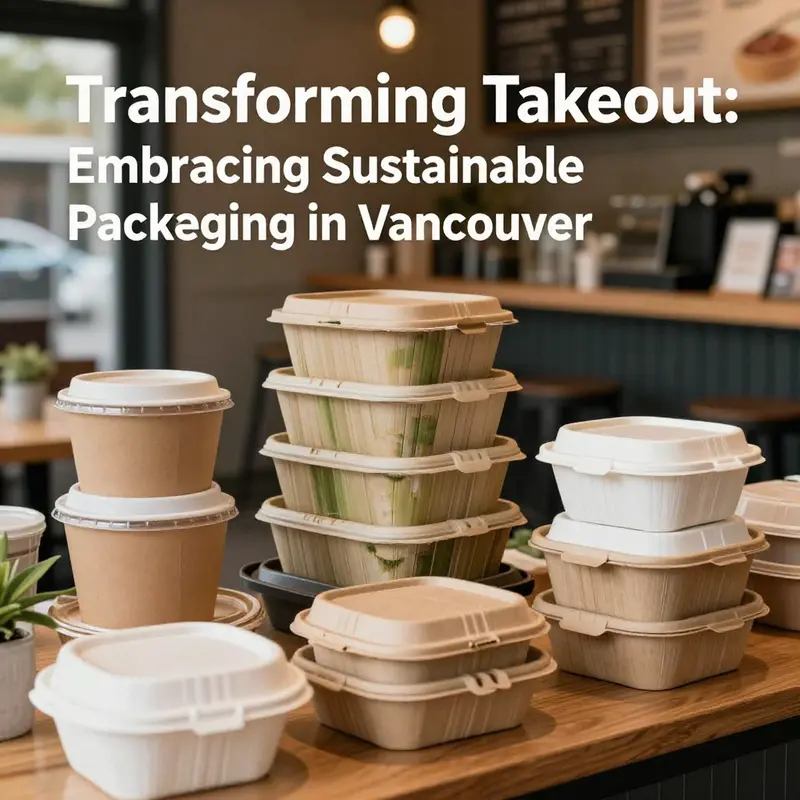
Vancouver is quietly becoming a case study in urban sustainability, not through a single flashpoint but through a steady reweaving of everyday choices. The city’s policies to phase out polystyrene foam containers and to encourage compostable or recyclable packaging set the tone. They invite restaurants, takeout shops, farmers’ markets, and residents to imagine packaging not as a disposable byproduct but as a component of a local loop. The shift is neither a simple ban nor a marketing slogan; it is a movement toward packaging designed to fit a circular economy. The ambition of the City of Vancouver’s Zero Waste Strategy—to eliminate waste sent to landfills by 2044—frames this movement. It makes “plastic food containers” less a convenience and more a test case for how a city can align consumer behavior, business models, and waste management infrastructure toward long-term resilience. Within this landscape, sustainable alternatives to plastic food containers have moved from novelty to normal, supported by both policy levers and community-led experimentation. The result is not a uniform change overnight but a tapestry of approaches that reflect Vancouver’s neighborhoods, kitchen cultures, and local supply chains. In Granville Island’s bustling lanes, Kitsilano’s casual dining scene, and the sprouting micro-restaurants across the city, the exchange is clear: there is a growing willingness to trade convenience for accountability, reciprocity, and a smaller environmental footprint. The decision to move away from traditional plastics is also a decision to invest in materials and systems that fit Vancouver’s broader goals of local production, waste reduction, and transparent disposal. The city labels packaging according to its end-use pathway—whether it is compostable, recyclable, or designed for reuse—and this labeling helps customers make informed choices and businesses manage waste streams more efficiently. The education campaigns that accompany these shifts are not abstract. They emphasize how to dispose of a container after use, how to participate in deposit-return or BYOC programs, and how to choose containers that minimize energy and water use from cradle to cradle. The practical implications of this transition are rooted in everyday decisions: what a consumer brings to a coffee shop, how a takeout box is designed, and how a restaurant prepares to switch to a different class of materials without sacrificing food safety, shelf life, or perceived value. The interplay of policy, business, and citizen action is what gives Vancouver’s sustainable container movement its momentum and nuance. At the heart of this evolution is a recognition that packaging is not passive; it shapes consumption patterns, waste habits, and the incentives that guide local markets. Compostable containers, for example, have gained traction as a practical bridge between convenience and responsibility. In Vancouver, these containers are typically made from plant-based materials such as bamboo, bagasse (sugarcane pulp), or cornstarch. The key advantage lies in their ability to break down in industrial composting facilities, which dramatically reduces long-lived pollution compared to conventional plastics. But the story is not without complexity. Compostable packaging is most effective when there is reliable access to industrial composting facilities that can process it within the required timelines. When such infrastructure is in place, the containers contribute to a more closed loop, with material returning to soil or to new products rather than lingering in landfills. Local food culture has absorbed this logic with vigor. In areas that are culturally diverse and hospitality-driven, many eateries now offer takeout meals in clearly labeled compostable packaging, with disposal instructions that guide customers through the correct stream. Labels often explain whether the material is compostable in industrial facilities and where to place it, which fosters a sense of shared responsibility rather than a call to guesswork. This clarity matters because it helps maintain the reputation of compostable options as reliable, not just a marketing promise. Yet it is essential to acknowledge that compostable does not automatically equal guilt-free. Production of plant-based materials, transportation, and energy use all have footprints. The long-term benefit emerges when compostable packaging is integrated with a citywide composting program, ensuring that the material completes its intended life cycle rather than becoming waste that cannot be processed. The dialogue around compostables is therefore a conversation about systems as much as materials. Vancouver’s approach to recyclables and reusables expands this conversation beyond one-off purchases. Reusable container systems have become an important pillar of the city’s strategy. In practical terms, these systems translate into Bring Your Own Container (BYOC) programs at farmers’ markets and eco-conscious cafes, along with deposit-return schemes that reward customers for returning clean, reusable containers. BYOC programs are simple in concept yet powerful in impact: customers bring their own containers for meals or goods, and the containers are returned or swapped for new contents. This model reduces reliance on single-use packaging, while also building a sense of community around sustainable habits. Deposit-return schemes, when well designed, extend the lifecycle of packaging and create a tangible incentive to reclaim and reuse rather than discard. The social dimension of these approaches should not be underestimated. They foster a shared culture of accountability, conversation, and mutual encouragement. People who participate in deposit-return programs often become advocates for broader waste-reduction efforts, spreading best practices to friends, families, and coworkers. City-led grants and public education campaigns are instrumental in sustaining this momentum. They help businesses experiment with new packaging configurations, support startups that develop durable containers designed for repeated use, and fund outreach that clarifies disposal pathways for consumers who may be unfamiliar with local systems. The success of reusable systems hinges on reliable logistics: the ability to collect and clean containers, the maintenance of hygienic standards, and the efficiency of return channels. When these elements are aligned, reusable containers can offer a practical alternative to single-use options without compromising the customer experience or the bottom line. Vancouver’s Zero Waste Strategy recognizes this potential and frames it as a policy priority. The strategy outlines grants and partnerships that encourage businesses to implement reuse schemes and to educate the public about their benefits. It also supports the development of infrastructure to collect, sanitize, and reintegrate containers into circulation. What emerges from this alignment of policy, business, and citizen participation is a mosaic rather than a single solution. Durable options, such as stainless steel and glass containers, represent another critical strand in Vancouver’s packaging narrative. When used repeatedly, these materials offer long-term durability with minimal risk of chemical leaching, a concern some consumers have with certain plastics. The appeal of durable containers is not only environmental but also practical: they are often designed to be easy to clean, microwavable-safe, and compatible with a range of foods. For home use and meal prep, durable containers support healthier storage practices and reduce the cognitive load of choosing alternatives daily. The availability of such options in local markets and through online platforms broadens access for households across the city. The emphasis on durability also intersects with design. A growing number of households are embracing compact, modular, and aesthetically pleasing containers that fit neatly into cupboards, lunch bags, or backpacks. The emphasis on good design helps counter the impulse to default to disposable packaging by making reuse feel effortless and more satisfying. The broader social and economic context matters as well. The city’s sustainability ethos, combined with local procurement for packaging materials, helps sustain a circular economy. Local suppliers and manufacturers are encouraged to innovate in ways that reduce energy use, limit waste, and offer packaging options that are both practical for businesses and appealing to customers. Even with these advances, challenges remain. Consumer behavior is one of the toughest variables to shift. Habit, convenience, and price competition can steer choices back toward familiar single-use plastics, especially in high-volume takeout settings or during peak hours when speed and reliability seem paramount. Education and incentives help, but continuous iteration is required. The Zero Waste Strategy’s educational components are designed to reach diverse audiences, from students and workers to small business owners and shift workers. Messaging emphasizes not just the how of disposal, but the why: protection of local ecosystems, reduction of litter, and the preservation of the city’s green image as a place where quality of life and responsibility go hand in hand. Packaging choices are also shaped by local supply chains and urban logistics. Vancouver’s neighborhood markets, which showcase fresh, local produce, can serve as living laboratories for the reuse economy. Each market environment offers an opportunity to test BYOC exchanges, deposit-return points, and education booths that demonstrate proper disposal and cleaning routines. In practice, an effective system depends on the collaboration of merchants, municipal agencies, and residents who are willing to adjust routines. The city’s policy framework supports this collaboration with guidance documents, standards for compostable packaging, and channels for accountability. For example, materials approved for industrial composting have to meet specific criteria that are designed to avoid contamination of compost streams. Clear labeling helps prevent misrouting—an issue that can undermine the effectiveness of a composting program if non-compostables are mistakenly placed in a compost bin. Clear standards, transparent labeling, and accessible disposal streams create a feedback loop in which residents see tangible results from their choices. And when results are visible, participation grows. The conversation around sustainable packaging in Vancouver is inevitably linked to broader advocacy and research networks. Local organizations, including policy councils and environmental foundations, provide guidance on sustainable living and encourage households to reduce their plastic footprint. They offer tips on selecting reusable or biodegradable food containers, building a habit of bringing containers to carryout meals, and rethinking waste as a resource rather than a waste product. The interconnected nature of these efforts enhances their resilience. By linking policy, business innovation, and community action, Vancouver can sustain momentum even as new packaging technologies emerge. The city’s approach is not about absolutes but about building a flexible system that can adapt to evolving consumer needs, manufacturing capabilities, and waste-management capabilities. This flexibility is essential in a region like Vancouver, where geography, climate, and dense urban living create unique packaging and waste challenges. It is also a reminder that the transition to sustainable containers is as much about culture and infrastructure as it is about materials. One practical sign of progress is the growing variety of packaging options showcased in local eateries and markets. Some packaging innovations emphasize compostability without sacrificing performance. Others emphasize reusability and durability to keep materials in circulation longer. In both cases, the aim is to reduce the energy intensity and pollution associated with producing new packaging while maintaining food safety, convenience, and aesthetic appeal. An integrated approach—combining compostable options, reusables, and durable design—provides a spectrum of choices for different contexts and customer expectations. The result is a more resilient urban food system, where packaging is part of the city’s climate strategy, not an afterthought. This broader perspective helps explain why a single solution cannot suffice. Instead, Vancouver’s pathway to sustainable food containers is a layered strategy that respects local culture, utilities, and markets. It invites continual experimentation, careful measurement, and transparent communication about what works and why. For readers and residents, the takeaway is clear: every packed meal, every grocery run, and every takeout order can contribute to a city that values resource stewardship as a communal objective. The choices we make at the point of purchase ripple through the waste stream and the local economy. By embracing compostable materials where appropriate, supporting reusable systems, and investing in durable, safe containers, Vancouver moves closer to a future where plastic waste is minimized and resources are kept circulating within the city’s own boundaries. The city’s initial steps—phasing out foam, promoting compostables, and encouraging reuse—are not the endgame but the scaffolding for a broader, long-term vision: a circular city where packaging is designed, used, reused, and finally reincorporated into new products with minimal environmental impact. To glimpse how this vision connects to daily life, consider a practical moment at a neighborhood market or a casual cafe. A customer orders a meal to go and proudly uses a personal, durable container for storage, or chooses a clearly labeled compostable option that aligns with the facility’s disposal capabilities. A merchant follows the guidelines for correct disposal and, if part of a deposit-return program, ensures the container returns clean and ready for another round. These interactions may seem small, but they are the stitches that sew together policy, industry, and citizen behavior into a functioning system. They also reflect a growing sense of shared responsibility that is central to Vancouver’s sustainability narrative. In this way, the city’s packaging evolution resonates beyond the city limits. It offers a model that other urban centers can study, adapt, and implement according to their own materials, waste infrastructure, and cultural contexts. The emphasis on local action—on neighborhoods, markets, and restaurants partnering with waste programs—demonstrates that change is possible without waiting for a perfect technology or a perfect policy. It requires persistence, collaboration, and a willingness to reimagine everyday practices. As Vancouver continues to refine its approach, the conversation about sustainable containers will likely become more nuanced, balancing environmental impacts with consumer convenience and business feasibility. The city’s experience suggests that the most effective strategies are those that enable people to make better choices without dramatically increasing the burden of daily life. In the end, Vancouver’s path toward sustainable food containers is less about erasing plastic than about transforming how we value and recover the materials we use daily. The shift from single-use to reusable and compostable packaging reflects a broader urban ethics: a commitment to a cleaner environment, a robust local economy, and a community that sees waste as a temporary state, not a permanent condition. For readers curious to explore practical packaging options further, one can see how packaging innovations are being implemented at scale through local suppliers and eateries that are rethinking what it means to package a meal in a city-friendly, climate-conscious way. A useful example of packaging design that aligns with these goals is a contemporary, take-away kraft-paper box with a lid, such as the in-stock new design salad rectangle take-away kraft paper octagonal box with lid. This type of container illustrates how form and function can meet sustainability criteria while remaining accessible and appealing to customers. You can learn more about such packaging options by visiting the resource that highlights this particular design: in-stock new design salad rectangle take-away kraft paper octagonal box with lid. Beyond individual choices, the broader takeaway is that policy support, public education, and market innovation together shape what is feasible and desirable in a city’s packaging ecosystem. The result is a more transparent, accountable system that rewards responsible behavior and reinforces the social contract around waste and resource use. When communities and businesses align around shared goals, the seemingly small acts of choosing a container become meaningful steps toward reducing plastic pollution, protecting ecosystems, and strengthening the local circular economy. The dialogue around sustainable packaging in Vancouver is ongoing, evolving as new materials, technologies, and disposal infrastructures emerge. Yet the momentum is clear: residents and businesses are embracing a future in which what was once disposable can be reused, recovered, and reintegrated into new life cycles. For those who want to follow the policy direction and practical implementations, the city’s Zero Waste Strategy provides ongoing guidance and updates, demonstrating how a city can move from intention to action in ways that protect the environment while preserving everyday convenience. External resource: https://www.vancouver.ca/waste/zero-waste-strategy.aspx
Rethinking the Takeout Habit: Vancouver’s Bold Leap Toward Plastic-Free Packaging and a City-Wide Zero-Waste Vision
Vancouver’s evolution away from disposable plastic food containers reads like a case study in municipal resolve meeting everyday life. The city has stitched together policy, practice, and public education into a cohesive push toward a future where takeout packaging reflects a respect for the urban landscape, local ecosystems, and the people who rely on quick meals in the midst of busy days. This is not merely a ban on glistening polystyrene foam; it is a reimagining of what sustenance looks like when it travels from kitchen to curb and beyond, without litter becoming a local afterthought. The policy landscape makes the motives plain: reduce waste at the source, extend the life of materials, and shift the burden of waste away from households toward producers and the supply chain that arms them with better options. At the center of this transformation is a commitment to source reduction, reuse, and responsible recycling, all anchored by a bold target to become a zero-waste city by 2040. The city’s approach is practical and layered, built on regulations, incentives, and an ecosystem of organizations that help residents and businesses navigate a changing packaging landscape.
One of the most visible facets of Vancouver’s strategy is its ban on single-use plastic food containers, with polystyrene foam excluded from the scene since January 2023. This measure applies across restaurants, cafes, grocery stores, and food vendors operating within city limits. The aim is straightforward: curb the proliferation of hard-to-recycle materials and encourage the adoption of more sustainable packaging alternatives. Yet the ban is not about removing convenience; it’s about guiding design toward materials that can be composted, reused, or recycled efficiently. In practice, this means shifting to paper-based options, plant-based polymers that are certified for compostability, bamboo, and other renewable resources that align with Vancouver’s broader waste-management ambitions.
To complement the packaging ban, Vancouver emphasizes its Zero Waste Strategy, which prioritizes three synergistic pathways: source reduction, reuse, and recycling. The city encourages businesses to rethink their packaging—from the materials they choose to the end-of-life pathways they design for. A crucial piece of this effort is ensuring that suppliers and retailers understand which packaging materials are approved or preferred under local guidelines and how to implement them effectively. The city offers guidance and resources to help businesses navigate this transition, including information about approved alternative packaging and best practices for implementation. This is where clarity, not confusion, becomes a guiding force for operators who may have faced a patchwork of guidance in the past.
Vancouver’s waste-management framework also reinforces a robust waste-diversion system. Mandatory organics collection and expanded recycling programs require residents and businesses to separate waste into three streams: landfill, recyclables, and organics. This triage is essential for ensuring that even after the packaging ban, the food-service sector’s waste is managed in a manner that aligns with environmental goals. The organics stream captures not only food scraps but compostable packaging that is truly industrially compostable, underscoring the city’s insistence on material end-of-life pathways that function within an organized system. In this setting, the fate of every container depends on where it lands in the waste stream, and consumers find themselves playing a more deliberate role in sorting and choosing.
The policy architecture is complemented by guidance from a network of local organizations that advocate sustainable living and responsible packaging decisions. Institutions like the Vancouver Food Policy Council, the David Suzuki Foundation, and Ecojustice provide practical tips for choosing reusable or biodegradable containers, reinforcing the understanding that policy without public participation can stall. The council, in particular, helps connect local food systems with environmentally responsible practices, including partnerships with businesses and resources that illuminate packaging choices. These organizations serve as a bridge between lofty municipal goals and the everyday acts that define a consumer’s footprint, from supermarket purchases to cafe takeout. The collaboration among city agencies and civil-society groups reinforces the idea that a zero-waste city is not built by decree alone but through continuous dialogue and shared responsibility.
In the practical realm of how packaging actually looks in Vancouver today, the materials and forms have begun to reflect the city’s environmental philosophy. Paper-based containers, bamboo, and plant-based plastics such as certified compostable polymers are increasingly common in takeout windows and grocery-store aisles. The shift is not without its complexities. Certifications matter, as does understanding the difference between compostability in a professional facility and home composting. Some items labeled as compostable require industrial-scale facilities to break down properly, and this distinction is essential for accurate consumer expectations and municipal planning. When a city signals a preference for compostable packaging, it asks for packaging that can complete a life cycle with minimal environmental impact, even if that lifecycle occurs outside a home kitchen.
The city’s guidance emphasizes alignment with end-of-life infrastructure. This means producers and retailers must design packaging with a clear, supported route to recycling or composting. It also means giving customers confidence that throwing away a container will not simply end in a landfill but will contribute to a more circular economy. In a practical sense, this cooperation unfolds in suppliers offering packaging that is compatible with Vancouver’s organics streams and recycling programs, while cafes and restaurants adjust their operations to minimize contamination and simplify sorting at the point of disposal. The effect is a slow but steady normalization of packaging choices that respect local waste-management capabilities and the city’s environmental commitments.
Residents and visitors encounter another layer of Vancouver’s strategy in the everyday economy of food service. The Zero Waste ethos invites people to participate more actively in waste separation, to bring reusable containers for leftovers, and to select dining options that prioritize packaging designed for reuse or industrial composting. This is not simply about avoiding waste; it is about rethinking what it means to carry food from a restaurant to a home or office. In practice, this means cafes and markets actively promoting reusable options and offering incentives for customers who opt out of disposable packaging. It also means businesses investing in durable, high-quality containers that support multiple uses, reducing the turnover of cheap, single-use options that create waste long after a meal is finished.
The policy environment and public sentiment are reinforced by tangible examples in local supply chains. Takeaway and dine-in venues increasingly rotate toward packaging that aligns with compostability or recyclability in the city’s streams. This has driven changes in the kinds of containers available in markets and restaurants. It has also nudged manufacturers and distributors to scale up supply and to label products in ways that clearly communicate their end-of-life potential. In this sense, packaging choices become a form of local policy implementation, a microcosm of the larger shift toward a sustainable urban metabolism.
In this continuous evolution, one might notice how the shape and form of packaging have adapted to practical needs without compromising environmental goals. For instance, durable, stackable containers that can handle hot or cold foods, and lids that seal reliably, are increasingly common. The move toward sturdy, compostable designs supports safer transport of meals and reduces leakage, while still allowing for efficient washing and reuse in applicable programs. The conversation around packaging is not a static debate about banning plastics; it is a dynamic negotiation about materials, design, cost, and the most sensible paths to end-of-life management given Vancouver’s infrastructure and climate realities.
For readers looking to explore sustainable options beyond policy, the city’s resources point toward concrete possibilities. A key takeaway is that sustainable packaging is not a single material category but a spectrum. It includes paper-based cartons and bowls, plant-based plastics that meet compostability standards, and durable alternatives that can be reused multiple times. The choices are shaped by both the supplier market and the city’s waste-system design, which, in turn, influences how businesses price and present their packaging. When these pieces fit, a cafe’s takeout experience becomes a model of efficiency and ecological responsibility rather than a ritual of waste production.
From a consumer standpoint, the movement invites a shift in daily habits. Bringing a personal container for leftovers, selecting venues that use compostable or reusable packaging, and understanding the end-of-life fate of containers are all part of a more intentional approach to food consumption. This is not about sacrificing convenience but about making informed choices that align with the city’s three-stream framework and its long-term goal of eliminating waste sent to landfills by 2040. The experience of dining out, whether in a crowded market or a quiet neighborhood cafe, becomes a chance to participate in a broader public good, to support businesses that invest in responsible packaging, and to move the needle on a city-scale transition that affects the air, water, and streetscape.
In practice, some establishments now embrace durable, compostable design elements that respond to these constraints. For instance, the use of a kraft-paper octagonal box with a lid for salads and hot-to-cold foods illustrates a packaging approach that caters to practicality while signaling a commitment to end-of-life management. Such choices demonstrate how a simple container can embody policy goals and business realities at once. This is the kind of packaging that translates policy into everyday life, making the lived experience of zero waste feel less like a campaign and more like a natural extension of how Vancouver residents choose to eat and dispose of their meals. kraft-paper octagonal take-away box with lid
Still, the path forward is not without challenges. Costs, supply-chain constraints, and consumer understanding all influence how quickly these changes unfold. While many packaging options now emphasize compostability and reuse, there remains a need to ensure that labels are accurate and that end-of-life facilities can process the materials as intended. Mislabeling or confusion about what is truly compostable can undermine even the best-intentioned policies. The city’s role, therefore, extends beyond rules and into education and verification—helping businesses source truly appropriate packaging and helping residents sort correctly so that waste returns to the system rather than becoming litter or contamination.
An important practical note that threads through the policy narrative is the recognition that Vancouver’s waste system relies on coordinated action across many players. Municipal officials, waste collectors, packaging designers, retailers, and customers each carry a share of responsibility. The city’s guidance emphasizes selection of materials that are compatible with the organics stream and recycling programs, taking into account how the items will be processed after they leave the restaurant. In turn, businesses must align their procurement choices with the realities of local facilities, which shapes product availability and pricing over time. This collaborative architecture is the backbone of a city-wide shift that seeks to diminish plastic pollution without sacrificing the convenience communities have come to expect.
As Vancouver continues this journey, residents can look to a network of resources for concrete advice. Local organizations provide tips for reducing plastic use, choosing reusable or biodegradable containers, and supporting policies that promote sustainable packaging. The city’s own waste website remains a central hub, offering up-to-date guidelines, business resources, and public education materials that translate policy into practical steps. The dialogue between policy and practice will keep evolving as new packaging technologies emerge and as residents and businesses learn what works best in Vancouver’s unique urban and environmental context.
For readers who want to anchor these considerations in official public guidance, the City of Vancouver’s waste portal offers a thorough overview of current rules, timelines, and best practices. This portal helps demystify what counts as approved alternative packaging and how best to implement it in a way that minimizes contamination and maximizes diversion. The broader takeaway is that responsible packaging is not a peripheral concern; it is a central component of how Vancouver defines a livable, thriving city where everyday activities like grabbing a meal can harmonize with the health of the local ecosystem. The city’s model demonstrates that policy, design, and daily behavior can converge in a way that makes sustainable choices more accessible and more reliable for everyone involved.
As the chapter moves toward exploring how individuals, communities, and small businesses can actively participate in this transition, the emphasis remains on coherence and practicality. The packaging choices that customers encounter in Vancouver are the visible surface of a deeper system designed to be transparent, efficient, and resilient. The next section will examine how residents can integrate sustainable packaging into their routines without sacrificing the ease that makes takeout a staple of city life, and how small shifts in daily practice can accumulate into meaningful progress for the city’s ambitious waste-reduction goals. The conversation extends to farmers’ markets, local eateries, and consumer habits alike, underscoring that the journey toward a zero-waste Vancouver is a shared project—one that unfolds in quiet, ordinary moments as much as in policy debates and grand visions.
External resources:
For official guidelines and up-to-date information on Vancouver’s waste management, visit the City of Vancouver Waste page: https://www.vancouver.ca/waste
From Community to Citywide Change: Vancouver’s Network for Sustainable Food Containers
Vancouver’s approach to plastic food containers has evolved from cautious experimentation to a citywide commitment that treats packaging as an integrated system rather than a standalone ban. The goal is to replace single‑use plastics with materials that are compostable, recyclable, or reusable, while maintaining service quality and cost competitiveness. Initiatives such as phasing out polystyrene foam and promoting paper, bamboo, and plant‑based polymers illustrate this shift and align with the city’s broader sustainability priorities.
At the heart of the effort is a robust network of community resources that translates policy into practical action. The Vancouver Food Policy Council (VFPC) serves as a central hub, connecting cafés, markets, nonprofits, and city agencies around shared goals. Its toolkits, case studies, and policy recommendations provide operators with concrete pathways to adopt reusable or compostable packaging and to track progress toward Zero Waste by 2040. This alignment between policy and practice helps turn aspirational goals into everyday choices for businesses and residents alike.
The Reusables Project demonstrates how daily habits can scale into cultural shifts. By offering workshops and establishing community drop‑off points for cleaned containers, it lowers barriers to trying reusable systems and builds a culture of sharing and responsibility around containers. The Green Restaurant Certification Program adds visible incentives and a standardized framework, rewarding venues that prioritize compostable or reusable packaging and helping customers compare practices across locations.
Beyond certification, the City’s Sustainable Food Systems Strategy provides funding and technical support to help small operators upgrade packaging without sacrificing cost or service. Partnerships with organizations like BC Green Business expand access to training and financing, enabling independent cafés and markets to modernize packaging in practical, achievable ways.
Taken together, Vancouver’s network aligns policy signals with community action and market incentives. Residents experience fewer barriers to participation as reuse and compostability become routine, while small operators gain the knowledge and capital needed to compete in a more sustainable market. This integrated approach offers a blueprint for other municipalities seeking to connect policy, community involvement, and business incentives into a coherent strategy.
Reimagining Vancouver’s Takeout Footprint: Toward a Circular, Community-Centered Packaging System
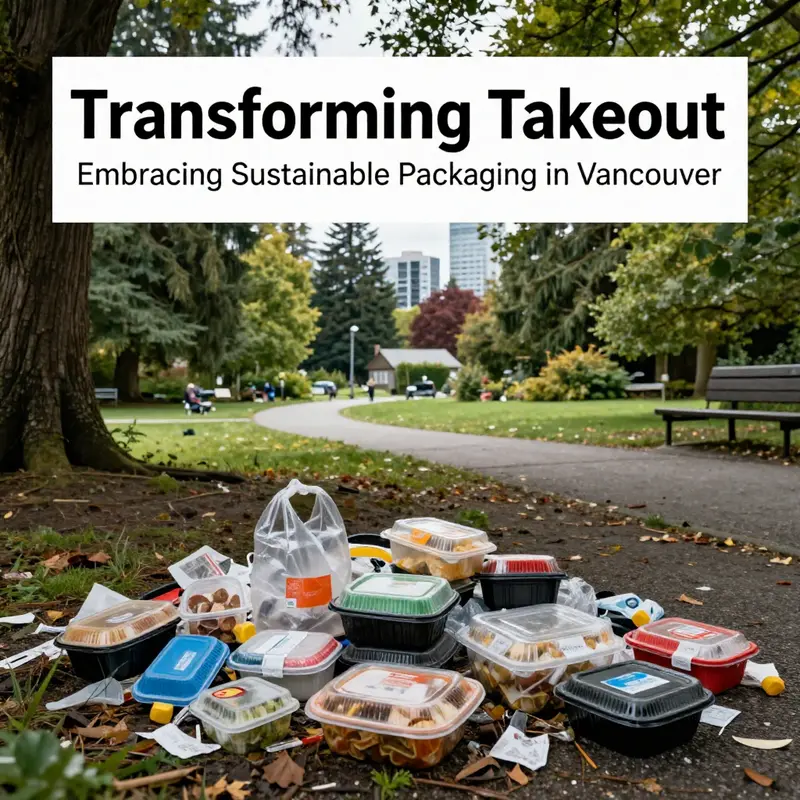
Vancouver’s takeout culture creates a steady stream of plastic containers, lids, and wraps. The challenge extends beyond the moment of purchase to the afterlife of these materials in urban drainage, shoreline sediments, and coastal ecosystems. The city frames this issue as part of a broader commitment to waste reduction, clean water, clean air, and the resilience of living systems along a dynamic coast.
The data tell part of the story: only about 30 percent of plastic food containers used in the city enter a recycling stream, with the remainder incinerated or discarded as litter. The leakage is not a single policy failure but a governance challenge that requires alignment of consumer habits, municipal rules, and industry practice. Different materials offer different ends of life, and the end of life depends on infrastructure as much as on material design. Compostable options may not break down in local facilities if industrial composting is limited or absent.
Policy and practice: Vancouver’s Zero Waste Strategy launched in 2020 with targets to reduce single-use plastics by 2030 and to cut waste to landfills by 2044. A polystyrene foam ban signals intent, but enforcement, clear labeling, and consistent standards for compostable products are essential to realizing real gains.
The city also recognizes the importance of the sector that makes takeout possible. The density of restaurants and cafes intensifies the footprint, but it also creates a network for experimentation with reusable or certified compostable packaging. Municipal pilots and partnerships with local organizations, including the Vancouver Food Policy Council, explore packaging options, track performance, and build pathways for local producers and retailers to adopt circular practices.
Public education and labeling can reduce confusion and contamination. Clear signals about what can be recycled, what should go to compost, and where items belong help households sort correctly. An effective system links labels, maps, and convenient drop-off points for reusable containers and returns in commercial settings.
The material choices themselves matter. Paper or bamboo based packaging and plant-based plastics can lower fossil carbon during production, but their benefits depend on end of life and transport distance. Compostable packaging requires appropriate facilities and careful coordination with waste handlers. A truly sustainable solution looks at material life cycle from sourcing to production to disposal and reuse within a local economic system.
Looking ahead, a more circular urban metabolism emerges through collaboration among government, civil society, and business. The Zero Waste Strategy invites partnerships with organizations that know local supply chains and packaging systems. The Vancouver Food Policy Council provides guidance and examples of sustainable packaging in local markets, illustrating how design choices align with community livelihoods and environmental goals.
In sum, reducing the takeout footprint is not a single policy fix but a shift in routines and values. It requires redefining waste prevention as a systemic redesign of packaging, expanding accessible recycling and composting infrastructure, and building networks for reuse. With clear signals, practical infrastructure, and community engagement, Vancouver can preserve its coastal spirit while making daily choices that strengthen resilience for people and species alike.
Final thoughts
Adopting sustainable food containers is not merely a trend; it’s a necessity for the health of Vancouver’s environment and communities. By making informed choices about packaging, food businesses can lead the way in reducing plastic pollution and enhancing community awareness. This shift not only demonstrates corporate responsibility but it also aligns with Vancouver’s environmental goals, creating a cleaner, healthier city for future generations. As each food establishment embraces sustainable practices, we collectively contribute to a more sustainable future and inspire others in our local and broader communities to follow suit.