
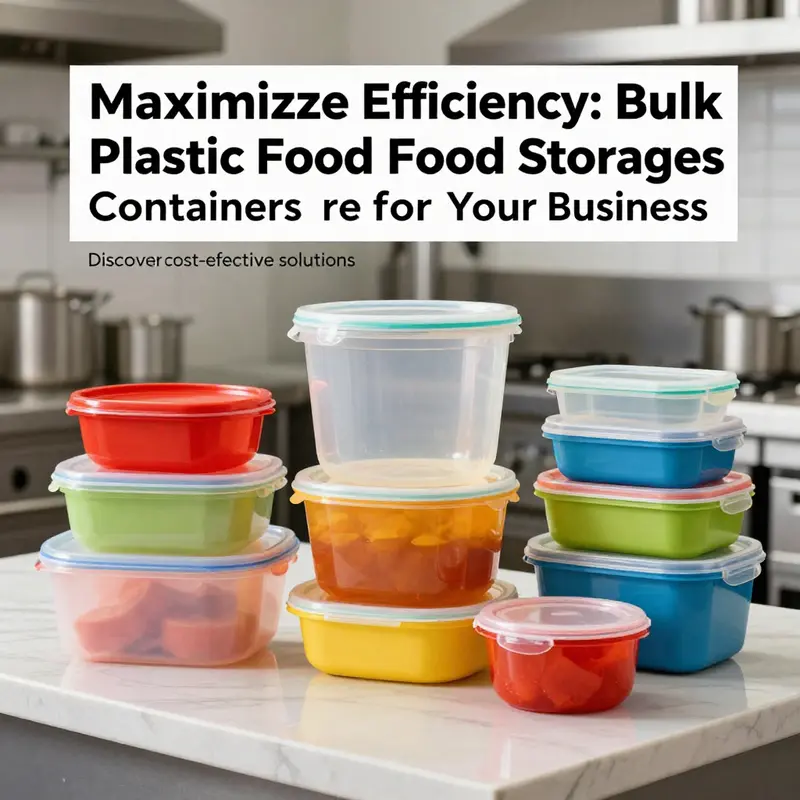
The food industry operates in a dynamic environment where efficiency and cost savings are paramount. For businesses like bubble tea shops, restaurants, food trucks, catering services, event planners, and corporate procurement teams, selecting the right storage solutions significantly impacts operational performance and profitability. Bulk plastic food storage containers emerge as a key component in maintaining freshness, organization, and cost efficiency. This article guides you through the various types available, helps you understand the financial benefits, emphasizes safety standards, and showcases commercial sourcing options to enhance your operations seamlessly. Delve into each chapter to find insights that will empower your business with effective storage solutions.
null
null
Bulk Buying, Bigger Margins: How Purchasing Plastic Food Storage Containers in Bulk Reshapes Kitchen Economics
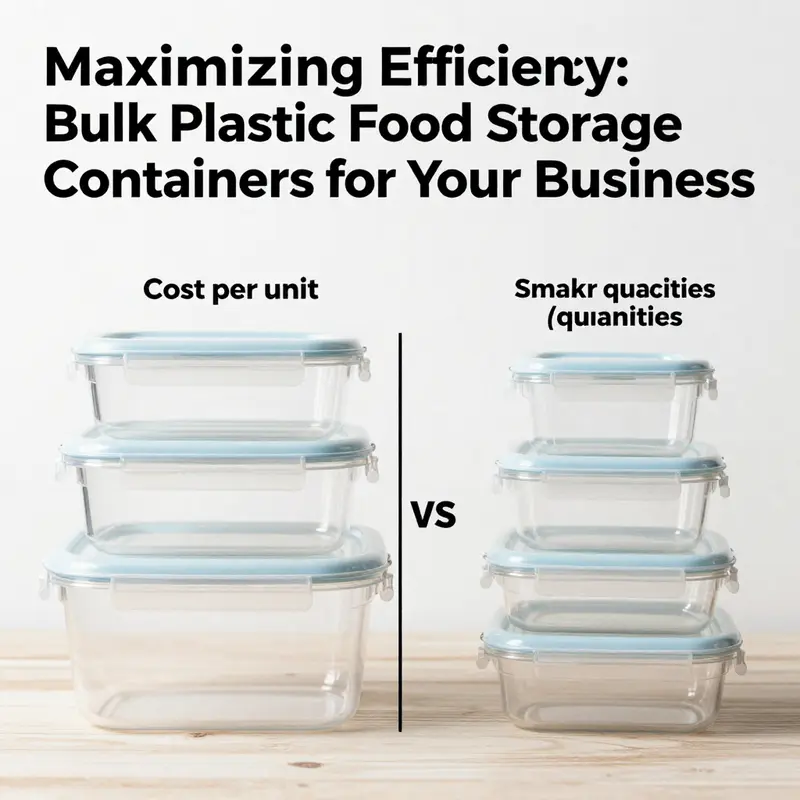
In high-volume kitchens, the decision to purchase plastic food storage containers in bulk is less a simple cost choice than a strategic shift in how a business plans, operates, and grows. The core of the argument rests on a straightforward premise: when you buy more, you pay less per unit, and that discount compounds across every tote, bin, and lid that keeps food safe, organized, and ready for service. Yet the value of bulk procurement extends beyond a lower sticker price. It fortifies supply stability, standardizes operations across multiple sites, and enables more precise budgeting, all of which contribute to a stronger value proposition for customers who rely on consistency and speed as part of their dining or catering experience. For organizations that process hundreds or thousands of meals daily, bulk sourcing becomes a lever for reliability and quality as much as for cost containment.
The economics of scale play a central role. When a supplier can fill a single, larger order rather than many smaller ones, the cost structure shifts: the per-unit handling, packaging, and shipping costs get spread over a wider base, and the retailer or manufacturer gains efficiency in fulfillment. This translates into a lower per-unit price, a factor that directly influences profit margins and the ability to maintain competitive pricing for end customers. The effect ripples through every segment of the operation. A reduced unit cost means more flexibility to invest in better ingredients, more robust staff training, or enhanced marketing efforts, all of which can strengthen the brand’s market position over time. The savings are not merely a line item on the P&L; they are a strategic resource that supports sustainable growth in a sector known for tight margins and high variability in demand.
Bulk purchases also support more predictable budgeting. Wholesale suppliers commonly offer standardized pricing structures and long-term contracts that smooth out the volatility typically associated with commodity plastics. Materials such as polypropylene (PP) and polystyrene (PS) undergo price fluctuations driven by energy costs, resin supply, and global demand. By negotiating a bulk agreement, a kitchen or meal-prep operation can lock in favorable rates and create a more resilient forecast for procurement expenses. The discipline of a fixed or structured tiered pricing scheme helps managers align purchase plans with menu cycles, seasonal promotions, and capital investments. In a world where a sudden price surge on packaging could force an unplanned price increase for customers, the ability to lock in rates shields the business from short-term shocks and supports steadier pricing strategies that customers come to expect.
Administrative overhead is another area where bulk buying pays dividends. Large, infrequent orders reduce the number of times staff must place orders, chase approvals, or adjust inventories. Warehouse and inventory teams can synchronize restocking with predictable cycles, which translates into fewer stockouts during peak periods and less last-minute ordering during busy weeks. The time saved in procurement and receiving processes can be redirected toward more value-add activities, such as optimizing labeling systems, reviewing storage layouts for space efficiency, or refining batch-control procedures for meal-prep lines. In a busy kitchen, every hour saved in administration can be redirected to food safety compliance, faster service, or higher throughput during lunch rushes.
To see how these savings accumulate in practice, picture a restaurant chain that standardizes on a single container platform across all its locations and places an annual bulk order totaling 1,000 units. Compared with smaller, more frequent purchases, the chain benefits from a lower per-unit cost, improved consistency in product dimensions and lids, and simplified training for staff who now interact with uniform containers. The chain can forecast inventory more accurately, negotiate longer lead times, and reduce emergency shipments that incur premium freight. The cumulative effect is a clearer path to predictable costs and stable service levels, which matters just as much to the business as to the customers who rely on reliable portioning, airtight storage, and rapid turnaround.
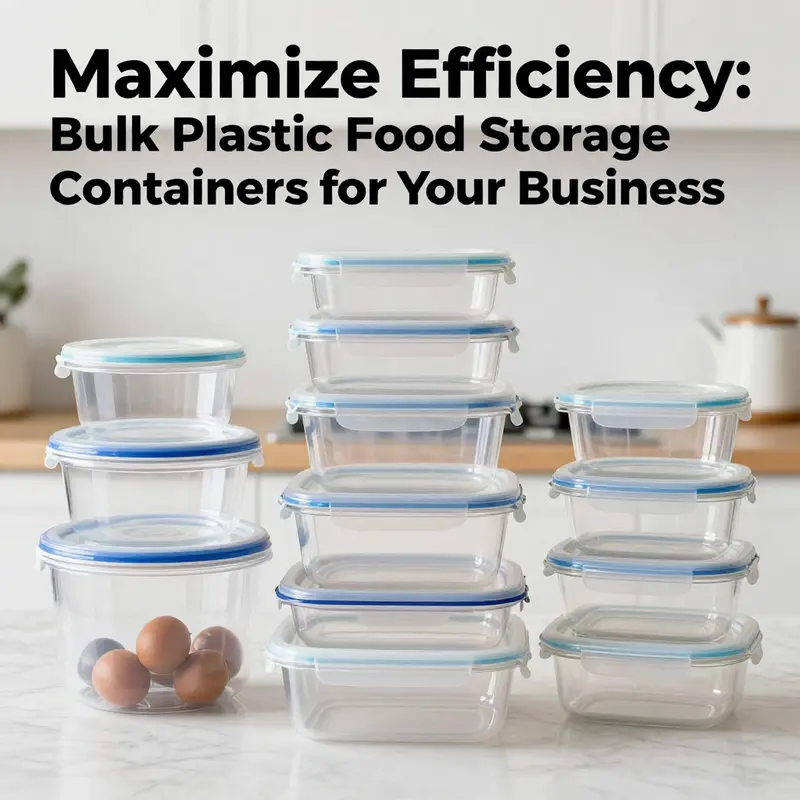
Understanding the hierarchy of container types helps explain why bulk purchasing matters so much in practice. For high-volume meal prep or catering operations, airtight containers are essential to preserving freshness, preventing moisture ingress, and extending the shelf life of dry goods and ready-to-eat meals. When ordered in bulk, these airtight options typically come with seals designed to minimize air exchange, and the reduced unit price makes it feasible to provide consistent portion sizes across multiple services. Space efficiency becomes a practical advantage as well; stackable designs enable dense storage in wholesale warehouses and back-of-house pantries, allowing more SKUs to be maintained without expanding footprint. The ability to maximize vertical space translates into fewer trips to replenish stock and more linear footage available for other critical tasks, such as staging ingredients for the next service line.
Large-capacity and industrial-grade containers address the needs of operations that routinely handle bulk ingredients, grains, or powders. The durability of polypropylene and polystyrene formulations makes these containers long-lasting under repeated washing, reheating, or cold storage conditions, depending on the model. For facilities that manage hundreds of pounds of staples, bulk procurement ensures that the equipment can withstand daily use without the need for frequent replacement. The up-front cost of a bulk order is mitigated by the long service life of these containers, and the peace of mind that comes from having reliable storage solutions on hand reduces the risk of mid-service interruptions caused by equipment failure.
Multi-compartment and portion-controlled sets address the growing demand for organized meal prep and pre-portioned offerings. In kitchens that rely on rapid assembly lines or pre-packaged meals, having a single container with internal dividers helps standardize portion sizes and minimize prep time. Bulk purchases of such sets limit the variability that can creep into small, reactive purchases, which often require multiple SKUs and more complex inventory management. The result is improved operational discipline, easier training for new staff, and a smoother handoff between stages of production—from pre-prep to assembly to packaging.
Beyond functional performance, material safety and regulatory compliance remain non-negotiable in any bulk sourcing decision. Reputable suppliers emphasize food-grade materials, typically PP, which blends durability with clarity and resistance to chemicals. The safety profile of PP makes it well-suited for long-term food storage, whether in dry-storage cabinets or in refrigerated spaces. Ensuring that the selected containers meet food-safety standards is critical not only for consumer well-being but also for protecting the business from compliance risk. Auditable certifications and clear labeling about materials, BPA status, and reuse guidelines help procurement teams verify that bulk purchases align with institutional policies and regulatory requirements. In addition, standardized color-coding, clear lid-and-base compatibility, and uniform dimensions across a supplier’s range contribute to a streamlined, scalable operation.
The sourcing journey for bulk containers often starts with the broad market, where platforms that connect buyers with verified suppliers lay the groundwork for price discovery, quality assurance, and delivery reliability. While the bulk-buying decision is primarily financial, it rests on a foundation of trust that the containers will perform consistently under a kitchen’s rigorous daily regime. In this context, due diligence matters as much as dollars. Buyers evaluate supplier capacity, lead times, return policies, and the ability to accommodate long-term commitments. They also consider the flexibility of packaging options—whether a supplier can supply the same container in multiple sizes or with different lid configurations—so that a single procurement relationship can support an expanding range of use cases without forcing additional supplier bidding rounds.
To illustrate how these considerations translate into real-world planning, consider a hypothetical scenario involving a mid-size catering operation that sources containers for both prepared meals and event-ready packaging. The operation maintains a core suite of container types: airtight, stackable dry-storage units; wide-mouth, large-capacity totes for bulk ingredients; and multi-compartment meal boxes for pre-portioned menus. By negotiating a bulk agreement, the operation secures a tiered pricing schedule that rewards larger yearly volumes. The procurement team also sets a minimum lead time for replenishments, ensuring they can forecast demand signals from the sales calendar and production schedule with greater precision. The result is a more resilient supply chain, a steadier working capital cycle, and pricing that supports competitive menu pricing without sacrificing margins. The team can allocate savings toward operational improvements, such as optimizing cold-chain management, refining prep workflows, or investing in staff development that improves service speed and accuracy.
In many markets, tiered pricing models are a core feature of wholesale procurement. The larger the order, the greater the discount, and the breakpoints are typically aligned with annual or semi-annual purchase volumes rather than ad hoc monthly buys. This structure incentivizes buyers to commit to longer-term relationships, which can yield even more favorable terms, including enhanced service levels, priority production slots, and sometimes bundled value-adds such as free shipping within a defined radius. The strategic logic is clear: bulk procurement reduces both unit costs and operational variability, creating a more predictable and stable platform for growth. For businesses evaluating procurement options, it is worth mapping the entire cost of ownership, not just the nominal unit price. Hidden costs—like expedited freight, reorders for missing items, or damage in transit—tend to erode the apparent savings that bulk purchasing promises. A comprehensive procurement plan accounts for these factors and seeks to maximize both cost efficiency and service reliability.
The procurement road map often points to a global perspective. UK and Singapore-based wholesalers and distributors frequently offer robust tiered pricing frameworks, with contract terms designed to align with the high-volume needs of hospitality groups and corporate catering operations. This geographic dimension matters because exchange rates, duties, and regional regulatory landscapes can influence the total landed cost of containers. A well-constructed bulk strategy acknowledges these factors and leverages cross-border sourcing where appropriate to optimize total cost of ownership while maintaining strict adherence to food-safety standards. In practice, this means pairing local stock with selective regional imports when the calculus shows a meaningful long-term saving and a secure supply chain.
Sourcing strategies for bulk containers often converge on a few practical channels. Some buyers lean into platforms that connect buyers with verified suppliers, enabling a broad view of options and terms. Others favor established distributors with dedicated procurement teams who can tailor solutions to a chain’s scale and seasonality. Regardless of route, the emphasis remains the same: align the purchase with forecasted demand, establish clear product specifications, and negotiate terms that reduce risk while maximizing value. For organizations that want to explore options beyond familiar suppliers, a careful due-diligence phase—covering quality control processes, return policies, and after-sales support—pays dividends over the long term. And for teams managing multiple sites, the benefits of standardization become even more pronounced, as uniform containers reduce training complexity, simplify labeling, and accelerate service delivery across locations.
In the broader narrative of packaging and supply-chain strategy, bulk purchasing of plastic storage containers represents a foundational capability. It is not merely about the price tag or the container’s appearance; it is about building a disciplined, scalable, and resilient operation that can respond to fluctuating demand without compromising on safety or quality. The deeper you go into this practice, the clearer the connection to other strategic priorities becomes: optimizing shelf space, reducing waste, protecting product integrity, and delivering reliable service to customers who expect consistency and convenience. The result is a more confident business model, one where the back-end logistics support the front-end promise of timely, well-presented, and safely stored meals. For procurement teams, the lesson is simple: treat bulk container purchases as a strategic asset, not a transactional expense, and the payoffs will show up in margins, customer trust, and the elasticity of growth.
For readers seeking practical pathways to begin or refine bulk container sourcing, an established route is to explore wholesalers who offer bulk options and standardized pricing structures, while coordinating with your operations team to ensure product specifications match your storage and service needs. This alignment—between what the containers can do, how they are stored, and how they are used in meal prep and delivery—forms the backbone of a disciplined procurement approach that can sustain a business through growing volumes and shifting market dynamics. If you want a tangible example of how a bulk approach can be operationalized, consider how a single standardized container platform can streamline inventory counts, reduce mislabeling, and shorten the cycle from prep to service. The cumulative impact across departments—procurement, operations, and marketing—can be substantial, reinforcing the value of bulk purchasing as a core capability in modern food-service management.
Internal link: For a practical glimpse into wholesale packaging options, see wholesale-brown-kraft-paper-bag-accept-custom-printing-stock-gift-bag-fast-food-take-away-twisted-handle-shopping-bag.
External resource for further reading: BBC Business discusses broader market dynamics and how cost efficiencies from bulk procurement can influence business strategy in volatile commodity markets. https://www.bbc.com/news/business-67984253
Bulk Confidence in Plastic Food Storage: Safety, Compliance, and Practical Sourcing
Bulk sourcing of plastic food storage containers offers clear cost and operational benefits as a business scales. However, savings are meaningful only when safety standards and material compliance are treated as core requirements, not afterthoughts. A structured approach to safety protects regulatory adherence, brand integrity, and the durability of equipment used daily in food preparation, storage, and transport.
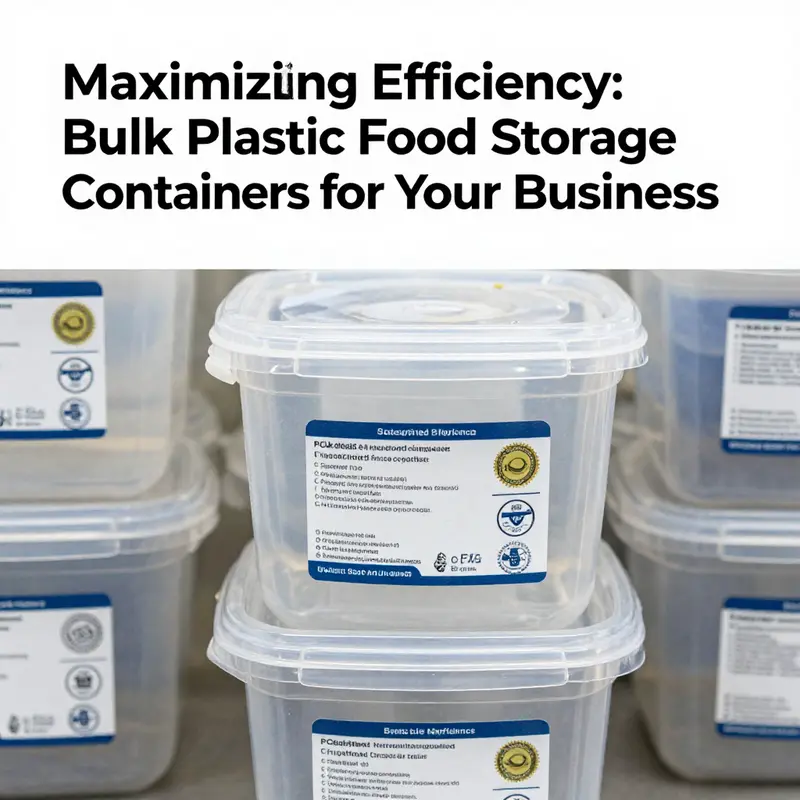
At the center of this approach is a regulatory framework for food contact materials. The most relevant standard in this space is GB 4806.7-2023, which took effect in 2024 and shapes how manufacturers and importers certify and market containers for food storage. This standard requires that containers do not release harmful substances under expected use and limits chemical migration into food. It also requires clear labeling that indicates the maximum recommended usage temperature. For buyers in bulk, this means demanding documentation that demonstrates compliance and understanding what the labeling conveys about safe use. Compliance is an ongoing due diligence process that accompanies every significant order, from hundreds to tens of thousands of units.
Material choices lie at the core of this landscape. The primary polymers used for compliant plastic containers are polypropylene and polyethylene, with polypropylene noted for heat resistance and chemical stability. These materials are suitable for both cold storage and reheating scenarios common in bulk operations that manage a wide range of foods. When manufactured and labeled correctly, these plastics offer a favorable safety profile for everyday food storage and handling.
But safety is more than selecting the right polymer. The public discourse often focuses on additives and potential leaching. A balanced view recognizes that real risk arises when low quality or non food grade plastics are used with hot, oily, or fatty foods. In such contexts heat and lipophilic compounds can drive migration or microplastic shedding. Long term exposure to certain substances has been studied for potential health impacts. The takeaway for buyers is to insist on food grade polymers and to require credible testing and transparent labeling.
In bulk procurement, concrete steps help translate this understanding into practice. First, require formal certifications attesting to compliance with relevant food contact standards, accompanied by labeling that states the material type and maximum usage temperature. Second, demand evidence of performance testing, including migration testing under conditions that mimic real use. Third, insist on access to independent third party test reports or batch specific conformity documentation that can be traced to production lines. These measures reduce the risk of unsafe products entering kitchens.
Ongoing quality assurance is essential. Even with strong initial documentation, long term integrity depends on manufacturing quality and storage history. Buyers should monitor signs of material degradation in each batch, such as clouding or discoloration, scratches, or odors, which can indicate reduced barrier properties or risk of contamination. A rolling sampling program that includes visual inspection and selective migration tests helps manage risk, especially for large orders destined for high volume kitchens.
Design features matter for safety and practicality in bulk use. Airtightness where appropriate can extend shelf life for dry goods by limiting moisture transfer. Stackability and space efficiency matter for warehouses and distribution centers. Large capacity containers are common for dry goods, powders, and bulk ingredients, but their safety credentials should be verified through the same documentation and testing used for smaller products. Multi compartment and portion controlled sets add complexity and must maintain integrity under reheating and cleaning processes.
A practical misperception is that all plastics are equally risky. The reality is that the risk comes from substandard materials or weak manufacturing practices. When containers are used with hot or fatty foods, there is a higher risk of migration or microplastic shedding if materials are not appropriate. This is why sourcing from suppliers who provide food grade polymers and transparent testing data is crucial.
For buyers operating in bulk, the procurement workflow should emphasize verification and traceability. Request a certificate of conformity aligned with GB 4806.7-2023, evidence of material type, and documentation of the maximum usage temperature. Suppliers should also furnish batch specific migration testing results or a robust quality control regime that includes random testing across production lots. A declaration of compliance with safety standards and packaging labeling that reflects that compliance should be provided. A disciplined supplier audit and traceable supply chain further safeguard safety over time.
In practice, bulk sourcing translates into concrete decision points. Evaluate the completeness of documentation, the credibility of testing methodologies, and the transparency of reporting. A credible supplier can discuss the rationale behind material choices, expected performance under varying storage conditions, and maintenance requirements for prolonged use in kitchen environments. It is also wise to assess lead times, batch consistency, and contingency plans for supply disruptions to ensure a reliable pipeline across large volumes.
To connect these principles to tangible packaging options, look for evergreen, bulk friendly formats that emphasize polymer integrity, clear labeling, and explicit temperature guidance. Such options help operators store, transport, and reheat foods without compromising safety or quality. For those sourcing in bulk, credible partners and documentation back up every claim, helping maintain safety and performance at scale.
External resources and official guidance can be consulted for verification and updates on safety standards. National health and regulatory databases host current guidelines on food contact materials and testing, and standards bodies publish testing guidance related to food contact plastics. Access to these resources supports ongoing compliance and informed decision making across large scale procurement.
Bulk Sourcing for Plastic Food Storage Containers: Strategies for Cost, Compliance, and Scale
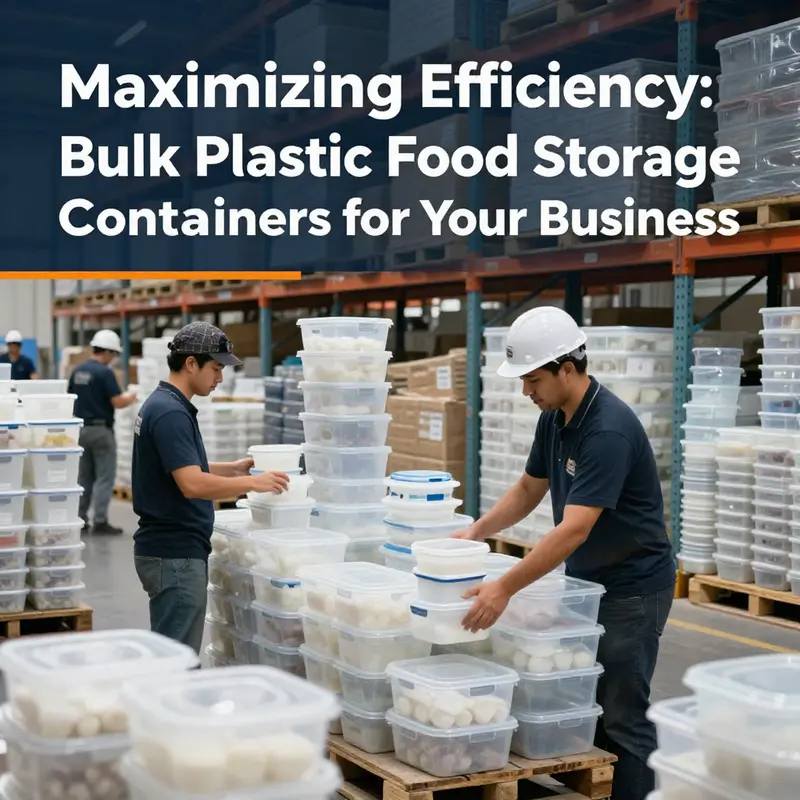
Bulk sourcing plastic food storage containers for commercial use is more than a way to cut costs. It is a strategic discipline that binds procurement, operations, and regulatory compliance into a single, repeatable process. In kitchens and food service operations where portion control, speed, and consistency define margins, the decision to buy in bulk should be guided by more than the sticker price. When a business scales up, the per-unit savings from bulk purchasing accumulate into meaningful advantages: steadier inventory, simplified vendor management, and the ability to offer predictable pricing to clients or customers. Yet those savings can evaporate if the supply chain becomes unstable, if containers fail to seal, or if materials drift away from food safety standards. The richest gains come from a balanced approach that balances price with performance, reliability, and compliance across the entire lifecycle of a container, from source to storage to service.
At the core of that approach is regulatory compliance, a foundation that ensures safety across all the steps of procurement, storage, transportation, and use. In the United States, the framework is anchored by the FDA’s guidelines on food-contact materials, particularly 21 CFR Part 177, which sets the baseline for non-toxicity and suitability for intended use of polymers in contact with foods. In Europe, the rules require that materials in contact with food do not transfer harmful substances, invoking Regulation (EC) No 1935/2004 and Regulation (EU) No 10/2011. While many suppliers will advertise “food-grade” plastics, the strongest proof is independent certification—ISO 22000 for food safety management, FSSC 22000 for food safety, and HACCP plans that demonstrate traceability and control points across manufacturing. A 2025 analysis underscores that without verifiable certifications, brands risk recalls, penalties, and damaged trust—outcomes that can dwarf any short-term savings from a cut in unit price.
The sourcing landscape for these containers is highly global, with China playing a central role in bulk manufacturing. The most efficient ecosystems arise where molding, testing, packaging, and export logistics interlock. Regions like Zhejiang and Guangdong have developed dense clusters that reduce lead times and stabilize quality through mature supplier networks. In Zhejiang, producers with long experience in heavy-duty industrial containers leverage proximity to polymer suppliers and specialized mold-making capabilities, while Guangdong hosts facilities that align with international compliance testing laboratories capable of validating FDA and EU standards. The geographic dynamics translate into practical timing: sea freight from major manufacturing hubs to western markets can be measured in a two-week window to major transit hubs, often beating domestic suppliers on both cost and consistency, a continuity that is particularly valuable for organizations rolling out multi-site meal-prep services or catering programs. Embodied in this efficiency is the potential for MOQs that accommodate growth—from small trial quantities to large-scale restocks—creating a pathway for startups and growing distributors to test new concepts without committing to unwieldy inventories.
Beyond price and lead time, a robust supplier evaluation framework guards against hidden risks that can undercut performance over time. A well-rounded assessment considers five core dimensions that extend far beyond the headline per-unit cost. First, material traceability provides assurance about the origin of the resin and the batch history, enabling rapid investigation if a deviation appears in storage or service. Second, cleanroom manufacturing standards and controlled processes support reliability for high-demand environments, including operations that demand strict hygiene or medical-grade quality. Third, delivery consistency—on-time performance across multiple orders—protects planning when production schedules shift or demand spikes occur. Fourth, scalability—the ability to take on larger volumes without sacrificing tolerances or performance—keeps procurement aligned with growth trajectories. Fifth, responsiveness and communication—how quickly suppliers acknowledge changes in design, address urgent needs, and provide post-sale support—can determine whether a project stays on track when timelines compress.
This holistic view of sourcing also shapes how a business chooses product variants and application-centered solutions. Bulk containers come in a range that supports varied storage, handling, and service contexts. For dry goods such as cereals or sugars, large-capacity, airtight designs preserve freshness and reduce spoilage. For refrigerated or heated storage, rectangular or modular designs optimize space, and many options are designed for easy stacking and easy identification within crowded cabinets. When volumes rise, logically organized containers with robust lids and reliable sealing systems reduce the risk of leaks and cross-contamination, while transparent walls or clear labeling enable quick inventory checks. For sauces, soups, or liquids, permanently secure lids and leak-resistant threads are essential, and containers that tolerate freezing and microwaving broaden the range of service models—from batch cooking to ready-to-serve preps. The most successful choices reflect a clear understanding of how the end-user will access and use the container, whether in a bustling kitchen, a central commissary, or a food-delivery hub.
As marketplaces and procurement platforms have evolved, buyers increasingly expect more than a good price. They seek verifiable certifications, consistent product specifications, and the ability to source across borders with confidence. A growing segment of suppliers offers digital prototyping services and rapid sample delivery to shorten the time from decision to deployment. While the appeal of a single cheap option is strong, the procurement calculus emphasizes consistency over time. The most resilient supply relationships emerge when businesses diversify sourcing, establish multiple qualified suppliers, and build redundancy into lead times and production calendars. This resilience is especially important for international expansion, where currency fluctuations, import duties, and shifting regulatory landscapes can alter the economics of bulk buying. It is not enough to choose a supplier who can fill an order today; it is essential to partner with those who can sustain quality, adapt to changing volumes, and support product development work as requirements evolve.
In the end, the procurement of plastic food storage containers in bulk must be integrated with operational planning and sustainability goals. The container is a tool—a facet of a larger system that includes food safety, inventory control, shelf organization, and waste reduction. Direct savings from bulk pricing should be weighed against the total cost of ownership: the rate of defect or seal failure, the ease of cleaning and sanitizing, the compatibility with existing storage racks, and the longevity of the material under constant use and exposure to varying temperatures. When procurement aligns with kitchen workflows, storage strategies, and inventory policies, the organization benefits from reduced spoilage, smoother production lines, and more predictable service timelines. The combination of regulatory discipline, capacity-aware sourcing, and thoughtful product selection translates into a procurement rhythm that can scale with a business and support broader growth objectives.
For readers seeking practical pathways to vetted suppliers and reliable information, industry databases and sourcing platforms can be valuable starting points, though due diligence remains essential. The aim is to connect with partners who can demonstrate a transparent supply chain, consistent testing, and a proactive approach to safety and performance. Ultimately, bulk procurement becomes a disciplined discipline rather than a race to the bottom on price. It is about building a steady supply chain that matches the pace of operations, ensures compliance, and preserves the quality and safety that customers rely on every day. For additional context and verified supplier listings, this resource provides a broad gateway to bulk plastic food container options with lids, offering product specifications, certifications, and buyer support to help inform sourcing decisions: https://www.hktdc.com/sourcing/plastic-food-containers-with-lids
Final thoughts
The journey toward effective food storage solutions begins with understanding the available options, their cost benefits, safety standards, and sourcing strategies. Bulk plastic food storage containers not only enhance operational efficiency but also align with the evolving demands of food businesses, from bubble tea shops to large catering firms. As you consider your storage needs, remember that the right containers can profoundly impact your business’s success, enabling you to serve your customers better and enhance overall profitability. Equip your kitchen with these essential tools and watch your business thrive.