
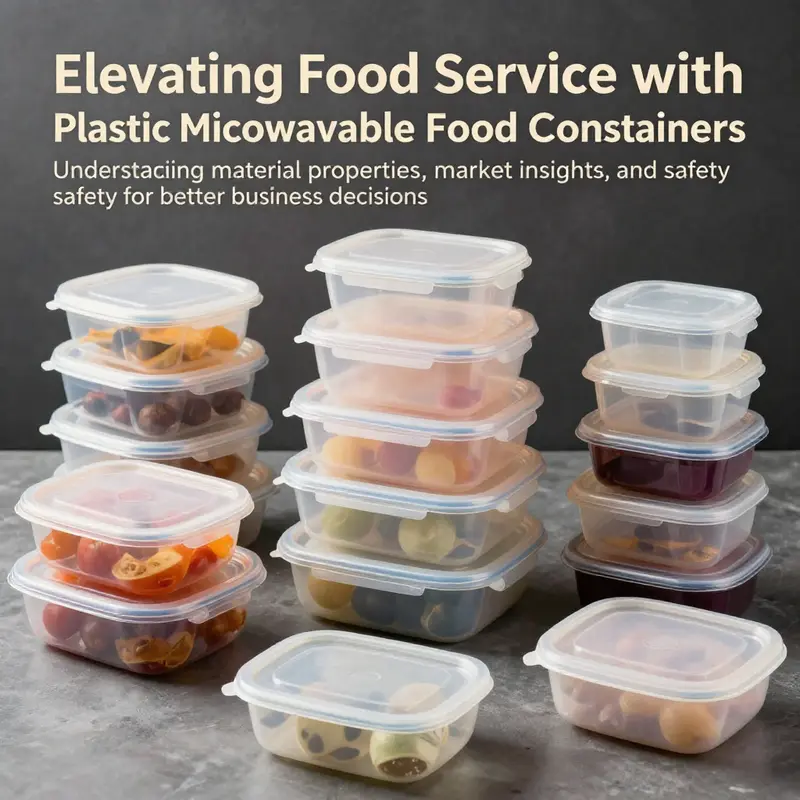
In the dynamic environment of food service, the choice of food packaging significantly impacts efficiency and customer satisfaction. Plastic microwavable food containers are becoming essential in various sectors, including bubble tea shops, restaurants, food trucks, and catering services. Their versatility ensures that food retains optimal quality during storage and reheating, thus enhancing the overall experience for customers. This article will delve into the material properties that make these containers suitable for microwaving, offer valuable market insights into demand and trends, and highlight safety considerations that business owners must prioritize. Understanding these aspects will empower food service establishments to make informed decisions in their packaging choices.
Sealed for Safety: The Material Science Behind Microwave-Ready Plastic Food Containers

Plastic microwavable food containers sit at the intersection of everyday convenience and material science. Their everyday use masks a complex balance of chemistry, engineering, and safety protocols that make it feasible to heat, store, and transport meals with a single, durable vessel. At the heart of this balance is the choice of material, its inherent properties, and how designers translate those properties into products that perform reliably in a microwave under real-world conditions. When we lift the lid on these containers, we encounter a story of thermal resilience, chemical stability, and structural ingenuity that extends beyond mere containment. It is a story about how a polymer, a simple chain of molecules, can be orchestrated to endure the heat, preserve flavor, and safeguard health while remaining convenient and affordable for daily life.
The primary material that underpins most microwaveable plastic containers is food-grade polypropylene, a thermoplastic known for its impressive thermal resistance and chemical stability. Polypropylene’s popularity in this domain rests on several interlocking characteristics. First, its heat tolerance is sufficiently high to withstand microwaving without deforming under typical consumer reheating temperatures. This resilience is not merely a matter of not melting; it also encompasses resistance to the kind of stresses that accompany rapid heating, such as uneven temperature distribution and the sudden formation of steam inside a sealed or quasi-sealed lid. In practice, this means a container can survive repeated cycles of heating and cooling without losing dimensional integrity. Second, the chemical stability of polypropylene helps prevent reactive interactions with a wide range of foods, from acidic sauces to fatty leftovers. This stability reduces the risk that flavors or colors will migrate between the container and its contents during reheating, thus helping preserve the sensory quality of the meal. Third, the material’s processability makes it well suited for the mass production of diverse shapes and sizes, from compact 650 ml portions to larger, 1000 ml family meals. The versatility extends to how the material can be molded, whether it is reinforced in certain regions to resist warping, or shaped to accommodate vented lids that manage steam during heating.
Safety, in this context, begins at the raw material and travels through the entire life of the product. Containers marketed for microwave use are typically labeled as microwave-safe and carry certifications aligned with food safety standards set by authorities such as the U.S. Food and Drug Administration (FDA) and European or national equivalents. A central safeguard in these products is the absence of hazardous substances, notably Bisphenol A (BPA), which has spurred broad consumer and regulatory action toward BPA-free materials. While BPA-free polypropylene is the dominant paradigm, the safety assurance hinges on compliance with explicit labeling that confirms suitability for microwave heating. For consumers, the caveat is straightforward: look for explicit microwave-safe labeling and ensure the container bears recognized safety certifications. The promise here is that the material, when used as directed, will not leach harmful compounds into food during heating, and that contact with hot contents will not compromise the container’s integrity.
Thermal resistance is more than a single number on a spec sheet. It translates into how a container behaves during a typical reheating cycle. Heated foods generate steam and create internal pressure, especially if the lid is tightly sealed. A well-designed plastic container grapples with this pressure through a lid that can be airtight yet allow venting of steam when needed. Some containers employ vented lids or small relief channels that maintain overall seal integrity while permitting safe steam escape. This seemingly small feature reduces the risk of lid bulging or spillage, which is particularly valuable for soups, sauces, or foods with significant water content. The structural approach extends to wall thickness, ribbing, and base geometry aimed at resisting deformation and warping during multiple heating cycles. A container that warps is more likely to trap steam, encounter uneven heating, or even compromise the seal, undermining both safety and hygiene. Hence, material selection blends with structural design to deliver a product that remains functional after dozens of uses.
From a usability standpoint, the material’s compatibility with other kitchen processes matters. Many polypropylene containers are designed to be dishwasher-safe and freezer-safe. Dishwasher compatibility implies resilience to detergents, high temperatures, and repeated loading cycles, while freezer compatibility demands that the material withstand brittleness or cracking at low temperatures. Both capabilities broaden the container’s utility, enabling straightforward food preparation workflows—from batch cooking to portioned meals—without requiring additional containers or storage solutions. The ability to endure dishwasher cycles and freezing conditions also touches upon hygiene. Reusable containers must be readily cleaned, with smooth surfaces that resist food residue and microbial buildup. The choice of material directly influences how easily items can be sanitized and dried, reducing the chance that hidden dampness or sticky residues become a vector for contamination.
Yet material choices do not guarantee safety and performance in practice. A 2023 examination of polypropylene polymers heated in microwave conditions raised an important caveat: under certain conditions, some polypropylene formulations can undergo in situ degradation that may yield toxic byproducts if the container was not specifically designed for microwave use. This finding underscores a crucial nuance—the label and the design intent matter just as much as the base polymer. Consumers should verify that the entire system—the container, the lid, and any venting mechanism—was engineered for microwave heating and carries appropriate certifications. The degradation concern does not indict polypropylene itself but rather highlights the need for design controls at every stage, from polymer grade selection to the incorporation of heat-stable additives and stabilizers that preserve performance over time. Understanding this nuance is vital for an informed consumer who seeks both convenience and safety in daily meals.
The environmental dimension of these materials also threads into the conversation. Reusability has become a dominant theme in contemporary packaging discourse, with many households embracing durable, reusable containers to replace disposables and minimize waste. The environmental argument leans on long-term durability, the ability to withstand repeated heating without losing form or safety properties, and the container’s end-of-life options. Recyclability is a related consideration, though it remains complicated by the need to segregate plastics by resin type, ensure proper labeling, and maintain a clean, uncontaminated stream for recycling facilities. The practical takeaway is that the material’s design often prioritizes longevity and hygiene, while still offering the convenience that modern life demands. In many contexts, the best choice blends reusability with responsible disposal when the container has reached the end of its useful life. The growing emphasis on sustainable practice therefore nudges manufacturers to optimize resin formulations and lid geometries to extend service life and improve recyclability without compromising safety or performance.
The broader significance of these material properties becomes evident when we consider the typical use cycle of such containers. A family meal stored in a 1000 ml polypropylene container might pass through stages of cold storage, reheating, potential mixing with other foods, and post-heating cleaning. Each stage has its own material demands: resisting cold-induced brittleness during storage, withstanding heat and moisture during reheating, and surviving repeated washing cycles without developing micro-scratches that harbor microbes. The material’s chemical resistance helps avert interactions with food components that could alter flavor or appearance, while its physical durability preserves the container’s shape and seal. In aggregate, the design draws upon a careful alignment of chemical stability, mechanical strength, and user-friendly features to deliver a product that feels reliable every time it is opened, heated, and enjoyed.
The practical implications extend to consumer education and responsible use. Even with BPA-free, microwave-safe labeling, users still need to follow guidelines about heating duration and power settings. Overheating or heating with tight seals can escalate pressure and risk leakage or lid deformation. The venting systems, when present, deserve attention; users should understand when to employ vented configurations and when to keep lids fully closed for freezing or cold storage. Moreover, the interplay between container design and the food itself matters. Highly acidic or fatty foods can influence surface interactions with the polymer over time, though the primary safety assurances come from the material’s compliance with recognized standards and from design safeguards that limit migration or reaction. In practice, this means mindful use: defrost thoroughly, avoid overheating beyond recommended minutes, and ensure lids and vents function as intended. Such habits reinforce the safety and performance benefits baked into material choices from the outset.
From an industry perspective, the emphasis on material properties informs a broader conversation about quality control and regulatory compliance. Manufacturers invest in resin selection that minimizes leaching risk, incorporate stabilizers that prolong heat resistance, and test products under simulated microwave cycles that mimic real-world use. They also design to strict standards so that consumer confidence is reinforced by consistent performance across batches and product lines. In this ecosystem, the material science of polypropylene is not static but a living dialogue between evolving safety expectations, advances in polymer technology, and the practical demands of modern kitchens. The result is a family of containers that, when used correctly, can streamline meal routines, reduce waste, and support safer heating practices without asking users to abandon convenience.
Health and safety considerations, environmental implications, and practical usability converge in a narrative about material properties that goes well beyond the container’s exterior. Consumers benefit from clearer labeling that communicates microwave suitability, from designs that thoughtfully manage steam and pressure, and from a material portfolio that resists deformation and chemical interaction while standing up to the daily cycles of use. The chapter on material properties thus becomes a lens through which the everyday ritual of reheating, storing, and sharing meals is better understood and navigated. It is a reminder that the humble plastic microwavable container is, in truth, the result of careful material science—an engineered balance between heat tolerance, chemical stability, and durable design that makes a familiar kitchen ritual possible with confidence and ease.
External resource reference: https://www.alibaba.com/product-detail/Reusable-Microwavable-Plastic-Food-Container_1600495248875.html
Markets in Motion: Economic Currents Shaping Plastic Microwavable Food Containers in a Safety and Sustainability Era

The market for plastic microwavable food containers is not merely a ledger of colors, capacities, and lids. It is a living map of how convenience, safety, and sustainability collide and concord in daily life. From a macro perspective, the global Plastic Food Storage Container Market was valued at about USD 5.69 billion in 2025 and is projected to grow at a compound annual growth rate (CAGR) around 6.63% from 2026 to 2033. These numbers encode more than sales figures; they reflect a society pressing for faster meal solutions without surrendering quality or health. The momentum is strongest where urbanization accelerates, disposable incomes rise, and meal-prep culture becomes a routine rather than an exception. The Asia-Pacific region and North America, in particular, are shaping demand not only in household kitchens but also in foodservice and hospitality supply chains that rely on dependable, standardized packaging. In such a landscape, the containers themselves become a proxy for trust—an outward sign of a promise that what is heated, stored, and served remains safe, and that the process respects both the consumer and the planet around them.
Yet growth is not a simple upward trajectory. It sits at the intersection of opportunity and risk, where technology, regulation, and consumer sentiment constantly redraw the map. On one axis, there is the shift toward reusable and durable solutions. Packaging manufacturers have increasingly offered high-quality, BPA-free polypropylene (PP) containers that are explicitly labeled microwave-safe, dishwasher-safe, and freezer-safe. These features respond to the needs of households that value reliability and long-term use, as well as to businesses that seek scalable, repeatable packaging for meals, salads, and ready-to-eat products. The emphasis on certifications, such as FDA and LFGB, emerges as a critical differentiator in both domestic markets and international trade lanes, especially where procurement strategies prioritize regulatory compliance and supplier reliability. In a world where a single supply interruption can ripple through a school cafeteria program or a corporate meals service, such certifications become a form of risk management as much as a marketing badge.
But economics does not exist in a vacuum. The same market analysis that applauds the shift toward reusable designs also casts a wary eye on safety and environmental concerns. Even as BPA is phased out, the substitution landscape introduces BPS and BPF, which are under scrutiny for similar endocrine-disrupting properties. Beyond chemical composition, there is growing scientific attention to how plastics behave under microwave conditions. Research has highlighted that even so-called microwave-safe plastics can shed microplastics into food, and among common container types, polystyrene (PS) has shown higher levels of such release in some tests. Buyers—whether private households, school districts, hospital canteens, or takeout chains—are increasingly asking for transparent labeling, third-party testing, and clearer end-of-life pathways. In short, safety and transparency are not afterthoughts; they are competitive advantages in a market that wants to minimize risk while maximizing consumer confidence.
Against this backdrop, the product architecture itself is undergoing a quiet revolution. Materials science continues to refine the balance between heat resistance, chemical inertness, and mechanical durability. PP remains a workhorse because of its high heat tolerance and cost efficiency, yet designers are exploring optimized blends and novel additives that can improve barrier properties or reduce weight without sacrificing safety or recyclability. PS, once favored for rigidity and clarity, is facing intensified scrutiny due to environmental and health debates, pushing manufacturers toward alternatives or toward recycled-content solutions that meet evolving standards. The design language of containers—lids that seal with precision, vent mechanisms to prevent steam buildup, and stackable geometries for efficient cold-chain logistics—reflects a broader industry push toward user-centric packaging that simplifies life for busy households and professional kitchens alike.
From a business perspective, the economics of plastic microwavable containers are increasingly inseparable from supply-chain resilience and customization. Producers are moving beyond one-size-fits-all offerings to portfolios that accommodate varied portion sizes, labeling requirements, and branding. In B2B contexts, packaging is not merely a container but a packaging solution—an enabling technology that supports portion control, menu differentiation, and waste reduction. The ability to provide a spectrum of capacities, from about 650 ml to 1000 ml and beyond, allows retailers and food-service operators to tailor servings to regional eating patterns and dietary guidelines while maintaining consistent microwave performance. For manufacturers, this means investing in modular tooling, scalable production lines, and digital traceability that helps clients demonstrate compliance across jurisdictions. In markets like Singapore and other gateways between East and West, procurement strategies are especially sensitive to supplier reliability, regulatory alignment, and the ability to demonstrate end-to-end safety testing. All these factors converge to push market leaders toward certified, safe, and sustainable materials that can be engineered for both domestic use and cross-border distribution.
The consumer’s voice threads through the narrative as well. Convenience remains the loudest amplifier: a container that promises easy storage, quick reheating, and a seamless transition from fridge to desk or break room. Yet the consumer increasingly weighs safety and sustainability as non-negotiables. The labeling of microwave-safe materials is no longer a mere compliance checkbox; it is a signal of trust. Families are looking for products that can withstand recurring cycles of heating and cooling without degrading or leaching unwanted substances. Health-conscious buyers want assurance that the packaging will not impart off-flavors or odors and will remain stable in the presence of fatty or acidic foods. A related thread is the rising curiosity about the environmental footprint of plastic packaging. Even as recyclability remains a practical option for many households, the push toward more transparent life-cycle information and more responsible disposal methods has intensified. In response, manufacturers are pursuing clearer end-of-life pathways and exploring biobased or bagasse-based alternates where appropriate without compromising the safety and performance of the core product.
The market’s resilience is also tested by global trade dynamics and regulatory variances. The FDA in the United States and LFGB in Germany symbolize a broader trend: food-contact materials require rigorous testing and clear consumer communication. In practice, these certifications translate into standardized test methods, documented material compositions, and periodic third-party verification. For buyers in export markets, such certifications reduce tariff and compliance friction, acting as a form of market-ready assurance that supports faster onboarding of suppliers into new channels. This is particularly meaningful for regions where procurement practices cannot risk procurement of materials that do not meet stringent food-grade standards. In a sense, the economic narrative of these containers is inseparable from the governance architecture that shapes how products are designed, manufactured, tested, labeled, and sold across borders.
Beyond the headlines of market size and regulatory milestones lies a subtler but equally consequential dynamic: the evolution of the competitive landscape through materials and process innovations. The tension between cost, performance, and sustainability drives a continuous optimization cycle. For instance, many producers now offer BPA-free PP solutions that tout microwave compatibility without sacrificing sealing integrity or dishwasher stability. This alignment between material choice and consumer expectations creates a feedback loop: as brands demonstrate safety and reliability, they justify premium pricing or broaden distribution in premium segments. Conversely, where safety questions linger or where labeling is ambiguous, price and speed-to-market can suffer as buyers seek out verified alternatives and more transparent suppliers. The result is a market that rewards those who can combine safety certification with measurable sustainability and reliable performance over the long term.
An important, practical implication for industry players is the way they communicate value through packaging narratives. The modern consumer no longer relies on a single attribute—heat resistance or bulk capacity—as the sole determinant. Instead, the value proposition blends several pillars: safety assurance via independent testing, clarity of labeling, compatibility with household appliances, durability under repeated thermal cycles, and a credible commitment to environmental stewardship. The supply chain must then translate these pillars into tangible product features—such as consistent lid fit, predictable thermal behavior, and clear, durable markings that survive dozens of microwaving events. In this environment, the choice to emphasize one pillar over another is not merely a marketing decision but a strategic posture that aligns with a brand’s risk appetite, regulatory footprint, and the needs of its principal customers, whether households, school cafeterias, or large-scale catering operations.
The story does not end with what exists today. The momentum toward sustainable packaging—whether through recyclable resins, post-consumer recycled content, or compostable alternatives—will increasingly shape the competitive field. While plastics have undeniable advantages in heat tolerance, lightness, and barrier performance, their environmental impact compels a broader conversation about end-of-life management. The industry is responding with innovations that aim to reduce plastic waste, improve recyclability, and, where feasible, substitute conventional plastics with alternatives drawn from renewable feedstocks or bagasse fibers. This direction does not obviate the need for rigorous safety testing or the comfort of proven microwave performance; rather, it reframes the product development agenda around a circular economy paradigm. In practice, this means not only improving the raw materials but also strengthening the capture, sorting, and reprocessing systems that make recycling genuinely efficient and economically viable at scale.
In navigating this complex terrain, businesses must also account for the subtleties of regional consumer behavior. In North America, for example, the rapid growth of meal-prep services, convenience-focused retail formats, and home-delivery channels has expanded the volume of single-serve containers, while also demanding tighter quality controls and more robust supply assurances. In Asia-Pacific markets, the convergence of modern retail with traditional dining patterns has created demand for a broader range of sizes and shapes, as well as packaging that can withstand hotter climates and more active use in transport and display. Across both regions, the interplay between food safety culture and sustainability expectations continually raises the bar for suppliers who must deliver not just a container, but a trusted lifecycle narrative that spans sourcing, manufacture, distribution, use, and end-of-life.
The practical takeaway for readers who want to translate market insights into action is straightforward, even as the landscape remains intricate. First, prioritize safety certifications and third-party testing as core value propositions. Second, align product design with real-world use: microwave performance, seal integrity, and stackability are not “nice-to-haves” but essential attributes that influence adoption by households and operators alike. Third, build transparency into labeling and communications. Consumers increasingly demand to know what is in a container, how it behaves under heat, and what happens after disposal. Fourth, embrace sustainability not as a marketing add-on but as a design constraint: seek end-of-life pathways, consider recycled-content solutions, and quantify environmental impacts where possible to demonstrate genuine progress. Finally, recognize that the market favors suppliers who can blend flexibility with reliability: the capacity to customize packaging for different clients while maintaining consistent safety standards and scalable production capabilities.
To illustrate how these ideas come together in practice, consider the role of a packaging supplier that offers a family of microwave-safe, BPA-free PP containers designed for home use and for small food-service operations. Such a line would emphasize certified safety, durable performance through repeated cycles, and clear labeling that helps customers understand heating instructions and storage guidelines. The same supplier might extend its reach by providing a related set of consumer-friendly lids, sealing mechanisms, and portion-fit options that reduce waste and improve portion control. In addition, the supply chain can offer transparent material declarations, third-party testing reports, and traceable sourcing information to reassure buyers who must comply with strict procurement standards in global markets. This integrated approach—not just a product but a packaged solution—exemplifies how market and economic forces converge to create value that resonates with safety-conscious, efficiency-driven consumers and operators.
An example of how packaging options can be presented in a way that respects both practicality and safety is to examine a representative case where a line of microwavable, food-grade solutions is highlighted through clear, accessible product information. For readers who want to explore a concrete example of packaging designed for convenience and safety, a resource describing a BPA-free microwave-friendly container line can serve as a practical reference point. food-grade disposable kraft-paper soup cup with lids. For more context on how such packaging choices fit into broader safety and regulatory frameworks, see the external resource cited at the end of this discussion.
As we look ahead, the market for plastic microwavable food containers will likely continue to diversify in both composition and use-case. The push toward safer, more transparent materials will coexist with demand for high-performance, economical solutions that can scale across different cuisines, consumer demographics, and service models. The most successful players will be those who can articulate a credible safety narrative, demonstrate tangible sustainability commitments, and deliver reliable product performance in the pressure-filled environments of busy kitchens and on-the-go meals. In other words, the economic pulse of this sector is not just about selling containers; it is about selling trust—trust that a reheated meal remains hygienic, that packaging will endure over time, and that the entire lifecycle from production to disposal aligns with a future that values both human health and environmental stewardship.
External perspective can reinforce these themes. For practitioners and researchers seeking to ground their strategies in broader regulatory and scientific findings, consult regulatory guidance on microwave-safe packaging and related materials to understand what constitutes defensible safety claims in different markets. https://www.fda.gov/food/packaging-labeling-food-contact-substances/fda-guidance-microwave-safe-packaging
Internal reference for further practical context can be found in consumer-packaging resources that illustrate how a practical microwavable solution can balance safety, convenience, and branding. For readers who want a concrete example of a container design and its labeling in a real-world context, the following resource offers a snapshot of a microwave-safe, food-grade container line: food-grade disposable kraft-paper soup cup with lids. This link provides a tangible reference point for how packaging suppliers communicate safety and usability in a compact, consumer-facing package.
In sum, the economics of plastic microwavable food containers are inseparable from questions of safety, trust, and environmental responsibility. The market is expanding, but it is doing so with a sharper eye toward what consumers expect from a product that sits at the intersection of convenience and health. The next chapters will delve deeper into the material science underpinnings of these containers, the regulatory architectures that shape their design, and the emerging sustainability pathways that may redefine what constitutes an acceptable end of life for a popular, practical, and highly human-centered packaging solution.
Safe Heat, Safe Food: A Thoughtful Dive into Plastic Microwavable Containers in Everyday Life

The pull of a quick meal is almost universal, and plastic microwavable containers have become a quiet backbone of how households, offices, and schools manage hot, convenient food. They promise speed, portion control, and the ability to move a freshly heated dish from refrigerator to table with minimal fuss. Yet beneath the everyday practicality lies a web of material science, manufacturing standards, and usage habits that can tip safety one way or another. This chapter follows that thread, moving from the simple, familiar act of heating to the more deliberate decisions that keep food safe, meals enjoyable, and the environment a little less burdened by waste. It treats safety as a living practice rather than a checklist of labels, linking common experiences to core principles of material behavior, labeling, and care. In doing so, it remains anchored to the broader question of how we can balance convenience with health and sustainability in a world where meals travel from store shelf to microwave to plate with astonishing speed.
For most households, the first question centers on what the container is made of. Plastics entering the microwave are not created equal. The decisive factor is the type of plastic and its chemical compatibility with heat. The material’s identity is mostly conveyed through a recycling code or other explicit labeling. Among the various families, Polypropylene, identified by the recycling code #5, has earned a respected space in the microwave landscape. PP is known for its heat resistance and stable performance within a practical temperature range, generally up to about 140°C (284°F). This threshold is critical because it marks the boundary beyond which some plastics begin to soften, warp, or release substances that would be unlikely at lower temperatures. When a container is labeled as microwave-safe and derives its credibility from tested, established standards, users gain the confidence that the container can endure typical reheating cycles without dramatic deformation or harmful migration.
But the safety picture becomes more complex when we widen the lens beyond the container body to the entire assembly used during heating. Lids and seals carry their own materials that may respond differently to heat. A common situation is a lid made from a more heat-sensitive polymer, frequently Polyethylene (PE) and sometimes coded as #4. Although useful for keeping food covered during storage, such lids are not always designed to tolerate prolonged or high-temperature exposure. The practice of microwaving with the lid closed can trap steam and heat, potentially creating pressure effects or causing the lid to soften, warp, or even detach slightly. The prudent rule is straightforward: remove the lid before microwaving. This simple step reduces the risk of a melted lid, trapped steam that could spray hot contents, and the potential for toxins released from degraded plastic to mingle with food. It is a reminder that safety in practice often comes down to small, repeatable habits rather than single, dramatic precautions.
The concept of wear and tear deserves equal attention. A container may sit in a kitchen cabinet for years, but the moment heat, moisture, and repeated cleaning enter the picture, long-term stability becomes a live concern. Signs of wear—discoloration, cloudiness, scratches, or a brittle texture—signal underlying material degradation. Blemishes on the surface can create microchannels where substances migrate more readily, and scratches can harbor microscopic cracks where heat and cleaning agents exploit weak points. If a container shows any of these signs, health and safety logic strongly suggests retiring it from service. The recommended lifespan, broadly suggested by safety guidance, is roughly three to five years, and many households discover that the actual usable life depends on usage frequency, exposure to high temperatures, and how meticulously the item is cared for. The practical implication is clear: do not rely on a visibly worn container to preserve the integrity of flavors, nutrients, or the certainty that nothing leaches into food during reheating.
A separate but related consideration concerns the reuse of single-use plastics. Containers designed for one-time use may survive the act of heating but are not engineered for repeated cycles of heating, washing, and cooling. Reheating stress, combined with cleaning processes that may be harsher than simple rinsing, can cause microstructural fatigue. The safest posture is to treat these items as disposable after a single use. If a user nevertheless chooses to reuse a container, it should be with caution, strict adherence to manufacturer guidelines, and recognition that the safety margin diminishes with each subsequent heating cycle. In other words, repeat heating is not a boundary to be tested lightly; it is a risk factor that compounds over time and deserves thoughtful consideration.
Long-term storage of acidic, fatty, or alcoholic foods within plastic containers introduces another layer of risk. Substances such as vinegar or oil-heavy sauces, and alcoholic beverages, can accelerate the chemical processes that degrade plastics. Over time, this degradation may increase the likelihood of chemical migration into the food, particularly during heating when molecular mobility rises. The conservative approach is to avoid letting these substances linger in plastic containers for extended periods, especially if the container has any sign of wear or if the storage duration is prolonged. This is not a denunciation of plastics but a call to mindful storage practices: limit complex chemical interactions by choosing materials that remain inert to the kinds of foods you prepare or reheat.
These considerations naturally prompt a broader question about alternatives. For many households, glass, ceramic, or stainless steel containers offer predictable performance under heat. They resist deformation, do not migrate chemicals in the same way plastics can, and can be reused indefinitely with proper care. They also align with sustainability goals by enabling longer reuse cycles and reducing the need for frequent replacement. Yet the choice is not binary. Plastic containers often win on weight, cost, and portability, especially for school lunches, office meals, and picnics where frequent washing is impractical. The best approach, therefore, is contextual: reserve plastic for applications where its advantages are most valuable, and lean toward non-plastic materials when the heating demands are high, when longevity is a priority, or when the storage of challenging foods (high acidity or high oil content) is involved.
From a practical perspective, the moment you choose a plastic microwavable container, you are entering a small protocol with great impact on safety. Always look for explicit labeling that the container is microwave-safe, and verify that it is suitable for the temperatures you intend to reach. Manufacturer guidance matters because it reflects the behavior of the specific material formulation, wall thickness, and edge treatments that come with a given product. Temperature ceilings can vary, and even among PP-based containers, there are differences in how the material is processed or complemented by additives. The goal is to minimize the potential for heat-induced changes in shape, texture, or composition that might accompany extended or repeated use.
Beyond the label, everyday technique matters. A recurring habit that reduces risk is to heat food in shorter cycles rather than a long, uninterrupted burst. Shorter heating sequences help prevent overheating at the container’s surface and keep the food from reaching temperatures where migration might increase. Stirring midway through heating can also promote even warmth and reduce hot spots that stress the plastic at one point more than another. When the meal is ready, use a heat-safe tool to lift the container from the microwave, and avoid direct contact with the container’s hot surface. Allowing the container to rest briefly after heating reduces the potential for hot spots in the food and helps the material settle back into its lower energy state after the thermal pulse of the microwave.
In discussions of safety, it is easy to default to the most cautious option—glass or stainless steel—but a nuanced approach considers environmental and practical costs. The modern consumer often balances convenience with ecological concerns, recognizing that the full life cycle of plastic containers includes production, use, and end-of-life disposal. Recycling systems vary by region, and not all plastics are equally accepted in curbside programs. In many places, polypropylene is the most widely accepted plastic for return streams, yet acceptance still depends on local infrastructure and market demand. This reality underscores the value of making informed choices: when possible, select containers designed for multiple uses, and prioritize materials that align with your local recycling capabilities. Embracing this approach helps minimize waste while preserving the benefits of a safe and reliable reheating option.
To illustrate how this knowledge translates into a tangible decision, consider a practical example of a microwavable container that has found favor in many kitchens. A reader might encounter a microwavable packaging option described as portable and suitable for heat, designed to keep foods like soups and stews ready for on-the-go consumption. In contexts where such containers are offered in paper or composite formats rather than pure plastics, the principle remains the same: ensure that the packaging is appropriate for microwave heating, and pay attention to the lid and seal components. For a concrete example of a microwavable option that demonstrates how packaging can support safe reheating while balancing convenience, you can explore a product line described as food-grade and disposable, with a microwave-ready design that keeps soups and porridge warm for take-away meals. This emphasis on practical design—easy heating, secure lids, and clear labeling—echoes a broader truth: the easiest safety improvements come from clear information and careful handling rather than from extraordinary measures.
In the end, safety is a habit built from consistent choices. It rests on understanding the material at hand, following the heat limits, and staying attentive to wear and tear. It rests on the small rule of removing the lid before heating, visiting the container’s surface with your eyes for signs of aging, and rotating between materials when you know a food’s acidity, oil content, or alcohol level will challenge the container’s endurance. It rests on choosing non-plastic options when possible for reheating, while recognizing that plastic can still offer valuable benefits under well-managed conditions. It rests on a broader commitment to responsible disposal and mindful consumption, recognizing that the safest meal is one that has traveled through a thoughtfully chosen path from storage to plate. When this path is navigated with care, plastic microwavable containers can deliver the benefits of speed and convenience without compromising health or peace of mind.
For readers seeking a practical, accessible reminder of safe use, a concise check can be adopted: confirm microwave-safe labeling, remove the lid, avoid heating if the container shows wear, refrain from long-term storage of acidic or fatty foods in plastic, and resist reusing single-use plastics beyond their intended life. If you repeatedly cook and reheat meals, consider rotating materials to distribute heat exposure and preserve the integrity of the packaging. And when in doubt, turn to materials that have proven stability under heat, or choose non-plastic alternatives for heating, even if that means a trade-off in weight or cost. The goal is not perfection but sustained safety through informed use.
A practical cue to remember is that the act of heating is not just about what goes into the microwave; it is also about how the packaging behaves under time and temperature. The presence of a sturdy label, clear temperature guidance, and honest statements about reuse opportunities all contribute to safer outcomes. When individuals make mindful choices—checking labels, removing lids, inspecting wear, and selecting appropriate materials for tougher-holding foods—the overall safety of microwaved meals improves. The path from purchase to plate becomes less about guesswork and more about an informed routine that respects both health and practical needs. In short, safe heat emerges from the intersection of sound material choices, careful handling, and a willingness to adapt practices as new information becomes available.
For further guidance that anchors these practical steps in public health standards, see the CDC Guidelines on Safe Use of Plastic Food Containers. This external resource provides a comprehensive framework for understanding how plastics interact with heat in real-world settings, complementing the household-level cautions described here and offering a broader view of best practices for safe food handling across diverse contexts. https://www.cdc.gov/nchs/data/healthanddietary/foodcontainersafety.pdf
Final thoughts
Utilizing plastic microwavable food containers can significantly enhance operational efficiency within the food service industry. Their material properties ensure the safety and quality of food, while understanding market dynamics can help businesses stay competitive. Moreover, recognizing safety standards is crucial for maintaining customer trust and compliance. By integrating these considerations into your packaging strategy, you can elevate your service and enhance customer satisfaction, making a lasting impression in a crowded market.