
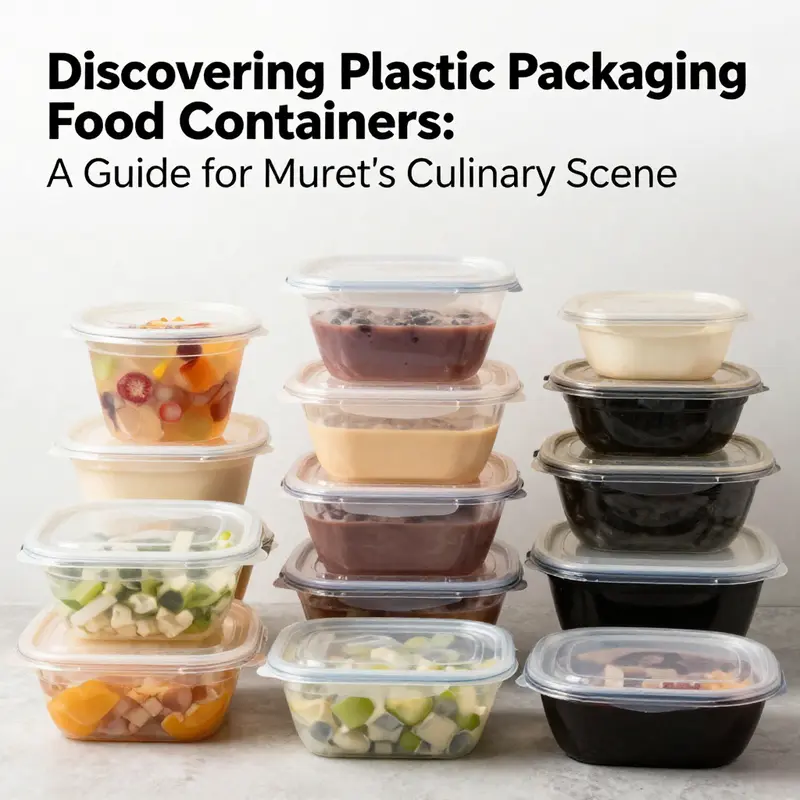
The culinary scene in Muret, France is flourishing, and the demand for quality plastic food packaging containers is steadily increasing. From bustling bubble tea shops to vibrant food trucks and elegant catering services, businesses require reliable packaging solutions that not only maintain the integrity of food but also reflect their brand identity. This article delves into the essentials of plastic food packaging in Muret, addressing industrial-grade containers, safety standards, procurement options, and practical applications tailored for various businesses. Each chapter aims to equip readers with the insights needed to select the best packaging solutions, ensuring food safety and customer satisfaction.
In the Heart of Muret: Industrial-Grade Plastic Food Containers as the Backbone of Local Packaging

From the flat plains and winding streets of Muret to the bustling kitchens of its central markets, plastic packaging containers have become more than a utility; they are the quiet workhorses of a regional food economy. In this part of southwestern France, where cuisine is a social force and the logistics of service must keep pace with demand, industrial-grade plastic food containers have evolved to meet a precise set of needs. They are designed for durability, safety, and efficiency, enabling quick service in fast food lines, central kitchens, and bustling delivery networks that have grown to serve the town and its surrounding communities. The narrative of these containers is not merely about plastic as a material; it is about how a region balances appetite with regulation, speed with safety, and convenience with sustainability. At their core lies a family of food-grade plastics that can withstand the rigors of daily service while preserving the integrity of the food they carry. Polypropylene and polyethylene, two of the most common plastics used in industrial containers, offer a combination of heat resistance, chemical stability, and robust mechanical properties that suit the fast-paced realities of the Muret food trade. The choice between these materials reflects a careful calculus: PP is prized for its stiffness, clarity, and resilience under repeated handling; PET provides excellent clarity and barrier properties, making it a strong candidate for prepackaged salads and ready-to-assemble meals. In practice, many operations opt for containers made from PP or PET that are certified to be food-grade and compliant with EU safety standards. The EFSA and EU 1935/2004 regulations frame the baseline expectations here: packaging that touches food must not release harmful substances, must maintain its integrity under typical handling, and should not interact with foods in ways that could compromise taste, odor, or appearance. The Muret ecosystem, with its mix of local distributors and international suppliers, reflects how even a relatively small region anchors itself to broader supply chains. Local suppliers may provide the familiar touch of regional service—shorter lead times, easier returns, and knowledge of local consumption patterns. Yet the economics of scale that characterize modern food packaging push many operators toward international procurement channels. The practical logic is straightforward: bulk procurement can reduce unit costs, and online B2B platforms can bridge the gap between local needs and global manufacturing capability. In this regard, platforms that connect buyers with a wide array of industrial-grade containers—offering samples, flexible payment terms, and assurances on quality—become essential tools for Muret’s buyers. The orientation toward bulk purchase is not just about reducing cost per unit; it is about creating predictable packaging that aligns with the rhythms of kitchen operations. Large orders enable standardized stocking, minimize changeovers in the central kitchen, and ensure uniform presentation across takeaway or delivery offerings. The shift toward bulk procurement also dovetails with a rising emphasis on safety and traceability. Industrial-grade containers in this region are not simply single-use items; they often form part of a controlled packaging system designed to support cold storage, hot holding, and the logistics of distribution. They are engineered to be leak-resistant, thermally stable, and stackable, while also accommodating the practical realities of warehousing, transportation, and rapid deployment in a busy service environment. Heat resistance—up to around 100 degrees Celsius in many common configurations—permits a degree of versatility. While not all containers are intended for microwave use, the capability to withstand brief reheating or hot holding within a controlled process is a valued feature for many operators who require flexibility in how prepared foods are managed through the supply chain. The ability to handle refrigerated or frozen items without compromising structural integrity is equally important. In Muret’s cafes, bakeries, and central kitchens, the ability to repackage or pre-compose meals for takeout or delivery hinges on dependable containers that resist cracking, warping, or leakage during transit. The practical value is clear: fewer incidents of leakage or broken packaging translate into a more reliable brand experience for customers and less waste in the supply chain. The design language of these industrial-grade containers has also begun to reflect sustainability ambitions. Several manufacturers are exploring recyclable options that fit into closed-loop recycling schemes and align with France’s ecological design policies. The idea is to extend the life of packaging materials beyond a single use and to facilitate a post-consumer reuse or recycling pathway that respects local recycling capabilities. While the most visible gains often come from bulk price reductions, sustainable design can also deliver operational benefits. Recyclable or bio-based materials can be implemented in ways that do not compromise safety or performance, offering a route to meet environmental goals while preserving the efficiency of the food-service process. In the Muret context, these features intersect with policy incentives and consumer expectations. France has long championed ecological design principles that encourage producers to consider the full lifecycle of packaging. The push toward recyclability and circularity resonates with the daily realities of central kitchens and retailers who must balance cost, performance, and sustainability. The packaging decisions made in Muret reverberate beyond the immediate finish line of a customer’s meal. They influence inventory planning, supplier relationships, and the ability to respond to seasonal peaks in demand, such as holiday events or regional markets that see surges in prepared foods. Local operators recognize that reliable containers streamline workflow: they reduce the cognitive load on staff, minimize the risk of errors during portioning and sealing, and help ensure consistent portion control. In practical terms, this means containers with secure lids that seal tightly to limit leakage during transport, with drop-resistant bases that survive a busy kitchen’s routine handling, and with a geometry that supports efficient stacking on shelves and in transit. The value proposition extends to the commercial negotiation with suppliers. When a business contemplates large-scale orders, it weighs not only the absolute price per unit but also the quality assurance, the availability of samples before bulk commitment, and the continuity of supply under varying market conditions. The combination of local familiarity and global capacity is a strategic asset in Muret: a local buyer can test prototypes and establish trust while leveraging the breadth and price advantages offered by international manufacturers via online channels. The broader European market context adds another layer of complexity and opportunity. EU food safety standards create a common baseline, but the way authorities interpret and enforce these standards can shape product development and supplier selection. For Muret businesses, this translates into a disciplined supplier evaluation process: materials must be clearly documented as food-grade, migration limits must be respected, and the packaging’s performance under heat and cold cycles must be demonstrated through testing data. In practice, the discourse around industrial-grade containers in Muret also touches on the practicalities of logistics. Lead times from overseas suppliers can be longer, and the risk of supply chain disruption requires contingency planning. Smart procurement strategies may combine a steady supply of locally available stock with periodic import orders to secure favorable unit costs. Such a blended approach mitigates risk and supports continuity of service for restaurants that operate around the clock or rely on scheduled delivery windows. The choice of sealing options—whether lids are snap-on, pressure-fit, or screw-on—reflects the operational realities of different businesses. For samples and trial runs, the ability to customize with branding can be a meaningful differentiator for bakeries and dessert shops that want to present a cohesive, professional stack of offerings. Some suppliers can accommodate customization at scale, enabling brand logos or color schemes to be printed on the containers themselves or on the lids, which helps preserve the brand identity when items are transported or displayed in take-out retail environments. For those evaluating possibilities, it is helpful to anchor decisions in concrete criteria: the material family (PP or PET), the temperature tolerance, the sealing mechanism, the stackability, and the compatibility with the business’s reheating or cold-storage practices. The presence of a robust warranty or replacement policy can also be a practical safeguard for high-volume operators who rely on packaging as a core part of their service. The broader conversation about packaging in Muret cannot ignore the social and environmental implications of these choices. The community benefits when packaging systems are designed with a view to waste reduction and end-of-life management. The development of recyclable or bio-based options signals a shift toward industry responsibility that aligns with local and national policy goals. In this sense, industrial-grade containers serve not only the immediate needs of food service but also the longer arc of sustainable development in the region. The practical takeaway for businesses moving into this space is to approach packaging as a system rather than a single-item choice. By selecting containers that meet safety standards, offering reliable performance, and enabling efficient operations, a food business in Muret can deliver meals with confidence, maintain brand integrity, and contribute to a more sustainable packaging landscape. For those curious about a concrete example of a packaging option with potential for local integration and customization, one can explore a widely available take-away solution that emphasizes recyclability and practical design. This approach, paired with careful supplier qualification and a strategic procurement plan, can help Muret’s food sector stay resilient while maintaining a strong emphasis on safety and quality. Ultimately, the story of industrial-grade plastic food containers in Muret is about how a small but dynamic community harnesses global manufacturing capacity, refined safety standards, and a local market sense of taste to keep meals moving smoothly from kitchen to customer, with packaging that respects both people and the planet. For readers seeking broader context and engineering-focused standards that govern these containers across Europe, the following resource provides a comprehensive overview of the key standards, physical properties, and practical applications in the European market: https://www.europe-food-container.com. Internal reference notes also point toward practical procurement and customization options that the region often leverages to maintain efficiency without sacrificing safety or branding. In the local ecosystem, one example of a widely accessible option that blends recyclability with usability can be found in discussions around best-price recyclable kraft paper take-away options that, while primarily paper-based, illustrate how suppliers pursue durability, cost-effectiveness, and customizability even as the packaging landscape expands to include more diverse materials. For an accessible, brand-aware example with a focus on take-away salad containment, see the linked offering titled Best-price recyclable kraft paper disposable rectangle take-away salad bowl with PP lid, a resource that demonstrates how packaging suppliers in nearby networks articulate a packaging solution that users in Muret could adapt with minor customization and close supply-chain collaboration. Best-price recyclable kraft paper disposable rectangle take-away salad bowl with PP lid.
Materials and Safety Standards for Plastic Food Packaging in Muret France

In the Muret region, the story of plastic food packaging containers unfolds not as a simple supply chain tale but as a careful negotiation between practical needs, consumer safety, and a regulatory framework that binds all European states into a shared standard. While local suppliers can offer a range of options, the ultimate goal for businesses—whether bakeries, cafés, or take-away outlets—is to ensure that every container that touches a pastry, a hot fry, or a cold dessert both preserves the integrity of the food and does not threaten the consumer who consumes it. The governing logic is not about chasing the cheapest option but about aligning with rules that guarantee predictability, safety, and the ability to trace materials back to their origins if something goes awry. This is where the broader European Union framework becomes a practical ally for Muret, France, and nearby communities, shaping decisions from the design of the container to the moment it is discarded by the end user.
At the heart of EU food contact legislation is Regulation (EC) No 1935/2004 on materials and articles intended to come into contact with food. This regulation creates a broad, harmonized baseline: all plastic materials used in packaging and containers must be safe for food contact, must not transfer harmful substances to food in quantities that could endanger human health, and must not mislead consumers about their safety. Within this framework, Regulation (EU) No 162/2011 supplements the core rule by specifying specific migration limits (SMLs) for various substances that might migrate from the packaging into food. In practice, that means that producers and importers in Muret must demonstrate that their containers do not release elements like residual monomers, certain additives, or contaminants above safe thresholds, especially under conditions that mimic real-world use—heat from hot foods, cold storage, or prolonged contact with fatty or acidic foods. The section of the EU’s guidance most immediately relevant to daily operations is the emphasis on migration testing and the rigorous evaluation of materials by the European Food Safety Authority (EFSA).
EFSA’s role is not to arbitrate taste or aroma but to assess, at the material level, the safety profile of resins and additives used to manufacture containers. In Muret, as in the rest of France and the EU, the default assumption is that only food-grade plastics are acceptable for direct contact with food. Polypropylene (PP) and polyethylene terephthalate (PET) are the most commonly cited examples of materials that meet these criteria when used in their appropriate forms and with proper certification. PP, with its heat resistance and chemical stability, is a frequent choice for containers designed to hold hot foods or steam, while PET’s clarity and barrier properties make it a favored option for pastries, cakes, and other bakery products that benefit from seeing the product inside. The key caveat is that PET used for food contact should come from virgin food-grade pellets unless a robust, validated process is in place to ensure any recycled content has been thoroughly assessed and certified as safe. In Muret, this distinction matters because it informs whether a company can claim a high level of aesthetic transparency and a strong barrier against moisture and oxygen, which in turn directly affects shelf life and consumer experience.
Testing and certification form the practical spine of compliance. Food contact packaging producers in Muret must implement regular migration testing to verify that packaging does not transfer substances to food beyond permitted limits. These tests typically simulate a variety of conditions, including temperature fluctuations, contact time with different food types (fatty, acidic, or salty), and the range of possible service conditions in a bakery, café, or delivery scenario. Third-party conformity assessment bodies—such as SGS or Bureau Veritas—often verify these results to lend external assurance to regulators and retailers. The outcome is more than a stamp of approval; it is a tangible demonstration that the supplier’s raw materials, manufacturing processes, and final products are aligned with the EU’s safety expectations. For enterprises in Muret, this assurance reduces risk when negotiating with suppliers and makes audits smoother, whether for a new contract, a seasonal push, or a change in packaging suppliers.
Traceability is another non-negotiable feature of compliant packaging. Full documentation of raw materials, including resin origin, supplier certifications, and declarations of conformity, must accompany each shipment. Such documentation ensures that, in the unlikely event of a safety issue or regulatory query, the path from pellet to product can be readily reconstructed. The emphasis on traceability is not merely bureaucratic; it underpins consumer trust. When customers in Muret see packaging that carries a clear indication of the material type—such as PET, PP, or PE—and a batch number or supplier name, they implicitly receive a signal that the product is manufactured with accountability in mind. In a market that values both flavor and safety, this transparency matters as much as the packaging’s performance under heat or cold conditions.
One practical implication of EU and EFSA standards is the careful balance between using recycled plastics and maintaining an uncompromised safety profile. Recycled content is permitted, but under strict conditions that require robust assessment and documentation to demonstrate that no harmful substances have been introduced. For many small and medium-sized businesses in Muret, this balance translates into evaluating whether a container can deliver both sustainability credentials and regulatory compliance at an acceptable cost. The decision often hinges on the nature of the food being packaged and how it will be stored or heated. Fatty and acidic foods can pose greater migration risks, so a conservative approach—favoring virgin resins or tightly controlled recycled content with comprehensive testing—helps ensure continued compliance while supporting environmental goals.
Labeling and material identification are the final touchpoints that connect the regulatory framework with day-to-day operations. Containers must clearly indicate the type of plastic used, commonly through resin identification codes (for example, #1 PET or #5 PP). The labeling should also include information about the manufacturer and a reference indicating compliance with EU standards. Such labeling has practical value for a bakery or takeaway service: it allows quick verification during stock checks, helps ensure compatibility with heating devices or washing processes, and assists in quality control during waste sorting and recycling.
The macro- and micro-standards described above shape a more nuanced approach to procurement in Muret. While a local network of packaging suppliers can provide a range of options, the EU framework makes it prudent to complement domestic sourcing with international procurement when appropriate. Platforms that connect buyers to manufacturers in China or other European countries can offer cost-effective solutions and a breadth of customization, including printing logo designs and branding on packaging. A typical workflow might begin with samples to verify material behavior and print quality, followed by bulk orders that align with the specific migration and labeling requirements described above. This procurement approach—combining local relationships with selective international sourcing—allows Muret businesses to tailor packaging to both practical needs and regulatory expectations while maintaining flexibility in response to demand fluctuations. In this context, one may encounter a widely used approach to access industrial-grade containers suitable for fast-food takeaways and bakeries, where a 4-inch round disposable cake container with a transparent lid and a black base can accommodate printed branding and logos. Such containers exemplify how packaging choices can serve both functional demands and marketing objectives, reinforcing the importance of compatibility with the EU’s food contact standards.
For readers who want to explore packaging options that align with these standards while also considering sustainability and branding, one relevant example from supplier catalogs demonstrates the breadth of available formats. The linked product page provides an instructive overview of customizable plastic food packaging containers that meet industrial requirements, including size, material, customization options, and payment guarantees. This reference underscores how Muret businesses can pursue practical packaging that integrates with branding, regulatory compliance, and supply-chain reliability. You can explore this example here: senang03-disposable-kraft-paper-takeaway-box-clear-lid-custom-print-matt-lamination-for-sushi-salad-wholesale-food-container. Although it illustrates a non-plastic option, the underlying principle remains: choose packaging with robust specifications, clear labeling, and a proven track record of safety and performance within the EU framework.
As the conversation around packaging moves forward in Muret, the EU-wide standard remains the common denominator. The European Commission’s guidance on food contact materials provides a comprehensive, up-to-date resource for businesses that want to stay aligned with evolving expectations. The emphasis on safe materials, migration limits, traceability, and documentation forms a reliable compass for decision-makers—from product developers in bakeries and hot-food counters to procurement managers negotiating terms with suppliers. This shared regulatory backdrop supports both consumer protection and business resilience, ensuring that the packaging designed to protect and present food in Muret also respects the broader social and environmental responsibilities embedded in contemporary European market practices. For any organization seeking a deeper understanding of the applicable rules, the official EU resource continues to be the authoritative reference.
External resource for further guidance: https://ec.europa.eu/food/safety/foodcontactmaterials_en
Between Local Shelves and Global Supply Lines: Navigating Plastic Food Container Procurement in Muret, France
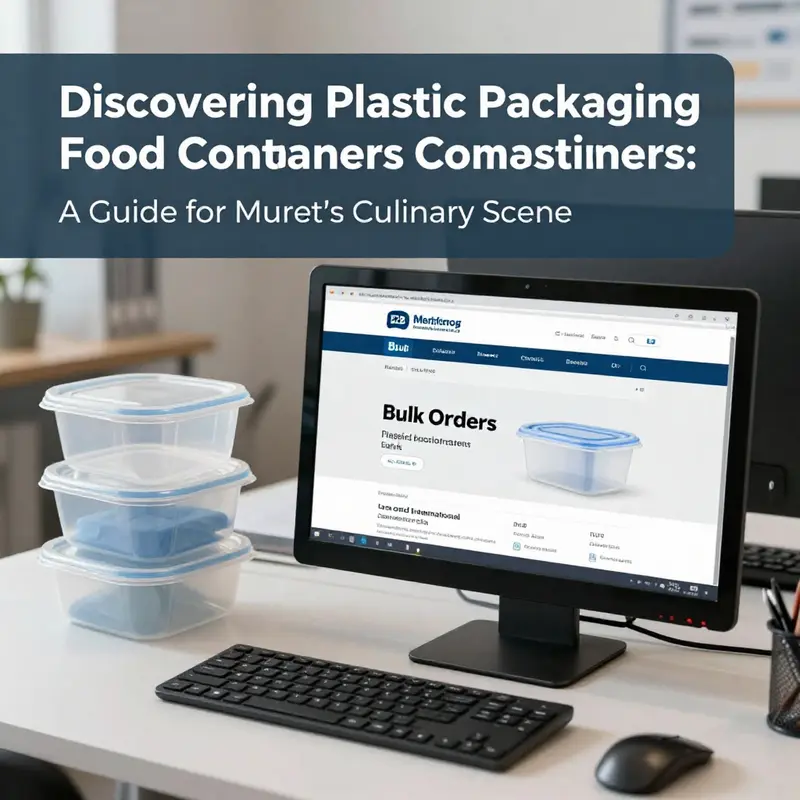
From the markets and storefronts of Muret to the ports and production clusters of Europe and beyond, the procurement of plastic food containers unfolds as a subtle study in optimization. It is not merely a matter of buying a box or a tray; it is a choreography of quality assurance, regulatory alignment, cost management, and logistical timing that must respect perishable products, customer expectations, and shifting political currents. In Muret, a region well positioned for distribution in southern France, procurement teams operate with a keen awareness that their choices ripple through fast-paced kitchens, retailer shelves, and the broader European supply chain. Local buyers are often attached to well-established retail and food-service networks where the emphasis is on reliability, compliance, and the ability to scale quickly when demand spikes for holidays, events, or promotional campaigns. The region benefits from robust logistics—rail and road connections that stitch it into the wider European market—yet it remains distant from the large-scale plastic-producing hubs. This creates a dynamic tension: the pull of international scale with the push of regional regulatory and service realities. In practice, this tension shapes the way decisions are made about materials, compatibility with existing equipage, and the feasibility of adopting new packaging concepts that promise both sustainability and performance.
Local procurement in Muret tends to be anchored in tangible, hands-on assessments of quality and service. Retailers and food-service operators understand that the container must not only protect the contents but also reflect a brand’s integrity in the consumer’s hand. The local buyers, including managers in charge of fresh sectors or deli lines, often prioritize EU-compliant materials and reliable delivery windows. They want packaging that can withstand the rigors of retail environments—from refrigerated cases to hot-holding cabinets—without compromising safety or appearance. This demands a careful evaluation of the materials themselves. Polypropylene (PP) and polyethylene terephthalate (PET) are among the most common food-grade plastics because of their heat resistance, chemical stability, and general safety for holding hot or refrigerated foods. Yet the European market is not content with mere functionality; it seeks packaging that aligns with broader environmental goals, from recyclability to reduced use of virgin plastics. In this context, the local supply chain in Muret is increasingly attentive to the lifecycle of containers, to how easily a packaging solution can be sorted, recycled, or repurposed after use, and to how well it integrates with the region’s waste-management infrastructure.
Local considerations also extend to the practicalities of day-to-day operations. For instance, the ability to brand containers through printing or labeling is a frequently cited criterion for bakery and dessert shop clients that want a distinctive imprint on their packaging. A common scenario involves a 4-inch round disposable cake container with a transparent lid and a black base—a combination that offers both visibility for the product and the space for a logo or other brand messaging. Such options are typically supplied by professional manufacturers who can deliver in a predictable cadence and with the necessary EU conformity documentation. In Muret, conversations about these options often occur against the backdrop of real-time operational needs: the demand for resealable bags for perishables, the need for leak-proof designs for sauces and dressings, and the requirement that containers withstand the temperature variations of a retail or food-service setting. The regional buyers are reminded that the container’s performance is as important as its price—the wrong choice can lead to waste, customer dissatisfaction, or regulatory complications that disrupt a perfectly timed service.
However, the local scene does not exist in isolation. The broader procurement ecosystem of Muret is deeply interwoven with international channels that offer scale, diversity, and price competitiveness. China remains a dominant production hub for plastic packaging, and the region’s procurement professionals recognize the appeal of sourcing from established industrial clusters that specialize in different production facets—from raw materials processing to final packaging. The allure lies in the ability to procure transparent, recyclable PET containers at relatively low unit costs when ordered in bulk. Reported figures in industry discussions suggest that large-volume orders can reach very low per-piece costs, creating a compelling business case for retailers aiming to stretch margins without compromising quality. Yet price is only one side of the equation. Lead times, quality consistency, and the reliability of supply are equally critical. The ability to pilot with samples before committing to large orders, the acceptance of international payment terms in USD, and the assurance of secure, traceable transactions are non-negotiables for buyers who want to minimize risk while expanding their sourcing options.
This global dimension also introduces a layer of strategic risk analysis. Recent political and economic shifts have heightened vigilance around import flows and regulatory scrutiny. A notable illustrative backdrop is the ongoing debate over trade arrangements within Europe and between Europe and its trading partners. Movements such as protests and policy shifts can influence import controls, tariffs, and non-tariff barriers, prompting buyers to reassess sourcing strategies and to reassess supplier proximity relative to regulatory clarity. In this milieu, Muret’s procurement teams often pursue a balanced approach: they maintain ties with established international suppliers for cost and volume advantages while preserving flexibility to respond to policy changes, currency fluctuations, and evolving consumer preferences toward sustainability. The strategic balancing act also entails attention to where innovation is happening beyond far-off production floors. Morocco, for instance, has emerged in industry discussions as an additional source of specialized packaging in some segments, while Europe continues to push for packaging solutions that reduce environmental impact without sacrificing performance. Europe’s emphasis on recyclability and the move away from non-recyclable plastics drive conversations about alternative materials, liner systems, and seal technologies that align with a future where waste streams are easier to sort and process.
International procurement brings with it a suite of operational considerations that Muret’s buyers must manage deftly. The procurement journey often begins with an assessment of the market’s total cost of ownership: the apparent price per item is only a fraction of the actual expense when shipping, insurance, duties, and potential returns are included. The decision framework increasingly favors suppliers that can demonstrate robust compliance certifications, traceability, and documented conformity with EU food-contact regulations. In this context, buyers seek platforms and networks that provide reliable supplier data, due-diligence assurances, and flexible payment options that accommodate cross-border transactions. They value partners who can deliver across the spectrum—from samples to large-scale orders—without sacrificing speed or accuracy. The value proposition of international sourcing is not merely about price; it is about the ability to scale, to adapt product formats to shifting product lines, and to respond quickly to demand surges that kitchens, retailers, and event organizers may face.
The balance of local and international procurement is, in many ways, a reflection of Muret’s role in the regional economy. It is a logistics node whose advantages lie in proximity to key transportation corridors and the capacity to serve a dense network of food-service establishments and retailers. Yet the region’s buyers cannot ignore the efficiencies offered by global producers who can deliver a wider range of container sizes, materials, and customization options. The choice frequently comes down to integrating a portfolio approach: an anchor of stable, EU-compliant, locally sourced containers for steady demand, complemented by strategic international purchases that unlock volume discounts, access to novel packaging formats, and the ability to test new packaging concepts before committing to a longer-term supply arrangement. This approach helps buyers maintain supply continuity while remaining adaptable to consumer expectations around sustainability and to regulatory developments that may tighten the permissible content of plastic materials or their end-of-life handling.
For buyers navigating this landscape, practical recommendations crystallize into a disciplined procurement practice. Real-time decision tools should emphasize supplier verification, compliance documentation, and transparent pricing structures. Platforms that support flexible payment terms in USD or EUR, provide clear incoterms, and offer logistics support for cross-border shipments reduce friction and enhance reliability. In addition, a thoughtful supplier mix—one that blends well-vetted local distributors with strategic international manufacturers—can help minimize risk while maximizing responsiveness. The procurement playbook should also embed environmental considerations as a core criterion, so that packaging choices not only protect food and brand integrity but also align with regional waste management capabilities and consumer expectations for responsible packaging. Customization options—such as logo printing on containers, or the ability to tailor sizes and lid configurations—can provide a competitive edge for food-service operators seeking to differentiate their offerings in a crowded marketplace.
In the midst of these dynamics, a practical example surfaces as a reminder of how diverse packaging formats coexist in the market. Consider a disposable container designed for hot and cold applications that can be customized with branding elements. This kind of packaging illustrates how a supplier can add value beyond the base container: prints, colour options, and fit-for-purpose features that respond to the specific needs of a bakery, a takeaway counter, or a catering operation. It also highlights how procurement decisions are increasingly informed by sustainability metrics—ease of recycling, the potential for recycled-content inputs, and the viability of end-of-life solutions that align with municipal waste streams.
The interplay between local and international procurement in Muret also reveals a broader strategic insight: the most resilient packaging supply chains are those that blend regional sensibility with global efficiency. To be prepared for the future, buyers must cultivate a sourcing repertoire that includes local suppliers capable of rapid response and reliable delivery, complemented by international partners who can deliver on economies of scale and a wider innovation pipeline. This synthesis supports not only the current operational needs of bakeries, cafés, buffets, and take-away operators but also the evolving expectations of consumers who are increasingly mindful of how their food packaging travels from the factory to the table. The result is a procurement ecosystem in Muret that is less about choosing one path over another and more about orchestrating a sustainable, cost-effective continuum that can adapt to shifting market conditions while preserving the integrity of food safety and brand reputation.
Within this narrative, practical evidence of packaging options remains essential. For those exploring details and examples of specific containers and customization, a concrete instance can be found in online product listings that showcase the range of disposable containers available for the market. This resource confirms that one can access a spectrum of sizes, materials, and printing capabilities through reputable suppliers in the international arena, while still sourcing from local distributors who can meet stringent delivery timelines and regulatory requirements. The dialogue between local practicality and global opportunity thus continues to shape Muret’s procurement tactics, reinforcing the idea that strategic sourcing for plastic food containers is not a singular decision but a coordinated, evolving process that aligns with regional strengths, global trade dynamics, and a shared commitment to safety, efficiency, and sustainability.
For readers curious about concrete, end-to-end packaging examples that illuminate the path from sample to scale, this chapter references a disposable container option described in online product listings. The format and features—clear lid, dark base, and customization potential—illustrate how packaging can serve as a brand touchpoint while meeting technical needs such as temperature tolerance and leak resistance. The link to such a resource is provided here for context and practical illustration: disposable-26oz kraft-paper-soup-cup-with-paper-lid-takeaway-lunch-packing-takeout-food-packaging-bucket. This example underscores that, even as plastic packaging remains central to many operations, the packaging ecosystem in Muret and similar markets continues to diversify, offering a mosaic of materials, formats, and services that together support efficient, compliant, and brand-enhancing food packaging strategies.
External reference: To understand the broader regulatory framework governing materials in contact with foods, readers can consult official guidance and analyses from European authorities on food-contact materials. See the European Food Safety Authority’s resources on food-contact materials and their safety considerations for a comprehensive overview of compliance expectations across the supply chain.
null

null
Final thoughts
As Muret continues to grow as a culinary hub, the significance of quality plastic food packaging cannot be overstated. From ensuring food safety to enhancing brand representation, choosing the right containers is pivotal for success in the competitive food industry. By understanding the options available—ranging from industrial-grade containers to the intricate details of procurement and safety standards—businesses can tailor their approach to meet customer expectations and regulatory requirements. Investing in these packaging solutions will not only streamline operations but will also foster customer trust and satisfaction.