
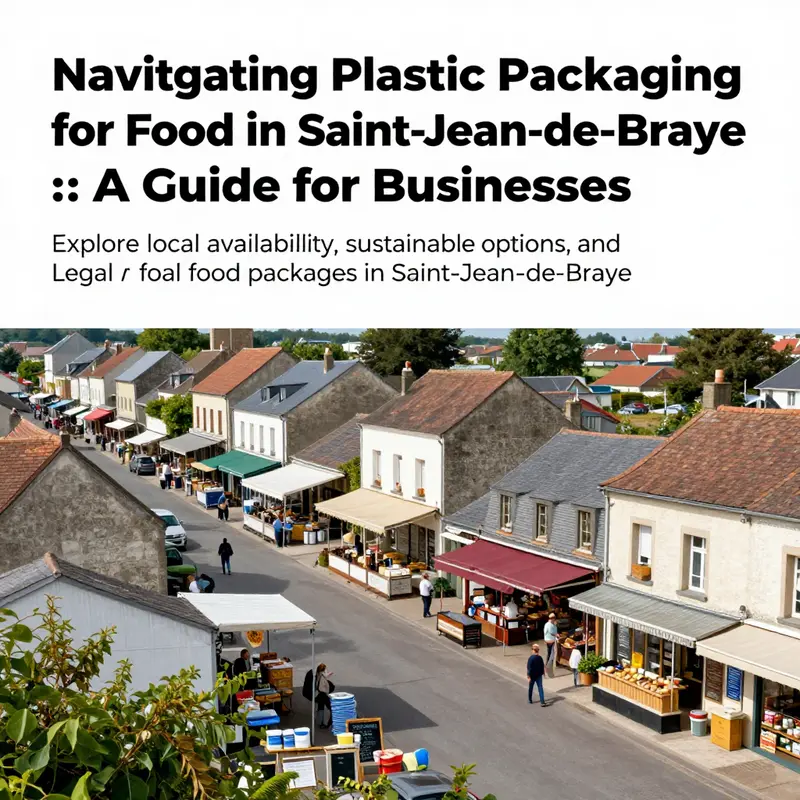
In the bustling culinary landscape of Saint-Jean-de-Braye, France, the choice of food packaging—particularly plastic containers—plays a crucial role for businesses such as bubble tea shops, restaurants, food trucks, and catering services. Understanding local availability of plastic packaging, exploring sustainable alternatives, and recognizing the impact of French legislation can empower businesses to make informed choices. This article delves into these key areas, providing insights into resources and recommendations that will benefit your establishment while promoting a more sustainable community.
Tracing Access and Compliance: Local Availability of Plastic Food-Container Packaging in Saint-Jean-de-Braye, France
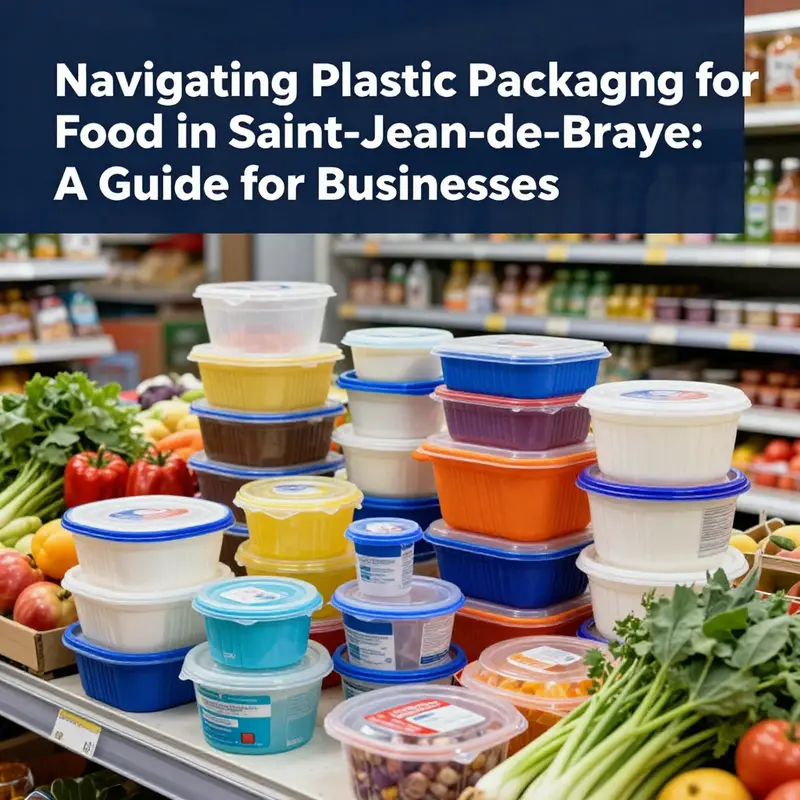
Saint-Jean-de-Braye sits on the outskirts of Orléans, a commune whose everyday rhythms—shopping for groceries, picking up takeaway, and running small-scale cafés or home kitchens—are increasingly shaped by a continental push to curb plastic waste. In the published material that frames this chapter, there is no clearly identified supplier or retailer in Saint-Jean-de-Braye itself that specializes in plastic packaging for food containers. Yet the absence of a named local source does not equate to an absence of options. Instead, it highlights how local access to packaging goods is often mediated by a broader network that spans nearby towns, regional distributors, and evolving regulatory requirements that ripple through retail floors and household pantries alike. The landscape thus invites a careful, ground-truthing approach: it asks readers to map not only where goods come from but how rules and market shifts shape what is available and how it is used in day-to-day life.
In practical terms, the everyday consumer and local businessperson in Saint-Jean-de-Braye intersects with packaging choices through several channels. Supermarkets in Saint-Jean-de-Braye and the surrounding area—Orléans in particular—have been gradually redefining their approach to packaging. The shift is visible in the rise of reusable shopping options, a growing offering of recyclable or compostable containers, and a willingness to present customers with alternatives to traditional single-use plastics. While the specifics of which packaging types are immediately on shelf or readily accessible to a small shop in Saint-Jean-de-Braye can vary by store, the wider regional trend is clear: there is an ongoing transition away from conventional disposable plastics toward materials deemed more sustainable, or toward systems that minimize packaging altogether through reuse or bulk sales. In this sense, the local picture is less about a single supplier and more about a pipeline—how goods travel from manufacturers and regional distributors to the store shelves or the takeaway counter, and how that flow is shaped by a mix of consumer demand, regulatory signal, and corporate policy.
For households and small businesses seeking reusable or sustainable options, the landscape is further illuminated by the presence of nearby zero-waste initiatives and sustainable retail practices. Though the research notes that Saint-Jean-de-Braye lacks a dedicated, well-publicized roster of plastic packaging suppliers, it is common to find in the wider area shops and marketplaces that stock reusable containers, paper-based or plant-based alternatives, and services oriented toward reducing plastic usage. The search terms suggested in the overview—emballages alimentaires réutilisables Saint-Jean-de-Braye and magasins zéro déchet Saint-Jean-de-Braye—point toward a consumer behavior pattern rather than a single catalog of local vendors. In other words, the local story is not simply “who sells packaging here,” but “where can you obtain sustainable options here, and how do you incorporate them into daily routines?” This distinction matters because it frames access as a combination of physical proximity, information availability, and the ongoing reconfiguration of retail spaces to accommodate reuse and recycling streams.
A closer look at the regulatory frame helps explain why the local market behaves the way it does. Across the European Union, legislation governing materials that come into contact with food has been a central driver of packaging strategies. The chapter’s referenced regulation, EUR-Lex: Official Journal C 176, lays out stringent expectations for the materials used in contact with food, emphasizing that food-grade raw materials must be used, and that certain substances—commonly discussed in public debates around safety, including BPA and other potentially hazardous additives—are restricted or controlled. More than a list of banned substances, the regulation speaks to testing regimes and migration limits: how much material can migrate from packaging into food under defined conditions, and how the physical properties of packaging are to be characterized to ensure consistent safety and performance. For Saint-Jean-de-Braye, this regulatory logic translates into a local market that is not free to source “whatever seems convenient” but rather a market guided by suppliers who can acknowledge and demonstrate compliance with migration testing, batch traceability, and material safety. The practical effect is that even if a given shop or market is not physically located within the commune, the regional supply chain must align with these standards for the products it offers to customers.
Within France’s broader policy environment, the regulatory currents gained momentum as part of a national push against single-use plastics. The 2020 policy shifts—widely understood as a ban on certain disposable plastics, including utensils and other common single-use items—pushed businesses toward alternatives that can be reused or recycled. For Saint-Jean-de-Braye, this national framework interacts with EU-level rules, creating a layered compliance challenge for retailers, caterers, schools, and households. The practical implication is that local operators are nudged toward reusable systems or recyclable packaging that aligns with both national and EU expectations. The result is a marketplace that gradually favors vendors and products that can demonstrate end-to-end sustainability credentials, even if the local storefronts do not publish a full catalog of supplier names. In this setting, the consumer who wants to minimize plastic waste is not simply shopping for a tool but is participating in a broader, policy-driven transition that has already redirected market incentives toward reuse, refill, and recycling ecosystems.
For a reader or practitioner in Saint-Jean-de-Braye seeking to navigate this space, several strategies emerge as pragmatic routes to practical access. First, local residents can leverage regional directories and business listings to locate potential suppliers and distributors who operate in or near Orléans and the wider Centre-Val de Loire region. The research underscores the value of directed inquiries—contacting stores, speaking with buyers, and probing whether a retailer offers items in reusable packaging or accepts customers’ own containers for certain products. Second, the consumer and businessperson can explore community-level channels that emphasize sustainable living. Zero-waste stores, cooperatives, community kitchens, and local markets often host packaging-free or low-packaging options and can serve as hubs of information about how to source compliant containers or how to participate in bulk-buying arrangements that minimize packaging waste.
A practical, on-the-ground cue for those in Saint-Jean-de-Braye is to seek informal networks and conversations with store managers or market organizers who can point to nearest sources of compliant packaging or provide guidance on upcoming shipments or promotions. In a place where explicit supplier names may not be published in public directories, these people serve as navigators of supply. Likewise, engaging with regional trade associations or chamber of commerce bodies helps clarify which distributors regularly serve the Loire Valley area and how they align their product lines with EU food-contact regulations. The point is not to model Saint-Jean-de-Braye as an isolated market but to recognize it as part of a broader supply ecosystem where compliance and accessibility dance together.
From a consumer’s vantage, the topic of local availability intersects with everyday decision-making about how to eat and how to shop. Reusable containers and durable packaging models—whether for home storage or for takeaway—demand consistent behavior changes, such as better organization of containers at home, a habit of bringing personal containers to markets or eateries, and a willingness to participate in bulk or refill programs when offered. Some households might adopt paper or bamboo alternatives for takeout, aligning with this larger regional shift away from conventional plastics. Restaurants and cafés in or near Saint-Jean-de-Braye participate in this evolution by adopting safer and more sustainable containers for takeout and delivery, while also exploring waste-reduction strategies that reduce the reliance on plastic packaging overall. The end goal is not merely to replace one material with another, but to reframe the entire lifecycle of food packaging—from production to end-of-life—around safety, reuse, and waste minimization.
In this context, the potential to access packaging that is both practical for daily use and compliant with safety standards becomes a matter of how information flows through the local system. The search terms suggested—emballages alimentaires réutilisables Saint-Jean-de-Braye and magasins zéro déchet Saint-Jean-de-Braye—signal a path toward communities and stores that specialize in sustainable packaging approaches. While Saint-Jean-de-Braye might not host a single, prominent supplier on a map, the surrounding area contains a comprehensive ecosystem of retailers and distributors who regularly handle items that meet EU food-contact criteria and national waste-reduction goals. The lesson for practitioners and readers is clear: local availability exists not as a fixed inventory in one storefront but as a dynamic network of channels, guided by regulatory compliance, consumer demand, and regional logistical capabilities.
To ground these observations in tangible pathways, consider how an individual might navigate from curiosity to procurement. A person interested in plastic packaging for food containers would first identify a nearby supplier via regional business directories or chamber of commerce resources, then verify that the packaging is appropriate for food contact and compliant with migration-testing expectations. They would also evaluate whether the packaging is designed for reuse or intended for recycling, and what the end-of-life flow looks like in their municipality. In parallel, they could compare options for reusable containers versus biodegradable or paper-based alternatives, weighing factors such as durability, washing feasibility, storage space, and overall lifecycle impact. Importantly, this process would often involve cross-checking with the local cafés or eateries that already use alternative packaging, thereby gaining practical perspectives on what works well in day-to-day operations and what logistical constraints might arise in Saint-Jean-de-Braye.
Throughout this discussion, a compact but meaningful thread runs through: local availability is inseparable from regulatory alignment. Even when a Saint-Jean-de-Braye consumer or businessperson cannot name a specific supplier in their town, they exist within a regulatory and logistical network that sustains safer, more sustainable packaging choices. The EU framework referenced here—captured in the Official Journal C 176 and accessible via EUR-Lex—provides the architectural backbone for these choices. It codifies expectations for the materials used in contact with food, sets guardrails on substances of concern, and frames the migration and testing regimes that certify that packaging behaves safely under real-use conditions. This alignment between regulation and practice helps ensure that when a local store or market in Saint-Jean-de-Braye offers a plastic food container option, it is anchored in safety and informed by best practices across the region and the wider union.
Framed in this way, the Saint-Jean-de-Braye chapter becomes a laboratory for understanding how local access to packaging operates within a larger regulatory and cultural shift. The absence of a named, stand-alone supplier in the commune does not signify a barren local market; rather, it points to a more integrated system in which consumers, retailers, waste-management stakeholders, and policymakers coordinate through information exchange, regional logistics, and shared objectives around reducing plastic waste. The path forward for residents and business owners alike is thus twofold: cultivate a practical, local sense of access by connecting with nearby stores, markets, and zero-waste networks; and cultivate a robust compliance-aware mindset that recognizes how EU and national regulations shape product availability, labeling, and end-of-life options. In this sense, Saint-Jean-de-Braye stands as a microcosm of a broader European transition—from scattered plastics to a circle that emphasizes reuse, safe materials, and responsible disposal.
For readers who wish to explore regulatory context more deeply, the EU regulation cited here provides a comprehensive framework for food-contact materials. It underscores the importance of safe materials, migration limits, and the testing regimes that underpin consumer protection in packaging. You can consult the EU regulation available at EUR-Lex for the precise text and related interpretations. This regulatory lens is not merely an abstract backdrop; it is a practical guide that informs how local shops source materials, how compliance is demonstrated, and how households decide which packaging options fit their routines while meeting safety standards. The total effect is a local market in Saint-Jean-de-Braye that, while not always visible in a single storefront, is nonetheless shaped by a coherent system that ties everyday packaging choices to a legal and environmental framework.
In sum, the local availability of plastic packaging food containers in Saint-Jean-de-Braye operates within a broader ecosystem that blends nearby retail dynamics, regional distribution, consumer preference for sustainable options, and a robust regulatory architecture. The absence of a discrete Saint-Jean-de-Braye supplier name does not erase the possibility of access; it reframes access as an interface—where physical proximity, store-level practices, and community networks meet the regulatory demands of food safety and environmental responsibility. As this interface evolves, it invites residents and businesses to engage with both the practicalities of sourcing and the principles of safeguarding health and planet, a pairing that remains at the heart of modern packaging decisions in Saint-Jean-de-Braye and beyond. If you wish to explore a catalog of related packaging categories online, you can visit minor site sections that curate packaging options, including the plastic-packaging category, which can be navigated here: plastic-packaging.
External resource for deeper regulatory context: the EU regulation available through EUR-Lex, which outlines the framework for materials in contact with food and migration testing standards, can be accessed here: https://eur-lex.europa.eu/legal-content/EN/TXT/?uri=CELEX%3A32025L0485.
Locally Grounded, Globally Responsible: Reimagining Sustainable Food Packaging in Saint-Jean-de-Braye, France
Saint-Jean-de-Braye, a town tucked beside Orléans along the Loire, offers a quiet but telling LAB for how communities approach packaging in the 21st century. The rhythms of everyday life here—market mornings, school lunches, neighborhood cafés, and local associations’ gatherings—bring into sharp relief a basic question: what happens to the packaging that carries our meals? The answer, increasingly, is not a single path but a spectrum of possibilities aligned with public policy, household habits, and the practical realities of local supply chains. Though the town may not yet have a formal roster of plastic packaging suppliers singled out for the food sector, its position within the broader French framework makes it a useful microcosm of a transition that is unfolding across many municipalities. In Saint-Jean-de-Braye, the push toward sustainable packaging is not a distant ideal but a converging set of actions that people can see in their daily routines, from the shelves of nearby supermarkets to the takeout boxes used by neighborhood eateries and the municipal decree that nudges businesses toward alternatives to single-use plastics.
The local market landscape already reflects a shift. Supermarkets and food retailers in and around Orléans—though not unique to the town—have begun to recalibrate their packaging strategies. They are gradually reducing the volume of single-use plastic packaging and increasing the availability of containers that are recyclable, reusable, or compostable. For many residents, this shift is less about abstract environmental rhetoric and more about practical choices: finding containers that can be brought home, washed, and reused, or selecting packaging designed to move easily into a local composting stream rather than into a landfill. These changes do not always arrive with dramatic fanfare, but they alter the daily calculus of shopping and eating out. In such a setting, a small but meaningful segment of the population begins to look specifically for options when they buy prepared foods or choose takeout services, implicitly supporting a market that rewards packaging designed with end-of-life in mind.
Beyond the shelves, the public conversation about packaging in Saint-Jean-de-Braye is shaped by national policy. France enacted stringent bans on certain single-use plastics in recent years, a policy trajectory that has reverberated through retailers, restaurateurs, and consumers. The intent is straightforward: reduce pollution, curb waste, and encourage the adoption of reusable and compostable alternatives. While the law targets a broad national audience, its practical implications are felt locally when store managers and chefs confront questions about what can be offered, how it should be labeled, and where the packaging should ultimately go after its use. The policy environment therefore becomes a shared backdrop against which local actors—businesses, households, schools, and civil society groups—craft pragmatic solutions that work within Saint-Jean-de-Braye’s specific waste streams and recycling infrastructure.
For residents and enterprises seeking guidance, national bodies such as ADEME provide a crucial source of policy information, case studies, and best practices. ADEME’s resources help translate high-level environmental goals into local action plans, from measures for reducing food packaging waste to practical recommendations for designing products with end-of-life in mind. In the absence of a locally published dossier, these national resources offer a compass the community can use to evaluate options, compare tradeoffs, and build a coherent local strategy that aligns with regional waste management capabilities. The key takeaway is that the local decision-making process is not isolated from larger policy currents; it is reinforced by them, and in turn contributes to shaping how policy is implemented on the ground.
The practical pathway from policy to everyday life is helped by accessible actions that residents can undertake without waiting for a formal program to appear. The initial research points to a couple of constructive moves: first, recognizing the role of reusable packaging in everyday shopping and dining experiences; second, exploring the possibility of swapping single-use containers for durable, returnable, or compostable options in community settings. A simple example is a local market or school event where participants bring their own containers or where organizers provide containers designed for multiple reuses. Such measures may seem modest, yet they plant the seeds of a broader cultural transformation: a community that views packaging not as a disposable add-on but as an integral component of the meals people share.
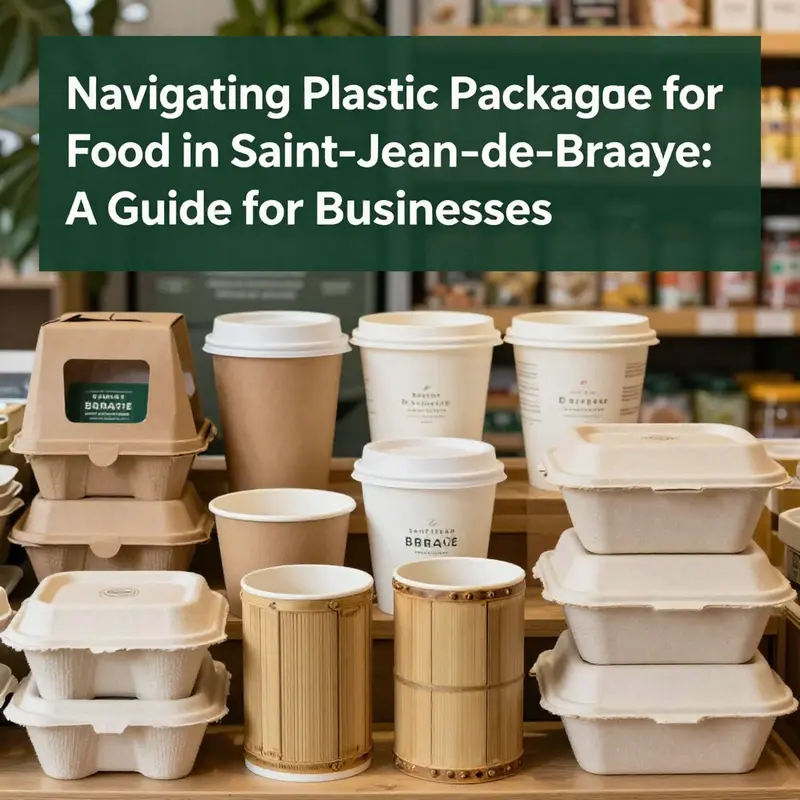
Of course, the transition requires practical materials and reliable suppliers. Even if Saint-Jean-de-Braye does not yet have a clearly defined supplier ecosystem for food-grade reusable packaging, the nearby urban economy creates a set of entry points. The presence of larger retail networks, combined with the region’s emphasis on sustainability, makes it possible to source containers that are either reusable or compostable, including options that surface in local grocery stores or zero-waste shops. The shift is not only about replacing plastic with another material; it is about rethinking the lifecycle of a container from design to end-of-life. A growing area of innovation in this field involves paper-based packaging that carries a plant-derived, plastic-free coating. These designs aim to sustain the look and feel of traditional takeout or deli packaging while ensuring that the material can degrade in appropriate composting environments rather than persisting as waste in landfills or the natural environment. In this context, the idea of a paperboard container coated with a seaweed-based, plastic-free film emerges as a compelling illustration of how modern packaging can perform in real-world settings without relying on conventional plastics. The goal is not to promise a single silver bullet but to describe a viable option that, if scaled locally, can reduce plastic leakage and align with waste processing capabilities in the region.
To illustrate how such innovations could fit into Saint-Jean-de-Braye, imagine a local café or bistro that serves salads, sides, and fried foods in paperboard containers coated with a thin layer derived from seaweed and other natural materials. The coating is designed to be compostable in industrial facilities or to break down under more controlled home-composting conditions, depending on local infrastructure and labeling. In theory, this approach can deliver the practical benefits of single-use convenience while significantly lowering plastic leakage and microplastic risks associated with conventional packaging. The idea is not to rely on a single experimental product but to demonstrate a broader class of packaging solutions that maintain product integrity during transport and storage while offering a clear, end-of-life path that fits the town’s waste-management realities. In Saint-Jean-de-Braye, such a development would be a tangible way to connect consumer choices with the municipal and regional waste streams, creating a feedback loop in which greater demand for sustainable packaging encourages more suppliers to participate, which in turn strengthens the local market and reduces overall environmental impact.
A crucial consideration is the end-of-life pathway. For a packaging solution based on a paperboard substrate with a seaweed-derived coating, the ideal scenario would involve composting facilities that can handle this material and clearly communicated labeling so households know how to dispose of it properly. Education and clear sorting rules are essential; otherwise, even well-intentioned packaging can end up in the wrong stream and lose its environmental advantage. This is where local partnerships matter. Schools, community centers, and small businesses can serve as testbeds for sorting education, where households receive simple guidance on what to compost, what to recycle, and what to keep for reuse. In addition, local waste-management services can help landlords and restaurant operators implement lightweight, reusable containers that can be scrubbed, sanitized, and reintroduced into service cycles, further reducing the pressure on landfills and reducing the demand for new packaging.
The decision-making process in Saint-Jean-de-Braye also hinges on cost considerations and the practical realities of supply chains. Reusable systems require a certain scale to be economically viable; thus, small-scale pilots can be a prudent first step. A few local cafés or a handful of school cafeterias could trial a mix of reusable options and compostable paper-based packaging, tracking metrics such as return rates, processing times, and consumer acceptance. Over time, these pilots can reveal what works best in the local context, including which packaging formats balance convenience, cost, durability, and environmental performance. The long view is not only about reducing plastic consumption; it is about building a resilient local economy that can adapt to evolving regulatory landscapes and consumer preferences. In this sense, the transition becomes a shared project among residents, retailers, food-service operators, and municipal authorities, each contributing to a system that prioritizes transparency, accountability, and continuous improvement.
In pursuing these pathways, it is helpful to lean into practical signs of progress already visible in related efforts. The broader France-wide movement toward reusable and compostable packaging aligns with a growing interest in zero-waste and sustainable consumption that has begun to take hold in towns near Saint-Jean-de-Braye. Local data may be scarce, but the underlying trend is evident: consumers want packaging that respects the environment, and retailers respond by offering options that reduce plastic waste and simplify disposal. For a local business considering how to participate in this transition, the field offers a few concrete steps. Begin by evaluating whether existing suppliers can provide paper-based packaging with certified compostable coatings, such as a qualified seaweed-derived film, and ensure that the packaging can perform adequately for the intended foods. If a supplier cannot guarantee end-of-life outcomes, seek alternatives that do. Additionally, consider labeling that clearly communicates the packaging’s composition and disposal instructions, which helps consumers sort correctly and reduces contamination in compost streams. A simple way to align with the recommended actions is to explore the range of paper packaging options available in the market and assess their suitability for different menu items, from salads to hot fried foods. The internal packaging ecosystem can then be mapped—identifying which materials go to recycling, which to compost, and which should be reused—so a restaurant or market can plan ahead rather than reacting to regulations.
The potential for educational partnerships should not be underestimated. Schools, youth groups, and citizen associations can host talks or demonstrations about how packaging decisions affect the environment, including the journey from packaging design to end-of-life. Such outreach builds an informed consumer base that is more likely to adopt reusable or compostable options when available. It also creates a sense of local pride in choosing packaging that reflects both global responsibility and local practicality. As neighborhoods become more engaged, the town can transform from a passive recipient of policy into an active co-creator of a packaging system that fits the community’s values and capabilities. In this light, Saint-Jean-de-Braye’s progress depends on small decisions that accumulate into meaningful change: choosing a more sustainable paper-based option for a single market day, instituting a shared reusable container program for a cultural festival, or encouraging vendors to adopt packaging that aligns with sorting strategies. Each step reinforces the message that sustainable packaging is not an abstract ideal but a tangible, visible improvement in the daily life of the town.
From a purchasing perspective, the direction is clear yet nuanced. Local buyers—whether in schools, municipal facilities, or food-service operations—should prioritize packaging that supports reuse and compostability, while also considering the practicality of source stability, cost trajectories, and compatibility with local waste streams. The emphasis should be on solutions that can be integrated into existing logistics without creating undue burdens on staff or tenants. To help with this, a practical resource is the broad catalog of paper-based packaging categories, which offers a spectrum from simple paper cups to more complex paper boxes and bags, all of which can be evaluated for end-of-life performance. When sourcing, organizations can look for materials that balance appearance, structural integrity, and environmental performance, with a preference for options that are clearly labeled for compostability or recyclability and that are supported by end-of-life infrastructure in the region. The ultimate objective is to cultivate a local purchasing culture that values packaging choices as part of a wider commitment to sustainability, rather than treating packaging as a disposable afterthought.
As Saint-Jean-de-Braye continues to articulate its own version of a sustainable packaging economy, the broader regional and national frameworks will continue to provide guidance and benchmarks. The town’s unique strengths—its proximity to larger urban centers, its engaged communities, and its experience with school and community-based programs—are assets that can accelerate the adoption of durable, low-impact packaging. The path forward will likely involve a blend of reusable systems in high-traffic venues, compostable paper-based options for takeaway and special events, and ongoing education about sorting and disposal. With thoughtful piloting, transparent communication, and a willingness to adapt, Saint-Jean-de-Braye can become a model for how a small French town translates national ambitions into concrete local gains. The result would be a packaging culture that resonates with residents’ everyday lives, supports local businesses, and aligns with the environmental promises that drew the community toward sustainable change in the first place.
Internal link: As packaging choices evolve, exploring the range of paper packaging options can help local buyers identify practical, scalable solutions. See the collection of options here: paper packaging options.
External resource: For a broader look at seaweed-based, plastic-free coating technologies used in paper packaging, see the external resource on seaweed-derived packaging innovations: https://notpla.co
Tracing the Ripple of Regulation: How French Law Reframes Plastic Food Packaging in Saint-Jean-de-Braye
Saint-Jean-de-Braye sits just alongside the historic streets of Orléans, a townscape where everyday routines—shopping, grabbing a quick bite, packing lunch for work—reflect a broader shift in how society views waste and the materials that contain it. The chapter of regulation that touches this place is not about distant abstractions; it is a steady, practical pressure that compels retailers, restaurateurs, and households to rethink what counts as acceptable packaging for food. France has used law to steer behavior toward more sustainable options, and Saint-Jean-de-Braye, like every municipality in the country, has become a site where policy meets everyday decision-making. In this landscape, the shift away from plastic single-use packaging is not a single event but a continuum—a transition that unfolds in the choices of a shopper selecting a fruit from a stall, in the supply lines of a local supplier, and in the careful balance between cost, convenience, and the desire to cut waste.
The core of the national push is a legislative frame designed to curb plastic waste while nudging society toward reuse and compostable alternatives. Since 2022, France has enforced provisions under the Loi Égalité et Citoyenneté, which bans single-use plastic packaging for certain pre-packaged food items, including fresh fruits and vegetables. The aim is simple in principle: reduce the volume of plastic in the stream of everyday consumption and redirect producers toward packaging that can be composted, recycled, or reused. The policy is nationwide in its scope, applying with the same expectation to Saint-Jean-de-Braye as to any town in France, even as local actors negotiate the specifics of implementation. In Saint-Jean-de-Braye, the consequences of this framework appear most clearly in the dramatic shift from plastic to paper-based wraps, cardboard boxes, and plant-based films that carry food from the stall to the consumer without generating the same waste footprint.
The practical implications of the law are visible in the rhythm of the local marketplace. Retailers who once relied on plastic films for everything from loose greens to packaged goods now lean into alternatives that promise a cleaner end-of-life outcome. Paper-based wraps, cardboard containers, and increasingly transparent plant-based films have moved from novelty to norm, driven by both compliance and a growing body of consumer expectations about environmental stewardship. Yet the transition is not free: it introduces higher costs for businesses, tighter margins, and the need for new supplier relationships that can guarantee consistent quality and supply of alternative materials. The financial calculus is not merely about the per-unit price; it encompasses storage considerations, the compatibility of packaging with existing refrigeration and display systems, and the labor required to switch labeling, sealing, and handling processes. For a town anchored by modest, locally oriented businesses, these shifts can feel especially acute, yet they also open space for innovation—a trial-and-error period in which local producers and retailers discover material choices that balance performance with sustainability.
In Saint-Jean-de-Braye, the transformation is not only about substituting one material for another; it is also a reimagining of what “packaging” can be. The shift toward paper-based and cardboard solutions resonates with a broader movement toward circular economy thinking. Paper and cardboard are more amendable to recycling streams and, crucially for municipalities, to well-established composting and standard waste sorting infrastructures in many parts of France. The adoption of plant-based films, when designed for recyclability or compostability, adds another layer of complexity: it requires clear labeling, robust consumer education, and reliable industrial composting options. The local government and regional partners have leaned into these dimensions through public information campaigns and workshops that explain why some packaging that looks environmentally friendly may not perform as hoped in a given waste-management system. The education piece, though intangible, is essential for ensuring that the intended environmental benefits are realized.
In this environment, the law becomes a catalyst for collective learning. Retailers learn to forecast demand for sustainable packaging more accurately, and suppliers begin to diversify their catalog to include cheaper, more widely available alternatives that meet both regulatory requirements and practical performance criteria. The consumer is no longer simply a user of packaging but a participant in a system: choosing products with packaging that aligns with local waste-management capabilities, returning or reusing containers where such programs exist, and supporting businesses that demonstrate clear commitments to reducing plastic waste. The social contract expands beyond a payment at the till to an understanding of how everyday acts—buying, carrying, storing, and discarding food packaging—feed into a larger environmental objective.
One of the most visible outcomes in Saint-Jean-de-Braye is the push toward reusable containers and the development of initiatives that encourage their use. Local authorities and civic organizations have begun to champion Zero Waste programs as a framework for community action. The idea is straightforward yet ambitious: reduce waste at its source by designing systems in which packaging is designed for repeated use rather than for single lifetime disposal. Reusable containers require a different infrastructure: return systems, collection points, and well-coordinated sorting and cleaning facilities to ensure that the containers can be reused without compromising food safety or convenience. These programs are not just about compliance; they are about building a cultural shift toward rethinking consumption. In practice, this means encouraging customers to bring their own containers for purchases that would otherwise be wrapped in single-use plastic, offering incentives for participation, and aligning price signals so that reuse appears economically reasonable as well as morally compelling.
Alongside these shifts, the legal framework also nudges the market toward transparency and accountability. The regulatory environment demands closer attention to labeling, the lifecycle of packaging, and the end-of-life options available to consumers. It requires businesses to be clear about what their packaging is made of, how it should be disposed of, and whether it is suitable for recycling, composting, or reuse. This emphasis on transparency builds consumer trust and helps avoid the confusion that can undermine recycling efforts. In Saint-Jean-de-Braye, as in many French communities, this leads to a more informed shopper who understands why a certain packaging choice matters and how it contributes to a cleaner local environment. It also creates a kind of civic literacy around materials—an awareness that different packaging materials have different fates after use and that the choice of packaging can influence the volume and composition of household waste.
A closer look at the supply chain reveals how legislation reshapes relationships among farmers, distributors, and retailers. The law increases the demand for alternatives to conventional plastics, which in turn stimulates investment and experimentation within local industries. Small producers and craft suppliers, often more nimble than large multinational brands, are now testing packaging options whose feasibility hinges on cost, supply reliability, and compatibility with local waste-processing capabilities. This is where the narrative of Saint-Jean-de-Braye echoes across the countryside: a regional ecosystem gradually aligning itself with a common environmental objective. The shift elevates packaging design from a mere afterthought to a strategic consideration that influences product presentation, shelf life, and the consumer’s perception of value. These are not trivial changes; when packaging supports longer product life, reduces waste, and signals a tangible commitment to the environment, it can become a differentiator in a crowded market.
The role of public resources and guidance cannot be overstated in this transition. While businesses navigate new practices, households turn to national and regional platforms for practical guidance on what to use, how to dispose of it, and how to participate in reuse schemes. The French Environment and Energy Management Agency (ADEME) and the Ministry of Ecological Transition provide policy updates, case studies, and best-practice recommendations that local actors can adapt to their circumstances. The guidance helps standardize expectations while recognizing the local context—differences in urban density, residential waste-stream capabilities, and the availability of composting infrastructure across towns such as Saint-Jean-de-Braye. In practice, this means that while the overarching policy is uniform, the pathways to compliance and the daily experiences of residents can differ from one community to another. The local example in Saint-Jean-de-Braye shows how policy can be translated into tangible changes in storefronts, dining establishments, and household routines without erasing the character of the town or its markets.
For readers seeking ways to engage with these changes at a local level, the practical steps are clear. Businesses can reexamine packaging selections to favor materials that align with local waste streams, invest in staff training to convey disposal instructions accurately, and collaborate with packaging suppliers who can offer reliable, compliant options. Consumers can participate by bringing reusable containers for takeout or choosing products with recyclable or compostable packaging and by supporting retailers that disclose clear end-of-life guidance. The intersection of policy, business strategy, and consumer behavior is where the story of Saint-Jean-de-Braye’s packaging evolution unfolds, revealing how regulation can catalyze innovation without sacrificing everyday convenience.
An additional thread in this narrative is the potential for innovation to create new local value. When regulations press for alternative packaging, entrepreneurs and manufacturers respond with creativity. They prototype solutions that are not only compliant but also practical for small businesses, schools, offices, and households. Some of these innovations involve standardized reusable systems that can be scaled across the town or region, while others focus on improving the recyclability of existing materials or reducing the overall weight and volume of packaging. The downstream effects are not merely environmental; they also influence logistics, waste collection schedules, and the way retail spaces are organized. The town’s markets, once dominated by quick-wrap plastic, may evolve into spaces where customers interact more directly with packaging choices, where vendors explain why certain materials are preferred, and where the act of purchase becomes an opportunity to participate in a broader environmental program.
To connect local practice with global learning, readers can explore resources on paper-based packaging among related supplier categories that emphasize sustainable options. For instance, a broader look at paper packaging can illuminate the different forms—wraps, boxes, plates, and bags—that might now appear in Saint-Jean-de-Braye’s shops and eateries. This not only clarifies what is possible but also demonstrates how small changes in packaging can align with public policy and consumer expectations. As one glances toward the future, the question is not whether the town will continue to adapt, but how quickly and with what blend of creativity, collaboration, and care for the local environment. The street-level changes—seen in the layouts of shops, the choices at the deli counter, and the items tucked into shopping bags—are the visible surface of a deeper, systemic shift toward sustainable packaging that France has chosen to pursue through law.
For those curious about concrete local options, readers can look into suppliers and product categories that focus on reusable and sustainable packaging. A useful starting point is the broad category of paper packaging, which encompasses a range of solutions—from simple wrappers to more substantial containers—designed to reduce reliance on plastics while maintaining food safety and quality. This pathway emphasizes not only the environmental benefits but also the practical considerations that matter to small businesses in Saint-Jean-de-Braye: compatibility with existing equipment, customer acceptance, and the availability of materials that resist moisture and grease while still being easy to recycle or compost where facilities exist. paper packaging options can serve as a gateway to understanding what is feasible in a local context, and how the regional market might evolve to meet the policy’s aims with an eye toward affordability and reliability.
The legal framework, then, is not a rigid straightjacket but a compass that points toward a shared objective: a reduction in plastic waste and a shift toward packaging systems that are recyclable, compostable, or reusable. In Saint-Jean-de-Braye, this compass points through the everyday actions of shopkeepers and shoppers alike—through the selection of packaging at the point of sale, the instructions provided with products, and the willingness of residents to participate in reuse programs or to adapt to new disposal routines. The story of this town is one thread in a national tapestry that increasingly recognizes the value of design, materials science, and behavioral change in achieving environmental goals. It is a story that will continue to unfold as municipalities, businesses, and households experiment with what works best in their unique contexts, always guided by the principle that waste prevention, rather than waste management alone, holds the potential for lasting change.
Those seeking a more formal understanding of the policy environment can consult official sources that outline the legal framework and its updates. The Ministry of Ecological Transition provides detailed statements, while national codes offer the precise requirements for packaging and labeling, reuse schemes, and end-of-life options. This official material helps illuminate the rationale behind the transition and the expectations placed on different actors in the supply chain. In Saint-Jean-de-Braye, where the day-to-day practice of shopping and eating begins to reflect these higher-level aims, such sources anchor local efforts in a broader, coherent national strategy that connects the town to a nationwide movement toward sustainable packaging and responsible consumption.
For readers who want to explore related considerations in greater depth, international and national resources offer a wider lens on how packaging choices interact with public policy, consumer behavior, and environmental outcomes. The overarching lesson from Saint-Jean-de-Braye is that regulation can stimulate innovation and collaboration across sectors, turning a previously ordinary aspect of daily life—the packaging of food—into a site of experimentation, learning, and shared responsibility. The town’s experience suggests that when policy invites participation, it can yield benefits that extend beyond compliance, fostering a culture in which households, shops, and producers work together to reduce waste, improve resource efficiency, and cultivate a more sustainable local economy.
External resource for policy context and updates: https://www.ecologie.gouv.fr
Beyond Local Shelves: Navigating Plastic Food-Container Resources for Saint-Jean-de-Braye in a Changing French Landscape
Saint-Jean-de-Braye sits at a quiet intersection of daily life and policy, a town where the practical needs of feeding a family and running a local business interface with national and European momentum toward reducing plastic waste. In this setting, the question of where to source plastic packaging for food containers is less about a single storefront and more about a web of relationships—between supermarkets adapting their practices, small cafés exploring alternatives, regional distributors listening to new regulations, and citizens weighing convenience against environmental impact. The chapter that follows is not a catalog of suppliers but a narrative about how a community like Saint-Jean-de-Braye can chart a thoughtful path through the current realities of plastic packaging for food, informed by local constraints, policy shifts, and the practicalities of everyday life.
From the outset, it’s clear that there is no well-defined local registry of plastic packaging suppliers specific to Saint-Jean-de-Braye. The town’s location near Orléans means that residents often encounter the same supply channels used in larger urban areas: regional wholesalers, national chains, and online platforms that ship to a broad audience. Yet the absence of a dedicated local database is not a dead end. Instead, it invites a more integrative approach. Local supermarkets and stores—across Orléans and its environs—are increasingly experimenting with packaging strategies that minimize single-use plastics and increase the visibility of reusable or recyclable options. In practical terms, this translates to stores offering reusable bags, encouraging customers to bring their own containers for bulk goods where feasible, and providing packaging solutions that emphasize recyclability or compostability. The shopping trip thus becomes an opportunity to observe and participate in a broader shift toward sustainable packaging, rather than a simple transaction.
For households and small-scale food-service operators, the landscape also includes a growing array of alternatives to traditional plastic containers. Cafés and restaurants are more frequently considering paper, cardboard, and plant-based materials for takeout or dine-in service, aiming to reduce reliance on conventional plastics while maintaining food safety and quality. While not every local eatery transitions at the same pace, the aspiration to minimize plastic packaging creates a shared incentive: customers increasingly expect options that align with environmental values, and businesses respond by trialing new solutions. This trend is reinforced by national policy signals that filter down to local markets. France’s policy context, including the ban on certain single-use plastic items that became effective in 2020, has placed a premium on reusable and recyclable packaging across the food chain. In Saint-Jean-de-Braye, as in much of the country, this means that suppliers and buyers alike are navigating a regulatory rhythm that rewards transparency about materials, compliance with safety standards, and a willingness to adopt alternatives that can withstand food-contact conditions.
The regulatory thread is important because it shapes what is permissible and what must be demonstrated for food contact materials. In France, and more broadly in Europe, packaging used for food contact must meet safety standards that govern migration of substances, overall environmental impact, and, increasingly, end-of-life handling. Local actors—whether a small bistro, a market stall, or a school kitchen—benefit from clear guidance on these requirements. This is where public and quasi-public bodies come into play. The French Environment and Energy Management Agency (ADEME) is a central resource for policies, case studies, and practical guidelines related to reducing plastic use and promoting reusable packaging. While ADEME’s materials cover the national scope, they are directly relevant to Saint-Jean-de-Braye’s efforts to align local practices with national sustainability objectives. The thrust of ADEME’s guidance is to encourage inventive, regionally appropriate solutions that reduce the environmental footprint while preserving food safety and consumer convenience. For residents and businesses seeking to understand what is permissible and what is recommended, ADEME’s website provides a clear, literature-backed entry point into the current policy landscape and the best-practice examples that can be adapted to local circumstances.
Beyond national bodies, the local economy offers avenues for practical sourcing. Directories such as Kompass or Yellow Pages France can help identify suppliers who distribute plastic food containers in or near the Loire region. These platforms serve as starting points for discovering manufacturers or distributors who may not advertise locally but can serve Saint-Jean-de-Braye via regional networks. Engaging with such directories can yield a short list of potential partners who understand food-contact regulations and can provide materials that meet the necessary safety criteria. For organizations that want to go deeper, trade associations associated with packaging or food-service industries can be invaluable. In France, associations like the Fédération des Entreprises de l’Emballage (FEEM) connect businesses across the packaging sector, offering standards, best practices, and networks that can help local buyers discover compliant suppliers and stay updated on evolving regulations.
A practical, downstream concern is the choice between single-use plastic packaging and reusable or recyclable options. The transition is not simply a matter of preference; it is a decision grounded in practicalities such as availability, cost, storage, and compatibility with food types. For a community around Saint-Jean-de-Braye, the feasibility of these choices depends on several factors: whether the local supply chain can offer reliable, food-grade containers in appropriate sizes; whether local kitchens and stores can manage deposit systems or return programs; and whether consumers are prepared to adjust to new norms around packaging. In households, this might mean a deliberate shift toward bulk purchasing with reusable containers, adopting standardized sizes that fit home storage and transport needs, and choosing containers that are durable, microwave-safe, and freezer-friendly where appropriate. In commercial settings, it means evaluating suppliers not only by price but by compliance, trackability, and service. A reliable supplier should provide documentation on the materials used, demonstrate compliance with food-contact safety standards, and offer guidance on end-of-life handling—whether through recycling programs or through durable, reusable options.
Tie-in with online resources is a practical step. For those who want to survey a broad spectrum of options quickly, a targeted online search using French keywords such as emballages alimentaires réutilisables Saint-Jean-de-Braye or magasins zéro déchet Saint-Jean-de-Braye can reveal local markets and shops that emphasize sustainable packaging. Such searches may also uncover local zero-waste stores that specialize in refill systems, bulk purchases, and a selection of reusable containers that are suitable for takeout or home storage. Even if these shops do not stock every type of packaging a restaurant might require, they can be excellent partners for bulk purchases, consistent with a broader shift toward minimizing waste. Networking with these stores and with consumer groups that advocate for reuse can also illuminate practical strategies that have worked in nearby towns with similar demographics and infrastructure.
An additional layer of strategy is to examine sustainable packaging practices from a regional perspective. The Loire region, with its own environmental policies and business networks, can provide insights into how packaging norms are evolving, what incentives exist for businesses to reduce plastic use, and where to find funding or technical support for the transition. Regional policymakers often encourage projects that demonstrate reduced waste, improved recycling rates, and better end-of-life outcomes. In Saint-Jean-de-Braye, community-supported initiatives—such as coordinated shopping cooperatives, school programs that teach sustainable packaging literacy, and collaborations between restaurants and packaging suppliers—can create a local culture that values practical, reusable solutions. Importantly, this is not merely about compliance; it is about building sustainable routines that become second nature to residents and businesses alike.
The practical question remains: where can a resident or local business begin to assemble a credible set of resources for plastic packaging that aligns with safety standards, consumer expectations, and environmental goals? The path begins with a deliberate reconnaissance of local channels and a willingness to engage with broader networks that provide technical guidance. In Saint-Jean-de-Braye, this means talking to managers of nearby supermarkets about their ongoing initiatives to reduce single-use plastics and to promote reusable or recyclable packaging. It also means contacting local cafés and markets to understand what alternatives they have tried, what has worked, and what barriers remain. These conversations reveal a spectrum of solutions, from bulk-purchasing arrangements that minimize packaging waste to the adoption of takeout containers made from compostable materials or recycled content. While not every solution will fit every operation, the underlying principle is clear: reduce waste at every stage of the packaging life cycle, from procurement to disposal.
For those who want to map out a more formal sourcing plan, the following approach can be practical. First, consult local business directories to identify potential suppliers and distributors who can meet food-contact material requirements. Second, reach out to trade associations and regulatory agencies to confirm compliance expectations and accessibility of resources. Third, align with ADEME and ANSES guidelines to ensure the materials chosen are appropriate for the intended food-contact use, with attention to migration limits and safety considerations. The aim is to cultivate a network of partners who can provide not only containers but also the information needed to use them safely and responsibly. The journey is incremental; it takes time to build relationships, verify documentation, and implement processes that accommodate both customer convenience and environmental integrity. Yet the payoff—fewer single-use plastics, clearer safety standards, and a community that demonstrates tangible progress toward sustainable packaging—is meaningful and achievable.
In practice, the exploration of options can also be framed by a simple question: what is the most responsible packaging choice for a given food item, in a given setting, at a given time? The answer is rarely a single, universal solution. It depends on the type of food, the storage conditions, the duration of use, and the feasibility of reuse or recycling within the local infrastructure. In Saint-Jean-de-Braye, where local food outlets and households share common goals of reducing plastic waste, the most effective approach is often an integrated one. Use recyclable or compostable containers where appropriate, pair them with robust recycling streams or composting programs, and incorporate reusable containers for frequent applications such as takeout or meals on the go. This approach respects the health and safety standards that protect food, while also nurturing a culture of stewardship within the community.
To help anchor these ideas in practical action, consider the following synthesis: identify a short list of potential suppliers via local directories, confirm their compliance credentials and materials data sheets, and test a small pilot with a few containers for a limited period. Engage customers or diners in feedback about usability, comfort, and performance. This process can reveal preferences, uncover practical challenges, and guide adjustments. As suppliers respond to demand for safer, more sustainable materials, the local ecosystem around Saint-Jean-de-Braye can benefit from a feedback loop that supports continuous improvement. In short, the absence of a dedicated local supplier directory is not a barrier but a prompt to integrate local knowledge with national standards and regional networks, allowing the community to co-create a practical, resilient approach to plastic packaging in food service and home life.
A final reflection centers on the value of cross-pollination between local action and broader resources. While Saint-Jean-de-Braye may not host a large cluster of packaging manufacturers within its municipal borders, it is part of a connected network that includes nearby cities, regional associations, and national guidance. The shared objective is to reduce plastic waste while preserving the convenience and safety that food packaging must deliver. By embracing a collaborative mindset—linking supermarket initiatives, small-business experiments, consumer groups, and regulatory guidance—the town can move toward solutions that are both effective and scalable. In this sense, the local journey mirrors a national and even global transition: a transition that respects food safety and public health while honoring the practical realities faced by households and food-service operators every day.
For readers who want a quick pointer to a broader set of packaging resources online, a concise gateway exists in the plastic packaging category on a packaging resource site. This category aggregates examples, ideas, and case studies that illustrate how different materials perform in real-world settings, from cold to hot foods, from short-term takeout to longer-term storage. Exploring this category can provide a practical sense of the options, tradeoffs, and rationales behind material choices, and it may spark ideas that are directly transferable to Saint-Jean-de-Braye’s local context. plastic packaging resources serves as a starting point for understanding the spectrum of materials used in food packaging, their relative benefits, and the considerations that accompany their use in everyday life.
As this chapter closes, the overarching message is clear: Saint-Jean-de-Braye does not live in isolation from national and global packaging narratives. Local decisions—what to buy, what to reuse, and how to dispose of packaging—are part of a larger system aimed at reducing plastic waste and improving food-safety practices. By leveraging local channels, engaging with regulatory guidance, and drawing on regional networks, residents and businesses can create a pragmatic, evolving approach to plastic packaging that honors both people and the planet. The journey is not about acquiring a single perfect solution but about cultivating a resilient ecosystem of practices, suppliers, and governance that can adapt as policies tighten, consumer expectations shift, and new materials and technologies emerge. And within that dynamic, Saint-Jean-de-Braye can become a microcosm of responsible packaging—a place where everyday choices align with safety, sustainability, and shared progress.
External resource: https://www.anesfrance.fr
Final thoughts
The evolving landscape of food packaging in Saint-Jean-de-Braye necessitates that businesses remain vigilant and adaptable. Understanding local access to plastic food containers, exploring sustainable alternatives, and staying informed on French legislation will enable businesses to not only comply with regulations but also contribute positively to the environment. By prioritizing sustainability and informed choice, establishments can enhance their customer appeal and make significant strides towards a healthier planet.