
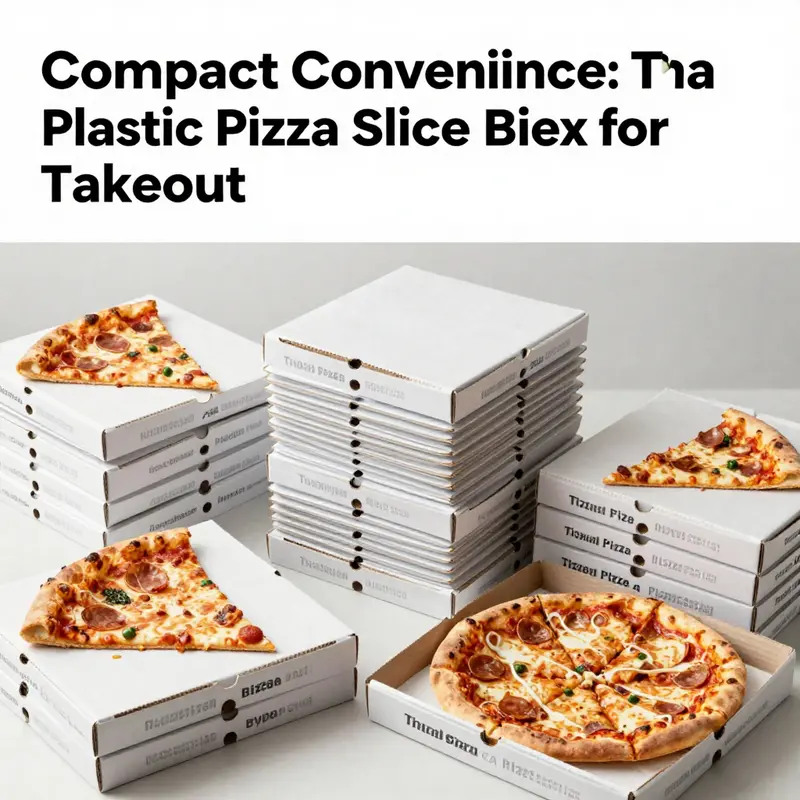
The food service industry thrives on convenience and sustainability, and the plastic pizza slice box stack container stands out as a quintessential solution for businesses such as bubble tea shops, restaurants, food trucks, catering services, event planners, and corporate procurement teams. These containers are not just about preserving food’s integrity; they also represent a smart packaging choice that meets modern demands. In this article, we will delve deep into the specifications that make these boxes exceptional, uncover the latest market trends shaping their adoption, and examine their environmental impact and compliance in ensuring food safety.
Stacked Precision: The Specifications Behind a 1-Plastic Pizza Slice Box Stack Container for Compact Takeout
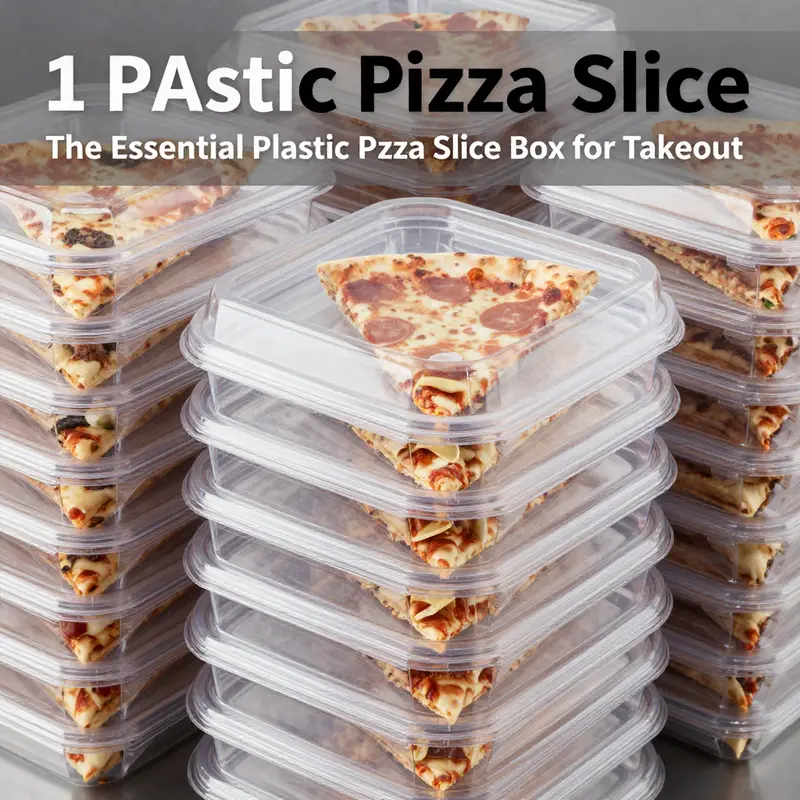
Every pizza box starts with a purpose, and that purpose is more than mere containment. In the world of takeout and catering, a single slice presented intact can be a defining moment for a brand. The journey from dough to doorstep hinges on a carefully engineered container that balances protection, presentation, and practicality. The specifications of a plastic pizza slice box stack container designed for compact takeout food are a map of trade-offs, where material science, human factors, and logistics converge to ensure every slice arrives as intended. At first glance, one might see a simple box, but the wear and tear of real-world transport, the heat of a hot pie, and the volume constraints of delivery fleets demand a design that can perform consistently under pressure. The Spec—when done well—reads like a well-edited recipe: precise materials, purposeful geometry, predictable performance, and clear pathways for cleaning, reuse, or recycling. This chapter follows that recipe, threading together the material choices, the geometry that protects slices, and the operational realities of fast-casual kitchens, mobile units, and catering operations that rely on compact takeout solutions.
Material and construction are the backbone of any container intended for hot pizza slices. The material is typically a food-grade, lightweight plastic chosen for its transparency, rigidity, and resilience. In many contemporary designs, the material falls within the family of tough, clear polyesters, favored for their balance of clarity and toughness. The choice of a high-grade, food-safe polymer means the container can be reused or recycled with minimal risk of compromising food safety. Heat resistance is a critical parameter here. The container must withstand temperatures that commonly accompany hot pizzas—often up to 180°C (356°F)—without warping, softening, or releasing unwanted flavors. This is not merely about surviving a brief moment of heat; it is about preserving the integrity of the crust, cheese, and toppings during a multi-leg journey in a crowded takeout environment. The clarity of the material is not cosmetic. A transparent or translucent container helps staff verify slice counts at a glance, reduces the need for opening and re-closing, and supports the impulse-driven decision-making that governs consumer pick-up and delivery.
Design and functionality converge in a feature that is both elegant and practical: an interactive tripod-style stand that keeps individual slices upright and separated. This element is more than novelty; it is a deliberate mechanism to prevent crushing and to maintain slice integrity. When slices sit upright, their edges are shielded from the contact that would otherwise occur in a stacked pile. The stand also minimizes smear and grease transfer by maintaining a small but meaningful air gap around each slice. The tripod geometry distributes weight evenly, so a box that carries several slices does not sag at the center, which could otherwise push into the toppings. What emerges from this is a container capable of accommodating both thin-crust and thick-crust pizzas. The thickness of the slice and the arrangement within the box must be considered, as each variation can influence how well the slices sit, whether they rub against each other, and how easily a customer can extract a single slice without dislodging the others.
The practical benefits flow from this design into daily operations. A lightweight, stackable configuration enhances storage efficiency in kitchens, on delivery racks, and in catering trucks. When space is at a premium, every centimeter counts, and a compact footprint translates to more boxes per shelf, fewer trips to restock, and reduced weight per order. For catering events or mobile operations, the stackability translates into smoother handling during setup, transport, and break-down. This design aligns with the broader demand for convenience in takeout packaging: the container is easy to carry, easy to open, and easy to reseal or reclose when needed. The tray’s geometry supports straightforward nesting when empty, which simplifies inventory management and minimizes space requirements in a busy kitchen. In addition, the container’s construction supports hygiene and maintenance—grease resistance, simple washing, and compatibility with dishwashing or high-temperature sanitization processes when the design is intended for reuse. Hygiene considerations are not only about cleanliness; they are about the risk calculus of cross-contamination and the practicalities of repeated cleaning cycles. A smooth interior and minimized crevices reduce food debris buildup and simplify the cleaning workflow, which is essential for any reusable packaging system.
From a performance perspective, the container must deliver durability without being a burden to the user. Its weight is deliberately kept light to prevent fatigue during busy shifts and to optimize transport economics. Yet lightness should never compromise stability; the box should resist tipping during transit and should maintain its shape even when jostled in a delivery vehicle or under a heat lamp in a catering setting. The modular nature of the stack container means it can be counted on to maintain its form under a typical range of loads—whether it carries two generous slices or a full-quarter of a pizza that remains upright as it travels. The design also anticipates the practical realities of a fast-paced dining environment. The lid—whether integral or separate—must close securely enough to minimize leakage and preserve temperature without creating a fiddly, time-consuming sealing action that slows service. A well-calibrated fit helps staff complete orders quickly and reliably, reducing the risk of misdelivery or compromised presentation.
The hygienic and maintenance profile of the container reinforces the case for its design choices. The construction prioritizes a smooth interior surface that is easy to wipe clean and sanitize. Where reuse is a strategic objective, the container must tolerate repeated cleaning cycles without losing its structural integrity. Resistance to grease and oil is critical; the interior should be engineered to resist staining and to resist degrade when hot oils contact the surface. Cold stability is also part of the equation, since some deliveries may involve cold toppings or longer transition periods. A robust plastic that remains rigid at lower temperatures reduces the risk of deformation that could compromise the upright stance of each slice. This kind of resilience is particularly valuable for operators who rely on a consistent customer experience across a broad delivery footprint. Beyond cleaning, the lifecycle implications matter. Reusable containers must justify their higher upfront cost with long-term savings, which means durability matters as much as aesthetics. When a container lasts through many cycles, it becomes a sustainable choice that also aligns with an operator’s branding and environmental commitments. In this sense, the specification is a balancing act; it seeks a material and geometry that survive repeated uses while still presenting a crisp, professional image on delivery or at the event site.
This is where standards and compliance come into play. Food-contact materials must meet regulatory expectations that govern safe contact with edible products. The container’s material, its surface finish, and its adhesive or assembly methods must be appropriate for direct contact with warm foods. Compliance with recognized standards, such as those set forth by food-safety authorities, provides reassurance to operators and customers alike. The goal is a container that not only performs in practice but also does so within the regulatory framework that governs food packaging. For operators who emphasize sustainability, there is also a growing emphasis on recyclability and the possibility of returning or recycling containers after use. If single-use disposables are chosen, the design should maximize recyclability through material selection and product design. If reuse is the route, the container should accommodate a simple sanitation process that supports efficient turnover. The tension between upfront cost and lifecycle value remains central. A reusable container with a longer service life can offer a compelling return on investment for catering companies and fast-casual pizzerias, while still delivering the convenience and reliability customers expect.
Branding and customization increasingly intersect with the physical specifications of a pizza slice box. The fine details—color, texture, and finishing—contribute to the overall brand experience. A container that presents slices in a clean, transparent shell supports branding strategies that emphasize freshness and quality. Some operators use subtle branding on the exterior of the box to reinforce corporate identity, while others lean into the sustainability narrative with markings that signal recyclability or reuse. Customization can extend to printing on the container or its lid, and it can be designed to accommodate logos, slogans, or contact information without compromising the functional requirements of the box. The modern consumer expects packaging to do more than simply transport food; it should tell a story about the brand’s values and its approach to environmental responsibility. In the end, the message conveyed by the container is as important as the message delivered by the toppings on the slice.
The holistic view of the specifications reveals a practical ecosystem. Material performance, geometry, hygiene, and lifecycle management all feed into a single objective: to preserve the slice’s integrity from oven to bite. A tripod-style stand is not merely a novelty, but a functional feature that prevents crushing, preserves presentation, and supports clean handling. The stackability and compactness address real-world constraints in kitchens, trucks, and delivery routes, while the heat resistance ensures safety and quality for hot pizzas during transit. This alignment of features supports a reliable user experience, a consistent brand impression, and a pragmatic approach to waste and resources. For operators, the decision often hinges on how well a container can be integrated into their existing workflows without adding complexity. A well-specified container becomes a reliable ally in the daily choreography of food preparation, packaging, driving, and serving. It reduces the cognitive load on staff, speeds up service, and protects the investment in both product and brand.
As operators weigh the options for compact takeout solutions, a keen eye on the spec sheet helps separate performance from perception. A container may look promising in a brochure, but only through real-world testing—how it handles grease, heat, stacking, and cleaning—does its value reveal itself. The tripod stand helps ensure slices stay upright and separated, which reduces the likelihood of toppings shifting and crusts becoming soggy on the journey. The packaging choice then becomes a decision about how to manage the entire end-to-end experience: from the moment the pizza leaves the oven to the moment it is opened by a hungry customer. In this sense, the specifications function as a contract between design intent and operational reality. They are a guide for cooks, packers, drivers, and customers alike, communicating expectations and delivering a dependable experience that ends with a satisfied bite.
For operators exploring options beyond plastic—a trend increasingly embraced by brands aiming to convert to more sustainable packaging—the landscape includes recyclable kraft alternatives and compostable innovations. Even as the plastic slice box holds its ground in many contexts, the broader conversation about packaging sustainability continues to evolve. The decision to pursue a reusable, durable plastic option versus a single-use or recyclable option depends on a complex matrix of factors: cost per use, waste management infrastructure, customer expectations, and corporate commitments to the circular economy. In the long term, the most compelling solutions are those that balance performance with environmental stewardship, while preserving the consumer-friendly traits that make takeout pizza a reliable, enjoyable experience. The specifications discussed here illuminate how a well-designed container achieves that balance—how every curve, hinge, and surface plays a part in a chain of events that culminates in a hot, intact slice arriving at the customer’s door.
To illustrate how packaging ecosystems can complement one another, consider a broader palette of options that brands may draw from when designing takeout experiences. Within a suite of options that includes both plastic and paper-based configurations, the choice can reflect regional preferences, energy considerations, and the specific demands of a given service model. For instance, some operators may pair a high-performance plastic slice box with a sustainability message that highlights recycling or reuse. Others may opt for a kraft-paper alternative for certain offerings, using a design language that aligns with brand values without sacrificing functionality. The internal decision often spans a spectrum of trade-offs, but the goal remains constant: deliver a pizza experience that is as compelling in the box as it is on the plate. The tripod stand and the specific geometry of a compact takeout container become a tangible expression of that objective, shaping how staff handle the product and how customers perceive the care invested in their food. In practice, the chapter’s specifications are not just about the box; they are about the choreography of service, the confidence of the operator, and the satisfaction of the guest who expects a slice that looks as good as it tastes, from oven to door, with every bite delivering on a promise of quality and reliability.
For further reading on packaging materials and food-contact safety standards, you may explore regulatory resources that detail the safety expectations for containers that come into contact with hot foods. This external resource provides context on the governing principles that inform the material choices, finishes, and hygiene practices embedded in modern takeout packaging. External resource: https://www.fda.gov/food-packaging-food-contact-materials. And for operators who want to see related packaging options in a broader family of takeout containers, a practical reference point can be found at a related internal resource that explores kraft-paper takeaway boxes with clear lids and print options, which demonstrates how packaging design extends beyond plastics to support branding and sustainability goals: disposable kraft paper takeaway box with clear lid. This link showcases how a packaging solution can be optimized for presentation, hygiene, and reuse in a context that complements the plastic container discussed here. It is a reminder that the modern takeout ecosystem thrives on a carefully chosen mix of materials, each selected to meet specific performance criteria while reinforcing the overall brand narrative.
In summary, the specifications of a 1 plastic pizza slice box stack container for compact takeout food are more than a product brief. They are a technical, operational, and strategic framework that translates into reliable performance, efficient workflows, and a consistently high-quality customer experience. The tripod stand, the materials, the heat and grease resistance, the hygiene-friendly interior, and the careful balance between upfront cost and lifecycle value—these elements coalesce into a packaging solution that makes a simple slice arrive in a manner that satisfies, protects, and delights. As the packaging landscape continues to evolve—with sustainability becoming more central and consumer expectations continuing to rise—the core principle remains intact: design that respects the slice, the journey, and the people who rely on it every day. External resource: https://www.fda.gov/food-packaging-food-contact-materials
Beyond the Slice: Market Dynamics and Durable Innovation in Plastic Pizza Slice Box Stack Containers for Modern Takeout

Sustainability has migrated from a buzzword to a concrete criterion that shapes both the materials and the lifecycle of packaging systems. In the pizza slice space, plastic does not necessarily equal waste, if the material is selected with recyclability and safety in mind. The dominant material in many solutions is a form of Polyethylene Terephthalate (PET), prized for its clarity, lightness, and resilience. PET’s recyclability and its ability to maintain clarity even after multiple uses align with brands pursuing responsibility without compromising performance. In parallel, there is growing interest in ensuring that the packaging is compatible with stringent food-safety certifications and environmental standards that reassure both operators and customers. The standards typically referenced include FDA safety criteria for food contact materials, along with recognized environmental certifications that speak to the lifecycle impacts of packaging materials. This alignment between performance and responsibility is no longer optional; it is a baseline expectation that informs sourcing, supplier selection, and even the branding language that restaurants deploy in menus, websites, and on-pack messaging.
Sustainability today is not a single material choice but a holistic approach to packaging that weighs recyclability, reuse potential, and the possibility of end-of-life recovery. The shift toward recyclable and reusable options has natural implications for design. A PET-based box must not only resist heat and provide a clear view of the contents but also survive the rigors of stacking, transit, and repeated handling. The ability to withstand heat up to approximately 180°C (356°F) ensures that hot pizzas remain in good condition without warping or collapsing the seal. High impact resistance maintains shape even when boxes are nested in stacks or leaned against car seats during short-range deliveries. In practice, this means that the container system—when executed with precision—minimizes crust sogginess by keeping slices upright and separated, and reduces the likelihood of crushing during transit. The emphasis on stackability is crucial for operators who balance inventory, storage space, and delivery demand. The compact profile offered by stackable designs allows a business to store more slices in less space, which translates into greater throughput during peak service times.
Another facet of sustainability concerns customization and branding, which can reduce waste by providing clearer signals to customers about content and handling. Brands increasingly seek to align packaging with eco-conscious narratives, and this drives interest in recyclable options and simple, elegant designs that minimize over-packaging. The modern pizza slice container is becoming a canvas as much as a container; it offers a surface for branding that is not merely decorative but functional, guiding customers through the experience and setting expectations for freshness and quality. In this context, the materials chosen must accommodate printing and branding without compromising barrier properties or recyclability. The trend toward recyclable and responsibly sourced packaging dovetails with the broader sustainability movement in the foodservice sector, where customers and operators alike are more likely to reward practices that reduce waste, improve end-of-life outcomes, and demonstrate a credible commitment to environmental stewardship.
Beyond materials, the market is increasingly shaped by smart, functional design features that elevate both efficiency and presentation. Contemporary stackable plastic pizza slice holders go beyond containment to deliver an integrated transport solution. They are engineered with upright support systems that keep each slice vertical, usually through a tripod-like balance or a series of subtle ribs that cradle the slice without compressing the crust. This arrangement helps preserve the slice’s integrity, prevents sogginess by reducing surface-area contact with moisture, and presents the pie in a way that is visually appealing, especially during catering events or at outdoor gatherings. The portability of these containers is enhanced by their light weight and durable construction. The design language centers on ease of use: simple opening and closing actions, resealability where appropriate, and predictable stacking that does not require excessive manual handling. As a result, both kitchen crews and delivery drivers benefit from faster assembly, fewer misplacements, and a reduction in food waste due to mis-packed orders.
The visual appeal of a well-presented slice matters to the customer experience. The upright presentation, height stability, and the clear or lightly tinted plastic enable a peek at the toppings and cheese without removing the lid. This is not mere aesthetics; it is an operational advantage. When a customer can see a well-constructed slice under a clean, well-sealed lid, the perceived value rises. This perception can influence tipping behavior, repeat purchases, and brand loyalty. In a market where competition is intense, the packaging becomes a differentiator that communicates a commitment to quality, sanitation, and thoughtful design. Within this framework, a container system can support a cohesive service concept—whether at a fast-casual counter, a mobile pizza truck, or a catered event—by delivering consistent performance across varied handling scenarios.
Hygiene and food safety form the third pillar in the current trajectory of these containers. The post-pandemic emphasis on cleanliness has translated into a demand for certified, food-grade materials and sealed, resealable designs that minimize contamination risk during transit and handling. Sealed options help preserve slice integrity and reduce moisture exchange, while resealable features offer a hygienic way for customers to reclose a container for later consumption. Certification schemes such as BPI and SGS, along with adherence to FDA food-contact guidelines, provide a framework for trust that operators can translate into marketing messages. This focus on hygiene does not merely shield customers from contamination; it also simplifies operational protocols for staff, who can rely on consistent performance and predictable cleaning cycles for reusable or semi-reusable systems. Even within a predominantly single-use model, the emphasis on hygienic design translates into easier cleaning, more efficient turnover, and lower risk of cross-contamination between orders.
Market operators—ranging from single-unit pizzerias to multi-outlet franchises and non-traditional venues like mobile catering—have embraced the idea that a packaging solution is an integral component of the service proposition. In practical terms, this means that purchasing decisions are increasingly tied to a supplier’s ability to provide a coherent ecosystem: the box, the lid, and any compatible accessories, all designed to work together in a stackable, space-efficient manner. It also means that procurement teams assess long-term cost implications, including the potential for reuse, the ease of cleaning and sanitization, and the ability to source compatible components consistently across locations. The result is a packaging strategy that is as much about operational efficiency as it is about product presentation. The implication for any operator is clear: invest in a system that reduces handling complexity, protects the customer experience, and supports sustainable, scalable growth. This holistic approach to packaging is what underpins the market’s projection of continued growth, with demand driven by a combination of convenience, brand differentiation, and environmental responsibility.
From a market perspective, the trajectory for plastic pizza slice box stack containers is buoyed by the broader demand for disposable and reusable food packaging in the takeout and catering segments. Growth is forecast to persist as consumers increasingly rely on takeout solutions for meals beyond traditional dining hours, while catering events demand reliable, attractive, and easily transportable presentation. The value proposition extends beyond the box itself; it encompasses the entire logistics chain, including the ease of stacking in storage, the speed of order assembly, and the reliability of holding temperatures during transit. The packaging system thus becomes a strategic enabler of throughput and service quality, which in turn can influence customer satisfaction, repeat orders, and overall brand perception. In this sense, market trends converge on a shared objective: to deliver high-quality, safe, and aesthetically pleasing slices through packaging that is robust, adaptable, and sustainable. This convergence creates a fertile environment for innovation, where designers and operators collaborate to refine forms that meet evolving consumer expectations without compromising the practical demands of high-volume service.
To ground these observations in the broader economic context, the market is characterized by a continued emphasis on efficiency and scalability. The design and material choices are increasingly informed by life-cycle thinking, where recyclability and end-of-life handling are treated as integral to the product’s value proposition. The forecasted compound annual growth rate (CAGR) for disposable and reusable food packaging, particularly in the sector surrounding takeout and catering, points to a healthy expansion through 2030. This growth is not merely a function of rising demand for convenient food; it also reflects a shift in how operators approach sustainability, branding, and hygiene as cohesive components of a service model. A modern pizza slice packaging strategy, therefore, is not simply about getting a hot slice from the oven to the customer. It is about delivering a complete, reliable experience that preserves texture and flavor, communicates a brand’s values, and aligns with responsible consumption patterns.
For readers seeking a practical glimpse into how these concepts translate into real-world packaging choices, one can envision a system arranged to maximize efficiency while minimizing waste. A stackable container minimizes footprint in storage and transit, while its upright design helps maintain the slice’s shape and presentation. The combination of clear visibility and secure closure can enhance customer confidence and reduce the likelihood of crust damage during delivery. At the same time, the option to choose recyclable or compostable materials, when feasible, gives operators a credible path toward reducing environmental impact without sacrificing performance. It is precisely this balance—between durability, efficiency, and sustainability—that defines the current market landscape for plastic pizza slice box stack containers and positions it for continued relevance as consumer expectations evolve and the service economy expands.
To connect these insights with practical choices, operators can consider how a given packaging system fits into their workflow. Do the containers stack cleanly in the storage racks used in the kitchen and in delivery vehicles? Do the lids or sealing mechanisms tolerate repeated openings without losing integrity? Is the material compatible with the hot temperatures typical of freshly baked pizzas while still offering clarity for appealing presentation? These questions guide procurement decisions, supplier conversations, and, ultimately, the customer’s experience. The answers will vary depending on whether the operation emphasizes rapid service, premium presentation for events, or sustainability throughout the supply chain. In all cases, the core principles remain stable: choose a system that preserves quality, supports efficient handling, minimizes waste, and communicates a commitment to safety and responsibility.
Consumers, too, are a critical part of the equation. The modern diner is more likely to notice packaging that looks and feels trustworthy, that protects the contents, and that aligns with their own values about sustainability and hygiene. Social media and online reviews amplify these perceptions, making packaging a platform for storytelling as much as for function. A well-designed box can become a quiet ambassador for a brand, reinforcing the idea that quality begins the moment the slice is boxed and ends with a clean, satisfying bite. For operators, this means that the packaging choice should be integrated with the broader brand experience, from the counter display or mobile app to the moment of receipt and the memory of flavor. The packaging thus plays a role in shaping the overall impression and in influencing future ordering behavior.
In this evolving landscape, a single takeaway is clear: the market trends in plastic pizza slice box stack containers for takeout food are anchored in a triad of sustainability, smart design, and hygiene. Each pillar reinforces the others, forming a robust framework that supports operational efficiency, customer satisfaction, and environmental responsibility. As takeout and catering continue to expand their reach, the container system that best balances these dimensions will be widely adopted, driving a virtuous cycle of investment, innovation, and improved service. For operators who want to explore practical ways to pair these concepts with real-world packaging choices, a look at flexible, recyclable packaging families can illuminate paths toward greater efficiency and sustainability. This approach not only secures the integrity of the pizza slice in transit but also signals a modern, responsible business model to customers who increasingly value how their meals are packaged as part of the entire dining experience. In other words, the market trends around plastic pizza slice box stack containers are not just about boxes; they are about building a reliable, scalable, and responsible system that elevates takeout as a whole.
For a closer look at sustainable packaging options in a related category, see this example of eco-friendly kraft paper soup cup with lid, which illustrates how branding, usability, and sustainability can align across a takeout service. https://cupbowlpack.com/product/senang05-disposable-eco-friendly-kraft-paper-soup-cup-bowl-with-paper-lid-takeaway-lunch-packing-takeout-food-packaging-bucket-bowl/ The example underscores how eco-friendly materials and practical design principles can translate across different takeout formats while maintaining the core advantages of stackability, durability, and safety. It is a reminder that packaging innovation often travels across product families, informing best practices and inspiring new configurations that serve a growing ecosystem of operators and customers alike.
External resource for broader context on safety and regulatory considerations in food packaging can be found here: https://www.fda.gov/food-packaging
In sum, the current market dynamics for plastic pizza slice box stack containers for takeout food reflect an industry that is maturing in its understanding of how packaging intersects with food quality, brand storytelling, and sustainable practice. The arc points toward systems that are lighter, stronger, and smarter—containers that hold up under pressure, preserve the integrity of a hot slice, and travel with confidence from the oven to the doorstep. The container is not merely a vehicle for a pizza; it is a critical touchpoint in a service that seeks to delight in the moment of delivery while keeping faith with long-term commitments to the environment and public health. The future of takeout pizza packaging, therefore, lies in coordinated choices that marry performance with responsibility, efficiency with presentation, and convenience with care.
null
null
Final thoughts
As the demand for convenient and sustainable takeout solutions expands, the plastic pizza slice box stack container offers a compelling option for diverse food service businesses. Its specifications ensure that slices remain intact during transport, while the market trends indicate a growing acceptance of such packaging solutions among consumers and businesses alike. Moreover, understanding its environmental impact and compliance with safety standards is crucial in adopting eco-friendly practices. By choosing these containers, businesses can enhance service quality while aligning with sustainability goals, ultimately boosting customer satisfaction and brand loyalty.