
Monosodium glutamate (MSG) is recognized for its ability to enhance flavors in various food products, making it an essential ingredient for numerous industries. For bubble tea shops, restaurants, food trucks, catering services, event planners, and corporate procurement teams, understanding the wholesale market for MSG-containing foods is vital. This guide will explore the importance of sourcing MSG effectively, the variety of finished products available in wholesale markets, emerging economic trends, regulatory compliance standards, and health considerations surrounding MSG usage. Each chapter will provide insights tailored to your needs, aiming to help you make informed decisions about incorporating MSG into your offerings.
From Fermentation Hubs to Finished Dishes: Mastering Wholesale MSG for Food Production
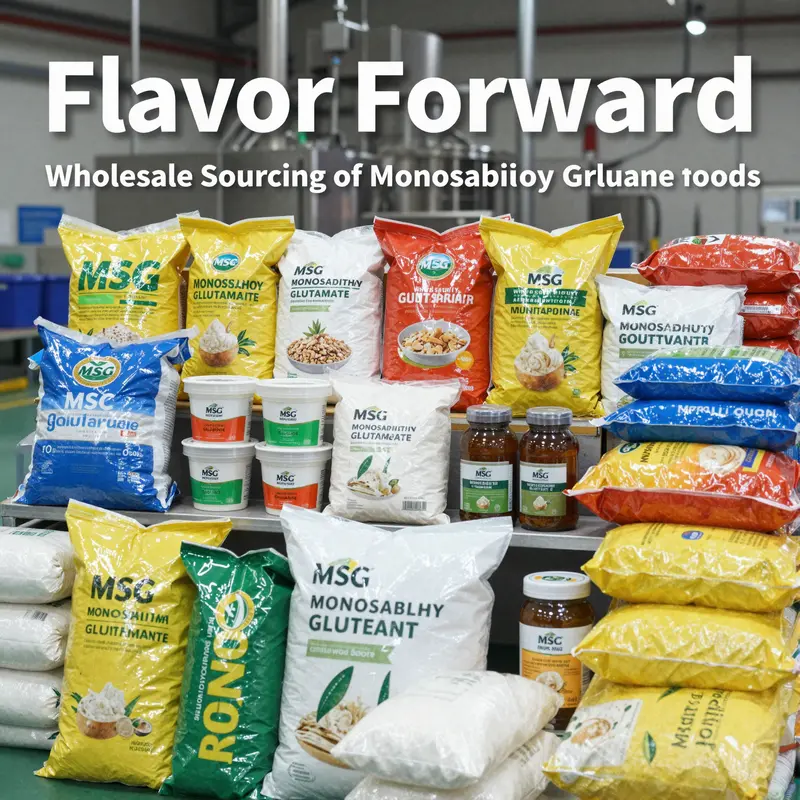
Monosodium glutamate (MSG) sits at a quiet yet pivotal point in the modern food system. It is not merely a single seasoning on a shelf but a conduit between raw science, industrial scale, and consumer palates. When a food producer contemplates wholesale MSG, the decision ripples through procurement, quality assurance, product labeling, and ultimately the brand’s relationship with its customers. The wholesale landscape comprises two intertwined avenues: the supply of pure MSG as a commodity ingredient and the procurement of finished MSG-containing foods or blends that already integrate the additive into a recipe. The act of sourcing becomes a strategic exercise in balancing cost, risk, reliability, and regulatory compliance, rather than a simple price comparison. This is especially true in a market where the supply chain is global, the regulatory environments are variegated, and the demand for consistent sensory outcomes is non-negotiable.
At the core of wholesale MSG procurement is the reality that China dominates production, responsible for the majority of the world’s output. The country’s leadership rests on a combination of integrated biotechnology infrastructure, access to abundant feedstock like corn and cassava, and highly concentrated industrial corridors. These corridors, particularly those centered in major provinces, host large-scale fermentation facilities that transform starch derivatives into high-purity L-glutamic acid. The process proceeds from microbial fermentation to crystallization and precise drying, yielding food-grade MSG that can be packaged for bulk use or further processed into finished products. This geography matters for buyers in two consequential ways. First, regional clustering translates into more predictable supply and shorter lead times. Second, it shapes the cost ecology of the market, as the proximity of raw materials, energy, and logistics networks helps to keep prices competitive, even when global demand swings. The result is a wholesale ecosystem in which the base ingredient can be ordered in substantial quantities with a degree of assurance about supply stability.
Within this global network, Shandong Province stands out as a central node for amino acid manufacturing. Its advantage is not mere scale but the efficiency born from a well-developed logistics network, proximity to raw material suppliers, and access to deep-water ports that streamline imports and exports. For buyers, this translates to a practical benefit: readiness. When a customer places an order for large quantities, the expectation of stock availability and a reliable delivery window becomes more credible, with typical timelines shrinking to a matter of days and, in many cases, arriving within a couple of weeks. The tradeoff is not a race to the bottom on price alone but rather an optimization that blends cost with certainty. The same logic governs the Zhejiang region, where producers frequently emphasize premium-grade additives and sophisticated packaging, aimed at export markets that demand traceability, labeling precision, and rigorous compliance with international standards. In these markets, packaging integrity and item-level traceability become as important as the chemical purity of MSG itself, because the end products must travel through diverse regulatory landscapes before reaching consumers.
To navigate this terrain, buyers must deploy a holistic supplier evaluation framework. Price remains a factor, but it cannot eclipse the more consequential competencies that determine long-term viability. Technical capability matters: does the supplier operate under a recognized quality management system, and can they demonstrate consistent product specification across multiple batches? Operational reliability matters as well: can they ramp production to meet rising demand without sacrificing quality or service levels? And transactional transparency matters: are batch-specific certificates of analysis (CoA) readily available, and is there a clear, auditable chain of custody from raw material inputs to finished shipments? These questions become even more salient when the MSG is destined for products that require strict regulatory alignment. For any food production operation that exports or distributes internationally, certifications such as ISO 22000, HACCP or FSSC 22000 are not optional decorations but essential assurances that the supplier maintains robust food safety management systems. When applicable, Halal or Kosher accreditation further broadens market access and reduces compliance friction across diverse consumer segments. In practice, buyers should request CoAs for each batch and prefer suppliers who can provide a complete picture of testing results, sampling plans, and lab accreditation status. This is a nontrivial safeguard against receiving inconsistent material that could jeopardize flavor consistency, texture, or shelf life in end products.
Pricing in wholesale MSG fluctuates with grade, volume, and the level of certification a buyer requires. Industry chatter often points to bulk pricing that begins from modest levels, with scale enabling further discounts. For large-volume purchases, factory-direct supply options commonly present rates and term structures that reward long-term commitments and reliable forecastability. The economics of MSG procurement thus reflect a broader truth about modern food manufacturing: the lowest unit cost is not the sole determinant of total cost, because hidden costs, such as quality excursions, production downtime, or regulatory lapses, can erode margin far more quickly than a small difference in unit price. Strategic sourcing, therefore, emphasizes durable partnerships with vetted suppliers who can offer transparent documentation, consistent product performance, and responsive service. When a buyer can count on a supplier to meet quality thresholds batch after batch and to communicate proactively about any deviations, the advantages extend beyond the kitchen and into the factory floor, the packaging line, and even the brand’s reputation with retailers and consumers.
Finished MSG-containing foods—seasoning blends, instant soups and broths, sauces, and ready-to-eat meals—represent an equally important pillar of wholesale considerations. Here the procurement challenge shifts from raw material purity to formulation stability, flavor balance, and packaging design that preserves the MSG’s functionality over the product’s shelf life. Finished products often require customized formulations, private labeling, and packaging that complies with diverse regulatory regimes. Several buyers opt for manufacturers who can provide private labeling or co-development services, enabling them to integrate MSG into existing product lines while preserving their own brand identity. In this space, compliance with international food safety standards remains paramount. Suppliers who align with FDA, EFSA, or FSSAI requirements—not just in documentation but in operational practices—offer buyers a greater degree of confidence when products cross borders. This is especially relevant for exporters targeting multi-regional markets, where regulatory expectations vary and the pace of product launches can be rapid.
The logistics of finished MSG products demand careful attention to packaging, labeling, and containment during transport. Packaging innovations can help preserve flavor integrity, minimize caking, and reduce moisture ingress, all of which affect performance in finished goods. For buyers, the implication is clear: packaging decisions are not a downstream concern; they are an integral part of the procurement strategy that interfaces with supply chain, quality assurance, and regulatory compliance. In many cases, suppliers provide packaging options that are tailored to the buyer’s route to market, including private labeling and bespoke label designs that align with branding policies and regulatory disclosures. The overarching aim is to achieve a reliable end-to-end flow—from the moment raw MSG enters the facility, through formulation and processing, to the final product meeting packaging, labeling, and safety requirements in the destination market. The result is a streamlined chain where each link reinforces quality and consistency rather than introducing variability.
For buyers seeking practical access points to the broader market, several global B2B platforms connect manufacturers and food producers with suppliers capable of delivering MSG in bulk, including both the pure ingredient and finished product formats. While satisfying, these platforms require disciplined supplier vetting and a clear risk management plan. As part of that plan, many buyers emphasize the importance of long-term partnerships that can sustain quality and service levels, even as market conditions evolve. The procurement mindset shifts from chasing the lowest price to cultivating relationships that ensure continuity, traceability, and compliance across product lines. The emphasis on rigorous QA, transparent documentation, and dependable delivery turned procurement into a strategic function that supports brand promises and regulatory adherence.
An essential practical step in this environment is the deliberate integration of packaging and labeling considerations into the sourcing process. When final products are involved, collaboration with packaging suppliers and labeling teams becomes critical to ensure that the MSG content meets regulatory disclosure requirements and that the packaging preserves product quality under anticipated distribution conditions. For readers looking to explore related topics on how packaging choices influence product stability and presentation, see Packaging printing options. This internal pointer helps connect MSG procurement with the broader packaging and presentation decisions that affect market acceptance and shelf performance. Packaging printing
On the external side, the lexicon of MSG—its role, safety profile, and technical specifications—continues to evolve with evolving consumer expectations and regulatory guidance. For a precise definition and contextual usage, the Cambridge Dictionary provides a concise reference that helps align terminology across teams and markets: https://www.cambridgeenglish.org/dictionary/english-chinesesimplified/monosodiumglutamate. This definitional anchor complements the practical guidance outlined here by clarifying how MSG is perceived in international discourse and how that perception informs compliance, labeling, and consumer communication. In practice, the best procurement narratives emphasize not just what is bought, but why it matters for flavor, safety, and brand trust across global supply chains.
null
null
MSG in the Wholesale Food Chain: Dynamics of Raw Ingredient and Finished Goods
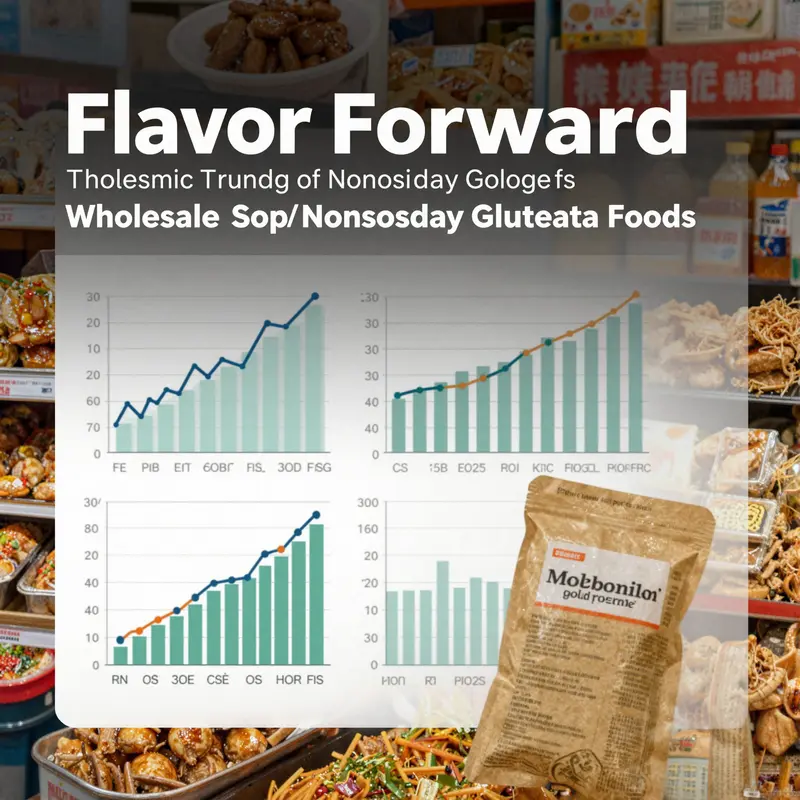
Monosodium glutamate sits at a pivotal juncture in wholesale food markets, connecting raw ingredient supply with finished MSG-containing products. Pricing, reliability of supply, regulatory compliance, and evolving consumer sentiment shape decisions across distributors, manufacturers, and foodservice buyers. In wholesale, the journey from pure MSG to finished goods unfolds along two tracks: raw ingredient procurement and the scaling of finished formulations that require consistent flavor delivery and batch-to-batch stability. Regional supply clusters, logistics costs, and long-term contracts influence landed costs and risk exposure, while platforms and private-label programs expand access to diverse buyers. As demand shifts toward transparency and clean-label options, some buyers evaluate fermentation-based or plant-derived alternatives, making value a function of taste consistency, regulatory clearance, and total cost of ownership rather than price alone. For wholesalers, the key to navigating this space is balancing cost, supply security, and product performance, while remaining adaptable to regional preferences and regulatory constraints.
Compliance as Compass: Steering MSG-Containing Foods Through Wholesale Markets
In wholesale markets, monosodium glutamate (MSG) is more than a seasoning. It is a regulatory compass that points buyers and suppliers toward safety, transparency, and efficient trade across borders. The journey from raw ingredient to finished, MSG-containing product demands meticulous attention to labeling, ingredient control, and the evolving standards that govern how food is produced, packaged, and sold. When procurements hinge on high-volume orders, regulatory clarity becomes a driver of reliability, not a hurdle. The wholesale landscape thus requires a dual focus: the practical realities of sourcing bulk MSG and the complex web of rules that shape how MSG is disclosed and managed in every step of the supply chain.
In the United States, the regulatory framework begins with labeling. The FDA requires that any food product with added MSG clearly lists monosodium glutamate in the ingredient panel. This is not a mere formality; it is the linchpin of consumer transparency. While MSG is classified as generally recognized as safe (GRAS), this designation does not absolve manufacturers from rigorous internal controls. For meat and poultry products, oversight is stronger still. The USDA Food Safety and Inspection Service (FSIS) emphasizes that all ingredients, including MSG, must be tracked within the HACCP framework. A 2006 FSIS notice underscored the necessity for robust oversight of potential health-risk ingredients, ensuring that they are properly labeled, properly accounted for, and monitored through critical control points throughout processing and distribution. In practice, this means that MSG cannot appear in a misleading manner on labels and that its use is integrated into the product’s safety plan with traceable documentation.
Across borders, the picture shifts with regulatory variety. International trade demands awareness of the destination country’s rules, because what is permissible in one market may be restricted or even prohibited in another. A case in point is India, where the Food Safety and Standards Authority of India (FSSAI) imposes explicit limitations: MSG cannot be added to pasta and noodles, and its permissible level in canned crab meat is capped at 500 mg/kg. Such regional constraints are not mere footnotes; they shape the viability of shipments, the structure of formulations, and the labeling language that accompanies each batch. For wholesale buyers, this underscores a core principle: compliance cannot be an afterthought. It must be woven into supplier selection, contract language, and the operational routines that govern batch release and cross-border documentation.
The practical actions that wholesale suppliers and buyers undertake to stay compliant are disciplined and proactive. Ingredient listing, for starters, must be precise and verifiable. The ingredient statement should identify MSG explicitly by name, not by codes or ambiguous terms. In addition, maximum allowable levels may apply in certain product categories, and those limits are not static. They are updated as new science, consumer safety data, and international negotiations shape policy. Therefore, maintaining a practice of regulatory currency is essential. This involves subscribing to official updates, engaging with qualified food-safety professionals, and ensuring that the supply chain has the capacity to implement changes quickly when regulations shift.
Robust food safety management is another cornerstone. The HACCP system is not merely a checklist; it is a dynamic architecture for preventing hazards. MSG, whether used in small seasoning blends or as part of a finished product such as soups, sauces, or snacks, must be factored into the hazard analysis. Critical control points should monitor not only the presence of MSG but also the purity and consistency of the ingredient. Suppliers should be able to provide certificates of analysis (COAs), purity data, and certifications that attest to Halal, Kosher, ISO, or other standards as relevant to specific customer requirements. These documents are not just bureaucratic artifacts; they are proof of reliability that helps buyers qualify suppliers, facilitate audits, and sustain compliant production across large volumes.
For finished MSG-containing foods, the regulatory burden expands into labeling, marketing claims, and product-specific standards. Many wholesale patterns involve private labeling or contract manufacturing where the formulator retains responsibility for safety declarations and regulatory compliance. In these arrangements, the responsibility for ensuring MSG is disclosed, for maintaining proper record-keeping, and for upholding HACCP controls sits with the manufacturing partner, while the buyer must perform due diligence on the partner’s compliance posture. This includes reviewing facility certifications, testing regimes, supplier audits, and the ability to demonstrate traceability from raw MSG to finished product. In practice, this means a robust chain-of-custody system, clear lot numbering, and the capacity to recall or isolate affected batches if ever a quality or labeling concern arises.
Because wholesale activity often crosses borders, practical trade considerations come into play. Documentation—commercial invoices, COAs, certificates of origin, and regulatory compliance declarations—must accompany shipments. Verification of ingredient purity and compliance with category-specific limits is not optional; it is essential for entry into many markets. When forming a sourcing strategy, buyers should seek suppliers who can demonstrate a history of regulatory alignment, including adherence to labeling requirements and traceability standards. This is not merely about avoiding penalties; it is about protecting brand integrity, ensuring consumer trust, and reducing disruption in supply when regulatory audits occur.
The discussion of compliance would be incomplete without acknowledging the role of standard certifications that often accompany MSG ingredients. If a supplier can point to Halal, Kosher, ISO, or BV certifications, this can accelerate acceptance in markets with specific consumer or institutional demands. While these certifications do not replace regulatory obligations, they signal a consistent, auditable quality framework and a commitment to product integrity that resonates with buyers who manage large, diverse portfolios.
In terms of practical sourcing decisions, wholesale buyers should approach MSG-containing products as part of a holistic safety and compliance program. The purity and physical specifications of MSG are not merely technical details; they are quality signals. High-purity MSG, typically presented at 99% or higher, with a white crystalline appearance and standardized particle size, reduces variability in finished products and simplifies regulatory reporting. When considering bulk MSG as an ingredient, buyers should also confirm the supplier’s MOQs, lead times, and the availability of documentation such as ISO or GMP certifications, which support consistent production planning and quality management across regional plants.
The lifecycle of MSG in wholesale supply also intersects with packaging and labeling decisions. Packaging design must accommodate transparent, legible ingredient declarations and any locale-specific labeling requirements. The packaging and printing aspects are not ancillary; they are integral to regulatory compliance. Appropriate packaging material choices, tamper-evident seals, and accurate nutritional labeling all interact with MSG content. This is why the internal ecosystem matters: packaging suppliers, label printers, and finished-product manufacturers must operate with common compliance standards and clear communication. For readers navigating these considerations, a practical touchpoint is to consult packaging and labeling resources, such as the Packaging Printing category, which can offer guidance on how to present ingredient information clearly, legibly, and in a way that aligns with regulatory expectations. Packaging Printing
Another layer is market-specific enforcement that can influence procurement strategy. In some jurisdictions, authorities require explicit disclosure of flavor enhancers or additives in certain product categories. This can lead to the adoption of standardized naming conventions across the supply chain, reducing the risk of mislabeling and ensuring consistency in regulatory submissions and customs documentation. In practice, manufacturers and buyers benefit from establishing a compliance playbook that covers a range of scenarios—from pure MSG powders and granules to finished soups, sauces, and snack-seasoning blends. The playbook should outline how to document, test, and verify MSG content at receipt, how to handle deviations, and how to communicate changes to customers and regulators in a timely manner.
From a risk-management perspective, transparency in sourcing is not simply a compliance tactic; it is a business strategy. Wholesale buyers who openly document supplier approvals, present COAs, and demonstrate ongoing surveillance of ingredient quality build trust with downstream customers, including distributors and retailers who demand verifiable safety and labeling practices. In addition, staying current with international regulatory developments reduces the risk of noncompliant shipments at the border, which can be costly and time-consuming to resolve. A practical approach is to integrate regulatory monitoring into supplier performance dashboards and to couple this with routine, third-party audits and batch testing regimes that verify MSG content and labeling accuracy.
For those seeking authoritative guidance on specific regulatory expectations related to meat and poultry products and potential ingredient use, the Federal Register document on potential ingredients related to public health provides foundational language about ingredient control and labeling. This resource helps illuminate the framework behind HACCP, ingredient declarations, and the obligations that apply when ingredients like MSG appear in meat-related products. You can review the document here for further detail: https://www.federalregister.gov/documents/2006/05/08/06-27493/potential-ingredients-related-to-public-health-use-of-ingredients-in-meat-and-poultry-products. As you navigate revisions or updates to policy, keeping this reference handy can help align internal procedures with official standards and support a robust, defensible compliance posture across wholesale operations.
Bulk MSG in the Global Food Chain: Market Currents, Product Pathways, and Health Perspectives
Monosodium glutamate, long a staple in modern food processing, occupies a decisive niche in wholesale markets that connect raw ingredients to finished products enjoyed across countless cuisines. The journey from a bulk, near-pure flavor enhancer to a pantry staple in households and restaurants is not merely a tale of chemistry; it is a study in global supply chains, regulatory frameworks, and evolving consumer expectations. The wholesale market for MSG is driven by the twin needs of cost efficiency and flavor consistency. On one hand, manufacturers seek high-purity MSG that can dissolve easily in liquids and powders, propagate umami with restraint, and withstand a range of processing temperatures. On the other hand, buyers of finished MSG-containing foods—whether soups, sauces, snacks, or ready-to-eat meals—need reliable supply, scalable formulations, and transparent certifications that reassure downstream retailers and regulators. In this context, the market operates on a continuum that spans raw commodity supply, quality assurance, and the intricate art of product formulation that determines how a small additive shapes large-volume productions.
Market dynamics for MSG reflect the globalization of food manufacturing. The latest industry indicators place the global MSG market size in the mid double-digit billions, with growth projections that point toward expanding use in convenient foods across Asia, North America, and Europe. The core driver is a steady demand for convenient, shelf-stable foods that deliver consistent taste profiles while keeping production costs manageable. Asia continues to be a dominant force—both in production and consumption—driven by long-standing culinary traditions and the growing scale of processed foods in major markets. The driving forces in the broader market include the continuous push toward ready-to-eat and ready-to-heat meals, the expansion of snack categories with bold flavorings, and the ongoing need to optimize taste without relying on more expensive or less stable ingredients. These forces create a robust backdrop for wholesalers who can connect reliable supplies of MSG with diverse finished products, from instant broths and seasoning blends to sauces and meat or dairy products that benefit from a restrained but unmistakable umami boost.
Among the raw MSG offerings, buyers typically encounter high-purity forms presented as white crystalline powders with a fine to medium mesh size. Specifications commonly emphasize purity, moisture content, and particle characteristics that influence dissolution behavior in different formulations. For industrial buyers, the option to procure MSG in bulk often includes additional certifications to meet the needs of global markets. Halal, Kosher, ISO, and other quality assurances are not simply decorative labels; they are essential to maintaining supply chains that cross borders and sanitary regimes. In many cases, MOQs start at tens of tons, a reflection of the economies of scale that make MSG a cost-effective ingredient for large food manufacturers. Price in bulk can be a pivotal factor, with bulk MSG sometimes offered at highly competitive rates per kilogram for very large orders. In procurement discussions, these figures are weighed against storage costs, bagging and packaging options, and the downstream applications that will determine how much of the product is used in which form. A well-constructed sourcing strategy blends price with purity, reliability, and the capacity to adapt to changing safety standards or shifts in demand patterns.
Finished MSG-containing foods broaden the scope of wholesale opportunities well beyond the ingredient itself. Markets for bulk finished products range from instant soups, broths, and seasoning mixes to ready-to-eat meals, frozen dinners, and a wide array of snacks and sauces. The wholesale pathway for these products is anchored not just in the additive’s functional performance but in the ability of manufacturers to supply consistent flavors across batches and packaging runs. Private labeling and customized formulations are common features of wholesale relationships, enabling retailers and food service operators to present products with distinct taste profiles while maintaining the underlying umami foundation that MSG affords. Compliance with international food-safety standards is non-negotiable in this space, with regulatory agencies globally acknowledging MSG as a safe additive when used within established guidelines. The challenge for wholesale buyers and manufacturers alike is to harmonize ingredient sourcing with formulation science, ensuring that the finished products meet consumer expectations for taste, texture, and labeling clarity. The downstream implications touch packaging design, shelf life, and the ability to communicate the flavor story of a product with accuracy and credibility.
From a procurement perspective, the distinction between raw MSG and finished MSG-containing foods shapes risk management and operational planning. When sourcing raw MSG, buyers evaluate the purity, particle size, and the stability of the material under processing conditions. The ability to maintain consistent supply is not just about securing a low price; it is about minimizing fluctuations in taste and performance across production cycles. For finished products, the assessment expands to how well the flavor enhancer integrates with other components—spice blends, salt, sugars, and acidity—and how it interacts with processing steps such as heat, drying, emulsification, and freezing. In both scenarios, the importance of certifications and quality management systems cannot be understated. Audits, supplier qualification programs, and traceability mechanisms help ensure that MSG enters the production line with predictable behavior and that finished goods shipped to distributors and retailers retain their intended sensory profile.
Yet the narrative of MSG in the wholesale market is inseparable from public health and scientific discourse. The broad consensus among major health authorities is that MSG is safe for the general population when consumed within typical dietary patterns. The body of evidence includes systematic reviews and regulatory assessments that address concerns once popularized as the idea of a Chinese restaurant syndrome. While early anecdotes fueled public unease, rigorous evaluations have not demonstrated a causal link between normal MSG intake and adverse health outcomes such as asthma or neurological effects in the general population. Higher-dose exposures in highly controlled conditions may provoke transient symptoms in a minority of individuals, but these scenarios do not translate into a public health risk at customary dietary levels. In the global marketplace, this scientific clarity supports stable demand for MSG-containing foods while reinforcing the need for transparent labeling and responsible communication about serving sizes andrecommended usage. Regulatory agencies in many regions continue to classify MSG as GRAS and monitor consumption patterns to ensure labeling remains informative and accurate. The ongoing dialogue between science, policy, and industry practice shapes how wholesalers and manufacturers approach product development and consumer education alike.
The practical implications for wholesalers extend into the realm of packaging, labeling, and consumer-facing communication. Finished MSG-containing products must carry clear ingredient declarations and, where applicable, allergen and dietary information. The packaging design influences not only shelf appeal but also how flavor expectations are managed. Transparent labeling helps reduce misperceptions and supports informed purchase decisions, especially in markets with heightened sensitivity to additives. For practitioners and buyers, this means weaving together supplier performance data, ingredient provenance, and regulatory compliance into a cohesive procurement and quality assurance strategy. It also means recognizing that the scope of MSG’s impact reaches beyond the kitchen—into branding narratives, food service menus, and retail merchandising strategies that define how a product is perceived in crowded marketplaces. In this sense, MSG sourcing is as much about supply chain integrity as it is about flavor science.
As the landscape evolves, a holistic approach to MSG procurement emerges as essential. Buyers increasingly seek partners who can deliver not only bulk MSG at predictable costs but also finished products with adaptable formulations, consistent flavor outcomes, and robust support for labeling, packaging, and regulatory compliance. The contemporary wholesale ecosystem rewards those who can translate technical specifications into reliable production outcomes, who can navigate the complexities of international standards, and who can communicate a credible flavor story that resonates with diverse consumer bases. Within this framework, a careful balance is struck between cost efficiency and quality assurance, with long-term relationships built on consistency, transparency, and the shared aim of delivering foods that taste the same across varied production environments. To support these objectives, operators leverage packaging and labeling resources that shape how a product is perceived in the marketplace. For readers exploring practical pathways, an accessible reference on packaging and printing considerations can be found at Packaging Printing, a resource that complements the technical dimensions of ingredient sourcing and product formulation. Packaging Printing.
The wholesale MSG story also invites a forward-looking lens. With ongoing advances in emulsification, texture optimization, and taste modulation, the role of MSG in finished products may expand or morph in response to evolving consumer preferences and regulatory landscapes. In markets where demand for clean labels intensifies, manufacturers may explore blends that minimize additive visibility while preserving taste potency. Conversely, in segments where convenience is paramount, the demand for stable, cost-effective flavor enhancers remains robust. Across these trajectories, the capacity of wholesale networks to coordinate supply, ensure quality, and communicate value determines the resilience and adaptability of the MSG supply chain. This requires continued investment in supplier qualification, traceability, and data-driven quality management—practices that translate into reliable performance in high-volume production environments and dependable, consistent experiences for diners around the world.
External resource for further reading: https://www.cochrane.org/CD008345/FOODS_MONOSODIUM-Glutamate-for-asthma-in-adults
Final thoughts
Understanding the wholesale sourcing of monosodium glutamate foods can significantly enhance your menu offerings, ensuring you meet flavor demands and regulatory standards. As the marketplace for these ingredients continues to evolve, staying informed about the latest trends, product options, and compliance requirements will empower food service professionals to make strategic decisions that benefit both business operations and customer satisfaction. Emphasizing quality and responsible sourcing can ultimately lead to a more robust and appealing menu for your patrons, setting your establishment apart in a competitive environment.