
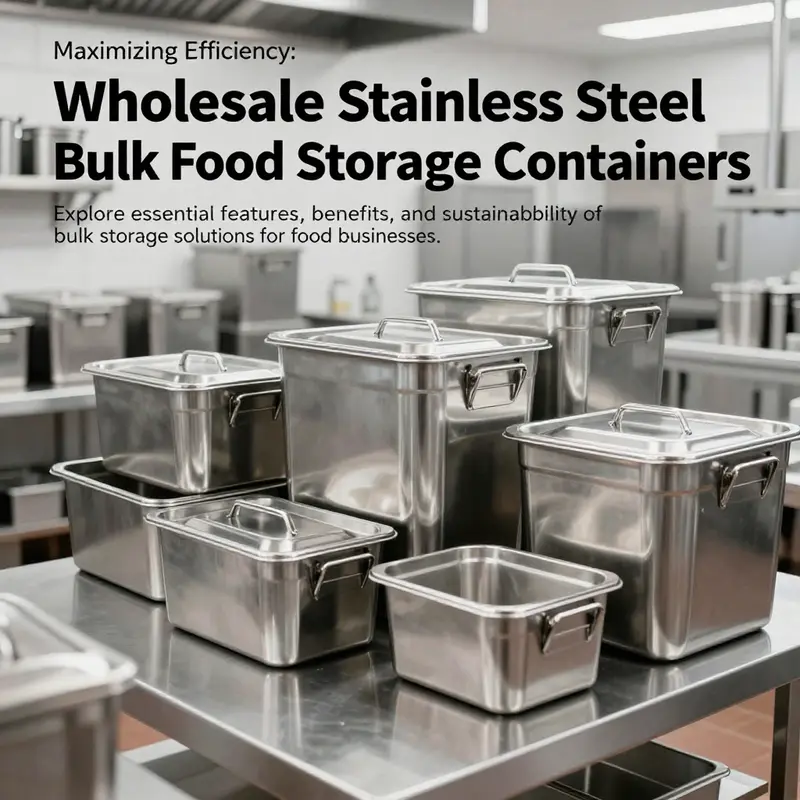
Wholesale stainless steel bulk food storage containers are integral to optimizing food storage solutions for a diverse range of businesses, including bubble tea shops, restaurants, food trucks, and catering services. These containers not only ensure safety and freshness but also contribute significantly to operational efficiency. This exploration dives into their key features, sourcing considerations, compliance standards, economic impact on the food industry, and the environmental benefits they offer, painting a comprehensive picture of why investing in these containers is critical for successful food and beverage enterprises.
null

null
From the Factory Floor to Your Forklift: Building a Resilient Supply Chain for Wholesale Stainless Steel Bulk Food Storage Containers
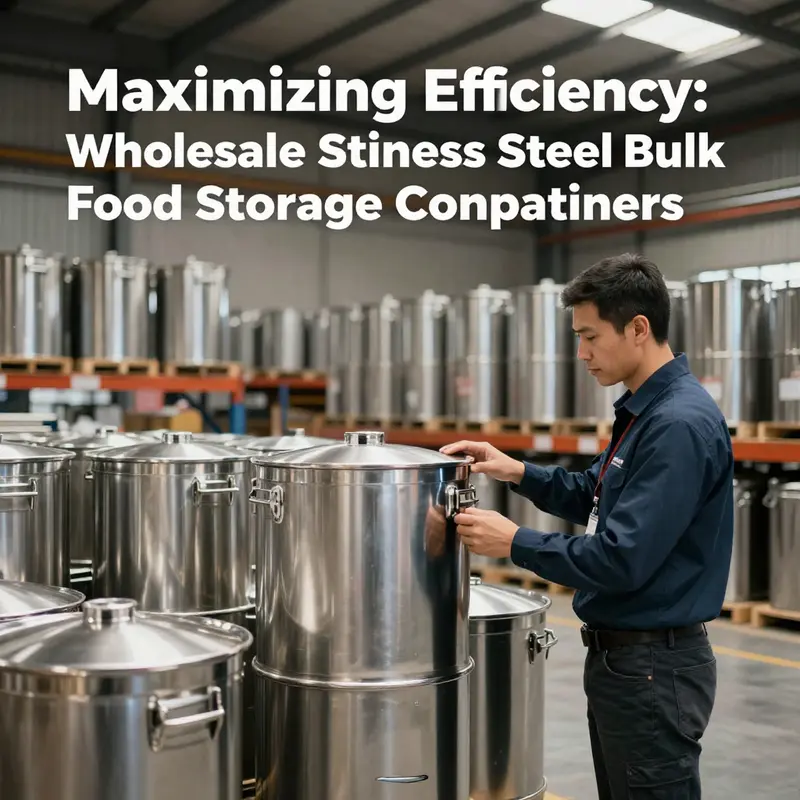
In wholesale operations, the journey of stainless steel bulk food storage containers begins long before a pallet lands in a warehouse. It starts with a strategic understanding of where these durable vessels are made, how they meet exacting safety and performance standards, and how a buyer can weave a resilient supply chain that sustains quality, continuity, and profitability. The need is clear: food-contact containers must protect contents from moisture, light, and temperature fluctuations while resisting corrosion, enabling rapid cleaning, and withstanding repeated use in demanding environments. Beyond price, the business value rests on a chain of decisions that define supplier capability, material integrity, and the ability to scale with growth. In this ecosystem, geographic concentration, regulatory alignment, and supplier transparency intersect to shape outcomes from the first inquiry to the final delivery. Sourcing, then, becomes less a sprint for the lowest unit price and more a disciplined, collaborative process that aligns product design, manufacturing discipline, and logistics with an organization’s operating model and risk tolerance.
Geographically, the landscape is heavily weighted toward Asia, with China playing a pivotal role in meeting global demand for food-grade stainless steel containers. The scale and specialization seen in this region—particularly in provinces long known for metal finishing, fabrication know-how, and export readiness—mean that buyers can access high-output capacities and robust engineering know-how. Guangdong, with its dense network of metalwork, gasket technology, and surface finishing expertise, stands out as a leading hub for food-contact containers. This proximity to experienced suppliers, coupled with proximity to major export ports, enables responsive production cycles and the ability to handle OEM and ODM projects that demand customization without sacrificing delivery performance. For a buyer, that combines the promise of consistent quality with the flexibility to evolve designs as needs change. In practical terms, manufacturers in these hubs can deliver scale, often with monthly output measured in tens of thousands of units for capable facilities, while preserving the strict sanitary and mechanical standards required for handling bulk liquids, grains, or ready-to-eat products.
Material integrity sits at the heart of safety and performance. Stainless steel containers intended for direct contact with food typically rely on recognized alloys such as SS304 or SS316, chosen for their corrosion resistance, cleanability, and non-porous surfaces. Material documentation is not a luxury but a baseline expectation. Buyers should require supplier documentation that demonstrates compliance with international food-safety standards—FDA, for instance, in markets where U.S. regulation applies, and ISO 22000 or equivalent food-safety management systems in others. When the products are used for more demanding applications, such as high-purity liquids or potential chemical exposure, additional certifications and codes—UN/DOT for hazardous materials, ASME codes for pressure-related design, and ISO 9001 for quality management—become essential. The diligence is not only about the steel itself; it encompasses seals, gaskets, and joints that must maintain airtight integrity and leak resistance over repeated cycles. In practice, a 500–2000 liter class of containers will typically feature gasketed closures, robust locking mechanisms, and surface finishes that resist corrosion and are amenable to dishwasher or high-temperature cleaning cycles, all while preserving the sanitary surface and preventing residue buildup that can harbor microbes.
Compliance and certification form the corridor through which a supplier’s credibility is verified. A robust supplier should readily provide traceability for materials, batch-level testing results, and certificates confirming compliance with FDA/CE standards, ISO 9001 certifications, and, where applicable, UN approvals for transport. A well-documented supply chain not only reduces the likelihood of non-compliance but also creates a record trail that supports ongoing audits and annual re-certifications. In a global market, this paperwork is a risk mitigation tool as much as it is a reliability signal. The best suppliers couple this documentation with practical demonstrations of performance, such as hydrostatic testing to confirm leak resistance and thickness measurements to verify durability across installation and use phases.
A comprehensive evaluation framework for suppliers moves beyond unit price and MOQs. It regards operational transparency as a prerequisite. Buyers should seek visibility into the full production journey—from raw materials procurement to laser cutting, welding (for example, single-seam or multi-seam options), surface finishing, and post-fabrication testing. Prototyping and agile feedback loops are especially valuable in long-term partnerships where evolving product specifications are common. Modern procurement also values the ability to tailor products to specific industries—whether food manufacturing, distribution, or institutional catering. Customization might include drainage-focused bottom geometries to minimize residue, integrated closures and valves for controlled transfer, or specialized fittings that align with existing line configurations. Such features require close collaboration with engineering teams, reliable prototyping processes, and defined change-management practices to avoid scope creep and schedule slips.
From a logistics perspective, lead times for customized stainless steel containers typically span a few weeks, with 20 to 35 days being a common range depending on design complexity. The ability to align production with inventory strategies and seasonal demand is critical for large distributors and manufacturers who rely on predictable replenishment cycles. Integrated logistics capabilities near principal ports can reduce transit time and risks associated with freight handling. Sanitary-grade and jacketed variants—used in biopharma or sensitive food transfers—illustrate how technical rigor must extend beyond the basic container to the broader package of handling equipment that accompanies bulk storage solutions. This level of supply-chain maturity makes it feasible to offer complex product configurations while preserving delivery reliability, a balance that is essential for maintaining service levels in the face of global disruptions.
Risk mitigation and long-term partnerships emerge as central pillars in a resilient supply chain. Buyers should view risk as a continuum rather than a one-off checkpoint. On-site audits and third-party inspections by reputable agencies provide independent validation of factory conditions, equipment calibration, and process controls. Export history and reference checks—looking at prior shipments to major markets—offer practical windows into how a supplier handles compliance, quality fluctuations, and regulatory changes. Payment terms, too, must be structured to protect both sides in cross-border transactions, with secure platforms and transparent dispute resolution mechanisms that preserve trust across a multiyear relationship. These practices are not merely administrative; they improve predictability, reduce the incidence of quality defects, and support faster onboarding of new SKUs or capacity expansions.
The conversation about sourcing for wholesale stainless steel bulk food storage containers also benefits from a clear recognition of sustainability and lifecycle considerations. Stainless steel is inherently durable and recyclable, which aligns with the broader industry push toward circular economy principles. In practice, this means designing for longer service life, enabling modular components where feasible, and offering repair or refurbishment options that extend the useful life of containers. For buyers, this sustainability orientation can translate into favorable total cost of ownership, even if initial unit costs appear higher than for lighter-weight alternatives. It also supports brand and buyer reputations in a marketplace that increasingly values environmental stewardship alongside operational efficiency.
A practical orientation toward design for manufacturability and supply chain resilience means thinking about the full ecosystem of the product. Customization is a powerful differentiator, but it must be managed with a clear understanding of its impact on lead times, testing requirements, and after-sales support. Features such as sloped bottoms to ensure complete drainage or integrated closures that align with existing piping systems can unlock efficiency in downstream processes, reducing manual handling and the risk of contamination. When evaluating suppliers, buyers should examine not only the capabilities but the adaptability of the supplier’s operations—can the facility adjust in response to demand shifts, regulatory updates, or new sterilization standards without sacrificing throughput? This is where strong supplier relationships, well-documented change-control procedures, and a shared language of quality become priceless assets.
The conversation about sourcing and supply chain considerations would be incomplete without acknowledging the value of a well-curated catalog of options. A practical example of how producers and distributors articulate their capabilities and product ranges is found in online listings that emphasize customization and documentation. For instance, a detailed product listing highlights the breadth of configurations, the materials involved, and the applicable standards. Such listings remind buyers that choosing a supplier is as much about the information ecosystem as it is about the physical product. They illustrate how a modern supplier communicates scope, demonstrates compliance, and presents technical data in a way that supports informed decision-making. In this context, a careful buyer will cross-check materials, test results, and certifications, while also engaging engineering teams to validate whether the proposed designs will integrate with existing processes and equipment.
To further illustrate how suppliers present themselves and how buyers assess capabilities, consider a practical online catalog entry that showcases a disposable packaging option. While not stainless steel, it demonstrates how suppliers articulate material choices, processing steps, and quality controls in a way that can be paralleled to metal container production. The juxtaposition serves as a reminder that the sourcing playbook can benefit from cross-category insights, particularly around traceability, customization workflows, and post-production support. For readers who want to explore related supplier catalog behavior, the following internal reference provides a tangible example of how product data and customization options are documented: senang-kraft-paper-octagonal-bowl-pet-lid-waterproof-eco-friendly-disposable-snack-pet-food-salad-containers-1l.
As the chapter closes on the question of sourcing and supply chain considerations for wholesale stainless steel bulk food storage containers, several threads converge. The global manufacturing footprint, led by a China-centered ecosystem, offers scale and capability. Material integrity and rigorous compliance validation protect safety and performance. A thoughtful supplier evaluation framework, emphasizing transparency, customization capacity, and adaptive communication, reduces risk and fosters durable partnerships. Logistics and lead times demand a proactive stance on planning and inventory alignment. Finally, sustainability considerations, integration with downstream processes, and attention to lifecycle value shape a more resilient and cost-effective approach in a market where demand for high-quality, food-safe containers continues to rise. In short, success lies in moving beyond price per unit to cultivate a supply chain that harmonizes engineering discipline, regulatory certainty, and operational agility—so that bulk storage solutions perform consistently from the first day of use to the last.
External resource for broader context and case examples: Strategic Sourcing of Stainless Steel Food Containers: Top Chinese Manufacturers for B2B Buyers.
Meeting Technical Standards and Safety Requirements for Wholesale Stainless Steel Bulk Food Storage Containers
Technical and Safety Compliance in Practice
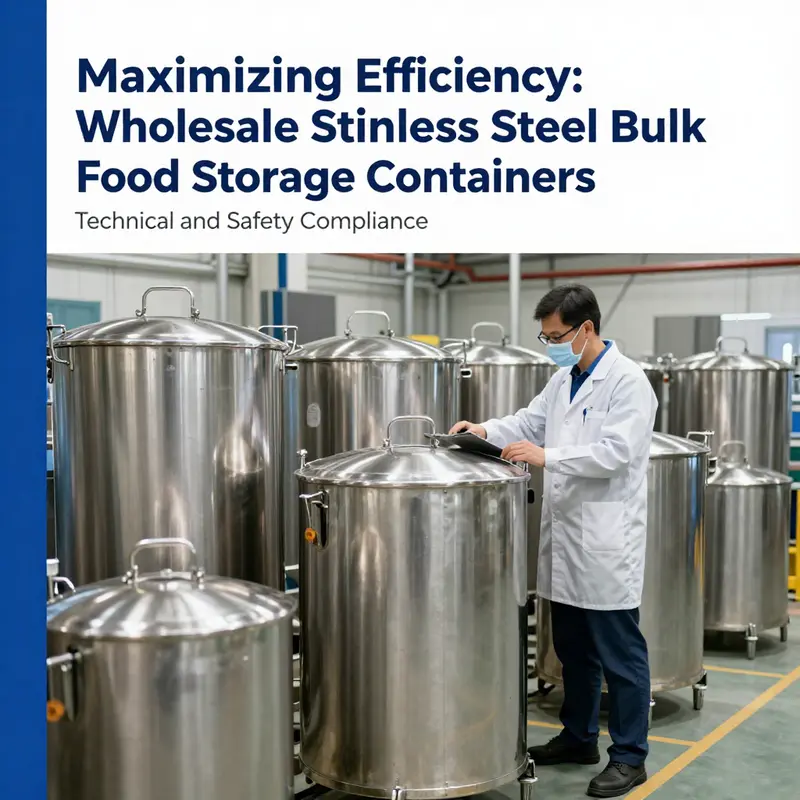
Wholesale stainless steel bulk food storage containers must combine mechanical strength, hygienic design, and verifiable compliance. Choosing the right container is not only a procurement decision. It is a commitment to food safety, regulatory adherence, and long-term operational reliability. The materials and manufacturing practices define how well a container preserves product integrity. They also determine whether a facility can meet audits, transportation rules, and customer expectations.
High-grade stainless steel is the core requirement. SUS 304 is widely accepted for food contact. It offers excellent corrosion resistance and durability. For more aggressive or saline environments, SUS 316L is preferred. Its molybdenum content improves resistance to pitting and crevice corrosion. Both alloys address key risks: leaching of metals, bacterial colonization, and structural degradation. Certificates of material origin and chemical composition should accompany shipments. Mill test reports or material inspection certificates provide traceability to the heat number. These documents let buyers confirm alloy grade and applicable tolerances.
Welding and fabrication practices directly impact hygiene and structural integrity. Single seam welding that is fully penetrated and ground smooth reduces crevices where residues accumulate. Orbital TIG welding is a common technique for seams on larger vessels because it produces consistent welds with minimal contamination. After welding, passivation or electropolishing is often applied. Passivation restores a protective chromium oxide layer. Electropolishing smooths micro-roughness and improves cleanability. Surface finish specifications, such as 2B or mirror polish, should be defined in technical agreements. A polished interior lowers microbial risk and accelerates cleaning cycles.
Sealing systems are equally important. Airtight lids with food-grade gaskets prevent external contamination and moisture ingress. Common gasket materials include EPDM, PTFE, and silicone. Each offers trade-offs: EPDM withstands a wide temperature range and resists weathering. PTFE has outstanding chemical resistance but is less flexible. Silicone combines flexibility with temperature tolerance. Gasket selection must match stored product chemistry, temperatures, and cleaning methods. Locking mechanisms and clamp designs should be robust and easy to disinfect. Leak-proof performance is often verified through hydrostatic or vacuum testing, providing measurable assurance before commissioning.
Safety standards and regulatory approvals shape acceptable design and material choices. Containers intended for food contact should meet FDA requirements and comparable European rules, such as EC No 1935/2004. For German markets, LFGB compliance is commonly requested. Many manufacturers align production with ISO 9001 quality management systems to prove consistent manufacturing and document control. For transport, UN approvals can be necessary. Designs certified under UN 1A1 or 1A2, for example, permit movement of certain liquid goods when density limits are observed. Hydrostatic testing, pressure limits, and structural calculations must be documented when UN certifications are claimed.
Testing regimes provide objective evidence of compliance. Typical tests include material composition analysis, hydrostatic and leak testing, load and stacking trials, and surface roughness measurements. Microbiological swabs and ATP tests are used to quantify hygienic performance after cleaning. For pharmaceutical or highly regulated food lines, additional validation is required. This may include cleanroom compatibility, traceability requirements, and batch documentation. Buyers should request full test reports and, where relevant, third-party certificates from accredited labs. Having such documentation on file simplifies audits and regulatory submissions.
Design factors for industrial use focus on durability and handling. Bulk containers are expected to endure heavy loads and frequent movement. Design life, stacking capability, forklift handling features, and corner protection are practical considerations. Many containers are rated for stacking in warehouses up to three layers. These ratings should be backed by load calculations and testing under expected storage conditions. Lifting lugs, skids, or pallet bases must be integrated without creating cleaning challenges. All contact surfaces must remain accessible for sanitation procedures.
Cleanability is a dominant operational concern. Stainless steel is non-porous and chemically resistant. Yet design decisions can reduce or negate these advantages. Internal fittings, sight glasses, and valves should be hygienically engineered with smooth transitions and full drainage. Dead legs and sharp internal corners increase contamination risk. Specifying full drainage and accessible inspection ports helps meet HACCP and sanitation plans. Surface polishing, as mentioned earlier, directly influences the ease and effectiveness of cleaning cycles.
Traceability and supplier transparency reduce procurement risk. Buyers should insist on full documentation trails from raw material to finished product. This includes mill test reports, welding procedure specifications, welder qualifications, inspection reports, and final test certificates. OEM and ODM customizations must be managed under documented change control. When production is located in concentrated industrial regions, proximity to precision metalworking and ports can be a logistical advantage. Typical lead times for custom builds range from three to five weeks, assuming tooling and approvals are complete. Clear contractual terms on lead times, deviations, and penalties help maintain supply continuity.
Choosing a manufacturer requires technical due diligence. Verify manufacturing capabilities such as orbital TIG welding, CNC forming, hydraulic pressure testing, and surface finishing lines. Request product samples and full inspection records. Arrange for witnessed tests when risk or investment is high. Remote audits or third-party inspections offer additional assurance when on-site visits are impractical. Also confirm the supplier’s ability to support OEM/ODM requirements and to supply spare parts and spare gaskets.
Sustainability and lifecycle considerations are increasingly relevant. Stainless steel containers are reusable and fully recyclable at end of life. Their long service life offsets initial capital expenditure. Documented maintenance regimes, spare parts plans, and surface treatment schedules extend useful life. Repaired containers should be revalidated for leak integrity and surface condition. Buyers should build inspection checkpoints into routine operational procedures to detect corrosion, weld fatigue, or gasket degradation early.
Finally, procurement is more than price comparison. It requires verification of material grade, documented testing, and manageable logistics. A robust specification includes alloy grade, surface finish, welding standard, gasket material, load ratings, and required certifications. Embedding quality checks at reception, during installation, and in periodic audits safeguards product integrity. For operations that combine stainless steel containers with single-use or alternative packaging, it is helpful to consider how the systems interact. For example, suppliers of food-grade disposable bowls offer complementary short-run packaging solutions for certain product flows. See this example of paper-based food packaging for related applications: food-grade 500/750/1000ml take-away bowl with lids.
Selecting the right container is a strategic decision. It balances regulatory compliance, operational hygiene, and long-term cost. Requiring verifiable certificates, conducting targeted testing, and insisting on transparent supply chains will avoid hidden risks. A technically sound and compliant stainless steel bulk container protects product quality, supports audits, and delivers dependable service over years of heavy use.
Source: https://www.alibaba.com/product-detail/Strategic-Sourcing-of-Stainless-Steel-IBCs-Global_1600711193274.html
How Stainless Steel Bulk Containers Drive Cost Savings, Compliance, and Growth in Food Operations
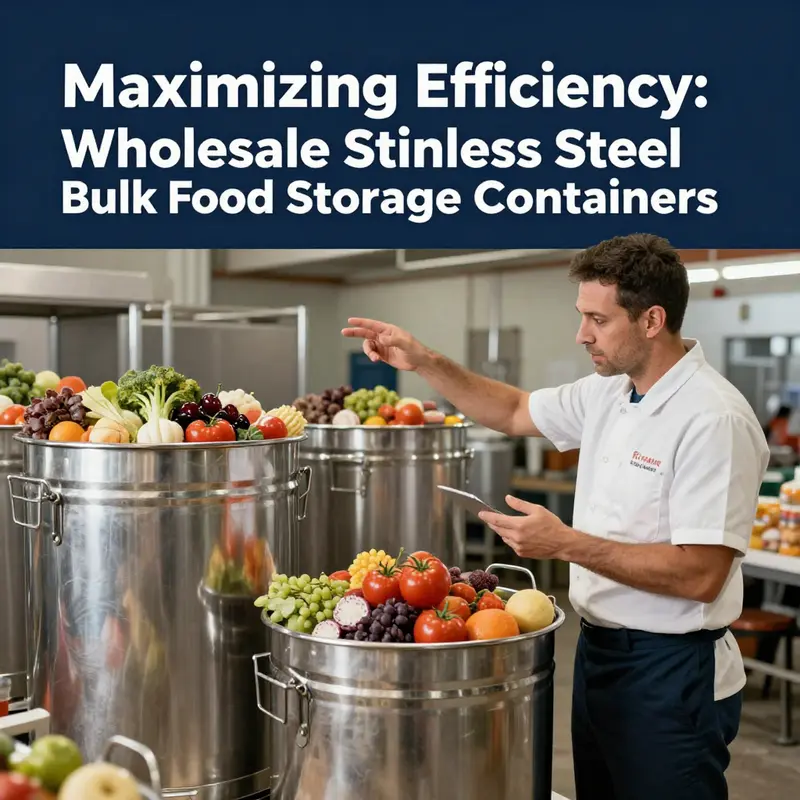
Durability and lower lifecycle cost are the first drivers of economic benefit when operators choose stainless steel bulk food storage containers. High-grade stainless alloys resist corrosion and mechanical wear far better than typical plastics or light metals. That resistance reduces the frequency of replacements. For a commercial kitchen, food processor, or cold-storage facility, fewer replacements mean lower procurement cycles and less capital tied up in repeat purchases. Over five years, durable stainless equipment can cut replacement spending by a large margin, improving predictable budgeting.
Beyond replacement costs, stainless steel containers reduce indirect expenses that often go unnoticed. Their ability to tolerate ovens, freezers, industrial washers, and high-pressure cleaning minimizes downtime. Less downtime directly increases throughput. When containers survive routine sanitization without degradation, maintenance crews spend less time on repairs. Reduced maintenance lowers labor costs and the need for spare inventory, improving working capital efficiency.
Airtight seals and robust closures on these containers protect product quality. That matters because spoilage and contamination are costly. For products sensitive to permeability, like syrups, oils, or honey, permeability-prone plastics can allow moisture and oxygen ingress. The result is shortened shelf life, product off-spec batches, and ultimately write-offs. Stainless containers’ inert surfaces and gasketed lids help preserve integrity and reduce waste. Lower spoilage translates to higher effective yields and improved gross margins on stored goods.
Storage density and stacking design also yield clear economic advantages. Stackable, space-efficient containers maximize warehouse cubic utilization. In high-rent urban markets, better space use means fewer square meters leased for the same storage capacity. Even small gains in density compound into substantial savings across many sites. Moreover, standardized container dimensions facilitate optimized pallet patterns and reduce transportation inefficiencies. Fewer trips, better pallet utilization, and reduced fuel consumption lower logistics costs across the supply chain.
Regulatory compliance carries financial implications too. Containers that meet FDA, EU, and international standards reduce regulatory risk. Compliance lowers the chance of product recalls. Avoided recalls protect revenue, preserve customer trust, and spare companies costly remediation actions. With food safety violations, direct costs include product retrieval and disposal, while indirect costs include lost contracts and brand damage. Investing in certified stainless storage is a risk mitigation strategy that protects long-term earnings.
The market’s shift toward sustainability further amplifies the economics of stainless solutions. Organizations face both regulatory pressure and rising consumer expectations for eco-friendly packaging and storage choices. Reusable stainless systems lower single-use waste streams, reduce disposal fees, and often qualify businesses for sustainability incentives. Consumers and business buyers increasingly reward companies that demonstrate reduced single-use reliance. Even when paper or compostable disposables are attractive for certain channels, the long-term cost math for bulk storage favors reusable stainless solutions. For a direct comparison, see an example of an alternative single-use option like the eco-friendly 1000ml kraft paper bowl when evaluating lifecycle costs and operational fit (eco-friendly 1000ml kraft paper bowl).
Capital expenditure decisions around stainless containers should be considered alongside operating expense savings. Total cost of ownership (TCO) analysis clarifies payback periods. A TCO model includes purchase price, maintenance, cleaning costs, replacement frequency, spoilage reduction, space savings, and residual scrap or resale value. In many commercial scenarios, the payback period for upgraded stainless systems is short, often a few years, especially where spoilage reduction and space optimization are material. Companies that deploy a rigorous TCO framework avoid the trap of optimizing for low upfront cost alone.
Wholesale suppliers see economic benefits too. Producing or distributing stainless containers at scale enables lower per-unit costs through manufacturing efficiencies. Bulk buyers negotiate volume discounts, and suppliers benefit from predictable demand and lower per-order handling costs. Customization options—such as fittings for temperature probes, reinforced frames, or tailored dimensions—command premium pricing. For food manufacturers, these tailored solutions can increase operational throughput and save labor, which further justifies higher upfront spending.
Financing and procurement strategies influence accessibility. Leasing models and rental pools spread costs over time and can be attractive for manufacturers that want to avoid capital constraints. Shared pool systems reduce idling of assets and improve utilization across facilities. Some operators even monetize end-of-life stainless through recycling streams. The metal retains scrap value, which offsets a portion of replacement costs and improves net lifetime economics.
Logistics and shelf-life improvements also affect price signaling and contract negotiations with buyers. When processors can guarantee longer shelf life and consistent product quality, they secure better terms with retailers and foodservice buyers. Consistent supply reduces penalty clauses for late shipments or off-spec goods. Improved reliability can justify premium pricing, longer contract terms, and lower insurance costs. In aggregate, these gains improve the top line while reducing variability in revenue.
Macro market dynamics are reinforcing investment trends. Growing demand for reusable food systems and the expansion of precision food logistics drive market growth for stainless storage. Industry forecasts show sustained expansion in related stainless container markets. That expanding demand creates a healthier supplier ecosystem, improving lead times and encouraging innovation in ergonomics, sealing technology, and coating-free finishes. Those innovations further reduce lifecycle costs and improve safety.
Operational managers should weigh customization against standardization. Standard dimensions aid interchangeability and simplify logistical planning. Custom features can deliver operational savings, however, when they solve a specific pain point—like integrating temperature sensors or tamper-evident closures. Procurement teams that align technical requirements with finance create the best outcomes. Cross-functional evaluation prevents over-specifying expensive features that offer minimal operational return.
Finally, adopting stainless steel bulk containers can be an active part of a company’s sustainability narrative. Public-facing commitments to reduce single-use dependency, quantified through reduced disposal tonnage and lower carbon from fewer shipments, enhance brand equity. That equity can translate into new customers or preferential listing with environmentally focused buyers. As incentives and regulations evolve, early adopters may also benefit from grants, tax credits, or lower compliance costs.
Investing in stainless steel bulk storage is not merely a materials choice. It is a strategic decision that affects procurement, operations, logistics, regulatory posture, and brand positioning. When organizations model the full economic impacts—replacement cycles, spoilage reduction, space efficiency, and compliance risk—they often find that stainless solutions improve both margins and resiliency. For broader market context and growth projections in related stainless product sectors, refer to the industry analysis by Grand View Research: https://www.grandviewresearch.com/industry-analysis/stainless-steel-lunch-container-market
The Steel Advantage: How Wholesale Stainless Steel Bulk Storage Containers Align Performance with Planetary Care

In the high-volume world of food service, manufacturing, and distribution, choices about storage containers ripple through every link of the supply chain. When decisions are framed through the lens of sustainability, stainless steel bulk storage containers emerge not merely as durable workhorses but as strategic instruments for reducing waste, conserving energy, and strengthening a company’s environmental footprint. These containers—mass-produced for warehouses and kitchens that manage thousands of liters of ingredients—are engineered to perform in ways that resonate with long-term ecological goals. They offer more than temperature stability or space efficiency; they participate in a broader system of responsible material use, end-of-life stewardship, and continuous improvement in food safety. The environmental case for wholesale stainless steel bulk storage hinges on the material itself, the design features that preserve product quality, and the lifecycle implications that connect operational practice with circular economy ideals.
At the heart of this case is material composition. Stainless steel used for bulk containers is typically food-grade 304 or 316. These alloys combine durability with non-reactivity, meaning they do not interact with the stored foods, preserving flavor and safety while resisting corrosion and thermal cycling. This corrosion resistance translates into longer service life, a straightforward yet powerful environmental benefit: fewer replacements and less waste generated over years of service. Unlike many plastics that become brittle, warp, or leach additives with exposure to heat, salt, and acids, stainless steel endures. Its long lifespan minimizes the frequency of disposal and the associated waste streams, a fundamental advantage in bulk storage where containers endure constant loading, unloading, and temperature variation across shifting operational demands. The non-porous, smooth surface further reduces the accumulation of residues and biofilms, simplifying cleaning, reducing water and chemical use, and supporting sanitation programs that are central to sustainable operations.
The environmental argument extends beyond durability to the containers’ end-of-life story. Stainless steel is 100% recyclable and can be repurposed indefinitely without degradation in quality. This circularity is not merely theoretical; it translates into tangible waste reduction. When a stainless steel bulk container reaches the end of its usable life, it can be melted down and reconstituted into new containers or other stainless goods with minimal loss of performance. In practice, this recyclability supports corporate sustainability goals by lowering the environmental burden of material disposal and enabling a closed-loop approach to capital equipment. For businesses aiming to align with Extended Producer Responsibility frameworks, the use of recyclable metals can streamline compliance and contribute to responsible end-of-life management. Certifications and regulatory alignments further bolster this position, as many wholesale stainless steel containers meet standards such as ISO9001, UN approvals, and recognized health and safety benchmarks (FDA/CE, where applicable), signaling that environmental compliance and food safety share a single optimization objective: minimize risk while maximizing resource efficiency.
Design for sustainability is a critical dimension. Modern stainless steel bulk containers incorporate airtight gaskets and locking mechanisms that preserve freshness and prevent moisture ingress. An airtight seal reduces spoilage and food waste by maintaining stable conditions for longer periods, sometimes extending shelf life for packaged foods and ready-to-use ingredients. In practical terms, extending freshness reduces the frequency of transfers between storage and production zones, which translates into lower energy use for cooling and reheating across a facility. The lids are often BPA-free or made from non-toxic materials, aligning with health-conscious and environmentally responsible standards. These design choices are not cosmetic; they reduce contamination risk and support sanitation practices that rely less on aggressive chemical cleaners and more on durable, easily cleaned metal surfaces. The result is a system that not only protects product quality but also lowers the environmental footprint of daily cleaning routines and energy consumption.
Space efficiency and transport logistics play a substantial role in the sustainability calculus. Bulk containers are designed to be stackable, nestable, and, in some configurations, modular. This space efficiency matters in both warehouse storage and outbound trucking. Fewer trips mean less fuel use and lower greenhouse gas emissions per unit of food stored or moved. In supply chains that traverse long distances, the combination of high density stacking and robust durability reduces packaging waste and the volume of inert packaging material that would otherwise accompany the product. The environmental savings compound with operational savings: less space means fewer handling steps, faster turnaround times, and reduced energy demand for climate control in storage facilities and during transport. For facilities aiming to optimize logistics as part of a broader sustainability strategy, these container designs offer measurable gains without compromising performance or safety.
The impact on commercial kitchens, cafeterias, and food manufacturers goes beyond waste reduction. Long-term cost savings emerge from the interplay of durability, sanitation ease, and energy efficiency. Stainless steel containers withstand frequent wash cycles and high-temperature sanitation while maintaining structural integrity. The non-porous surface resists staining and harboring bacteria, enabling faster cleaning and lower water usage when compared with porous or more easily degraded materials. As a result, the total cost of ownership—comprising purchase price, maintenance, replacement frequency, and waste disposal costs—tends to favor stainless steel over many conventional alternatives in high-volume settings. This economic dimension often intersects with corporate social responsibility (CSR) goals, since durable, reusable containers can meaningfully reduce plastics usage, minimize landfill contributions, and demonstrate a commitment to sustainable procurement and operations.
A broader lifecycle view highlights another layer of sustainability: energy and resource intensity across production, use, and end-of-life. Stainless steel production traditionally involves significant energy input, yet the long service life of these containers amortizes that energy use over many years. Maintenance needs are modest compared with alternatives that degrade quickly, requiring frequent replacement and more packaging waste to manage. The result is a net environmental benefit when viewed across a multi-year horizon. In many operations, the choice to invest in bulk stainless steel storage aligns with a strategy to reduce single-use plastics and lower the propensity for waste creation in the first place. This is a practical expression of the circular economy, where material vitality is preserved through durable design, efficient use, and responsible disposal at the end of life. For organizations pursuing sustainability reporting, the lifecycle approach supports credible metrics around waste reduction, resource efficiency, and emissions intensity per unit of product stored.
Within the sustainability discourse, certifications and regulatory alignment matter. The containers that circulate in wholesale environments frequently carry ISO9001 accreditation, signaling robust quality management systems that undergird consistent performance and safety. Some designs also meet UN approvals and FDA/CE standards, offering assurance that materials and construction meet recognized international safety benchmarks. Such certifications are not only about compliance; they reflect an earned reliability in materials selection, manufacturing processes, and product stewardship. They ensure that environmental considerations are embedded in the supply chain, from raw material sourcing through manufacturing and final disposal. When facilities report against environmental, social, and governance (ESG) criteria, the combination of durable materials, recyclable end-of-life potential, and certified safety positions wholesale stainless steel bulk containers as a foundational element of responsible storage.
In practice, sustainability is not a solitary decision but a system of choices—ranging from vendor selection and material transparency to lifecycle assessments and waste reduction programs. Businesses recognize that the environmental benefits of stainless steel bulk containers accumulate when paired with smart operational practices: minimizing unnecessary transfers, optimizing storage density, and scheduling routine maintenance to maximize lifespan. The adoption of space-efficient, airtight designs supports product integrity while reducing energy demand in cold storage and climate-controlled environments. Moreover, the recyclable nature of stainless steel means that surplus inventory, decommissioned equipment, or failed units can be redirected into new life cycles, reducing the environmental burden of disposal and contributing to a circular inventory model.
For companies weighing packaging and storage options in a sustainability-conscious market, stainless steel bulk containers offer a compelling blend of performance, safety, and environmental stewardship. They support long-term operational cost savings while advancing broader CSR commitments that address waste, resource use, and climate impact. In a world where consumer demand increasingly favors sustainable choices, the stainless steel option helps businesses align practical storage needs with strategic environmental goals, reinforcing trust with customers, suppliers, and regulators who value responsible stewardship.
As with any ongoing strategy, ongoing education and supplier collaboration are essential. Companies can benefit from ongoing comparisons of material performance, cleaning regimes, and end-of-life pathways to ensure that practice keeps pace with evolving environmental standards and market expectations. To broaden context beyond metal storage, some organizations explore complementary packaging options that emphasize recyclable or compostable materials for ancillary items, such as single-use components and secondary packaging. A representative slice of sustainable packaging discourse can be found in resources discussing eco-friendly paper cup packaging with printed logos, which illustrates how brands communicate environmental commitments across product categories while maintaining operational efficiency. For a broader market perspective on the growing demand for sustainable, reusable stainless steel containers, see the external resource that charts market dynamics and expectations through 2034: https://www.marketsandmarkets.com/Market-Reports/stainless-steel-lunch-container-market-159828246.html.
Final thoughts
Wholesale stainless steel bulk food storage containers represent a strategic investment for food businesses aiming to enhance efficiency, comply with safety regulations, and adopt sustainable practices. Their unique features ensure that food cooks maintain optimal quality while contributing positively to the environment. By integrating these containers into your operations, you not only optimize storage but also strengthen your brand’s commitment to quality and sustainability, creating value that resonates with consumers.