
In today’s competitive food industry, the packaging of your products can significantly impact customer experience and brand perception. Fried chicken, a popular fast-food item, requires effective packaging solutions that not only maintain freshness but also enhance branding efforts. This article delves into the various types of fried chicken boxes available for wholesale, the pricing models and minimum order quantities, and the customization options that help businesses stand out while promoting sustainability practices. By understanding these facets, business owners can make informed decisions that align with their operational goals and customer expectations.
Navigating the World of Fried Chicken Box Wholesale: Materials and Market Trends
In the realm of fast food packaging, fried chicken boxes represent a crucial component for businesses navigating the intricacies of food transport. When it comes to wholesale fried chicken boxes, understanding the available types and materials is essential for restaurateurs and caterers aiming to deliver not just quality meals, but also a superior customer experience. This chapter explores the various categories of fried chicken boxes available in the wholesale market, highlighting their unique features and materials, while also considering current environmental trends and branding opportunities that can enhance market presence.
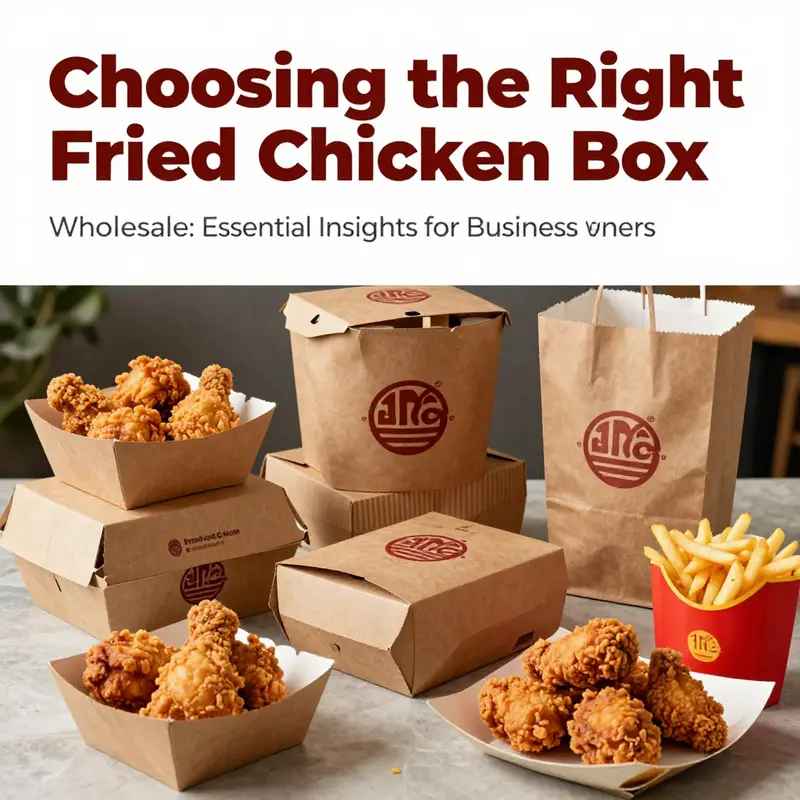
A diverse range of fried chicken box types caters to varying business needs, from typical takeout packaging to sustainable, branded solutions that capture the essence of a company’s identity. Takeout boxes are arguably the most ubiquitous variety. Designed for straightforward functionality, they represent a classic solution for fast food establishments. Typically made from sturdy paper or cardboard, these boxes balance affordability with practicality, accommodating restaurants seeking cost-effective options to streamline their takeout operations. Lackluster but efficient, these containers are indispensable in settings where quick service is paramount.
On the other hand, window boxes add an appealing twist to standard packaging. Featuring a transparent window made from compostable cellulose or other safe plastics, these boxes entice customers by allowing them to view the sumptuous golden-brown fried chicken inside. This immediate visual appeal fosters an emotional connection with the food, bolstering customer satisfaction right from the moment of purchase. Enhanced presentation fundamentally shifts how consumers perceive quality, helping brands forge stronger connections with their clientele.
For businesses aiming to provide complete meal experiences, compartment boxes emerge as game-changers. These innovative containers include distinct sections for fried chicken and accompanying sides like fries, coleslaw, or dipping sauces. Segregating different food components maintains the integrity of flavors, providing customers with a well-organized meal that satisfies both dietary preferences and aesthetic considerations. Likewise, insulated boxes, crafted with multiple layers of insulating materials, ensure that fried chicken retains its warmth and crispiness during transit. Such solutions become vital for delivery services or longer transport times, ensuring that meals arrive as intended—fresh and delectable.
In a market increasingly sensitive to environmental issues, biodegradable and compostable boxes are gaining traction as viable options. These containers, made from sustainable materials such as sugarcane fiber (bagasse), are remarkable in their durability and heat resistance. By allowing fried chicken to be transported without the risk of chemical leaching into the food, these eco-friendly alternatives demonstrate a brand’s commitment to sustainability, appealing directly to environmentally discerning consumers. The proactive shift towards biodegradable packaging serves as a testament to a growing global initiative to reduce plastic waste and environmental impact.
The significance of branding in current market trends cannot be overstated. Printed boxes allow for customization, enabling businesses to embed their logo, brand colors, or designs right on the packaging itself. This transforms ordinary packaging into powerful marketing tools, facilitating brand recognition and promoting a cohesive aesthetic reflective of the establishment’s personality. Such strategies are increasingly relevant in crowded marketplaces where differentiation is critical.
When focusing on the materials used for production, kraft paper emerges as a popular choice due to its strength, natural appearance, and recyclability. Its brown hue conveys a sense of authenticity and earthiness, contributing positively to the overall customer perception of quality. Kraft boxes symbolize a commitment to eco-friendliness and are commonly chosen for standard takeaway options, aligning well with modern consumer preferences.
In addition to kraft paper, sugarcane fiber stands out as an innovative material option. Derived from sugarcane waste, this biodegradable material effectively showcases a brand’s sustainable ethos while providing a trustworthy container for hot foods. Its durability and heat resistance bolster its reputation, allowing it to hold fried chicken without compromising on performance, further solidifying its place in the eco-friendly packaging niche.
Throughout the wholesale market, businesses often explore recycled cardboard as another sustainable option. By transforming post-consumer waste into functional packaging, this material reduces harmful environmental impacts while still maintaining efficiency as a container.
The trend of using clear plastic for windows has shifted towards compostable cellulose film, resonating well with brands committed to sustainability. By using materials that align with corporate values focused on environmental preservation, companies can present a united front on social responsibility, appealing to progressively-minded consumers eager to patronize businesses that reflect their values.
In choosing the right fried chicken boxes, businesses must weigh the benefits and characteristics of each style against their operational needs and branding goals. The wholesale market is replete with options varying in size, material, and design, ensuring that establishments from small food trucks to large fast-food chains can find suitable packaging solutions. Customization options are also abundant, with suppliers accommodating both minimum order quantities (MOQs) for smaller businesses and larger bulk orders for more established enterprises. Prices generally scale with volume, encouraging savvy entrepreneurs and brands to navigate the market thoughtfully while optimizing overall costs.
In conclusion, navigating the world of fried chicken box wholesale demands an understanding of diverse materials and corresponding applications. From the basic takeout box to sophisticated insulated and biodegradable options, these containers influence how fried chicken is marketed, delivered, and received by customers. With the surge in environmental consciousness and branding opportunities, businesses are afforded a unique chance to leverage packaging as a tool not only for functional purposes but also for storytelling—highlighting their commitment to quality and sustainability in an ever-competitive market. Ultimately, as brands strive to carve unique identities within saturated spaces, the ability to choose suitable fried chicken boxes that align with both operational efficiency and customer expectations will undoubtedly play a pivotal role in their success.
Navigating Pricing and Minimum Order Quantities in Fried Chicken Box Wholesale
When it comes to the wholesale of fried chicken boxes, understanding pricing and the dynamics of minimum order quantities (MOQ) is vital for businesses aiming to optimize their packaging solutions. The landscape of fried chicken box wholesale offers a variety of choices and price ranges, largely influenced by factors such as order volume and specific product features. In this section, we will delve into the intricate details regarding costs and ordering practices to assist businesses in making informed decisions.
Pricing Insights
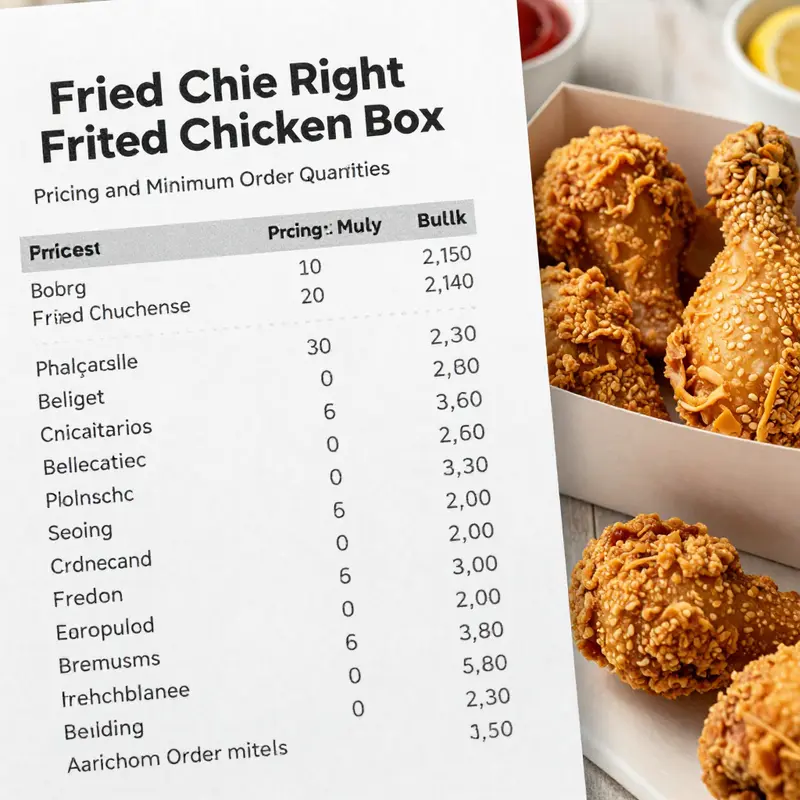
The pricing structure for fried chicken boxes is quite diverse and can vary significantly based on the quantity ordered. Bulk purchasing tends to provide the greatest savings, particularly for high volume orders. Initial insights reveal a broad spectrum of unit costs ranging from $0.02 to $0.50 per piece. Such a range indicates the critical role that order volume plays in determining the overall expenditure on packaging.
For instance, the most competitive price points emerge at extremely high order volumes. Notably, businesses that are able to commit to orders of 500,000+ pieces can procure boxes at an estimated low of $0.02 each. This pricing showcases the potential for substantial savings when engaged in large-scale purchasing. Furthermore, even at mid-range order sizes, suppliers generally offer better deals as the volume increases. At approximately 500,000 pieces, the cost per box remains appealing, averaging $0.025 per unit.
On the contrary, smaller orders between 10,000 to 49,999 pieces typically have a unit cost that ranges from $0.06 to $0.09. As businesses scale down their orders, they face higher per-unit costs that can impact the overall profitability of the product. For those looking for reusable or custom options made from high-quality kraft paper, the higher price point may be about $0.10 to $0.50 per piece. This price increase reflects the added value and durability associated with these premium products.
Understanding the relationship between price and order size underscores the necessity for careful planning and forecasting. Businesses should analyze their sale projections, market demands, and operational capabilities to determine the most advantageous purchase quantities.
Minimum Order Quantities (MOQ)
Minimum Order Quantity is another crucial aspect of the wholesale purchasing process. MOQs can vary widely, reflecting the suppliers’ production processes and inventory strategies. Some suppliers may accept as few as 400 units for standard custom boxes, while others set their MOQ at 20,000 units for premium items, particularly those designed for reusable applications. This range illustrates the diverse approaches to meeting customer needs in the market.
For businesses just starting out or those looking to test the market with new product lines, a lower MOQ can be particularly beneficial. Suppliers offering MOQs of 400 units provide an accessible entry point for new brands, allowing them to manage cash flow while assessing the demand for their fried chicken offerings. Alternatively, firms that are further along in their operational journey may find that a MOQ of 10,000 units is more fitting for their logistics and pricing strategies, striking a balance between cost efficiency and inventory turnover.
Pricing Strategies for Different Order Volumes
To summarize pricing dynamics further:
- Lowest price tier: $0.02 per piece for orders exceeding 500,000 units.
- Mid-range pricing: $0.025 for very high orders
- Common pricing range: $0.06 – $0.09 for orders between 10,000 and 49,999 units.
- Higher tier pricing: $0.10 – $0.50 for unique or reusable paper containers.
- Flexible MOQs ranging from 400 to 20,000 units depending on chosen products.
Tailored Solutions
Additionally, many suppliers will provide tailored solutions to their clients, allowing for custom printed packaging, varying sizes, and specialized designs that cater to the branding needs of individual businesses. This added personalization not only enhances the market presence of a restaurant or food vendor but can also contribute to increased customer satisfaction and loyalty. Businesses should therefore incorporate both cost considerations and branding opportunities into their procurement strategies.
The ongoing trend in sustainable packaging also plays a role in pricing and ordering decisions. Many businesses are increasingly opting for eco-friendly solutions, such as recyclable and biodegradable fried chicken boxes. While these options can sometimes command a higher price, they often resonate more deeply with consumers who are environmentally conscious, thus resulting in a possible price offset through increased sales.
Real World Considerations
With these pricing dynamics in mind, businesses venturing into the fried chicken box wholesale market need to conduct thorough supplier research. It’s advised to consider platforms like Alibaba that provide a transparent overview of various options available, along with the possibility of engaging in direct communication with suppliers regarding custom needs. Proactive engagement can lead to negotiating deals that favor both pricing and delivery timelines.
In conclusion, understanding the interplay between pricing and MOQs allows businesses to not only enhance their supply chain efficiency but also allows them to create more strategic marketing approaches for their fried chicken offerings. The investment made today in selecting the right products at competitive prices can lead to solid returns tomorrow, reinforcing the overall appeal of effective packaging within the highly competitive foodservice landscape.
Customizing Sustainability: The New Wave of Fried Chicken Packaging
In the competitive landscape of the fried chicken industry, the packaging used to deliver this beloved comfort food is not merely a practical necessity; it serves as a critical component of branding and customer experience. The wholesale market for fried chicken boxes is evolving rapidly, reflecting a growing need for customization and sustainability. As businesses aim to differentiate themselves in an increasingly crowded market, they are turning to innovative packaging solutions that not only showcase their unique brand identity but also align with eco-conscious consumer values.
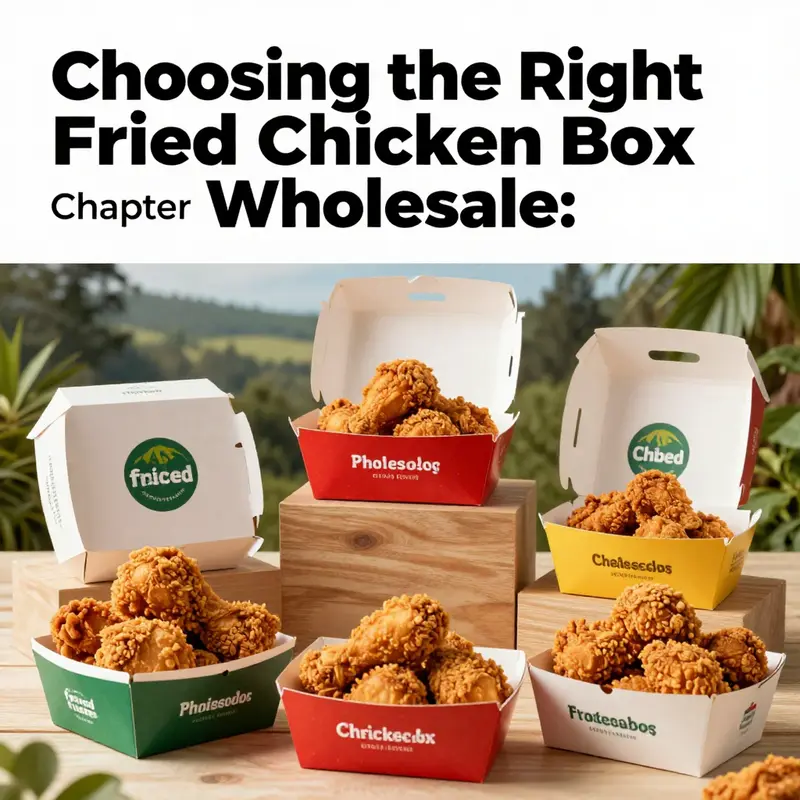
At the forefront of this evolution are customization options that allow food businesses to design their packaging to fit their specific needs and aesthetic preferences. Packaging is no longer just a containment vessel; it has transformed into a mobile advertisement, ensuring that every fried chicken box carries the company logo, brand colors, and distinct designs that resonate with the target audience. This personalization aspect extends beyond mere aesthetic enhancements, redefining how businesses present themselves and interact with customers.
The market offers a variety of customization possibilities, accommodating different serving sizes and culinary offerings. Whether a restaurant needs single-serve boxes for casual dining or larger, family-sized containers for takeout orders, suppliers can provide solutions tailored to those requirements. Furthermore, businesses can choose custom box shapes that fit snugly around the food, enhancing the overall presentation and reducing waste—an appealing factor in today’s eco-conscious marketplace.
In addition to visual identity, the materials used to create fried chicken boxes are increasingly vital to brand reputation and consumer loyalty. Sustainable practices have taken center stage within the packaging industry, pushing suppliers to innovate eco-friendly materials without compromising functionality or safety. Today, many manufacturers emphasize their use of renewable resources such as food-grade kraft paper, biodegradable components, and recyclable materials. These innovations not only enhance the attractiveness of packaging but also cater to an audience that prioritizes sustainability in their purchasing decisions.
For example, several wholesale suppliers have begun to produce packaging made from sugarcane fibers and recycled paper, which are fully degradable and safe for food contact. Such materials are integral in addressing growing consumer demands for greener solutions, as well as adhering to increasingly stringent environmental regulations imposed by local and international authorities. Offering eco-conscious packaging not only satisfies the innate desire of consumers to be environmentally responsible but also serves as a powerful point of differentiation for businesses aiming to establish a strong market presence.
Leading suppliers go the extra mile by offering free samples and design services that empower businesses to make informed decisions before committing to large orders. Whether it’s securing optimal quality or testing aesthetic appeal, having access to samples can significantly impact a brand’s ability to scale sustainably. Furthermore, some manufacturers provide OEM (Original Equipment Manufacturer) services, demonstrating their capabilities to handle large-scale productions while maintaining high-quality standards that established brands demand.
The economics of packaging further support the industry’s evolution. With an average minimum order quantity (MOQ) starting around 20,000 pieces, these packaging solutions are accessible for both start-ups and established companies looking to expand. Prices are attractive as well, starting around $0.10 per unit, making it feasible for small to mid-sized enterprises to invest in quality, customizable, eco-friendly packaging. This accessibility enables businesses to enhance their operations sustainably, increasing their appeal to a discerning customer base without compromising financial feasibility.
Within the fried chicken segment, the scenarios for using these customized boxes are numerous and varied. Quick-service restaurants, food trucks, and meal delivery services are all prime candidates for innovative packaging that captures customers’ attention. Packaging is especially crucial in the era of takeout and delivery, where first impressions are essential. Beyond everyday operations, these boxes also find their way into larger events such as weddings and parties, where the visual package of fried chicken dishes contributes to the overall dining experience.
As the market for fried chicken packaging becomes more sophisticated, the integration of customization and sustainability will undoubtedly continue to rise. Restaurants and vendors are encouraged to explore their options fully, investing time and resources into the development of packaging strategies that align with their brand ethos and consumer expectations. Those who succeed in this endeavor will not only enhance their visibility and marketable appeal but will also contribute positively to broader efforts aimed at reducing environmental impact.
To explore more about customizable, eco-conscious fried chicken packaging, you can visit this product page.
Final thoughts
In conclusion, selecting the right fried chicken box wholesale is a critical decision that affects not only operational efficiency but also customer satisfaction. The diverse range of materials and types available allows business owners to choose packaging that complements their product and brand. Additionally, understanding pricing structures and minimum order quantities empowers businesses to make economical choices aligned with their operational scale. Finally, the options for customization and the emphasis on sustainability serve not only to enhance brand image but also to meet the growing consumer demand for eco-friendly practices. By focusing on these key areas, businesses can ensure that their packaging not only protects their product but also elevates their overall brand strategy.