
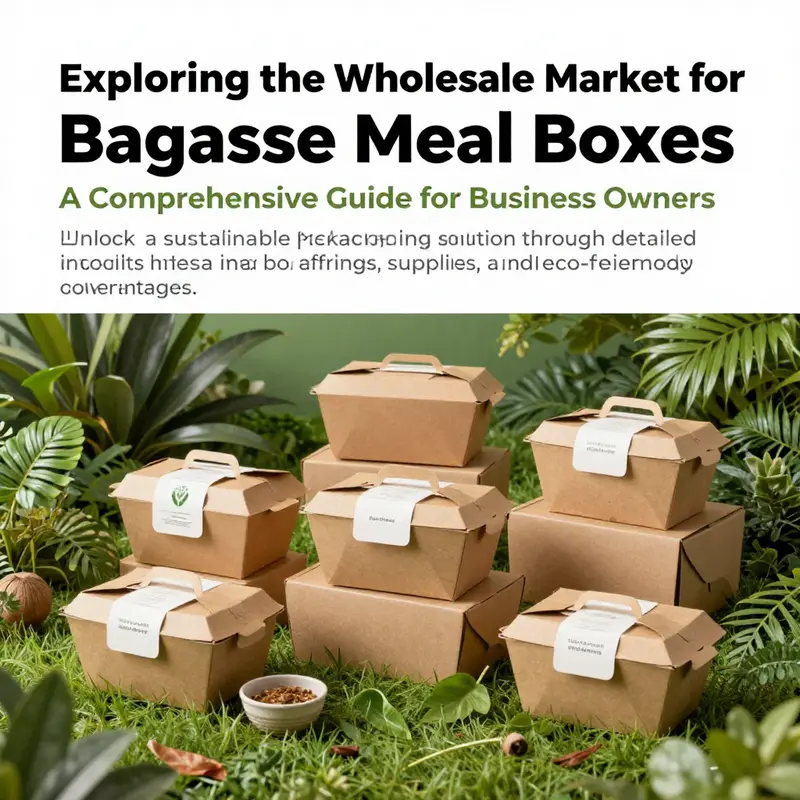
In a world increasingly focused on sustainability, bagasse meal boxes have emerged as an ideal packaging solution for businesses in the food industry. Made from the fibrous residue of sugarcane, these meal boxes offer a robust, eco-friendly alternative to traditional packaging materials. This article dives deep into the wholesale market of bagasse meal boxes, illustrating the various product ranges and specifications available, effective pricing strategies for bulk orders, key suppliers to consider, and the substantial eco-friendly benefits they bring to your business operations. Each chapter aims to equip business owners with the knowledge necessary to make informed purchasing decisions that align with sustainability goals and enhance operational efficiency.
null
null
Beyond the Box: Strategic Pricing and Scale in Bagasse Meal Box Wholesale
Demand for sustainable take-out packaging has surged as restaurants, caterers, and retailers increasingly tie their menus to a lower-footprint footprint. Bagasse meal boxes, made from the fibrous residue of sugarcane after juice extraction, sit at the intersection of function and responsibility. If a wholesale buyer wants to turn sustainability into a reliable, scalable business edge, pricing and order quantities become not just numbers on a sheet but levers that shape supply, service, and sentiment in equal measure. The market for these containers is driven by the economics of large-scale manufacturing, where costs per unit tail off as volumes rise. For buyers, the key is to translate that scale into predictable landed costs, stable supply, and the freedom to innovate with designs and branding without sacrificing margin. In practice, the equation looks simple on the surface but unfolds in complexity as volume increases, contracts are negotiated, and the logistics of moving thousands or hundreds of thousands of pieces into multiple channels are considered.
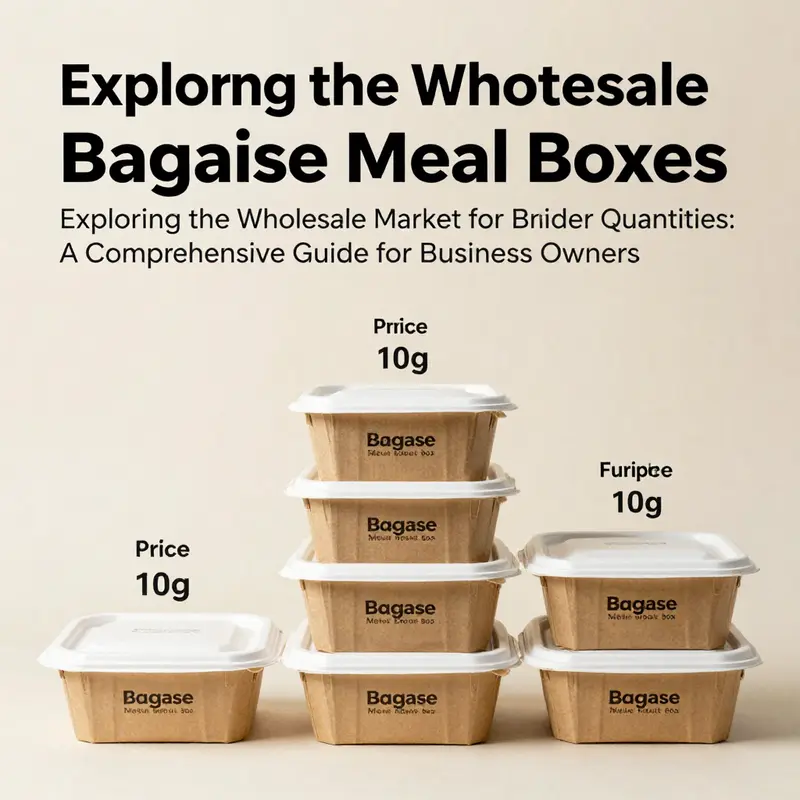
At the core of wholesale pricing is a tiered structure that rewards scale. Suppliers typically publish price bands that reflect manufacturing efficiency, material utilization, and the ability to amortize fixed costs across larger runs. A representative picture shows a clear progression: for a common five-compartment tray, the per-piece price can fall as order quantities climb. In one benchmark, orders between 2,000 and 9,999 units are priced around US$0.05 per piece. As batch sizes grow to 10,000–49,999, the price dips to roughly US$0.04 per piece. Pushing further into 50,000–499,999 units tends to push the unit price down to about US$0.03, with orders of 500,000 or more pieces often landing near US$0.02 per piece. These bands reflect the leverage of mass production: the cost of raw materials, labor, and energy can be spread over many more units, and the supplier can optimize setup times and yield for longer runs. For buyers who need even smaller tests, a separate pricing tier exists. A typical range for a minimum-order quantity of 1,000 pieces might fall between US$0.089 and US$0.33 per piece, providing a lower-risk path to market entry or pilot programs where demand is uncertain or seasonal.
To translate these numbers into actionable procurement decisions, buyers must consider the full landed cost picture. The lowest unit price in the 500,000+ tier is compelling, but it also implies a commitment to inventory, storage, and an extended lead time. For a restaurant group forecasting steady demand, a long-term contract can secure capacity and a favorable production slot, reducing the risk of backlogs during peak seasons. A contract can also establish price predictability in exchange for a commitment to regular, recurring orders. The advantage here is twofold: the buyer gains a shield against volatile spot pricing, and the supplier gains production stability that improves planning accuracy. Yet there is a caveat. Long-term arrangements require credible demand forecasting and the willingness to absorb the cost of unused inventory if demand falters. In other words, a well-structured contract is a mutual risk-sharing tool rather than a simple price concession.
Customization adds another layer to the cost calculus. Custom printing, unique lid designs, or specialized compartment configurations can raise the per-unit price, even when base materials and manufacturing processes are otherwise shared across standard lines. For buyers exploring branding or differentiating their packaging, it is essential to quantify the incremental value of customization against the incremental cost. A practical approach is to couple a standard, price-competitive baseline with a separate customization track. This way, the core packaging remains affordable for high-volume needs, while branding and functional enhancements can be pursued in tandem but priced distinctly. In many cases, suppliers provide modular options—printing on the lid, optional separators for more compartments, or variant shapes—that enable customization without upending the entire production line. For the budget-conscious, the lesson is clear: factor customization costs separately in your total budget and test-react with small pilot orders before committing to full-scale rollout.
The economics of shipping and logistics often determine the feasibility of wholesale commitments. Large bulk orders require careful planning for transportation, storage, and handling. A landed cost analysis should include not only the per-unit price but also packing materials, palletization, freight terms, and insurance where applicable. Container weights, carton counts, and the efficiency of loading and unloading influence the overall cost of moving thousands of units to multiple destinations. For buyers who operate across regions, regional sourcing can provide shorter lead times and lower freight costs, reducing exposure to international freight fluctuations. Diversifying suppliers—while maintaining quality standards and certifications—can also mitigate risk. Relying on a single source increases exposure to disruptions, whereas a portfolio of vetted suppliers can offer backup capacity and more favorable negotiating positions during rate spikes.
Quality and compliance play a central role in wholesale decisions. Bagasse products positioned for food service must satisfy food-safety requirements and often carry certifications such as SGS or ISO 22000:2005. While certifications do not guarantee flawless performance in every batch, they are important signals of process discipline and supply-chain hygiene. Buyers should request documentation, reference checks, and, where possible, product testing or third-party audits, especially when the procurement involves large volumes and multiple destinations. The discipline of supplier evaluation is not a one-time task but an ongoing practice. Regular performance reviews—monitoring yield, defect rates, on-time delivery, and response times to quality issues—help maintain the integrity of pricing over the life of a contract. In a market dominated by a few large manufacturing hubs, this kind of vigilance protects both margins and reputation.
The pricing narrative is not static. It evolves with demand forecasting, capacity utilization, and macro trends that shape the supply chain. The sustainability narrative around bagasse resins, compostability, and end-of-life disposal continues to influence consumer preference and, by extension, willingness to pay at the point of sale. As retailers and food-service operators increasingly align procurement with sustainability goals, buyers may find that premium positions for compostable packaging translate into opportunities for better overall value—through improved consumer perception, waste reduction, and potential cost savings in waste management. However, this benefit must be weighed against the cost of premium packaging and the risk that price-sensitive segments may push back against higher packaging costs. The balancing act then becomes a disciplined mix of volume purchasing, selective customization, and strategic supplier partnerships that can weather the tides of demand.
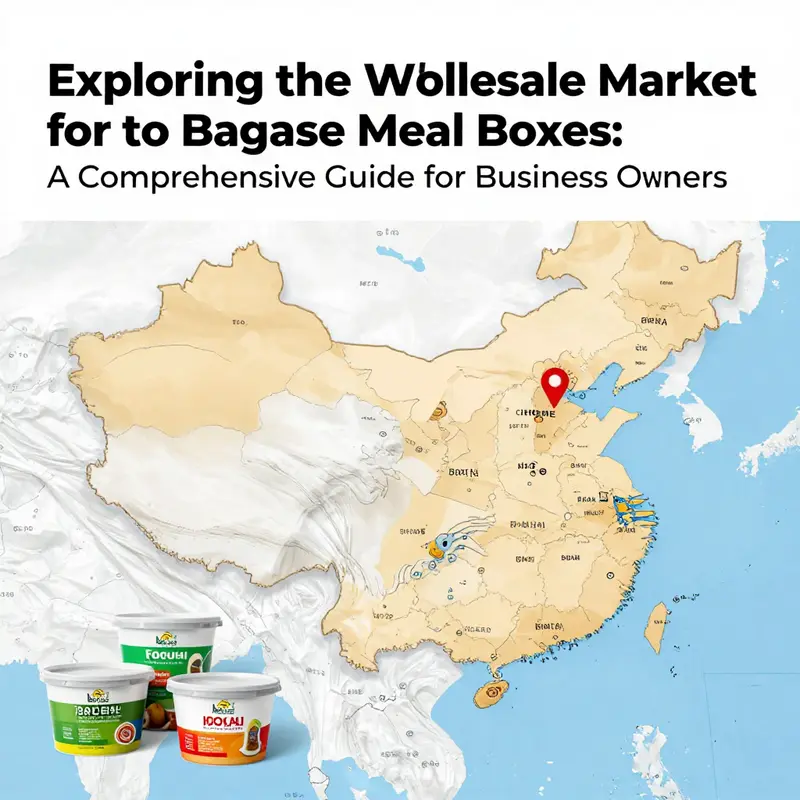
For those navigating the broader landscape of bagasse packaging, it is worth recognizing the sourcing geography. China remains the dominant global hub for bagasse-based disposable tableware, with a dense network of manufacturers and suppliers offering OEM/ODM capabilities. The scale of this ecosystem enables rapid iteration of designs, flexible packaging, and relatively swift expansion into new markets. Buyers should look beyond the sticker price to assess the supplier’s track record, production capability, certifications, and responsiveness. A mature sourcing partner will provide not only competitive pricing but also a robust plan for quality control, order tracking, and contingency options in the event of supply fluctuations. The nuance here is that price is only one dimension of value. Delivery reliability, product safety, and the ability to translate a design brief into a dependable product on time are equally critical inputs to the total cost of ownership.
To translate theory into practice, consider the dynamic you face when planning a large-scale rollout. A buyer contemplating 100,000 unit orders must plan around a lead time that accommodates supplier setup, potential tooling changes for customization, and the logistics of multi-location distribution. If a pilot with 1,000 units proves successful, it may be prudent to stage a phased increase, negotiating a price that reflects the incremental volume while preserving capacity for the larger target. This staged approach helps manage risk, aligns cash flows with demand signals, and provides a demonstration of market traction that can justify the next tier of pricing. In many cases, the most effective strategies involve coupling larger volume commitments with second-stage incentives—capturing additional discounting through a mix of guaranteed purchase volumes and performance-based milestones such as on-time delivery rates and quality pass percentages.
From an organizational perspective, aligning internal processes with wholesale pricing requires disciplined demand planning, inventory management, and supplier relationship management. Forecast accuracy is the backbone of favorable pricing outcomes. The more precise the forecast, the more confidently a buyer can secure capacity at favorable bands. Conversely, frequent, unplanned orders tend to incur premium charges and expedited shipping costs, eroding the value of a lower per-unit price. A practical planning discipline involves building scenarios that account for seasonality, marketing campaigns, and potential shifts in consumer behavior. When a buyer can present a credible, data-driven forecast, suppliers are more inclined to offer favorable terms, including better payment schedules, longer contract windows, or exclusive access to limited-edition formats. The interplay of forecast reliability, contract design, and customization options ultimately shapes the real-world cost of bagasse meal boxes.
For readers exploring procurement paths, a single internal link can offer a practical complement to these considerations: the disposable-lunch-box category provides a centralized view of related packaging solutions and accessories that often accompany bulk orders, such as lids and separators. This resource can help buyers evaluate how ancillary items fit into the total packaging ecosystem and how bundling might optimize both pricing and supply chain efficiency. disposable-lunch-box.
As you build a purchasing framework, keep in mind that the true value of bagasse meal boxes in wholesale goes beyond the per-unit price. It accrues through the ability to meet demand, differentiate through design, sustain brand integrity with reliable packaging, and contribute to a circular economy by offering compostable, fully degradable products. The prices you secure at bulk scale set the baseline for aggressive, market-responsive strategies—whether you are serving a chain of cafes, a catering network, or a new retail channel. The aim is not simply to minimize cost per unit but to optimize the entire lifecycle cost: from supplier selection and procurement planning to distribution and end-of-life disposal. In doing so, you unlock the potential of bagasse packaging to support both commercial success and environmental stewardship.
External resource: https://www.alibaba.com/product-detail/100-Sugarcane-Bagasse-Fibers-Home-Compostable_1601472372438.html
null
null
Turning Sugarcane Byproducts into Takeout Gold: The Eco-Friendly Case for Bagasse Meal Box Wholesale
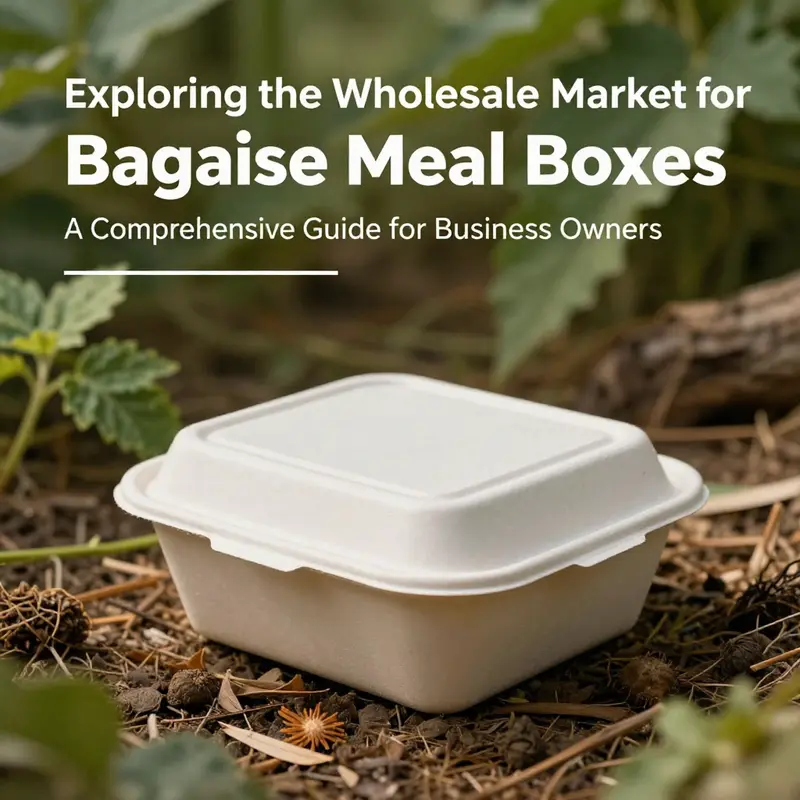
The journey of bagasse meal boxes from a renewable byproduct to a staple of wholesale takeout packaging reads like a practical tale of circular economy in action. Bagasse, the fibrous residue left after sugarcane juice is extracted, has historically been treated as waste. Today it stands as a cornerstone of sustainable packaging, offering a tangible path for food businesses to align their operations with environmental goals, meet consumer expectations, and safeguard long-term supply resilience. When a restaurant or caterer chooses bagasse at wholesale, they are not merely selecting a packaging option; they are investing in a system that reimagines waste as a resource, reduces dependence on petroleum-based plastics, and contributes to a cleaner, more responsible foodservice ecosystem. This is not a niche preference but a growing standard that blends performance with planet-friendly design, a blend that wholesalers in particular can leverage to create scalable, brand-aligned solutions for a wide range of food concepts.
Biodegradability sits at the heart of bagasse’s appeal. The material is designed to break down naturally, especially under industrial composting conditions, typically within a window of about 60 to 90 days depending on the system. In practical terms, this means a takeout box that can return to the soil network relatively quickly after use, rather than lingering in landfills for generations. For businesses facing tightening packaging regulations or consumer pressure for more responsible choices, the compostability of bagasse boxes translates into a credible compliance narrative and a competitive differentiator. When customers learn that their meal is served in a container that reduces environmental impact from cradle to grave, it reinforces brand values and can influence repeat business. The implication for wholesale buyers is straightforward: bulk access to compostable, curbside-friendly packaging that lowers waste disposal burdens and positions a brand as a proactive steward of the environment.
From a safety and regulatory perspective, bagasse provides an attractive combination of food-grade suitability and ecological performance. Containers crafted from this material are designed to withstand both hot and cold foods, and they resist sogginess that often undermines paper-based alternatives. This resilience matters on the front lines of service, where a reliable hot meal should arrive without leaking or deforming the container, preserving the customer experience. In addition, bagasse products commonly carry certifications attesting to food safety and biodegradability, signaling to retailers, venues, and end consumers that the product meets established hygiene and environmental standards. In a market where trust is currency, such certifications reduce risk for buyers and help culinary operators meet audit requirements without sacrificing convenience or speed of service.
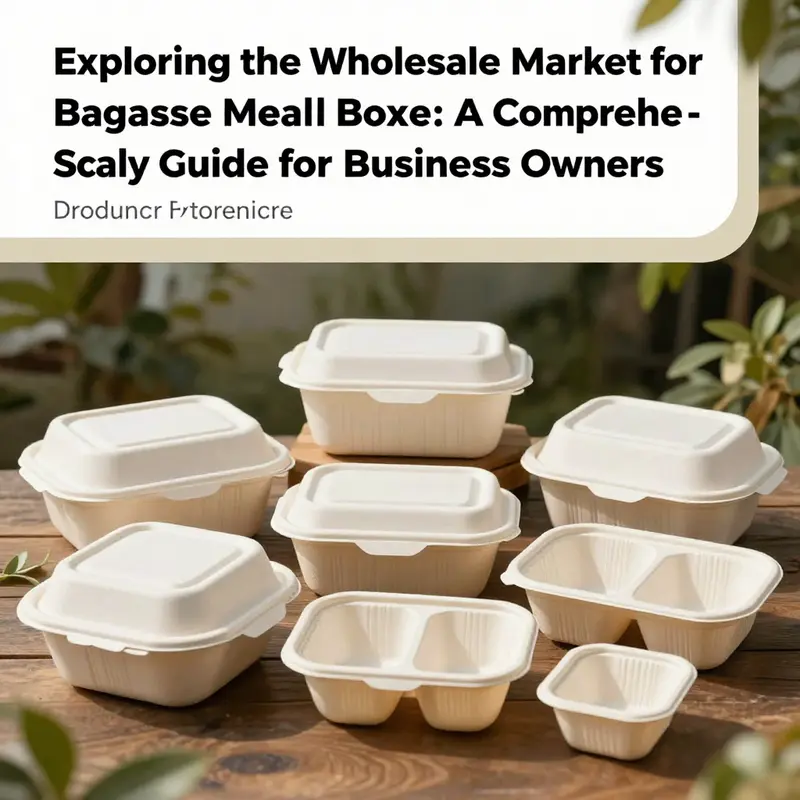
The breadth of options available at wholesale further enhances bagasse’s appeal. Suppliers offer a range of sizes, shapes, and compartment configurations to accommodate diverse menu formats—from compact 3-compartment trays to larger 7-compartment layouts capable of handling multi-item meals with sauces and sides. The common clamshell and rectangular formats suit different service styles, whether dine-in substitutes, takeout, or catering. For wholesalers, the ability to provide multiple configurations in bulk enables them to serve a broad spectrum of clients—from small neighborhood eateries to large-scale catering operations—without requiring multiple packaging SKUs for each buyer. The structural strength of bagasse, combined with moisture resistance, also means these boxes perform well with moist or saucy dishes, such as rice bowls, stir-fries, and sandwiches. That performance translates to fewer mishaps during transit and a more consistent customer experience, both critical for brand reputation in a competitive segment.
Pricing dynamics under wholesale terms reinforce the practical appeal of bagasse packaging. The price curve typically moves downward as order volumes rise, creating economies of scale that can substantially reduce the per-unit cost for large buyers. For instance, tiered wholesale pricing often reflects a progressive discount structure that rewards quantities, enabling restaurateurs and caterers to manage packaging budgets more predictably over time. This affordability, combined with the environmental benefits, makes bagasse a compelling value proposition for operators seeking to balance cost, quality, and sustainability. Importantly, the availability of bagasse packaging at wholesale scales also helps reduce lead times and ensure that supply remains resilient even during peak demand periods, which is essential for chain operations and event-driven catering.
Behind the visible benefits lies a robust supply chain designed to meet wholesale demand. The global production landscape is heavily weighted toward sugarcane-based disposable tableware manufacturing, with numerous manufacturers offering OEM and ODM services. This enables buyers to request custom shapes, sizes, and branding while maintaining strict food safety and quality standards. A wholesale partner can provide not only the boxes themselves but also the packaging options, printing capabilities, and branding weaves that help a business maintain a consistent identity across takeout materials. Certifications—such as those related to food safety, compostability, and environmental management—play a pivotal role in establishing trust with buyers and end-users. For operators aiming to scale, partnering with a supplier who can demonstrate a track record of reliable production, clear communication, and easy order cycles becomes as important as the product’s performance in the cup or on a plate.
From a circular economy viewpoint, bagasse boxes epitomize the principle of turning waste streams into value streams. Their lifecycle begins with a fiber that would otherwise be discarded, or repurposed in low-value applications. By converting this residue into durable, compostable containers, manufacturers divert material from landfills and create a closed-loop potential that aligns with sustainability reporting and ESG goals. This loop is reinforced by fuel-saving and emissions reductions associated with compostable packaging over time, especially when compared with the production and disposal of plastics. Businesses embracing bagasse wholesale participate in a system where the end of one product life cycle feeds the next, and the material’s compostability is a practical embodiment of this principle on a daily basis for thousands of meals.
In practice, wholesale buyers often look for partners who can accommodate customization while preserving the material’s integrity and performance. Shape, size, and configuration matter, but so do branding options. Printing capabilities allow brands to embed logos, colors, and messaging directly onto the container, transforming a simple takeout box into a moving advertisement for sustainability. The capacity to customize without compromising the container’s compostability is a notable differentiator in the wholesale space. This fusion of form and function—where aesthetics meet environmental responsibility—helps vendors build client loyalty and fosters long-term partnerships.
For buyers navigating this landscape, a practical approach centers on aligning packaging choices with menu needs, dining format, and consumer expectations. A 5-compartment tray might be ideal for a balanced meal with a protein, a starch, vegetables, a sauce, and a dessert, while a larger 7-compartment option could accommodate multi-item platters for events or family meals. The real payoff, however, is in knowing that these choices come with minimal ecological trade-offs. The containers perform as well in heat retention and moisture management as many conventional options, yet they offer a clear pathway to end-of-life recovery through composting. The wholesale channel thus becomes a conduit not only for cost-effective packaging but also for a broader message about waste reduction, responsible sourcing, and a circular approach to packaging design.
As a final note on wholesale strategy, consider the broader packaging ecosystem—how bagasse boxes fit alongside other sustainable choices in a brand’s portfolio. Buyers can pair bagasse meal boxes with compostable cutlery, lids, and liner solutions to present a complete, eco-forward offering. The integration is straightforward, given the shared criteria for safety, compostability, and performance. For retailers and caterers seeking to strengthen their environmental narrative, linking packaging choices to accessible end-of-life solutions makes the business case even more compelling. And when a buyer wants to explore options further, a quick glance at the disposable lunch box category can reveal a spectrum of bagasse-based solutions tailored to different service contexts and branding goals. disposable lunch box category
In closing, wholesale bagasse meal boxes stand at the intersection of practicality and sustainability. They translate agricultural byproducts into dependable, consumer-friendly packaging that supports hot and cold foods, carries branding, and aligns with modern waste management realities. The market dynamics—bulk pricing, reliable supply chains, and customizable options—make them not only an ethical choice but also a strategic one for businesses seeking growth without compromising their environmental commitments. As consumer expectations continue to evolve toward transparency and responsibility, bagasse-based packaging offers a clear, scalable pathway for foodservice operators to demonstrate leadership in sustainability while preserving the reliability their customers expect. The narrative of bagasse is not merely about a greener option; it is about adopting a packaging architecture that sustains business momentum, strengthens the supply chain, and closes the loop on waste with tangible, measurable outcomes. For those seeking a deeper dive into the science and application of eco-friendly wholesale Bento box designs and materials, an external resource provides a rigorous look at properties, production, and real-world applications that inform best practices across the sector: https://www.cafeterias.com/eco-friendly-bento-boxes-guide
Final thoughts
Opting for bagasse meal boxes as part of your wholesale packaging solution can elevate your business while significantly benefiting the environment. Their diverse specifications, coupled with competitive pricing and a reliable supplier network, make them an ideal choice for food businesses seeking sustainable options. By choosing eco-friendly materials, you not only enhance your brand’s reputation but also contribute positively to global sustainability efforts. As consumer demand increases for environmentally responsible products, now is the perfect time to integrate bagasse meal boxes into your operations and lead the charge toward a greener future.