
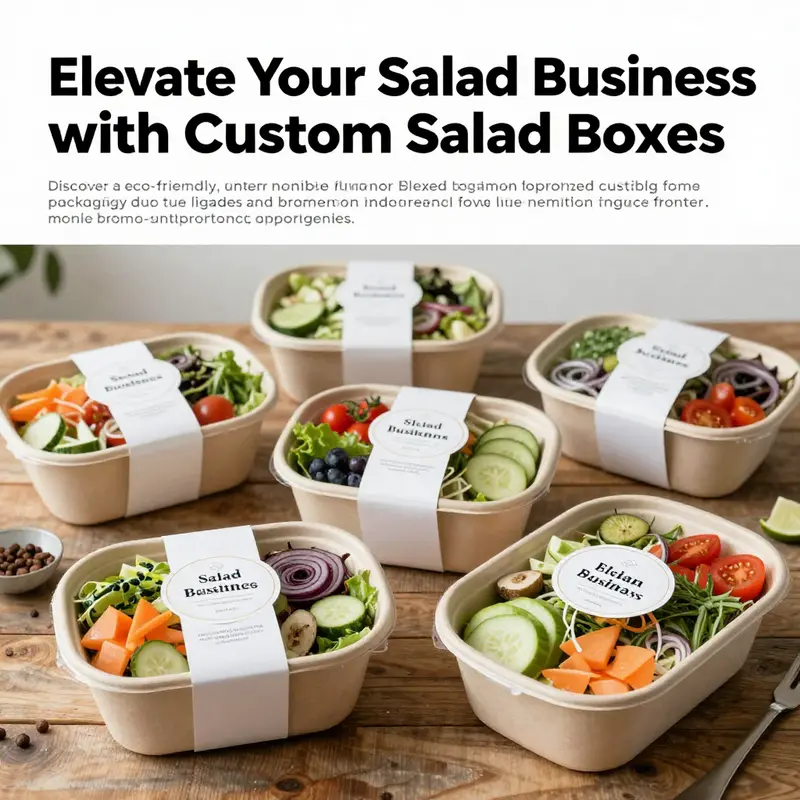
As the demand for fresh, healthy dining options surges, custom salad boxes have emerged as an essential toolkit for food business owners. These tailored packaging solutions not only protect and present fresh ingredients appealingly but also reflect the growing consumer consciousness about sustainability. This article delves deep into the critical aspects of custom salad box design, highlighting eco-conscious materials, customization options for branding, functional performance, and exciting marketing opportunities. By understanding these elements, business owners can make informed decisions that enhance their service offerings while appealing to eco-minded consumers.
Sustainable Silhouettes: How Eco-Conscious Materials Shape the Design of Custom Salad Boxes
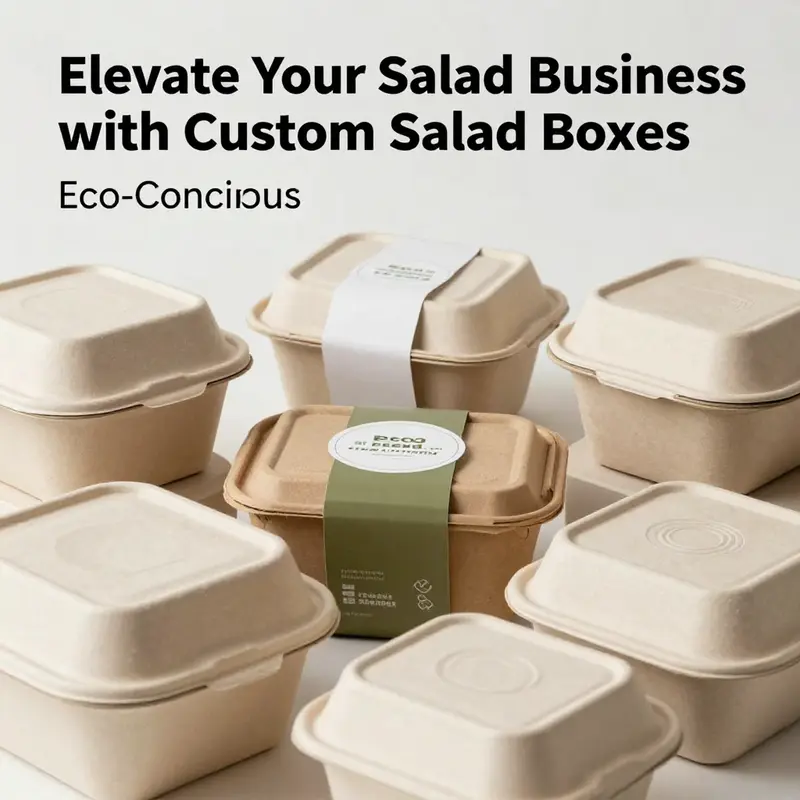
Every box carries a message beyond the salad it encases. In the crowded space of quick-service meals, a custom salad box has become a compact stage for brand values, product integrity, and environmental responsibility. The shift toward eco-conscious packaging is not a trend so much as a recalibration of what a box can and should do. It is about selecting materials that protect freshness and flavor while also reducing waste, conserving resources, and signaling a brand’s commitment to sustainable practices. When a restaurant or meal-prep service chooses a packaging system built around responsible materials, it is choosing to communicate with every consumer who encounters the box—whether they hold it for a moment in line, set it down on a desk, or recycle it after finishing their meal. In this sense, the material choice becomes both a practical decision and a narrative one, a way to extend the story of the product from the kitchen to the consumer’s everyday life.
At the heart of modern custom salad box design lies a portfolio of eco-conscious materials that are carefully matched to the meal’s expectations and the distribution realities of the business. Bio-based plastics, particularly polylactic acid or PLA, stand out as a forward-looking option. Derived from renewable resources like corn or other starch-rich crops, PLA offers a compelling alternative to traditional petroleum-based plastics. It can provide the necessary clarity for transparent lids and the moisture resistance required to keep dressings from soaking the greens during transit. Yet it is essential to recognize that PLA and other bio-based polymers are not universal cures. While they reduce reliance on fossil fuels, many require industrial composting facilities to break down efficiently. In consumer packaging, this means communicating clear disposal instructions so that the box doesn’t linger in a landfill or contaminate recycling streams. The promise of PLA is real, but its success lies in an ecosystem that can responsibly process it after use.
Alongside bio-based options, paperboard and recycled cardboard form a second pillar of sustainable design. When FSC-certified recycled cardboard is employed, the environmental footprint of the packaging is reduced at multiple stages of the lifecycle. The certification signals that the materials originate from responsibly managed forests and recycling streams, reinforcing a chain of custody that small- and medium-sized brands can trace. Paperboard can be engineered to provide robust structural integrity while maintaining a relatively light weight, which translates into lower shipping energy and fewer waste streams in transit. The durability of these materials is paired with advanced barrier properties to protect contents. For liquid-rich dressings or high-moisture ingredients, the box can incorporate moisture barriers in the inner layers or employ coatings that resist leakage without compromising recyclability. In many designs, the material choice becomes a balancing act between barrier performance, clarity for any see-through elements, printability for branding, and end-of-life compatibility.
The lifecycle narrative matters as much as the material itself. A smartly designed salad box uses minimal material without sacrificing performance. Reducing material volume at the design stage lowers both the resource footprint and the total energy required to manufacture, fill, and ship each unit. Multi-compartment configurations illustrate how thoughtful structure can streamline the packaging system. Instead of relying on separate cups, films, and sleeves, a compartmentalized box can hold greens, toppings, and dressings in an integrated layout. When designed with precision, such systems minimize cross-contamination, preserve freshness, and reduce the need for secondary packaging. A window lid might showcase the dish’s vibrant colors, inviting consumer engagement, while a straightforward internal structure minimizes waste and reduces the demand for additional seals or wrappers. These design choices—whether a side-opening mechanism that grants easy access without tipping the contents or a vertical layering pod that keeps ingredients neatly separated—underscore how sustainability and user experience can reinforce one another.
Beyond the materials themselves, the ecological narrative is strengthened by certification and clear lifecycle messaging. Certifications such as FSC (Forest Stewardship Council) provide a verifiable standard that buyers can trust. They demonstrate that a material’s origin aligns with responsible forest management and that the product’s broader supply chain adheres to social and environmental benchmarks. When packaging designers emphasize such certifications, they offer customers confidence that the box’s green claims are not merely marketing statements but substantiated commitments. In the same breath, it is important to distinguish between compostability and biodegradability in consumer materials. Industrial compostability proofs the box’s end-of-life story in facilities equipped to process it under specific temperature and humidity conditions. Home composting may not achieve the same results. This nuance should shape how the packaging is presented to customers, with practical disposal guidance included on the box or through brand communications. The goal is to close the loop—materials that can re-enter the economic cycle rather than stay in landfills, preferably through established industrial facilities that can handle the substrate in a controlled environment.
As brands navigate these choices, the supply chain becomes an essential dimension of sustainability. Platforms that connect buyers with verified manufacturers can help scale eco-friendly options from a concept to a reliable production reality. In particular, suppliers that can integrate bio-based materials, recycled content, and certified fibers into a cohesive salad-box system—while meeting functional requirements such as moisture barriers and temperature resistance—are especially valuable. The ability to source materials that align with a brand’s environmental promises, without sacrificing performance, is what enables a custom salad box to function as a strong, credible extension of its culinary offering. The dialogue between material science and consumer expectations is ongoing, and every shipment is an opportunity to validate the sustainability choices made during design. When a restaurant or meal prep service aligns with a packaging partner that shares its environmental goals, these goals become standard operating practice rather than aspirational statements.
The material story also intersects with branding in a powerful way. Custom salad boxes serve as mobile marketing canvases, carrying logos, color palettes, and messaging that reinforce brand identity as customers interact with the product. The material selection often determines what print techniques are viable and how clearly a brand’s visuals can be rendered. A box made from high-quality FSC-certified cardboard can take crisp ink prints that resist fading, helping a brand maintain a strong shelf and takeout presence. Transparent elements, when used thoughtfully, allow the content to tell part of the story without compromising the packaging’s integrity. A well-considered combination of material and design can turn a simple container into a brand ambassador—one that communicates values of care, quality, and stewardship with every bite.
To deepen the discussion of materials and their implications for design, consider the broader ecosystem that supports sustainable packaging development. Markets increasingly reward transparency about sourcing and lifecycle impacts. When manufacturers publish verified data about the recycled content in cardboard, or the proportion of bio-based polymers in a box, they empower brands to make informed decisions and consumers to understand the choices behind what they purchase. Even the smallest detail—how a lid seals, the degree of clarity in a window, or the ease with which a box can be recycled—contributes to the overall environmental performance of the product. In a world where customers often bring their own habits to disposal, packaging designers must anticipate those behaviors and design accordingly. A box that provides clear disposal instructions, along with a straightforward end-of-life pathway, is more likely to be treated as a resource rather than as waste. This behavioral alignment between design and consumer action is essential if eco-conscious materials are to fulfill their promise over the long term.
For readers looking to explore the material landscape further, there is a growing appetite for practical comparisons between material families and their performance in real-world use. In many cases, a mixed-material approach yields the best balance of sustainability and functionality. A carton that combines a sustainable paperboard exterior with a thin, compostable inner layer can deliver robust leakage resistance while keeping recyclability intact. Conversely, a fully plastic solution, if derived from bio-based sources and designed for high recyclability, can also meet rigorous barrier requirements without compromising environmental goals. The key is to marry science, design, and logistics in a way that respects the end user’s needs, the business’s operations, and the planet’s capacity to accommodate waste streams. The ongoing dialogue among designers, producers, and consumers is what moves the industry forward toward packaging that not only protects a product but also protects the world it comes from.
To connect the design possibilities with tangible options, professionals increasingly turn to curated material libraries and supplier networks that emphasize eco-credentials. These resources help teams evaluate trade-offs among cost, performance, and environmental impact. The practical reality remains that packaging must protect the contents through storage, transit, and handling, while also presenting a compelling brand story. The most successful custom salad boxes achieve this balance by choosing materials that are inherently suited to the product’s moisture profile, by incorporating design features that minimize waste, and by communicating a clear narrative of sustainability that resonates with today’s eco-aware consumers. In this sense, the box becomes a compact, responsible system rather than a mere container.
For further reading on broader packaging options, you can explore the Paper Packaging category for a sense of how paper-based materials fit into the sustainability equation. Paper Packaging category. The shift toward environmentally conscious materials is not about replacing plastic with paper alone; it is about cultivating an integrated approach that respects material performance, lifecycle stewardship, and consumer behavior. When brands adopt this holistic view, custom salad boxes can deliver more than convenience and presentation. They can deliver trust—trust that the packaging reflects the same care that goes into the salad inside and the values that guide the business that prepared it.
External resource: https://www.alibaba.com/product-detail/Eco-friendly-Paperboard-Takeout-Breakfast-Box_1600578293837.html
null
null
Sealing Freshness and Brand Integrity: The Functional Craft of Custom Salad Box Packaging
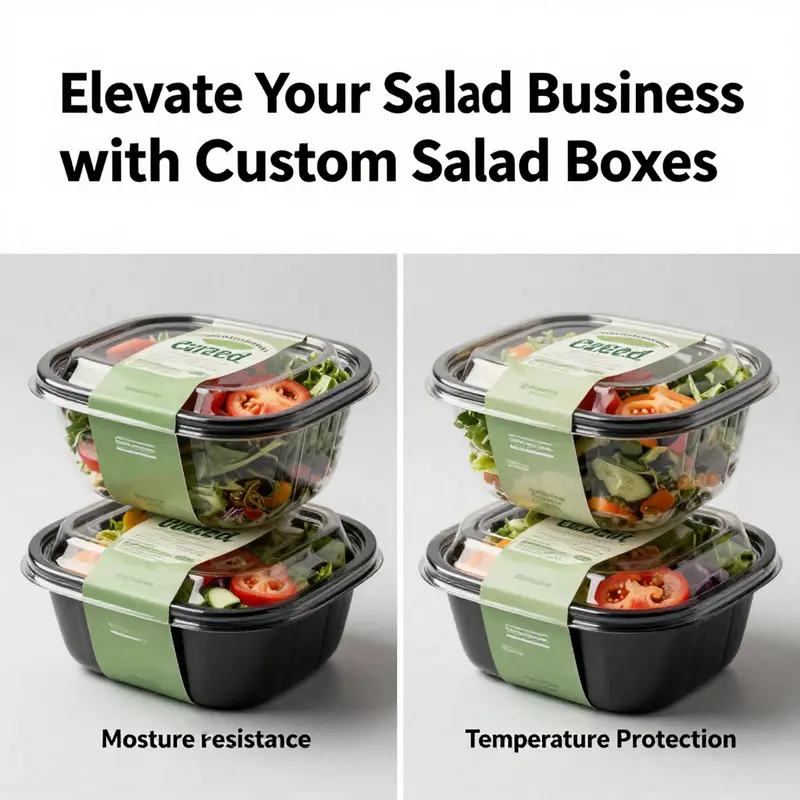
Every bite of a pre-packed salad carries more than a handful of greens and toppings; it carries the promise of freshness, safety, and a brand experience that travels from kitchen to customer’s doorstep. The functional performance of custom salad box packaging is the invisible architecture that makes that promise plausible. It is not merely about enclosing food; it is about orchestrating a set of interlocking actions—protecting textures, keeping flavors discrete until serving, resisting the rigors of transport, and presenting the product in a way that sparks trust and appetite. In practice, design teams and packaging engineers work from the same core objective: to safeguard quality across the longest possible journey while enhancing the customer’s perception of value. In the context of a market that prizes convenience and wellness, the right box does more than hold; it communicates care for the ingredients, the planet, and the consumer who chooses a salad as a quick, healthy choice in a busy day. This chapter examines how material choice, internal architecture, and functional features converge to deliver that outcome, and why the balance between sustainability and performance matters just as much as the color and logo on the lid.
A central element of functional performance is ingredient separation. Greens, proteins, dairy accents, and dressings can all contribute moisture, oils, or dynamic textures that interact in ways buyers perceive. When greens slough moisture onto a crouton or a dressing leaks into crisper leaves, the visual appeal and mouthfeel decline rapidly. Custom salad boxes address this by incorporating internal partitions or layered compartments that keep components apart until consumption. The partitions act as tiny, reliable gatekeepers, ensuring that dressing stays where it belongs and that each bite remains as the chef intended. This approach is particularly critical for salads that pair delicate leaves with wetter toppings, or for multi-component meals where crowding a single space would invite sogginess. In practice, these partitions are designed with careful tolerances and compatible materials so they do not sag, warp, or poke through the primary structure during handling or transit. The result is a product that maintains its crispness, texture, and visual appeal from the point of packing through to retail display and consumer unboxing.
But separation alone does not guarantee longevity. Shelf life for pre-packaged salads hinges on how well the package defends against moisture migration, gas exchange, and temperature fluctuations. The packaging must slow down the inevitable process of deterioration that begins when greens are washed and the product is sealed. A well-conceived box uses a combination of strategies: appropriate barrier properties, humidity management within the carton, and sometimes an inner liner that shields moisture-sensitive ingredients from direct contact with the container wall. The choice between liner-assisted moisture management and purely barrier-focused design reflects a deeper decision about materials and end-of-life preferences. Kraft cardboard, for instance, provides a natural, renewable base that aligns with eco-conscious branding. Yet its susceptibility to grease and moisture means that, in many configurations, an inner liner or barrier coating is essential to preserve integrity for longer distribution cycles or more moist ingredient profiles. This collaborative dance between material science and product requirements is what underpins reliable shelf life in a category where freshness can be sacrificed by a single design misstep.
Material choice sits at the heart of functional performance, and the landscape is not single-path. Kraft cardboard is a widely embraced option because it embodies a balance of strength, biodegradability, and a warm, natural aesthetic that resonates with health-oriented brands. Its tensile strength and rigidity come from renewable wood pulp, and it can be produced to be both biodegradable and compostable, aligning with circular economy goals and consumer expectations for sustainable packaging. However, kraft’s advantages are tempered by its natural vulnerabilities: its rigidity is not as high as high-grade plastics, and it lacks inherent moisture and grease resistance. This often means that kraft-based salad boxes rely on inner liners, lamination, or barrier coatings to guard against wet or oily ingredients. These liners must be food-grade and compatible with both the printed exterior and the internal contents so that there is no migration of off-flavors or contaminants. The interplay between kraft and liner materials is a critical consideration, especially for brands that want a rustic, earthy look while still delivering dependable performance in busy supply chains.
On the other side of the spectrum, synthetic materials such as PET and polypropylene offer robust barrier properties that excel at resisting moisture, oil, and vapor transmission. They allow designers to achieve high clarity where product visibility is part of the brand promise, and they provide reliable mechanical protection during shipping and handling. Transparency can become a powerful marketing tool, letting customers see the vibrant produce inside and reinforcing quality signals from the first moment of interaction. These materials also support a wider range of shapes and configurations, including secure side-opening designs and modular stacking that can prevent crushing of delicate greens. Yet plastics are not without tradeoffs. They may complicate end-of-life considerations, and even when recyclable, require careful separation and local infrastructure to realize true circularity. The choice between kraft and plastic is rarely binary; it is a strategic alignment of brand narrative, performance needs, and sustainability commitments. Some solutions blend the strengths of both worlds, using a kraft outer shell with a barrier-coated interior, or combining clear PET panels with kraft bases to offer both visibility and environmental alignment. In all cases, the packaging must sustain high performance without compromising food safety and consumer trust.
Design considerations for optimal performance extend beyond materials into how the box is shaped and how it behaves under real-world use. Lightweight, environmentally mindful options suit local delivery or short-haul retail where one-box convenience is essential and consumer expectations lean toward lower carbon footprints. For commercial distribution or environments where temperature sensitivity is a factor, more robust, multi-layered configurations become prudent. These configurations may incorporate protective laminates, barrier films, or specially engineered seams that minimize the risk of leaks and keep oils from seeping into adjacent components. Structural integrity matters not only for the product but for the logistics chain. A box that crushes easily or fails at the seams during transit undermines the perceived quality of the salad inside and can trigger waste and cost in the supply chain. In practical terms, this means packaging designers must tailor the geometry of the box to the expected handling conditions, choose adhesives with proven food safety credentials, and select inks and coatings that perform under chill and frozen storage if necessary while ensuring no off-odors migrate to the food.
From the standpoint of branding, function and aesthetics are not separate conversations. A custom salad box serves as a portable stage where the brand story is told through form, texture, and the tactility of the packaging. The box must invite the consumer to open it with confidence, to explore the contents without fear of mess, and to associate the brand with the reassurance that comes from quality engineering. This is where the environmental narrative converges with functional design. A box that looks and feels sustainable can elevate consumer perception even before the first bite, while the functional features—easy opening, orderly component separation, and reliable moisture control—translate into an experience that supports repeat purchases. Marketers often leverage printing opportunities on the outer shell to communicate key attributes: freshness, sourcing ethics, and the practicality of the container for on-the-go consumption. The result is a packaging system that does more than contain; it reinforces a brand’s core message at every touchpoint, from shelf to table.
For brands exploring the trade-offs between materials and performance, the selection of a packaging family often starts with a clear map of use cases. Localized, short delivery windows with modest distance typically benefit from lighter, kraft-based solutions with minimal barrier additions, designed to preserve freshness through quick turnover. Longer distribution chains, or environments where salads are stored near the cool chain for extended periods, may justify the additional barrier layers or the inclusion of transparent panels to signal product quality while maintaining the necessary protection. The design choice is not only about protecting the salad; it is about optimizing the total cost of ownership, including materials, transport, waste, and consumer satisfaction. In this light, the internal architecture—whether a single, cleverly partitioned container or a more intricate multi-compartment system—becomes a crucial lever for controlling moisture, texture, and presentation. It is a reminder that functional performance is a systems question: materials, geometry, adhesives, coatings, and even printing inks all contribute to the final behavior of the package.
Standards and specifications underpin the reliability of these systems. A comprehensive approach to packaging for food service emphasizes food safety compliance, barrier performance, and structural integrity as baseline expectations. It encourages manufacturers to verify that adhesives do not contaminate the food, that barrier layers maintain their properties under repeated temperature changes, and that the printed surface remains legible throughout the product life cycle. In a rapidly evolving market, standards provide a consistent benchmark that reduces risk for brands and retailers alike. The literature on kraft-based takeout packaging highlights how evolving industry guidelines shape material performance and testing protocols, guiding practitioners toward solutions that balance sustainability with practical durability. This alignment with standards is not a constraint but a framework that helps ensure that every custom salad box can reliably perform across diverse channels and geographies.
Beyond the mechanics of protection and shelf life, the functional story of a custom salad box is inseparable from consumer expectations about sustainability. The modern shopper looks for packaging that aligns with personal values—recyclability, compostability, and reduced environmental impact—without sacrificing convenience or food safety. Crafting a box that honors these expectations means choosing materials and finishes that can be responsibly disposed of or repurposed, while still delivering performance guarantees. For many brands, this translates into a packaging system that uses renewable fibers, avoids unnecessary plastics, and leverages coatings compatible with industrial composting or recycling streams. At the same time, the box must remain a practical, everyday tool—easy to open, easy to close, and easy to handle when moving from shopping cart to refrigerator to lunch break. The tension between environmental rhetoric and real-world performance is not a paradox but a design brief: to meld ecological stewardship with the pragmatic demands of food logistics.
The sense of confidence that a well-designed custom salad box can evoke is also a function of how the box invites service and reuse. A packaging ecosystem that emphasizes reusability or cleaner end-of-life pathways tends to perform better in broader sustainability metrics, which, in turn, strengthens consumer trust. As brands seek to communicate value through packaging, the challenge remains to avoid overwhelming the box with features that complicate disposal or add cost without delivering proportional benefits. The most successful solutions in this space recognize that every feature—from partitioning to barrier choice to printability—must justify itself through measurable improvements in product integrity, consumer satisfaction, and total environmental impact. This is not simply about making a nicer box; it is about delivering a package that consistently holds its promise across the entire journey—from the moment the salad is prepared to the point at which the last bite is enjoyed. In that sense, the functional performance of custom salad box packaging is the quiet engine behind meaningful brand experiences, a dependable ally in the story of fresh, healthy eating made accessible and convenient for people in motion.
For readers who want to explore the materials and performance characteristics in greater depth, a detailed external reference offers a nuanced look at kraft paper salad box takeout standards, properties, and industrial applications. It provides practical guidance on how different materials behave under real-world conditions, and how industry adoption of specific standards shapes everyday packaging decisions. See the external resource for a deeper technical exploration of these topics. External resource: Kraft paper salad box takeout guide
In sum, the functional performance of custom salad box packaging is a curated balance of science and sensibility. It demands an understanding of moisture and barrier dynamics, a respect for the fragility of leafy greens, and an eye for how materials—kraft, PET, PP, and their combinations—perform under the rigors of production, distribution, and consumer handling. It calls for design that anticipates the journey—from the first bite to the last impression of the brand—through partitions that maintain separation, liners that guard against sogginess, and structural choices that endure the bumps of logistics without compromising food safety or aesthetics. It is a discipline that rewards brands with higher product quality, stronger consumer confidence, and a more compelling narrative about care for people and planet. For those who navigate this space, the packaging becomes not merely a container, but a trusted intermediary that translates freshness, convenience, and sustainability into a tangible, repeatable consumer experience. The result is a custom salad box that does more than meet expectations; it helps redefine what a ready-to-eat meal can feel like when it travels from supplier to plate with integrity.
Branding at Point of Bite: Elevating Market Presence Through Custom Salad Box Solutions
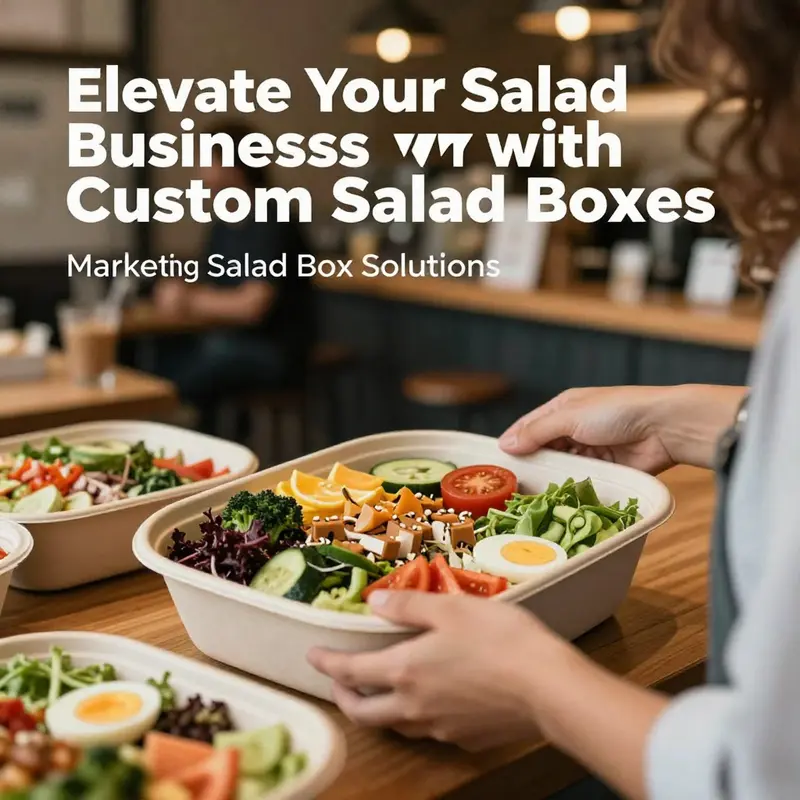
A custom salad box does more than hold greens; it carries a brand’s promise from the moment a shopper conceives of a fresh meal to the moment a delivery arrives at table or desk. In a crowded marketplace, where countless businesses offer similar healthy options, the packaging that accompanies a salad becomes a high-impact marketing instrument. It is a portable display case, a narrative surface, and a reliability signal all rolled into one compact package. The chapter that follows treats the salad box not merely as a container, but as a strategic asset capable of reinforcing identity, elevating perceived value, and guiding consumer behavior through thoughtful design, material choice, and interactive potential. This is branding at the point of bite, where packaging decisions ripple outward into recognition, loyalty, and even social amplification.
At the core of this opportunity is the simple realization that packaging is a touchpoint that travels with the customer. A well-branded box does not demand attention as an ad; it earns it by aligning with what the consumer already desires—convenience, clarity, and trust in the product’s integrity. The box becomes a canvas that communicates who the brand is and what it stands for without shouting. Texture, weight, color, and typography work together to set expectations. A box that projects freshness through crisp, high-contrast visuals can signal quality before the first bite. When the material choice reinforces sustainability, the container reassures eco-conscious shoppers that the brand practices what it preaches. In this way, a custom salad box is a living part of the brand ecosystem, not a one-off add-on.
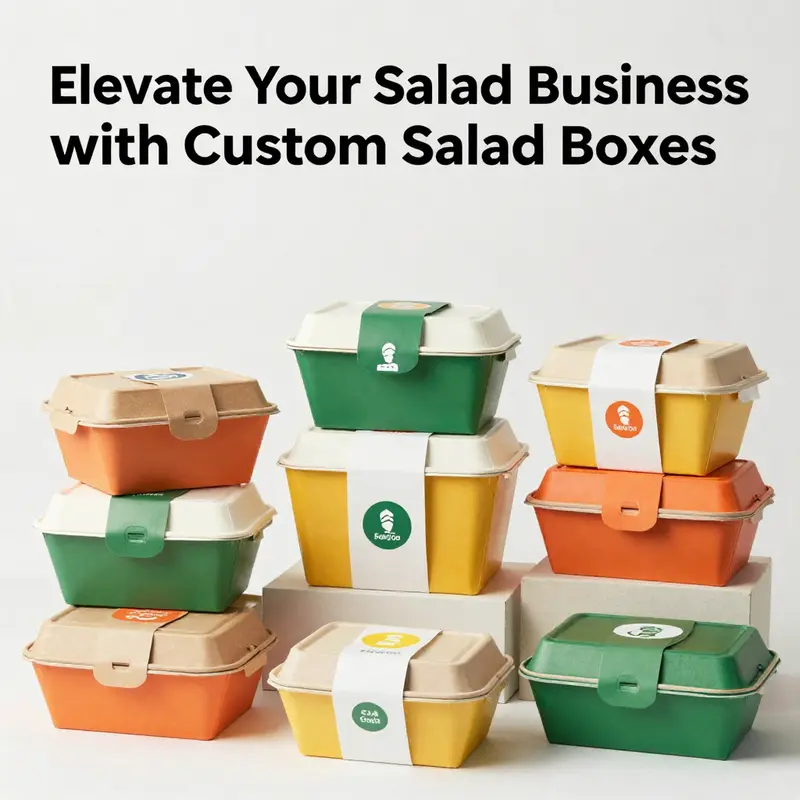
The design language of a custom salad box should be faithful to the broader brand story while exploiting the unique affordances of packaging. Brand identity—logos, color palettes, typography, and imagery—should translate cleanly onto the box’s surfaces. The surface area of a disposable fruit salad box, for instance, presents an expansive stage for high-quality printing that can capture the nuances of a brand’s narrative. The goal is not merely legibility but resonance. A simple logo in a distinctive color can become instantly recognizable across channels, turning each purchase into a miniature brand touchpoint. Even the choice of material communicates values. A carton that relies on recycled paperboard and water-based inks signals a commitment to environmental stewardship. A sleek, transparent sleeve or window can emphasize product visibility while maintaining an air of modern sophistication. Each choice should feel deliberate rather than decorative, because every interaction with the box—whether at the point of sale, during transport, or in a customer’s hands—reinforces or undermines the brand promise.
This is where customization steps beyond aesthetics into experiential branding. The box becomes a carrier of brand experience. Consider how a side-opening design or a modular, layered structure can cue a premium or fresh-from-the-kitchen vibe. Even functional elements—how the box opens, whether it nests securely, or how the compartments align with the salad’s components—communicate brand values. A box that opens easily with one hand and presents the contents neatly supports a perception of reliability and care, traits customers come to associate with the brand. Moreover, the structure can tell a story about the product itself. A packaging solution that includes a dedicated space for a small tasting card, a note about sourcing, or a quick recipe idea transforms a simple container into a storytelling platform. Such storytelling is not propaganda; it is a subtle invitation to engage with the brand on a deeper level.
Sustainability, when integrated thoughtfully, doubles as a branding lever. Eco-conscious packaging resonates with a broad audience, especially younger consumers who weigh environmental impact alongside taste and convenience. Boxes produced from renewable materials, compostable components, or recycled content offer a tangible way to demonstrate environmental commitments. The branding message—whether explicit through a sustainability badge or implicit through clean, minimal packaging—becomes a competitive differentiator. It is important, however, that the sustainability narrative is authentic. Consumers are adept at spotting greenwashing, and misalignment between stated values and actual practices can erode trust faster than it builds it. Transparent labeling, accurate compostability or recyclability claims, and accessible disposal instructions should accompany any sustainability claim. When done well, the message travels through the box as a quiet endorsement of stewardship, turning the packaging itself into a brand ambassador that extends the reach of the company’s values.
Beyond aesthetics and sustainability, the interactive potential of the custom salad box offers brands a path to amplified engagement. Packaging can invite digital conversation without feeling contrived. A simple QR code, thoughtfully integrated into the design, can lead to a wealth of content: a short video about sourcing, a link to a nutrition page, or a seasonal promotion. Hashtags and social prompts printed on the box encourage customers to share their meal experiences, effectively turning packaging into a participatory platform. The data generated by these interactions provides meaningful insights into consumer preferences, helping brands tailor future offerings and refine messaging. In this way, the box becomes a two-way channel—a conduit for communication that starts with physical form and extends into the digital landscape. Brands can measure effectiveness not only by sales but by the breadth and sentiment of social engagement, providing a richer picture of how packaging contributes to overall brand equity.
To realize these opportunities, brands must consider how to balance visual impact with production realities. Color choices influence on-shelf perception and online recall alike. Bold, high-contrast palettes can catch the eye in a crowded display or a feed, but they should be grounded in the brand’s existing color system to maintain consistency across touchpoints. Typography should be legible even from a distance or at a small scale—crucial when a customer selects a meal from a list of options in a busy store or during a quick online checkout. The printing technique matters as well. Advances in digital and offset printing enable vibrant color reproduction, crisp imagery, and durable text that resists fading with handling and moisture exposure. When the box must withstand transit, selecting materials and coatings with robust moisture barriers and temperature resilience becomes central to the brand’s credibility. A box that arrives damp or crushed sends a message opposite to the brand story, signaling carelessness rather than consideration. Reliability becomes a form of branding in its own right, and every careful packaging decision reinforces consumer trust.
The practical benefits of customization—brand recognition, perceived value, and customer loyalty—tie directly to consumer psychology. People often choose brands they feel aligned with on ethical or aesthetic grounds. A custom box communicates those alignments at a glance. It can justify premium pricing in the eyes of the shopper by signaling quality, freshness, and attention to detail. The packaging also acts as a macro-level advertisement, extending the brand’s reach beyond the store through social sharing and unboxing moments. People frequently photograph appealing packaging and post it to their networks, turning a single purchase into multiple impression opportunities. In this way, the packaging becomes a scalable marketing asset that operates continuously without ongoing media spend. The box’s lasting impression contributes to brand recall, making the next purchase more likely and increasing the odds that the consumer will explore related products in the same brand family.
Logistics and brand strategy intersect when we consider distribution channels and consumer touchpoints. For retailers and meal-prep services—whether in-store, through online orders, or via delivery platforms—the packaging must perform reliably in varied environments. Leakage prevention, structural integrity, and temperature tolerance are not merely functional requirements; they are signals of brand discipline. A box that fails under shipment undermines the brand’s promise of freshness and convenience. Conversely, a packaging system designed with durability and clarity reduces the risk of negative experiences that can spread quickly through word of mouth and online reviews. When a brand can promise consistent performance, it gains legitimacy in the eyes of customers who rely on the product for daily meals or intermittent indulgence. The packaging then reinforces brand credibility, a critical component of long-term growth.
The role of packaging as a marketing tool also invites brands to think about partnerships and in-store experiences. Packaging design can support seasonal campaigns, co-branding opportunities with local producers, or educational moments about nutrition and sustainability. In-store tastings, for example, can be complemented by packaging that visually echoes the physical display while providing take-home information that extends the experience. Digital integrations—like QR codes linking to recipe libraries or sustainability dashboards—extend the life of the brand story beyond the store visit. This approach reduces the friction between discovery and purchase, turning curiosity into conversion. It also creates a platform for ongoing relationship building, where customers return not just for the product, but for the brand experience the packaging promises and delivers.
In pursuing these goals, brands should balance the allure of premium presentation with the realities of cost, supply chain efficiency, and environmental impact. The most effective custom salad boxes harmonize beauty with practicality. They use materials that align with sustainability commitments while remaining cost-conscious enough to scale with demand. They employ design strategies that future-proof the packaging against evolving regulations and consumer expectations. They enable flexibility for varying menu items, promotions, and seasonal campaigns without sacrificing coherence. And they create a consistent, shareable narrative that travels with the customer from purchase to plate and onward into social networks. When packaging design and branding strategy are tightly integrated, the salad box stops being a passive receptacle and becomes an active element of the brand’s identity—one that people carry with them, photograph, discuss, and revisit.
For brands exploring the visual and tactile possibilities, investigate packaging printing options that bring colors and textures to life, such as the methods showcased in practical industry resources. The right combination of printing technique, coating, and substrate can preserve the fidelity of the original design while adding tactile cues that enhance perceived quality. Embedded storytelling, whether through a short message or a small, shareable recipe on the surface, can deepen consumer engagement without requiring a separate marketing channel. The packaging then functions as both a retailer’s ally and a consumer’s companion, reinforcing brand values at every point of contact.
Internal resources can assist in translating these concepts into a concrete plan. For brands seeking to optimize their packaging printing and customization capabilities, a reliable starting point is to review the available options for packaging printing and customization. See: packaging printing options for a detailed look at how different printing processes support vibrant visuals and durable finishes.
As a concluding thought, the custom salad box holds potential far beyond its immediate utility. It is a strategic lever for brand-building that leverages design, materials, and interactivity to foster recognition, trust, and loyalty. When the packaging reflects a brand’s commitments—quality, sustainability, and customer-centricity—it becomes a reliable ambassador that travels with the product, speaking in a language customers already understand: care, clarity, and consistency. This is branding that travels, transforming a practical container into a powerful, enduring extension of the brand’s story. For those who view packaging as a fleeting afterthought, the data and case studies suggest a different truth: the right box can elevate a meal into an experience, and the experience can turn a one-time buyer into a devoted advocate. To stay abreast of broader packaging trends and design best practices, many brands consult industry insights and thought leadership that explore sustainability and consumer behavior, such as the ongoing discussions around eco-friendly packaging trends found here: https://www.packagingdigest.com/sustainability/eco-friendly-packaging-trends-2025.
Final thoughts
The versatility and effectiveness of custom salad boxes lie in their ability to cater to both sustainability and branding needs. Business owners in the food and beverage industry can leverage these packaging solutions to create a positive customer experience while reinforcing their commitment to eco-friendliness. By focusing on eco-conscious materials, embracing customization, and recognizing the importance of functional design, you can elevate your salad offerings and stand out in a competitive market. Investing in custom salad boxes not only enhances product presentation but also plays a pivotal role in attracting environmentally-conscious consumers.